Showing posts with label ridge city. Show all posts

Wednesday, March 25, 2026

Bookmark This Page; The Ridge Racer Legacy

The Ridge Racer series was a result of an intense rivalry with Sega. If you want to find out all about Namco’s flagship racing series then Bookmark This Page.

The Ridge Racer Legacy, part 1...

The Ridge Racer Legacy, part 2…

The Ridge Racer Legacy, part 3…

The Ridge Racer Legacy, part 4…

The Ridge Racer Legacy, part 5…

The Ridge Racer Legacy, part 6…

The Ridge Racer Legacy, part 7…

The Ridge Racer Legacy, part 8…

The Ridge Racer Legacy, part 9…

The Ridge Racer Legacy, part 10…

The Ridge Racer Legacy, part 11...

The Ridge Racer Legacy, part 12…

The Ridge Racer Legacy, part 13…

The Ridge Racer Legacy, part 14…

The Ridge Racer Legacy, part 15…

The Ridge Racer Legacy, part 16…

The Ridge Racer Legacy, part 17…

The Ridge Racer Legacy, part 18…

The Ridge Racer Legacy, part 19…

The Ridge Racer Legacy, part 20…

The Ridge Racer Legacy, part 21...

The Ridge Racer Legacy, part 22…

The Ridge Racer Legacy, part 23…

The Ridge Racer Legacy, part 24…

The Ridge Racer Legacy, part 25…

The Ridge Racer Legacy, part 26…

The Ridge Racer Legacy, part 27…

The Ridge Racer Legacy, part 28…

The Ridge Racer Legacy, part 29…

The Ridge Racer Legacy, part 30… 

Have you played Ridge Racer in the arcade or the consoles? Let me know about it in the comments section. As always if you enjoyed this blog, and would like to sponsor me please visit my Patreon page and consider donating each month, even as little as $1 would help make better blogs and even podcasts!

follow the Street Writer on Patreon!

Tuesday, August 5, 2014

The Ridge Racer Legacy, part 22...

The number one rule for real estate is Location, Location, Location. The same thing goes for a racing game. As far back as Pole Position the use of well designed racing courses has been important to gamers. Even the titles that did not rely strictly on actual locations were nonetheless memorable. Several studios idealized fictional places but none were better at it than Sega. I had mentioned previously in this series how important the Sega designed tracks were to the evolution of the genre. The locations that Sega invented stood out for a number of reasons, not the least of which was that the courses told a story. The use of themes and supporting details had become an element used in the best tracks. No other studio did it better than Sega. Over the past 20 years Namco had been doing their best to try and top their rivals.
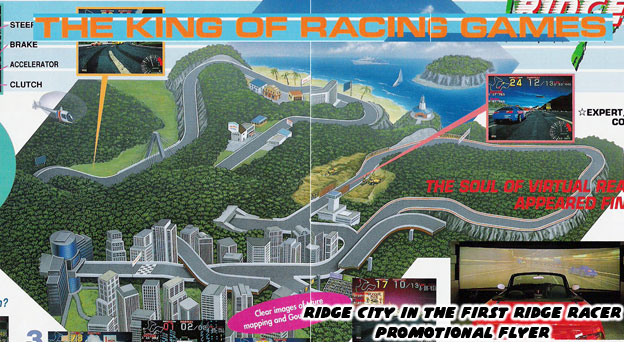
Namco did not try to beat Sega by creating fanciful courses with tons of animated set pieces or enormous props. Instead they kept revisiting and revising the realistic world they had established in the very first Ridge Racer. Ridge City and the surrounding courses built in Ridge State grew and grew over the course of 20 years. Each time they were presented entirely new details were added. New roads, off ramps, transfers and gates had opened up. The Ridge Racer team had been diligent about building on the legacy and making every iteration of the world more well defined.
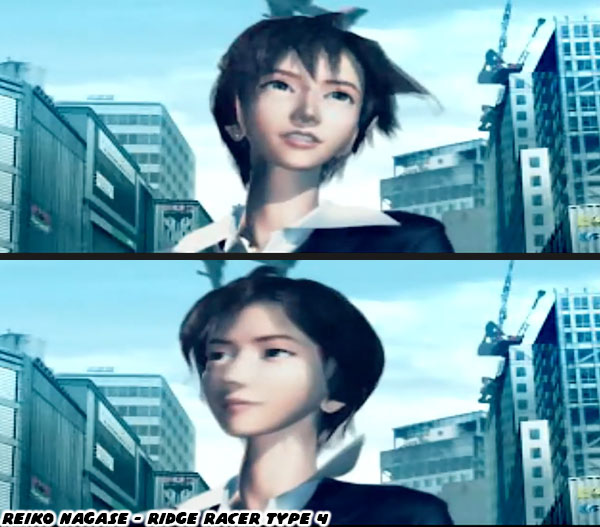
The details of each location was done more than on the surface level. Most long-time arcade players could actually remember helicopters and airplanes flying over several courses. Some planes were jumbo jets and some were single-seat gliders. These planes were even featured in the opening animations starring Reiko Nagase. Clearly Ridge City was a major destination and there must have been an airport nearby. That was inferred even if it hadn't been shown in the first few games.
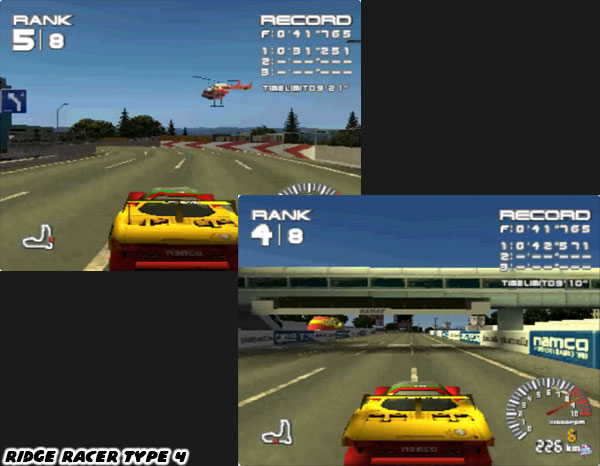
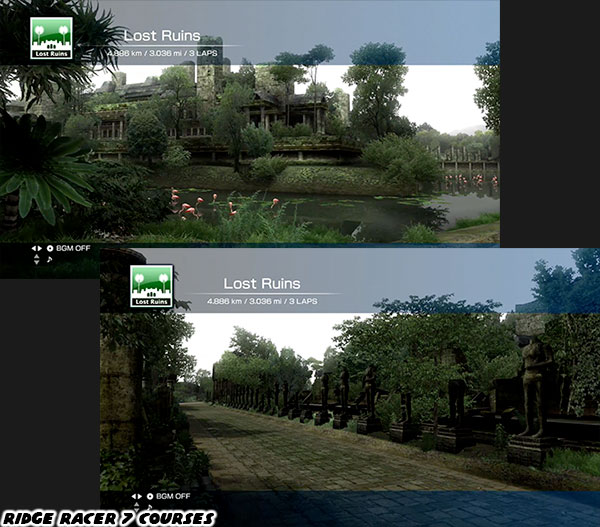
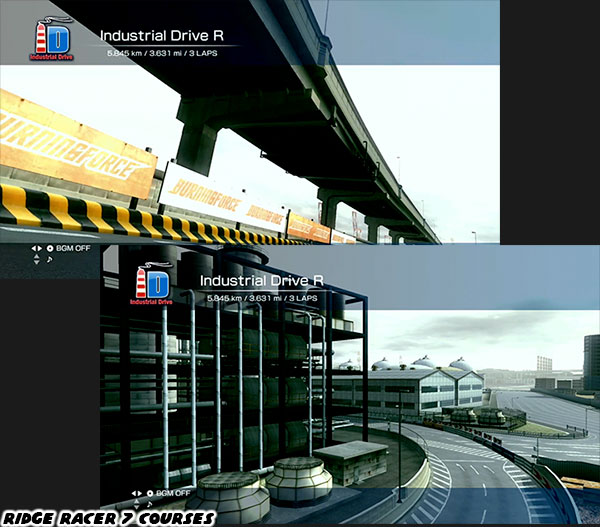
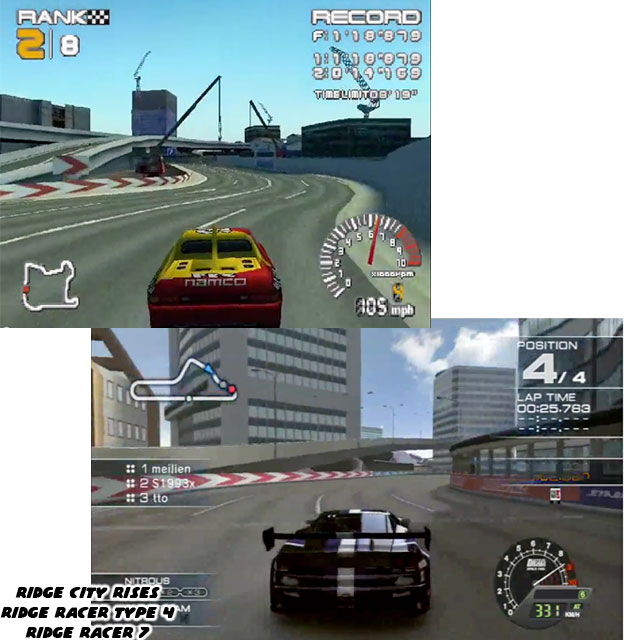
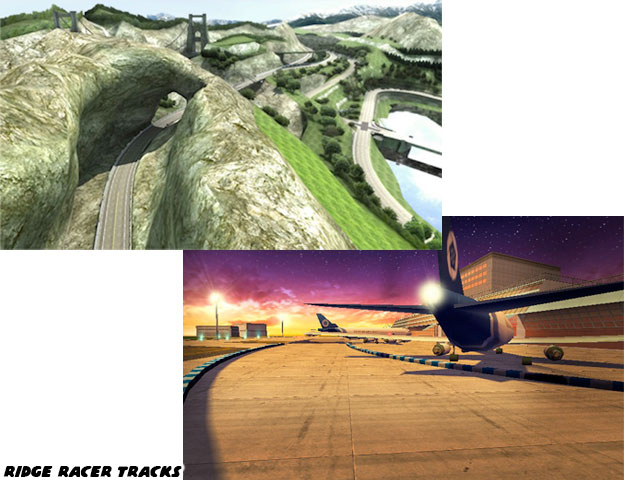
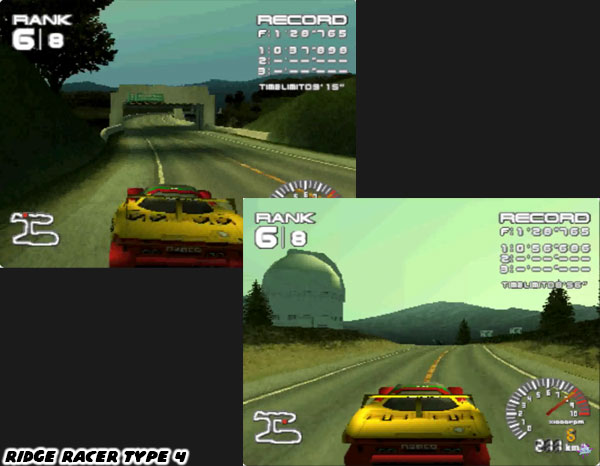
The developers at Namco had been hard at work with some sort of blueprint that they were trying to follow. Ridge Racer Type 4 had skirted the boundaries of the Ridge City Airport, which was across the bay from Ridge City. The developers of Ridge Racer V had built an underground track encompassing the airport, laying the literal foundation for the course. By the time of Ridge Racer 6 the fully realized airport, along with jets on the runway, hangars and terminal had been completed by the developers. The roads and freeway system from previous tracks were connected to the huge airport. In 2005 it was finally ready to be raced through.
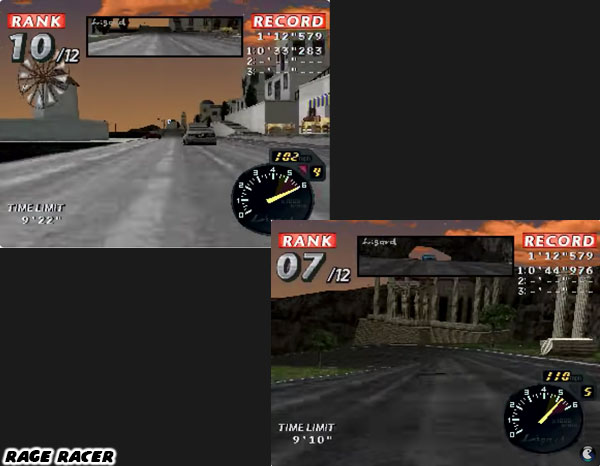
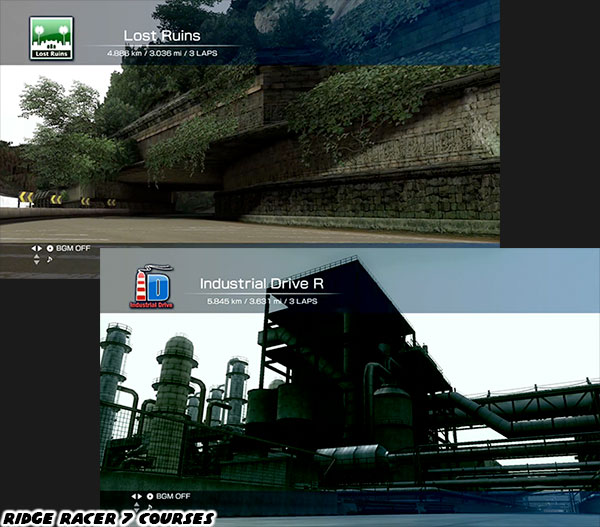
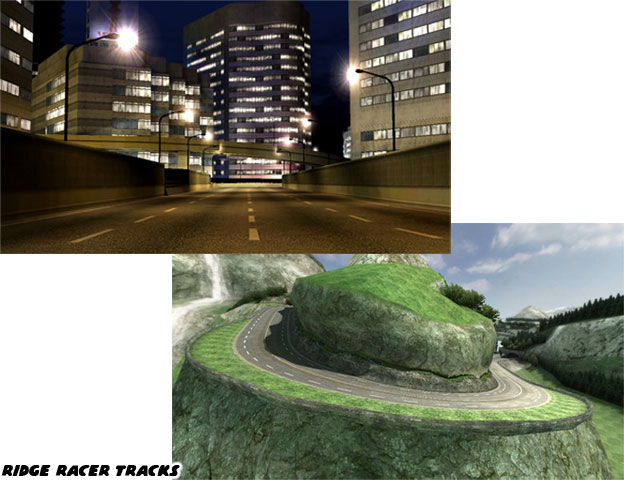
The hills which had been explored in Rave Racer and Rage Racer would continue to be fleshed out on the "next-gen" consoles. The tight, winding mountain passes would give way to breathtaking scenery. Huge expanses of land would become meadows where livestock wandered freely. Suspension cable cars ran over the track at the highest points of the courses. The race cars in Ridge Racer were capable of astounding feats of speed. They could travel from sea level to a few thousand feet in elevation and back down in a matter of minutes. It was up to Namco to create tracks that were equally awe inspiring as they were challenging.
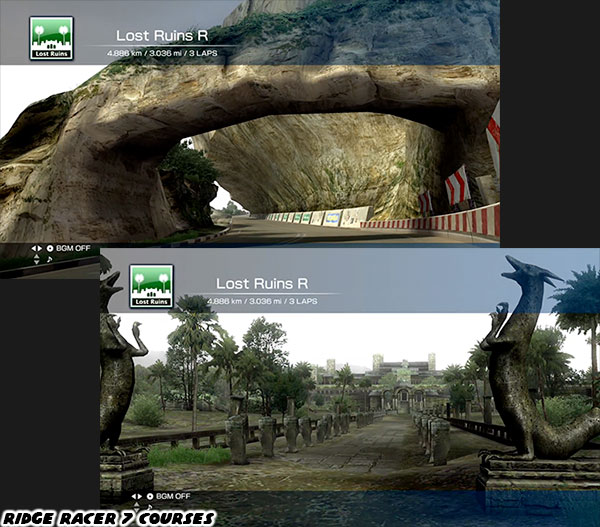
There was a certain sense of realism that Namco had injected into each course. Whether the road was in the middle of a city or hidden through a countryside there was something that seemed genuine about the track. Undoubtedly the driving fans at Namco had researched the roads in Japan extensively. When they traveled abroad they made sure to take plenty of photographs for reference. There were hints of well maintained toll roads and wide open expressways from major cities in Europe. There were also the unconventional but amazing roads that tourists would have discovered in Central and South America. The developers at Namco created amalgamations of these real world locations. They cleaned them up. Removed decades of wear and tear from the asphalt, concrete and tarmac. The pristine versions of these roadways were then twisted around scratch-built 3D scenery. There were no copy and paste models as in Ridge Racer Unbounded. The locations in Ridge Racer 6 and 7 were some of the most visually impressive tracks ever created by Namco or any other developer.
The studio had managed to do something very rare in the genre and it might have been the secret to their longevity. They kept refining the Ridge Racer experience after every sequel. They did not necessarily re-imagine what the game could and should be. That was the mistake with Unbounded. Very few racing games could get away with being the same experience each time. In fact that rule cut across the board. Very few sequels in any genre could get away with being the same experience.
The game had to evolve, it had to grow or it would stagnate and die. Gran Turismo was another series that was refined with every iteration. It did not get an Unbounded-style radical makeover at any point. It simply got better year after year. The Mario Kart series, Forza and any other racing game that had lasted for several sequels got better as the years went on. Tweaks to the graphics, control, music, physics and gameplay added longevity to each of those titles. The core of each experience nonetheless remained the same. The heart of Gran Turismo was in realistic driving whereas the heart of Ridge Racer was in arcade racing. The amazing tracks players got to drive over had a lot to do with that success.
The team at Namco was not the only one that managed to create beautiful tracks that never really existed. The developers at Turn 10 studios did a tremendous amount of research in creating several of the fictional tracks in the Forza series. The ability for other studios to create memorable 3D levels had grown exponentially since the '90s. Namco and Sega no longer held the lions share of superb track designs. What the studios did have were precedence. The two Japanese developers were the first and most important players in the 3D genre. They pretty much wrote the book on design.
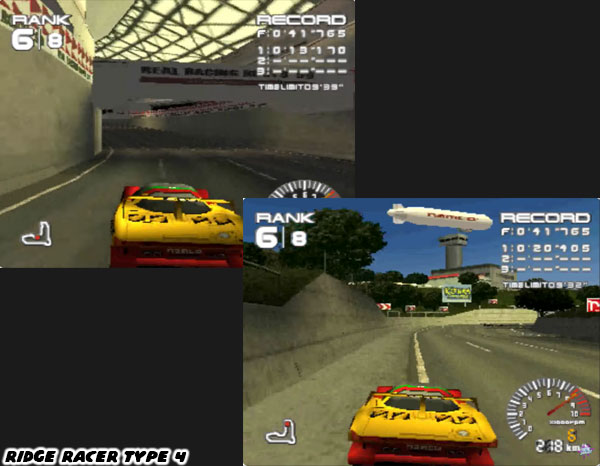
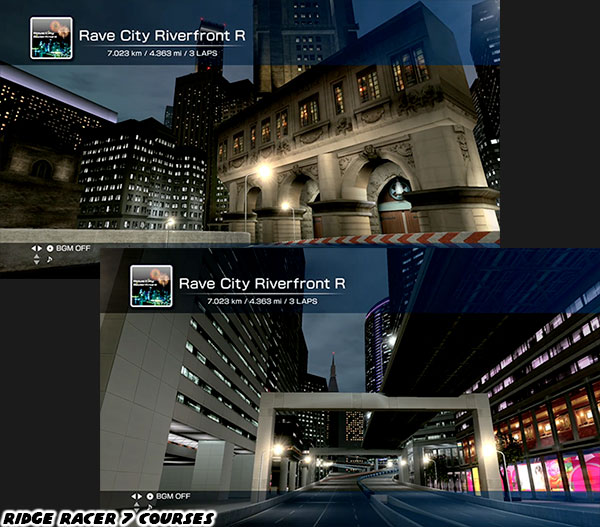
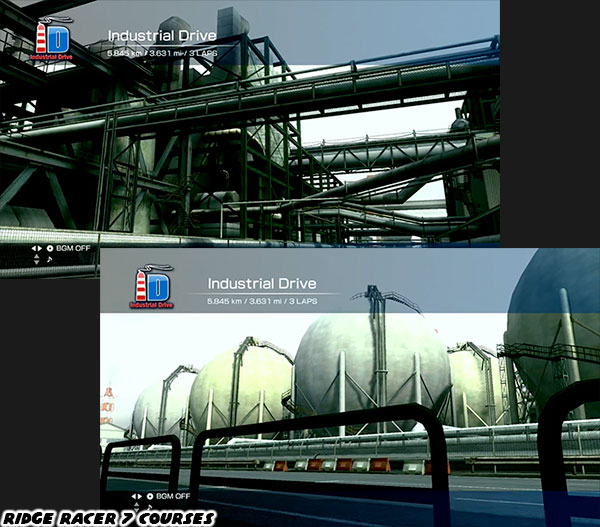
It was up to every other developer around the world to show that they had learned everything they could and could create quality masterpieces on their own. Namco differed from those developers because they were not focused on creating solely memorable tracks. They wanted to create worlds that were believable to audiences. On more than one occasion I would be reminded of the tracks in Ridge Racer especially as I drove through the industrial parks of Carson, the fancy hillside neighborhoods of Palos Verdes and the colorful splendor of the Los Angeles skyline at night. Elements from other cities like San Francisco and San Diego would stick out in the mind of this California resident. The levels Namco had designed would be like snapshots of an era. They perfectly captured the best elements of modern civilization. Whether players were racing through a mountain, airport, refinery or beach resort the studio had one goal in mind, consistency.
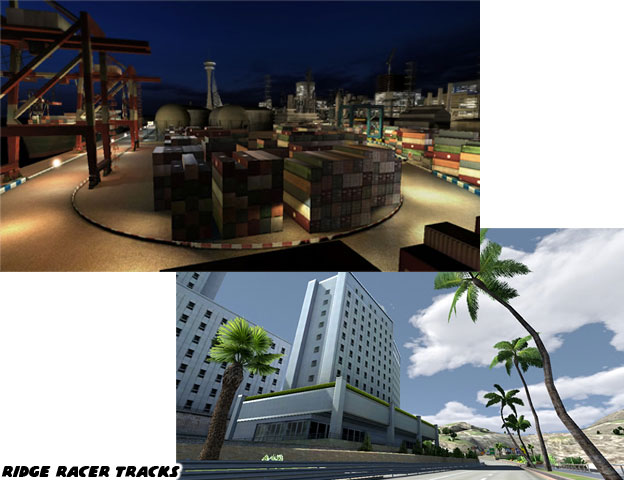
Ridge State was the ultimate destination to race fans. In order to convince game players of that Namco had to keep revisiting these locations. Each time they did they would make the site better than before. It was a terrible burden for Namco to keep the series alive. The original designers had jumped ship right after it was released and gave Sega a string of amazing driving experiences. Crazy Taxi and Sega Rally Championship could have very well been hits for Namco if history had gone differently. The team that filled in the gaps for the publisher did as much as they could with the few notes that were left behind. They managed to create the canon of Ridge City and Ridge State one road at a time.
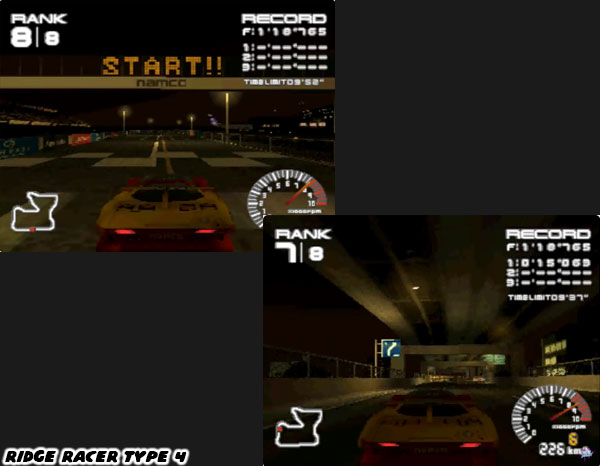
After 20 years and over four dozen tracks it was possible to say that Namco had the right approach. Places like Downtown Rave City, the Highland Cliffs, Mist Falls, Sunset Heights and Redstone Thunder Road would be remembered as some of the best tracks ever created. More important, these were all locations that had room to grow. Each course had blocked off paths that could open up and become incorporated in longer and more complicated courses. Bugbear Entertainment simply could not compete against the legacy established by Namco. The next blog will highlight the contributions that Ridge Racer 6 and 7 gave audiences. As always if you would like to sponsor me please visit my Patreon page and consider donating each month, even as little as $1 would help make better blogs and even podcasts!
follow the Street Writer on Patreon!

Monday, August 4, 2014

The Ridge Racer Legacy, part 21...

Bugbear Entertainment had a very specific vision for Ridge Racer Unbounded. They created a game with a certain tone and atmosphere. It was much darker than fans of the series were used to seeing. In order to get audiences to accept why the racers were willing to destroy their own city they had to give them a reason to. The city of Shatterbay had a very strong contrast between the political and business elite. Those that ran the city did so from the comfort of glass and steel skyscrapers. Everything away from the heart of downtown, pretty much the rest of the city was a slum. The actual working masses lived in poorly maintained, poorly run boroughs. The city looked worn and beat down from years of neglect. Buildings were all in muted colors, it had obviously been years since they had seen a fresh coat of paint. Trash and graffiti littered the streets and roads were in sorry condition. It didn't take much for the "Unbounded" to take the system apart one wall at a time.


The game was very much calling out to the frustration that the Occupy movement had been trying express. The inequity was what the 99% felt towards a system that was rigged against them. Social commentary had been very lightly sprinkled over video games for the past four decades. As storage, graphics and animation increased so could the ability to tell more complex stories. Strong political statements began to creep in over the past few console generations. Since some racing games were taking on the qualities of action titles then it was only a matter of time before some of the political themes would get carried over as well.

Unbounded was an extremely rare example of that type of game design and storytelling. The ability to race and destroy had always had a cathartic effect on gamers. It was not only crucial for the Unbounded story but actually made for a fun experience. Since the game did not actually have pedestrians to run over or carnage, as in Carmageddon, then the destruction was more acceptable for younger audiences. Sometimes it was okay to cut loose and just smash into things in a racing game. The release was similar to what violent fighting games did to get aggression out of fans.

Namco knew a thing about fighting games as well. They were well versed in creating worlds where heroes and villains were in constant battle. Their worlds were believable but presented much differently than those from the west. Bayshore, the location for several Tekken games, was as big if not bigger than Shatterbay. Yet there was a stark contrast between the way that metropolis was presented. The Japanese designers wanted to show a realistic world that also had a hint of futurism rather than nihilism. The logistical problems of a major city such as traffic, roads, and mass transit were always in the minds of the developers. These things were always present in the Tekken games. The cities were always alive and breathing, with traffic flowing back and forth and monorails carrying passengers to work. Even if these details could only be seen from a distance they were nonetheless there. Bayshore never looked old and neglected as did Shatterbay. The masses did live in gigantic apartment buildings and condos, but those buildings were as spotless as the skyscrapers that the powerful ruled from. There was no graffiti, no litter and nothing that would give audiences an unfavorable impression of the location.


Namco was not ignorant to the trends of the world. The studio knew that they could not present a completely utopian view of the civilization, especially within the Tekken series. War and strife were still very much relevant in canon, however that reality did not trickle down to the masses. The citizens of Bayshore and other Namco cities did not live in constant fear, nor were they protesting the establishment. The Mishima Zaibatsu and the G Corporation had done an impeccable job convincing the masses that they were working for the public good. They showed this by creating enormous public works projects, hosting the King of the Iron Fist tournaments and running cities which were seemingly free of any crime.

Of course the public works projects were usually building enormous underground bunkers for military units or research facilities for mad scientists. The Iron Fist tournament was a cover for paramilitary soldiers to try and out each other in front of the sponsors. Criminals were rounded up by the zero tolerance private police force or recruited by the Zaibatsu and other organizations. There was much more happening behind the scenes than gamers or even reviewers had realized. Namco created cities that would shine like a beacon to the rest of the world and at the same time hide a dark secret. By comparison Bugbear Entertainment thought that western audiences would not "get" that Shatterbay was corrupt unless it looked like an enormous slum.

Namco designers knew that the levels featured in their franchise titles had to look believable. Bayshore and Ridge City needed to have bustling ports, refineries, airports and freeways. These cities could not simply exist for the sake of fighting or racing tournaments. Although to be fair they were certainly laid out to cater to them. Namco had demonstrated that levels could have a tremendous amount of atmosphere without it being all dark and gloomy. Dusk could look amazing instead of ominous in an industrial area. Even an overcast day in downtown could look like paradise because of how the city was framed. Ridge City was even more utopian than Bayshore in this regard. It was hard to get an unfavorable take on the city because Namco was willing to let audiences enjoy the atmosphere.


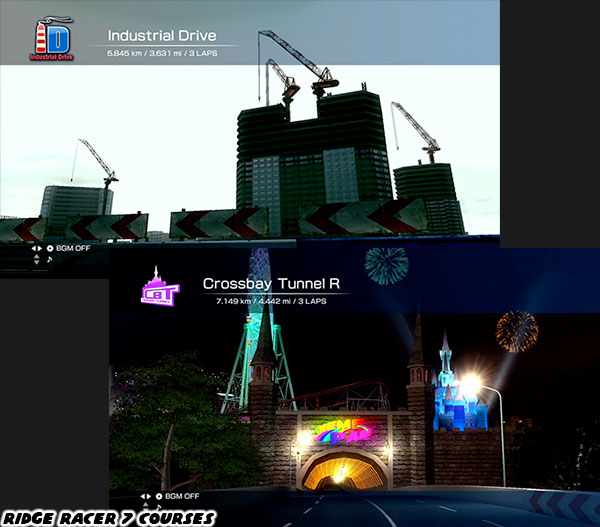
There were layers and layers of details that went into the creation of each stage in the previous Ridge Racer games. Unbounded seemed hollow by comparison. The manicured lawns, enormous fountain, European clock tower and craftsman-style mansions that lined the Old Central course. The neon splendor of the Crossbay Tunnel which ran under Rave City River. The span bridge that crossed Ridge Bay and had been a staple since the very first game. It was better known as the Harbor Line 765 circuit. It had been featured in many sequels and became symbolic for the series. Yet there was a small town in the shadows of that bridge. It was the original settlement that Ridge City had grown out of. The remains of a Spanish fort and an old pueblo had remained untouched for several centuries. The humble origins of the greatest Namco metropolis made up the Island Circle level. The juxtaposition of the old and the new was something very subtle. It was something that gamers might have overlooked. It was something that the gaming media may have even ignored. Yet it was also something that not every studio was capable of doing.

Bugbear had not paid close attention to the classic Namco levels. They missed the nuances that made up many memorable stages. Several of the locations featured in the series were as iconic as the race cars in the game. I would go as far as to say that they were as memorable as the fighters in the Tekken series. A great race course, both the real and fictional kind, could have a personality after all. The scenery that surrounded the locations, the personalities in attendance and sponsors that were cutting deals from private suites high above the courses. Every track told a story. Every city host had a history and roots as rich as Ridge City. Some of the best could be considered almost SEGA good in fact.


The best tracks in Ridge Racer had a timeless quality to them. Whether they were set in a bustling metropolis or in a jungle outcropping they did not instantly date themselves. By using a backdrop that looked a lot like current New York City Ridge Racer Unbounded locked itself into one era. In a few years the railcars would look even more dated than they already were. The muscle cars and exotics would be further our of place and the architecture, even for downtown, become antiquated. The dilapidated city of Shatterbay would no longer remain worth revisiting. Ridge City on the other hand would always be a welcome sight to fans of the franchise.

Bugbear did offer racers something that very few titles could. Ridge Racer Unbounded allowed them to create their own race courses and share them online with the community. Players earned the pieces for the basic and advanced editors by completing races and earning achievements. In the basic mode players could lay out a course by rotating and dropping curves and straightaways over a blank borough. Some sections of each track piece were designed with objects and obstacles that could be destroyed by the race cars. In the advanced mode players could add in additional details to each course including ramps, parked cars, walls and loops. These details could even be stacked and placed mid-air for the most creative editors.


The editor was not as easy to use as gamers had expected. In the PC release of the game it was broken from the onset. Players had to wait for Bugbear to release a patch to solve many problems with the editor. There was a surplus of courses online for players to try and review. It was as if for every one player a dozen variations was waiting for them. The drawbacks to Ridge Racer Unbounded, the lack of originality, began to show thanks to the editors. The same assets that the Bugbear had used to create the game were available to players. This was not bad in and of itself, however while racing through the game it was apparent that the developers had released a title that consisted of mostly edited set pieces. When those levels were combined with bland cars the experience felt cheap. It was not the Ridge Racer that I was a fan of.

Sandbox editors were nothing new to the genre. Trackmania by Nadeo lived up to its name. As one of the longest running PC titles with an editing program it had earned its name by allowing level authors to go completely crazy. Gamers could create courses that were as technically challenging as real Formula-1 stages, or they could create outlandish courses that would have been the envy of a Hot Wheels stunt track. The best part for audiences was that they didn't even have to be any good at driving to enjoy the racing experience. Some editors created tracks that were a series of twists, loops and free falls that would have been impossible to navigate. All the players had to do on these courses was Just Press Forward, or rather hold down the accelerator. The track would guide the car from beginning to end and allow gamers to enjoy the sights of the course. It was a lot like creating a dizzying ride in Roller Coaster Tycoon.


The editor in Ridge Racer Unbounded was not in the same league as Trackmania. Even with dozens and dozens of potential pieces to unlock and thousands of level combinations that they could come up with it was a drop in the bucket compared to what a more robust editor like Trackmania offered. The stages in Unbounded lacked the charm of the classic Ridge Racer tracks as well. The earlier Ridge Racer courses told a story. It was a story that would remain more promising than the future of Shatterbay. Namco tried to extend the life of the game by announcing Ridge Racer Driftopia in 2013. Essentially it was a free-to-play MMO racing game using the Unbounded engine. The spectacle of the action racing games was not enough to keep players engaged. It happened to Burnout and Need for Speed and would happen to Unbounded. Ridge Racer was a series that worked best when audiences lost themselves in the world that Namco had created. The next blog will take a closer look at what Namco lost when they went with the vision laid out by Bugbear Entertainment. If you would like to sponsor me please visit my Patreon page and consider donating each month, even as little as $1 would help make better blogs and even podcasts!
follow the Street Writer on Patreon!

Tuesday, July 8, 2014

The Ridge Racer Legacy, part 5...

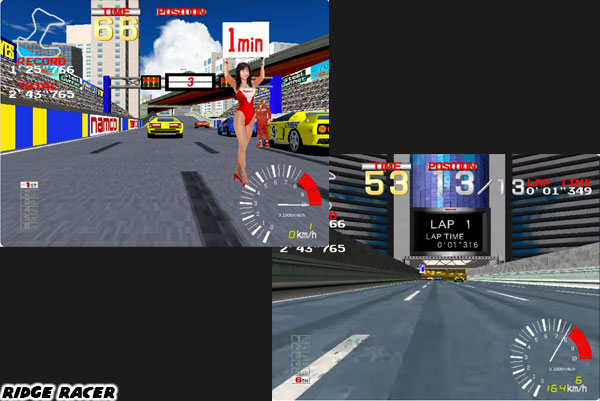
Sega had set the standard for arcade racers and Namco could never quite topple their legacy. When it came to track design Sega was unparalleled. They had demonstrated that a great track could and should tell a story. The developers at Namco on the other hand wanted to create a city that was perfect for street racing. It had to be somewhat believable but have elements that made it a drivers paradise. The story that Namco would create would be based on a town that celebrated racing in every format. The studio invented Ridge City. It was an interesting location but the story took a while to develop.

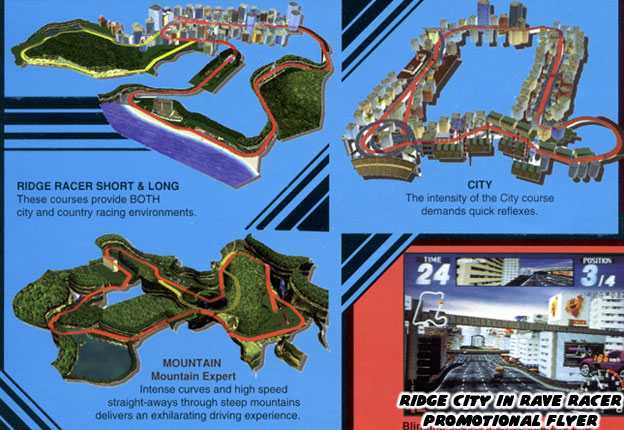
The town had influences from Japanese cities, European countrysides and USA bay area scenery. Courses were designed based on the layout of the city, its roads, highways and residential neighborhoods, coast and mountain range. Multiple circuits would evolve over the years based on portions of these tracks. One might cut through the cities and the mountains, one might cut through the beach and the city as well. Players could get used to familiar portions of the track and become very adept at racing through them at very high speed.

Expressways would be connected by massive, colorfully lit tunnels. Bridges of different types would connect valleys and islands on the absolute outskirt of town. Circuits were not limited to the freeway system either. They could go through an industrial strip, suburban paradise or an airport runway as well. The exact layout of Ridge City would become standardized through the life of the franchise. In Sega racing games the tracks in one title had nothing in common with those in a sequel. They all looked fantastic however and all told an amazing story. As Ridge City grew it told a story that was more grounded in reality. The courses felt familiar to players through every sequel, it was like revisiting a friend each and every time they started a new race.

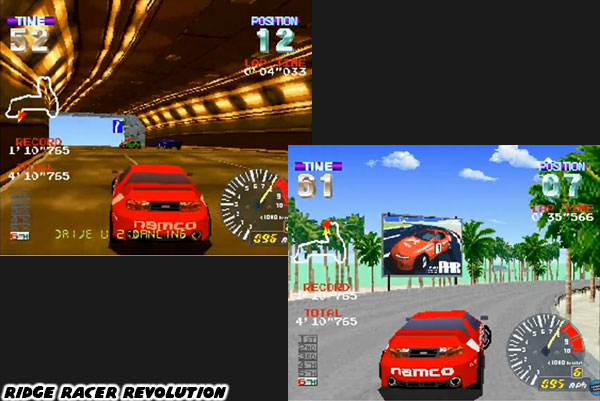
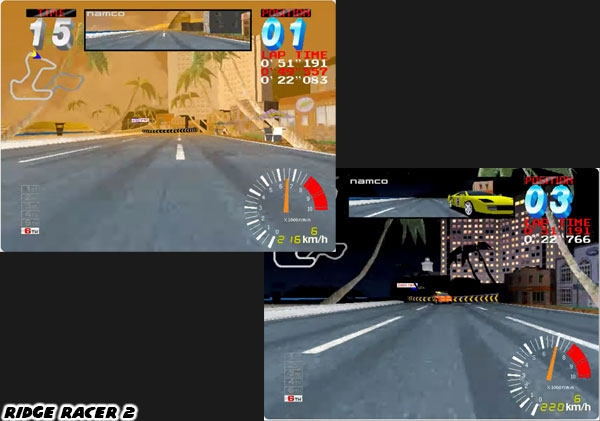
The studio was eager to expand on the locations featured in the game as well as the themes that each track explored. They wanted to create a narrative on the city, or cities based on landmarks, architecture and road layouts. In short they wanted to introduce the art of storytelling to the circuits. They did this in the third game of the series, Rave Racer from 1995. The track layouts were much more dynamic in the game, with roads rising and falling very sharply in elevation. When that was combined with the see-saw action of the screen it was easy for players to get disoriented. The designers were trying to give audiences a sense of speed with the graphic tricks.

Rave Racer expanded greatly on the types of winding courses that the series would become synonymous with. Mediterranean architecture and European rally influences had begun to creep into the layout as well. Within three games the courses had grown large enough to outgrow the city backdrop and include the entirety of Ridge County. Sega may have created the most exotic of locations but there was something to be said of all the how diverse one location had become.

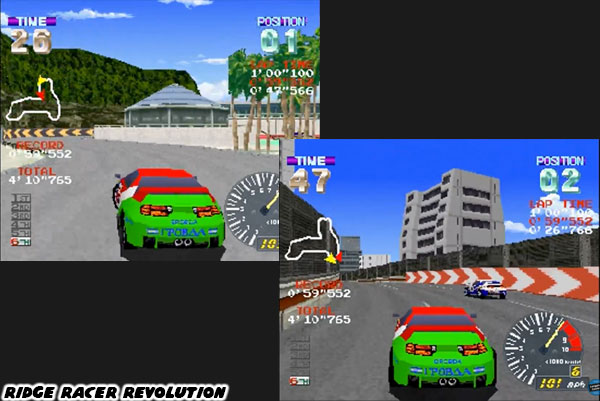
As the series went on the development teams would literally pick up where they had left off. Not all audience members had realized it but Ridge City was in a perpetual state of construction and refinement. Each time drivers visited the game they were supposed to feel as if nothing had changed. The cars were all still very sporty and the drifting mechanic was still a major selling point however audiences were encouraged to look beyond the retaining wall. Ridge City itself was growing in between the games. Buildings that were being erected in one title had been completed a few years down the road. Warehouses, and docks that once stood empty were now bustling with ships and traffic.

The skyline of the virtual city was in a constant state of flux just like the real world cities. In terms of graphics the game was only going to look better over the next 20 years but the heart of Ridge City would remain. The Sega race tracks would always be memorable to arcade visitors but the courses from Ridge Racer would also retain a sense of timelessness for console owners. It was the shift to the Playstation that had the biggest impact on the evolution of Ridge Racer. The console could never match the visual quality of newer arcade racers but it did offer satisfying ways to experience the racing genre. Some of the biggest and best moments in the franchise were owed to the games that followed Ridge Racer Revolution. The next blog will look at one of these titles. As always if you would like to sponsor me please visit my Patreon page and consider donating each month, even as little as $1 would help make better blogs and even podcasts!
follow the Street Writer on Patreon!