Showing posts with label rave racer. Show all posts

Thursday, July 24, 2014

The Ridge Racer Legacy, part 17...

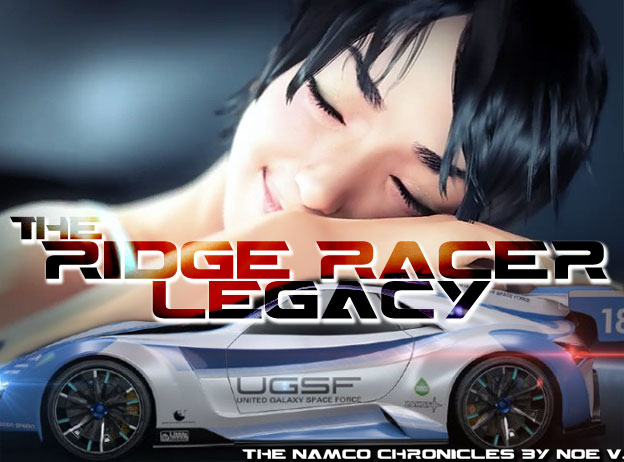
When Kei Yoshimizu redesigned Reiko Nagase and turned the character from a race queen to a mascot for Ridge Racer he had lofty goals for her. The CGI artist and animator was trying to convince the world that a female lead in a male dominated sport was long overdue. He had to break the perceptions from his fellow Japanese developers as well as those from the US. A woman could meet the Western ideals of femininity while also becoming a symbol for power and grace in the process. In order to do that she had to go against the grain. Her short haircut was not only fashion forward, it was something that would never have been expected of a female lead in any Japanese game, manga or animé. It would take more than a decade and a half before audiences became aware of the perspective that Kei and his RR Project members were going for.

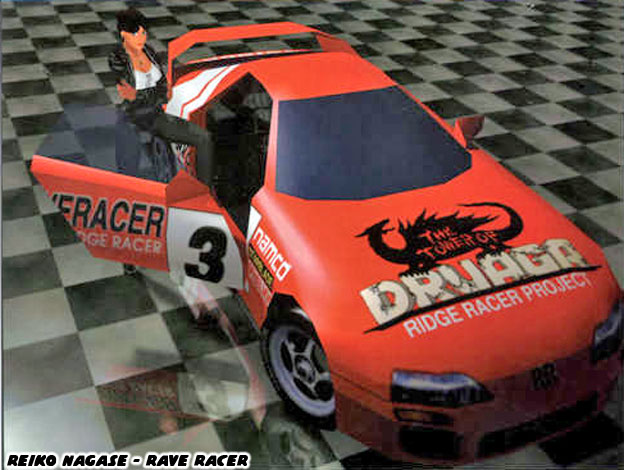
In the early Rave Racer flyers and promotional material Reiko was posed next to a race car. Yet she wasn't used exactly like a model would have been at an auto show or magazine spread. She wasn't laying in front of the car in a bikini, nor was she holding up a grid card. With arms crossed and a foot in the door Reiko stood defiant. Since it was a Japanese car Reiko was actually standing on the driver's side.

She was not posing next to A car, she was posing next to HER car. The pants and leather jacket were not part of some scantily corporate uniform. This was the real Reiko and this was her ride. Audiences seemed oblivious to this statement. All they had known for years and years was that the drivers were men because racing was a man's game. If a woman was in the title then she was just eye candy, a paddock girl and nothing more. Mr. Yoshimizu was very progressive when he changed the look and purpose of Reiko. If Namco was serious about developing a mascot for their racing franchise then she could not be a throw away character. Reiko had to have as much of a backbone as any action hero. From this point on Reiko would have to perform the double duty as a model and driver.

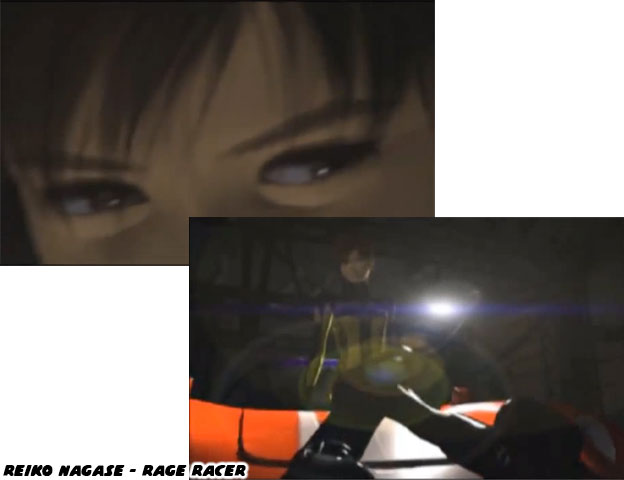
In the opening cinematic (attract screens had gone out of fashion for console games in the mid '80s) Reiko was actually shown sitting on the hood of the cover car in Rage Racer. The all red with white stripes Assoluto Fatalia was one of the most desirable fictional race cars in the series. She was wearing boots and a yellow uniform. Eagle-eyed players saw it was one of the dresses she would wear after she became a sponsored model. The dress looked like a blend of leather and Nomex, a fireproof material. The sharp yellow and black pattern could easilyhave doubled as her racing uniform. The pairing of Reiko with one of the fastest cars in the game was definitive of the series. It was a blend of style and substance that kept people coming back.

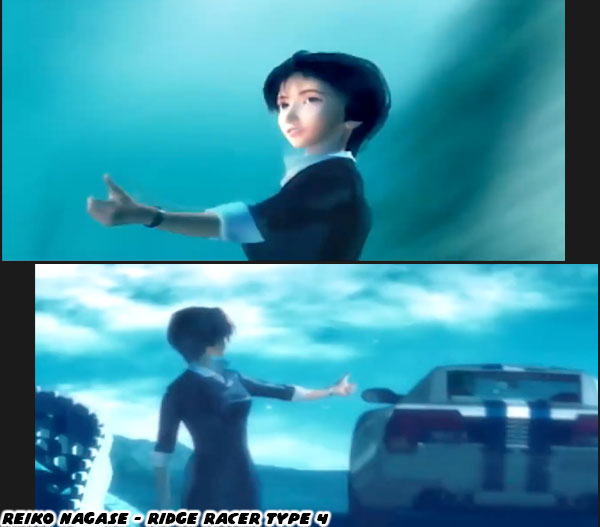
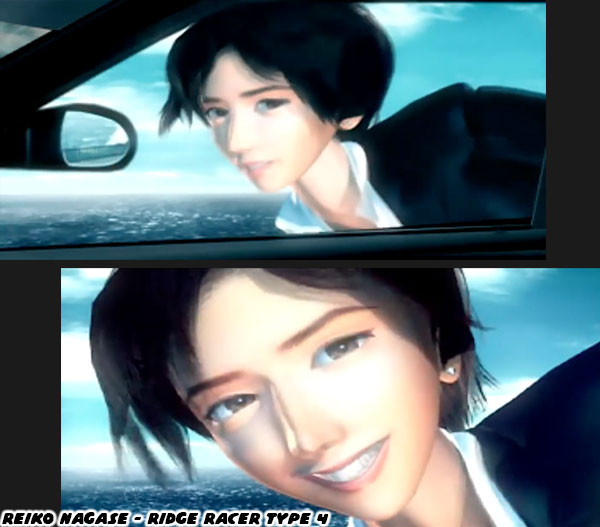
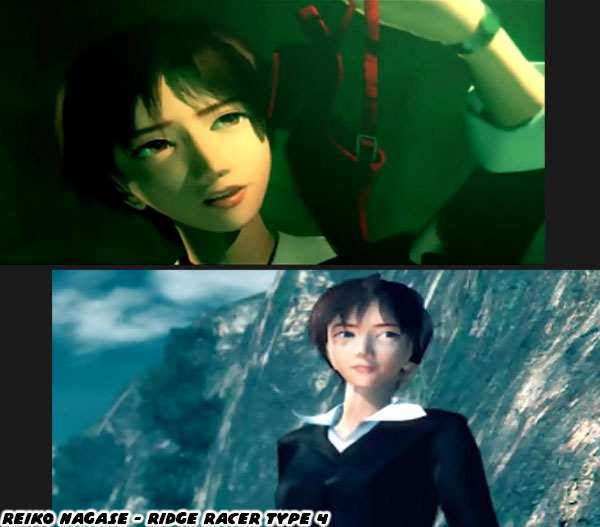
In future revisions of the series Namco did not want to make Reiko appear as a one-dimensional racing character. One that was never seen outside of her racing uniform, like Gina Cavalli or Rena Hayama from R: Racing Evolution. Reiko would be above all else a very feminine character. Mr. Yoshimizu would direct her in multiple openings for the series. Reiko's most memorable of course was her 1999 feature debut in Ridge Racer Type 4. However there was a gap where she wasn't seen for the next few games. In fact Gina appeared as the mascot on the Nintendo DS version of Ridge Racer in 2004 instead of Reiko.

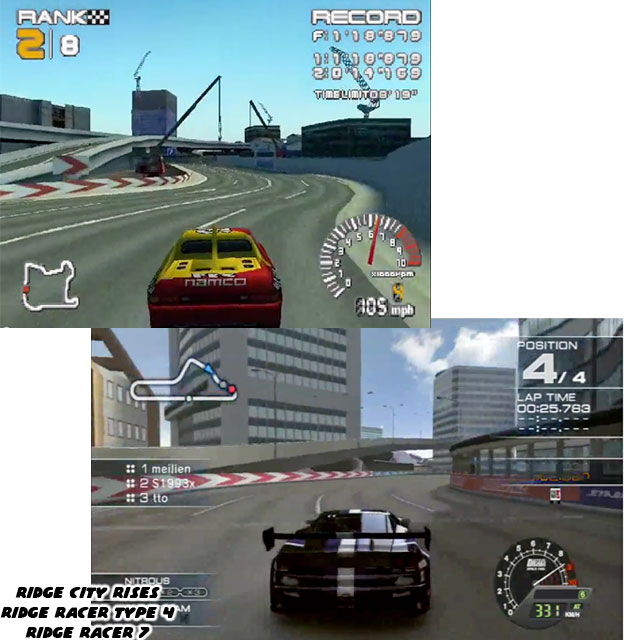
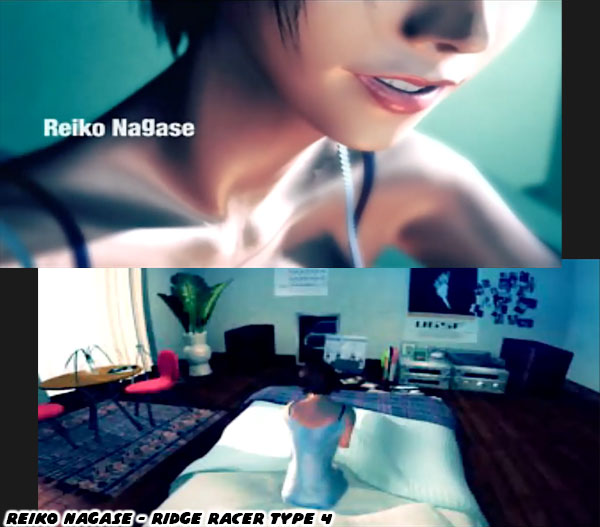
When Reiko returned in Ridge Racers for the PSP later that year it was as if she had never left. The model was timing a Soldat Raggio with a stopwatch while she was lying on top of a yellow Assoluto Fatalia. Without saying a word the character stepped down from her car barefoot. This was a nod to the heel she broke in the R4 opening. The character appeared absolutely charming as she met the Soldat on the road. A year later the game made it's debut on the Xbox 360. In the intro to Ridge Racer 6 Reiko was seen lounging in her apartment and dreaming about racing. That build of the game got even more polish and was released on the Playstation 3 in 2006 as Ridge Racer 7. In the new intro Reiko was seen modeling in front of a projector screen, pretending to take a leisurely drive.

The same year that the Playstation 3 had their new Ridge Racer title Namco had released the PSP version of Ridge Racers 2. Sony was reaping the rewards of a long partnership with the company.
Reiko had returned with stopwatch in hand to time another race. The model would appear on projector screens on several courses within the game. The most famous celebrity in Ridge City had become synonymous with the tournament. The personality of Reiko was fleshed out with every new video released by Namco. The one thing that had been lacking through most of the new millennium was a connection to her actual racing passion. The studio had forgotten that as playful and sexy as they wanted to present Reiko, she was still a driver at heart.

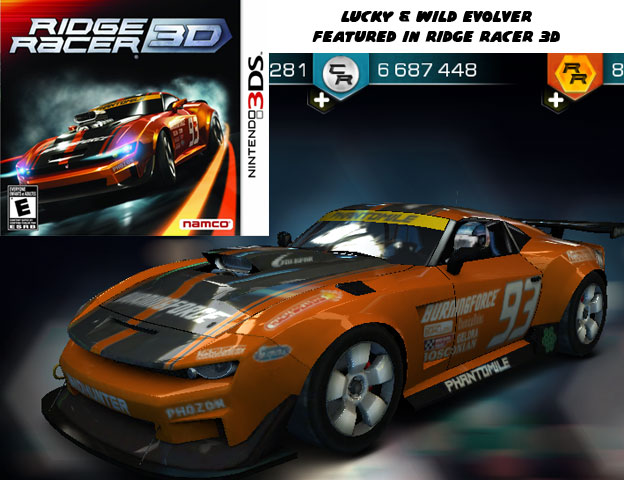
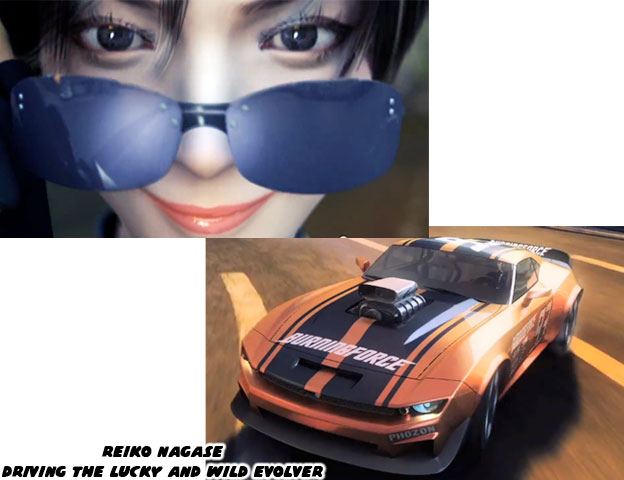
That finally came through in 2011 when the series made its debut on the Nintendo 3DS. Reiko finally left her heels behind and put on a pair of sharp racing boots in Ridge Racer 3D. Every build of the series tended to highlight a particular manufacturer. Although they were all fictional it was still a sign of respect that the Japanese developers had shown the rest of the world. The European companies had gotten a lot of love over the past 20+ years and the USA was finally due for some attention. Reiko was driving the car featured on the box, the Lucky and Wild Evolver. In fact she was performing double duty on the track. She was also driving the final rival car in the game, the Lucky and Wild Marauder.

When Reiko had returned to the series Namco had found its second wind. The studio decided to go back to its roots and try to rebuild. Their goal was to define the Ridge Racer experience for the consoles. The Playstation 2, despite its advanced features had been dismal for the series. They had a lot of catching up to do when other racing games appeared out of nowhere to dominate the market. The definitive Ridge Racer title would take a decade to materialize. The development process would add entirely new chapters to the history of racing games. Some things worked and some did not. Some things would be copied by rival studios and some would better be left forgotten. The next part of the series will explore what happened to the genre while Namco was shifting their operations to focus on consoles rather than the arcade. As always if you would like to sponsor me please visit my Patreon page and consider donating each month, even as little as $1 would help make better blogs and even podcasts!
follow the Street Writer on Patreon!

Wednesday, July 23, 2014

The Ridge Racer Legacy, part 16...

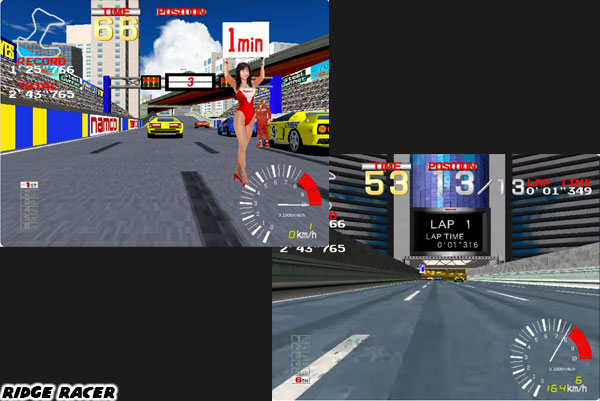
Arcade fans noticed the leggy grid girl Reiko Nagase in the original Ridge Racer. She was the only sprite-based character in the otherwise all-polygon graphics engine. Reiko was designed as "cheesecake" for the male audiences. She wasn't the first character designed for that purpose but most certainly became the longest-lived. In fact when she was put into the game she didn't have a name. By no stretch of the imagination did Namco make up her role. In many professional racing circuits models wearing team livery were used to pose next to the race cars and motorcycles and sometimes accompany drivers to the pit. The term paddock girl became synonymous with the skimpy costumed models.
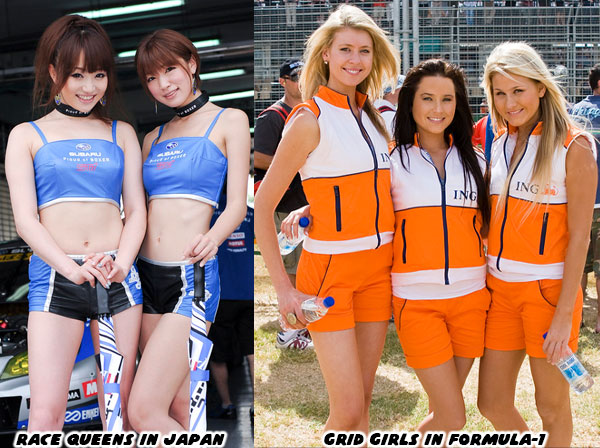
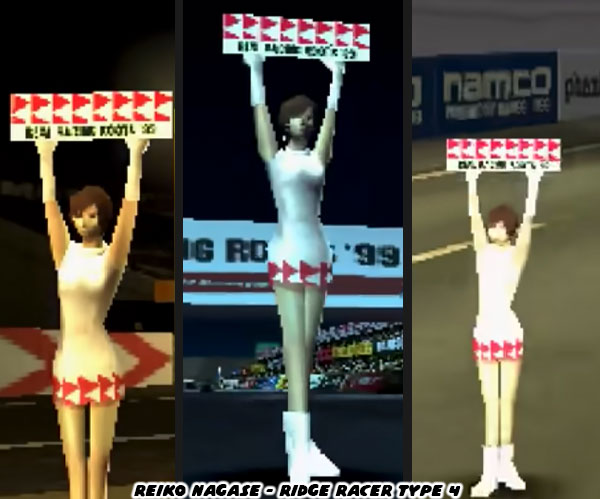
In Japan they were referred to as race queens and dressed sightly more modestly. They often wore pantyhose and one-piece swimsuits in order to minimize the skin show. Reiko had long hair originally and was presented with more class than the typical paddock girls. There was something interesting however about her and her fellow race queens when compared to the women that had appeared as eye candy in early titles.
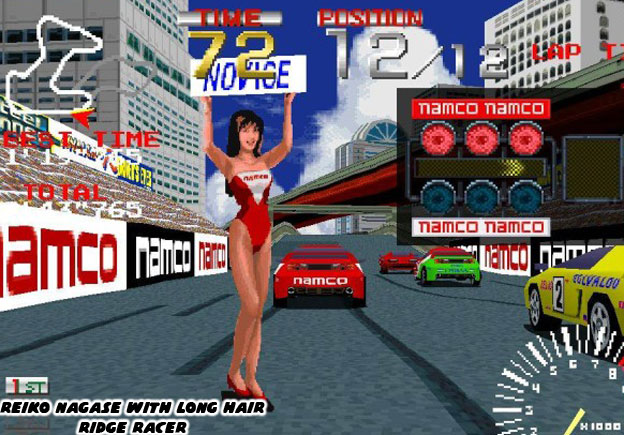
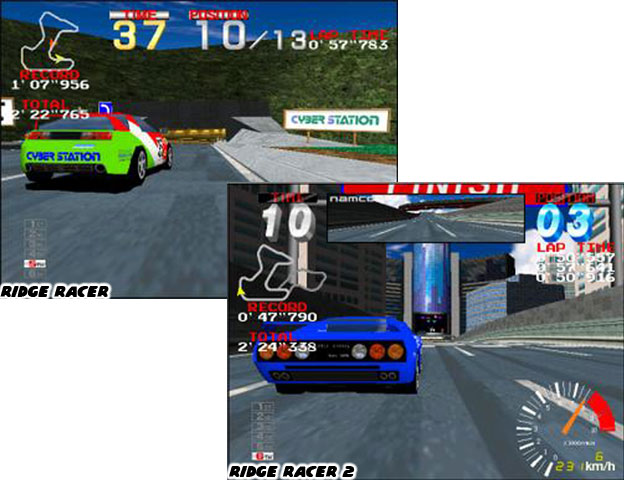
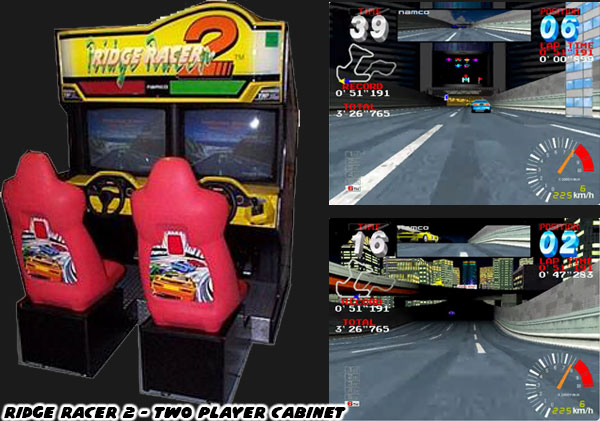
The race queens in Ridge Racer would keep the long hair and bright costumes for several more appearances. Namco had retconned the other grid girls holding up the title cards as Ai Fukami and Hitomi Yoshino. The developers saw potential in having a race queen become a mascot for the series but it would take a radical internal shift to pursue that idea. When Namco lost the original Ridge Racer team to Sega they began trying to reframe the game and save what they hoped would become a franchise that would rival the earlier Pole Position smash hit. Ridge Racer 2 from 1994 was very much a "safe" sequel from the new developers. It improved the framerate, physics, tracks and car selection but was otherwise a plain experience. It was the subsequent game that really began to push a new direction and establish the elements that would indeed turn it into a franchise.
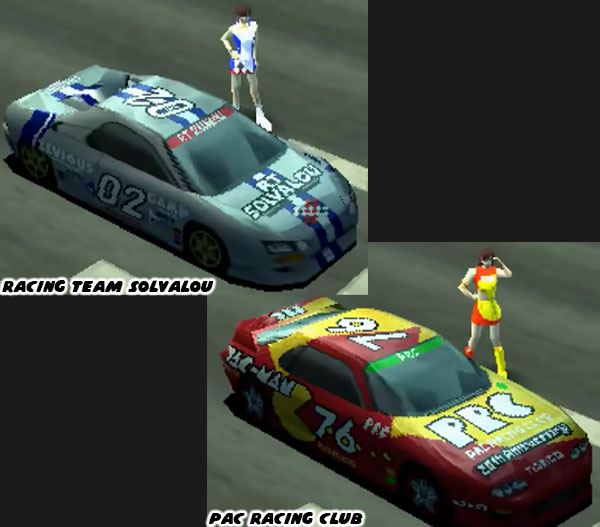
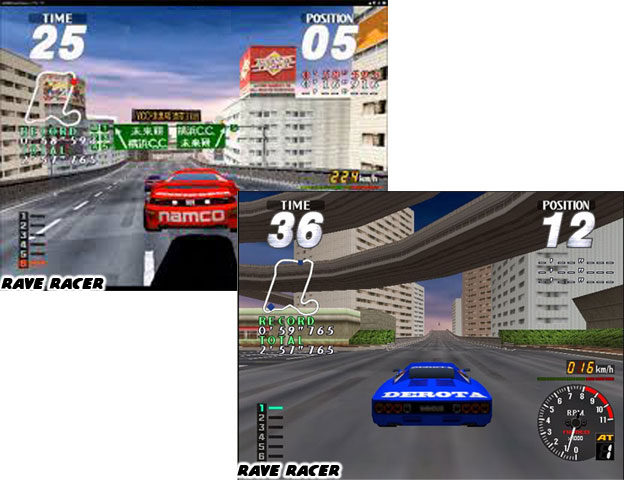
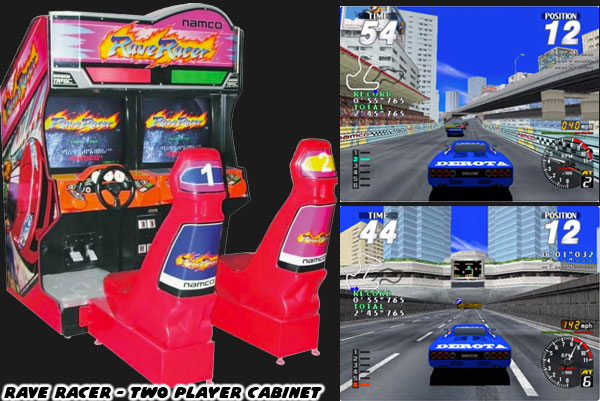
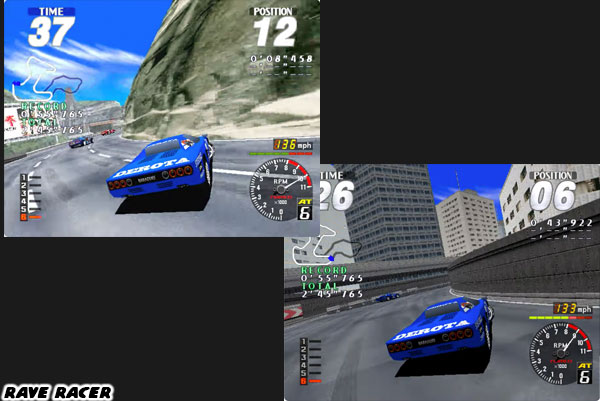
In 1995 arcade visitors had no idea what type of dramatic shift that Namco had planned. The third game was an experiment. Dubbed a Ridge Racer Project the re-titled Rave Racer had a frenetic soundtrack and wild graphics that made the game play more like a music video and less like a simulator. Even the attract screen was directed like a music video. In the '80s arcade games would just go through a loop of gameplay footage and feature a title screen. As technology improved so did the ability to present graphics and audio with greater fidelity and more channels of sound and color. Developers would sometimes create original music and animations that would play on loop when no one was on the game. These features were designed solely for the sake of attracting players to the cabinet. They did not have to rely on actual game footage to sell the experience. Hence they earned the name Attract Screens. Rave Racer had a short but memorable attract screen, it stood out among its contemporaries because it was not pre-rendered game footage.
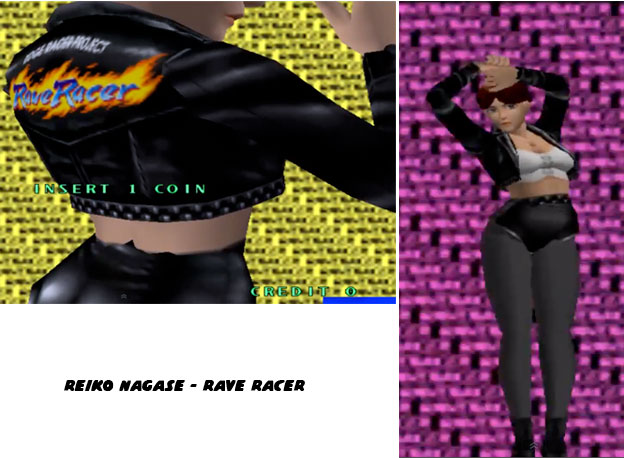
When Rave Racer was sitting idle it would start blasting its soundtrack and try to get the attention of arcade visitors. When they would look there would be a polygonal female model posing for fans. Her turnaround animation was inter-cut with images of race cars sliding around corners. It was one of the more innovative attract screens seen in that era. The star wasn't a typical race queen, not by any stretch of the imagination. With a new short haircut and sporting a leather jacket, shorts and a bare midriff this model was the archetypal "hot girlfriend." She certainly looked more approachable than the models wearing corporate logos featured in the previous games. She had actually predated the look used for Ai Fukami by a decade. This model did not have an official name but Namco would hint later on that it was Reiko from the original game. Her makeover was a hit with audiences. The new Ridge Racer team would continue to build an entire mythology of Ridge City around this character.
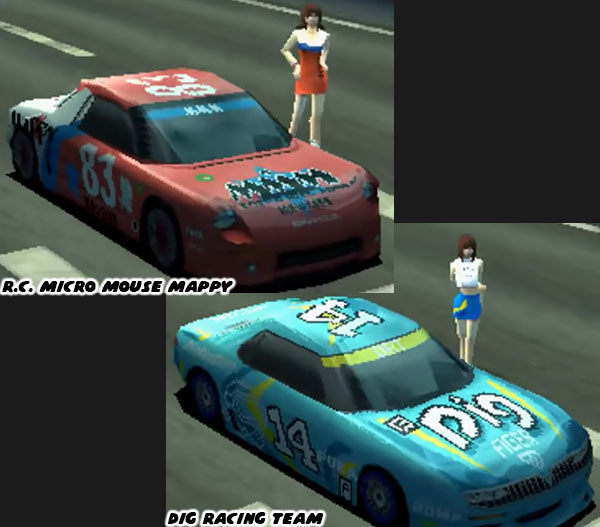
The studio had begun developing and adapting titles for the fledgling Playstation console in the mid '90s. This lead to Reiko becoming a more refined character. In 1997 Rage Racer introduced an entirely new side to Ridge City. It was as bold an experiment as Rave Racer was. The electronica soundtrack was still part of the experience but visually it was a bit more grounded in European architecture and gritty realism. It still allowed for the over-the-top car physics to sell the action. The short-haired race queen had returned and was given an official name. For the first time in Ridge Racer history audiences got a chance to see this character grow right alongside the driver.
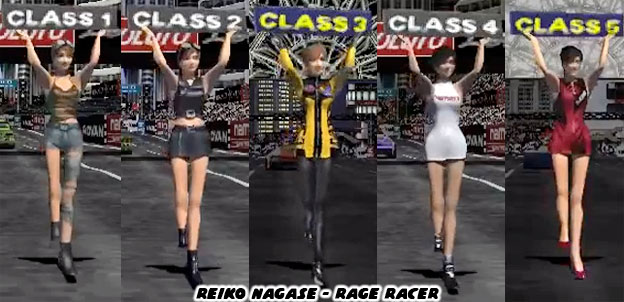
The model had started from humble origins, just like the player, and had to work her way up through the different classes. Rage Racer started off with slightly modified production cars, something that an enthusiast could do his or herself over the weekend without any sort of sponsorship. In those races Reiko was dressed in street fashion. She wore torn jeans and a tank top. The corporate sponsors has not yet discovered this "talent." As the player improved in the rankings and was able to afford faster machines and compete against bigger teams they would run across Reiko again and again. Each time her costumes had improved and her presence had grown within the community. She went from fantasy girlfriend material to supermodel status in the course of the game. Her modeling career had taken off in canon but was for a game not often recalled by the game players.
Kei Yoshimizu was the director of both Rave Racer and Rage Racer. He had been establishing Reiko's new look through the '90s. He had created her original models and animation and would continue to update the character over the next two decades. When he started he realized that the flat pixel models from the original Ridge Racer would have to be redone. He started modeling new characters in 3D but felt the crunch of a deadline fast approaching. Namco wanted to get some promotional material out with their new mascot. Kei didn't have a long-haired model to use for reference so he did the fastest thing he could. He shaved his face and took some pictures of himself to work from.
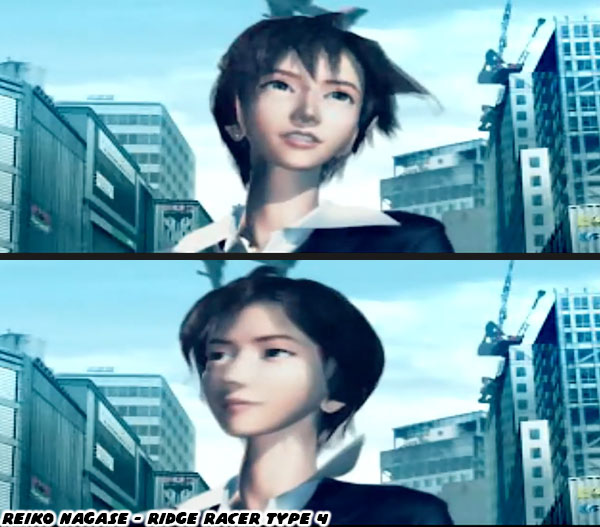
He scanned in the photos to create the original textures for the character. He retouched them to give him, or rather her, flawless skin, new lips and changed the jawline a little. The short, tomboyish hair was done out of necessity. Hair had been a stumbling block for many developers and animators. Kei didn't have time to figure out how to recreate the original flowing race queen hair in 3D. He thought it would be better to keep her hair short and a trend was established. Reiko could still be very feminine and even "girly" while promoting race culture.
The revelation that Kei was the basis for Reiko shattered the dreams of some fans. They were hoping to find out that Reiko was inspired a real person but not necessarily a real man. This bit of trivia was not widely known to the arcade community let alone the greater gaming community. Undoubtedly many young men would have been heartbroken to find out. As such Namco was really finding that the virtual idol made for a great mascot. Her likeness was used for some of the pre-designed graphics that players could use as stickers on their cars in Rage Racer. The company would beginning putting the face of Ridge Racer out on ads in Japan as well as the US.
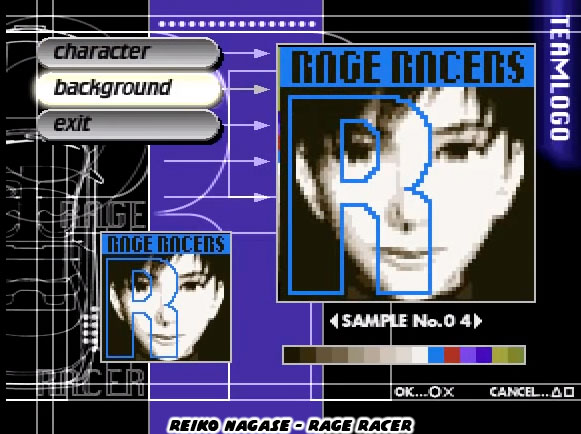
Despite the newfound popularity of the character Namco was not certain if she had staying power. The developer made sure to give Reiko a very strong push in Ridge Racer Type 4. They featured her on all the assets and promotional materials sent out to reviewers. Many of the media outlets in Japan and the US made sure to use a version of the character for their articles and even on the covers of their magazines. Yet no sooner did the studio do that than they dropped her altogether. Instead of casting Reiko in R: Racing Evolution they created a new idol that looked very similar to her named Rena Hayami.
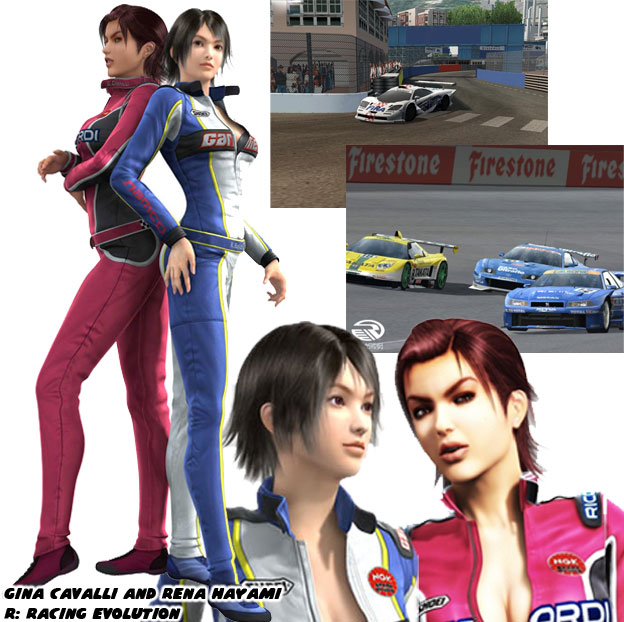
In the intro for Ridge Racer V with Ai Fukami was retracing the steps featured in the attract screen of Rave Racer. The muse had disappeared almost overnight. It could be argued that the Ridge Racer series had its most turbulent showing during her absence. Was Reiko the glue that held the series together? The next blog will highlight the importance than one character could have on a series and an entire universe. As always if you would like to sponsor me please visit my Patreon page and consider donating each month, even as little as $1 would help make better blogs and even podcasts!
follow the Street Writer on Patreon!

Wednesday, July 9, 2014

The Ridge Racer Legacy, part 6...

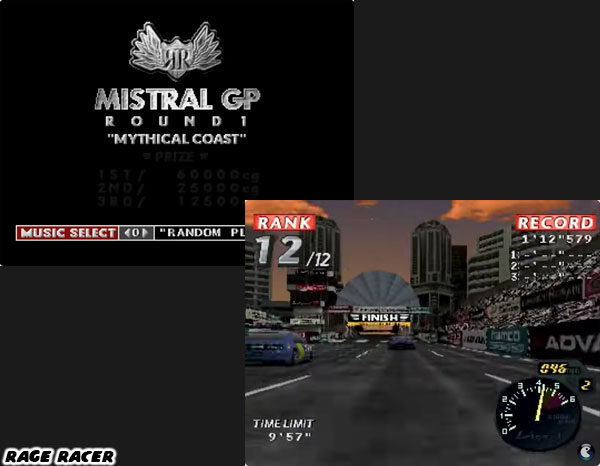
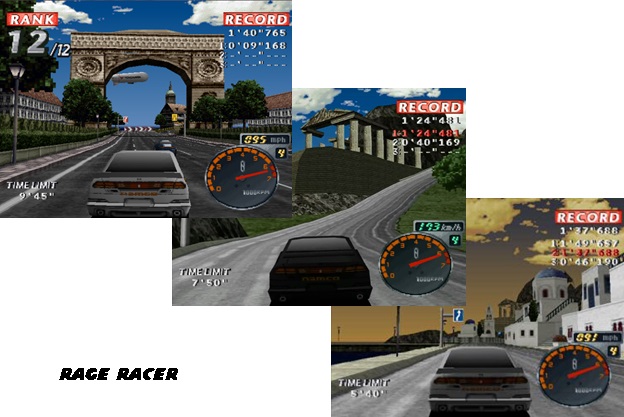
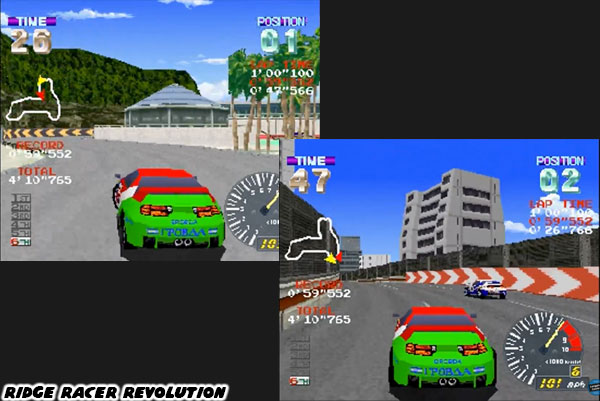
Rage Racer was the first completely original sequel designed from the ground-up for the Playstation. Namco had taken to heart everything that worked in Ridge Racer Revolution but cleaned the slate in order to start from scratch. The 1997 hit was at the time considered one of the best racing games ever created. Creatively it was an entirely new way to interpret the franchise. The over-the-top celebratory nature of the original arcade hit became much more subdued. The entire city had still turned out for the race but it was carried out in a much more serious affair.

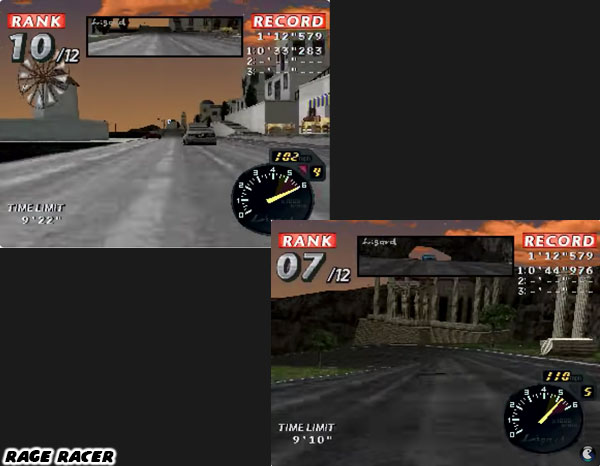
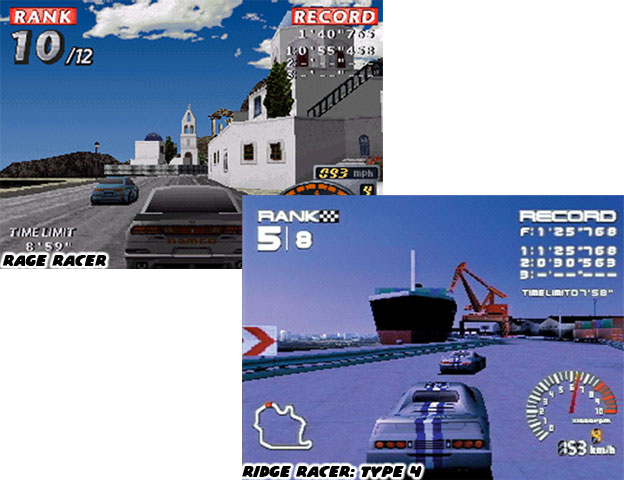
The racers were fueled by a sense of urgency and an insatiable desire to compete according to the opening cinema. The colors had become more muted, the tracks had changed and the city transformed from metropolitan to classical European. French arcs and Spanish cathedrals were mixed with whitewashed Mediterranean villas and Greek temples. The eerie part was how much this new city paralleled Ridge City. The trademark for many Ridge City courses was driving underneath a modern mirrored skyscraper at the start of each race. Rage Racer had the cars drive through a gothic temple instead. It was as if audiences were going through the classical European sister city instead of the traditional Ridge City. The new artistic direction had completely rethought the world and canon of the game.

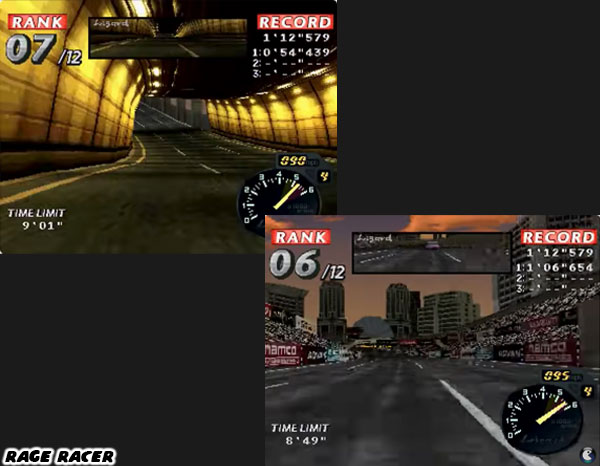
The title had a few tracks, the Mythical Coast, Over Pass City, Lake Side Gate and The Extreme Oval. Yet each of these courses was also very long and challenging. The world had been influenced greatly from the work that the team had put into Rave Racer a few years prior. The courses went up and down steep hills creating massive jumps exhilarating blind turns to test the courage of racers. The courses also included a large number of banked curves which were different than the flat roads that the drift-friendly streets of Ridge City provided. Even small details were not overlooked. The helicopters that were prevalent in earlier entries had returned but now they were joined by a blimp which also followed the action from high overhead. Visually the game looked like an improvement over Ridge Racer Revolution. New graphical touches were added as standard features. The time of day for example changed depending on which class players were competing in.

The morning, noon and night lighting added a lot of atmosphere to the game. Players were encouraged to personalize their cars. The game came with an editor that allowed players to change the color of their car and body kit and even add decals to the hood. While customization is in multiple genres today a few decades ago it was revolutionary. Players could also choose the song that would play on each course using a sort of radio selector in the menu screen. It was a nice touch that allowed players to enjoy their favorite mix as they tore through the circuits. Many of the manufacturers from previous games had returned but they featured new models of the familiar cars. Players had to race and earn enough prize money to afford faster cars.

The pace of teach race depended on the class that was competing. The learning curve was not bad considering how realistic the cars handled at the beginning of the game. Drivers still had to obey the common techniques in order to win races. They had to know when to brake, how to approach the apex of each turn, how to draft behind an opponent and even how drifting worked for certain roads and not others. As the player went up in class then the speed at which the tracks were played went up by a few miles per hour. Players had to learn to respond faster to each course and even anticipate the turns ahead of time. Little by little the difficulty would increase and before players knew it they were blazing through the courses at insanely high speeds. The Diable GP for example featured an extreme class of cars that handled like the Angel 0 and Devil 13. The cars could accelerate like a rocket and take turns at over 200MPH. Had the game started at that pace then gamers would have thrown the title out of the window. In the final races players were almost expected to be pre-cognizant as to every turn and opponent a second or more before they got there. Yet somehow instead of being upset with the difficulty players had become addicted to the quick pace and demand for equally fast reflexes.

There was nothing magical about what Rage Racer did to audiences although it seemed like that after a few hours of playing. The developers knew that in order to become great at a racing game players would have to compete through the same courses again and again. This made racers familiar with the course but it also built muscle memory. Racing on the same course multiple times could get tedious but Namco had the answer. Rotate through the stages, change the time of day in order to limit the distance players could see ahead of them and make the competition a little harder. In this way players would get to relearn each stage and be encouraged to buy nicer cars in order to keep up. By increasing the pace of each stage a little bit in each class the players were being programmed to respond and react faster and faster. By the final courses the muscle memory was completely dialed in and players knew the best lines to take without even having to think about it. Audiences could fly through turns with flawless precision and shave minutes off of their best times. Rage Racer turned out to be more than just a fantastic game for the original Playstation. It made serious racers out of even the most casual game players. That was something that not many console games could ever claim to do.

It would take a few years for Namco to come up with the next iteration of the series. As experimental as Rage Racer was it did not encapsulate how far Namco was willing to push the franchise. In 1999 the studio debuted R4 Ridge Racer Type 4. Considered by many to be the peak of the franchise and most accessible sequel. To compare it to a different game it was the "Tony Hawk's Pro Skater 2" of the series. It was a game that made everyone feel like they could finally understand the appeal of the genre and at the same time provided enough of a challenge for die-hard fans to keep returning. The next blog will take a closer look at what the fourth game did for the series. As always if you would like to sponsor me please visit my Patreon page and consider donating each month, even as little as $1 would help make better blogs and even podcasts!
follow the Street Writer on Patreon!

Tuesday, July 8, 2014

The Ridge Racer Legacy, part 5...

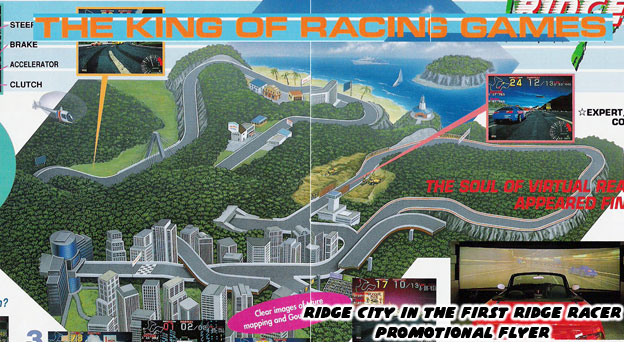
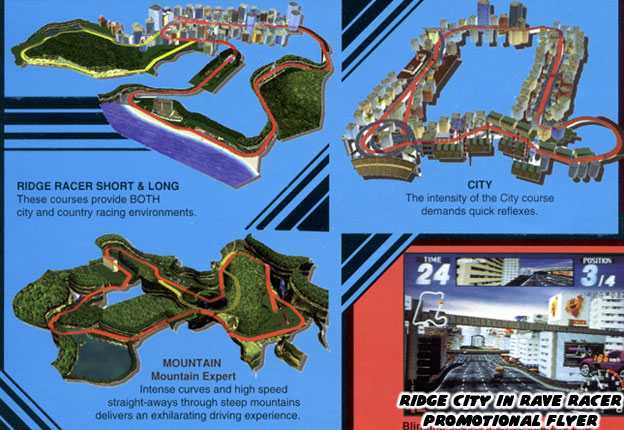
Sega had set the standard for arcade racers and Namco could never quite topple their legacy. When it came to track design Sega was unparalleled. They had demonstrated that a great track could and should tell a story. The developers at Namco on the other hand wanted to create a city that was perfect for street racing. It had to be somewhat believable but have elements that made it a drivers paradise. The story that Namco would create would be based on a town that celebrated racing in every format. The studio invented Ridge City. It was an interesting location but the story took a while to develop.

The town had influences from Japanese cities, European countrysides and USA bay area scenery. Courses were designed based on the layout of the city, its roads, highways and residential neighborhoods, coast and mountain range. Multiple circuits would evolve over the years based on portions of these tracks. One might cut through the cities and the mountains, one might cut through the beach and the city as well. Players could get used to familiar portions of the track and become very adept at racing through them at very high speed.

Expressways would be connected by massive, colorfully lit tunnels. Bridges of different types would connect valleys and islands on the absolute outskirt of town. Circuits were not limited to the freeway system either. They could go through an industrial strip, suburban paradise or an airport runway as well. The exact layout of Ridge City would become standardized through the life of the franchise. In Sega racing games the tracks in one title had nothing in common with those in a sequel. They all looked fantastic however and all told an amazing story. As Ridge City grew it told a story that was more grounded in reality. The courses felt familiar to players through every sequel, it was like revisiting a friend each and every time they started a new race.

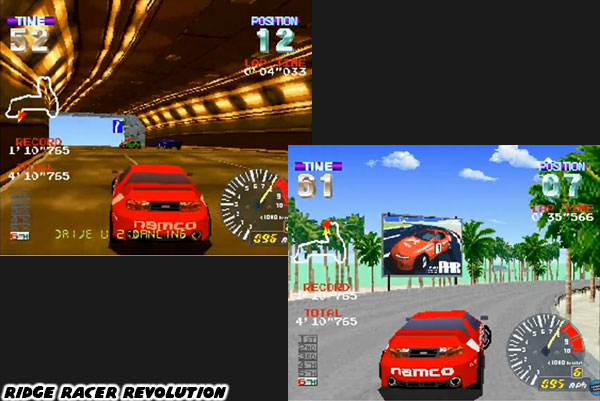
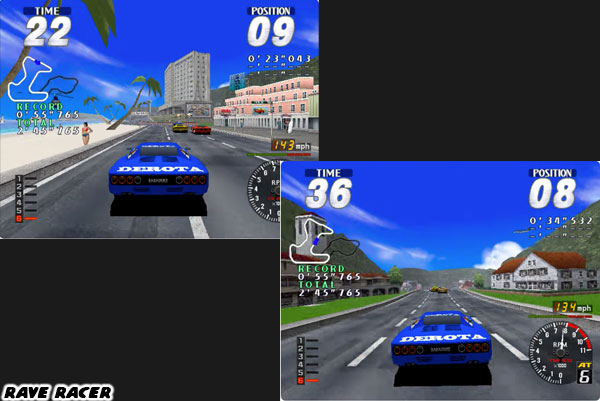
The studio was eager to expand on the locations featured in the game as well as the themes that each track explored. They wanted to create a narrative on the city, or cities based on landmarks, architecture and road layouts. In short they wanted to introduce the art of storytelling to the circuits. They did this in the third game of the series, Rave Racer from 1995. The track layouts were much more dynamic in the game, with roads rising and falling very sharply in elevation. When that was combined with the see-saw action of the screen it was easy for players to get disoriented. The designers were trying to give audiences a sense of speed with the graphic tricks.

Rave Racer expanded greatly on the types of winding courses that the series would become synonymous with. Mediterranean architecture and European rally influences had begun to creep into the layout as well. Within three games the courses had grown large enough to outgrow the city backdrop and include the entirety of Ridge County. Sega may have created the most exotic of locations but there was something to be said of all the how diverse one location had become.

As the series went on the development teams would literally pick up where they had left off. Not all audience members had realized it but Ridge City was in a perpetual state of construction and refinement. Each time drivers visited the game they were supposed to feel as if nothing had changed. The cars were all still very sporty and the drifting mechanic was still a major selling point however audiences were encouraged to look beyond the retaining wall. Ridge City itself was growing in between the games. Buildings that were being erected in one title had been completed a few years down the road. Warehouses, and docks that once stood empty were now bustling with ships and traffic.

The skyline of the virtual city was in a constant state of flux just like the real world cities. In terms of graphics the game was only going to look better over the next 20 years but the heart of Ridge City would remain. The Sega race tracks would always be memorable to arcade visitors but the courses from Ridge Racer would also retain a sense of timelessness for console owners. It was the shift to the Playstation that had the biggest impact on the evolution of Ridge Racer. The console could never match the visual quality of newer arcade racers but it did offer satisfying ways to experience the racing genre. Some of the biggest and best moments in the franchise were owed to the games that followed Ridge Racer Revolution. The next blog will look at one of these titles. As always if you would like to sponsor me please visit my Patreon page and consider donating each month, even as little as $1 would help make better blogs and even podcasts!
follow the Street Writer on Patreon!

Wednesday, July 2, 2014

The Ridge Racer Legacy, part 1...

When the original Ridge Racer Team left Namco in 1993 to join the rivals at Sega many thought it would be the end of a racing legacy. Many of the minds that had a hand in Pole Position and Final Lap had left the company for various reasons. Namco would have to start all over from scratch and have a racing game ready for next season or risk falling further behind the competition. They assembled members from other divisions to fill in the gaps. These members were tasked to have an improved version of the original game, with additional tracks and better graphics out in less than a year.

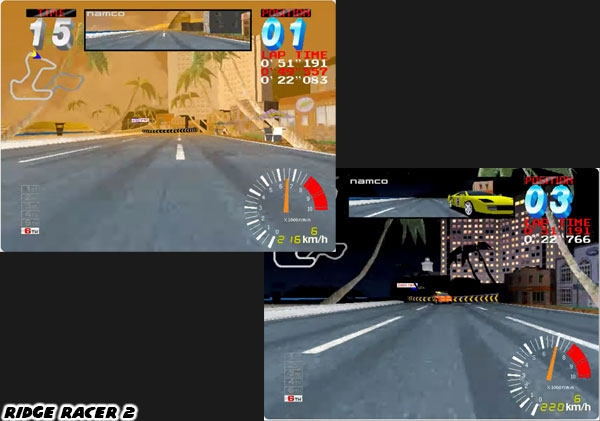
In 1994 the most die-hard arcade racing fans could tell there was something slightly different about Ridge Racer 2 over its predecessor but it was tough to pin down. The graphics and level details had improved and the cars seemed modeled much better. There were even changes in the time, players raced in daylight, at dusk, night, and dawn during the course of four laps. This was something that very few games had even attempted during the era. There was something about the control that was not quite dialed in when compared to the original. The important elements however remained. The game was still focused on sports racers on closed off city streets. The street racing element was a refreshing change of pace over the simulation type professional circuits in most titles.

Although audiences didn't realize it there was an entirely new team developing the game. They were shifting the focus of Ridge Racer as well. The original title celebrated the small, inexpensive sports car and wrapped an experience around it. This meant that the game was somewhat grounded in reality. Cars could not accelerate impossibly fast, nor could they hit the absurd speeds as the cars in the Sega titles. The studio did take some liberties with the physics of the game and made it easier for arcade visitors to pitch their cars sideways and drift around some narrow roads. Pricier generic sports cars were in the game but were not necessarily the stars of it. The exotic or super car began to get more and more of a push in sequels. The decision to do so meant that the courses would have to evolve to take advantage of rides that could go much faster and slide much longer.

The new development team would spend the next few releases feeling out the franchise. The second game was an improvement but mirrored the original so closely that it left little room for innovation. They wanted to make the subsequent game truly one of their own. A minor bump in graphics was not the strongest selling point for 1995's Rave Racer. The control was much more dialed in but it was how those controls were reflected on screen that had the biggest impact with players. The screen actually rotated from side to side depending on how hard a player had turned the steering wheel. The back and forth rocking of the road was enough to give players vertigo. I have no idea what could have possessed the people at Namco to program in a sea sickness inducing mechanism into the franchise.

The third game in the series was very experimental, a sort of soft reboot of the franchise. Even the full name of the game reflected this call to action, Ridge Racer Project: Rave Racer. It would be the first of many new innovations the new team at Namco would be introducing. The music in Ridge Racer had always had an electronic tendency but by Rave Racer the studio was identifying a particular form of dance music as the culture behind the game. For obvious reasons the blazing fast beats heightened the sensation of racing mere inches from stone walls and skyscrapers. For example one of the standout music tracks written by longtime collaborator Sanodg was titled Teknopera. The song reflected the modern and classic aesthetics that Namco was trying to merge. Rave Racer was anything but another typical arcade game. Unfortunately it was so extreme on the spectrum of ideas that racing fans either loved it or loathed it.

 Namco had a hard time rebuilding their team after the Sega debacle. There was something else on the horizon that would take another chunk out of the studio. A new console generation was due and several companies were looking to sign up exclusive publishers. Namco would have to choose sides in the upcoming console war. There was no way that Namco would help Sega by developing content for the Saturn. Nintendo was not readily pushing 3D hardware or even storage devices that held more memory than a CD. By the mid '90s several arcade units ran on architecture that supported content written on optical drives. The cartridge as a storage device was quickly falling out of favor for arcade developers.

The studio that was raising the biggest stakes was Sony. They would be the alternate choice for developers. They had hardware that was focused on 3D and CD storage as well. The new system would be called the Playstation. The partnership between Sony and Namco was obviously written in the stars. This relationship also meant that the studio would have to get a version of Ridge Racer available to them for every console generation. No sooner did Rave Racer hit the arcades than the development team was busy cutting their teeth on the Playstation development kits. Namco used the development cycle to become familiar with the limitations and possibilities of the new hardware. The publisher would slowly cut back on arcade development and focus their energy on the consoles for the remainder of the '90s. The next blog will look at the arcade adaptation that completely reinvented the franchise. As always if you would like to sponsor me please visit my Patreon page and consider donating each month, even as little as $1 would help make better blogs and even podcasts!
follow the Street Writer on Patreon!