Showing posts with label pole position. Show all posts

Thursday, December 26, 2024

The Return of Virtua Fighter, part 1...

On December 12, 2024 the fighting game community was given an early Christmas present. During the annual game awards Sega revealed that there would be a new Virtua Fighter (VF). Sega would once again return to their roots in honor of the 30th Anniversary of the first 3D fighter. Needless to say this announcement made me, and millions of fans around the world extremely happy. The first details of the project would be revealed during a stream immediately following the awards show.

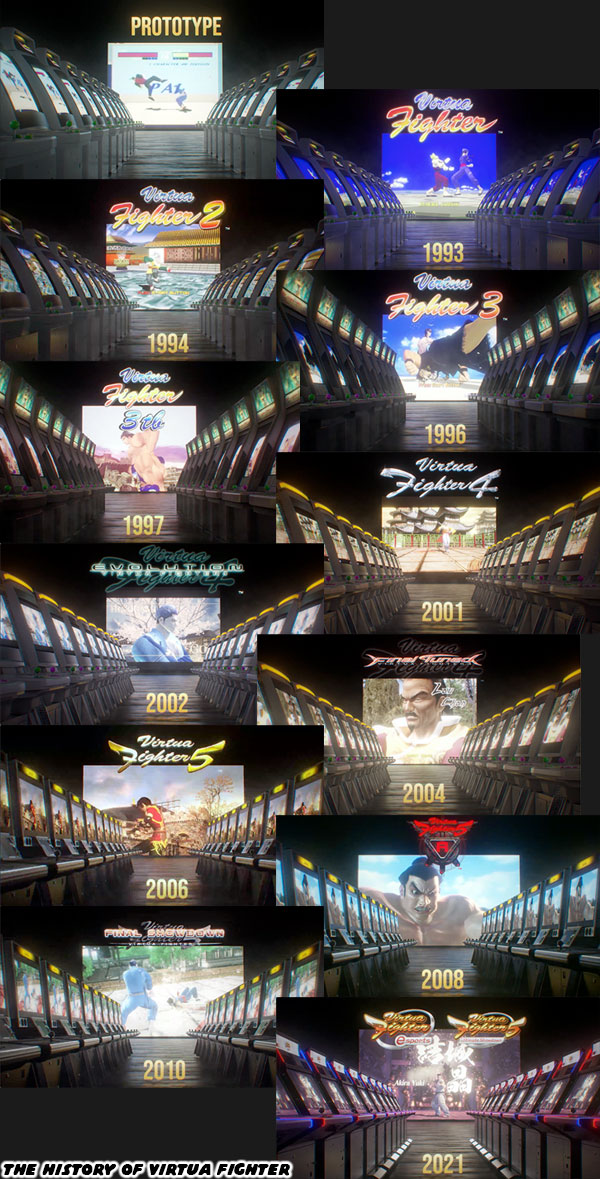
For those keeping track the last numbered VF entry was Virtua Fighter V in 2006. There were however various remixes for different platforms as recently as 2021. For long-time fans it seemed surreal that going into 2025 we might see the next evolution in the franchise that many of us thought was dead. In fact the idea of a resurrected game was more than coincidence.

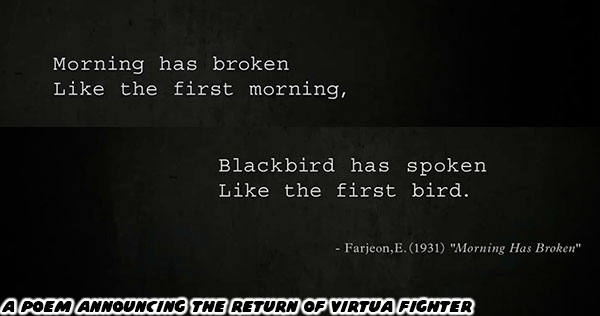
The VF stream began with two lines from the poem Morning Has Broken by Eleanor Farjeon. This almost 100-year-old poem was designed to be a celebration of the Christian faith, without it necessarily calling out a specific Bible passage, or parable. The last part of the poem was particularly important considering they were reintroducing Virtua Fighter. 

Mine is the sunlight,
Mine is the morning,
Born of the one light Eden saw play;
Praise with elation,
Praise every morning,
God’s re-creation Of the new day.
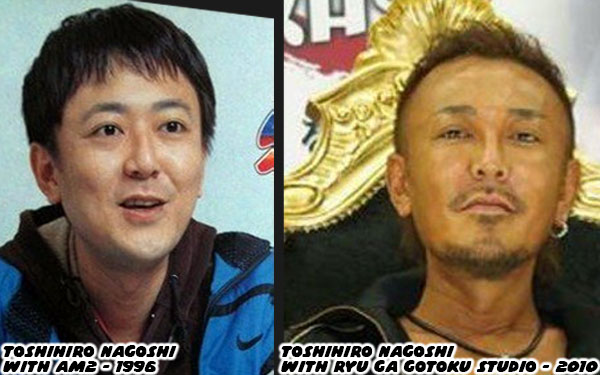
After the poem the new developers were revealed. Ryu Ga Gotoku Studio aka Like A Dragon Studio would be doing the heavy lifting. The company was founded in 2011, however their core team went back to 1998 when they were known as Sega’s internal team AM11. Dragon Studio founder Toshihiro Nagoshi was the guy that created Super Monkey Ball, but he was also the mastermind behind the Yakuza series. Mr. Nagoshi had been with Sega for decades. He first joined the company in 1989, and helped bring Daytona USA to arcades. His insight to the series, his team of programmers, and artists were easily the best choice to reintroduce VF. I’ll talk more about the studio, and Mr. Nagoshi shortly.
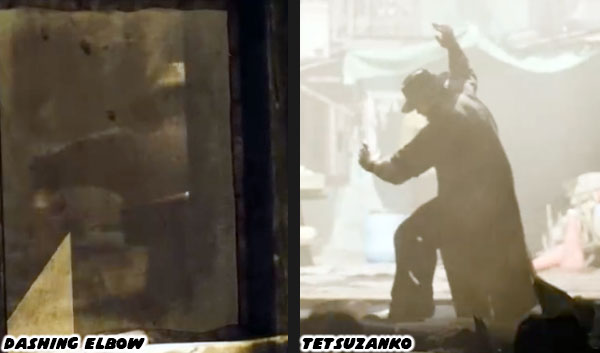
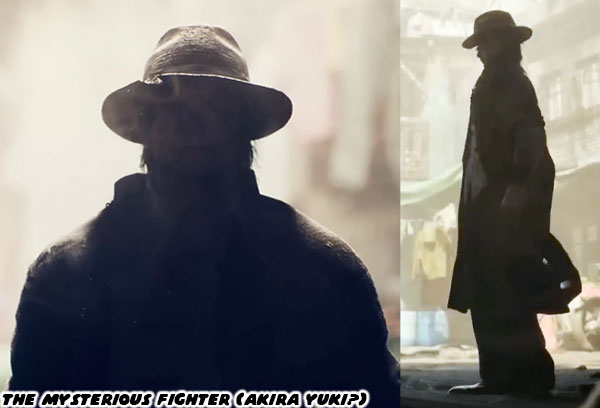
The teaser for the game showed a mysterious figure in a back-alley fight. We only caught glimpses of the figure in a window reflection, or in a pool of water. Even without a clear look at the guy the eagle-eyed fans could identify him based solely on his attacks. The dashing elbow, and tetsuzanko (which was used to throw his opponent through a wall) were trademark moves for Akira Yuki. Yet this didn’t look like the character that we had come to expect. His jacket, hat, and uniform looked tattered. A good amount of time must had passed since we last saw him.
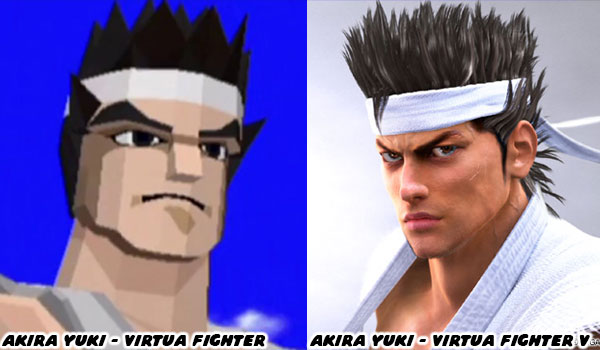
Akira was traditionally presented in the VF games as a young master with spiky hair, and a white headband. The martial artist was the star of the series, not unlike Ryu was for Street Fighter, or Terry was for Fatal Fury. This new presentation was shocking
The studio went out of their way to build up the dramatic tension with the mysterious fighter. We never got a clear look at him during any of the footage. Instead he was presented in shadow. We could see tears in his hat, and even what appeared to be bullet holes in his jacket. This acted as both a storytelling device, to let us know that our mystery man had been in some dangerous battles, but also to show off the next generation rendering of the characters. The realistic cut of his coat, faded colors, and wrinkles were a far cry from his earlier crispy white uniform. This was a more grounded, more experienced fighter.
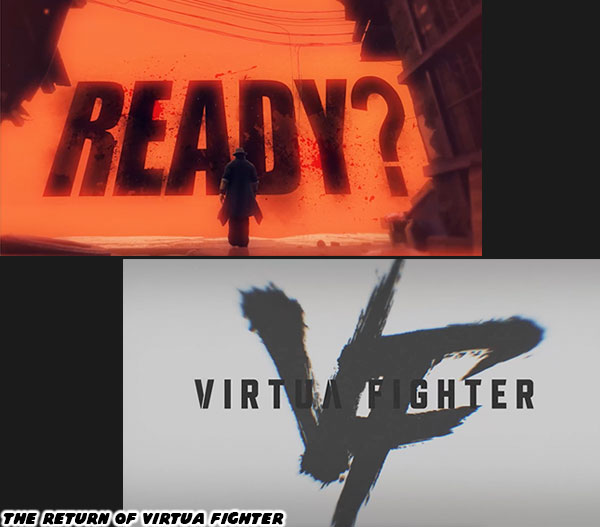
After Akira threw the unknown opponent through a wall the teaser reveals the official return of the Virtua Fighter franchise.
The last few seconds of footage showed off what appeared to be Akira fighting with another star of the game. The blonde woman with a blue skin suit was assumed to be Sarah Bryant. However it was later revealed to be a character called Stella.
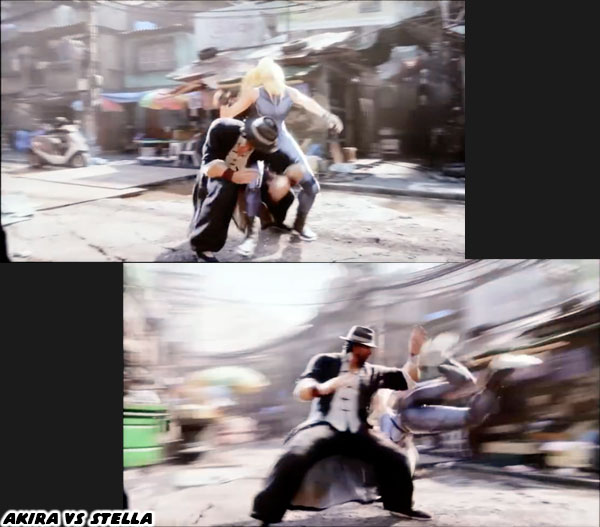
The stages were highly detailed, but they lacked any pedestrians or other people in the background. I don’t know if this was because it was very early in production, or if it was a design choice. In either case this was one of the most detailed environments that I had ever seen in a fighting game.
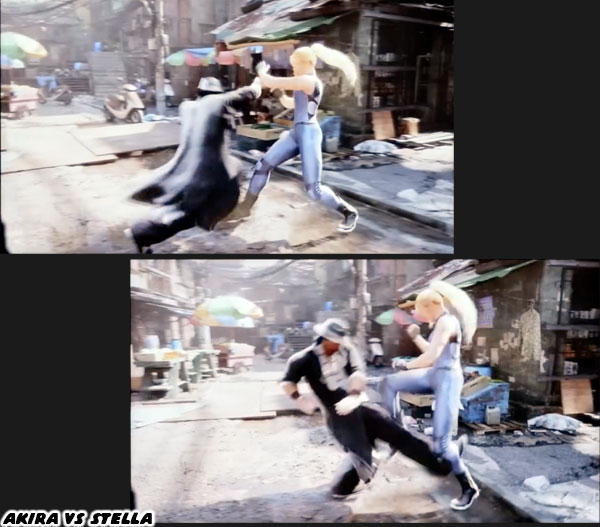
The few seconds of footage between Akira and Stella were among the most impressive of any modern fighting game. I mean more than just in terms of graphics, and animation. The way the moves, countermoves, blocks, and angles flowed between the two were dazzling. They were unlike the combat in Tekken, the nearest contemporary to the 3D franchise. The moves almost seemed choreographed the way the two traded strikes. They skirted the line between the realistic and the fantastic battle you might see in an action movie.
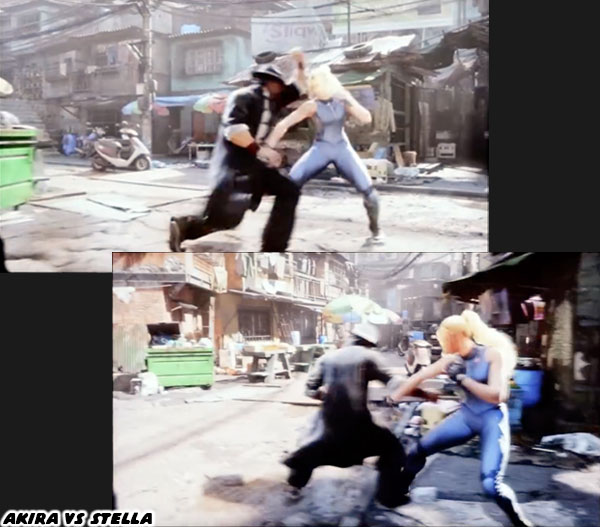
The weathered environment was stunning. It signaled a change in tone, and direction for the series. Yet at the same time it honored the legacy that came before. The world of Virtua Fighter had always been grounded in realism, and not necessary reality. The stages were often set around the world, and were often pristine environments. Now we were seeing a more subdued area, some place that might have been arounds for decades, possibly centuries. It was dirty, worn down, and essentially lived in.
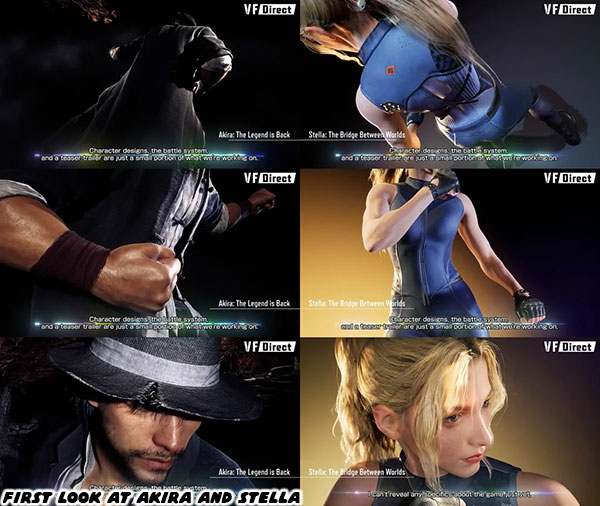
The first high resolution shots of the featured characters were unveiled. Akira was rightfully labeled “The Legend is Back.” This was when most of us found out that the blonde in the early footage was named Stella. She was described as the “Bridge Between Worlds.” This gave fans of the franchise two possible ideas. The first that it was a mistranslation of Sarah. The other was that the youthful character was actually the daughter of Sarah Bryant. Her looks, and moves were spot-on for the iconic character. To many it didn’t make sense that she would be replaced.
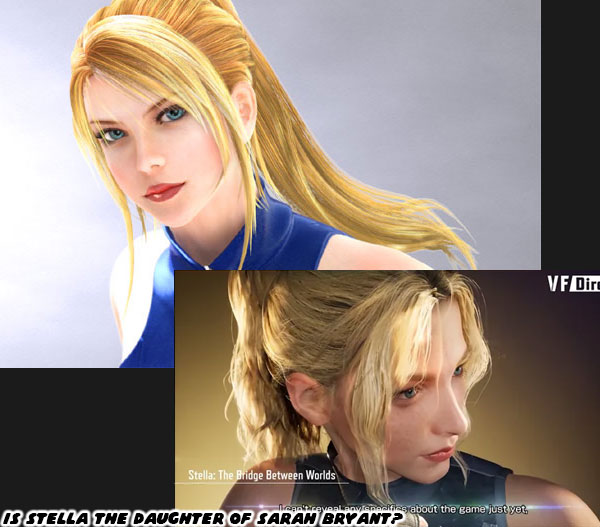
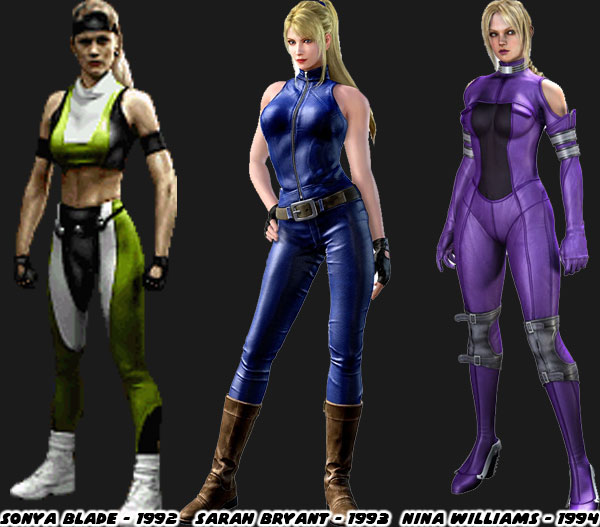
The idea of a daughter being featured in a reboot of a franchise was not a new concept. The most recent example of that was with the character Cassie Cage from Mortal Kombat X in 2015. Cassie was a special forces agent that combined the moves of her parents, Sonya Blade, and the martial arts star Johnny Cage.
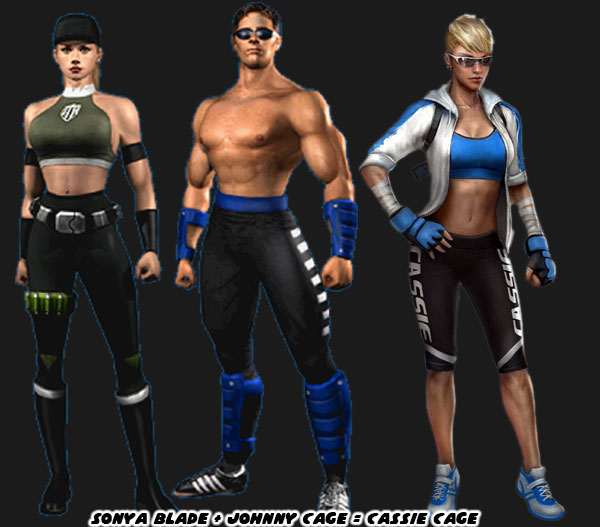
Sonya Blade was an icon in the fighting game community. She was the first notable western blonde in fighting game. Her military-inspired look actually predated Cammy in Super Street Fighter II by a year. I would argue that the Mount Rushmore of fighting game female characters should include her as well as Chun-Li, Mai Shiranui, and Nina Williams. The first few games of Mortal Kombat were sprite based, and not in 3D. It didn’t matter because Mortal Kombat gave the world a taste of western aesthetics, and confirmed to the Virtua Fighter, and Tekken teams that a strong blonde female character could be a star in their fighters as well.
Looking back at the history of the fighting game genre made me think about how unique Virtua Fighter was. It also made me realize that not a lot of people knew what it meant in context. The gaming industry was different 10 years ago, 20 years ago, and especially 30 years ago. High resolution 3D gaming was available today on every console, handheld, mobile, and even web browser. If you go back three decades high resolution 3D gaming wasn’t even possible. Back then the 2D sprites were the standard in the graphics department. This was not a bad thing, in many instances sprites were superior to 3D models when a studio was trying to capture a certain aesthetic.
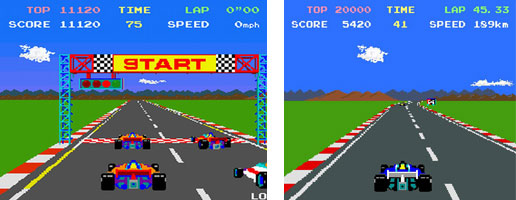
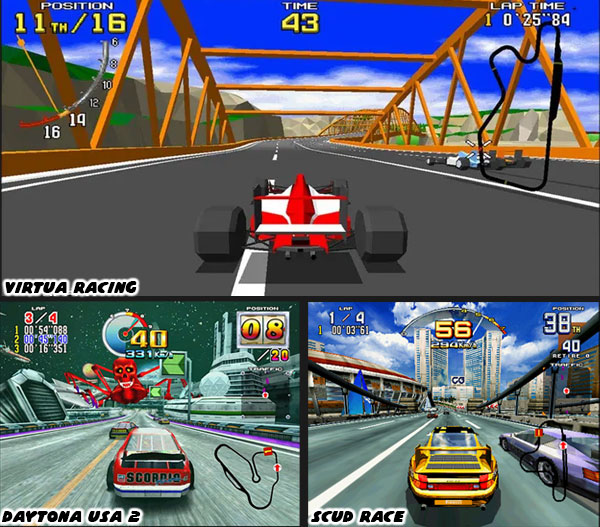
Many arcade firsts came from Namco. At the start of the ‘80s their breakout racing hit was Pole Position. Yet the company knew that sprite graphics had a technological limit. So they started development on 3D engines while also cranking out arcade, and console hits. This investment in polygon rendering would pay off before the end of the decade. Winning Run came out in 1988. It was the first 3D racing game. Sega started development on 3D technology not too long after. Sega’s Virtua Racing would blow the genre wide open in 1992. The back-and-forth would lead to Sega and Namco having an amazing rivalry.
Sega had developed a number of racing video games in the late 1970’s that set the standard for the arcade. When Namco released Pole Position in 1982, and claimed the racing crown a friendly rivalry in the genre was launched. Both Sega, and Namco would try to beat each other every year in genre. The part that people tend to forget was who helped keep Sega one step ahead of their rivals.
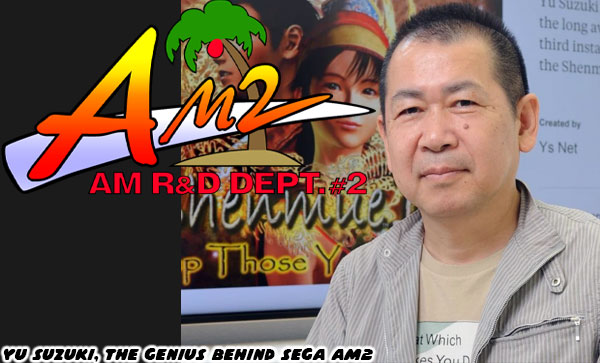
The game designer / director / producer Yu Suzuki was a major reason why Sega succeeded in the arcade, and console markets. I had talked about Mr. Suzuki previously on the blog, calling him the racing fan that started a revolution. The thing that I did not realize was how much his passion, his insight helped make every game that he worked on into something truly special. Mr. Suzuki was a huge fan of motorsports, movies, pop culture, anime, and the like. The things that influenced him helped color the games he produced. The majority of Sega’s earliest arcade hits were created under his direction. To say that he was a brilliant game designer would be a severe understatement.
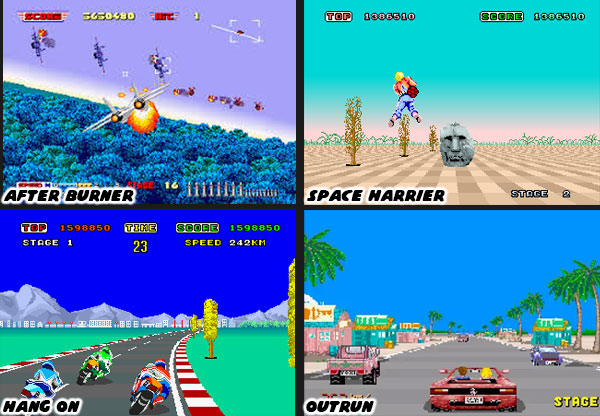
Mr. Suzuki seemed unrivaled with everything he created whether it was air combat, racing, shooting, and sci-fi titles. His games were all groundbreaking. It was his passion for racing, and his love of the Ferrari badge that really elevated the genre. One of his greatest hits was OutRun from 1986. It made everyone forget about Pole Position in the arcade. OutRun introduced a branching path, and rally narrative to arcade visitors. Each year the racing games he produced got better and better. His entry into 3D with Virtua Racing in 1992 made everyone forget about Namco’s Winning Run, and Driver’s Eyes.
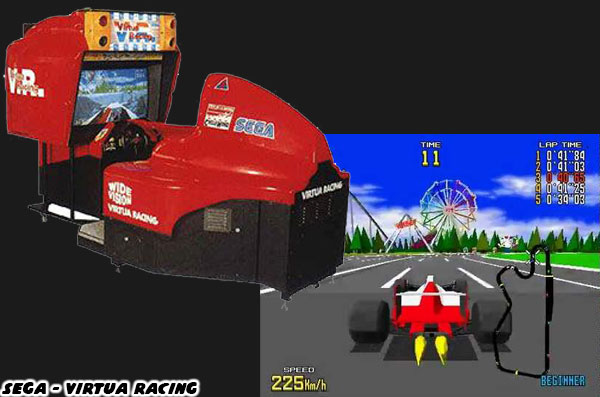
I would argue that the tracks in Daytona and Super GT set a standard by which all racing games in the arcade would be measured. The peak of Mr. Suzuki’s influence came at the end of the ‘90s with the brilliant Scud Race aka Super GT. Visually the last 3D racing games he created were cinematic masterpieces, compared to the very simple pixel racing games that he started off with a decade earlier. The question was whether his vision could put Sega on the map for fighting games. Through the ‘80s, and of course early ‘90s Capcom had few peers. Sega needed a hit just to get noticed. Would Virtua Fighter be enough? We will talk a little bit more about it on the next blog (Saturday). Are you excited with the announcement? Will this be a game you get on Day 1, or will you wait and see? What do you think the series needs to really hit with the modern fighting game community?  I’d like to hear about it in the comments section. As always if you would like to sponsor me please visit my Patreon page and consider donating each month, even as little as $1 would help make better blogs and even podcasts!

follow the Street Writer on Patreon!

Monday, June 19, 2023

Almost Sega Good! - A 1UP classic from July 25, 2005

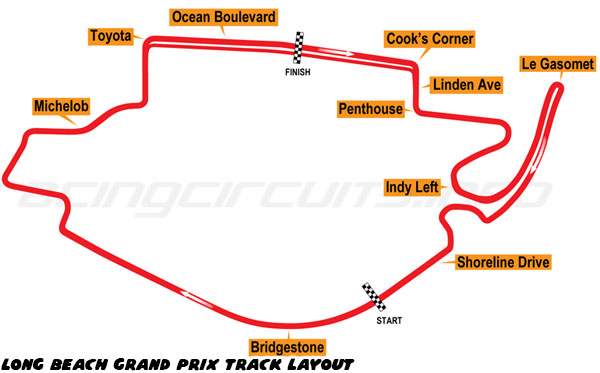
Ladies and Gentlemen, Pardon the lateness of this entry (I usually have something posted before lunch). This time around I wanted to write a little bit about my hometown, the fine city of Long Beach California. There are plenty of places to write about, but I think fans of video games might like to learn a little bit more about downtown and a stretch of road called Shoreline Drive.

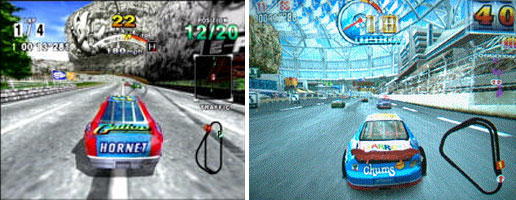
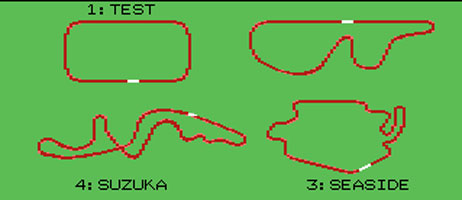
Back in the day Namco/Atari released Pole Position. One of the most famous CART-Champ Car tracks was titled Seaside. A not so subtle lift from the real track featured in the Long Beach Grand Prix.

There are many beautiful tracks all over the world, from Monaco to Mexico, Brazil to Japan. But of all the tracks ever put in a game, or raced in the real world, I'd dare say that Seaside Drive is almost SEGA good!

Almost SEGA good? What the heck does that mean?

SEGA arcade racers have always featured some of the most jaw-dropping visuals in any racing games. Even non race fans like my brothers were wowed by the creativity that went into the track designs in games like Daytona USA and Scud Race (SEGA GT).

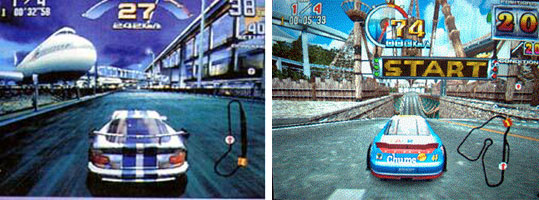
Even if the track was an oval for example, the designers at SEGA AM2 wanted it to be memorable. In Daytona 2 the oval track was built indoors, with a nature preserve on the inside track and large sails blocking out the sun high overhead. A building like that would dwarf every other sport stadium. It would only work in a virtual world and I was grateful that SEGA always went that extra step making tracks memorable.

Scud Race had players drifting exotic supercars through tight city streets, Indiana-Jones style temples, under the ocean and through an airport! The best track in my opinion was the Medium Difficulty track on Daytona 2. Not only was the race course challenging but it was built, supposedly, in and around an amusment park. The finish line was directly underneath a dragon boat, part of the track went through a haunted mansion, another part through a smokey western town, then arctic village then through a suspended bridge that roller coasters twisted around.

The only arcade racer ever to come close was Hydro Thunder.

But I digress. This blog isn't about comparisons, at least not between arcade racers. This is about SEGA and the one race course that I think is almost SEGA good.

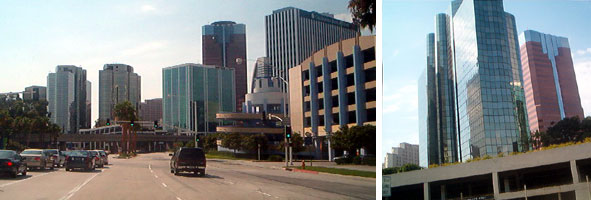
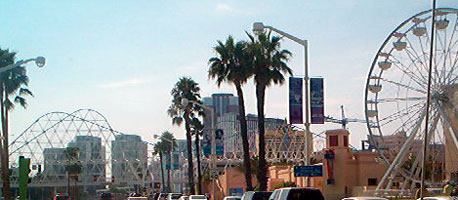
The main portion of the Long Beach track goes near downtown on Shorline Dr. There is a skyline and bridges to go under but many tracks real and virtual also have that. What makes Long Beach so special? Go further down Shorline and you'll go under a special bridge.

Wait a minute is that what I think it is?

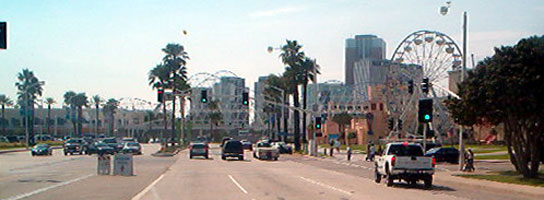
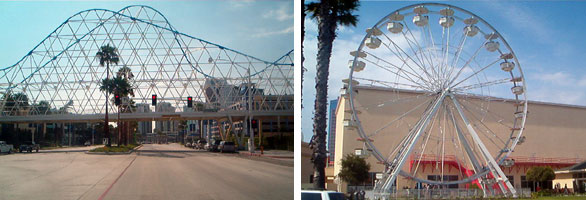
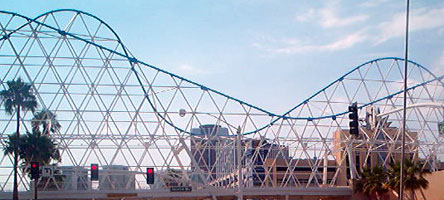
We've all seen the ferris wheel in games like SEGA's Virtua Racing and even Sony's Gran Turismo. But is that? No, it couldn't be! A roller-coaster track on a bridge?! A roller-coaster track that Indy-cars get to race under?!

Looks pretty damn sweet, but alas it is just a sculpture that pays tribute to the amusment park that used to be located on Shoreline Dr. The Pike used to be a pretty rocking amusement park back in the day. It featured the Cyclone Racer, at the time the second-largest roller coaster in the USA, and built on a pier! From the late 70's to the 90's the Pike was taken apart and Shoreline Dr. was pretty bleak and empty. In recent years however the city has gone back and begun to restore some of the lost heratige.

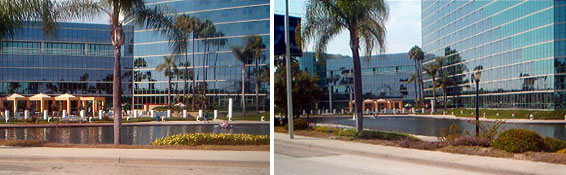
Back to the subject at hand. The track at Long Beach! Just because the roller-coaster track isn't real doesn't mean we're out of eye-candy. While still racing on Shoreline Dr. we pass Rainbow Lagoon, a park where the famous Long Beach Jazz Festival happens every summer.

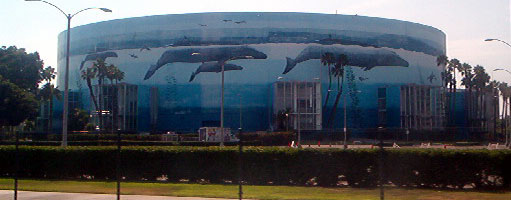
The Lagoon is in the shadow of a hotel and the artist Wyland's current largest mural Planet Ocean.

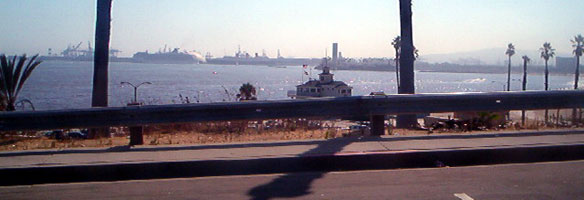
Pull a hairpin turn on Shoreline and head back the way you came. On the left you'll see the Pacific Ocean and the Queen Mary.

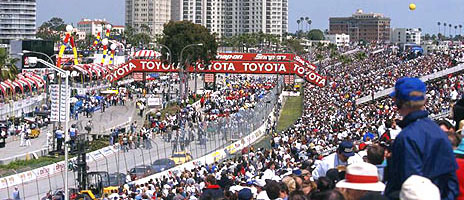
You'll also pass the massive bleachers of Grand Prix spectators. Go right next the the awesome Aquarium of the Pacific and even melt your brakes on the infamous turn 3 before getting back on Shoreline Drive

Even though the roller-coaster track on a bridge isn't real Long Beach still has one of the best race courses in the world! A course that is so awesome it defies tradition and is almost SEGA good!

Are you a fan of racing? Do you have a favorite track, or course? Let me know in the comments section please. As always if you would like to sponsor me please visit my Patreon page and consider donating each month, even as little as $1 would help make better blogs and even podcasts!
follow the Street Writer on Patreon!

Wednesday, June 14, 2023

Pole Position, king of the Formula-1 racers - Originally published on 1UP - March 19, 2009

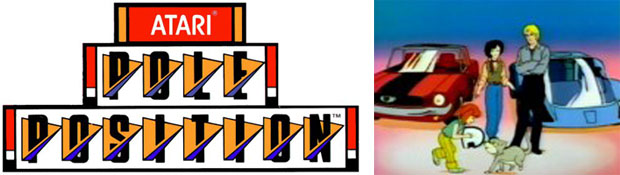
Pole Position, released in 1982 is a legend to gamers. Those that grew up in the arcade could never forget the intro music and line "Prepare to qualify." If ever there was to be a hall of fame for gaming then consider Pole Position to be the first racing game inducted. It's bright graphics, large car sprites and demanding control defined the first great attempt at making a modern racing game. The billboards in Pole Position featured popular Namco characters like Mappy and Pac Man, further ingraining itself onto our young impressionable minds. It was so popular that it even spawned its own Saturday morning cartoon.

The original Pole Position earned many a fan but when the sequel came out it really found its groove. Pole Position II introduced three new tracks, one of which was based on my beloved hometown track of Long Beach. The inclusion of Seaside won over a lot of the people in the southland including my friends and brothers. Both versions of Pole Position were very demanding. The cars were very delicate and the slightest bump would cause them to explode. Like Monaco GP there was a high and a low gear, nothing inbetween. High score runs required amazing reflexes and solid racing strategies, making it a frustrating at times but still a highly enjoyable experience.

Most racing game fans cut their teeth on Pole Position. They will always have a soft spot for the title even with the age of the PS3 and Xbox 360 racing juggernauts.

It comes down to more than nostalgia as the game continues to find audiences with the Pole Position Remix for the iPod / iPhone. I salute this arcade gem for helping push the world toward more realistic racing games. However the Formula-1 game that I played even more than Pole Position or Super Monaco GP was the one that was least realistic. Come back next week to find out what game that was! But be sure to come back tomorrow as I have an extra special interview lined up for you.

Did you ever enjoy this classic arcade game, or did you play it on the home consoles? Let me know in the comments section please. As always if you would like to sponsor me please visit my Patreon page and consider donating each month, even as little as $1 would help make better blogs and even podcasts!
follow the Street Writer on Patreon!

Monday, April 19, 2021

Almost SEGA Good! A 1UP Classic...

Ladies and Gentlemen,
Pardon the lateness of this entry (I usually have something posted before lunch). This time around I wanted to write a little bit about my hometown, the fine city of Long Beach California. There are plenty of places to write about, but I think fans of videogames might like to learn a little bit more about downtown and a stretch of road called Shoreline Drive.

Back in the day Namco/Atari released Pole Position. One of the most famous CART-Champ Car tracks was titled Seaside. A not so subtle lift from the real track featured in the Long Beach Grand Prix.


There are many beautiful tracks all over the world, from Monaco to Mexico, Brazil to Japan. But of all the tracks ever put in a game, or raced in the real world, I'd dare say that Seaside Drive is almost SEGA good!

Almost SEGA good? What the heck does that mean?

SEGA arcade racers have always featured some of the most jaw-dropping visuals in any racing games. Even non race fans like my brothers were wowed by the creativity that went into the track designs in games like Daytona USA and Scud Race (SEGA GT).

Even if the track was an oval for example, the designers at SEGA AM2 wanted it to be memorable. In Daytona 2 the oval track was built indoors, with a nature preserve on the inside track and large sails blocking out the sun high overhead. A building like that would dwarf every other sport stadium. It would only work in a virtual world and I was grateful that SEGA always went that extra step making tracks memorable.


Scud Race had players drifting exotic supercars through tight city streets, Indiana-Jones style temples, under the ocean and through an airport! The best track in my opinion was the Medium Difficulty track on Daytona 2. Not only was the race course challenging but it was built, supposedly, in and around an amusment park. The finish line was directly underneath a dragon boat, part of the track went through a haunted mansion, another part through a smokey western town, then arctic village then through a suspended bridge that roller coasters twisted around.

The only arcade racer ever to come close was Hydro Thunder.


But I digress. This blog isn't about comparisons, at least not between arcade racers. This is about SEGA and the one race course that I think is almost SEGA good.


The main portion of the Long Beach track goes near downtown on Shoreline Dr. There is a skyline and bridges to go under but many tracks real and virtual also have that. What makes Long Beach so special? Go further down Shorline and you'll go under a special bridge.


Wait a minute is that what I think it is?


We've all seen the ferris wheel in games like SEGA's Virtua Racing and even Sony's Gran Turismo. But is that? No, it couldn't be! A roller-coaster track on a bridge?! A roller-coaster track that Indy-cars get to race under?!


Looks pretty damn sweet, but alas it is just a sculpture that pays tribute to the amusment park that used to be located on Shoreline Dr. The Pike used to be a pretty rocking amusement park back in the day. It featured the Cyclone Racer, at the time the second-largest roller coaster in the USA, and built on a pier! From the late 70's to the 90's the Pike was taken apart and Shoreline Dr. was pretty bleak and empty. In recent years however the city has gone back and begun to restore some of the lost heratige.


Back to the subject at hand. The track at Long Beach! Just because the roller-coaster track isn't real doesn't mean we're out of eye-candy. While still racing on Shoreline Dr. we pass Rainbow Lagoon, a park where the famous Long Beach Jazz Festival happens every summer.


The Lagoon is in the shadow of a hotel and the artist Wyland's current largest mural Planet Ocean.


Pull a hairpin turn on Shoreline and head back the way you came. On the left you'll see the Pacific Ocean and the Queen Mary.


You'll also pass the massive bleachers of Grand Prix spectators. Go right next the the awesome Aquarium of the Pacific and even melt your brakes on the infamous turn 3 before getting back on Shoreline Drive


Even though the roller-coaster track on a bridge isn't real Long Beach still has one of the best race courses in the world! A course that is so awesome it defies tradition and is almost SEGA good! If you would like to sponsor me please visit my Patreon page and consider donating each month, even as little as $1 would help make better blogs and even podcasts!
follow the Street Writer on Patreon!