Showing posts with label ace driver. Show all posts

Friday, September 5, 2014

The Ridge Racer Legacy, the Namco Chronicles, final part...

When the original Ridge Racer developers left Namco they broke the trust from their teammates in the process. The camaraderie that they shared with those they left behind had been shattered. It didn't seem to matter how much they had grown personally or professionally on all the titles they had worked with. In the eyes of the publisher only those that stayed behind were truly loyal employees and worthy of carrying forward the Ridge Racer name. Unfortunately those that remained were casual fans of racing. They had not poured their heart and soul into Ridge Racer. They did not grasp the level of insight and passion that the original team had brought to the project until it was too late.

What the remaining members had was experience in multiple genres and in 3D programming. They could guarantee that the very next racing game from the company would at least look good as their rivals, and be playable. It might not be the greatest racing experience but it would be enough to keep the company moving forward. The designers that stayed behind had cut their teeth on the brilliant UGSF arcade shooters. They had a certain aesthetic in mind and wanted to redefine the genre. The rides featured in Ridge Racer were very nice but they weren't revolutionary. So the new project members challenged themselves to create a whole new breed of race car. Each car would look like a traditional open-wheel racer but upon further inspection they would begin to resemble space ships.

The designers envisioned the Ace Driver: Victory Lap cars as being the peak of race technology. They would be the race cars that were being driven around the time of Cyber Sled and Cyber Commando. They would be in a class above every category in Ridge Racer. Each of these new rides featured power plants, transmissions and aerodynamics superior to those on all of the Ridge Racer production cars. This would become the distinction made between actual GT-class cars and Formula-1 racers. While both racing leagues featured millions of dollars worth of R&D in the cars only one type of car was specifically designed for racing. The GT cars by comparison were rooted in production autos.

With the exception of the prototype class most GT cars had been sports cars that were converted for racing duty. The multi-wing technology that Namco featured on the Ace Driver cars was not a new concept for Formula-1 or INDY racing. It was the layout and position of the wings, air splitters, spoilers and bodies that were radically different than those in real-life open wheel racers. In many instances the game from 1994 would predict the trends that the actual Formula-1 racing cars would use almost 20 years later.

The cars in Victory Lap took on the characteristics of the UGSF space ships. There was a hint of Galaga, Nebulas Ray, Solvalou and even Starblade in each car. It made sense that the Ridge Racer and Ace Combat games were connected. The manufactures sponsoring the Ridge Racer tournament were using the cars as test beds for new technologies. Many of these advances were meant for mass production. This was a reflection of the real world. The big auto manufacturers would enter rolling tests beds into endurance races. They were great for advertising but were also used so that engineers could gain a lot of insight by pushing new technology to the breaking point. What about the companies that had a very specific goal in mind? Perhaps the ones that wanted to manufacture parts for a smaller market, like airplanes and space ships. These manufacturers needed a way to advertise their presence and test out the reliability of their equipment as well. Should they be prohibited from creating race cars? Of course not!

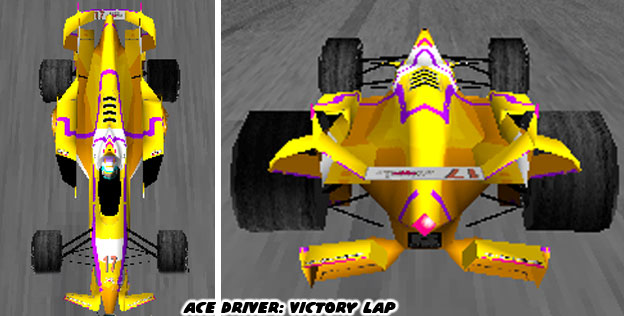
There was an evolutionary gap between the vehicles featured in Ridge Racer and the planes from Ace Combat. The majority of the rides in Ridge Racer looked like those that could be bought at a local dealership. The radical designs of a pure racing machine was lacking in the series. The open wheel cars in Ace Driver filled that gap. They were as close as Namco had ever come to creating land-based fighter jets. The cars had modern suspensions to shift the balance between turns and even wings that were flexible and helped steer the cars around the most brutal turns. Wings in actual Formula-1 cars were fixed and engineers were not allowed to adjust them in the middle of a race. These cars honestly looked like the wheeled cousins of the ADF-01 Falken. They looked like the ancestors of the GeoSword and Dragoon. Although there were only four of these cars created for the series each one had a tremendous presence. The most "conservative" of the racers was still far bolder than the most recent F-1 car. It would be a shame if audiences around the world never got another chance to pilot these cars. Especially on the consoles!

With the numbered Ridge Racer series on an indefinite hiatus I could only speculate what Namco was working on. They had learned a tremendous amount over the past 20 years, the most important being that they could outlive Sega so long as they believed in their own titles. The best games they created during that era had withstood the test of time. The classic hits were still referenced as examples of greatness across multiple genres. Perhaps the company was trying to figure out how to present a new generation of Ridge Racer to audiences. One that would connect the dots between Ace Driver, Ace Combat and the UGSF continuity. Whatever the case was I would be eternally grateful to the company for every experience they provided my brothers and I in the arcade. For every great console moment and for every carpal-tunnel inducing mobile game I would also say thanks.


This has been the Ridge Racer Legacy, my blog chronicling the contributions of Namco (now Namco Bandai Games) to a generation. I hope you enjoyed the series. If you have any questions or comments please feel free to leave them. Thank you for following along and I wish you all the best. As always if you would like to sponsor me please visit my Patreon page and consider donating each month, even as little as $1 would help make better blogs and even podcasts!
follow the Street Writer on Patreon!

Thursday, September 4, 2014

The Namco Chronicles, part 14...

At the start of this series I mentioned that Pole Position was one of the biggest hits from Namco. It was one of the best selling games of the '80s and had been ported to just about very console, handheld and computer system ever created. Very few games could claim to have reached as many as many people through the years and even less racing games could match the success of Pole Position. It did very well financially but more importantly it helped the image of the company. When it came to racing games few studios could say their legacy was as important. When it came to puzzle games none could claim the longevity of Pac Man. When it came to space shooters none could match Galaga. Namco had built a reputation based on fantastic experiences and managed to keep those memories growing over 30+ years. The racing genre was the one that they had their biggest successes and failures with.
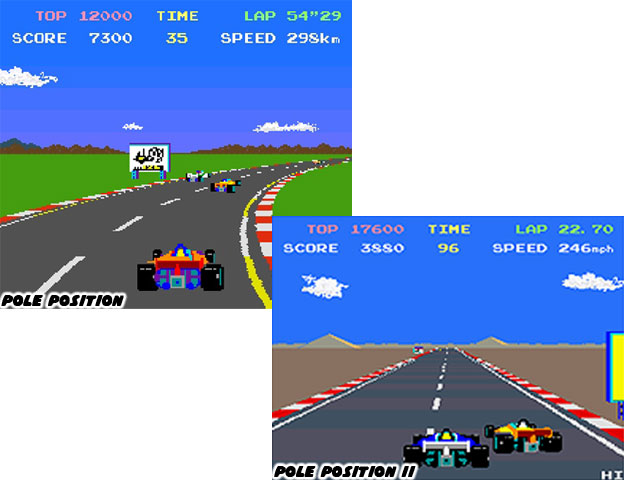
Pole Position put Namco on the racing map but other publishers were challenging them at every turn. The sequel to Pole Position did well but so were rival titles from Atari and Sega. The company lost momentum when they tried to re-imagine the open wheel racer with the Final Lap series. Even the introduction of 3D graphics in the Winning Run series did little to get Namco back on top. Ridge Racer was the first serious attempt at recapturing an entire genre. Of course Sega countered by stealing the talent that produced Ridge Racer. The remaining members of the company tried to make a better racing experience than Ridge Racer but they missed the mark from a gameplay and critical perspective.
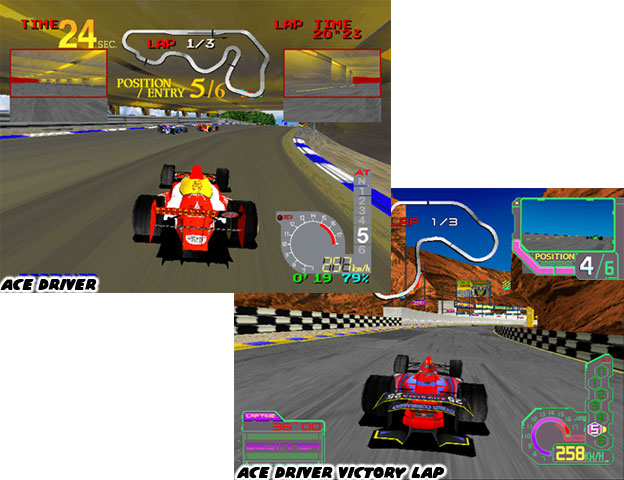
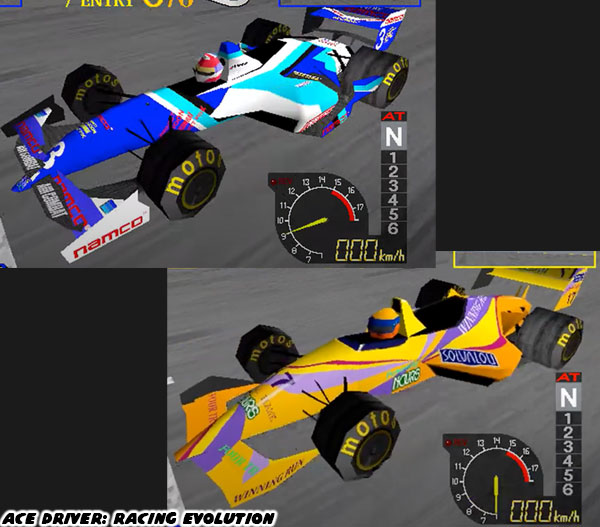
Namco returned to the open-wheeled racer in 1993. The Indy and Formula-1 inspired cars in Ace Driver: Racing Evolution were supposed to be leagues ahead of the best cars in Ridge Racer. In fact they were supposed to be ahead of Formula-1 cars, they were called Progressed Formula Racers in the game flyers. They couldn't call them Formula-Zero because that was already taken by Nintendo. Namco wanted to let audiences know that the rides in Ridge Racer were nice but the fastest race cars on the planet still resembled the machines from Pole Position. These cars were the pinnacle of race engineering and unlike the cars in Ridge Racer they were not street legal. Unless you were a professional driver the cars in the Ace Driver series were unattainable. Of course it was a sense of attainability that made Ridge Racer popular to begin with. The cars were tuned for peak performance on real roads and not sterile race tracks. The Ace Driver cars may have been faster but they were limited by their focus. Namco went back to the drawing board and tried to salvage what they had started. If the remaining staff had failed to live up to the standard set by the original Ridge Racer then at the very least they could begin a new franchise that was a spiritual successor to Pole Position.
The majority of the remaining team members had worked in other genres and were busy on various arcade and console titles as well. They wanted to do something with the racing franchise that was much more forward thinking. Rather than trying to recreate the world of contemporary open-wheel race cars they decided to push the technology a few years if not decades down the line. The studio looked at the other games they had published with a similar futuristic element like the UGSF hit like Cyber Sled and tied those games in through advertising and sponsorships. Ads for Cyber Commando, Rave Racer and newer hits were plastered all over Ace Driver: Victory Lap, the 1994 sequel to Racing Evolution.
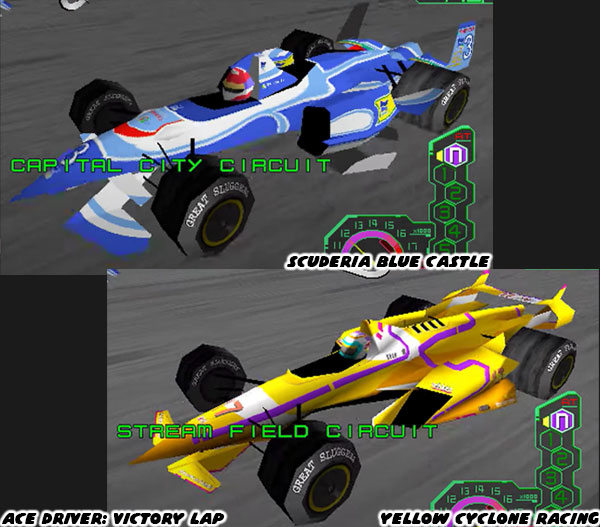
At first glance the cars looked like traditional Formula-1 autos. They were bright and colorful, wrapped in the livery of a specific team and covered with bold stickers. When players drove the cars and raced through the environments they began to see visual cues that made the world seem far more futuristic than other games. Enormous glass and steel stadiums were constructed around the tracks, many with three-dimensional holograms playing advertisements high above the race course. Some of the tracks were set in the countryside but even those had grandstands and box seats that looked like they were designed by science fiction architects. The tracks in the city were surrounded by enormous skyscrapers, hotels and office buildings that looked far more fantastic than most modern metropolises.
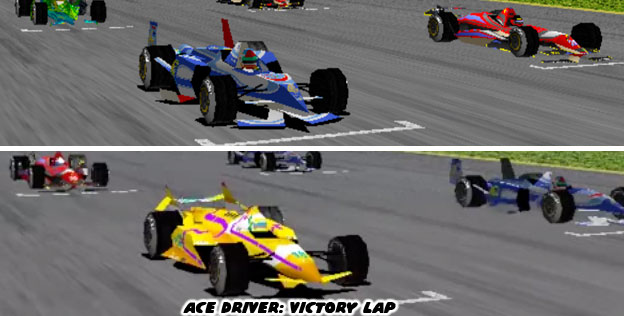
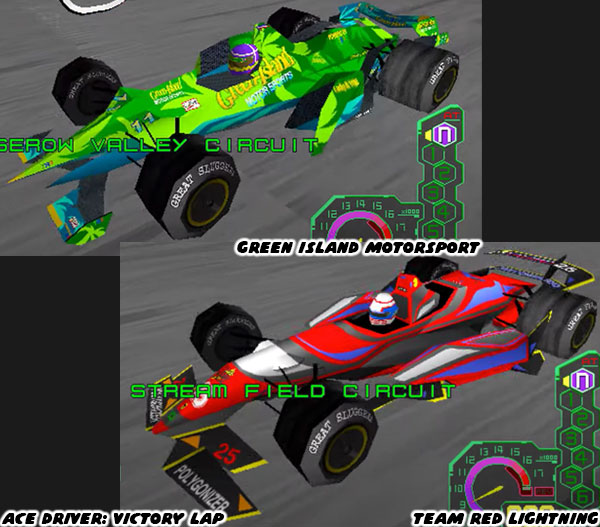
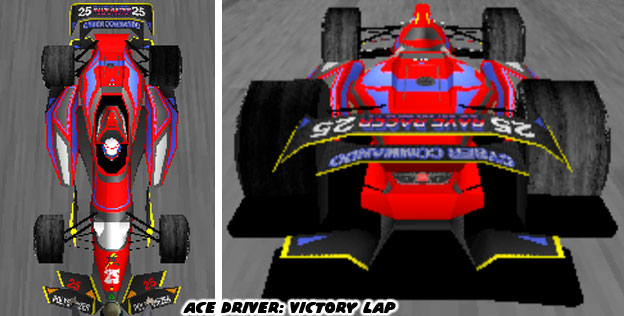
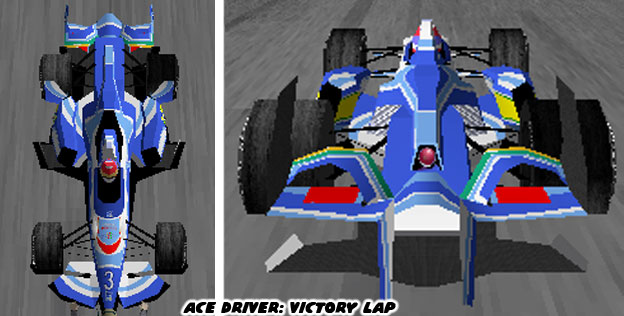
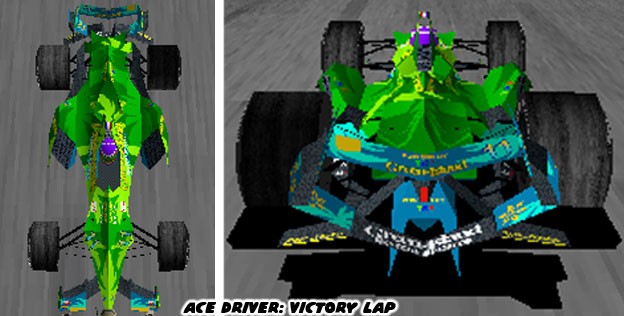
The cars in the Ace Driver sequel were amazing pieces of art. There were only four basic models featured in the series, compared to the dozens in any Ridge Racer title. Each of those four however had its own strengths and weaknesses. Most arcade racing fans could name off these things, the fastest car in the game was also the most difficult to control. The easiest to control had the slowest top speed and the cars in the middle either handled well or accelerated well. Audiences also got to choose whether or not their car would be a manual or automatic transmission. The four basic cars, and their color schemes were formally given names in Victory Lap. There were Team Red Lightning, Scuderia Blue Castle, Yellow Cyclone Racing, and Green Island Motorsport.
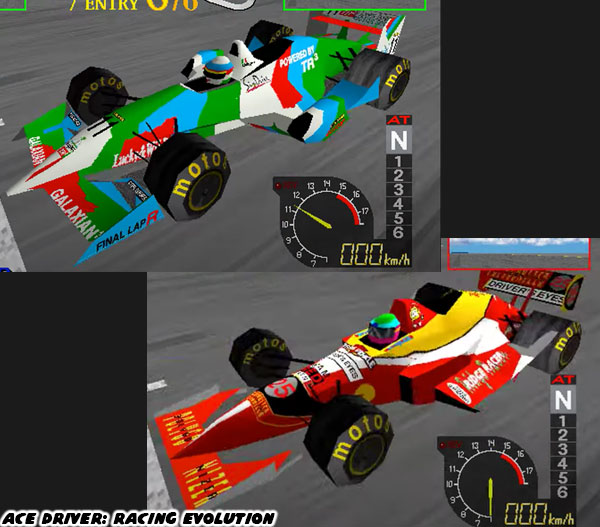
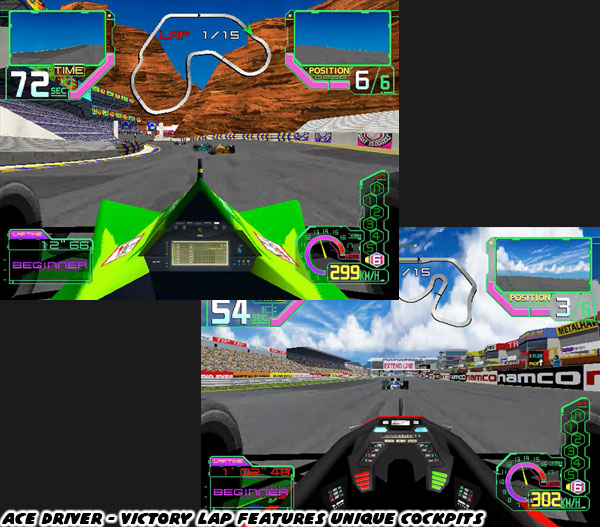
In order to post the fastest times players had to go with manual transmission and hope that they could learn the best speed and angles for every turn or risk a miserable wipeout. The game was unforgiving and had a steep learning curve. Of all the racing games I ever played this was one title that was in the middle of the pack. There were some very strong elements that worked in its favor. The car designs were awesome, the track layouts memorable and the music selection was great. It had trace elements of great Ridge Racer and UGSF soundtracks, possibly because the same people that worked on those games also worked on both Ace Driver soundtracks. Despite the good elements it still lacked solid gameplay. It made the decision to stick with the Ridge Racer series much easier for Namco.
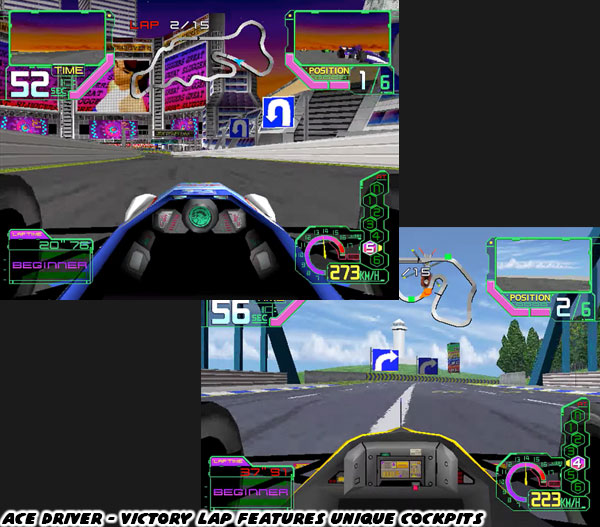
Namco was looking for new sources of revenue and adapting to the changing market at the start of the new millennium. The relationship that the studio had with Sony was still very solid but they also had to flexible and now include mobile-friendly titles into their portfolio. The company had to look at developing games for markets that were rapidly expanding. More than a decade after the last Ace Driver was released a new arcade-only title turned up. Published in 2008 the game was released in China, Taiwan and Hong Kong only.
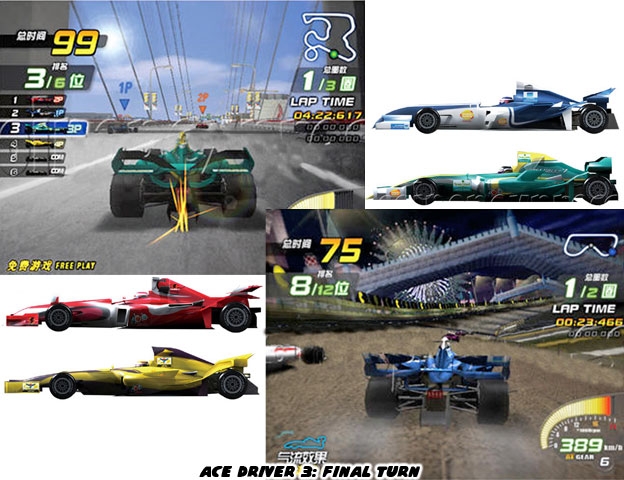
The Chinese middle class had exploded in prosperity in a few generations. They were looking to buy into, and invest into every possible source of entertainment. The ban on video games, specifically arcade games had been lifted in the mainland and the population was starved for new titles. Ace Driver 3: Final Turn was built on an advanced version of the Ridge Racer 7 engine. Graphically speaking it looked slightly better than the last console release of Ridge Racer. Perhaps this new engine was the prototype build for Ridge Racer 8, or even for Ridge Racer Vita. Whatever the case was this new version of Ace Driver had controls that were much more intuitive for fans of the Ridge Racer series and even beginning drivers. This meant that drifting in an open-wheeled car was now an option rather than a mistake.
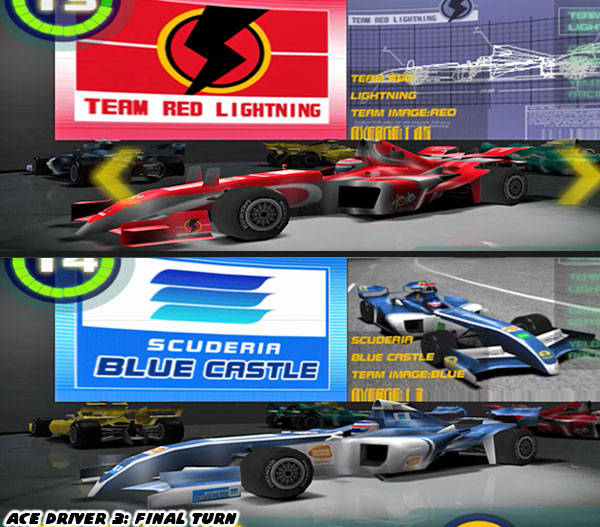
Ace Driver 3 maintained the tradition of the four car types from the previous games. Each one held onto the same futuristic designs and were presented with much greater fidelity than any other car in the series, Ridge Racer included. The game did take another element from Ridge Racer as well. The track layouts became more fantastic in nature. They looked less like a Formula-1 courses surrounded by brilliant architecture and instead incorporated storytelling elements, including racing through a futuristic metropolis and even through an amusement park. These details would have made Sega green with envy. One of the new tracks actually had roots in Rave City from the Ridge Racer series.
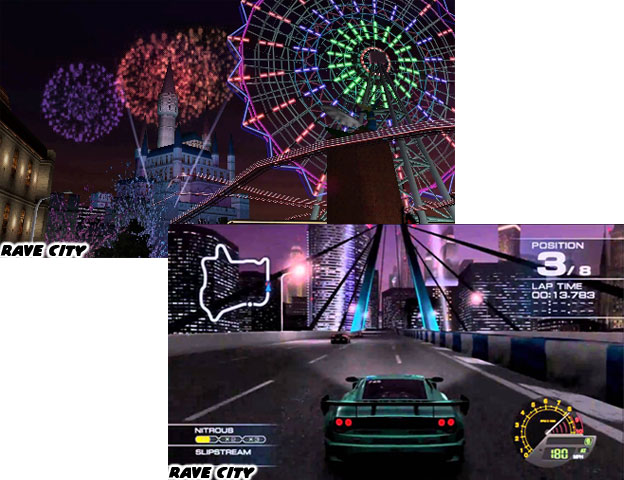
Audiences had been racing by the amusement park in Rave City for some time, they had seen it from a distance and got a bird's-eye view of the park when the occasional new machine was delivered. Now thanks to the Ace Driver series players could get up close and personal to the track. They could see that the designers at Namco never stopped working on the courses between releases. If you stuck with the series long enough then eventually you too would get a chance to drive through the roads seen in the distance. The only question now was what type of cars would Namco allow audiences to pilot in the future? The next blog in this series will take a guess at that and also be the final entry in the series. I hope to see you back for that. As always if you would like to sponsor me please visit my Patreon page and consider donating each month, even as little as $1 would help make better blogs and even podcasts!
follow the Street Writer on Patreon!

Wednesday, June 25, 2014

The Sega / Namco Rivalry, part 9...

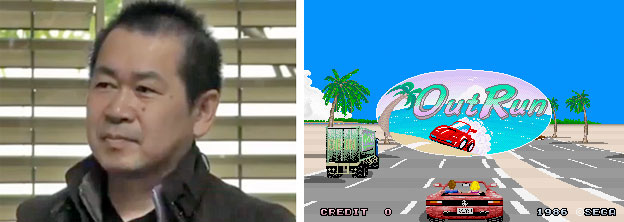
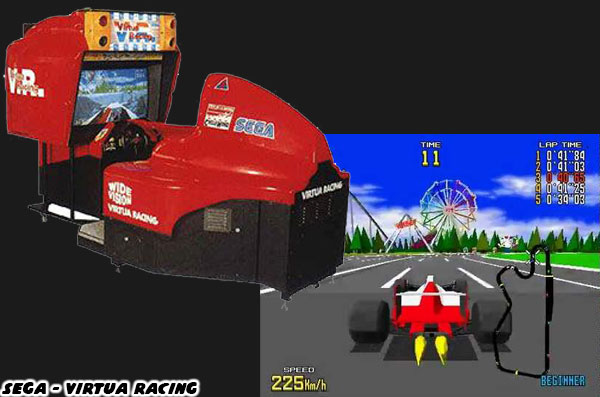
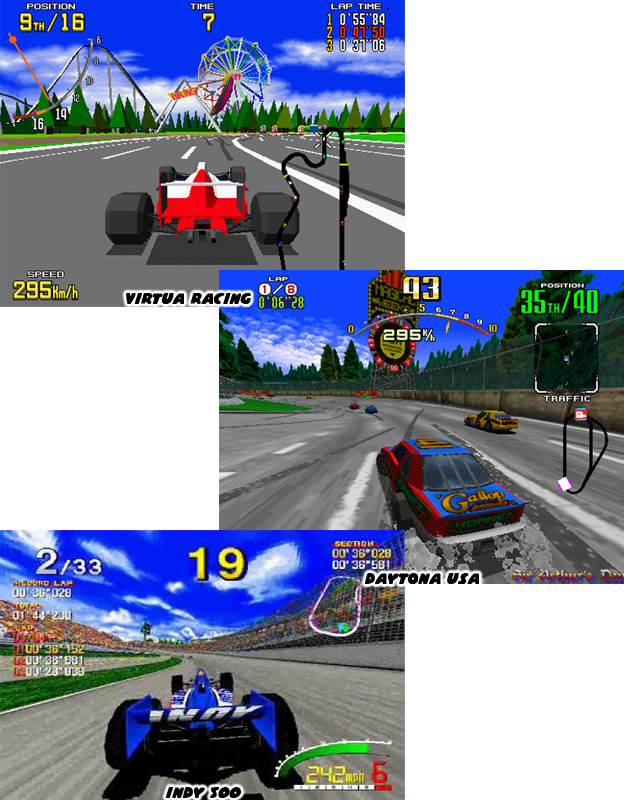
Sega released Virtua Racing in 1992, a year before their popular fighting game Virtua Fighter. Both games were developed by Yu Suzuki. He was the Ferrari fan that had created OutRun. For Virtua Racing he wanted to give the world a taste of virtual reality racing. Not necessarily in the sense of giving drivers a helmet which displayed a virtual environment but instead by generating the first Formula-1 style racer that featured 3D environments a 3D racing car and believable physics. The team at AM2 was able to craft a car and several tracks that responded very realistically. While the polygon count was still low by modern standards at the time it was revolutionary.

Cars would reflect light or cast a shadow depending on their position relative to the virtual sun. The exhaust on the racers would explode with sharp angled flames when downshifting, they could also bottom out on bumpy roads and send sparks flying from the undercarriage. The cars could even send up plumes of smoke from their tires if they got too loose on a turn. These details may seem insignificant and they were to many arcade visitors. They had seen sprite based racing games recreate many of those same effects. Many of the older Sega games also featured these details. The goal of Suzuki was to convince gamers that the polygon was the best tool in which to create the ultimate racing experience. While crude the flat blocky surfaces still had a sense of weight and depth unheard of in any other racer.

At first I was unconvinced by Virtua Racing. It certainly did look much better than Namco's Winning Run but the cars and locations were still blocky and rough. F1 Super Lap was a year older and still provided some amazing visuals. In many regards it looked better than Virtua Racing. The cars were highly detailed and not blocky at all, the courses realistic and the physics somewhat convincing. I spent a few weekends going back and forth between the games. Little by little I began to notice all of the nuances that an actual 3D engine brought to the experience. Knowing when to shift and when to brake suddenly became much more challenging. Coming up to the apex of a turn at the right angle and then accelerating past a computer rival came with a genuine sensation of speed. In sprite based games it was possible to memorize when the computer AI would go for a pass, or what landmarks to watch for when getting ready to downshift or enter a turn. That changed completely in Virtua Racing because suddenly the computer AI could adapt to the player and put cars in different positions each time they played. It was up to the gamer to become a better driver and learn to change tactics based on the opponents. It was not a sim experience, which was what had hampered Winning Run, instead it was very forgiving and played more like an arcade racer should. The game itself was selling a sense of immersion more than any fancy sit down cabinet ever could. However when the graphics and control were combined there was little reason for a car fan like myself to ever leave the arcade.

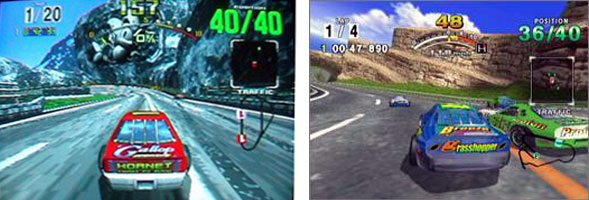
Sega did not capture the lighting in a bottle one time. They did it again and again and again. First with Virtua Racing, then with the even more well regarded Daytona USA in 1994. The funny thing was that Daytona USA actually featured less polygons than Virtua Racing, however the polygons that the engine did render were textured, giving the illusion of greater fidelity and improved graphics. It was the same thing that Namco had done to make Tekken appear graphically superior to Virtua Fighter. The leap in graphics technology did not come from in-house. General Electric Aerospace Simulation & Control Systems, which was creating polygonal rendering technology for contractors like Lockheed-Martin was shopping their technology to big companies like Disney, and Universal. Sega reached out, and visited their offices in Daytona Beach Florida. The rest as they say is history. Sega then married a more powerful rendering engine with textures in the 1995 title Indy 500. By then their domination on the racing market had all but been won.

Namco had actually tried to make a better Formula-1 racer after the release of Virtua Racing. The studio had been burned by failing to break new ground with Final Lap and had beaten Sega to the 3D punch with Winning Run but both games did not generate the responses they had hoped for. So the developers went back to the drawing board. They created a new F1-like franchise that played nothing like Pole Position, Final Lap or Winning Run. The new game would be generated in 3D and feature texture mapping and other graphic nuances. The Ridge Racer team had worked with Evans & Sutherland, another military contractor to get their hardware up to spec. Ridge Racer featured contemporary looking sports cars, Ace Driver had cars and tracks that were set slightly forward in design, with only subtle science fiction elements drawn in as with Cyber Cycles. 

Sadly the release of Ace Driver in 1994 and its sequel Ace Driver Victory Lap in 1995 had failed to pull many eyes away from the Sega racers. The Ace Driver games were very well done. The control was much improved over previous Namco F1 racers. It played much more like and arcade racer should have and not at all like a simulator. The designs of the cars, selection of race types and tracks were memorable as well. However the Sega game engines were more powerful and the difference in graphics capabilities was starting to become apparent to some arcade visitors.

For the majority of gamers there wasn't much difference between the Sega and Namco racers. Both companies still managed to produce games and graphics far ahead of the competitors. The true rivalry was between the two companies and it seemed to peak in the mid '90s. In the first few years of the decade Namco had actually done well at responding to what Sega had just released. If there had been only two next generation F1 games then Ace Driver would have beaten out Virtua Racing by a wide margin. Unfortunately the multiple arcade R&D teams at Sega were all focused on new racing titles and had released those games in rapid succession. It was everything that Namco could do to keep from falling behind the curve. A cameo from a Tekken character would not be enough to save all of the Namco racers. 

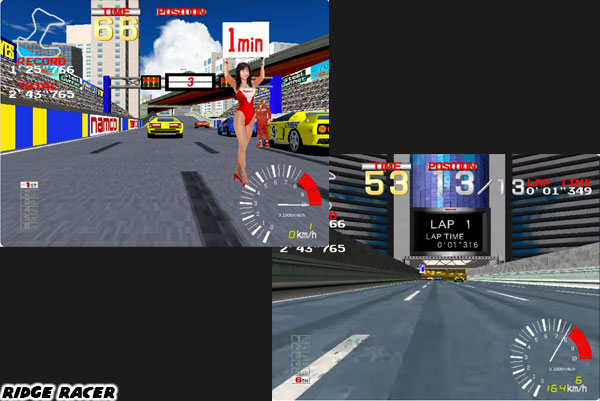
Namco was determined not to fall behind their competition. In 1993 they released one of the greatest arcade racing games of all time. Ridge Racer would become a hit in the arcades, and iconic on the upcoming Sony console known as the Playstation. We will look at this in the next blog. As always if you would like to sponsor me please visit my Patreon page and consider donating each month, even as little as $1 would help make better blogs and even podcasts!
follow the Street Writer on Patreon!