Showing posts with label daytona usa. Show all posts

Thursday, August 14, 2014

The Ridge Racer Legacy, part 29...

Ridge Racer, like other long running Namco titles had been steadily improving over the years. The developers were keenly aware that the canon of the series was sacred to the company. Every location, every manufacturer and every track had to be better than the last. Ridge City and the other sites were constantly growing and changing. They were very much like real world cities in that regard. The studio wanted audiences to recognize that the virtual world was living and breathing and would look slightly bigger and better each time they visited it. What audiences never expected to see was how well those locations would translate onto the handheld consoles.


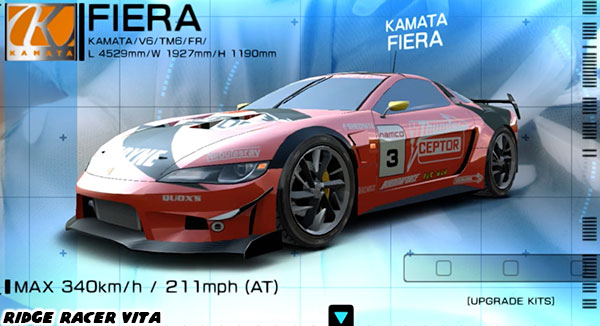
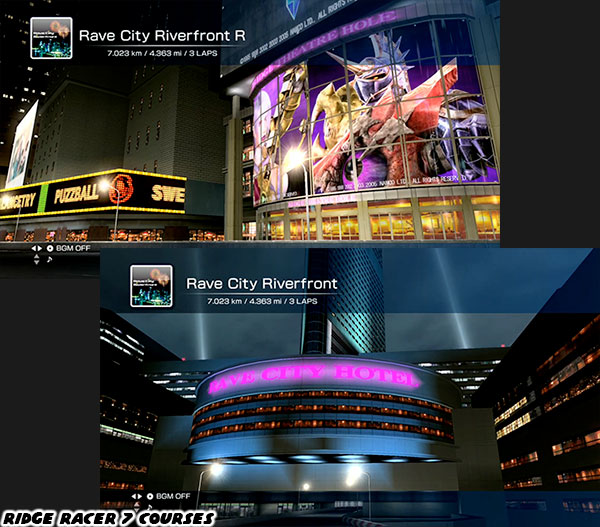
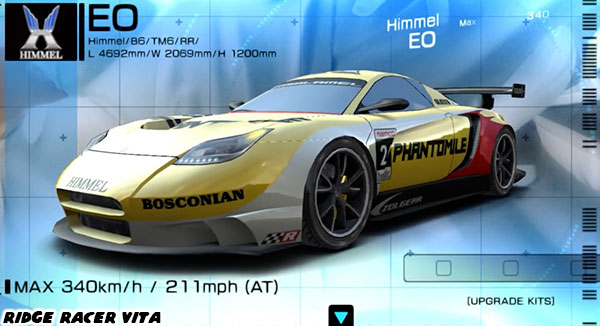
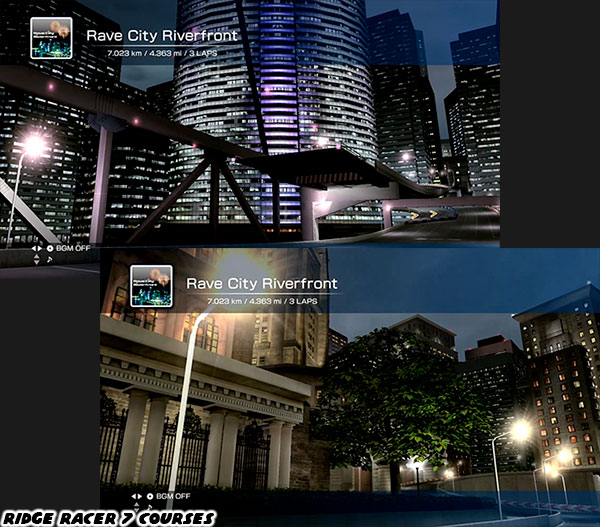
The publisher kept true to canon and made sure that the sights and sounds continued to improve in every release. Even with the limited processing power and storage capacity of the handhelds Namco was still able to deliver some memorable experiences. Ports that had a container ship, a crane and a few warehouses in Ridge Racer Type 4 had become much busier and far more packed with details when it was visited on the Playstation Vita. Of course the Vita was also a much more powerful system than either the Playstation or Playstation 2. It's high definition display was capable of presenting graphics which were light years ahead of where they were in 1999. It had grown out of the lessons learned from those consoles, the Playstation 3 as well as the PSP and PSP Go.

The most important lesson that Namco would learn from the title was how quickly the company could anger their fan base. Ridge Racer for the Vita was released in 2012 with three tracks and five cars. Additional cars and tracks were available by purchasing downloadable content packs (DLC). The company had charged full price for a game that was essentially an empty shell. A year later the company released Ridge Racer Unbounded and further distanced themselves from the things that made the original series so much fun. Visually the Vita game was a stunner. The tracks and cars had never looked better and the control was quite good but the lack of content severely hurt the review scores from critics and word of mouth from fans. It was considered one of the worst games of 2012, not for how it controlled or how it looked graphically but for how lacking the content was. Needless to say the Metacritic reviews were not kind.

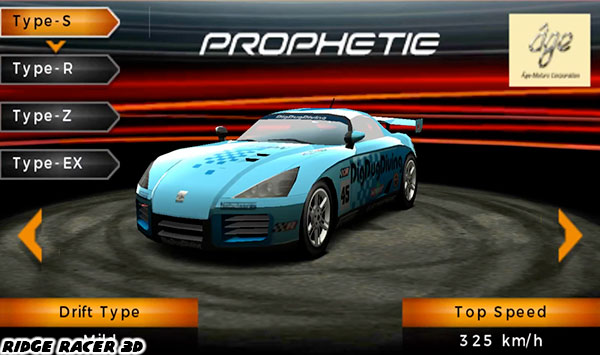
The game was a slap in the face to those that enjoyed the Ridge Racer 6 and 7 experience from six years prior. Fans were shocked that during those six years did not see a quantum leap in the progression of the handheld games. Before that the portable games were very well done. Ridge Racer Accelerated HD, a 2011 release for the iOS was a decent attempt at making a racing game for the iPhone. Ridge Racer 3D for the Nintendo 3DS came out in 2011 as well. It predicted the use of DLC micro-transactions from Namco. Audiences overlooked that because the game had included plenty of tracks and cars for players to unlock without having to pay for them. The 3D effects on the Nintendo handheld took some getting used to but were well done otherwise. The game was actually picking up on the desert environments that were featured in Ridge Racer 64 from the Nintendo 64 from a decade earlier. At least some of the developers working at Namco still cared about the legacy they had created.


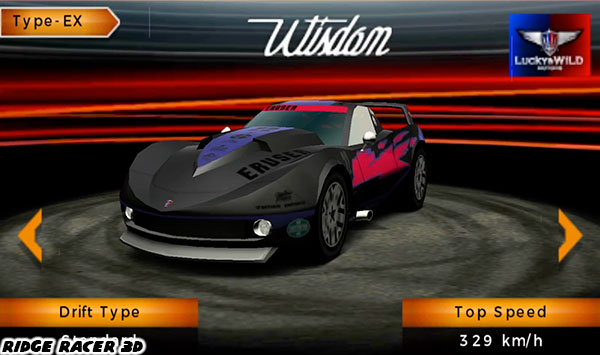
The other games in the handheld library were well done experiences but they were few and far between. Ridge Racer 2 for the PSP was released in 2006, it was the one that Sony President Ken Kutaragi got overly excited about during the E3 press conference. The original Ridge Racer for the PSP debuted in 2004, that was the same year that Gina Cavalli took over cover girl duties on Ridge Racer DS for the Nintendo DS. Not every handheld game ported over the cars or tracks featured on the consoles. Several new courses including Redstone Thunder Road and radical cars like the Lucky & Wild Evolver were first introduced on portable screens. Not every outside developer working with the franchise had turned their back on the classic elements, as Bugbear Entertainment had. There was actually a fantastic blend of the mobile experience and the best portions of Ridge Racer 7 for an inexpensive price.

Ridge Racer Slipstream debuted in 2013 for the iOS platform. The developers at Invictus had released a portable version of the franchise that was worth more than the $4.99 they were asking for. Namco was hoping to earn a little bit of revenue from micro-transactions. Audiences could spend anywhere from 99 cents all the way up to $49.99 to purchase credits that they could use to unlock additional tracks and cars. Unlike Ridge Racer Vita however Slipstream allowed players to "grind" through the races and earn the credits to unlock everything. It took a lot of patience and determination to unlock all of the content but the game was actually highly enjoyable and worth the number of replays that it took to get those credits. To keep things interesting the developer would send three daily tasks to complete where they would earn additional experience points or credits. For a mobile game the graphics on Slipstream were well done. It looked just a hair toned down from the Ridge Racer 6 and 7 experience from the pinnacle of the series. The game even included multiple music tracks from the previous games so that not only did it look and play like a classic Ridge Racer game, it also sounded like one.


Alex Adjaj, the Director of global strategy for mobile at Namco was a huge fan of the Ridge Racer series. He had been playing the game since it was on the Playstation and was not a fan of what the company had done with the Vita debut. He called the lack of content on the Vita and the charges that the company wanted to get out of players ridiculous. In an interview with Digital Spy he sided with fans. "If you look at all the Ridge Racer games that have been brought to portable consoles, in particular in the past few years PS Vita and PSP, and you look at the Metacritic score, you see that people complain a lot about the value they got when they spent £40 for the game/ And it's Ridge Racer - it's not like Ridge Racer Driftopia. We're not breaking cars. It's the real Ridge Racer with drifting and everything." He then added "Here we're bringing a game with 12 different cars, over 300 different modifications, 12 tracks - and if you reverse, 24 - 100 races in the career mode, then there'll be multiplayer in January [2014]."

I didn't download Slipstream when it came out last holiday season. I understand that the first few months were filled with random crashes and numerous bugs. I started playing it in February 2014. It was patched a few times since then, adding much more reliability to the experience. It was definitely the game that helped me get through jury duty! I have to admit that it was head and shoulders above the competition on the iOS arena and better than most handheld racing games out today. People reading this most definitely should check out the title for the iPhone, iPod Touch and iPad.

After reading the interview with Mr. Adjaj it was hard for this arcade veteran to accept that Namco might never return the series back to their roots. The division inside the company had stifled creativity. It was a trend over the past decade that had seen the best talent come and go in Sega, Capcom, Square-Enix and numerous other Japanese studios. The long-term fans would never forget the golden era and would long for a return to a classic arcade experiences. What the studios had failed to realize was that the experience could be captured on the home consoles and even portable systems. When I say arcade experience I did not mean having to pay 25¢ for every play through. That would now be considered a micro-transaction these days. Audiences wanted the robust AAA experience that Namco used to give them on the Playstation consoles. With cars worth racing, a team worth racing for and a resolution that would be etched in their memory. No strings attached, no additional content to download.


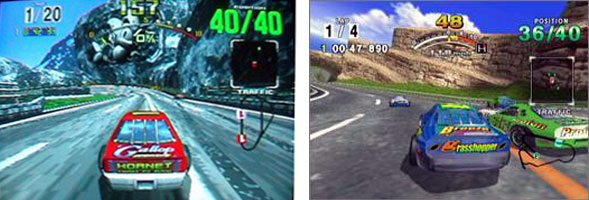
Today however was a different world. Arcade players had to come to terms with how much had changed in 20 years. Sega had once dominated Namco at every turn. The Hornet, car 41 from Daytona USA was featured DLC for Ridge Racer - Vita in Japan. The most iconic car from Sega, that wasn't a red Ferrari Testarossa, was a welcome addition to the Ridge Racer family. It was only a matter of time really. Sega had introduced the exaggerated drifting physics in Daytona USA that made Ridge Racer so popular in later years. The senior developers at Namco believed in their racing series enough to keep it going. There may have been some internal conflicts as to the direction of the series and how to handle future updates and content but the core the series remained the same. Sega had lost their way and had turned their back on their biggest racing and adventure titles. They then relied on outside developers to keep their most popular IP going.

Players that had grown up during the most formative years of the arcade racing movement could still rely on Namco, now Bandai Namco, to enjoy the best of both worlds. The over-the-top racing from the arcade but on lightweight portable devices. It was not known when the next full-fledged Ridge Racer would hit the consoles. The Playstation 4 and XboxOne had debuted at the end of 2013 and a new Ridge Racer game had yet to be announced for either system. The success of Ridge Racer Slipstream and the PC title Ridge Racer Driftopia helped keep the title on the public consciousness. Most recently the publisher wised up and began offering audiences in the west something that had been missing for more than a decade. The next blog will highlight the best part of the experience that had nothing to do with racing. If you would like to sponsor me please visit my Patreon page and consider donating each month, even as little as $1 would help make better blogs and even podcasts!
follow the Street Writer on Patreon!

Wednesday, June 25, 2014

The Sega / Namco Rivalry, part 9...

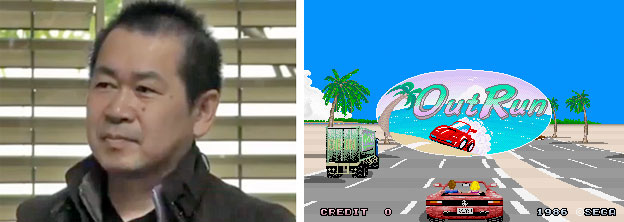
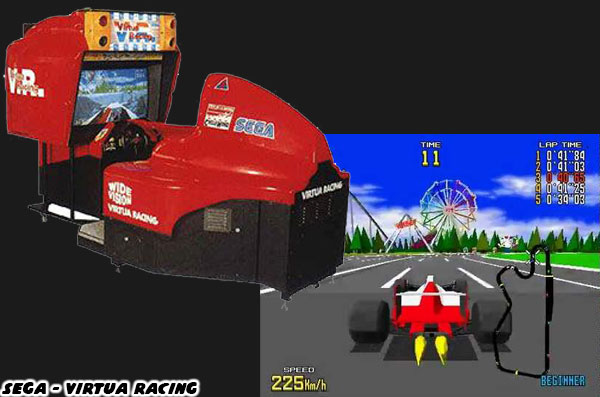
Sega released Virtua Racing in 1992, a year before their popular fighting game Virtua Fighter. Both games were developed by Yu Suzuki. He was the Ferrari fan that had created OutRun. For Virtua Racing he wanted to give the world a taste of virtual reality racing. Not necessarily in the sense of giving drivers a helmet which displayed a virtual environment but instead by generating the first Formula-1 style racer that featured 3D environments a 3D racing car and believable physics. The team at AM2 was able to craft a car and several tracks that responded very realistically. While the polygon count was still low by modern standards at the time it was revolutionary.
Cars would reflect light or cast a shadow depending on their position relative to the virtual sun. The exhaust on the racers would explode with sharp angled flames when downshifting, they could also bottom out on bumpy roads and send sparks flying from the undercarriage. The cars could even send up plumes of smoke from their tires if they got too loose on a turn. These details may seem insignificant and they were to many arcade visitors. They had seen sprite based racing games recreate many of those same effects. Many of the older Sega games also featured these details. The goal of Suzuki was to convince gamers that the polygon was the best tool in which to create the ultimate racing experience. While crude the flat blocky surfaces still had a sense of weight and depth unheard of in any other racer.
At first I was unconvinced by Virtua Racing. It certainly did look much better than Namco's Winning Run but the cars and locations were still blocky and rough. F1 Super Lap was a year older and still provided some amazing visuals. In many regards it looked better than Virtua Racing. The cars were highly detailed and not blocky at all, the courses realistic and the physics somewhat convincing. I spent a few weekends going back and forth between the games. Little by little I began to notice all of the nuances that an actual 3D engine brought to the experience. Knowing when to shift and when to brake suddenly became much more challenging. Coming up to the apex of a turn at the right angle and then accelerating past a computer rival came with a genuine sensation of speed. In sprite based games it was possible to memorize when the computer AI would go for a pass, or what landmarks to watch for when getting ready to downshift or enter a turn. That changed completely in Virtua Racing because suddenly the computer AI could adapt to the player and put cars in different positions each time they played. It was up to the gamer to become a better driver and learn to change tactics based on the opponents. It was not a sim experience, which was what had hampered Winning Run, instead it was very forgiving and played more like an arcade racer should. The game itself was selling a sense of immersion more than any fancy sit down cabinet ever could. However when the graphics and control were combined there was little reason for a car fan like myself to ever leave the arcade.
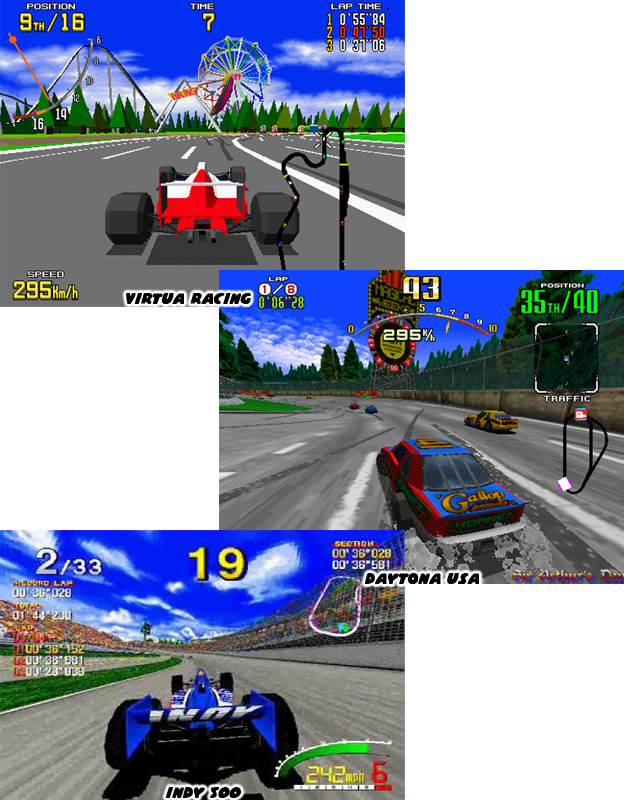
Sega did not capture the lighting in a bottle one time. They did it again and again and again. First with Virtua Racing, then with the even more well regarded Daytona USA in 1994. The funny thing was that Daytona USA actually featured less polygons than Virtua Racing, however the polygons that the engine did render were textured, giving the illusion of greater fidelity and improved graphics. It was the same thing that Namco had done to make Tekken appear graphically superior to Virtua Fighter. The leap in graphics technology did not come from in-house. General Electric Aerospace Simulation & Control Systems, which was creating polygonal rendering technology for contractors like Lockheed-Martin was shopping their technology to big companies like Disney, and Universal. Sega reached out, and visited their offices in Daytona Beach Florida. The rest as they say is history. Sega then married a more powerful rendering engine with textures in the 1995 title Indy 500. By then their domination on the racing market had all but been won.
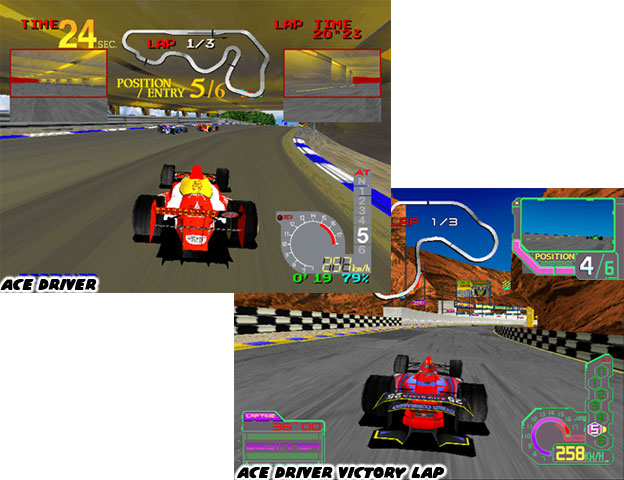
Namco had actually tried to make a better Formula-1 racer after the release of Virtua Racing. The studio had been burned by failing to break new ground with Final Lap and had beaten Sega to the 3D punch with Winning Run but both games did not generate the responses they had hoped for. So the developers went back to the drawing board. They created a new F1-like franchise that played nothing like Pole Position, Final Lap or Winning Run. The new game would be generated in 3D and feature texture mapping and other graphic nuances. The Ridge Racer team had worked with Evans & Sutherland, another military contractor to get their hardware up to spec. Ridge Racer featured contemporary looking sports cars, Ace Driver had cars and tracks that were set slightly forward in design, with only subtle science fiction elements drawn in as with Cyber Cycles. 

Sadly the release of Ace Driver in 1994 and its sequel Ace Driver Victory Lap in 1995 had failed to pull many eyes away from the Sega racers. The Ace Driver games were very well done. The control was much improved over previous Namco F1 racers. It played much more like and arcade racer should have and not at all like a simulator. The designs of the cars, selection of race types and tracks were memorable as well. However the Sega game engines were more powerful and the difference in graphics capabilities was starting to become apparent to some arcade visitors.
For the majority of gamers there wasn't much difference between the Sega and Namco racers. Both companies still managed to produce games and graphics far ahead of the competitors. The true rivalry was between the two companies and it seemed to peak in the mid '90s. In the first few years of the decade Namco had actually done well at responding to what Sega had just released. If there had been only two next generation F1 games then Ace Driver would have beaten out Virtua Racing by a wide margin. Unfortunately the multiple arcade R&D teams at Sega were all focused on new racing titles and had released those games in rapid succession. It was everything that Namco could do to keep from falling behind the curve. A cameo from a Tekken character would not be enough to save all of the Namco racers. 
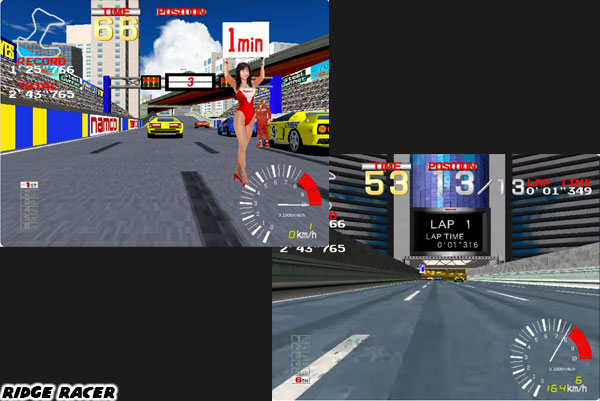
Namco was determined not to fall behind their competition. In 1993 they released one of the greatest arcade racing games of all time. Ridge Racer would become a hit in the arcades, and iconic on the upcoming Sony console known as the Playstation. We will look at this in the next blog. As always if you would like to sponsor me please visit my Patreon page and consider donating each month, even as little as $1 would help make better blogs and even podcasts!
follow the Street Writer on Patreon!

Friday, June 20, 2014

The Sega / Namco Rivalry, part 6...

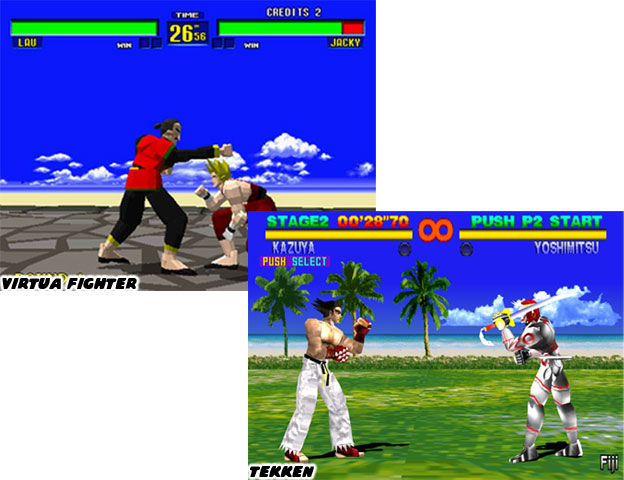
Through the early '90s Sega was doing anything but sleeping on the job. They released Virtua Fighter, the first arcade polygon fighting game in 1993 the same year that Cyber Sled came out. It featured a diverse cast of characters and a new game mechanic that allowed players to push opponents out of the ring and disqualify them. Virtua Fighter tried to focus on more realistic combat and fighting styles than the more traditional 2D fighting games like Street Fighter and Mortal Kombat. Many arcade gamers were not initially drawn to the title because it moved much slower than traditional fighting games. Moreover the polygonal characters in Virtua Fighter were extremely blocky because of the limited computing power of early hardware. Namco would not answer the challenge to develop a 3D fighting game for a few more years. When the studio released Tekken in 1995 then arcade visitors began to take notice. Namco had only slightly bumped up the polygon count for their 3D models. What really changed the perception from gamers was the use of textures. Because the polygonal characters in Tekken had textured skin, clothes and hair and the environments did as well they appeared much more detailed than the Sega characters.

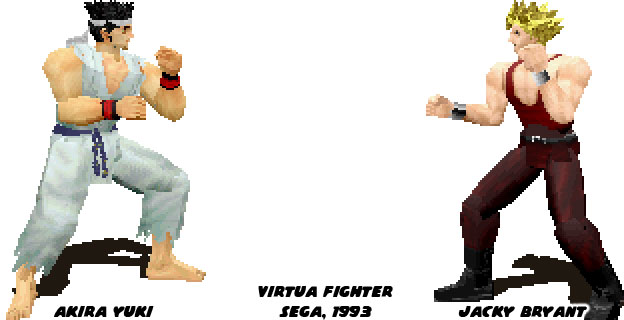
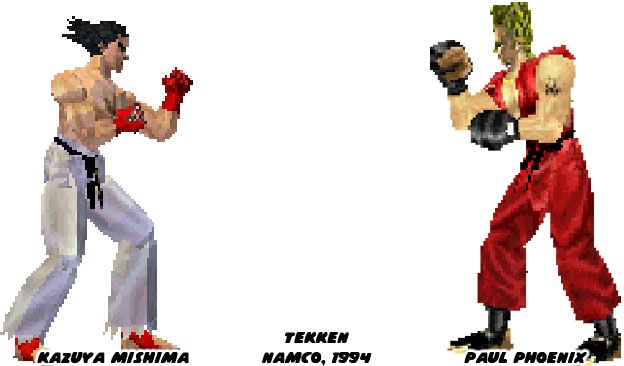
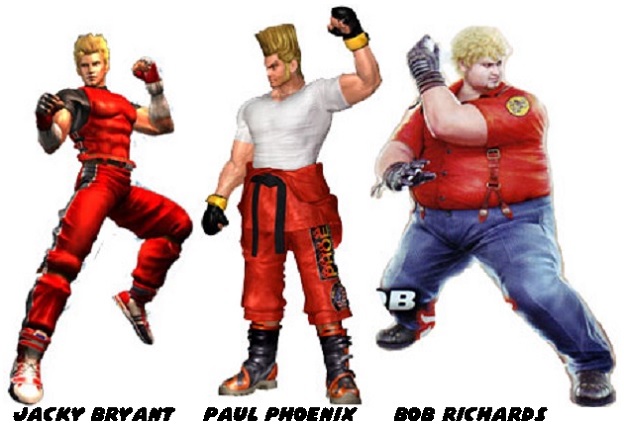
The diversity of the Tekken cast was not any different than what players had seen in other games but the moves that each character had were not necessarily grounded in reality. Tekken was one of the first 3D fighting games to employ the absurdly overpowered strikes seen in kung-fu cinema. Characters could kick each other into the sky and then punch them a few more times before they hit the ground. It was a mechanic that looked amazing in 3D. As far as design went the characters seemed to be a mix of those found in Street Fighter and Virtua Fighter. For example the main character Kazuya Mishima was Japanese and wore white, his rival was an American named Paul Phoenix that wore red. The two were similar to Ryu and Ken from Street Fighter but also Akira Yuki and Jacky Bryant respectively from Virtua Fighter. The similarities didn't end there.

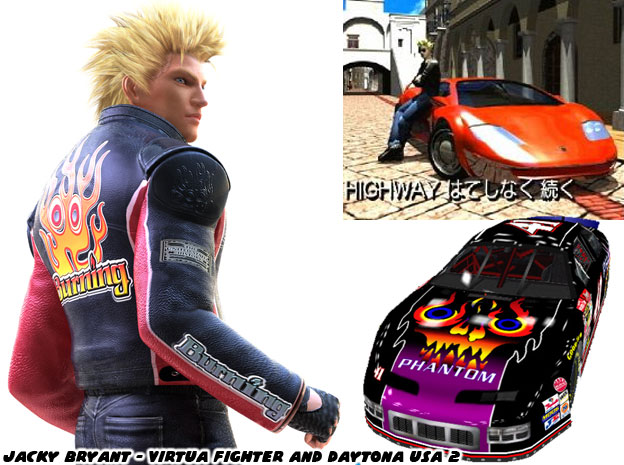
Paul Phoenix was typical of US characters in Japanese games. He was brash and flamboyant and enjoyed being the cool guy. The same thing could be said of Jacky Bryant. To many gamers Phoenix seemed to be a parody of the archetype. He was so cool that he was absurd as well. Insiders noted that he was created to take a jab at the Sega, and even Capcom designs. Jacky for example was not only an accomplished fighter but he was also a professional race car driver. It was as if he simply excelled at everything he tried out for. Sega did everything to make him appear cool in the series. The way they dressed him, the cars he drove personally and professionally. He was the ideal that gamers were supposed to look up to. It seemed to be pandering the way Bryant was juxtaposed to cars that brought back the memories of OutRun and Daytona USA, the earlier Sega racing hits. After all if the American characters were good at one form of racing then it would have to be driving a stock car in a circle.

Sega seemed infatuated with the "hey look at this cool guy" school of design. It became fodder for Namco through the rest of the '90s. When they created Paul Phoenix they went out of their way to make him look even cooler, at least by Japanese aesthetics. Phoenix had actually changed greatly between Tekken 1 and 2. In the original game he wore a red gi and had a tall haircut. Long time fighting game fans noted that he looked like a mix of the US characters Ken and Guile from Street Fighter. Guile had a very tall flat top haircut and Ken wore all red. Jacky from Virtual Fighter was an American that also wore red. He had a red tank top and red pants in the first Virtua Fighter but his costumes would become more casual and race inspired. Namco began to change the look of Phoenix considerably over the next versions of the game to make sure that their fans understood how over-the-top the character was supposed to be. The studio would often portray him as a down-on-his-luck fighter while his Japanese rival rose to prominence.

Phoenix was clearly a powerful fighter as he could hold his own against the top characters in canon as well as within the game. Yet the outlandish hair and strong attacks were not enough to get a message across to Sega. A few years later Namco introduced an obese fighter into Tekken named Bob Richards. The freestyle karate fighter had the dashing good looks of a typical American character, along with clearly died blonde hair. He even wore a red top and jeans. The only difference between he and Phoenix was about 250 lbs of fat.

Bob had a patch on the sleeve of his shirt, a bright Hornet which would become his icon. In different costume variations the Hornet could be seen on his belt buckle as well. Those that were long time Sega fans knew that the Hornet was the signature car in Daytona USA. One of the first polygon racing hits. Bob was essentially the fat American stereotype and arcade fans either loved it or loathed it. Those that were not in the know simply saw a fat fighter that looked a little odd in the lineup. It would not be the first time that Namo had fired a shot across the bow at Sega. The beef between the studios could be traced back to their racing rivalry. The next blog will look at the period where both companies were going head to head across different racing formats. As always if you would like to sponsor me please visit my Patreon page and consider donating each month, even as little as $1 would help make better blogs and even podcasts!
follow the Street Writer on Patreon!

Monday, June 16, 2014

The Sega / Namco Rivalry, part 2...

Sega and Namco were unparalleled in the arcade racing field. Sega was the older and larger of the two companies. It had several R&D groups running all of the time testing out new ideas and technology. The first three; AM1, AM2 and AM3 were working on games while AM4 was developing cabinets for the three. The stand up cabinets from Sega were always well done but the sit down deluxe cabinets were in a class all their own. In the previous blog I mentioned that the early sit down racing cabinets enclosed the player to give them more of a simulation experience. Some games had gas, brake and sometimes even a clutch and shifter. Those cabinets featured vinyl graphics that recreated dashboards, complete with a speedometer and tachometer. While these were static images stuck on pressed board to young patrons they were as good as the real thing. With some tape, markers and scissors a child with a vivid imagination could turn a large cardboard box into a rocket ship, submarine or fighter jet. Now think about the reaction that a deluxe cabinet would have given these same kids.

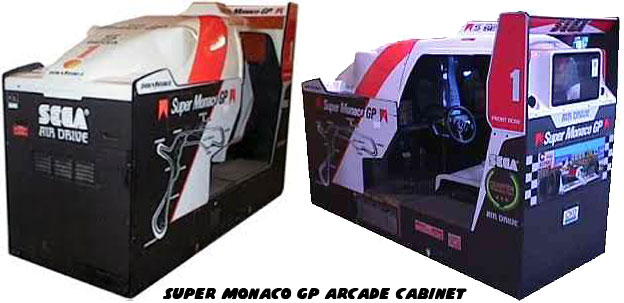
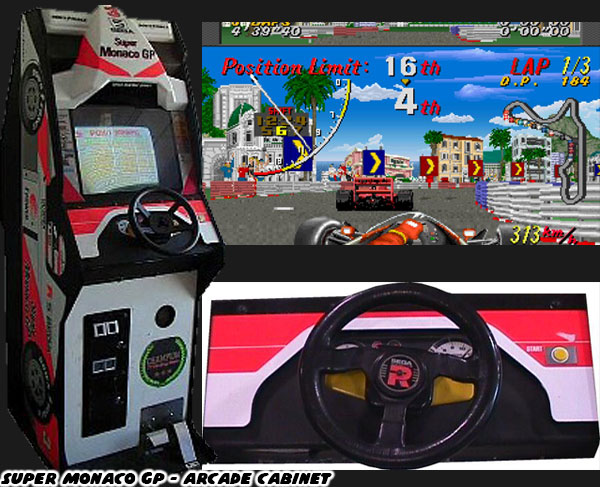
Sega did not have to shape the body of the Super Monaco GP cabinet like a Formula-1 racer. They did not have to paint up the fiberglass body and cover it with sponsor stickers either. They did not have to put a magnifying window behind the cabinet so that patrons could watch the race without interfering with the driver. They did not have to map out and recreate the most accurate (for the time) map of the actual Monaco Circuit. Arcade fans were grateful that they did all of those things. The game was also innovative for its use of paddle shifters rather than the traditional stick shift. Up until that point most games had a stick shift that went from low to high gear, sometimes with a turbo button on the thumb rest. Many racing games from the west actually had 4-gear shifters going all the way back to the late '70s. The paddle shifter, located behind the steering wheel, was cutting-edge technology that was pioneered in Formula-1 at the start of the '90s. The technology would not find its way into production cars for several years but Sega had a working version in their games right away. Young racing fans felt privy to the inside world of an F1 driver whenever they played the game. The extra touches that Sega put into the cabinet, including realistically moulded plastic racing seats, won them many accolades. The game found its way to the consoles and PC but with additional tracks and teams added as well.

Teens and adults would get the most out of a deluxe cabinet like Super Monaco GP but some fans were to small to reach the pedals and too weak to fight the force-feedback steering. For every big title that the publishers released they were always mindful of their youngest fans. Sega and Namco would sometimes create a kiddie-size version of some of their cabinets. Perhaps a very simple driving game on a cabinet that rocked back and forth. In this way little brothers and sisters would not feel left out from the experience. 

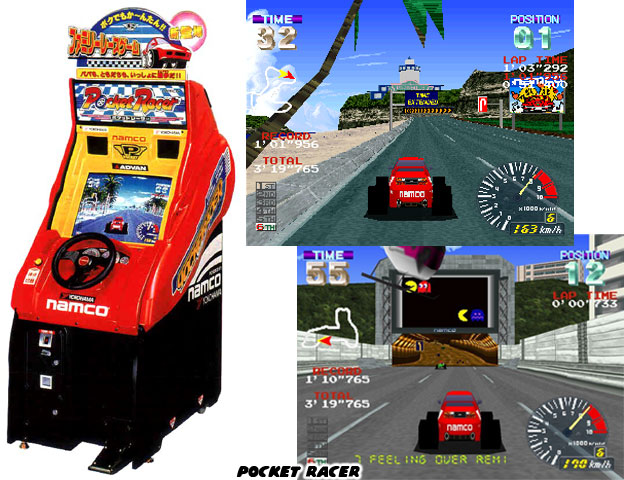
Namco had found considerable success when they released the 3D title Ridge Racer in 1993. I will go much more in depth on that title in future entries to this series. Ridge Racer had gotten sequels and console releases over the years and had become very familiar to young fans.The problem that kids had with Ridge Racer were its challenging controls and steep learning curve. They wanted to participate in the game, especially its over-the-top spectacle where news helicopters would fly right over the cars and fans would cheer from the edge of the track. Namco made a simpler version of the game with Choro-Q style versions of the iconic cars and tracks. It also included songs from the original game. Namco designed a smaller cabinet with a smaller steering wheel, no brake or gear shifter and only a gas pedal that the smallest patrons could use. The game was called Pocket Racer and it was released in 1996.

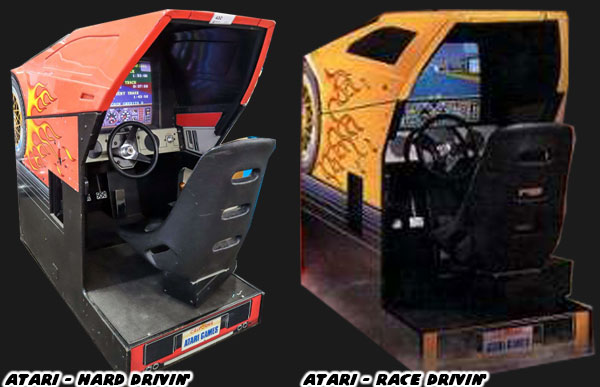
Pocket Racer was much more forgiving to players that made mistakes such as running into walls or even opponents. The cars would simply bounce and keep going. Namco knew that the best way to build a fan base was by offering as broad a spectrum of experiences as they could to players of every age and ability. They then had to continuously challenge these players at every stage. Toddlers that wanted to drive cars like the big boys no longer felt left out. Of course older kids and teens would become more critical about their own experiences as well. The deluxe sit down cabinets from the early '80s were nice but had become antiquated. The seats and back were rigid and in a fixed position. Players that were too short or too tall found it difficult to enjoy the experience. I remember that in the early 'late '70ss I couldn't reach the pedals on some games but by the end of the '80s I could barely fit into the cabinets. Namco, Sega, Atari and a few other developers began experimenting with adjustable seats. Atari's deluxe cabinets for Hard Drivin' and Race Drivin' were exceptional. By the '90s sliding seats were an innovation that many would take for granted. Not me of course, I would always be thankful to any developer that realized that one size did not fit all.

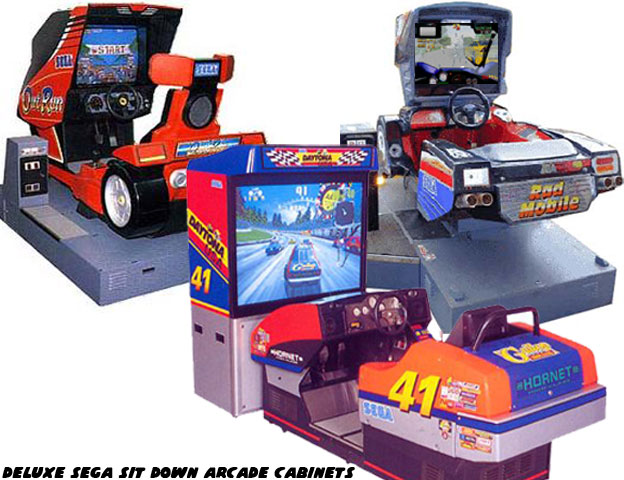
Through the '80s and '90s Sega would continue to push the definition of deluxe sit down cabinet and eventually did away with the enclosed cockpit for many of their racing games. Instead AM4 opted for outlandish body molds and non-functional but very stylish accents. These included wheels, fenders, taillights and exhaust pipes in some cases. If arcade games were about grabbing the attention of players then it would stand to reason that a shapely 3D cabinet attracted more people than even the flashiest 2D vinyl sticker. In several deluxe cabinets Sega integrated hydraulics to lift, tilt and shake the player and give them an even more immersive experience. It was a sight to behold when an arcade had four or more Daytona USA cabinets lined up side by side. The cabinets were actually designed to fit flush against each other and even be networked. A row of Daytona machines could easily take up over 20 feet and line an entire wall of an arcade. Watching the displays in perfect unison showing the entire width of a virtual racetrack was mesmerizing.

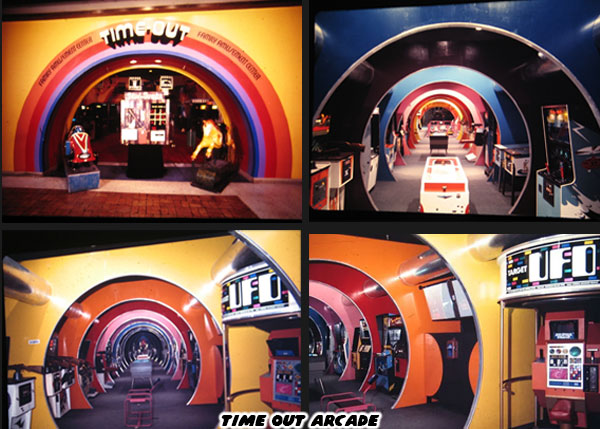
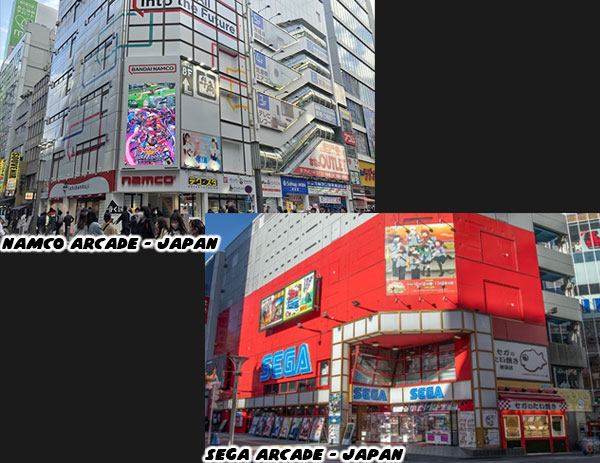
Not every arcade could afford the spectacle of multiple deluxe cabinets, often times one was more than enough for patrons. The arcades that could afford the biggest and best machines were always in the largest cities and sometimes even had an influx of tourists during peak seasons. Sega and Namco had built relationships with distributors and began opening up their own arcades in Japan. The best ones were usually closest to the corporate headquarters. In the US Sega had even opened up a chain of arcades in shopping malls called which were in turn bought out by a company known as Time-Out. Interestingly enough when the mall bubble burst and arcades fell out of favor to consoles the arcades were sold to Namco. There is a great web page dedicated to the history of the Time-Out arcade by Peter Hirschberg.

The boom and bust of the shopping mall in the US destroyed many stores and arcades. In Japan that was not the case. Arcades could stand apart from malls and cater to their own clientele. If older gamers and adults were the most frequent visitors then some arcades might even feature drink holders and ashtrays mounted on the cabinets. Smoking was banned in most US arcades for fire safety reasons but also because people assumed the majority of gamers were little kids. In Japan the stigma that gaming was only for children was not as prevalent. Like manga and animé there were titles for every age and interest, including adults only. This cultural acceptance of gaming as an entertainment pastime meant that arcades could advertise to every demographic. From a salaryman passing by to teens going on a first date, to an entire family. Arcades were an inclusive entertainment center.

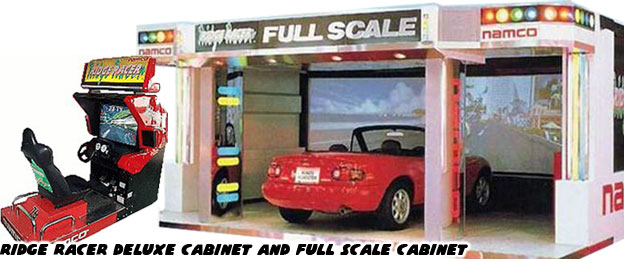
In the biggest locations Namco and Sega would test brand new hardware first and even design deluxe cabinets that wouldn't appear anywhere else. Some of these cabinets were fully functional but also served for spectacle and publicity. Take for example the Ridge Racer Full Scale machine. A regular deluxe cabinet was usually more than adequate for any arcade. Ridge Racer looked as good as most Sega racers for the time, but to stand apart Namco also created a cabinet that fit a full size car, a red Mazda MX-5 Miata / Enunos Roadster and projection screen. The enormous cabinet that Namco used was actually a platform for a light gun game that they were developing. It could be converted to run one of a few other games meant for multiple players. In this way they could collect money from up to six players at a time rather than one rich gamer.

With solid games and innovative cabinets Sega and Namco were slugging it out for arcade supremacy. The next blog will highlight were Namco tried to pull ahead of the competition by going to an old standby. As always if you would like to sponsor me please visit my Patreon page and consider donating each month, even as little as $1 would help make better blogs and even podcasts!
follow the Street Writer on Patreon!