Showing posts with label ace combat. Show all posts

Tuesday, September 2, 2014

The Namco Chronicles, part 12...

The developers at Namco had done an amazing job at creating fully-realized worlds. The problem was that the games they created barely scratched the surface of what the studio had in mind. Audiences had no idea what the scope of each game was. The only way players could appreciate the commitment of the company was by taking a step back and looking at the series as a whole rather than each game individually. Whether the game was Tekken, Ridge Racer or one of the Ace Combat titles, there was something that could only be appreciated by seeing how far each game had progressed over the past 20+ years.

I don’t mean necessarily with regards to graphics or control but as a whole. How did the gameplay evolve, how did the characters and plot develop? How did the relationships change over the course of the series? Every one of those titles grew substantially. The company had allowed their developers tremendous leeway. They experimented with new formats, new control schemes and varying timelines. Yet the core of each game remained the same. They were all fun experiences and left players longing for more. Players would race on the courses featured in Ridge Racer and see that there was much more to the world beyond the race barriers. As far as they could see in every location there was substance. Whether it was people throwing confetti from the stands or even the dancing characters on an electronic billboard, the world of Ridge Racer felt alive.

The same thing applied to the Tekken series. Whenever an impromptu fight broke out in the middle of a mall, which seemed to be fairly often, players could see the smallest details in shops, from fully dressed mannequins to tile work on fountains. Audiences could also appreciate the scale presented in these locations such as when they were fighting within an enormous sports arena filled with thousands of spectators. The only downside in the eyes of many gamers was that Namco never let down the barriers. They never turned any of these locations into a sandbox environment. Players could not drive freely down the streets of Ridge City. Fighters could not hop the fence and see what lay beyond in Tekken. Instead the developers wanted audiences to appreciate the type of game they had created in the exact format it was meant to be played.

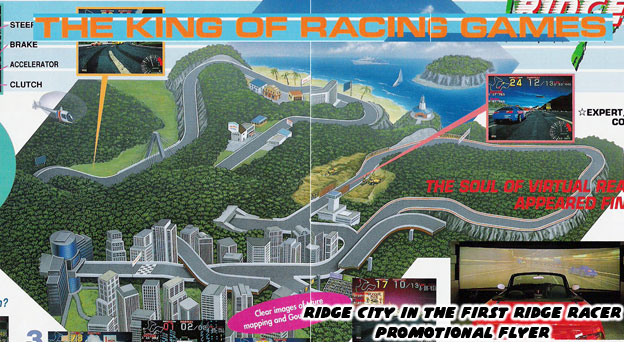
Namco knew that players would return so long as they continued to grow each franchise. In order to do this the development teams had to be constantly vigilant in adding to the canon of each game as much as they were focused on content. The prime example of what the studio did over the past two decades was seen in Ridge Racer. The developers wanted audiences to know that they were not polishing a static city. This was a living, breathing universe that they were shaping. Roads and freeways were interconnected, they all lead somewhere far beyond the borders of the track. In fact the language of Ridge Racer would change to reflect that realization. Over the '90s Ridge City gave way to Ridge County and Ridge County eventually gave way to Ridge State. In the new millennium Namco had finally created enough tracks and locations as to call the continuity the Ridge Universe.

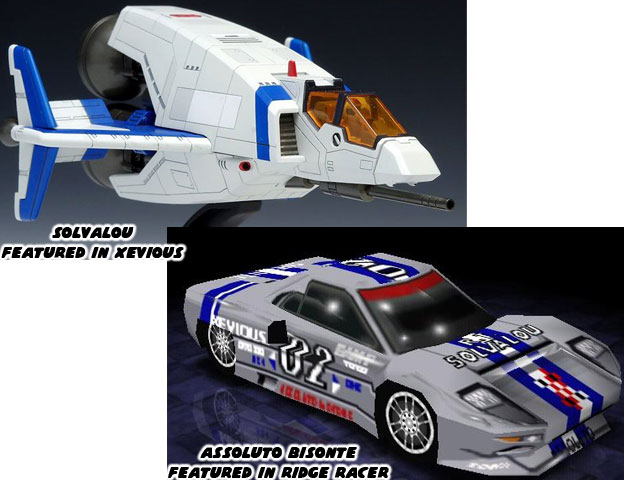
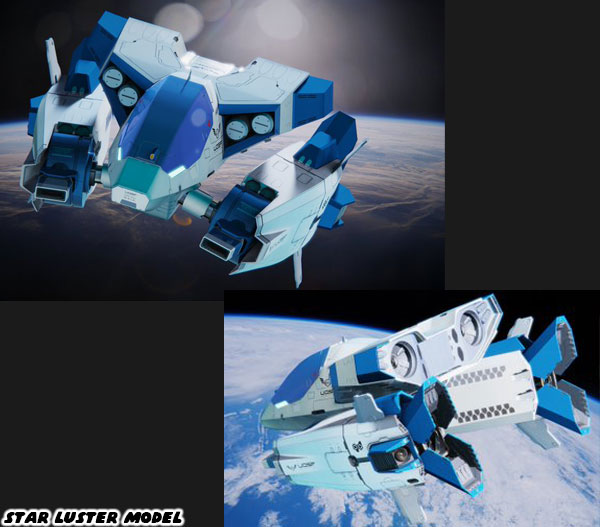
A racing game had met the requirements to join the continuity of the UGSF. It was for all intents and purposes the foundation for the Ace Combat series and future space shooter titles. It was more than a simple coincidence when the cars in Ridge Racer began assuming the sponsor logos of other games within Namco canon. For the fathers of a series it was essential that the Ridge Universe was headed somewhere too. The destiny of the racers was written in the stars. The tradition had been there since the first arcade game but really became a focus in Ridge Racer Type 4. Racing Team Solvalou was an Italian team lead by Eniki Gilbert. The name of the team was rooted in the spaceship Solvalou, which was also the name of the 3D sequel to Xevious. To most long term arcade fans this was a nudge and a wink from the developers of classic titles. What it became was a challenge to bring the Ridge Universe into the fold of the UGSF canon.

The biggest tragedy that had happened to Namco would become the biggest asset in the company history. When Sega stole their best racing game developers in 1993 the outlook seemed bleak. The newly formed AM3, which was made up of former Ridge Racer Project developers went on to create Sega Rally Championship and Crazy Taxi. Those were easily two of the greatest driving experiences ever put in arcades. By every right those hits should have belonged to Namco. The studio went into rebuild mode and relied on the expertise of the remaining artists, developers and programmers to keep their racing division up and running. The remaining employees had plenty of experience in space shooters, fighters and puzzle games. They had to get caught up on driving games really quickly. Thankfully they had the notes from the original team to fall back on. They knew more or less that Ridge City would be expanded upon and new tracks built out of the framework of the surrounding areas. Once the notes from the original project members dried up the remaining employees decided to play up their strengths.

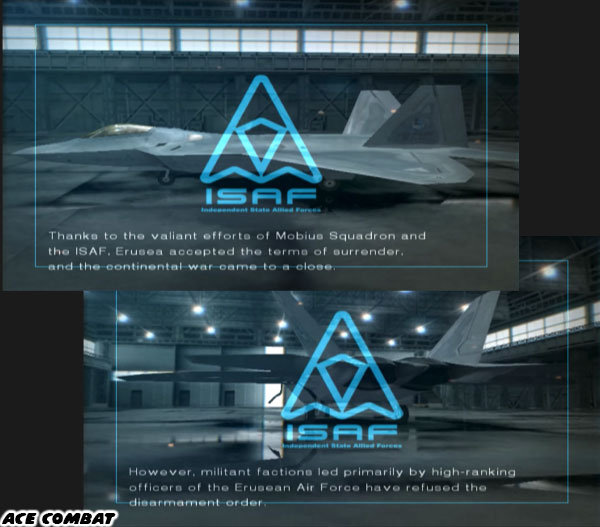
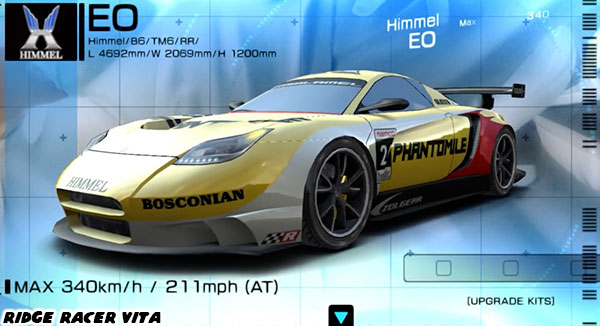
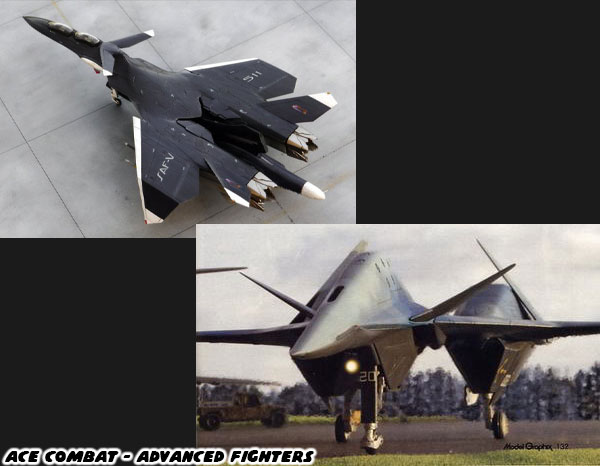
The people left at Namco came from a world that was more fantastic, a world where technology knew no boundaries and where mankind was destined for greatness. These developers needed to change the focus of Ridge Racer from street racing with contemporary cars to racing the finest autos that had ever been produced, including cars yet to be invented. In order not to upset audiences, or the established gameplay, the company introduced radical new rides sparingly over the next 20 years. These “duel” class monsters were accepted as prototypes from the mad thinkers working at each manufacturer. To add an additional layer of plausibility many of the sponsors of the series were the same corporations that built the jets in the Ace Combat series. The connection between Ridge Racer and Ace Combat however went much deeper than a sponsor sticker on the high profile vehicles.

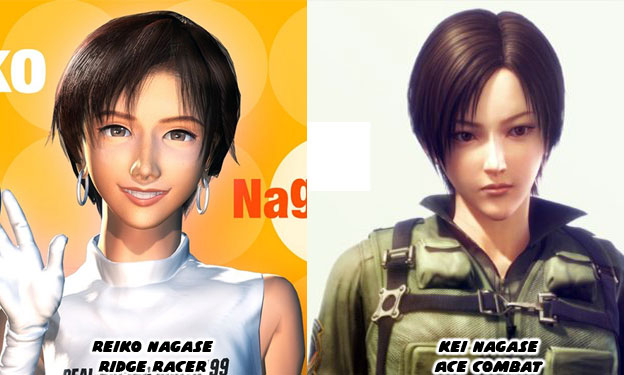
Kei Nagase was the younger sister of Ridge Racer covergirl Reiko Nagase. Whereas Reiko was a model and a racecar driver her sister was a fighter pilot nicknamed Edge. The two seemed to enjoy fast vehicles and thrilling lifestyles. Kei was featured in Ace Combat 2. She would have several cameos throughout the series, jumping forwards and backwards through time along with each release. She appeared in Ace Combat 5 as a trainee, in Ace Combat 4 as a passenger aboard Air Axiom flight 701 during an escort mission but most important in Ace Combat 3: Electroshpere as a senior officer during a news report. The sisters were part of the transitional period that saw humanity focus less on territorial disputes and more towards colonizing the stars.

The companies backing each girl would make sure that civilization would reach that point. Before space jets became commonplace and before the Falken and Delphinus ruled the sky the proving ground for all the new technology in the Namco universe would be featured on the race track. The next entry goes back to the original theme of this series. I hope to see you here for that. As always if you would like to sponsor me please visit my Patreon page and consider donating each month, even as little as $1 would help make better blogs and even podcasts!
follow the Street Writer on Patreon!

Friday, August 29, 2014

The Namco Chronicles, part 10...

It was not very hard to separate the designers working at Namco from what they had produced. The games released by the company had a certain aesthetic style associated with them, a Namco “fingerprint” if you will. Gamers sometimes confused the word graphics for aesthetics when they talked about the look of a game. To be clear it was the stylization of the characters, vehicles and environments that made up the aesthetic of the title. It had nothing to do with whether the game was sprite or polygon-based. Some developers earned a following for how aesthetically pleasing their games were. Titles like Katamari Damacy and Jet Set Radio had unmistakable aesthetics.
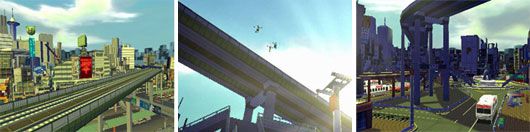
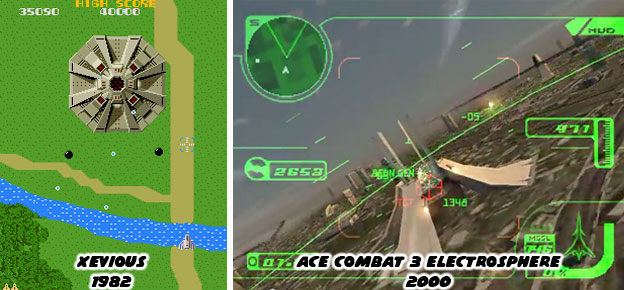
Seasoned players could tell which development team had worked on a particular title just by looking at the game. Through the history of Namco the development teams had used a certain aesthetic to connect the various franchises. In some examples they were obvious, like the Bosconian ships that appeared in Galaga ’88 and Blast Off. In other cases they were very subtle and could have been easily overlooked. The details in the background, the terrain and architecture of certain games had some crossover and this was sometimes missed by players. The longest running string of hits from the company had been rooted in UGSF continuity. The developers working on other games were proud of their contribution and wanted to make sure that the series lived on in one way or another. It was especially important to them once the era of the arcade shooter had died off. The angular buildings and factories used in Ace Combat 3: Electrosphere were reminiscent of the Andor Genesis, the alien mothership featured in Xevious. This was no coincidence. The developers were very slowly shaping the world to fit into the storyline of future releases.
The first game that the developers looked at made the most sense canonically. The Ace Combat series featured military aircraft fighting for supremacy over fictionalized nations. The game always had a forward-thinking tilt to it. Like Tekken and Ridge Racer the game was set a few years in the future and had all the supporting details to reinforce that idea. Whether it was the aircraft, the weapon technology or even the details in the city, everything about the games screamed progress. For audiences it was just a fun dogfighting simulator with dozens of different aircraft types and plenty of memorable missions to keep them engaged. Ace Combat actually made great use of a gameplay technique that the development team had learned from Ridge Racer.
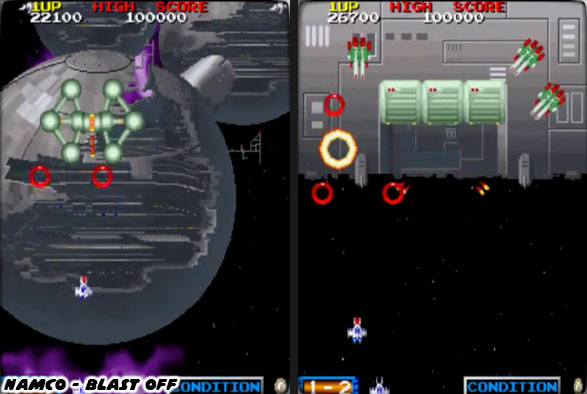
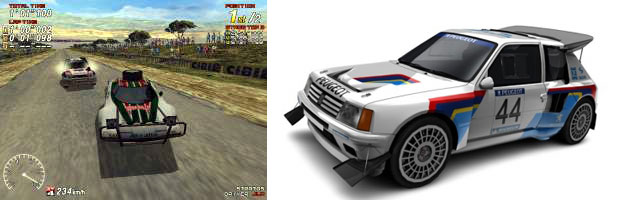
Players had to earn their aircraft by completing scenarios. Finishing levels in a timely manner and also side objectives meant that players could earn better aircraft than those that simply finished the main missions. In a similar way the players of Ridge Racer earned superior cars by beating track times and challenges. Simply completing a race was not enough to earn the best cars in the game. This forced serious players to learn the nuances of each car and track. Players learned how to draft and block, how to find a line through a crowd and when to use the nitro boost. As players improved they were able to upgrade their existing cars and earn better rides.
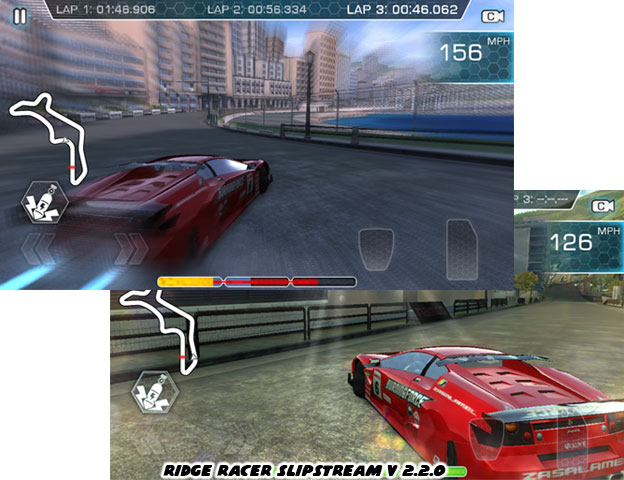
In Ace Combat players had to learn the complexities of dog fighting in a rather short timeframe. The lessons and complex math equations that they would have been taught in training school would never have worked in a high-paced game setting. So every mission became on the job training. How to lead a target, how to fly defensively and even how to line up targets ahead of time were the nuances that players had to learn. Players that mastered the intricacies of fighting were rewarded with the best possible aircraft in the game. Ridge Racer by comparison had made it easier for players to unlock the best cars in the game. They did not necessarily have to be the best drivers on the track, but rather be the best at drifting and using nitro boosts. In real life and in more realistic racing games, a well-executed drift required finesse and solid driving skills.
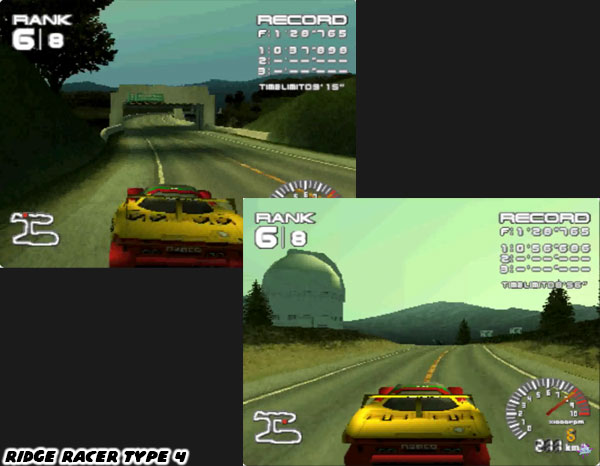
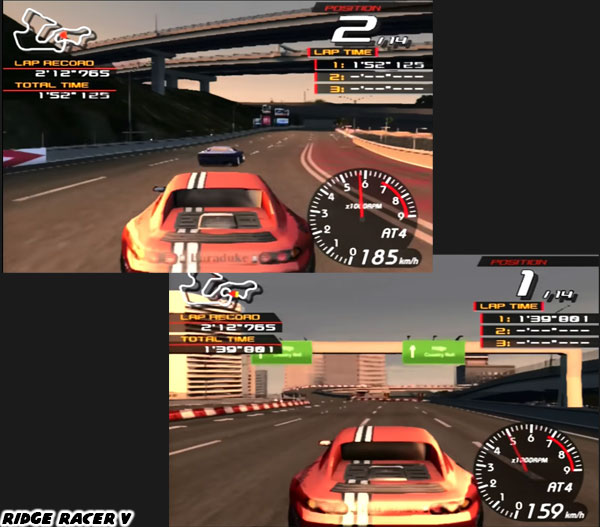
In Ridge Racer a drift recharged the nitrous tanks. So a player that became good at drifting could keep boosting and pass up opponents more easily. The game engine even adjusted the direction of the car as it slid to compensate for the lack of driving skills from a player. This sort of hands-free driving was most apparent when the car was moving very quickly. In every turn all the player had to do was initiate a drift. The game would take over and pull the car around the corner at the perfect angle. The player did not have to do any sort of steering so long as they were going very quickly. Only at lower speeds were they expected to steer the car. This was not always the case, early Ridge Racer games were demanding on the drivers. Rage Racer forced players to become better drivers and react faster and faster with every class upgrade. There was no sort of automatic steering to help guide players around turns.
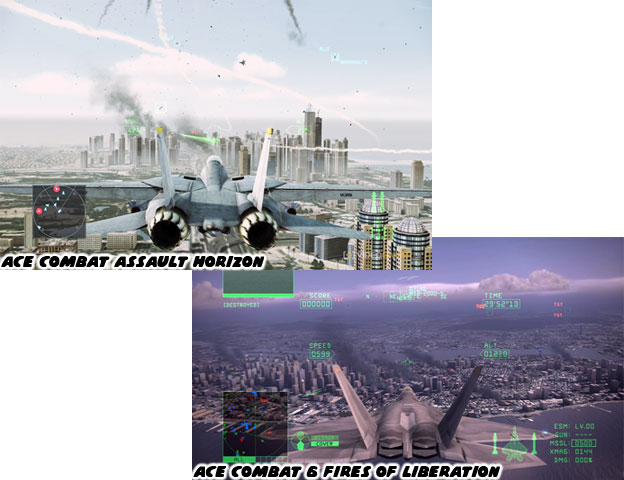
Ace Combat by comparison did not try to dumb down the combat experience. In order to achieve the best possible aircraft the player would have to become a better fighter. Objectives were spaced out early on in the game and combat was limited so that audiences could learn the controls. Little by little the difficulty would increase. More targets would be added and more opponents would join in the battle. By the end of the game the player would find themselves reacting at lightning speed and taking on dozens of opponents. Namco and their developers used this learning curve to their advantage so they could create some of the most amazing combat portions in modern gaming. The gut-wrenching Trinity Missile Strike on the White House at the end of Ace Combat Assault Horizon was a perfect example of that. On the other hand Ridge Racer did not introduce new tracks that took advantage of the fastest cars in the game, making the final races in the title feel anti-climactic.
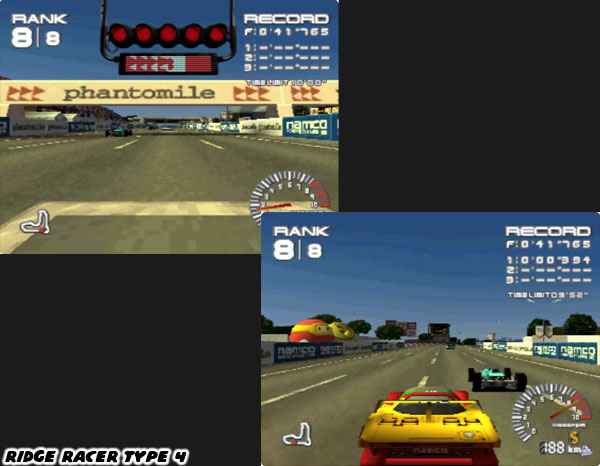
What could never be debated was how amazing the vehicle designs were in either game. I had already highlighted how the cars in Ridge Racer took the best elements in production and concept cars and put them on the track. For the Ace Combat series the developers took cues from the best fighter jets and prototypes and put them all in the sky. Some of the most radical ideas in aviation would become the backbone of the series. From the stealthiest fighter to the most gigantic airborne command cruisers had a place in the Ace Combat universe. The diversity of designs and jet types called out to every spectrum of fan, just as the cars big and small had done for Ridge Racer.
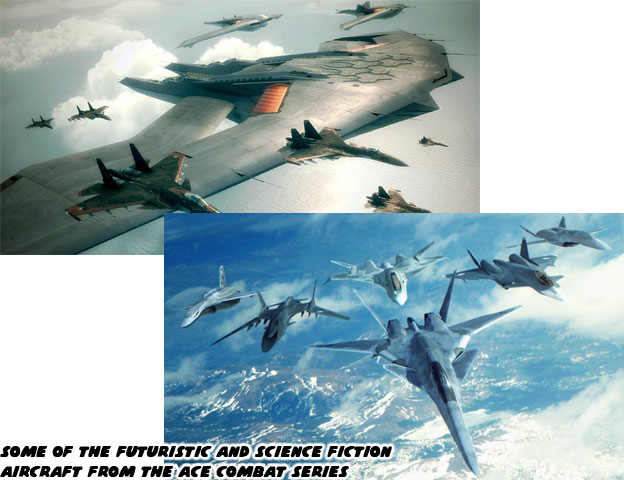
There was an unmistakable science fiction element to the Ace Combat series. It wasn’t enough that the planes were futuristic. They had to fit the vision of aircraft a few generations down the line. The way their aeronautics looked and worked had to be believable. The way weapons were stored and fired, the ability to deflect missiles and defend themselves from enemy fire had to be plausible as well. The people at Namco had to cover all of the angles from a design standpoint and still create a story that was immersive that would help bring players into the experience.
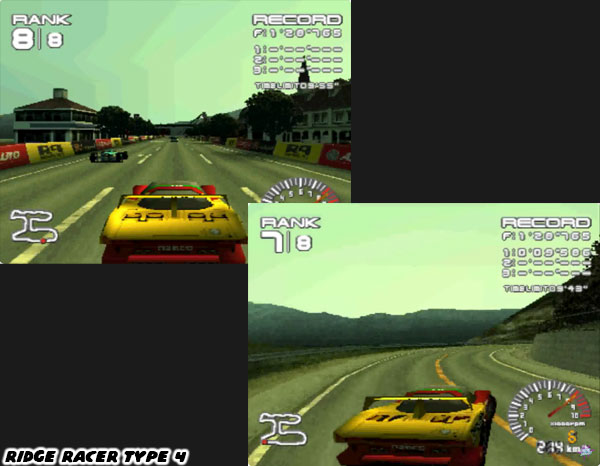
Ridge Racer had the fortune of being a racing game and allowed a player to assume the role of a faceless character. The drivers did not necessarily need to be spoken to by a crew chief or even a teammate but when those details were available, as in Ridge Racer Type 4 and R: Racing Evolution then it was appreciated. For the most part the cars chosen by the player spoke for themselves. Ace Combat had a similar gameplay element going for it. Players were faceless pilots and the planes they selected did all the talking for them. The supporting characters, the wingmen and rivals all spoke to the player and didn’t expect a response, this type of writing helped maintain the illusion. The Ace Combat series would actually become a nexus that bridged the canon of Namco’s past to the future. The next blog will highlight these connections. As always if you would like to sponsor me please visit my Patreon page and consider donating each month, even as little as $1 would help make better blogs and even podcasts!
follow the Street Writer on Patreon!

Monday, July 7, 2014

The Ridge Racer Legacy, part 4...

Namco had lost a fantastic design team to Sega. Those that stayed with the company were willing to create racing games but lacked experience and insight with the various types of racing genres. The group of developers still managed to keep the Ridge Racer series going, and moreover they improved on every element of the game. Rave Racer was a bold concept for the arcades and Ridge Racer Revolution was the first chapter for the consoles. The focus on the series from that point on was owed to the legacy of Namco.

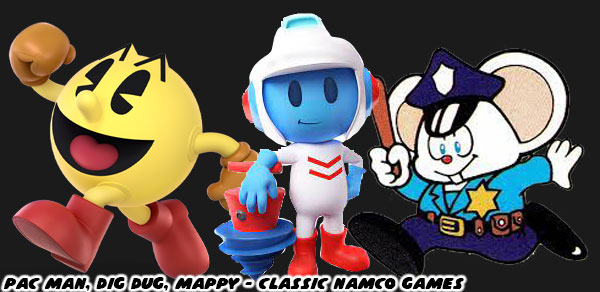
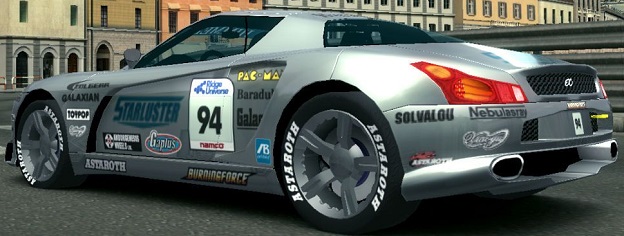
From its inception players noticed that the sponsor logos on the Ridge Racer cars, as well as the in-game billboards were pulled from other Namco games like Dig Dug and Pac Man. These were things that the company had pioneered a decade earlier in Pole Position. The use of familiar icons was a good technique to make the sport cars appear like real racing cars and was a way of getting non-race fans to take a closer look at the game. Instead of paying an actual company the rights to use their logos the developers simply reworked titles of arcade hits into the livery of each racing team. In fact the names for the rivals in the first two Ridge Racer games was pulled from Namco canon. The various rival cars on the track included RT (Racing Team) Xevious, RT Solvalou, RT Mappy, Galaga RT, RT Bosconian and RT Nebulas Ray. Long time arcade fans would recognize many of those names as the hits that put Namco on the map.

Namco was like many other Japanese developers in that it did not allow its employees to get top billing on any game. If there were credits in a game many developers did not use their actual names but instead went by nicknames, others were simply credited as "All Staff." The legacy of these developers would be celebrated on every car in the Ridge Racer series. It turned out that the people that worked on Dig Dug, Pac Man, Xevious, Mappy and Galaga were the ones pulled in to create Ridge Racer 2. They did not necessarily know a thing about racing but they certainly knew how to make a great game. Many of the team members had been around since the dawn of the arcade. They had first hand experience on what it took to create some of the most memorable mascots, catchy songs and groundbreaking gameplay elements across multiple genres. What they had learned and could teach the other developers was irreplaceable. Because of the legacy the new team started in Ridge Racer 2 every following generation working at the studio might be tasked with helping develop the next iteration of Ridge Racer. The only way these teams would ever be acknowledged would be from the sponsor logos featured within the series.

One of the most important things that the developers wanted to share with the rest of the company was the importance of continuity. Of all the Japanese game developers there have ever been perhaps none were as diligent about keeping true to continuity as Namco. Every team that worked at the studio was expected to be persistent about creating supporting details that reinforced each and every entry into a game series. For example the worlds of Soulcalibur, Tekken and Mappy were mutually exclusive. They each had their own characters, canon, timeline and narrative. Even if every member of the development team had moved onto other projects then the next group of developers were expected to keep true to everything that was already established.

They were expected to know where the series had been, what the factions, rivals or alliances were and how everything fit within the context of the universe. By the same token the company still allowed tremendous leeway to their developers. If a team wanted to feature a cameo or even crossover from a different Namco game and the producer was on-board with the decision then the company would usually allow it. This opened up the possibility that a many games in the Namco universe could actually fall under one continuity.

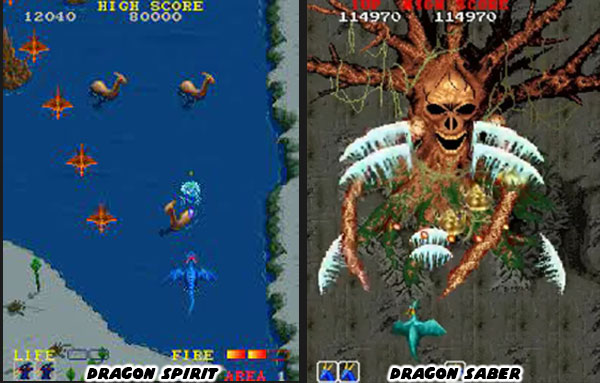
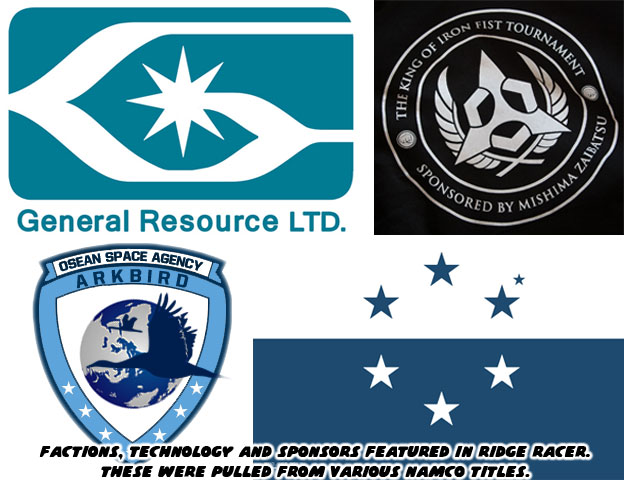
An inspection of just some of the manufacturers featured as sponsors within the continuity of Ridge Racer would point to some interesting facts. An aeroparts manufacturer (wings, spoilers, air splitters, body kits) was named Dragon Saber. Dragon Saber was the 1990 sequel to the 1987 arcade shooter Dragon Spirit. This nod to a classic title went over well to arcade fans. A different aeroparts manufacturer was named Arkbird. The Arkbird was a low orbit spacecraft from the Osean Federation as featured in Ace Combat. This type of detail would have appealed to a console fan. The idea however that one company named their downforce generating technology after a mythological dragon and the other was based on space aeronautics summed up the marriage of real world technology and the importance of marketing. Other manufacturers like Galaxian (the 1979 breakout hit for Namco) and General Resource (another corporation from Ace Combat) provided the explosive nitrous oxide tanks for the race cars. The sponsor icons were not limited to the cars either. The courses had billboards celebrating the Namco library and some of the buildings were owned by the conglomerates from other titles. The Tekken Iron Fist Tournament for example was one of the sponsors of the races over several sequels.

Having the Ridge Racer team build a nexus of sponsors and manufacturers that pointed to the legacy of Namco was inspired design. The idea that these were the race cars that drove in and around the locations featured in the various contemporary Namco games was enough to give most long time players goosebumps. The Ridge Racer team worked hard to create a world that would hold up to the best locations featured in any other genre. It started small but over the course of 20 years grew into colossal proportions. The next few blogs will look at the world of Ridge Racer. As always if you would like to sponsor me please visit my Patreon page and consider donating each month, even as little as $1 would help make better blogs and even podcasts!
follow the Street Writer on Patreon!