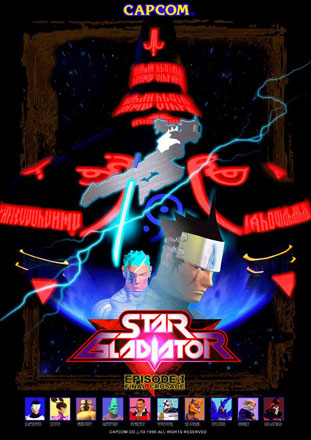
Welcome back to the Street Writer: The Word Warrior Podcast. I'm your host Noe aka BigMex. Our series on the great rivalries in fighting games continues. Today we are going to look at one of the most heated science-fiction rivalries of all time. Most fans of the Star Wars films know that the series creator and director George Lucas was heavily influenced by Japanese cinema, in particular the work of Akira Kurosawa. The pacing, story arc and even characters were influenced by different Kurosawa films. The designs for the Jedi and Sith, especially Darth Vader, were based on the robes, kimonos and samurai armor from classic Japanese culture. The question that some fans have is what would have happened if a Japanese studio had designed the heroes and villains in the Star Wars universe instead of the US or British counterparts? How would Luke Skywalker and Darth Vader have appeared? How would the weapons and technology have differed? Would there have been such a thing as "The Force." Perhaps the closest we will ever get to knowing is actually from a game developed by Capcom. Star Gladiator Episode: I Final Crusade was released in 1996. It was promoted as if it were a movie. The arcade posters for the game were designed to look like theater posters. The characters were listed like actors in a movie and the credits included the names of the actual developers at Capcom. Star Gladiator was a 3D fighter, which was still rare for Capcom at the time. It was the first entry in what was hoped to become a series. At the core of the universe was a deep-seated rivalry. A hatred between a villain that would try to conquer the universe and an orphan that stood in his way.
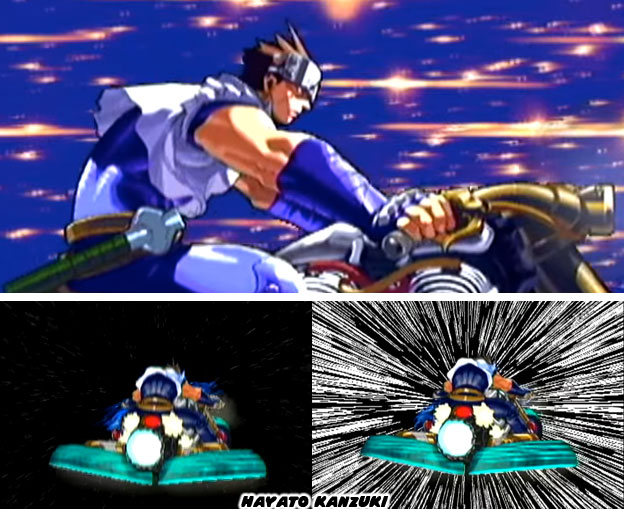 ;
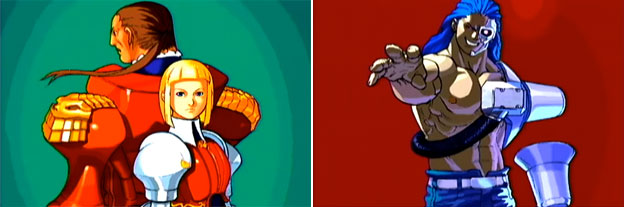
;To be fair the Japanese orphan named Hayato Kanzuki (no word if he was the descendant of Karin Kanzuki) was infinitely cooler than Luke Skywalker. For starters he got around the galaxy on a space motorcycle (Lobo eat your heart out!). It wasn't just any old space bike but one that could do warp speed! His costume consisted of a dark black armor (which was actually villain armor) over which he threw a white tee shirt to signify he had changed sides. He wore a futuristic hachi game, a forehead protector worn by ancient Japanese soldiers. These could also be seen on the head guards worn by the characters in the Naruto series. Hayato's hachi game was of an unknown alloy. Without it chances are a cut he received in battle would have gone clean through his face. At the very least he was left with a cool scar and an even better story to tell his friends. He was a scoundrel with a heart of gold and some pretty great fighting moves. A sort of martial arts Han Solo. He helped take care of orphans like himself on Earth but knew he needed money. So he became a bounty hunter but that didn't pan out too well for him. He joined the Fourth Empire a secretive group that wanted to take over the planet. This was when he received his uniform and scar. When Hayato learned of their terrible plans he joined his friends at the Star Gladiator program, the elite warriors of the Federation Force.
 ;
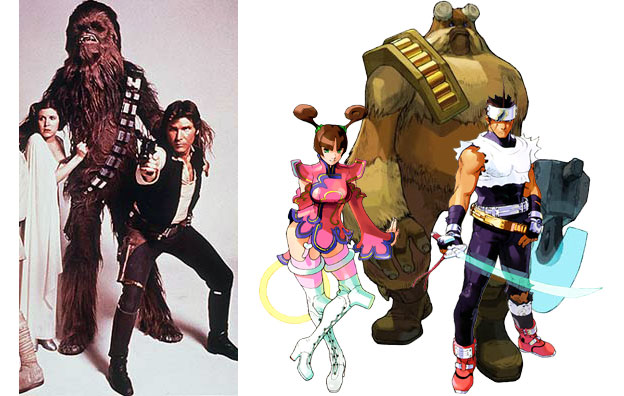
;So if Hayato was the combination Luke Skywalker and Han Solo of the universe who were his respective Chewbacca and Princess Leia? Well Capcom was going for broke and they had a large hairy alien named Gamof Gohgry from the forest planet of De Rosa. The enormous Gamof was the obvious substitute for a Wookie. The love interest was a British-Chinese gymnast named June. She had lost her father, a scientist recruited by the villain of the series, and mother during the events leading up to the Fourth Empire. June had a personal vendetta and was willing to die in her quest for revenge. She was anything but the dainty type of female character. In a nod to Star Wars continuity June actually had bun-shaped pigtails that looked like Princess Leia's hairdo from Episode IV.
The villain, the one that had put the entire planet on notice was a brilliant scientist named Dr. Edward Bilstein. He was a Nobel-Prize winning physicist and geneticist. He had picked up on some work started by his ancestor. He was looking for a new limitless source of energy called Plasma Power. Bilstein became obsessed with his work, turning him mad in the process. He made a breakthrough and discovered that Plasma Power was based on emotion. He learned that all living creatures had an innate sixth sense and that it could be tapped into and controlled. This is what generated Plasma Power. This was Capcom's way of addressing the Force without naming it outright. By harnessing this psychic energy Bilstein could create perfect weapons. These Plasma tools deflected projectiles and never ran out of power. The difference between the plasma weapons and the traditional lightsaber was that plasma weapons could be shaped for a particular role. For example Hayato's sword was curved like a samurai katana. June had hoop and Gamof had an axe will all the properties of a lightsaber. Except that those that mastered the plasma weapons could actually touch the blades without losing fingers in the process. Humans or aliens that did not know how to control their powers would be cut to ribbons. With his weapons Bilstein wanted warriors that he could control. He began recruiting people from across the cosmos for his research. Those he couldn't coerce he simply kidnapped. This went for both the scientists he needed as well as the people that would be experimented on. Bilstein had secretly begun creating clones and even robots that could use Plasma Power. He was eventually found out and arrested for his crimes against humanity. He was sentenced to life on a remote prison satellite circling the planet Zeta. He created a cyborg body for himself and broke out, massacring everyone along the way. It was easy to see why he was feared.
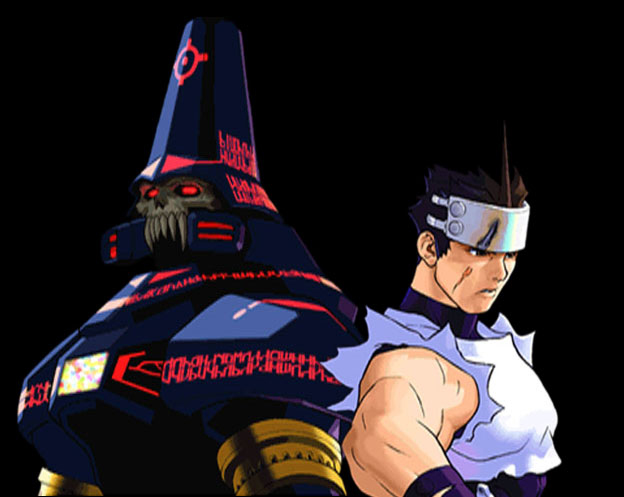
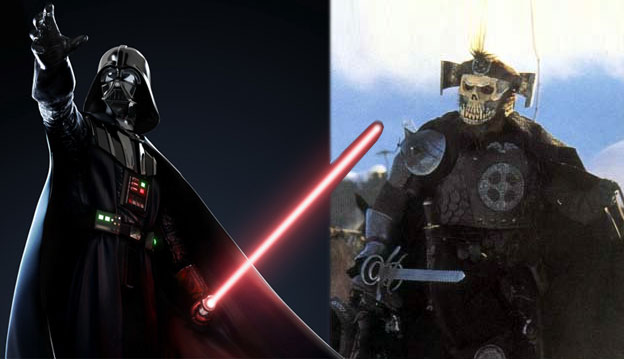
With his robotic body Bilstein was much stronger than any human. He fashioned himself a Plasma Broadsword, larger than any lightsaber. With his army of clones and robots he began terrorizing the cosmos. He dubbed his army the Fourth Empire. The reason for this was because the number four was considered unlucky in many Asian countries. In Japan the number was synonymous with death. Bilstein, like many legendary tyrants (and politicians!) worked on fear. The design of Bilstein was amazing. His armor was illuminated with codes and runes, similar to the costumes in TRON yet retained the classic armor shape of the shogun warlord. The addition of a skull-shaped face mask upped the intimidation factor. I was much more impressed with the design of this villain than any other in Star Wars canon. Yet to be fair it was poached from the design of two of George Lucas' greatest creations. Darth Vader was the obvious one, the less obvious cue was from General Kael, the villain from the 1988 film Willow. Capcom had of course worked on a Willow arcade and console game that they released in 1989. They knew the heroes and villains well. General Kael was a fearsome warrior, and like Vader he was huge. General Kael also had a great sword with angry serrated edges and armor that put fear in other men. The rumor was that the General was named after movie critic Pauline Kael, who seemed to be extra hard on every Lucas film. This was George's way at taking a jab back at her. But I digress...
The Earth was without hope. The Federation Force did not have an answer to Billstein's plasma warriors. They assembled a task force made up of any fighter that knew how to use plasma energy. It was a rag-tag group of soldiers, aliens, space pirates and even street performers. Some alien races saw Plasma Power as magic rather than science and could easily harness its abilities. Others saw it as divine right and knowing how to use it made them inherently better than other species. Hayato was crucial in the Star Gladiator lineup. He was an accomplished fighter without a weapon but was the best one-on-one chance against Bilstein. He also knew the inner workings of the Fourth Empire because he had seen it first hand. He knew about the cloning tanks, the genetic manipulation and even mind control experiments. There was actually a clone of Hayato causing havoc in various outposts on orders from Bilstein. By switching sides there was now a price on his head. Humans, aliens and bounty hunters would be after him. None of course was more dangerous than Bilstein and his soldiers.
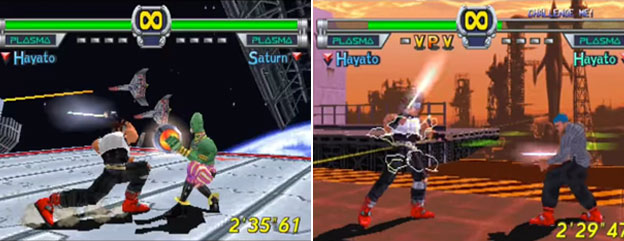
Capcom did a wonderful job of creating a world, or rather galaxy that audiences could sink their teeth into. Their development team had been used to creating some memorable 2D stages but in 3D they didn't have an extensive history. Their PSX console development came in handy when it came to modeling and texturing unique locations. Within a few years of starting 3D fighting game development they had really come a long way. As for how they built the levels themselves they took a page from what other studios had done. In the far distance there were flat backdrops that rotated around the players. This created the illusion that they were in three-dimensional space. Closer to the foreground were actual 3D sets. Some of the models were buildings, elevated roads, space ships and satellites. Some of the stages had working elevator platforms that made it look as if the player were headed into the cosmos. Other stages actually had battles happening in the distance where the Federation Force and the Fourth Empire space ships were shooting at each other. And still other stages were pitch black where only strikes from the plasma weapons illuminated the environment. It gave the game a tremendous sense of atmosphere, this was especially true when facing Bilstein. In the final stages the only things you could make out were his eyes, the runes on his armor and his sword. These were certainly cues that the Star Gladiator team picked up from Episode VI, Return of the Jedi. Specifically the battle between Luke Skywalker and Darth Vader when they dueled inside the darkened Death Star II.
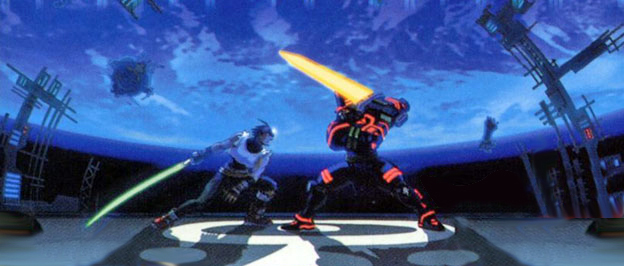
Bilstein had built Hayato from up from nothing. He taught him to harness the power of plasma weapons and become a mighty warrior. He was so impressed with his development that he made a clone of Hayato known as Black Hayato. The two actually shared a psychic connection. The betrayal of his star pupil enraged the tyrant and made him all the more crazed. In the final battle of the game Hayato and his group managed to topple the Fourth Empire. Hayato himself had killed Bilstein in an epic space duel. I could only imagine that this would have been one of the greatest things to appear in film. Hayato and Bilstein doing battle aboard the Fourth Empire strike cruiser as it orbited the Earth. Hayato hoping that the force field creating an atmosphere on the ship did not fail and suck him into the void. Bilstein fuming with hatred towards the young orphan. Back and forth they went, hacking at each other with their glowing swords until Hayato struck the final blow. He returned to Earth but had no time for the heroes welcome. The first thing he did was help the orphans he had left behind.
Now if you compare the rivalry between Hayato and Bilstein to all of the other great rivalries I have been mentioning so far which one does it remind of? It is closest to the one between Terry Bogard and Geese Howard. The two characters had different styles and different purposes. Bilstein was a boss character that did more than mirror the moves given to Hayato. He had a counter for every fighter in the game, plus he could extend his sword so that it covered more than a body length ahead of him. This gave him a tactical advantage regardless of his opponent. Just as in Fatal Fury there was a tremendous amount of planning going on here. Directors Hideaki Itsuno and Eiichiro Sasaki had to map out the story. Character designs were fleshed out by lead artist AKIMAN. The team had to pick and choose the high points of their story. These things would be reflected in each stage and every playable and secret character. Their influences for these places and characters extended beyond Star Wars and included nods to Blade Runner, Buck Rogers and 2001: A Space Odyssey as well. As with Fatal Fury and even the Art of Fighting the player went from location to location and got a piece of the story with each fight. Except instead of going from borough to borough in Southtown the characters were going from planet to planet. Bilstein, like Geese, wanted it all and the final showdown aboard his ship circling Earth was not unlike the showdown atop Geese Tower overlooking the city. The scrappy orphan managed to take down one of the most powerful bosses ever. Just like Fatal Fury it turned out that killing the rival was only the beginning.
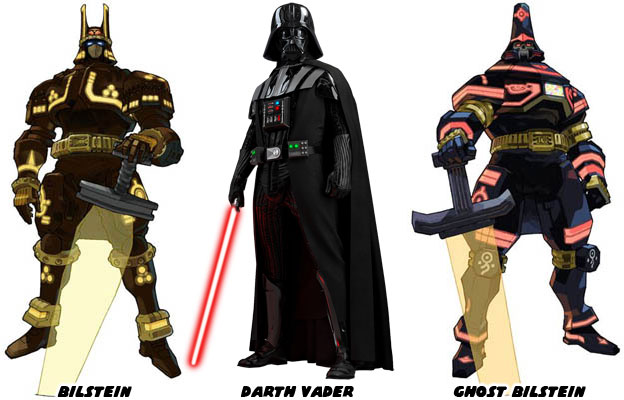
The universe was at peace for a very short moment. The various colonies had begun rebuilding when suddenly were under siege from Fourth Empire loyalists and remaining soldiers. A lot had happened in one year, there were new alliances and even human warriors rather than clones defending the Fourth Empire. The 1998 title Plasma Sword - Nightmare of Bilstein was a worthy sequel. It was one of the last 3D Capcom fighting games. Bilstein was back with a vengeance. His armor had changed somewhat in both plating and color. This time the helmet was a variation on an ancient Japanese imperial court headdress. It turned out that his rage was what kept animated him from beyond the grave. The physical portion of Bilstein that survived the first game was encased in this new armor, his psychic energy now existed elsewhere in a new form called Ghost Bilstein. Ghost Bilstein was the ultimate plasma weapon. He survived everything the Federation Force threw at him, walking through explosions and fire without so much as a scratch. He went from planet to planet with a single minded purpose, revenge against Hayato. As you can imagine the only thing more dangerous than one Darth Vader was two of them. The Star Gladiators were joined by some new allies, including former rivals. The team traveled the cosmos putting down Bilstein's warriors and breaking his hold on key planets. They gambled on the idea that if they destroyed Bilstein's physical form that his ghost would die was well.
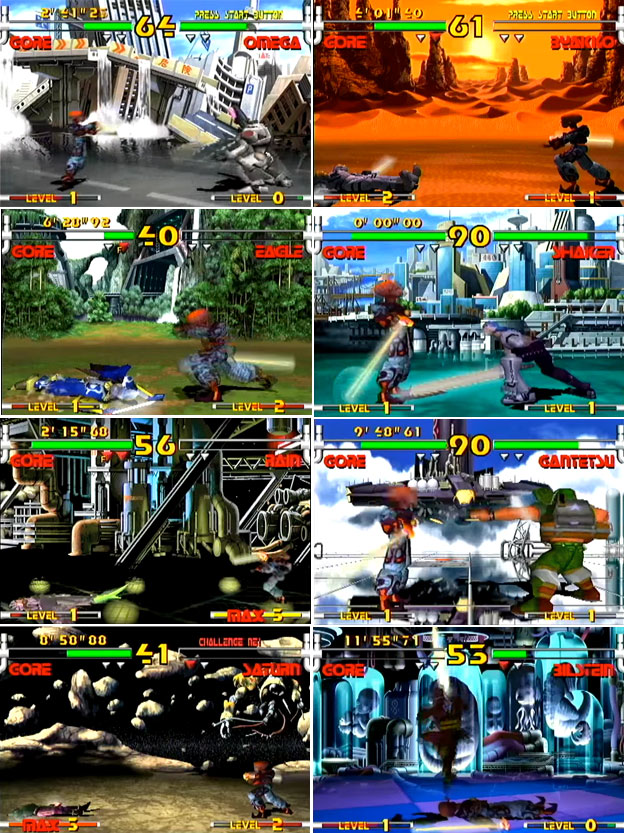
There was a major shift in the graphics this time around. They were improved as animations, character models, and textures had greater fidelity. Capcom did not create any 3D objects in the foreground this time. No gantry, no roads, vehicles or buildings encompassing the field of view. They instead created a higher resolution 3-dimensional plane for the play field which offered better lighting and reflection effects. In the distance the 2D wraparound was based on a much higher resolution 3D image so that it appeared as if Capcom had created worlds in greater detail. Players got a chance to play through many traditional science fiction settings, including the inside of a strike cruiser, an asteroid field, a wrecked metropolis and a jungle planet outpost. Also unlike the original game there were no real edges on these maps so players could not simply score a ring out against their opponent. Each fight was a fight to the death. The main characters raided Bilstein's flagship at the end of the game. They blew up his cloning tanks and destroyed the ship it from the inside out. Everyone jumped ship right away and in dramatic fashion Hayato escaped from the burning wreckage at the last moment on his space bike. They assumed that Bilstein died in the process but could never find a body. The disappearance of Ghost Bilstein would suggest that the heroes had prevailed. I would like to think that somewhere out there the rage of Bilstein was still alive. It was putting together a new body and looking to get revenge the heroes of galaxy. Perhaps in the year 2360 he would launch another crusade. There would be a scrappy orphan, his wife June and talented daughter Ele ready to stop him. After all, great rivalries never really die at least not in video games. One of the most heated rivalries had indeed transcended death. In the next entry we will look at two more characters that had a beef that went beyond the grave. As always if you would like to sponsor me please visit my Patreon page and consider donating each month, even as little as $1 would help...