The arcade industry was going through some changes during the early part of the ‘90s. Consoles from Nintendo, Sega and even NEC had grown tremendously over the ‘80s and had syphoned away a large number of arcade fans. In order to stay ahead of the curve the publishers had to really push what arcade games were capable of. They had to have experiences that were superior to anything available at home. By focusing on the development of 3D titles the big publishers like Namco and Sega could guarantee that they would remain at the forefront of gaming and technology.
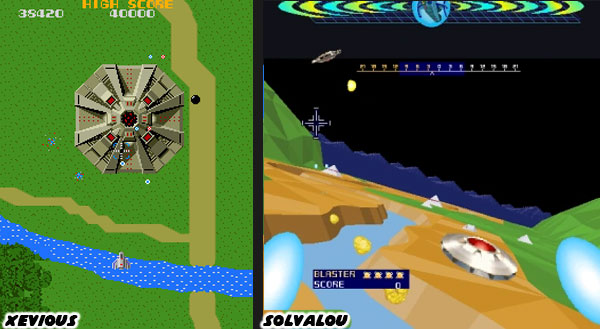
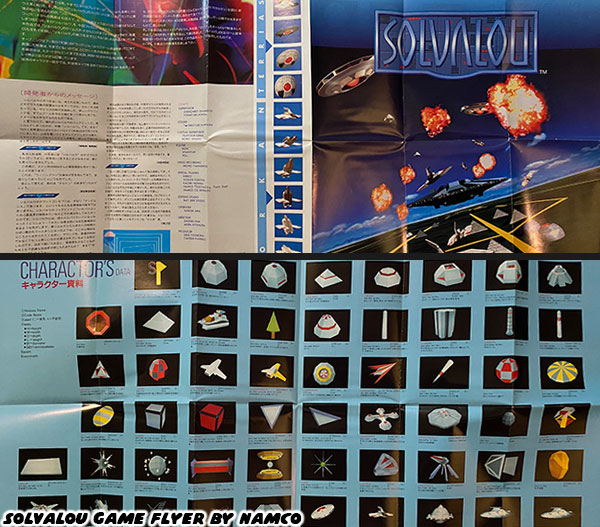
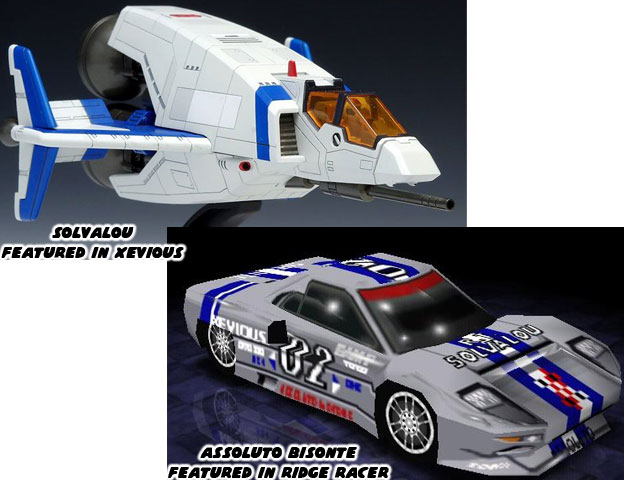
A decade after Namco had released Galaga they had taken their first tentative steps into 3D space shooters. Solvalou was a rarely seen arcade game in the US. It played like a first-person Xevious. The title from 1991 featured many of the similar locations, enemies and music that were in the groundbreaking SHMUP. Part of the reason I enjoyed the arcade title had less to do with the game itself and more with the deluxe sit down cabinet. The Japanese developers used more of a mecha or anime influence on the cabinet design, molding the seat and frame to appear more like a cockpit. To young gamers it was far more immersive than some pressboard covered in vinyl stickers. One of the biggest hurdles that Namco had to overcome was the storage capacity for games. ROMs were expensive to manufacture, CDs did not store much data and DVD technology had not yet caught up with the industry. The company relied on LaserDisks for several of their early 3D entries like Solvalou.
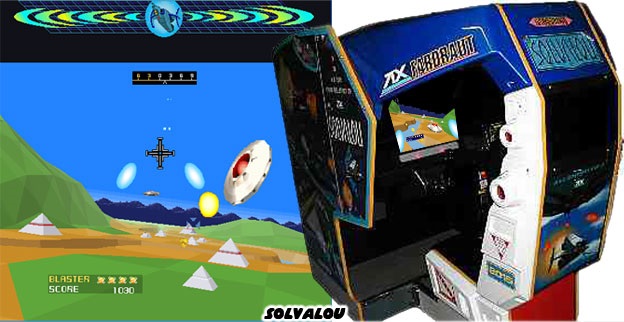
The 3D title was a nice change of pace to the graphics and gameplay that had been featured earlier in the arcade. Granted, there were earlier PC flight simulators that were ported over to the arcade during the 3D gold rush, but they weren’t games. Or to be more correct they didn’t play like games. Solvalou was the first genuine attempt at moving the SHMUP into 3D. Its diversity of locations, from flying over an alien stronghold to battling them in the farthest reaches of space was a different experience in 3D. The enemy types and high pace gameplay did a good job at capturing the essence of Xevious. Moreover it made the sensation of piloting a space ship somewhat believable.
At the same time Solvalou was in the arcades Sega was also cutting their teeth on 3D technology. They had yet to release their revolutionary 3D racing games. Namco had already begun pushing the industry in that direction in the late ‘80s thanks to Winning Run. The early 3D Namco racing game failed to make a big splash in the arcade but Solvalou got gamers genuinely excited in the space shooter genre all over again. Sega figured out a way to bring the 3D experience home using their Sega CD addition to the Sega Genesis / Mega Drive. The storage capacity that the CD offered over the cartridge was tremendous. Yet the console was not powerful enough to render massive environments on the fly as well as opponents to shoot down.
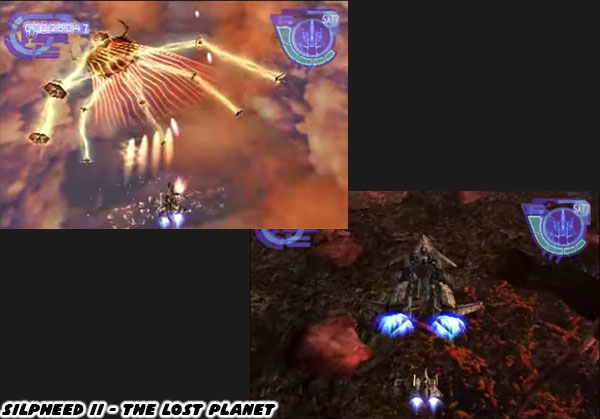
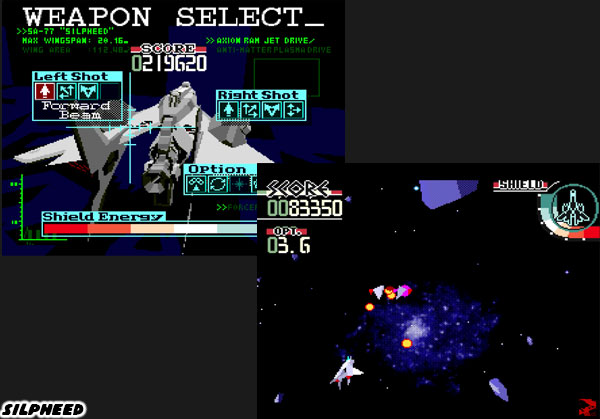
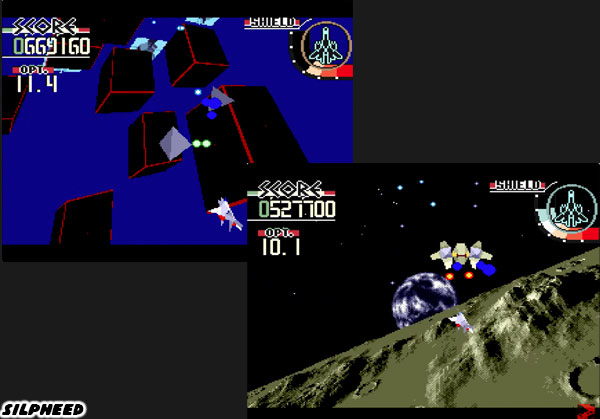
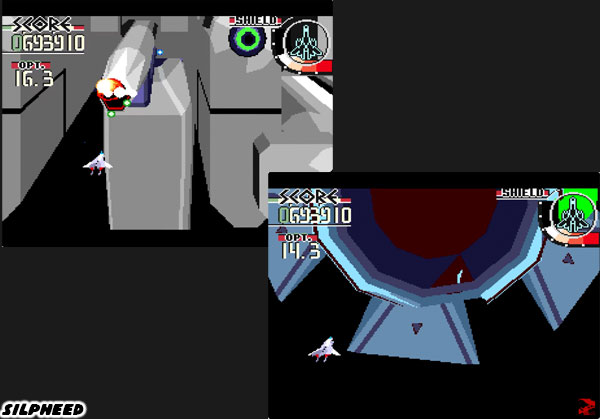
Developer Game Arts found a happy medium. They created limited scale ships and opponents and superimposed them over video playback of polygon environments. It was seamless and looked absolutely stunning for that generation of games. Silpheed was the name of the Game Arts 1993 sleeper-hit. Sega could genuinely claim to have brought the arcade experience home with that shooter. The company had introduced players to a world
that looked as robust as the best AAA arcade SHMUP to date. The ship designs were amazing, the levels memorable and the gameplay challenging but balanced. Even small details like the layout of the scoreboard, ship energy meter all looked futuristic. The game integrated cut scenes and full audio in with a soundtrack that helped pull the gamer into the experience. This was the secret to all great games. Players could get lost in the best titles and feel connected to the worlds that the developers had spent months if not years crafting.
There was a downside to being on the cutting edge of technology. The Sega Genesis was a popular console but not every owner was willing to purchase the Sega CD attachment. It doubled the price of the console and with that money gamers could instead buy a Super Nintendo. The rival publisher had a game out called Star Fox at the same time. It was considered one of the finest science fiction shooters ever created. The engineers at Nintendo managed to squeeze every ounce of processing power out of the console and cram the SNES cartridge with a memorable team of characters, environments and bosses. Of course the small percentage of gamers that had both consoles could testify as to how much more robust Silpheed was. Unfortunately for them Nintendo had the fortune of selling far more units and influencing a generation of players into thinking that StarFox was the definitive next generation console shooter.
Sega managed to keep a cult-like following from gamers the world over. They never let the publisher forget that there was still an audience very much in love with the world that they had seen previously. This was thanks in part to the release that Silpheed got for the PC and the sequel that Game Arts developed for the Playstation 2. Heavyweight SHMUP developer Treasure helped co-develop the sequel Silpheed: The Lost Planet. Released in 2000 the game took advantage of everything the newest console offered. The polygons were now textured and all sorts of lighting and environmental effects could be rendered on the fly. Sadly little else was seen on the series after the title was released. Sega had “lost” the console wars and cancelled all future console developments after the Dreamcast. Veteran gamers had lost all hope that the company would ever revisit the IP.
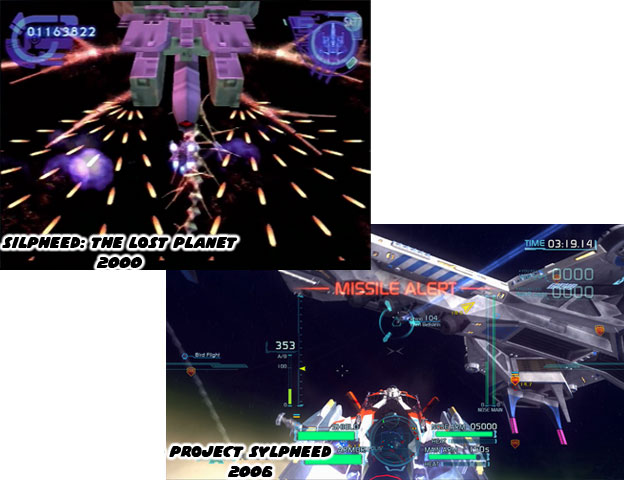
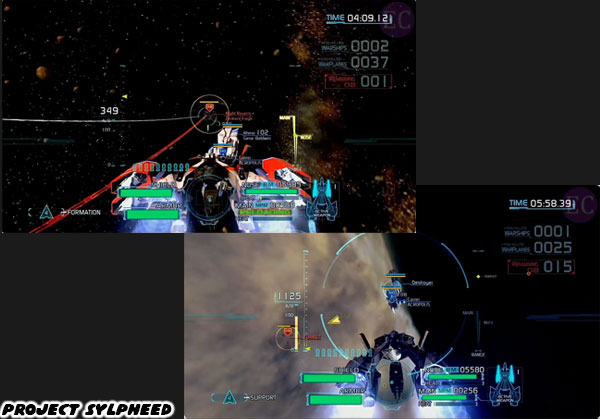
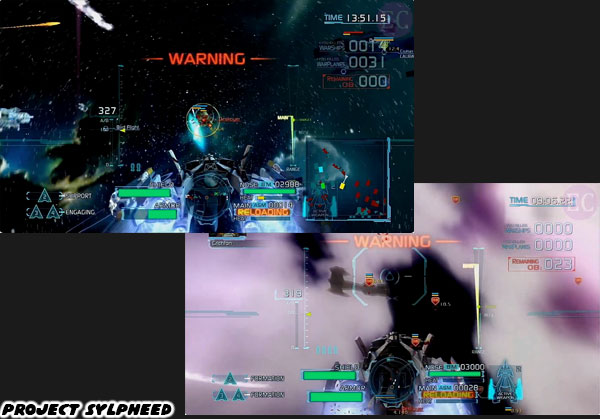
In 2006 Square Enix released a game called Project Sylpheed: Arc of Deception. The game played more like a flight simulator than a SHMUP. This was not necessarily a bad thing. The change in formats helped add a whole new way to appreciate the franchise. It turned out that Sega had partnered with the studio that was best known for their Final Fantasy and Kingdom Hearts releases. The fingerprints of Square Enix were all over the title. Project Sylpheed focused tremendously on over-the-top character designs and their interpersonal relationships, adding lengthy cut scenes and tons of dialogue where once before there was only action. The studio had done similar things to the fighting, role playing and brawler genres. The Xbox 360 exclusive was well received despite the focus on decidedly Japanese characters and convoluted game plots. Sadly little else followed the title.
To be fair however there was another notable 3D SHMUP released before Solvalou. Raiden by Taito was a title from 1990. It was also built with a polygon engine instead of a sprite-based one. Raiden was based on the familiar top-down, vertical view rather than in Solvalou’s first person perspective. The diversity of locations, from flying over an alien stronghold to battling them in the farthest reaches of space was a completely different experience when presented from the pilot’s perspective. The enemy types and high pace gameplay of Solvalou did a good job at capturing the essence of Xevious. Moreover it made the sensation of piloting a space ship somewhat believable. Namco made a version of a traditional shooter built on polygon technology as well.
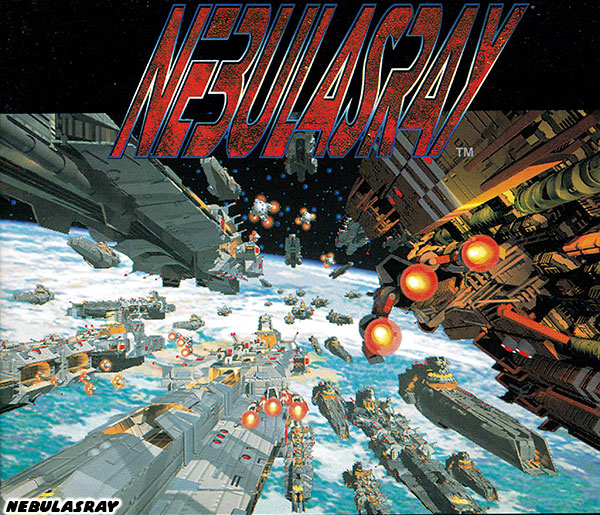
Nebulas Ray from 1994 was the sorely under-appreciated arcade gem that was the "missing link" from the studio.
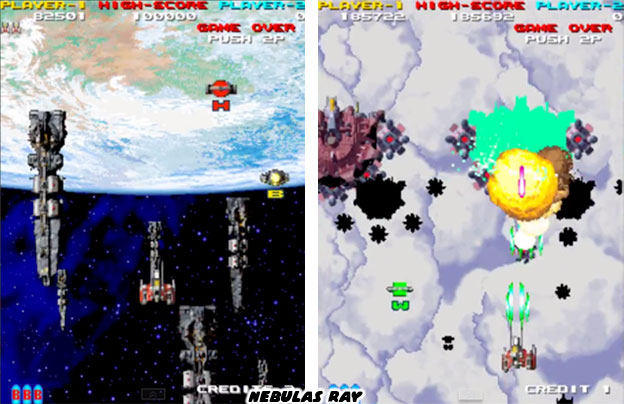
The shifting perspective helped add an additional layer of depth especially when combined with the new polygon ship models. Sharp-eyed players could actually see the enemy types were pulled from Galaxian, Xevious and Starblade continuity. In many instances these were some of the first 3D models of the classic sprite-based ships. The game actually introduced an entirely new threat to humanity. An evil alien menace known as the "Master Force" was threatening to invade the planet of Austral. Despite the bump in the graphics department the fans of the classic UGSF SHMUPS did not enjoy Nebulas Ray as much as its predecessors.
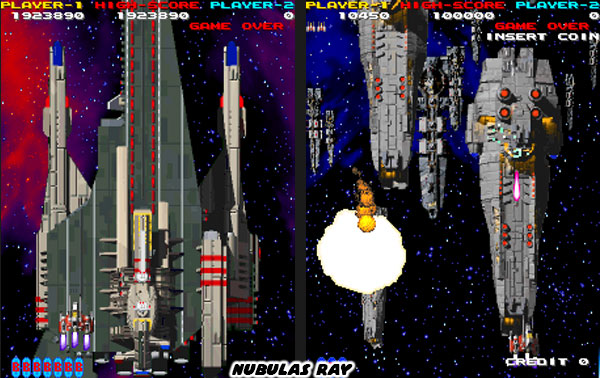
It played differently than any other Namco gem. The play area actually spread out further than one screen on either side. When players reached the edge of the screen it would scroll sideways and allow players to enjoy another third screen's worth of playable area. This was not bad planning per-say but audiences didn't know if they were missing secrets or areas that were potentially worth more points just outside of the standard viewable area. Because of this reason very few SHMUP and even Bullet Hell games never followed that school of design. Instead they tried to fit all of the action and playable area on one screen. The designers learned from their mistakes and didn't try to repeat any of the things they tried out in Nebulas Ray. It was the following release from Namco that caught the attention of gamers.
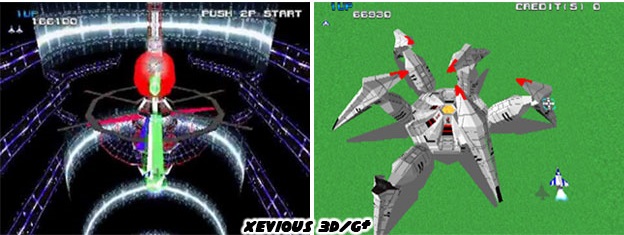
Xevious 3D/G+ was released in the Arcade in 1995 and ported to the Playstation in 1996. The game had a similar perspective to Raiden, in that it was not exactly top-down but set just a few degrees behind the player so that gamers could see more of the foreground in the distance. The game started very much like the classic Xevious, featuring updated remixes of the classic songs as well. The enemy types and locations were exactly as audiences had remembered from the ‘80s hit. Yet very quickly things began to change as entirely new types of enemies began to run and fly all over the screen in full 3D. Players were taken to all sorts of new locations in the shooter, broadening the experience that they thought they knew from the previous games. The adherence to the classic gameplay with improved graphics helped make the game a bigger hit when compared to Nebular Ray.
Namco had a favorable reputation in gaming community because they remained true to their roots. They managed to create classic arcade experiences while incorporating newer technology but little by little it slipped away. Sega had also lost the presence that they had once carried. They let their internal teams fall into disarray or leave the company. The publisher did not allow their developers to experiment with new gaming experiences and instead focused their resources on half-hearted sequels. The majority of the Sega games seemed to be handled by outside developers now. They lacked the quality of the original titles and as such many fans were dismayed with every new announcement. After turning Zaxxon into a Temple Run clone in honor of its 30th anniversary it was for the best that Sega did nothing for the 20th anniversary of Silpheed.
The same observations could be made of Namco and their biggest titles. Many had also hit the 20th, 25th and 30th anniversaries in recent years but little was done to show for that except for the occasional mobile release. The studio had a difficult time making their classic games relevant again. Both studios had earned their followings in the ‘80s and ‘90s and then seemed to lose the connection with them at the turn of the millennium. Perhaps the problem for the studios was that they peaked too soon. The companies had shown an entire generation that video games were the most important form of entertainment in the past century. They had a hard time maintaining that momentum on home consoles. The best experiences however could never be recreated at home. One of the greatest space shooters ever released was missed by a large majority of game players because of the consoles. The next blog looks at this title.
If you would like to sponsor me
please visit my Patreon page and consider donating each month, even as little as $1 would help make better blogs and even podcasts!