Showing posts with label starblade. Show all posts

Wednesday, November 20, 2024

Freeze frame, my poster collection, part 10…

The previous entry on this series was about the Namco fighting game that was forgotten by the publisher. Tekken producer Katsuhiro Harada said that in the early days of the Tekken, and Soul Calibur series there was a friendly rivalry between the teams. It wasn’t the only arcade-turned-home series that the company forgot about.

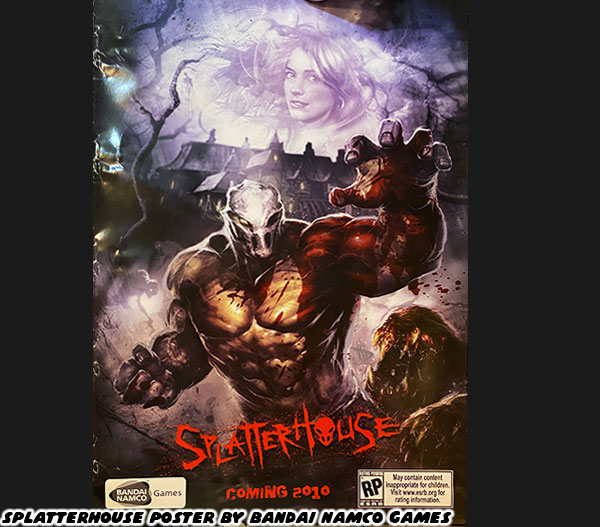
Splatterhouse was one of the early arcade horror hits. It got a few sequels on the consoles, and even a decent 3D adventure. Sadly the game is only remembered by die hard arcade fans. This poster from the 2010 game is absolutely massive. The top edge is a little worn, but I’m glad I still have it.

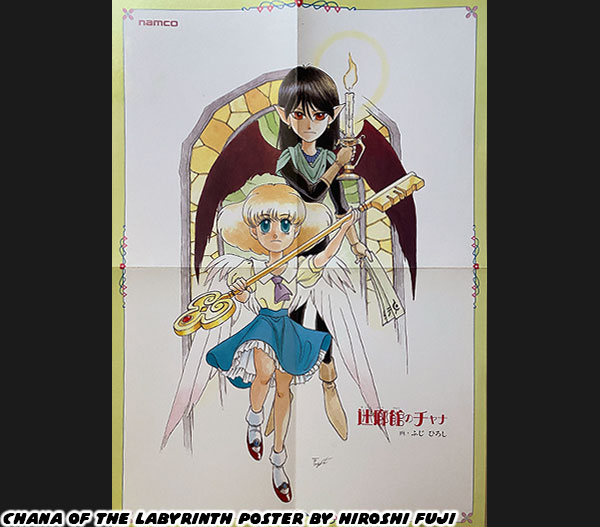
I have a lot of rare Namco things in my collection. Here’s one from the pages of Namco Graffiti magazine. A manga series that they published called Chana of the Labyrinth.

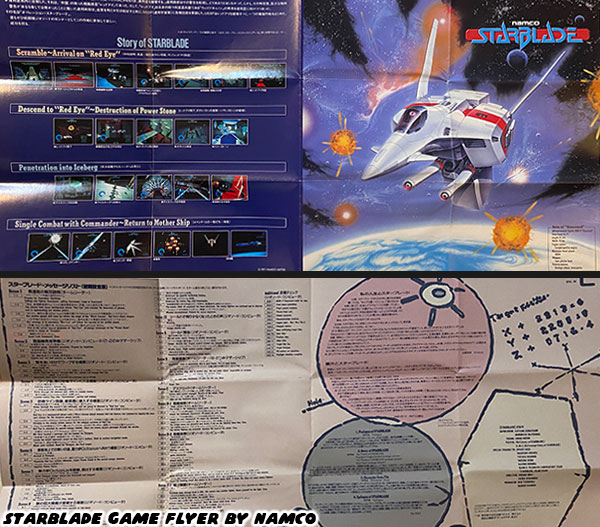
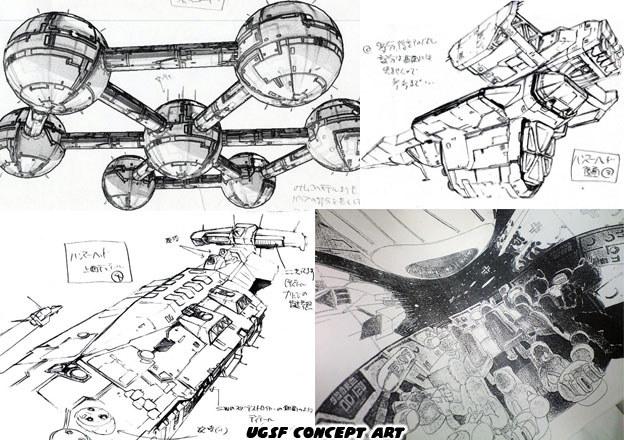
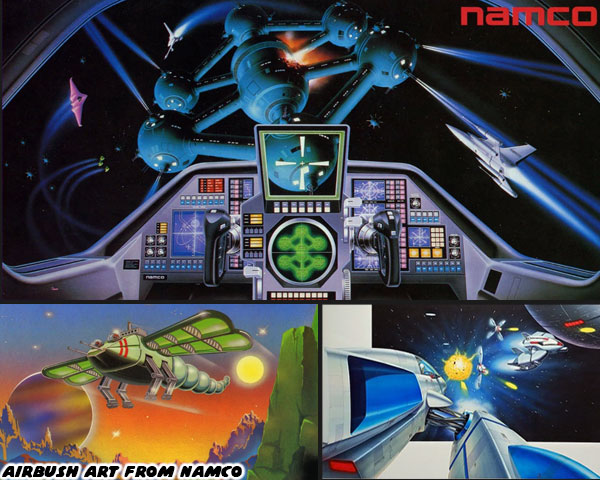
I love the UGSF universe, and consider Starblade one of the greatest arcade games ever made. I’m glad that I have these rare arcade flyers in my collection.

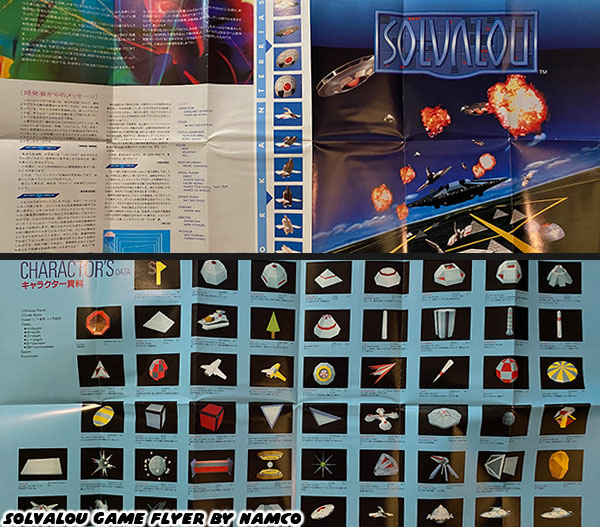
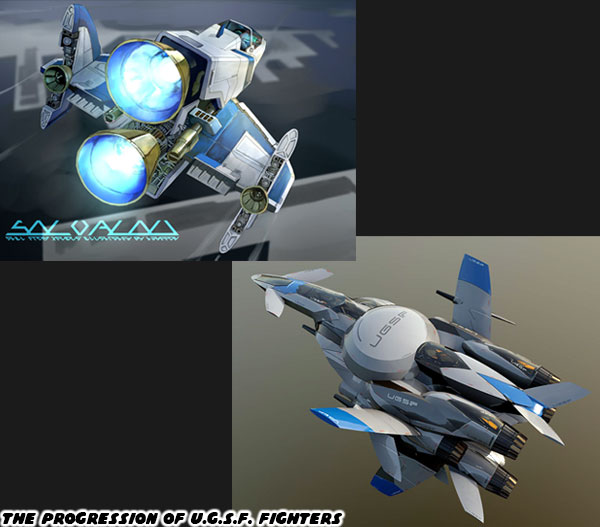
There would be no Starblade without Solvalou, the 3D follow-up to their arcade his Xevious. These are not the rarest Namco things in my collection, but I’ll talk about that in a future entry. Are there any rare Namco games that you wish would get rebooted? I’d like to read about it in the comments section. As always if you would like to sponsor me please visit my Patreon page and consider donating each month, even as little as $1 would help make better blogs and even podcasts!
follow the Street Writer on Patreon!

Thursday, December 17, 2015

Freeblade, one of the best mobile games ever made...


I want to do a quick review on the new iOS game Freeblade by Pixeltoys. The game was one of the featured titles on the iTunes Store and an Editor's Choice when it debuted in late 2015. The reviews so far have been very positive, earning a 4 1/2 star average on the iTunes Store from thousands of players. Why isn't it a perfect 5-star game? The answer is simple, the game entices you to receive bonuses if you sit through a 30 second commercial for other games. Which is nothing to complain about given that this is a free to download and free to play title. From a design, control and execution perspective the game itself deserves 5 stars but I would argue it is being penalized by the pay-to-play market. Those that buy the in-game features get to extend their play and enjoy the title in more ways. Microtransactions are the bane of many game players but they are the necessary evil of the mobile market. Let's face it, if the game was priced at $24.99 on the iTunes Store with everything unlocked from then nobody would buy it because there are thousands of free games available. It's a strange dilemma for developers to be in. After playing it however I'd say that at $49.99 the game would be a bargain. Why is that? Freeblade looks as good and plays as good (if not better!) than some of the best AAA titles you would find on the portable consoles. Sony and Nintendo, I'm looking right at you! The cheap and mindless games about birds and candy may be more popular with audiences, and may make more money for the developers, however the era of the heavyweight mobile games has officially arrived.


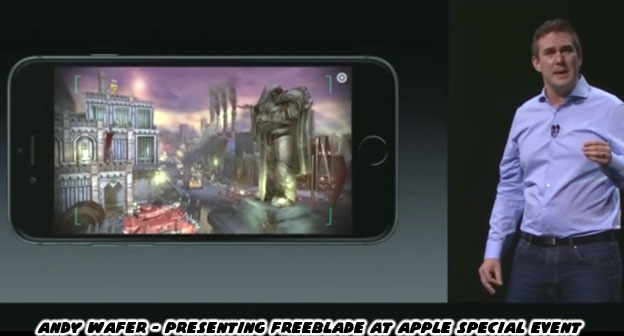
I wasn't sold when it was first announced. I love the universe that Games Workshop had created but most of their video games left much to be desired. But then something happened this fall. At an Apple Special Event the details on the new iPhone 6 and new iPad were announced. In order to highlight the leap in performance that it had over the previous models Apple had a few developers demonstrate some of the features using their software. One of the last presenters was Andy Wafer the CEO and Co-Founder of Pixel Toys. He used Freeblade to demonstrate the new graphics processor on the iPhone. It was almost twice as fast as the previous generation and capable of presenting graphics with greater fidelity and with far more effects than any previous mobile device. Not only that the new touch scheme meant that the control was much tighter and allowed for advances in the way the game controlled and played. The presentation almost won me over but there was some doubt in my mind. Would I really have to get a new phone in order to enjoy the game? After all the 5th generation of devices, including my iPod Touch, had some memorable games and were capable of displaying some amazing graphics as well. Have you seen Ridge Racer Slipstream for example?


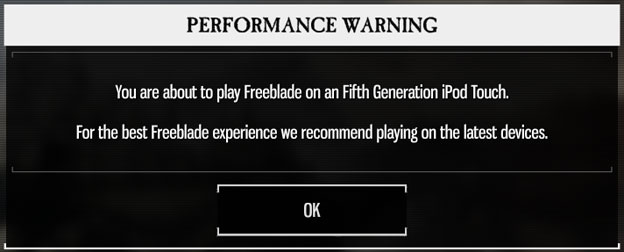
I downloaded the game on the iPod and right away I was warned that for best performance I needed to upgrade my hardware. I pressed OK and was presented with the opening story for the game but before it would ever load the first level the game would crash. I tried getting to run a few times. Tried resetting the iPod and uninstalling and reinstalling the game but it didn't work. So I had my coworker download the game on his iPhone 6 so I could test it out. Only then could I see why Freeblade required new hardware. The leap between gameplay and visuals on the handheld was like the leap from the Playstation 2 to the Playstation 4 consoles. Yes the PS2 had some incredible award-winning games, but the hardware was dated and incapable of presenting the next generation of visuals. As I was going through Freeblade I had an epiphany. Mobile games would only get better from here. If the console manufacturers didn't watch out they would become the second option for premium gaming experiences.


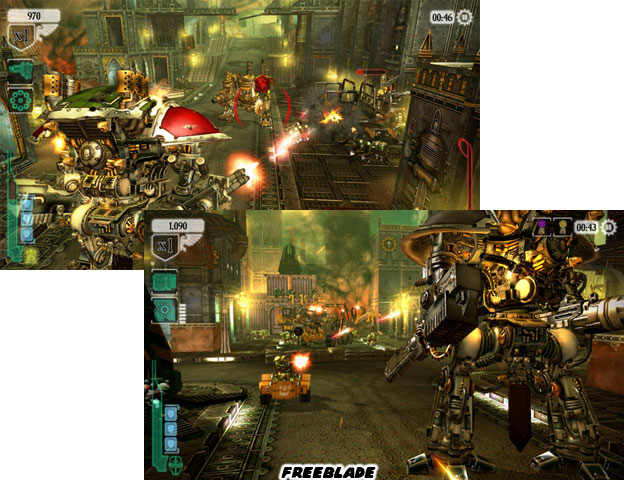
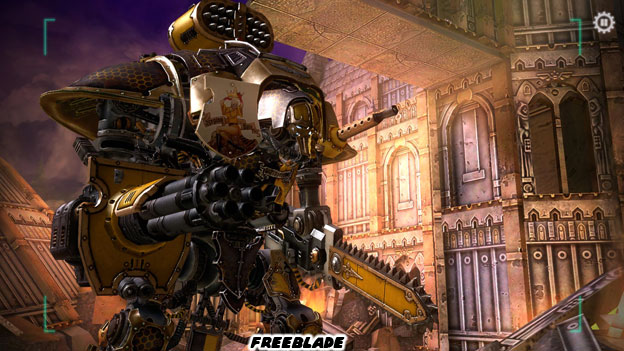
So what made Freeblade so great? If you are not familiar with Warhammer 40,000, the universe created by Games Workshop, it didn't really matter. The setup was relatively simple. It was the far future and you were on a distant planet. You were piloting a fully armed and fully armored 50-foot tall robot, known as an Imperial Knight against alien invaders. By touching the screen you got to shoot at just about anything that moved using your primary or secondary weapons. Freeblade took full advantage of the new touch features of the iOS devices. These devices recognized and responded to finger pressure instead of just finger contact. The devices and game also supported multi-finger gestures. Freeblade advanced the robot automatically during the fighting, all you had to do was aim and shoot. Essentially you were playing a mobile version of the classic arcade rail-shooter.


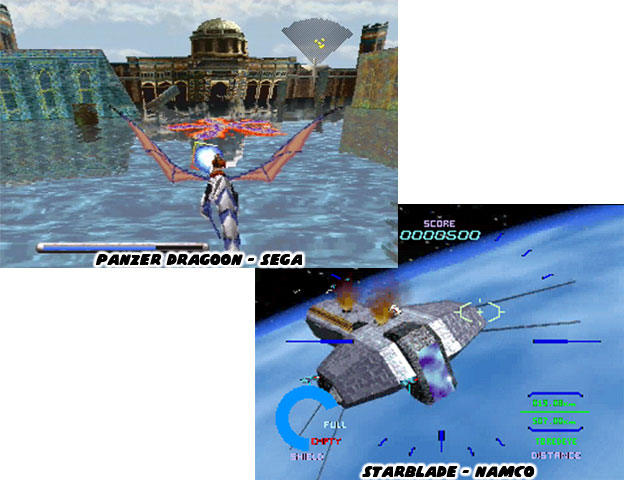
Pixel Toys developed a great game that brought back memories of some classic experiences. I wondered if the long-time arcade publishers were paying attention. Freeblade was doing to mobile devices what Panzer Dragoon had done for home consoles or Starblade had done for the arcade. Both games had cult-like followings. Sega and Namco, the respective publishers of those games hadn't really done much with the rail shooter in years. I could only imagine how great it would be if Sega developed a new Panzer Dragoon or if Namco released a new Starblade using the same mechanics of Freeblade. Yet I cannot think of a rail shooter that ever featured gigantic robot combat! In this way Freeblade stands apart from the other titles.


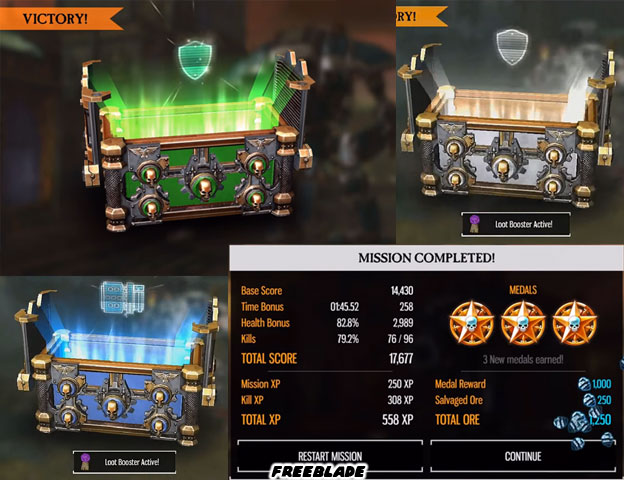
All of the hooks that mobile games depended on to keep players engaged were in Freeblade. Players could unlock secrets and upgrades as they went from battle to battle. They were rewarded for their accuracy, secrets found and point totals. They could apply some of these rewards by upgrading weapons, adding new weapons, and strengthening their armor. The player was encouraged to continue fighting through the level system. They gained experience based on how well they performed in each mission and what secrets they unlocked. Players could not only customize their weapons, they could even swap out colors to customize their robot. There were daily challenges which could make "grinding" or trying to level up your robot much more rewarding. Players did not have to spend real money in order to gain these rewards or upgrades. They simply had to be patient between sessions.


The visuals on the game were amazing. Among the best portable graphics you would ever see. The touch controls were responsive and become intuitive fairly quickly. The learning curve was relatively short, which allowed you to focus on the game itself. You had the ability to track and shoot you opponents using a gigantic machine gun, but beware of overheating! You could also fire a cannon blast or launch a barrage of missile to punch a hole through stubborn armor, roadblocks or other giant robots. Opponents emerged from every street corner and alley, in some cases they dropped in from space, rode by on motorcycles or flew overhead in jets. Sometimes the opponents were equally massive machines. When up close to other giant robots the game entered a quick-time event or melee mode. Ranged weapons were disabled and it was up to the player to use the Imperial Knight's enormous chainsaw(!) to chop an opponent down. The game was not all about offense however. The Imperial Knight was equipped with an energy shield and players could actually deflect incoming heavy fire if they responded quickly enough to the on screen cues. If the game was only graphics without the gameplay then fans would have voiced their disapproval right away. But Pixel Toys managed to make a game that looked great and played fantastic. The game only continued to grow and gain a new following on game forums and review sites. This could only be good news for the future of Pixel Toys. They had created a real winner and deserved some kudos. They were hopefully working on new content for this game as well. If you have a new iPhone or iPad and are looking for a great game then I couldn't recommend a better title. Download Freeblade now and tell me what you think. As always if you enjoyed this blog and would like to sponsor me please visit my Patreon page and consider donating each month, even as little as $1 would help make better blogs and even podcasts!

Tuesday, September 2, 2014

The Namco Chronicles, part 12...

The developers at Namco had done an amazing job at creating fully-realized worlds. The problem was that the games they created barely scratched the surface of what the studio had in mind. Audiences had no idea what the scope of each game was. The only way players could appreciate the commitment of the company was by taking a step back and looking at the series as a whole rather than each game individually. Whether the game was Tekken, Ridge Racer or one of the Ace Combat titles, there was something that could only be appreciated by seeing how far each game had progressed over the past 20+ years.

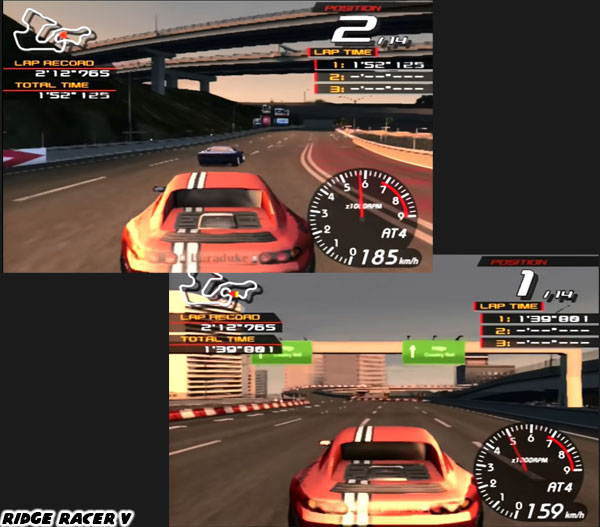
I don’t mean necessarily with regards to graphics or control but as a whole. How did the gameplay evolve, how did the characters and plot develop? How did the relationships change over the course of the series? Every one of those titles grew substantially. The company had allowed their developers tremendous leeway. They experimented with new formats, new control schemes and varying timelines. Yet the core of each game remained the same. They were all fun experiences and left players longing for more. Players would race on the courses featured in Ridge Racer and see that there was much more to the world beyond the race barriers. As far as they could see in every location there was substance. Whether it was people throwing confetti from the stands or even the dancing characters on an electronic billboard, the world of Ridge Racer felt alive.

The same thing applied to the Tekken series. Whenever an impromptu fight broke out in the middle of a mall, which seemed to be fairly often, players could see the smallest details in shops, from fully dressed mannequins to tile work on fountains. Audiences could also appreciate the scale presented in these locations such as when they were fighting within an enormous sports arena filled with thousands of spectators. The only downside in the eyes of many gamers was that Namco never let down the barriers. They never turned any of these locations into a sandbox environment. Players could not drive freely down the streets of Ridge City. Fighters could not hop the fence and see what lay beyond in Tekken. Instead the developers wanted audiences to appreciate the type of game they had created in the exact format it was meant to be played.

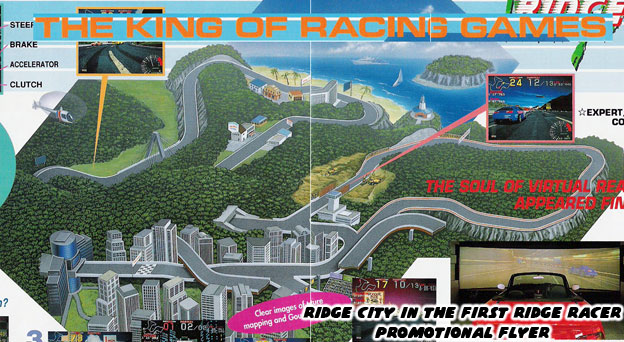
Namco knew that players would return so long as they continued to grow each franchise. In order to do this the development teams had to be constantly vigilant in adding to the canon of each game as much as they were focused on content. The prime example of what the studio did over the past two decades was seen in Ridge Racer. The developers wanted audiences to know that they were not polishing a static city. This was a living, breathing universe that they were shaping. Roads and freeways were interconnected, they all lead somewhere far beyond the borders of the track. In fact the language of Ridge Racer would change to reflect that realization. Over the '90s Ridge City gave way to Ridge County and Ridge County eventually gave way to Ridge State. In the new millennium Namco had finally created enough tracks and locations as to call the continuity the Ridge Universe.

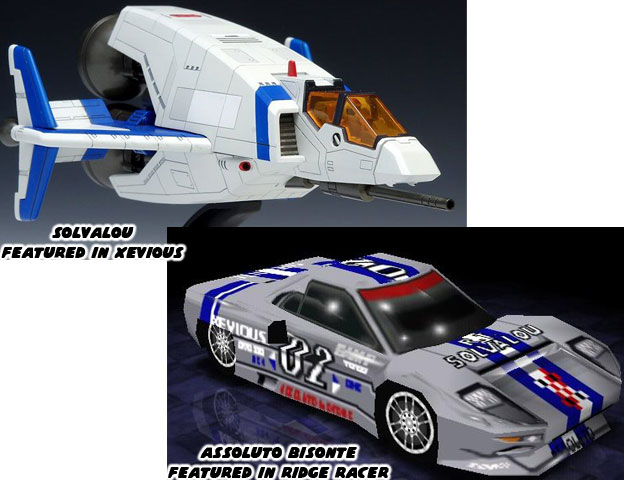
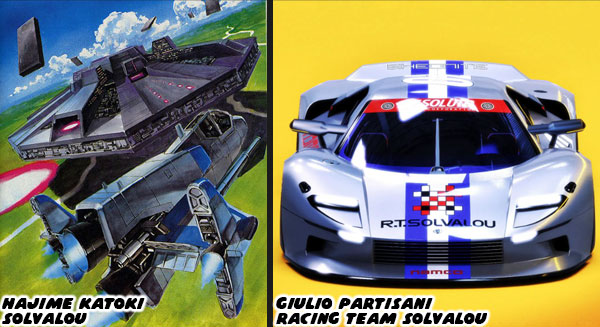
A racing game had met the requirements to join the continuity of the UGSF. It was for all intents and purposes the foundation for the Ace Combat series and future space shooter titles. It was more than a simple coincidence when the cars in Ridge Racer began assuming the sponsor logos of other games within Namco canon. For the fathers of a series it was essential that the Ridge Universe was headed somewhere too. The destiny of the racers was written in the stars. The tradition had been there since the first arcade game but really became a focus in Ridge Racer Type 4. Racing Team Solvalou was an Italian team lead by Eniki Gilbert. The name of the team was rooted in the spaceship Solvalou, which was also the name of the 3D sequel to Xevious. To most long term arcade fans this was a nudge and a wink from the developers of classic titles. What it became was a challenge to bring the Ridge Universe into the fold of the UGSF canon.

The biggest tragedy that had happened to Namco would become the biggest asset in the company history. When Sega stole their best racing game developers in 1993 the outlook seemed bleak. The newly formed AM3, which was made up of former Ridge Racer Project developers went on to create Sega Rally Championship and Crazy Taxi. Those were easily two of the greatest driving experiences ever put in arcades. By every right those hits should have belonged to Namco. The studio went into rebuild mode and relied on the expertise of the remaining artists, developers and programmers to keep their racing division up and running. The remaining employees had plenty of experience in space shooters, fighters and puzzle games. They had to get caught up on driving games really quickly. Thankfully they had the notes from the original team to fall back on. They knew more or less that Ridge City would be expanded upon and new tracks built out of the framework of the surrounding areas. Once the notes from the original project members dried up the remaining employees decided to play up their strengths.

The people left at Namco came from a world that was more fantastic, a world where technology knew no boundaries and where mankind was destined for greatness. These developers needed to change the focus of Ridge Racer from street racing with contemporary cars to racing the finest autos that had ever been produced, including cars yet to be invented. In order not to upset audiences, or the established gameplay, the company introduced radical new rides sparingly over the next 20 years. These “duel” class monsters were accepted as prototypes from the mad thinkers working at each manufacturer. To add an additional layer of plausibility many of the sponsors of the series were the same corporations that built the jets in the Ace Combat series. The connection between Ridge Racer and Ace Combat however went much deeper than a sponsor sticker on the high profile vehicles.

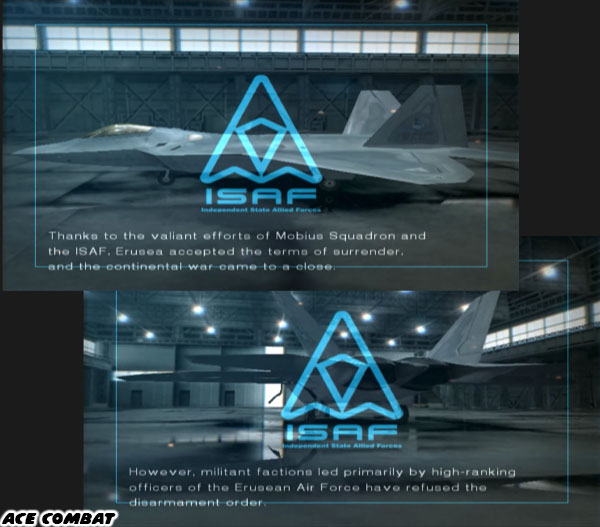
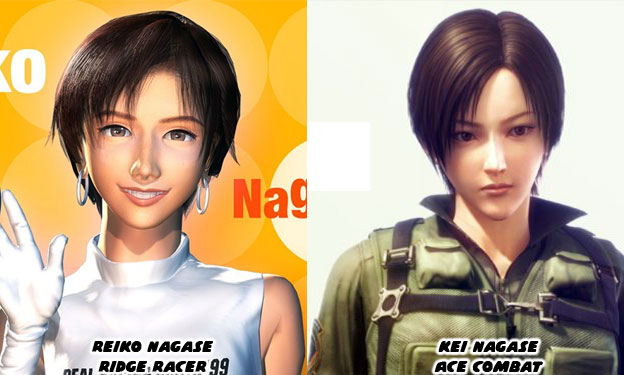
Kei Nagase was the younger sister of Ridge Racer covergirl Reiko Nagase. Whereas Reiko was a model and a racecar driver her sister was a fighter pilot nicknamed Edge. The two seemed to enjoy fast vehicles and thrilling lifestyles. Kei was featured in Ace Combat 2. She would have several cameos throughout the series, jumping forwards and backwards through time along with each release. She appeared in Ace Combat 5 as a trainee, in Ace Combat 4 as a passenger aboard Air Axiom flight 701 during an escort mission but most important in Ace Combat 3: Electroshpere as a senior officer during a news report. The sisters were part of the transitional period that saw humanity focus less on territorial disputes and more towards colonizing the stars.

The companies backing each girl would make sure that civilization would reach that point. Before space jets became commonplace and before the Falken and Delphinus ruled the sky the proving ground for all the new technology in the Namco universe would be featured on the race track. The next entry goes back to the original theme of this series. I hope to see you here for that. As always if you would like to sponsor me please visit my Patreon page and consider donating each month, even as little as $1 would help make better blogs and even podcasts!
follow the Street Writer on Patreon!

Wednesday, August 27, 2014

The Namco Chronicles, part 8...

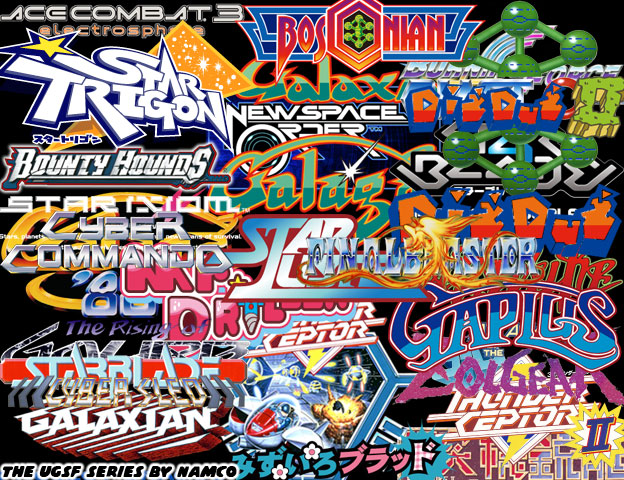
If you were to ask gamers which science fiction universe they would love to live in they might respond with a variety of choices. Star Wars, Star Trek, Stargate, Battlestar Galactica, Mass Effect and Halo would probably be near the top of the list. Yet if you were to ask me which one was my favorite I wouldn't have to think hard about it. The UGSF continuity from Namco was by far the most interesting to me. It represented various stages in the fictional history of mankind.

From the first tentative steps into other solar systems to the first encounters against hostile alien lifeforms. The future of humanity was set in all of the beauty and chaos of the cosmos. There was sometimes a great struggle against monsters and creatures too horrible to imagine but also tremendous strides for human lifeforms across trillions of light years. As a kid that grew up admiring all of the sciences, but especially space science, this was a fascinating series to me.

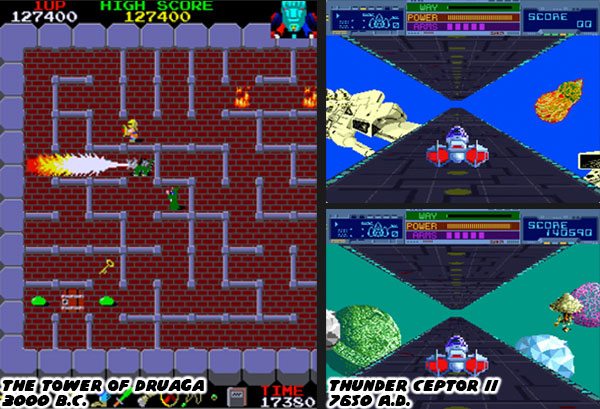
Namco had been working through dozens of original titles over the past 30 years and tried to connect the dots on most of them. The UGSF series actually stretched out from the middle of this century (2040) all the way to the year 7650. Past that was unknown because Namco had yet to plan for it. To connect all of the dots that Namco had mapped out would include the history of civilization on Earth as well. The earliest adventures in Namco canon took place in ancient Babylon, some 3000+ years ago. The company had published adventures set at various points through the history of the world, including the feudal era in Japan, the dark ages in Europe and even the current era. In all the studio had over 10,000 years of canon that they could work from and jump to. It had taken Namco more than 30 years to amass a library of games that supported their obsession with canon. It was a feat that would have been impossible for any other studio to recreate. That was why I admired the company and their science fiction work more than any other studio.

Everything Namco created came from somewhere, it had a backbone and a heart. It was much more than a facade which was all that most modern game publishers could offer in their games. It was brilliant the way the company retconned the classic games like Dig Dug and Baraduke so that they fell in the same continuity as Galaxian and Galaga. The best part about the publisher was that they kept copious notes and arts on every UGSF title. In other science fiction titles there was a specific timeline that most games focused on. Perhaps there was a generation or two at stake like in Star Trek, or perhaps there was even a few centuries separating the adventures as in Star Wars. For the UGSF there were decades, centuries and even millennia that were points of interest for fans. The company actually knew how mankind managed to stretch from one end of the galaxy to the other. They knew every battle along the way, every technological achievement and every story worth telling. Those high points turned out to be the first generation of arcade, console and even mobile hits from the publisher.

Growing up playing just about every arcade game that Namco published, especially those about space, had preserved that same sense of awe and wonder that I had as a kid. When I worked at JPL and was doing mission support over a few years, including the landing of the Curiosity rover, I felt as it all the quarters I had spent in my youth had finally paid off. From an artist and designer point of view I became enamored with the stylization of the ships from UGSF canon. They were not quite animé nor western sci-fi. The company had found a balance between the two that was awe inspiring. From the stealthy Coleoptera Fighter in Galaga to the massive Dragoon-J2 in Attack of Zolgear, there was a genuine sense of evolution for all of the fighter craft. It was something that not every team of designers could capture in other science fiction titles.

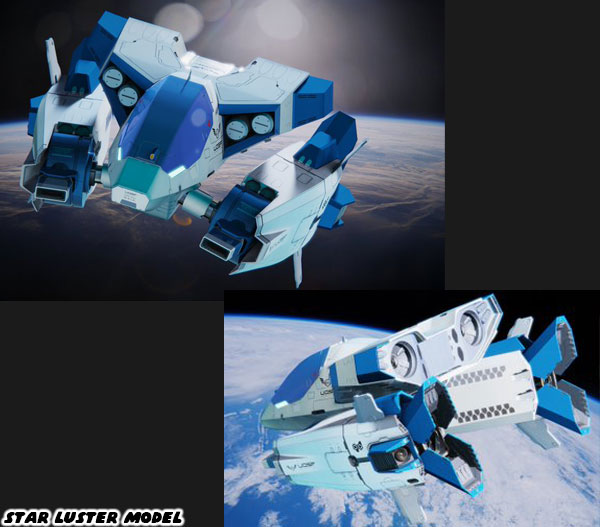
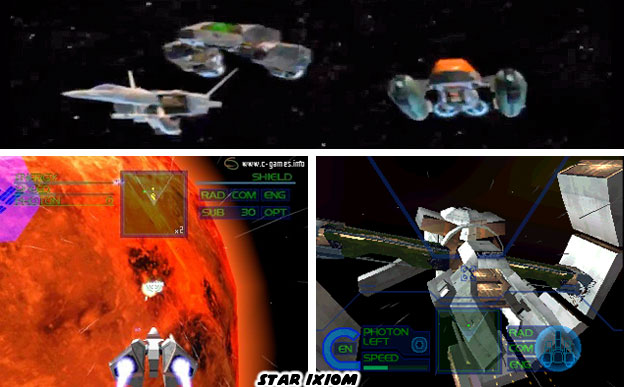
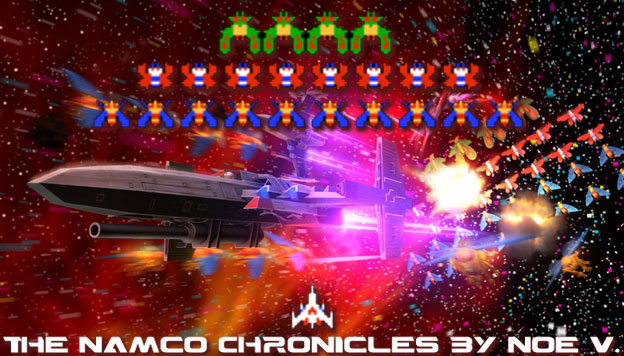
Of course every long-time fan of the UGSF series would ask where the overlap was. Several of the biggest titles happened within a few decades of each other, and some within galactic reach. Namco answered this question in the Kuusou Kagaku-developed Star Ixiom. The title from 1999 was considered the pinnacle space shooter for the original Playstation. It became the benchmark from the publisher just as Ridge Racer Type 4 was for racers. The game blended the heroes and villains from a literal who's-who of UGSF canon, including Starblade, Galaxian, Nebulas Ray, Star Luster and Bosconian. The game was set in a first person perspective. Missions were spread all over the galaxy and what made the game innovative, aside from the free flying 3D dogfights, was the ability to "warp" from location to location. The stars would form a tunnel as players passed light speed and reached objective markers. It was the same classic effect of making the jump to light speed from Star Wars except now players could choose where they would visit with each jump.

The game could be held up to the standards set by Wing Commander and the Star Wars: Rogue Squadron series. The downside was that this game never saw the light of day in the USA. It was released in Japan and Europe only. Thankfully emulators helped die-hard fans in the states get a chance to experience it. It was a shame too, the game was beautifully done. It mixed the designs from each of the distinct universes well. It maintained the sense of scale and adventure from Starblade while allowing players to pick up missions on the home bases. The ability to progress through the missions at the leisure of the gamer was something that no Namco arcade game could ever allow. From a design standpoint every cameo made sense. Remember that some of the technology employed by early colonists, the Galaxians, were still in operation several generations later. Players would visit stations that looked obsolete in one sector of space and much more advanced in a different sector. The UGSF made do with the resources of every particular home world and defended it to the best of their abilities. It was a much more realistic approach to science fiction logistics than had been seen in other media.

Star Ixiom was not the only gem that Namco kept from the west. Most of the decisions to keep a game in one region were business related of course. I often wish that the marketing people and bean counters did not have as much pull at the studio as they do now. Without taking a chance on new ideas the company would have stopped evolving after Galaxian and Pac-Man. Instead they decided to compete against the big boys in multiple genres. They took the battle to Sega and matched the juggernaut game-for game. Sometimes they had a better experience and sometimes they didn't. Unlike Sega however Namco did not seem to give up on their oldest franchises.

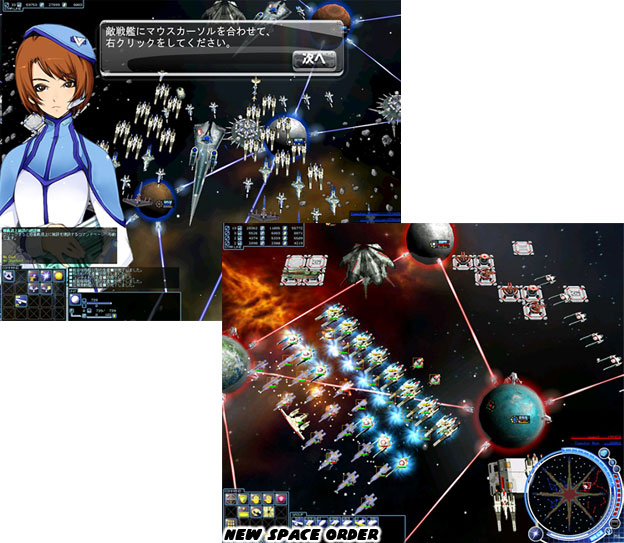
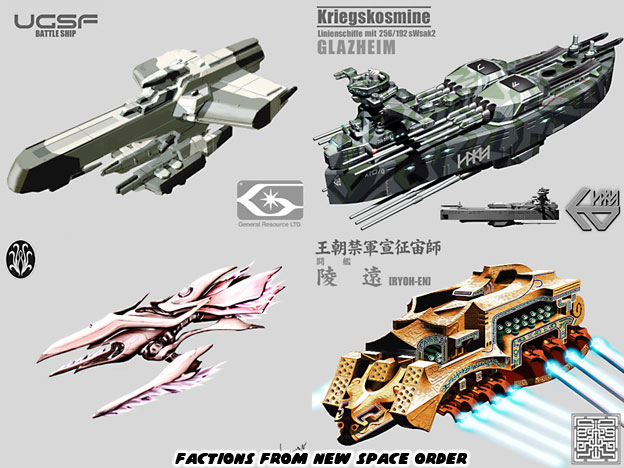
In 2007 the company decided to try their hand at a completely different format for the UGSF series. New Space Order was an an arcade/PC real-time strategy (RTS) game. It was the first time the classic universe had been presented in such a format. It seemed to work very well too. Players chose from one of four different human factions as they tried to expand their respective empires throughout the stars. The ability to command entire fleets of classic and new ships from UGSF history was a real treat. Well designed space RTS games were extremely rare. The genre had been used in popular fantasy and science fiction ground combat titles like Warcraft and Starcraft. The format hadn't been seen very much in space shooters.

The game was actually set during some of the most formative years of the UGSF. In order to bring audiences into this world Namco produced New Space Order - Link of Life - a web drama from 2007. The series explained how far humanity had come and how factions had grown out of planetary ties. It told the story through the eyes of a select group of young pilots, engineers and officers. Each held a distinct view of their world and told the story of how their nation and planet had to fight in order to keep their history and culture alive. What was great about the series was how much in depth they went into the actual canon established by the game series. Many of the notes and designs that the company had been sitting on were finally brought out.

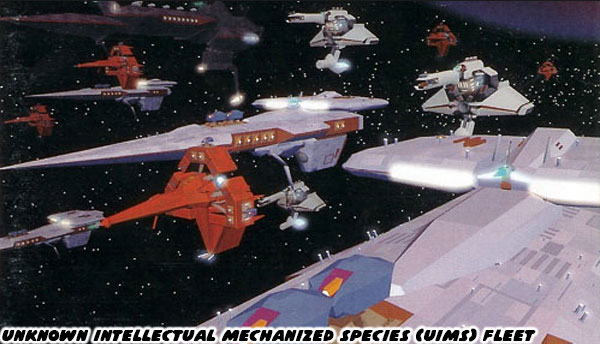
The web series and game managed to touch on many of the high points of UGSF canon. They brought out the relationships between the classic arcade and consoles hits and gave them entirely new dimensions. They explained the origins and outcomes of the wars against ETI (extra terrestrial intelligence) from Galaga, Bosconian and Battsura. They highlighted how humanity had developed ships that were designed to combat the most highly evolved of alien species, such as the robotic UIMS. Many of these ships were several kilometers in size with the largest mobile platforms being as big as an asteroid. The smaller ships turned out to be very useful in combat because they could bypass the defenses of the more massive targets. Players actually got a chance to set up both offensive and defensive capabilities for their particular factions. They would have to figure out which ships worked best for certain missions and how they would have to adapt to constantly changing threats. Namco dubbed this form of gameplay "Fleet Assault Tactics."

The game was absolutely gorgeous. It had twinkling stars and spiraling galaxies billions of light years in the distance. Players learned to terraform and connect their planets and navigate around asteroid clusters while defending their home worlds. With a much more laid back classical soundtrack to help the player feel more like a military strategist than a space cowboy. The title was taken offline in 2009 much to the disappointment of the fans. I can understand that it was a business decision. Arcade games were a hard sell in the US and western audiences favored action over RTS titles by a wide margin.

Of course I would hope that someday soon the company would return to their galactic roots. New Space Order and the other experiences from UGSF canon certainly deserved more chances. Even without a new science fiction title in the works the influence of the space legacy was hard to ignore. The UGSF canon had become ingrained in the culture of Namco. It would pop up in some of the least suspected titles. When it did it gave long-time gamers a chance to reflect and long for the future. If you would like to sponsor me please visit my Patreon page and consider donating each month, even as little as $1 would help make better blogs and even podcasts!
follow the Street Writer on Patreon!

Monday, August 25, 2014

The Namco Chronicles, part 6...

When it came to bold arcade cabinet designs no publisher seemed to hold a candle to Sega. The largest of the Japanese arcade developers had the fortune of having multiple teams working on games at any given time and one R&D unit focused on developing hardware and cabinets for those games. The company could be considered as having mastered the limitations of hardware as far back as 1992. Sega had released a fighter jet simulator called G-LOC. It was the spiritual successor to the wildly popular After Burner. The game was sprite based and released in both a stand up and deluxe sit down cabinet. Yet the company also had some new hardware that they wanted arcades to show off. A premium cabinet called the R360 was available for the bigger arcades. Players were strapped into a pod and enclosed into the simulator.

The cabinet could actually spin 360 degrees and invert gamers in multiple axis. The R360 featured a CRT display in front of the player. It did not project a picture onto the inside of the cabinet as with the O.R.B.S. cabinet featured in the previous blog. Not that it mattered because players were so focused on the screen and being flipped upside down that they didn’t notice there was nothing in their peripheral vision.

Sega continued the tradition of creating unique cabinets for arcades, especially one-off versions for their company arcades known as Joypolis. In 2009 the studio released another game that inverted players. Storm-G was a futuristic bobsled-type racing game that could spin players upside down. It did not have the free axis of movement of the R360 but it did offer seats for two-players in each cabinet. Interestingly enough this game had nothing to do with Storm Racer G. The car racing game was developed by Chinese studio Wahlap and was published by Sega. For those keeping track of the racing formats Sega had experimented with Storm Racer G had taken a page from the modern Ridge Racer / Burnout school rather than the classic Daytona model. The car designs were nice but nothing that had not been explored in Split/Second or Ridge Racer: Unbounded.

Namco did not have the R&D resources to pull off the inversion cabinets. They did experiment with rumble seats and 4-D attractions (3D + rumble seats) in later years. For the most part Namco challenged Sega with scale and spectacle in their larger cabinets. The theater sized Ridge Racer cabinet from the early ‘90s that featured an actual car that players could sit in was a prototype from the company. The developers were trying to figure out if the processor and LaserDisk that drove the early builds of the game would work with something of that magnitude. The company knew that many arcades could not afford to lose that much space for a game that could only be enjoyed by one player at a time.

The very next game featuring the theater setup would hold up to six players, all interacting with the massive screen. It was known as the Theater 6 system. In it two Sony projectors overlapped onto one display and played a seamless picture for gamers. The company found that the space shooter was a format that worked very well for the Theater 6 systems. They went into their library of titles and developed a game that could be considered the pinnacle of their space shooter series. It took elements from every science fiction game they had developed up until that point. It had opponents flying in high speed dizzying patterns from Galaga, the steadily increasing challenge of Xevious, the first person shooting elements and electronic music of Solvalou and the curved display and mission cues from Starblade.

The first title of the new system carried the badge of Namco's first arcade hit Galaxian. The new game was actually a series of adventures that multiple internal teams had been working on for the previous few years. The company did this so that arcade owners that invested in the system would be able to offer the players more than one game each time they visited. Galaxian3 consisted of three distinct adventures, each with its own timeline, story and both good and bad ending. Galaxian3 Project Dragoon had appeared first in 1990, predating Starblade. In it audiences flew into an enemy planet controlled by living robot creatures called UIMS (Unknown Intellectual Mechanized Species). Their objective was to take out an enormous laser called the Cannonseed but in order to reach it players had to get through the UIMS space fleet and ground defenses. That adventure was followed by a shorter "bonus" game called The Rising of Gourb which was a 4-player Playstation exclusive. in which players chased down a titanic flying enemy fortress nicknamed Gourb. The ship was like a flying city, and the final portion of the adventure rekindled memories of the trench run in Star Wars.

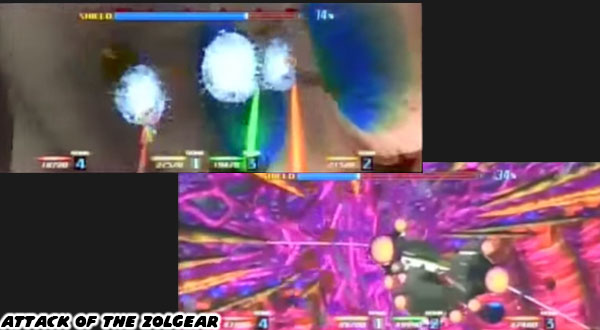
In 1994 the final game, Attack of the Zolgear, debuted. In it players flew to the planet Exia where an enormous creature had emerged from its centuries-long slumber inside the orbiting moon. The backstory was very interesting. For generations the scientists and astronomers on Exia had no idea why their moon Zol had an irregular orbit and constant gravitational fluxes. It turned out that there was a gigantic organism living inside of the planetoid. Once it broke out it made its way to Exia where it intended to destroy the colony. The monster tore through the orbiting defenses easily and survived the entry through the atmosphere. The creature Zolgear was so massive that it could have eaten Godzilla with one bite. Players flew in an enormous ship, the Dragoon-J2, a larger and more powerful version of the original Dragoon, and the gigantic cousin of the GeoBlade right into the heart of the creature. The parasites and defensive organisms within the creature were the size of skyscrapers. It was a perfect blend of science fiction and monster design. Since the first games debuted in 1991 they matched the visual splendor of Stablade.

Audiences enjoyed the experience of fighting alongside their friends and sometimes even strangers and seeing which was the best shot. The game could track the progress of each player and display them to the group between mission updates. Best of all each of the Theater 6 games had multiple branching paths so that players could explore different scenarios each time they played the game. Namco spared no expense in creating the experience. Every detail that went into the Theater 6 systems was planned out. Including the shape of the seats, guns and even cabinet facade. The colors, stickers and labels that decorated the cabinet maintained the same theme that was featured within the game itself. Even though players sat side by side they could appreciate the personal touches that brought them into the experience.
Like Silpheed had done for Sega, Galaxian3 developed a cult-like following the world over. One die-hard arcade fan that convinced an arcade owner to sell his Theater 6 system for a private collection. Sure the Theater 6 did not flip players upside down like the R360 cabinet had but it was still an impressive achievement in arcade design. Sega would actually develop racing cabinets that could be linked together to create a display that was almost as massive as the Theater 6 screen. Both companies would tout that they had the superior arcade experience and neither would give an inch during their long running feud. Namco would send out banners for arcade owners to display over the Theater 6 unit that read "The Worlds Largest Video Game." Yet that wasn't the whole story.

In 1992 Sega released an enormous 8-player cabinet for a game called Cyber Dome. It was touted not only as the largest type shooting game of its kind, but also one of the first AR (augmented reality) games ever released. Players entered a space pod-shaped cabinet lined with a heavy black plastic curtain to stop any ambient light from entering. They sat in light-up chairs with enormous laser guns that were also illuminated. The AR portion was actually a semi-transparent targeting system on the gun that players could use on the gigantic screens. Few arcades had the floor space for such an enormous cabinet. For all intents and purposes it looked like Sega would win the battle of biggest multiplayer space shooter, but the '90s were a wild time for arcade fans.

Sega decided to raise the stakes shortly after the release of Cyber Dome. They knew that the gigantic cabinet was only a half measure if they wanted to take the arcade crown from Namco. The next logical step would be to add motion to an arcade game, something that moved more than a single player. The people at Sega were fans of motion rides like Star Tours which had opened in Tokyo Disneyland in 1989. The internal staff at AM5 had experience building motion cabinets for kiddie games, but had their sites set on something much bigger. They unveiled the Advance System-1 (AS-1) cabinet at the AOU trade show in 1992. This would support 8-players interacting with a screen, and laserdisc projector. Michael Jackson would even appear in a game for the platform. An excellent write up on this rare system is on SegaRetro.com
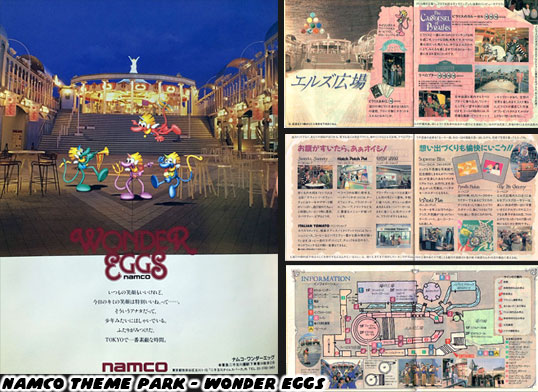
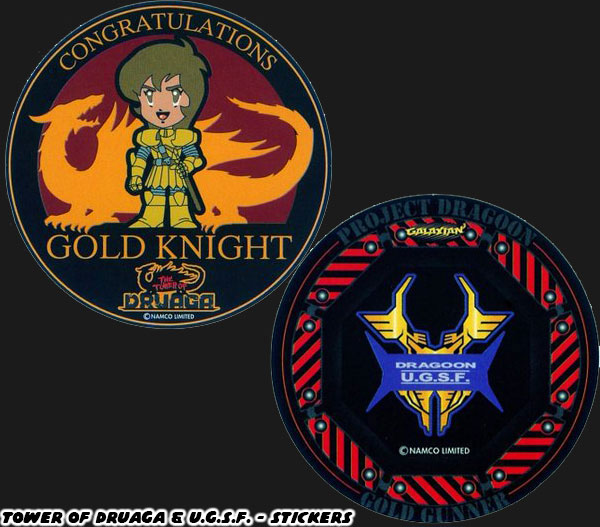
Many arcade manufacturers including SNK, and Capcom knew that getting machines in an arcade was one thing, but being arcade operators would help ensure they would be able to help corner the market. Many studios had their own arcades in various shopping districts all throughout Japan. Each one was packed with video games, prize machines, food kiosks, gift shops, and the like. Namco took the next evolutionary leap in 1992 when they unveiled the Wonder Egg, later Wonder Eggs theme park in Setagaya, Tokyo. It was the very first theme park owned, and operated by a game studio. It took many elements from Tokyo Disneyland, including live stage shows, costumed staff members, restaurants, dark rides, and attractions. Of course the park also featured traditional midway games, as well as the latest arcade hits from the publisher. The biggest draw were attractions based on classic Namco titles like the Tower of Druaga, and Galaxian.
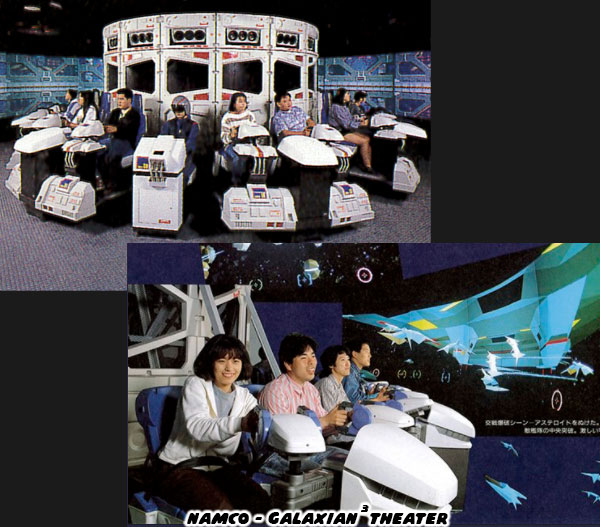
It didn't seem to matter for Namco what their rivals were working on. When it came to sheer volume they knew that they were undefeated. The Galaxian3 trilogy and Theater 6 system was actually spawned from an even larger attraction built by Namco for the Japan '90 Expo, and then moved to the Wonder Eggs park. The original Project Dragoon was featured in a 360 degree theater capable of seating up to 28 players at one time including a pilot and co-pilot. The game was actually built on a platform that titled in multiple directions to match the action on screen. Later revisions of the game scaled it down for 16 players but even then it was still an enormous feat of engineering. Gamers would be introduced to their particular campaign by a hostess wearing a headset connected to the theater PA. 

The actors appearing in pre-recorded videos, as well as the employees in the attraction were dressed like the operators from the UGSF, the United Galaxy Space Force, or basically the good guys in Namco canon. It was a brilliant level of detail and execution that would have made the best Disney Imagineers proud. There was no doubt that the employees at both Sega and Namco would visit the local watering hole and take pot shots at each other over a few beers. Whenever the talk of who made the best arcade game ever somebody at Sega would always bring up the R360, or even the AS-1. Then someone at Namco would fire back "too bad it couldn't move 28 people at a time." Then they'd all have a laugh at the expense of Sega and then change the topic to other things.
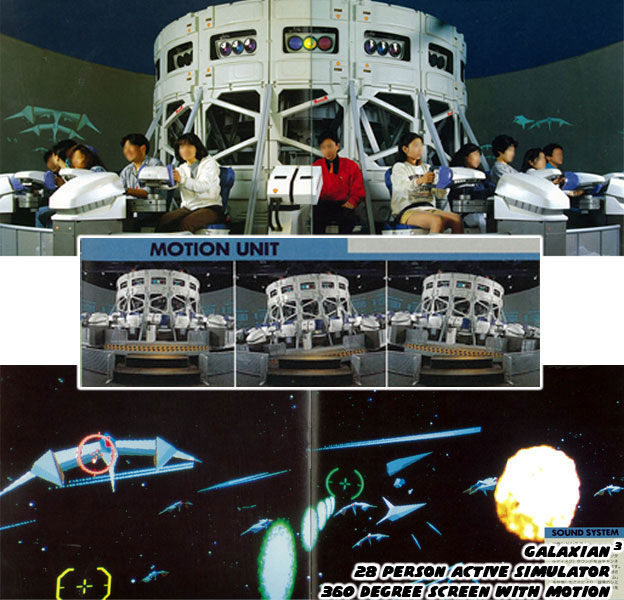
Now imagine that you were a kid living in Japan and had never visited Tokyo Disneyland or any other amusement park in the nation. After playing Project Dragoon, Attack of Zolgear, or even Starblade would you think that you were missing out? Or would you think that it was the park visitors that were missing out? For that matter imagine that you were a kid in the US, the UK or Europe and you happened to have a really good arcade that you could count on.

A great arcade would bring in entirely new experiences every few months and hold onto the gems for years. In my honest opinion the best video games had the staying power of the best theme park attractions. The people running things at Disney and Universal had definitely missed out on an evolutionary step in entertainment. Gen-Xers that grew up in the arcade became artists, animators, designers, and producers working in every aspect of entertainment, and not necessarily in the theme park industry. It took some of the biggest park operators decades to catch up, and some companies never did. The heavily arcade-influenced Buzz Lightyear's Astro Blasters, and Toy Story Midway Mania attractions featured in several Disney parks was a way for them to reconnect with an entire generation.
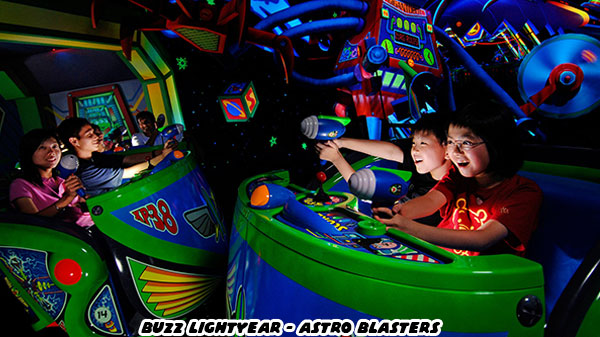
Of course in the best Sega and Namco shooters actually allowed players to choose different paths whereas the Disney attractions were the same ride from beginning to end. There was something to the staying power of Namco compared to many of their western contemporaries. Atari, Bally, Midway and many former arcade titans slowly fizzled out after the '80s. What was it that Namco had going for them? Was it the spectacle of a 28 person gaming theater or the solitary immersion of Starblade? Perhaps it was the addictive gameplay of classics like Galaga and Pac-Man? The secret to the longevity of the company was written in the stars, both figuratively and literally. Please read the next blog to find out why. As always if you would like to sponsor me please visit my Patreon page and consider donating each month, even as little as $1 would help make better blogs and even podcasts!
follow the Street Writer on Patreon!