Showing posts with label imperial knight. Show all posts

Wednesday, January 27, 2016

Building a gaming legacy, the Games Workshop series, part 4...

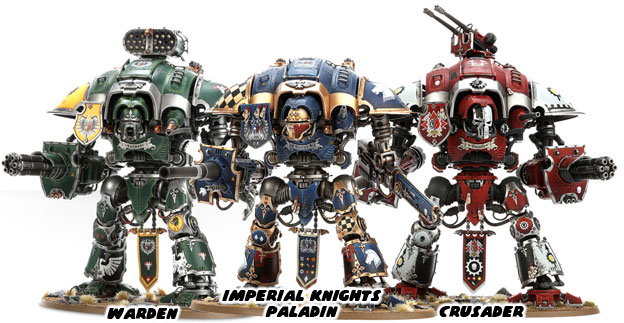
The game Freeblade started off this recent series. The gigantic Imperial Knight robot was the heart of the game. The Knight was a part of the Warhammer 40,000 legacy. It was a unique mix of science fiction storytelling and feudal lineage that created these robots. Before the Emperor of Terra there were nobles that defended humanity from alien threats. They had an army of giant robots that were the equivalent of knights from the legends of King Arthur. They went from battle to battle seeking glory and honor for their kingdom. Just like the knights of old the new giant robots were covered in their particular house colors and were designed to stand out on the battlefield. There were different types of Imperial Knights too, there were Crusaders, Wardens, Paladins and Errants. These all helped distinguish a particular house and gain a reputation throughout the galaxy. When the Emperor of Terra began reuniting all of the human planets in the year 30,000 the Barons and Kings of these various houses joined in the quest and helped the Space Marines conquer and recapture various outposts. The pilots of these machines were nobles, even the one featured in the game Freeblade was royalty and had been raised with the purpose of cementing his family lineage in combat. The Space Marines had their own variation of the single-pilot robot known as the Dreadnought. While it lacked the size and firepower of an Imperial Knight it was still revered by its fellow warriors.


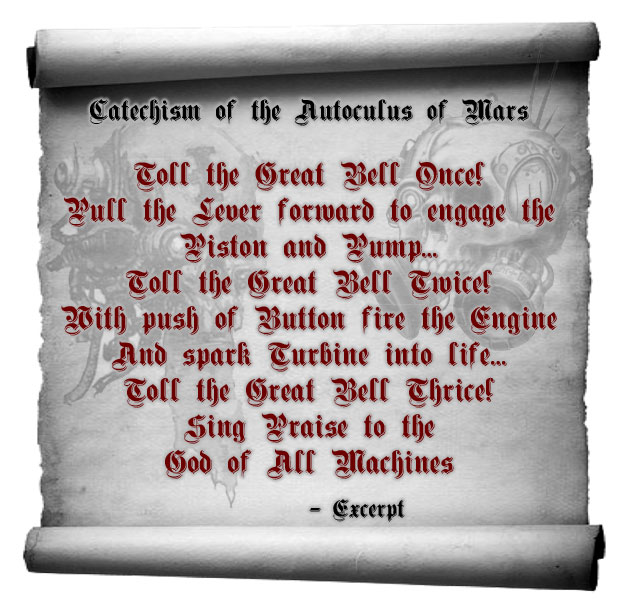
People that don't follow the 40K universe may not be aware that man and machine had been fused together before the Empire and before the Imperial Knights. The engineers and builders of all the great war machines used to conquer space had a base of operations on Mars. This was the home world for the machine cult, the Adeptus Mechanicus. Throughout space there are entire planets dedicated to creating the tanks, robots and space ships used by the Imperium, these are called Forge Worlds. They are highly valued resources in the war against Xenos (aliens) and Chaos. Games Workshop, or rather Citadel has a sister company that builds high-end models for use in Warhammer and Warhammer 40,000. This company is called Forge World. But I digress. The Adeptus Mechanicus believe in the Machine God. All machines have a spirit and the greatest machines, the battleships, star ship and enormous Titans have very temperamental spirits. The Adeptus Mechanicus have litanies, incantations and prayers dedicated to the God of the Machines. When they power up something as massive as a Titan they have a ritual that they go through. The belief in the Machine God has become part of Imperial life, even Space Marines are known to say a prayer to the machine god so that their weapons do not jam in combat.
 

The Emperor of Terra is a very Christ-like figure. He sits upon the Golden Throne and led his Primarchs, which were like his Apostles, thousands of years ago. In canon this relationship can be likened to Catholicism. The hierarchy, organization, symbolism and belief in an omnipotent divine being was done on purpose. Space Marines are very much like friars or war priests, while the female warriors, the Adeptus Sororitas, are like nuns. The champions are canonized in death, even regular people can become martyrs for the Empire if they die valiantly and defy the forces of Chaos and the alien. The Empire is symbolized by a two headed eagle, it looks to both the past and future. This symbol appears on the armor, heraldry and vehicles of the Empire. It even appears on the bullets, or rather explosive bolts in the Space Marine bolt gun. As you can imagine with the rise of the Emperor in the year 30,000 there was a sort of chasm that widened between those that followed rule Terra and those that followed rule from Mars. If the Empire were Catholics then the Adeptus Mechanicus were Freemasons, there was nothing that said they were not allowed to practice the beliefs that they wanted. Both groups needed the other in order to help reunite mankind. The Emperor and his organizers knew that they depended on Mars and the various forge worlds that were needed to build the armor and weapons that would be used in the crusades. They came to an agreement and the rulers on Mars were allowed a high level of anonymity in return for their engineers and technology.
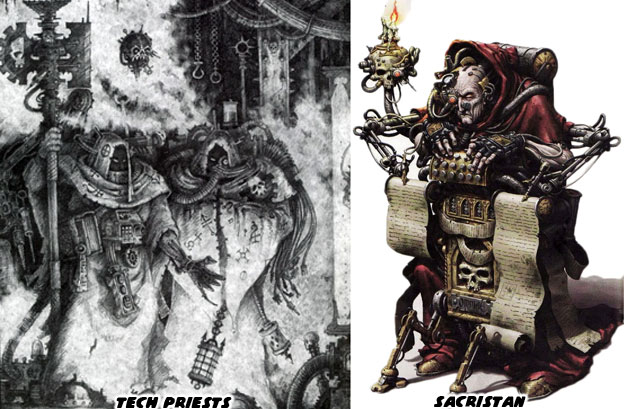
 

The Cult Mechanicus dated its lineage back, before the Emperor, before the Royal Houses, back before Mars was colonized and back to the great engineers of Terra (Earth). Its rituals were closely guarded as were its organizations. It was not unlike the Freemasons claiming their heritage went back to the architects that built ancient Egypt. Their symbols and traditions followed a Great Architect, perhaps it was the ones the Christians called God. The Catholic Church were by extension a slightly newer religion but one that had close ties to the same foundations of Freemasonry. This was paralleled in 40K. The Cult Mechanicus kept the gears turning for the Empire just as the Masons claim that they built all the great temples of the ancient world and secretly kept the Pharaohs in power. The neat thing about the Mechanicus and Empire was how they were presented in the art of 40K. The servants carried enormous tomes, like bibles with them, some of the text was written by hand, some by machine, in several cases the scriptures were written in digital code. They also carried torches and thuribles, incense burners at the end of long chains used in Catholic ceremonies to bless altars and holy relics. It was great science fiction imagery based on gothic ceremony, that wasn't seen anywhere else in books, movies or television.
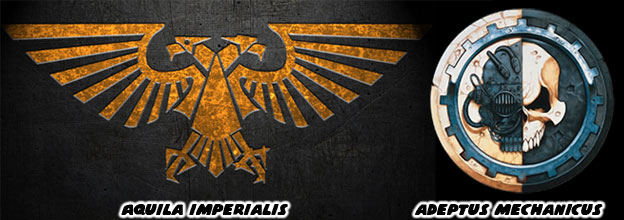
 

The symbol of the Adeptus Mechanicus was a servo skull, half human and half robotic surrounded by a gear. On the larger war machines you may find more heraldry for the Adeptus Mechanicus than the Empire. The practitioners of the Cult Mechanicus, the ones charged with the most important ceremonies of repair and restoration were known as Tech Priests. These characters were mostly machine and carried with them a symbol of the machine god. Instead of carrying a staff with a cross they instead carried a staff with a gear, or wrench and blade. It was both a symbol of the machine god as well as an actual functional tool. The Adeptus Mechanicus have a strong belief that flesh is corruptible and will eventually fail with age, thus as they get older more and more of their human organs are replaced with mechanical parts. Eventually the senior and most experienced engineers are mostly all machine with a number of technical enhancements to their brains and nervous systems. With all of these cybernetic enhancements the Adeptus Mechanicus can actually communicate directly with the machine. They can change code as easily as speaking a native language directly to a machine. They can even send encrypted wireless messages to each other using their mind, which would seem like some sort of telepathy to novices.
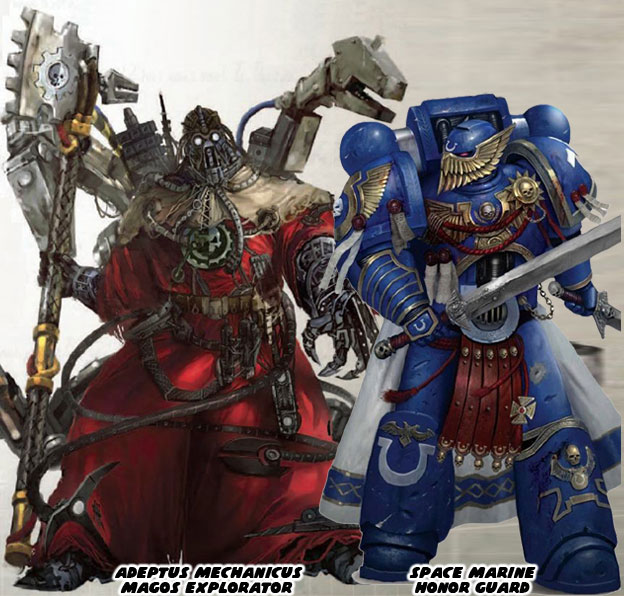

The Mechanicus have gone to war in defense of Terra, Mars and the Forge World for thousands of years. Often times they do so alongside of a Space Marine or Imperial Army. The weapons they use are more esoteric and experimental than those wielded by the human armies. The Mechanicus are not worried about trying untested weaponry in a firefight. Since they are more machine than man the worries of radiation and malfunctions that would kill a normal person are considered acceptable variables. You can easily spot the differences between the followers of the Emperor and those of the Machine God. Space Marines wear power armor in battle whereas the Mechanicus usually wear robes, even in combat. The Space Marine is given biological enhancements with drugs, implants and gene therapy. The Mechanicus is enhanced with machine parts. Both are extremely strong and capable fighters. While the Space Marines are fighting to keep humanity safe, they sometimes do so to honor their own chapter as well. The Empire has zero tolerance for alien and demon alike. The Mechanicus are more concerned with finding and recovering unknown technology. Whether it is demon or alien in origin the Mechanicus have a lot that they can learn from everything. Each new thing brings them one step closer to knowing the Machine God. The Empire would normally destroy or lock away anything recovered from a battle. They would definitely keep these things hidden from the Mechanicus.
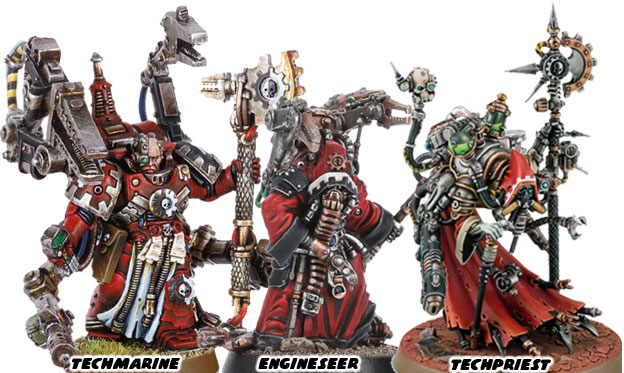

Thanks to their arrangement however it is difficult to keep the Empire and Mechanicus apart when alien technology is found. The Mechanicus are on the front lines, they have trained battle-hardened Space Marines into becoming engineers. These Space Marines are able to perform complex repairs on the front line, their power armor enhanced with extra servitor arms and tools. The more complex equipment is usually attended to by Engineseers. The sculptors at Citadel were able to capture the intricate details of the Mechanicus from the art of the game. The senior Techpriests no longer looked human when compared to the other models used by the Empire. It was great visual storytelling and again, an aesthetic that was not really used in any other science fiction world. The Adeptus Mechanicus really came to the forefront of Warhammer 40K in the late '80s thanks to the introduction of the Titans. Their story and influence in 40K canon would grow over the next 30 years. They had a few models released here and there through the '90s and early '00s and never fell out of favor with hobbyists. They were finally granted their own official units, rules and organizational guide for use in 40K these past two years. Yet this chapter in the history of Games Workshop would never have been written had it not been for a rival game studio. We'll look at this on the next blog. As always if you enjoyed this blog and would like to sponsor me please visit my Patreon page and consider donating each month, even as little as $1 would help make better blogs and even podcasts!
 follow the Street Writer on Patreon!

Sunday, January 24, 2016

Building a gaming legacy, the Games Workshop series, part 3...

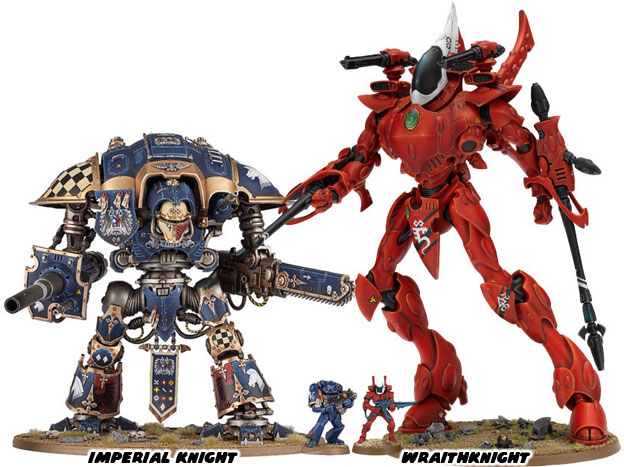
In the previous blog I mentioned that the Imperial Knight was the largest single-pilot robot in the Warhammer 40,000 universe. Well, this was true for the human armies but what about the aliens? The Tau had some large robots (the ones that looked like Japanese mecha) but so too did the Eldar (remember the space elves?). One of their larger robots was called the Wraith Knight. It also had a single pilot that was connected neurologically to the robot and was much taller and more powerful than the Imperial Knight. Because of its size this robot was a different class from the Imperial Knight. It was considered a Titan.


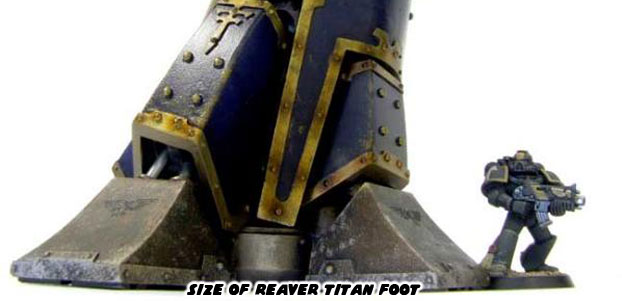
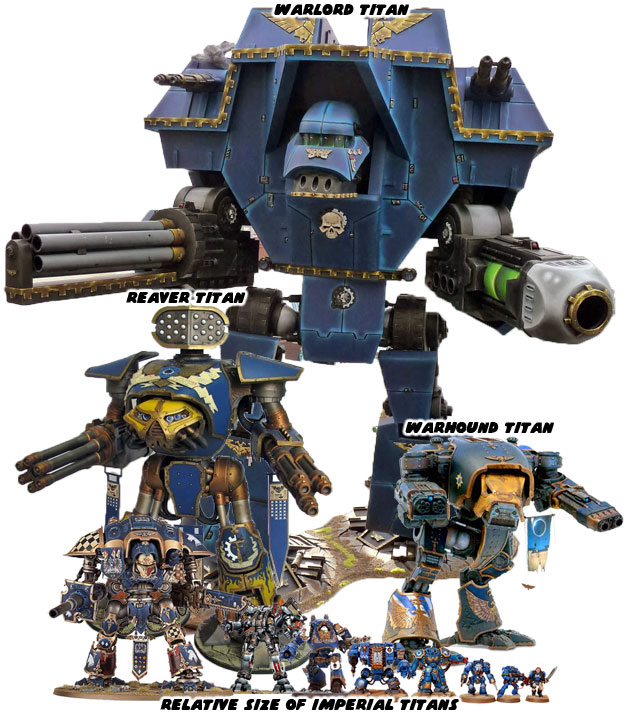
In the 40K universe the titans were the largest robots used in battle. Believe it or not the Imperial Knight was not as big as the smallest Titan. The Imperial Knight was much larger than a Space Marine or a Dreadnought. It was bigger than even the super-heavy tanks used by the Imperial Army. Seeing one walking towards the front line was enough to cause fear of most enemies on the battlefield. Even large Chaos engines of destruction and Ork Squiggoths would find the Imperial Knight formidable. Yet some of the small and mid-size Titans made the Imperial Knight less imposing and even the Space Marines armies seem insignificant. Just look at how massive the foot was for a Reaver Titan compared to a Space Marine. The marine was well over seven-feet tall yet was no taller than a "toe" on the Reaver.


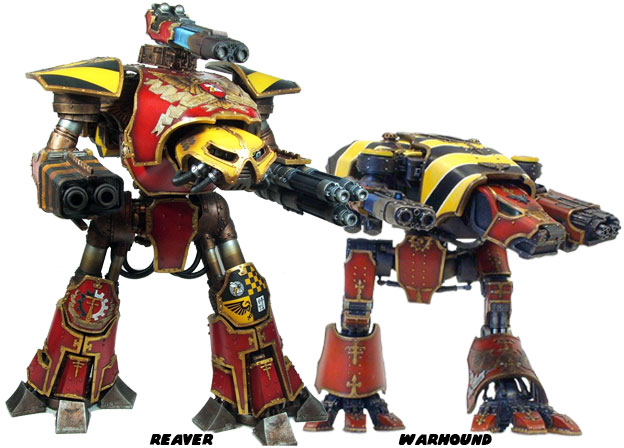
In canon the smallest two Titans employed by the Imperium were the Warhound and the Reaver. Like the Imperial Knight they were used where firepower was necessary and where flexibility was crucial. They had to be able to perform functions that no tank unit could in an area that was too tight for aircraft as well. The Titans were not necessarily as slow and cumbersome as people assumed. With the right crew they could navigate narrow streets, target and strafe opponents without stopping and even bring down buildings around them if they could not hold a position. Depending on the situation they could be equipped with an assortment of weapons, from long range artillery and anti-aircraft missiles, to closer range force claws and plasma cannons . A giant robot may seem like an easy target on the battlefield but they were often protected by invisible force fields. A smaller variation of this shield could be generated by the Imperial Knight. The shield would absorb the energy from explosives, lasers and plasma blasts and deflect it around the frame.


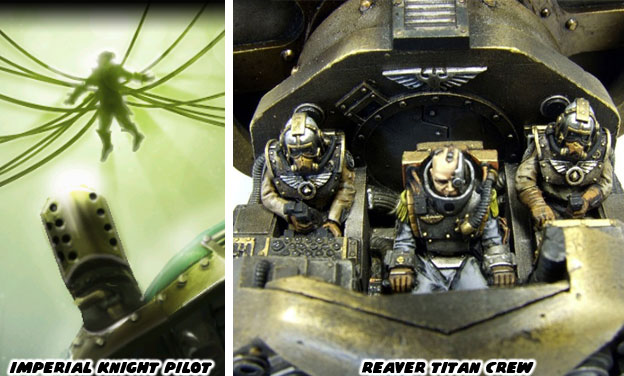
While they were considered "small" they still required a crew to move, function and remain operational. This was where the differences between the Imperial Knight and the Titans really came into play. An Imperial Knight had a crew waiting for it to return from battle in order to perform the necessary repairs and weapon replacements. The pilot was pretty much on his own in the battlefield. A Titan required a crew to operate both on and off the battlefield. Perhaps there was a pilot or two manning the movement and weaponry, but there were countless other servitors taking care of the mechanics in real time. Think of a servitor as a sort of zombie mechanic. They were servants retrofitted with tools, welding torches and wrenches instead of arms and hands. They were strong, loyal and programmed only to perform their duties. In this case a servitor would keep the Titan running on the battlefield while performing all of the maintenance on the fly. A servitor did the things that the R-type Droids did in the Star Wars universe.


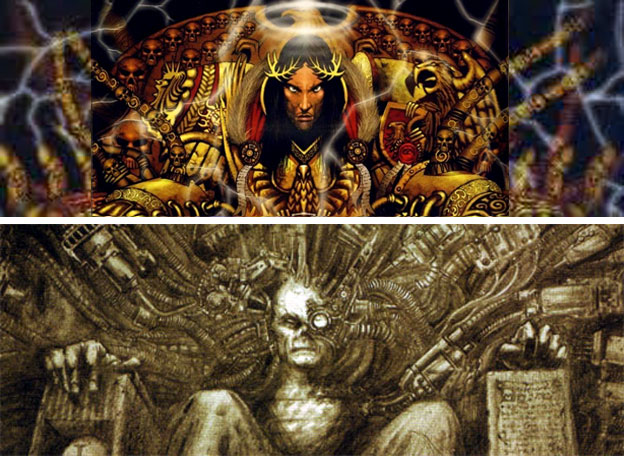
An Imperial Knight was instead piloted by a single individual, he was reliant on his crew only after the battle. The Imperial Knight pilot faced the same challenges that a Dreadnought pilot had. Both types of robotic armor depended on outside crews to aide them, repair them and deploy them because they were not physically capable of doing anything themselves. It was a sad existence when you think about it. To the pilots however it was their duty to the Empire. It was an honor to serve as a mechanized warrior, fighting alongside or as a member of the brave Space Marines. There was a precedent for this, for placing yourself in the heart of a machine. It was a tradition that went back to the year 30,000. The Emperor of Terra had a Golden Throne created by the greatest adepts and scientists from Earth and Mars. The Golden Throne was able to harness his psychic energy and create portals to other planets. He could send his Space Marines almost anywhere in space with this fantastic invention.


The Emperor was betrayed by his Warmaster Horus and had to fight against him. The Chaos Gods had granted Horus amazing powers which made him a perfect rival to the Emperor. The Emperor killed Horus but was left near death in the fight. He was placed on the Golden Throne and it was turned into a life support system. Instead of tapping into his psychic power it was tapping into the living energy of thousands of powerful psykers, flown in every day from all over the galaxy. Their life force would be depleted in a few hours but combined they would keep the Emperor in a state of suspended animation, or rather slow decay. The Emperor would become fused with the machine for the next 10,000 years. At least one of the Dreadnoughts in 40K canon, Bjorn the Fell-Handed, was a member of the Space Wolves and was alive during the Great Crusade and the Horus Heresy. Imagine the type of mental fortitude that it takes to become attached to a machine for most of your existence. There is a special model and rules created for Bjorn in case the players of the tabletop system want to use the Dreadnought in a campaign.


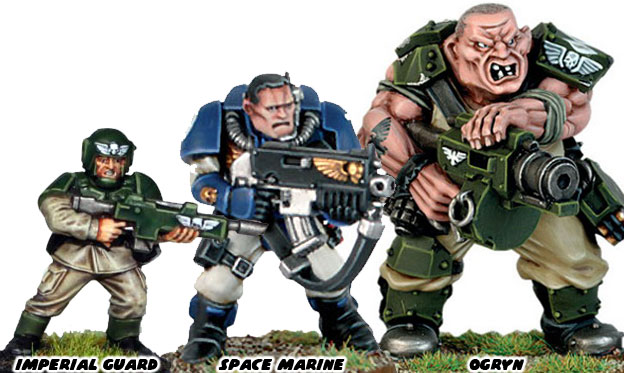
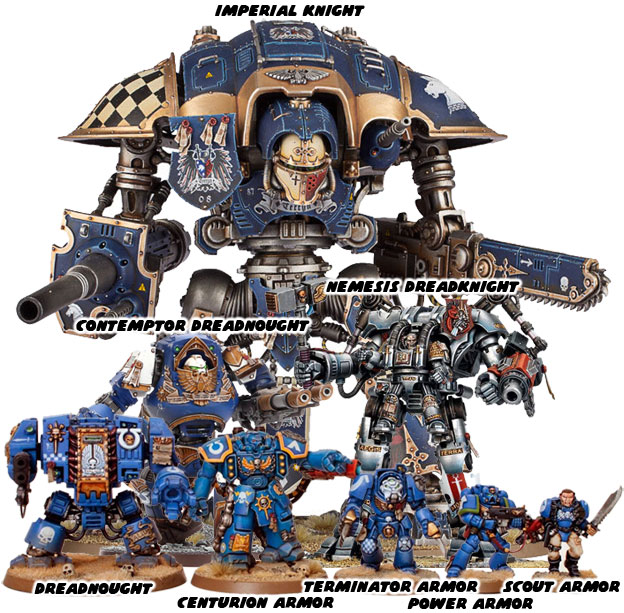
But I digress... I can talk about how awesome the giant robots were in 40K but you do not really appreciate the scale of the Titans until you see them compared to the single-unit types. A Space Marine is much larger than an Imperial Guard soldier, yet they are not as large as an Ogryn. An Ogryn is not as large as a Space Marine in Centurion Armor, nor are they as large as a Dreadnought. The Dreadnought is huge and powerful but is only a fraction as big as an Imperial Knight. This is where things start to fall into perspective.


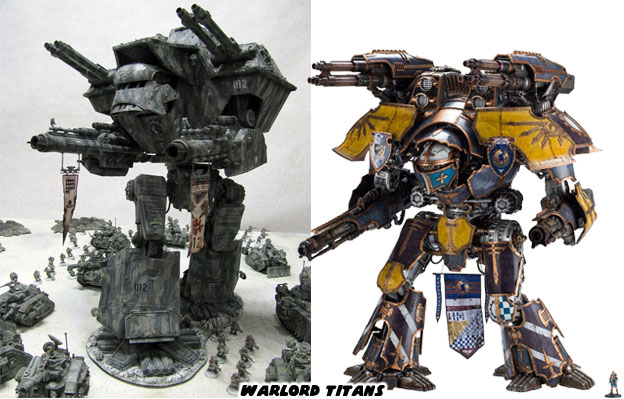
At 50-feet-tall the Imperial Knight is dwarfed by the Titans. Remember that the Warhound and Reaver were small and mid-size Titans. The largest Titans, like the Warlord MKIII for example, were very similar to walking battleships. They had a command, carried a crew, support, radar and artillery. With the cases of the biggest, they could even carry and entire regiment of Space Marines into battle.


When a Titan goes to war it literally changes the shape of the battlefield. A Titan is a force of nature, like a tornado or hurricane, it is absolutely unstoppable. Entire cities are turned to rubble, forests are burned to the ground and hills are flattened in their wake. Only another Titan or squadron of Titans can offer a suitable challenge. They are absolute symbols of power and can inspire an army to victory and cause the enemy to shrivel in fear.


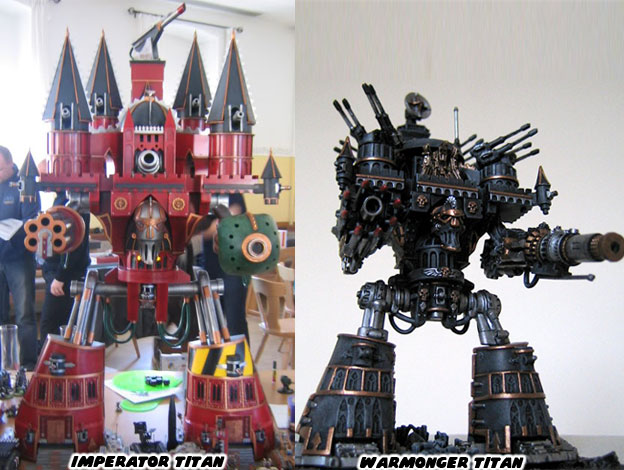
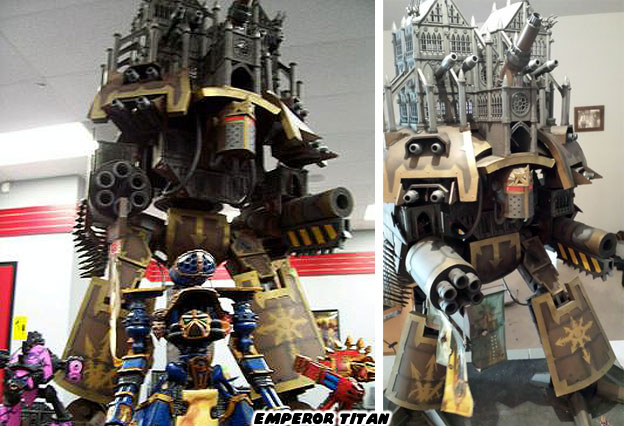
There are Titans in 40K canon that are so obscenely huge that they are almost impossible to imagine. The Warlord Titans are awe-inspiring but they are not the largest class of Titans. At the far end of the spectrum there is a class known as the Warmonger and Imperator. These Titans are walking skyscrapers. In each leg they carry a unit of Space Marines and on their back is a full headquarters contained within a fortress. They were critical during the Great Crusades, lead by the Emperor of Terra himself. Titans helped establish the dominion of the Emperor, and took entire sectors of the galaxy back from alien invaders. They faded in number but their stories grew into legend. A few die-hard tabletop gaming fans around the world have scratch-built their own titans to the exacting specifications set up by the 40K canon.


Remember that in 40K the forces of Chaos can corrupt and turn machines into hybrids of demon and robots. The same applies to the Titans. There have been legends of chaotic titans which sprout horns, spit blood instead of plasma and have mechanical tails that slash of their own free will. The crews and pilots on the chaos titans are usually "digested " by the Titan if they do not become fused and part of the nervous and sensory systems. Fans have also scratch-built their own Chaos "Emperor" Titans that are every bit as impressive as the Imperator.


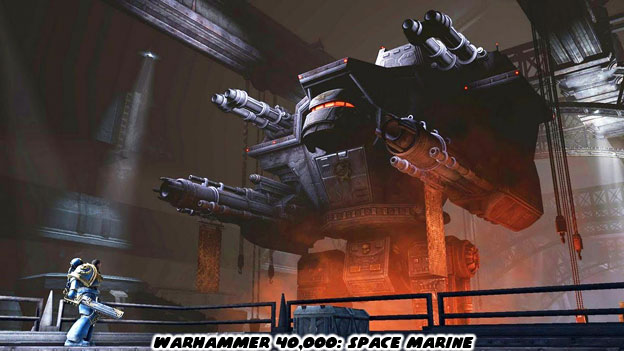
The Titan is the ultimate set piece. Whether we are talking about a tabletop game or a video game. It is very hard to ignore the giant robot, the literal elephant in the room. The Titan has been central to a few PC and console games based on Warhammer 40K. One of the best uses of the robot was in the title Warhammer 40,000 Space Marine. The game by Relic Entertainment features a Warlord class Titan known as the Invictus. In the game players got to run in around the Titan as it rested in an Imperial Hangar. Its weapons were needed to destroy a dimensional bridge being used by Chaos. The player actually got to run on its shoulders, shooting down opponents while it moved into firing position. It was one of the great moments in the history of video games. It was something that a tabletop fan like myself never thought that they would see in any video game.


What was fantastic about the 40K universe was how the scale would continue to grow and grow. The most massive of Titans was never big enough, there was always a threat more imposing, more dangerous. War was everywhere and even with these colossal robots the survival of humanity was never guaranteed. In many ways the soul of humanity had already been transferred to the machines. It was done before the first Dreadnought was built, it was even done before the Golden Throne was created. In the next blog we will look at those former humans that are guided by the Machine God. As always if you enjoyed this blog and would like to sponsor me please visit my Patreon page and consider donating each month, even as little as $1 would help make better blogs and even podcasts!
 follow the Street Writer on Patreon!

Thursday, December 17, 2015

Freeblade, one of the best mobile games ever made...


I want to do a quick review on the new iOS game Freeblade by Pixeltoys. The game was one of the featured titles on the iTunes Store and an Editor's Choice when it debuted in late 2015. The reviews so far have been very positive, earning a 4 1/2 star average on the iTunes Store from thousands of players. Why isn't it a perfect 5-star game? The answer is simple, the game entices you to receive bonuses if you sit through a 30 second commercial for other games. Which is nothing to complain about given that this is a free to download and free to play title. From a design, control and execution perspective the game itself deserves 5 stars but I would argue it is being penalized by the pay-to-play market. Those that buy the in-game features get to extend their play and enjoy the title in more ways. Microtransactions are the bane of many game players but they are the necessary evil of the mobile market. Let's face it, if the game was priced at $24.99 on the iTunes Store with everything unlocked from then nobody would buy it because there are thousands of free games available. It's a strange dilemma for developers to be in. After playing it however I'd say that at $49.99 the game would be a bargain. Why is that? Freeblade looks as good and plays as good (if not better!) than some of the best AAA titles you would find on the portable consoles. Sony and Nintendo, I'm looking right at you! The cheap and mindless games about birds and candy may be more popular with audiences, and may make more money for the developers, however the era of the heavyweight mobile games has officially arrived.


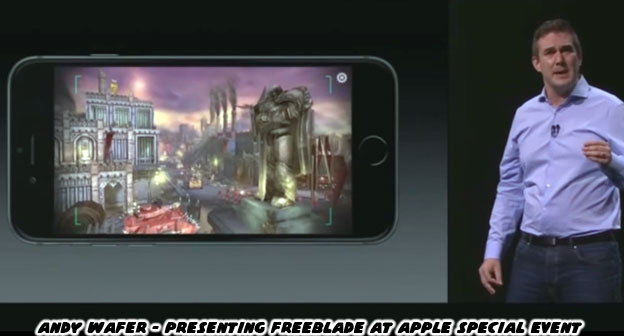
I wasn't sold when it was first announced. I love the universe that Games Workshop had created but most of their video games left much to be desired. But then something happened this fall. At an Apple Special Event the details on the new iPhone 6 and new iPad were announced. In order to highlight the leap in performance that it had over the previous models Apple had a few developers demonstrate some of the features using their software. One of the last presenters was Andy Wafer the CEO and Co-Founder of Pixel Toys. He used Freeblade to demonstrate the new graphics processor on the iPhone. It was almost twice as fast as the previous generation and capable of presenting graphics with greater fidelity and with far more effects than any previous mobile device. Not only that the new touch scheme meant that the control was much tighter and allowed for advances in the way the game controlled and played. The presentation almost won me over but there was some doubt in my mind. Would I really have to get a new phone in order to enjoy the game? After all the 5th generation of devices, including my iPod Touch, had some memorable games and were capable of displaying some amazing graphics as well. Have you seen Ridge Racer Slipstream for example?


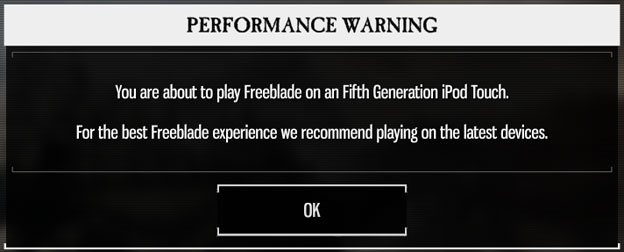
I downloaded the game on the iPod and right away I was warned that for best performance I needed to upgrade my hardware. I pressed OK and was presented with the opening story for the game but before it would ever load the first level the game would crash. I tried getting to run a few times. Tried resetting the iPod and uninstalling and reinstalling the game but it didn't work. So I had my coworker download the game on his iPhone 6 so I could test it out. Only then could I see why Freeblade required new hardware. The leap between gameplay and visuals on the handheld was like the leap from the Playstation 2 to the Playstation 4 consoles. Yes the PS2 had some incredible award-winning games, but the hardware was dated and incapable of presenting the next generation of visuals. As I was going through Freeblade I had an epiphany. Mobile games would only get better from here. If the console manufacturers didn't watch out they would become the second option for premium gaming experiences.


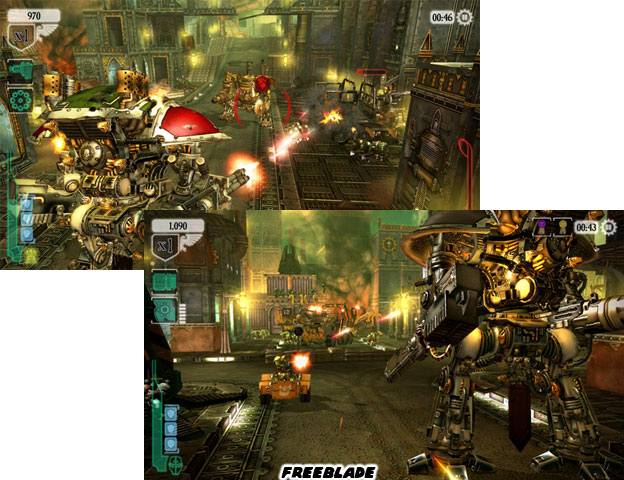
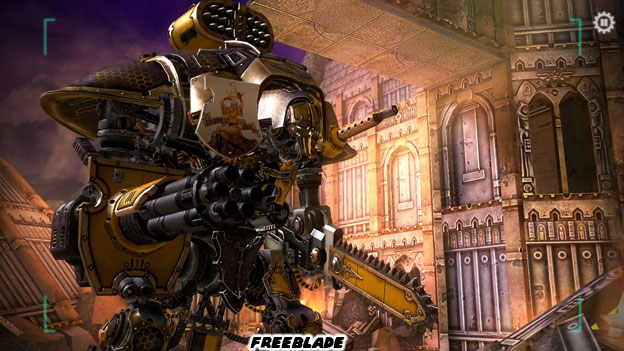
So what made Freeblade so great? If you are not familiar with Warhammer 40,000, the universe created by Games Workshop, it didn't really matter. The setup was relatively simple. It was the far future and you were on a distant planet. You were piloting a fully armed and fully armored 50-foot tall robot, known as an Imperial Knight against alien invaders. By touching the screen you got to shoot at just about anything that moved using your primary or secondary weapons. Freeblade took full advantage of the new touch features of the iOS devices. These devices recognized and responded to finger pressure instead of just finger contact. The devices and game also supported multi-finger gestures. Freeblade advanced the robot automatically during the fighting, all you had to do was aim and shoot. Essentially you were playing a mobile version of the classic arcade rail-shooter.


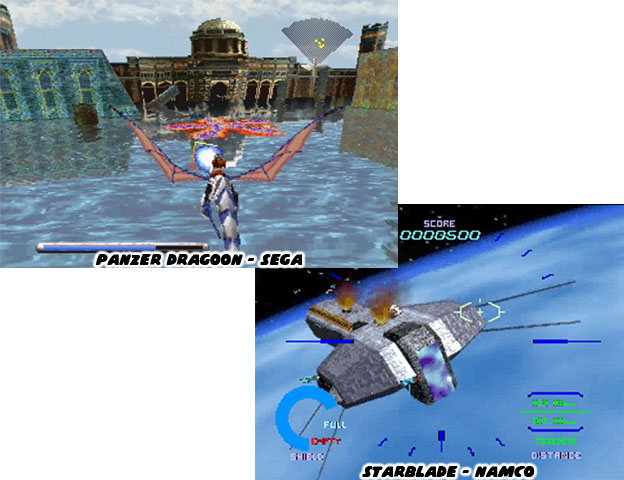
Pixel Toys developed a great game that brought back memories of some classic experiences. I wondered if the long-time arcade publishers were paying attention. Freeblade was doing to mobile devices what Panzer Dragoon had done for home consoles or Starblade had done for the arcade. Both games had cult-like followings. Sega and Namco, the respective publishers of those games hadn't really done much with the rail shooter in years. I could only imagine how great it would be if Sega developed a new Panzer Dragoon or if Namco released a new Starblade using the same mechanics of Freeblade. Yet I cannot think of a rail shooter that ever featured gigantic robot combat! In this way Freeblade stands apart from the other titles.


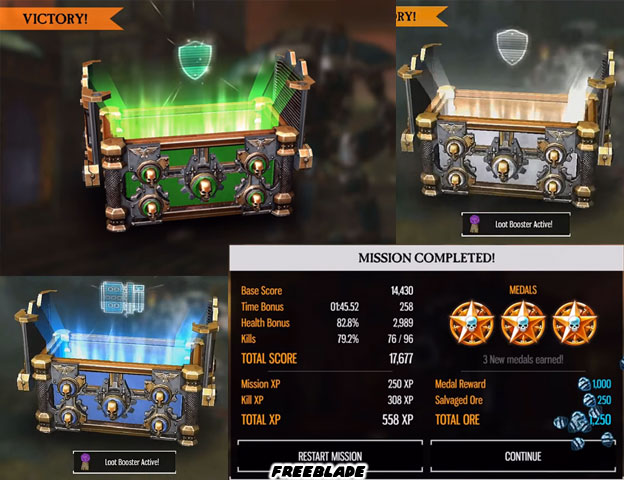
All of the hooks that mobile games depended on to keep players engaged were in Freeblade. Players could unlock secrets and upgrades as they went from battle to battle. They were rewarded for their accuracy, secrets found and point totals. They could apply some of these rewards by upgrading weapons, adding new weapons, and strengthening their armor. The player was encouraged to continue fighting through the level system. They gained experience based on how well they performed in each mission and what secrets they unlocked. Players could not only customize their weapons, they could even swap out colors to customize their robot. There were daily challenges which could make "grinding" or trying to level up your robot much more rewarding. Players did not have to spend real money in order to gain these rewards or upgrades. They simply had to be patient between sessions.


The visuals on the game were amazing. Among the best portable graphics you would ever see. The touch controls were responsive and become intuitive fairly quickly. The learning curve was relatively short, which allowed you to focus on the game itself. You had the ability to track and shoot you opponents using a gigantic machine gun, but beware of overheating! You could also fire a cannon blast or launch a barrage of missile to punch a hole through stubborn armor, roadblocks or other giant robots. Opponents emerged from every street corner and alley, in some cases they dropped in from space, rode by on motorcycles or flew overhead in jets. Sometimes the opponents were equally massive machines. When up close to other giant robots the game entered a quick-time event or melee mode. Ranged weapons were disabled and it was up to the player to use the Imperial Knight's enormous chainsaw(!) to chop an opponent down. The game was not all about offense however. The Imperial Knight was equipped with an energy shield and players could actually deflect incoming heavy fire if they responded quickly enough to the on screen cues. If the game was only graphics without the gameplay then fans would have voiced their disapproval right away. But Pixel Toys managed to make a game that looked great and played fantastic. The game only continued to grow and gain a new following on game forums and review sites. This could only be good news for the future of Pixel Toys. They had created a real winner and deserved some kudos. They were hopefully working on new content for this game as well. If you have a new iPhone or iPad and are looking for a great game then I couldn't recommend a better title. Download Freeblade now and tell me what you think. As always if you enjoyed this blog and would like to sponsor me please visit my Patreon page and consider donating each month, even as little as $1 would help make better blogs and even podcasts!