Showing posts with label warhound. Show all posts

Thursday, February 4, 2016

Building a gaming legacy, the Games Workshop series, part 5...

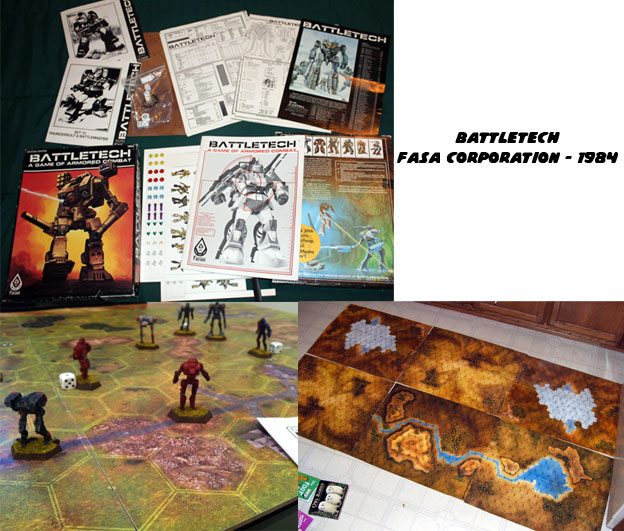
Tabletop gaming systems come in many forms. Some require nothing more than some paper, pencils and a few dice. Others are more hobby oriented and require people to assemble and paint models and even create their own terrain. The great thing about the systems is how they cover different genres. If you want a game on race cars it exists. If you want one on wrestling it also exists. There are games on ancient warfare, World War II and science fiction wars. One of the most popular games from the '80s and early '90s was Battletech. The game was released in 1984 by FASA Corporation. It went on to spawn a number of PC games. One of the biggest gambles that the company took was in making dedicated arcade machines for the game where people could get in the "cockpit" of a robot or mech and pilot it against friends or rivals. The tabletop and PC games were huge hits. There were various expansions to the system for more than a decade. It was even republished to celebrate its 25th Anniversary. Battletech was very easy to get into compared to other tabletop systems. The rules were straightforward and the diversity of machine types were perfect for different types of gamers. Those that wanted fast, responsive robots had a group they could choose from. Those that wanted super powered brutes also had those choices. Each required their own strategy to use. The system was flexible and allowed for even teams of players to go to war using their machines.


There was some litigation that almost sunk the entire Battletech franchise before it even got going. The USA had been exposed to anime and Japanese programming in the late '60s and through the '70s through translated shows like Kimba the White Lion, Astro Boy and Giant Robo. By the '80s it was starting to become popular thanks to the success of Robotech, which was an adapted version of Macross. Western-produced shows like the Transformers helped bring giant robots into the spotlight. FASA was ahead of the curve when they released Battletech and later MechWarrior. Yet they were able to be right on that trend because they took some shortcuts. Specifically they stole designs of robots from various Japanese shows such as Dougram and Macross, in their early releases. When word of this got out to the Japanese studios they were hit with a cease-and-desist. They had to recall the games and redesign the robots. The newer robots lacked the stylized Japanese designs but the system was still popular even after the re-release.
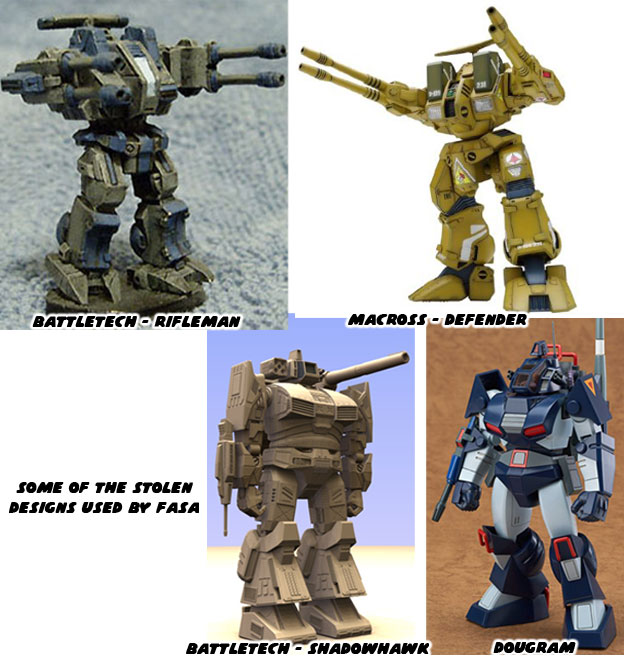

Battletech had a rich story to compliment the game. Various houses, like corporations, were fighting for territory. The giant robots were their champions and spearheaded all military encounters. Think about how similar the function of the robots in Battletech was to the Imperial Knights in Warhammer 40,000. Or to be more precise think about how they predated the Titans in 40K. Games Workshop was working hard to break into the USA tabletop gaming scene. The Warhammer Fantasy and science fiction systems were doing fairly well but when FASA released Battletech it really took a chunk of their potential customers away. The studio needed to respond and quickly, yet they did not simply want to make a game that was a Japanese robot knock-off title either. They went to the drawing board, got the input from their senior designers and storytellers and released Adeptus Titanicus in 1988. The game introduced audiences to the world of the Titans, pre and post-heresy in 40K continuity. These robots were very different than those in either US or Japanese science fiction titles. They were massive, often bigger than buildings. They looked like mechanized suits of armor or walking cathedrals.
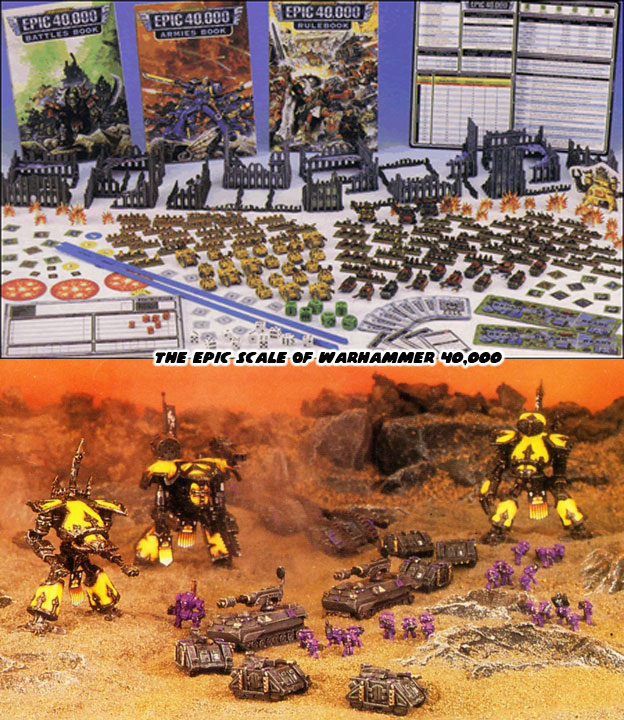
 

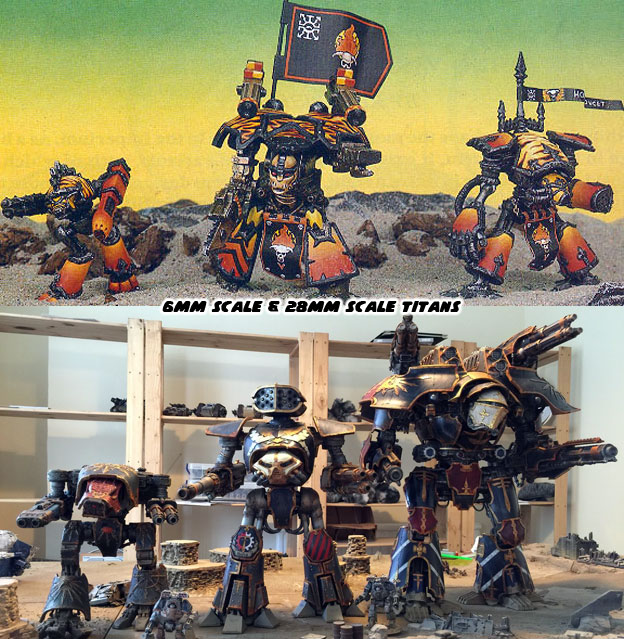
Games Workshop helped introduce a new scale of miniature to go with these giant robots. Most tabletop miniatures, not just for Games Workshop but for other titles as well were around 25-28 millimeters. If a figure were 28 millimeters tall then they represented a human just over six-feet in height. The size became known as "Heroic" scale. Adeptus Titanicus had gigantic robots that were so off the scale that a new form had to be created. It was called Epic scale, or 6mm scale. A Space Marine in a suit of power armor, somebody that was well over seven-feet tall, was just under 6 millimeters in height. Citadel actually created Titans in various sizes, the Warhound, Reaver and Warlord Titans for these games. They then followed up with a number of expansions to supplement the game. Each of these expansions introduced new models of Space Marines, heavy weapons and even Dreadnoughts in the new 6mm scale. The first expansion was actually called Space Marine. It was released in 1989.
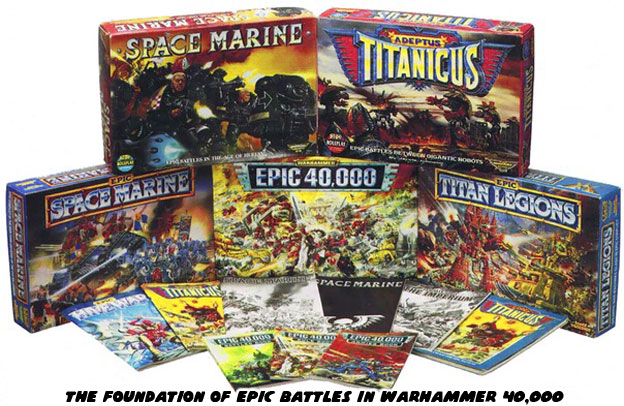
 

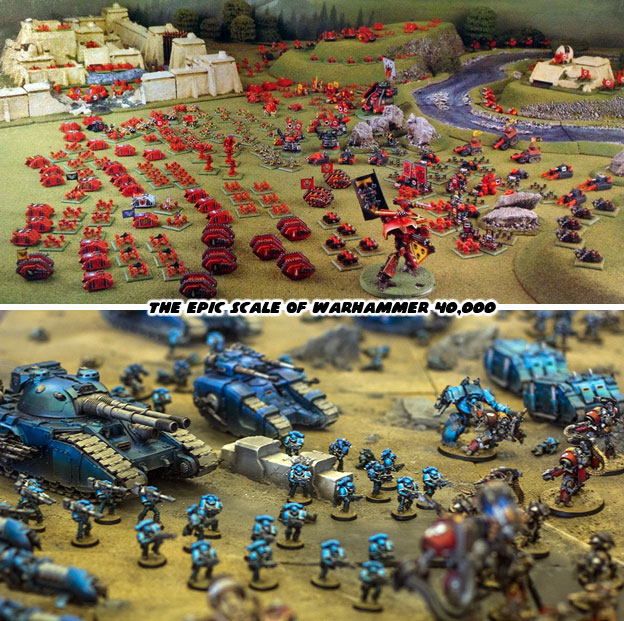
Fans of Battletech not only had the ability to choose from the various giant robots, they also had the ability to choose from smaller vehicle types and aircraft as well. This helped keep the game new and unique. Games Workshop was keeping an eye on this trend and responding with other expansion as well. Titan Legions, which introduced Titans from various alien races, came out in 1994. The final massive expansion to the system came out in 1997 with the release of Epic 40,000. With these expansions and the various Epic Scale miniatures released the collectors were able to do something that they could not afford to do otherwise. Collectors could actually buy and assemble an entire Space Marine chapter. Hundreds of individual Space Marines in 28 millimeters would cost thousands of dollars. Each transport and tank, from the Rhino and Land Raider, all the way up to the massive Baneblade could end up costing untold thousands as well. These awesome vehicles cost a fraction in 6mm and yet managed to contain an incredible level of detail. Players that had the time and patience to create a regiment would actually be able to do so without going bankrupt. The other great thing about working in this scale was that all of these units, vehicles and Titans could all fit on a table. On a table that was five feet long and three feet wide could maybe fit one or two of the smaller titans in the 28mm scale. Forget about a cast of thousands and a few dozen tanks for support.

Games like Adeptus Titanicus and the Space Marine series helped introduce audiences to the world of Warhammer 40,000. Like Battletech these were self-contained experiences. They could be enjoyed by casual players just as much as veteran hobbyists. These games could be shared with friends or family. They would be easy to set up or tear down, with all the pieces and rules fitting in the box. Fans didn't have to paint the plastic robots once they were assembled and most expansions came with plastic or foam and cardboard buildings and terrain to help turn any desk into a bleak wasteland. Yet like many just getting into the hobby once they got bit by the bug they would want to customize their own units, paint their own robots and begin collecting an army. The people that were young men and women when they started playing the '80s would begin working in the '90s and have some disposable income to begin investing in the games. Games Workshop would follow the trends and offer bigger and better kits to help fill in the armies, whether in the 6mm or 28mm scale. As these gamers finished college and became working professionals post '00s then they had much more that they could spend on their hobbies. For those people Games Workshop began developing 28mm scale titans. They sold for hundreds of dollars yet became the centerpiece of many armies, and especially game stores.

Adeptus Titanicus was not the only self-contained experience from Games Workshop that got audiences into the 40K universe. The studio actually had some great success in both the science fiction and fantasy systems. Each time the company released a new game it expanded the universe they had created and allowed fans to experience these worlds in entirely new ways. One of the more popular offshoots of 40K went on to become a best-selling PC game and get re-released as a collectible card game as well. We will look at this title in the next blog. As always if you enjoyed this blog and would like to sponsor me please visit my Patreon page and consider donating each month, even as little as $1 would help make better blogs and even podcasts!
 follow the Street Writer on Patreon!

Sunday, January 24, 2016

Building a gaming legacy, the Games Workshop series, part 3...

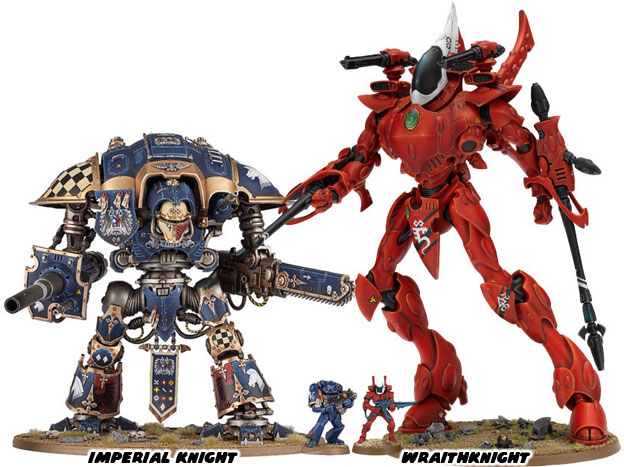
In the previous blog I mentioned that the Imperial Knight was the largest single-pilot robot in the Warhammer 40,000 universe. Well, this was true for the human armies but what about the aliens? The Tau had some large robots (the ones that looked like Japanese mecha) but so too did the Eldar (remember the space elves?). One of their larger robots was called the Wraith Knight. It also had a single pilot that was connected neurologically to the robot and was much taller and more powerful than the Imperial Knight. Because of its size this robot was a different class from the Imperial Knight. It was considered a Titan.


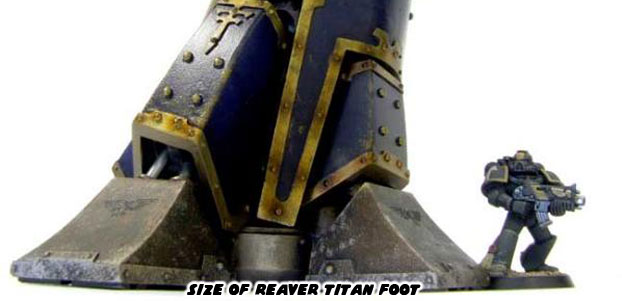
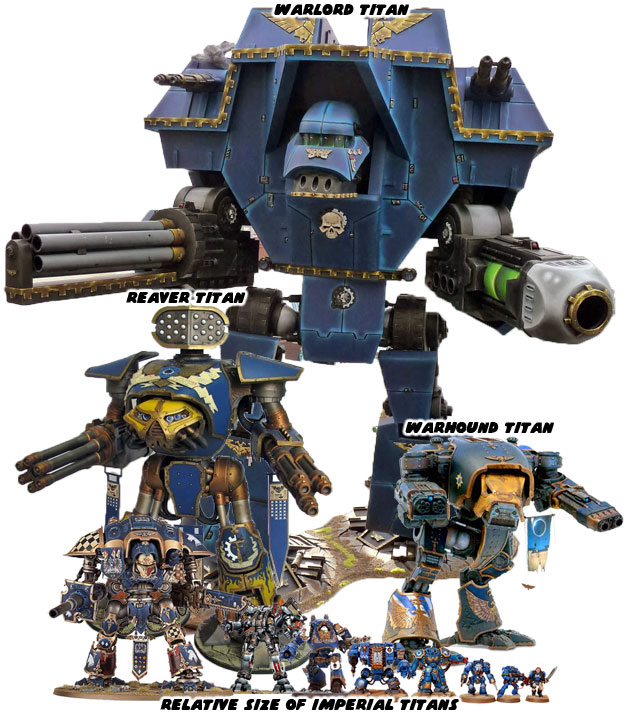
In the 40K universe the titans were the largest robots used in battle. Believe it or not the Imperial Knight was not as big as the smallest Titan. The Imperial Knight was much larger than a Space Marine or a Dreadnought. It was bigger than even the super-heavy tanks used by the Imperial Army. Seeing one walking towards the front line was enough to cause fear of most enemies on the battlefield. Even large Chaos engines of destruction and Ork Squiggoths would find the Imperial Knight formidable. Yet some of the small and mid-size Titans made the Imperial Knight less imposing and even the Space Marines armies seem insignificant. Just look at how massive the foot was for a Reaver Titan compared to a Space Marine. The marine was well over seven-feet tall yet was no taller than a "toe" on the Reaver.


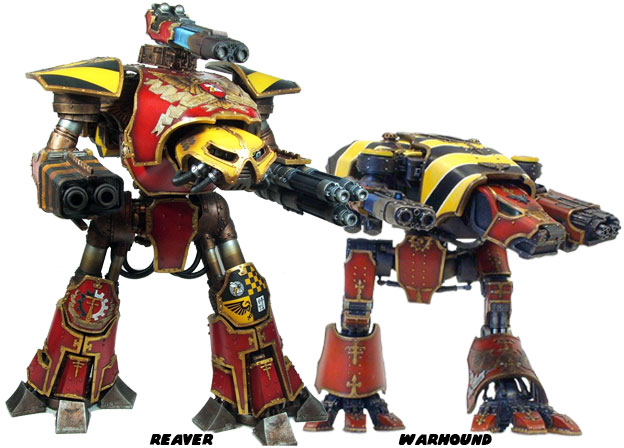
In canon the smallest two Titans employed by the Imperium were the Warhound and the Reaver. Like the Imperial Knight they were used where firepower was necessary and where flexibility was crucial. They had to be able to perform functions that no tank unit could in an area that was too tight for aircraft as well. The Titans were not necessarily as slow and cumbersome as people assumed. With the right crew they could navigate narrow streets, target and strafe opponents without stopping and even bring down buildings around them if they could not hold a position. Depending on the situation they could be equipped with an assortment of weapons, from long range artillery and anti-aircraft missiles, to closer range force claws and plasma cannons . A giant robot may seem like an easy target on the battlefield but they were often protected by invisible force fields. A smaller variation of this shield could be generated by the Imperial Knight. The shield would absorb the energy from explosives, lasers and plasma blasts and deflect it around the frame.


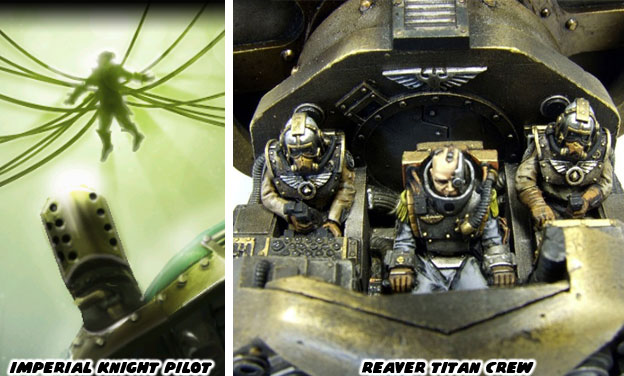
While they were considered "small" they still required a crew to move, function and remain operational. This was where the differences between the Imperial Knight and the Titans really came into play. An Imperial Knight had a crew waiting for it to return from battle in order to perform the necessary repairs and weapon replacements. The pilot was pretty much on his own in the battlefield. A Titan required a crew to operate both on and off the battlefield. Perhaps there was a pilot or two manning the movement and weaponry, but there were countless other servitors taking care of the mechanics in real time. Think of a servitor as a sort of zombie mechanic. They were servants retrofitted with tools, welding torches and wrenches instead of arms and hands. They were strong, loyal and programmed only to perform their duties. In this case a servitor would keep the Titan running on the battlefield while performing all of the maintenance on the fly. A servitor did the things that the R-type Droids did in the Star Wars universe.


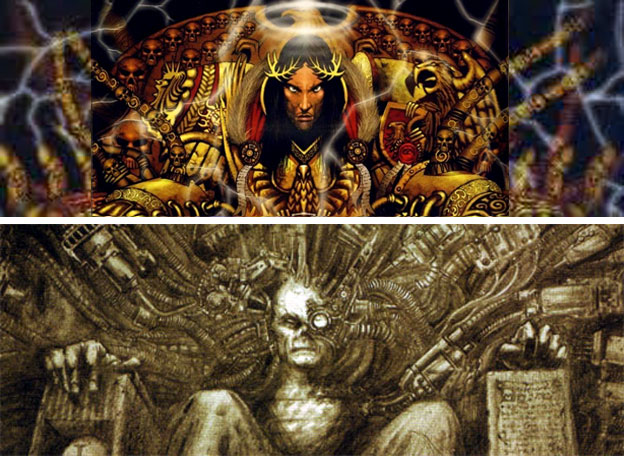
An Imperial Knight was instead piloted by a single individual, he was reliant on his crew only after the battle. The Imperial Knight pilot faced the same challenges that a Dreadnought pilot had. Both types of robotic armor depended on outside crews to aide them, repair them and deploy them because they were not physically capable of doing anything themselves. It was a sad existence when you think about it. To the pilots however it was their duty to the Empire. It was an honor to serve as a mechanized warrior, fighting alongside or as a member of the brave Space Marines. There was a precedent for this, for placing yourself in the heart of a machine. It was a tradition that went back to the year 30,000. The Emperor of Terra had a Golden Throne created by the greatest adepts and scientists from Earth and Mars. The Golden Throne was able to harness his psychic energy and create portals to other planets. He could send his Space Marines almost anywhere in space with this fantastic invention.


The Emperor was betrayed by his Warmaster Horus and had to fight against him. The Chaos Gods had granted Horus amazing powers which made him a perfect rival to the Emperor. The Emperor killed Horus but was left near death in the fight. He was placed on the Golden Throne and it was turned into a life support system. Instead of tapping into his psychic power it was tapping into the living energy of thousands of powerful psykers, flown in every day from all over the galaxy. Their life force would be depleted in a few hours but combined they would keep the Emperor in a state of suspended animation, or rather slow decay. The Emperor would become fused with the machine for the next 10,000 years. At least one of the Dreadnoughts in 40K canon, Bjorn the Fell-Handed, was a member of the Space Wolves and was alive during the Great Crusade and the Horus Heresy. Imagine the type of mental fortitude that it takes to become attached to a machine for most of your existence. There is a special model and rules created for Bjorn in case the players of the tabletop system want to use the Dreadnought in a campaign.


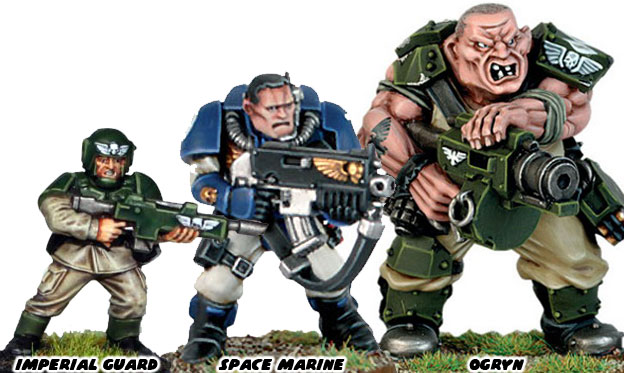
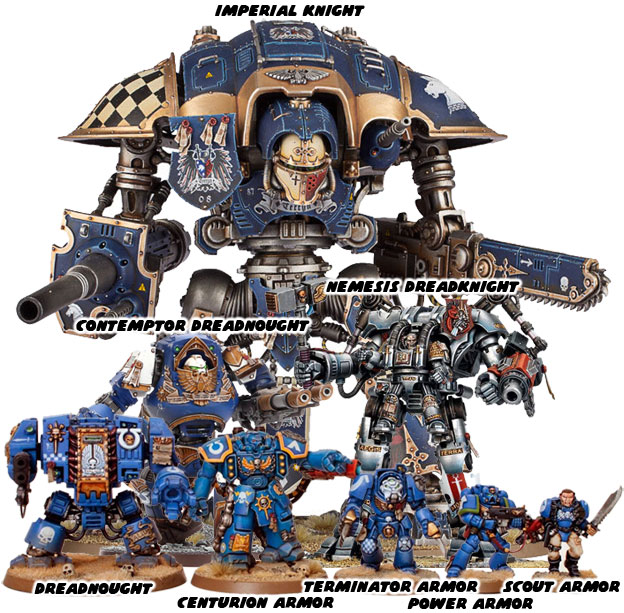
But I digress... I can talk about how awesome the giant robots were in 40K but you do not really appreciate the scale of the Titans until you see them compared to the single-unit types. A Space Marine is much larger than an Imperial Guard soldier, yet they are not as large as an Ogryn. An Ogryn is not as large as a Space Marine in Centurion Armor, nor are they as large as a Dreadnought. The Dreadnought is huge and powerful but is only a fraction as big as an Imperial Knight. This is where things start to fall into perspective.


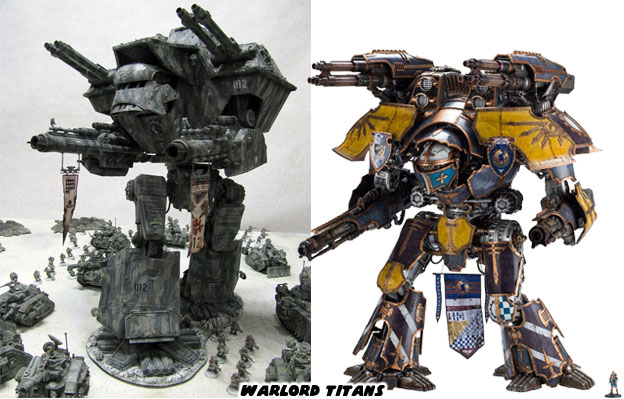
At 50-feet-tall the Imperial Knight is dwarfed by the Titans. Remember that the Warhound and Reaver were small and mid-size Titans. The largest Titans, like the Warlord MKIII for example, were very similar to walking battleships. They had a command, carried a crew, support, radar and artillery. With the cases of the biggest, they could even carry and entire regiment of Space Marines into battle.


When a Titan goes to war it literally changes the shape of the battlefield. A Titan is a force of nature, like a tornado or hurricane, it is absolutely unstoppable. Entire cities are turned to rubble, forests are burned to the ground and hills are flattened in their wake. Only another Titan or squadron of Titans can offer a suitable challenge. They are absolute symbols of power and can inspire an army to victory and cause the enemy to shrivel in fear.


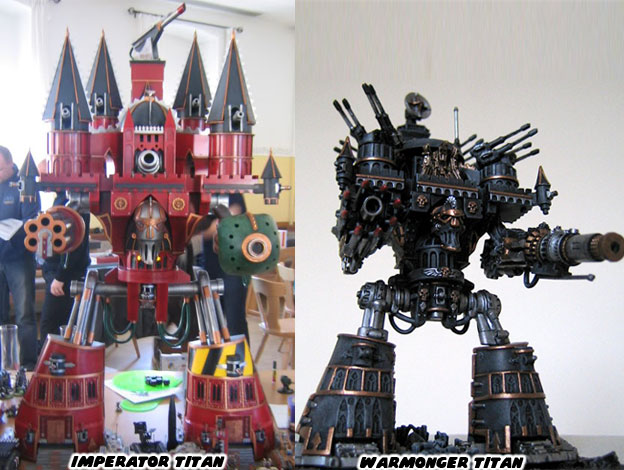
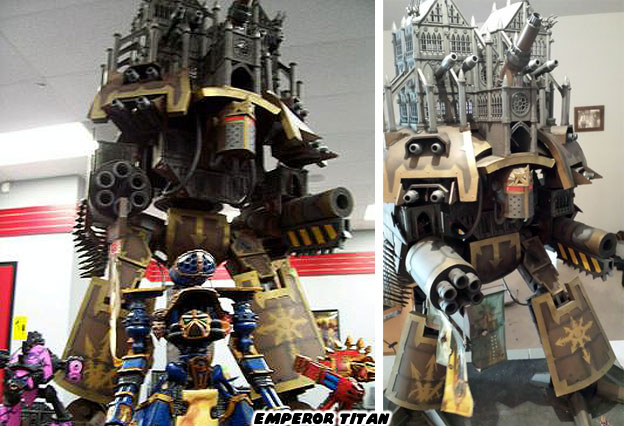
There are Titans in 40K canon that are so obscenely huge that they are almost impossible to imagine. The Warlord Titans are awe-inspiring but they are not the largest class of Titans. At the far end of the spectrum there is a class known as the Warmonger and Imperator. These Titans are walking skyscrapers. In each leg they carry a unit of Space Marines and on their back is a full headquarters contained within a fortress. They were critical during the Great Crusades, lead by the Emperor of Terra himself. Titans helped establish the dominion of the Emperor, and took entire sectors of the galaxy back from alien invaders. They faded in number but their stories grew into legend. A few die-hard tabletop gaming fans around the world have scratch-built their own titans to the exacting specifications set up by the 40K canon.


Remember that in 40K the forces of Chaos can corrupt and turn machines into hybrids of demon and robots. The same applies to the Titans. There have been legends of chaotic titans which sprout horns, spit blood instead of plasma and have mechanical tails that slash of their own free will. The crews and pilots on the chaos titans are usually "digested " by the Titan if they do not become fused and part of the nervous and sensory systems. Fans have also scratch-built their own Chaos "Emperor" Titans that are every bit as impressive as the Imperator.


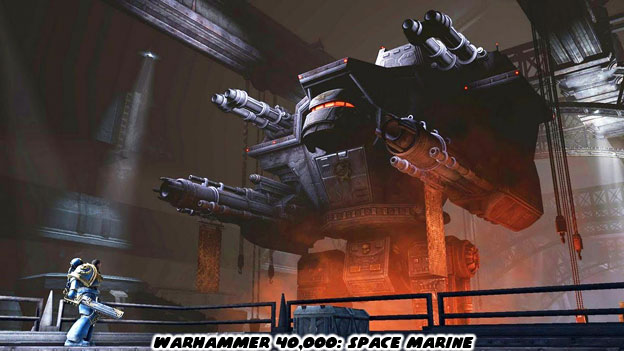
The Titan is the ultimate set piece. Whether we are talking about a tabletop game or a video game. It is very hard to ignore the giant robot, the literal elephant in the room. The Titan has been central to a few PC and console games based on Warhammer 40K. One of the best uses of the robot was in the title Warhammer 40,000 Space Marine. The game by Relic Entertainment features a Warlord class Titan known as the Invictus. In the game players got to run in around the Titan as it rested in an Imperial Hangar. Its weapons were needed to destroy a dimensional bridge being used by Chaos. The player actually got to run on its shoulders, shooting down opponents while it moved into firing position. It was one of the great moments in the history of video games. It was something that a tabletop fan like myself never thought that they would see in any video game.


What was fantastic about the 40K universe was how the scale would continue to grow and grow. The most massive of Titans was never big enough, there was always a threat more imposing, more dangerous. War was everywhere and even with these colossal robots the survival of humanity was never guaranteed. In many ways the soul of humanity had already been transferred to the machines. It was done before the first Dreadnought was built, it was even done before the Golden Throne was created. In the next blog we will look at those former humans that are guided by the Machine God. As always if you enjoyed this blog and would like to sponsor me please visit my Patreon page and consider donating each month, even as little as $1 would help make better blogs and even podcasts!
 follow the Street Writer on Patreon!