Showing posts with label review. Show all posts

Thursday, August 5, 2021

A quick take on Luke, the new Street Fighter.

Another year goes by, and another new Street Fighter character is introduced to a lukewarm reception. This new character is named Luke, he was the mystery character added for the Summer 2021 Street Fighter V reveal. Takayuki Nakayama Director of Street Fighter V, and Shuhei Matsumoto the Producer of Street Fighter V showed off the inclusion or Oro. The elderly fighter that had originally appeared in Street Fighter III way back in 1997. Luke was a new face, and presented as the future of the series. I am thankful for Twitter because the hot takes on this character were very spot-on.

Many fans were unimpressed with the reveal. One of the first reactions came from @adam_rsfv who compared the new character to YouTube personality-turned-pro fighter Logan Paul. Logan, and his brother Jake have grated many people with their online antics. These include allegations of sexual assault, filming a dead body in a park, insulting the Japanese while on vacation, and acting like general nuisances. In a way they do reflect the culture of fame, and notoriety from the USA. You don’t have to be the best at what you do, you just have to be the best at promoting what you do. But those were far from being the only takes on the character reveal.

The fish-mash of design elements for the hair, tattoos, and costume of Luke were pointed out right away. @ryo_redcyclone said the character was piecemeal from other Street Fighters. It was easy to point out these influences. Like a villain in a daikaiju, or giant monster tv show.

Many lamented that there was another white boxer in the series. Luke follows on the heels of Ed, a white striker that had been introduced not long ago. The Street Fighter series was known for having a string of powerful Black fighters including Mike, M. Bison, and Dudley. Now in one game two white boxers had turned up. Some compared his look, and introduction to Steve Fox, the British boxer from the Tekken series. Katsuhiro Harada, producer, and director behind the Tekken series agreed with a fan reaction that this might be Steve’s younger brother.

All jokes aside the news of another white character designed to be the face of Street Fighter, the future of the franchise, was met with groans from many fans. Those that had been with the series a long while remember that Alex was supposed to be the face of a New Generation, starting with Street Fighter III. Then almost 15 years later the grappler Abel was designed to appeal to the west in Street Fighter IV. He was supposed to be the go-to character for Americans. Yet in each instance players passed him over to try other other new faces.

With one word to Capcom @KAINONAUT calls out the pattern, and like many minorities, is exhausted with the trend. With each legacy character returning to Street Fighter V players could see that the franchise was favoring the return, and the introduction of white, mostly blonde characters. It was hardly representative of the USA, and given the past four plus years of politics, and civil unrest, you would think Capcom could read the writing on the wall. This is why I am grateful for the internet, for Twitter, and players that are able to dig deep into the history of the series, and call out the company for making missteps when they have a chance to rise up, and produce something exceptional.

In a reply to Kai @mossy_dahlia reminds us of the greatness that could have been. King Cobra was a marvelous design, and the final design known as Rufus was the opposite. On the 30th Anniversary of Street Fighter I highlighted the 30 most important characters to me. Although he never appeared in a game I named King Cobra #1 When that character was turned into an obese white guy for the sake of being funny I knew the series, and director had lost their way. It didn’t make me boycott the series, but constantly call the studio out because I knew they could do better. Most people that read my blogs want to get to the heart of the character, what works, what doesn’t work with Luke? What should Capcom do?

First-off white boxers are nothing new in Street Fighter, or fighting games. Joe was featured in the original Street Fighter. What is concerning is that many of the newer boxers that end up in fighting games tend to be white, and blonde. Even if they come from Hong Kong like Shen Woo in the King of Fighters series. SNK, and Capcom have had their share of Black boxers in the KOF, and SF series. If I were to ask most of my friends to name champion boxers in any weight division I’m sure they could come up with many Black, Latino, and Asian-Pacific names. The white champions (especially blondes) would be few, and far between. Why then should fighting games go out of their way to cater to a certain demographic?

Capcom has demonstrated time, and time again that they are unwilling to take a risk. They want their lead character designs to be accepted by the west. This goes into the use of colors, tattoos, body markings, costumes, etc. If you look at several of the new characters, you’ll start to spot certain trends. Blonde female characters for example tend to get military alternate costumes, with goggles. For the new men the use of solid color tattoos, and patterns, turns up. It was on Necalli, Ed, and now prominent on Luke. The USA is a huge market for the studio. So if they look at pop culture, fight culture, wrestling, MMA, and the like they want to create a fighter that appeals to those fans. The Logan / Jake Paul comparisons for Luke are warranted. What Takayuki Nakayama, and Shuhei Matsumoto may not realize is that this type of fighting "personality" may be popular, but they are often reviled. They aren’t necessarily what the Street Fighter audience either wants, or what the game needs. In many cases fans are eager to try more unique characters.

I mentioned that Abel was designed to be the new face of the series in SF IV, but he was originally an androgynous little boy. The studio thought it would be too risky to have the skinny character in pigtails be able to judo flip larger opponents, so they turned him into a huge bruiser. To cover their bases the studio also created a female spy for the west. C. Viper took her inspiration from the western ideal of beauty, skinny with big lips, a bit like actress Angelina Jolie. When Capcom started trying out the SF IV cabinet in the US they were surprised that players were skipping over Abel, and C. Viper. The characters they designed for the market were failing. Yes they found some fans, but were largely not missed in SFV. There were many reasons why they didn’t work. I think Japanese interpretations of western trends was simply lost in translation. It turned out that when the studio created a character that more closely reflected a classic design, say Juri Han compared to Chun-Li, then the character was more widely accepted. I’m willing to bet that the little kid Abel would have been better remembered by audiences because he was out of the ordinary. Or then again, because he reflected smaller fighters like Ibuki, Makoto, and Sakura.

There is something that concerns me with Luke’s design. Again, it circles back to Japanese creators trying to interpret western tastes. We can tell he is supposed to be a patriotic character, somebody akin to Guile. Guile was a soldier that literally carried his nation on his sleeve. For Luke the stars, and stripes, in the form of tattoos, and even a haircut sends a similar, but not equal message. The use of solid color tattoos is something that I don’t think the people at Capcom considered. These types of tattoos have been more closely aligned with Far Right ideology in recent years. We saw police covered in patriotic tattoos, notably those of the Three Percent, a group identified by the Anti Defamation League as a far right militia movement. These officers have intimidated, and killed in the past. Many were fired, or forced to retire when they were outed as members of the group. The tattoos even turned up Patriots kicker Justin Rohrwasser.

In every instance people with Three Percent tattoos, and the like, all claim to be patriots. They claim not to subscribe to any racist ideology, but want to defend their country. It turns out that they want to defend their country from people that are not like them. Usually white, usually well off. Those that are minorities, gays, trans, Black Lives Matter supporters, Muslims, Liberals, Socialists, or immigrants are the enemy. They even go so far as to claim Anti-Fascists are the biggest threat to the American way of life. The irony in that logic cannot be understated. Guile had a design that could never be lumped into a hate group. He was intentionally designed to be over-the-top, like a GI Joe character that happened to be in a fighting game. He was fighting not for fame, but to get revenge for his fallen comrade, the soldier Charlie Nash. Luke seems to be in the game for himself, to be big, and famous. Sure it could be seen as being distinctly American, but there was more to this nation than a clone of the Paul brothers. I believe Luke doesn’t work because he has conflicting design elements. The sorts of elements that went into Ken for Street Fighter V.

More important I think Luke doesn’t work because Capcom does not know how to take a creative risk. When the studio says they are doing a deep dive, they often miss the elements that made their early generation characters work so well. They fall back on tropes, and stereotypes. Look at how Turkish oil wrestling was presented, or Mexican lucha libre with Hakan, and El Fuerte in SF IV. Fat people became used as joke characters in the series. Starting with Rufus, but spilling over into Birdie as well. The studio forgot that giant characters weren’t always stupid. Luke is designed to be modern, and edgy. He’s probably going to be as well remembered as Necalli in a few years. This is what drives me crazy about Capcom. Greatness is right in front of them, in many concept pieces for a character never used. For a throw-away design given to an existing character, as a costume. If only they would take a moment to listen, to trust their idea, and not what they think we really want. Lord knows I’ve tried to get through to them. I’ve applied to work at that company a half-dozen times. Even asked the producers to please read the blog. I’ll keep on pushing them to do better. I hope the community does too. If you would like to sponsor me please visit my Patreon page and consider donating each month, even as little as $1 would help make better blogs and even podcasts!

follow the Street Writer on Patreon!

Friday, June 25, 2021

My favorite games of all time, the story of Carmageddon part 11...

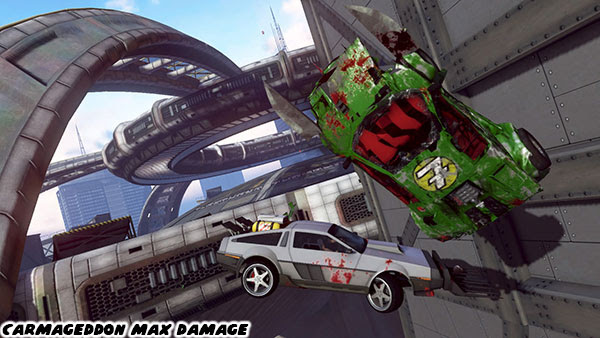
When I got Carmageddon Max Damage my expectations were kind of low. They were pretty much nonexistent. I was thinking that it was going to look, and play as poorly as the reviewers had said. I thought to try it for a little bit, and if it was truly bad then I’d let the franchise go. I played through the PS4 version first, for about two months, then I got the Xbox One version. Of those two the Xbox One was superior, it ran at a faster frame rate, and it had better graphics all around. Of course I understand that the PC version runs much faster, and has the best graphics. But I took it for what it was; this was an attempt for Stainless Games to release a more complete Carmageddon Reincarnation for the home market. In case you enjoyed the original PC games, and have been thinking about picking it up let’s get you caught up. Most of the drivers, and their cars from the original game have returned. Absent are Burly Shirley, Agent Orange, Wanda Lust, OK Stimpson, and the Mech Maniac. Nora Virus represents the Auto Scum gang, she is driving the Razorbill. 

From the Splat Pack we had Rusk in the Degoryun, Mother Trucker and her Rig O’Mortis. Sadly none of the vehicles from Carmageddon II returned. Then there are the new faces; Roman and the futuristic Crazor truck, Twig N. Berries driving the Trope-Kill minivan, Nutkenz and the exotic Snaky Bastard, Ed Lesgar with the sporty KVN Toucan, and the Terrible Twins driving the jet-engine Siamese Dream. Of course you start the game with either Max Damage, or Die Anna in the Eagle, or Hawk. This time around you can freely switch between drivers. Destroying opponents still allows you to unlock their cars. Except for the police APC, which has to be earned by completing all the objectives for each main race. The PS4 version does not feature the angular Tez Eagle (much to my disappointment), or the Iron Hawk, which is sort of the Tez version for Die Anna. Both are in the Xbox One version. Besides that you can see that the latest versions of the main cars have a familiar look to them. They’re not numbered but instead have the “R” badge, I guess it stands for Racing edition, or is it Reincarnated? 

You can also tell that the studio continues the tradition to make each car look distinct. The Eagle being a heavier fighter, with the engine upfront, and the Hawk being more of a mid-engine speed machine. All of the cars were completely redone, but have the familiar paint job, look, and feel of the classics. The details on each ride is obscene. I’ve mentioned the working transmission, and suspension in the previous blogs. But the engines, and interiors are also just as detailed. I'm talking about spinning belts, and spark plug cables! Every car can be pulled apart completely, and of course restored on the fly. The little things really stand out from a physics perspective. At speed both the Eagle, and Hawk (plus a few other cars) have active aerodynamics. That is their tail fins rise up to give them more traction when they’re going fast, and can even act as air brakes to help them slow down. You would think this doesn’t actually cause drag, or affect aerodynamics in the game until you are in the middle of a jump. I discovered that popping open the doors, or activating the plow on Don Dumpsters ride, actually causes the vehicles to slow down, or change direction mid air. That is some fancy programming for sure!

Great physics aside. What actually surprised me at first was listening to the game. As soon as I started playing I had the eeriest sense of deja vu. In fact several stages in the game gave me the feeling that I had travelled back in time. The sounds of the menu, the announcer doing the countdown, saying “checkpoint,” the sounds of the car recovering were all pulled from the very first game. They instantly set the tone for the experience. I think the sound design really works best if you wear good headphones while playing. You can hear the ambient sounds of the stages. The different engine sounds, especially when they hit higher RPM's while using the Turbo, or Hot Rod power up. Even the sounds of tires deflating, the clank of metal treads, versus hard rubber for different rides. The people at Stainless Games made sure that every audible sound told the story alongside the visuals. This was going to be a classic game made brand new. It was not going to be an HD remake of the original. That was more or less what the iOS version was from a few years back. Everything in Max Damage was something different, yet familiar. Anything that was missing from the eyes of die-hard fans would be addressed by the modding community, such as the return of some classic big rigs.

Speaking of sounds, the music for the game was pretty on brand. I actually didn’t pay attention to it for the first month that I played the game. For whatever reason the mixing on the PS4 was terrible. Even when I went into the settings and turned down all the other sounds, and set the music to 100% I couldn’t really get the details of the soundtrack to come through. Eventually I went to YouTube to listen to it. I was blown away by what I heard. I certainly would have enjoyed the game much more if I could have heard it cranking on my speakers. Like the original Carmageddon the songs were mostly metal, and industrial tracks done by two groups; Morgue from Finland, and Maximum Sexy Pigeon from Australia. Big and Clever, Halls of Morgue, Revenge of the Titanic, and the Pig Welder are standout tracks. I enjoyed the music so much I jumped on BandCamp and bought their albums. I paid much more than the dollar or two they were asking for. The musicians certainly deserved some love seeing as how Sony didn’t bother to get them mixed right in the game. Everything sounded much better on the Xbox One, again especially with good headphones.

I found myself driving the first course through Bleak City almost by memory. The layout, buildings, locations, and distinct neighborhoods had all returned. Everything looked a thousand times better than before. Granted the placement of certain buildings was a bit different, but the studio had essentially remastered the stage. They added multiple side streets, and alleys which would be critical in escaping opponents, but certain power up barrels were in the exact same spot in the new game, as they were in the original. Long-time fans should remember which corner the pedestrian zapper power up was in the Bleak City Stadium. It made me appreciate all the details that Stainless was putting into the experience. Having an immersive world was one of the four elements that I consider makes a great game. The sheer variety of architecture really brought Bleak City to life. Pizza shops, restaurants, gas stations, factories, and even adult clubs were all represented. Understandably the limitations for PCs 20+ years ago made it so that cities lacked depth. They were mostly different polygon shapes, with a handful of textures applied to them. It could be easy to get lost looking at the same buildings over, and over. A good developer like Stainless could figure out how to make basic blocks appear like skyscrapers, and entire neighborhoods to race in.

The new Bleak City had a layer of wear that underscored the realism Stainless was shooting for. This was important to help pull audiences into the world of Carmageddon. In other sandbox environments the players could get out of the cars, and interact with the world. We don’t have that luxury in the tournament, but we can still explore. Not that it would make sense to get out of your car in the first place. Stainless was said to have contemplated that at some point during development. That’s great for GTA, but that’s not what this game is about. In order to put drivers in the moment Stainless had to convince them that these worlds were living. The devil was definitely in the details. There were weeds, and crab grass in the parks, which got churned up by tires as you drove over them. There were bags of trash, newspapers, cardboard boxes, plastic bottles, sofas, and appliances dumped in alley ways. Everything seemed destructible, even the cardboard boxes tore down, and folded flat under the cars as they plowed through. Water shot up if you sheared off a fire hydrant, traffic lights, and crossing signs lit up. Cans of soda fell off the hot dog carts when you bumped them. Street signs had unique names. In fact the street lights were different in different neighborhoods. They were Art Deco in the ritzy part of town, and rusty old poles in the industrial part of town. They shorted out if you ran over them, could be broken off, and the bulbs would even shatter when they hit the ground.

Bleak City had a completely different mood depending on what part of the map you were going through. The atmosphere, and visual effects were much better on the Xbox, and PC. With that said I was still happy with the graphics on the PS4. Again, remember that I said that frame rate, and graphics to me were not as important as the control, and game play. Familiar paths, and outlets returned for each stage, but with a ton of new ideas. Working bridges, shipping cranes, and elevators were added to the MagNuChem (sometimes written as Magnachem) Acid Ocean Reprocessing plant. New tunnels, secret paths, and ramps opened up the possibilities for combat, especially with multiplayer matches. Each of the returning locations filled me with a sense of nostalgia, but also with a sense of awe at all of the new material that Stainless had crammed into the world. The studio was very self-aware. They wanted audiences to recognize the callbacks they were doing to the first game. Little details like the name of the gas station (Gasso), the sponsors of the tournament CLANG, MAIM, and VLAD’s speed shop made me appreciate what Stainless had done. In a couple of stages you could actually find the original polygon models for several of the cars. Whether they were frozen in ice, or being window dressing in the 4x4 shop, Stainless never forgot where they came from.

There were many different levels returning for the game, including the arctic, and desert environments. Each filled with tons of new content, and details. The world building was tremendous in the game, as was the stage storytelling. Look for the "At the Mountains of Madness" inspiration in the arctic stage for proof. As for the game play itself. It still felt like Carmageddon. It took me only a moment to get used to the game pad instead of the keyboard. I learned how to fitness the triggers for the gas pedal, and the analog steering was on point. I was able to juggle between different power ups, and activate them on the fly using the shoulder buttons. The cars handled somewhere in between the Splat Pack, and Carmageddon II versions. The physics were improved, and the damage, and collision details were through the roof. If you want to get a sense to how violent the collisions were in this version try playing the game from the driver’s POV. To help get players to explore the maps Stainless put upgrade tokens throughout the stages. It was reminiscent of the hidden upgrades in Carma II. The difference was that you got to choose what you wanted to upgrade with your virtual tokens. Also there were “Smelly Bushes” hidden on the stages as well. These were supposed to be like the pine tree shaped air fresheners you might hang in your car, but of course they took on a sexual overtone in this game. Collecting these helped unlock the different skins for the vehicles. The one thing I didn’t appreciate was that some of the skins, and different wheels, could only be unlocked if you played online multiplayer. I never went online, and could imagine how frustrating it was for players that didn’t even have a decent internet connection.

Carmageddon Max Damage had already checked off the four criteria I had for a favorite game. It gave me an immersive world. The control was easy to use. The gameplay was original, and the music was icing on the cake. I hadn’t even mentioned the obscene amount of damage you could do to the pedestrians in the game. Stainless was in rare form as they set out to offend everyone equally. There were fat people, elderly people, athletic, skinny, homeless, and regular citizens of every shade. There were people riding bikes, or putting around on personal mobility scooters. There were even people using wheelchairs. Before you ask, yes, you could knock a person out of their wheelchair, and they would crawl on their arms trying to get away from you. You could also blow off their limbs, and watch them wriggle on the ground before bleeding to death. If the thought of that offends you then I shouldn’t bring up the penguins, coyotes, bears, sheep, and other animals that you could also do this too. The only thing off limits were kids. If there’s one thing that GTA, and Carmageddon had in common it was the lack of kids. I’m paraphrasing the President of Rockstar games when he said “kids should be in school during the daytime, and at home during the night. They should never be found wandering the streets.”

Pedestrians ran for their lives. Those that avoided getting hit were often soaked in the blood of those not as lucky. Carma now allowed you to commit war crimes as you could use poison gas against pedestrians. If you ran over ones having a breakdown, or were injured, you'd get a Mercy Killing bonus. It was truly compassionate for Stainless to do so. There was no kink shaming in the game either, as some people walked around in their lingerie, or danced with cows at the the strip club “Saggy Maggies.” Everybody had finally become an equal target in the universe. Although I don't remember seeing any nuns in the PS4 version. I did see them in the Xbox One. If this game had two steadfast rules those were; it was made in poor taste, and it was never meant for kids. To stick to its controversial reputation in 2016 the studio released the US Election Nightmare Special Edition. Which turned the pedestrians into Donald Trump, or Hilary Clinton. Each exploded in pools of either red blood, or blue blood depending on party affiliation. Even the Brits knew that the US was dealing with the least popular candidates in our history. Many of us would rather run them both over than let them run the country. 

The lessons learned from the first three games were visible in Max Damage. Capturing the look, and feel of the original Carmageddon was of course the goal. It was dark, futuristic, funny, naughty, and filled with mayhem. The studio just had to update the look, features, and control to match modern games. I believe that was accomplished for the most part in Reincarnation. From the Splat Pack they learned that multiplayer stages should be compact, have multiple escape routes, and be filled with lots of random power ups, those were in Max Damage. Also from the Splat Pack we saw that exotic, or even occult details on the stages, helped bring an element of the supernatural into this science fiction world. From Carmageddon II Stainless learned that cars could actually be too big. The rides had to be able to explore just about every inch of the stages. The Big Dump, and the Loggerhead from Carma II (as awesome as they were) would have had problems accessing many areas in Max Damage. There were still callouts to those massive rides in a couple of stages. The Rig O’Mortis diesel truck, towing a trailer was the measuring stick for every tight corner, and blind alley. Anything bigger than that would have broken the experience.

The studio also learned from Carma II that you could overpower your car, and kill the challenge. So they scaled back the upgrade purchases from 90 total slots to 15. It was much more like the original. To keep cars from being OP the studio put a cap in the Armor, Power, and Offense categories. They allowed for a maximum of 12 points to be spent on the cars, even though there were 5 slots available in each category. If you wanted the best engine, or armor, or offense, then you had to sacrifice points in a different slot. Not only that but each car required you to spend upgrade tokens on it. The upgrades didn’t transfer just because you stole a new car. Your prize money also didn’t count towards upgrades. It could however be used to purchase an in-game power up, and assign one of four d-pad buttons for easy access. There was a lot of replaying the stages, and seeking out hidden items to help earn the best parts for each ride. All of these things helped increase the replay value.

Stainless eliminated the mission objectives from Carma II as well. Instead each level was the host to a different type of game. Some had you chasing down certain pedestrians. Some had you going after checkpoints, destroying opponents, or completing laps first. The difficulty could be challenging at times, with opponents, and cops smashing you from all directions. It could be hard to get away, but that was also the reality of many fights in the original. I didn’t find any of the stages too difficult to complete on the normal setting. It had just the right challenge for long-time fans. I had previously mentioned the APC, and Subpressor were in the game. I’m not sure how the Subpressor control got past QA testing. or whether it was made intentionally hard to stop. The car skids like it’s on ice. It is impossible to stop on a dime, or do handbrake turns with. Even then it’s still fun to drive. The best surprise I had was learning that there were more than two types of police cars to unlock. A tiny little car known as the CU:NT (Compact Unit: Nil Threat) was added to the police arsenal. The car was about the size of a personal mobility scooter, and designed for community liaisons. It was included because Nobby was loaned a Smart car while his actual car was in the shop. He hated it so much that he insisted something as useless be added so that every player could have fun kicking it around. Using the car in the game was extremely difficult, and yet also fun. It was the equivalent of trying to beat a first person shooting game while using only a knife. 

The other vehicle was the BFG of the series. The Super Suppressor was absolutely massive. Imagine a rolling roadblock, towing a tank trailer! It added another strong female to the lineup, Agent Debbie O’Nuts. The first time I ran across it I had the same reaction to it as I did the Suppressor some 20+ years ago. I thought “what the hell is that?” before getting flattened by it. As with the original game, you couldn’t access the heaviest hitters until the final stages of the game. Even then beating them was a challenge all to itself. Carmageddon Max Damage was a fantastic game, but it was not without its perceived flaws. We will talk about those in the next, and final entry in this series. I hope to see you back for that. If you would like to sponsor me please visit my Patreon page and consider donating each month, even as little as $1 would help make better blogs and even podcasts!

follow the Street Writer on Patreon!

Wednesday, January 23, 2019

The Marvel Contest of Champions Legacy, part 1...


Thanks for hanging in there friends! The first blog of 2019 is to talk about an old fighting game, but not one from Capcom. In fact it's not one from any Japanese studio! This is a mobile game that is celebrating 4 years in business. That means it is a seasoned veteran by mobile standards. I don't talk very much about downloadable games on this site. In fact the last time that I did it was to talk about the Warhammer 40,000 game Freeblade. Without hyperbole I called it one of the best mobile games ever made. Freeblade was a great on rails shooter, but that was giant robots and monsters. The game I'm talking about today is an actual fighting game. Marvel Contest of Champions by Kabam is a fantastic game especially if you are a huge fan of the Marvel universe like me. I decided to write about the game thanks to the recently published book; Marvel Contest of Champions The Art of the Battlerelam by Paul Davies. The large hardcover by Titan Books, is the same publisher that brought us the gorgeous Spider-Man: Into the Spider-Verse: The Art of the Movie by Ramin Zahed. If you are a comic book fan then you owe it to yourself to get both books, like right now, before you even finish reading the rest of this blog.


When the Contest of Champions art book came it out and made me appreciate how far the comic, mobile, and fighting game genre has come in the past few years. I got my first preview of the game years ago in Anaheim during the D23 Convention, which is like the Comic Con for the various Disney properties. I was skeptical that any mobile game would do the Marvel universe justice. Comic book fans had been burned in the past by sloppy adaptations. I kept an eye on the game and as it grew and garnered hundreds of millions of players I learned it was no accident. As I was going through the book it made me realize that we should be celebrating the renaissance of comic book games, films, animated projects, and especially the creators bringing them to life. That's what got me to start writing again.

The game itself borrows a name from a three-run issue series from 1982. In it the series the Elders of the Universe, immortal aliens that specialized in a certain pursuit had a contest of sorts. Well, to be fair the Elders could die if they were gravely injured by another powerful being. In the comic book series the Marvel heroes and villains did battle as part of a cosmic game. En Dwi Gast, the Elder better known as The Grandmaster, challenged Death to a contest so he could win back the life of his brother Taneleer Tivan, the Elder known as the Collector. The two Elders were seen in the Marvel live action features, respectively played by Jeff Goldblum in Thor Ragnarok and Benicio del Toro in the Guardians of the Galaxy. Death accepted the challenge and each side chose warriors to battle. Comic books have always enjoyed a hierarchy of characters that existed beyond the limits of normal humans. These characters rarely popped up on Earth but instead inhabited the cosmos. Some of the most powerful figures could bend reality at will and even destroy entire galaxies if they wanted. Having these characters exist in Marvel canon allowed writers the freedom to do the impossible. They could capture entire rosters of heroes and raise the stakes over a traditional comic book story arc.


Movie fans might not realize it, but crossovers didn't happen as often as they did in the Avengers films. Crossover events used to be rare for big publishers like Marvel and also for rival publisher DC. For the most part the stars of the comic books had their own story arcs, relationships and adventures. They sometimes shared a city like New York. This was the base for Spider-Man, The Fantastic Four, Daredevil, and Dr. Strange. But these heroes didn't always cross paths. They each had to deal with their own problems and clean up their own part of the Big Apple. Often the enemies mirrored the heroes in their own way. The Fantastic Four would sometimes face a team of rivals, like the U-Foes or the Inhumans. Or it would take their combined efforts to stop one super-powered being like Dr. Doom. Daredevil would fight martial arts experts like Bullseye and Elektra, meanwhile Dr. Strange fought mystical opponents like Baron Mordo and Dormammu. The enemies were always at the appropriate level of challenge for the heroes. Despite his amazing abilities Spider-Man would be powerless against magic, but by the same token Dr. Strange would never be able to take a punch in a street fight. Some of the most unique figures in the Marvel universe have rarely appeared outside of the comics. When they did they were usually only recognized by fans of that particular character. For example I was happy to see the gamma-irradiated Leader and Madman in the Incredible Hulk video game. Their looks and abilities were unique but I could understand why some game players had no idea who they were.


The Hulk was famous for getting into fistfights with equally strong opponents but every so often he would sometimes pity his opponents and walk away. In some cases he would figure out their motive and actually outwit them. The relationships between the heroes and villains would change through the years. Even for those as timeless as the Leader or Madman. Like any great storytelling medium it was the growth of the character that kept audiences coming back. Sometimes the monthly issues would be a chance to develop a certain character, to see the world through their unique perspective. The X-Men, a team of mutants with special abilities debuted in 1963. It was a turbulent era in US history. The plight of the mutants in the Marvel universe paralleled the fight for civil rights in the US. While Spider-Man and The Fantastic Four were celebrated in New York, the mutants were feared and despised simply for being born different. It didn't matter when they fought for the safety and security of everyone. This lead to the radicalization of some mutants as well, showing two sides to the struggle. The X-Men had appeared in a number of brilliant multi-part story arcs, like The Dark Phoenix Saga (1980), Days of Future Past (1981), Mutant Massacre (1986), Fall of the Mutants (1988), Inferno (1989), Age of Apocalypse (1995). Many of these stories had now been adapted to animated and live action features.


The collective Marvel universe had very rarely crossed paths despite all of these story arcs. The Hulk would show up every now and then to take on a very strong mutant in the X-Men, and Ben Grimm (AKA The Thing) would help the friendly neighborhood Spider-Man deal with a crowd of bad guys. These crossovers were few and far between. A reason for this was because the writers and editors at Marvel needed to know months in advance how the stories would progress. They needed to hire artists, inkers and letterers to complete the panels before publishing. It would have broken continuity if a character appeared in one title when they were supposed to be dead in another. The three-issue Contest of Champions sparked the idea explored in the mobile game. A more influential battle royale could be attributed to the multi-part Marvel Super Heroes Secret Wars. The series from 1984 was actually created to help push a line of toys. Kids responded to crossovers, and the word secret during marketing tests. Thus the original arc had to fit in all of the big names and have them playing in the same sandbox in order to appeal to children. In the story an omniscient being known as the Beyonder summoned the great number of characters to fight for his entertainment. They didn't fight on Earth but instead on a makeshift dimension where anything went. Three decades later it was revisited during the 2015 run of the Secret Wars. This time however instead of featuring the characters from one Marvel universe, it expanded the scope to a multi-dimensional crossover. It featured the traditional heroes but also those from alternate dimensions, including the Ultimate (which inspired the live-action movies), 2099, Age of Apocalypse, House of M, and other arcs known to fans.


The stakes in the Secret Wars were pretty high. The Beyonder could shape reality to his will, drop teams of heroes and villains anywhere he wanted, and all of the cosmic forces seemed powerless to stop him. It was a scary opponent for our favorite heroes to face up to, but it was not the literal Earth-shattering event that would be most remembered. For comic book fans I would argue that the most influential crossover event in the '80s was not from Marvel but rather from DC Comics. We shall explore this series in the next blog entry. As always if you enjoyed this blog and would like to sponsor me please visit my Patreon page and consider donating each month, even as little as $1 would help make better blogs and even podcasts!

 follow the Street Writer on Patreon!

Thursday, December 17, 2015

Freeblade, one of the best mobile games ever made...


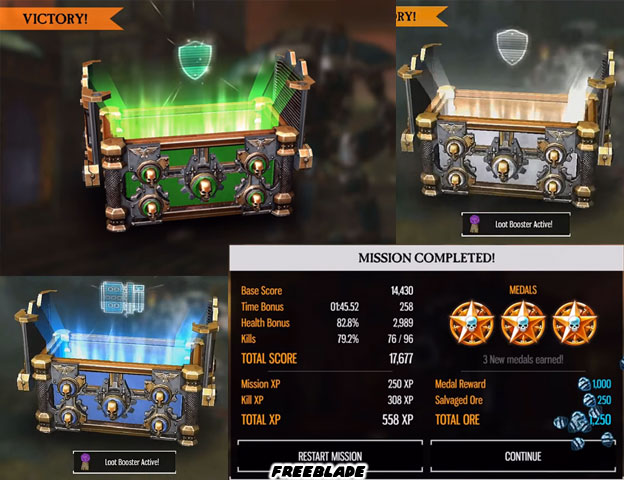
I want to do a quick review on the new iOS game Freeblade by Pixeltoys. The game was one of the featured titles on the iTunes Store and an Editor's Choice when it debuted in late 2015. The reviews so far have been very positive, earning a 4 1/2 star average on the iTunes Store from thousands of players. Why isn't it a perfect 5-star game? The answer is simple, the game entices you to receive bonuses if you sit through a 30 second commercial for other games. Which is nothing to complain about given that this is a free to download and free to play title. From a design, control and execution perspective the game itself deserves 5 stars but I would argue it is being penalized by the pay-to-play market. Those that buy the in-game features get to extend their play and enjoy the title in more ways. Microtransactions are the bane of many game players but they are the necessary evil of the mobile market. Let's face it, if the game was priced at $24.99 on the iTunes Store with everything unlocked from then nobody would buy it because there are thousands of free games available. It's a strange dilemma for developers to be in. After playing it however I'd say that at $49.99 the game would be a bargain. Why is that? Freeblade looks as good and plays as good (if not better!) than some of the best AAA titles you would find on the portable consoles. Sony and Nintendo, I'm looking right at you! The cheap and mindless games about birds and candy may be more popular with audiences, and may make more money for the developers, however the era of the heavyweight mobile games has officially arrived.


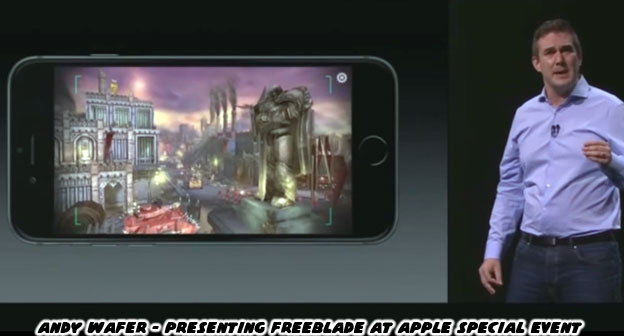
I wasn't sold when it was first announced. I love the universe that Games Workshop had created but most of their video games left much to be desired. But then something happened this fall. At an Apple Special Event the details on the new iPhone 6 and new iPad were announced. In order to highlight the leap in performance that it had over the previous models Apple had a few developers demonstrate some of the features using their software. One of the last presenters was Andy Wafer the CEO and Co-Founder of Pixel Toys. He used Freeblade to demonstrate the new graphics processor on the iPhone. It was almost twice as fast as the previous generation and capable of presenting graphics with greater fidelity and with far more effects than any previous mobile device. Not only that the new touch scheme meant that the control was much tighter and allowed for advances in the way the game controlled and played. The presentation almost won me over but there was some doubt in my mind. Would I really have to get a new phone in order to enjoy the game? After all the 5th generation of devices, including my iPod Touch, had some memorable games and were capable of displaying some amazing graphics as well. Have you seen Ridge Racer Slipstream for example?


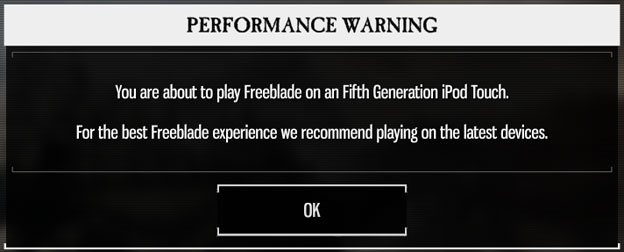
I downloaded the game on the iPod and right away I was warned that for best performance I needed to upgrade my hardware. I pressed OK and was presented with the opening story for the game but before it would ever load the first level the game would crash. I tried getting to run a few times. Tried resetting the iPod and uninstalling and reinstalling the game but it didn't work. So I had my coworker download the game on his iPhone 6 so I could test it out. Only then could I see why Freeblade required new hardware. The leap between gameplay and visuals on the handheld was like the leap from the Playstation 2 to the Playstation 4 consoles. Yes the PS2 had some incredible award-winning games, but the hardware was dated and incapable of presenting the next generation of visuals. As I was going through Freeblade I had an epiphany. Mobile games would only get better from here. If the console manufacturers didn't watch out they would become the second option for premium gaming experiences.


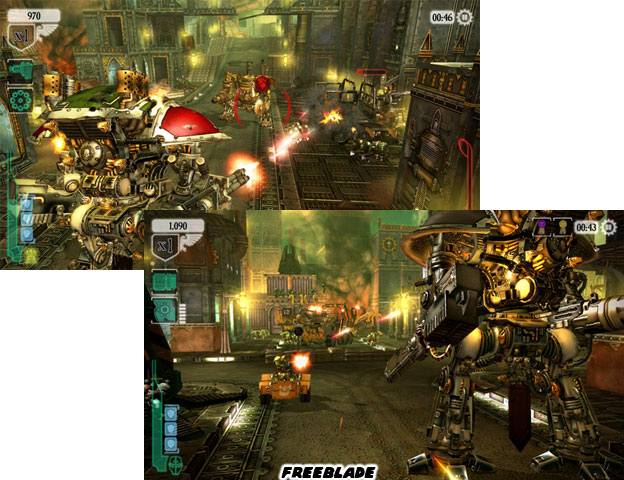
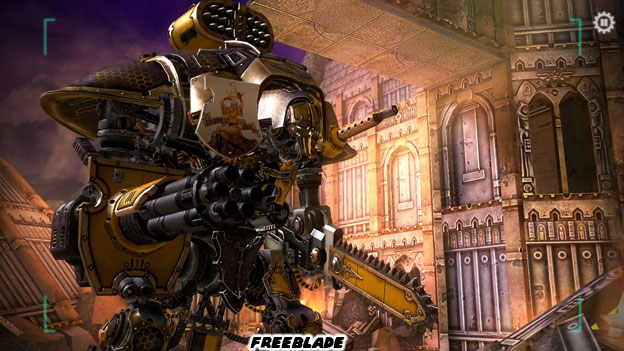
So what made Freeblade so great? If you are not familiar with Warhammer 40,000, the universe created by Games Workshop, it didn't really matter. The setup was relatively simple. It was the far future and you were on a distant planet. You were piloting a fully armed and fully armored 50-foot tall robot, known as an Imperial Knight against alien invaders. By touching the screen you got to shoot at just about anything that moved using your primary or secondary weapons. Freeblade took full advantage of the new touch features of the iOS devices. These devices recognized and responded to finger pressure instead of just finger contact. The devices and game also supported multi-finger gestures. Freeblade advanced the robot automatically during the fighting, all you had to do was aim and shoot. Essentially you were playing a mobile version of the classic arcade rail-shooter.


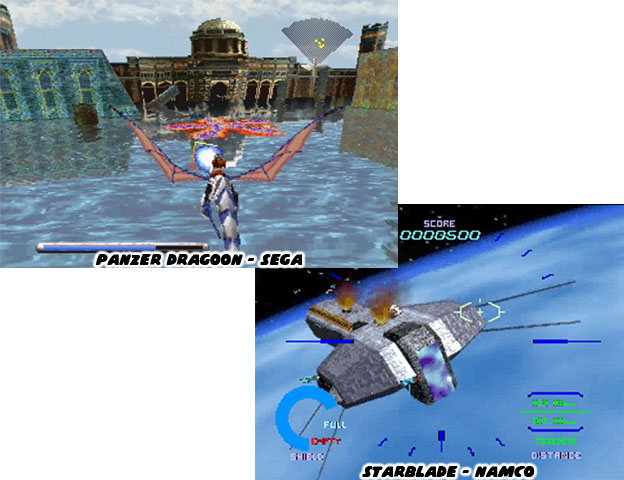
Pixel Toys developed a great game that brought back memories of some classic experiences. I wondered if the long-time arcade publishers were paying attention. Freeblade was doing to mobile devices what Panzer Dragoon had done for home consoles or Starblade had done for the arcade. Both games had cult-like followings. Sega and Namco, the respective publishers of those games hadn't really done much with the rail shooter in years. I could only imagine how great it would be if Sega developed a new Panzer Dragoon or if Namco released a new Starblade using the same mechanics of Freeblade. Yet I cannot think of a rail shooter that ever featured gigantic robot combat! In this way Freeblade stands apart from the other titles.


All of the hooks that mobile games depended on to keep players engaged were in Freeblade. Players could unlock secrets and upgrades as they went from battle to battle. They were rewarded for their accuracy, secrets found and point totals. They could apply some of these rewards by upgrading weapons, adding new weapons, and strengthening their armor. The player was encouraged to continue fighting through the level system. They gained experience based on how well they performed in each mission and what secrets they unlocked. Players could not only customize their weapons, they could even swap out colors to customize their robot. There were daily challenges which could make "grinding" or trying to level up your robot much more rewarding. Players did not have to spend real money in order to gain these rewards or upgrades. They simply had to be patient between sessions.


The visuals on the game were amazing. Among the best portable graphics you would ever see. The touch controls were responsive and become intuitive fairly quickly. The learning curve was relatively short, which allowed you to focus on the game itself. You had the ability to track and shoot you opponents using a gigantic machine gun, but beware of overheating! You could also fire a cannon blast or launch a barrage of missile to punch a hole through stubborn armor, roadblocks or other giant robots. Opponents emerged from every street corner and alley, in some cases they dropped in from space, rode by on motorcycles or flew overhead in jets. Sometimes the opponents were equally massive machines. When up close to other giant robots the game entered a quick-time event or melee mode. Ranged weapons were disabled and it was up to the player to use the Imperial Knight's enormous chainsaw(!) to chop an opponent down. The game was not all about offense however. The Imperial Knight was equipped with an energy shield and players could actually deflect incoming heavy fire if they responded quickly enough to the on screen cues. If the game was only graphics without the gameplay then fans would have voiced their disapproval right away. But Pixel Toys managed to make a game that looked great and played fantastic. The game only continued to grow and gain a new following on game forums and review sites. This could only be good news for the future of Pixel Toys. They had created a real winner and deserved some kudos. They were hopefully working on new content for this game as well. If you have a new iPhone or iPad and are looking for a great game then I couldn't recommend a better title. Download Freeblade now and tell me what you think. As always if you enjoyed this blog and would like to sponsor me please visit my Patreon page and consider donating each month, even as little as $1 would help make better blogs and even podcasts!