Showing posts with label game. Show all posts

Friday, July 21, 2023

OutRun, the coast-to-coast legend - Originally published on 1UP - April 13, 2009

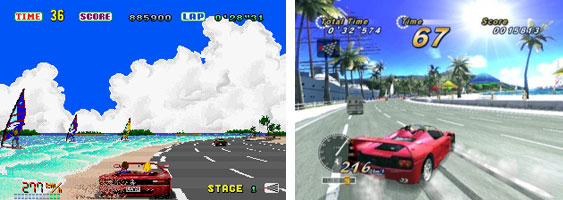
OutRun is an arcade legend, on par with the biggest names I've featured yet on the blog, and possibly the biggest title I'll be naming in the series. It was an easily accessible racing game not built for the sim community. It was an arcade racer through and through, whose bright graphics, multiple tracks and questionable physics appealed to everyone. My favorite version of the game was not the original title, but it's spiritual successor Outrunners.

Both games more or less played the same. You were driving a supercar in a trans-global race. This was one of the first racers to use gradations in the game rather than have tracks be completely flat. Drivers would take hills and not be able to see the path ahead, that level of uncertainty was exhilarating especially while doing well over 100 MPH. The drifting was subtle in OutRun but full out in Outrunners. Cars were large and cartoonish and unlike the other racing games of the time were not hung up on realism. It was the fantasy aspect that I think pulled most gamers to this title. If you were traveling top speed in OutRun and ran into a wall then the driver and passenger would get launched out of the car as it tumbled and land back inside by unseen forces. Unlike Pole Position where the slightest bump would cause your car to explode the racing featured in OutRun was more about the experience of driving and having a good time. Cars could jostle for position and trade paint without fear of game-ending explosions.

The timed courses were laid out with multiple paths. At the end of each checkpoint you were presented with a fork in the road. This opened up the racing experience in all sorts of ways. Players were no longer limited to replay the same tracks over and over as they could experiment and go for bigger scores and new experiences on each play through. Given a choice was a rare commodity in racing. The driving experience had become an unspoken narrative. Even though there was never a break in the action visual clues let us know which part of the world the stage was set in. Caricatured parts of New York, Paris and Egypt all popped up. It was a celebration of the international racing brotherhood. Yu Suzuki designed the original experience around the Ferrari Testarossa. It was an exotic car that lent itself to this type of experience. The name Ferrari alone conjures up images of excess, luxury and horsepower, it was made downright mythological by Suzuki. However as much as I liked cars I was never fond of Suzuki's obsession with the Ferrari. I felt that the world of cars was too big to be hung up on only one ride.

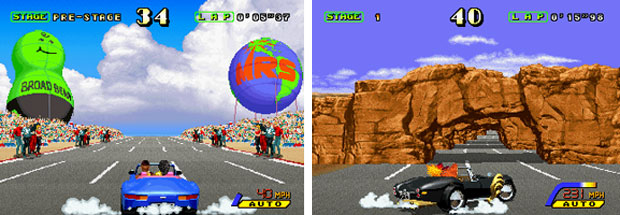
Outrunners was very much a second-coming of OutRun. The graphics of the '92 release were far superior to the original from '86. This game even featured the familiar Testarossa and her driver and passenger. Joining them were all sorts of other drivers and cars in the competition, each designed for a certain type of car fan. From an exotic Shelby Cobra-like car to a Volkswagen Beetle and even a big pink Cadillac. This game simply expanded on all of the things that made the original OutRun so much fun. However Outrunners was developed by Sega's AM1, not Suzuki's AM2. To many it could not compare to the original. Say what they will but I loved it.

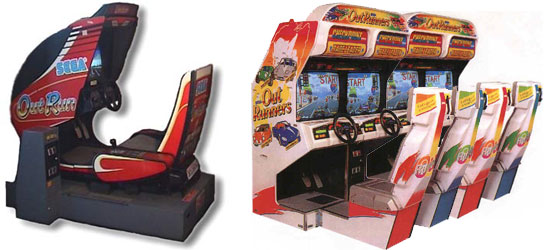
Outrunners was beautiful. The cars each handled slightly differently, as would be expected. Discovering the nuances of each ride was what kept me coming back. As was the breakneck speed of the title. Sliding the car completely sideway through a series of stone archways, "threading the needle" in the most awesome sense of the word or dipping past the checkpoint just ahead of my brothers and friends as we played this in the arcade. This game was responsible for plenty of great memories in the 90's. The more that played on the linked cabinets the better. The details of a radio built into each cabinet was nice. Each station played an updated version of the classic OutRun music and players were free to switch stations on the fly. The titles would scroll by the LCD of the dashboard. How many arcade games ever went that extra mile?

The official sequel wouldn't come out until 2003. By the time of OutRun 2 AM2 had grown by leaps and bounds, learning everything they could from their polygon legacy. It was a fun game that returned the series to its roots. All of the cars in the game were Ferraris and the graphics were stunning. I couldn't help but imagine that this was the type of experience that Suzuki had dreamed about giving arcade-goers a generation ago, now he finally had arcade machines and consoles with enough processing power to deliver it. As it turned out the Xbox title was not the last we would see of this classic racer. Sega is putting their finishing touches on OutRun Online Arcade. Fans around the world can't wait to relive all those great memories through the classic experience and even updated versions of their favorite OutRun songs.

While OutRun wasn't my favorite Sega racer ever it was still pretty damn good. There was a studio out there to make an arcade game that was every bit as memorable as the best Sega racers, including OutRun. However their name wasn't Namco and this studio was never known for making racers at all. Come back next time to see what I'm talking about.

Were you a fan of OutRun? If so I'd like to hear about it. Let me know in the comments section please. As always if you would like to sponsor me please visit my Patreon page and consider donating each month, even as little as $1 would help make better blogs and even podcasts!
follow the Street Writer on Patreon!

Friday, April 22, 2022

Designing a sequel to 720°, part 3...

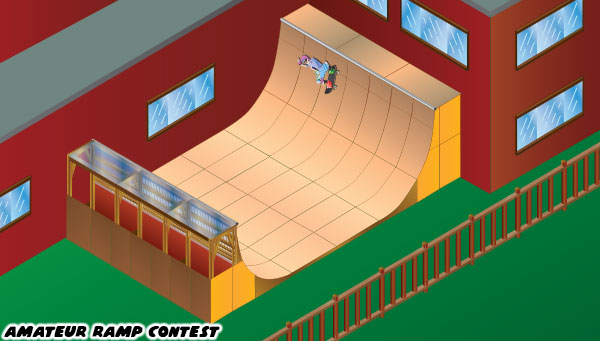
In the previous blogs I talked up how Skate City would be expanded, and feature objectives, and secrets. Also I talked a little bit about how the character can be visually customized, and how they would earn experience through the game. The character becomes better at performing tricks the more they go through the city, as well as compete. I said previously that the slalom contest would be replaced with street, and park contests. The other contests from 720° would return, but modified as well. At first glimpse fans of the original would think that the ramp contest was exactly the same as the first 720°. At least as an Amateur the first time you are invited to compete in ramp it is the original design.

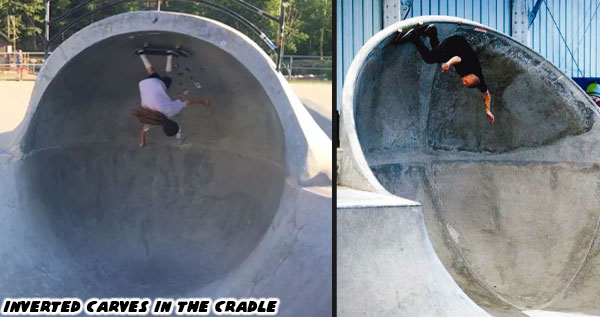
The vert engine underneath the game should be completely redone. Players can now pump the transitions in order to build speed. On vert skaters are going too fast to push with their back foot, so what they do is either drop, or raise their body weight on transitions in order to build speed. It’s similar to kicking your legs out, and bringing them back in while riding a swing. Pumping was a feature of the ramp, and high air contest in Skate or Die. Not many people realize that there was an animation in the original 720° that had the character pump the transitions as well. Being able to pump is essential not only for big airs, but also to defy gravity in skateparks. Very good skaters can exploit the lines in a park, and use them to go fast enough to get inverted in full pipes, and cradles. Being able to do these things consistently would translate to higher scores in competition.

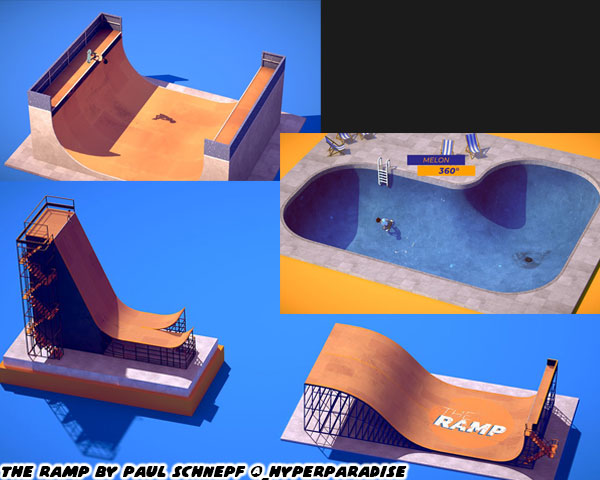
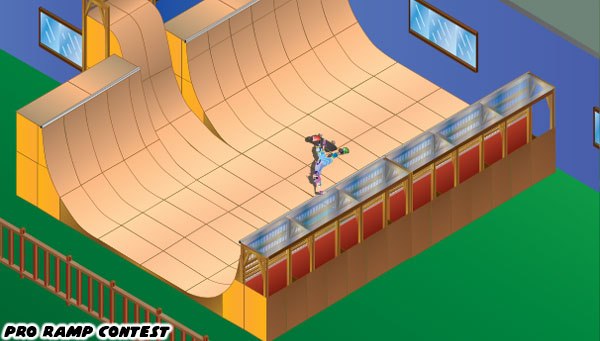
The best modern skate game to feature the pumping mechanic is the indy hit The Ramp by Paul Schnepf (@_hyperparadise). The Ramp is in an isometric view, just like 720°, and is very close to how I imagine my sequel would appear. It is an exceptional game, but I would still adjust the control, animation, and mechanics if it were to be the engine behind the 720° sequel. In The Ramp it is very easy to go off the side of the transition, especially the faster you go. The same is true for 720°. I would have the game engine “guide” players from flying off the ramp by nudging them to go straight up, and down if your character is right on the edge of the ramp. Yes the player can still shoot off the ramp if they want, but most would appreciate the nudge in the right direction so they don't lose a high score run.

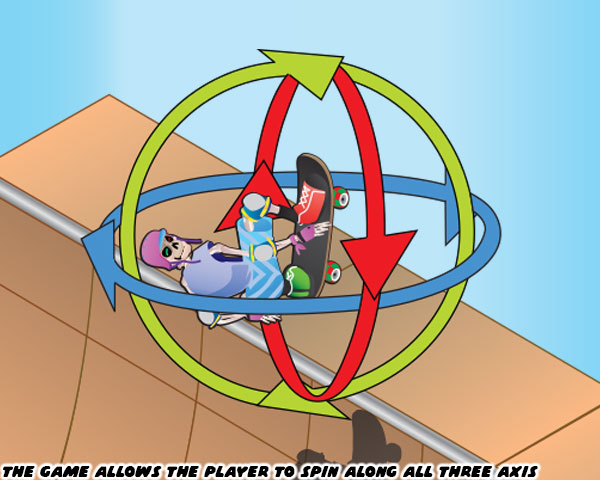
The other thing that I would add to the control scheme is the ability to rotate along all three axis (X, Y, Z). This was something that I had been pushing for Neversoft to do for years in the THPS series. The vast majority of skate games allow your character to rotate along one plane, this is the traditional frontside, or backside spin. Some games might have a special trick that a character can perform like a front flip, or a backflip. While the character is doing in this animation they cannot rotate on any other plane. A few skate games came close to allowing the full freedom of flipping, or rotating on more than one axis. Tony Hawk’s Downhill Jam, developed by Toys for Bob in 2006, allowed you to double tap a direction, and have the character flip along that axis. The animations were way over-the-top, which worked well in the context of the game. But 720° was closer to real vert tricks. Animations that looked too absurd would break the consistency of the engine.

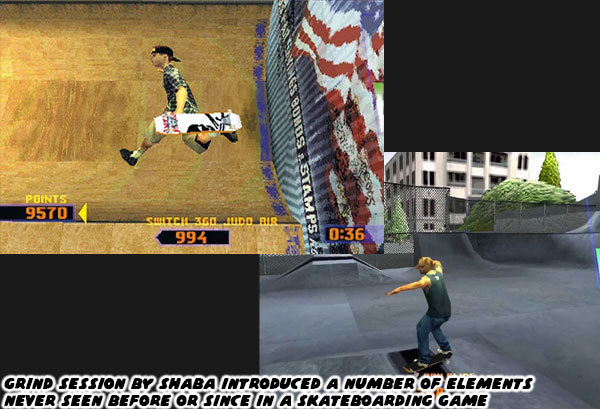
The one game that got closest to performing these advanced tricks the way I imagine it was Grind Session by Shaba games. It debuted in March of 2000. After the original THPS, and before THPS2 was released. The game was very well done, it improved in many ways over the Neversoft hit. It introduced manuals, nose manuals, and no complies to the flatland trick library. It also allowed players to flip their board into a lip trick, which no game since has managed to accomplish. In the animation department players could string vert tricks back-to-back with seamless animation. In most skate games, including THPS 1+2, if you perform a grab trick, then another, the game engine competes the animation cycle for one trick before moving to the next one. In Grind Session the animation on the body position, hands, and feet would flow from trick to trick in one fluid motion. None of the animations would reset to the default position in between.

It was staggering how much Shaba was able to make certain skateboarding tricks work in a game format before Neversoft. I stopped calling it Grind Session, and started calling it THPS 1.5. I wasn’t the only one that saw value in what they did. The studio was bought up by Activision, and they helped port THPS3 to the Playstation, Tony Hawk’s Underground 2: Remix to the PSP, and Tony Hawk’s Project 8 to the PS2, and Xbox. Grind Session’s biggest contribution to skating engines was what they did with rotations. Some characters could perform a front flip, or back flip. The characters switched hands depending on if they were doing a front flip (Weddle grab), or back flip (Indy grab). So that they were accurate to the actual trick. While doing the flip you could actually rotate frontside or backside as well. This made the game that much more realistic, while not losing the ease of play.

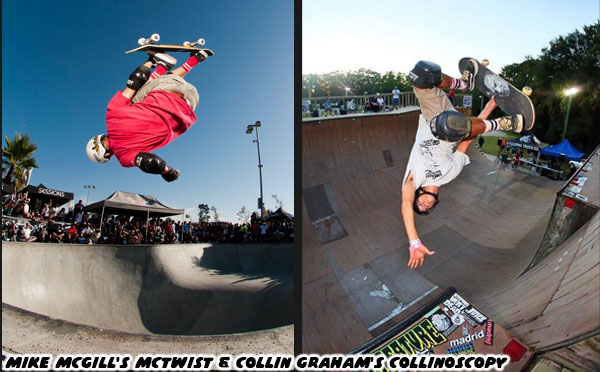
You may not think that inverted spins, and flips are really possible on skateboards, but they have existed since the late ‘70s. At first they were used on lip tricks. Moves like the Elguerial, Unit, Miller Flip, and Phillips 66 were inverts that required the skater to spin, flip, and push off the coping at the same time. Then there were the aerial inversions. Skaters at that time were having difficulty figuring out how to spin 540° without losing the board. Mike McGill saw Fred Blood, a roller skater, flip into his spins, and that’s how he got the idea for the McTwist, or an inverted 540°. If you broke down the trick into its basic elements it was a backside, front flip, Weddle grab 540°. Whereas a frontside, back flip, Indy grab 540° was known as a Rodeo Flip. Skaters have performed all manner of off-axis flips, and spins for decades. It should be possible to do them in the 720° sequel. They should not be easy to perform. Rotating the front flip, or back flip is slower than a frontside, or backside spin. So a Novice, or Am wouldn’t be able to land those tricks with any consistency. When a character has the stats of a Pro then they finally have the ability land them cleanly. When a character has the stats of a Legend then they can spin, and flip with almost any grab combination, and land them with more frequency.

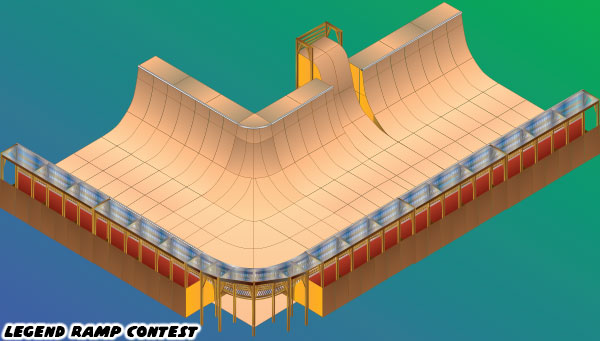
Ramp competitions are not necessarily all the same in my sequel. I mentioned that the size, and obstacles featured in street, and park contests depended on whether you were an Am, Pro, or Legend. Amateurs had the smallest courses, Pros had more space, and Legends had the biggest, and most complex courses. The same rules applied to ramp contests as well. The original 720° ramp was very simple, in my version I said it was designated for Ams. The Pro ramp has more transitions, perhaps a channel, or spine. Legend ramps are massive, they may have a hip, corner, or extension. Winning these contests require you to make full use of the ramp, while performing aerials, grinds, spin, and flip tricks.

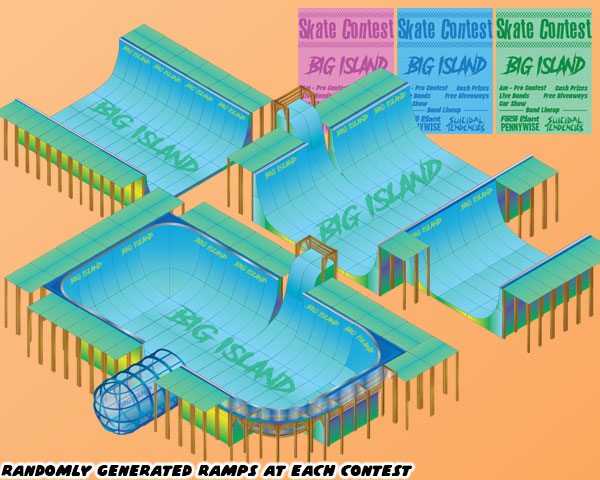
The biggest highlight of the 720° sequel is that contests are completely randomized. I don’t mean that you end up in an Am, Pro, or Legend contest randomly, but instead that the layout, transitions, rails, and roll-ins are randomly placed. You will never end up skating the same ramp twice. This applies to park, street, or other contests. Contests also take place in different towns, so the layout, and colors of the obstacles are unique compared to those featured in Skate City. Imagine a fictional contest taking place in the South Pacific called Big Island. The player gets a hint to the location from a colorful flyer while the stage loads, then they see the park. The ramps have colors, and stickers unique to it. Each time they go back to it the ramp is completely different, yet familiar at the same time. Every contest in the game observes the same rules. Imagine how you would feel if your favorite game changed a little bit each time you played it. The game, like the art of skateboarding, should never become stale.

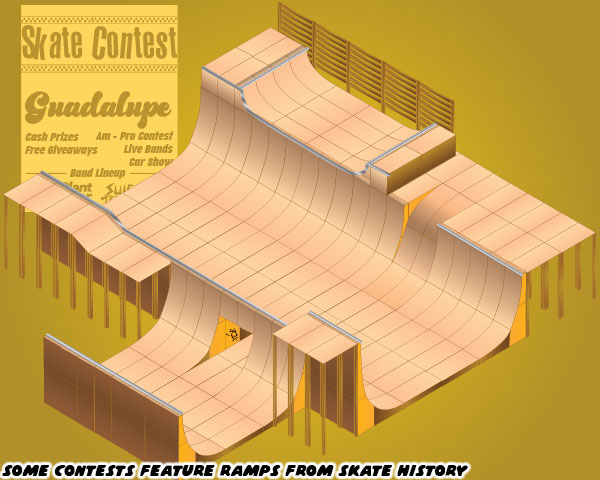
Every now, and then a ramp from skate history might pop up. For example, once, a long time ago there was a ramp in the town of Guadalupe, located between two junkyards. It was created by a legendary skater Won Ton “Animal” Chin. Long-time skate fans would recognize it from the Powell-Peralta video the Search for Animal Chin. New fans would just know that there are no random ramps that are as unique. There are a few of these ramps from the past that might have only been used for a contest, or two before being torn down by vandals, or even angry city councils. I’m on the fence as to whether or not you could save, and revisit those ramps whenever you want. Also I probably wouldn’t put in a build-a-park editor, as the game should still feel like an arcade experience.

Having the contest stages constantly evolve is possibly the most important thing the game would introduce to the genre. It goes far beyond waiting for DLC content, as the game creates its own new challenges. We certainly have the technology, and talent to make it happen. What I would do with the remaining 720° contests might be more exciting to audiences. I will talk about those in the next blog. I hope to see you back for those. Also, what do you think of my sequel idea so far? Would you play this game? If you would like to sponsor me please visit my Patreon page and consider donating each month, even as little as $1 would help make better blogs and even podcasts!

follow the Street Writer on Patreon!

Friday, June 25, 2021

My favorite games of all time, the story of Carmageddon part 11...

When I got Carmageddon Max Damage my expectations were kind of low. They were pretty much nonexistent. I was thinking that it was going to look, and play as poorly as the reviewers had said. I thought to try it for a little bit, and if it was truly bad then I’d let the franchise go. I played through the PS4 version first, for about two months, then I got the Xbox One version. Of those two the Xbox One was superior, it ran at a faster frame rate, and it had better graphics all around. Of course I understand that the PC version runs much faster, and has the best graphics. But I took it for what it was; this was an attempt for Stainless Games to release a more complete Carmageddon Reincarnation for the home market. In case you enjoyed the original PC games, and have been thinking about picking it up let’s get you caught up. Most of the drivers, and their cars from the original game have returned. Absent are Burly Shirley, Agent Orange, Wanda Lust, OK Stimpson, and the Mech Maniac. Nora Virus represents the Auto Scum gang, she is driving the Razorbill. 

From the Splat Pack we had Rusk in the Degoryun, Mother Trucker and her Rig O’Mortis. Sadly none of the vehicles from Carmageddon II returned. Then there are the new faces; Roman and the futuristic Crazor truck, Twig N. Berries driving the Trope-Kill minivan, Nutkenz and the exotic Snaky Bastard, Ed Lesgar with the sporty KVN Toucan, and the Terrible Twins driving the jet-engine Siamese Dream. Of course you start the game with either Max Damage, or Die Anna in the Eagle, or Hawk. This time around you can freely switch between drivers. Destroying opponents still allows you to unlock their cars. Except for the police APC, which has to be earned by completing all the objectives for each main race. The PS4 version does not feature the angular Tez Eagle (much to my disappointment), or the Iron Hawk, which is sort of the Tez version for Die Anna. Both are in the Xbox One version. Besides that you can see that the latest versions of the main cars have a familiar look to them. They’re not numbered but instead have the “R” badge, I guess it stands for Racing edition, or is it Reincarnated? 

You can also tell that the studio continues the tradition to make each car look distinct. The Eagle being a heavier fighter, with the engine upfront, and the Hawk being more of a mid-engine speed machine. All of the cars were completely redone, but have the familiar paint job, look, and feel of the classics. The details on each ride is obscene. I’ve mentioned the working transmission, and suspension in the previous blogs. But the engines, and interiors are also just as detailed. I'm talking about spinning belts, and spark plug cables! Every car can be pulled apart completely, and of course restored on the fly. The little things really stand out from a physics perspective. At speed both the Eagle, and Hawk (plus a few other cars) have active aerodynamics. That is their tail fins rise up to give them more traction when they’re going fast, and can even act as air brakes to help them slow down. You would think this doesn’t actually cause drag, or affect aerodynamics in the game until you are in the middle of a jump. I discovered that popping open the doors, or activating the plow on Don Dumpsters ride, actually causes the vehicles to slow down, or change direction mid air. That is some fancy programming for sure!

Great physics aside. What actually surprised me at first was listening to the game. As soon as I started playing I had the eeriest sense of deja vu. In fact several stages in the game gave me the feeling that I had travelled back in time. The sounds of the menu, the announcer doing the countdown, saying “checkpoint,” the sounds of the car recovering were all pulled from the very first game. They instantly set the tone for the experience. I think the sound design really works best if you wear good headphones while playing. You can hear the ambient sounds of the stages. The different engine sounds, especially when they hit higher RPM's while using the Turbo, or Hot Rod power up. Even the sounds of tires deflating, the clank of metal treads, versus hard rubber for different rides. The people at Stainless Games made sure that every audible sound told the story alongside the visuals. This was going to be a classic game made brand new. It was not going to be an HD remake of the original. That was more or less what the iOS version was from a few years back. Everything in Max Damage was something different, yet familiar. Anything that was missing from the eyes of die-hard fans would be addressed by the modding community, such as the return of some classic big rigs.

Speaking of sounds, the music for the game was pretty on brand. I actually didn’t pay attention to it for the first month that I played the game. For whatever reason the mixing on the PS4 was terrible. Even when I went into the settings and turned down all the other sounds, and set the music to 100% I couldn’t really get the details of the soundtrack to come through. Eventually I went to YouTube to listen to it. I was blown away by what I heard. I certainly would have enjoyed the game much more if I could have heard it cranking on my speakers. Like the original Carmageddon the songs were mostly metal, and industrial tracks done by two groups; Morgue from Finland, and Maximum Sexy Pigeon from Australia. Big and Clever, Halls of Morgue, Revenge of the Titanic, and the Pig Welder are standout tracks. I enjoyed the music so much I jumped on BandCamp and bought their albums. I paid much more than the dollar or two they were asking for. The musicians certainly deserved some love seeing as how Sony didn’t bother to get them mixed right in the game. Everything sounded much better on the Xbox One, again especially with good headphones.

I found myself driving the first course through Bleak City almost by memory. The layout, buildings, locations, and distinct neighborhoods had all returned. Everything looked a thousand times better than before. Granted the placement of certain buildings was a bit different, but the studio had essentially remastered the stage. They added multiple side streets, and alleys which would be critical in escaping opponents, but certain power up barrels were in the exact same spot in the new game, as they were in the original. Long-time fans should remember which corner the pedestrian zapper power up was in the Bleak City Stadium. It made me appreciate all the details that Stainless was putting into the experience. Having an immersive world was one of the four elements that I consider makes a great game. The sheer variety of architecture really brought Bleak City to life. Pizza shops, restaurants, gas stations, factories, and even adult clubs were all represented. Understandably the limitations for PCs 20+ years ago made it so that cities lacked depth. They were mostly different polygon shapes, with a handful of textures applied to them. It could be easy to get lost looking at the same buildings over, and over. A good developer like Stainless could figure out how to make basic blocks appear like skyscrapers, and entire neighborhoods to race in.

The new Bleak City had a layer of wear that underscored the realism Stainless was shooting for. This was important to help pull audiences into the world of Carmageddon. In other sandbox environments the players could get out of the cars, and interact with the world. We don’t have that luxury in the tournament, but we can still explore. Not that it would make sense to get out of your car in the first place. Stainless was said to have contemplated that at some point during development. That’s great for GTA, but that’s not what this game is about. In order to put drivers in the moment Stainless had to convince them that these worlds were living. The devil was definitely in the details. There were weeds, and crab grass in the parks, which got churned up by tires as you drove over them. There were bags of trash, newspapers, cardboard boxes, plastic bottles, sofas, and appliances dumped in alley ways. Everything seemed destructible, even the cardboard boxes tore down, and folded flat under the cars as they plowed through. Water shot up if you sheared off a fire hydrant, traffic lights, and crossing signs lit up. Cans of soda fell off the hot dog carts when you bumped them. Street signs had unique names. In fact the street lights were different in different neighborhoods. They were Art Deco in the ritzy part of town, and rusty old poles in the industrial part of town. They shorted out if you ran over them, could be broken off, and the bulbs would even shatter when they hit the ground.

Bleak City had a completely different mood depending on what part of the map you were going through. The atmosphere, and visual effects were much better on the Xbox, and PC. With that said I was still happy with the graphics on the PS4. Again, remember that I said that frame rate, and graphics to me were not as important as the control, and game play. Familiar paths, and outlets returned for each stage, but with a ton of new ideas. Working bridges, shipping cranes, and elevators were added to the MagNuChem (sometimes written as Magnachem) Acid Ocean Reprocessing plant. New tunnels, secret paths, and ramps opened up the possibilities for combat, especially with multiplayer matches. Each of the returning locations filled me with a sense of nostalgia, but also with a sense of awe at all of the new material that Stainless had crammed into the world. The studio was very self-aware. They wanted audiences to recognize the callbacks they were doing to the first game. Little details like the name of the gas station (Gasso), the sponsors of the tournament CLANG, MAIM, and VLAD’s speed shop made me appreciate what Stainless had done. In a couple of stages you could actually find the original polygon models for several of the cars. Whether they were frozen in ice, or being window dressing in the 4x4 shop, Stainless never forgot where they came from.

There were many different levels returning for the game, including the arctic, and desert environments. Each filled with tons of new content, and details. The world building was tremendous in the game, as was the stage storytelling. Look for the "At the Mountains of Madness" inspiration in the arctic stage for proof. As for the game play itself. It still felt like Carmageddon. It took me only a moment to get used to the game pad instead of the keyboard. I learned how to fitness the triggers for the gas pedal, and the analog steering was on point. I was able to juggle between different power ups, and activate them on the fly using the shoulder buttons. The cars handled somewhere in between the Splat Pack, and Carmageddon II versions. The physics were improved, and the damage, and collision details were through the roof. If you want to get a sense to how violent the collisions were in this version try playing the game from the driver’s POV. To help get players to explore the maps Stainless put upgrade tokens throughout the stages. It was reminiscent of the hidden upgrades in Carma II. The difference was that you got to choose what you wanted to upgrade with your virtual tokens. Also there were “Smelly Bushes” hidden on the stages as well. These were supposed to be like the pine tree shaped air fresheners you might hang in your car, but of course they took on a sexual overtone in this game. Collecting these helped unlock the different skins for the vehicles. The one thing I didn’t appreciate was that some of the skins, and different wheels, could only be unlocked if you played online multiplayer. I never went online, and could imagine how frustrating it was for players that didn’t even have a decent internet connection.

Carmageddon Max Damage had already checked off the four criteria I had for a favorite game. It gave me an immersive world. The control was easy to use. The gameplay was original, and the music was icing on the cake. I hadn’t even mentioned the obscene amount of damage you could do to the pedestrians in the game. Stainless was in rare form as they set out to offend everyone equally. There were fat people, elderly people, athletic, skinny, homeless, and regular citizens of every shade. There were people riding bikes, or putting around on personal mobility scooters. There were even people using wheelchairs. Before you ask, yes, you could knock a person out of their wheelchair, and they would crawl on their arms trying to get away from you. You could also blow off their limbs, and watch them wriggle on the ground before bleeding to death. If the thought of that offends you then I shouldn’t bring up the penguins, coyotes, bears, sheep, and other animals that you could also do this too. The only thing off limits were kids. If there’s one thing that GTA, and Carmageddon had in common it was the lack of kids. I’m paraphrasing the President of Rockstar games when he said “kids should be in school during the daytime, and at home during the night. They should never be found wandering the streets.”

Pedestrians ran for their lives. Those that avoided getting hit were often soaked in the blood of those not as lucky. Carma now allowed you to commit war crimes as you could use poison gas against pedestrians. If you ran over ones having a breakdown, or were injured, you'd get a Mercy Killing bonus. It was truly compassionate for Stainless to do so. There was no kink shaming in the game either, as some people walked around in their lingerie, or danced with cows at the the strip club “Saggy Maggies.” Everybody had finally become an equal target in the universe. Although I don't remember seeing any nuns in the PS4 version. I did see them in the Xbox One. If this game had two steadfast rules those were; it was made in poor taste, and it was never meant for kids. To stick to its controversial reputation in 2016 the studio released the US Election Nightmare Special Edition. Which turned the pedestrians into Donald Trump, or Hilary Clinton. Each exploded in pools of either red blood, or blue blood depending on party affiliation. Even the Brits knew that the US was dealing with the least popular candidates in our history. Many of us would rather run them both over than let them run the country. 

The lessons learned from the first three games were visible in Max Damage. Capturing the look, and feel of the original Carmageddon was of course the goal. It was dark, futuristic, funny, naughty, and filled with mayhem. The studio just had to update the look, features, and control to match modern games. I believe that was accomplished for the most part in Reincarnation. From the Splat Pack they learned that multiplayer stages should be compact, have multiple escape routes, and be filled with lots of random power ups, those were in Max Damage. Also from the Splat Pack we saw that exotic, or even occult details on the stages, helped bring an element of the supernatural into this science fiction world. From Carmageddon II Stainless learned that cars could actually be too big. The rides had to be able to explore just about every inch of the stages. The Big Dump, and the Loggerhead from Carma II (as awesome as they were) would have had problems accessing many areas in Max Damage. There were still callouts to those massive rides in a couple of stages. The Rig O’Mortis diesel truck, towing a trailer was the measuring stick for every tight corner, and blind alley. Anything bigger than that would have broken the experience.

The studio also learned from Carma II that you could overpower your car, and kill the challenge. So they scaled back the upgrade purchases from 90 total slots to 15. It was much more like the original. To keep cars from being OP the studio put a cap in the Armor, Power, and Offense categories. They allowed for a maximum of 12 points to be spent on the cars, even though there were 5 slots available in each category. If you wanted the best engine, or armor, or offense, then you had to sacrifice points in a different slot. Not only that but each car required you to spend upgrade tokens on it. The upgrades didn’t transfer just because you stole a new car. Your prize money also didn’t count towards upgrades. It could however be used to purchase an in-game power up, and assign one of four d-pad buttons for easy access. There was a lot of replaying the stages, and seeking out hidden items to help earn the best parts for each ride. All of these things helped increase the replay value.

Stainless eliminated the mission objectives from Carma II as well. Instead each level was the host to a different type of game. Some had you chasing down certain pedestrians. Some had you going after checkpoints, destroying opponents, or completing laps first. The difficulty could be challenging at times, with opponents, and cops smashing you from all directions. It could be hard to get away, but that was also the reality of many fights in the original. I didn’t find any of the stages too difficult to complete on the normal setting. It had just the right challenge for long-time fans. I had previously mentioned the APC, and Subpressor were in the game. I’m not sure how the Subpressor control got past QA testing. or whether it was made intentionally hard to stop. The car skids like it’s on ice. It is impossible to stop on a dime, or do handbrake turns with. Even then it’s still fun to drive. The best surprise I had was learning that there were more than two types of police cars to unlock. A tiny little car known as the CU:NT (Compact Unit: Nil Threat) was added to the police arsenal. The car was about the size of a personal mobility scooter, and designed for community liaisons. It was included because Nobby was loaned a Smart car while his actual car was in the shop. He hated it so much that he insisted something as useless be added so that every player could have fun kicking it around. Using the car in the game was extremely difficult, and yet also fun. It was the equivalent of trying to beat a first person shooting game while using only a knife. 

The other vehicle was the BFG of the series. The Super Suppressor was absolutely massive. Imagine a rolling roadblock, towing a tank trailer! It added another strong female to the lineup, Agent Debbie O’Nuts. The first time I ran across it I had the same reaction to it as I did the Suppressor some 20+ years ago. I thought “what the hell is that?” before getting flattened by it. As with the original game, you couldn’t access the heaviest hitters until the final stages of the game. Even then beating them was a challenge all to itself. Carmageddon Max Damage was a fantastic game, but it was not without its perceived flaws. We will talk about those in the next, and final entry in this series. I hope to see you back for that. If you would like to sponsor me please visit my Patreon page and consider donating each month, even as little as $1 would help make better blogs and even podcasts!
follow the Street Writer on Patreon!

Wednesday, April 21, 2021

Gravity Falls, the show, the games. A 1UP Classic...

Street Fighter was celebrating 25 years and I was stuck trying to find the words for how momentous this occasion was. It was important to me personally and represented an important era to my family and friends. Those that grew up in the arcades knew how popular the game was. Through the 90's there was no arcade title that seemed bigger than Street Fighter II, so when it arrived on the home consoles then the 16-bit era had truly arrived. The game not only made money for Capcom but it also marked the company as a global trendsetter. Street Fighter became part of pop culture, not solely in the US or Japan but the world over. During the next 25 years Street Fighter would define the arcade experience and be referenced again and again in art, music and even fashion. Whenever a comic book or a cartoon wanted to reference a fighting game then Street Fighter was the template most often used. In later years anime, manga and comic books began using the character designs, poses and even special attacks from the game in their own respective titles. Audiences would pick up on every subtle or bold use of the Street Fighter mythology featured in pop culture. The influence of Street Fighter on an entire generation was now impossible to be ignored. Fans of the series would continue to spread their fondness of the title for future generations in everything they created.

Two of the best animation directors working today were fans of the Street Fighter series and had recently created a love-letter to the game and the arcade culture. Alex Hirsch was the creator of Gravity Falls, a new cartoon on the Disney XD channel. Recently he directed an entire episode around arcade gaming. It brought iconic scenes and characters to life, especially those based on the Capcom classics. Disney brought in a guest animator for the episode, Paul Robertson, the Australian animator known best for  Pirate Baby's Cabana Battle Street Fight 2006. Paul was also the animator for the multiplayer game Scott Pilgrim vs the World. 

Paul knew every nuance in gaming and was able to translate the Scott Pilgrim comics into a game that played as well as the best multiplayer Capcom brawlers. In fact the entire Scott Pilgrim mythos was based around a hero fighting different types of opponents, basically a romantic comic book-meets-Street Fighter mashup. Alex and Paul managed to craft an episode of Gravity Falls that was nothing short of perfect for fighting game fans.

The episode Fight Fighters captured the essence of gaming perfectly. It was not the first popular cartoon to do that however. The tradition goes all the way back to Moaning Lisa, an early Simpson's episode that parodied video boxing (Mike Tyson's Punch Out) as well as When Flanders Failed and Marge be not proud which took liberties with the fighting game genre. It stood to reason that Gravity Falls could be compared to the early seasons of the Simpsons. Alex stated that his series was inspired by his three favorite shows while growing up; The Simpsons, Twin Peaks and the X-Files. Those three had influenced the comedy and conspiracies featured in Gravity Falls. The Simpsons' undoubtedly left the biggest impression on a young Hirsch. His show revolved around the twins Dipper and Mabel Pines, the siblings were very relatable, just like Bart and Lisa Simpson. The main characters were actually based on Alex and his sister Ariel. Even Great Uncle (Grunkle) Stan was based on their actual grandfather. These relationships made the writing and character developments far more sincere and dynamic than just about any other show on the air. What Alex has been doing all season has been nothing short of genius. He was weaving personal history, mythological characters and conspiracies into a solid continuity that could hold its own with every other great fictional universe. Where the show excelled was when he voiced the things that influenced him the most.

The second arcade boom, post Street Fighter II was celebrated in the Fight Fighters episode. Alex voiced the character of Soos and acted as equal parts sidekick and mentor to Mabel and Dipper Pines. When Soos pointed out something that he loved it was actually Alex reflecting on his life to audiences. Soos introduced the Pines family to the local arcade, this must have meant a lot to Alex. Eagle-eyed viewers could spot the mysterious pyramid logo playing on one of the arcade screens. The entire mythos of the series, the use of occult symbols and the strange occurrences around Gravity Falls were left open to interpretation. Clues, puzzles and messages were constantly being hidden in the show for viewers to find and decipher. Could the pyramid icon be being used to brainwash arcade goers? This tiny clue might come back later on in the series, but I digress…

Soos showed off the games that taught him some very important lessons, including how to safely cross the street and how to eat ghosts. The parallels to Frogger and Pac Man from Frog Time and Ghost Maze were obvious to older gamers. It was apparent how important the arcade was to Alex as the cabinets and game screens are carefully recreated for the episode.

Other nods to classic gaming and even the Disney / Pixar legacy were right in the opening moments of the episode. The Claw could be referencing the gag from the Toy Story films, Pizza Time is a send up of Burger Time and NORT was advertised as "The game based on the movie based on the game" clearly a reference to TRON. Instead of light cycles the game featured a neon colored Segway scooter. The parody was done in good taste but of all the games there was one which for which the entire episode was based around.

Off in a corner of the arcade Dipper was playing a game called Fight Fighters with his co-worker Wendy. The brightly colored characters, the special attacks, energy meters, everything in the game seemed eerily familiar to fans of Street Fighter II. This game, like the others, were presented as if Alex were recollecting the bits and pieces that he remembered from visiting an arcade as a kid. The games were not 1-to-1 copies of existing titles but instead impressons of the most popular.

It was impossible to ignore all of the details that Paul Robertson put into Fight Fighters. From a character select screen featuring a cast of global fighters…

To the dramatic and sometimes nonsensical cut scenes...

To the actual game itself featuring very familiar special attacks and characters.

This was easily the best recreation of Street Fighter ever done for animation. There was an absurd amount of detail placed on the art, animation and characters for this fictional game. Long-time fans of the series could actually point out all the individual details that inspired both Alex and Paul.

The cabinet art featured a very familiar font style and character. The design of "Rumble McSkirmish" was based on the three oldest Street Fighter icons, Ryu, Ken and Sagat. Even the uppercut pose was based on the original art from Japan.

The villain of the game, "Dr. Karate" had elements from M. Bison (Vega in Japan), Guile and Kano from Mortal Kombat.

Robbie, the boyfriend of Wendy, showed up at the arcade and caused trouble for Dipper. The young Pines was challenged to a fight later that day. Not sure how to fight, and being much smaller than Robbie, Dipper began searching for a way out of the battle. He decided to hide out at the arcade and play a few more rounds of Fight Fighters. When he dropped his quarter he discovered a secret code etched into the bottom of the cabinet. He managed to unlock a living version of Rumble McSkirmish by entering the "Ultimate Power" code on the game. Dipper then recruited Rumble to fight Robbie in his place.

The mistranslations and hidden codes for Fight Fighters were based on the urban legends that shaped the development of Street Fighter II. Sheng Long was the dragon punch that Ryu used, many gamers thought it was the name of his master. EGM created an infamous April Fool's article saying how to unlock Sheng Long, this joke eventually lead to the creation of Akuma / Gouki. This ultimate boss could actually be unlocked in the game as a playable character. If the gamer entered a secret code on the character select screen then Akuma would be available. This code was unknown to most arcade visitors, making the character even more mysterious.

The rest of the episode was hijinks as Rumble managed to thrash most of Gravity Falls with his pixelated fists. The episode was an amazing homage to gaming and game culture. Nods to Final Fight were peppered throughout the episode. For example Rumble walks down the street swinging a pipe, when Dipper tells him to put the pipe away he does and swaps it for a samurai sword. Dipper wonders who would leave such dangerous objects laying around. Of course these things made tremendous sense in the street brawling game Final Fight, which was originally called Street Fighter '89. When an actual person pulls a street sign out of the ground or beats up mail boxes and trash cans then pedestrians run for cover.

Rumble chased down Robbie and threw him out of an apartment building. This sets up the character for an amazing Donkey Kong inspired sequence.

All sorts of gaming related icons appeared throughout the episode. Points, health bars and even giant flashing two-dimensional arrows saying "Go" appear out of thin air and prompt the characters to continue. Paul Robertson recreates the conventions of the 2D brawler with ease. Several gags featured in the episode had me laughing out loud. The often misheard special attack "Shoryuken" was used when Rumble punched a bbq smoker while yelling "All-You-Can… Eat!"

Rumble happened across a car that was parked on a dock. This set up the infamous car smashing Bonus Round featured in both Final Fight and Street Fighter II.

I just about died when the owner of the car doubled over and repeated the phrase "OH! MY CAR"

Those old enough to remember (like my friends and I) or visited an arcade with a Japanese version of Final Fight saw a different phrase altogether.

Rumble eventually cornered Robbie in the park but before he could beat him up Dipper came to his aid. Dipper ended up fighting Rumble after revealing his true motives for summoning the character. This lead to Dipper getting severely trounced by the most ultimate special attack ever conceived, the "Super Power Ninja Turbo Neo Ultra Hyper Mega Multi Alpha Meta Extra Uber Prefix Combo."

The devistating move was based on the Shun Goku Satsu.

After getting thrashed Dipper was left a little more humble. He was presented with the ending screen to Fight Fighters. Those that frequented arcades knew the importance of being able to have a top score posted on the leader-board. Those with the coolest initials always stood out and "DIP" was no exception. The ending of the episode was well done. It reminded gamers of a simpler time. Before the internet, before web matches, when the best gamers had to show and prove at a central location. Friendships were made and rivalries forged in the arcade. The goal for most players was to reach the end screen on one quarter and get their name on the board.

Having Dipper and Soos stand in awe of the floating initials was a nice touch. Again it was Alex and Paul reflecting on the arcade experience. They were showing audiences that players didn't always win every arcade game but the battle was always worth it. Those that have been with Street Fighter since the first game would agree. Those early gamers did not win every fight but they kept coming back. They lost a lot of matches while trying to master the gameplay and did not find reason to complain after losing a hard fought battle.

Street Fighter might not have made it to a 25th anniversary if not for the recent sequels. Street Fighter IV and Street Fighter X Tekken kept the series relevant over the past four years. Those games showed the industry that the fighting genre was not dead, in fact it was simply waiting for a renaissance. Street Fighter IV revived the audiences that had pumped millions of quarters into the arcade cabinets a decade earlier. These patrons were now adults, working professionals, artists, writers and parents raising a new generation of gamers. They passed onto this new group the love of Street Fighter, the love of the series, the characters and challenge. Alex Hirsch and Paul Robertson were sharing that love with fans of Gravity Falls as well. They were celebrating the 25th anniversary in their own way. It would not be the last time that Disney would highlight the importance of the series on an entire culture.

The upcoming animated feature Wreck-It-Ralph would feature cameos from the Street Fighter cast. The characters were not inserted into the film for the sake of a shout-out but because they actually pushed the plot along. The characters meant something to game history. After 25 years they were more than relevant to gamers; they were important. Wreck-It-Ralph would have been lacking if Disney ignored the contribution of Street Fighter to gaming. When the studio referenced the game twice in one year was proof that the series had influenced the world in a profound way. Including a few Street Fighters in a high-profile and expensive feature was the biggest sign of respect that Capcom could have gotten during the anniversary.

Capcom should be proud of the series. Very few games had changed the world, very few games had united as many gamers. Here's to 25 years of great memories and the hope that there are many more great battles to come!

PS. Those interested in catching the Fight Fighters episode should tune into Gravity Falls, Friday night Sept. 14 on Disney XD. If you would like to sponsor me please visit my Patreon page and consider donating each month, even as little as $1 would help make better blogs and even podcasts!
follow the Street Writer on Patreon!