Showing posts with label homage. Show all posts

Wednesday, April 21, 2021

Gravity Falls, the show, the games. A 1UP Classic...

Street Fighter was celebrating 25 years and I was stuck trying to find the words for how momentous this occasion was. It was important to me personally and represented an important era to my family and friends. Those that grew up in the arcades knew how popular the game was. Through the 90's there was no arcade title that seemed bigger than Street Fighter II, so when it arrived on the home consoles then the 16-bit era had truly arrived. The game not only made money for Capcom but it also marked the company as a global trendsetter. Street Fighter became part of pop culture, not solely in the US or Japan but the world over. During the next 25 years Street Fighter would define the arcade experience and be referenced again and again in art, music and even fashion. Whenever a comic book or a cartoon wanted to reference a fighting game then Street Fighter was the template most often used. In later years anime, manga and comic books began using the character designs, poses and even special attacks from the game in their own respective titles. Audiences would pick up on every subtle or bold use of the Street Fighter mythology featured in pop culture. The influence of Street Fighter on an entire generation was now impossible to be ignored. Fans of the series would continue to spread their fondness of the title for future generations in everything they created.

Two of the best animation directors working today were fans of the Street Fighter series and had recently created a love-letter to the game and the arcade culture. Alex Hirsch was the creator of Gravity Falls, a new cartoon on the Disney XD channel. Recently he directed an entire episode around arcade gaming. It brought iconic scenes and characters to life, especially those based on the Capcom classics. Disney brought in a guest animator for the episode, Paul Robertson, the Australian animator known best for  Pirate Baby's Cabana Battle Street Fight 2006. Paul was also the animator for the multiplayer game Scott Pilgrim vs the World

Paul knew every nuance in gaming and was able to translate the Scott Pilgrim comics into a game that played as well as the best multiplayer Capcom brawlers. In fact the entire Scott Pilgrim mythos was based around a hero fighting different types of opponents, basically a romantic comic book-meets-Street Fighter mashup. Alex and Paul managed to craft an episode of Gravity Falls that was nothing short of perfect for fighting game fans.

The episode Fight Fighters captured the essence of gaming perfectly. It was not the first popular cartoon to do that however. The tradition goes all the way back to Moaning Lisa, an early Simpson's episode that parodied video boxing (Mike Tyson's Punch Out) as well as When Flanders Failed and Marge be not proud which took liberties with the fighting game genre. It stood to reason that Gravity Falls could be compared to the early seasons of the Simpsons. Alex stated that his series was inspired by his three favorite shows while growing up; The Simpsons, Twin Peaks and the X-Files. Those three had influenced the comedy and conspiracies featured in Gravity Falls. The Simpsons' undoubtedly left the biggest impression on a young Hirsch. His show revolved around the twins Dipper and Mabel Pines, the siblings were very relatable, just like Bart and Lisa Simpson. The main characters were actually based on Alex and his sister Ariel. Even Great Uncle (Grunkle) Stan was based on their actual grandfather. These relationships made the writing and character developments far more sincere and dynamic than just about any other show on the air. What Alex has been doing all season has been nothing short of genius. He was weaving personal history, mythological characters and conspiracies into a solid continuity that could hold its own with every other great fictional universe. Where the show excelled was when he voiced the things that influenced him the most.

The second arcade boom, post Street Fighter II was celebrated in the Fight Fighters episode. Alex voiced the character of Soos and acted as equal parts sidekick and mentor to Mabel and Dipper Pines. When Soos pointed out something that he loved it was actually Alex reflecting on his life to audiences. Soos introduced the Pines family to the local arcade, this must have meant a lot to Alex. Eagle-eyed viewers could spot the mysterious pyramid logo playing on one of the arcade screens. The entire mythos of the series, the use of occult symbols and the strange occurrences around Gravity Falls were left open to interpretation. Clues, puzzles and messages were constantly being hidden in the show for viewers to find and decipher. Could the pyramid icon be being used to brainwash arcade goers? This tiny clue might come back later on in the series, but I digress…

Soos showed off the games that taught him some very important lessons, including how to safely cross the street and how to eat ghosts. The parallels to Frogger and Pac Man from Frog Time and Ghost Maze were obvious to older gamers. It was apparent how important the arcade was to Alex as the cabinets and game screens are carefully recreated for the episode.

Other nods to classic gaming and even the Disney / Pixar legacy were right in the opening moments of the episode. The Claw could be referencing the gag from the Toy Story films, Pizza Time is a send up of Burger Time and NORT was advertised as "The game based on the movie based on the game" clearly a reference to TRON. Instead of light cycles the game featured a neon colored Segway scooter. The parody was done in good taste but of all the games there was one which for which the entire episode was based around.

Off in a corner of the arcade Dipper was playing a game called Fight Fighters with his co-worker Wendy. The brightly colored characters, the special attacks, energy meters, everything in the game seemed eerily familiar to fans of Street Fighter II. This game, like the others, were presented as if Alex were recollecting the bits and pieces that he remembered from visiting an arcade as a kid. The games were not 1-to-1 copies of existing titles but instead impressons of the most popular.

It was impossible to ignore all of the details that Paul Robertson put into Fight Fighters. From a character select screen featuring a cast of global fighters…

To the dramatic and sometimes nonsensical cut scenes...

To the actual game itself featuring very familiar special attacks and characters.

This was easily the best recreation of Street Fighter ever done for animation. There was an absurd amount of detail placed on the art, animation and characters for this fictional game. Long-time fans of the series could actually point out all the individual details that inspired both Alex and Paul.

The cabinet art featured a very familiar font style and character. The design of "Rumble McSkirmish" was based on the three oldest Street Fighter icons, Ryu, Ken and Sagat. Even the uppercut pose was based on the original art from Japan.

The villain of the game, "Dr. Karate" had elements from M. Bison (Vega in Japan), Guile and Kano from Mortal Kombat.

Robbie, the boyfriend of Wendy, showed up at the arcade and caused trouble for Dipper. The young Pines was challenged to a fight later that day. Not sure how to fight, and being much smaller than Robbie, Dipper began searching for a way out of the battle. He decided to hide out at the arcade and play a few more rounds of Fight Fighters. When he dropped his quarter he discovered a secret code etched into the bottom of the cabinet. He managed to unlock a living version of Rumble McSkirmish by entering the "Ultimate Power" code on the game. Dipper then recruited Rumble to fight Robbie in his place.

The mistranslations and hidden codes for Fight Fighters were based on the urban legends that shaped the development of Street Fighter II. Sheng Long was the dragon punch that Ryu used, many gamers thought it was the name of his master. EGM created an infamous April Fool's article saying how to unlock Sheng Long, this joke eventually lead to the creation of Akuma / Gouki. This ultimate boss could actually be unlocked in the game as a playable character. If the gamer entered a secret code on the character select screen then Akuma would be available. This code was unknown to most arcade visitors, making the character even more mysterious.

The rest of the episode was hijinks as Rumble managed to thrash most of Gravity Falls with his pixelated fists. The episode was an amazing homage to gaming and game culture. Nods to Final Fight were peppered throughout the episode. For example Rumble walks down the street swinging a pipe, when Dipper tells him to put the pipe away he does and swaps it for a samurai sword. Dipper wonders who would leave such dangerous objects laying around. Of course these things made tremendous sense in the street brawling game Final Fight, which was originally called Street Fighter '89. When an actual person pulls a street sign out of the ground or beats up mail boxes and trash cans then pedestrians run for cover.

Rumble chased down Robbie and threw him out of an apartment building. This sets up the character for an amazing Donkey Kong inspired sequence.

All sorts of gaming related icons appeared throughout the episode. Points, health bars and even giant flashing two-dimensional arrows saying "Go" appear out of thin air and prompt the characters to continue. Paul Robertson recreates the conventions of the 2D brawler with ease. Several gags featured in the episode had me laughing out loud. The often misheard special attack "Shoryuken" was used when Rumble punched a bbq smoker while yelling "All-You-Can… Eat!"

Rumble happened across a car that was parked on a dock. This set up the infamous car smashing Bonus Round featured in both Final Fight and Street Fighter II.

I just about died when the owner of the car doubled over and repeated the phrase "OH! MY CAR"

Those old enough to remember (like my friends and I) or visited an arcade with a Japanese version of Final Fight saw a different phrase altogether.

Rumble eventually cornered Robbie in the park but before he could beat him up Dipper came to his aid. Dipper ended up fighting Rumble after revealing his true motives for summoning the character. This lead to Dipper getting severely trounced by the most ultimate special attack ever conceived, the "Super Power Ninja Turbo Neo Ultra Hyper Mega Multi Alpha Meta Extra Uber Prefix Combo."

The devistating move was based on the Shun Goku Satsu.

After getting thrashed Dipper was left a little more humble. He was presented with the ending screen to Fight Fighters. Those that frequented arcades knew the importance of being able to have a top score posted on the leader-board. Those with the coolest initials always stood out and "DIP" was no exception. The ending of the episode was well done. It reminded gamers of a simpler time. Before the internet, before web matches, when the best gamers had to show and prove at a central location. Friendships were made and rivalries forged in the arcade. The goal for most players was to reach the end screen on one quarter and get their name on the board.

Having Dipper and Soos stand in awe of the floating initials was a nice touch. Again it was Alex and Paul reflecting on the arcade experience. They were showing audiences that players didn't always win every arcade game but the battle was always worth it. Those that have been with Street Fighter since the first game would agree. Those early gamers did not win every fight but they kept coming back. They lost a lot of matches while trying to master the gameplay and did not find reason to complain after losing a hard fought battle.

Street Fighter might not have made it to a 25th anniversary if not for the recent sequels. Street Fighter IV and Street Fighter X Tekken kept the series relevant over the past four years. Those games showed the industry that the fighting genre was not dead, in fact it was simply waiting for a renaissance. Street Fighter IV revived the audiences that had pumped millions of quarters into the arcade cabinets a decade earlier. These patrons were now adults, working professionals, artists, writers and parents raising a new generation of gamers. They passed onto this new group the love of Street Fighter, the love of the series, the characters and challenge. Alex Hirsch and Paul Robertson were sharing that love with fans of Gravity Falls as well. They were celebrating the 25th anniversary in their own way. It would not be the last time that Disney would highlight the importance of the series on an entire culture.

The upcoming animated feature Wreck-It-Ralph would feature cameos from the Street Fighter cast. The characters were not inserted into the film for the sake of a shout-out but because they actually pushed the plot along. The characters meant something to game history. After 25 years they were more than relevant to gamers; they were important. Wreck-It-Ralph would have been lacking if Disney ignored the contribution of Street Fighter to gaming. When the studio referenced the game twice in one year was proof that the series had influenced the world in a profound way. Including a few Street Fighters in a high-profile and expensive feature was the biggest sign of respect that Capcom could have gotten during the anniversary.

Capcom should be proud of the series. Very few games had changed the world, very few games had united as many gamers. Here's to 25 years of great memories and the hope that there are many more great battles to come!

PS. Those interested in catching the Fight Fighters episode should tune into Gravity Falls, Friday night Sept. 14 on Disney XD. If you would like to sponsor me please visit my Patreon page and consider donating each month, even as little as $1 would help make better blogs and even podcasts!

follow the Street Writer on Patreon!

Wednesday, March 14, 2018

The Giant Monster Series, part 17...


War of the Monsters (WOTM) was more than just about the nostalgia of the classic drive in movies. It actually had tremendous game play. The experience was a free-roaming 3D fighting game akin to Capcom's arcade gem Power Stone. Most fighting games and most brawlers were strictly 2D affairs, even the crown prince of the genre, Rampage, was a 2D experience. In War of the Monsters players could move their monsters in all three dimensions. They could run, leap and even climb buildings. Some creatures could even fly.

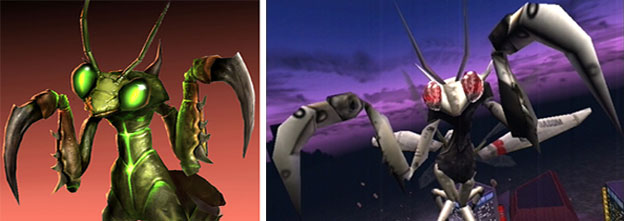
Incog Inc. actually did a good job of giving each creature a specific sense of weight and mass. The insect character Preytor was a giant praying mantis. She moved and turned quickly, was light on her feet and could scale buildings with her six legs much faster than Agamo the living stone idol. Agamo was a huge lumbering force whose footsteps echoed with the sound of a rockslide and whose punches could deliver far more damage than Preytor's claws. There was a trade-off for speed versus power on every character. The speed and movement of the characters actually made sense in War of the Monsters. Their physical makeup, whether it was flesh, stone or metal complimented the creatures. Incog developed subtle differences in the way each monster moved and handled based on their structure. They controlled with a sense of momentum especially when running or jumping. Players could not accelerate quickly or stop on a dime with the biggest brutes. When an explosion went off they slammed into buildings and flipped end-over-end in a realistic fashion. They were not at all rag dolls. None of the Godzilla fighting games gave audiences even a remote sense of mass or momentum. The WOTM cast also had their own original sounds, taunts and roars, none were alike.


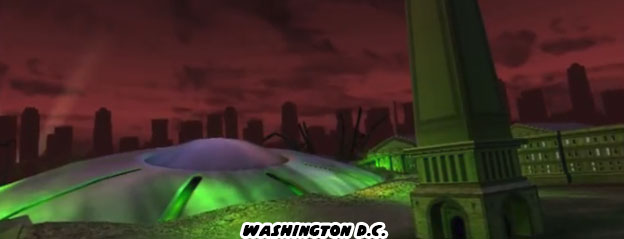
Speaking of sounds, the music featured in the game was orchestrated by Big Idea Music Productions, out of Colorado. The studio had worked with Incog on titles like Warhawk, God of War and Twisted Metal. This was by far the best soundtrack they had ever produced and one which I would easily rank in the top 10 best game soundtracks ever. Each level actually had two different soundtracks in the queue. There was a main level theme and a battle theme. The two themes complimented each other and could be effected by the players. If a player were far from the opponent then the level theme played, as they got close to the opponent then the game would mix in the battle version. The instrumentation utilizing a full orchestra helped give the score a robust movie quality. Each theme helped heighten the tension as monsters battled inside an active volcano, aboard a space ship or even on the steps of the Capitol Building in Washington DC.


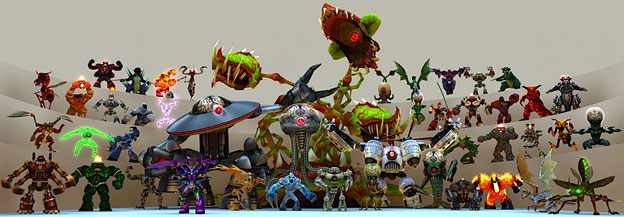
There were eight characters for players to choose from and two additional ones that could be unlocked, each of which moved uniquely and had their own advantages and disadvantages. Incog found a perfect balance between the size of the characters and the scale of the environments. The monsters were about 75 feet tall, about twice the size of the Rampage monsters yet only about a quarter as tall as the King of the Monsters cast. This translated into many different elements. Since the monsters were bigger than the Rampage cast then they could more easily destroy the environment. But they weren't so tall that they were bigger than the tallest skyscrapers, and unable to climb them, like the King of the Monsters crew. Plus the scale that the monster were presented at translated into surprisingly tiny details that could still be made out by audiences. The amount of detail placed on the drive in theater at the start of the game was nothing compared to the details crammed into each level.


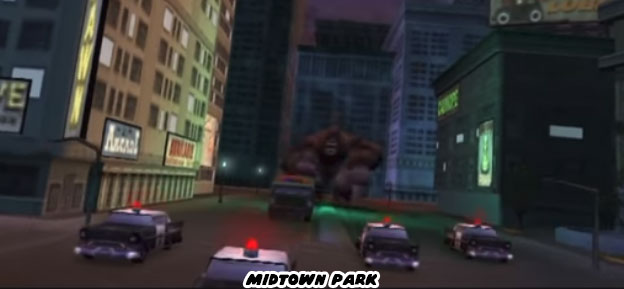
Buildings in each city had distinct architecture, there were ads, marquees and billboards that did not seem to be repeated on other levels. Cyclone fences on military bases had warning signs that could be read. Searchlights swept the corners of those same dark military compounds. Parking lots were filled with different types of cars. The studio went so far as to paint in the lines in the lots and even have tiny oil / transmission fluid stains in the spots. Parks had winding footpaths and tiny benches. Bigger cities had moving traffic, circling helicopters, rolling tanks, turning construction cranes and functioning missile launchers. Even the cabana, multi colored deck chairs and patio umbrellas at an island resort pool could be seen by sharp-eyed players. Vehicle types were also very distinct. Police cars, delivery trucks, tour buses, fire engines and sedans were on the roads. This attention to detail wasn't limited to just the cars. Yachts, sailboats, cruise ships, fishing boats and catamarans were set afloat, or docked on various stages as well.


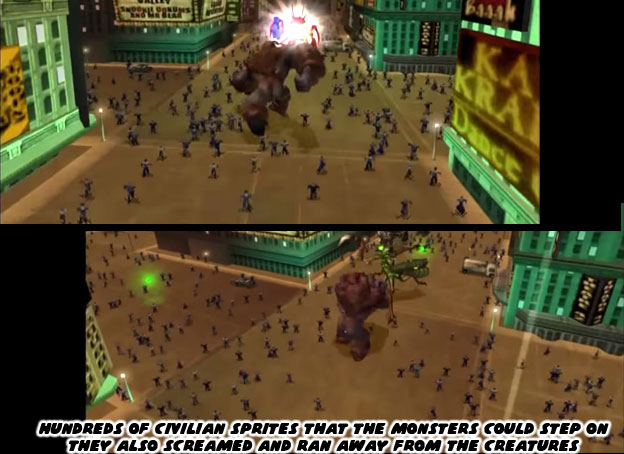
Players could make out the waves that came in on the beachfront levels. If the monsters fought in the water they would send up enormous splashes. If the monsters ran through the water they would even kick up "rooster tails" of spray. Consider the amount of detail that SNK placed on the King of the Monsters years earlier. Those isometric details now had to be three-dimensional and look as good from every angle. Incog delivered on that challenge tremendously. Pedestrians could be seen screaming and running for their lives. The animated sprites were barely a few pixels in height but responded realistically to the monsters. They would scream en masse and fan out and away from opponents.


Creatures could actually walk through the crowds and flatten a few people with each footstep. Tiny red splatters were all that remained for those caught in the path of destruction. The sound of pedestrians screaming in terror would increase as the monsters approached. If there was a police car nearby the sirens would get louder or softer depending on which way they were moving on the streets. Traffic actually moved through the tiny streets and tried to maintain the right of way. Cars would even swerve around other vehicles or debris! News helicopters flew above the action while military assault choppers followed opponents around buildings and fired powerful rounds into them.  Audiences could climb buildings, jump from rooftop to rooftop and snatch the helicopters out of the sky. Some levels even had UFO ships that shot green plasma blasts. They hovered and zipped from spot to spot, faster than any helicopter.


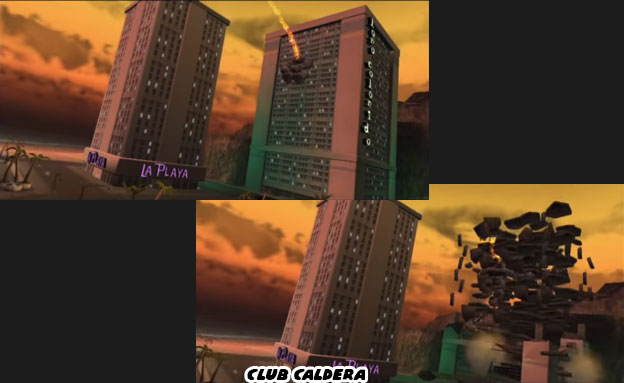
The environments were completely destructible. Buildings could be toppled, imploded or disintegrated. An entire city could be flattened to the ground. Players could use rubble, air conditioners, generators, dumpsters, cars and radio spires as makeshift weapons. If a player grabbed an energy transformer then they could send an electrical shock to opponents or throw it for a spark-filled explosion. If a player grabbed a rocket-firing tank then they could unload a salvo at opponents as if it were a massive handgun. Players could jump into the air and smash aircraft or UFOs using only their mass. Some of the taller buildings could collapse and crush opponents and players as they fell on them. Savvy players could lure an opponent to the right spot and earn a quick victory with a falling skyscraper. Several levels had hidden features that could be triggered if the right conditions were met.


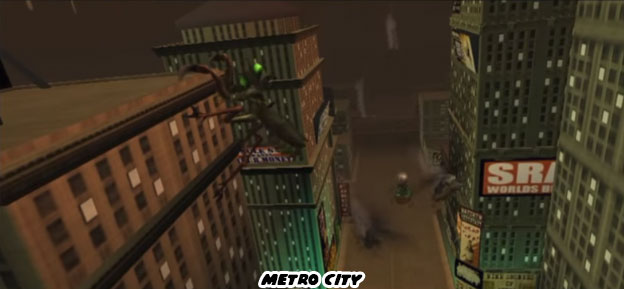
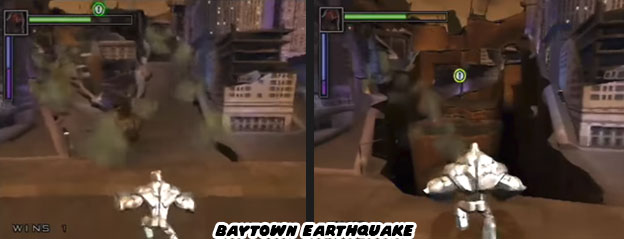
Baytown, a city modeled after San Francisco, could have an earthquake that completely changed the shape of the environment if one player caused enough damage to the city. If players threw an object at an alien ship off the coast of Tsunopolis then it would shoot a powerful beam at the ocean. A tidal wave would then crash through the Japanese island sweeping all the pedestrians right off the map. The levels themselves were bordered by the same pulse emitters featured in the introduction movie. These emitters put up translucent walls that contained the destruction to a certain area. Apparently the government thought the collateral damage was acceptable. It was actually a good supporting detail. Incog did not simply focus their resources on the playable level and just blur out what was outside the borders. Gamers could see that that the world extended beyond the barrier. A major town, like Metro City did not end where the pulse emitters were. Players could clearly see roads and buildings behind the emitters, there was even a zeppelin floating just above the outskirts. This detail helped maintain the immersion on the arena while reminding audiences that the game universe was indeed fleshed out, waiting to be explored.


The combat system was the most robust aspect of the game. It was meant to be a brawling game after all. All of the attacks could be triggered by pressing two buttons for either weak or strong attacks. Monsters had a diverse set of combos that could used by learning the right sequence of button presses. Players could alternate button presses and create unique combination strings. Players could even break attacks, push opponents back, steal a weapon and even slip out of grapples if they caught the timing of an opponent. This came in handy as many of the monsters were relentless in battle, even on the easy setting. The computer AI was dialed in to be just about as brutal and cheap as it could, especially when it was two or more computer controlled monsters against the player. Those that have played through David Jaffe titles could testify that there was a level in God of War or Twisted Metal that felt particularly difficult, especially when it was one against multiple opponents. In War of the Monsters if an opponent were greatly weakened then they might run away and look for a major health upgrade. It could be maddening when players were trying to fend off two monsters at once. Audiences learned to be just as brutal as the computer if they hoped to survive. Gamers had to use every weapon at their disposal and even resort to some cheap tactics while dealing with multiple creatures.


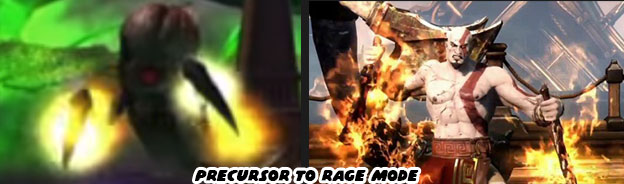
The characters had a secret ability of sorts. If a player pressed the Select button their character would perform a taunt move. If players had two full bars of attack energy then that meter would flash rapidly. If a player taunted during a flashing meter then their character would get glowing fists and do about 25% more damage per hit. The attack meter drained steadily once players had activated it and would stop once the meter had drained down to a single bar. Players could keep recharging the energy by looking out for power orbs. This unique gameplay mechanic was revisited in the God of War series under the "Rage of the Gods / Titans / Sparta" mode for Kratos. It could certainly help to turn the tide of battle when dealing with multiple opponents.

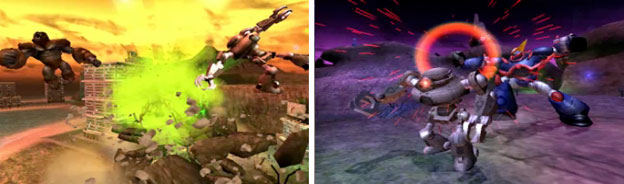
Each monster had a close and ranged special attack. The close one was good for clearing away groups of monsters that were swarming around players. The ranged attack could drop opponents making a run for a health upgrade. Some characters had hidden uses for their super attacks. Gas tanker trucks were the most destructive thing that players could throw at each other. In addition to the damage caused by the explosion the tanks would coat the monsters in gasoline and slowly burn away their health. The problem was that they were not always accurate over long distances. The Japanese robot Ultra-V had a ranged super attack where its arm would shoot out like a rocket to stun and reel in an opponent. That attack rarely missed even if launched from the opposite side of a level. If Ultra-V were holding a gas tanker when doing the special attack then it would shoot out the arm and punch the opponent with a powerful explosion. The game was filled with all sorts of amazing hidden uses for regular and super attacks. Special attacks and even regular attacks tired out the monsters. They could regenerate their attack stamina slowly if they waited or quickly if they destroyed the environment. Incog turned the destruction element from the films into an important game play feature. Characters could also recover health by searching out green radioactive markers.


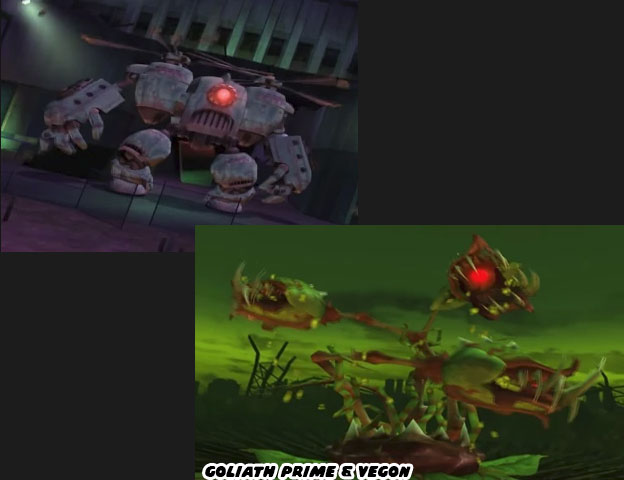
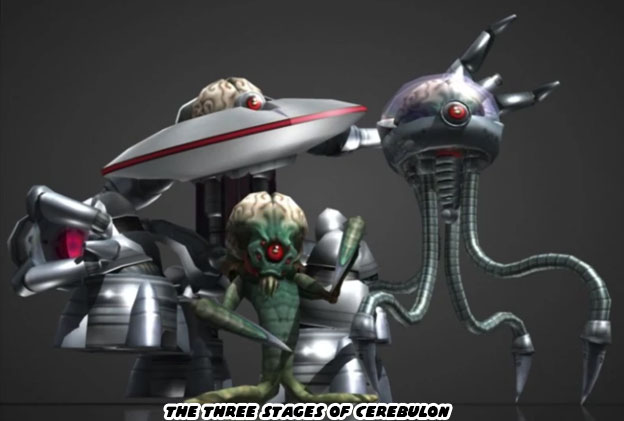
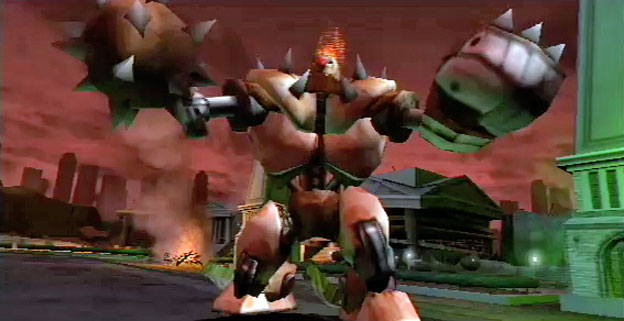
Players needed to learn all of the moves at their disposal too because they also had to contend with boss characters. There were three major bosses in the game. Each was designed to make all of the playable characters seem less imposing. The bosses required a particular strategy to defeat and none could really be fought hand to hand. The robot Goliath Prime, from the secretive military Area 51, towered over the other characters and could throw them around like rag dolls. It could also transform into a spinning wrecking ball as well as a two fisted artillery cannon. Then there was Vegon, the three-headed plant monster born from the center of a nuclear power plant. Vegon was actually the largest monster in the game and capable of swallowing the regular characters whole. The final boss was Cerebulon, the destroyer of worlds. That boss had three unique transformations, each one was memorable and all requiring a specific strategy to defeat. The effects, voices and game play built around the bosses was amazing. They really had to be played against to be believed.


As much praise as I've heaped on WotM the game did not really earn high scores from every publication or site. If I could find a major failing with the game it was without a doubt the camera system. The camera was very loose and turned quickly if the player used the analog controls. Trying the move, aim and throw a weapon was all but impossible by how quickly the screen spun. The opposite analog control did not control the camera but instead the elevation of a thrown object. It was difficult to get a sense as to how far opponents were while running around a level. The good thing was that once a player got close to an opponent the game would auto-lock the monsters. This way a player could trade punches and experiment with different combinations. A player could actually lock onto an opponent by holding the shoulder buttons (L1+R1). This made the experience of targeting an opponent for ranged attacks much easier. This was essentially the fix to the camera system and made the experience much greater. The downside was the the camera lock required players to manually hold the buttons while playing. In order to truly get the most out of the experience Incog should have included the ability to target-lock and switch between opponents. This was a minor detail that completely changed the game play. For the most part it was a minor inconvenience on an otherwise great game.


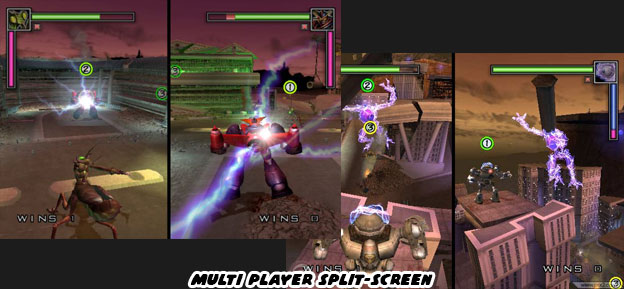
The reward for players that completed the Story Mode was a film that showed the origin of their chosen creature. Players were inspired to begin a new adventure and unlock all the endings and costumes. Those with friends and siblings could battle it out on any level featured in the game as well as a few additional bonus stages. The weakest element in the game were the two-player mini games. They seemed to be added as an afterthought and lacked any sort of polish. Not that it mattered because the actual game itself was rock-solid. Those that got used to the combat system and camera learned to cut loose and enjoy the ride. Incog Inc. had released the greatest giant monster game to date. Although the experience was short, logging in at 11 stages, it had tremendous replay value. The levels themselves were so amazing that players could easily get lost in the details and spend untold hours exploring every street and alley. It was much better to have a handful of unique levels than a hundred cookie-cutter levels, as Rampage had demonstrated.

Mind you, I managed to talk about the game over two blogs and not once did I mention that Mecha Sweet Tooth from the Twisted Metal series was a playable character!


War of the Monsters was the perfect giant monster video game. The individual elements and collective should be studied by all budding game designers. It was exactly the type of experience that players had been missing out on for years. The game was the first to capture the feel of controlling enormous beasts in full 3D without sacrificing design, game play or originality. Players no longer had to use their imagination to fill in the gaps between being a passive participant in a movie theater to being the star of the feature. It was a fully realized vision of what Epyx's Movie Monster had promised way back in 1986. It was also more than what was offered in Giants: Citizen Kabuto, Rampage, Doshin or even King of the Monsters. Players could fight with reckless abandon, plow through buildings, hurtle ocean liners at each other and embrace the primal forces their ancestors once ran from. The cast, stages and even music even were all unique. This game was worthy of joining the established Sony franchises.


Word of mouth helped War of the Monsters build a following. The more players that tried the game the bigger the legend became. Many wondered why Sony hadn't insisted on a sequel. Unfortunately the game didn't sell quickly when it first came out. This was despite a big ad campaign and positive review scores. Sony didn't bother to follow up and push for a sequel. Instead they were focused on David Jaffe's next title, a game called God of War. Many of the lessons that the studio learned during the development of War of the Monsters (and the mountain bike racing game Downhill Domination) were applied to God of War. The lighting and coloring, powerful thematic elements, strong music, sharp graphics and particle effects were rooted in War of the Monsters. Not to mention the Titan levels and final battle against Ares were heavily influenced by WOTM as well.


Fans never forgot about War of the Monsters. When Sony decided to publish it on the Playstation Network on July 31, 2012, the web forums lit up with the good news. The studio that helped optimize the game and sharpen the graphics was Lightbox Interactive, it was founded by former Incog Inc employees. The re-release was well received by seasoned players and a new generation of gamers. Hopefully Sony might consider giving this title yet a chance for a sequel. After all, you can't keep a good monster down for long! The next blog is actually dedicated to the tabletop games. Find out what the genre did for traditional board games and more advanced tabletop systems as well.


Monday, March 12, 2018

The Giant Monster Series, part 16...


War of the Monsters is the best giant monster video game ever made. Nothing before or after could hold a candle to it, certainly none of the Godzilla or Rampage games. Yet it also held a tremendous debt of gratitude to those titles for paving the way and teaching the developers where the pitfalls of the genre were. War of the Monsters was released in 2003. It had favorable reviews but most audiences slept on the title. Those that got into it enjoyed the experience. They appreciated the layers of substance put into the game by Incog Inc. (later absorbed into Sony Santa Monica). The game began as a love letter to the classic giant monster genre. It was dreamed up by gaming icon David Jaffe and his Twisted Metal colleagues. War of the Monsters evolved from a simple idea into something that gamers could really sink their teeth into. In order to pull off a great giant monster experience the developers went to the roots of the genre, the cinema. The game began in the classic movie broadcast format. The entire set-up of involving an alien invasion and where the monsters came from was explained in the first few moments. Eagle-eyed players noticed a couple of cars from the Twisted Metal series in the opening shot.


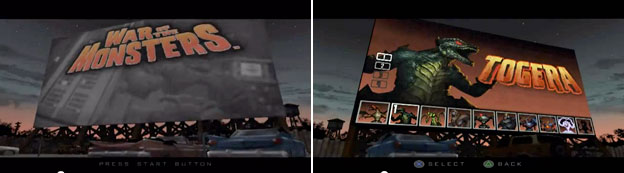
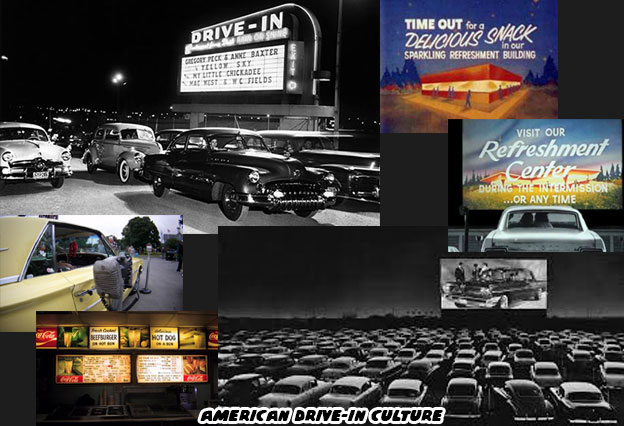
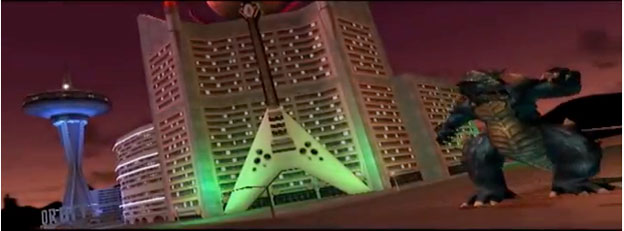
After the film played the camera panned back to reveal the title screen was set on a drive-in movie screen. Classic cars, circa the late '50s and early '60s were in the lot waiting for the feature to start. The tiny details on the menu screen rekindled memories of another era. The light coming from the background had the same hues of dusk setting in. Houses, telephone poles and even a water tower could be seen beyond the tall wooden fence. Movie fans in the suburbs would enjoy going out to the local drive-in because it was an altogether different experience. This was a slice of Americana that Incog Inc. wanted to bring bring players into.


No movie palace could ever have the same atmosphere of an open-air arena. On a warm summer night patrons would get mixed sensations. A soft breeze, the sounds of crickets softly chirping in the distance, the smell of popcorn, pretzels and hot dogs wafting in from the concession stand. Even the sound of kids running through the gravel could only be experienced there. Patrons could enjoy the film from the privacy of their own cars. Families would sometimes pack an entire picnic to enjoy during the movie. Tiny steel boxes were hung on the car door to pipe audio directly to them. This was a prosperous time for the USA. We had just gotten out of WWII. Industry was booming, the middle class had grown exponentially and people were enjoying a culture that revolved around the automobile. Drive-in movies and drive-in fast food restaurants were the hottest trends. The greatest memories of a generation were tied to the drive-in. Some of these details were clearly seen on the title screen and in the various game menus.


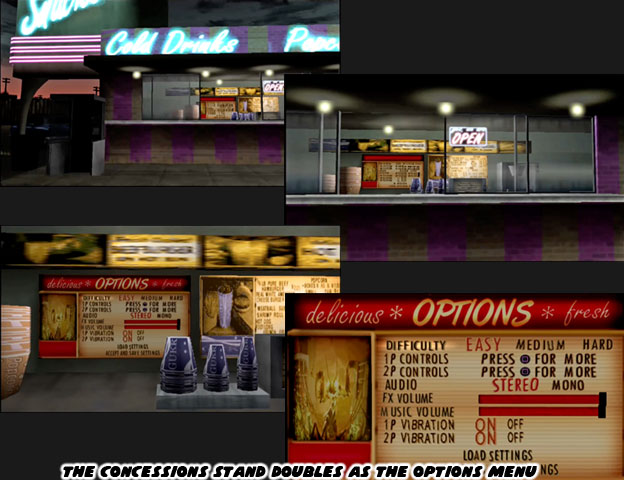
The main menu and character select menu were split between two different movie screens. The camera would pan between them as the player made a selection. The amount of detail placed on the drive-in was amazing. It was a way to ease audiences into this world. If the gamer went into the settings menu they were taken to the concession stand. The sign was certainly retro, the color of the settings menu was off white-almost plastic, like an old '50s drive in or even diner menu would have appeared.


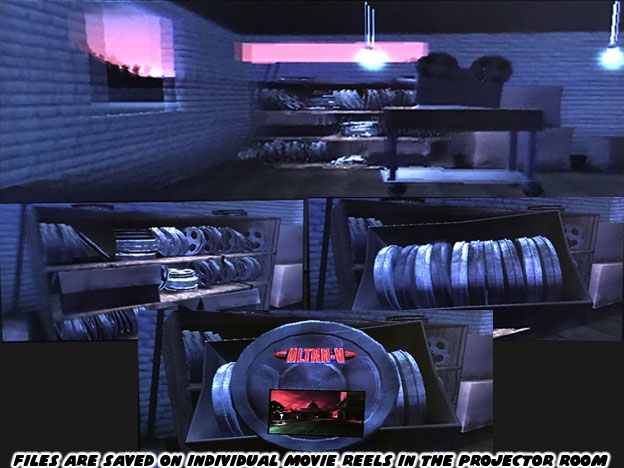
If a player went to load a saved file then the menu would take them into the projector room. Inside there were multiple projectors for each screen. The players were shown a cardboard box, it would be empty at first but as they saved games it would slowly fill with movie reels. Each reel had a picture of the level being saved and the title of the monster they were playing as. It was a nice touch making the monsters the stars of each picture. The format allowed players to save up to two cardboard boxes or two memory cards worth of reels. Friends could bring over their own saved files and share them on the Playstation 2.


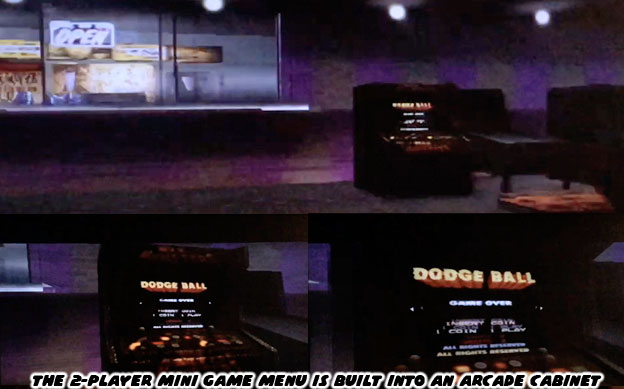
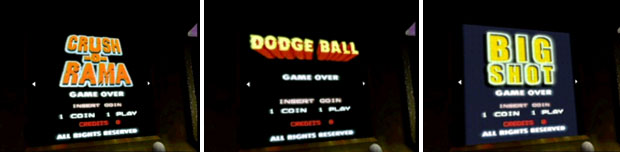
If a player wanted to try a 2-player mini game then the menu screen would shift. Next to the concessions stand was a bench for families to enjoy their food. There was a pinball machine and a weathered arcade machine. The camera would focus on the arcade cabinet. There players could scroll between three 80's looking titles; Crush-o-Rama, Dodge Ball and BIG SHOT. Incog went to the trouble of discoloring the font and adding scan lines onto the screens as if they were projecting onto a CRT monitor. If players wanted to see what items could be unlocked they went outside the projection room. In front of the coming attraction posters was a list of characters and levels that could be unlocked with enough credits.


No other studio had ever put this amount of detail just for the menu screens in a game. To be fair however The Movie Monster game by Epyx and I was an Atomic Mutant by Canopy Games certainly came close to recreating the feel of the classic cinema. Remember that Epix even included the interior of the theater and previews to enjoy before starting the game. The publisher could have never imagined what technology would have allowed for in the future. The mix of aesthetic elements from the late '50s through the early '80s in War of the Monsters was done for a reason. Incog wanted to bring players into the world they had developed. They wanted players to understand what the US was like during this era. They had to provide enough sounds and visual elements to help them do that. For many players and most working at Incog Inc. this was their childhood they were reliving. The developers wanted to recreate the excitement of being a kid and getting to go to a drive-in to watch a monster movie. At the same time they wanted to make it visually interesting to contemporary audiences. The designers were reproducing the golden era of monster movies, which would have been experienced by the majority of their parents, and the final years of the drive-in which they would have remembered as kids. They certainly managed to do all of that with style.


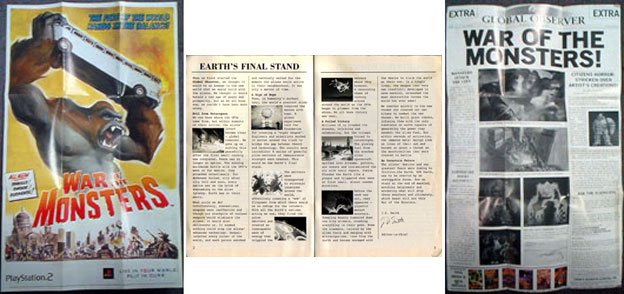
The details that Jaffe and Co. included did not even start there. The instruction booklet included with the game was written as if it were the journal from the Editor in Chief of the Global Observer. It was the fictional newspaper featured in the opening moments of the game. It described the alien invasion and how the alien menace was defeated with gigantic pulse emitters. Then it explained how the radioactive goo released by the spaceships created giant monsters. A poster page was included with the instruction manual. On one side there was a special edition of the Global Observer, complete with articles on the monsters and some secrets and tips for players. On the other side was a movie poster for players to frame.


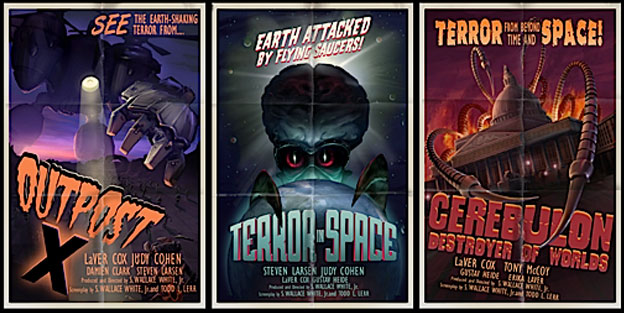
The level load screens were absolutely brilliant. They were made to look like movie posters. Each one highlighted the level details and sometimes opponents that players would be facing. The poster art, created by the talented Owen Richardson was stunning and looked genuine for the era. In fact the colors used for all the levels and environments had very solid hues and distinct lighting.


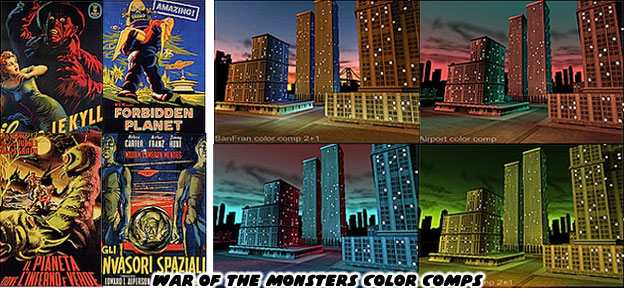
The color palette applied to each level was more than just good planning. The developers actually created color compositions for the stages inspired by the art used on actual classic movie posters. Every detail placed in the game built on top of the previous, these were meant to trigger memories and build emotional responses. Older gamers that remembered the drive in and the classic sci-fi and monster films would get the inspiration on the posters and levels. Younger gamers would be hooked by the art. All of the players would learn that the lighting created specific atmospheres for each level. From the eerie green glow that illuminated Atomic Island to the rose and yellow neon trappings of Gambler's Gulch, no two levels shared a color scheme or layout.


On the character select screen audiences had to choose from one of eight available monsters. An additional two monsters could be earned with battle points. Whichever creature the audience chose became the star of the game. The plot was very straightforward. The star was going to do battle with whatever other monster, or monsters they came across. War of the Monsters set players right in the middle of the action and did not waste too much time with backstory. The levels began with a portion of a "film" playing out before them. It highlight a specific rival and stage setting. In one stage there was a monster chasing police and military vehicles, in another it was giant robots fending off UFOs. In each case the camera would then turn and focus on the player-controlled monster and start the action.


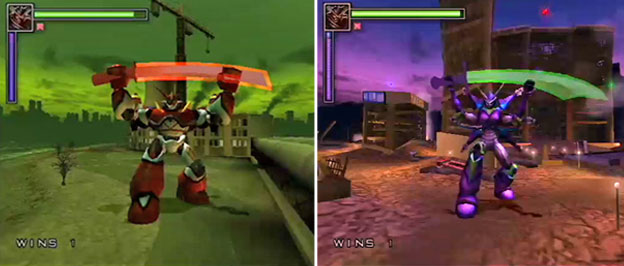
The monsters were fairly diverse and inspired by several generations of icons. The giant lizard Togera and ape Congar were expected as were the giant Japanese mecha Ultra-V and giant praying mantis Preytor. Those four represented the classic archetypes from cinema. The other characters were inspired by various creatures but came off as fairly original. To help diversity the cast players could unlock "costumes" for the creatures. The game rewarded credits for the damage players caused and the number of opponents they defeated. Boss characters were worth tremendous points. Players could turn in these credits at the concession stand to unlock costumes and levels. The new skins were meant to be seen as completely new characters. It was not unlike what Pipeworks had attempted to do with Rampage.


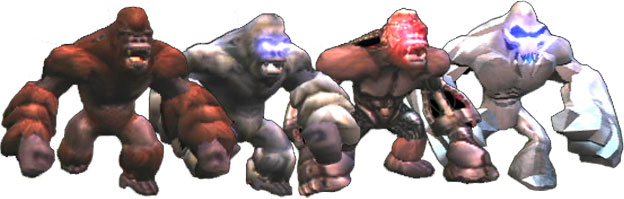
In the first level Congar was being pursued by the military. It was assumed that they recovered the body after the player had defeated him. Congar was returned by military transport choppers a few levels later with an entirely different look. He had been turned into a weapon to fight the other monsters. The newly created cyborg Congar had half a robotic face and eerie glowing eye. Even his limbs were replaced with machinery. This costume was available to be purchased as well as an albino ape, possibly interpreted as an abominable snowman. The fourth costume for each character often turned out to be the most original and the one least likely to be confused as just another re-skinned character. For Congar that was an alien with metallic skin. All four of the costume choices for each monster were well done.


The visuals hooked the players but the game play itself was what kept them coming back. I would like to spend the next blog looking at the game in depth. I hope to see you back for the next entry!