Showing posts with label giant monster. Show all posts

Wednesday, March 21, 2018

The Giant Monster Series, part 20...


From 2009 through 2010 Privateer Press was trying to make Monsterpocalypse one of the most popular tabletop game systems ever. They used a grassroots approach to appeal to the community. They incorporated player feedback from local game stores during play testing. They maintained a certain level of transparency at every step of the process. They would answer questions, share notes and post previews right on the company website. They used word of mouth to help build a following. They toured the country visiting all the major conventions and showed off this system alongside their flagship Warmachine and Hordes systems. The studio had incorporated new manufacturing technology to help streamline production. They created pre-painted miniatures with built in counters and made the game board out of paper maps to help cut costs and appeal to entry-level gamers. For the most part they did everything right by the system and for the system. Any company trying to get noticed in the gaming world should study what Privateer did during those early years.
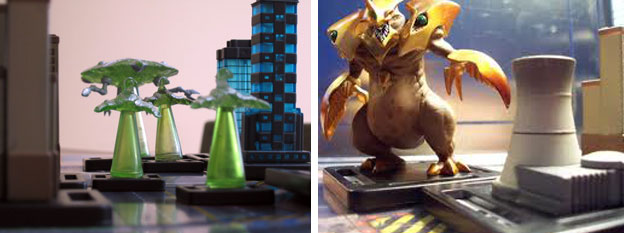

It was hard to ignore the appeal of the game. Who would not want to try monsters versus aliens versus robots? The mix of genres seemed like a perfect fit for tabletop gaming. Giant monster games were rare for the community and miniature based systems even more so. The attention to detail that Privateer put into the sculpts and paint jobs were amazing. Players could enjoy watching their monsters fend off an invasion or level a city with reckless abandon. The system managed to become so high profile that it got some unexpected attention from the government. The Series 3 All Your Base expansion was flagged by Homeland Security and could not be distributed in the country until it got cleared.
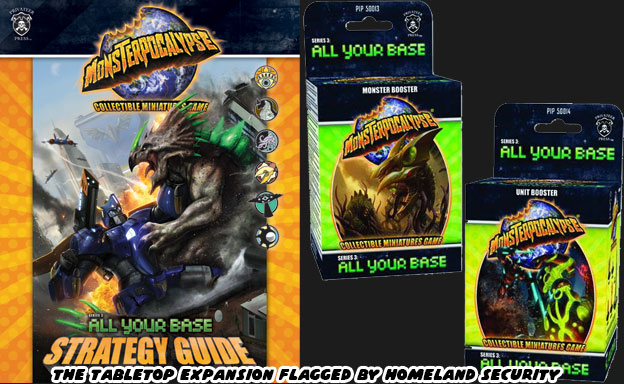

This immediately started debates on various tabletop gaming sites both in and out of the US. People couldn't believe that tax dollars were being wasted investigating a game, especially when gaming was supposed to be protected by the First Amendment. Players questioned the reasoning behind this and wondered what other games and systems the government began keeping track of in the name of security. It was possible that the post 9-11 world made some groups very paranoid. Players speculated it was because the game was dealing with mass destruction and some high profile landmarks, copies of the Empire State Building and Statue of Liberty, were targets in the game. Others said it was because some of the factions were against the military industrial complex and expounded radical thinking. The government agency never revealed the findings of their inquiry. The expansion was cleared by Homeland Security a few weeks later. Store owners were put off by the delay but not as much as gamers were. Privateer relished in the free publicity.
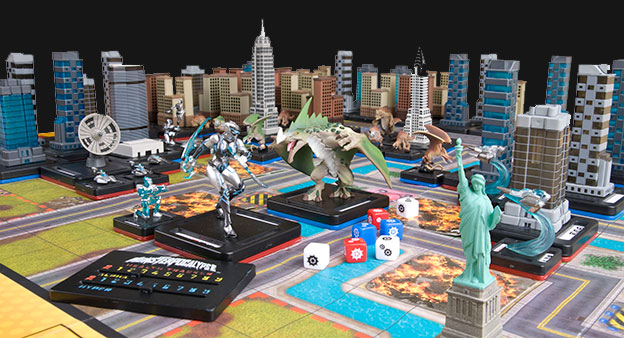

After three expansions the system had hit its stride. The middle of 2010 saw the introduction of Block 2 and the first of the six new factions. It was far along now and could hold its own against the original games created by Privateer. Monsterpocalypse was unlike the other systems though. It was unique in the scope, scale, production and genre. Tabletop games could be lumped into one of two genres, the fantasy or science fiction type. Even with the advent of pre-painted miniatures the genre was still mostly either fantasy or sci-fi. Pre-painted superhero Clix-type games were growing in popularity. The Marvel, DC and even Halo universe were each licensed for their own Clix game. Privateer found a way to combine the best elements of the Clix system with their own design philosophy. They ended up building a game that had no parallel. It was not quite sci-fi or fantasy but a mix of the two set in a modern world. No other studio was savvy enough to address the wants of veterans while making a system that appealed to beginners. No studio even considered the giant monster as the perfect template for a new type of game.
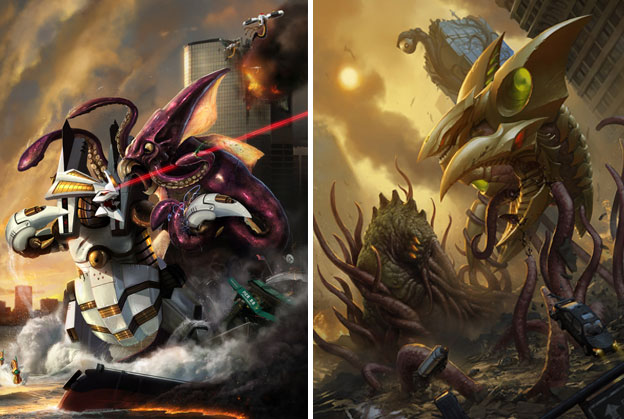

The popularity that Monsterpocalypse enjoyed helped validate for the work of Privateer. The system was gaining momentum at a record pace. Within two years the world Privateer created had established its own canon. The factions were rich with history, strong personalities and defined objectives. It had a distinct style that rekindled memories of classic cinema while also pulling in influences from comic books, animĂ© and modern features. People could be fans of the game without being familiar in any other series. Perhaps Privateer got a little too comfortable with their position. The game possibly grew too quickly for its own good and was pushed too hard by the company on players. The expansions were beginning to come one after the other, leaving little room for players to get used to the changes in game play. Buying new factions was proving to be a costly gambit. The buildings, monsters and support were randomly boxed in each case. Players had to buy several "blind" boxes in order to find the figures that they needed or had to pay marked up prices on eBay. Privateer then began looking for licenses to make the game even more appealing. For some players the game "jumped the shark" when the studio announced that they would be featuring a crossover with Voltron. The robot was made popular in cartoons from the 1980s. The Defender of the Universe got a big push by Privateer and was forced into Monsterpocalypse canon in July 2010.
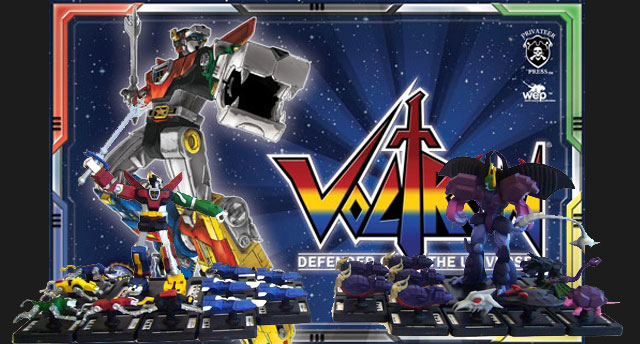

It made little to no sense why the studio would adopt a cartoon character. As cool as he was, especially to kids that grew up in the 1980s, the premise of a giant robot made up of lions seemed a little too campy for the Monsterpocalypse universe. The studio had gone out of their way to create art, articles and rules with a certain tone. The world of Monsterpocalypse was fairly serious, any humor in it was a bit dark. The monsters, robots and aliens were created in earnest and maintained a certain level of realism. The inclusion of Cthulu-like creatures that cursed the ground they walked on and turned humans into abominations pretty much summed up the established canon. All of a sudden there was a new brightly colored robot in the world, brandishing a huge sword, not representing any faction but himself.
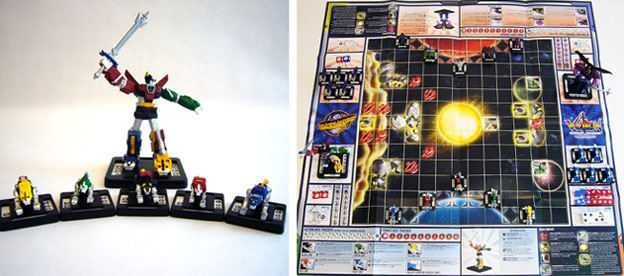

Privateer used the same basic rules of Monsterpocalypse to build a standalone version of the Voltron game. His main rival was an evil dopplegänger named Lo-tron. Instead of fighting over a city the pair were dueling out in the cosmos. Interest in the expansion was almost nonexistent. It marked the moment that interest in Monsterpocalypse began waining. Monsterpocalypse earned good reviews on the BoardGameGeek and was ranked the 578th most popular game on the site with over 700 votes. By comparison the Voltron game did not manage to rate nearly as well. The stand alone version was ranked at 3278 on the list and had garnered only 59 votes from editors and visitors. The title seemed to hurt the brand more than help it. The seeds of doubt for the franchise were actually planted earlier.

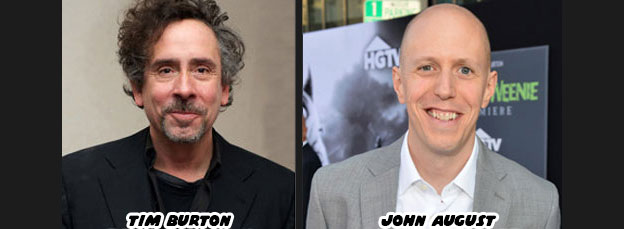
A few months before Voltron arrived Privateer posted a press release with a major announcement. On May 2010 DreamWorks had secured the rights for a film adaptation. This was the same studio that had marginal success with Monsters versus Aliens. People that remembered the animated film winced at the news. By July 2010 the studio announced that Tim Burton was selected to direct the feature. Burton would be joined by long time collaborator and screenwriter John August. Fans of the game gave mixed reactions. They appreciated Burton's directing style but were concerned that he would completely redo the canon to fit his artistic vision. After all he took the trading card series Mars Attacks and turned it into a campy, big budget mess. Many were afraid that he would do the same thing to the Privateer game.

Spring of 2010 saw the 5th expansion to the game released. Big in Japan was actually delayed due to production issues and growing global consumer demand. Players were expecting to see a sixth update by the end of the year but it never came to fruition. After the Voltron and the movie announcements the system seemed to stall. Privateer stopped updating the Monsterpocalypse website any news. The studio seemed to drop all articles or mentions of the game from their No Quarter magazine as well. Only fan-organized events and tournaments seemed to keep the game alive. The gaming group Team Covenant took to hosting online games for the community. The continued to ask anyone and everyone at Privateer what had happened to the system. For over two years the company stayed tight lipped. It was as if everything they had worked so hard on no longer mattered. Worse that they built up the community and suddenly pulled the game out from under them.

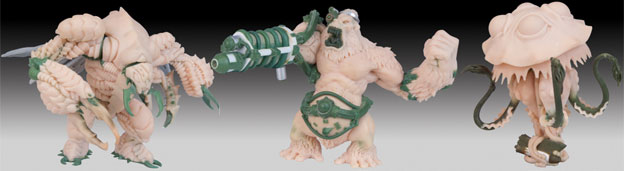
John August hinted on his Twitter feed that the reason the company had become so quiet was because they were waiting for the numbers on Guillermo Del Toro's Pacific Rim movie. If the Warner Bros. produced film generated good buzz and a huge box office then DreamWorks would push to get Monsterpocalypse done. If not then they might just let the rights expire. This was terrible news for fans of the game. It seemed that Hollywood had killed the system and community. They cared little for Monsterpocalypse at all and just saw something that they could exploit for a quick buck. Those that grew up with the Transformers animated show in the 80s and compared it to the Michael Bay movies knew what Hollywood was capable of. Audiences wondered what type of deal Privateer had signed up for. Why couldn't they continue to support and build expansions for the system? Was development halted on the IP because of what DreamWorks or Tim Burton had planned? Was the game really going to change direction, game play or factions based on what the movie established? One of the last posts from Privateer was a preview for the next wave of creatures. They appeared to be expanding the Tritons, Savage Swarm and Empire of the Apes factions from the Second Block. The figures were very far along in the process but never made it to market. Four years after that post most players had given up hope.

Fans felt burned by Privateer and for good reason. They had invested their time and money with the promise that the system would continue to be supported. They had previously never come across any publisher that dropped an entire system without warning. It was actually unheard of! Even Games Workshop, the huge studio from England, had developed and dropped a dozen great titles. They slowly weaned players off of a system before putting them in the "Specialists Games" section of their catalog. It was a warning that the system would no longer be supported. Privateer Press was the alternate to Games Workshop. They were the little studio that made big waves because they cared about the community. Every game they had developed they had supported to their fullest. At least they had let on that they did. The company had built their reputation by winning over players at many conventions. One by one the employees would look a player in the eye, shake their hand and introduce them to a new game. Monsterpocalypse had started out like this and certainly deserved a better fate.

All of the hype that the company had put on the community turned out to be nothing but that… hype. Many players had ended up sitting on hundreds of models. Those figures stopped being collector items rather quickly. The miniatures not kept for their novelty value were sold off for a loss. The independent game stores were burned by Privateer just as much as the fans. They had stocked shelves thinking that the company would keep running with the line as they had with Hordes and Warmachine. The energy that followed the system from convention to convention had dried up. The company stopped featuring the game altogether and employees did not bother to acknowledge its existence. Privateer kept the system in a shallow grave, hopeful that they might be able to resuscitate it and turn a hefty profit should a movie ever be released. Fans were also hoping for a return of the system but had no guarantee that it would be the same. For all they knew the company would start all over, drop the rules and factions and turn it into a board game. Nothing that Privateer or the fans did would hurt or help the chances of seeing a film. The movies were coming despite whatever plans Privateer had made. If there was a silver lining for the genre was that it would never disappear. In fact some of the best animated work in the past decade was created by teams that loved the genre. Find out about one of these artists on the next and final blog in the series.

Wednesday, March 14, 2018

The Giant Monster Series, part 17...


War of the Monsters (WOTM) was more than just about the nostalgia of the classic drive in movies. It actually had tremendous game play. The experience was a free-roaming 3D fighting game akin to Capcom's arcade gem Power Stone. Most fighting games and most brawlers were strictly 2D affairs, even the crown prince of the genre, Rampage, was a 2D experience. In War of the Monsters players could move their monsters in all three dimensions. They could run, leap and even climb buildings. Some creatures could even fly.

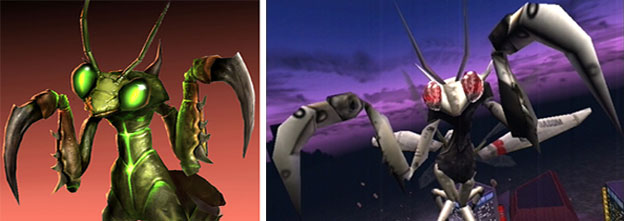
Incog Inc. actually did a good job of giving each creature a specific sense of weight and mass. The insect character Preytor was a giant praying mantis. She moved and turned quickly, was light on her feet and could scale buildings with her six legs much faster than Agamo the living stone idol. Agamo was a huge lumbering force whose footsteps echoed with the sound of a rockslide and whose punches could deliver far more damage than Preytor's claws. There was a trade-off for speed versus power on every character. The speed and movement of the characters actually made sense in War of the Monsters. Their physical makeup, whether it was flesh, stone or metal complimented the creatures. Incog developed subtle differences in the way each monster moved and handled based on their structure. They controlled with a sense of momentum especially when running or jumping. Players could not accelerate quickly or stop on a dime with the biggest brutes. When an explosion went off they slammed into buildings and flipped end-over-end in a realistic fashion. They were not at all rag dolls. None of the Godzilla fighting games gave audiences even a remote sense of mass or momentum. The WOTM cast also had their own original sounds, taunts and roars, none were alike.


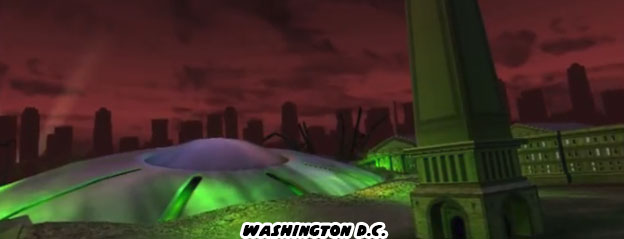
Speaking of sounds, the music featured in the game was orchestrated by Big Idea Music Productions, out of Colorado. The studio had worked with Incog on titles like Warhawk, God of War and Twisted Metal. This was by far the best soundtrack they had ever produced and one which I would easily rank in the top 10 best game soundtracks ever. Each level actually had two different soundtracks in the queue. There was a main level theme and a battle theme. The two themes complimented each other and could be effected by the players. If a player were far from the opponent then the level theme played, as they got close to the opponent then the game would mix in the battle version. The instrumentation utilizing a full orchestra helped give the score a robust movie quality. Each theme helped heighten the tension as monsters battled inside an active volcano, aboard a space ship or even on the steps of the Capitol Building in Washington DC.


There were eight characters for players to choose from and two additional ones that could be unlocked, each of which moved uniquely and had their own advantages and disadvantages. Incog found a perfect balance between the size of the characters and the scale of the environments. The monsters were about 75 feet tall, about twice the size of the Rampage monsters yet only about a quarter as tall as the King of the Monsters cast. This translated into many different elements. Since the monsters were bigger than the Rampage cast then they could more easily destroy the environment. But they weren't so tall that they were bigger than the tallest skyscrapers, and unable to climb them, like the King of the Monsters crew. Plus the scale that the monster were presented at translated into surprisingly tiny details that could still be made out by audiences. The amount of detail placed on the drive in theater at the start of the game was nothing compared to the details crammed into each level.


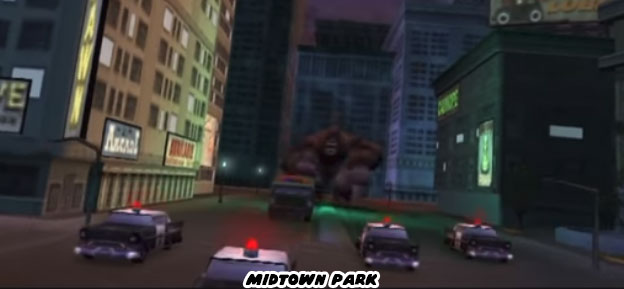
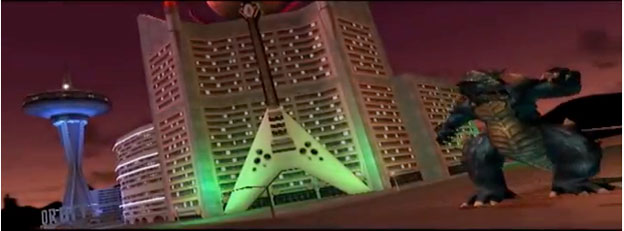
Buildings in each city had distinct architecture, there were ads, marquees and billboards that did not seem to be repeated on other levels. Cyclone fences on military bases had warning signs that could be read. Searchlights swept the corners of those same dark military compounds. Parking lots were filled with different types of cars. The studio went so far as to paint in the lines in the lots and even have tiny oil / transmission fluid stains in the spots. Parks had winding footpaths and tiny benches. Bigger cities had moving traffic, circling helicopters, rolling tanks, turning construction cranes and functioning missile launchers. Even the cabana, multi colored deck chairs and patio umbrellas at an island resort pool could be seen by sharp-eyed players. Vehicle types were also very distinct. Police cars, delivery trucks, tour buses, fire engines and sedans were on the roads. This attention to detail wasn't limited to just the cars. Yachts, sailboats, cruise ships, fishing boats and catamarans were set afloat, or docked on various stages as well.


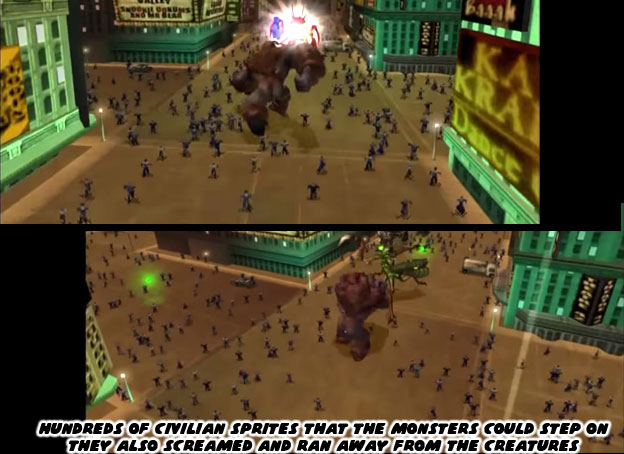
Players could make out the waves that came in on the beachfront levels. If the monsters fought in the water they would send up enormous splashes. If the monsters ran through the water they would even kick up "rooster tails" of spray. Consider the amount of detail that SNK placed on the King of the Monsters years earlier. Those isometric details now had to be three-dimensional and look as good from every angle. Incog delivered on that challenge tremendously. Pedestrians could be seen screaming and running for their lives. The animated sprites were barely a few pixels in height but responded realistically to the monsters. They would scream en masse and fan out and away from opponents.


Creatures could actually walk through the crowds and flatten a few people with each footstep. Tiny red splatters were all that remained for those caught in the path of destruction. The sound of pedestrians screaming in terror would increase as the monsters approached. If there was a police car nearby the sirens would get louder or softer depending on which way they were moving on the streets. Traffic actually moved through the tiny streets and tried to maintain the right of way. Cars would even swerve around other vehicles or debris! News helicopters flew above the action while military assault choppers followed opponents around buildings and fired powerful rounds into them.  Audiences could climb buildings, jump from rooftop to rooftop and snatch the helicopters out of the sky. Some levels even had UFO ships that shot green plasma blasts. They hovered and zipped from spot to spot, faster than any helicopter.


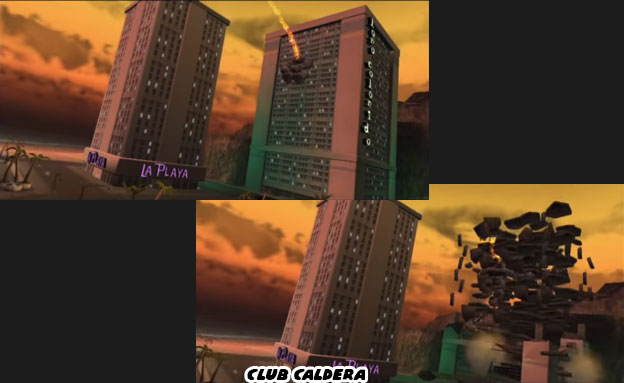
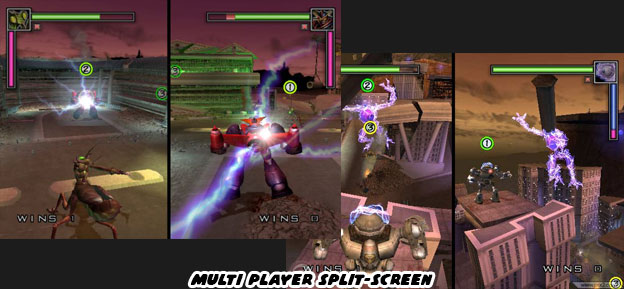
The environments were completely destructible. Buildings could be toppled, imploded or disintegrated. An entire city could be flattened to the ground. Players could use rubble, air conditioners, generators, dumpsters, cars and radio spires as makeshift weapons. If a player grabbed an energy transformer then they could send an electrical shock to opponents or throw it for a spark-filled explosion. If a player grabbed a rocket-firing tank then they could unload a salvo at opponents as if it were a massive handgun. Players could jump into the air and smash aircraft or UFOs using only their mass. Some of the taller buildings could collapse and crush opponents and players as they fell on them. Savvy players could lure an opponent to the right spot and earn a quick victory with a falling skyscraper. Several levels had hidden features that could be triggered if the right conditions were met.


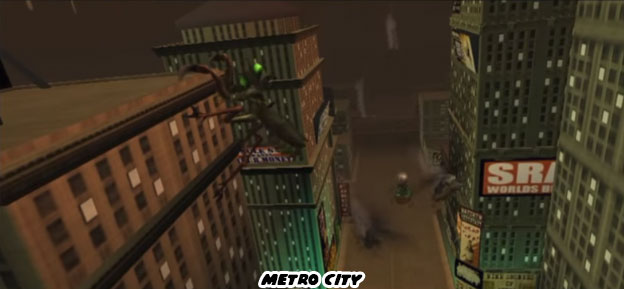
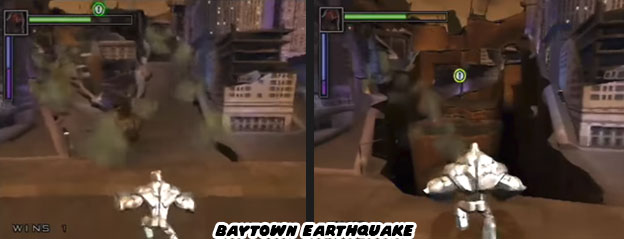
Baytown, a city modeled after San Francisco, could have an earthquake that completely changed the shape of the environment if one player caused enough damage to the city. If players threw an object at an alien ship off the coast of Tsunopolis then it would shoot a powerful beam at the ocean. A tidal wave would then crash through the Japanese island sweeping all the pedestrians right off the map. The levels themselves were bordered by the same pulse emitters featured in the introduction movie. These emitters put up translucent walls that contained the destruction to a certain area. Apparently the government thought the collateral damage was acceptable. It was actually a good supporting detail. Incog did not simply focus their resources on the playable level and just blur out what was outside the borders. Gamers could see that that the world extended beyond the barrier. A major town, like Metro City did not end where the pulse emitters were. Players could clearly see roads and buildings behind the emitters, there was even a zeppelin floating just above the outskirts. This detail helped maintain the immersion on the arena while reminding audiences that the game universe was indeed fleshed out, waiting to be explored.


The combat system was the most robust aspect of the game. It was meant to be a brawling game after all. All of the attacks could be triggered by pressing two buttons for either weak or strong attacks. Monsters had a diverse set of combos that could used by learning the right sequence of button presses. Players could alternate button presses and create unique combination strings. Players could even break attacks, push opponents back, steal a weapon and even slip out of grapples if they caught the timing of an opponent. This came in handy as many of the monsters were relentless in battle, even on the easy setting. The computer AI was dialed in to be just about as brutal and cheap as it could, especially when it was two or more computer controlled monsters against the player. Those that have played through David Jaffe titles could testify that there was a level in God of War or Twisted Metal that felt particularly difficult, especially when it was one against multiple opponents. In War of the Monsters if an opponent were greatly weakened then they might run away and look for a major health upgrade. It could be maddening when players were trying to fend off two monsters at once. Audiences learned to be just as brutal as the computer if they hoped to survive. Gamers had to use every weapon at their disposal and even resort to some cheap tactics while dealing with multiple creatures.


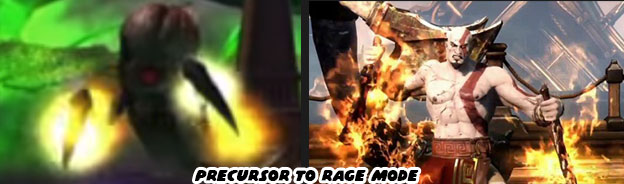
The characters had a secret ability of sorts. If a player pressed the Select button their character would perform a taunt move. If players had two full bars of attack energy then that meter would flash rapidly. If a player taunted during a flashing meter then their character would get glowing fists and do about 25% more damage per hit. The attack meter drained steadily once players had activated it and would stop once the meter had drained down to a single bar. Players could keep recharging the energy by looking out for power orbs. This unique gameplay mechanic was revisited in the God of War series under the "Rage of the Gods / Titans / Sparta" mode for Kratos. It could certainly help to turn the tide of battle when dealing with multiple opponents.

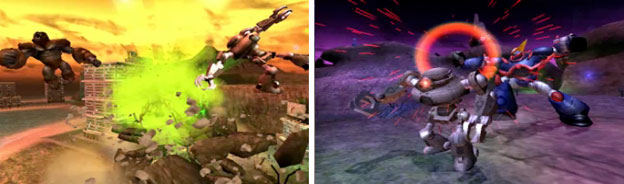
Each monster had a close and ranged special attack. The close one was good for clearing away groups of monsters that were swarming around players. The ranged attack could drop opponents making a run for a health upgrade. Some characters had hidden uses for their super attacks. Gas tanker trucks were the most destructive thing that players could throw at each other. In addition to the damage caused by the explosion the tanks would coat the monsters in gasoline and slowly burn away their health. The problem was that they were not always accurate over long distances. The Japanese robot Ultra-V had a ranged super attack where its arm would shoot out like a rocket to stun and reel in an opponent. That attack rarely missed even if launched from the opposite side of a level. If Ultra-V were holding a gas tanker when doing the special attack then it would shoot out the arm and punch the opponent with a powerful explosion. The game was filled with all sorts of amazing hidden uses for regular and super attacks. Special attacks and even regular attacks tired out the monsters. They could regenerate their attack stamina slowly if they waited or quickly if they destroyed the environment. Incog turned the destruction element from the films into an important game play feature. Characters could also recover health by searching out green radioactive markers.


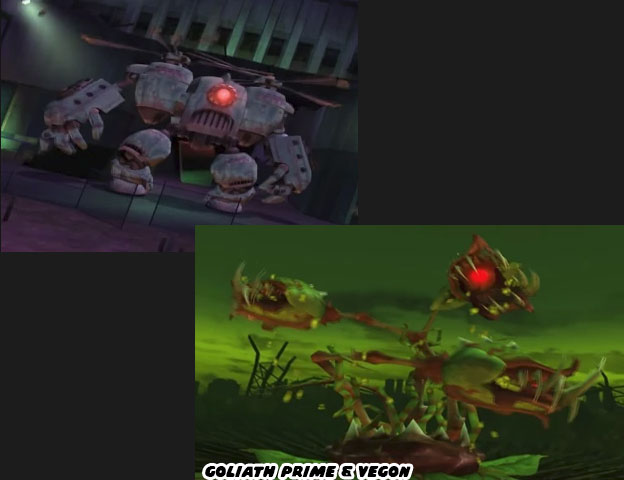
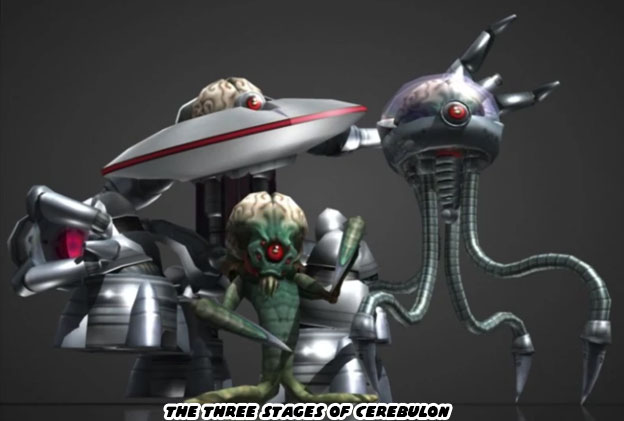
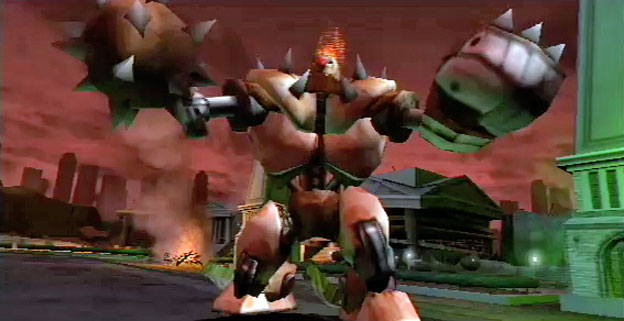
Players needed to learn all of the moves at their disposal too because they also had to contend with boss characters. There were three major bosses in the game. Each was designed to make all of the playable characters seem less imposing. The bosses required a particular strategy to defeat and none could really be fought hand to hand. The robot Goliath Prime, from the secretive military Area 51, towered over the other characters and could throw them around like rag dolls. It could also transform into a spinning wrecking ball as well as a two fisted artillery cannon. Then there was Vegon, the three-headed plant monster born from the center of a nuclear power plant. Vegon was actually the largest monster in the game and capable of swallowing the regular characters whole. The final boss was Cerebulon, the destroyer of worlds. That boss had three unique transformations, each one was memorable and all requiring a specific strategy to defeat. The effects, voices and game play built around the bosses was amazing. They really had to be played against to be believed.


As much praise as I've heaped on WotM the game did not really earn high scores from every publication or site. If I could find a major failing with the game it was without a doubt the camera system. The camera was very loose and turned quickly if the player used the analog controls. Trying the move, aim and throw a weapon was all but impossible by how quickly the screen spun. The opposite analog control did not control the camera but instead the elevation of a thrown object. It was difficult to get a sense as to how far opponents were while running around a level. The good thing was that once a player got close to an opponent the game would auto-lock the monsters. This way a player could trade punches and experiment with different combinations. A player could actually lock onto an opponent by holding the shoulder buttons (L1+R1). This made the experience of targeting an opponent for ranged attacks much easier. This was essentially the fix to the camera system and made the experience much greater. The downside was the the camera lock required players to manually hold the buttons while playing. In order to truly get the most out of the experience Incog should have included the ability to target-lock and switch between opponents. This was a minor detail that completely changed the game play. For the most part it was a minor inconvenience on an otherwise great game.


The reward for players that completed the Story Mode was a film that showed the origin of their chosen creature. Players were inspired to begin a new adventure and unlock all the endings and costumes. Those with friends and siblings could battle it out on any level featured in the game as well as a few additional bonus stages. The weakest element in the game were the two-player mini games. They seemed to be added as an afterthought and lacked any sort of polish. Not that it mattered because the actual game itself was rock-solid. Those that got used to the combat system and camera learned to cut loose and enjoy the ride. Incog Inc. had released the greatest giant monster game to date. Although the experience was short, logging in at 11 stages, it had tremendous replay value. The levels themselves were so amazing that players could easily get lost in the details and spend untold hours exploring every street and alley. It was much better to have a handful of unique levels than a hundred cookie-cutter levels, as Rampage had demonstrated.

Mind you, I managed to talk about the game over two blogs and not once did I mention that Mecha Sweet Tooth from the Twisted Metal series was a playable character!


War of the Monsters was the perfect giant monster video game. The individual elements and collective should be studied by all budding game designers. It was exactly the type of experience that players had been missing out on for years. The game was the first to capture the feel of controlling enormous beasts in full 3D without sacrificing design, game play or originality. Players no longer had to use their imagination to fill in the gaps between being a passive participant in a movie theater to being the star of the feature. It was a fully realized vision of what Epyx's Movie Monster had promised way back in 1986. It was also more than what was offered in Giants: Citizen Kabuto, Rampage, Doshin or even King of the Monsters. Players could fight with reckless abandon, plow through buildings, hurtle ocean liners at each other and embrace the primal forces their ancestors once ran from. The cast, stages and even music even were all unique. This game was worthy of joining the established Sony franchises.


Word of mouth helped War of the Monsters build a following. The more players that tried the game the bigger the legend became. Many wondered why Sony hadn't insisted on a sequel. Unfortunately the game didn't sell quickly when it first came out. This was despite a big ad campaign and positive review scores. Sony didn't bother to follow up and push for a sequel. Instead they were focused on David Jaffe's next title, a game called God of War. Many of the lessons that the studio learned during the development of War of the Monsters (and the mountain bike racing game Downhill Domination) were applied to God of War. The lighting and coloring, powerful thematic elements, strong music, sharp graphics and particle effects were rooted in War of the Monsters. Not to mention the Titan levels and final battle against Ares were heavily influenced by WOTM as well.


Fans never forgot about War of the Monsters. When Sony decided to publish it on the Playstation Network on July 31, 2012, the web forums lit up with the good news. The studio that helped optimize the game and sharpen the graphics was Lightbox Interactive, it was founded by former Incog Inc employees. The re-release was well received by seasoned players and a new generation of gamers. Hopefully Sony might consider giving this title yet a chance for a sequel. After all, you can't keep a good monster down for long! The next blog is actually dedicated to the tabletop games. Find out what the genre did for traditional board games and more advanced tabletop systems as well.


Monday, March 12, 2018

The Giant Monster Series, part 16...


War of the Monsters is the best giant monster video game ever made. Nothing before or after could hold a candle to it, certainly none of the Godzilla or Rampage games. Yet it also held a tremendous debt of gratitude to those titles for paving the way and teaching the developers where the pitfalls of the genre were. War of the Monsters was released in 2003. It had favorable reviews but most audiences slept on the title. Those that got into it enjoyed the experience. They appreciated the layers of substance put into the game by Incog Inc. (later absorbed into Sony Santa Monica). The game began as a love letter to the classic giant monster genre. It was dreamed up by gaming icon David Jaffe and his Twisted Metal colleagues. War of the Monsters evolved from a simple idea into something that gamers could really sink their teeth into. In order to pull off a great giant monster experience the developers went to the roots of the genre, the cinema. The game began in the classic movie broadcast format. The entire set-up of involving an alien invasion and where the monsters came from was explained in the first few moments. Eagle-eyed players noticed a couple of cars from the Twisted Metal series in the opening shot.


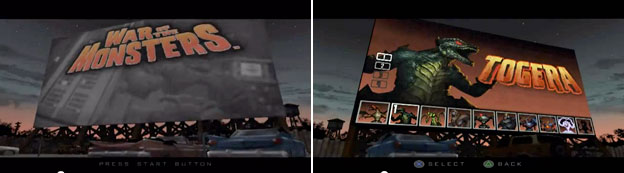
After the film played the camera panned back to reveal the title screen was set on a drive-in movie screen. Classic cars, circa the late '50s and early '60s were in the lot waiting for the feature to start. The tiny details on the menu screen rekindled memories of another era. The light coming from the background had the same hues of dusk setting in. Houses, telephone poles and even a water tower could be seen beyond the tall wooden fence. Movie fans in the suburbs would enjoy going out to the local drive-in because it was an altogether different experience. This was a slice of Americana that Incog Inc. wanted to bring bring players into.


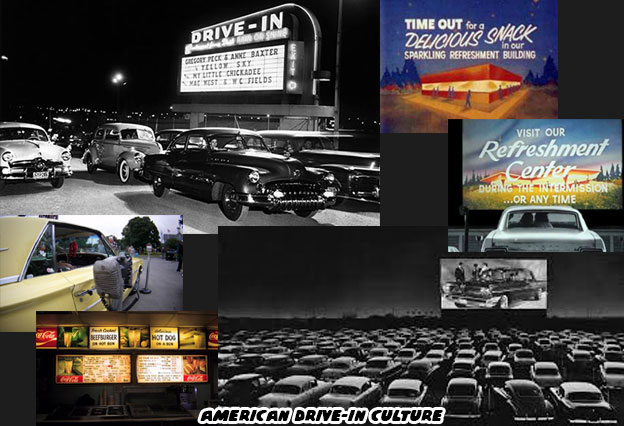
No movie palace could ever have the same atmosphere of an open-air arena. On a warm summer night patrons would get mixed sensations. A soft breeze, the sounds of crickets softly chirping in the distance, the smell of popcorn, pretzels and hot dogs wafting in from the concession stand. Even the sound of kids running through the gravel could only be experienced there. Patrons could enjoy the film from the privacy of their own cars. Families would sometimes pack an entire picnic to enjoy during the movie. Tiny steel boxes were hung on the car door to pipe audio directly to them. This was a prosperous time for the USA. We had just gotten out of WWII. Industry was booming, the middle class had grown exponentially and people were enjoying a culture that revolved around the automobile. Drive-in movies and drive-in fast food restaurants were the hottest trends. The greatest memories of a generation were tied to the drive-in. Some of these details were clearly seen on the title screen and in the various game menus.


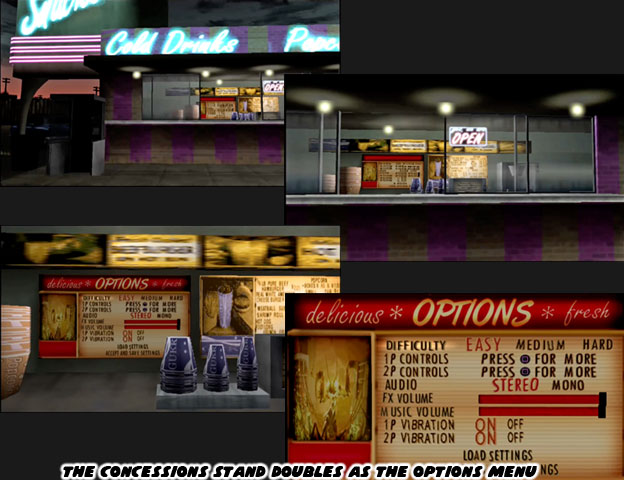
The main menu and character select menu were split between two different movie screens. The camera would pan between them as the player made a selection. The amount of detail placed on the drive-in was amazing. It was a way to ease audiences into this world. If the gamer went into the settings menu they were taken to the concession stand. The sign was certainly retro, the color of the settings menu was off white-almost plastic, like an old '50s drive in or even diner menu would have appeared.


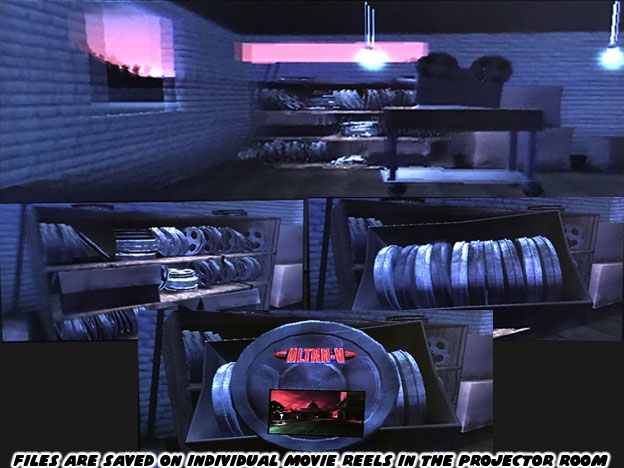
If a player went to load a saved file then the menu would take them into the projector room. Inside there were multiple projectors for each screen. The players were shown a cardboard box, it would be empty at first but as they saved games it would slowly fill with movie reels. Each reel had a picture of the level being saved and the title of the monster they were playing as. It was a nice touch making the monsters the stars of each picture. The format allowed players to save up to two cardboard boxes or two memory cards worth of reels. Friends could bring over their own saved files and share them on the Playstation 2.


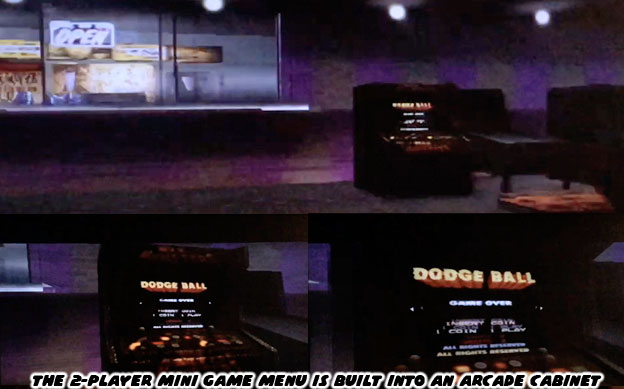
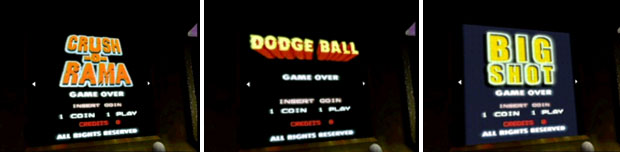
If a player wanted to try a 2-player mini game then the menu screen would shift. Next to the concessions stand was a bench for families to enjoy their food. There was a pinball machine and a weathered arcade machine. The camera would focus on the arcade cabinet. There players could scroll between three 80's looking titles; Crush-o-Rama, Dodge Ball and BIG SHOT. Incog went to the trouble of discoloring the font and adding scan lines onto the screens as if they were projecting onto a CRT monitor. If players wanted to see what items could be unlocked they went outside the projection room. In front of the coming attraction posters was a list of characters and levels that could be unlocked with enough credits.


No other studio had ever put this amount of detail just for the menu screens in a game. To be fair however The Movie Monster game by Epyx and I was an Atomic Mutant by Canopy Games certainly came close to recreating the feel of the classic cinema. Remember that Epix even included the interior of the theater and previews to enjoy before starting the game. The publisher could have never imagined what technology would have allowed for in the future. The mix of aesthetic elements from the late '50s through the early '80s in War of the Monsters was done for a reason. Incog wanted to bring players into the world they had developed. They wanted players to understand what the US was like during this era. They had to provide enough sounds and visual elements to help them do that. For many players and most working at Incog Inc. this was their childhood they were reliving. The developers wanted to recreate the excitement of being a kid and getting to go to a drive-in to watch a monster movie. At the same time they wanted to make it visually interesting to contemporary audiences. The designers were reproducing the golden era of monster movies, which would have been experienced by the majority of their parents, and the final years of the drive-in which they would have remembered as kids. They certainly managed to do all of that with style.


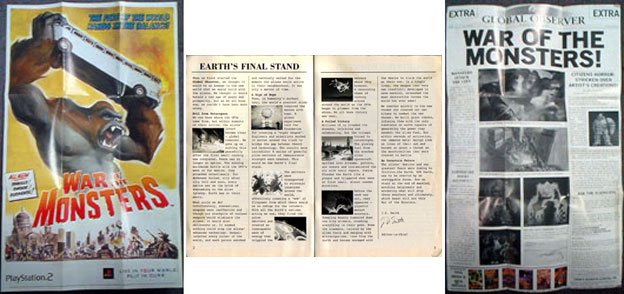
The details that Jaffe and Co. included did not even start there. The instruction booklet included with the game was written as if it were the journal from the Editor in Chief of the Global Observer. It was the fictional newspaper featured in the opening moments of the game. It described the alien invasion and how the alien menace was defeated with gigantic pulse emitters. Then it explained how the radioactive goo released by the spaceships created giant monsters. A poster page was included with the instruction manual. On one side there was a special edition of the Global Observer, complete with articles on the monsters and some secrets and tips for players. On the other side was a movie poster for players to frame.


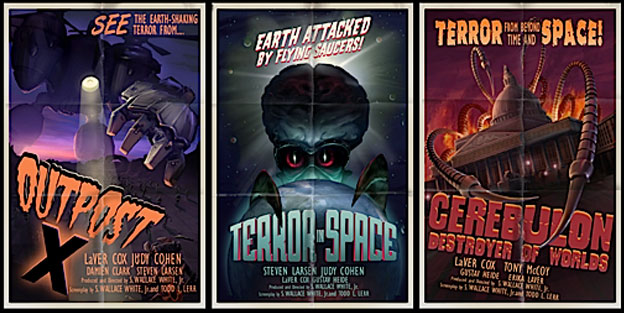
The level load screens were absolutely brilliant. They were made to look like movie posters. Each one highlighted the level details and sometimes opponents that players would be facing. The poster art, created by the talented Owen Richardson was stunning and looked genuine for the era. In fact the colors used for all the levels and environments had very solid hues and distinct lighting.


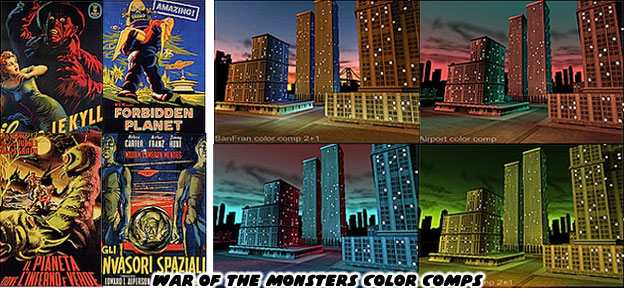
The color palette applied to each level was more than just good planning. The developers actually created color compositions for the stages inspired by the art used on actual classic movie posters. Every detail placed in the game built on top of the previous, these were meant to trigger memories and build emotional responses. Older gamers that remembered the drive in and the classic sci-fi and monster films would get the inspiration on the posters and levels. Younger gamers would be hooked by the art. All of the players would learn that the lighting created specific atmospheres for each level. From the eerie green glow that illuminated Atomic Island to the rose and yellow neon trappings of Gambler's Gulch, no two levels shared a color scheme or layout.


On the character select screen audiences had to choose from one of eight available monsters. An additional two monsters could be earned with battle points. Whichever creature the audience chose became the star of the game. The plot was very straightforward. The star was going to do battle with whatever other monster, or monsters they came across. War of the Monsters set players right in the middle of the action and did not waste too much time with backstory. The levels began with a portion of a "film" playing out before them. It highlight a specific rival and stage setting. In one stage there was a monster chasing police and military vehicles, in another it was giant robots fending off UFOs. In each case the camera would then turn and focus on the player-controlled monster and start the action.


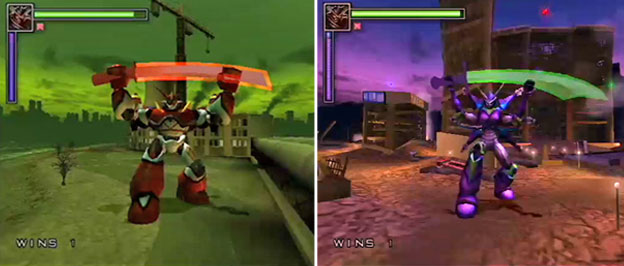
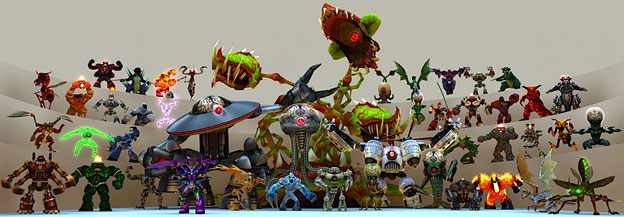
The monsters were fairly diverse and inspired by several generations of icons. The giant lizard Togera and ape Congar were expected as were the giant Japanese mecha Ultra-V and giant praying mantis Preytor. Those four represented the classic archetypes from cinema. The other characters were inspired by various creatures but came off as fairly original. To help diversity the cast players could unlock "costumes" for the creatures. The game rewarded credits for the damage players caused and the number of opponents they defeated. Boss characters were worth tremendous points. Players could turn in these credits at the concession stand to unlock costumes and levels. The new skins were meant to be seen as completely new characters. It was not unlike what Pipeworks had attempted to do with Rampage.


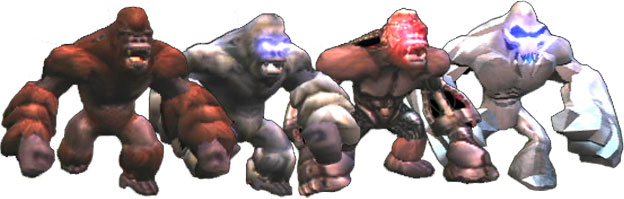
In the first level Congar was being pursued by the military. It was assumed that they recovered the body after the player had defeated him. Congar was returned by military transport choppers a few levels later with an entirely different look. He had been turned into a weapon to fight the other monsters. The newly created cyborg Congar had half a robotic face and eerie glowing eye. Even his limbs were replaced with machinery. This costume was available to be purchased as well as an albino ape, possibly interpreted as an abominable snowman. The fourth costume for each character often turned out to be the most original and the one least likely to be confused as just another re-skinned character. For Congar that was an alien with metallic skin. All four of the costume choices for each monster were well done.


The visuals hooked the players but the game play itself was what kept them coming back. I would like to spend the next blog looking at the game in depth. I hope to see you back for the next entry!


Friday, March 2, 2018

The Giant Monster Series, part 12...


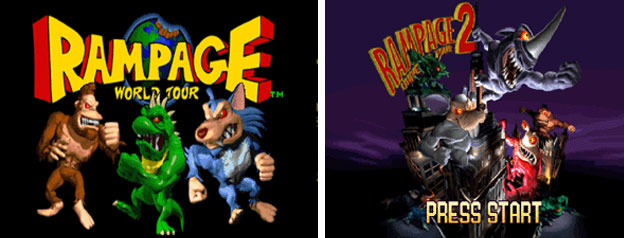
Midway returned to the giant monster series in 1997. It had been a pretty quiet time for the genre, more than a few years after the last King of the Monsters by SNK in fact. In a previous blog I talked about how Rampage World Tour was a reboot of the franchise. It brought back Lizzie, Ralph and George and had updated the graphics, level designs, opponents and game play elements. The title did okay in the arcade but really found its stride on the home consoles. Midway realized that the era of the arcade was coming to an end and began developing the next title with the new consoles in mind, the Nintendo 64 and Playstation to be precise. In 1999 the studio came out with Rampage 2 Universal Tour.


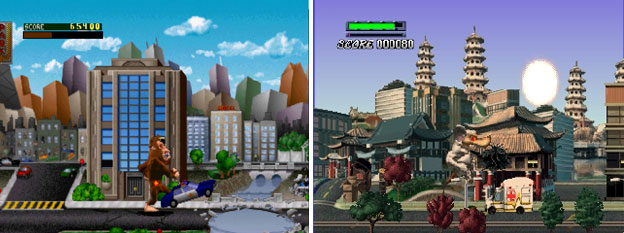
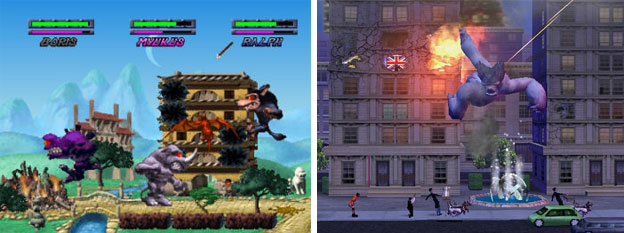
Avalanche Software developed the title for Midway. The game had a slight visual upgrade over World Tour. The studio used the same rendering techniques of the arcade game. They created models for the characters on CGI workstations and then converted that data into sprites for the consoles to use. The consoles at the time were still not powerful enough to render, light and texture complex 3D objects, that's why sprite workarounds were used. Even with that shortcut to the visuals it was apparent that the backgrounds in Universal Tour were modeled from 3D data as well. Avalanche also added a foreground layer at the bottom of the screen to add an additional sense of depth to the stages. In the original Rampage the background was either a black outline of a city or mountain. In World Tour the background was made of flat shapes with gradients applied to them. By Universal Tour they were actually buildings and scenery as far as the eye could see.


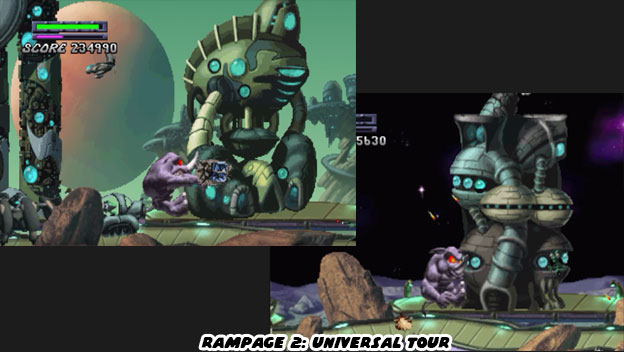
Midway decided that the game needed a plot and a reason for players to become invested in the series once more. The original trio had been captured by SCUM Labs and were locked up in different cities. It was up to three new giant mutations to free them. The gigantic Ruby, Boris and Curtis; respectively a lobster, rhinoceros and mouse. The new monsters searched the world for the original trio and once they were freed they became playable characters as well. The game then switched over to the second act, involving the group of monsters fending off an alien invasion. Two more monsters ended up joining the fray; Myukus and Noobus the cyclopses. The giant monsters ended up following the aliens from planet to planet until they ended up on their home world.


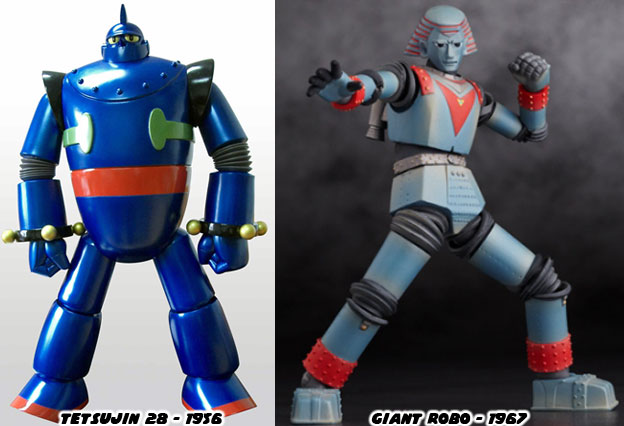
This was not the first time that giant monsters had thwarted an alien invasion. Godzilla had been deterring would be conquering aliens going as far back as 1964 when he took on King Ghidorah, the challenger from Mars. The daijaiku series had become very popular among young kids, boys especially, and Godzilla changed roles. When he originally appeared he was the symbol of the atomic menace, the cautionary tale of Hiroshima. By the end of the 60's he had become a sort of super-powered hero. Other giant characters came out of the woodwork to help fill the demand for daikaiju heroes. Gamera made his appearance in 1965 on the big screen and Ultraman in 1966 as a television star. These creatures were very much like the giant robots that were also popular in Japan. Mitsutero Yokoyama had created both Tetsujin 28 and Giant Robo. Tetsujin-28 was actually as old as Godzilla. The giant robot was more like a protective big brother in the stories than a weapon of mass destruction. They were created to fight other giant robots or even daikaiju in their own shows.


The giant monsters-as-heroes switch had happened in Rampage 2, technically the third game in the series. Midway and Avalance Studios were keenly aware that the series had to offer a bit more than the same mechanics and jokes that had sustained the first two titles. As such Universal Tour had to become more appealing to younger players, especially those that weren't even born when the first game was released. The studio dropped Dr. Betty and toned down the violence and gore slightly. The game became a little more campy. The humor was a bit forced. The better monster games used a slight amount of camp but felt more sincere about the genre.

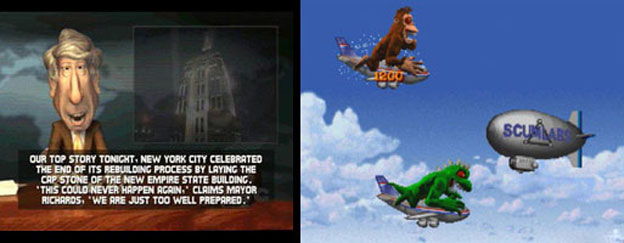
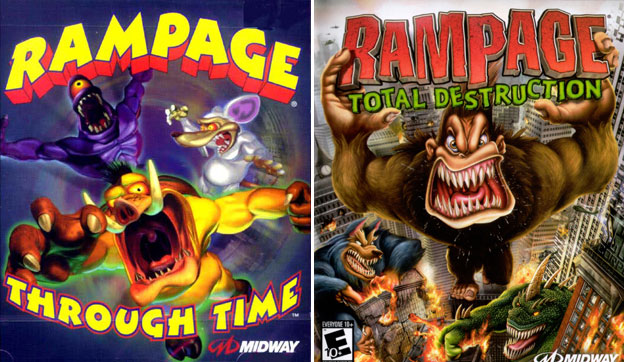
Midway kept the tone of the series light and developed another sequel for the consoles in 2000. Rampage Through Time introduced yet more new characters and locations for the monsters to visit. Unlike the serious announcer that instantly hooked players in the original King of the Monsters the news reporter in Rampage Through Time was very silly. Despite making a game about mass destruction the titles had become very kid-friendly, perhaps to the point of losing their own identity. From a technical standpoint the games kept improving. The graphics remained sprite based on Rampage Through Time but they didn't just reuse old assets. The character models, buildings, levels and enemies were completely redone. The characters kept their cartoonish styling but had greater fidelity. All of the classic monsters and Universal Tour monsters returned as well.


Rampage Through Time was notable for the diversity of locations and opponents. Since players were going backward and forward through time the buildings they destroyed and enemies they fought were period appropriate. Chicago in the 1920's had gangsters shooting at the monsters with tommy guns, whereas Sapporo in the far future had flying robots defending the town. The game also introduced mini-games for the players which were very much like the arcade classics Asteroids, Snake and Dog Fight. Of all the versions Rampage Through Time was possibly the best multiplayer experience. Unfortunately the review scores had been anything but kind as the titles had progressed. It was not hard to imagine that the franchise had become overexposed.


There was an 11 year gap between the original and the reboot. That was plenty of time for new gamers to jump on board and veterans to be reintroduced to the title. Unfortunately the massive collection of similar levels with repetitive game play wore out their welcome. Then two more sequels just two years apart with minor bumps in the graphics department were not enough to keep players interested. In fact, the destruction game play that first drew people to the title had become very redundant by Rampage Through Time. Players climbed buildings, ate people and kneecapped teammates to get ahead in the rankings. Although there weren't as many levels as World Tour the franchise was beginning to burn out.


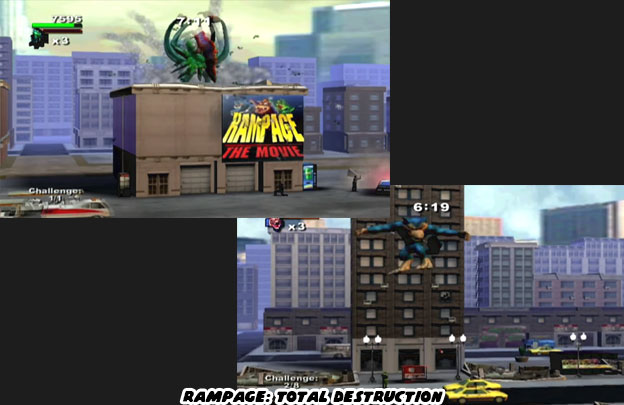
Midway took a six year break from the game. Pipeworks took over development duties from Avalanche. The next console exclusive title Rampage: Total Destruction was the first to be entirely rendered in 3D by the console itself. The format hadn't changed much in the time off. The opening scene was very cartoonish and felt more like a CGI film than a game. It had the comedic timing of a DreamWorks picture as it recreated Rampage canon. It turned out that SCUM Soda was causing genetic mutations in people all around the world and the CEO was trying to keep things under wraps. The writing was targeted at younger audiences as was the game play itself. The levels were still presented in a two-dimensional format although the monsters could now punch the fronts of the buildings as well as the sides. This pseudo 3D gameplay made the title slightly more interesting but for veteran players the game held little interest.

The ad campaign for Total Destruction fell as flat as the comedy bits in Rampage Through Time. This was despite the best efforts of an artistic team that included 1UP community member Ryan Braman. The game seemed to have a very specific demographic, young boys that enjoyed smashing things and collecting monsters. I know that if I were 10-years-old when the game came out then I would probably be vehemently defending it right now instead of deconstructing it. The handful of monsters added in Universal Tour were well done but by Total Destruction the series had added over 60 monsters with only the slightest difference in control and ability between them. These new creatures included a plant, french poodle, chicken, ram, tarantula and porcupine. The series had figuratively and literally "jumped the shark" when they added Marco the giant shark.


Despite the declining review scores the game still managed to sell very well, over a million units in fact. The focus on the younger gamer seemed to have paid off for Midway, at least for the short run. It turned out that Total Destruction was the swan song from the original publisher. The company filed for bankruptcy in 2009 and sold off the rights to the games soon after. Warner Bros. picked up most of the games but the fate of Rampage was unknown. It was a sad end to a once popular and well regarded series. Of course no giant monster ever stays dead for long. Like the creatures that inspired the series expect Rampage to return from the depths of our subconscious when we least expect it. Possibly in a summer or two when the kids are out of school and looking for something to entertain them. In the next blog we shall explore the original king of the box office and find out more on Godzilla's contribution to gaming.