Showing posts with label expansion. Show all posts

Monday, June 15, 2026

Bookmark This Page; The Disney Company in China, a podcast series

When the missus went on sabbatical I recorded a six-part series for the Pink Monorail Podcast on how the Disney Company started doing business in China. If you want to listen to the entire series then Bookmark This Page.

Disney in China, Episode 1

Disney in China, Episode 2

Disney in China, Episode 3

Disney in China, Episode 4

Disney in China, Episode 5

Disney in China, Episode 6

Have you ever visited any of the Disney parks in Asia? Tell me about it in the comments section. As always if you enjoyed this blog, and would like to sponsor me please visit my Patreon page and consider donating each month, even as little as $1 would help make better blogs and even podcasts!

follow the Street Writer on Patreon!

Friday, June 11, 2021

My favorite games of all time, the story of Carmageddon part 5...

In the history of Carmageddon, the Splat Pack expansion is always glossed over. It does not get nearly enough respect from game journalists, or game historians. Those that know could testify to how important it was in shaping the franchise. Carmageddon came out in February of 1997, the Splat Pack was ready by November of that same year. I consider it to be a more complete vision of what Stainless Games wanted to release on day one. It added eight new environments, with several levels dedicated specifically to multiplayer games. Plus it added 18 new cars, including multiple color version of the new Eagle, and Hawk. The version 2 cars had updated bodies. Many noticed that the Eagle was less aerodynamic. It now looked like a bruiser, closer to the Batmobile from the Batman Animated Series than a dupe of a '70s exploitation film. The Hawk on the other hand had all of its angles pushed further, making it more into a science fiction racer. 

They were not the only cars to be replaced for the drivers. Stig O’Sore previously drove the Volkswerker, an armored Volkswagen Beetle. In the Splat Pack he had the much sportier Carrerasaurus by Porky Motor Corp. It looked like a Porsche with metal Stegosaurus plates welded over the top. Fans enjoyed the changes to the game. The graphics had a bump thanks to the native support for 3D acceleration. There was also a patch to add 3DFX support to the original Carmageddon. For those that lived in a country with the “zombie" or censored version, the devs included a Blood Pack file to restore the game to its full blood, and guts glory. When it came to stirring up controversy Stainless wasn't messing around with the Splat Pack. There was a level that had you racing around a prison, running over inmates, and cops alike. The final stage of the game, the Ring of Fire, took place in a cemetery filled with mysterious hooded figures. A mausoleum portal took the racers straight to Hell which was made up of fire, brimstone, demons, and a disco club. If you reached the lowest point on the map you actually came across a gigantic model of the devil. Where he's seating in front of his P666 computer playing Carmageddon. Talk about being self aware! The media stirred up more controversy. Princess Diana had died in a car accident in August 1997, a few months before the Splat Pack dropped. The studio was asked to change the name of Die Anna out of respect. The studio did not.

Stainless was very much counterculture to the games industry, and for many they were counterculture to good taste. They seemed to love the fans, but not the business so much. Every chance they could they stuck their collective middle fingers up to the establishment. Studios were expected to submit a list of cheat codes so magazines could publish them. In Carmageddon typing a short phrase on a keyboard would enable a power up, as if the cars had driven over a barrel. Stainless made sure that magazines would have a hard time printing the phrases. Things like WEHATEMARIO, HAMSTERSEX, and SEXWITHFISH were just some of the individual codes you could enter. There was a master code that allowed you to type a number for a particular power up. This code was IBETYOUCANTPRINTCUNT. You can imagine that this didn't make things easier for publisher SCi. Players were very much on board with this brand of humor. Stainless reciprocated the love by dropping the dev tools to the modding community, which began calling themselves the CarMod Community. This was an international effort, as there were literally fans of the game all around the world. Their updates became CarModgeddon. People like CoffeyCup, and Crimson in the late '90s began releasing new skins for cars, and tracks. The Third Reich Mod for Carmageddon was arguably their most ambitious work. This patch replaced the theme for Bleak City, turning it instead into Berlin during World War II.

The modders went so far as to add goose-stepping Nazis where there were normally pedestrians. They replaced the Cops with SS APC’s, and added a few seconds of Hitler giving a speech on the projection screens in the game. The level had a story, somewhere in the city Hitler was giving a speech to his base, it was up to the racers to find out where he was hiding, and kill him. As if running over pedestrians wasn’t already fun, the mod made it a pleasure to mow down Nazi’s by the hundred. It was another example of the British humor that Stainless had built their reputation on. This time however, it came from fans, and Stainless gave it their blessing. I was eager to see what other changes the community would drop. Since I did not have a computer at home I had to wait to get to work to try out each update. My coworkers, and I got a chance to download every patch as it was released. If a new skin didn’t work, or was just plain ugly, it was easy restoring the original files from the CD. The one thing that many in the community missed was having access to the original Eagle, and Hawk. Yes, the new versions were nice, but so too were the first ones. The modding community released a patch that would allow players to choose any version. They then set their eyes on fixing what Stainless didn’t get around to.

One of the biggest disappointments in the original release was the car driven by Ed 101. It was a sporty Japanese-styled import called the Tashita Coupe. Fans didn’t have a problem with how it looked or handled. They didn’t have a problem with Ed’s design either. It was great storytelling that a robot went rogue, and entered the Carmageddon tournament. This wasn’t however the car that we were promised. In their website, and official material. It was stated that when Ed 101 went against his programming he stole a prototype race car for the tournament. This car looked like a UFO, the type of vehicle used in the F-Zero series by Nintendo. Of all the rides in the game, it was possibly the one I most look forward to stealing. You can imagine how disappointed I was that the car ended up looking like a Toyota Supra with a blade splitter up front. Again, it was fun in game, but not what I was promised. Stainless had meant for the car to be in the game all along. They just didn’t have the time to finish the model. 

Stainless actually left the textures for the flying car in the Devil's Canyon Mining Town game files. They invited the community to see what they could come up with. Modders found the file names, they were clearly labeled pieces for fins, a cockpit, and boosters. They got to work. Before too long they had a patch in place, and released it to the world. Players were welcome to use either of Ed 101's cars in game. The community figured out a clever way to make the prototype appear like it was floating. There were four wheels under the body, however they did not have a texture applied to them, so they were invisible. The only clue that there were wheels was when the car skidded out, it left behind the streaks from where the tires should have been. It was a clever work around, and remains one of the most fun surprises I’ve ever had in my time playing games. The community then set their sights on an even more complex file. They wanted to know if they could restore Tanka to its original design as well. I mentioned previously that Stainless couldn’t get the trailer mechanics working properly in their engine. So they cut out the back half, and left the cab to bounce about in the game. 

It took years but modders Carnage / Crimson eventually figured it out, as did Toshiba-3. Not only that, fellow community member Trent took up the challenge to get the tanker up and running in the later release of Carmageddon Reincarnation. The community that modified the games had as much passion for the IP as the people that created it. In some instances Stainless did reach out to the best modders, and offered them work. They would actively listen to the fans, and run polls on fan favorites. This helped shape the direction of the series. None of this would have been possible if the Splat Pack, and the modding tools had never been released. It opened our eyes to the possibility of changing an already published game. It’s certainly rare for a developer to have an open dialogue with audiences today. Most studios are insulated, and many online forums have devolved into shouting matches. For what it was worth the ones coming together under the Carmageddon banner seemed to vibe well together. This was something that never came up in any "making of" articles.

The Splat Pack had many other things going for it. Stainless never stopped working once Carmageddon went gold. There were many ideas that they had written down that they meant to be released in the original game. Several cars, and characters that appeared in the Splat Pack were in the works from the very beginning. Time, money, and resources just meant that they were left out. The success of that first game, plus the audience reception, gave them the push to complete the Splat Pack, and finish the vision they had originally. The additional vehicle types provided a bigger cross section of the Carma experience. Other studios may have been content to just draw up race cars with spikes for an expansion, and call it a day. Stainless was anything but an ordinary company. The vehicle types often came out of left field. An ambulance coated in blood, driven by the mad surgeon Sawbones was listed in the early concept drawings. The Blood Mobile was now official. The Ramraider, an SUV with a battering ram  driven by USA sports fanatic Big Daddy was now plowing through opponents. Other cars were jabs at Stainless' contemporaries. A blue, and white-striped muscle car, the Stodge Barger, driven by Carkey, and Clutch, was a direct call-out to the Picard Piranha, and Groove Champion from Interstate ’76.

The Splat Pack made the monster trucks bigger, like Herman Monster and his Monster Masher. The 10-foot tires were based on the tires used by Bigfoot V, and Bigfoot VII. It added a rampaging diesel truck to the lineup, Mother Trucker, and her Rig O’Mortis. It added full-blown race cars like the Fearari F999 driven by Ashteroid. The studio also expanded on the Auto Scum gang member rides. The Mech Maniac got the smallest car in the expansion, the slippery little Grunge Buster. Sports cars, trucks, just about anything with wheels was well represented. One of the influences for the studio, and a movie that isn’t always given enough credit for in car circles, was the Italian Job. I’m talking about the original from 1969, not the remake from 2003. The scene stealers were three Mini Coopers hauling a ton of stolen gold out of Italy. The stunt driving was amazing, and the producers made it look like the little cars were unstoppable. It inspired the Killer Coop, driven by Mike O’Kane (Michael Cain was the star of the film). It stood to reason that the mighty British Cooper with a jousting lance attached to the door would symbolize Britannia in the game. It would surely slay the giants of the tournament, and bring home the glory.

At the end of 1997 there was no argument. Carmageddon, and the Splat Pack were certified hits. In spite of all the negative publicity the outlets came to a consensus. This was a great game. To help get the title on as many computers as they could SCi bundled the game, and expansion together as the Max Pack. It was uncensored, as the developers had originally meant it to be. The bundle was nominated for Computer Action Game of the Year in the 1998 D.I.C.E. Awards. The awards given to Carmageddon were numerous, here's a sample; Winner - Best Action Game - Ultra Game Players, Game of the Year - PC Zone Magazine, 5 out of 5 - Computer Life, 4 out of 5 - Next Generation, 4 out of 5 - C:/Net’s Game Center.com, 9 out of 10 - Computer & Net Player, GameRevolution - B+, GameSpot - 8.8 out of 10. The quotes in the reviews did the team at Stainless proud. “Very playable, and addictive" - PC Gamer, “A complete blast to play" - Computer & Net Player, and “It’s been a long time since a driving game has been as much fun as Carmageddon." - Computer Gaming World. This was vindication for everything the studio had gone through in the prior three years. With everything they learned from Carmageddon, and the Splat Pack they were ready to go even bigger in a sequel. We will talk about that in the next blog. If you would like to sponsor me please visit my Patreon page and consider donating each month, even as little as $1 would help make better blogs and even podcasts!
follow the Street Writer on Patreon!

Wednesday, March 21, 2018

The Giant Monster Series, part 20...


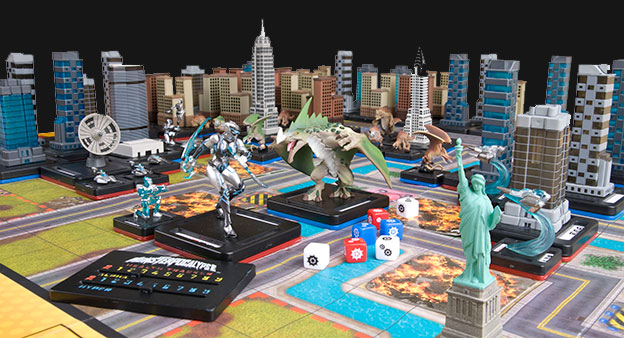
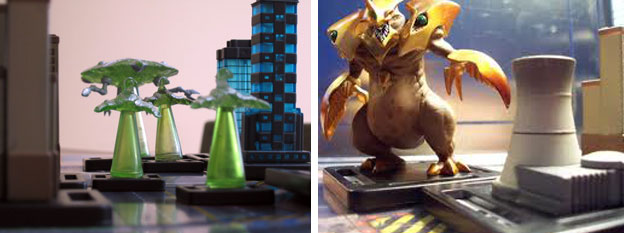
From 2009 through 2010 Privateer Press was trying to make Monsterpocalypse one of the most popular tabletop game systems ever. They used a grassroots approach to appeal to the community. They incorporated player feedback from local game stores during play testing. They maintained a certain level of transparency at every step of the process. They would answer questions, share notes and post previews right on the company website. They used word of mouth to help build a following. They toured the country visiting all the major conventions and showed off this system alongside their flagship Warmachine and Hordes systems. The studio had incorporated new manufacturing technology to help streamline production. They created pre-painted miniatures with built in counters and made the game board out of paper maps to help cut costs and appeal to entry-level gamers. For the most part they did everything right by the system and for the system. Any company trying to get noticed in the gaming world should study what Privateer did during those early years.


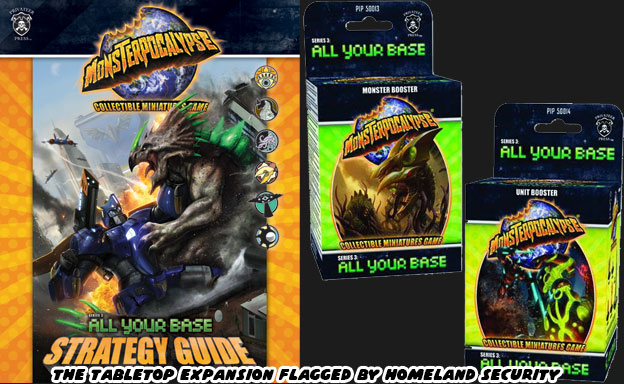
It was hard to ignore the appeal of the game. Who would not want to try monsters versus aliens versus robots? The mix of genres seemed like a perfect fit for tabletop gaming. Giant monster games were rare for the community and miniature based systems even more so. The attention to detail that Privateer put into the sculpts and paint jobs were amazing. Players could enjoy watching their monsters fend off an invasion or level a city with reckless abandon. The system managed to become so high profile that it got some unexpected attention from the government. The Series 3 All Your Base expansion was flagged by Homeland Security and could not be distributed in the country until it got cleared.


This immediately started debates on various tabletop gaming sites both in and out of the US. People couldn't believe that tax dollars were being wasted investigating a game, especially when gaming was supposed to be protected by the First Amendment. Players questioned the reasoning behind this and wondered what other games and systems the government began keeping track of in the name of security. It was possible that the post 9-11 world made some groups very paranoid. Players speculated it was because the game was dealing with mass destruction and some high profile landmarks, copies of the Empire State Building and Statue of Liberty, were targets in the game. Others said it was because some of the factions were against the military industrial complex and expounded radical thinking. The government agency never revealed the findings of their inquiry. The expansion was cleared by Homeland Security a few weeks later. Store owners were put off by the delay but not as much as gamers were. Privateer relished in the free publicity.


After three expansions the system had hit its stride. The middle of 2010 saw the introduction of Block 2 and the first of the six new factions. It was far along now and could hold its own against the original games created by Privateer. Monsterpocalypse was unlike the other systems though. It was unique in the scope, scale, production and genre. Tabletop games could be lumped into one of two genres, the fantasy or science fiction type. Even with the advent of pre-painted miniatures the genre was still mostly either fantasy or sci-fi. Pre-painted superhero Clix-type games were growing in popularity. The Marvel, DC and even Halo universe were each licensed for their own Clix game. Privateer found a way to combine the best elements of the Clix system with their own design philosophy. They ended up building a game that had no parallel. It was not quite sci-fi or fantasy but a mix of the two set in a modern world. No other studio was savvy enough to address the wants of veterans while making a system that appealed to beginners. No studio even considered the giant monster as the perfect template for a new type of game.


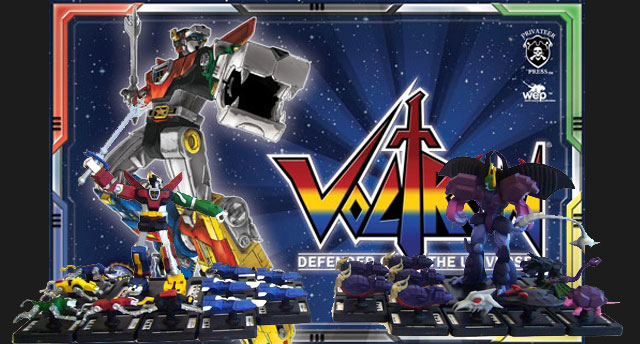
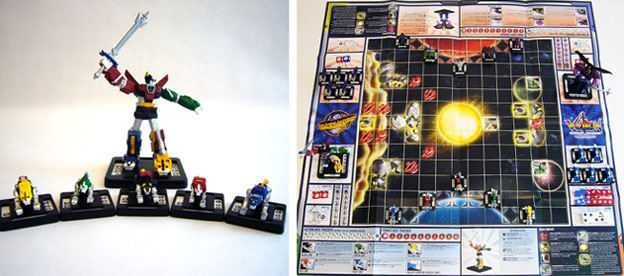
The popularity that Monsterpocalypse enjoyed helped validate for the work of Privateer. The system was gaining momentum at a record pace. Within two years the world Privateer created had established its own canon. The factions were rich with history, strong personalities and defined objectives. It had a distinct style that rekindled memories of classic cinema while also pulling in influences from comic books, animĂ© and modern features. People could be fans of the game without being familiar in any other series. Perhaps Privateer got a little too comfortable with their position. The game possibly grew too quickly for its own good and was pushed too hard by the company on players. The expansions were beginning to come one after the other, leaving little room for players to get used to the changes in game play. Buying new factions was proving to be a costly gambit. The buildings, monsters and support were randomly boxed in each case. Players had to buy several "blind" boxes in order to find the figures that they needed or had to pay marked up prices on eBay. Privateer then began looking for licenses to make the game even more appealing. For some players the game "jumped the shark" when the studio announced that they would be featuring a crossover with Voltron. The robot was made popular in cartoons from the 1980s. The Defender of the Universe got a big push by Privateer and was forced into Monsterpocalypse canon in July 2010.


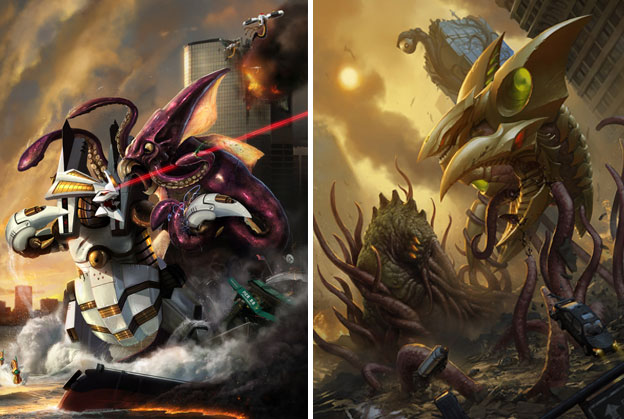
It made little to no sense why the studio would adopt a cartoon character. As cool as he was, especially to kids that grew up in the 1980s, the premise of a giant robot made up of lions seemed a little too campy for the Monsterpocalypse universe. The studio had gone out of their way to create art, articles and rules with a certain tone. The world of Monsterpocalypse was fairly serious, any humor in it was a bit dark. The monsters, robots and aliens were created in earnest and maintained a certain level of realism. The inclusion of Cthulu-like creatures that cursed the ground they walked on and turned humans into abominations pretty much summed up the established canon. All of a sudden there was a new brightly colored robot in the world, brandishing a huge sword, not representing any faction but himself.


Privateer used the same basic rules of Monsterpocalypse to build a standalone version of the Voltron game. His main rival was an evil dopplegänger named Lo-tron. Instead of fighting over a city the pair were dueling out in the cosmos. Interest in the expansion was almost nonexistent. It marked the moment that interest in Monsterpocalypse began waining. Monsterpocalypse earned good reviews on the BoardGameGeek and was ranked the 578th most popular game on the site with over 700 votes. By comparison the Voltron game did not manage to rate nearly as well. The stand alone version was ranked at 3278 on the list and had garnered only 59 votes from editors and visitors. The title seemed to hurt the brand more than help it. The seeds of doubt for the franchise were actually planted earlier.

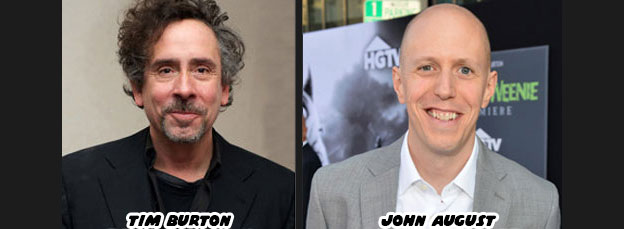
A few months before Voltron arrived Privateer posted a press release with a major announcement. On May 2010 DreamWorks had secured the rights for a film adaptation. This was the same studio that had marginal success with Monsters versus Aliens. People that remembered the animated film winced at the news. By July 2010 the studio announced that Tim Burton was selected to direct the feature. Burton would be joined by long time collaborator and screenwriter John August. Fans of the game gave mixed reactions. They appreciated Burton's directing style but were concerned that he would completely redo the canon to fit his artistic vision. After all he took the trading card series Mars Attacks and turned it into a campy, big budget mess. Many were afraid that he would do the same thing to the Privateer game.


Spring of 2010 saw the 5th expansion to the game released. Big in Japan was actually delayed due to production issues and growing global consumer demand. Players were expecting to see a sixth update by the end of the year but it never came to fruition. After the Voltron and the movie announcements the system seemed to stall. Privateer stopped updating the Monsterpocalypse website any news. The studio seemed to drop all articles or mentions of the game from their No Quarter magazine as well. Only fan-organized events and tournaments seemed to keep the game alive. The gaming group Team Covenant took to hosting online games for the community. The continued to ask anyone and everyone at Privateer what had happened to the system. For over two years the company stayed tight lipped. It was as if everything they had worked so hard on no longer mattered. Worse that they built up the community and suddenly pulled the game out from under them.

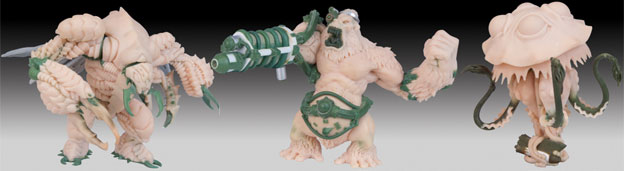
John August hinted on his Twitter feed that the reason the company had become so quiet was because they were waiting for the numbers on Guillermo Del Toro's Pacific Rim movie. If the Warner Bros. produced film generated good buzz and a huge box office then DreamWorks would push to get Monsterpocalypse done. If not then they might just let the rights expire. This was terrible news for fans of the game. It seemed that Hollywood had killed the system and community. They cared little for Monsterpocalypse at all and just saw something that they could exploit for a quick buck. Those that grew up with the Transformers animated show in the 80s and compared it to the Michael Bay movies knew what Hollywood was capable of. Audiences wondered what type of deal Privateer had signed up for. Why couldn't they continue to support and build expansions for the system? Was development halted on the IP because of what DreamWorks or Tim Burton had planned? Was the game really going to change direction, game play or factions based on what the movie established? One of the last posts from Privateer was a preview for the next wave of creatures. They appeared to be expanding the Tritons, Savage Swarm and Empire of the Apes factions from the Second Block. The figures were very far along in the process but never made it to market. Four years after that post most players had given up hope.


Fans felt burned by Privateer and for good reason. They had invested their time and money with the promise that the system would continue to be supported. They had previously never come across any publisher that dropped an entire system without warning. It was actually unheard of! Even Games Workshop, the huge studio from England, had developed and dropped a dozen great titles. They slowly weaned players off of a system before putting them in the "Specialists Games" section of their catalog. It was a warning that the system would no longer be supported. Privateer Press was the alternate to Games Workshop. They were the little studio that made big waves because they cared about the community. Every game they had developed they had supported to their fullest. At least they had let on that they did. The company had built their reputation by winning over players at many conventions. One by one the employees would look a player in the eye, shake their hand and introduce them to a new game. Monsterpocalypse had started out like this and certainly deserved a better fate.

All of the hype that the company had put on the community turned out to be nothing but that… hype. Many players had ended up sitting on hundreds of models. Those figures stopped being collector items rather quickly. The miniatures not kept for their novelty value were sold off for a loss. The independent game stores were burned by Privateer just as much as the fans. They had stocked shelves thinking that the company would keep running with the line as they had with Hordes and Warmachine. The energy that followed the system from convention to convention had dried up. The company stopped featuring the game altogether and employees did not bother to acknowledge its existence. Privateer kept the system in a shallow grave, hopeful that they might be able to resuscitate it and turn a hefty profit should a movie ever be released. Fans were also hoping for a return of the system but had no guarantee that it would be the same. For all they knew the company would start all over, drop the rules and factions and turn it into a board game. Nothing that Privateer or the fans did would hurt or help the chances of seeing a film. The movies were coming despite whatever plans Privateer had made. If there was a silver lining for the genre was that it would never disappear. In fact some of the best animated work in the past decade was created by teams that loved the genre. Find out about one of these artists on the next and final blog in the series.