Showing posts with label panzer dragoon. Show all posts

Friday, May 12, 2023

The rail shooter revolution, part 2 - Originally published on 1UP - October 21, 2011

The previous blog talked about rail shooting games and talked slightly about their evolution. As technology advanced so did the gaming experience. Thanks to new processors and more powerful software games moved from pixels onto polygons. Thanks to advances in hardware arcade machines were changed from stationary to immersive experiences with moving seats, force feedback controls and surround sound. At home the rail shooter was experiencing a shift as well. There was a quantum leap in graphics technologies from the previous polygon attempts featured in Silpheed and Star Fox to the new 32-bit generation. Many could pinpoint the start of the era to 1995 with the release of Panzer Dragoon on the Sega Saturn.

The game was still set on rails, yet like Star Fox players could fly around on the screen, while tracking and shooting down opponents. The game was visually stunning. The new consoles were able to render polygons with textures, transparencies and a myriad of colors. The designers at Team Andromeda created some fantastic designs including flying creatures, floating battleships and citadels that defied gravity and were able to present them convincingly in game form. They took full advantage of the 32-bit processing power and expanded memory available to them. While Panzer Dragoon was not the commercial success of Star Fox it did herald the arrival of the arcade quality rail shooter to home consoles.
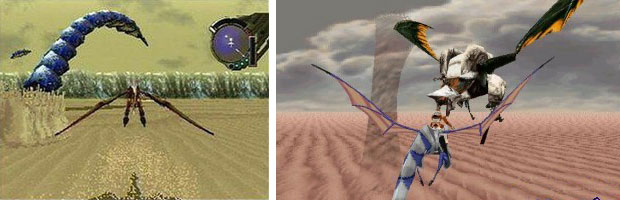
A year later Sega expanded on the elements of the rail shooter through the sequel Panzer Dragoon Zwei, released in 1996. This new game featured improved visuals and even more intense boss battles than before. The game also featured a dynamically evolving dragon as part of the gameplay. In the story the new dragon was young and lacked the speed and maneuverability of the original dragon. Players were encouraged to explore the game and paths by flying through them or having the dragon run along the ground similar to a horse. The more time the player spent doing either activity the better the dragon became at it. Speed and maneuverability in one environment were sacrificed so the dragon could become stronger in the other. Players that balanced their time between flying and running had a dragon that had good all around skills, attacks and defense. No rail shooter in the arcade had ever given the player a dynamically changing protagonist. These changes effected the gameplay in profound ways but not as much as Team Andromeda's magnum opus, Panzer Dragoon Saga. Released in 1998 this game really fleshed out the universe of Panzer Dragoon.

Panzer Dragoon Saga was a hybrid title combining the rail shooting mechanics with a role-playing experience. Players could upgrade the stats and abilities of their dragon after major boss battles. These changes affected the physical appearance, including the color and armored scales of the dragon as much as the way it handled in far more dimensions than was possible in Zwei. Players could make their dragon defensive with lots of heavy armor and stubby wings, or speedy with long skinny wings and physical features. They could also blend in the changes that came along with having an attack or magic based dragon. Of course there could be a blend of all four types to have a well rounded dragon that looked unique as well.
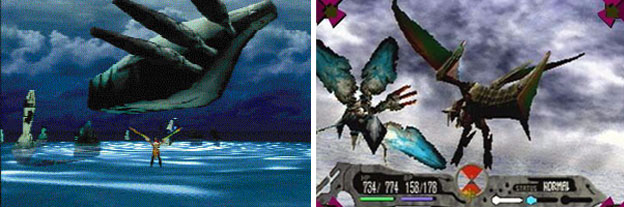
Where the home consoles lacked in the physical aspects of the arcades, things like moving seats and force feedback controls, they made up for with exclusive gameplay elements. A linear, level by level version of Panzer Dragoon could have been made in the arcade. However an RPG using the same Dragoon mechanics spread over an entire world with customizable dragons that play differently would be very hard to recreate in the arcade. Console games allowed for broader experiences with more freedom of gameplay while arcade titles were focused on very intense but controlled gameplay. The final, formal, title in the series was Panzer Dragoon Orta. Released in 2002 it was a bare-bones Dragoon experience. Harkening back to the original game in which graphics and gameplay were the major selling points.

By the year 2000 the rail shooter seemed to have run out of steam. The indy game and mobile gaming were beginning to wean players away from arcades and the rail shooter genre.
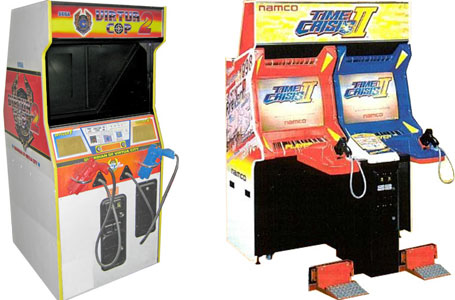
A few years earlier, after publishers had moved exclusively to polygons for arcade titles Sega had created a new generation of light gun game that required more physical effort than usual. Gunblade NY, released in 1995, put the player in the role of a SWAT officer shooting at high-powered opponents from a helicopter. Already the . Up until that point the light guns in the arcade were molded after automatic or revolver type pistols. Players could easily handle the weapons and target opponents as they moved across the screen. Gunblade NY featured a much heftier gun, undoubtedly meant for older players. The gameplay was still rail based as the screens automatically progressed as the helicopter camera system flew over and around objectives. What made Gunblade unique was that the light gun was very large. It was a heavy machine gun that was mounted to the cabinet itself. The gun was difficult to move and recoiled with some force. It vibrated far more violently than any rumble-based controller and gave players quite an upper body workout.

The light gun mechanics used in some rail shooters made the transition to consoles very well. Gunblade NY and its sequel LA Machine Guns (released in 1998) was ported over for the Wii. Part of the arcade experience was lost as handling the Wiimote would be much easier than swinging around the hefty machine guns. It was good to see the rail shooters get a new lease on life. Games that started out in the arcade, like House of the Dead from 1996, found their way onto consoles as well. An arcade style console exclusive sequel titled House of the Dead Overkill was released on the Wii in 2009 and the PS3 in 2011.

The rail mechanics were a stark contrast to the wide-open survival horror FPS title Left 4 Dead. The scenarios, levels and designs were similar but the gameplay was different. Some players enjoyed the freedom than came with exploring the world in Left 4 Dead while others enjoyed the quick point and shoot mechanics with a tangible gun controller in hand.

After years of honing the rail shooter on consoles and arcade cabinets Sega married those technologies with amusement park attractions. In 1997 Sega built a roller coaster titled Rail Chase, themed after the videogame. The ride appeared at their Joypolis location in Tokyo Japan and at Sega World, the Sydney version of Joypolis. At the time it was Sydney’s only indoor roller coaster. Players went through a series of scenarios which were inspired by the locations featured in the game, including snowy peaks, dark caves and desert valleys. Best of all the riders could shoot at targets with light guns and interact with the scenery.

Sega also married the dark ride with arcade technology. The attraction Ghost Hunters was not based on any particular arcade game, although one of their earliest rail shooters released in 1990 was titled Laser Ghost. In that game players took on the role of ghost fighters, shooting at ghosts with laser firing machine guns. The title, like many early Sega arcade games was based heavily on Western pop culture. Shinobi for example had unlicensed cameos of Spider-Man, Batman, the Terminator and Godzilla.

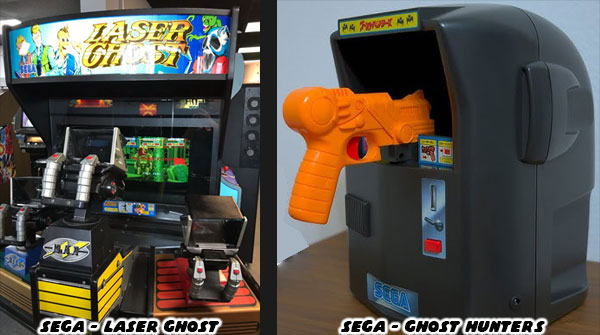
Laser Ghost was poaching the successful Ghostbusters movie and animated series. The gameplay was set around a big city (which looked an awful lot like New York) being invaded by ghosts. The three ghost catchers traveled through the city shooting up everything in sight. The 1991 follow-up Laser Ghost on the Master System console was not an arcade port. Instead players used a light gun to help protect a little blonde girl as she made her way through a haunted house. The blonde girl and scenarios for the console version were lifted from the film Poltergeist. A small cabinet for the home was released of the evolved Ghost Hunters attraction. The toy featured light up plastic ghosts in a miniature cabinet for kids to shoot with the included light gun.

Ghost Hunters was a sit down ride that went through a dark maze. On the walls were mirrors and projections with holograms, black light paintings and polygon-generated spirits. Players could use the plastic cannons mounted in front of their seats to shoot projected beams of energy at the ghosts on the screens. The effect was somewhere between an electrical arc and the wavy beams from the Ghostbuster’s Proton Packs.
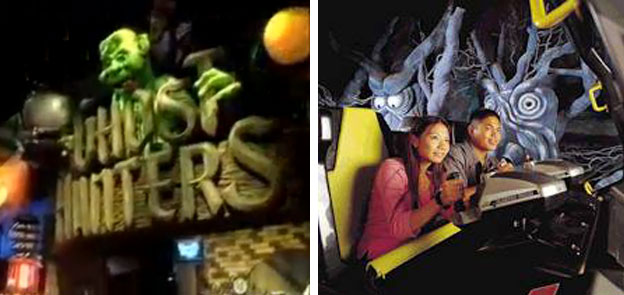
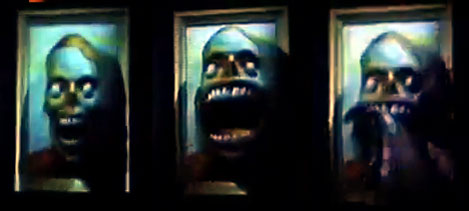
The visuals shifted between scary, macabre and humorous. It was very much a riff on Disneyland’s Haunted Mansion as much as it was on the Ghostbusters. Audiences were welcome not to be passive participants on the ride and be startled or creeped out by the visuals but instead fight back against the spirits and demons inhabiting the house. Sadly all the rides at Sydney’s Sega World were sold off or torn down in 2001 leaving only a rare glimpse online and the occasional shared memories for those that got a chance to experience the park.

The rides at Joypolis and Sega World paved the road of interactive attractions at theme parks. One of the adopters of the format would be the biggest name in the industry. Disney merged the dark ride, animatronics and the interactive light gun experience in 2004 through Buzz Lightyear's Astro Blasters. In that attraction audiences got to play the part of a Space Ranger taking on Zurg. Guests were able to shoot at targets and score points using a light gun as they traveled through a series of rooms. Scores were tracked by the ride itself. What made the attraction unique was that the rooms were painted in fluorescent paint which had a soft glow under the black light. Plus all throughout the ride there were giant models, moving props and a couple of large animatronic figures. Everything in the ride was a tangible object.

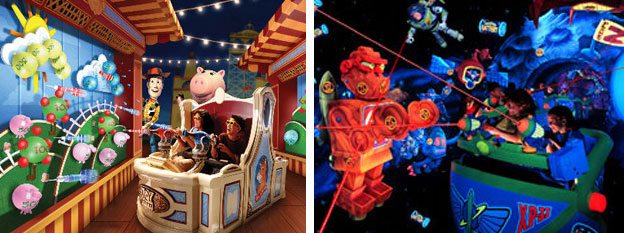
Disney’s next interactive ride did away with the animatronics, save for a great Mr. Potato Head in front of the attraction. Midway Mania, which made its debut in 2008 was a mix of classic carnival games with light gun mechanics. Riders would wear 3D glasses and shoot at targets on a series of giant displays. The rides would spin down tracks and keep score on an LCD build into the cab. Some of the games would blast players with a shot of air to add a little more dimension to the experience.

By using LCD screens instead of building physical animatronics Disney would be able to go back into the attraction and add new games and characters whenever they wanted. Such was the case when Toy Story 3 was released. The Disney Imagineers were able to incorporate the characters introduced in the film within a year of its release. Visitors to the park were amazed at the fast turnaround that the game technology provided.

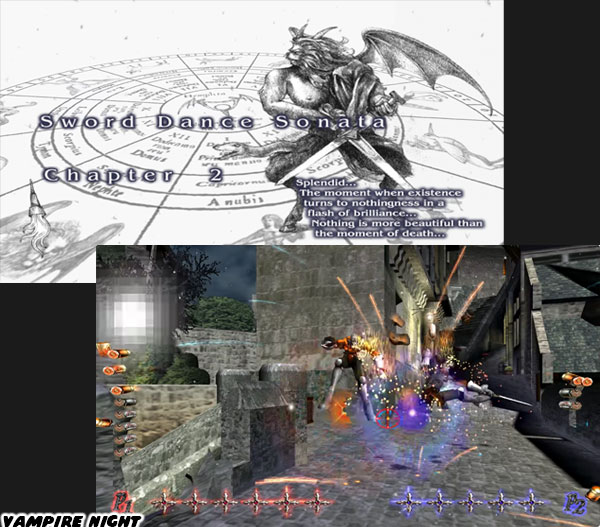
The end of the 90’s and start of the 2K era saw a global decline in arcade sales and a shift to console and mobile gaming. Long time market rivals Sega and Namco even partnered up in 2000 to release a rail shooter Vampire Night on the PS2. The shift away from the arcade combined with poor business planning hurt many companies. Many publishers were forced to merge to stay afloat or become profitable again. SNK merged with Playmore, Sega and Sammy partnered up and Bandai merged with Namco. These changes in the companies did not mean that they stopped innovating in the arcade. They simply had to be more practical with their titles.
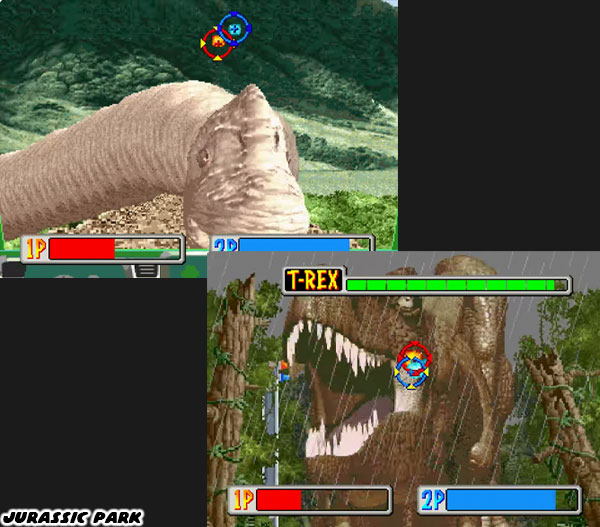
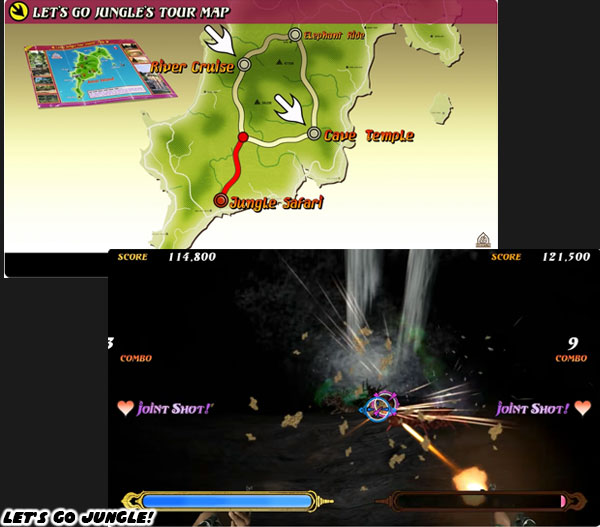
Sega found its rail shooting rhythm in 2006 with the release of Let's Go Jungle! The game was a frenetic rail shooter. Players assumed the role of tourists trapped on an island with giant angry animals. Hordes of bats, spiders and other creatures threw themselves at players in relentless waves. The artistic design for the characters was more comedic and campy than Sega had done in the past. The pacing of the game was also much faster than anything they had done before. The tempo of the game made it more difficult than previous titles, causing players to use plenty of credits to try to beat it. This made arcade owners happy as you could imagine but left some long-time players wondering what happened to the creativity Sega used to exploit. Where did the Rail Chase or Jurassic Park experiences go?

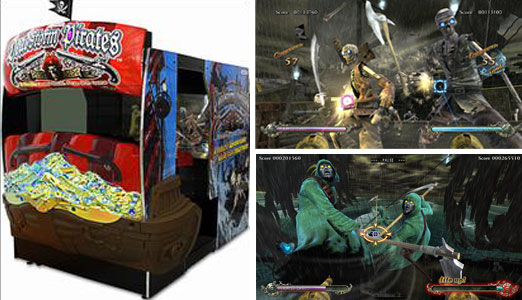
Actually those experiences were being created by Namco. In 2010 they released Deadstorm Pirates, an arcade shooter that incorporated both light guns and a ship’s wheel. The light gun was for shooting down waves of opponents of course but the several of the quick time events were handled by turning or spinning the ship’s wheel. In other portions of the game the wheel actually steered the ship or row boat around obstacles.

The game was well received by audiences. It presented some amazing battles and scenarios using a great rendering engine. Like Let’s Go Jungle! this game was one of the early rail shooters in the arcade to be presented on a high definition display. The themes featured in the game were very rich, combining classic Western pirate designs with a hint of anime and other Japanese aesthetics. It did not hurt that the game came on the heels of the Pirates of the Caribbean trilogy. As Sega had found success taking cues from pop culture in the 80’s and 90’s Namco was now doing by poaching many of the ideas from the PotC films and attractions. The game did so well in the arcade that Namco updated the technology for new builds and offered a stereoscopic (glasses free) 3D version of the game and a motion-based 4D version. The game eventually found its way onto the Playstation 3.
Not to be outdone Sega had stepped up the development of the Let’s Go series by releasing a glasses free 3D version of the sequel, Let’s Go Island in 2011.

The deluxe versions of the games incorporated the motion seat technology and encapsulating themed cabinets, going so far as blasting players with air as Disney had done in Midway Mania. The mix of the classic arcade and amusement park designs was a step at bringing Sega back to the elements that made their earlier rail shooters memorable.

Where the rail shooter goes from here is only limited by the imagination of designers and of course the budget allotted to them by the publishers. In this regard Disney is in a favorable position over game developers. Disney has a built in audience visiting the parks and usually a tremendous budget to satisfy expectations. Interactive attractions at their parks are built to reward visitors at every skill level, not just the gamers. Unlike arcade games the theme park experience does not end if the player fails to score enough points.
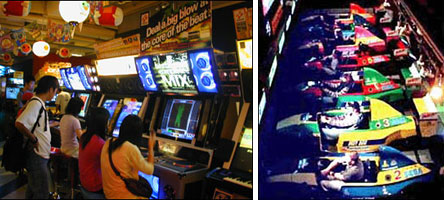
The arcade industry survives by squeezing money out of players for each interactive experience. The games have to start easy enough for beginning players but the challenges then have to ramp up quickly to keep them engaged and spending money. The games also have to be difficult enough for advanced players and not easy enough for most of them to get through on their very first credit. It is a fine line between design and difficulty, arcade owners can actually set each cabinet for how difficult it should be and how many credits the title requires based on the market. The smaller the turnout at a local arcade then the lower the price is for playing. Arcades or restaurants that can pack in the customers can get away with charging a dollar or more a game instead of a quarter. 

Theme parks do not charge visitors for every ride they get on nor do the interactive experiences ever change in difficulty. The visitors themselves choose how hard they are willing to play while the park makes a profit elsewhere, like in food and merchandising. Visitors to theme parks do not expect to get kicked out of an interactive ride for playing poorly, so each ride through Astro Blaster or Midway Mania is guaranteed to come to a conclusion. There are no guarantees that gamers in the arcade will ever see the final screen. However to their credit the games in the arcade usually last much longer than any dark ride, some games could go for 45 minutes or more, the Pirates of the Caribbean attraction lasts around 16 minutes by comparison.
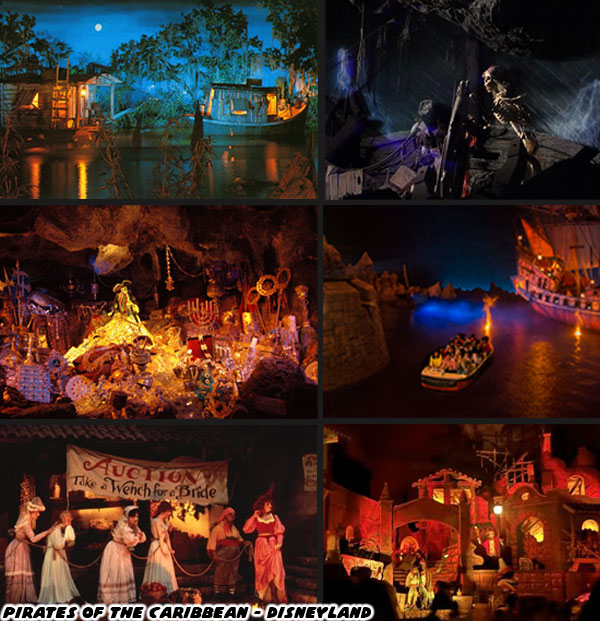
Some of the better interactive arcade games could feel more rewarding to players because of the participation they demanded. There was a stark difference between watching the Last Fighter and playing through Operation Star Blade for example. The interactive experience could make many feel more connected to a game than any other form of entertainment in this regard. However what Sega, Namco, Disney and other developers were finding out through the early 2K’s was that the arcade and interactive ride experience did not have to be mutually exclusive.

The rail shooter has a bright future in parks, arcades and at home. The best ideas and technologies seem destined to meet for the benefit of gamers. The evolution of pixels to polygons, from stand up arcade cabinets to immersive “4D” motion rides, the rail gunner has pushed the development of some of the greatest titles ever made. I would like to be around for another century just to see where else the genre could take players. Of course the greatest rail shooter in my book was never released at home and not many people got a chance to experience the title themselves.

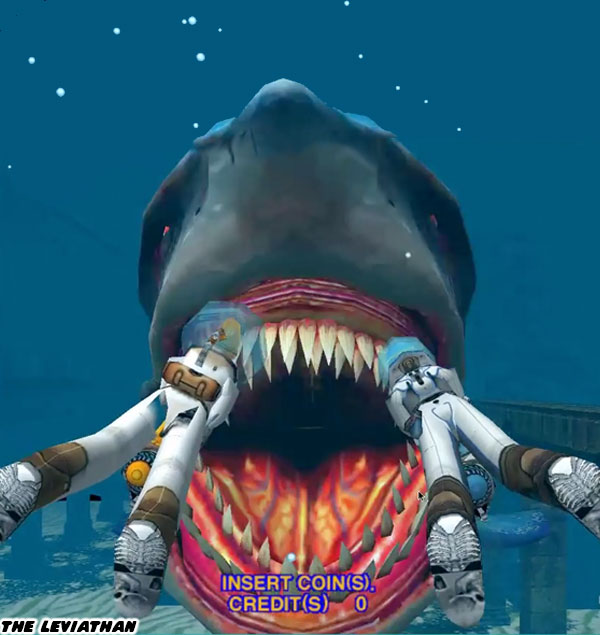
Sega’s The Ocean Hunter, released in 1998, set a standard for storytelling and design yet to be topped. Now that the publisher is revisiting their library of classic games and re-releasing them on consoles then perhaps there is a chance that many more people might get a chance to experience one of my favorite games of all-time. Until that day comes I implore the reader to support the local arcades and share with us experiences with the rail shooter genre. What were your favorite games and why? Let me know in the comments section please. As always if you would like to sponsor me please visit my Patreon page and consider donating each month, even as little as $1 would help make better blogs and even podcasts!

follow the Street Writer on Patreon!

Wednesday, January 25, 2023

What came before the gods? Pop culture makes me obsessed with mythology...

In the previous blog I talked about a conversation I had with my cousin on whether Elden Ring, or God of War Ragnarok would win the 2022 game of the year. It got me thinking about the GoW series, about what made it stand out to me. Why did the adventures of Kratos resinate so much with me? I suppose it all goes back to the movies, and stories I grew up with. I’m a Gen-Xer, like most we were born in the 1970’s. It was a sweet spot where arcades were transitioning from pinball machines, to video game cabinets. So we were the first generation to enjoy the last of the mechanical games, and the first of the digital games. Also we were the generation that was introduced to home game consoles as well. I was lucky to have parents that took my brothers, and I to many different types of movies. Animated, live action, comedy, horror, action, suspense, and just about everything in between. Of course they’d tell us to close our eyes if there was nudity, but we enjoyed most everything we saw. Then of course we would watch TV after school, and see all sorts of classic films while doing our homework. It would be a few years before we got our first game console. So comic books, cartoons, and classic movies pretty much fed our imagination.

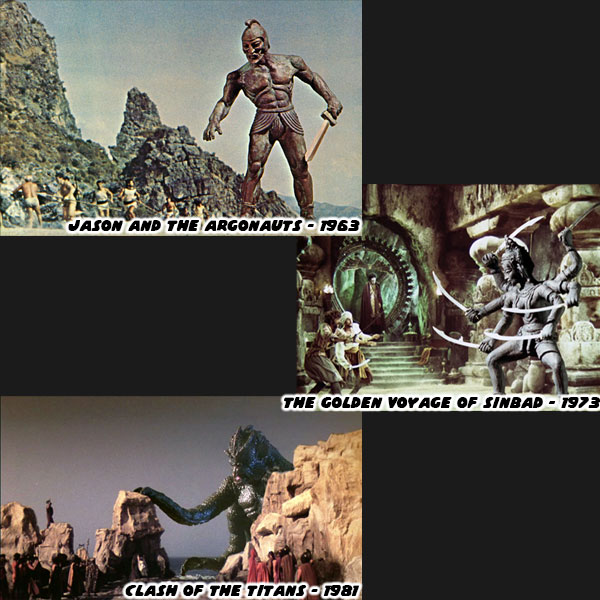
There were a few films that we always tried to catch on TV whenever they played. Chief among them were the ones featuring Sindbad, sometimes written Sinbad. The films covered the stories of the famous Arabian sailor. We got to see a world of fantastic adventures, filled with mythical monsters, evil wizards, and memorable archetypes. While we enjoyed the movies about Robin Hood, and King Arthur as well, it was always nice to see dark-skinned characters play the heroes. The Golden Voyage of Sindbad was possibly our most favorite. It didn’t hurt that I had an instant crush on the chesty Caroline Munroe. The makeup, costumes, and special effects were amazing. We knew how green screens worked thanks to the local weatherman, but couldn’t figure out how they got giant monsters onto the same frames as the actors. The scene where the evil wizard Koura brings the statue of Kali to life was forever burned into my memory. We’d eventually learn about stop motion animation, claymation, and the like. It was an animator named Ray Harryhausen that brought the fantasy monsters to life. I would be forever in debt to his creativity.

Every movie sparked questions from us. We were in awe of the myths from the Mediterranean, Middle East, Africa, and South Asia. Who were the Greeks? Who were the Romans? What about the Persians, Akkadians, Babylonians, and Sumerians? What was a colossus? Where did the giants come from? Were these based on actual legends? Were they original stories? Did these places, did these people exist in real life? Where did flying carpets, and genie’s come from? We’d pester our parents with these questions day, and night. Thankfully mom was familiar with many of the stories. She had grown up with seven brothers, and a sister. They learned all sorts of things in school. She told my brothers, and I about Shahrazad, and the Thousand and One Nights. She talked about how the ancient cities, as well as some of the magics, and monsters were even mentioned in the Bible. As practicing Catholics that was all I needed to hear. I was convinced that a lot of these fantastic stories were based on reality. The thing that really intrigued me was that every legend was built on an earlier story. Like it was King Solomon from the Bible that cursed all djinn, and made them servants. So demons, and monsters used to just run over ancient civilizations. The film Clash of the Titans was the first Greek mythology film we saw in a theater. I learned about the gods that existed before the Bible from that movie. More important, I learned that there were monsters called the titans that existed before the gods of Olympus. They all had names, they all had origins. The idea of something existing before the more well known gods inspired me. It created a desire to learn what came before. I wanted to read more about the ancient gods, and monsters. Of course there weren’t many story books about that in elementary school.

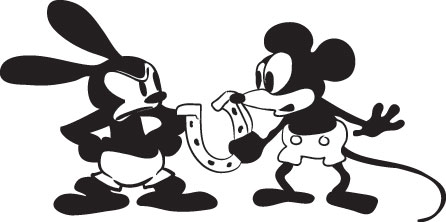
That desire to learn what came before never faded. It was how I discovered that Oswald the Lucky Rabbit existed before Mickey Mouse. At the very least our library had books about cartoons. My fascination with Oswald stayed with me for decades. It was the bit of trivia that I could always bring up to stump the other die-hard Disney fans in school. I never forgot about the titans, and when we took field trips to the main brach library in downtown Long Beach I would seek out the mythology books. I would find out the names of the heroes, people like Jason, and Perseus, and the adventures they went on. I’d wonder why the statues of the classic heroes were always naked, but seeing them wrestling monsters was proof to me that the stories were based on reality. Every now and then I’d learn the name of a titan. Oceanus, Hyperion, Coeus, Iapetus, and their young brother Cronus. I’d learn there were female titans named Rhea, and Phoebe as well. Studying that titans also had parents named Gaia, and Uranus to me meant that they must have been the ones that helped shape the cosmos. It was heretical thinking, but I was sure that the Catholic god was the one that created them, grew tired of their battles, and banished them from Earth. He ended their reign before the Olympian gods showed up. Teachers always wondered how I knew about Roman, and Greek gods whenever they talked about where ancient traditions like Valentines Day came from.

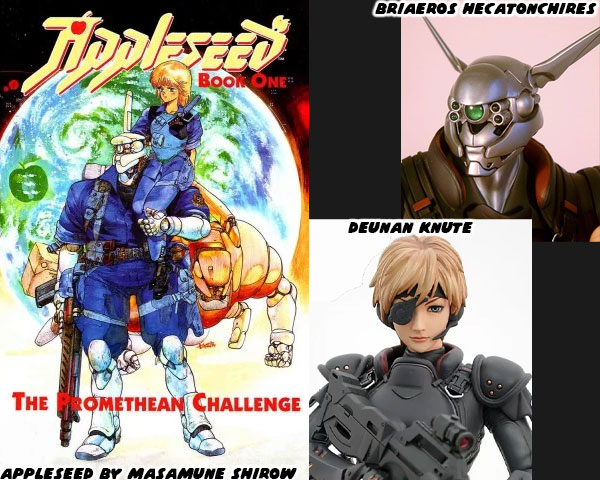
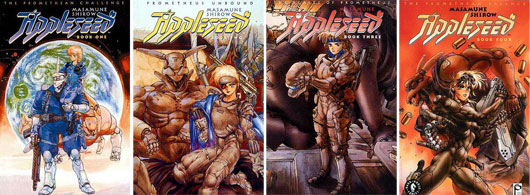
Middle school (then called Jr. High) was more of the same, picking up bits of information about the oldest mythologies. The comic world was undergoing a radical changing of the guard. Jim Lee, and Chris Claremont had redefined the look, and writing for the X-Men. Frank Miller, and Alan Moore made Batman a true heavy hitter. Peter David, and Dale Keown crafted brilliant Hulk comics. Mr. David had even introduced the Pantheon into Hulk continuity; Ajax, Hector, Agamemnon, Andromeda, Atlanta, Delphi, Jason, Paris, etc. These were just a few of the artists, and writers that exploded the comic book market. The indy publisher Eclipse, and later Dark Horse comics was translating a few Japanese mangas at the same time. It was how I discovered Masamune Shirow, and his Appleseed series. The post-apocalyptic story was brilliantly written, and illustrated. The fact that they used classic Greek names, but in a science fiction setting blew my mind. The cybernetic hero Briaeros Hecatonchires, and his girlfriend Deunan Knute were mercenaries recruited into the Olympus E-SWAT team. Nike, Athena, Poseidon, Aeacus, Hades, and Uranus were characters, and places visited in the series. Shirow’s groundbreaking mecha, and weapon designs, several of which were based on insects, were unlike anything I’d seen in any western comic. Shirow was quickly becoming an art god for me. The fact that Briaeros was a Black Mediterranean man underneath the cybernetic armor was also inspiring. Of course I was furious that the more recent CGI movies had white-washed him. The name Hecatonchires was the type of brain augmentations he had, the name was based on the hundred-handed giants that aided the Olympians in defeating their cousins the titans. Briaeros was the name of one of the three Hecatonchires. His brain implants were so advanced that they scared other cyborgs. It was said that he could control an aircraft carrier all by himself by plugging into its computer.

I remember vividly as a kid that several classes got a chance to take a field trip to the University of California Irvine. We were treated to an entertaining presentation in their massive gymnasium, where we were encouraged to go to college. Then we were allowed to attend an actual university class. We had a list of possible classes to sit in on, I was split between the science, and art classes. I sat in on the art, and it turned out to be a history class. The professor was discussing the importance of a classic Greek statue. I was absorbed by the details that he pointed out. The sculptor captured the correct anatomy of throwing a javelin, how the foot placement, turn in the hips, and torso was actually mid throw. There was a shift in balance, on the balls of the foot, and these were motions that happened in a hundredth of a second, but was accurately recreated in bronze. After the class wrapped up most of his students packed up, and left. I ran up to him, and asked if there were any statues, paintings, or other representations of the hecatonchires recorded. Because I only had the stories to go from, but wondered how the Greeks actually imagined a hundred-handed giant looked like. The teacher stared at me with a puzzled look. “Heck-a-ton-cries, uhh, I’m not sure what you’re referring to. I don’t think I’ve seen anything like that.” I insisted that they were the monsters that helped the gods defeat the titans. He nodded, and said “I’m not sure, sorry.” He couldn’t put away his notes, and get away from me fast enough. I’m sure he was wondering who the hell this young brown boy was asking such a strange question. I was deflated. How could a teacher that studied ancient art have no idea what I was referring to?

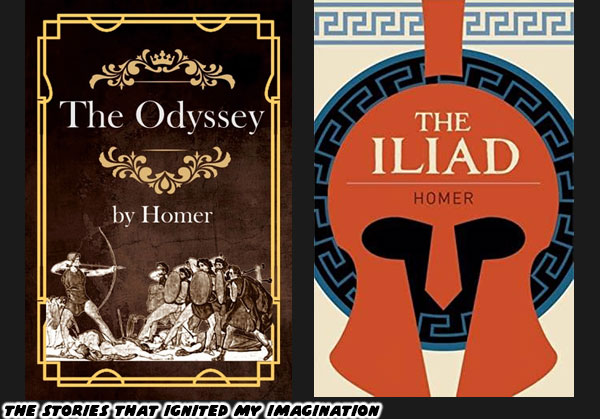
High school allowed me to finally get credit for my fascination with ancient myths. Each time an English teacher would assign book reports we’d get a list of acceptable titles to read, and write about. I’d gravitate to the oldest stories that I could find. I got a chance to read the Iliad, and the Odyssey over those years. It helped me discover the relationships between the various characters. It also allowed me to appreciate the classic movies when I rewatched them. The teachers would then add to my love of mythology by introducing Beowulf, and the other stories from the north. All the while my brothers, and I continued enjoying movies, and playing video games. They were evolving in the arcade, and at home. Stories became bigger, and more complex. The best games were soon rivaling Hollywood for our attention. It was only a matter of time before they would surpass cinema as the biggest form of entertainment. The ‘90s saw Final Fantasy, Zelda, and Phantasy Star made even more amazing with the introduction of 3D to home consoles. The Sega Saturn for example featured Panzer Dragoon. It was a rail shooter the likes of which we had never seen before. Sega had managed to create something fantastic with heavy influences from mythology, but in a fresh new way. Similar to how Appleseed reinterpreted the names, and relationships from the classic gods into science fiction.

As I got older I was convinced that my favorite games were created by people that also believed in ancient legends. Stories of heroes against impossible odds. Enormous beasts, swords, and sorcery were brought to life once more thanks to their talented teams. Video game studios rather than Hollywood still believed in the power of myth. In creativity, and imagination as being the most important element to a successful title. At least it was for a little bit. Even from the earliest days we saw how publishers tried to turn a popular IP, like Star Wars, into a video game. Sometimes these adaptations worked, sometimes they didn’t. Star Wars worked thanks to Atari working with vector graphics, the predecessor to polygon technology, and sound clips from the movie. Then there was E.T. a home console adaptation by Atari that was so bad that many think it tanked the industry, and extra copies of the games were notoriously buried in the desert. I paid attention in English class how stories were built. How heroes, villains, and challenges placed to create drama. It made me watch movies, read comics, and play games with a more critical eye. I became very aware of how sequels worked, or didn’t in some cases. I’m going to talk a little bit more about this on the next blog. I’d like to know if there was something you were obsessed about as a kid that you carried into adulthood. Or was there a comic book, manga, or game that forever influenced you. Let me know in the comments section please. As always if you would like to sponsor me please visit my Patreon page and consider donating each month, even as little as $1 would help make better blogs and even podcasts!
follow the Street Writer on Patreon!

Thursday, December 17, 2015

Freeblade, one of the best mobile games ever made...


I want to do a quick review on the new iOS game Freeblade by Pixeltoys. The game was one of the featured titles on the iTunes Store and an Editor's Choice when it debuted in late 2015. The reviews so far have been very positive, earning a 4 1/2 star average on the iTunes Store from thousands of players. Why isn't it a perfect 5-star game? The answer is simple, the game entices you to receive bonuses if you sit through a 30 second commercial for other games. Which is nothing to complain about given that this is a free to download and free to play title. From a design, control and execution perspective the game itself deserves 5 stars but I would argue it is being penalized by the pay-to-play market. Those that buy the in-game features get to extend their play and enjoy the title in more ways. Microtransactions are the bane of many game players but they are the necessary evil of the mobile market. Let's face it, if the game was priced at $24.99 on the iTunes Store with everything unlocked from then nobody would buy it because there are thousands of free games available. It's a strange dilemma for developers to be in. After playing it however I'd say that at $49.99 the game would be a bargain. Why is that? Freeblade looks as good and plays as good (if not better!) than some of the best AAA titles you would find on the portable consoles. Sony and Nintendo, I'm looking right at you! The cheap and mindless games about birds and candy may be more popular with audiences, and may make more money for the developers, however the era of the heavyweight mobile games has officially arrived.


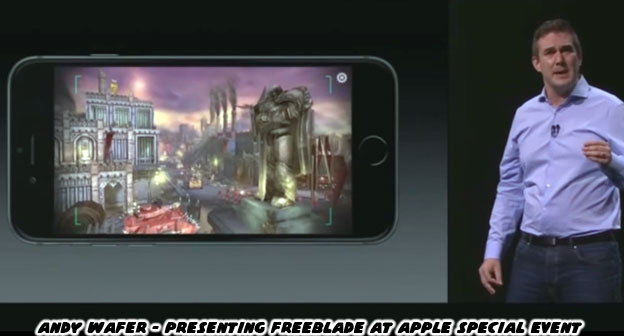
I wasn't sold when it was first announced. I love the universe that Games Workshop had created but most of their video games left much to be desired. But then something happened this fall. At an Apple Special Event the details on the new iPhone 6 and new iPad were announced. In order to highlight the leap in performance that it had over the previous models Apple had a few developers demonstrate some of the features using their software. One of the last presenters was Andy Wafer the CEO and Co-Founder of Pixel Toys. He used Freeblade to demonstrate the new graphics processor on the iPhone. It was almost twice as fast as the previous generation and capable of presenting graphics with greater fidelity and with far more effects than any previous mobile device. Not only that the new touch scheme meant that the control was much tighter and allowed for advances in the way the game controlled and played. The presentation almost won me over but there was some doubt in my mind. Would I really have to get a new phone in order to enjoy the game? After all the 5th generation of devices, including my iPod Touch, had some memorable games and were capable of displaying some amazing graphics as well. Have you seen Ridge Racer Slipstream for example?


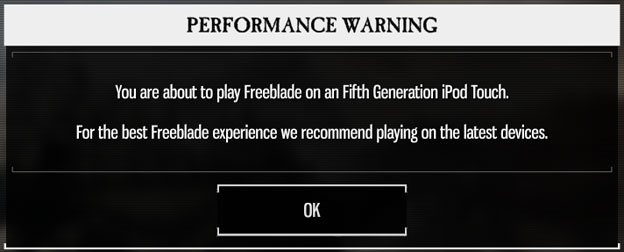
I downloaded the game on the iPod and right away I was warned that for best performance I needed to upgrade my hardware. I pressed OK and was presented with the opening story for the game but before it would ever load the first level the game would crash. I tried getting to run a few times. Tried resetting the iPod and uninstalling and reinstalling the game but it didn't work. So I had my coworker download the game on his iPhone 6 so I could test it out. Only then could I see why Freeblade required new hardware. The leap between gameplay and visuals on the handheld was like the leap from the Playstation 2 to the Playstation 4 consoles. Yes the PS2 had some incredible award-winning games, but the hardware was dated and incapable of presenting the next generation of visuals. As I was going through Freeblade I had an epiphany. Mobile games would only get better from here. If the console manufacturers didn't watch out they would become the second option for premium gaming experiences.


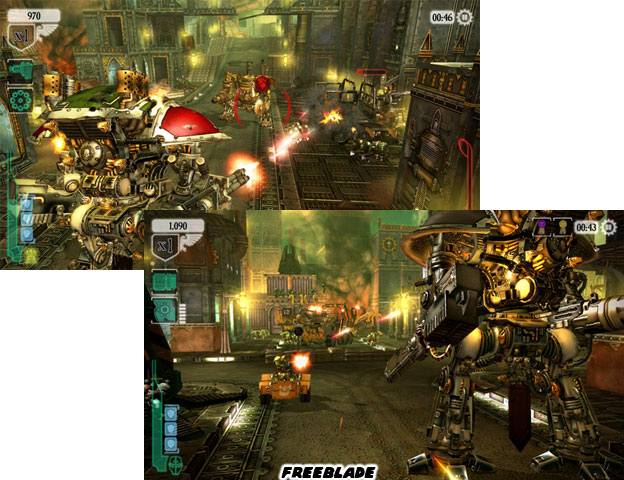
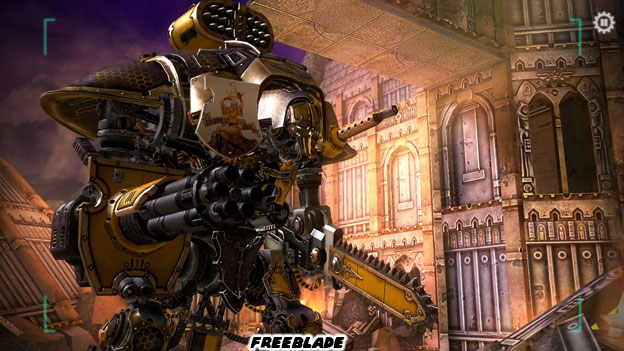
So what made Freeblade so great? If you are not familiar with Warhammer 40,000, the universe created by Games Workshop, it didn't really matter. The setup was relatively simple. It was the far future and you were on a distant planet. You were piloting a fully armed and fully armored 50-foot tall robot, known as an Imperial Knight against alien invaders. By touching the screen you got to shoot at just about anything that moved using your primary or secondary weapons. Freeblade took full advantage of the new touch features of the iOS devices. These devices recognized and responded to finger pressure instead of just finger contact. The devices and game also supported multi-finger gestures. Freeblade advanced the robot automatically during the fighting, all you had to do was aim and shoot. Essentially you were playing a mobile version of the classic arcade rail-shooter.


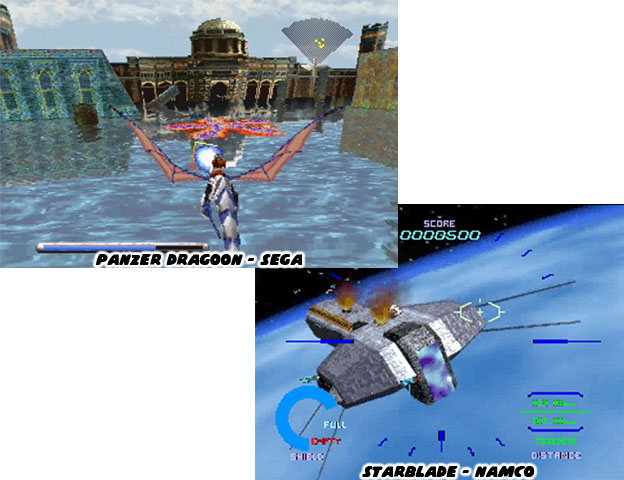
Pixel Toys developed a great game that brought back memories of some classic experiences. I wondered if the long-time arcade publishers were paying attention. Freeblade was doing to mobile devices what Panzer Dragoon had done for home consoles or Starblade had done for the arcade. Both games had cult-like followings. Sega and Namco, the respective publishers of those games hadn't really done much with the rail shooter in years. I could only imagine how great it would be if Sega developed a new Panzer Dragoon or if Namco released a new Starblade using the same mechanics of Freeblade. Yet I cannot think of a rail shooter that ever featured gigantic robot combat! In this way Freeblade stands apart from the other titles.


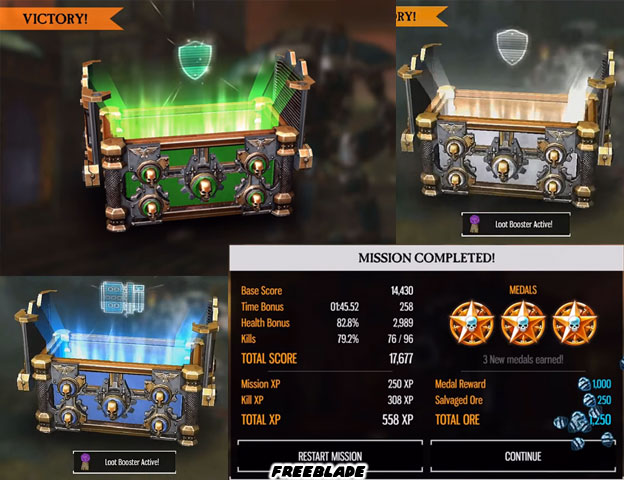
All of the hooks that mobile games depended on to keep players engaged were in Freeblade. Players could unlock secrets and upgrades as they went from battle to battle. They were rewarded for their accuracy, secrets found and point totals. They could apply some of these rewards by upgrading weapons, adding new weapons, and strengthening their armor. The player was encouraged to continue fighting through the level system. They gained experience based on how well they performed in each mission and what secrets they unlocked. Players could not only customize their weapons, they could even swap out colors to customize their robot. There were daily challenges which could make "grinding" or trying to level up your robot much more rewarding. Players did not have to spend real money in order to gain these rewards or upgrades. They simply had to be patient between sessions.


The visuals on the game were amazing. Among the best portable graphics you would ever see. The touch controls were responsive and become intuitive fairly quickly. The learning curve was relatively short, which allowed you to focus on the game itself. You had the ability to track and shoot you opponents using a gigantic machine gun, but beware of overheating! You could also fire a cannon blast or launch a barrage of missile to punch a hole through stubborn armor, roadblocks or other giant robots. Opponents emerged from every street corner and alley, in some cases they dropped in from space, rode by on motorcycles or flew overhead in jets. Sometimes the opponents were equally massive machines. When up close to other giant robots the game entered a quick-time event or melee mode. Ranged weapons were disabled and it was up to the player to use the Imperial Knight's enormous chainsaw(!) to chop an opponent down. The game was not all about offense however. The Imperial Knight was equipped with an energy shield and players could actually deflect incoming heavy fire if they responded quickly enough to the on screen cues. If the game was only graphics without the gameplay then fans would have voiced their disapproval right away. But Pixel Toys managed to make a game that looked great and played fantastic. The game only continued to grow and gain a new following on game forums and review sites. This could only be good news for the future of Pixel Toys. They had created a real winner and deserved some kudos. They were hopefully working on new content for this game as well. If you have a new iPhone or iPad and are looking for a great game then I couldn't recommend a better title. Download Freeblade now and tell me what you think. As always if you enjoyed this blog and would like to sponsor me please visit my Patreon page and consider donating each month, even as little as $1 would help make better blogs and even podcasts!