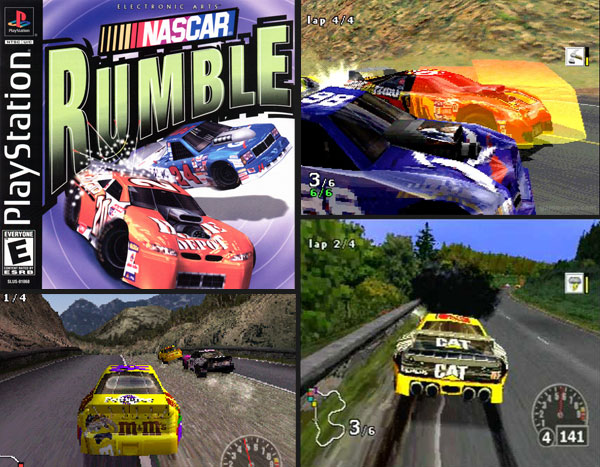
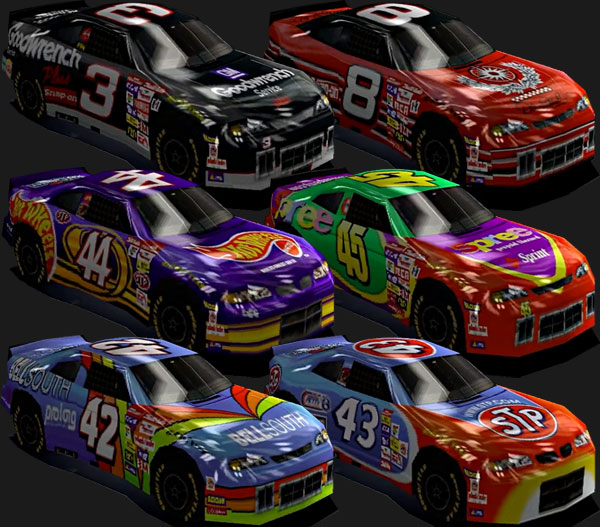
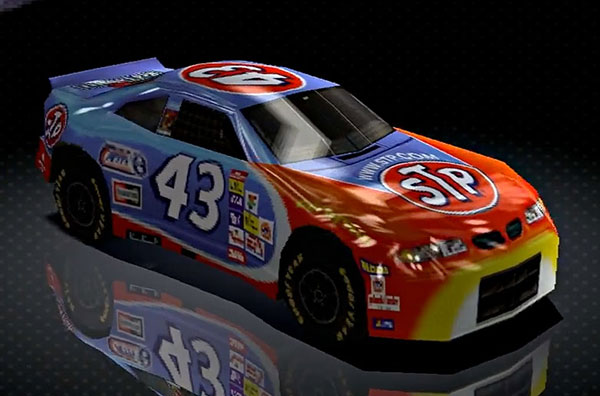
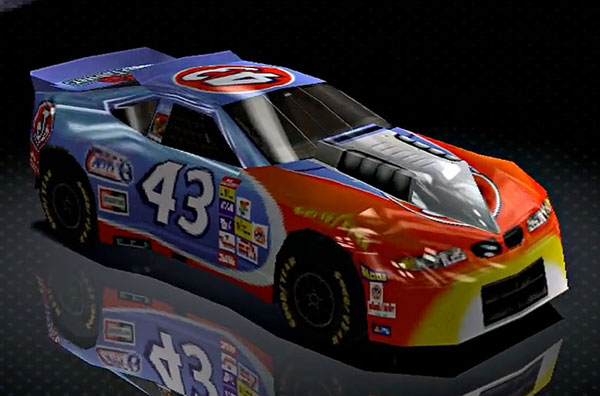
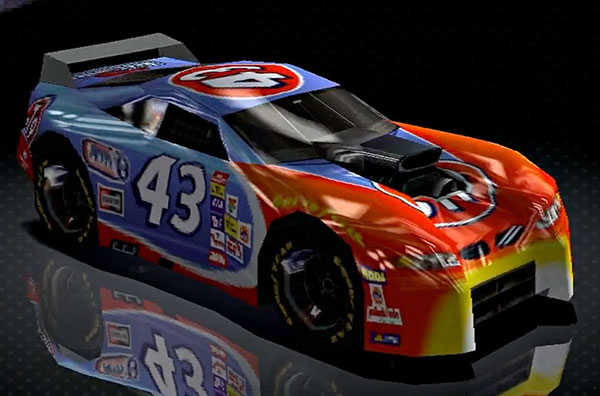
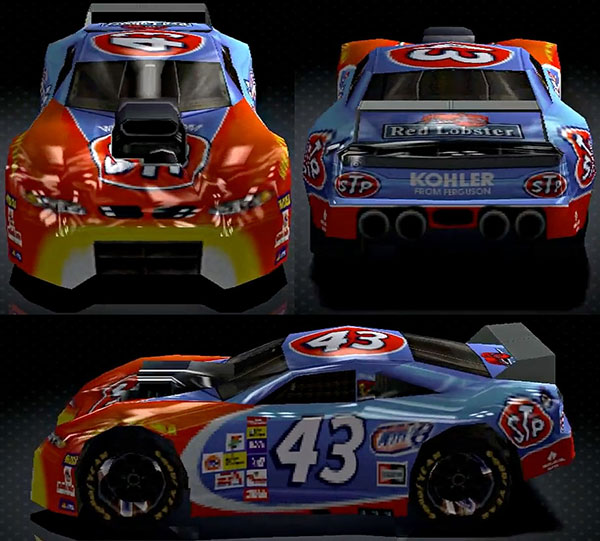
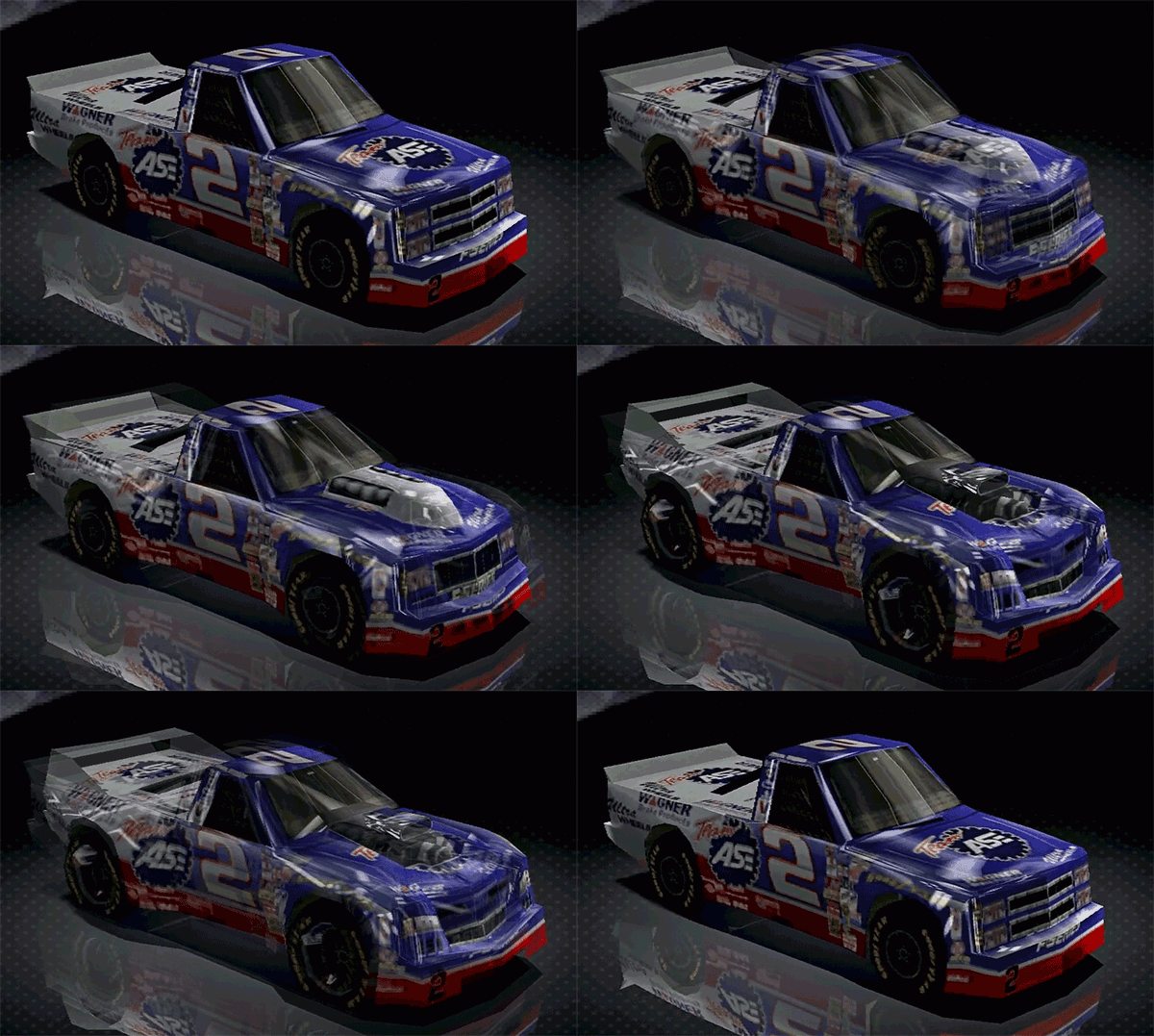
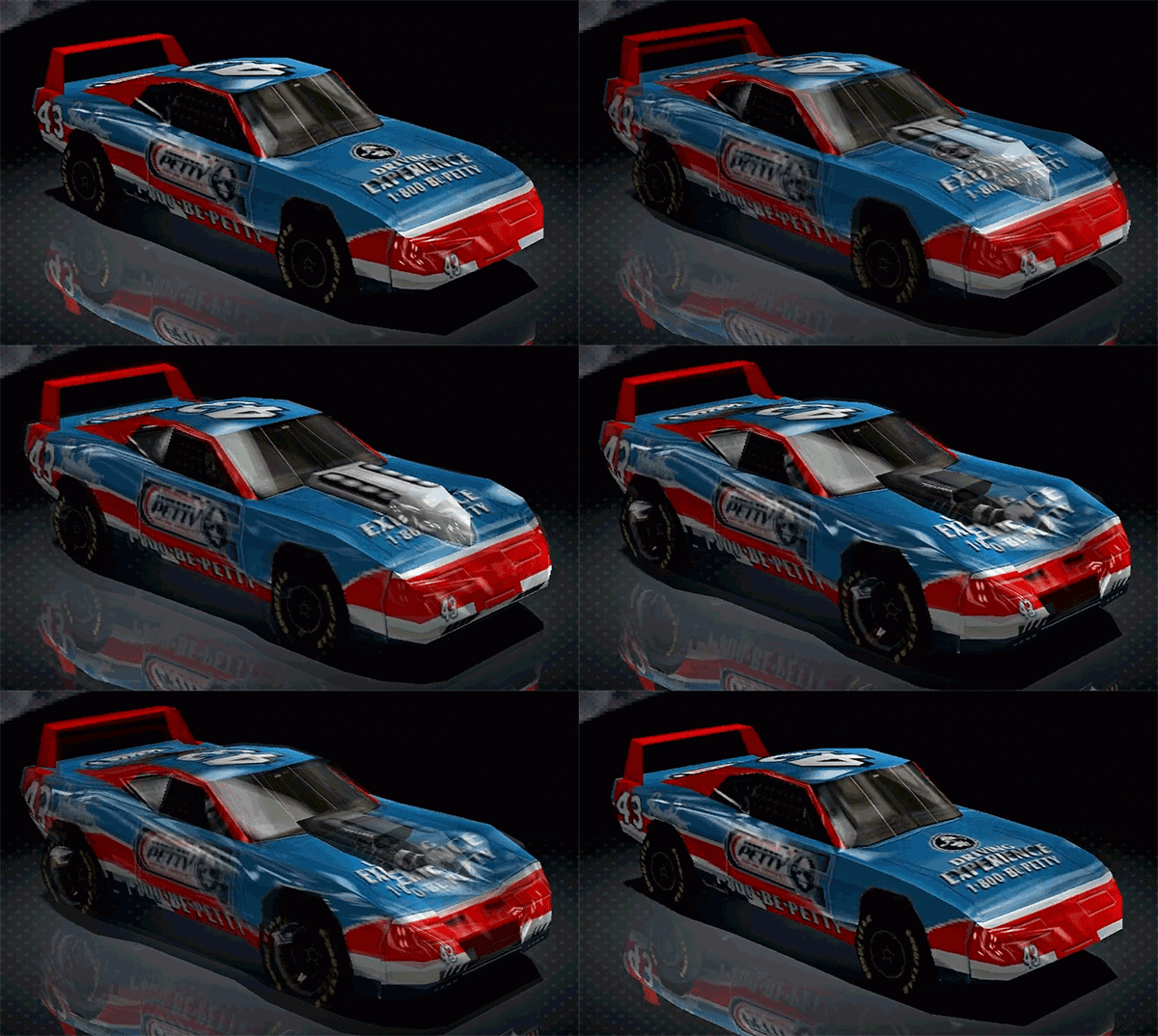
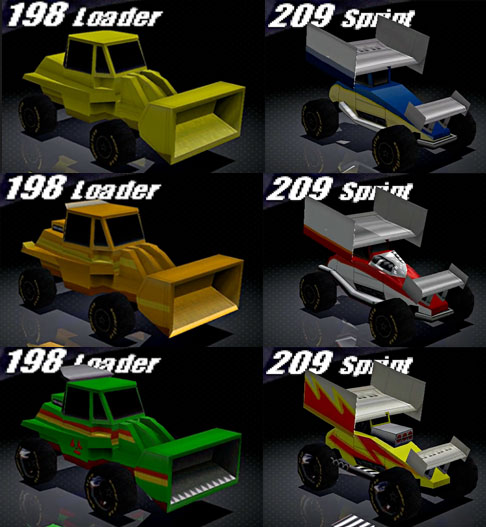
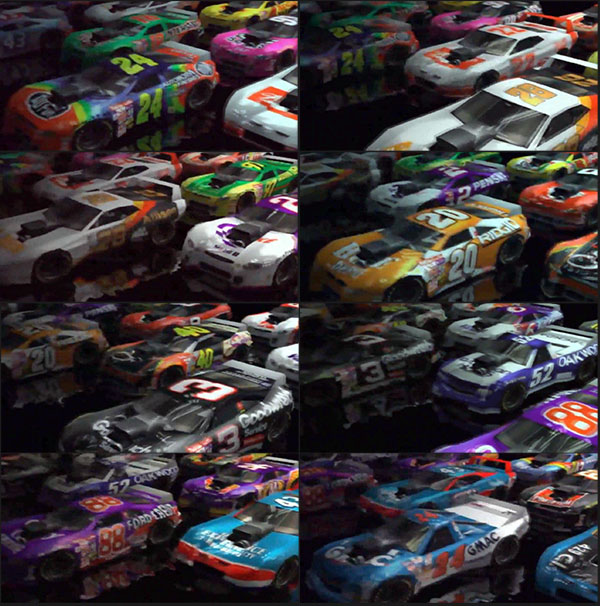
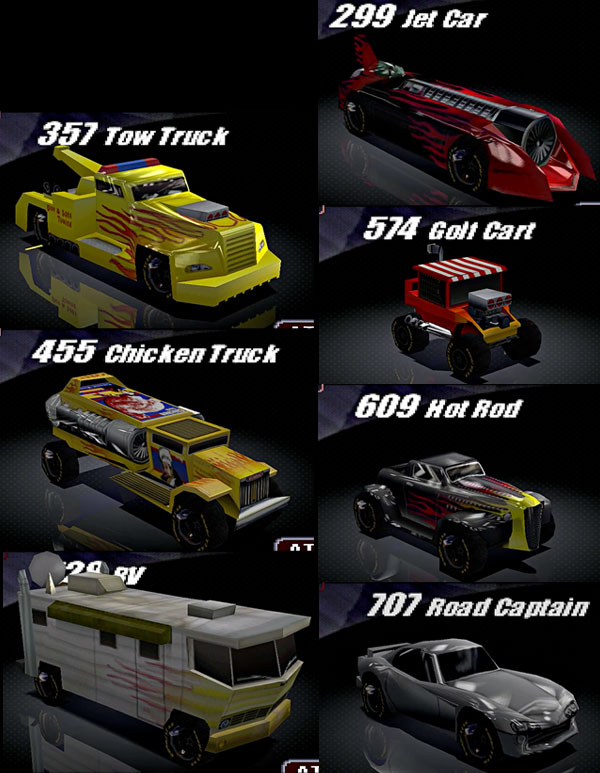
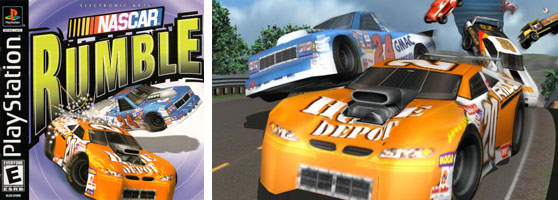
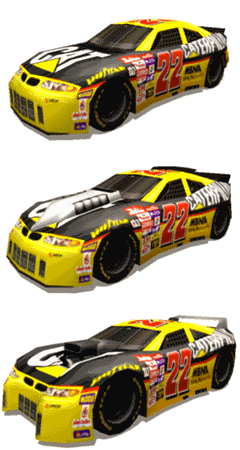
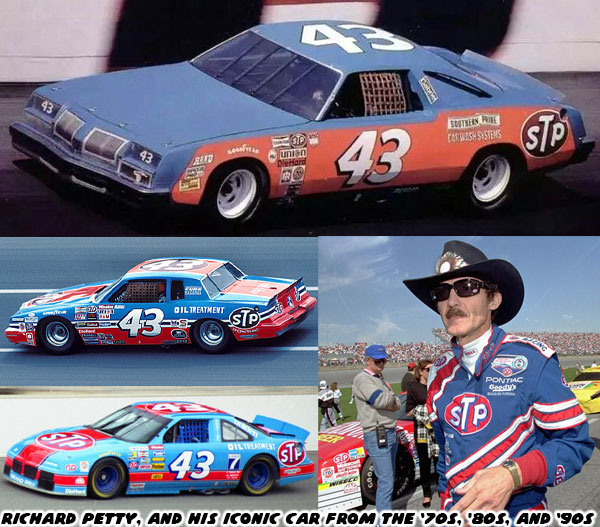
Nascar Rumble by EA was one of the last great racing titles released for the original Playstation. It captured a number of arcade themes and made them work well for the aging console. Since it was a licensed game the studio was able to put in renders of actual cars from the NASCAR circuit, complete with accurate paint schemes and sponsor stickers. This also included the Craftsman Truck series vehicles and legendary racers like Cale Yarborough, Bobby Allison, and Richard Petty. Mr. Petty is nicknamed the King, and he is on my Mount Rushmore of car heroes. He is up there with Bob Chandler, the father of Bigfoot, Formula-1 legend Ayrton Senna, and drag race pioneer Shirley Muldowney. Each vehicle in Rumble had three versions that the player could unlock. The standard, pro and elite versions not only changed the appearance but the performance as well. These souped-up vehicles owed more than a little debt to hot rod culture. Enormous engine blocks would stick out from the hood, the rear wing spoiler would become larger and more stylized. The profile of the car was more aggressive, the stance a little wider and tires more sporty. These were the types of rides that NASCAR fans that grew up on Hot Wheels would dream of.
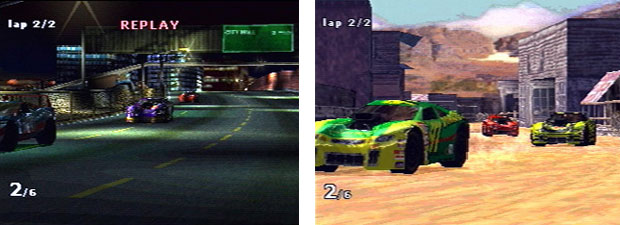
The tracks that the cars raced in also got an exaggerated treatment. Rumble was anything but a sim, it was very much an arcade experience. There were no ovals here but instead winding courses that took players through one of several American-inspired environments. Each of these regions were chosen because of their contribution to NASCAR history. The South gave rise to many legendary racers and teams, the coasts had some amazing visuals, while the cities provided some of the most hotly contested races. The soundtrack was southern rock, with a little twang even on the surf ballads. There was even a commentator doing his best Jeff Foxworthy one liners. Everything complimented the theme EA was going for. Each course came complete with shortcuts, some obvious and others well hidden. The diversity in locations, clever use of secrets and ramps helped liven up the genre. The computer AI was forgiving as long as it did not "see" the player use the shortcuts. If it did then the AI would take the same shortcuts and pull out some very close races.
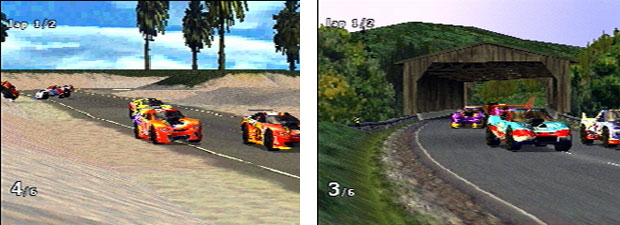
These cars could ram each other off the road or plow through opponents which helped make this game really stand out. However EA also gave players the ability to use special power-ups through the courses. Similar to the function featured in the Mario Kart games, these power-ups could give players a speed boost, make them temporarily invincible or sabotage opponents by zapping their speed and grip. These power-ups could be turned off or set to very high numbers depending on how chaotic players wanted the experience to be. The game was very fun and the secrets kept me coming back for more. Unfortunately it looked very dated when it appeared. The car models were blocky and rough when compared to the 1st generation PS2 titles. The saving grace was the originality, memorable tracks and use of iconic racers to make it stand out.
EA did release an updated version called Rumble Racing on the PS2. Unfortunately it did not use the NASCAR license. The exaggerated car models remained and the shift was more on stunt racing rather than the fantastic narrative of taking NASCAR vehicles to the streets. Rumble Racing did marginally well but most fans were hoping for a true sequel. Perhaps someday it might happen, then my friends on 1UP might be converted into believers. So is this how the car series ends, not with a bang, but with a whimper? Come back tomorrow for the wrap-up.
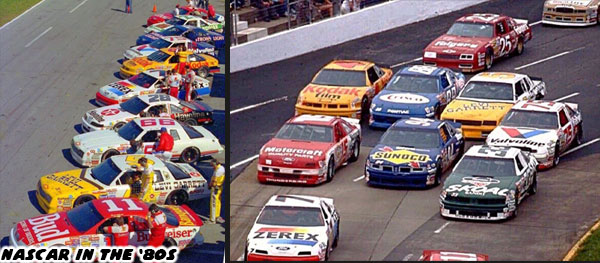




The Daytona USA series is an odd duck among racers. It, like Super GT and the other Sega classics, is either loved or loathed by racing fans. Feelings about Daytona USA are much stronger than any other racer by Yu Suzuki, or to be more accurate as Alex aka FerrarimanF355 pointed out to me the director for many of the Sega racers including Daytona USA was Toshihiro Nagosh. The reasons for which might come down to what Japan doesn't understand about Western racing culture. Those that dislike Daytona USA would argue that the title was unabashedly Japanese in scope, it succeeds by being an ignorant arcade statement about stock cars and western racing. Those critics might be right.
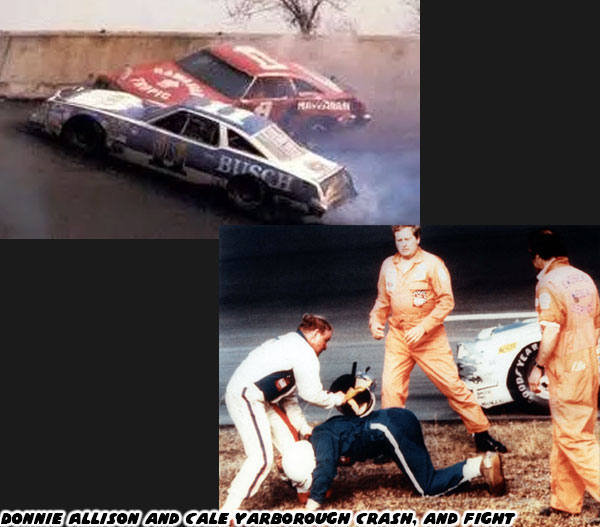
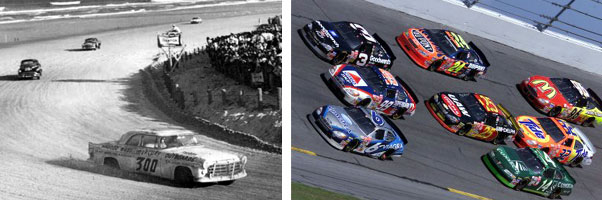
The track for which the game is named is based on the legendary Daytona International track in Florida. It was among the oldest of tracks in a fledgling NASCAR circuit. Back in the 50's the track was right on the beach. Massive production cars would tear up the sand, just a few feet from brave, or crazy spectators. These cars were stock in appearance but everything under the sheet metal was anything but. Even today the stock cars carry the large proportions granted by their originators. The current Daytona track is built right over that original track in the sand. It is as beloved a racing course as any other track in the world. Only a few things in Daytona USA would even draw comparisons to the real deal.
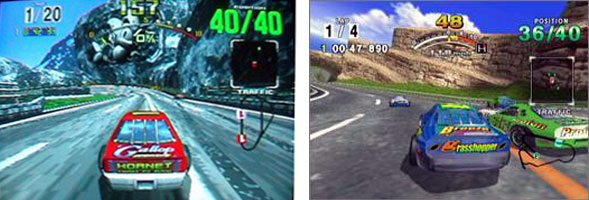
The original beginner track in Daytona USA was a three turn oval but it looked nothing like the real course. It was far more fantastic in origin. Snow capped mountains loomed in the background and a rocky cliff was etched with the visage of Sonic the Hedgehog. This track, like every track AM2 was famous for, excelled in the spectacle. The layout defied logic but was an amazing sight to behold. Virtual architecture that rivaled the greatest wonders of the world. Courses that snaked through a canyon, inches from NYC skyscrapers or rumbled down the middle of an amusement park. These were the best tracks I had ever experienced but at the same time the name of the game and style of car had rubbed me the wrong way.
I grew up on racing. Being a fan of every type of circuit and style imaginable. You can guess that my feelings toward a Sega game named Daytona would be mixed. The game featured the familiar boxy cars from the NASCAR circuit but they looked a little odd. This was not a licensed stock car racer so the cars had to give a familiar vibe by their shape and bright paint job. However these things were done from a Japanese perspective. Japan had more experience with GT and even F-1 racing. Those were cars that were created with racing in mind, rather than regular cars turned into racers by mechanics. The Japanese interpretation of the stock car was, for lack of a better word, dubious. The stock car was a foreign breed, a big and brutish American racer. It was unrefined and garish, much too swollen for racing, brightly painted in contrasting colors, a rolling reflection of the loud gaijin and beer swilling rednecks that adored driving 500 miles in a circle. The cars featured in Daytona USA reflected this brutal opinion.
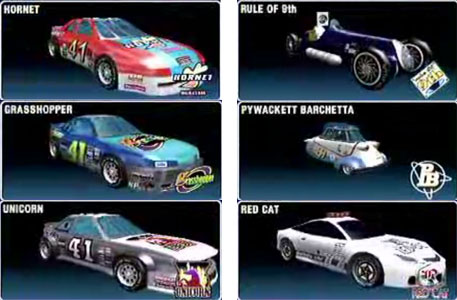
The cars were more or less shaped like stock cars but with fanciful names and questionably-designed logos. Undoubtedly fruity names to get Japanese gamers interested in these brutes. The game was made to bring American gamers to the arcade, but to make it more appealing to the rest of the world it made many concessions to the car design and gameplay. The Daytona series played just like the previous Sega racers. The only way to beat the courses was to drift, or power slide, around every corner. Each successive pass would "slingshot" you past opponents. The sight of massive blocky cars sliding around corners, in the way that was previously reserved for lightweight Ferraris, was too much to behold. The secret cars were anything but more stockers, they were instead crazy-named cars that players could unlock for added replay value. These odd cars were a jab at the roster of racing machines featured in Namco's rival Ridge Racer. I was unimpressed with the effort and slightly disappointed with how Japan was treating the stock car name.
The game was beautiful and is still fun to play, if you could get past the suspension of disbelief. Daytona USA 2 looked amazing on an updated version of the Model 3 board. It's tracks were among the best ever, even trumping the eye candy featured in Super GT.
Unlike Super GT the consoles and PC saw several versions of the Daytona racer released. The most recent appearance of Daytona USA also happens to be the most memorable. The great Daytona USA 2 tracks make an appearance as a single interconnected track in OutRun 2's bonus stage. Making it a definite must-get for racing game fans. Did you know that the things that got NASCAR purists riled up with Daytona USA worked in a different breed of racer? Sega's obsession with drifting would finally make an appropriate appearance, but not in a Yu Suzuki game. Find out which game I'm talking about tomorrow!