Showing posts with label unleashed. Show all posts

Friday, March 17, 2023

NASCAR memories, part 2...

In the previous blog I talked about Richard Petty, and how I became a fan of NASCAR. Sundays were reserved for watching the races. Any time I left the house I looked for racing games to play. I spent a lifetime playing dozens of different titles in the arcade, home consoles, handheld consoles, mobile devices, and on the computer. I learned that simulation games didn’t really hold my interest. The over-the-top action of arcade racing games appealed much more to me. I enjoyed the sense of speed, looking for secret shortcuts, and bite-sized races that were more popular with gamers. I didn’t have the time, or money, to set up a fancy rig like you might see for serious Forza or Gran Turismo fans. Nor did we have a gaming PC while growing up. If the game couldn’t fit on a cartridge, or game disk then chances are we never saw it at home. I especially liked combat racing games, and Formula-1 console games on the Super Nintendo, and Sega Genesis. When consoles moved to 3D with the Sega Saturn, Nintendo GameCube, Xbox, and Sony Playstation then things would get really interesting. There was one NASCAR game that I would rank among the best titles I ever played.

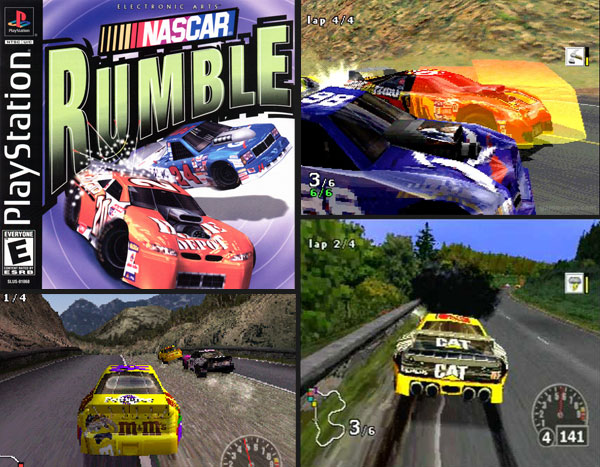
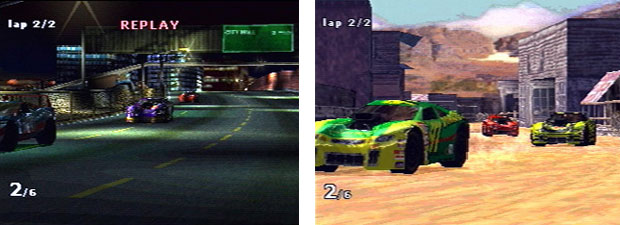
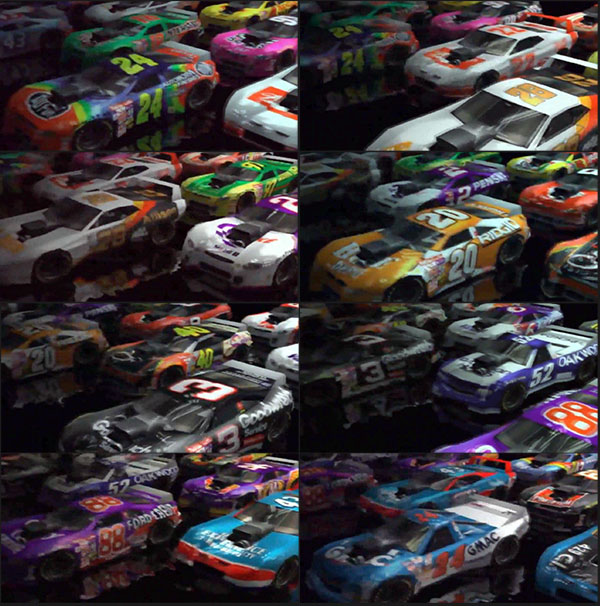
NASCAR Rumble, was developed by Visceral Games, and published by Electronic Arts. The game came out in February 3, 2000. It had 18 unique on and off-road race courses, plus 3 bonus tracks. The game did not feature any actual race track, city course, or super speedway. They tracks were instead inspired by different areas of North America that were influential in the history of the sport. I’m sure that excluding actual locations helped keep the license costs down. Where the game excelled was in the number of available cars, and drivers to race as. There were 33 Winston Cup Cars, 6 Craftsman Trucks, and 7 Legend Cars. Non-race fans were probably familiar with stock cars, however they probably had no idea that there was a truck based circuit as well. The game was a way to bring that five-year-old truck series to the general public. It also honored the legendary drivers of yesteryear, like my personal hero Richard Petty, by hiding them in the game. Seeing the ads featuring his iconic 43 car instantly got my attention.

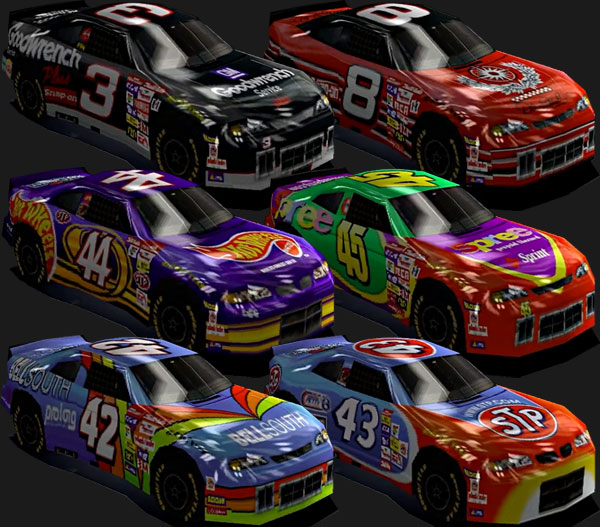
The game would turn out to be a the perfect snapshot of an era. We saw the numbers of the Petty family represented. #41 originally belonged to Maurice Petty but that number car was not in the game, #42 originally belonged to Lee Petty (father of Richard), the driver of that car in 2000 was Joe Nemecheck. #43 belonged to Richard Petty, but was driven by John Andretti (nephew of Mario Andretti). #44 belonged to Richard's son Kyle. #45 belonged to Kyle's son Adam. I didn't realize when the game came out that it would be the last time we got to see these legacy race drivers in the same game while they were still with us.

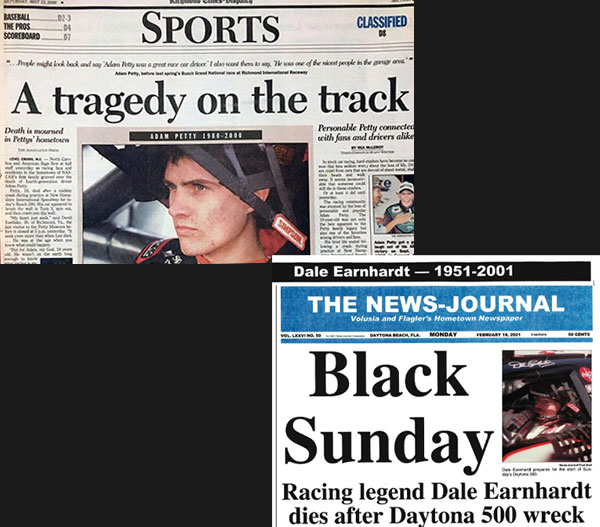
Dale "The Intimidator" Earnhardt #3 died in an accident a year after the game was released. His son Dale Jr. was driving #8 at the time. Adam Petty was 20-years-old, and considered a prodigy. He died in an accident three months after the game debuted. Looking back after the losses made me appreciate the moment that Visceral Games managed to capture. The studio approached the genre with the same love that I had when I discovered NASCAR as a kid. They knew that the cars were the superstars. They were bigger, badder, and faster than any other street car. The in-game models had fairly accurate builds, tires, frames, and sponsor logos. They were as realistic as the Playstation was capable of rendering.

Presenting accurate cars was only the beginning for the studio. The game was meant to be as over-the-top as possible. It was going to have to compete with other arcade style racing games. To do this it took the best elements of combat, and cart racing games. I’m sure the original pitch to Electronic Arts was “imagine if Sega’s Daytona, and Nintendo’s Mario Kart had a baby.” In essence that’s what Visceral delivered. Players could pick up random power-ups through the courses. They went from giving your ride super grippy tires so that it could hug the road, or a temporary jet boost, and more offensive weapons such as a nose barrier to plow through opponents, and exploding force field. There were also ranged attacks to sabotage cars ahead of you, including freezing them, throwing a storm cloud to block their view, and make their tires slippery. The biggest field clearing power up was a tornado that would follow the road, and toss all the opponents aside. 

The biggest criticism to the game was how much the power ups could punish the otherwise fun experience. If you found yourself ahead the power ups would sabotage you 90% of the time. If you were behind then they would be more of a benefit to you. The thing was that the amount of power ups could be controlled. You could have it set to None, Some, More, or Mayhem. The game was tough with the More setting, and races were absolute chaos with in Mayhem mode. I found that the game was best enjoyed with Some power ups on. I don't understand why the reviewers didn't point out this little detail, rather than complain about a feature they had full control over.

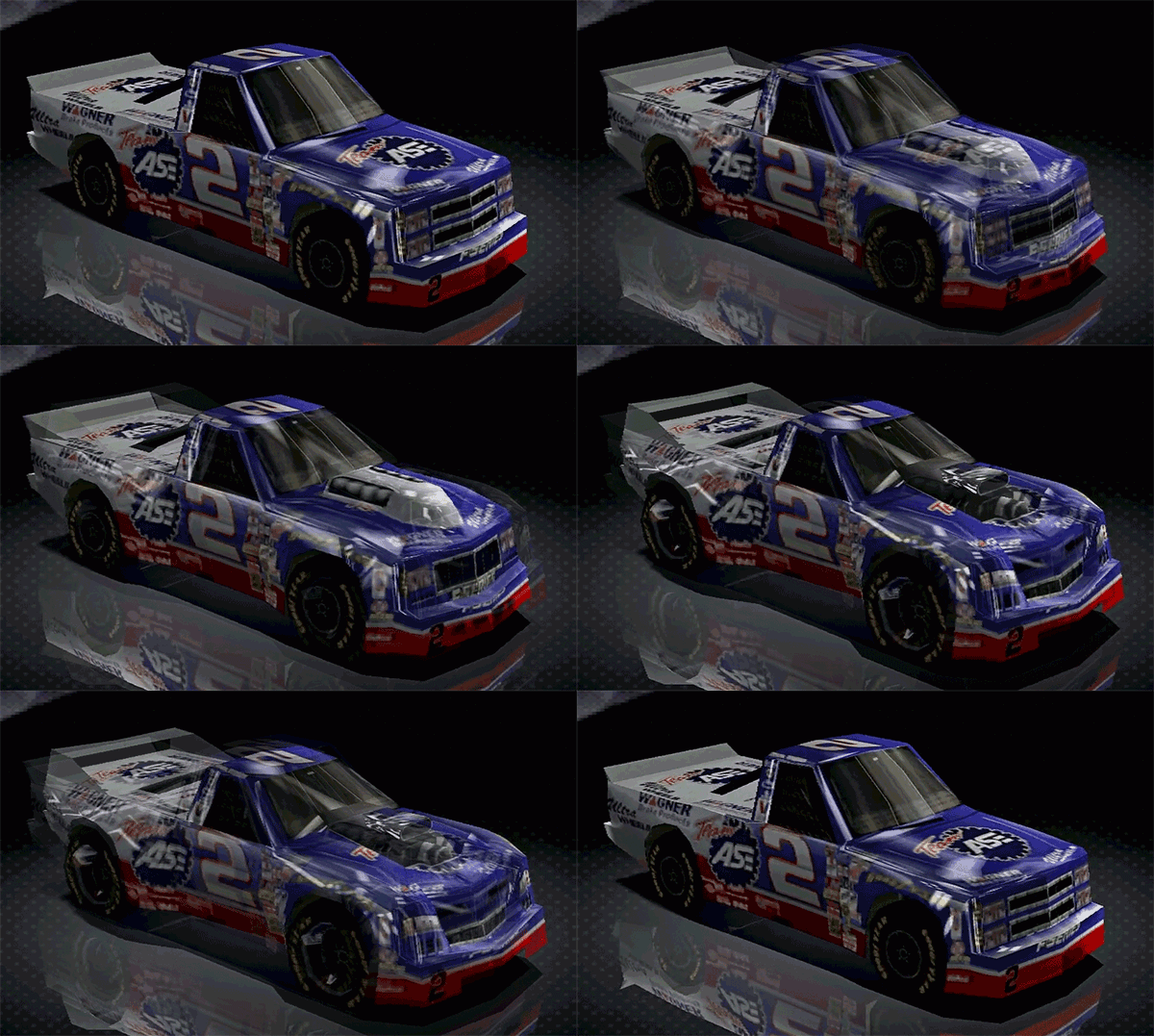
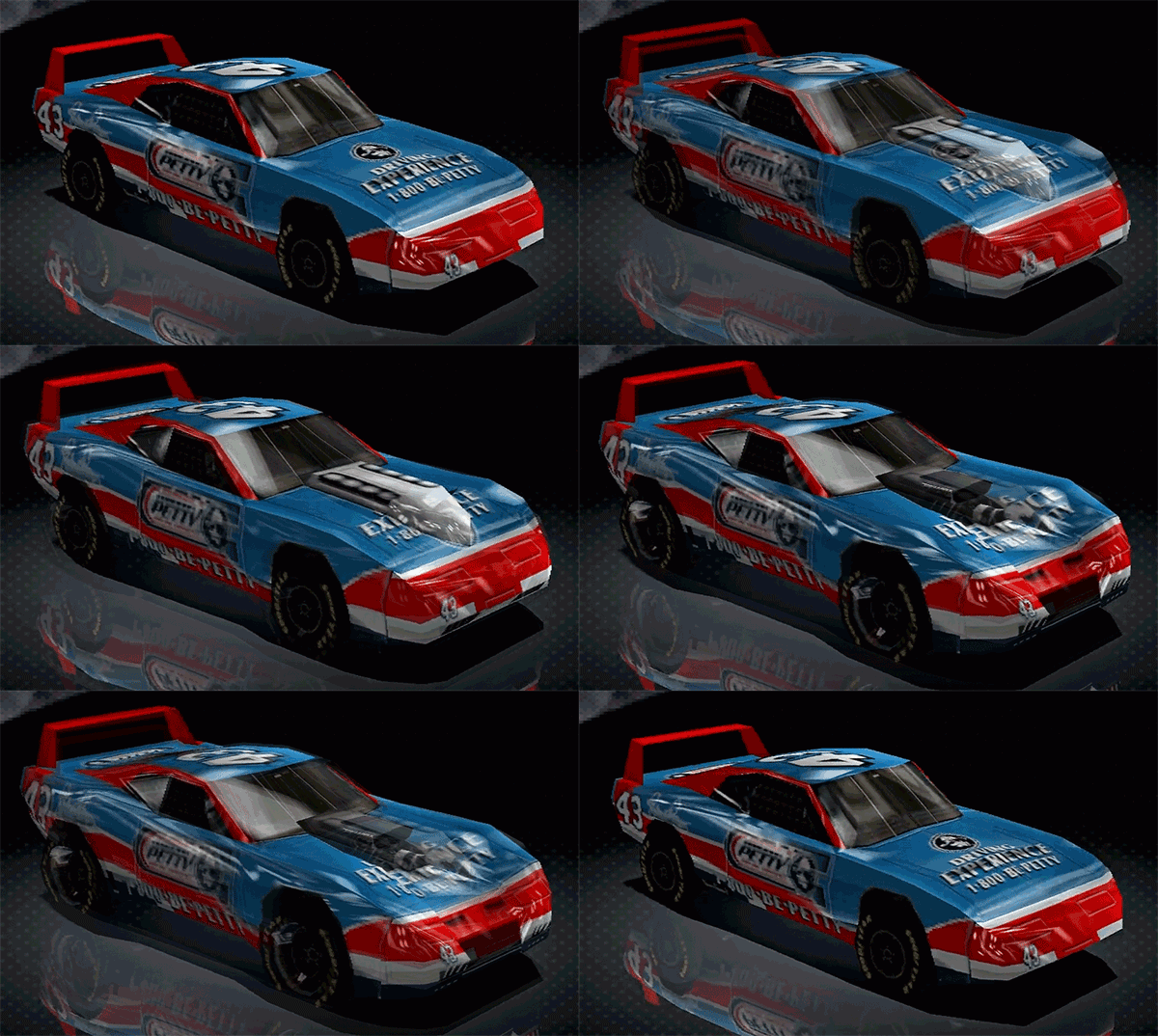
The tracks were brilliantly designed, hiding many secrets, and shortcuts. The cars themselves became the stars of the game. The default traditional looking stock car, truck, or legend ride was considered the Rookie model. Then there was a modified build known as the Pro version. It featured a larger arrow-shaped hood scoop, roof spoilers, and other aggressive features. This Pro model was a little bit faster, and handled a little bit better. It was a radical design that had never been seen in NASCAR. Unlocking the Pro cars, getting faster track times in Standard, and the computer-controlled Team modes helped extend the game play.

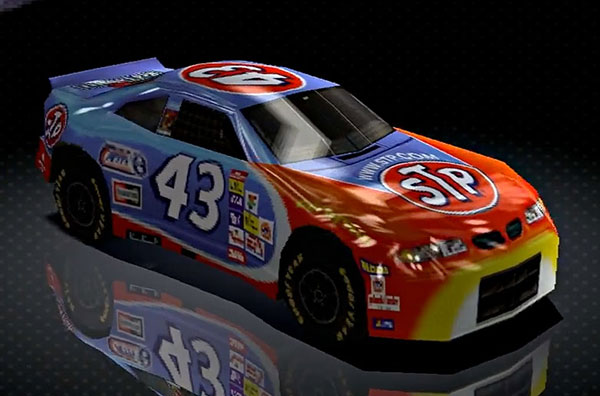
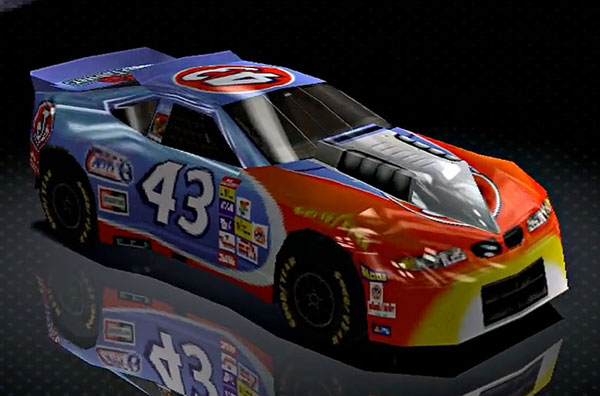
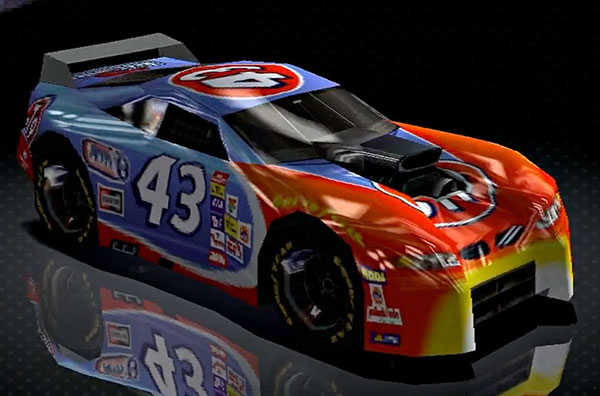
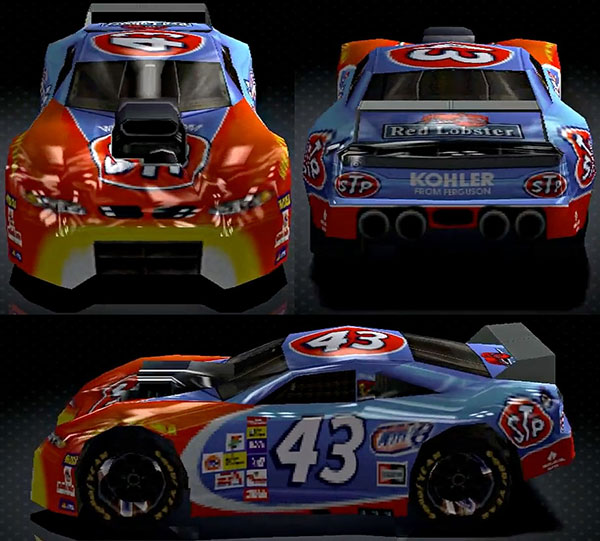
It turned out that wasn’t the peak for the car upgrades. The top of the models were known as the Elite class. Each upgrade was about 10 miles per hour faster than the previous model. Elites topped out at about 183MPH, over 200MPH with a boost power up. These were by far the hardest looking race cars in any game. They looked absolutely brutal, and to this day I have yet to find a race car in any game that comes close to capturing this level of badness. Take a look at this version of the classic 43, and tell me it wasn’t amazing. The Elite car models looked amazing from every angle. I wished that there was a physical model, or toy created of them.

What made the game truly great was that every vehicle in the game had a Rookie, Pro, and Elite version. If you were a fan of a particular driver, or car then you would look forward to having an absolute beast version of the ride. This applied to the trucks as well. The Craftsman trucks already looked cool, but the Pro, and Elite versions were a beautiful form of violence.

If you could win all of the races in the region then you could unlock an extra challenge. The chance to go head-to-head with icons like Alan Kulwichi, Benny Parsons, Bobby Allison, Cale Yarborough, and my hero Richard Petty. If you beat the Legend of that area then you could earn their car. The Rookie, Pro, and Elite versions of the Legend cars were just a few MPH faster than the standard cars, or trucks. You had to exploit every shortcut, and power up in order to defeat them. Racing as these, and against them added an entire dimension of replay value.

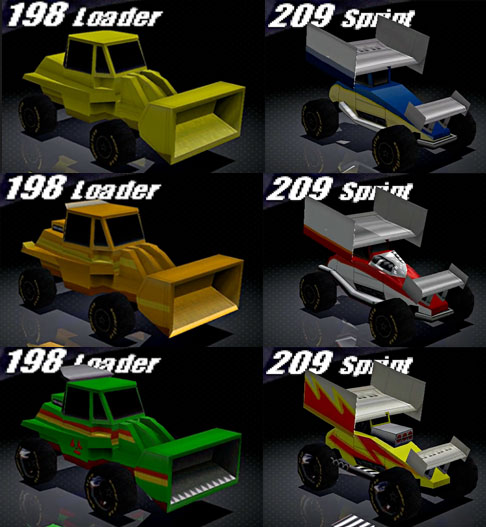
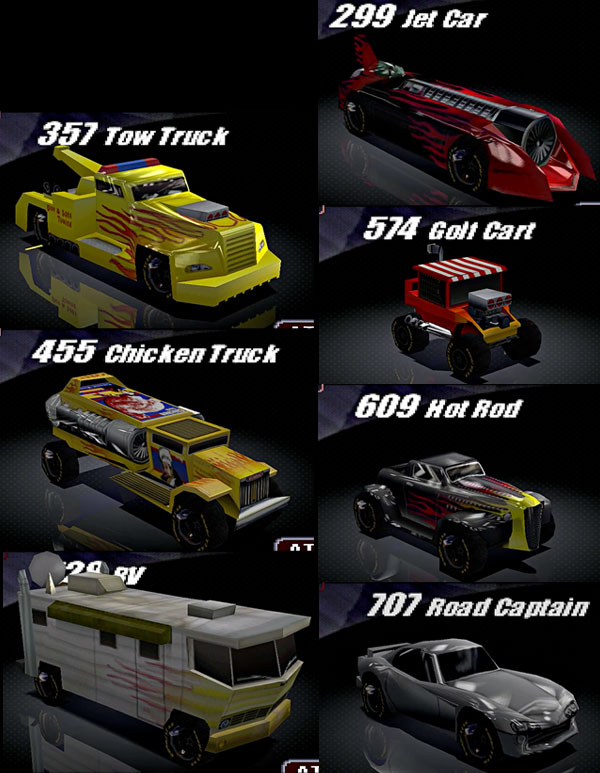
Every track also had a hidden wrench that would allow you to unlock a Bonus car. These cars ranged from serious, to funny. They reflected the culture of NASCAR fairly well. Best of all each of the bonus cars also had a Rookie, Pro, and Elite version. Their paint schemes, engines, bodies, and supporting details became more aggressive. For example the Rookie version of the Loader is a traditional construction vehicle. The Pro version has a larger engine, and racing stripes. The Elite model has a roof-mounted spoiler, and nuclear engine! There were golf carts, hot rods, RVs, and chicken delivery trucks thrown into the mix as well. They all handled differently, had their own strengths, and weaknesses.

I want you to think about how many cars this meant were featured in the game. If you add up every version of the regular, and hidden cars then there were 165 vehicles in total. I understand the numbers are inflated, as the three versions of the NASCAR, Craftsman Trucks, and Legend rides were simply reskinned from the base model. It nonetheless gave the illusion that there was a tremendous amount of diversity. Granted we had seen this type of development “shortcut” previously, and it really didn’t hurt the game. Namco set the record for reskinned rides on the Playstation with 320 rides in Ridge Racer 4. Many fans, myself included, considered that to be the pinnacle of the Ridge Racer series.

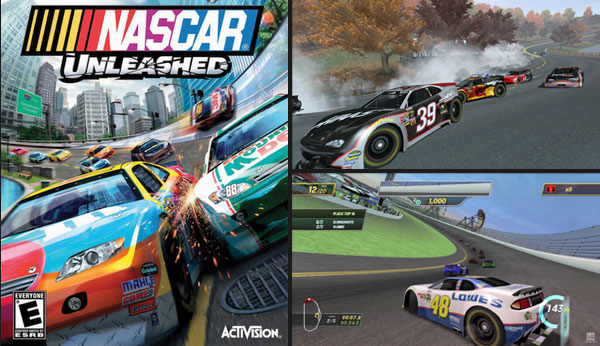
Sadly there would not be a sequel to NASCAR Rumble. At least not one featuring the license. EA, and Visceral released Rumble Racing a year later in 2001. It was a visually upgraded version for the Playstation 2, featuring the same tracks, similar music, and commentary. Aside from lacking the NASCAR rides the game added the ability to control the way the cars flipped, and rotated in the middle of a jump. It was nice feature, say for a Hot Wheels knock-off, but it lacked the magic of the earlier game. There wouldn’t be anything remotely close to Rumble for more than a decade. The one that did appear left me wanting. I’m sure many other fans enjoyed it, but wanted a little bit more. NASCAR Unleashed was Developed by Firebrand Games, and published by Activision. It came out in November 1, 2011 for the Xbox 360, Playstation 3, and Nintendo Wii.

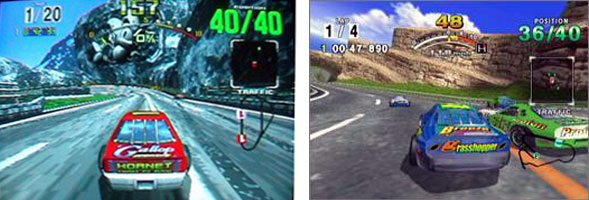
Let’s start with the best parts of the game. Visually is was brilliant. Side-by-side you could see how far the Playstation, and Playstation 3 graphics engine had come in 11 years. The car models, sponsor logos, and paint jobs were accurate for the season. The cars also showed damage during the races. These were all things virtually impossible on the original PS. Unleashed featured 15 real drivers, and 3 additional fictional drivers from the Sprint Cup series. From a game play perspective it was arcade in control, and not simulation. This made it easy to pick up, and play. It added a draft, and slingshot mechanic. This was absent in Rumble, but was a feature that had been seen in Sega’s Daytona USA going all the way back to 1994.

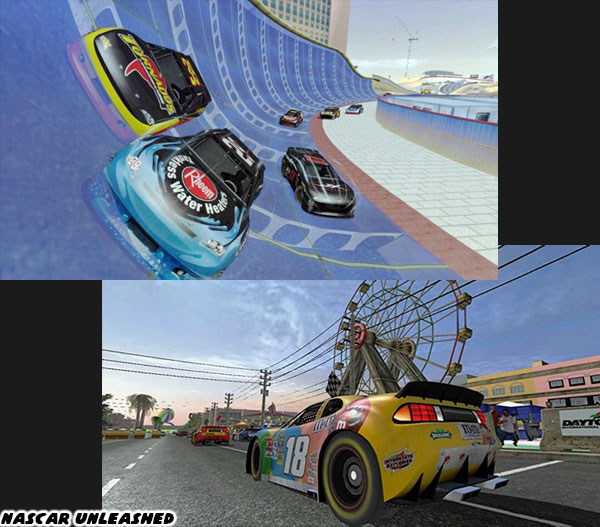
Unleashed also added the ability to create Rivals by being aggressive to, or wrecking opponents. These computer controlled cars would begin to hunt you down, and make races much more challenging. The game featured six actual locations; the Daytona International Speedway, Chicagoland Speedway, Homestead-Miami Speedway, Martinsville Speedway and Talladega Superspeedway. It also had 12 different track layouts. This meant that some of the races were set in the actual track, and other stages had the cars break through the walls of the course, and race through the streets. It was some great design, especially when you found yourself racing sideways along the face of a glass skyscraper. The game also featured 20 cars racing on the same track at once. In NASCAR Rumble the races maxed out at 6 cars. Despite all of these innovations the game itself felt lacking.

The cars were all identical. You could earn alternate paint schemes for each of the rides, and bonus silly upgrades to affix to your car. These differences didn’t have the same magic of the Pro, Elite, and Legend models of the cars in Rumble. The stages were fun, but not as memorable as the ones in Rumble either. The races lacked power-ups, secret tracks, and hidden cars. Each of these things could have added more replay value. With a little more development time, and a bigger budget I have no doubt that Firebrand Games could made a spiritual successor to Rumble. Instead it falls short of the mark. Many players said the title feels like a budget game. The ones you might see in the bins at WalMart. It wasn’t that bad, far from it, it was a decent-to-good game, but it was missing the things that could elevate it to greatness. The kindest critics said this was the perfect intro to the genre for children. I’m sure if I was a kid, and hadn’t been exposed to decades of racing games then I would have a much greater impression of it. The arcade control made it easier to explain the appeal of NASCAR more than any simulation. That much was certain. I still play NASCAR Unleashed from time-to-time because it is a good game. With that said I find myself firing up NASCAR Rumble shortly after, and end up having more fun. 

I have no doubt that the greatest NASCAR game never made would be if the best parts of Rumble, and Unleashed were merged together. I hope that there is an over-the-top NASCAR arcade game in the works. Something with a big budget, and AAA team developing it. We’re long overdue for something like that. Until then I'll always have Rumble to keep me going. Were there any games that you wished had gotten a modern sequel? Were there any okay games that you thought could have been great with a little more time, and polish? Let me know in the comments section please. As always if you would like to sponsor me please visit my Patreon page and consider donating each month, even as little as $1 would help make better blogs and even podcasts!
follow the Street Writer on Patreon!

Wednesday, March 7, 2018

The Giant Monster Series, part 14...


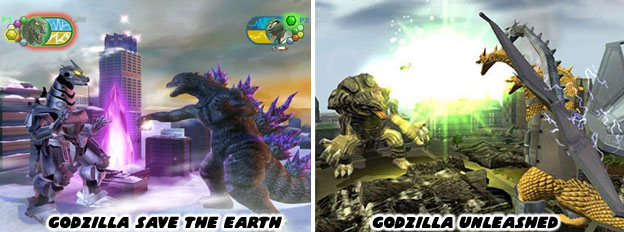
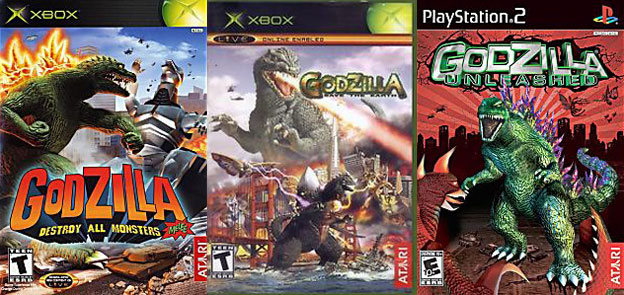
In 2002 Pipeworks software developed Godzilla: Destroy All Monsters Melee. The game had several modes of play and featured a pretty good cast of Toho monsters, and even a few variations of Godzilla from the different movie eras. Pipeworks allowed audiences to settle into the universe with a story mode. An alien invasion had spurred Godzilla and his monster allies to defend the Earth. Players were taken to highly detailed cities all around the world to battle the forces of evil. The game was in 3D and had far mode advanced visuals than the previous Dreamcast game. Buildings had more realistic physics applied to them, better textures and lighting as well. All of the details for each monster were preserved, including the various roars and special attacks. These abilities became part of the game play.
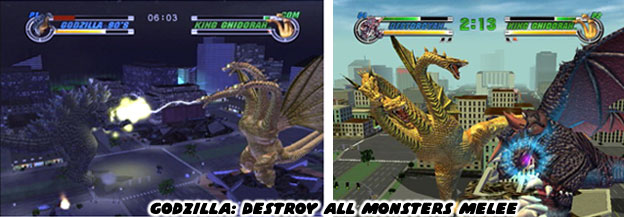

Players could roam each arena in any direction and fight with an assortment of close and ranged attacks. The characters had grappling moves and combos on top of the regular attacks. The diversity of moves made it one of the most robust giant monster games ever created. The amount of detail placed on the levels was absurdly high. Traffic moved on the streets, neon billboards blinked, buildings were lit from the inside, strike fighters shot missiles, tanks fired artillery shells and UFOs zapped monsters with laser beams. An announcer broadcast the outcome of each battle to the world media. Players could roam each arena in any direction, hide from incoming attacks, knock down buildings and fight with an assortment of close and ranged attacks. The borders of each level were cordoned off by bright laser beams that could injure opponents. Destroy All Monsters Melee could be considered a 3D version of King of the Monsters. There were a couple of things holding back the game however.


The monsters moved sluggishly, the camera was not always cooperative and the combat system was not well balanced. A good 3D fighting game like Tobal No. 1, or 3D arena fighter like Power Stone or even 3D brawler like Urban Reign figured out that the levels, camera and combat had to compliment each other. If any element were ignore then the entire experience would suffer. When playing in 3D it was paramount that the player be able to move where they wanted to while still being able to keep enemies in frame. The camera seemed to pivot randomly in Destroy All Monsters Melee, sometimes being blocked out by a tall building and other times floating high above the action. This random camera could be troublesome during a heated battle. The studio tried to fix the camera by allowing buildings to become transparent to show which characters were behind them, however the other buildings between opponents were solid and offered no line of sight. The game had items to regenerate health and power up attacks randomly pop up all around stages. Players often found themselves making a run for the item only to have the camera rotate in the opposite direction and hide it behind a building. The split second that it took the player to reorient themselves was enough for the opponent to snatch up the item. It could be maddening when trying to finish a close battle.


Pipeworks tried again and again to do the genre justice. Godzilla Save the Earth was released in 2004 and Godzilla Unleashed in 2007. In 2006 the same studio had also released Rampage Total Destruction. Their attempts at owning the giant monster genre fell flat with many gamers and reviewers especially. Only the die-hard monster fans, or young boys seemed to enjoy the series. If the studio had one thing going in their favor was the addition of multiple two-player mini games. Each successive Godzilla added new modes of game play which were refreshing. Players could spend time throwing buildings at Naval assaults, play kaiju bowling (which was more like dodgeball really) or even swim underwater as Godzilla. To be fair the games also had another thing going for them, playing as different characters resulted in having different story modes play out as well. But these game play additions were on top of an average experience.

The studio appeared obsessed with trying to put in as many daikaiju characters as they could and didn't bother to spend any time balancing the combat system, adjusting the sluggish control or fixing the camera. The studio would have fans vote on which characters they wanted to see in the next game and then try to secure the rights to those characters. They would appeal to the fans on giant monster fan boards to get the vote out. Moving according to popularity vote was something for American Idol and not a respectable game developer. Focusing on fanservice rather than game play was the antithesis of good game design, yet that seemed to be the goal of the company. The review scores reflected their decision accordingly. On a 10 point scale with 10 being the highest here were what some reviewers gave Godzilla Unleashed; Game Informer: 4, GameSpot: 3.5, GameTrailers: 5, IGN: 4.9 and Nintendo Power: 5.5.


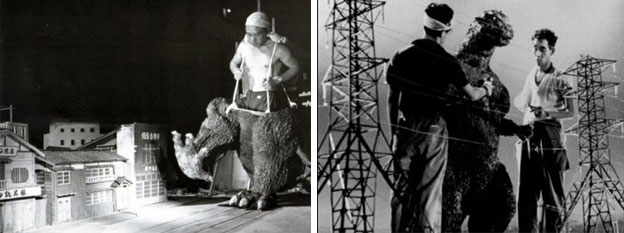
The Godzilla games looked great but played poorly. They were far too sluggish to be enjoyed by most audiences. Pipeworks did a mediocre job in convincing players that they were controlling massive creatures. Godzilla moved slowly in the films for several reasons. In canon Godzilla only appeared to move slowly but actually reacted quite rapidly. He could cover miles in a few seconds. There were two practical reasons why the character moved slowly in real life though. Part of it was for dramatic tension. Human characters trapped in the same city occupied by Godzilla were constantly in danger. The slower the character moved the longer the tension could built up on the big screen. Cloverfield used this understanding equally well. The other reason Godzilla moved slowly was because of the set up time that it took for each movie shot. Model cities took months to build and ate up the majority of the film budget. If the person wearing the Godzilla costume walked in a regular human stride then he could cross a warehouse-sized set in a few seconds. All of those models would have been wasted if they were on screen for only a moment.


Instead the costumed actor would move slowly and allow miniature missiles to be launched at him. The pyrotechnics engineers could then explode the models as he walked through, making for a many more interesting shots. In the Godzilla games the characters were slow and cumbersome because that was how Pipeworks programmed them. They did not convince players that the characters had any sort of mass. The could instead bounce, twirl and be thrown about as if they were Styrofoam-filled mannequins.

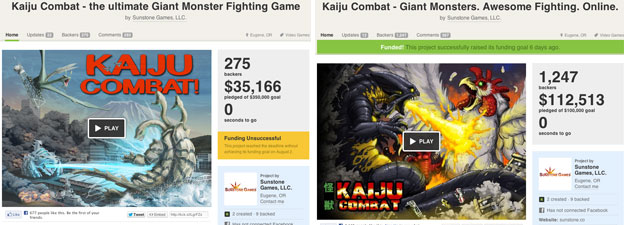
The control and combat designer for the Godzilla games, Simon Strange, left to start his own company. His newly formed Sunstone Games wanted to make the ultimate online giant monster battle game. They wanted to allow players to design their own creatures and give them unique powers as well as include every possible daikaiju ever, including those from Toho's rival studios. They appealed to the public through Kickstarter to help sponsor Kaiju Combat. I had learned about this pitch early on but decided not to publicize it on my blog. I felt that the Godzilla titles Mr. Strange had worked on were visually impressive but offered nothing for gamers. It seemed that the audiences themselves let Sunstone know by not supporting their ambitious goal. They had to run the Kickstarter campaign twice. Earlier in 2012 the studio was looking to secure $350K in funding but managed to get only $35K worth of pledges. They tried again later that year and lowered the investment to $100K. They barely managed to get over the goal with $112K and over 1200 backers.


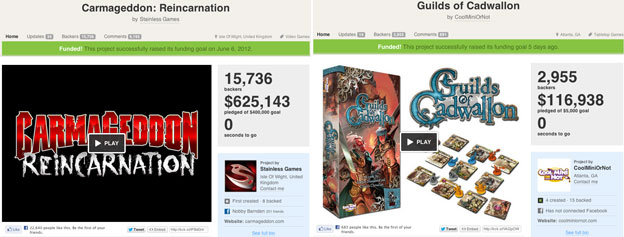
To put the demand for a kaiju game by Sunstone in perspective compare it to other Kickstarter projects for independent studios. Stainless Software had only developed 2 Carmageddon games for the PC and Mac. It had been 15 years since their last Carmageddon title. Stainless ran a Kickstarter campaign looking to get $400K in backing in the same one month window that every studio got. They managed to secure $625K and over 15,000 pledges. That wasn't even a record for a game. One of the biggest success stories on Kickstarter was a card-based game set in the IP of the now defunct Rackham Studios universe. The Guilds of Cadwallon was trying to get $5000 in backing and raised over $116K in a month. A card based game based on an expired French tabletop system had raised more funding than a giant monster video game with a high profile track record attached to it. Why did this happen? The damage to the daikaiju genre had been done thanks in part to the Pipeworks series. Carmageddon and Cadwallion were much more enjoyable experiences and had less flaws to their game play. When those developers needed funding then more than enough people were willing to help them out.


The difference between funding three different types of games was in the game play experience and not popularity. Godzilla had millions of followers the world over, far more than Carmageddon or Cadwallon combined. The character could sell almost anything on name alone. Yet great gaming experiences always seemed to elude the creature. Pipeworks had four giant monster releases; three Godzilla titles and one Rampage game, each one was reviewed worse than the previous. Had Pipeworks delivered a great experience again and again then there would not be a doubt that a publisher would have funded an online project. In fact if the genre as a whole had a better track record then any number of developers, like Capcom or Konami, would have already started work on a daikaiju MMO. Truly great giant monster games were rare, extremely rare, like footage of the elusive giant squid. Gamers wanted to believe that they were out there, they just had to be patient and wait an extraordinarily long time to see one in person. Audiences didn't have the luxury of waiting. Developers couldn't find a way to make a decent gaming experience out of the creatures, so instead the giant monster simply became an obstacle to overcome. It did not stop some developers from trying to work with the genre though. We shall look at some of the hits and misses in the next blog.