Showing posts with label brazil. Show all posts

Thursday, August 25, 2022

Style Wars, looking at Kimberly in Street Fighter 6, and Isla from King of Fighters XIV.

I think we should have the conversation about Kimberly, about culture, and the developers at SNK, and Capcom. I had previewed Kimberly when she was leaked a month or so ago. Most of my observations turned out to be accurate. The internet has absolutely fallen in love with her, posting fan art, and cosplay pics following the reveal trailer including the updated Juri. The thing I think we have to acknowledge is that Kimberly has themes that were seen in SNK characters much earlier.
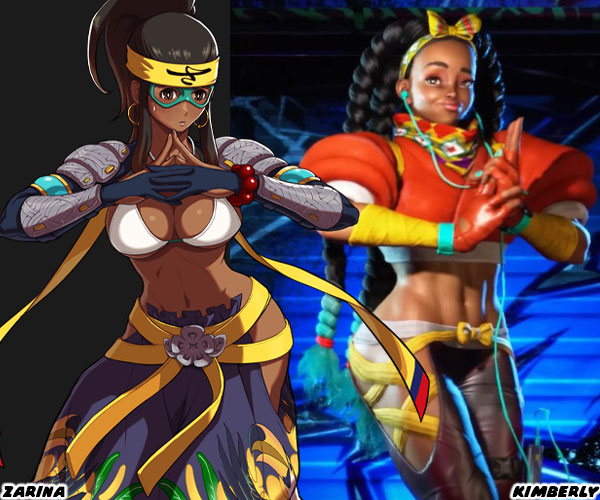
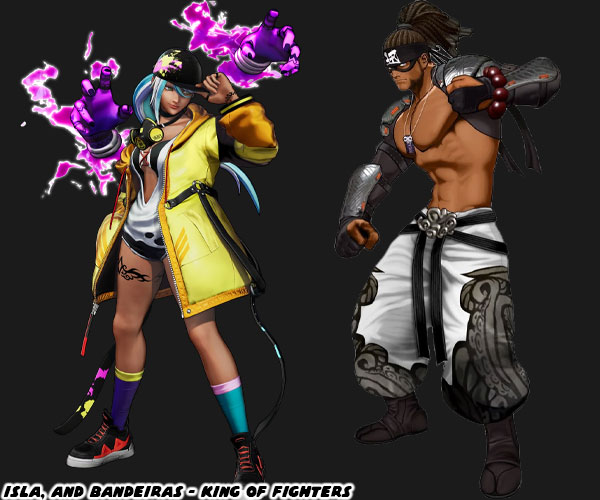
There were at least three SNK characters that Kimberly follows in the footsteps of. Zarina was a Brazilian conservationist, fan of Samba dancing, and kicker of crotches. She debuted in King of Fighters XIV, in 2016, along with Bandeiras Hattori founder of the Brazilian Ninja Arts Dojo. The minority characters were introduced as members of Team South America. The King of Fighters series is wildly popular in Brazil, and other South American countries, and it made sense that SNK would design a team in order to appeal to them. On a surface level Kimberly is young, and energetic, like Zarina, she even has a similar outfit. On a deeper level Kimberly is obsessed with the ‘80s, and ninjitsu. In her debut trailer we see her using a bunch of over-the-top ninja moves.
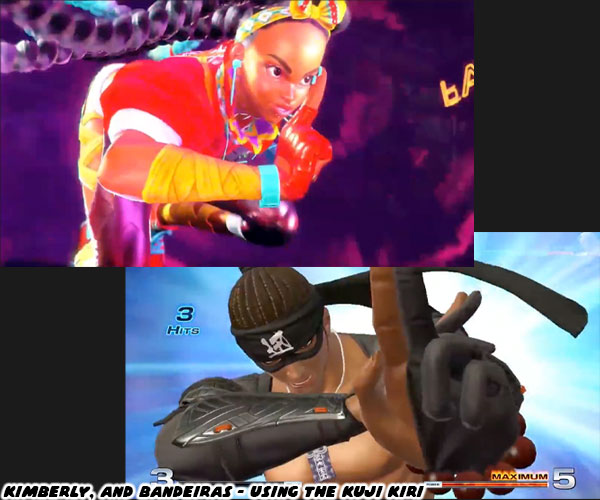
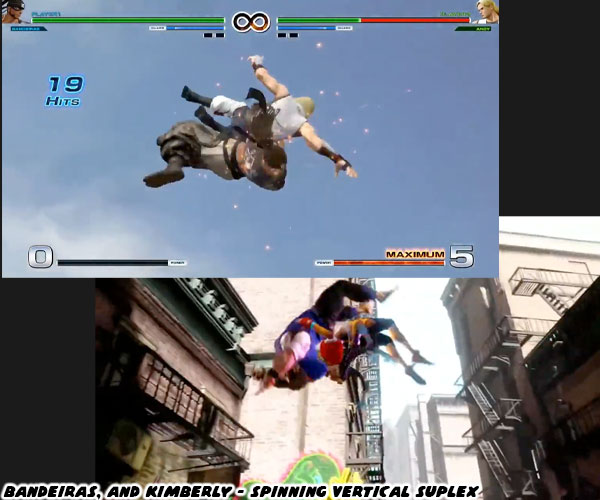
Bandeiras is also a huge fan of ninjutsu. He’s even invented his own form, and is actively trying to recruit students. He’s an absolute geek for Mai Shiranui, the most popular ninja in the KOF tournament. To be fair who wouldn’t be a fan of Mai? Kimberly by the same token is also a ninja super fan, she’s a follower of Guy, the most famous ninja in the Street Fighter universe. Kimberly has natural ability, making traditional fighting game style strikes with her own flair. Both Bandeiras, and Kimberly have lightning quick dashes to punches, and kicks. Ninjas in 3D fighting games often have a lethal move where they suplex their opponent onto their head from a tremendous height. Kage-Maru from Virtua Fighter helped start the tradition way back in 1993. Both Kimberly, and Bandeiras keep the tradition alive almost 30 years later.
Dark-skinned ninjas, and ninja apprentices aside, there was another character that predated Kimberly. Isla aka the “Dreaming Brilliance” was a Chilean KOF contestant. She was set up as a parallel, and rival to Shun’Ei. She debuted in King of Fighters XV in 2022. Her trailer premiered on Sept 30 2021, almost one full year before Kimberly’s first trailer. It is entirely possible that the new developers working on Street Fighter 6 were keeping tabs on every new face appearing in the KOF series. I would say that they challenged themselves to create characters better than the new faces introduced into the previous two KOF games.
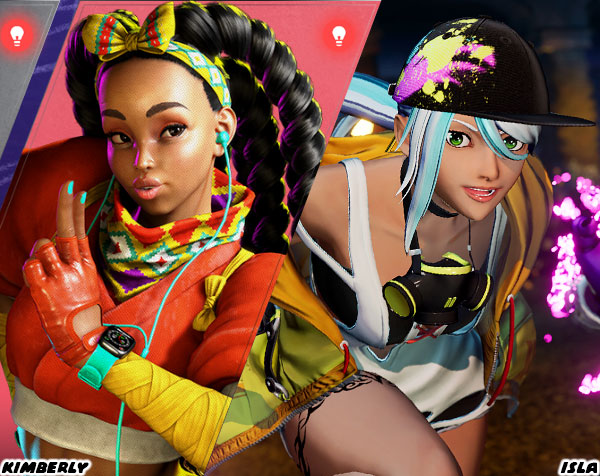
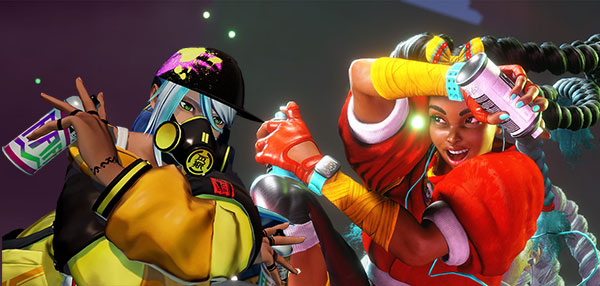
Isla was another South American. SNK was going all-in on making their cast appeal to the community. She was not a dark-skinned character, and her fighting style had nothing to do with ninjitsu or any other traditional art. She has mysterious psychic powers, floating hands nicknamed Amanda help her fight. These are similar to Shun’ei’s psychic hands. Where Isla overlaps with Kimberly is in the use of spray cans. Isla is a graffiti artist, and social media star. She uses the spray can in several of her special, and super attacks. Spray cans, especially those favored by graffiti artists are highly pressurized, and dangerous in certain conditions. In addition to spraying colors capable of blinding an opponent, they are also flammable. In both Isla, and Kimberly’s trailers audiences saw the cans used as explosives. Isla adding them to her kicks, and Kimberly to her punches. If I didn’t know better I would say that the Street Fighter developers simply mixed elements from Bandeiras, and Isla in order to come up with Kimberly. This would be an oversimplification of how her character evolved.
We need to take a step back from the minority ninja-meets-graffiti artist design behind Kimberly, and dig in deeper to how Hip Hop culture influenced the development of fighting games. When a game studio wants to ground a Western character as being “urban” or from the big city what visual cues do they give us? In the case of Guy, Kimberly, or the previous ninja female from the SF universe Maki, it was very subtle. They were wearing sneakers. Aside from that their outfits had elements of traditional ninja uniforms. Perhaps it was a mesh vest, pants, or a top pulled from classic designs. Then to ground it into the modern world they would be wearing modern sneakers. When the studios wanted to ground the universe, and presentation to Western audiences, or let international players know the world was set in a gritty western environment then what else did they do? Perhaps they showed landmarks in the distance. The Statue of Liberty, or high rise buildings that looked like the Empire State, or Chrysler Building from New York instantly told a story. Up close these streets, and environments were covered in graffiti. Graffiti decorated a number of stage backgrounds in many Japanese developed fighting, and brawling games.
Graffiti is a way of storytelling, and is one of the few visual languages that is almost universally understood. It is one of the four pillars of Hip Hop culture. Graffiti is the visual art of the culture, b-boy (breakdancing) is the style of dance, emcee (rapping) is the style of singing, and dj (turntablism) is the style of music. Hip Hop was born in New York in the ‘70s, and became a globally recognized culture over the next 50 years. That means that a Hip Hop practitioner can come from anywhere. They can breakdance to music in a different language, and write graffiti using a non-English alphabet, and it is still recognized as part of the culture. Graffiti was used in stage backgrounds, and intro screens on video games, and is still used in game design. When graffiti is used with supporting details, such as additional tags, trash, and weathered textures then it helps ground the audience to a particular era, culture, or economic class.
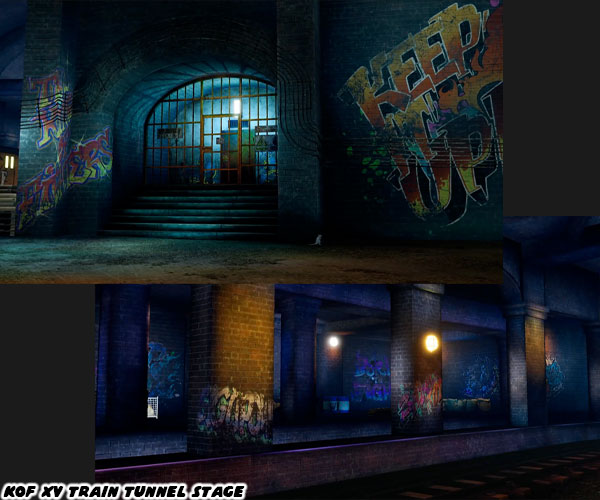
When graffiti is used without supporting context then it can be interpreted as a superficial element, as the developers do not fully grasp the culture they are trying to recreate. Poorly done graffiti doesn’t really help sell the game, or even ground the player. I would argue the superficial use of graffiti applies to Isla, and the train tunnel stage in KOF XV. The tunnel is coded for subway cars, however it features a freight car, which rarely, if ever, use the electrified tracks of a subway system. Also the graffiti covering the walls, and pillars of the tunnel are very clean, and stylish. They are not surrounded by illegible gang tags, trash, or other elements that are often found in living, breathing cities. SNK is very good at introducing characters into the KOF universe based on Western pop culture. The trade off is that these characters sometimes appear to only have a surface appreciation of the culture, and not a deeper foundation. Duck King for example appeared in 1991. He was the first b-boy-turned-fighting game character. His appearance was memorable, but as far as pop culture went it demonstrated that Japanese developers were behind the curve. 
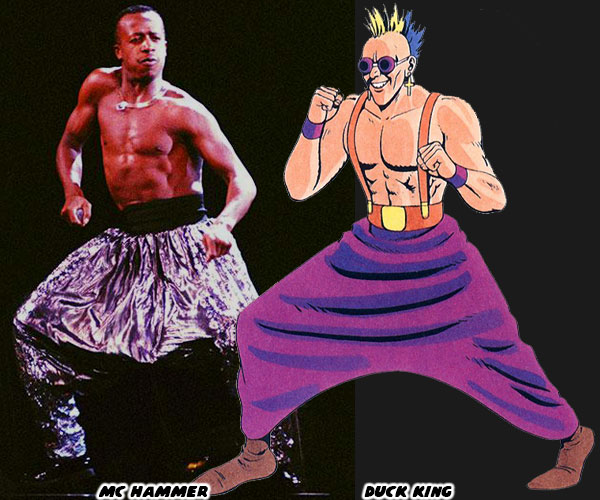
MC Hammer was a famous US rapper, and also an exceptional dancer. He popularized the oversized “genie pants” in the late ‘80s. However by the early ‘90s he was already waning in popularity in the west. Trends traveled much slower before the internet became commonplace. The Japanese developers at SNK thought they were beating the trend, and compared to other studios they very much were. However in a broader sense they were simply exploiting a trend, and not really invested in the culture. It was apparent as Duck King was a relatively minor character in the Fatal Fury timeline. It wasn’t the first time that a Japanese studio appropriated Hip Hop culture in a game. Kaneko released DJ Boy in the arcades in 1989. The brawling game featured an early attempt at recreating the culture for international audiences. It didn’t make much sense for people from the US, but I’m certain that audiences in Japan assumed that rollerskating gangs were everywhere in New York City.
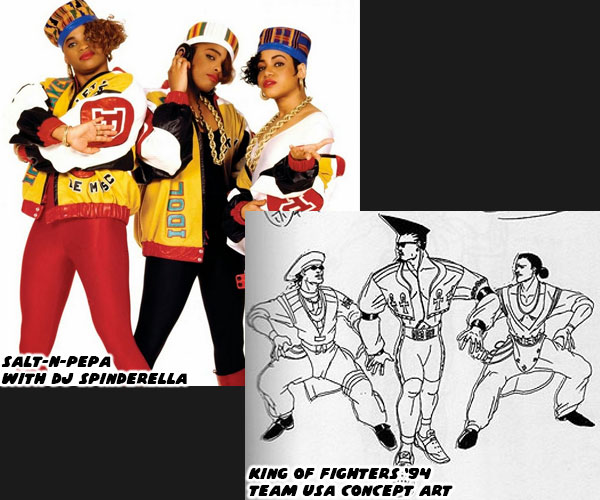
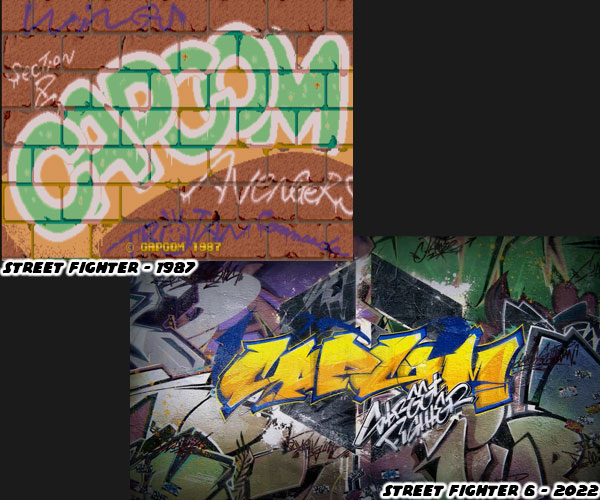
I had posted earlier on this blog that the genius of SNK’s character design was in hiding martial arts masters in plain sight. When the characters were done right, like Terry Bogard, or Kyo Kusanagi, who wore stylish street clothes they were as memorable as the Capcom school of design which favored fighters in more traditional costumes. However not every character was as well regarded. When you look at the design notes from the art team you can see how much they were trying to pander to western audiences. The concept art for Team USA in the King of Fighters ’94 looked like a Hip Hop dance troupe. The mix of spandex, and oversized coats was a popular trend in the late ’80s, and early ‘90s. By the time the team would be introduced the fashion would be outdated in the USA. Thankfully the studio went with a football player, basketball player, and boxer all wearing street clothes. These designs wouldn’t necessarily lock the team into a specific era. Capcom wasn’t immune to the trends from the west either. The original Street Fighter starts with a brick wall covered in graffiti. The Capcom logo is stylized in the original title screen, as well as the SF6 reveal trailer some 35 years later. 
Western pop culture from the ‘80s was all over early video games. Just on the influences of cult movies there would be no Metal Gear Solid without Escape from New York. There would be no Final Fight without Streets of Fire. The difference between how Capcom approached Kimberly, and how SNK created Isla demonstrate the different schools of design, especially with regards to appreciating Hip Hop culture. Kimberly is an energetic Black girl, as enthusiastic as Sakura was when she debuted in Street Fighter Zero. Both characters wore traditional costumes, Sakura dressed like a schoolgirl version of Ryu, and Kimberly dressed as a Black girl version of Guy. Both in sneakers, both essentially modernized takes on the iconic fighters. Kimberly is layered with additional details. Successful Black athletes have to blaze their own trails. In order to stand out from their peers. They have to be bold. Being Black, and successful in the USA means to live with more than a third of the country hating your existence for no reason other than the color of your skin. If you are going to be hated for everything you do then why not then flaunt your greatness? Audiences can see that Kimberly is a blindingly fast fighter, she is impatient as well. Doing running warmups before each battle. I do not think this was a throw-away detail.
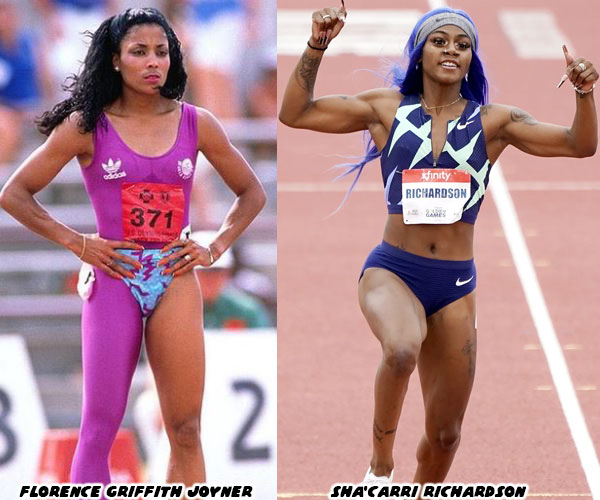
Kimberly is obsessed with the ‘80s. In that era there were many standout Black athletes. One of the most flamboyant was Florence Griffith Joyner aka “Flo-Jo”. The Olympian was a world class track star, that also happened to design her own stylish track suits. She became an icon on, and off the track. Most Black athletes were also subject to a lot of scrutiny. Flo-Jo was such a dominant figure on the track that she was accused of being on performance enhancing drugs. She was rigorously investigated, and subject to far more testing than her white contemporaries. She tested clean every single time, much to the chagrin of racist judges, and spectators. Sadly she passed away in 1998 from an epileptic seizure in her sleep. To this day we see shades of Flo-Jo with young Black track stars. The most recent of which would be Sha’Carri Richardson. The Olympic hopeful was sadly disqualified from the Tokyo Olympics for testing positive for marijuana use. To be fair she was self-medicating following the death of her mother. Of course other athletes, mostly white, did not receive such harsh criticism for recreational drug use. Kimberly has a gift for fighting, and at the same time she is also a young Black athlete. She reflects Hip Hop culture. She is a graffiti artist, she uses a classic cassette player to listen to music. Along with Jamie, the kung-fu b-boy, she is the second Hip Hop influenced character appearing in SF6.
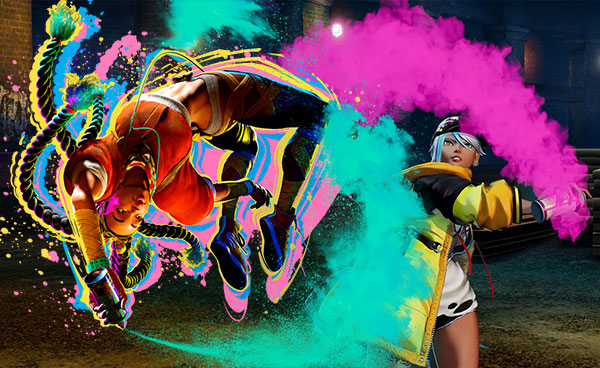
Isla by comparison appears to have cultural elements placed on her, and doesn’t necessarily represent Hip Hop. Not unlike Duck King when he debuted. Isla is focused on being a social media influencer, but SNK didn’t push anything about her art, or upbringing. They instead kept her past ambiguous, focusing less on her art, and more on her strange powers, and rivalry with Shun’ei. SNK could have at the very least associated her with Valparaiso, the street art center of Chile. Or made her an activist painting political street art in South America. I doubt that the current owners of SNK would be willing to put an anti-authoritarian in the game. I am glad that the studio is focusing on adding South American figures to the series, however any character could be placed in street fashion with splashes of paint, a respirator. It doesn’t mean they are a graffiti artist, any more than they represent Hip Hop, or Black culture. If they paid attention to what Marvel, and Sony Animation did with the character of Miles Morales as Spider-Man then they would know how much bigger graffiti art could define a character.
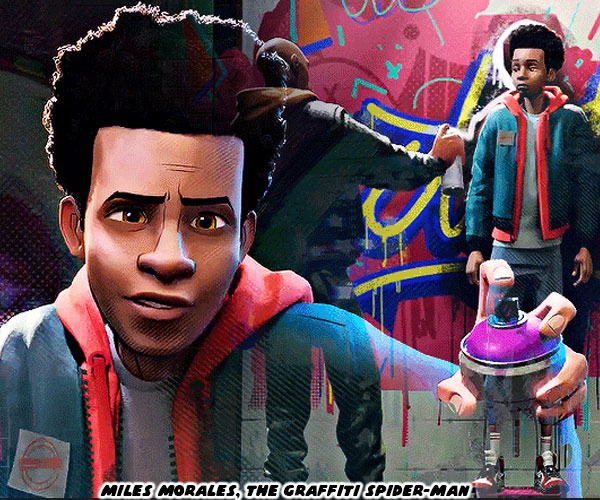
Street Fighter 6 Director Takayuki Nakayama, Producers Kazuhiro Tsuchiya, and Shuhei Matsumoto, and Designer Yusuke Hashimoto have all demonstrated a better understanding, and love of the culture with the footage they’ve released so far, and in their interviews. I doubt that the previous direction under Yoshinori Ono would have gotten it right. Perhaps that was why King Cobra never appeared in the game, despite the strong audience reaction. This is all of course my opinion. I’d like to hear your take on Kimberly, or the other fighters I’ve mentioned in the blog. Do you think Isla, Bandeiras, or Zarina were as well received by the fighting game community as Kimberly? Let me know in the comments section. As always if you would like to sponsor me please visit my Patreon page and consider donating each month, even as little as $1 would help make better blogs and even podcasts!
follow the Street Writer on Patreon!

Friday, February 16, 2018

The Giant Monster Series, part 6...


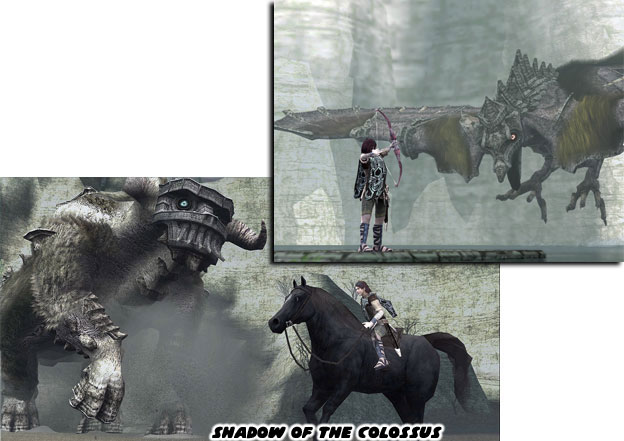
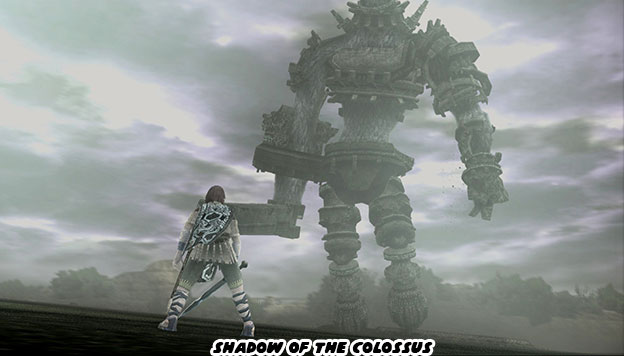
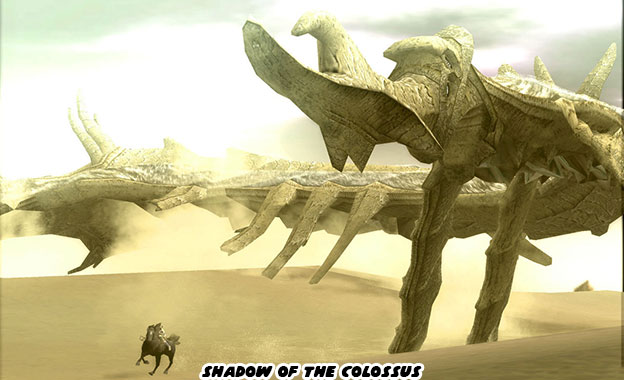
The first game featured today should be enshrined in the gaming hall of fame. Shadow of the Colossus (2005) was an international sensation when it was released. Very rarely were games so universally accepted that they required little if any localization. In order to be played the game required nothing more than the time, patience and practice. The game did not really need dialogue or lengthy cut scenes in order to be enjoyed but it didn't hurt that they were included. Fumito Ueda's tragedy featuring Wander, Mono and a very brave horse named Agro showed the industry that the giant monster could be a stand alone genre. The game used every lesson taught by giant monster films and classic literature and then created an original play experience out of them. The game isolated players in a forbidden land. They were enclosed by high cliff walls that couldn't be scaled and an ocean that could not be crossed.


Players could do nothing more but explore the environment and search for enormous creatures that were part living and part stone. Wander was equipped with two weapons, a bow and arrow and an enchanted sword. The creatures were invulnerable to both weapons with the exception of some strategically placed magical tattoos. When Wander stabbed the colossi on those tattoos the monsters could be defeated. Players did not know about the rules of combat regarding the colossi or how the sword worked. They were trained by the levels on how to run, scale, roll and jump around the environment. Little by little everything in the game was learned simply by playing rather than by going through a tutorial. Knowing how to perform multiple actions would come in handy as the colossi they fought were harder and harder to reach and defeat.


Just one of the genius details in the game design was in creating tension before each encounter. The levels were spread out far enough for players to develop a sense of isolation as they went from battle to battle. The music and sound effects reflected this emotional pull. Each colossi was introduced in a short cinematic that showed players the enormous scale of the creatures. They were very intimidating and no two were exactly alike. The music would pick up and increase the pressure for the duration of the battle. The colossi would focus their attention on the player with bright unblinking eyes. They would search for them, stomp and scratch at them as they ran and hid in corners of temples and pits. It was an amazing action experience that was highlighted by the giant monsters themselves.


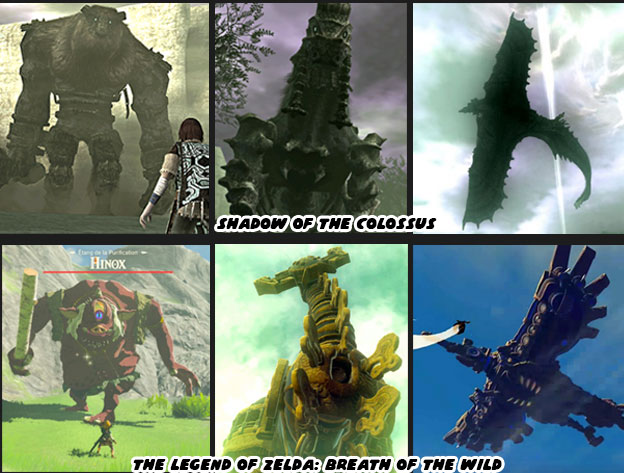
Ueda had created a universe filled with mythical creatures that appeared to be alive. He left enough clues on each level to let the origin of the creatures be explained. At some point the colossi might have been considered gods to the ancient civilization that built the temples. Prior to the colossi there was a single creature that inspired fear in the old tribes. Dormin was a dark, horned god that used to rule over the land. He was split into 16 pieces that each became a colossi. During the game it was revealed that Wander was slowly becoming possessed by Dormin as he defeated each of the colossi. On the last stage Wander underwent a transformation. Players could suddenly control Dormin against a group of tribal elders. This twist to the plot and game play was sublime. Players had no idea that they would end up becoming the creature that had been leading them on. Shadow of the Colossus redefined the giant monster genre and ended up influencing titles yet to come, not the least of which was Nintendo's award-winning game The Legend of Zelda: Breath of the Wild (2017). It turned out there were still other lessons that could be learned by playing with and against the creatures.


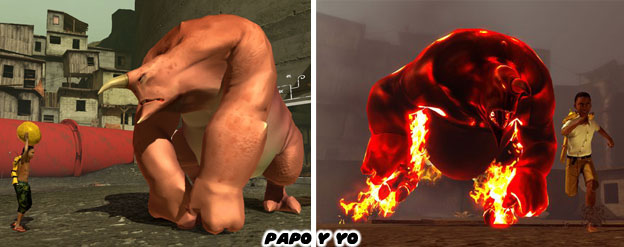
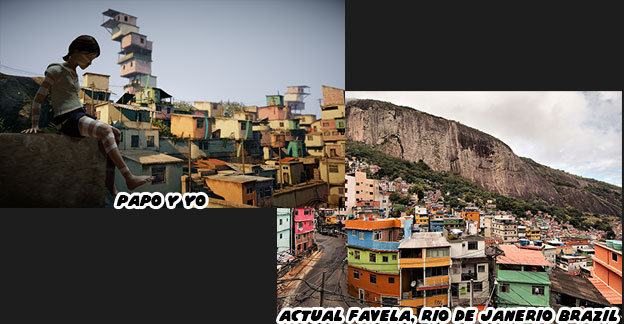
Vander Caballero created the indy hit Papo y Yo (2012). Minority developed an experience that captured the art of storytelling in gameplay as well as the biggest Triple-A studio. The game revolved around a unique relationship created between a monster and a little boy in a Brazillian favela (slum). The game turned the imagination of the young Quico as gameplay elements. Quico was searching for a way out of the favela while trying not to irritate the monster Papo. The game was actually an allegory for the relationship between the Vander and his alcoholic and abusive father. Quico could make walls turn to stairs and have building stretch as if the world were made of toy blocks and Silly Putty. Papo was available for some of the puzzles by triggering doors, traps or simply helping Quico reach higher places. The exploration and imaginative puzzles was only part of the reason that gamers wanted to find a way out of the favela. The sense of isolation that Ueda created in Shadow of the Colossus were mirrored in Papo y Yo. The favela was modern, it had color and personality but it also appeared like a prison. The walls were made up of the homes of people that seemed perpetually absent from the world. As far as the eye could see there were the walls, leaned onto the next, piled on top of each other. Despite the brilliant graffiti murals it was an oppressive site. In Shadow of the Colossus Wander would have to travel through the ruins of castles and temples that were even more imposing than the colossi that dwelled within. These design choices were part of the psychology of the games. The isolation created by these locations made Wander and Quico more sympathetic and their struggle more impressive.


Papo had a weakness, he enjoyed eating frogs but when he did he became a raging monster who did nothing but hurt and destroy. Papo could be pulled out of his rage by feeding him melons, but like sobriety to a person with a severe problem it was a constant struggle. The contrast between the friendly Papo and the flame-engulfed monster was a shock. Players learned to keep an eye on Papo while trying to figure out the next puzzle. The tension in the game was palpable. Players were tiptoeing around a ticking time bomb yet rather than stop playing they were compelled to help Quico escape. The emotional draw of the characters pulled audiences into the world. It was similar to the attraction behind Shadow of the Colossus. Wander needed the player to help him defeat the colossi and resurrect Mono. Quico needed to find a way out of his nightmare. Both games taught audiences to be brave and even defiant in the face of adversity. It also forced the players to think about their own mortality. The psychological elements from the giant monster myth were done equally well Papo y Yo. The isolated environment, the layers of detail that brought players into the world. The indestructible creature. When these things were combined they helped create a sense of primal fear. The fact that the game was created as a coping mechanism to help with those that came out of abusive relationships was superb design.


There was more to the giant monster genre than simply running from or battling against them. It was something that had been overlooked in the series thus far. A completely different contribution to gaming that could only be provided by the creatures themselves. Entirely new styles of gameplay had to be created so that the player could wreak havoc on an unsuspecting population. To say that the newfound power went directly to the heads of the players would not be far from the truth. In the next blog we shall look at the games that turned gamers into virtual gods.


Monday, January 4, 2016

Laura, the new leading lady of Street Fighter V or more fanservice?

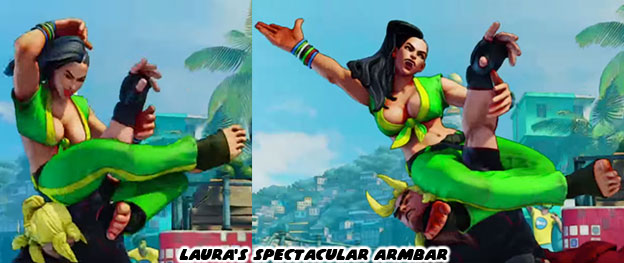
We cannot separate the over-sexualization of the female Street Fighter character designs from reality. Capcom has done a fine job of pandering to the mostly male demographic with the changes made to the female characters in the Street Fighter series. Yet to put all the blame squarely on Capcom would mean ignoring the society that we live in. Capcom creates characters that reflect society, the good and the bad aspects of it. If they are creating female characters and presenting them as objects of desire then they are following the trends. SNK does this, Sega does this, Namco does this, Microsoft does this, just about every studio that makes a fighting game is guilty of following the trend. Sex sells and when it comes to female athletes it is the most important thing to sell. The design behind Laura Matsuda, the new Brazilian fighter in Street Fighter V certainly caught onto the trends.


Women are paid less in general than men for the same amount of work in the business world. The divide becomes much more noticeable for female athletes. For example Abby Wambach, forward for the USA Women's National Soccer Team makes far less than her male counterparts. She has an incredible record in league, international and World Cup play yet her annual earnings, including endorsements and sponsorships are less than even the big name retired male peers. Despite her accomplishments and abilities she is marginalized in the sports community. She does not turn up in much advertising, she does not get asked to appear in movies or television cameos. She doesn't even warrant an interview on the sports networks. At the same time retired NBA and NFL athletes have a steady stream of work in commercials and as commentators and are expected to make more than Wambach annually. As she retires chances are that she will fade away unlike the male athletes from the same generation. She was not the first to have this broad divide come to light. Women have to fight for respect at every turn. Earlier this year Sports Illustrated announced the Sportsperson of the year was tennis star Serena Williams. They took an online poll and people voted for the horse American Pharaoh to win the honor. Was it trollish behavior from the online crowd? Possibly. Was it sexist, racist or misogynist to pick a horse over a black woman? Quite possible as well. The news that people were upset about the decision made headlines around the world. Women have to walk a fine line between being taken seriously as athletes and at the same time being marketable through attractiveness. This is especially noticeable in the fighting community. One of the first things that people noticed in the design of Laura were her looks, and aside from her breasts it was her hair that stuck out.


Laura Matsuda wore a half head of tight braids or cornrows. Most female fighters wore their hair in full braids during competition. This way it stayed out of their eyes. Unlike using a headband these braids couldn't easily fall apart even in a grapple. The half-head of braids was made popular in part by pro fighter Ronda Rousey. She would often wear her hair this way during media events and premiers. The hair itself can be seen as a part of the trend of having to be an attractive female athlete in order to be marketable. Do you remember the media outlets doing interviews on the stylists of any other fighter or boxer, male or female? We now know that stylist Abraham Esparza helped create Rousey's trademark style only because the sports outlets decided this was important. Ronda still has to contend with the standards that society has on beauty. She still has to deal with people calling her fat. Serena Williams and her sister have been called ugly and mannish because they were extremely muscular. By comparison the Russian Maria Sharapova was easier to market, easier to build a brand around and feature as a mode because she fit the western ideal of beauty. She was blonde, thin and not as muscular as the Williams sisters. It did not matter if she was not as highly ranked a player or if she didn't have as many championships as either sister. Great looking fighters could be marketed. It didn't matter if Rousey had a judo record that earned a gold medal in the Pan American Games, a Silver in the World Championships and the Bronze in the Olympics. Or that her professional MMA career was 12-1, a prior women's champ for the UFC. The focus from many outlets was her appearance and even her sexual appetite more than her in-ring ability.


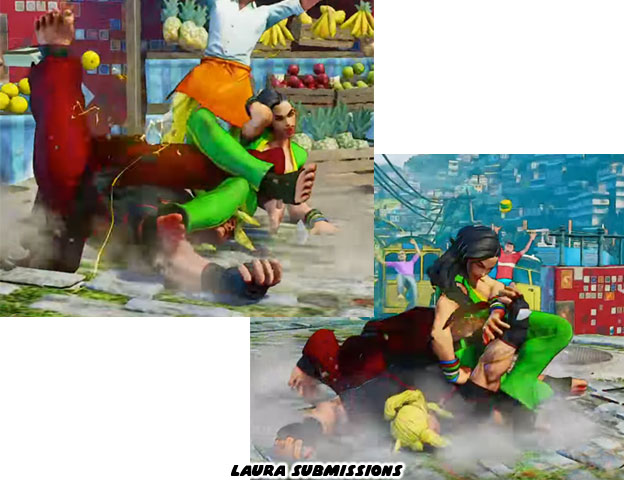
In Street Fighter V Laura Matsuda has a very attractive design however that is in contrast to her striking moves, traps and grappling takedowns. She has speed and power that almost put her on par with the bruiser Abel from Street Fighter IV. This might be a seen as a turn-off for some players. Even in the ring women have to be marketed as strong and sexy. Michelle Waterson is nicknamed "the Karate Hottie" and the Japanese fighter Rin Nakai is advertised as strength and beauty by the UFC. Is referring to women like this macho posturing? Is mixed martial arts is the most alpha-male of sports? Do men get intimidated by alpha-females in competition? If so do they believe that women belong in the ring as ring girls rather than fighters? Women walk the line and always have to look their best. Whether it's during training, a press conference or even weigh-in. They have to be made up and look presentable. Men do not have to deal with the double standard. They can be ugly or slovenly if they want. They can show up in torn pants with a 5 o'clock shadow to an interview and nobody cares. They can even act inappropriate to the reporter if they want to. Remember when Quentin "Rampage" Jackson dry humped a female reporter on air? Or when he did the same thing to a Japanese reporter overseas? Would you expect or even accept this behavior from a pro baseball or basketball player? Would female fighters be called sluts if they behaved in the same way? Or were male fighters somehow a part of a different crowd? Were they allowed to be as sexually dominant as they wanted because they were fulfilling some sort of contract with our primal desires?


It is hard to be a professional female athlete in any discipline and much more for a fighter. Ronda is just one example of female fighters having to fit a certain mold, but let's look at somebody from Laura's part of the world and see if the same thing applies. Kyra Gracie, daughter of Rorion Gracie and a member of the legendary Gracie clan is a proud Brazilian. Like her family members she is expected to excel in jujitsu. It is not luck or genetic engineering that makes Kyra or her family members great. It is lots of hard work, practice and a system that has been refined by almost a century. The Gracie family was participating in international bouts and no-holds barred matches since the start of the 20th century. This was well before the term mixed martial arts was even coined. The Japanese champion Mitsuyo "Count Kouma" Maeda helped introduce jujitsu to Brazil. He had a hand in teaching the Gracie family the art and exposed an entire nation to its effectiveness. Kyra represents a third-generation practitioner. She does very well in local and national tournaments. She fights in both gi, wearing the traditional uniform as well as non-gi contests where opponents wear tight-fitting rash guards. She had no plans on transitioning to MMA because the life-span of those fighters, and earning power, is much shorter. When it came to actual fighting Kyra did not sex up her uniform at all. Like other female fighters she wore something that was functional if not modest. Yet this did not mean that she was not presented as a sexual being to audiences.


Kyra did some modeling outside of the ring to help make her more visible to non-MMA, non-jujitsu fans. By appearing in some very revealing shoots was she pandering to her fans? Certainly, but she was keenly aware of what she was doing. The Brazilian was using sex to sell her image, she was building her brand more so than she was building the Gracie brand. If large companies could exploit women in their advertising then what would happen if the women were in control of the image? Athletes like Rin Nakai, Ronda Rousey, Michelle Waterson and even the Williams sisters knew that they were not getting paid as well as their male counterparts. They also knew that their life in pro sports would not last forever. They needed to make as much money as they could, by using any avenue that they could. This is the sad truth of female athletes. Many female athletes have to do things that are not expected of male counterparts. Also, like the previously aforementioned sports figures, Kyra was doing these shoots of her own free will. She was not coerced into appearing topless, or pants-less in her pictures. She did this because she knew the images would sell and she would gain a lot of new followers. These followers would bring with them their money and make the sponsors happy. Did the sex do anything to diminish her presence in the ring? Nope! Also she did not actually fight with her boobs hanging out of her top.

Designers at every studio need to ask themselves if the characters they are creating go above and beyond the sexy tropes and stereotypes, or are they just reflecting what society expects a female fighter to be. SNK, Namco, Sega, Capcom, Midway and the other studios have created many fantastic female characters for over 25 years without resorting to pandering. They created female fighters that were empowered and attractive. Yet they also created many that were sexy for the sake of being sexy. This is something that drives me especially crazy about Capcom. At their best they can create characters that cross multiple genres, that appeal to a broad range of demographics. Yet in recent years they haven't quite been able to hit the mark that the previous teams did. The icons created in Street Fighter II, Street Fighter Alpha and even Street Fighter EX had a lot more staying power. They accomplished this without the use of 3D graphics, without overly-sexual female characters.


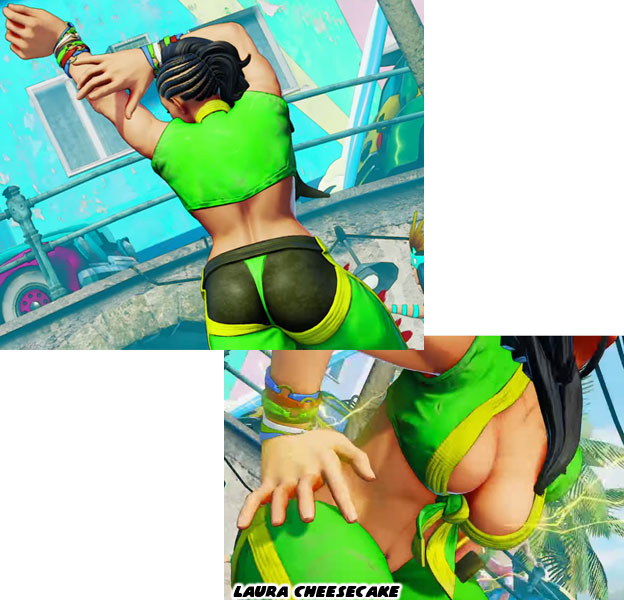
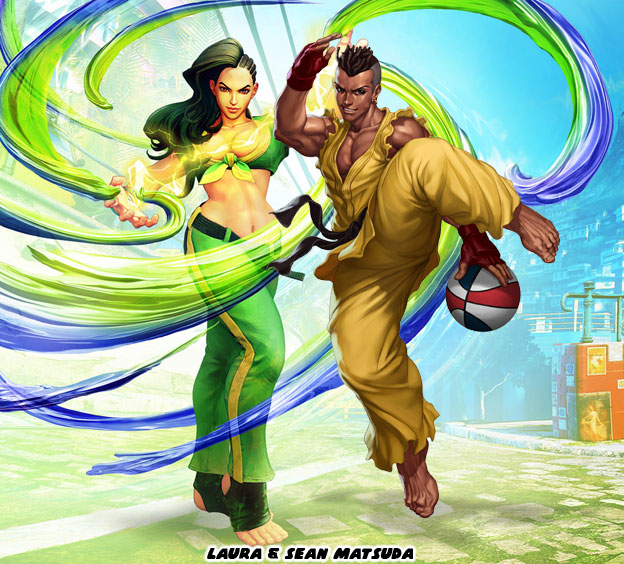
So how does Laura stack up? She has some of the most imaginative moves in recent memory. Her grapples and takedowns, which can be mixed up with solid strikes and combos are a refreshing addition to the franchise. They break up the monotony of Ryu's fireball attacks or the stiff power moves of Zangief. They are even somewhat believable to perform. What the character didn't need was the special attacks focused around electricity. I understand it was a nod to Blanka but are all Brazilians really doubling as car batteries? Not only that, her super moves have her bouncing around the screen like a pinball. The Street Fighter IV and V teams really enjoy breaking the 4th wall but now the moves are really starting to lose their charm. Purpose-wise she is a positive of a representation of Brazil. I could do without the feathered-costume samba dancers on her stage, or the giant world cup trophy in the background (instead of the Jesus statue atop Rio De Janeiro). We get it Capcom, this is Brazil, you don't have to be so ham-fisted about it. With that said Laura is doing much more for the people of South America than Blanka ever did. The pairing of rash guard shorts under her pants just to show off her butt was sophomoric, and her too revealing top was lazy design. Her color selection of green and yellow was however perfect, especially when combined with the black ankle sleeves for contrast. Bright primary colors were usually assigned to each character and green wasn't really assigned to anybody in Street Fighter V. The colors did the double duty of mirroring the colors from the Brazilian national flag.


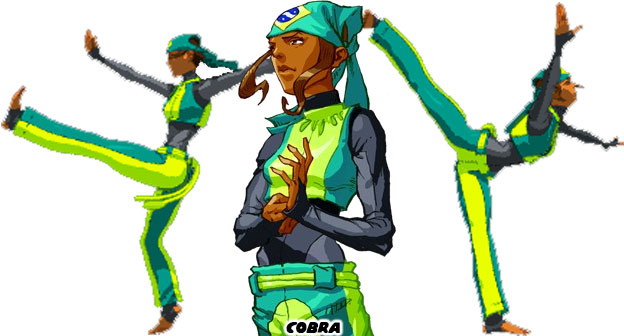
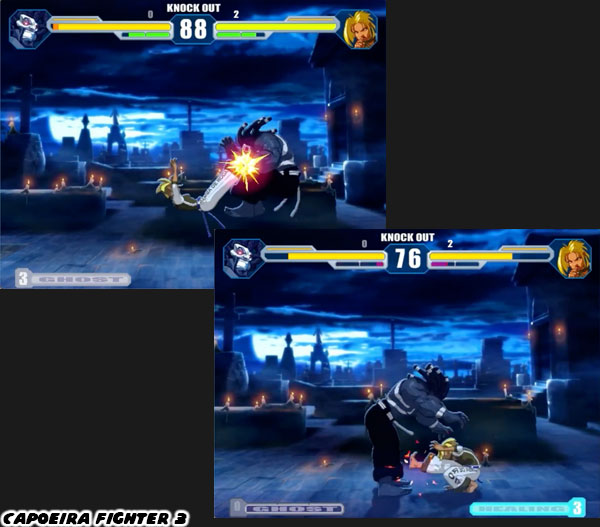
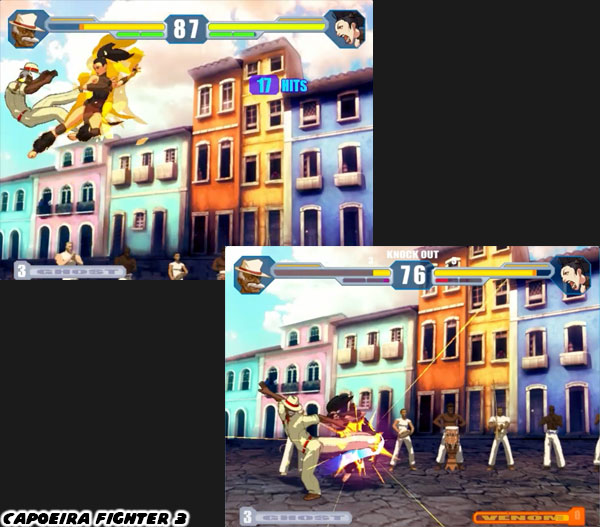
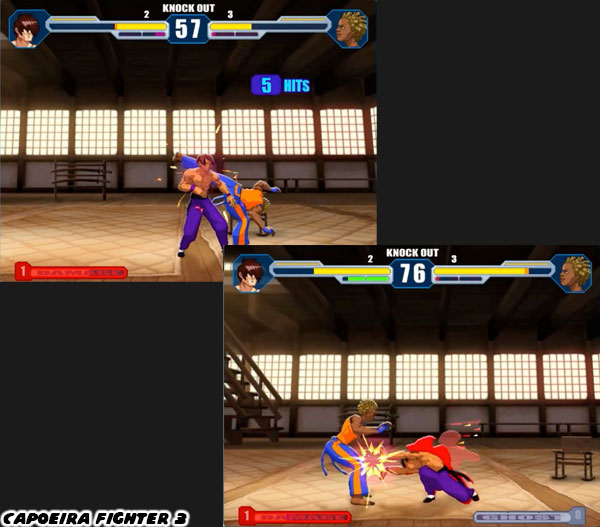
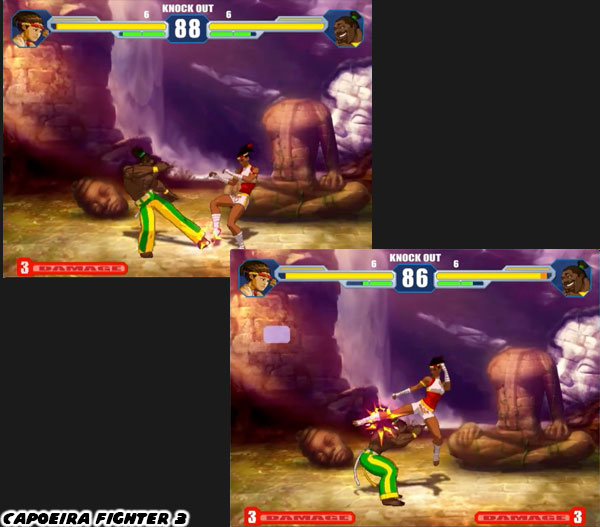
Laura was not the first minority character, or mixed ethnicity character to pull off this look. That honor would belong to Cobra from Spiritonin's Capoeira Fighter 3. Cobra was fast, flexible and very dangerous. She had some amazing strikes and brutal takedowns as well. She was a villain in the game yet at the same time fiercely proud of her nation. A good chunk of her costume, including the rash guard and ankle sleeves predates the look of Laura. Did I think Laura was derivative? No, I think it was coincidence in the design.

Do I think Laura works in the Street Fighter universe? I say yes. The game could always use more diversity with regards to ethnicity and diverse styles of fighting. I think characters like Laura belong especially when these are positive figures rather than stereotypical tropes. She certainly has more going for her than F.A.N.G. I could do less without the close ups on her butt or the gratuitous cleavage close ups during her intro or special animations. These don't do anything to make the game better or make audiences appreciate the character any more or less. She is very similar to Rashid in that she is a good design but does not actually achieve greatness. To be fair she is slightly more unique than Rashid for the move selection assigned to her and even for her creative hair style. Her moves, minus the electricity are more grounded and less fantastic than the sci-fi wind attacks of Rashid. I think that the character has much better design and purpose than her brother Sean, who was yet another "shotoclone" introduced in Street Fighter III.


Something that Capcom has to explain is why Laura is much lighter than her brother. I understand that they are siblings and sometimes there is a range in how dark or fair skinned a brother or sister can be. But this difference is very noticeable. It is okay to assume that they may be step-siblings but if they are truly brother and sister then why make her much lighter? I get the same feeling for Laura that I got for Vanessa Lewis. The studio is intentionally making her lighter just to appeal to the Asian market and of course Western ideal of beauty. Let's hope that is not the case. Laura is a good character and I hope to see her more in the future. I'd like to hear your take on this character and whether or not you think women fighters tend to be objectified more in games. As always if you enjoyed this blog and would like to sponsor me please visit my Patreon page and consider donating each month, even as little as $1 would help make better blogs and even podcasts!


 follow the Street Writer on Patreon!

Friday, October 16, 2015

How fight culture became fighting game history, part 47

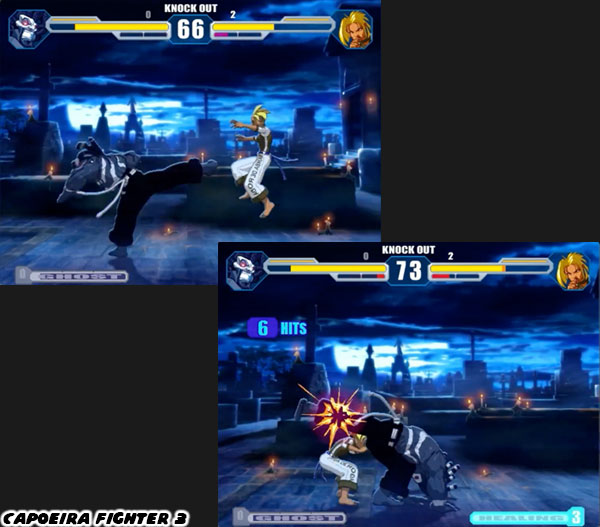
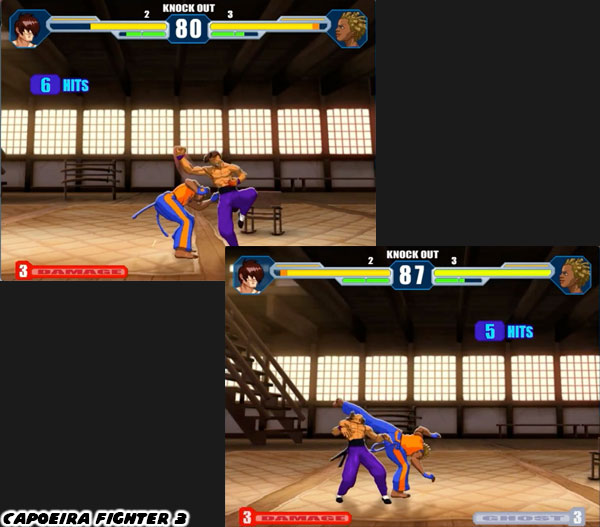
Capoeira was a graceful fighting art form. It revolved around the rhythms, colors and communities of Brazil. The indigenous people of South America and the African slaves helped keep the form of combat alive under the guise of a sport. Many of the strikes did not lose their lethal nature though. It came in especially handy for escaped slaves and prisoners. It was up to the developers at Spiritonin to bring the history of Capoeira to life and make it appear as diverse in game as it was in reality by applying different variations of the art to different characters. For some it flowed freely and highlighted amazing spinning strikes. For others it was an explosion of concentrated punches and counter attacks. The beauty of the art form was countered by the ugliness of some of the combatants in Capoeira Fighter 3.
 

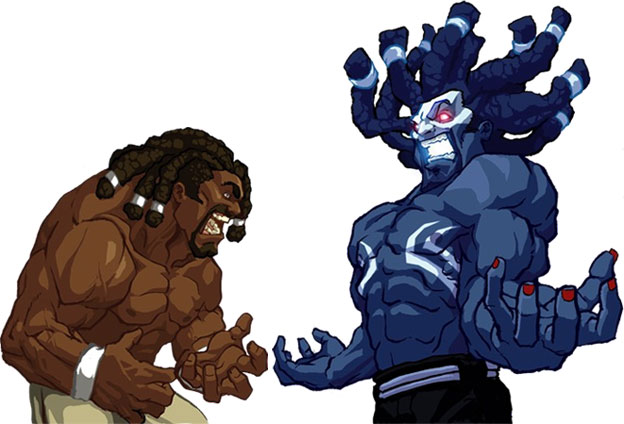
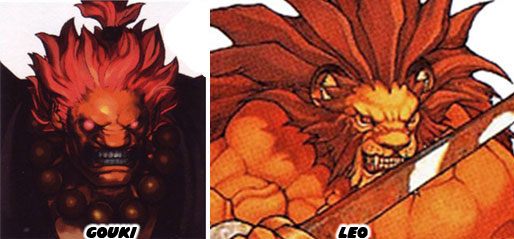
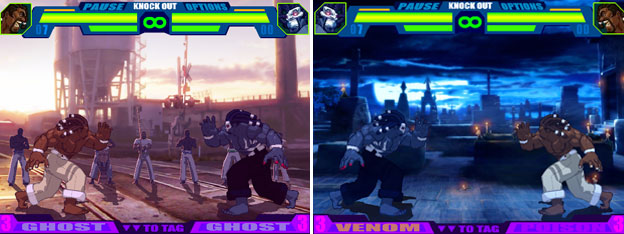
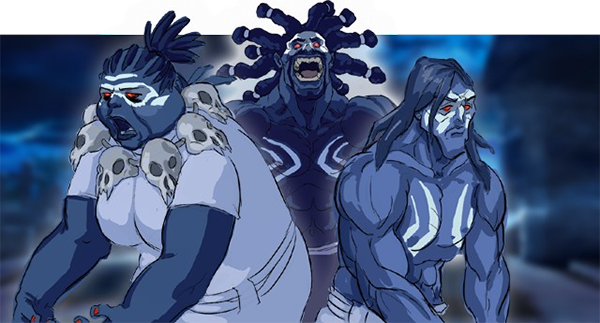
This did not mean that the characters were physically ugly but that they exploited the form simply for the sake of harming others. The worst of these offenders went by the name of Zumbi. The Mestre had played the heavy in the previous incarnations of the game but by the third chapter in the story he became a boss-level fighter. Zumbi did not simply gain a host of more powerful attacks but his voice, his appearance and even stage had changed dramatically. The end result was a monster of a man named Zumbi Azul. This new character observed many of the same conventions that were created by Capcom when the studio designed Gouki.

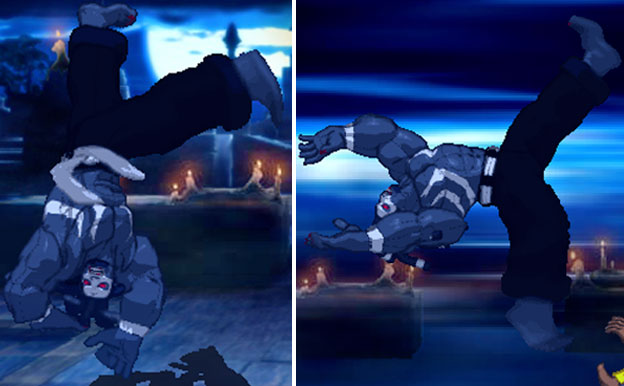
Zumbi Azul was meant to evoke supernatural origins. Creator Scott Stoddard and artist Adam Ford started by changing his skin color. The cool blue was "painted" over Zumbi as part of a dark ritual. It was meant to reflect the night. Symbolically this also reflected the dark Macumba spirits that had possessed him. The contrast from white painted markings was meant to make the character look like a skeleton as well. These new color choices were contrasted by blood red eyes and fingernails. It made Zumbi Azul look like a Voodoo Spirit rather than a person. These things were all done deliberately. Every design clue in the game was meant to invoke images that would have been clearly understood by gamers in the West. Gouki had animalistic features, dark red skin and other traits that were universally recognized as making him demonic. Some of his other cues were not as obvious to players outside of Asia. The spiky hair was reminiscent of the guardian spirits or Nio and the rope belt he wore had Shinto connotations. In order to make Zumbi and the mythology of Zumbi Azul work the studio had to put in enough visual cues that highlighted the spiritual elements in the series, again the spiritual elements from the West.


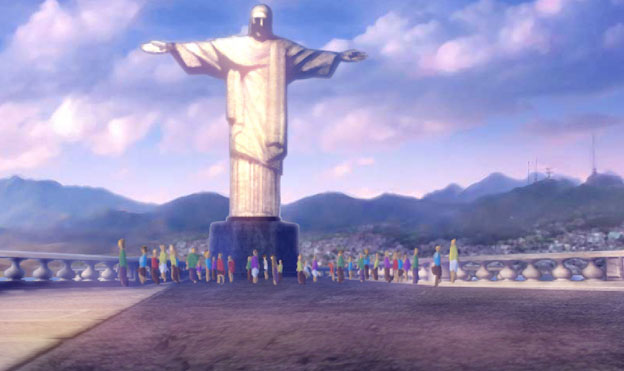
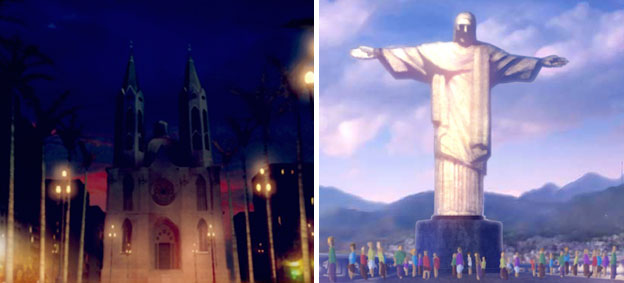
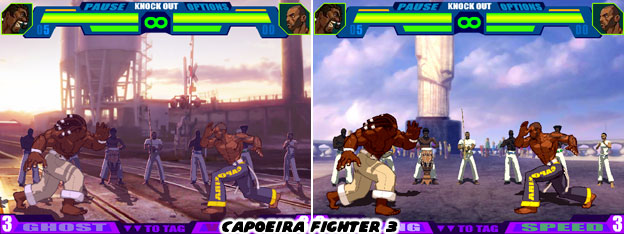
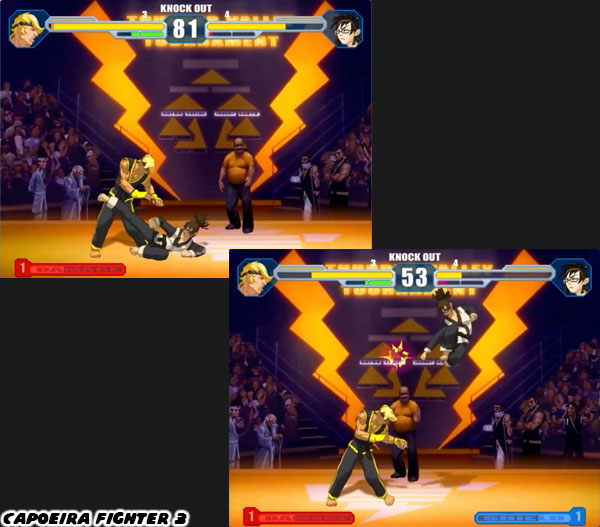
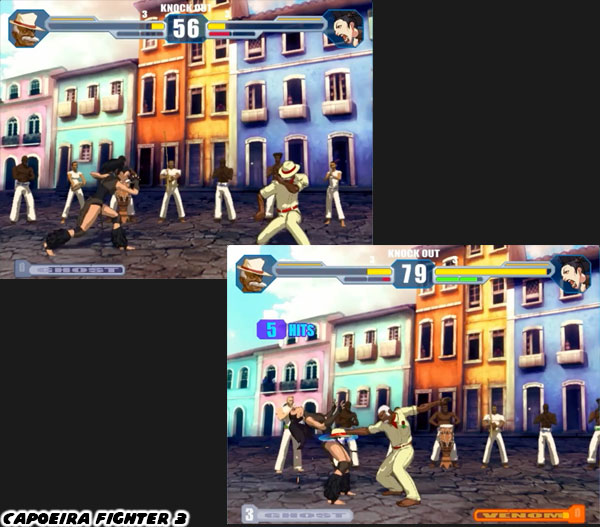
Capoeira Fighter 3 had a mix of influences, not solely from the fighting styles but also from other video games. It was heavily based in the visual style of Street Fighter Zero but with gameplay elements, control schemes and animations from Street Fighter III and Tekken as well. Part of the success of the other games were the memorable stages that the fights took place in. Spiritonin used landmarks that had a dual meaning in several of the levels. The Sao Paulo Cathedral and statue of Christ the Redeemer from Rio De Janeiro were important symbols from Brazilian Christianity. Two beautifully painted versions of these places, by Ford, were the backdrops for the heroic characters in the game.

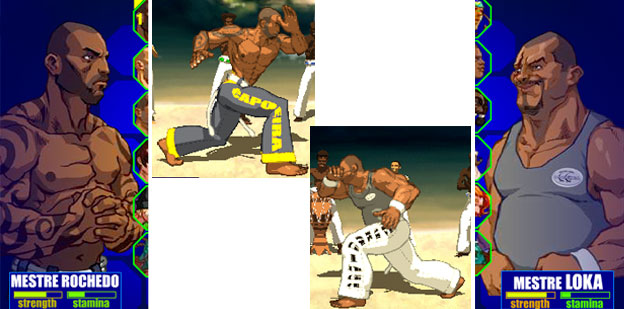
These icons were meant to reinforce the personalities of the cast. Mestre Rochedo was a noble fighter and was constantly vigilant against Zumbi. He would warn his students to watch out for him in the game. Rochedo fought in front of the statue of Christ, seemingly invisible to the tourists that had gathered there. The name Rochedo actually meant cliff in Brazilian, it was short for the saying "only the cliff can face the wind." In this case only Rochedo could face Zumbi and his dark powers. Ramba was a student of Mestre Loka, another honorable teacher. She was a tough fighter whose macho attitude earned her the female equivalent nickname of "Rambo." She was actually in law school during the third Capoeira Fighter Tournament. Both of Ramba's possible endings had her helping out the less fortunate and thus demonstrating strong Christian values. It made sense that the Sao Paulo Cathedral was the backdrop for her stage.


The Western world was much better acquainted with the Christ figure and symbolism of churches and iconography. The themes explored by these stages would have been easily understood by Western audiences. Even non-Christians could appreciate the aesthetics of the level designs. The earth tones used for the cathedral balanced the cool darkness of the sky and the warm glow of a setting sun. It showed the beauty of the cathedral and the streets of Sao Paulo at night. The Christ statue itself was very serene and peaceful. The use of clouds made the stage location look heavenly. Those that followed the religion were familiar with the lessons of Christ. They knew that fighting was not a sin, especially not if the person was fighting against the forces of evil. In this case it would be the Christian belief versus the pagan ideal. Even the art of capoeira itself was filled with religious undercurrents. There was a sincere relationship between the Mestre and students, not unlike a priest or pastor and their parish. Those that would earn a name had to undergo a Batizado or Baptism as well and earn a place in the community.

The interplay between good and evil, light and dark was not lost on either Zumbi or Zumbi Azul. Zumbi was a bad guy yet his stage was visually one of the nicest ones in the game. In other fighting games the bad guys sometimes fought in a dirty alley or dark forest. For Zumbi the character fought on train tracks. On the horizon was a setting sun. It gave everything in the level a soft glow. From the farm house in the distance to the nearby grain elevators and even factory smokestack, the industrial and rural met in relative peace. It could be interpreted as symbolic of the state of Zumbi. The character was at a crossroads as well. He had dedicated his life to combat and was willing to forgo the traditional world of man and the beauty of the modern world. This would be the dusk of his existence and night would mark his transition into a new person. The stage of Zumbi Azul was a stark contrast to the train crossing.


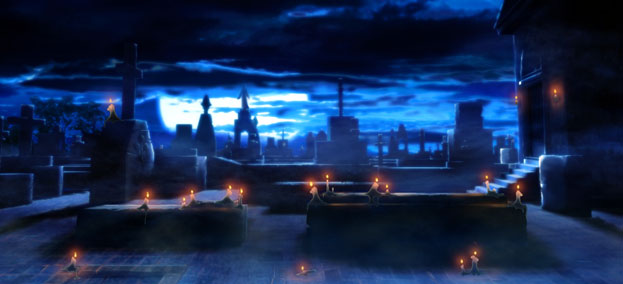
The cool blues and grays of an old cemetery at night were meant to elicit a chilly response from players. The full moon, framed by ominous clouds, gave off an ethereal glow. This type of level design was meant to tell a story. The stages created for Gouki in the Street Fighter series were layered with themes of Hell and the afterlife. Even though these places could have actually existed somewhere in Japan there was a certain subtext that was hard to ignore. The cemetery of Zumbi Azul was meant to do the same thing in Capoeira Fighter 3. This was the place that the dead called home. Any person foolish enough to face Zumbi Azul there would probably end up joining the residents before dawn.

This new "home" of Zumbi Azul was decorated with multiple candles, hinting that some sort of Macumba ceremony had been performed there. Of course popular media would suggest that the only types of ceremonies performed over a grave or mausoleum at night were unholy. If Zumbi had died physically, spiritually or even symbolically perhaps he would have been reborn with new powers. The spirits of the Macumba would now be in charge of the man. One interpretation of Zumbi Azul was that he had become a Zombie, or servant to the dark forces. The actual Haitian practice of Vodou gave rise to the zombie myth. Unscrupulous practitioners of the dark arts were called Bokor. These people would kidnap people to turn into mindless slaves. Other times they would raise the dead in order to turn them into servants.


The ceremonies the Bokor performed, their various potions, spells and curses had been closely guarded secrets for several centuries. Modern science had created a plausible theory for what these so-called masters of the dark arts had actually been doing. First they poisoned their victims with a strong neurotoxin, from a puffer fish or poisonous frog. This would slow down their breathing and heartbeat to an undetectable state. The person would then be declared dead and be buried in a shallow grave allowing time for the toxins to wear off. The Bokor would then magically "revive" the person by force feeding them a paste made up of sweet potato, cane sugar and the hallucinogenic plant datura. The end result, provided that the person actually survived the ordeal and was fit for work, was cruel and grotesque. The newly born zombie would be brain damaged from the lack of oxygen during paralysis and unable to communicate, reason or have any higher brain functions. The Bokor would constantly beat, berate and keep the zombie in a stupor with their drugs while forcing the zombie into a life of slavery.


The Bokor claimed that they did not raise zombies to sell into slavery but rather that these people were being punished for committing the most cardinal of sins against the religion. The lack of medical information and strong word of mouth gave credibility to the supernatural powers of the Bokor. It was not uncommon for some family members to remain vigil over the grave of a deceased relative until they were certain that the body had begun to decay and would not be exhumed. In other instances some people were dismembered by their own family before being buried. Whichever the case was the African and Afro-Caribbean communities learned to be wary of these mysterious rituals and practitioners.


The mythology of Macumba, the Orisha and Voodoo worked in favor of Zumbi Azul. This was a character that embraced his own evil tendencies and turned himself into a monster. It was as if he were both the Bokor and Zombie. He did not want or need an accomplice to perform the ritual he had studied up on. Those that wanted to follow in his footsteps, characters like Maestro and Buldogue, would be turned into blue-skinned servants. At least in one of the possible endings both of the fighters became minions for Zumbi Azul. This villain demonstrated all of the traditions that made for a great evil character. He was willing to do whatever it took to win. He lacked respect for the life of his opponents and even himself. He was willing to pay with his body and soul in order to achieve unstoppable power.

Capoeira Fighter 3 was already a good fighting game given the diversity of characters, strong minorities, balance, animation and control. It became a great fighting game when it included a villain that could be held to the same standards of the best bosses. The next blog will look specifically at the things that reflected the heritage of Zumbi Azul and close out this series. As always if you enjoyed this blog and would like to sponsor me please visit my Patreon page and consider donating each month, even as little as $1 would help make better blogs and even podcasts!
Monday, September 28, 2015

How fight culture became fighting game history, part 39

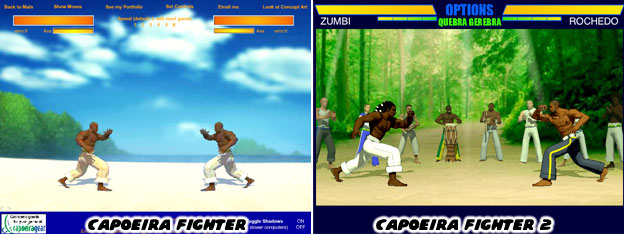
Scott Stoddard and Adam Ford were the founders of Spiritonin, the independent game development studio. They had cut their teeth working on projects for Avalanche Software, Disney Interactive and other publishers. Both were huge fans of fighting games, especially the Street Fighter and Tekken series. Scott had actually practiced capoeira for a number of years. A back injury and family life kept him grounded but he never lost the passion for the art form. At the end of 2001 he put together a game called Capoeira Fighter. It was like a Shockwave tech demo. He converted 3D models into sprites for his newly created game engine.
 

The animation was okay and the control was pretty good but sluggish when compared to any arcade or console fighter. The game featured two characters on one screen. There were none of the fancy level details, like scrolling or musicians in the background that appeared in subsequent titles. It was as bare-bones a fighting game on the web could get. The game actually had a plot which established the canon of the universe. Mestre Rochedo was honing his techniques for an upcoming fight with Mestre Zumbi. The fight was actually called a "Batizado" which meant Baptism in Portuguese. Students that were trying to earn their cordas, the rope belts worn by practitioners, had to prove themselves by competing against an upper classmate. It was similar to the trials that karate practitioners had to go through in order to earn a new belt. Rochedo was one of the shaved-head characters featured in the series and Zumbi was the one with large dreadlocks. In the first game Rochedo was player 1 and player 2. Zumbi would not appear officially until the sequel.


A few months after the original game came out a much more polished sequel had arrived. Released in 2002 Capoeira Fighter 2 had laid the foundation for an amazing series. The game had much larger and more complex models. The game camera would actually zoom in and out to follow the players. The background was static but there were now musicians playing traditional instruments as well as the other playable characters clapping along in the background. It was as if the players were competing in an actual roda. The gameplay was still fixed in 2D like Street Fighter with similar mechanics. There were a handful of selectable characters, each with their own techniques and moves. Although the models were crude they were all distinct. The sequel had expanded on the story of the game. This time around Mestre Loka and Mestre Rochedo had teamed up to get their students ready for a batizado. Loka's rival Mestre Zumbi showed up to cause trouble. This meant that they all had to fight to defend the honor of their school. This small plot helped establish who the major players were in the game and what their motivation was.

It may have sounded insignificant for a fighting game, especially a web-based fighting game, but the story helped demonstrate the commitment that Spiritonin was putting into the series. All of the individual personalities began to come through as the characters, moves and details of the game had gone up considerably. The game had whites and non-Brazilians as well as minority characters in the lineup. The people of color were not treated like exotic or token characters but just as equals. All of the playable characters studied capoeira yet each had their own unique form. It was a refreshing change of pace as far as videogames went, especially fighting games. The diversity reflected the heritage of Brazil and the cross pollination of different cultural elements that helped transform Kupigana Ngumi into Capoeira.

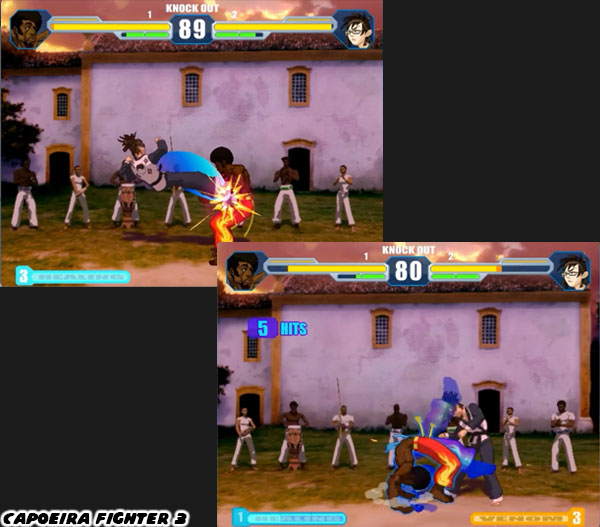
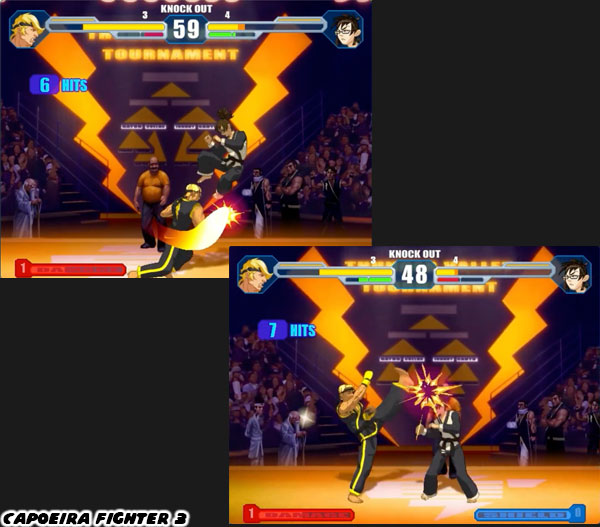
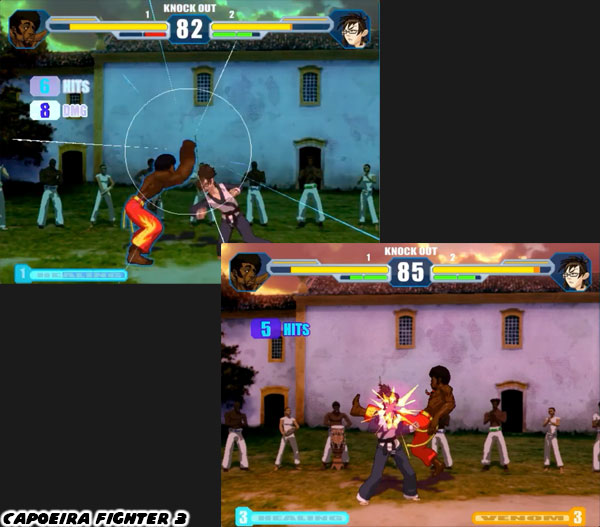
Things went quiet for a few years as Scott and Adam were working on another entry during their free time. The third game in the series could be considered the best web-based fighter ever made and one of the best fighting experiences period. Capoeira Fighter 3 (CF3) appeared in 2004 as a demo with a finished version not long after. Everything that was in the game was exponentially better than what had come before. Stoddard, Ford, their friends, coworkers and families all pitched in to help make sure that the game was worth remembering. The character models, animation, levels, effects, control, balance, music, sound and options were through the roof. Not that many people took notice of this detail but the game actually applied a lighting filter on the sprites. Shadows fell in the foreground or background depending on the placement of the "sun." Skin was shiny or dull, muscles and clothing were highlighted or dark, again depending on the placement of the light source. This was an amazing achievement considering that the game was created for the web on Shockwave, with a full version for the PC being available for purchase on CD.

It took a long time for Capoeira to become implemented properly in a game. It had actually required more work and research than any other Western or Eastern developer had put into the art. The tradition was still outlawed at the start of the 20th century. Just as blacks found it difficult to assimilate into society after the end of the Civil War in the US, the black Brazilians faced many of the same racial tensions, discriminatory practices, violence and oppression for decades after slavery had been abolished. They found it hard to gain acceptance or make headway into positions of power or respect. Capoeira was the one tradition they could hold onto and keep alive despite attempts to suppress the culture. The practice was gaining support in small communities and by 1937 the practice was tolerated by most non Afro-Brazilian towns. By 1953 it was no longer outlawed across the nation. Gamers should be thankful that SNK helped introduce the formerly forbidden art to gamers in 1989 and that by 1997 both Namco and Capcom helped it gain global visibility. In 2008 Brazil declared Capoeira part of its Cultural Heritage. It was only appropriate that the full version of Capoeira Fighter 3 was released in 2008 as well to further educate gamers to the Dance of War.

The game oozed style, Scott Stoddard and Adam Ford had created it as a love letter to the genre. It had pulled many elements from Street Fighter Zero / Alpha but with hints of the King of Fighters and Tekken series thrown in for good measure. To be fair the game also gave a nod to the characters, music and even locations featured in the cult martial arts film "Only the Strong" and even the 1977 classic Cordao De Ouro "Golden Cord."

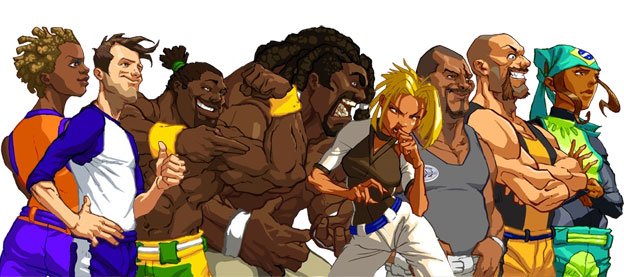
All of the characters introduced thus far had returned in Capoeira Fighter 3. Each of the characters was far more developed and distinguished. The size, scale, body type and even color choices applied to the characters was done with forethought. For example the colored cords that the characters wore reflected their rank and were worked into the theme of each costume. The bold primary colors placed on the cords were reflected on the clothing worn by some of the fighters. The use of primary colors to help identify characters had been used to great effect in Street Fighter II more than 20 years prior. Ken wore red, Ryu wore white, Guile wore green and Chun-Li wore blue. In CF3 Furacao (hurricane) wore yellow, Santo wore green and Perereca (poisonous tree frog) wore white. All of the women in CF3 were also dressed more realistically as well. None sported the bikini of Elena or the revealing costume of Christie Monteiro. Their costumes were functional yet form fitting so that they still accentuated the curves of the females.


A person might think that the gameplay would be very redundant with the number of capoeiristas but no two shared the same moves, combos or special attacks. Capoeira, like kung-fu and karate had hundreds of variations. The strikes applied to each character fit their personality as well as their body type. The muscular characters like Zumbi and Maestro had power moves which relied on tremendous upper body strength. They dealt a lot of damage with a few strikes but tired quickly. The smaller female characters like Coelha (named after a bunny rabbit) and Perereca did not do as much damage per attack but had lighting speed and did not tire as quickly.

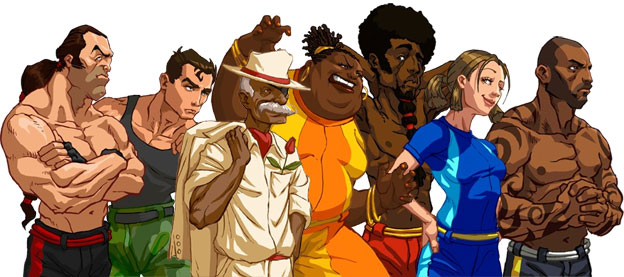
The diversity of the characters could not be understated. There were 15 unique capoeiristas (16 including a special version of Zumbi). In addition there were 13 other "World Warrior" type characters that represented other fighting styles like Muay Thai, Tae Kwon Do and boxing. It was not the sheer number that made the game unique but instead the showcase of figures. In other fighting games the playable characters were always roughly the same size and body type. They never had an ounce of fat on them and were never too short or tall. Capoeira Fighter 3 had every skin color and body type that a person could imagine. The various tones and shades of skin suggested that several characters were of mixed marriages, mulatto or even native.

Very few games before or after had put as many minority characters in the roster. Very few games had ever put minorities in prominent roles for the accompanying story. The lineup featured tall, skinny, fat, short, muscular and average build body types. Even the heroic Mestres could not have been more opposite. Rochedo was tall, tattooed and muscular whereas Loka was shorter, stocky and wore a tank top that covered his paunch. Loka also sported very nasty cut through one of his eyes. The character had lost it in a maculele or machete battle. The dangerous Cavalaria form of the art emphasized weapons and strong take downs which made Loka a tough fighter.


There was a character that reflected just about every type of gamer there was, including the young and old. None of them seemed feeble when competing against fighters in their prime. This distinction was important because the art form actually helped keep bodies healthy and limber even in old age. Something else to consider was that in most fighting games the token power character was a musclebound man. Zumbi and Maestro did fit the bill however one of the strongest characters in CF3 was a tall and heavyset woman nicknamed Buldogue. She didn't have the fancy tumbling moves of other characters, and she didn't jump very high for that matter. Instead she relied on more realistic open hand slaps, hip thrusts and kicks that could knock down walls.


The nicknames given to the characters was done in more earnest than tongue-in-cheek. Capoeira had been banned a few centuries prior in Brazil. Practitioners knew each other by nickname only. This protected the identities of the masters and their students. The nicknames were earned by peers, after a batizado and were closely guarded. These nicknames were the reputations that preceded the best fighters. The fighters could be named for their tenacity or lack thereof, like Stoddard's alias and playable character "Maionese," Animal names were revered because they were like avatars. Several fighters featured in CF3 were named after animals. Buldogue had the fearlessness and raw power to back up her nickname it was however her trademark yell that gave birth to her legend.

The other women in the game were just as unique and memorable. Some were shorter than their male counterparts and some taller. They all had a reputation and purpose written in canon which was revealed during the course of the game. For example Cobra was constantly pitting sides against each other. She was trying to get ahead in the criminal underworld that her father ran. Cobra had demonstrated that the women characters did not have to be heroes. Not only that but they could have as much influence on canon as any male character. Several of the main characters like Furacao, Zumbi and Jamaika were based on real people and the ones who trained Stoddard. It was funny because he turned some of them into villains.


Stoddard knew that it didn't make much sense in other fighting games that all of the characters knew each other or that they happened to be in the same country or town at the same time. So when he began writing the story for CF3 he made sure to reunite the characters under a common goal. This time it was Mestres Loka and Rochedo sending their students around the world to show off their capoeira skills. Zumbi was in hot pursuit of them. They had to prove their art against other fighting styles as well as each other. This meant that allies could fight each other through the course of the game and some could even switch sides. Male and female characters could be fighting for good or evil and the truth would only be revealed at the end of the game.


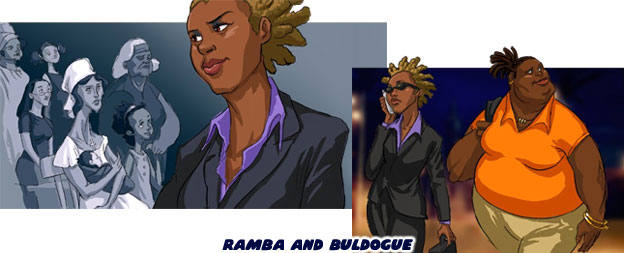
Some women had more altruistic goals than simply fighting for the sake of fighting. The tall light-skinned Ramba had actually been away from competition because she was busy at the university. She was asked by Mestre Loka to look after his students. She reluctantly agreed as it would be a good excuse to get away from law school for a moment. Along the way Ramba met Buldogue and offered her a better life. Ramba knew that Buldogue was a strong fighter but had never been given an opportunity outside of the roda. Buldogue had been used as hired muscle by other characters in the game and Ramba wanted to get her out of that life. She knew that the bruiser was actually respected by the community, especially the poor that lived in the favela or ghetto. If she were able to get an education and become known for something other than fighting then Buldogue could become an inspiration for other women trapped by their situation.

Players were given a choice whether to team up Ramba and Buldogue or to play solo. The purpose of Ramba in the game was not to beat the main villain but instead to help guide those in need. If players completed the game solo then Ramba learned what she was really fighting for. She earned her degree but decided to open her own firm to help the less fortunate. If she teamed up with Buldogue she became a mentor and enrolled her in school while still working double-duty as a lawyer.

Strong, positive, dynamic, interesting minority female characters that didn't need to flash skin to get noticed? There had been few and far between for over 25 years. Designers in Japan and the US had lost focus on how they could introduce new faces without relying on pandering or stereotype. Characters could color the perception of gamers after all. When done in a positive light they could stop perpetuating stereotypes. Capoeira Fighter 3 had set a standard that would be hard for many developers to follow. Where I believe the game excelled was in creating a villain that would hold his own against the best fighting bosses ever designed. The next portion of the series will break from the issue of color to explore what it took to become infamous in the genre. As always if you enjoyed this blog and would like to sponsor me please visit my Patreon page and consider donating each month, even as little as $1 would help make better blogs and even podcasts!