Showing posts with label sean. Show all posts

Monday, January 4, 2016

Laura, the new leading lady of Street Fighter V or more fanservice?

We cannot separate the over-sexualization of the female Street Fighter character designs from reality. Capcom has done a fine job of pandering to the mostly male demographic with the changes made to the female characters in the Street Fighter series. Yet to put all the blame squarely on Capcom would mean ignoring the society that we live in. Capcom creates characters that reflect society, the good and the bad aspects of it. If they are creating female characters and presenting them as objects of desire then they are following the trends. SNK does this, Sega does this, Namco does this, Microsoft does this, just about every studio that makes a fighting game is guilty of following the trend. Sex sells and when it comes to female athletes it is the most important thing to sell. The design behind Laura Matsuda, the new Brazilian fighter in Street Fighter V certainly caught onto the trends.


Women are paid less in general than men for the same amount of work in the business world. The divide becomes much more noticeable for female athletes. For example Abby Wambach, forward for the USA Women's National Soccer Team makes far less than her male counterparts. She has an incredible record in league, international and World Cup play yet her annual earnings, including endorsements and sponsorships are less than even the big name retired male peers. Despite her accomplishments and abilities she is marginalized in the sports community. She does not turn up in much advertising, she does not get asked to appear in movies or television cameos. She doesn't even warrant an interview on the sports networks. At the same time retired NBA and NFL athletes have a steady stream of work in commercials and as commentators and are expected to make more than Wambach annually. As she retires chances are that she will fade away unlike the male athletes from the same generation. She was not the first to have this broad divide come to light. Women have to fight for respect at every turn. Earlier this year Sports Illustrated announced the Sportsperson of the year was tennis star Serena Williams. They took an online poll and people voted for the horse American Pharaoh to win the honor. Was it trollish behavior from the online crowd? Possibly. Was it sexist, racist or misogynist to pick a horse over a black woman? Quite possible as well. The news that people were upset about the decision made headlines around the world. Women have to walk a fine line between being taken seriously as athletes and at the same time being marketable through attractiveness. This is especially noticeable in the fighting community. One of the first things that people noticed in the design of Laura were her looks, and aside from her breasts it was her hair that stuck out.
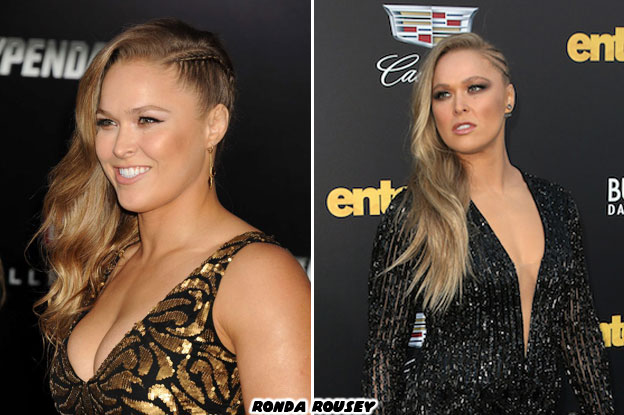

Laura Matsuda wore a half head of tight braids or cornrows. Most female fighters wore their hair in full braids during competition. This way it stayed out of their eyes. Unlike using a headband these braids couldn't easily fall apart even in a grapple. The half-head of braids was made popular in part by pro fighter Ronda Rousey. She would often wear her hair this way during media events and premiers. The hair itself can be seen as a part of the trend of having to be an attractive female athlete in order to be marketable. Do you remember the media outlets doing interviews on the stylists of any other fighter or boxer, male or female? We now know that stylist Abraham Esparza helped create Rousey's trademark style only because the sports outlets decided this was important. Ronda still has to contend with the standards that society has on beauty. She still has to deal with people calling her fat. Serena Williams and her sister have been called ugly and mannish because they were extremely muscular. By comparison the Russian Maria Sharapova was easier to market, easier to build a brand around and feature as a mode because she fit the western ideal of beauty. She was blonde, thin and not as muscular as the Williams sisters. It did not matter if she was not as highly ranked a player or if she didn't have as many championships as either sister. Great looking fighters could be marketed. It didn't matter if Rousey had a judo record that earned a gold medal in the Pan American Games, a Silver in the World Championships and the Bronze in the Olympics. Or that her professional MMA career was 12-1, a prior women's champ for the UFC. The focus from many outlets was her appearance and even her sexual appetite more than her in-ring ability.
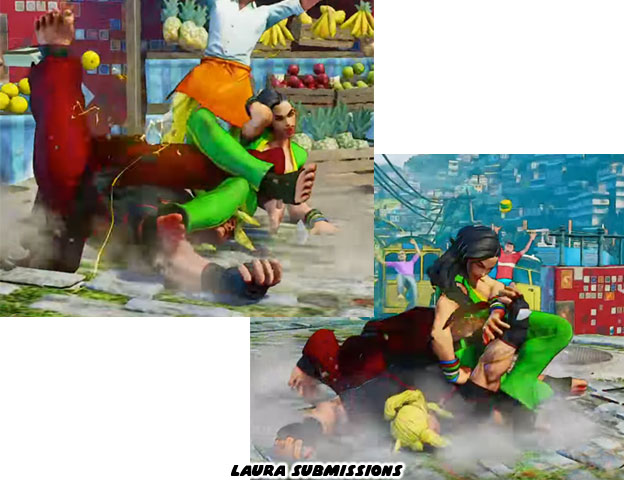

In Street Fighter V Laura Matsuda has a very attractive design however that is in contrast to her striking moves, traps and grappling takedowns. She has speed and power that almost put her on par with the bruiser Abel from Street Fighter IV. This might be a seen as a turn-off for some players. Even in the ring women have to be marketed as strong and sexy. Michelle Waterson is nicknamed "the Karate Hottie" and the Japanese fighter Rin Nakai is advertised as strength and beauty by the UFC. Is referring to women like this macho posturing? Is mixed martial arts is the most alpha-male of sports? Do men get intimidated by alpha-females in competition? If so do they believe that women belong in the ring as ring girls rather than fighters? Women walk the line and always have to look their best. Whether it's during training, a press conference or even weigh-in. They have to be made up and look presentable. Men do not have to deal with the double standard. They can be ugly or slovenly if they want. They can show up in torn pants with a 5 o'clock shadow to an interview and nobody cares. They can even act inappropriate to the reporter if they want to. Remember when Quentin "Rampage" Jackson dry humped a female reporter on air? Or when he did the same thing to a Japanese reporter overseas? Would you expect or even accept this behavior from a pro baseball or basketball player? Would female fighters be called sluts if they behaved in the same way? Or were male fighters somehow a part of a different crowd? Were they allowed to be as sexually dominant as they wanted because they were fulfilling some sort of contract with our primal desires?
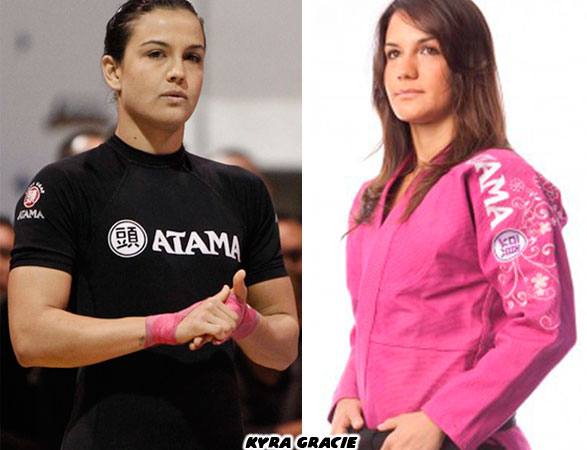

It is hard to be a professional female athlete in any discipline and much more for a fighter. Ronda is just one example of female fighters having to fit a certain mold, but let's look at somebody from Laura's part of the world and see if the same thing applies. Kyra Gracie, daughter of Rorion Gracie and a member of the legendary Gracie clan is a proud Brazilian. Like her family members she is expected to excel in jujitsu. It is not luck or genetic engineering that makes Kyra or her family members great. It is lots of hard work, practice and a system that has been refined by almost a century. The Gracie family was participating in international bouts and no-holds barred matches since the start of the 20th century. This was well before the term mixed martial arts was even coined. The Japanese champion Mitsuyo "Count Kouma" Maeda helped introduce jujitsu to Brazil. He had a hand in teaching the Gracie family the art and exposed an entire nation to its effectiveness. Kyra represents a third-generation practitioner. She does very well in local and national tournaments. She fights in both gi, wearing the traditional uniform as well as non-gi contests where opponents wear tight-fitting rash guards. She had no plans on transitioning to MMA because the life-span of those fighters, and earning power, is much shorter. When it came to actual fighting Kyra did not sex up her uniform at all. Like other female fighters she wore something that was functional if not modest. Yet this did not mean that she was not presented as a sexual being to audiences.
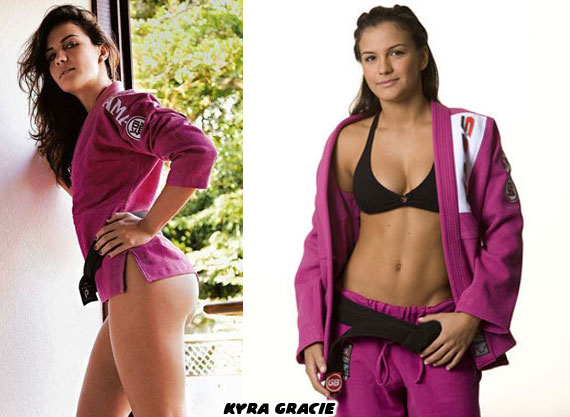
 

Kyra did some modeling outside of the ring to help make her more visible to non-MMA, non-jujitsu fans. By appearing in some very revealing shoots was she pandering to her fans? Certainly, but she was keenly aware of what she was doing. The Brazilian was using sex to sell her image, she was building her brand more so than she was building the Gracie brand. If large companies could exploit women in their advertising then what would happen if the women were in control of the image? Athletes like Rin Nakai, Ronda Rousey, Michelle Waterson and even the Williams sisters knew that they were not getting paid as well as their male counterparts. They also knew that their life in pro sports would not last forever. They needed to make as much money as they could, by using any avenue that they could. This is the sad truth of female athletes. Many female athletes have to do things that are not expected of male counterparts. Also, like the previously aforementioned sports figures, Kyra was doing these shoots of her own free will. She was not coerced into appearing topless, or pants-less in her pictures. She did this because she knew the images would sell and she would gain a lot of new followers. These followers would bring with them their money and make the sponsors happy. Did the sex do anything to diminish her presence in the ring? Nope! Also she did not actually fight with her boobs hanging out of her top.

Designers at every studio need to ask themselves if the characters they are creating go above and beyond the sexy tropes and stereotypes, or are they just reflecting what society expects a female fighter to be. SNK, Namco, Sega, Capcom, Midway and the other studios have created many fantastic female characters for over 25 years without resorting to pandering. They created female fighters that were empowered and attractive. Yet they also created many that were sexy for the sake of being sexy. This is something that drives me especially crazy about Capcom. At their best they can create characters that cross multiple genres, that appeal to a broad range of demographics. Yet in recent years they haven't quite been able to hit the mark that the previous teams did. The icons created in Street Fighter II, Street Fighter Alpha and even Street Fighter EX had a lot more staying power. They accomplished this without the use of 3D graphics, without overly-sexual female characters.
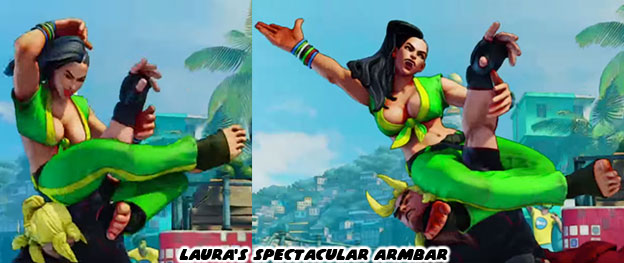

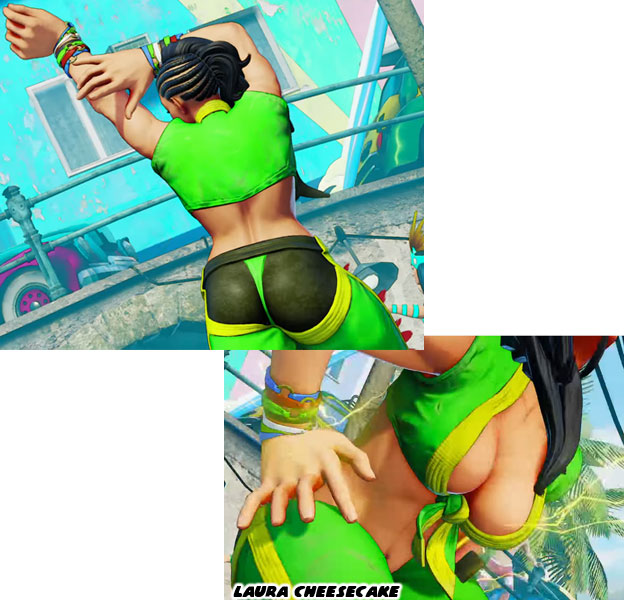
So how does Laura stack up? She has some of the most imaginative moves in recent memory. Her grapples and takedowns, which can be mixed up with solid strikes and combos are a refreshing addition to the franchise. They break up the monotony of Ryu's fireball attacks or the stiff power moves of Zangief. They are even somewhat believable to perform. What the character didn't need was the special attacks focused around electricity. I understand it was a nod to Blanka but are all Brazilians really doubling as car batteries? Not only that, her super moves have her bouncing around the screen like a pinball. The Street Fighter IV and V teams really enjoy breaking the 4th wall but now the moves are really starting to lose their charm. Purpose-wise she is a positive of a representation of Brazil. I could do without the feathered-costume samba dancers on her stage, or the giant world cup trophy in the background (instead of the Jesus statue atop Rio De Janeiro). We get it Capcom, this is Brazil, you don't have to be so ham-fisted about it. With that said Laura is doing much more for the people of South America than Blanka ever did. The pairing of rash guard shorts under her pants just to show off her butt was sophomoric, and her too revealing top was lazy design. Her color selection of green and yellow was however perfect, especially when combined with the black ankle sleeves for contrast. Bright primary colors were usually assigned to each character and green wasn't really assigned to anybody in Street Fighter V. The colors did the double duty of mirroring the colors from the Brazilian national flag.
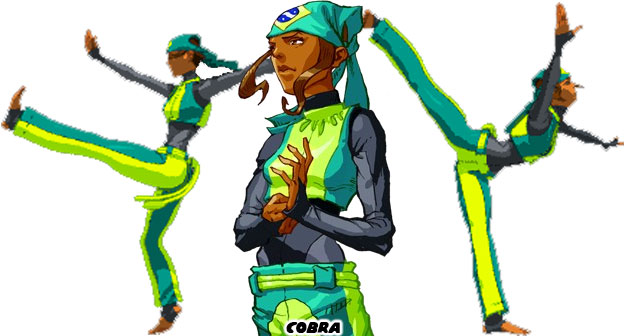


Laura was not the first minority character, or mixed ethnicity character to pull off this look. That honor would belong to Cobra from Spiritonin's Capoeira Fighter 3. Cobra was fast, flexible and very dangerous. She had some amazing strikes and brutal takedowns as well. She was a villain in the game yet at the same time fiercely proud of her nation. A good chunk of her costume, including the rash guard and ankle sleeves predates the look of Laura. Did I think Laura was derivative? No, I think it was coincidence in the design.

Do I think Laura works in the Street Fighter universe? I say yes. The game could always use more diversity with regards to ethnicity and diverse styles of fighting. I think characters like Laura belong especially when these are positive figures rather than stereotypical tropes. She certainly has more going for her than F.A.N.G. I could do less without the close ups on her butt or the gratuitous cleavage close ups during her intro or special animations. These don't do anything to make the game better or make audiences appreciate the character any more or less. She is very similar to Rashid in that she is a good design but does not actually achieve greatness. To be fair she is slightly more unique than Rashid for the move selection assigned to her and even for her creative hair style. Her moves, minus the electricity are more grounded and less fantastic than the sci-fi wind attacks of Rashid. I think that the character has much better design and purpose than her brother Sean, who was yet another "shotoclone" introduced in Street Fighter III.
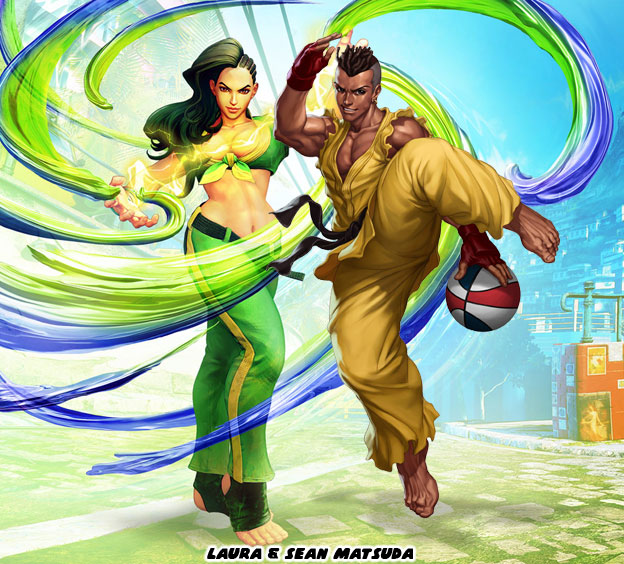
 

Something that Capcom has to explain is why Laura is much lighter than her brother. I understand that they are siblings and sometimes there is a range in how dark or fair skinned a brother or sister can be. But this difference is very noticeable. It is okay to assume that they may be step-siblings but if they are truly brother and sister then why make her much lighter? I get the same feeling for Laura that I got for Vanessa Lewis. The studio is intentionally making her lighter just to appeal to the Asian market and of course Western ideal of beauty. Let's hope that is not the case. Laura is a good character and I hope to see her more in the future. I'd like to hear your take on this character and whether or not you think women fighters tend to be objectified more in games. As always if you enjoyed this blog and would like to sponsor me please visit my Patreon page and consider donating each month, even as little as $1 would help make better blogs and even podcasts!
 follow the Street Writer on Patreon!

Friday, September 11, 2015

How fight culture became fighting game history, part 32


For the next portion of this series I would like to take an extended look at how one fighting art was tied into the history and culture of the slave trade. To mention the fighting art and separate it from its racial origins would be a disservice to the practitioners. This series will cover some sensitive topics so if you do not want to read about minority figures in fighting games then please return at the end of this series. In previous blogs I had mentioned that the Japanese had become almost notorious for perpetuating certain takes on African-American culture. No where else was this more apparent than in fighting games.

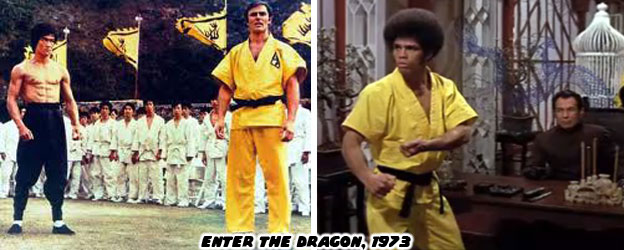
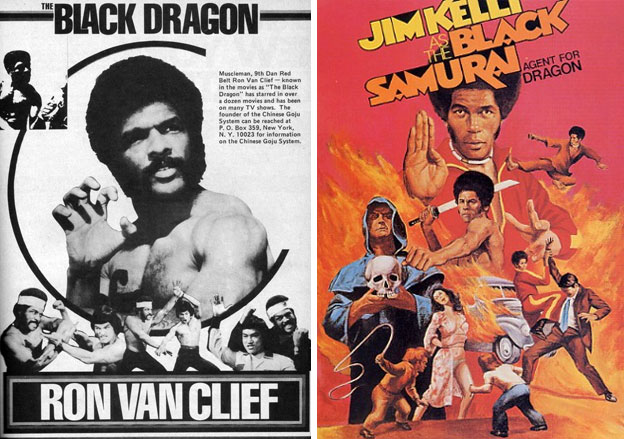
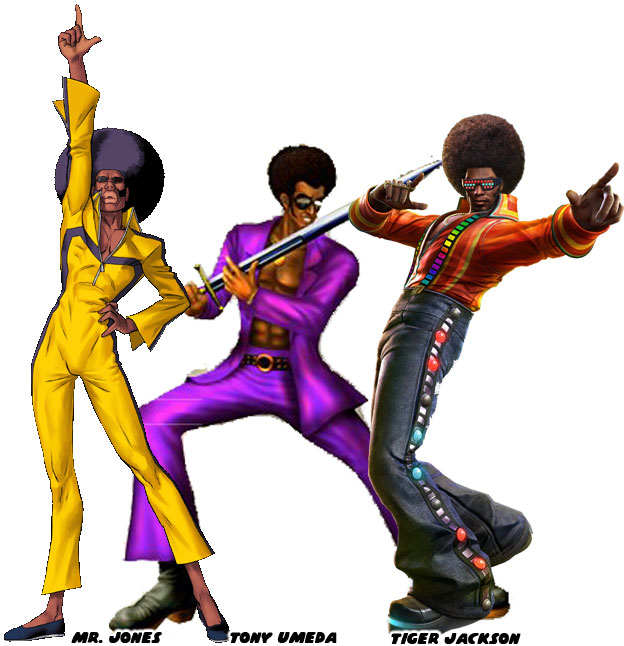
The flamboyant afro-sporting black man had become a gaming trope. Look at Tiger Jackson a hidden character in Tekken 3. The Namco title from 1997 was one of the first 3D games to exploit this dated character concept. A year later Square released Tony Umeda in their sword fighting game Bushido Blade 2. He was a mixed ancestry character being half-Black and half-Japanese. Of course that didn't explain his costume. Bell bottoms, platform shoes and afros had fallen out of favor at the end of the '70s. Years later it would return in arcade titles. Tiger Jackson and Tony Umeda was followed by Mr. Jones / Jones Damon from Rage of Dragons. Both characters were undoubtedly influenced on the classic Jim Kelly character Black Belt Jones as well as the "Black Dragon" Ron Van Cief. Black fighters created by Japanese developers seemed incapable of escaping the look. Even Zack from the Dead or Alive series became an afro wearing clown at one point in the series. Believe it or not Mr. Jones was considerably worse.
 

The 2002 game by Evoga was set in the Double Dragon universe. The game actually had a pedigree. It was a descendant of what many consider to be the original arcade brawler. Double Dragon was held in high regards by long-time arcade players. Sadly the fighting games based on the franchise were lackluster. They demonstrated a lack of originality and innovation. Evoga was borrowing gameplay elements from titles like the King of Fighters and even graphic styles from Street Fighter Zero / Alpha. Copying rival studios and introducing characters like Mr. Jones into the genre just about guaranteed that it would be forgotten by audiences. The studio ended up doing a disservice to those long-time players by failing to respect the legacy they were drawing from. Things had been slowly devolving for the genre before Rage of Dragons had even been released. The mid '90s gave game players reason to believe that the Japanese did not know their audience as well as they should have. At best they were just filling a niche but at worst they were negatively coloring the perception of audiences.


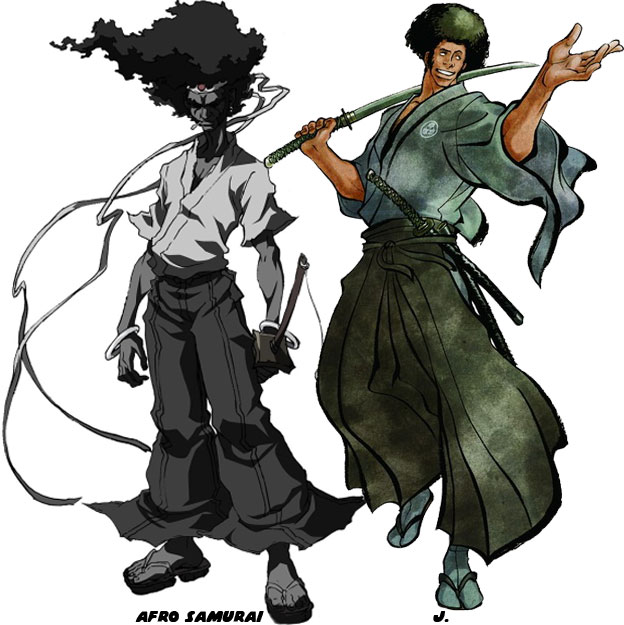
Not every character that came from a Japanese artist was done so out of willful ignorance. Afro Samurai was written and drawn by Takashi Okazaki and published in manga form in 1999. It would be serialized and even adapted into an animated mini-series and game a few years later. The creator was actually a huge fan of Hip Hop culture, the music, the fashion and the movement. He saw his titular character as an homage to the super-cool characters Ron Van Cief and Jim Kelly had played in the "Blacksploitation" films all those years earlier. What was unique about the martial arts films that the black actors were cast in was it was the first time they were allowed to be the stars of the films. As long as they could fight and act they were invited again and again. The films even had the occasional relationships with Asian women on screen. The studios in China and Taiwan had a much more progressive attitude towards blacks than the US had. It was no surprise why Van Clief chose to work there when his own country didn't welcome blacks.


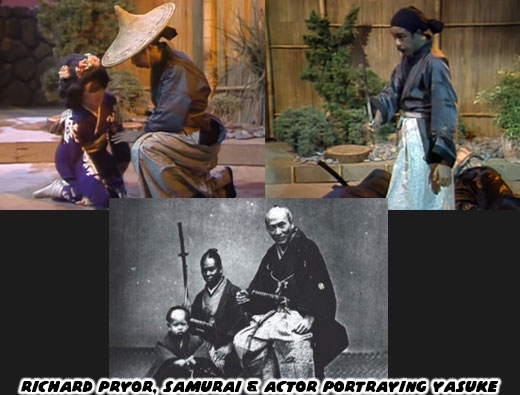
The first black samurai character in pop culture appeared in 1977, around the height of the Blacksploitation movement. This character, who mumbled in fake Japanese, was portrayed by Richard Pryor on his short lived comedy show. There had been an actual historical precedence set for this character however, his name was Yasuke and he first appeared in the 16th century. Yasuke was the first and only recorded black samurai from feudal-era Japan. His name was actually given to him by the warlord Oda Nobunaga. While this person is not really known about in the west the Japanese would have recognized the archetype. It was what allowed characters like Tony Umneda and the Afro Samurai to be accepted.


Some artists working on the black sword master didn't quite grasp the subtleties that Mr. Okazaki was going after. His work was bold, violent, stylish and very avant-garde. The things that made the Afro Samurai popular in manga and animation circles was lost on many other Japanese designers. To many artists and consumers black people were gimmick characters. They could never really carry a series. In 2008 SNK introduced the first black character in their popular Samurai Spirits / Shodown series. J. was a sailor that was shipwrecked on Japan. He learned the art of sword fighting, he nicknamed his sword Elvis (I'm sure the designers thought they were being clever) and he became a hired swordsman. Most people were scared of his skin color more than his fighting ability. They called him the "Black Devil." To make him more empathetic to Asian audiences his goal in the game was to free a geisha that had shown him kindness and wasn't scared of his color. Japan had been on the wrong side of black character design for years but were beginning to give them more dimension. Only time would tell if the trend would continue. Things weren't really much better on the other side of the ocean.


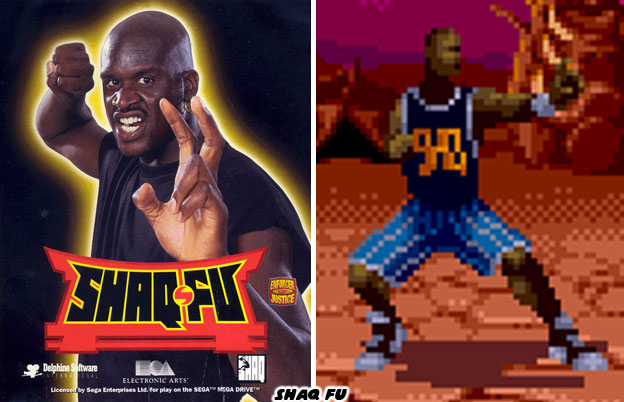
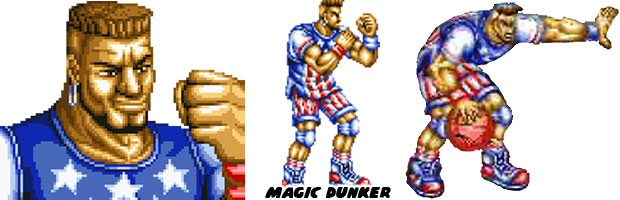
The United States Congress had gone out of their way to interpret every corruptible influence they could from fighting, action and shooting games through the '90s. They tried blaming violence in video games as having a detrimental affect to children and society as a whole. It was a similar argument that they had about comic books and rock and roll music a few generations earlier. In the end these accusations were baseless but ended up in the music, comic book and video game industries creating a form of self censorship. Some things that was never addressed in the Congressional hearings and something that the gaming industry and the gaming media managed to ignore were the subtle racial undertones placed on characters. Violence was one thing but racial bias was apparently something too taboo to bring up. Things were especially bad for Black characters in 1994. They were not always African-American but when they were they could be guaranteed to share similar traits. Magic Dunker was just one character in a series of black, basketball playing, fighting game characters. It was not hard to tell who the token "American" character was in the game given his Star-Spangled costume. He originally appeared in the game Fight Fever by Viccom. Apparently the Japanese had been keeping up with trends. Magic Dunker and the other black fighting game characters appeared the same year that western publishers had released the dismal Shaq Fu, a fighting game featuring Shaquille O'neal the master of "Shaquido." Japanese developers were giving audiences what they assumed they wanted.


In reality the developers in Japan had mainly pop culture as a point of reference for the USA. When they wanted to make a character that would be popular with the Americans they looked at the trends. The biggest stars in the US seemed to be music stars and sport icons, at least according to television. Singers in general did not have the physical traits of a fighter but athletes were spot on. Magic Dunker had the stylings of Magic Johnson and Michael Jordan, two of the biggest stars of the era. The hi-top sneakers, flat top haircut, tank top and sweat bands were slightly behind the fashion curve though. Perhaps the Japanese were working from dated information. The athlete-as-a-fighter carried over several times on other titles.

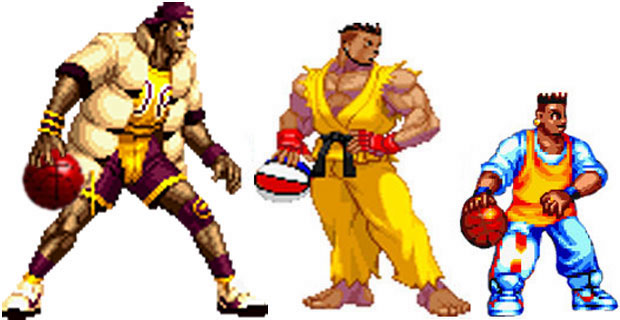
Shaq and Magic Dunker were joined by Bobby "Brown Bullet" Nelson. The breakdancer and basketball playing prodigy from Aggressors of Dark Kombat was one of the youngest fighters ever devised. The SNK title was developed by Alpha Denshi Corp. and there was little originality in his basketball-based and dancing attacks. Not that Lucky Glauber from the King of Fighters USA team was any better but at least he was an adult. Glauber did not have any named style of fighting but instead relied on his long legs for sweeping kicks and basketballs he could summon out of thin air to throw at opponents. At least fighters of other nationalities or ethnicities were allowed to have more convincing fighting styles. The Neo Geo arcade cabinet seemed to be a magnet for these ill-advised characters. A few years later Capcom introduced Sean in Street Fighter III. The game from 1997 did not force the character to have either dancing or basketball-based attacks but the studio did incorporate basketballs into his opening animations and taunts. It was unsettling how similar the fighters were, what traits they shared in common and how little the Japanese seemed to know about black culture, at least about blacks in the USA.


If gamers were offended by these characters, not that they were necessarily, it was because the Japanese were holding up a mirror to Western society. What the developers had learned and assumed about the US was pulled from media from the West. The biggest icons for black culture were featured in Nike ads and McDonalds campaigns, ten times out of ten they were athletes. The news did little to help the image of blacks as well. A person watching television that didn't speak English would see a black criminal, entertainer or sports star, sometimes all three were the same person, within the span of an hour. Was fame the most important thing a black person could strive for? The positive role models in science, politics or education were not as visual or as celebrated on television. This perception skewed the view that the world and not just Japan had about Americans. For African-Americans it was more divisive. Some of the cultural cues that were being picked up by developers were insensitive to the black community and actually reinforcing stereotypes. Basketball was one thing to pin on the fighting characters but it soon became more subversive than that.


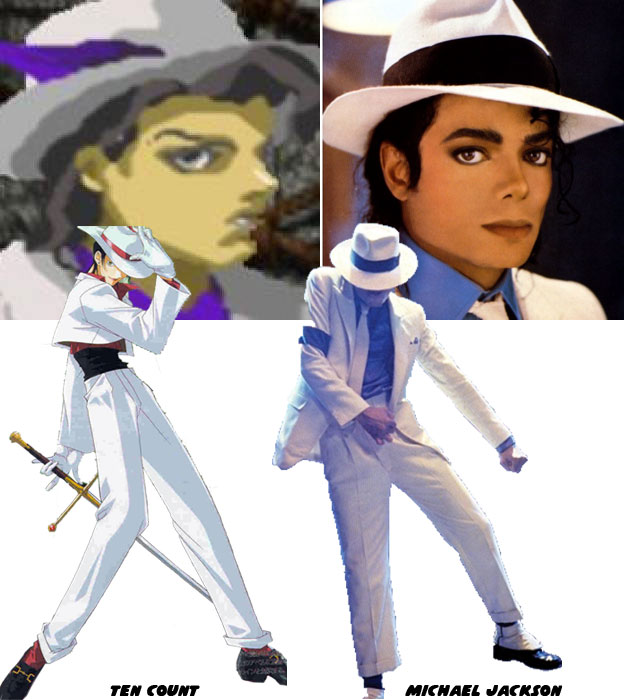
In 1997 Takara released the third part in their 3D weapon-based fighting game. Battle Arena Toshinden 3 introduced a character that danced, did a high pitched yell and moonwalked with a saber in hand. His name was Ten Count. The similarities between himself and the legendary performer Michael Jackson were too much to ignore. It was a shame too because the series was a ground breaker. It was the first notable 3D weapon-based arcade fighting series. It came out in the middle of 1995. The more popular Soul Edge, the first in the Soul series by Namco, didn't debut until the end of the year. While Ten Count was a blatant rip-off character the other black fighters from the '90s didn't fare much better.

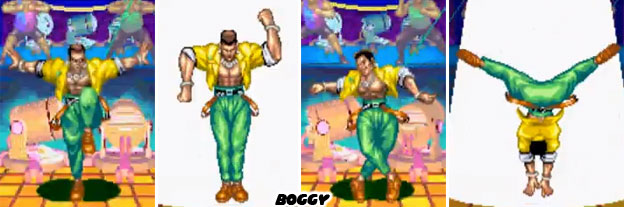
Boggy, a character from Kaiser Knuckle, made his debut in 1994. The game by Taito was one of the worst fighting games developed. It gave Fight Fever and Aggressors of Dark Kombat a run for their money. Boggy was an entertainer and a fighting man at that. Apparently the Japanese developers were a bit behind the times when they introduced the breakdancing brawler to audiences. His look, clothing and mannerisms were all dated. His fighting stances were not from any named fighting art but mostly made up of dance steps. Where else could these influences have been pulled from than from television, specifically music videos? Were the developers really so detached from Western audiences as to only use second-hand sources for inspiration or did they assume that these characters were appropriate?


An important thing to consider was cultural relativism. The reaction to Boggy, Magic Dunker, Bobby Nelson and the rest was different outside of the US. Other countries might have had the same ideas about black characters based on the same television shows and movies they saw from the West. For all they knew these things were true of all black people. The view that the global television audience had was broken from the get-go. Reality rather than sensationalism was seldom shown on television. Poor, rich and middle class blacks existed but were never covered by the news. Their stories had not been shown on sitcoms or dramas. At leas not since the '80s. To the developers overseas it was okay to have dancing, basketball playing black people in fighting games. Minority characters in fighting games appeared as marginalized as they had been in society. Very few countries ever had the minority groups push for change at the local, state and national level in the way the Civil Rights Movement had in the USA. Even today stereotypes, racist attitudes and institutionalized segregation were very real issues the world over. There were not laws against discrimination in all of the nations. Minorities and women could be denied benefits, rights and privileges because their employers and even government were immune to reprisal. The characters that debuted in 1994 skirted the sensibilities of Western audiences, they were borderline racial caricatures that harkened to a dark era in US history. The next blog will look at the fine line that the Japanese developers walked during the fighting game boom. As always if you enjoyed this blog and would like to sponsor me please visit my Patreon page and consider donating each month, even as little as $1 would help make better blogs and even podcasts!
Tuesday, July 21, 2015

Representation Matters! Or, what happened to Birdie, part 8...


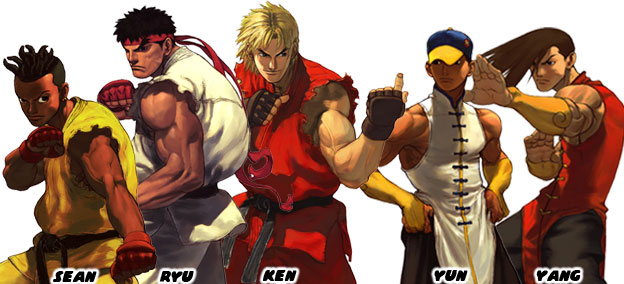
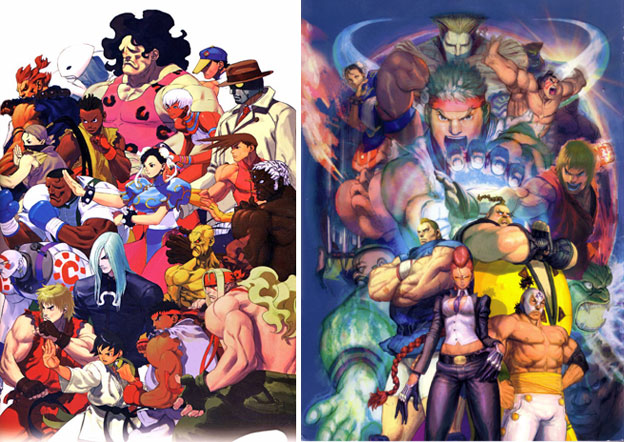
Past the mid '90s Capcom was a completely different studio. The rise of 3D and the 32-bit consoles had changed the gaming landscape. Successfully publishers could no longer ignore home systems market. The arcade market had yet to decline but the writing was on the wall. Studios had to branch out or they would fail. Capcom found success with new franchises such as Breath of Fire and Resident Evil. The fighting game genre was starting to peak and the studio wondered if they had one more great title left in them. Street Fighter III tried to use the elements that made Street Fighter II work. The project began by starting off by deciding who should return. Ken and Ryu were selected to be the only familiar faces and an entirely new cast would fill out the roster. I would argue that there was a lot of redundancy in the new faces. There were a pair of Chinese twins named Yun and Yang that played similarly to each other. They were meant to be a sort of younger Chinese equivalent to Ken and Ryu. Their red and white uniforms were reminiscent of Ken and Ryu's. There was also understudy of Ken called Sean that had similar moves to the stars of the game. I think the team was having too much fun with the names of the new faces. There was the obvious Yin and Yang jab but also the more subtle Sean-Ryu-Ken which was a play on the fireball attack or Shoryuken.


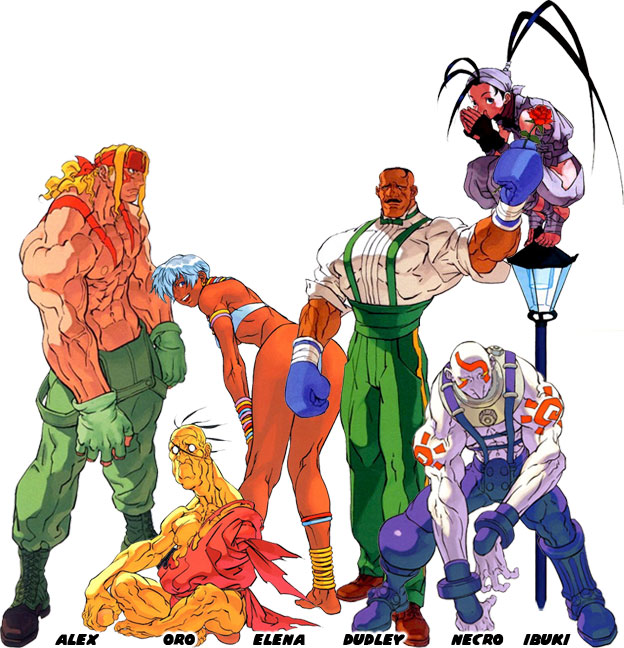
The three karate fighters in all and two kung-fu fighters ate up a lot of the space in the roster. The only duplicates in the original Street Fighter II lineup were pro wrestlers and those were dropped early on so that the team could fit in different styles. Sean was well received, especially as a black minority character. Unfortunately he lacked the impact of Sakura when she debuted. The rest of the cast was more unique. Alex was the star of the new game. He represented an entirely new style of fighting, MMA actually, and was somewhere in between a striking character and a grappler. He actually had elbow attacks similar to Adon, headbutt attacks similar to Birdie and suplex throws similar to Zangief. His size, speed and strength were unique in the genre. The rest of the cast took some chances with the character designs and forms represented. A heroic boxer had finally made it into the series. Moreover Dudley was a very positive black role model. He was not the only minority in the game. Elena was an African that had studied abroad, in Paris first and then Japan. Her dark skin was contrasted by bright blue eyes and white hair. Her costume left little to the imagination. She didn't have the same forethought into her design as Chun-Li. Instead Elena was very much like the characters in anime, pandering heavily to fan service, which was a trend that Akiman was trying to break when he finalized Chun-Li. This was odd considering that the lead artist on this project was Kinu Nishimura, she was heavily influenced by Akiman. Elena did have a unique form of fighting. She used capoeira and there had been some rotoscoping work by the animators to make sure that the moves looked as fluid as possible. Capcom designer Daigo Ikeno was a capoeira practitioner and helped with the reference work.

The game also introduced a female ninja practitioner named Ibuki. Her look was unique and not as grounded in history or anime making her a fantastic addition to the title. The game was not without its own Blanka and Dhalsim, or two extreme characters. An elderly one-armed Brazilian (he actually kept his other arm tucked inside his gi) was a master of a unique fighting art, it was a mix of psychic attacks and judo throws. He was very strong and fast despite his age. Oro was based on Helio Gracie, the co-founder of the Gracie school of Brazilian ju-jisu. The character design was unique because he was the oldest character in Street Fighter mythology, almost twice as old as Gen, the previous elderly character. He demonstrated that age did not make some fighters less dangerous. The other unique character was Necro. The young Russian teen had been experimented on by a mysterious group of religious and scientific zealots. The various experiments they did to him left his muscles, skin and bones like rubber and gave him the ability to shock opponents like an electric eel. Meaning he had some of the best qualities of both Dhalsim and Blanka,


The game did well with audiences. The upgraded arcade engine allowed for larger sprites, a broader color palette and more frames of animation. Having three black characters, including a woman of color was a tremendous credit to Capcom. They were showing an active interest in inclusion and diversity with their lineup. Unfortunately for many audiences and arcade owners this was not the game they had expected. The lack of returning characters and redundant new characters gave the game an unfinished feel. Capcom had established a president in Street Fighter Zero that was tough to beat. They could bring back classic characters and make them work again and again. Upgrade kits were in the planning stages. Each one could introduce a new character if not classic character. Before long Chun-Li and the giant Hugo were put in the game. Hugo was actually meant to be in the first release but the team didn't finish his animations in time. There was no doubt that the time spent creating the redundant Yun, Yang as well as Sean may have been better spent on entirely new figures. Hugo was representing the Final Fight cast as Chun-Li was a return to the SF II lineup. Gouki / Akuma had returned as well but was a hidden character in the first few builds.

The new characters Urien, Q, 12, Remy and Makoto were a mixed bag. Urien was a pallet and head swap for the new final boss Gill. Meaning that another redundant character was also featured in the title. Q was a nonsensical masked secret agent that moved and fought like a robot. Remy had many of the attacks from Guile and Nash but with a look that was pulled from the rival King of Fighters series. 12 was a shape-shifter that was reminiscent of Necro but was also heavily anime-influenced. Of the final new characters added Makoto had the most traditional design elements applied to her. She was a karate fighter, yet her form was completely different than Ken, Ryu, Sean and Gouki. This meant that for audiences she also controlled differently and required some new strategies to use.


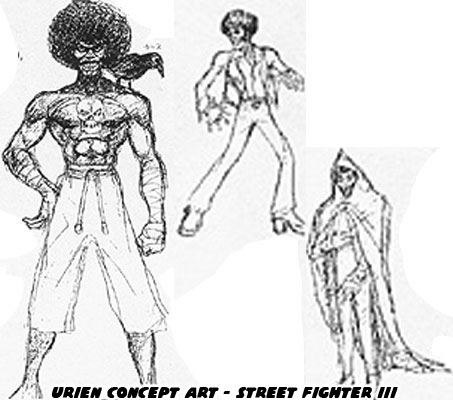
With the exception of Makoto, the last new faces added to SF III were lacking. They didn't have enough time to be evaluated or redesigned. In fact the original plan for Urien had once again fallen on old stereotypes. Had the studio not gone with the pallet swap of Gill who knows how audiences would have reacted to the afro-sporting, disco pants wearing antagonist. I don't think it would have been a warm reception. When development began on Street Fighter IV the approach for new fighters was completely the opposite of SF III. The studio started with Ken, Ryu and the original World Warriors from SF II as all returning members. Then they had a small group of new faces that they would introduce to fans. The characters were designed mainly to appeal to the West, where Capcom had hoped to gain a lion's share of the games profits. The sexy spy Crimson Viper was meant to appeal exclusively to US players. Despite the pandering most gamers in the US ignored the character. Of course the fatty Rufus was forced onto audiences because he was funny. The final two spots would be taken by a judo-ex-military fighter and a masked Mexican wrestler.


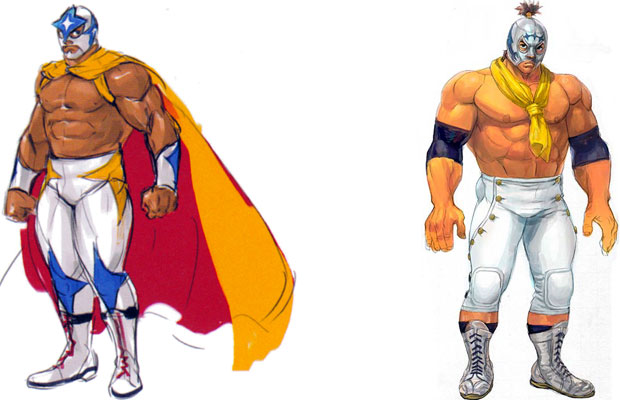
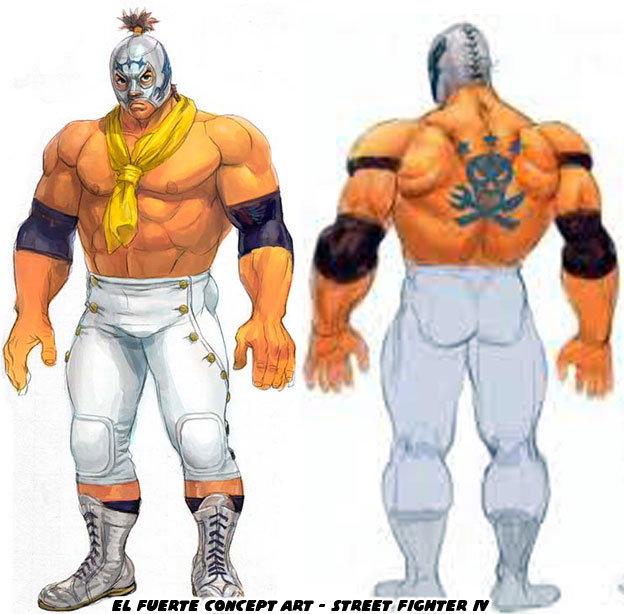
The lead designer on this game was Daigo Ikeno. He could not seem to find designs that worked as well with audiences as the SF II cast had. I think that the choices pushed by producer Yoshinori Ono had something to do with why the characters were lacking. A few blogs back I mentioned how there was a strong black character planned for the game that was eventually turned into Rufus. Something similar happened with El Fuerte the enmascarado, or masked luchador. In the early planning stages El Fuerte had a unique costume that was inspired by actual lucha libre livery. He had the mask, the tights and even a cape. Which was something that performers had worn to the ring since the earliest days of pro wrestling in Mexico, which would be over 80 years ago! In the earliest stages the design was every bit as good as something that Tetsuo Hara could have come up with for the Muscle Bomber series. In fact I would say that the original El Fuerte was a better design than El Stinger, the Mexican wrestler created by Hara. El Fuerte did not necessarily poach and designs from a masked wrestler living or dead. The star on his mask was even a nod to the masked wrestler that had been planned for SF II. But then something happened…


It was decided that El Fuerte was not unique enough. At least not unique enough to be ranked against the World Warriors. So his costume was redone, his mask was redone and even his purpose for fighting was redone. The team decided that it would be great if he was a masked wrestler that was obsessed with cooking. In this way they could name his attacks after food. The Habanero Dash, Tostada Press, Fajita Buster, Gordita Sobat, Calamari Slide Propeller Tortilla, Picadillo Jump, Quesadilla Bomb and Guacamole Leg Throw. The names were an insult to the fantastic and dangerous moves that Mexican pro wrestlers performed on a weekly basis. To add insult to injury, the mask, which is sacred to the performers was even stripped of its origin to reflect the silly obsession with cooking. There were forks coming out of lighting bolts in the early redesigns. The tights were turned to chef pants, at one point El Fuerte even had tattoos or a fork and knife on his back. The three stars that adorned his mask was meant to mimic the Three Star Michelin rating given to the top restaurants around the world. Each decision that the team made took away from the character, it did not add to him. It was as if the designers were bypassing the lessons from previous generations and were focused on the punchline.


It was up to the team to decide how the tone of the game was supposed to be. The new graphics engine allowed for some realistic 3D models. When the majority of the cast fought each strike looked like it had weight and power behind it, giving the game a serious tone. But then all of the models had silly expressions applied to them when certain characters performed super moves. It was a mix of cartoon and realism that was sending a mixed message to audiences. Either the game was a return to the classic challenging Street Fighter II, or it was more anime influenced like SF Zero and SF III. Being caught somewhere in between did little to improve the game itself. The only signal that was not missed was how minorities and their fighting arts were being presented. Mexican and later on Turkish wrestling was seen and shown as an absurd form of fighting not to mention that Americans were stupid, morbidly obese participants.

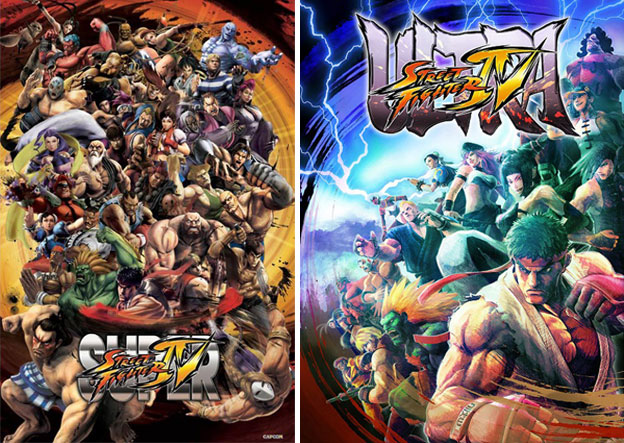
 As the reception to the new characters were met with a lack of interest the team went back in time and started putting in as many classic characters as they could with each update. The majority of characters from SF III and SF Zero had returned by the time Ultra Street Fighter IV. In the rush to return to fan favorites the designers missed a number of important details. The characters from Zero had not matured. Remember that in continuity Zero happened shortly after the events in the first game. Ryu, Ken and Chun-Li were still young adults and Cammy and Sakura were girls. In Street Fighter III Ryu, Ken and Chun-Li were adults. During this timeline Sakura and Cammy would have been adults as well. Instead Street Fighter IV was pitched like the Zero series. It would tie together the events of SF II and SF III. Only this time Daigo Ikeno would not go out of his way to redesign the cast so that they were all unique to this continuity. Instead the team picked and chose the various incarnations that would appear in the game even if their designs were from two or three different games.


It had been almost 10 years since the last Street Fighter III and the first Street Fighter IV had appeared. In that time audiences never forgot what the series meant to them while growing up. Seeing a diversity of male and female characters in SF IV was fantastic. It was also nice to see different nations represented, mainly because they were the original World Warriors. Audiences from around the world would be able to identify with a character or two, including the new ones. It would go a long way in making kids feel validated, especially when they were being underrepresented on television and movies. I only wish that Capcom had done a better job at presenting minorities. They were never as disrespected in any previous version, why did the team start now? Street Fighter IV had missed the boat with new faces and after seeing what was done to Birdie in Street Fighter V I shudder to think what else the studio had planned for non-Asian and non-White British characters. As always if you enjoyed this blog and would like to sponsor me please visit my Patreon page and consider donating each month, even as little as $1 would help make better blogs and even podcasts!
Tuesday, July 7, 2015

Representation Matters! Or, what happened to Birdie, part 4...


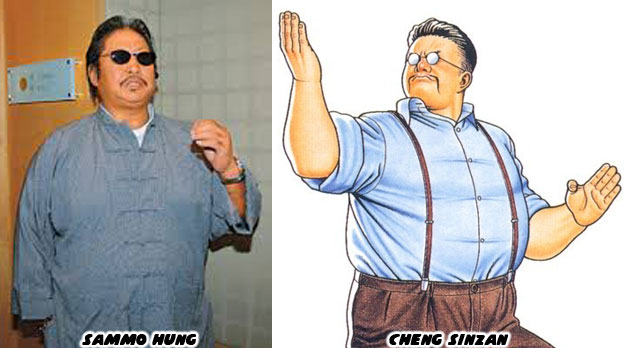
The characters in fighting games are rarely based on mythological figures. Instead they are based on real fighters, comic book characters or actors. Fat martial artists are few and far between. The most popular and longest-lived template for fat fighters is Sammo Hung. The writer, director and actor from Hong Kong broke into cinema at a young age. His talents behind the camera are nothing compared to his knowledge and experience in the martial arts. He was trained as a child in the Chinese Drama Academy, where performers learned what it took to appear in the Chinese Opera. He learned various forms of kung-fu as well as tumbling and working with weapons. The lessons were brutally difficult, children were made to do handstands and splits for hours on end, they would be disciplined with caning for being disobedient. Many would consider the training to be nothing short of child abuse. Sammo made it through and became an exceptional performer and choreographer. He was developed alongside people like Jackie Chan and Yuen Biao, whom also became martial arts superstars. There was a dramatized retelling of what they had gone through in the film Painted Faces. Sammo actually played an instructor in the film and said many things that happened to him growing up were much harsher than what the film depicted.


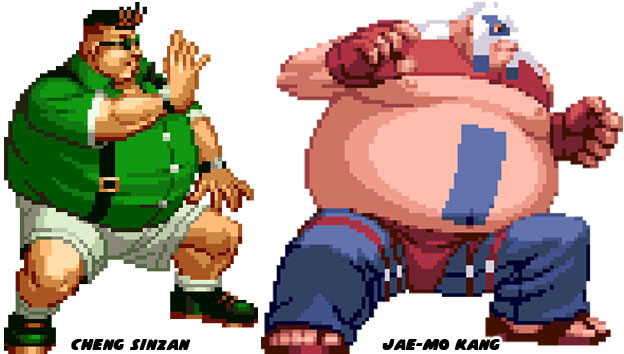
The first fighting game to feature a character modeled after Sammo was Fatal Fury 2 in 1992. Cheng Sinzan was a businessman and expert martial artist. He was fast, as Sammo was, had an assortment of great kung-fu attacks but was always played up to be slightly funny. Sammo was known for his comedic timing. As great as he was in a fighting scene he always found a way to get in a visual gag, usually at the expense of his weight. It was no different for Cheng. He sweated profusely and could be seen wiping his forehead with a handkerchief in between rounds. Cheng got fatter when he turned up again as a non-playable cameo in Fatal Fury 3 and then as a playable character in Real Bout Special. Each time he came back he was fatter than the last time.

The same trend happened to other fat characters in fighting games. They became extraordinarily large, more so than average people. Sammo was always what we would consider "chubby" but he was nowhere near as fat as the in game versions of Cheng were. This was something that character designers and animators learned to do as the genre evolved. It did not matter what form of fighting that a character practiced. They had to have very exaggerated proportions. This was something that worked well in comic books and manga. Gamers would be less likely to watch two average-looking people in a fight, on television or in the comics. If instead the karate guy had torn sleeves to show off bodybuilder-like biceps and the female kung-fu expert had a short dress to show off her long shapely legs then it would be much more appealing.


By the same process the fat characters could not be slightly overweight in games or comics, the had to be morbidly obese. Cheng was only the tip of the iceberg. As other studios got into the genre they began pushing the envelope on what was possible. Those with muscles became extraordinarily swollen, female characters became bustier, and fat characters became almost perfectly round. Such was the case with Jae-Mo Kang, the Korean pro wrestler from the 2002 game Rage of Dragons. The game was set in an anime-like version of the Double Dragon universe. The developers at Evoga avoided the continuity from the previous Double Dragon fighting game. Kang was strong but not meant to be taken as seriously as Burnov.

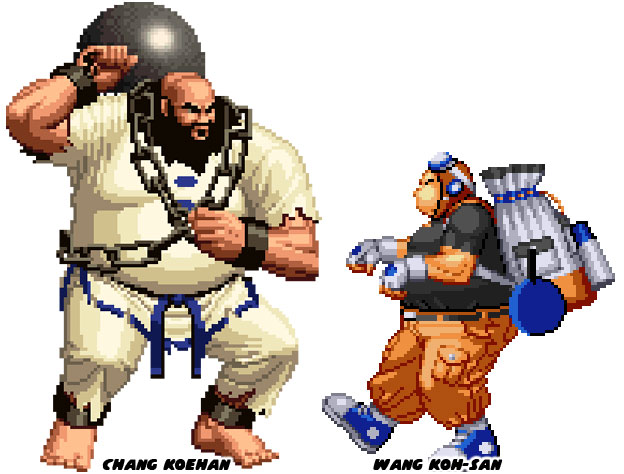
Fat characters were beginning to find their stride through the late '90s and into the '00s and they were supposed to be funny. Any great elements that Sammo had given his roles, anything he meant to the martial arts was completely lost. Heaven help the player if they actually liked or even identified with the fat characters. They were not meant to be seen as stars of the games. In 1994 SNK launched the King of Fighters series. It would become the longest-lived and most popular tag team fighting franchise. The Taekwondo star of the game, Kim Kaphwan needed two partners to round out the Korean team. The designs given to his partners were lackluster. One was a short criminal, Choi Bounge, with claw gloves and a fedora. He looked like a tiny Freddy Krueger from the Nightmare on Elm Street movies. The other was a tall but obese criminal named Chang Koehan. Kim was trying to rehabilitate the pair. Chang was oafish, swinging and enormous ball and chain at his opponents. He lacked appeal and would appear on and off with the team.


Taking a page from the Cheng Sinzan school of funny fatties was Wang Koh-San. The chubby character was introduced in the Art of Fighting 3. The character was a cartoonist that was in the tournament. He seemed outfitted for a long time on the road with all sorts of camping gear attached to his backpack. In the sack there was a pelican that would pop up from time to time. Not only was the character fat and funny but he even had a wacky bird sidekick. If this was a Hanna Barbera cartoon from the '70s then it would have been a hit. In fighting games players were just left scratching their heads.

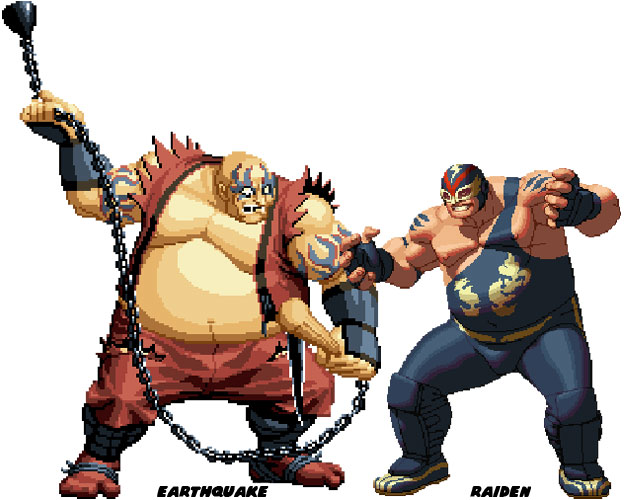
SNK had started a tradition of having morbidly obese people serve as comic relief as far back as 1993. Earthquake in the game Samurai Spirits / Showdown was an American ninja. He was massive, at the time being one of the largest sprites ever created for a fighting game. The character took up almost a third of the screen. He was fat and gross too. Farting on opponents and eating turkey legs that he kept stashed away in his belt. Yet despite these things he was a very fresh design. He had tattoos, and face paint, he was colorful and brought attention to himself. This was the opposite of what most people thought of when they heard that he was a ninja. Despite his size he was able to move quickly, disappear in a puff of smoke and fight with some unique attacks. Earthquake was meant to represent greed, he wanted everything in excess and was looking for the fastest way to get rich, which was why he was so big and fat. He was actually balanced out by another American ninja named Galford. Galford had stayed on the true path set by his masters and was therefor young and handsome. Despite his gross aspects there was not another obese character that was as memorable as Earthquake.


In 1991 Fatal Fury debuted. Created by the planner behind the original Street Fighter it was a new take on the genre. Players could jump between the foreground and background and even team up against opponents. One of the villains (that later became a hero) was a pro wrestler called Raiden. This character was large and heavy-set. But he also had some high flying maneuvers despite his size. He was never as fat as any other character in the SNK universe but always carried around a gut. He was actually modeled after pro wrestler Leon "Big Van Vader" White. Tetsuo Hara used Vader as the basis for Sheep the Royal in Muscle Bomber. Vader came on the heels of Abdullah the Butcher but because he was a bit more athletic he suck around for some more high profile rivalries in promotions. Vader was a huge American wrestler that found a great deal of fame in Japan. He had crazy matches against the biggest bruisers of the era including one against Stan Hansen where he had his eye poked out of its socket. Vader also carried around a belly but was backed up by some big muscles as well. Huge wrestlers like Vader, Abdullah and host of others greatly influenced the development of characters in wrestling games, brawlers and fighting titles. SNK did a good job of experimenting with fat body types in many of their games but tended to side as the fat as funny stereotype. 

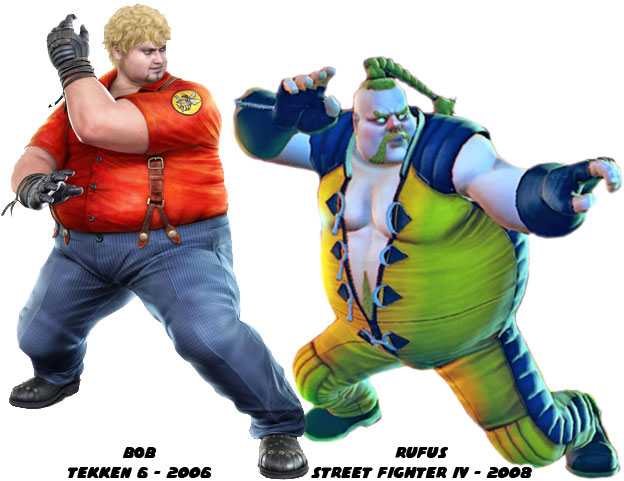
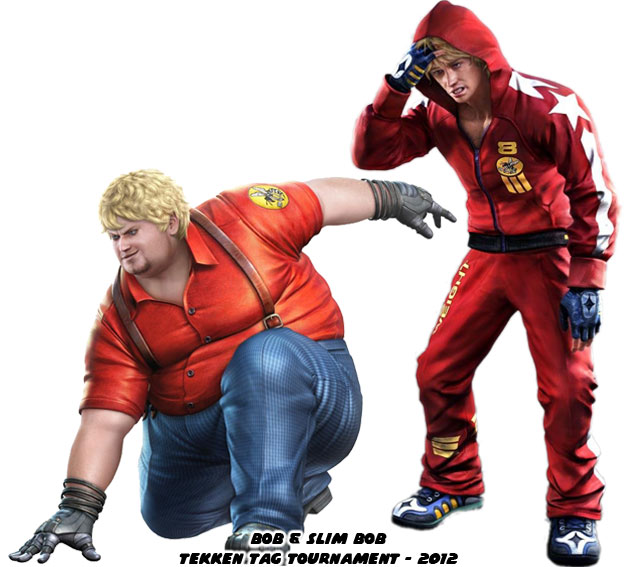
Other studios followed the trend and would only pull out the fat character if they could get a joke out of it. This reality came to a head in 2006 with the release of Tekken 6. The Tekken series was one of the fighting games that actually kept pace with the Street Fighter in terms of sales and popularity. It set itself apart from the other titles because it was one of the first 3D fighting games. The designers of that series and head producer Katsuhiro Harada had introduced dozens of characters into continuity. Many were from around the world and there was even a diverse mix of female characters as well. The game had always combined the fantastic as well as science fiction, cyborgs, mutants angels and demons were all within canon. The reality it was based in was only loosely grounded and this was the understanding that audiences were expected to accept when Bob was put in the game. Bob was a great fighter but he felt that it took too much effort to defeat opponents. He decided that he could do better in tournaments if he had some extra weight behind his punches and kicks. He bulked up and became about three times as heavy as he used to be.


It was strange watching Bob in the game, not because of his size but because how fast he moved. Despite his girth the character was blindingly fast. But that speed also made him look weightless. The graphics engine was very powerful. It was capable of rendering flowing hair, accurate shadows and reflections as well as clothes that bunched and folded realistically. It even put a little bit of jiggle in Bob's belly fat. The illusion of a three-dimensional figure was broken each time he attacked. Bob was so fast that he simply appeared unrealistic.

Yoshinori Ono must have had a strong reaction to Bob because a few years later he announced a new character to debut in Street Fighter IV. Many game players were hoping for something as unique and memorable as the figures in Street Fighter EX, Street Fighter Zero and Street Fighter III. The new character was memorable but for all the wrong reasons. Rufus took a page from Bob and the developers went even faster with his moves and attacks. His gigantic belly would sway underneath his jumpsuit. Both Harada and Ono had put a fat character in the game because it was funny. They did not mean to be more inclusive of different body types. I mean could you imagine how absurd it would be to see a serious fat person in a game? Fat people were not heroes, they were social outcasts. It was obvious in public and reinforced in media.


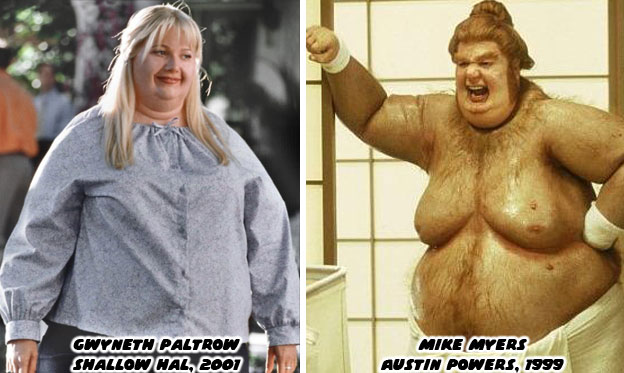
Makeup artists had been making people appear fat since the days of black and white movies. But when newer techniques allowed them to create lightweight "fat suits" then Hollywood began looking for ways to exploit the technology. Comedians Eddie Murphy and Martin Lawrence used fat suits in films to lampoon fat stereotypes respectively in the Nutty Professor and in Big Mama's House. Mike Meyers had a recurring character called Fat Bastard from the 1999 film Austin Powers: the Spy Who Shagged Me. The hit man had an unmistakable presence and was meant to be gross and disgusting. But as audiences discovered there was an underlying sadness to the character this gave him much more dimension than simply writing gag after gag on how fat he was. In his final appearance Fat Bastard had lost his weight and had become much happier with himself.

A similar lesson lesson on sympathy and understanding was learned in the Farrelly Bros. Comedy Shallow Hal from 2001. Gwyneth Paltrow played Rosemary Shanahan and she couldn't find a person to accept her for who she was. Jack Black played Hal Larson, a womanizer who gets hypnotized by life coach Tony Robbins into seeing the inner beauty of people instead of the physical ideals of beauty. Hal realizes that Rosemary is the person he'd been looking for all his life. Both films were comedies and both relied on fat as the punchline to many jokes. Characters like Bob and Rufus appeared later and were simply reinforcing that stereotype.


Bob actually had a physical transformation over the years. He lost his weight and by 2012 was back down to his original size. Of course the Tekken team could not allow the character to be quite happy with whatever size he was. Since he had lost the weight it required more effort for him to win battles. He was left tired more often and wondered if his weight loss was worth it. Fat people couldn't catch a break even when they were no longer fat.

What really irks me about the direction of Street Fighter IV and V were how fat was being used as a punchline as well. It was cheap, it was demeaning and it took away from the elements that made all of the other characters great. I've mentioned it before but it bears repeating now more than ever. The designers on Street Fighter IV and V are putting a priority of visual gimmicks and pandering to stereotype rather than great character designs. We could start with Rufus and work backwards. In doing so we could spot a trend. That trend sadly leans towards racial bias and I would even say racial exclusion from Street Fighter.


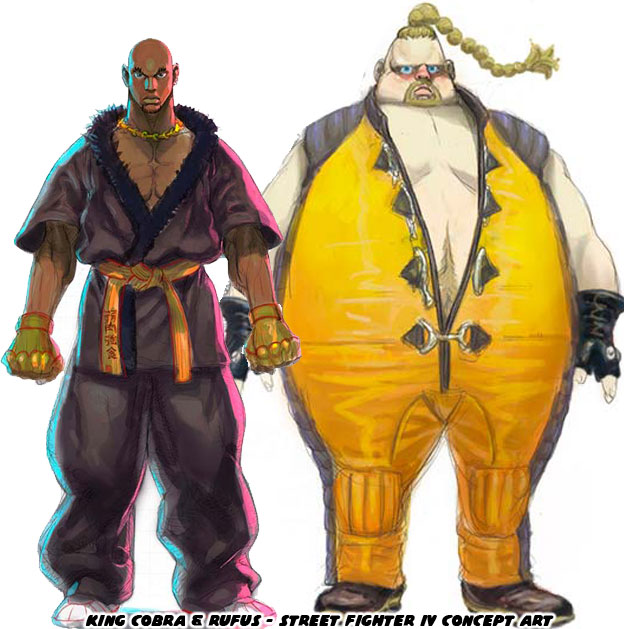
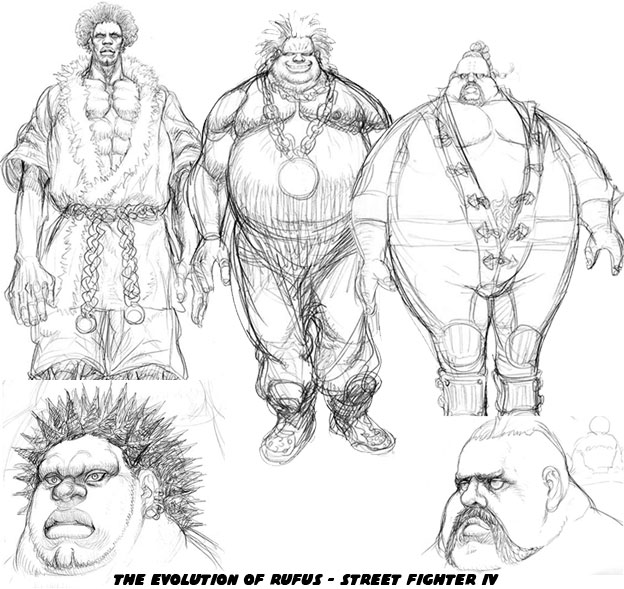
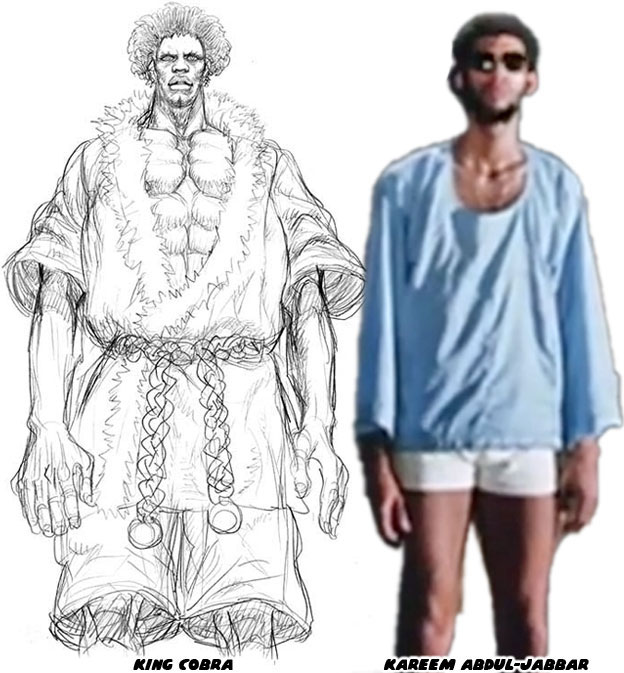
Many people that read my blogs know that the fat white Rufus was not the original choice as a new character in Street Fighter IV. Instead he was going to be a young black man named King Cobra / Black Cobra. The character was in pretty much the final stages when Yoshinori Ono went in a radically different direction and pushed the team to put a "fatty" in the game. All of the great elements of Cobra were gone and in his place there was a tub of jelly that was insanely fast and had moves perfect to counter most every other character in the series. We can actually work backwards and see who Rufus was based on and how radically different he was in the early stages.


Rufus was meant to be the ultimate rival to Ken. The team realized that Ryu had a great rival with Sagat but after 20 years there was not somebody for Ken. The designers wanted players to see a character that was both physically imposing and could be a genuine threat to Ken. They knew this character had to be bigger-than-life, just like Sagat. They also considered making him a minority similar to Sagat. In the planning stages Rufus was a tall, heavy set black man with subtle gangster features. He had high top sneakers, a thick gold chain and pointy dreads. The fat gimmick got more and more pronounced the closer he came to Yoshinori's vision of a fatty. But if you go back far enough you can actually find a character that met the original plan and wasn't fat or silly at all.

The first thing that made rivalry between Ryu and Sagat important was the size difference between the two characters. Ryu was almost six-feet tall but Sagat was about a foot and a half taller. King Cobra would have been at least as tall if not taller. The earliest version of this figure was tall and lanky. He actually looked like Kareem Abdul Jabbar, the basketball player and friend of Bruce Lee. Kareem played the final opponent in Lee's last film the Game of Death. The second thing that made the classic rivalry important was the techniques that each fighter possessed. Ryu studied karate which was considered a very refined form of self defense and required tremendous self discipline to master. Sagat studied Muay That which was an older system that was designed to hurt, maim and kill opponents. It was an art that required people to be very aggressive and tough. The two styles clashed against each other perfectly. Ken's opponent would have been a tall black man that was a master of a certain form of karate. Perhaps having two forms of karate was a bad choice and the designers began looking elsewhere.


A few of the early US martial arts stars and tournament champions were black. Ron Van Clief, master of karate and several forms of kung-fu was nicknamed "The Black Dragon" and karate champion Jim Kelly starred as the Black Samurai. They were both martial arts pioneers and friends of Bruce Lee. They were well versed in various forms of fighting and this was apparent when they performed on film. What was terrible for the duo was that they could find work in Hong Kong cinema yet be denied many opportunities in the USA. If they performed in a US film they were usually the "Blacksploitation" kind. The two overcame many hardships because of the color of their skin. Things were especially hard for Van Clief. When he joined the Army and was sent to the South to train he was lynched by his fellow enlistees. He barely survived the attack and had to deal with racism both in and out of uniform. Racism was very strong in many parts of the country and that animosity exists to this day.

When I think of a missed opportunity to put in a powerful black karate fighter I think about how blacks had become caricatured in the genre. Just as everything great about Sammo Hung had been stripped away when creating fat characters in the genre. The only thing that Japanese studios seemed to remember from the early black martial arts appearances were the afro and sideburns worn by Clief and Kelly. The developers had reduced black fighters to a trope. It was seen with Tiger Jackson from Tekken, and Mr. Jones from Rage of Dragons. The black fighters in modern games still wore afros, sunglasses and bell bottom pants as if they were perpetually locked in the '70s.


Another questionable approach to the design and purpose of Rufus was how stupid he was. In canon Rufus was incredibly dumb, taking an obvious jab at the Fat Dumb American stereotype. He was so dumb that he could not even identify Ken if they crossed paths, which they did several times. I mean how great it is to have an arch-rival for Ken that is too stupid to spot him in the same room? It's genius planning I tell you! I doubt and sincerely hope that the black rival would not have been presented as stupid.

Imagine what would have happened to Sagat if he couldn't remember what Ryu looked like. His purpose in the series and reputation would have been greatly diminished. Karate could have very well been assigned to Cobra and it could have been a form unique to the Street Fighter universe. But seeing as how the Japanese developers didn't really know much about black fighters then they made things up. In the design notes Cobra actually used "Breakdance Kung-Fu." It seemed as if the Japanese developers could never take blacks seriously as being masters of karate.


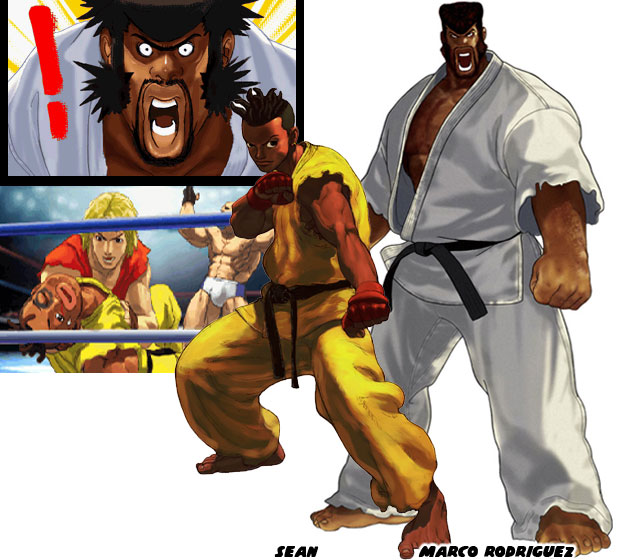
Miscasting a minority was nothing new to Japanese developers. Characters like Sean from Street Fighter III and Marco Rodriqguez from Garou: Mark of the Wolves, while popular, were not meant to be taken seriously. They were not supposed to be stars of the games. Instead they were supposed to be overzealous proponents of the fighting art. They were too enthusiastic for their own good and that lesson was seen in their respective endings. Sean would never become as great as Ken. Marco would never become as great as Ryo Sakazaki. Their roles were subservient, it's quite possible that the designers never thought about the statement they were making through these characters.

The thing about history was that blacks were an important part of the evolution of karate. Karate champions Willie Williams, Jamie Oliver and Charles Martin were the subject of the documentary The Fighting Black Kings, set during the 1st Kyokushin (the form founded by Mas Oyama) World Karate Championship. They were the basis for Marco but they were not the only black fighters that influenced the Japanese designers. But I am getting a bit off of the subject. Fat characters were put into fighting games because they were funny to look at. When presented with a choice as to put a strong black character in Street Fighter or put a fatty in Street Fighter the director chose the latter. This is what drives me insane about the people that worked on Street Fighter IV and the people working on Street Fighter V. Each time they make a design choice for a new character it always seems to be the wrong one. It always seems to degrade the character if not devalue the art being depicted. This was a problem that went all the way back to Street Fighter II, however Capcom was able to overcome some potentially disastrous choices. We will look at these things in the next blog. As always if you enjoyed this blog and would like to sponsor me please visit my Patreon page and consider donating each month, even as little as $1 would help make better blogs and even podcasts!