Showing posts with label pandering. Show all posts

Monday, January 4, 2016

Laura, the new leading lady of Street Fighter V or more fanservice?

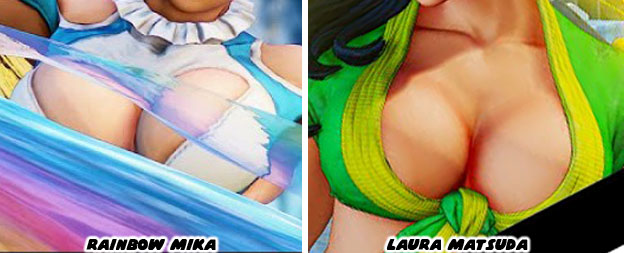
We cannot separate the over-sexualization of the female Street Fighter character designs from reality. Capcom has done a fine job of pandering to the mostly male demographic with the changes made to the female characters in the Street Fighter series. Yet to put all the blame squarely on Capcom would mean ignoring the society that we live in. Capcom creates characters that reflect society, the good and the bad aspects of it. If they are creating female characters and presenting them as objects of desire then they are following the trends. SNK does this, Sega does this, Namco does this, Microsoft does this, just about every studio that makes a fighting game is guilty of following the trend. Sex sells and when it comes to female athletes it is the most important thing to sell. The design behind Laura Matsuda, the new Brazilian fighter in Street Fighter V certainly caught onto the trends.


Women are paid less in general than men for the same amount of work in the business world. The divide becomes much more noticeable for female athletes. For example Abby Wambach, forward for the USA Women's National Soccer Team makes far less than her male counterparts. She has an incredible record in league, international and World Cup play yet her annual earnings, including endorsements and sponsorships are less than even the big name retired male peers. Despite her accomplishments and abilities she is marginalized in the sports community. She does not turn up in much advertising, she does not get asked to appear in movies or television cameos. She doesn't even warrant an interview on the sports networks. At the same time retired NBA and NFL athletes have a steady stream of work in commercials and as commentators and are expected to make more than Wambach annually. As she retires chances are that she will fade away unlike the male athletes from the same generation. She was not the first to have this broad divide come to light. Women have to fight for respect at every turn. Earlier this year Sports Illustrated announced the Sportsperson of the year was tennis star Serena Williams. They took an online poll and people voted for the horse American Pharaoh to win the honor. Was it trollish behavior from the online crowd? Possibly. Was it sexist, racist or misogynist to pick a horse over a black woman? Quite possible as well. The news that people were upset about the decision made headlines around the world. Women have to walk a fine line between being taken seriously as athletes and at the same time being marketable through attractiveness. This is especially noticeable in the fighting community. One of the first things that people noticed in the design of Laura were her looks, and aside from her breasts it was her hair that stuck out.


Laura Matsuda wore a half head of tight braids or cornrows. Most female fighters wore their hair in full braids during competition. This way it stayed out of their eyes. Unlike using a headband these braids couldn't easily fall apart even in a grapple. The half-head of braids was made popular in part by pro fighter Ronda Rousey. She would often wear her hair this way during media events and premiers. The hair itself can be seen as a part of the trend of having to be an attractive female athlete in order to be marketable. Do you remember the media outlets doing interviews on the stylists of any other fighter or boxer, male or female? We now know that stylist Abraham Esparza helped create Rousey's trademark style only because the sports outlets decided this was important. Ronda still has to contend with the standards that society has on beauty. She still has to deal with people calling her fat. Serena Williams and her sister have been called ugly and mannish because they were extremely muscular. By comparison the Russian Maria Sharapova was easier to market, easier to build a brand around and feature as a mode because she fit the western ideal of beauty. She was blonde, thin and not as muscular as the Williams sisters. It did not matter if she was not as highly ranked a player or if she didn't have as many championships as either sister. Great looking fighters could be marketed. It didn't matter if Rousey had a judo record that earned a gold medal in the Pan American Games, a Silver in the World Championships and the Bronze in the Olympics. Or that her professional MMA career was 12-1, a prior women's champ for the UFC. The focus from many outlets was her appearance and even her sexual appetite more than her in-ring ability.
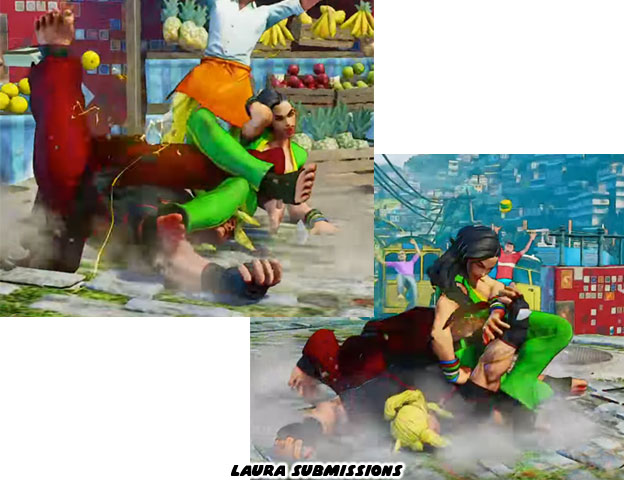

In Street Fighter V Laura Matsuda has a very attractive design however that is in contrast to her striking moves, traps and grappling takedowns. She has speed and power that almost put her on par with the bruiser Abel from Street Fighter IV. This might be a seen as a turn-off for some players. Even in the ring women have to be marketed as strong and sexy. Michelle Waterson is nicknamed "the Karate Hottie" and the Japanese fighter Rin Nakai is advertised as strength and beauty by the UFC. Is referring to women like this macho posturing? Is mixed martial arts is the most alpha-male of sports? Do men get intimidated by alpha-females in competition? If so do they believe that women belong in the ring as ring girls rather than fighters? Women walk the line and always have to look their best. Whether it's during training, a press conference or even weigh-in. They have to be made up and look presentable. Men do not have to deal with the double standard. They can be ugly or slovenly if they want. They can show up in torn pants with a 5 o'clock shadow to an interview and nobody cares. They can even act inappropriate to the reporter if they want to. Remember when Quentin "Rampage" Jackson dry humped a female reporter on air? Or when he did the same thing to a Japanese reporter overseas? Would you expect or even accept this behavior from a pro baseball or basketball player? Would female fighters be called sluts if they behaved in the same way? Or were male fighters somehow a part of a different crowd? Were they allowed to be as sexually dominant as they wanted because they were fulfilling some sort of contract with our primal desires?
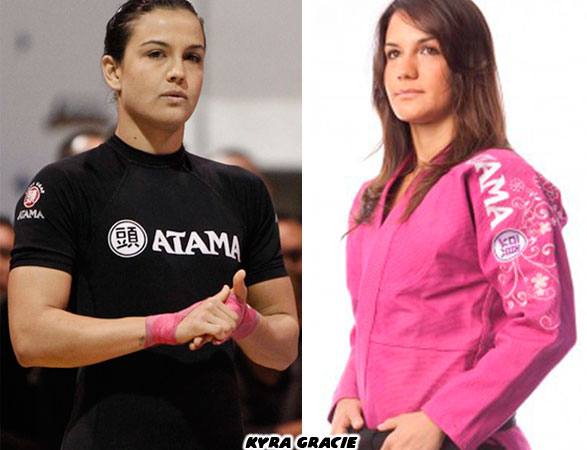

It is hard to be a professional female athlete in any discipline and much more for a fighter. Ronda is just one example of female fighters having to fit a certain mold, but let's look at somebody from Laura's part of the world and see if the same thing applies. Kyra Gracie, daughter of Rorion Gracie and a member of the legendary Gracie clan is a proud Brazilian. Like her family members she is expected to excel in jujitsu. It is not luck or genetic engineering that makes Kyra or her family members great. It is lots of hard work, practice and a system that has been refined by almost a century. The Gracie family was participating in international bouts and no-holds barred matches since the start of the 20th century. This was well before the term mixed martial arts was even coined. The Japanese champion Mitsuyo "Count Kouma" Maeda helped introduce jujitsu to Brazil. He had a hand in teaching the Gracie family the art and exposed an entire nation to its effectiveness. Kyra represents a third-generation practitioner. She does very well in local and national tournaments. She fights in both gi, wearing the traditional uniform as well as non-gi contests where opponents wear tight-fitting rash guards. She had no plans on transitioning to MMA because the life-span of those fighters, and earning power, is much shorter. When it came to actual fighting Kyra did not sex up her uniform at all. Like other female fighters she wore something that was functional if not modest. Yet this did not mean that she was not presented as a sexual being to audiences.
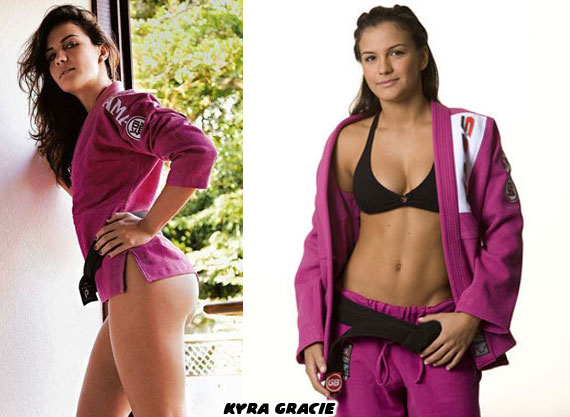
 

Kyra did some modeling outside of the ring to help make her more visible to non-MMA, non-jujitsu fans. By appearing in some very revealing shoots was she pandering to her fans? Certainly, but she was keenly aware of what she was doing. The Brazilian was using sex to sell her image, she was building her brand more so than she was building the Gracie brand. If large companies could exploit women in their advertising then what would happen if the women were in control of the image? Athletes like Rin Nakai, Ronda Rousey, Michelle Waterson and even the Williams sisters knew that they were not getting paid as well as their male counterparts. They also knew that their life in pro sports would not last forever. They needed to make as much money as they could, by using any avenue that they could. This is the sad truth of female athletes. Many female athletes have to do things that are not expected of male counterparts. Also, like the previously aforementioned sports figures, Kyra was doing these shoots of her own free will. She was not coerced into appearing topless, or pants-less in her pictures. She did this because she knew the images would sell and she would gain a lot of new followers. These followers would bring with them their money and make the sponsors happy. Did the sex do anything to diminish her presence in the ring? Nope! Also she did not actually fight with her boobs hanging out of her top.

Designers at every studio need to ask themselves if the characters they are creating go above and beyond the sexy tropes and stereotypes, or are they just reflecting what society expects a female fighter to be. SNK, Namco, Sega, Capcom, Midway and the other studios have created many fantastic female characters for over 25 years without resorting to pandering. They created female fighters that were empowered and attractive. Yet they also created many that were sexy for the sake of being sexy. This is something that drives me especially crazy about Capcom. At their best they can create characters that cross multiple genres, that appeal to a broad range of demographics. Yet in recent years they haven't quite been able to hit the mark that the previous teams did. The icons created in Street Fighter II, Street Fighter Alpha and even Street Fighter EX had a lot more staying power. They accomplished this without the use of 3D graphics, without overly-sexual female characters.
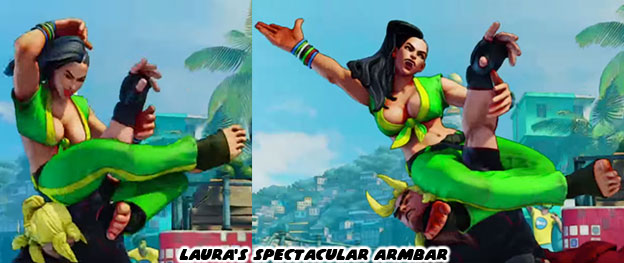

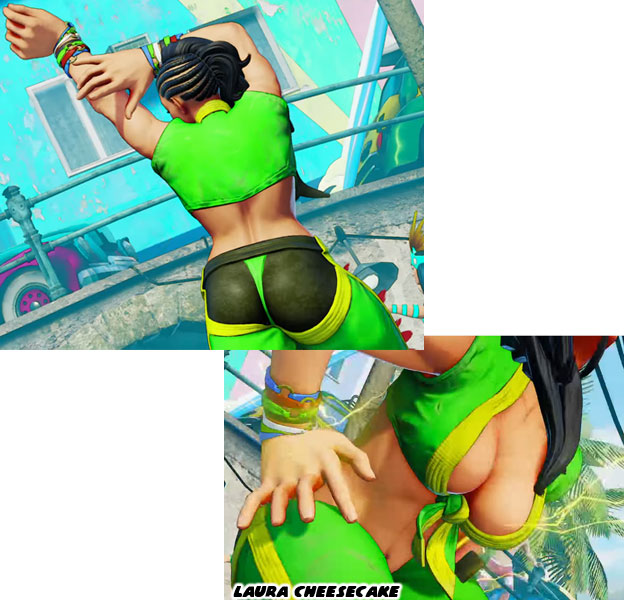
So how does Laura stack up? She has some of the most imaginative moves in recent memory. Her grapples and takedowns, which can be mixed up with solid strikes and combos are a refreshing addition to the franchise. They break up the monotony of Ryu's fireball attacks or the stiff power moves of Zangief. They are even somewhat believable to perform. What the character didn't need was the special attacks focused around electricity. I understand it was a nod to Blanka but are all Brazilians really doubling as car batteries? Not only that, her super moves have her bouncing around the screen like a pinball. The Street Fighter IV and V teams really enjoy breaking the 4th wall but now the moves are really starting to lose their charm. Purpose-wise she is a positive of a representation of Brazil. I could do without the feathered-costume samba dancers on her stage, or the giant world cup trophy in the background (instead of the Jesus statue atop Rio De Janeiro). We get it Capcom, this is Brazil, you don't have to be so ham-fisted about it. With that said Laura is doing much more for the people of South America than Blanka ever did. The pairing of rash guard shorts under her pants just to show off her butt was sophomoric, and her too revealing top was lazy design. Her color selection of green and yellow was however perfect, especially when combined with the black ankle sleeves for contrast. Bright primary colors were usually assigned to each character and green wasn't really assigned to anybody in Street Fighter V. The colors did the double duty of mirroring the colors from the Brazilian national flag.
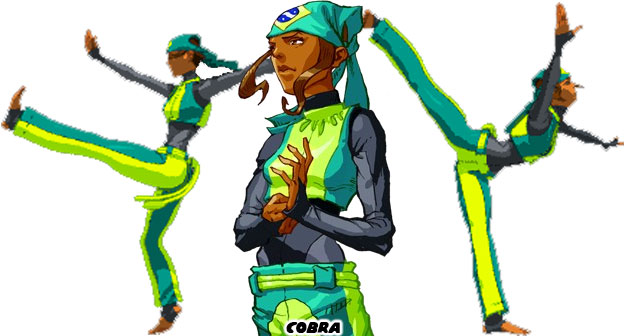


Laura was not the first minority character, or mixed ethnicity character to pull off this look. That honor would belong to Cobra from Spiritonin's Capoeira Fighter 3. Cobra was fast, flexible and very dangerous. She had some amazing strikes and brutal takedowns as well. She was a villain in the game yet at the same time fiercely proud of her nation. A good chunk of her costume, including the rash guard and ankle sleeves predates the look of Laura. Did I think Laura was derivative? No, I think it was coincidence in the design.

Do I think Laura works in the Street Fighter universe? I say yes. The game could always use more diversity with regards to ethnicity and diverse styles of fighting. I think characters like Laura belong especially when these are positive figures rather than stereotypical tropes. She certainly has more going for her than F.A.N.G. I could do less without the close ups on her butt or the gratuitous cleavage close ups during her intro or special animations. These don't do anything to make the game better or make audiences appreciate the character any more or less. She is very similar to Rashid in that she is a good design but does not actually achieve greatness. To be fair she is slightly more unique than Rashid for the move selection assigned to her and even for her creative hair style. Her moves, minus the electricity are more grounded and less fantastic than the sci-fi wind attacks of Rashid. I think that the character has much better design and purpose than her brother Sean, who was yet another "shotoclone" introduced in Street Fighter III.
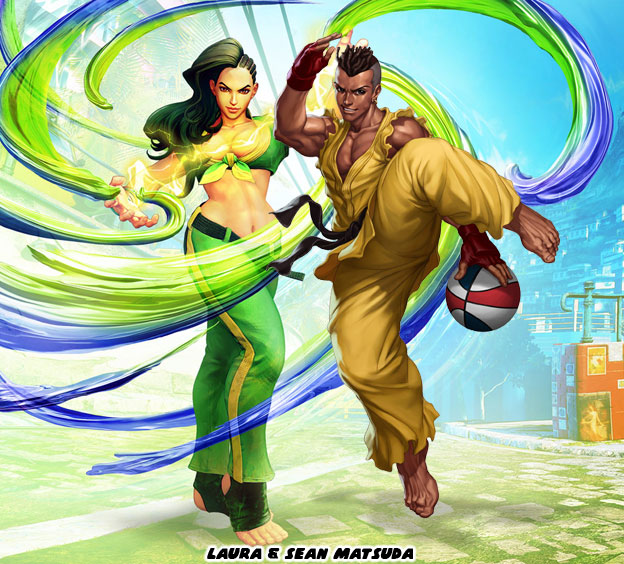
 

Something that Capcom has to explain is why Laura is much lighter than her brother. I understand that they are siblings and sometimes there is a range in how dark or fair skinned a brother or sister can be. But this difference is very noticeable. It is okay to assume that they may be step-siblings but if they are truly brother and sister then why make her much lighter? I get the same feeling for Laura that I got for Vanessa Lewis. The studio is intentionally making her lighter just to appeal to the Asian market and of course Western ideal of beauty. Let's hope that is not the case. Laura is a good character and I hope to see her more in the future. I'd like to hear your take on this character and whether or not you think women fighters tend to be objectified more in games. As always if you enjoyed this blog and would like to sponsor me please visit my Patreon page and consider donating each month, even as little as $1 would help make better blogs and even podcasts!

 follow the Street Writer on Patreon!

Wednesday, December 30, 2015

The return of Rainbow Mika, did Capcom cross the line in Street Fighter V?

It is tough to talk about two of the females in Street Fighter V, one new and one returning, without bringing up the issue of pandering. Whether I start with Rainbow Mika or Laura Matsuda the problem that I have with the designs have already been echoed by many in the community. The developers at Capcom are really pushing the sex appeal first and foremost with the female characters introduced in the series. It's hard to ignore it when the camera angles and animations used to introduce the characters give audiences a butt or crotch shot or a peek at some gratuitous cleavage. Granted, in Street Fighter IV the pandering was even less classy. With a camera in an "upskirt" shot pointed right at Cammy's backside.


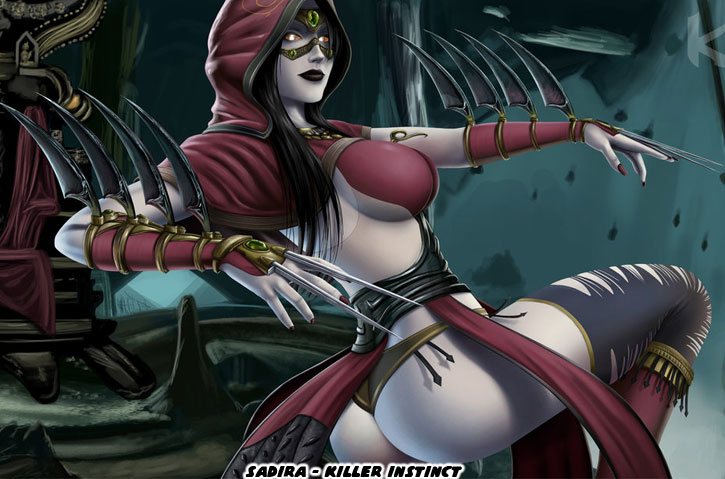
In the Rashid blog I mentioned that there were people that were offended that Capcom changed the angle on the shot in the game where R. Mika slaps her butt. Those against the edit said it was censorship, that it was social pressure forcing the team to change their creative vision. So games where women were objectified were okay as long as everyone knew from the get-go this was how they were all supposed to be presented? I mean why stop at R. Mika, why not put Karin Kanzuki in a bikini or Chun-Li in lingerie? Then again the Street Fighter IV and V developers had also been creating costume packs with more revealing costumes for female characters. The limited edition SFV box art in Japan even featured shirtless "sexy" Ryu with Chun-Li in a more skimpier dress. Was this focus on sexualizing the lead characters something that the original developers on Street Fighter, Street Fighter II or Street Fighter III had in mind? Or was this something that the newer developers were doing simply because they had the technology that allowed them to play dress up with the characters? I would be lying if I said this was a problem with Capcom. This was actually an industry-wide problem that Capcom managed to avoid for almost 30 years. The greatest Capcom designs always took the high road, it was the competition that tried to win over players by making female characters into objects of desire. Look at the female leads in Mortal Kombat or Killer Instinct to see what I'm getting at.

Some people would defend the legacy of the studio by saying that the men were sexualized as well; with bare bulging muscles and in the case of Zangief just a pair or tight trunks and not much else. Yet hyper-masculine, big beefy guys were not necessarily something that female audiences found attractive. Did we forget that Shaheen in Tekken was based on the male model Omar Borkan Al Gala? He was not exactly the bodybuilder type and didn't walk around shirtless. He wore suits and a keffiyeh yet still made women all over the world swoon. So what was it that made the Capcom series so controversial in recent years? It could be pinpointed to Street Fighter IV. That was when studio made sure to zoom in on certain body parts using the in-game camera. The developers began to experiment with "jiggle physics" and apply them liberally to female breasts and backsides. By doing this Capcom opened a door that they would never be able to close again.
   

I would like to know if the pandering or in the case of the edits featuring Cammy and R. Mika, the so-called "censorship" were making the game better or worse. I'm talking about the fight mechanics, the gameplay, the balance, the roster. Did sexualizing make the game better or worse, or did it have zero impact on the game itself? This is an issue of perception and some people see no problem and some people are highly offended by any change. Some fans are more passionate about certain aspects of the game and did not take the bigger picture into consideration. As soon as Capcom changed the camera angle for Cammy's intro for example it made a part of the community mad. This portion of the community claimed censorship was ruining a game but they didn't question what would have caused the studio to rethink their approach. Was it a case of social justice warriors out for blood? Or was it a more practical business decision regarding the publisher and the ESRB? The company that put rating labels on the games had some influence on the direction of every game released in the USA.

Capcom was in the business of making money and they wanted to get the best rating possible. I wish we could say that Capcom was in the business of making fans happy but when you are a publicly traded company on the stock exchange happiness does not pay the bills. It's true of Disney, Sony, EA and the other big publishers. The feeling of the gamers did not matter as much as the money they poured into a franchise. Games in every genre can sell more units depending on what rating they receive. The more mature the rating statistically the less money they may make. The rating system itself, including for movies, I always thought was skewed. Violence, guns, blood and guts was not as high a priority as sex. We could have people shooting and killing on screen and receive a teen rating but if you put boobs or a butt on screen then it becomes mature-only. That is sort of the opposite in other countries where nudity is not seen as problem as much as violence is. But I digress. Did the community bother to think that Capcom was pushing the envelope with the ratings board and had to scale things back a little? Did they not consider that the ESRB could punish the game with an unfair rating? Some of the things that changed in Street Fighter V, the camera angles to be specific, had received the loudest complaints. Yet these things happened for only a split second in the game itself. The revealing costumes for R. Mika, Laura, Cammy and the other females did not change. So it seemed kind of like an arbitrary line to draw when it came to what some fans considered censorship. I want to know how much pandering was too much pandering? How much could Capcom show and still get a Teen rating? I tended to write about the inspirations behind a character and it would be impossible to separate culture from these designs. Let's start with women's pro wrestling.


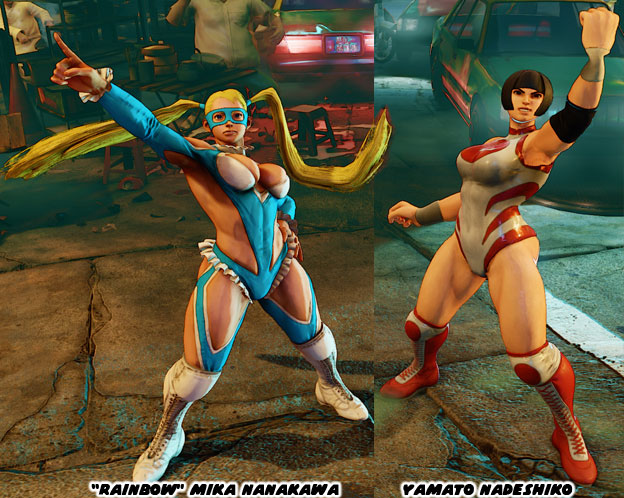
Around the world there were various types of pro wrestling. There were the technical styles, the high-flying styles, the "hard" style where people barely pulled strikes. There were also the violent, hardcore and comedic schools of wrestling as well. In essence there was a style, if not an entire organization dedicated to the the audience. When it came to pro wrestling the more over-the-top a personality was, or the more fantastic the gimmick used was then the more likely they were to be embraced by fans. Of course we all know that the Undertaker from the WWE was not really a dead man or that his "brother" Kane was not a demon in disguise, but we have willing suspension of disbelief. This is what allowed the creative at WWE to sell us a story. It worked in every promotion around the world, no matter how real or absurd it was. Rainbow Mika came from the Japan, she reflected Puro, an abbreviated term for puroresu or pro wrestling. There were other schools including lucharesu, which was more Mexican-influenced lucha libre mixed with hard striking puro. To be precise R. Mika reflected the Joshi school of women's pro wrestling. Joshi was hard-hitting, high-flying, old school female wrestling. In the joshi promotions women had angles or gimmicks just like in the all-male promotions. Rainbow Mika was by design a very flamboyant character. The color of her hair, her high pigtails and the revealing cut of her costume were very far removed from the more conservative wrestlers. He friend and sometimes tag-team partner Yamato Nadeshiko was created more in tune with what Joshi wrestlers sometimes looked like. When you place the two side-by-side you can see how many artistic liberties Capcom took when creating the look of R. Mika.


Rainbow Mika was created as a sort of parody of joshi wrestling. Introduced in Street Fighter Zero / Alpha 3 in 1998, the wrestler was obsessed with becoming the best. Even the promotional material for the game, the Capcom Secret File, was designed as a parody of the popular wrestling magazine Weekly Puro. This meant that the developers actually knew a little bit about what they were trying to lampoon. In between rounds R. Mika would practice her mic skills and challenge all the other Street Fighter legends. Players would see her dragging tractor tires, training under the cruel tutelage of Yoko Harmegeddon (one of the greatest wrestling names I've ever heard) between matches as well. She was as much of a zealot of her own abilities as Dan Hibiki was of his. There was simply no stopping the blonde bomber from achieving her goals, "The superstar of the ring… that's what I wanna be."

Designer Bengus, my favorite Capcom artist hands down, wanted her to be a silly character. She was someone that was even more flamboyant and exaggerated than any other wrestler in the game. A sort of counterpoint to Zangief. The female balance seemed to be a popular theme in SF Zero. Sakura was following in the footsteps of Ryu, while Karin was her "Ken" or friendly rival. Rose was a balance to the Dictator. Of all the female characters in the series Mika was the one working the hardest, the one with the most hustle. By comparison Sakura and Karin were slightly younger and had school and a private life they could fall back on but wrestling was all R. Mika had. If she didn't make it then what would become of her? It was kind of sad when you think about it. Now let's place this character in context. Where did she come from, what did she reflect and how did she fit into the Street Fighter universe?


Women's wrestling had long since been relegated to a side-card for the biggest wrestling promotions. Yet this was not to take anything away from the performers themselves. I would say that one of the best barbed wire death matches I ever saw was between two female wrestlers. Women trained just as hard as men, if not harder, in many promotions. They worked hard to build a character, to work an angle and get noticed. They had to do the double duty of trying to get to the top while still young and pretty. The window of opportunity for a female wrestler, just like a Hollywood actress, was very limited. You had to make your money while you were able. The next female lead was already being groomed as a teenager to dethrone the queen. The same didn't usually apply to men. Male stars could work into their late '40's and still earn a fantastic paycheck but you would be hard pressed to find women wrestling at that age. Rainbow Mika was a reflection of that culture, a reflection of society. She was on her way to the top and was doing what she could to get there. If this meant taking on the best male fighters in the Street Fighter tournament then so be it. Whether in sports or film this was a trend that happened in the real world. In Mexico there were wrestlers like Estrelita (Little Star) and in Japan wrestlers like Kana who were a handful that rose to the top. They had each worked nonstop for over a decade just to get noticed. They did not have a problem with showing off skin or wearing sexy costumes because that was what it took in the business to get people to pay attention. Once the audience was weatching it was their wrestling ability that made the fans stay in their seats. Female wrestlers were tremendous athletes. Anyone that doubts this should realize that some of the best female wrestlers had some brutal finishing moves that would be banned in the WWE. The stunning attacks and finishing moves from real life would also be turned into caricature by Bengus.


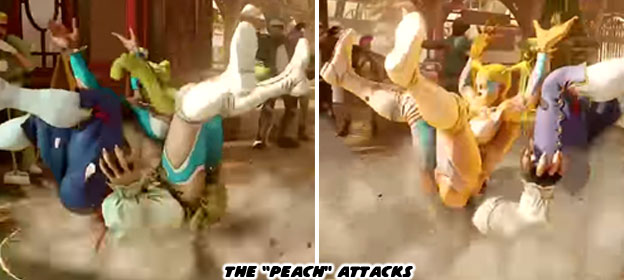
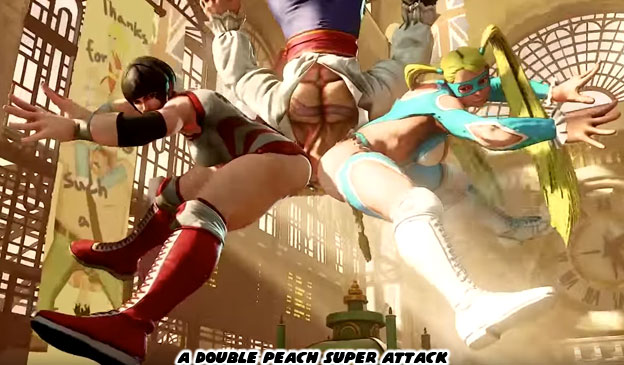
For Mika her butt, rather her "Peach" would be the main weapon. She had a number of chops, slams and elbow strikes but her peach stole the show. She would do flying hip attacks and stomp on her opponents with it. When she did some of her harder attacks, a headbutt or suplex for example she would sometimes fall on the floor and rub her head or backside in plain view of the camera. This was a sight gag that helped keep the presentation of the game a little more lighthearted. The tone of the Alpha / Zero series was much different than either Street Fighter IV or V. For one it was heavily influenced by the Street Fighter II animé movie. As such the characters were bright and colorful, they were also a bit younger than they were in SFII, moreover the animation style was more cartoonish. The proportions of the figures were greatly exaggerated. There was a huge difference in the body types and sizes between Zangief and Dhalsim in SF Zero for example, than there was in SF II. When the characters performed their special moves they were all brightly animated and had a very distinct style to them. There was some humor in the game, it was subtle but also silly, as if this was an animé show-turned-fighter. Things changed in Street Fighter IV when the graphics went from cartoon to realistic.


The attempt to interject humor in the moves and characters was awkward because there was so much depth to the the Unreal engine generated 3D models. For Rainbow Mika the peach attacks went from flat to visceral. Her costume was way more revealing in SF V than it was originally and I'm not mentioning how much more cleavage was revealed in this version. The ruffled skirt she wore, almost a tutu, originally did come down slightly over her backside. The cut of her costume was more like a swimsuit than a thong. In Street Fighter V he tutu was gone and Rainbow Mika's costume now had a frilly trim that left little to the imagination. The other thing that the developers discovered was that they could also add jiggle physics to her butt and breasts as well. Just as they did for Cammy, Chun-Li and the other women in IV they began pushing the boundaries for what they could put on screen. It wasn't a question of how the opponents would look like having R. Mika pounce on them, instead it became a question on how far could they stick a face of an opponent up her crotch or backside. Those that claim that the character and her moves didn't change between the games were only telling half the story. The presentation of all the characters went from flat, cartoonish sprites to highly detailed 3D models. There was a big difference between the way the two appeared on screen. Audiences were not necessarily being more sensitive to the characters or moves in Street Fighter V. The audience didn't change, the technology, the development team and their tastes changed the presentation of the character.


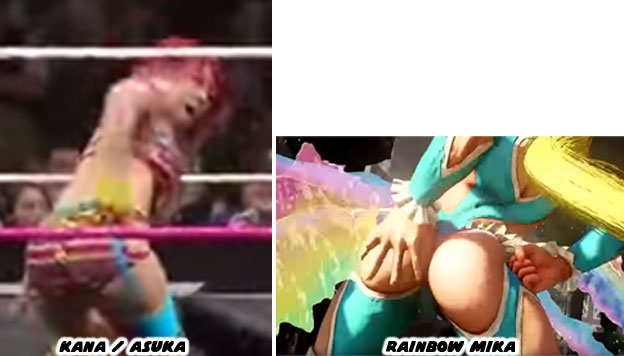
Again, R. Mika was not created in a vacuum. Her look, her moves came from somewhere. Believe it or not both male and female wrestlers have been using their backside as a weapon in the ring. Andre the Giant, Rikishi and the Great Muta were some of the legends from around the world that let their backsides do the talking. Kana (Asuka in the WWE) was one of the more recent female superstars to use the hip attack. She launched herself with reckless abandon butt-first into opponents. It's one of the harder strikes in her arsenal, no pun intended. She even taunted opponents with it. After flattening them with a hip attack Kana would slap her butt. Capcom couldn't even get this detail right. The hit came first, then the taunt.

Capcom betrayed the original purpose of the character. It was as if the designers stopped paying attention to the martial arts that inspired the cast, and missed the point of costumed female wrestlers as well. Kana was a sexy wrestler but not because she flew ass-first into opponents. She was confident, talented and fought with an assortment of strikes, grapples and submission holds that could even take out male opponents. Even if you didn't watch wrestling look carefully at her costume, or for that matter the costumes of the other top Joshi wrestlers in Japan. They were all flashy and tight. Kana wore multi-colored garter belts that matched her bra. Yet she didn't wear fishnet stockings or nylons with her garter, nor did she really show off her cleavage. Her costume created a sense that she was fighting in lingerie all while covered up. It was the illusion of sexiness without actually giving anything away. Her costume was also functional. She could probably wrestle in lingerie but that clothing wasn't designed to survive a fight. There would be way more wardrobe malfunctions if the joshi wrestlers were not careful about the cut and fabric in their costumes. If the designers at Capcom couldn't be bothered to understand these things, to grasp those concepts then what hope do future female characters have for the series?


Did Street Fighter need a female wrestler? Absolutely! Should the female wrestler have a sexy costume? Possibly! Should her breasts and butt be what was shown in her close-ups? No! It's as simple as that, The developers should spend less time trying out ways to sex up a female character and instead focus on making her a well-rounded fighter that balanced out the game and offered unique moves and abilities that no other character had. Chun-Li was by far the best female, and by any measure the best fighting game character ever designed (not named Gouki). At the same time Chun-Li was also the most modestly dressed female fighter ever created. Stop and think about that for a while. How was it that audiences found Chun-Li attractive when she wore tights and a leotard under her dress? How did taking scissors to Rainbow Mika's costume make the character or the game better? Let me know whether or not you were one of the people that was offended by Capcom's decision to "censor" the butt slap and why. As always if you enjoyed this blog and would like to sponsor me please visit my Patreon page and consider donating each month, even as little as $1 would help make better blogs and even podcasts!
 follow the Street Writer on Patreon!