Showing posts with label alex. Show all posts

Friday, June 10, 2022

The Frightful Symmetry of Street Fighter

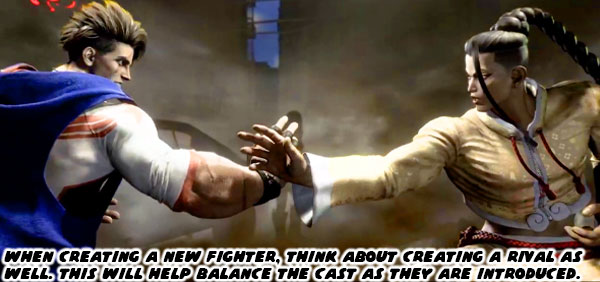
This blog has material that was originally posted on 1UP on Aug 7, 2008. I've decided to expand on the ideas, and connect them to the announcement of Street Fighter 6. I have talked a little bit about Luke, and Jamie, the young stars of Street Fighter 6. I had to do a quick take on both of them first because they connect us to the roots of the fighting game genre. Luke had gotten, and still continues to get a lot of angst for being pushed as the new lead across the end of SFV in 2018, and into the launch of SF6 scheduled for 2023. One of the things that audiences disliked about the character, was that he was pushed ahead of established stars of the game. Another reason he was disliked was because he lacked a rival. The Street Fighter series, and most great fighting games in general, was lead by two main characters. If you are a budding designer I want you to think about creating two main heroes when constructing a narrative for your fighting game. If you only have one main character you actually run the risk of limiting the direction of the title, let alone potential series.

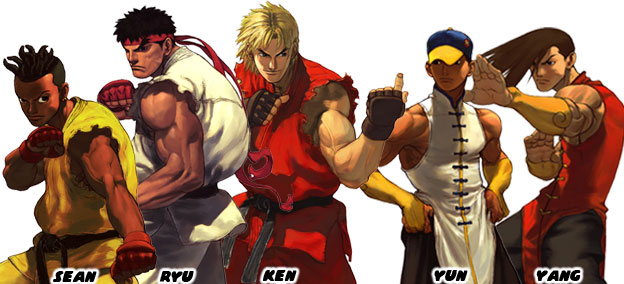
I think that sometimes developers don't understand why their game is not well received. There are elements that are shared across both US, and Japanese titles. If the most basic rules are ignored then the game feels lacking. One of the oldest tropes used by the industry is the casting of the main characters.  The oldest fighting games always started with two, almost equal characters. This of course could be attributed to Player 1, and Player 2. They were sometimes friendly rivals, like Ken, and Ryu in the original SF. They could even be brothers like Yun, and Yang in SFIII. Whether friend or foe the leads were almost universally a Japanese martial arts master, and a Western counterpart. This rule seemed to apply to brawler games as well.
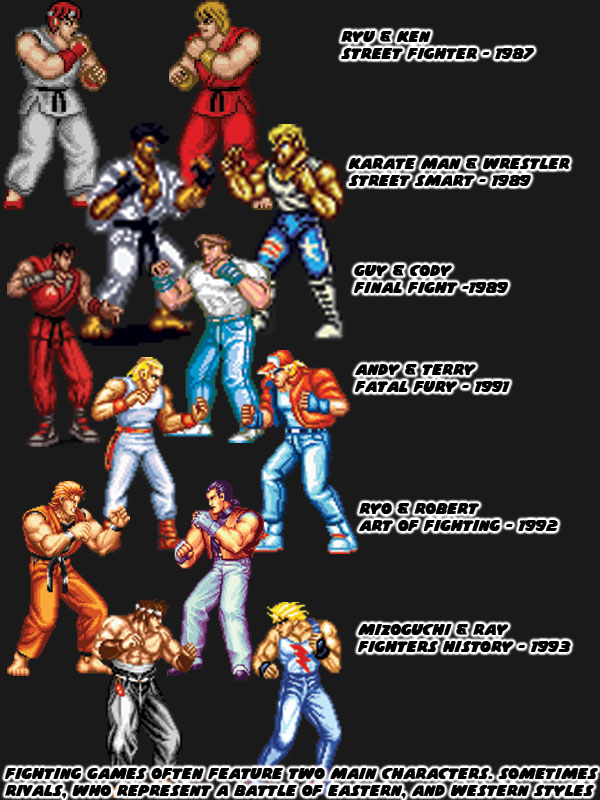
The rest of the cast often tended to be a mix of different styles, and different body types. This most basic rule of designing a cast was observed by just about every Japanese studio in the early '90s. Studios didn't yet realize that a fighting game could feature dinosaurs, robots, or aliens. The US would help redefine the genre when they got involved. Studios like Rare, Midway, and Atari took a unique approach to graphics, and controls, with games like Killer Instinct, Mortal Kombat, and Primal Rage respectively. Japanese studios kept things straightforward in the early days. The titles they developed relied on a Japanese, and American lead. At first they were pallet swaps with shared moves. Little by little the main characters were given their own unique set of moves, and special attacks. 
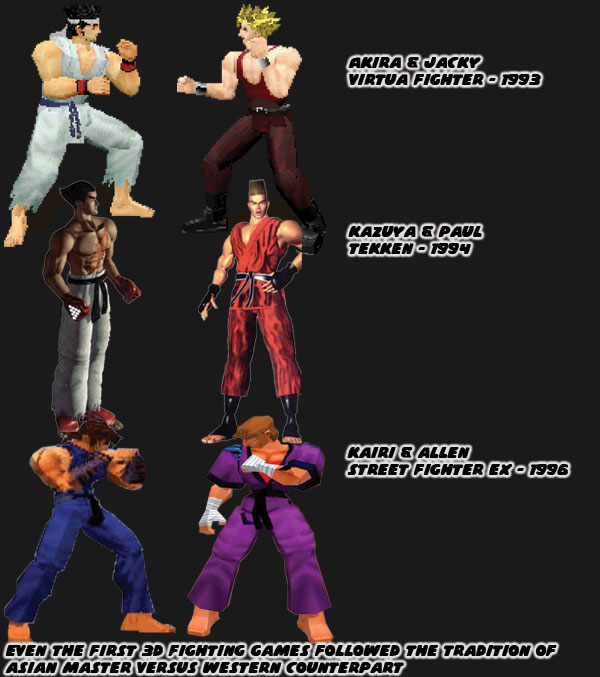
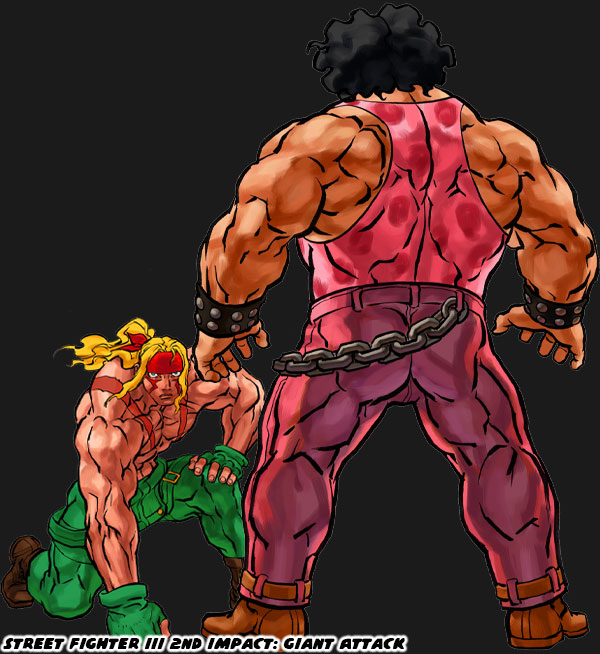
Technology evolved, and sprites gave way to polygons. The developers still followed the same basic formula. Japanese karate guy, versus USA karate guy. Despite the visual aesthetics it was becoming a slower, and more expensive proposition to stay with sprite-based technology. This became apparent when Capcom began development of Street Fighter III on their new CPS-3 hardware. The studio wanted to completely reboot the franchise. Ken, and Ryu were the only characters slated to return. The rest would be new faces. Alex was proposed to be the star of the game. For the first time in the studio's history, SF was released without a rival to the main character. Technically Gill, the boss character, was the main opponent to Alex. The proposed rival, Hugo, would not appear until months later in the expansion Street Fighter III 2nd Impact: Giant Attack. Introducing Luke first in SFV, and Jamie in SF6 was a repeat of history. 
There is not one single reason why the SF characters became iconic while other fighting characters faded into obscurity. The success of the SF cast transcended the artist, and programmer. Their lasting status is a result of many factors. The look of the character, age, sex, features, color palette, wardrobe and even haircut were part of the equation. The way they moved, fought, and handled added to their mystique. Lastly their plot and purpose in SF canon helped solidify their status. In a way the most memorable characters were greater than the sum of their parts. One of the things that made SF so amazing was the careful use of balance, and symmetry. If you take a step back and look at the entire SF series you begin to spot the patterns. The balance of the titles was so well done that very few studios ever manage to recreate it, if even acknowledge it.
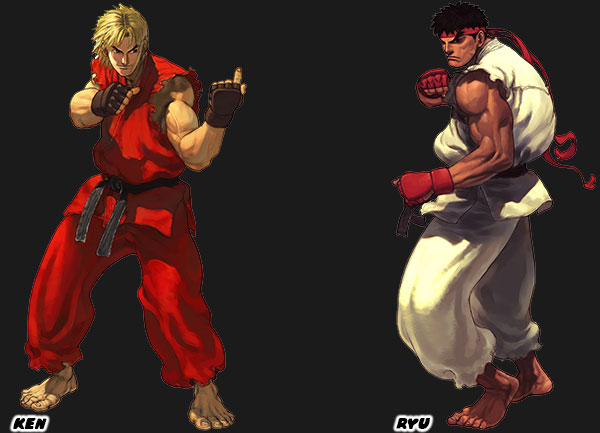
At the heart of almost every fighting game the designers know to put a main protagonist and to balance that character out with a rival. As I said above sometimes it is a friendly rival and other times it is a heated rival. In the planning stages these are generic, well-rounded strikers, essentially the Player 1 and Player 2 template from Karate Champ. At first look Ken and Ryu seem to be generic karate fighters. Those that have stuck through the series know that their look beguiles their ability. They look like strong fighters because of their huge muscle, and outfits. They draw the player into the world. They are human avatars and the gateway into the universe. We would not have identified with them right away had they been skinny kids wearing street clothes, or alien creatures on a distant star.
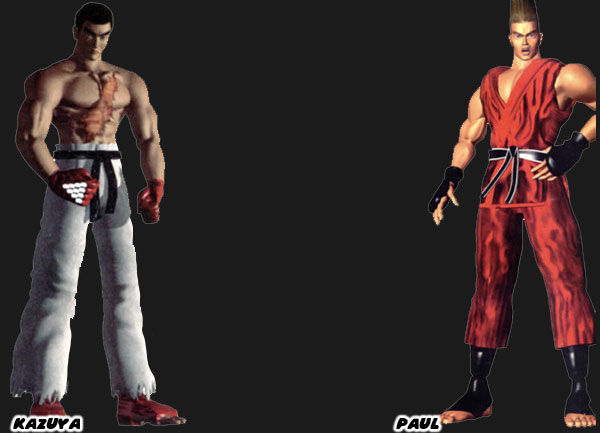
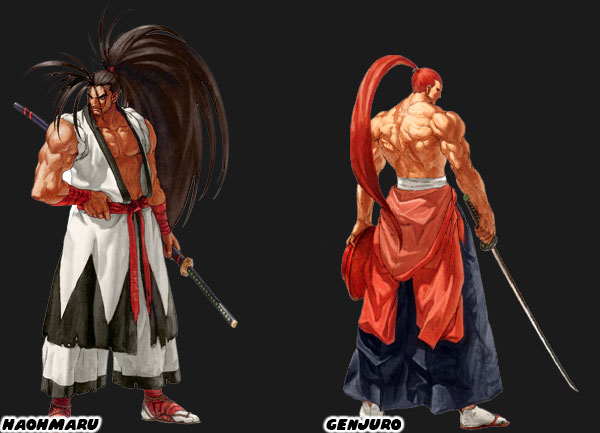
Every good fighting game has always begun with two main characters, balanced but unique in their own regards. Paul and Kazuya borrowed some of the stylings, and use of color from Ken and Ryu respectively. Although the plot, and fighters in Tekken got absurd in sequels, at the core it began as a three-dimensional response to Street Fighter II. Not every great fighting game had begun with two balanced protagonists though. Sometimes even great games needed some time to warm up before we got to see the counterparts join the cast. Before Luke, and even before Alex there was Haohmaru from Samurai Shodown in 1993.  His bitter rival Genjuro was a former friend, and would not appear until Samurai Showdown II in 1994.
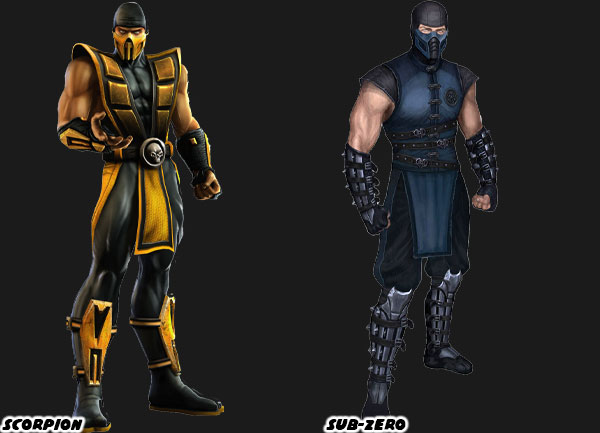
Even in the USA developers were becoming keen on the basic idea of a balanced fighting cast. Liu Kang, and Johnny Kage were the Ryu, and Ken reflections in Mortal Kombat. Scorpion, and Sub Zero however became the most obvious pairing. As the series progressed the designers at Midway continued adding ninjas by the pair, be they human or robot. For a while these "pallet swap" characters seemed the norm in fighting games. Designers managed to grasp the nuances that SF introduced with their "symmetrical" characters. What few studios caught was the idea of using asymmetry with rivals.
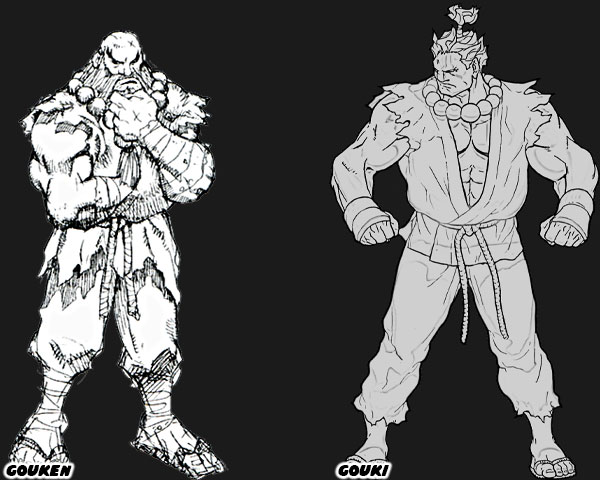
Ryu is associated with the mythical dragon. His uppercut special attack is even known as the dragon punch. Ryu thus assumes more than one identity in the SF universe. He is a hero in the classic tradition. He is smart, strong and wise for his age. His origins are Japanese and thus he carries the culture and tradition of the Japanese martial arts. Gouken, Ryu’s master and mentor, was killed by his own brother Gouki. This gave Ryu a tragic origin. Ryu travels the Earth searching for a purpose through and for battle. His abilities are as mythical and awe-inspiring as the dragon he symbolizes.
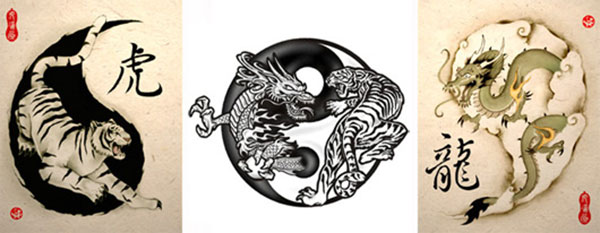
For every hero there is a villain. Sagat began his SF career as the original world champion and arch rival to Ryu. Sagat is a physically imposing man, standing well over seven feet tall and all solid muscle. To counter Ryu’s disciplined karate Sagat is the master of Muay Thai kickboxing, a very physical and dangerous form of martial arts. Sagat is symbolized by the tiger. The tiger is a revered creature throughout Asia because it holds both cultural and spiritual symbolism. In the zodiac the tiger is the second most powerful creature behind the dragon, but unlike the dragon the tiger is a real creature thus connecting the heavens to the Earth. Sagat’s special attacks included the tiger uppercut, and tiger fireball.
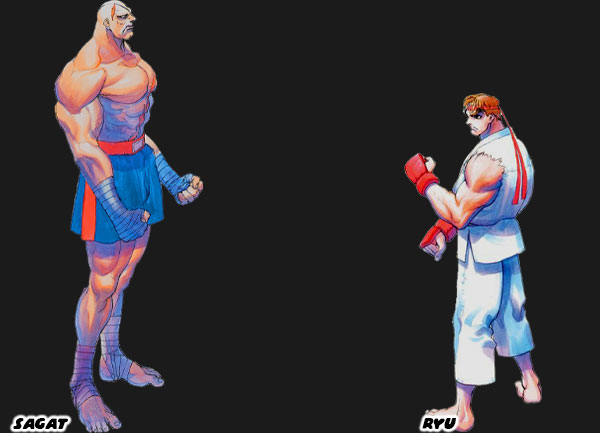
There is a grander philosophy behind the balance in the SF universe. No character exists within the universe “just because.” Whether intentional or by accident, the characters of Ryu and Sagat have stood to symbolize much more than simply fighting game icons. Visually any person can tell who the “good guy and bad guy” are even if they have never played the game before. Upon further inspection the character seems to have several connotations associated with his name and likeness. Cultural and historical ideals are placed on all of the characters in the series, and more so to the main characters. Good and evil characters become complex when given their history in the game, animé and manga.
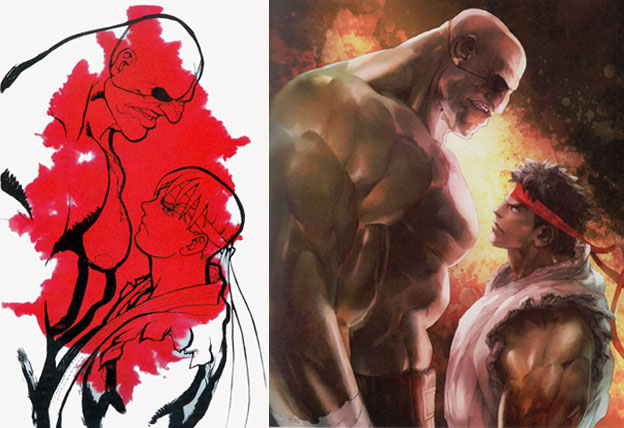
Both Ryu and Sagat are not black, and white, good and evil characters. They cross over into the gray area where combat exists simply for the sake of itself. Good guys sometimes have bad guy qualities (Ryu and his dark side or "Evil Hadou") and bad guys sometimes evolve (the newfound wisdom of Sagat). The character balance in SF is unique compared to other fighters because Capcom was the first studio to use the idea of two rivals as part of a greater whole. Despite their physical differences Ryu and Sagat are a balanced perfectly. Like the tiger and dragon set to be eternal rivals but never reaching conclusion. This is an example of asymmetry being used to balance the cast.
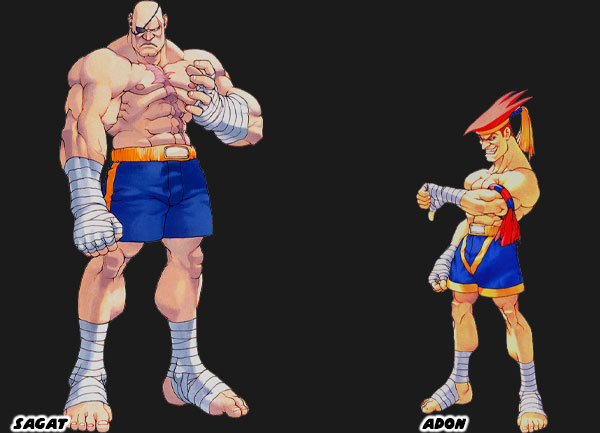
Symmetry was used heavily in the original SF. Every location featured two fighters that complimented each other. Ken and Ryu, Retsu and Geki, Joe and Mike, Lee and Gen, Birdie and Eagle, Adon and Sagat. The last two on the list were another example of great balance. While Ken balances Ryu, and Ryu balances Sagat, so too did Adon enter the equation to balance Sagat. He was the understudy, the Jaguar, ready to pounce on the aging Tiger. The original SF showed that it was possible to balance a cast without relying on similar styles or even backgrounds. Age could be used as a symbol of wisdom and technique (Gen) rather than as a way to "count the days" until a character was surpassed (Sagat). The idea of balance between these non-playable characters was fleshed out when SF II was developed. The World Warriors were an attempt at complete balance within the game. Although Ken had Ryu, the rest of the cast was lacking a balanced rival, those issues were addressed in following titles.
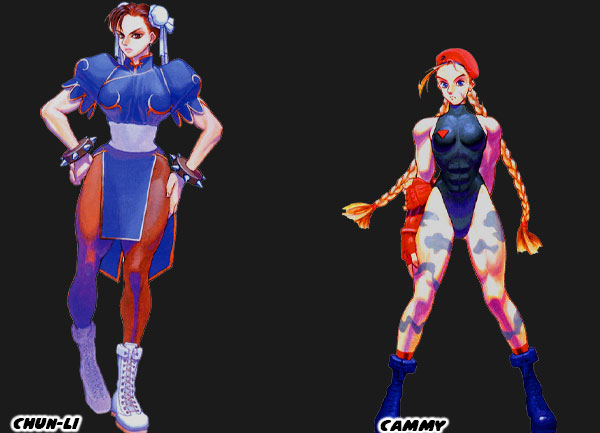
The idea of a younger upstart balancing out an established veteran returned with Chun-Li's friendly rival. As the only female in SFII Chun-Li represented many things in form and purpose. She was very similar to Ryu in that her inclusion was well thought out, and she captured many of the heroic ideals, however she was lacking her own "Ken." Cammy was supposed to replace Chun-Li in the draft of Street Fighter III. Regardless of that her addition in Super Street Fighter II was welcomed by fans. A young secret soldier using British military themes rather than traditional Chinese Kung-Fu garb helped cement her purpose. Cammy became a hit, whether gamers acknowledged her as Chun-Li's balance or not.
The idea of younger dopplegangers was very strong in the following sequels. Even more inspired was making them of the opposite sex. Sakura was very much a modern retelling of the Ryu character. She did not have the same martial arts path that Ryu had. She was the modern fighter, born to a media-saturated world that didn't carry over the old traditions of the ancient martial arts. She was brash and young, running headfirst into battles against more experienced fighters. Her natural ability saw her through the fights. In this way her spirit was as enduring as Ryu's.
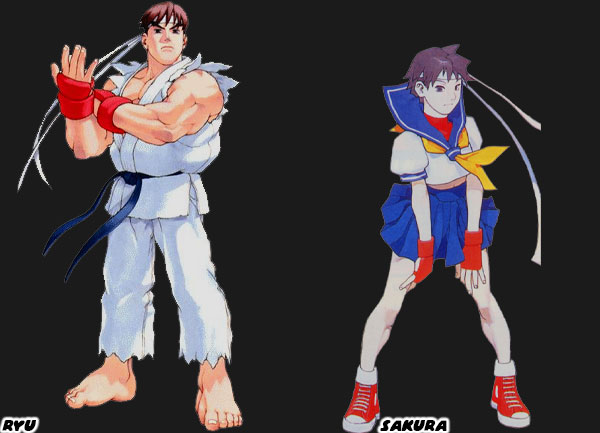
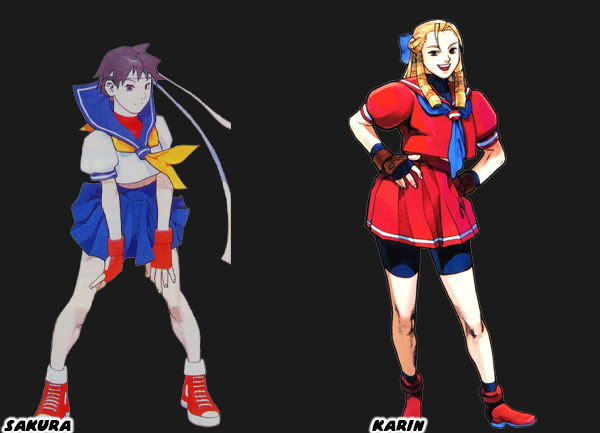
Masahiko Nakahira introduced a young female version of Ken in the Sakura Ganbare manga. With red sailor suit, and all! This perfectly mirrored Sakura and added another layer of balance to the Street Fighter Zero series. Strong female leads could be used in the series to balance each other out but uniquely for the men as well. Not many games featured male and female protagonists that complimented each other, let alone did it well.
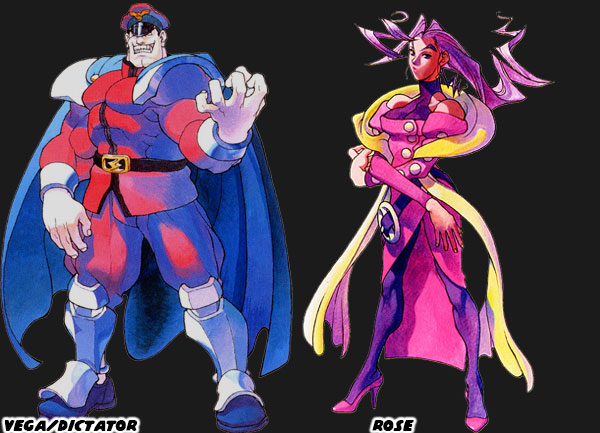
Even boss characters with mysterious powers could be balanced by women with equally unique abilities. This was the case for Vega / Dictator. The boss of SFII had a unique fighting style that employed "Psycho" powers. Not to mention that he had a secretive past. To help expand on his background, and explain his powers the studio introduced Rose. 
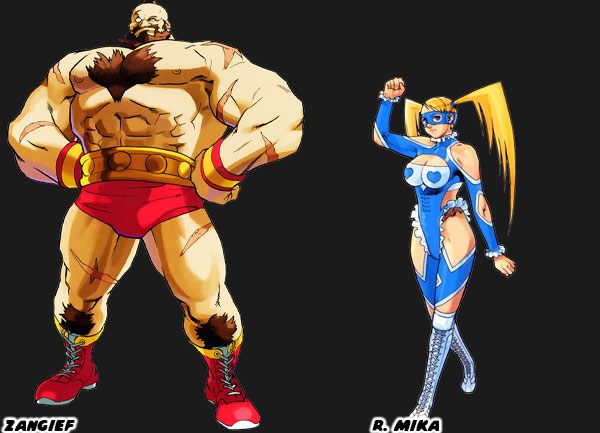
Female protagonists could also add an extra dimension to the martial art they represented. R. Mika was Zangief's very own "Sakura" but she also added some top rope moves too. Now wrestling in SF had a unique cross section of grappling techniques, and over-the-top pro wrestling moves. Makoto in SF III serves in a similar function, her form of karate is far different than what Ryu or Sakura practice, and she helps add an additional level of balance to the universe.
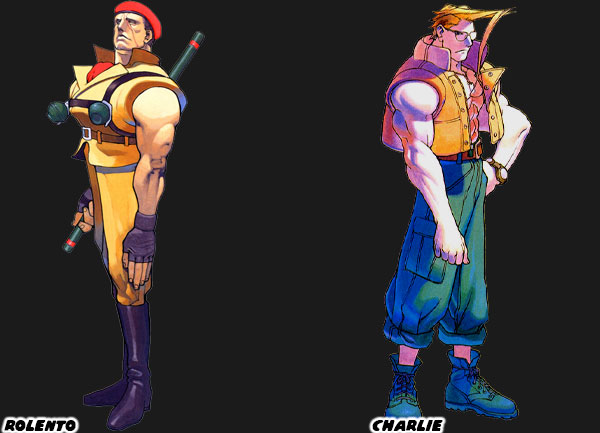
Capcom producer Noritaka Funamizu was able to connect various games through the Zero series, and help make for some interesting balance ideas. For example he tied together the worlds of Final Fight to Street Fighter, and Street Fighter II. Relationships between characters were established. Even though these men weren't against each other in canon, the military theme and evil fighting style of Rolento was a good way to balance out the heroic soldier Charlie Nash.
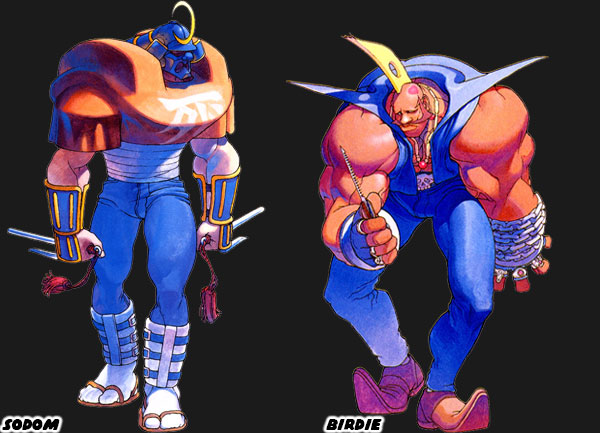
However not every character in the SF universe had to represent a specific style. This was an open tournament, and brawlers were welcome to fight. The diversity of characters helped ensure that players would be able to find one that suited them. Among these characters the idea of symmetry remained. Birdie and Sodom were characters on the fringe of the SF universe yet whose oddball style helped break up the monotony of the traditional arts.
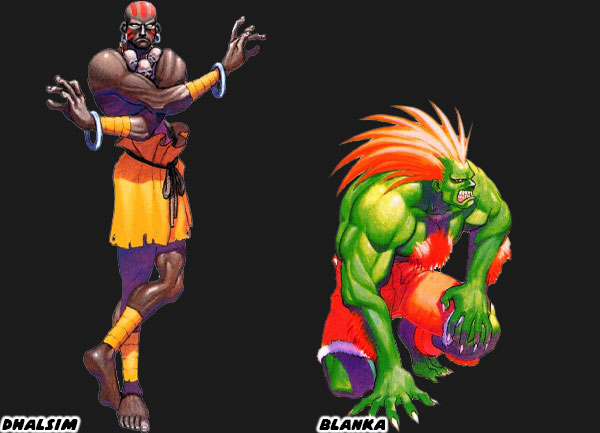
The most memorable of the unique characters would have to be Dhalsim and Blanka. Their esoteric fighting art, or lack thereof, added an extra dimension to the SF universe. Those characters represented the unknown or untapped human potential. They represented the forms yet to be discovered by the "modern" world as much as they were an homage to characters from pop culture films. Dhalsim and Blanka blew the doors of the SF universe wide open, so that strange styles and characters like Urien, Gill and Necro would "fit" into the world.
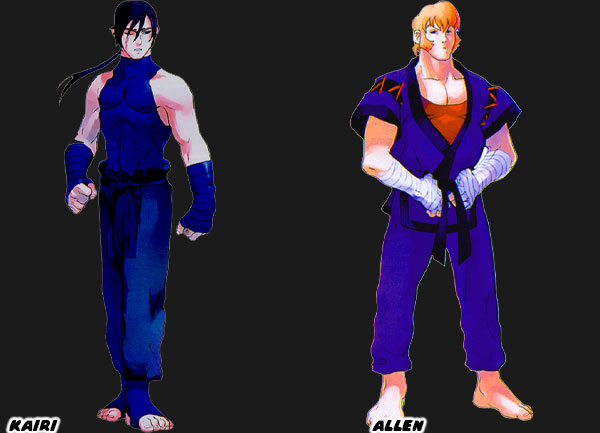
If there was one fighting game whose entire purpose was a quest to balance the entire SF cast it would have to be Street Fighter EX. The game was filled with amalgamations of the original world warriors as well as nods to real fighters, and pop culture as well. So the series now had two balanced wrestlers, two balanced karate fighters, two balanced military veterans, etc. The main characters in the story, Kairi and Allen, served to be the respective Ryu, and Ken of that world. Notice that Kairi has the youthful appearance of Ryu with the scarring and solitary eye of Sagat. Notice also that his counterpart has stylings reminiscent of Bruce Lee and Chuck Norris. Ken should have been so unique! These parallels went right down the line with the rest of the cast. An evil military fighter named Doctrine Dark countered Guile, Pullum Purna balanced Chun-Li, and Skullomania countered Dhalsim.
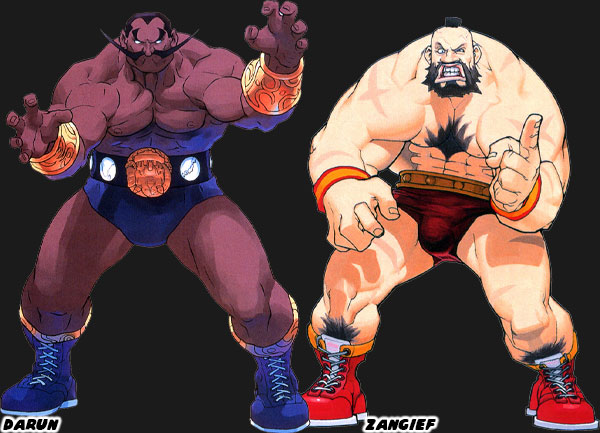
My favorite character, only because I am such a mark for wrestling, was Darun Mister. There has not been a wrestler invented yet that has been a better compliment to Zangief. He was large and burly plus had his own unique cosmetic features. Most important he was based on a real (yet relatively unknown in the West) undefeated wrestling legend. Unlike the sailor Vodka Gobalsky that became wrestler Zangief, almost as an afterthought, Darun had a direct connection to wrestling. Do a Google search for the "Great Gama" and read about the Indian's amazing exploits back when wrestling was "real." Darun is easily the best wrestling character not featured in any other Capcom game including Muscle Bomber / Saturday Night Slam Masters. Darun was placed in the game as the true rival to Zangief and the outcome of their encounter has never been concluded. The EX cast should have returned in latter numbered SF games because they so perfectly balanced the established icons.
The idea of balance and symmetry was not as strong between the characters introduced in SF III, and SF IV when compared to the original World Warriors. There were several reasons for that. First off the studio wanted to completely redo the series. They had to as a sense of being practical. A good number of the developers that had worked on SF, SF II, SF Zero had left Capcom over a decade to start up projects at SNK, DIMPS, and ARIKA. In order to move the franchise forward Capcom wanted to only bring back Ken, and Ryu. They would get caught up in entirely new fight, with new friends, and opponents. By featuring men, and women of different ages, and backgrounds, it was an attempt to recreate the magic of SF II. There was a problem however, fans weren't ready to let go of their favorites. Ken, and Ryu were the stars of the franchise from a narrative standpoint. But audiences enjoyed the gameplay with their favorite characters. The rest of the cast was so well done, and so well balanced that it seemed a waste to throw them away. Imagine the reaction to a studio that made a great racing game, but then decided to throw away all the pre-2000 cars in favor of only post 2000 models. That sort of explained the post SF II reactions to the series. 
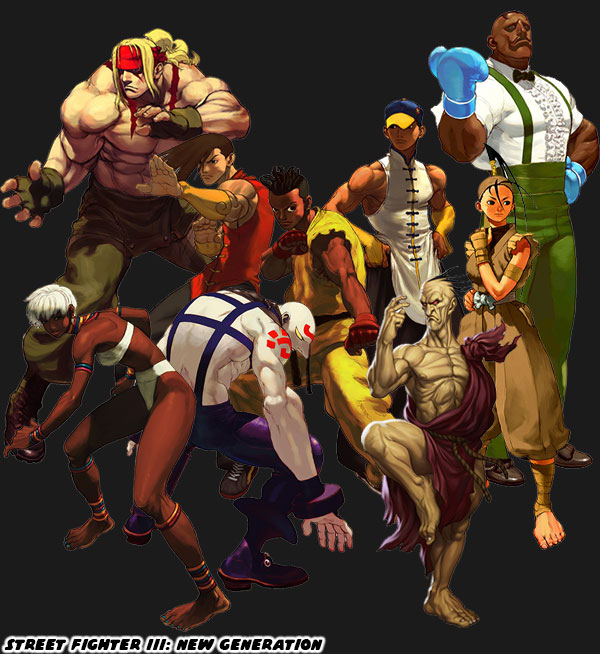
Alex had the elbows of Adon, the headbutt of Birdie, and the suplex of Zangief, but he wasn't as fun to play with as those individual characters. Dudley was an amazing boxer, and played completely different than M. Bison/Boxer. Some wanted to see how the two would match up. The leggy Elena was not quite Chun-Li, Necro was not quite Dhalsim. Fans had a hard time warming up to the cast, and their new fighting mechanics. In time they would enjoy what Capcom was trying to do, but it took two more updates, and the addition of Chun-Li, Urien, Hugo, Gouki, Makoto, Q, Remy, and Twelve to get there. There were similar growing pains with Street Fighter IV, and V. Continually going back through the roster, and adding fan-favorite characters wasn't a bad thing. Nor was trying to experiment with new styles. The titles felt like Capcom was going through the motions, but the games were not progressing. The series was moving on the whims of a fickle producer with an odd sense of humor. Then something radical happened. Yoshinori Ono was let go, and Street Fighter 6 got bold new direction. 
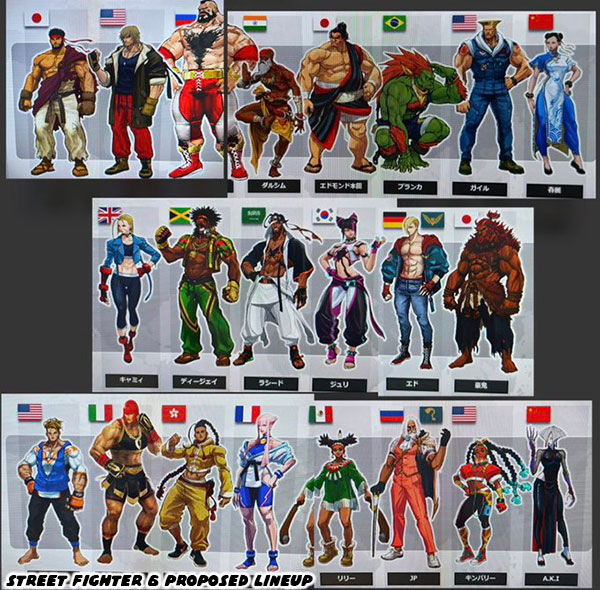
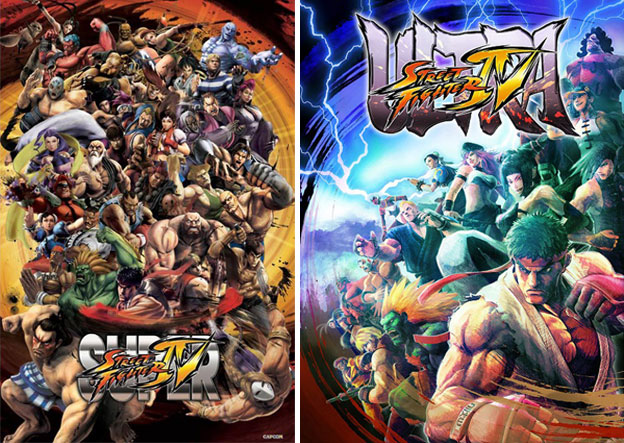
The studio seemed to learn from the reactions to SF IV, and V. First off there were no comedy fatties, or other silly characters that distracted from the lineup. These people almost all looked like representatives of a unique fighting art. Director Takayuki Nakayama, Producer Kazuhiro Tsuchiya, and Designer Yusuke Hashimoto wanted to tell an entirely new story, without losing touch with their legacy. The old stomping grounds of Metro City would be revisited. The original eight World Warriors returned. Representatives from Super Street Fighter II, IV, and V as well. Sadly nobody from Zero, or III made the cut. Of course DLC would remedy that. Then there were eight entirely new faces (five of which were women!) from around the world. The rules of balance, and symmetry had returned. Luke wants to parallel the journey of Ryu, while having Jamie acting as his Ken. The balance wasn't as heavy-handed as it was in the EX series. That's a good start. A few of the new characters seemed destined to be perfect match-ups for the icons. 
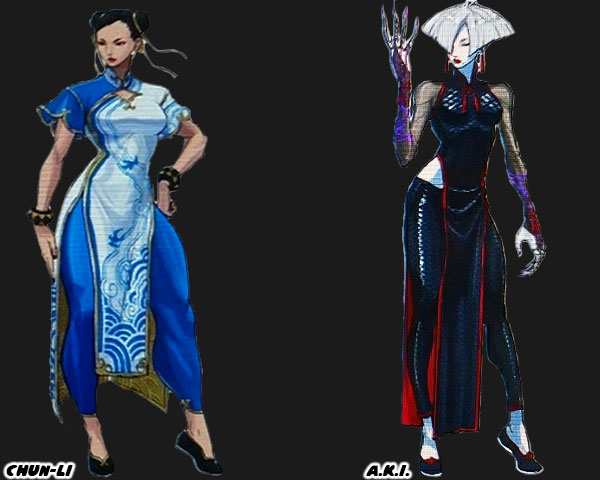
Chun-Li had returned with an entirely new look. I'm still going to write about her in the future. For now I want to mention that A.K.I seems to be her new balance. Both women are from China. Chun-Li represents a classical fighting tradition. Her kicks are unparalleled, as is her sense of duty to the police. A.K.I. looks like a villain right out of a comic book, or possibly action movie. Her porcelain-white skin is eerie, making her appear almost supernatural. She wears flats like Chun-Li, but the similarities end there. Her costume is black, a sinister shade, and form fitting. She has pant leggings, and tulle-sleeves over her pale arms. She lacks the muscle definition of Chun-Li, but has claw-like jewelry. She's signaling that she is not a kicker, but a slasher. Just like Han, the villain from Bruce Lee's Enter the Dragon. I can't wait to learn more about A.K.I.
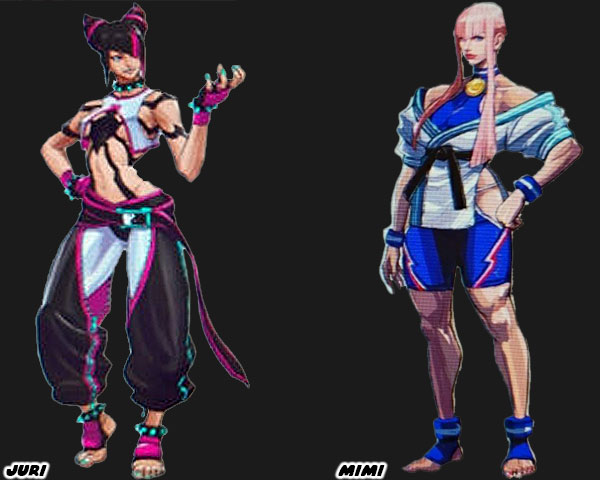
Juri is in the game as well, long considered the balance to Chun-Li, as she was cut from the same cloth. The diabolical Korean has a new match up to consider. Mimi hails from France, and seems to have legs longer than either Chun-Li, or Juri. Not only that there is minimal fabric restricting the range of motion on her kicks. Fans have long contemplated when the French kickboxing art of savate would be featured in the series. To be fair Remy in Street Fighter 3: 3rd Strike was a practitioner of savate. His ability to throw "sonic boom" fireballs, and use a flash kick similar to Guile sort of distracted from that.  Hopefully Mimi brings entirely new kick mechanics to the franchise. 
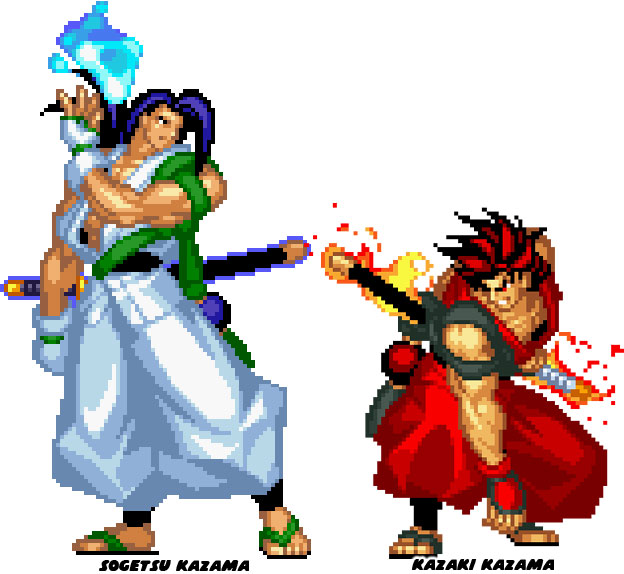
I want everyone reading this blog to study the symmetry, and balance between other characters featured in Capcom fighters like Rival Schools, and Vampire / Darkstalkers. I want you to look at SNK, and all the other game studios that made good use of balance. There was a method to their success. If only the designers working on SF IV, and V had taken the same consideration at the ways in which characters used to compliment each other, through the years, and through different games. Then they would have shaped their cast accordingly. That's what I think anyhow. I would like to hear your thoughts on the symmetry, and balance of character designs. Post your takes in the comments section. If you would like to sponsor me please visit my Patreon page and consider donating each month, even as little as $1 would help make better blogs and even podcasts!

follow the Street Writer on Patreon!

Wednesday, September 2, 2015

How fight culture became fighting game history, part 28

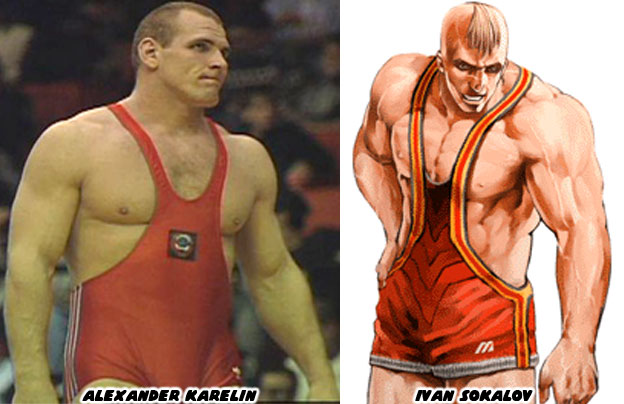
Buriki One was released by SNK in 1999. The game tried to capture the spirit of the early MMA competitions. To help ground the game in reality none of the characters could throw fireball-like projectiles. It also featured character designs that were inspired by actual fighters. Royce Gracie had influenced the development of Jacques Ducalis and Kazushi Sakuraba had influenced Tendo Gai. Those weren't the only high-profile athletes whose fingerprints were in the game. Multi Olympic and World Gold Medalist Alexander Karelin influenced the inclusion of Ivan Sokalov. At his peak Alexander was considered the most dangerous man on the planet. More than a decade had gone without a defeat in international competition, and not only that but during that time an opponent could not manage to score a point off of him. He had a list of incredible statistics that would make him a shoe-in for the pantheon of wrestling Gods. Possibly his most outstanding accomplishment was that he would routinely pick opponents off of the mat and flip them upside down in the air. These were men weighing almost 300 lbs and most of that solid muscle, they would kick, squirm and flail and still they would be tossed like rag dolls. it was something not seen before or since Karelin. Yet since he was not a striker then most people did not know about his legacy or his contribution to the fighting arts.


Rival studio Capcom had actually incorporated an MMA fighter years before Gai. Instead of basing a character on real world fighters Capcom invented their own legend. This was one thing that Capcom did better than any other studio. They took cues from various fighting arts and real legends and adapted them into new and refreshing designs. In 1997 they introduced the world to the star of Street Fighter III. The first of the "New Generation" fighters was named Alex.

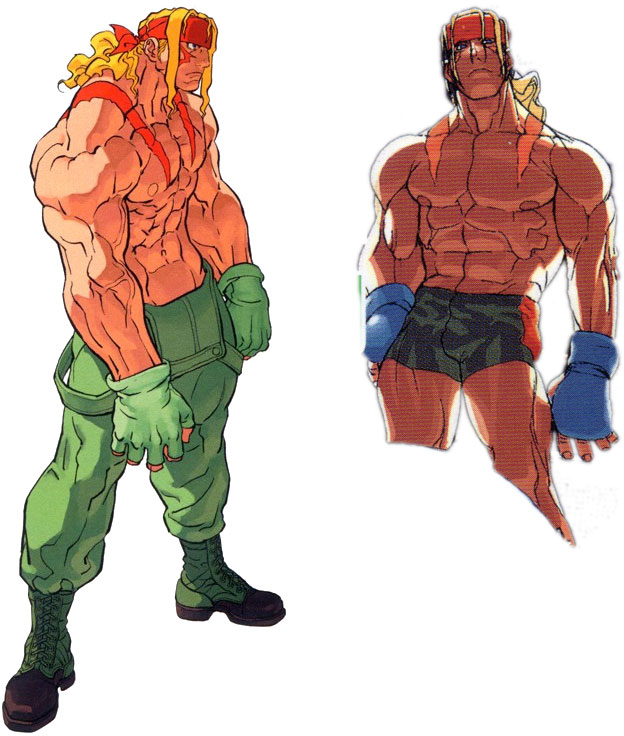
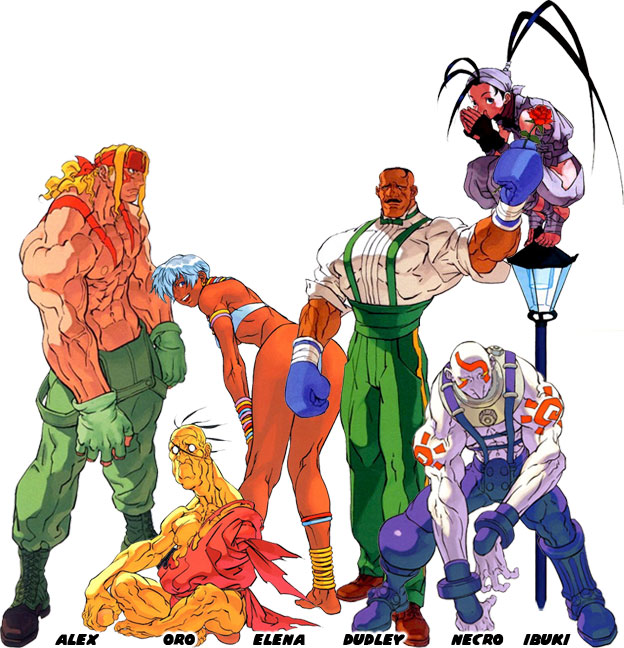
In keeping with tradition the studio had to tell a story through the design of the character. They made Alex tall and incredibly muscular. His costume had to show off enough skin to highlight his massive frame, as well as two massive scars that ran under his eyes and down his shoulders. His clothing consisted of fingerless gloves, a pair of green overalls and green combat boots. Street Fighter characters had typically been assigned a primary color to help them stand out in a lineup. Chun-Li wore blue, Ken wore red and Ryu wore white for example. A large red bandanna kept Alex's long hair out of his face. Designer Kinu Nishimura had considered placing him in the more traditional MMA uniform. However it was not believable that a half naked person wearing only shorts and sparring gloves would have been able to wander from town to town without drawing the attention of local authorities.


Alex was in essence a new fighter that was following in the traditions of Ryu. The red bandana was partially an homage to Ryu as well as his mentor Tom. Instead of traveling from place to place fighting the masters of the martial arts he was learning from them. Alex wanted to be the best fighter the world had ever known so that he could get revenge on a powerful Illuminati leader named Gill.
The fighting style given to Alex was unique for SF characters yet also eerily familiar. Capcom wanted to make it very obvious who his fighting influences had been. Unlike Ken and Ryu who shared a similar form of karate or any of the Kung-Fu fighters, Alex had strikes and special attacks that crossed the spectrum of schools. The attacks were meant to remind players of older characters.


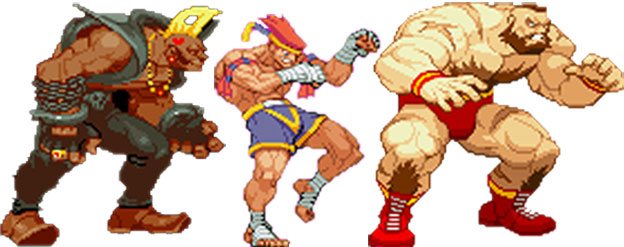
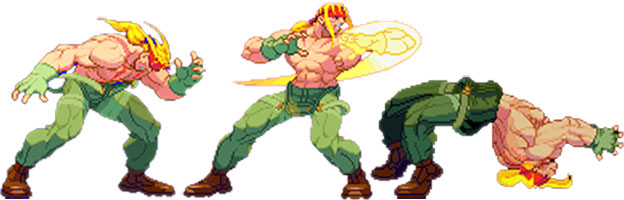
Long time fans of the series could pick out the moves that Alex had learned and who he had learned them from. He had the scrappy street brawling style of Birdie from the original Street Fighter and Street Fighter Alpha. From Birdie he also picked up a dangerous headbutt strike. Alex had a flurry of vicious elbow strikes that could only come from a master of muay thai. However he did not have the knees or kicks of Sagat so the flashy elbows were undoubtedly from Adon, the understudy. Adon was also from the original Street Fighter and Street Fighter Alpha. The grappling moves, throws and rolling German suplex attacks could have only come from the Russian Zangief.

Capcom managed to create a character that was textbook MMA, as in he had bits and pieces of very effective systems, and combined them into his own form. By not making him look like any fighter living or dead they would not date themselves to a particular era. Overalls and combat boots could be found in any time of the modern world yet could have also worked a century ago. Some of the fighters featured in Buriki One were based on real people and thus marked a particular era. By 2013 most of the original fighters from Pride and K1 had retired from competition and some of the promotions that hosted early MMA tournaments had closed as well.


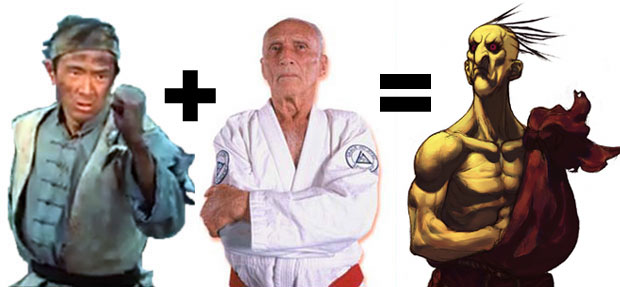
To be fair Capcom had also inserted a character that looked eerily similar to a certain BJJ master. The character of Oro was an ancient fighter that was looking for a worthy understudy. He was so powerful that he would only use one arm in combat. That was all he needed too! He could choke out opponents and even throw them effortlessly with his single arm. Oro had been influenced in part by the One Armed Boxer, a character created by Jimmy Wang Yu, but his physical appearance was very much based on Helio Gracie. That was if Helio were 140-years-old and had lived in a cave for the past half century. The arm tucked into his gi was also a nod to the toughness of Helio and his refusal to ever tap out.


Capcom had actually featured a different MMA fighter earlier. A year before Street Fighter III was released the character Blair Dame appeared in Street Fighter EX. The game was rendered in 3D rather than 2D as Street Fighter had traditionally been done. Blair had a number of strikes, takedowns and bone-breaking locks that she could use in rapid succession. Yet despite this few people acknowledged the contribution of the EX designs even though they were done by current and former Capcom employees.


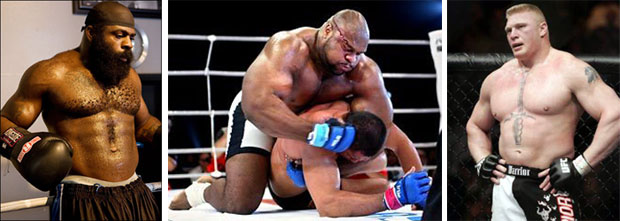
Additionally ARIKA held the rights to the EX characters so most did not recognize the first lady of MMA in a Street Fighter game. A decade after Street Fighter III was released Capcom returned for a sequel. One of the bruisers they introduced in Street Fighter IV was modeled after the God of heavyweight MMA fighters.

Unfortunately audiences in the west had made up their minds as to the authenticity of wrestling and wrestlers. To them only boxing or karate were real fighting arts and any wrestler trying to convince the public otherwise was looking for a big payday. This perception only grew through the 80's and 90's as gimmick gave way to attitude and wrestling shows began to be scripted by Hollywood writers. This shift began to polarize the audience and those that grew up on a steady diet of wrestling were looking for something more genuine. By this time Japan was going through a mixed martial arts renaissance.


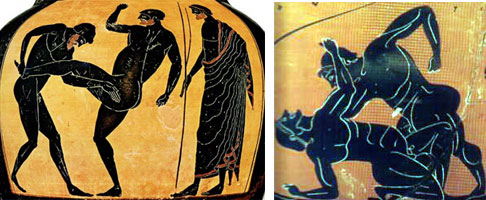
The MMA concept has actually been around for thousands of years in one format or another. Not content with being one of the first cultures to establish both wrestling and boxing the Greeks also developed pankration which was a hybrid of the two. It was the closest thing to no-holds-barred fighting. The modern world would rediscover this type of combat and package it with all the spectacle of pro wrestling, with pyrotechnics, ring girls and hyped match-ups. The K-1 Grand Prix and Pride Tournaments were becoming very popular.

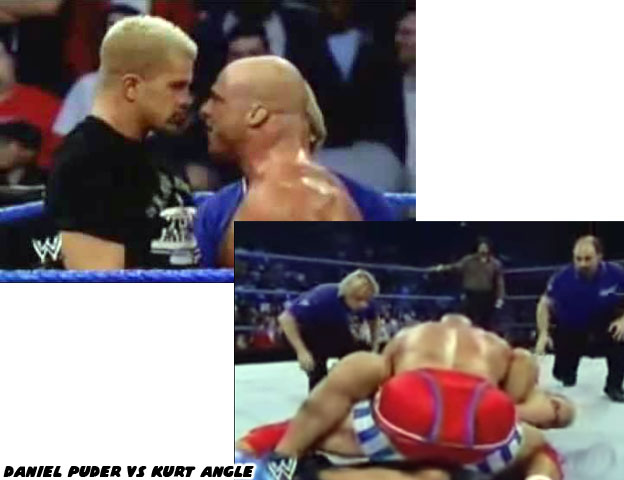
The US was slow on adopting the format as the UFC and King of the Cage tournaments followed at a slower pace. Young grapplers, eager to show their skills and become television superstars were more than willing to try out for reality shows like WWE's "Tough Enough." One of the challenges had hopefuls taking on Olympic gold medalist and WWE superstar Kurt Angle in a wrestling match. To ensure that Angle looked unbeatable the challengers were forced to do wind sprints and other exercises for an hour before accepting Angle's test. The organizers assumed that the activity would tire them out and they wouldn't be able to put up a decent fight. The opposite turned out to be true.


Daniel Puder was trained in various martial arts and had already competed in UFC matches before auditioning for Tough Enough. He was eager to fight Angle and give the audience a taste of some real fighting. In the video you can clearly hear the fans cheering on Puder with chants of "UFC." Angle did not dominate the match as management had hoped and was angered at being shown-up on national television. A rift between the entertainment product, the audience and the wrestlers had grown tremendously on that night. Rather than embrace the MMA community and audience WWE instead went out of their way to downplay and humiliate Puder for his efforts. Fans of the sport argued that WWE management had no idea what the audience was looking for and should have capitalized on the rivalry between Angle and Puder, between wrestling and MMA.

Angle was furious for several reasons. Had the hold Puder put on Angle lasted a few more seconds he would have separated Angle's arm from his shoulder. Severely injuring the star wrestler of a company you are trying to get a contract with is not only bad for business but it also made Puder look selfish and reckless with his skills. This was also a severe blow to Angle's ego. Angle had won a gold medal competing in the 1996 Olympics in Atlanta, as he likes to remind people, "with a broken frickin' neck." So Angle had genuine wrestling skills and in a competition under greco-roman wrestling or freestyle wrestling he would have outclassed Puder. Unfortunately he was not well versed in the trappings of jujitsu and could not have foreseen that Puder would try to get him in a submission move. It was probably Angle's pride that took the biggest hit.


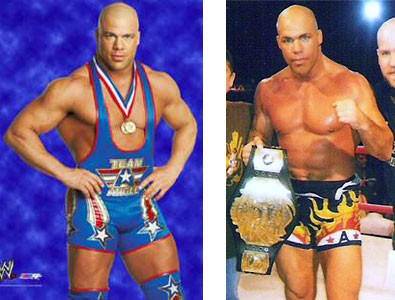
Over the next few years many pro wrestlers would begin adopting submission moves into their repertoire. The "Dead Man" character the Undertaker even adopted the gogoplata jujitsu submission move to make him more fearful. Even without formally saying anything about the contribution of mixed martial arts, the wrestlers were slowly taking on more of their cues in an attempt to broaden their appeal. None more so than Angle. After leaving the WWE Angle maintained his wrestler gimmick a while longer before slowly changing his look to more of a MMA fighter. He ditched the stars and stripes wrestling suit and boots in favor of shorts and taped up hands and feet. Without saying he had renounced wrestling it was easy to see that Angle had taken on the guise of MMA fighter to appeal more to the fans.


This part of the draw of modern mixed martial arts. The reason why it, above all of the combat sports, has been growing in popularity around the world. Many fighters hungry for fame and fortune began seeing the sport as a way to reach the top. To achieve what we call the "American Dream." Beating the snot out of people is appealing in and of itself for the majority of the fighters. However the challenge is more than being able to dish out the hits but to be able to take them as well. You would think that burly guys would reign supreme in the culture. Several strongmen have tried their hand at the sport. Bouncers, professional football players and yes indeed, champion wrestlers like Brock Lesnar have all stepped into the cage. The results have been varied. It seems that it takes more than brute force to be a successful MMA fighter.


The best, or at least longest-lived MMA fighters were more than gifted athletes or strongmen. They proved their dominance by learning to adapt and build on the legacy of several martial arts. The angles exploited by boxers, the punishing strikes of karate, the close work of muay thai, the grappling of judo and jujitsu and even the mat skills of wrestling. As the name implies, these fighters practice under a mixed bag of martial arts. Some of them were better on the mat and some were better strikers on their feet, very rarely would we find fighters that could do both well. It would make sense that the brutal art would find favor in the most recent fighting game sequels.

Even with the rise in popularity of MMA tournaments Pro wrestling would remain as popular as ever. The pioneers of the sport were some of the most colorful performers ever to step into the ring. In North America they reflected a culture steeped in centuries of tradition. The next blog will highlight these people. As always if you enjoyed this blog and would like to sponsor me please visit my Patreon page and consider donating each month, even as little as $1 would help make better blogs and even podcasts!
Tuesday, July 21, 2015

Representation Matters! Or, what happened to Birdie, part 8...


Past the mid '90s Capcom was a completely different studio. The rise of 3D and the 32-bit consoles had changed the gaming landscape. Successfully publishers could no longer ignore home systems market. The arcade market had yet to decline but the writing was on the wall. Studios had to branch out or they would fail. Capcom found success with new franchises such as Breath of Fire and Resident Evil. The fighting game genre was starting to peak and the studio wondered if they had one more great title left in them. Street Fighter III tried to use the elements that made Street Fighter II work. The project began by starting off by deciding who should return. Ken and Ryu were selected to be the only familiar faces and an entirely new cast would fill out the roster. I would argue that there was a lot of redundancy in the new faces. There were a pair of Chinese twins named Yun and Yang that played similarly to each other. They were meant to be a sort of younger Chinese equivalent to Ken and Ryu. Their red and white uniforms were reminiscent of Ken and Ryu's. There was also understudy of Ken called Sean that had similar moves to the stars of the game. I think the team was having too much fun with the names of the new faces. There was the obvious Yin and Yang jab but also the more subtle Sean-Ryu-Ken which was a play on the fireball attack or Shoryuken.


The three karate fighters in all and two kung-fu fighters ate up a lot of the space in the roster. The only duplicates in the original Street Fighter II lineup were pro wrestlers and those were dropped early on so that the team could fit in different styles. Sean was well received, especially as a black minority character. Unfortunately he lacked the impact of Sakura when she debuted. The rest of the cast was more unique. Alex was the star of the new game. He represented an entirely new style of fighting, MMA actually, and was somewhere in between a striking character and a grappler. He actually had elbow attacks similar to Adon, headbutt attacks similar to Birdie and suplex throws similar to Zangief. His size, speed and strength were unique in the genre. The rest of the cast took some chances with the character designs and forms represented. A heroic boxer had finally made it into the series. Moreover Dudley was a very positive black role model. He was not the only minority in the game. Elena was an African that had studied abroad, in Paris first and then Japan. Her dark skin was contrasted by bright blue eyes and white hair. Her costume left little to the imagination. She didn't have the same forethought into her design as Chun-Li. Instead Elena was very much like the characters in anime, pandering heavily to fan service, which was a trend that Akiman was trying to break when he finalized Chun-Li. This was odd considering that the lead artist on this project was Kinu Nishimura, she was heavily influenced by Akiman. Elena did have a unique form of fighting. She used capoeira and there had been some rotoscoping work by the animators to make sure that the moves looked as fluid as possible. Capcom designer Daigo Ikeno was a capoeira practitioner and helped with the reference work.

The game also introduced a female ninja practitioner named Ibuki. Her look was unique and not as grounded in history or anime making her a fantastic addition to the title. The game was not without its own Blanka and Dhalsim, or two extreme characters. An elderly one-armed Brazilian (he actually kept his other arm tucked inside his gi) was a master of a unique fighting art, it was a mix of psychic attacks and judo throws. He was very strong and fast despite his age. Oro was based on Helio Gracie, the co-founder of the Gracie school of Brazilian ju-jisu. The character design was unique because he was the oldest character in Street Fighter mythology, almost twice as old as Gen, the previous elderly character. He demonstrated that age did not make some fighters less dangerous. The other unique character was Necro. The young Russian teen had been experimented on by a mysterious group of religious and scientific zealots. The various experiments they did to him left his muscles, skin and bones like rubber and gave him the ability to shock opponents like an electric eel. Meaning he had some of the best qualities of both Dhalsim and Blanka,


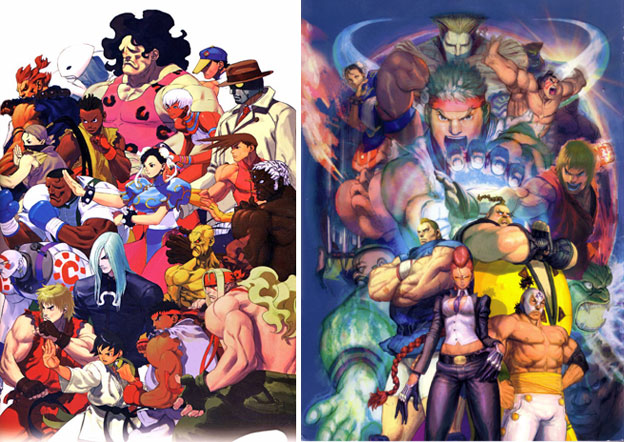
The game did well with audiences. The upgraded arcade engine allowed for larger sprites, a broader color palette and more frames of animation. Having three black characters, including a woman of color was a tremendous credit to Capcom. They were showing an active interest in inclusion and diversity with their lineup. Unfortunately for many audiences and arcade owners this was not the game they had expected. The lack of returning characters and redundant new characters gave the game an unfinished feel. Capcom had established a president in Street Fighter Zero that was tough to beat. They could bring back classic characters and make them work again and again. Upgrade kits were in the planning stages. Each one could introduce a new character if not classic character. Before long Chun-Li and the giant Hugo were put in the game. Hugo was actually meant to be in the first release but the team didn't finish his animations in time. There was no doubt that the time spent creating the redundant Yun, Yang as well as Sean may have been better spent on entirely new figures. Hugo was representing the Final Fight cast as Chun-Li was a return to the SF II lineup. Gouki / Akuma had returned as well but was a hidden character in the first few builds.

The new characters Urien, Q, 12, Remy and Makoto were a mixed bag. Urien was a pallet and head swap for the new final boss Gill. Meaning that another redundant character was also featured in the title. Q was a nonsensical masked secret agent that moved and fought like a robot. Remy had many of the attacks from Guile and Nash but with a look that was pulled from the rival King of Fighters series. 12 was a shape-shifter that was reminiscent of Necro but was also heavily anime-influenced. Of the final new characters added Makoto had the most traditional design elements applied to her. She was a karate fighter, yet her form was completely different than Ken, Ryu, Sean and Gouki. This meant that for audiences she also controlled differently and required some new strategies to use.


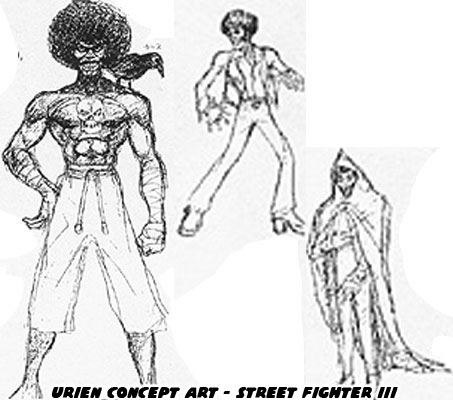
With the exception of Makoto, the last new faces added to SF III were lacking. They didn't have enough time to be evaluated or redesigned. In fact the original plan for Urien had once again fallen on old stereotypes. Had the studio not gone with the pallet swap of Gill who knows how audiences would have reacted to the afro-sporting, disco pants wearing antagonist. I don't think it would have been a warm reception. When development began on Street Fighter IV the approach for new fighters was completely the opposite of SF III. The studio started with Ken, Ryu and the original World Warriors from SF II as all returning members. Then they had a small group of new faces that they would introduce to fans. The characters were designed mainly to appeal to the West, where Capcom had hoped to gain a lion's share of the games profits. The sexy spy Crimson Viper was meant to appeal exclusively to US players. Despite the pandering most gamers in the US ignored the character. Of course the fatty Rufus was forced onto audiences because he was funny. The final two spots would be taken by a judo-ex-military fighter and a masked Mexican wrestler.


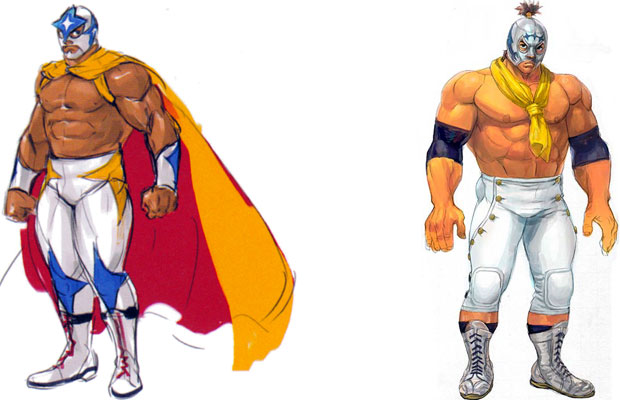
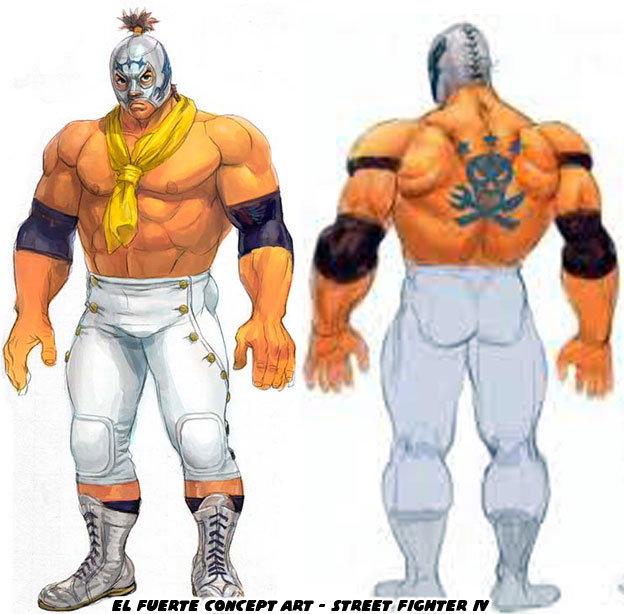
The lead designer on this game was Daigo Ikeno. He could not seem to find designs that worked as well with audiences as the SF II cast had. I think that the choices pushed by producer Yoshinori Ono had something to do with why the characters were lacking. A few blogs back I mentioned how there was a strong black character planned for the game that was eventually turned into Rufus. Something similar happened with El Fuerte the enmascarado, or masked luchador. In the early planning stages El Fuerte had a unique costume that was inspired by actual lucha libre livery. He had the mask, the tights and even a cape. Which was something that performers had worn to the ring since the earliest days of pro wrestling in Mexico, which would be over 80 years ago! In the earliest stages the design was every bit as good as something that Tetsuo Hara could have come up with for the Muscle Bomber series. In fact I would say that the original El Fuerte was a better design than El Stinger, the Mexican wrestler created by Hara. El Fuerte did not necessarily poach and designs from a masked wrestler living or dead. The star on his mask was even a nod to the masked wrestler that had been planned for SF II. But then something happened…


It was decided that El Fuerte was not unique enough. At least not unique enough to be ranked against the World Warriors. So his costume was redone, his mask was redone and even his purpose for fighting was redone. The team decided that it would be great if he was a masked wrestler that was obsessed with cooking. In this way they could name his attacks after food. The Habanero Dash, Tostada Press, Fajita Buster, Gordita Sobat, Calamari Slide Propeller Tortilla, Picadillo Jump, Quesadilla Bomb and Guacamole Leg Throw. The names were an insult to the fantastic and dangerous moves that Mexican pro wrestlers performed on a weekly basis. To add insult to injury, the mask, which is sacred to the performers was even stripped of its origin to reflect the silly obsession with cooking. There were forks coming out of lighting bolts in the early redesigns. The tights were turned to chef pants, at one point El Fuerte even had tattoos or a fork and knife on his back. The three stars that adorned his mask was meant to mimic the Three Star Michelin rating given to the top restaurants around the world. Each decision that the team made took away from the character, it did not add to him. It was as if the designers were bypassing the lessons from previous generations and were focused on the punchline.


It was up to the team to decide how the tone of the game was supposed to be. The new graphics engine allowed for some realistic 3D models. When the majority of the cast fought each strike looked like it had weight and power behind it, giving the game a serious tone. But then all of the models had silly expressions applied to them when certain characters performed super moves. It was a mix of cartoon and realism that was sending a mixed message to audiences. Either the game was a return to the classic challenging Street Fighter II, or it was more anime influenced like SF Zero and SF III. Being caught somewhere in between did little to improve the game itself. The only signal that was not missed was how minorities and their fighting arts were being presented. Mexican and later on Turkish wrestling was seen and shown as an absurd form of fighting not to mention that Americans were stupid, morbidly obese participants.

 As the reception to the new characters were met with a lack of interest the team went back in time and started putting in as many classic characters as they could with each update. The majority of characters from SF III and SF Zero had returned by the time Ultra Street Fighter IV. In the rush to return to fan favorites the designers missed a number of important details. The characters from Zero had not matured. Remember that in continuity Zero happened shortly after the events in the first game. Ryu, Ken and Chun-Li were still young adults and Cammy and Sakura were girls. In Street Fighter III Ryu, Ken and Chun-Li were adults. During this timeline Sakura and Cammy would have been adults as well. Instead Street Fighter IV was pitched like the Zero series. It would tie together the events of SF II and SF III. Only this time Daigo Ikeno would not go out of his way to redesign the cast so that they were all unique to this continuity. Instead the team picked and chose the various incarnations that would appear in the game even if their designs were from two or three different games.


It had been almost 10 years since the last Street Fighter III and the first Street Fighter IV had appeared. In that time audiences never forgot what the series meant to them while growing up. Seeing a diversity of male and female characters in SF IV was fantastic. It was also nice to see different nations represented, mainly because they were the original World Warriors. Audiences from around the world would be able to identify with a character or two, including the new ones. It would go a long way in making kids feel validated, especially when they were being underrepresented on television and movies. I only wish that Capcom had done a better job at presenting minorities. They were never as disrespected in any previous version, why did the team start now? Street Fighter IV had missed the boat with new faces and after seeing what was done to Birdie in Street Fighter V I shudder to think what else the studio had planned for non-Asian and non-White British characters. As always if you enjoyed this blog and would like to sponsor me please visit my Patreon page and consider donating each month, even as little as $1 would help make better blogs and even podcasts!