Showing posts with label adon. Show all posts

Tuesday, June 12, 2018

30 years of Street Fighter, 30 Days of Characters; #19


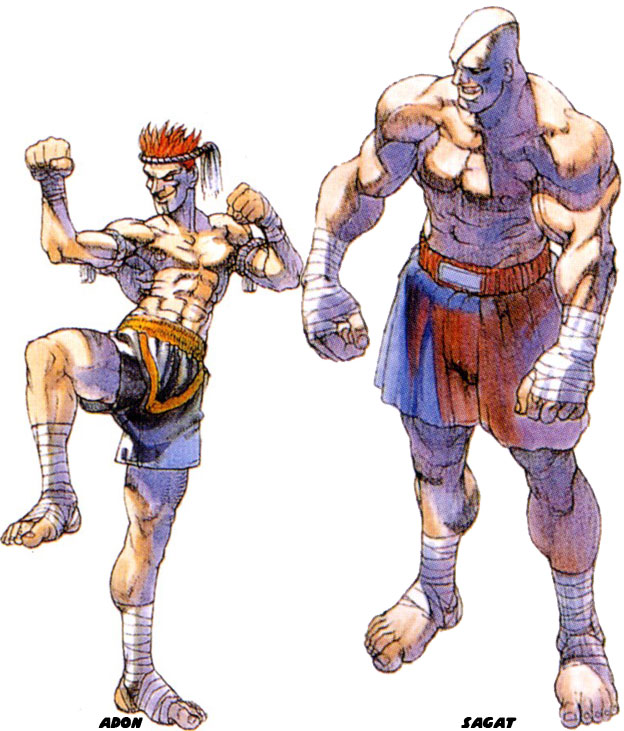
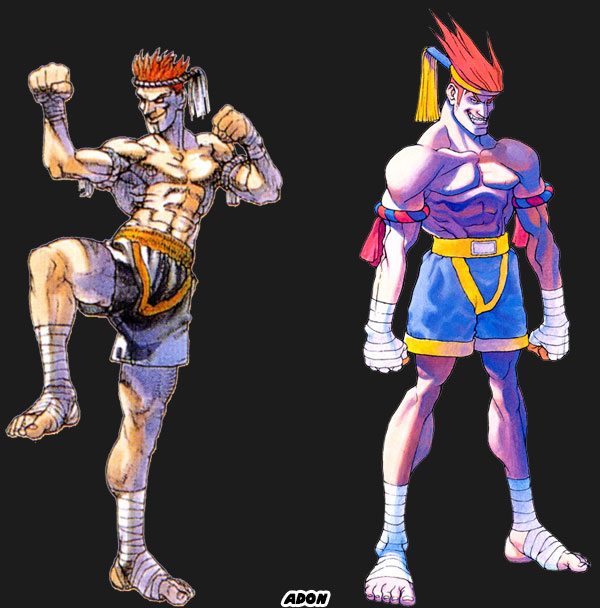
The greatest heroes in Street Fighter are only be as good as the villains allow them to be. If we're celebrating the most influential fighting game series of the past 30 years we have to celebrate the bad guys as well. Adon is a fantastic character and somebody that I just love to hate. In the story of Street Fighter Adon is a master of muay thai. He is the understudy of Sagat and possibly the best pure muay thai specialist in the universe. Adon has an arsenal of kicks, elbows and knee attacks known as the Jaguar strikes. His mentor Sagat named his most powerful moves after the tiger. When Ryu defeated Sagat to become the strongest fighter in the world it signaled to Adon that his time had come. The tiger had lost his teeth and the era of the jaguar was just beginning. 


Adon is lean and muscular. His moves are flashy and his personality absolutely shines in every animation. When he beats an opponent he drops to his knees in celebration of how awesome he is. Adon is a very arrogant character. He has a wide smile and a face that's just begging to be punched. I mean, just look at it! Of course just because he's arrogant doesn't mean he's not dangerous. Do not confuse Adon for a joke character like Dan Hibiki. Dan thinks he is a greater fighter than he actually is. This mentality usually means he gets beat up in the canon of the universe. Adon doesn't just boast about his ability in the game and various comics and manga, he backs it up with lethal precision. In all of Thailand he is second only to Sagat in the rankings. As far as muay thai and the Street Fighter universe is concerned he is the second most dangerous fighter in the world. Adon is way above any other muay thai fighter, or most fighters in general, he is at the elite level. His power and speed are so amazing that he can take on fighters two or three times bigger than he is.


Adon doesn't have the size or strength of his mentor but what he lacks in raw power he makes up for in precision. Adon is quick on his feet and can trade kicks faster than most people can punch. Also as the young master Adon has room to grow and become more dangerous with age and experience. The idea of the young surpassing the old has been an important part of the Street Fighter mythos. Adon reminds us of that lesson. He also serves to remind us that not every character in the universe is humble or good. Some people are happy causing pain and suffering to their opponents. Adon is this type of villain. In the next entry we will look at a character that actually played both sides of the fence. As always if you enjoyed this blog and would like to sponsor me please visit my Patreon page and consider donating each month, even as little as $1 would help make better blogs and even podcasts!
 follow the Street Writer on Patreon!

Wednesday, September 2, 2015

How fight culture became fighting game history, part 28

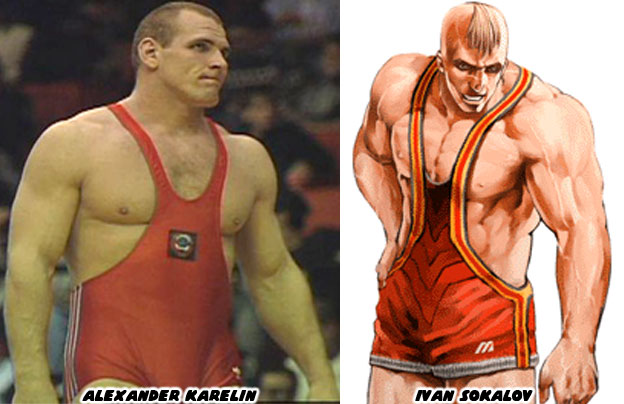
Buriki One was released by SNK in 1999. The game tried to capture the spirit of the early MMA competitions. To help ground the game in reality none of the characters could throw fireball-like projectiles. It also featured character designs that were inspired by actual fighters. Royce Gracie had influenced the development of Jacques Ducalis and Kazushi Sakuraba had influenced Tendo Gai. Those weren't the only high-profile athletes whose fingerprints were in the game. Multi Olympic and World Gold Medalist Alexander Karelin influenced the inclusion of Ivan Sokalov. At his peak Alexander was considered the most dangerous man on the planet. More than a decade had gone without a defeat in international competition, and not only that but during that time an opponent could not manage to score a point off of him. He had a list of incredible statistics that would make him a shoe-in for the pantheon of wrestling Gods. Possibly his most outstanding accomplishment was that he would routinely pick opponents off of the mat and flip them upside down in the air. These were men weighing almost 300 lbs and most of that solid muscle, they would kick, squirm and flail and still they would be tossed like rag dolls. it was something not seen before or since Karelin. Yet since he was not a striker then most people did not know about his legacy or his contribution to the fighting arts.

Rival studio Capcom had actually incorporated an MMA fighter years before Gai. Instead of basing a character on real world fighters Capcom invented their own legend. This was one thing that Capcom did better than any other studio. They took cues from various fighting arts and real legends and adapted them into new and refreshing designs. In 1997 they introduced the world to the star of Street Fighter III. The first of the "New Generation" fighters was named Alex.

In keeping with tradition the studio had to tell a story through the design of the character. They made Alex tall and incredibly muscular. His costume had to show off enough skin to highlight his massive frame, as well as two massive scars that ran under his eyes and down his shoulders. His clothing consisted of fingerless gloves, a pair of green overalls and green combat boots. Street Fighter characters had typically been assigned a primary color to help them stand out in a lineup. Chun-Li wore blue, Ken wore red and Ryu wore white for example. A large red bandanna kept Alex's long hair out of his face. Designer Kinu Nishimura had considered placing him in the more traditional MMA uniform. However it was not believable that a half naked person wearing only shorts and sparring gloves would have been able to wander from town to town without drawing the attention of local authorities.
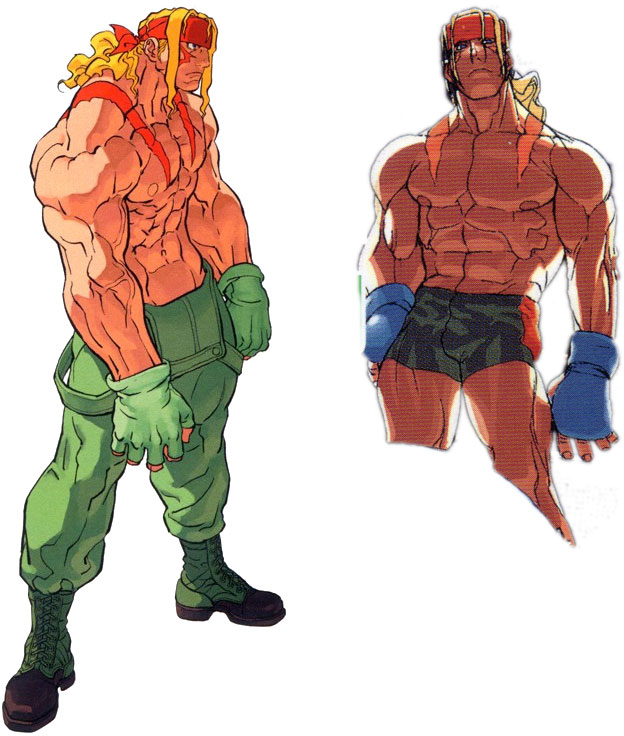

Alex was in essence a new fighter that was following in the traditions of Ryu. The red bandana was partially an homage to Ryu as well as his mentor Tom. Instead of traveling from place to place fighting the masters of the martial arts he was learning from them. Alex wanted to be the best fighter the world had ever known so that he could get revenge on a powerful Illuminati leader named Gill.
The fighting style given to Alex was unique for SF characters yet also eerily familiar. Capcom wanted to make it very obvious who his fighting influences had been. Unlike Ken and Ryu who shared a similar form of karate or any of the Kung-Fu fighters, Alex had strikes and special attacks that crossed the spectrum of schools. The attacks were meant to remind players of older characters.
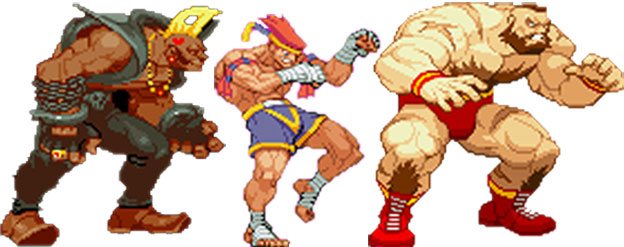

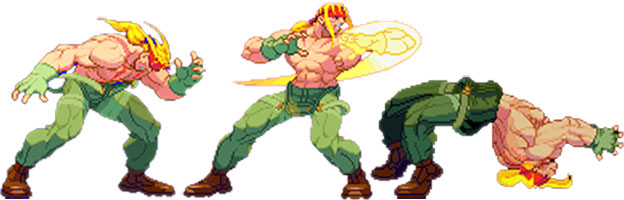
Long time fans of the series could pick out the moves that Alex had learned and who he had learned them from. He had the scrappy street brawling style of Birdie from the original Street Fighter and Street Fighter Alpha. From Birdie he also picked up a dangerous headbutt strike. Alex had a flurry of vicious elbow strikes that could only come from a master of muay thai. However he did not have the knees or kicks of Sagat so the flashy elbows were undoubtedly from Adon, the understudy. Adon was also from the original Street Fighter and Street Fighter Alpha. The grappling moves, throws and rolling German suplex attacks could have only come from the Russian Zangief.

Capcom managed to create a character that was textbook MMA, as in he had bits and pieces of very effective systems, and combined them into his own form. By not making him look like any fighter living or dead they would not date themselves to a particular era. Overalls and combat boots could be found in any time of the modern world yet could have also worked a century ago. Some of the fighters featured in Buriki One were based on real people and thus marked a particular era. By 2013 most of the original fighters from Pride and K1 had retired from competition and some of the promotions that hosted early MMA tournaments had closed as well.

To be fair Capcom had also inserted a character that looked eerily similar to a certain BJJ master. The character of Oro was an ancient fighter that was looking for a worthy understudy. He was so powerful that he would only use one arm in combat. That was all he needed too! He could choke out opponents and even throw them effortlessly with his single arm. Oro had been influenced in part by the One Armed Boxer, a character created by Jimmy Wang Yu, but his physical appearance was very much based on Helio Gracie. That was if Helio were 140-years-old and had lived in a cave for the past half century. The arm tucked into his gi was also a nod to the toughness of Helio and his refusal to ever tap out.
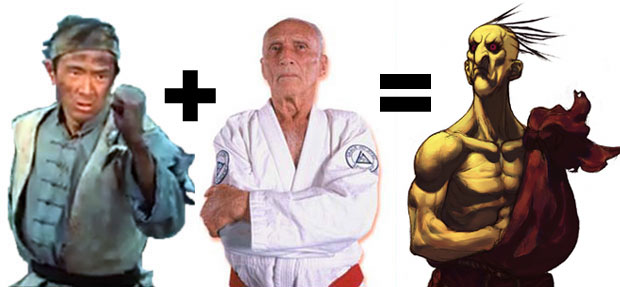

Capcom had actually featured a different MMA fighter earlier. A year before Street Fighter III was released the character Blair Dame appeared in Street Fighter EX. The game was rendered in 3D rather than 2D as Street Fighter had traditionally been done. Blair had a number of strikes, takedowns and bone-breaking locks that she could use in rapid succession. Yet despite this few people acknowledged the contribution of the EX designs even though they were done by current and former Capcom employees.


Additionally ARIKA held the rights to the EX characters so most did not recognize the first lady of MMA in a Street Fighter game. A decade after Street Fighter III was released Capcom returned for a sequel. One of the bruisers they introduced in Street Fighter IV was modeled after the God of heavyweight MMA fighters.

Unfortunately audiences in the west had made up their minds as to the authenticity of wrestling and wrestlers. To them only boxing or karate were real fighting arts and any wrestler trying to convince the public otherwise was looking for a big payday. This perception only grew through the 80's and 90's as gimmick gave way to attitude and wrestling shows began to be scripted by Hollywood writers. This shift began to polarize the audience and those that grew up on a steady diet of wrestling were looking for something more genuine. By this time Japan was going through a mixed martial arts renaissance.


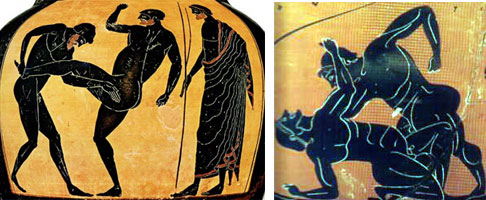
The MMA concept has actually been around for thousands of years in one format or another. Not content with being one of the first cultures to establish both wrestling and boxing the Greeks also developed pankration which was a hybrid of the two. It was the closest thing to no-holds-barred fighting. The modern world would rediscover this type of combat and package it with all the spectacle of pro wrestling, with pyrotechnics, ring girls and hyped match-ups. The K-1 Grand Prix and Pride Tournaments were becoming very popular.

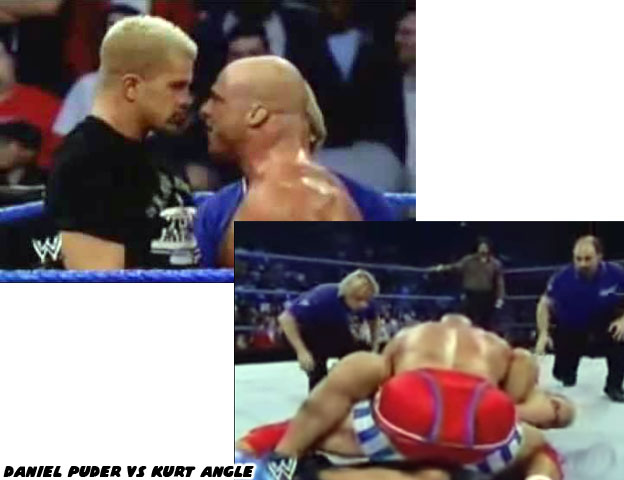
The US was slow on adopting the format as the UFC and King of the Cage tournaments followed at a slower pace. Young grapplers, eager to show their skills and become television superstars were more than willing to try out for reality shows like WWE's "Tough Enough." One of the challenges had hopefuls taking on Olympic gold medalist and WWE superstar Kurt Angle in a wrestling match. To ensure that Angle looked unbeatable the challengers were forced to do wind sprints and other exercises for an hour before accepting Angle's test. The organizers assumed that the activity would tire them out and they wouldn't be able to put up a decent fight. The opposite turned out to be true.


Daniel Puder was trained in various martial arts and had already competed in UFC matches before auditioning for Tough Enough. He was eager to fight Angle and give the audience a taste of some real fighting. In the video you can clearly hear the fans cheering on Puder with chants of "UFC." Angle did not dominate the match as management had hoped and was angered at being shown-up on national television. A rift between the entertainment product, the audience and the wrestlers had grown tremendously on that night. Rather than embrace the MMA community and audience WWE instead went out of their way to downplay and humiliate Puder for his efforts. Fans of the sport argued that WWE management had no idea what the audience was looking for and should have capitalized on the rivalry between Angle and Puder, between wrestling and MMA.

Angle was furious for several reasons. Had the hold Puder put on Angle lasted a few more seconds he would have separated Angle's arm from his shoulder. Severely injuring the star wrestler of a company you are trying to get a contract with is not only bad for business but it also made Puder look selfish and reckless with his skills. This was also a severe blow to Angle's ego. Angle had won a gold medal competing in the 1996 Olympics in Atlanta, as he likes to remind people, "with a broken frickin' neck." So Angle had genuine wrestling skills and in a competition under greco-roman wrestling or freestyle wrestling he would have outclassed Puder. Unfortunately he was not well versed in the trappings of jujitsu and could not have foreseen that Puder would try to get him in a submission move. It was probably Angle's pride that took the biggest hit.


Over the next few years many pro wrestlers would begin adopting submission moves into their repertoire. The "Dead Man" character the Undertaker even adopted the gogoplata jujitsu submission move to make him more fearful. Even without formally saying anything about the contribution of mixed martial arts, the wrestlers were slowly taking on more of their cues in an attempt to broaden their appeal. None more so than Angle. After leaving the WWE Angle maintained his wrestler gimmick a while longer before slowly changing his look to more of a MMA fighter. He ditched the stars and stripes wrestling suit and boots in favor of shorts and taped up hands and feet. Without saying he had renounced wrestling it was easy to see that Angle had taken on the guise of MMA fighter to appeal more to the fans.
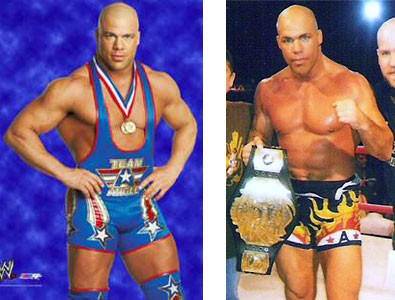

This part of the draw of modern mixed martial arts. The reason why it, above all of the combat sports, has been growing in popularity around the world. Many fighters hungry for fame and fortune began seeing the sport as a way to reach the top. To achieve what we call the "American Dream." Beating the snot out of people is appealing in and of itself for the majority of the fighters. However the challenge is more than being able to dish out the hits but to be able to take them as well. You would think that burly guys would reign supreme in the culture. Several strongmen have tried their hand at the sport. Bouncers, professional football players and yes indeed, champion wrestlers like Brock Lesnar have all stepped into the cage. The results have been varied. It seems that it takes more than brute force to be a successful MMA fighter.
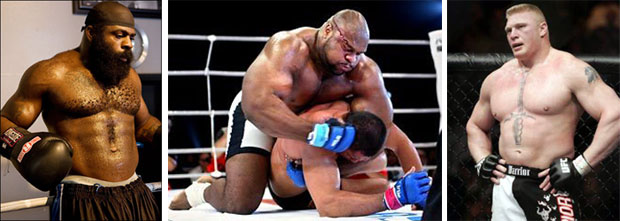

The best, or at least longest-lived MMA fighters were more than gifted athletes or strongmen. They proved their dominance by learning to adapt and build on the legacy of several martial arts. The angles exploited by boxers, the punishing strikes of karate, the close work of muay thai, the grappling of judo and jujitsu and even the mat skills of wrestling. As the name implies, these fighters practice under a mixed bag of martial arts. Some of them were better on the mat and some were better strikers on their feet, very rarely would we find fighters that could do both well. It would make sense that the brutal art would find favor in the most recent fighting game sequels.

Even with the rise in popularity of MMA tournaments Pro wrestling would remain as popular as ever. The pioneers of the sport were some of the most colorful performers ever to step into the ring. In North America they reflected a culture steeped in centuries of tradition. The next blog will highlight these people. As always if you enjoyed this blog and would like to sponsor me please visit my Patreon page and consider donating each month, even as little as $1 would help make better blogs and even podcasts!
Wednesday, July 29, 2015

How fight culture became fighting game history, part 13

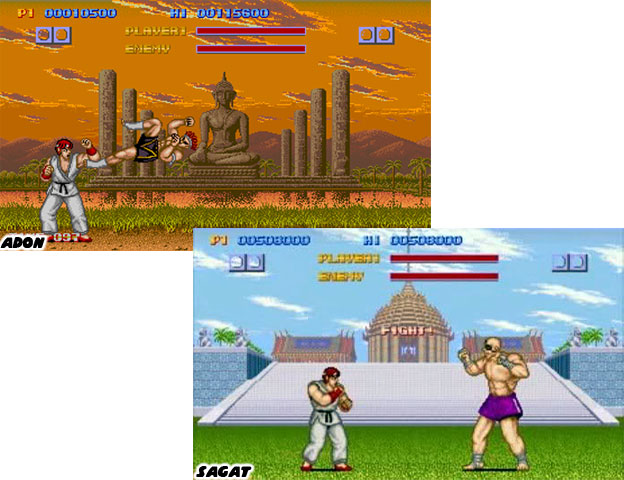
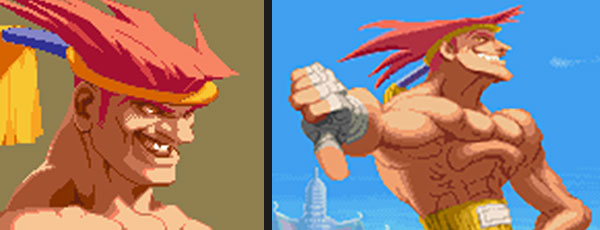
Capcom featured Muay Thai as the final style that gamers had to overcome in the original Street Fighter. Released in 1987 each stage told a story about the culture that Capcom was trying to recreate. The designers did not have the internet to rely on, perhaps they would watch some tapes or look at travel guides for reference material but they didn't have the luxury of digging too deep while creating the levels. Each stage was nonetheless quite memorable, especially for the final opponents in the game. The reflecting pool, sunset orange sky and seated Buddha were serene. They sharply contrasted the aggressive style that Muay Thai master Adon would become known for. A similar observation could be made of Sagat and his level. The beautiful temple backdrop beguiled a fighter that was feared by his peers. To impressionable gamers in Japan and the United States these were caricatures of Thailand that seemed true.


The designers at Capcom had done a wonderful job at setting a standard that all future fighting games would be measured against. Although both characters practiced Muay Thai both Adon and Sagat had very distinct variations on the form. Adon used leaping heel strikes against players while Sagat focused on quick punches and rising knee strikes. Like the level backgrounds themselves these attacks were caricatures of reality. From a character design standpoint both fighters were very unique personalities. Adon was not a humble understudy, he had grown tired of living in the shadows of his mentor. He hoped to defeat Sagat and assume his status as the worlds greatest fighter. Sagat on the other hand was a cold, calculating and brutal master. He had taken the life of an opponent in combat and his reputation had colored his presence in each and every game within the series. These details would become important to the evolution of the franchise as well as the genre.

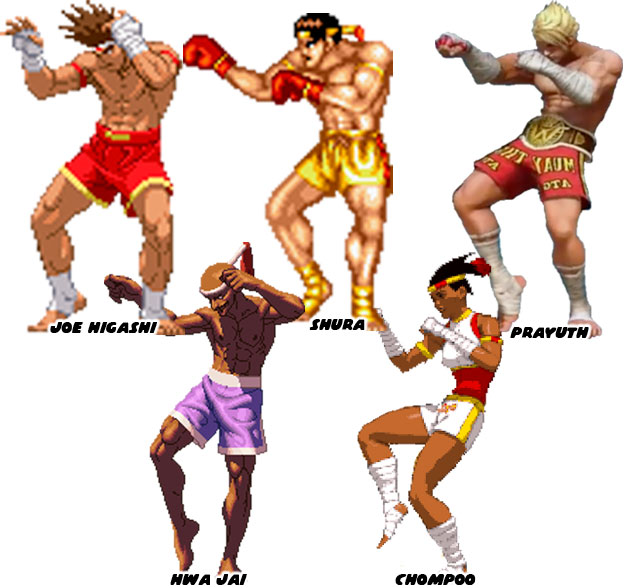
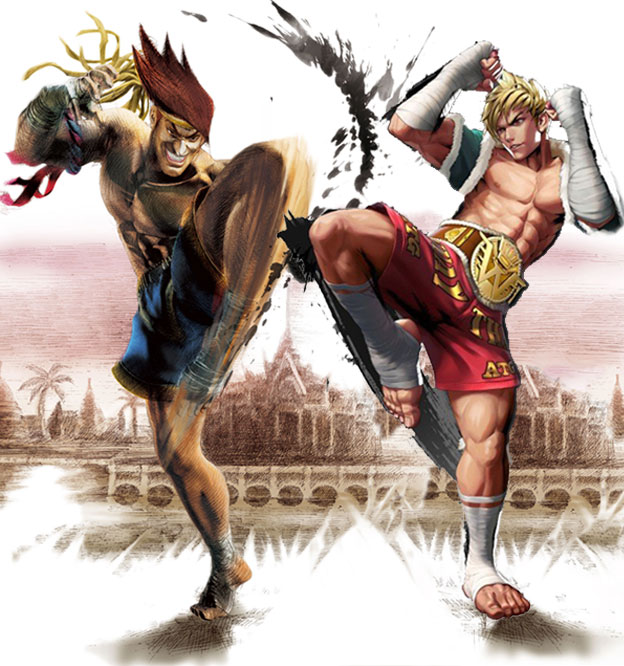
In 1991 Sagat would return in Street Fighter II' as a sub-boss. Other developers took notice of the genre and created their own version of a fighting game. Takashi Nishiyama was a Producer at SNK, he was previously a planner on the original Street Fighter. He wanted to create his own fighting game for the Neo Geo arcade platform. Instead of two main characters he helped create three main characters for players to choose from, one of which was a Muay Thai fighter named Joe Higashi. The game also featured a hot-tempered Muay Thai opponent named Hwa Jai. Fatal Fury was released at the end of 1991, the same year that Street Fighter II came out. Higashi and Jai would turn up again in various SNK games but they would not be the only Muay Thai masters in the universe. Other game studios would also try to incorporate the fighting art into their own releases. Also for the Neo Geo platform but developed by ADK there was a fighter named Shura. He was featured in World Heroes circa 1992, it was one of the first blatant clones of Street Fighter. More than two decades later the first notable female Muay Thai master would make her debut. Chompoo appeared in Capoeira Fighter 3 circa 2004. The character had a host of traditional moves, elbow and knee strikes, that were made fantastic when combined with leaping and tumbling attacks. The most recent Muay Thai master in the 2D, or rather 2.5D genre was inspired by several of the SNK icons, The blonde-haired Prayuth made his debut in 2013. The Chinese developers at Tencent had borrowed liberally from the icons created by both SNK and Capcom in their game the King of Combat.


Something that the most successful studios learned to do over the '90s was to add depth to their cast. Audiences might think that a fighting game character did not need a backstory, a history or even origin. Yet Capcom, SNK, Namco and Sega each learned that a memorable fighting game franchise needed more than a colorful cast or some fancy graphics. The game needed to be balanced, the control dialed in, music catchy and sound just right. The fighters needed to be memorable, they had to be more substance than flash. In order to achieve that the studios had to put as much planning into their design as they would for a AAA adventure star. The characters would not simply be just fighters, they had day jobs and families to go to. Some were soldiers, some were gang members and some were even aristocrats. These histories would not necessarily be spelled out for gamers though. The stages, the rivalries, the dialogue and occasional cut scene would reveal the motivation behind the best characters. Some of these histories would be unveiled over the course of several games, spanning 10 or even 20 years. The best fighters would become icons to the gaming community.


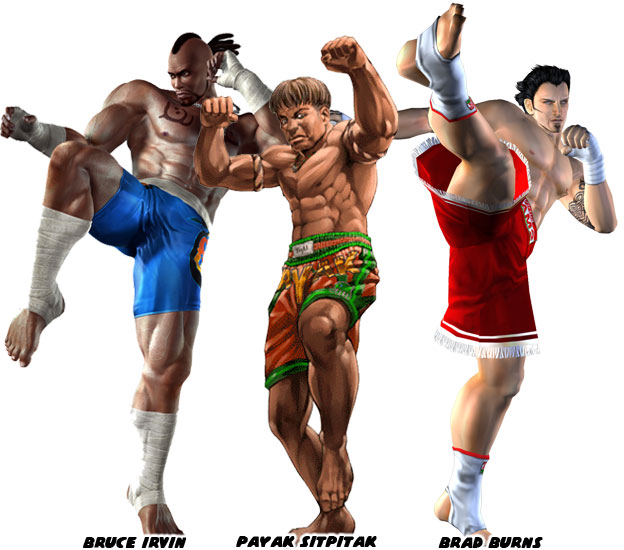
Something that contributed to the evolution of the genre was the shift from 2D to 3D graphics. As the various fighting arts were adapted to 3D they had to undergo some changes. The strikes of the artform were often simplified and some lost their presence. One technique that worked very well in 3D was Muay Thai. Namco introduced the Muay Thai hitman Bruce Irvin to audiences in 1995. The character featured in the Tekken series would gain a following. A few years later, in 1999 to be precise, SNK introduced their first 3D Muay Thai master. The character did not have the youthful brashness of Adon or rather Joe Higashi but he was still a part of the Fatal Fury universe. The middle-aged Payak Sitpitak was a more level-headed person, a fighter and family man. In canon he was talked into entering the Buriki One tournament by Higashi. Payak lacked a flashy style, to be fair the entire cast in the game was actually grounded in more realistic attacks than the 2D fighters. Payak was still a dangerous man who let his hard strikes do all the talking. The Neo Geo platform was not great at rendering 3D graphics, especially when compared to Namco's proprietary System 11 arcade board. These were the steps that the studios needed to make in order to reinvigorate the genre. Unfortunately the teams working at Capcom on the Street Fighter series were rehashing 2D sprites and falling behind the 3D development curve. Even Sega, a long-time rival to Namco would eventually add a Muay Thai fighter to their franchise. The ever-cocky Brad Burns made his debut in 2003 with Virtua Fighter 4.


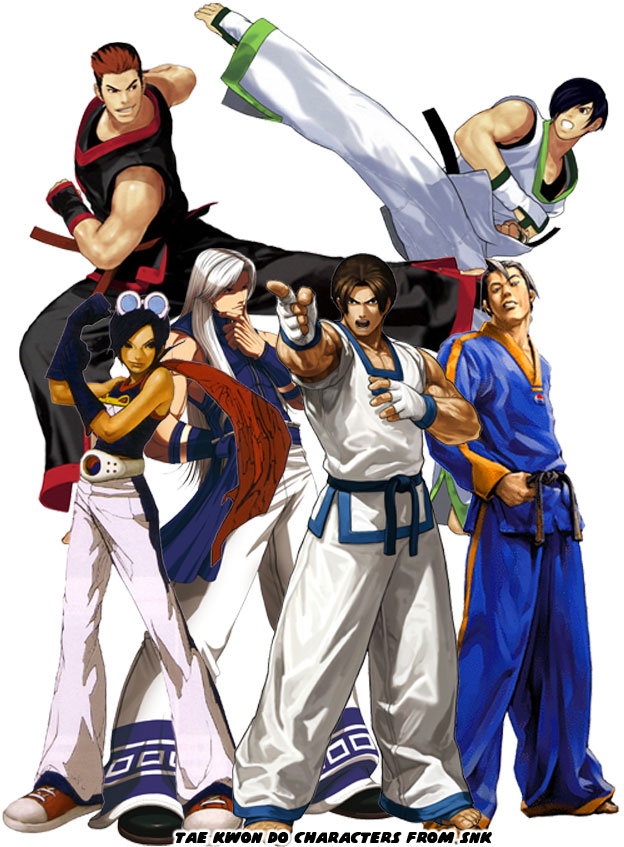
Muay Thai was considered one of the "exotic" martial arts in early fighting games. Its evolution was unique given the region that it came from and how native customs mixed with Hindu and Buddhist cultures to shape the art. Something similar happened in the far North where different cultures adapted the fighting arts of China and Japan into something unique. The Korean system of Taekwondo (TKD) was seen as a modern striking form, it did not come into its own until the late '40s. At the same time it enjoyed an appeal almost as exotic as Muay Thai. SNK was a perennial rival to Capcom, especially in the fighting game genre. The planners and some staff working on the Fatal Fury, Art of Fighting and King of Fighters games were ex-Capcom employees. They wanted to diversify the fighting styles featured in their games and provide a bigger library of characters than what was featured in the Street Fighter series. In order to do this they looked at other popular striking arts and no form came to mind more immediately than TKD.

The style of fighting was very calculated, it reflected the nation of origin. Korea was a culture that based its language on mathematics, the importance of science was not lost on the people. In Taekwondo kicks were the main attacks. Practitioners did not only learn all the types of kicks they could perform but which were the most effective at different ranges. The form was distilled from Okinawan Karate and Chinese Kung-Fu however there was a distinct fight science to the art. Students had to learn how to angle opponents, restrict their movement, find openings and isolate weak spots. Practitioners learned to be light on their feet and remain in a constant state of movement. This was not a fighting art developed from warfare so the strikes were optimized for speed and efficiency rather than lethality. It was especially important in point-based tournaments. From a gaming standpoint the sweeping kicks looked amazing when animated by studio artists. The lion's share of TKD fighters were featured in SNK games through most of the '90s. Kim Kaphwan started the tradition in 1992. He was a new star in Fatal Fury 2. Kim was notable not just for his amazing kicks but because he was the first to have children appear as fighters as well. His sons Dong Hwan and Jae Hoon debuted in 1999's Garou Mark of Wolves. Muay Thai and Karate looked unique depending on the practitioner, the same could be said of the TKD fighters. The Kim children were not simply clones of their father but instead had their own personalities and moves.


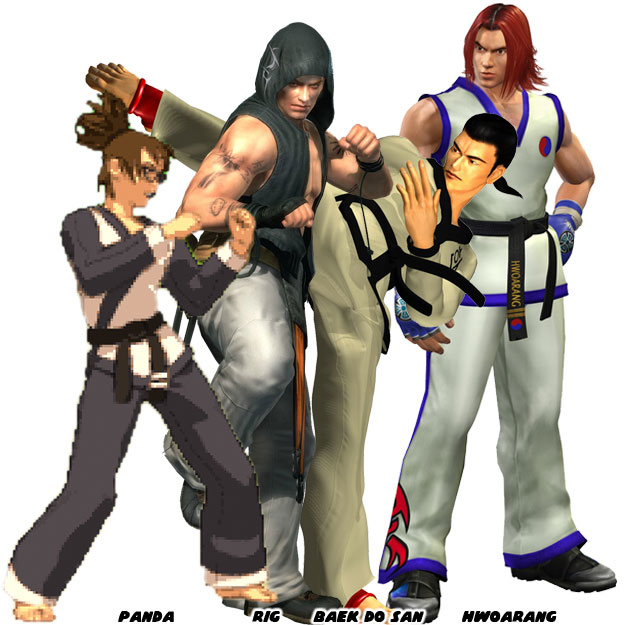
Enemies and allies of the Kim family were added to other SNK games. Seo Yong Song from Buriki One (whom also debuted in 1999), Jhun Hoon from King of Fighters '99 and May Lee from King of Fighters 2001 were all distinct practitioners and proud Koreans. The layers of storytelling that went into the rivalries and relationships helped add depth to the universe and made the characters stand out. Audiences enjoyed the diversity they were presented with. Taekwondo was one of the fighting arts that made the transition from real life to 2D seamlessly. When technology allowed the form to be presented in a 3D fighting games it was a perfect fit. Part of the reason that the moves looked so well in 3D was because they were not traditionally animated. Instead there were athletes and martial artists performing motion capture animations for the programmers to work from. Baek Doo San was the first in a TKD master in a major title. He appeared in Tekken 2 in 1995. Namco went the extra mile and had an actual Olympian perform the moves for Baek and his understudy Hwoarang in Tekken 3, released in 1997. Panda from the 2008 game Capoeira Fighter 3 was the first female 3D TKD practitioner.


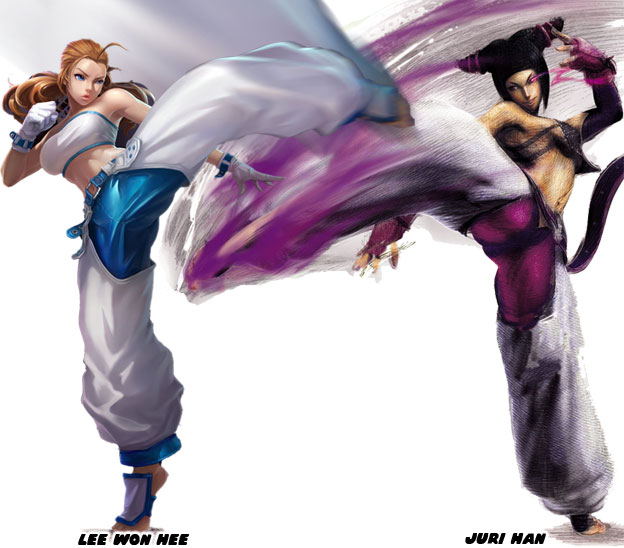
Sega's Virtua Fighter was the only major 3D series yet to feature a TKD master. According to canon Sarah Bryant, who debuted in 1993, was accomplished in Jeet Kune Do. In later iterations she added the French art of Savate and TKD to her repertoire. Rival studio Tecmo was also late in bringing the Korean fighting art to fans. Dead or Alive 5 was released in 2012 and introduced a mysterious TKD fighter known only as Rig. His moves were familiar to audiences because of the other TKD characters that came before him. The 3D mold created by Baek Doo San would not be broken until 2010. While Panda did set the precedence most fighting game fans would identify the assassin Juri Han as the most revolutionary new TKD character of the past 20 years. The character actually had many design elements pulled from Chun-Li however that was besides the point. The powerful kicks, blinding speed and brutal moves made her stand out from her peers. She became such a powerful icon that a few short years later the studio Tencent would more or less copy her design. Lee Won Hee debuted in King of Combat in 2013. She had a blend of moves from Juri but also from the Kim family and other TKD gaming pioneers. What was interesting was that there was a male South Korean Judo grappler named Lee Won-hee that was the World Champion in 2003 and Olympic Gold Medal Champion in 2004. I am not sure why the Chinese developer would use the same name.


Pop culture had a lot to do with which styles would be featured in fighting games. The more well known arts would be included in almost every franchise developed. The games that deviated from the formula, or made up their own fighting arts were hit or miss with audiences. Muay Thai and Tae Kwon Do were standout forms from the early days of the genre. So how did the classic fighting arts remain "untouched" even as technology changed? Find out about this shift on the next blog. As always if you enjoyed this blog and would like to sponsor me please visit my Patreon page and consider donating each month, even as little as $1 would help make better blogs and even podcasts!
Monday, July 27, 2015

How fight culture became fighting game history, part 12

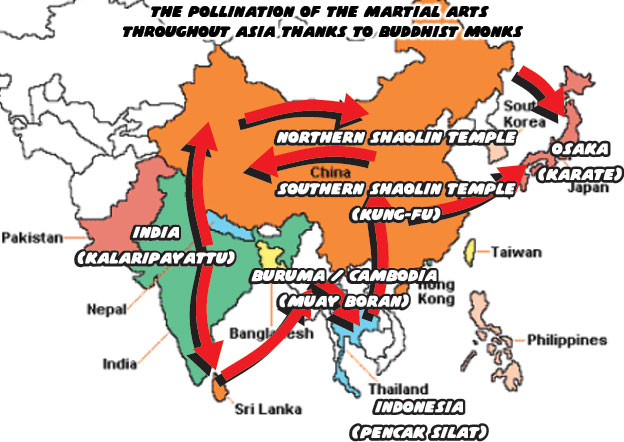
In every culture and in every story tradition a myth would sometimes be rooted in reality. It helped our ancestors cope with the unknown, the mysterious and bizarre. When it came to the martial arts the tradition of myth was supremely important. It helped turn local fighters into legends and military warlords into god-kings. Imagine how word of mouth helped create the fables of men that were able to break stones with a punch, were able to kick down trees and even run over water. The impossible was possible to a handful of people. It's secrets became highly sought after. As the martial arts spread throughout Asia the mythologies of each culture helped shape its evolution. The Buddhist monks of India and China were some of the strongest forces that helped shape the history of the martial arts. In the previous blogs I had mentioned how Kung-Fu travelled through China and reach the shores of Japan where it was adapted and transformed into Karate. But what happened to the art form as it went through South Asia? How did it differ from the other fighting arts? How did its founders become legend?


Something that contributed greatly to the development of the fighting arts in South and South East Asia was actually the terrain and weather. The further south in Asia had a much higher level of precipitation. During the monsoon season rainfall could be measured in meters rather than inches. Portions of Japan and China were well within the monsoon belt as well but the majority of the rainfall was concentrated over areas closer to the ocean, such as Thailand, Cambodia and Myanmar (Burma). Of course the surrounding islands and peninsulas of Malaysia, Indonesia and the Philippines were no strangers to wet climates. This heavy rainfall translated into lush vegetation, thick jungles and heavy forest canopies. Travelers had to be wary not only of wild animals but also of bandits that could be hiding at every step of a journey. This terrain also changed the way wars were fought and won. Larger armies from the North used to controlling massive areas of space with the aid of advanced long-range weaponry such as catapults and crossbows were at a loss in jungle settings. Due to the dense vegetation the wars in the South were fought in close quarters, man-to-man. The armies that combined practical close-range weapons with deadly martial arts training were all but guaranteed victory. The way men fought and trained in the martial arts in the South was much different than what Bodhidharma took with him into China. Heavy armor favored by Chinese, Mongolian and Japanese forces were too cumbersome to use or even wear in the hot tropics. Fighters had to be free to move, use the terrain to their advantage, and strike whenever and wherever an opportunity presented itself. As Budhhism traveled through Bangladesh, into Myanmar and Thailand the fighting forms of the monks were dissected and portions were combined with native techniques. The hybrid of systems worked extremely well with stick, sword and shield fighting. Even without weapons the forms that grew from the tropic regions was deadly in its efficiency.


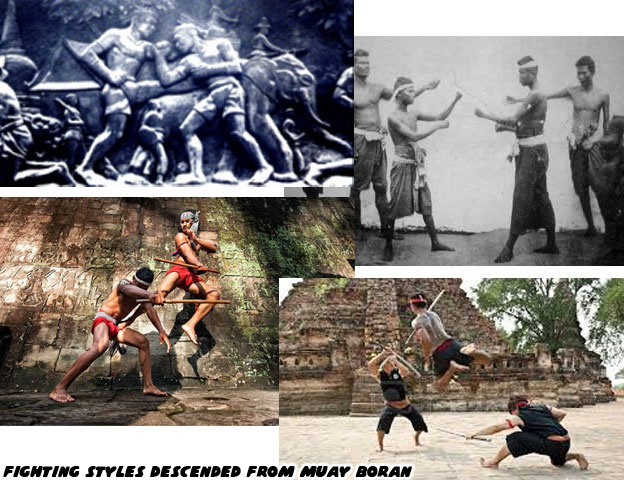
The art of "Eight Limbs" had a lineage that went back thousands of years. The bare hand fighting forms which made liberal use of elbows, knees and clutches were brutal. They were dangerous in the arena as they were in the battlefield. The form known as Muay Boran in ancient times was practiced by the personal bodyguards of the kings. It eventually went beyond the walls of the imperial palaces and changed into what the modern world now knows as Muay Thai. There were countless regional iterations of the striking arts, called Mai Mae, Luk Mai Muay Thai, Bokator, Kun Khmer and Pradal Serey. Each one could be identified for its many victories on the battlefields as well as in the fighting arenas.

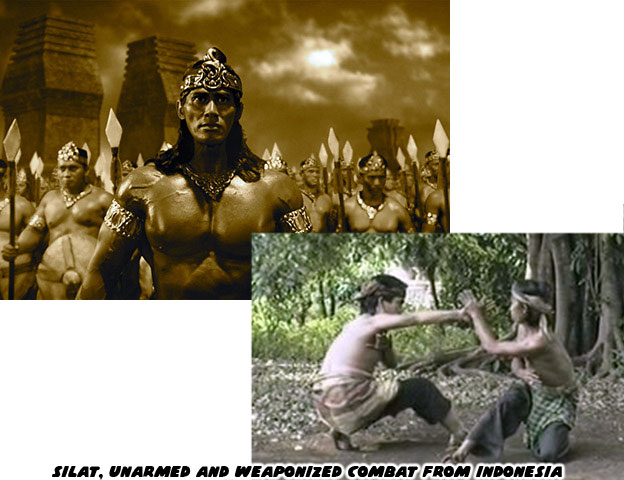
Yet that was not the only offshoot fighting art that evolved in Asia. In Indonesia Pencak Silat, sometimes called Silat was a word used to represent the indigenous martial arts of over 800 styles from the thousands of islands that make up Indonesia. Betawi for example is an aggressive striking form whereas Cimande is focused on flowing combinations. The main forms originated in Sumatra and Java. Silat was used to defend the natives from Northern aggressors as well as from foreign invaders. It incorporated many unique stances, tight sweeping strikes and rapidly changing angles. These kept opponents off guard, baffled invaders and made sure that the Indonesians enjoyed their independence for centuries. The style, like those from the other coastal countries in Asia would not have worked while wearing armor or yielding heavy weapons. It was about being light and fast so swords were more like daggers and shields were light and portable. When the British, Dutch, French and other imperial armies began to colonize the port towns the Indonesians did their best to preserve the art form. The would-be conquerers from the West did their best to supplant the languages, temples and cultural icons of the Asians but this did nothing more than make them dig in deeper to preserve their heritage. As a result Silat not only survived into the modern era, its practitioners were still considered some of the most lethal fighters in the world. Pencak Silat, like Muay Thai was descended from combat, it was not a form for sport, exercise or self-improvement. It was meant to kill and thus retained its dangerous overtones.


Silat could not necessarily be considered one of martial arts directly influenced by the Buddhist monks traveling through Asia. Indonesia is the largest Muslim nation on Earth and has been for some time. The evolution of Silat was nonetheless influenced by traders and settlers from Northern regions. Kung-Fu developed striking arts that were inspired by the grace and beauty of nature however the fighting arts in South East Asia were inspired by centuries of bloody conflict. As such the fighters from South Asia gained a reputation for being dangerous combatants. The masters of kung-fu and karate could find a way of having a friendly sparring match, perhaps the first to drop an opponent or even the first to land a solid strike could be declared the winner. By contrast those that fought in Muay Thai tournaments were looking to break opponents. Blood was the measure of success, fighters would wrap their knuckles in cord and sometimes crushed glass so that they would be able to tear the flesh off opponents. Even modern matches have lost little of the lethality of ancient rules. Some strikes have been outlawed in organized competition but even without these strikes only the most dedicated fighters could hope to achieve a level of champion. For those that want to see what sort of brutal punishment the top fighters could unleash against each other take a look at the infamous "Elbow Fight" between Sakmongkol and Jongsanan at Lumpinee Stadium in Bangkok. It was the fifth time that the two had fought each other. Round after round the two ate elbows like a kid eating candies at Halloween. Fans of this level of fighting could be considered sadistic while the fighters were clearly masochists. No amount of punishment could satiate either group. The spectacle of professional competitions and the legend of underground Muay Thai tournaments spread far and wide throughout Asia. Only the most foolhardy martial arts master would dare seek out these men in a fight. More "refined" cultures like those in China and Japan looked down on the barbaric combat from the South. This repulsion for the hyper-violent Southern eventually turned into legend. The only way that a master of the "modern" arts could prove their skill was to seek out new challengers, especially those from Thailand.

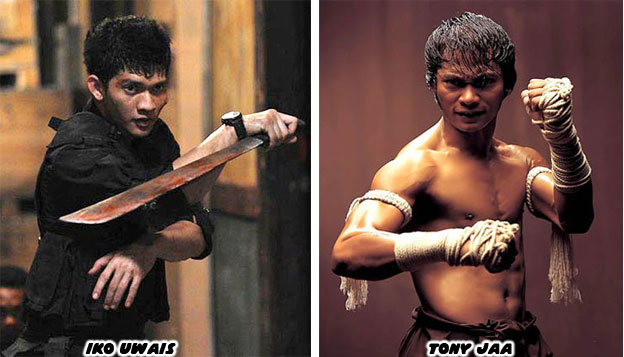
In cinema kung-fu had become a mainstay of fighting forms. Action films the world over relied on the classic Asian arts to make heroes appear unstoppable. Yet every decade there seemed to be an artist to come out of nowhere, using a different art and redefine how movie fight should look. Muay Thai rose to prominence on the heels of the film Ong Bak in 2003. In it director Prachya Pinkaw made a moderate-budget film that highlighted the fighting and stunt abilities of Tony Jaa. Tony became an overnight sensation in action film circles and created a buzz that was comparable to the early days of Jackie Chan and even Bruce Lee. Almost a decade later director Gareth Evans featured Silat through the skilled hands and feet of Iko Uwais, The Raid which was released in 2011 demonstrated how an art form at least a millennia old could amaze audiences that had grown up on expensive special effects.


The films of Tony and Iko were two examples of how the fighting arts were still integral to pop culture. This was not a new trend. In the late 19th and early 20th century pop culture would take the regional biases against different fighting forms and the stereotypes about their practitioners and turn them into fodder for stories, comics, movies and eventually video games.

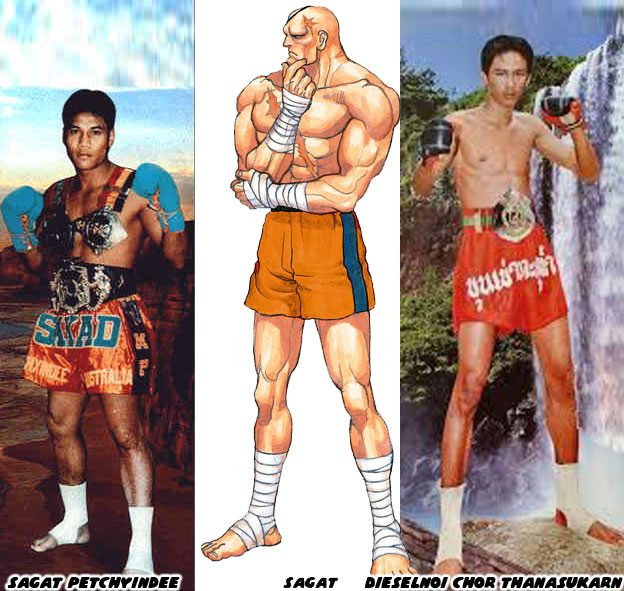
It was not enough for a video game that the Muay Thai master was just an average person. As the final opponent in Street Fighter he had to become much more imposing figure and present a genuine challenge to audiences. The designers at Capcom made the one-eyed fighter into a seven-foot giant. He had a reach advantage, a strength advantage and used a fighting form that was considered more dangerous than karate. The name Sagat was based on Sagat Petchyindee, a Muay Thai fighter that dominated tournaments in the early '80s and undoubtedly made its way into the psyche of the Japanese developers. Although Sagat has always been illustrated as an incredibly muscular man in Street Fighter II he was much lankier. There was another Muay Thai legend that likely inspired this design. Dieselnoi Chor. Thanasukarn was 6' 2", possibly 6' 3" tall, and had a considerable reach and size advantage over most of his opponents. Although he was thin he packed a powerful knee, a "Sky Piercing Knee" according to legend. The character of Sagat was known for his knee strikes as well so it is entirely possible that Dieselnoi had a hand in influencing the developers on Street Fighter. Dieselnoi was such a formidable champion that after several years at the top he was forced into retirement when he could not find an opponent in his same class. Although to be fair Sagat Petchyindee was one of the few to ever defeat Dieselnoi.


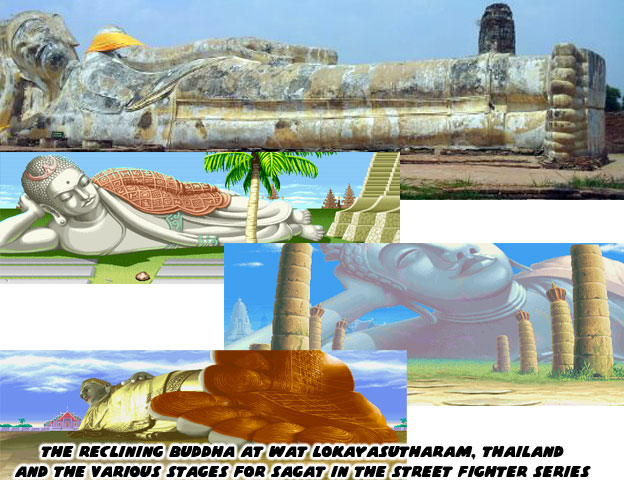
There was something about Thailand that kept designers returning to the region. It was romanticized in comics, its location considered exotic and mysterious to the more industrialized nations in Asia. The inclusion of Hindu temples and Buddhist shrines presented the perfect backdrop for the Street Fighter game series and even the animated films and television shows. Adon, the cocky understudy of Sagat had stages built on the Chaopraya River. The temples of Angkor Wat and Angkor Thom were also used in the backgrounds for Adon's stages as well as the secretive location of the dictatorship Shadowlaw. The reclining Buddha of Wat Lokayasutharam, whose weathered features were awe-inspiring in real life looked fantastic when adapted to the game series.


Ryu was the star of Street Fighter and karate was presented as the ultimate fighting art but the genre would never have been the same without the inclusion of Muay Thai. This survey of the real world fighting forms will take a closer look at the Muay Thai heroes and villains from gaming in the next blog. As always if you enjoyed this blog and would like to sponsor me please visit my Patreon page and consider donating each month, even as little as $1 would help make better blogs and even podcasts!
Sunday, July 19, 2015

The return of Charlie Nash, or how zombies make the best fighters...

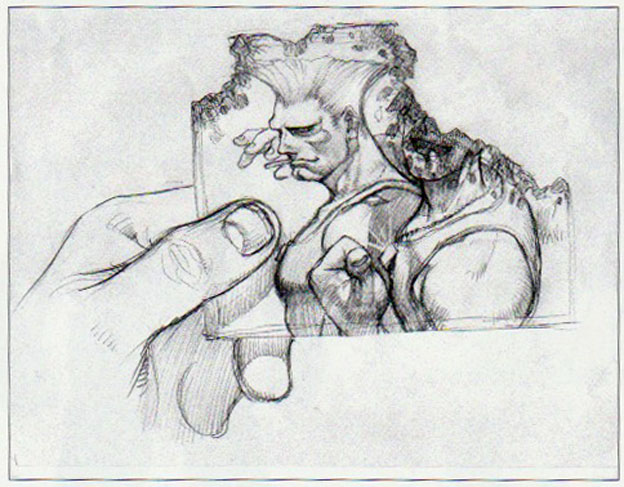
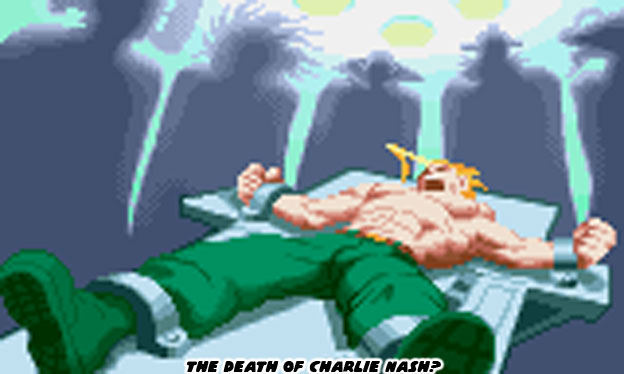
Of the characters announced so far for Street Fighter V I think the most interesting was the return of Charlie Nash. I thought he was a great character in the Street Fighter Zero / Alpha series. I liked him partially because he wore glasses. For those that didn't get a chance to play as the soldier he was essentially the American representative for the series. He was created the person whose death Guile was avenging during Street Fighter II. What was most interesting was that this character did not have a face, only a name when Street Fighter II came out. In fact even the developers at Capcom didn't know what Charlie looked like originally. In some unused art by Bengus the only picture that Guile had of his friend had the face burned out. Making him the original gaming unknown soldier.


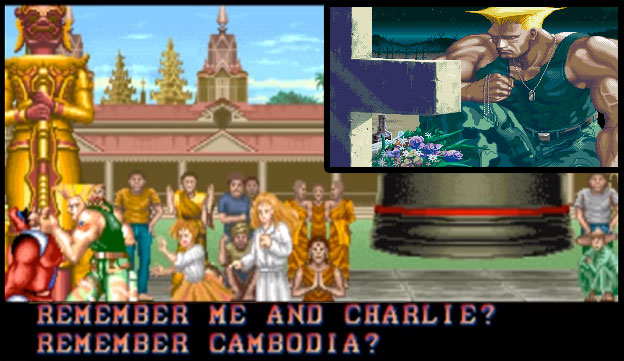
Audiences didn't know if Charlie was a friend or family member killed in the line of duty. Guile would hoist his dog tags in the air in some victory animations. The myth behind Charlie grew as the endings in the Street Fighter II were changed and new details were added. At first Guile would threaten the Dictator and in other versions Guile would visit the grave of his friend. Guile was a visually unique character, with his military look and odd haircut, but he became interesting thanks to his ending. He attacked the Dictator after his defeat, grabbing him by the collar. It was a palpable rage when he brought up the names of Charlie and Cambodia. Audiences didn't know quite what happened but it sounded like something serious went down. When Charlie Nash was killed Guile was younger, considered a runt, Only Guile's wife and daughter were able to talk him out of killing the Dictator. Some of the endings in the game were silly but most were played out like a dramatic movie, Guile's ending was no exception. He had abandoned his family in the pursuit of revenge and was reunited once his vendetta was completed.


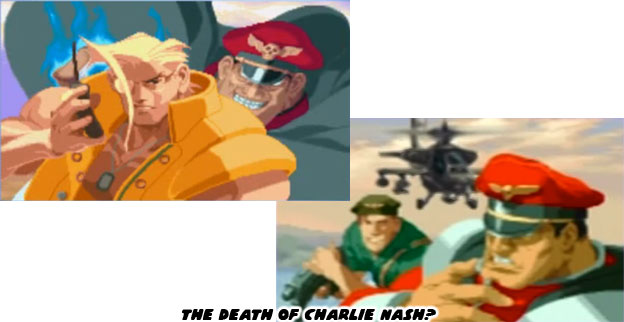
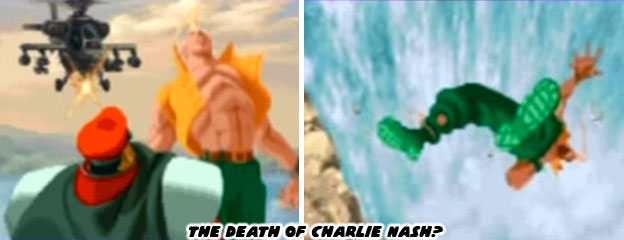
Charlie Nash died officially during the events of the Street Fighter Zero / Alpha series. What was unique was how differently he died during each release of the game. In one version he had found a hideout for Shadowlaw and was radioing home base for reinforcement. The Dictator snuck up behind him and attacked him. All that was left was a bloody dog tag. It didn't really look like Cambodia but more like the US Southwest.


In the second release of the game Nash had the Dictator on the ropes, somewhere in Brazil, possibly the Iguazu Falls, when he was shot in the back by a Shadowlaw helicopter and fell to his presumed death. When the Shadowlaw soldier asked the Dictator if he wanted to confirm the kill the Dictator said that no one could have survived the fall. Again, all that was left of Nash were some dog tags. By the third release of the game Nash was flying a jet and had blown up the base of operations for Shadowlaw but was still on the hunt for the Dictator. So in one out of the three endings he did not die.


It was an interesting contrast from the previous game and this was something that the Street Fighter series had become known for. There were multiple endings in the games yet each ending did not necessarily work with every other one. There were even endings that contradicted the ending of a previous game. Sure the Dictator could have captured Nash and turned him into one of his brainwashed soldiers. He had done this before to soldiers and special agents the world over, including his prized subject the Delta Red agent known as Cammy. 


Then again Nash could have been captured and brainwashed by a different group. In Marvel Super Heroes vs Street Fighter the Shadow version of Nash made his debut. He even popped up in X-Men vs Street Fighter. During the crossover games it was hinted that some mysterious group was responsible for his new form. Were these mad scientists, or cultists of some sort? All gamers could do was speculate as to the "true" fate of Charlie.


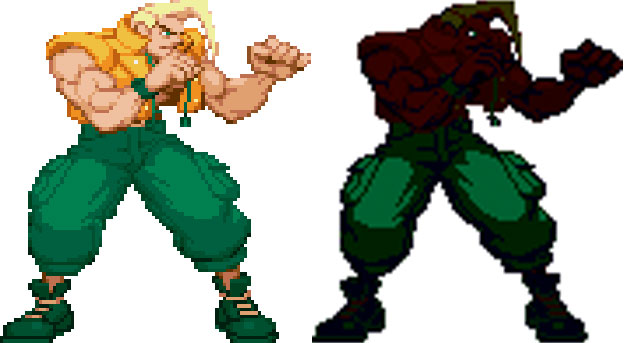
The dark Shadow version was literally a sprite of Charlie from the Zero series that had been discolored to make him look as if he were in a perpetual shadow. His eyes glowed and his attacks took on a blue hue. He had the same basic attacks and audiences began wondering if the character had returned from the dead. It did not become official until Udon began writing about the character and his history and of course when Street Fighter V was announced, almost 20 years since the character had debuted.


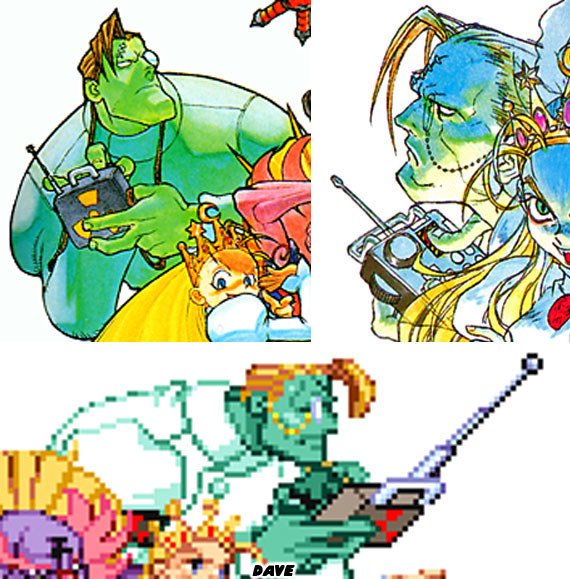
Of course many eagle-eyed Capcom fans said that the new Charlie Nash looked an awful lot like Dave. He was one of the alien henchmen characters from Cyberbots: Full Metal Madness. He served under Princess Devilotte de Deathsatan IX, an over-the-top lolita-dressed alien bent on universal domination. I could see where people would see the same hair and glasses on both characters. Dave debuted a few months before Charlie Nash, it's entirely possible that the artists liked the look of the character and incorporated some of his visual cues on Charlie as well.


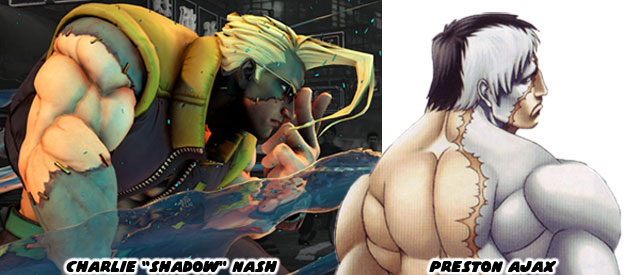
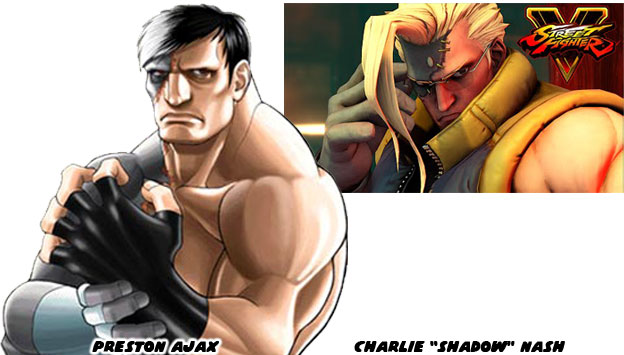
When I saw Charlie back from the dead, complete with stapled and stitched body parts, I was reminded of a different fighting game character. Preston Ajax was a sub-boss character from the game Fighting Layer. The character was a mercenary that had been mortally wounded in a bomb attack. He was pieced together with the remains of his brother, who was a fellow mercenary. The discolored portions of his skin were like dead tissue, very macabre. I got the same feeling while looking at Charlie. Ajax was actually inspired by the manga character Black Jack. He was injured when he stepped on a land mine as a young man. His only friend, a young black boy named Kuro, donated his skin for a transplant. This contrast made him one of the most memorable manga heroes ever created. Black Jack went on to inspire the creation of the Tekken series as well, but I digress...


Preston was created by ARIKA, the studio that was founded by many Street Fighter II members. The game Fighting Layer that Ajax appeared in could be considered a revisit to the original plans for Street Fighter II. I wonder if it was a coincidence that two military characters with similar "back from the dead" origin stories ended up in fighting games or if it was an idea that the SF II team had kicked around before they split up. I guess the world may never know.

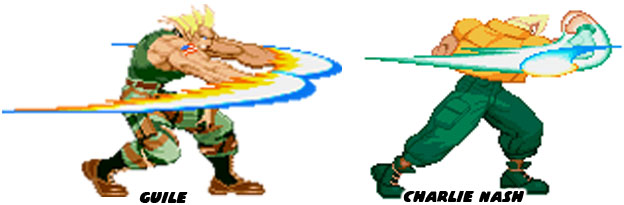
But there was more to the character than a cool background and a connection to one of the Street Fighter II characters. The series had always been about combining a great fighting game engine with characters that could perform amazing moves. Ken and Ryu had the Shoryuken or "Fireball" attack. In the original game only they and Sagat could perform the move. In the sequel it was the same thing but Guile was one of the new characters that could also perform a ranged attack. Guile's version was called a Sonic Boom. When Charlie appeared as a playable character a few years later he too was given the Sonic Boom attack. However there were nuances that separated Guile from Charlie.


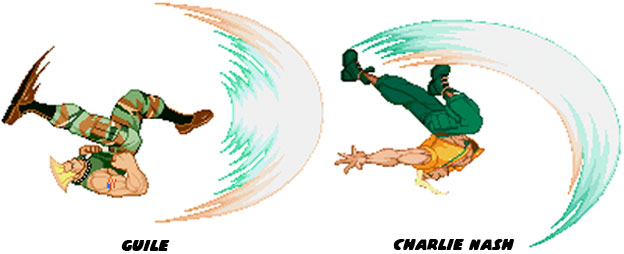
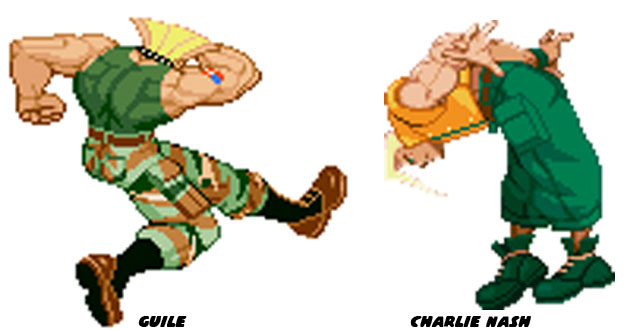
It was assumed that Nash had taught Guile the special attacks. As a master of these unknown fighting arts Nash was able to perform the same moves with a little more ease. For example he would perform his Sonic Boom attack with one hand while Guile used both. That was not the only special move that Guile possessed. He also had a Flash Kick, which was a backflip and kick combined into one. Nash also had a version of this move except he did it with his back turned to his opponent. Again the move looked a little bit easier for Nash to perform.


Both moves happened so fast that audiences didn't always catch the frames of animation that Capcom placed on them. There was a tremendous amount of forethought that went into how each fighter tumbled in the air. Each actually led with the opposite kicking leg in order to create the momentum for the attack. Since Charlie had his back to opponents he needed to be able to kick as well as twist in the air, this translated to him leaping cross legged. He would kick his back leg out and then tuck it in as his other leg created the arc for the Flash Kick. Then just before he landed he would complete the twist and land facing his opponent.


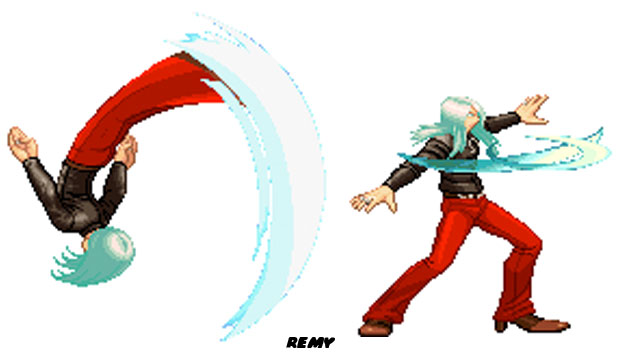
Both moves looked fantastic even if audiences didn't spend the time dissecting how each was performed. If assigning special attacks was all it took to make a character memorable in the genre then it would apply to any new character introduced. Right? Capcom pushed their luck in Street Fighter III 3rd Strike with a new character called Remy. This character had all of the moves of Guile and Nash and could perform them with even greater ease than the military fighters.


This character didn't have a fraction of the forethought that went into the design of Guile or Nash. It was a bit insulting to the legacy character that some skinny Frenchman with no build for fighting or no interesting origin would have the same techniques. Not only that he could also throw Sonic Boom attacks while crouching which was something that neither Charlie nor Guile could do. Audiences wondered why put in a character with all of Guile's attacks in Street Fighter III rather than just return Guile. After all the studio had brought back Chun-Li in the series as well. Remy was one of the more forgettable characters that the studio produced and had not been brought up since.


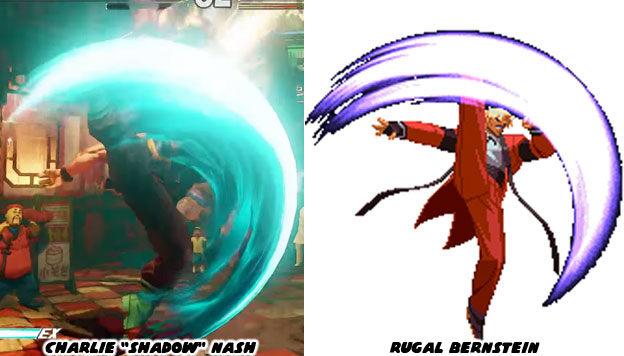
The physical appearance of Charlie was not the only thing that had changed with his return. The Flash Kick was gone, in it's place were two new special kicks, the Sonic Scythe and the Moonsault Slash. Nash now performed the trademark kick with one wide arcing leg movement. It was reminiscent of the special attacks of Rugal Bernstein, a boss character from the King of Fighters series. I kind of miss his original backwards flip.


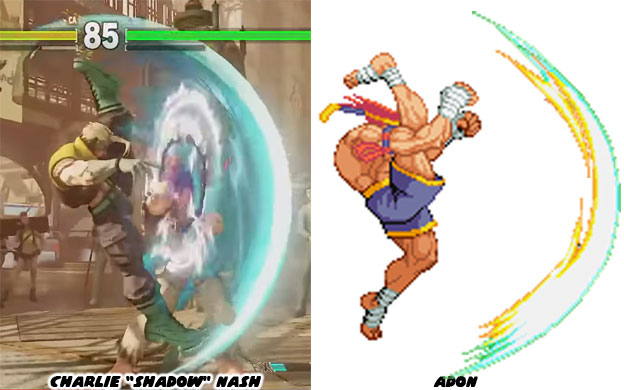
The other kick was a front tumbling heel strike. It was very similar to the Jaguar Kick pioneered by Adon. Charlie's super attacks had been changed as well. The character not only looked new but played new. What do you think about the return of Charlie? What do you think of the changes of his strikes and abilities? Are you a fan of the new look? Who do you want to see in the new lineup? As always if you enjoyed this blog and would like to sponsor me please visit my Patreon page and consider donating each month, even as little as $1 would help make better blogs and even podcasts!