Showing posts with label juri han. Show all posts

Saturday, June 18, 2022

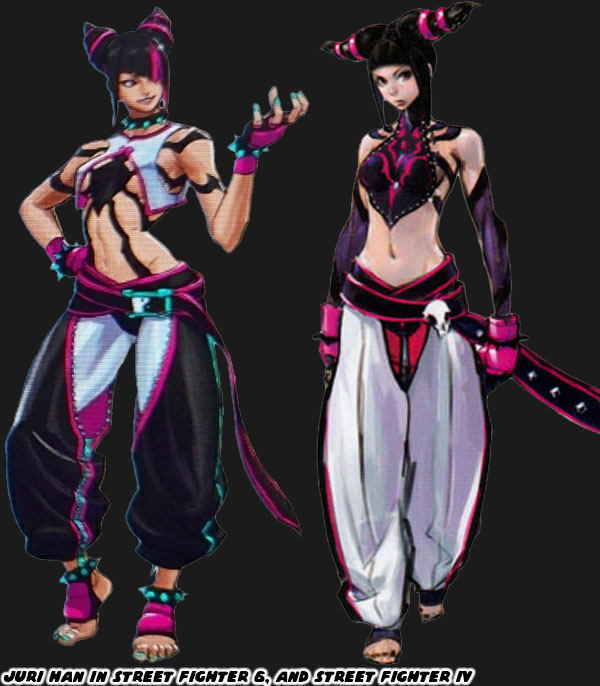
Juri in Street Fighter 6, how her design got better with time

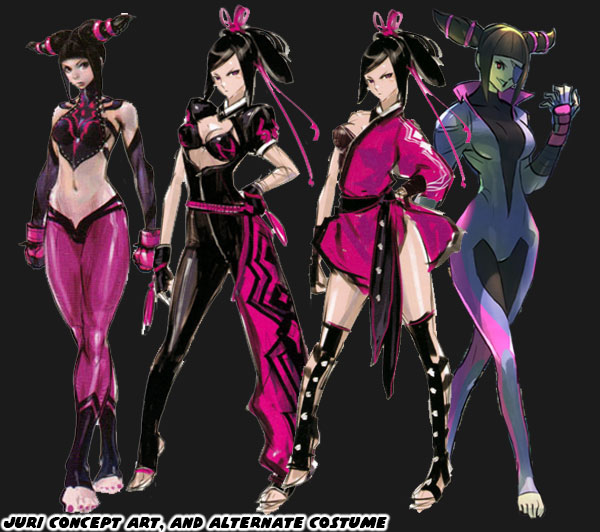
Today we talk about the best character introduced to the Street Fighter universe in the past 10+ years. Juri Han first appeared in Super Street Fighter IV in 2010. Can you believe the game came out that long ago? When she debuted the fan response was almost immediate. Abel, C. Viper, Rufus, Hakan, and El Fuerte took a back seat to the new femme fatale. A lot of people online think my ideas on character design posts are garbage because they think I hate Juri. That couldn’t be further from the truth. I was hyper critical of her design, and said that Capcom could have done better. From a story perspective she seemed overpowered. She was hyper sadistic in the game animations, and written to be god-like compared to Cammy, and Chun-Li. I thought that was a bit much, and disrespectful to established fighters. The biggest gripe I had was because Juri’s final design was closely based on Chun-Li. I was sure that the studio could have introduced a Tae Kwon-Do villain, without poaching Chun-Li’s design almost point for point. As time went on it was rumored that the studio had created some 400+ designs, and costumes for the character before settling on the one that appeared in the game. Several of her earlier concept designs, especially the tight skin suits, eventually became alternate costume DLC for the character.

I think that the most recent version of Juri is much better than her debut. Her look, and costume look similar to her first appearance, but the changes made to them were subtle, but numerous. Let’s start with her dobok, the uniform worn by tae kwon-do practitioners. The colors are almost reversed from the original. Her leggings were white, and her pants were black, with fuchsia, and aqua accents. Not only that but they were shorter so we could see the contrasting colors on her feet, and ankles. The zipper on the inside leg makes the cut look very fashionable. White pants work okay for Ryu, but by going with much darker primary colors it really helps Juri stand out in the lineup.  Also a bit of trivia for you. Some of the costume colors assigned to the cast were based on the flags of their respective nations. Juri represented South Korea, their flag is colored red, blue, white, and black. So if you mix the colors blue, and red you end up with purple, the primary color of Juri. It would have been in poor taste for a Japanese studio to outright paint a villain with the flag of South Korea. The two nations have a lot of bad blood, especially for the numerous war crimes the Japanese perpetuated in Asia.  

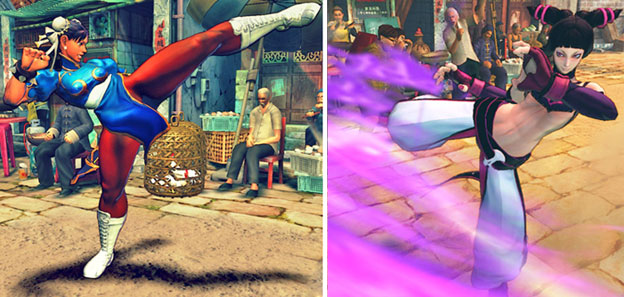
The skull on Juri's belt was replaced with a yin yang symbol. This detail could be related to her chi abilities, or Tanden engine-accelerated powers. Her top reflects her evil origins. When Daigo Ikeno was working on the character the team nicknamed her the Spider. She was like a poisonous black widow that killed her mates. The spider logo appeared on the back of her top in her debut. This time it was put front, and center, like a sexy Spider-Man outfit. Although one of the spider legs covers her nipple Street Fighter designer Yusuke Hashimoto knew better than just leave most of her boobs dangling there. He covered her breasts with a split-open hanbok. He took the shape, and color of what would have been a traditional dress, and turned it basically into a lingerie top. Also her spiked bracelet was finally given some contrasting colors. The aqua on her pants was reflected on her fingernails, toenails, belt buckle, and more importantly, the spikes themselves. By adding the spiked bracelet to her ankles it was the type of nod to Chun-Li without just poaching the look. I think this addition may be the most inspired update to her costume.

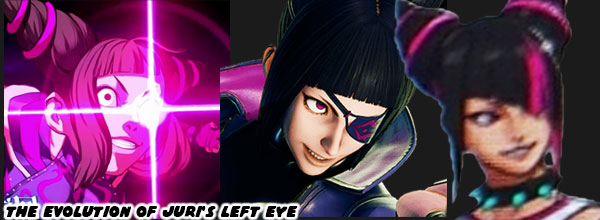
The next major change to Juri would be the cut of her hair. Her conical braids made a quick impression with fans, and became her trademark style. The studio observed the unique hair styles of other SF females. Chun-Li had buns, Cammy had braids, C. Viper had a pompadour with ponytail, Rose had purple hair, etc. Juri still had the cones, but now they were curved upwards in a more obvious devil horn fashion. Her bangs also changed shape, they were diagonal now, and extended over part of her face. Not only that but she had a fuchsia streak that lined up over her left eye. Juri had an artificial left eye fitted with the powerful Tanden, or Feng Shuei engine. When she is at full power the eye glows, in one of her alternate costumes she wore a patch over it. This new haircut keeps her face slightly obscured, and mysterious like C. Jack, but it also helps mask the eye. It was a very smart update to her look. Sadly I don’t think that Mr. Hashimoto realized that the colored hair streak was considered an Asian stereotype in the US. Glamour magazine said it best “It's Time to Retire the 'Hairstreak Asian' Trope”. I think the hair streak makes sense in context, but I understand why people are over designing Asian leads with similar hairstyles.

All in all I think that Juri’s redesign for Street Fighter 6 is her strongest look yet. I’m still more partial to her skin suit, but if you were to design an evil Chun-Li then you couldn’t do anything better. I don’t think I would have been as critical of the character if she looked more like this when she debuted in SFIV. Capcom may have created some 400+ looks for her in the early days, and they were very close to perfection. It took and additional 12 years, and a handful of changes to get her just right. What do you think about the updated look for Juri? Are you eager to try the returning characters, or the new characters? I’d like to hear your thoughts in the comments section. If you would like to sponsor me please visit my Patreon page and consider donating each month, even as little as $1 would help make better blogs and even podcasts!
follow the Street Writer on Patreon!

Wednesday, July 29, 2015

How fight culture became fighting game history, part 13

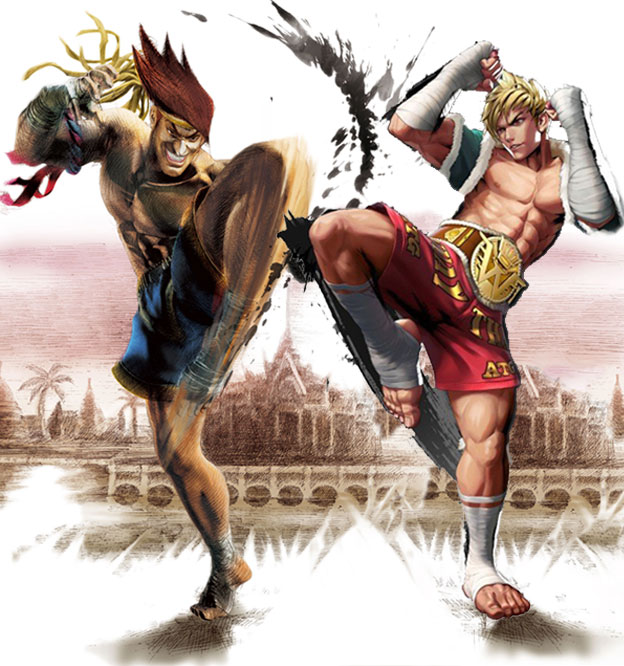
Capcom featured Muay Thai as the final style that gamers had to overcome in the original Street Fighter. Released in 1987 each stage told a story about the culture that Capcom was trying to recreate. The designers did not have the internet to rely on, perhaps they would watch some tapes or look at travel guides for reference material but they didn't have the luxury of digging too deep while creating the levels. Each stage was nonetheless quite memorable, especially for the final opponents in the game. The reflecting pool, sunset orange sky and seated Buddha were serene. They sharply contrasted the aggressive style that Muay Thai master Adon would become known for. A similar observation could be made of Sagat and his level. The beautiful temple backdrop beguiled a fighter that was feared by his peers. To impressionable gamers in Japan and the United States these were caricatures of Thailand that seemed true.
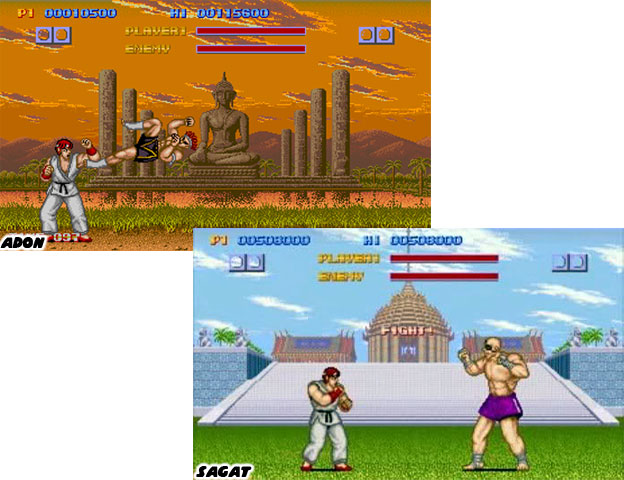

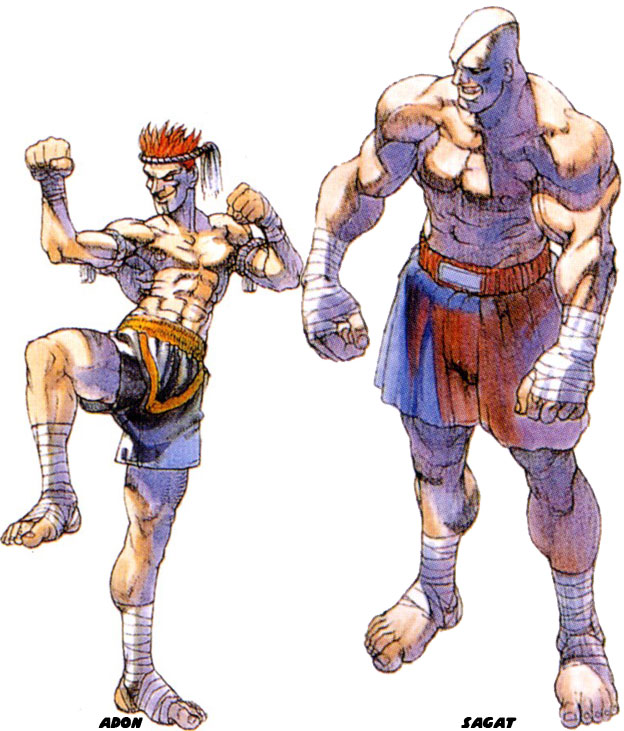
The designers at Capcom had done a wonderful job at setting a standard that all future fighting games would be measured against. Although both characters practiced Muay Thai both Adon and Sagat had very distinct variations on the form. Adon used leaping heel strikes against players while Sagat focused on quick punches and rising knee strikes. Like the level backgrounds themselves these attacks were caricatures of reality. From a character design standpoint both fighters were very unique personalities. Adon was not a humble understudy, he had grown tired of living in the shadows of his mentor. He hoped to defeat Sagat and assume his status as the worlds greatest fighter. Sagat on the other hand was a cold, calculating and brutal master. He had taken the life of an opponent in combat and his reputation had colored his presence in each and every game within the series. These details would become important to the evolution of the franchise as well as the genre.
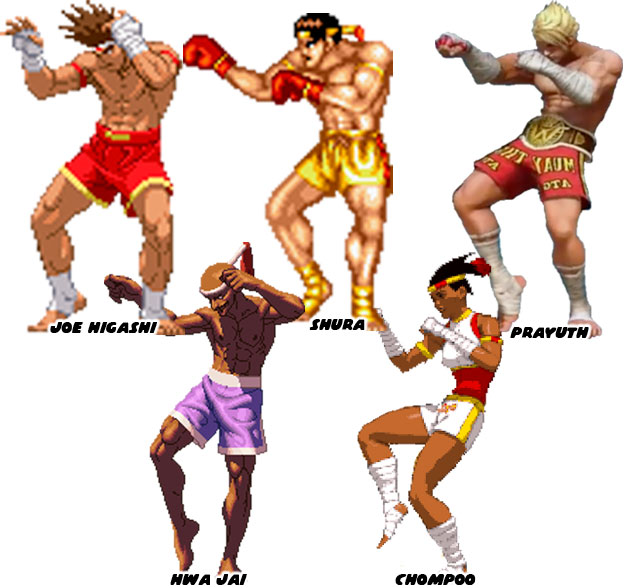
In 1991 Sagat would return in Street Fighter II' as a sub-boss. Other developers took notice of the genre and created their own version of a fighting game. Takashi Nishiyama was a Producer at SNK, he was previously a planner on the original Street Fighter. He wanted to create his own fighting game for the Neo Geo arcade platform. Instead of two main characters he helped create three main characters for players to choose from, one of which was a Muay Thai fighter named Joe Higashi. The game also featured a hot-tempered Muay Thai opponent named Hwa Jai. Fatal Fury was released at the end of 1991, the same year that Street Fighter II came out. Higashi and Jai would turn up again in various SNK games but they would not be the only Muay Thai masters in the universe. Other game studios would also try to incorporate the fighting art into their own releases. Also for the Neo Geo platform but developed by ADK there was a fighter named Shura. He was featured in World Heroes circa 1992, it was one of the first blatant clones of Street Fighter. More than two decades later the first notable female Muay Thai master would make her debut. Chompoo appeared in Capoeira Fighter 3 circa 2004. The character had a host of traditional moves, elbow and knee strikes, that were made fantastic when combined with leaping and tumbling attacks. The most recent Muay Thai master in the 2D, or rather 2.5D genre was inspired by several of the SNK icons, The blonde-haired Prayuth made his debut in 2013. The Chinese developers at Tencent had borrowed liberally from the icons created by both SNK and Capcom in their game the King of Combat.
 

Something that the most successful studios learned to do over the '90s was to add depth to their cast. Audiences might think that a fighting game character did not need a backstory, a history or even origin. Yet Capcom, SNK, Namco and Sega each learned that a memorable fighting game franchise needed more than a colorful cast or some fancy graphics. The game needed to be balanced, the control dialed in, music catchy and sound just right. The fighters needed to be memorable, they had to be more substance than flash. In order to achieve that the studios had to put as much planning into their design as they would for a AAA adventure star. The characters would not simply be just fighters, they had day jobs and families to go to. Some were soldiers, some were gang members and some were even aristocrats. These histories would not necessarily be spelled out for gamers though. The stages, the rivalries, the dialogue and occasional cut scene would reveal the motivation behind the best characters. Some of these histories would be unveiled over the course of several games, spanning 10 or even 20 years. The best fighters would become icons to the gaming community.
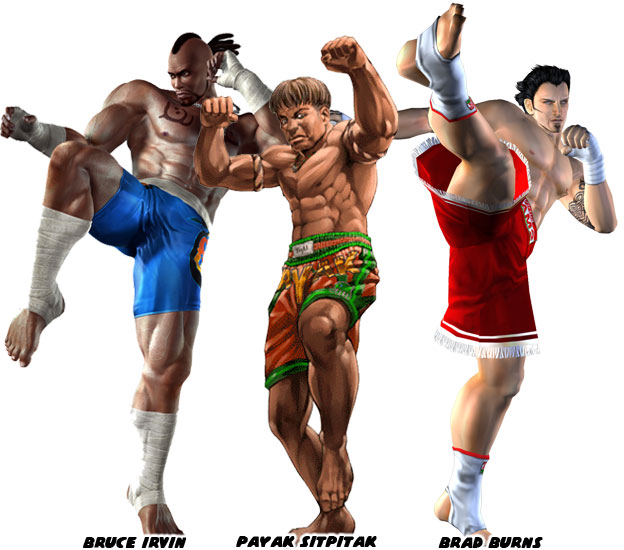
 

Something that contributed to the evolution of the genre was the shift from 2D to 3D graphics. As the various fighting arts were adapted to 3D they had to undergo some changes. The strikes of the artform were often simplified and some lost their presence. One technique that worked very well in 3D was Muay Thai. Namco introduced the Muay Thai hitman Bruce Irvin to audiences in 1995. The character featured in the Tekken series would gain a following. A few years later, in 1999 to be precise, SNK introduced their first 3D Muay Thai master. The character did not have the youthful brashness of Adon or rather Joe Higashi but he was still a part of the Fatal Fury universe. The middle-aged Payak Sitpitak was a more level-headed person, a fighter and family man. In canon he was talked into entering the Buriki One tournament by Higashi. Payak lacked a flashy style, to be fair the entire cast in the game was actually grounded in more realistic attacks than the 2D fighters. Payak was still a dangerous man who let his hard strikes do all the talking. The Neo Geo platform was not great at rendering 3D graphics, especially when compared to Namco's proprietary System 11 arcade board. These were the steps that the studios needed to make in order to reinvigorate the genre. Unfortunately the teams working at Capcom on the Street Fighter series were rehashing 2D sprites and falling behind the 3D development curve. Even Sega, a long-time rival to Namco would eventually add a Muay Thai fighter to their franchise. The ever-cocky Brad Burns made his debut in 2003 with Virtua Fighter 4.
 

Muay Thai was considered one of the "exotic" martial arts in early fighting games. Its evolution was unique given the region that it came from and how native customs mixed with Hindu and Buddhist cultures to shape the art. Something similar happened in the far North where different cultures adapted the fighting arts of China and Japan into something unique. The Korean system of Taekwondo (TKD) was seen as a modern striking form, it did not come into its own until the late '40s. At the same time it enjoyed an appeal almost as exotic as Muay Thai. SNK was a perennial rival to Capcom, especially in the fighting game genre. The planners and some staff working on the Fatal Fury, Art of Fighting and King of Fighters games were ex-Capcom employees. They wanted to diversify the fighting styles featured in their games and provide a bigger library of characters than what was featured in the Street Fighter series. In order to do this they looked at other popular striking arts and no form came to mind more immediately than TKD.

The style of fighting was very calculated, it reflected the nation of origin. Korea was a culture that based its language on mathematics, the importance of science was not lost on the people. In Taekwondo kicks were the main attacks. Practitioners did not only learn all the types of kicks they could perform but which were the most effective at different ranges. The form was distilled from Okinawan Karate and Chinese Kung-Fu however there was a distinct fight science to the art. Students had to learn how to angle opponents, restrict their movement, find openings and isolate weak spots. Practitioners learned to be light on their feet and remain in a constant state of movement. This was not a fighting art developed from warfare so the strikes were optimized for speed and efficiency rather than lethality. It was especially important in point-based tournaments. From a gaming standpoint the sweeping kicks looked amazing when animated by studio artists. The lion's share of TKD fighters were featured in SNK games through most of the '90s. Kim Kaphwan started the tradition in 1992. He was a new star in Fatal Fury 2. Kim was notable not just for his amazing kicks but because he was the first to have children appear as fighters as well. His sons Dong Hwan and Jae Hoon debuted in 1999's Garou Mark of Wolves. Muay Thai and Karate looked unique depending on the practitioner, the same could be said of the TKD fighters. The Kim children were not simply clones of their father but instead had their own personalities and moves.
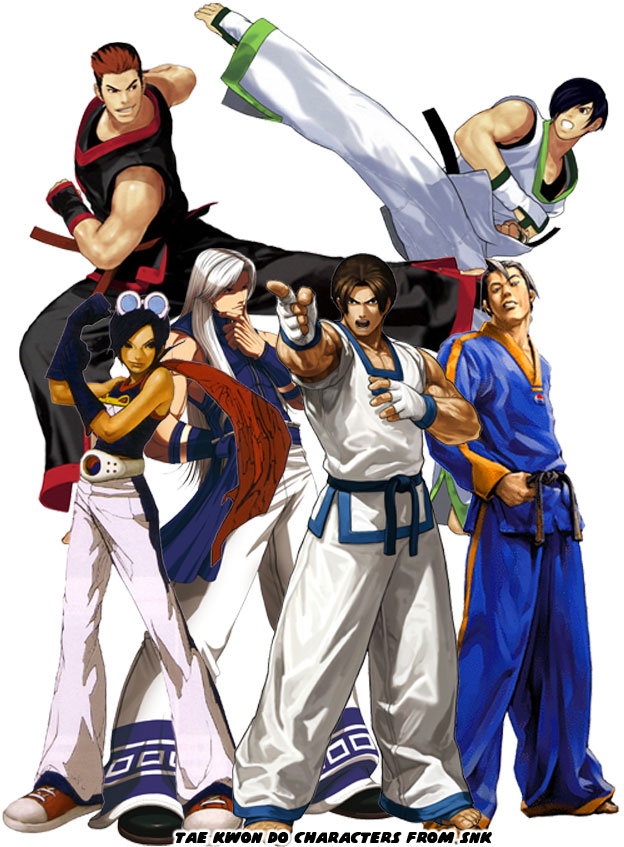
 

Enemies and allies of the Kim family were added to other SNK games. Seo Yong Song from Buriki One (whom also debuted in 1999), Jhun Hoon from King of Fighters '99 and May Lee from King of Fighters 2001 were all distinct practitioners and proud Koreans. The layers of storytelling that went into the rivalries and relationships helped add depth to the universe and made the characters stand out. Audiences enjoyed the diversity they were presented with. Taekwondo was one of the fighting arts that made the transition from real life to 2D seamlessly. When technology allowed the form to be presented in a 3D fighting games it was a perfect fit. Part of the reason that the moves looked so well in 3D was because they were not traditionally animated. Instead there were athletes and martial artists performing motion capture animations for the programmers to work from. Baek Doo San was the first in a TKD master in a major title. He appeared in Tekken 2 in 1995. Namco went the extra mile and had an actual Olympian perform the moves for Baek and his understudy Hwoarang in Tekken 3, released in 1997. Panda from the 2008 game Capoeira Fighter 3 was the first female 3D TKD practitioner.
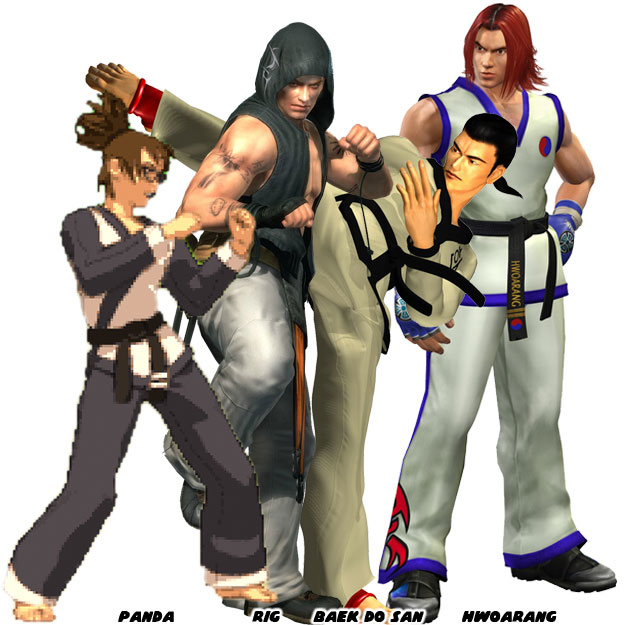
 

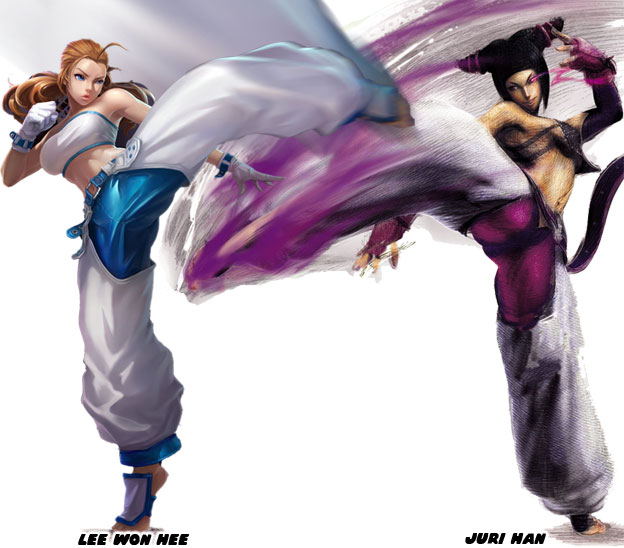
Sega's Virtua Fighter was the only major 3D series yet to feature a TKD master. According to canon Sarah Bryant, who debuted in 1993, was accomplished in Jeet Kune Do. In later iterations she added the French art of Savate and TKD to her repertoire. Rival studio Tecmo was also late in bringing the Korean fighting art to fans. Dead or Alive 5 was released in 2012 and introduced a mysterious TKD fighter known only as Rig. His moves were familiar to audiences because of the other TKD characters that came before him. The 3D mold created by Baek Doo San would not be broken until 2010. While Panda did set the precedence most fighting game fans would identify the assassin Juri Han as the most revolutionary new TKD character of the past 20 years. The character actually had many design elements pulled from Chun-Li however that was besides the point. The powerful kicks, blinding speed and brutal moves made her stand out from her peers. She became such a powerful icon that a few short years later the studio Tencent would more or less copy her design. Lee Won Hee debuted in King of Combat in 2013. She had a blend of moves from Juri but also from the Kim family and other TKD gaming pioneers. What was interesting was that there was a male South Korean Judo grappler named Lee Won-hee that was the World Champion in 2003 and Olympic Gold Medal Champion in 2004. I am not sure why the Chinese developer would use the same name.
 

Pop culture had a lot to do with which styles would be featured in fighting games. The more well known arts would be included in almost every franchise developed. The games that deviated from the formula, or made up their own fighting arts were hit or miss with audiences. Muay Thai and Tae Kwon Do were standout forms from the early days of the genre. So how did the classic fighting arts remain "untouched" even as technology changed? Find out about this shift on the next blog. As always if you enjoyed this blog and would like to sponsor me please visit my Patreon page and consider donating each month, even as little as $1 would help make better blogs and even podcasts!
Tuesday, September 16, 2014

Copycat Culture, part 7...

The easy thing for most game “journalists” to do is make up a controversy. For example bring up a list of images from the cast of Xuan Dou Zhi Wang / King of Combat and say which character the company Tencent was poaching. I’ve already talked about how King was basically Ken from Street Fighter with a chance of clothes. The character could also have been called a clone of Ryu.


Audiences were upset that the King introduced in King of Combat was not the same King from the King of Fighters universe or even King from the Tekken series. The character looked instead like a blend of various KOF characters including Rock Howard and Shen Woo.


Fighting games weren't the only sources of inspiration for the King of Combat characters. Simca, one of the stars from the manga and animé series Air Gear was part of the basis for Ciel.


What modern fighting game wouldn't be complete without a weird long haired character? There's no doubt that Freeman from Garou: Mark of the Wolves and Remy from Street Fighter III: Third Strike were the sources used for Tsukikage Arashi.


SNK had a well established history of using male and female Tae Kwon-Do practitioners in their Fatal Fury and King of Fighters games. When rival studio Capcom finally decided to add a TKD fighter into the lineup they made a very unique design choice. The revealing costume of Juri Han was anything but traditional, unlike the clothing featured on the SNK fighters. The character became a hit and it was only a matter of time before Tencent answered with Lee Won Hee.


These characters were just a sampling of the parallels that could be drawn between King of Combat and the other fighting games. Pointing out the similarities was not hard at all. Any fighting game aficionado could do the same. The more important question was why did Tencent do this? Why did they feel that it would be acceptable for their game to take so many elements from other sources? Money was the primary reason. They could follow in the footsteps in the longest-lived and most successful franchises and make a quick buck. By going with free-to-play and selling costumes and other upgrades via micro transactions they could make their money back on the millions and millions of Chinese gamers that loved the genre. There was another reason for why the studio thought it was acceptable to poach so many ideas.

When it came to pop culture, especially comics, cartoons and toys, the Chinese had an ingrained concept that imitation was the sincerest form of flattery. It was part of the reason why the nation pursued the creation of counterfeit goods. The western world idolized many brands, turning Nike, Prada and Rolex into the labels that everyone wanted. When the genuine article could not be had the Chinese economy rewarded counterfeiters for making the next-best thing at a reasonable price. This way of thinking was very pragmatic. It extended to many levels of society especially in major cities. The residents of the big towns like Beijing, Shanghai and Hong Kong wanted to be recognized as having the same sophisticated tastes as their global counterparts. The best way to do that was by imitating the buying patterns of their western brethren. In the entertainment front it also meant copying what the rest of the world was into. Street Fighter II was a smash hit in China and fans wanted anything and everything with the characters in it.


The nation began adapting the legend of the World Warriors into comic book format. The Chinese actually had the first licensed Street Fighter comics in the world, before the US and even Japan! Of course the comic industry in China also produced tons of unlicensed comics as well. But I digress... Many of the best panels and covers featured in the comics were based on the official character art from Capcom. To western comic book fans this was clearly more poaching from a nation of counterfeiters.

If only those comic book fans would have looked a little closer though, they would have seen some tremendous material. Some was silly but most was sincere. Many of the licensed comcis had well written stories and superb art. The best authors and artists treated the material with as much respect as it deserved. They certainly did much more for the franchise than the horrid Malibu comics did in the US. There was a generation growing up in China that identified with the SF characters as much as those in the US or Japan did.


Imagine how difficult this perception of imitation and fraud was on the Chinese nationals and even Chinese-Americans that had migrated to the US centuries earlier. They were the ones who built the railroads and factories and did the work once the slaves had been freed. Their culture was up for grabs, their labor welcome but their opinion wasn't. Chinese culture had been appropriated by Japan and the US. It did not matter if it was accurate or insulting as it was being put in television and gaming. The Chinese were not allowed to contribute to this presentation for most of the 19th and 20th centuries.

The Chinese wanted to show the world that they too knew a thing about the popular trends. They could make restaurants that looked just like fast food franchises in the West. They could make television shows that matched the popular titles in the West. They could make apparel that looked like the hot fashion labels. They could even make comic books that looked every bit as good as the official art from the studios. When they produced these things in sweatshops under a license then they were contractors, when they did it on their own volition they were thieves. Instead of being acknowledged as contributors to pop culture they were called copycats. The line between homage and rip-off seemed arbitrary. It was hypocritical especially when the creators were passionate about the projects they worked on unlike those in the west that took the license and ran it into the ground. It was a slap in the face to the audiences saw a lot of their own culture within the context of the Street Fighter series.


The Chinese fans did not readily have access to the arcade boards produced in the US or Japan. They were often playing a bootleg copy of Street Fighter II. Specifically a version that had been modified to adjust the speed up the gameplay and allow players to perform special moves mid-air where the original version did neither. These bootleg copies would make their way to the US and the rest of the world, known as the "Rainbow" kits. These releases would influence the direction of the franchise. Gamers and arcade owners would demand legal upgrade kits that had the same elements of the bootleg roms. Capcom listened and released the Hyper, Turbo and Super upgrades for SFII in the early '90s. The Japanese courted their western partners while stealing in the design elements created by the Chinese. This portion of history was glossed over in most retrospective articles concerning the evolution of the franchise.

Here was where I take exception to most game "journalists" I was willing to argue on behalf of the "pirate" and not take history as it was presented by one side. The Chinese developers weren't acknowledged for their contribution to the fighting genre and worse yet, the Japanese were glorified for theirs. When Xuan Dou Zhi Wang came out many considered it a wholesale rip-off of the King of Fighters. Even I called it the Frankenstein approach to fighting game design. What audiences did online, myself included, did was have a knee-jerk reaction to the title. Now that it has been a few months the game deserves a second look and with it the industry as well. Looking back on the evolution of the fighting game genre I saw how important imitation was to the biggest franchises. We'll look at this more in the next and final blog in this series. If you would like to sponsor me please visit my Patreon page and consider donating each month, even as little as $1 would help make better blogs and even podcasts!
follow the Street Writer on Patreon!