Showing posts with label dead or alive. Show all posts

Wednesday, September 16, 2015

How fight culture became fighting game history, part 34

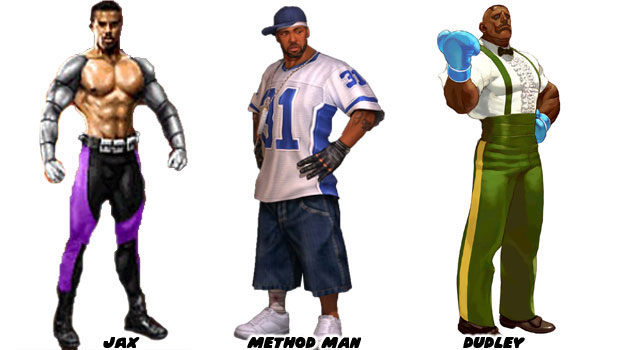
Characters in the fighting game genre did battle for any number of reasons. Some were noble, like police officers trying to bring criminals to justice. Others to prove their fighting style was the best. Some simply for the sake of achieving fame and glory. Black fighters seemed focused on the fame and glory part but to all things there were exceptions. The military officer Jackson "JAX" Briggs from Midway's Mortal Kombat II (1993) and the gentleman boxer Dudley from Capcom's Street Fighter III (1997) were contrary to the typical portrayal of black characters in most games. They were noble, powerful, fit well into their respective franchises and never allowed old conventions to dictate their presence or personality. Unfortunately both Jax and Dudley were rare in that regard. Japanese and US developers seemed to find it easier to rely on the trope that a black fighter was a brute, a thug. EA Sports BIG even created an entire fighting game series based on the Hip Hop / Thug characters in 2003. Def Jam Vendetta put actual rappers like DMX, Ludacris and Method Man against fictional thugs in an underground fighting tournament. The game did well enough to spawn a couple of sequels. It seemed that as long as fighting games were halfway decent then audiences would play characters of any color or background and support the publishers. Yet long-term success seemed to elude the games that only pandered to the lowest common denominator. The demand for a Def Jam fighting game had never been very high, especially when compared to the demand for Street Fighter.


It seemed that substance did matter to the core fighting game audience. Respect for the genre and the audience was good for the long term success of a franchise. The gameplay, control, and animation featured in the Street Fighter series was better presented than any other series. The characters featured within had become more iconic than those from any other game. Most players were familiar with Balrog, the name of M. Bison in the USA, They knew that he was based on pro boxer Mike Tyson. However during the development of Street Fighter II there was going to be a boxer as a playable character. This boxer was named Dick Jumpsey. He was inspired heavily by Jack Dempsey, a prize fighter from the turn of the century. The stance, moves and techniques of those early legends like Dempsey were the stuff of legend, especially in Japan. Boxing was made popular in the manga and anime series Ashita no Joe (Tomorrow's Joe) and the more contemporary Hajime no ippo. The influences of popular culture on the decision to use a boxer and even how he appeared should not be underestimated. These elements have been influencing designers for decades. The Joe story would have been something that the team at Capcom had grown up with in the early 1970's while the Hajime no ippo story would have been a contemporary manga running parallel to the development of Street Fighter II in the late 80’s.
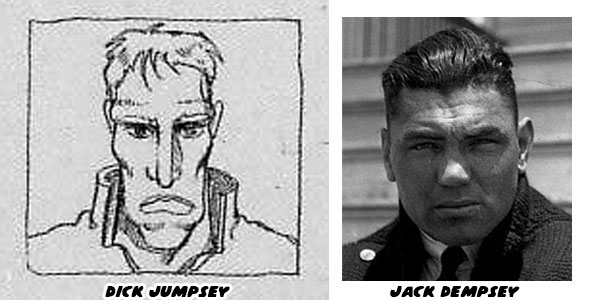

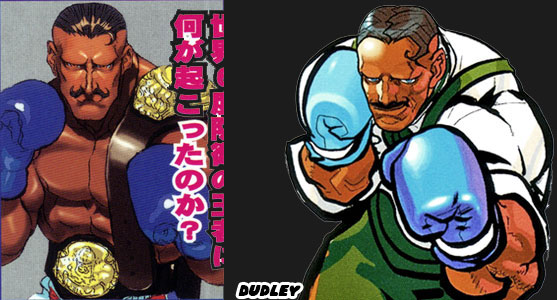
A Dempsey-inspired character would not appear until years later. Dudley, featured in SF III was a gentleman boxer whose timeless qualities made him an instant success and a perfect fit for the SF universe Dudley could be argued as a complete vision for the Dick Jumpsey character abandoned previously. The "Dempsey Roll" was a technique that the actual Dempsey used to dodge under opponents and throw a flurry of punches while bobbing and weaving. This was a rarity as a real life technique rather than a fantastically impossible one would end up in a videogame. In anime form the move looks fantastic, in game form it was doubly so and could be used in combos with relative ease. Dudley's Rolling Thunder in SF IV was based largely on the Hajime no ippo version of the attack and makes for a very visceral super. Dudley may not have been based on a real person but he had a better reputation as a fighter than Method Man.

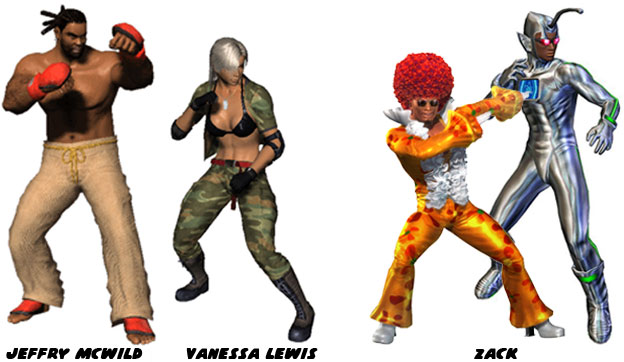
Hip Hop was influencing global culture at an alarming rate. From the rise in New York through the '70s through the exposure on mainstream media in the '80s Hip Hop had pushed for a major shift in pop culture. Blacks were becoming very prominent influences. The points of reference that the Japanese were using to recreate blacks and black culture had evolved greatly between the time the first and second Street Fighter games were released. The Japanese didn't always manage to keep up with those changes. When that happened the studios ran to two extremes of depiction for black characters. They were either over-the-top, boisterous and flamboyant characters. Or they were the opposite, completely devoid of personality and simply a dark skin tone on a 3D model. Jeffry McWild was the first black polygon-based character in a fighting game. He was one of the original faces in Sega's Virtua Fighter released in 1993. The character was neither thug nor cop. He did not have a basketball, nor did he dance. He was a powerful fighter from the caribbean that muscled through opponents with his unorthodox grappling style. Jeffry was a rarity in fighting games, especially for the 3D fighters. He had a personality, proud and confident but not silly like Dee Jay. It was unique that the two characters came from the same region but had vastly different design cues and presentations. The Japanese had demonstrated once more that they could have tremendous respect for black character designs. In 2001 Sega released their second black character in the series. Virtua Fighter 4 added Vanessa Lewis, the first black female mixed martial artist in gaming. She was similar to Jeffry in that she had striking and grappling moves but past that had zero personality. She was a stunning 3D model that was simply designed to appeal to male players. She demonstrated that the developers, while respectful of their audience, had less of a cultural understanding about strong black female characters than they had of black men.

Tecmo licensed the Virtua Fighter 2 engine from Sega when they started their own 3D fighting franchise, Dead or Alive. When Tecmo did not have a point of reference for an acceptable personality trait among the black community they made one up. The character Zack was a DJ that had entered the fighting tournament. He was not a Hip Hop DJ but seemed to be a flamboyant party DJ. To be honest he was never shown on the turntables in the series. Zack became obsessed with fame and attention and became more and more outlandish in each revision of the game. Absurd would not even properly describe the character, he went well beyond the excess of Dee Jay or any other character mentioned thus far in the series. Zack was not representative of black culture, Hip Hop culture or even Western culture. The basis for the character could be likened to Dennis Rodman, the eccentric NBA player. Yet Zack was simply a clown, a buffoon that happened to have dark skin. The defense once more would be that the character made sense within the context of his game and was a satire of typical character designs in a fighter. It was not a surprising defense of the series considering that the title was famous for its jiggling breast "physics" and objectification of its women characters.

There was a world of difference between Jax, Dudley, Jeffry, Dee Jay and Zack. Developers, publishers and even gamers may have dismissed the relevance of the designs over the past two decades but something had to be said. It was a duality that the industry and audience observed about gaming. Players wanted the mainstream culture, and especially the mainstream media to identify games as art. However when questions were raised about games being too violent or sexual for some audiences then it became an argument about entertainment and freedom of speech. The industry and the gamers themselves could argue the fundamental rights protected by the First Amendment, however they seemed to do that when it was most convenient to them. Gamers were passionate about their favorite titles and characters but only when it served their own interests. Many did not want to infer or interpret any controversial themes within their favorite games or even question the developers. There were many fighting game fans extremely passionate about the genre but to not question the characters featured in some of the most popular titles would be irresponsible of them as consumers.

To say that Zack or Dee Jay were just game characters and appropriate within the context of their title would be an attempt to bypass the argument. Without a cultural touchstone the Japanese studios seemed to rely on trope. The patterns of minority character designs were starting to become demeaning to audiences. Yet none of the gaming outlets seemed to call the publishers on that. But again, if I looked for the bad in fighting games I would find the bad. There were positive minority role models in fighting games and videogames in general. Characters like Dudley, Jeffry and Jax were created by Japanese and Western studios to show that diversity was alive and well. Games could still be art and entertainment in equal measure and publishers could still be socially responsible to their supporters. The next blog will look at the recent character that Capcom tried to create out of Hip Hop culture, classic cinema and black sports superstars. As always if you enjoyed this blog and would like to sponsor me please visit my Patreon page and consider donating each month, even as little as $1 would help make better blogs and even podcasts!
Wednesday, July 29, 2015

How fight culture became fighting game history, part 13

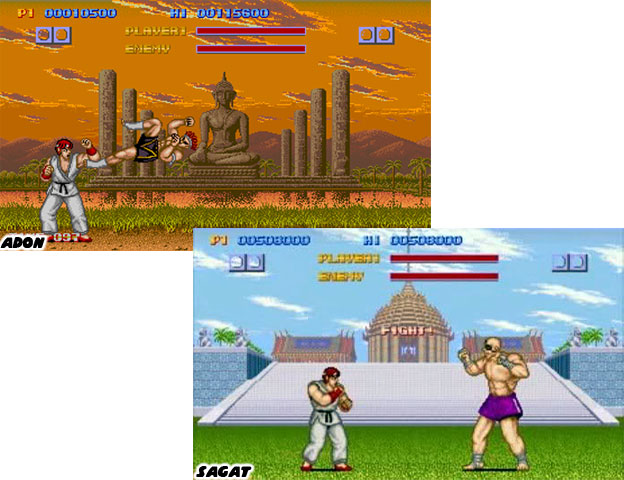
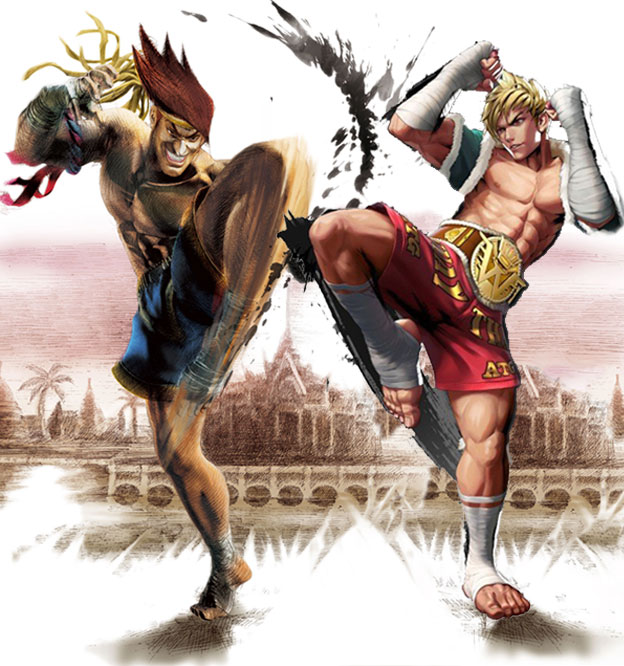
Capcom featured Muay Thai as the final style that gamers had to overcome in the original Street Fighter. Released in 1987 each stage told a story about the culture that Capcom was trying to recreate. The designers did not have the internet to rely on, perhaps they would watch some tapes or look at travel guides for reference material but they didn't have the luxury of digging too deep while creating the levels. Each stage was nonetheless quite memorable, especially for the final opponents in the game. The reflecting pool, sunset orange sky and seated Buddha were serene. They sharply contrasted the aggressive style that Muay Thai master Adon would become known for. A similar observation could be made of Sagat and his level. The beautiful temple backdrop beguiled a fighter that was feared by his peers. To impressionable gamers in Japan and the United States these were caricatures of Thailand that seemed true.


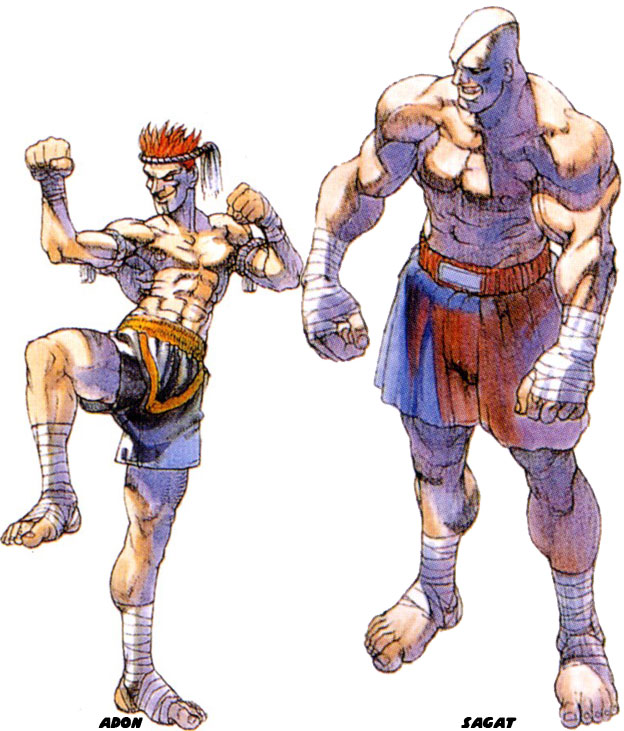
The designers at Capcom had done a wonderful job at setting a standard that all future fighting games would be measured against. Although both characters practiced Muay Thai both Adon and Sagat had very distinct variations on the form. Adon used leaping heel strikes against players while Sagat focused on quick punches and rising knee strikes. Like the level backgrounds themselves these attacks were caricatures of reality. From a character design standpoint both fighters were very unique personalities. Adon was not a humble understudy, he had grown tired of living in the shadows of his mentor. He hoped to defeat Sagat and assume his status as the worlds greatest fighter. Sagat on the other hand was a cold, calculating and brutal master. He had taken the life of an opponent in combat and his reputation had colored his presence in each and every game within the series. These details would become important to the evolution of the franchise as well as the genre.

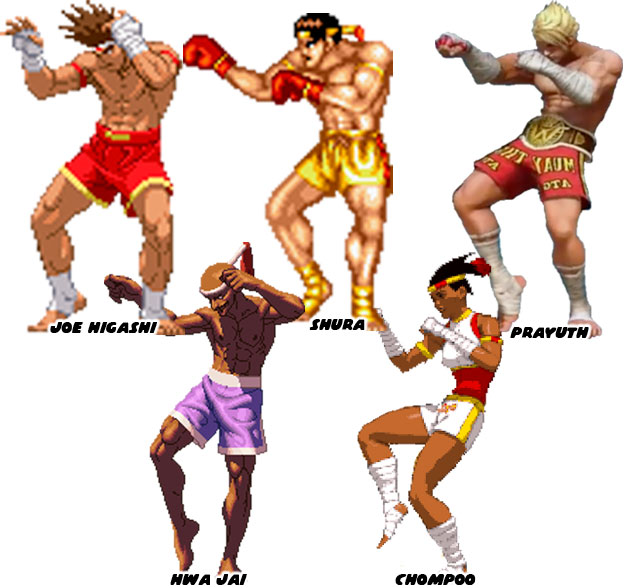
In 1991 Sagat would return in Street Fighter II' as a sub-boss. Other developers took notice of the genre and created their own version of a fighting game. Takashi Nishiyama was a Producer at SNK, he was previously a planner on the original Street Fighter. He wanted to create his own fighting game for the Neo Geo arcade platform. Instead of two main characters he helped create three main characters for players to choose from, one of which was a Muay Thai fighter named Joe Higashi. The game also featured a hot-tempered Muay Thai opponent named Hwa Jai. Fatal Fury was released at the end of 1991, the same year that Street Fighter II came out. Higashi and Jai would turn up again in various SNK games but they would not be the only Muay Thai masters in the universe. Other game studios would also try to incorporate the fighting art into their own releases. Also for the Neo Geo platform but developed by ADK there was a fighter named Shura. He was featured in World Heroes circa 1992, it was one of the first blatant clones of Street Fighter. More than two decades later the first notable female Muay Thai master would make her debut. Chompoo appeared in Capoeira Fighter 3 circa 2004. The character had a host of traditional moves, elbow and knee strikes, that were made fantastic when combined with leaping and tumbling attacks. The most recent Muay Thai master in the 2D, or rather 2.5D genre was inspired by several of the SNK icons, The blonde-haired Prayuth made his debut in 2013. The Chinese developers at Tencent had borrowed liberally from the icons created by both SNK and Capcom in their game the King of Combat.


Something that the most successful studios learned to do over the '90s was to add depth to their cast. Audiences might think that a fighting game character did not need a backstory, a history or even origin. Yet Capcom, SNK, Namco and Sega each learned that a memorable fighting game franchise needed more than a colorful cast or some fancy graphics. The game needed to be balanced, the control dialed in, music catchy and sound just right. The fighters needed to be memorable, they had to be more substance than flash. In order to achieve that the studios had to put as much planning into their design as they would for a AAA adventure star. The characters would not simply be just fighters, they had day jobs and families to go to. Some were soldiers, some were gang members and some were even aristocrats. These histories would not necessarily be spelled out for gamers though. The stages, the rivalries, the dialogue and occasional cut scene would reveal the motivation behind the best characters. Some of these histories would be unveiled over the course of several games, spanning 10 or even 20 years. The best fighters would become icons to the gaming community.


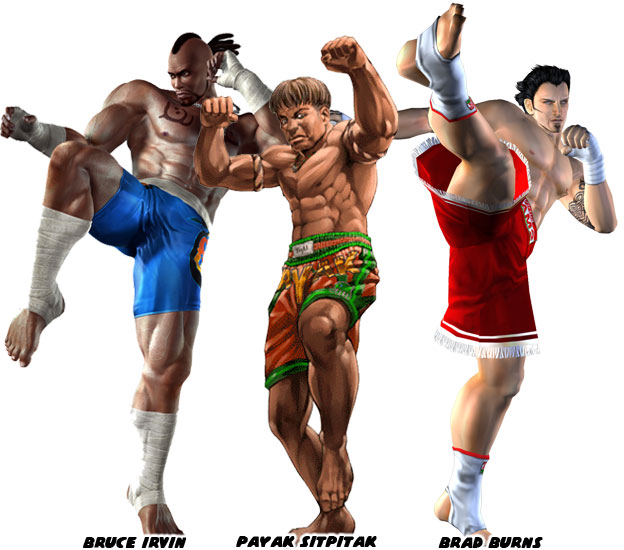
Something that contributed to the evolution of the genre was the shift from 2D to 3D graphics. As the various fighting arts were adapted to 3D they had to undergo some changes. The strikes of the artform were often simplified and some lost their presence. One technique that worked very well in 3D was Muay Thai. Namco introduced the Muay Thai hitman Bruce Irvin to audiences in 1995. The character featured in the Tekken series would gain a following. A few years later, in 1999 to be precise, SNK introduced their first 3D Muay Thai master. The character did not have the youthful brashness of Adon or rather Joe Higashi but he was still a part of the Fatal Fury universe. The middle-aged Payak Sitpitak was a more level-headed person, a fighter and family man. In canon he was talked into entering the Buriki One tournament by Higashi. Payak lacked a flashy style, to be fair the entire cast in the game was actually grounded in more realistic attacks than the 2D fighters. Payak was still a dangerous man who let his hard strikes do all the talking. The Neo Geo platform was not great at rendering 3D graphics, especially when compared to Namco's proprietary System 11 arcade board. These were the steps that the studios needed to make in order to reinvigorate the genre. Unfortunately the teams working at Capcom on the Street Fighter series were rehashing 2D sprites and falling behind the 3D development curve. Even Sega, a long-time rival to Namco would eventually add a Muay Thai fighter to their franchise. The ever-cocky Brad Burns made his debut in 2003 with Virtua Fighter 4.


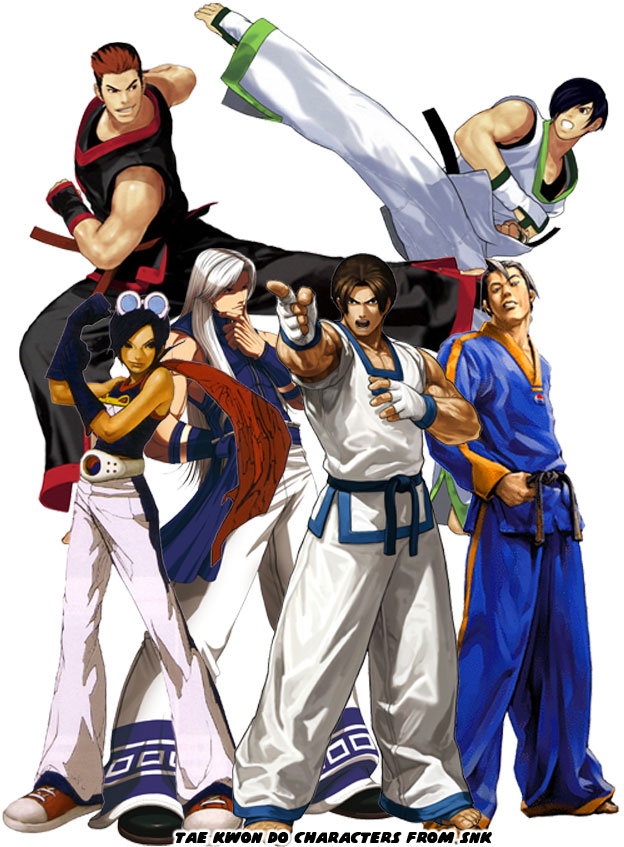
Muay Thai was considered one of the "exotic" martial arts in early fighting games. Its evolution was unique given the region that it came from and how native customs mixed with Hindu and Buddhist cultures to shape the art. Something similar happened in the far North where different cultures adapted the fighting arts of China and Japan into something unique. The Korean system of Taekwondo (TKD) was seen as a modern striking form, it did not come into its own until the late '40s. At the same time it enjoyed an appeal almost as exotic as Muay Thai. SNK was a perennial rival to Capcom, especially in the fighting game genre. The planners and some staff working on the Fatal Fury, Art of Fighting and King of Fighters games were ex-Capcom employees. They wanted to diversify the fighting styles featured in their games and provide a bigger library of characters than what was featured in the Street Fighter series. In order to do this they looked at other popular striking arts and no form came to mind more immediately than TKD.

The style of fighting was very calculated, it reflected the nation of origin. Korea was a culture that based its language on mathematics, the importance of science was not lost on the people. In Taekwondo kicks were the main attacks. Practitioners did not only learn all the types of kicks they could perform but which were the most effective at different ranges. The form was distilled from Okinawan Karate and Chinese Kung-Fu however there was a distinct fight science to the art. Students had to learn how to angle opponents, restrict their movement, find openings and isolate weak spots. Practitioners learned to be light on their feet and remain in a constant state of movement. This was not a fighting art developed from warfare so the strikes were optimized for speed and efficiency rather than lethality. It was especially important in point-based tournaments. From a gaming standpoint the sweeping kicks looked amazing when animated by studio artists. The lion's share of TKD fighters were featured in SNK games through most of the '90s. Kim Kaphwan started the tradition in 1992. He was a new star in Fatal Fury 2. Kim was notable not just for his amazing kicks but because he was the first to have children appear as fighters as well. His sons Dong Hwan and Jae Hoon debuted in 1999's Garou Mark of Wolves. Muay Thai and Karate looked unique depending on the practitioner, the same could be said of the TKD fighters. The Kim children were not simply clones of their father but instead had their own personalities and moves.


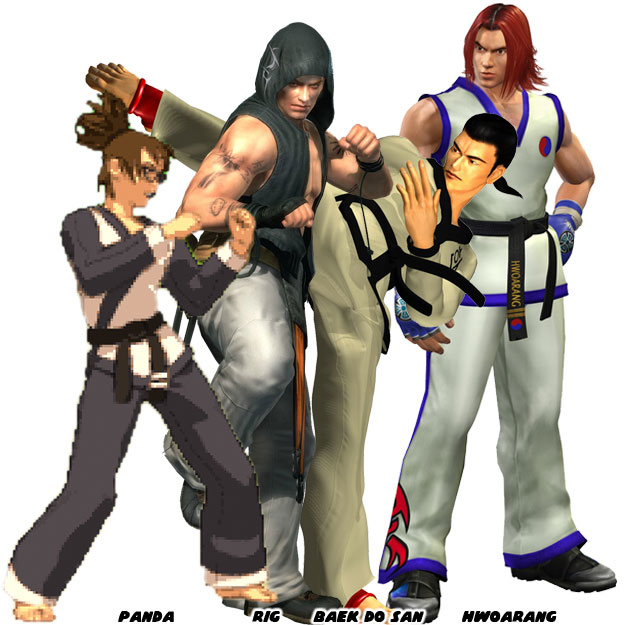
Enemies and allies of the Kim family were added to other SNK games. Seo Yong Song from Buriki One (whom also debuted in 1999), Jhun Hoon from King of Fighters '99 and May Lee from King of Fighters 2001 were all distinct practitioners and proud Koreans. The layers of storytelling that went into the rivalries and relationships helped add depth to the universe and made the characters stand out. Audiences enjoyed the diversity they were presented with. Taekwondo was one of the fighting arts that made the transition from real life to 2D seamlessly. When technology allowed the form to be presented in a 3D fighting games it was a perfect fit. Part of the reason that the moves looked so well in 3D was because they were not traditionally animated. Instead there were athletes and martial artists performing motion capture animations for the programmers to work from. Baek Doo San was the first in a TKD master in a major title. He appeared in Tekken 2 in 1995. Namco went the extra mile and had an actual Olympian perform the moves for Baek and his understudy Hwoarang in Tekken 3, released in 1997. Panda from the 2008 game Capoeira Fighter 3 was the first female 3D TKD practitioner.


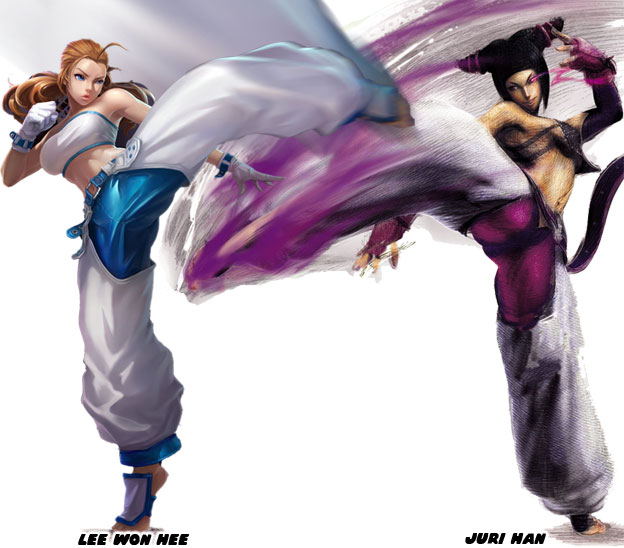
Sega's Virtua Fighter was the only major 3D series yet to feature a TKD master. According to canon Sarah Bryant, who debuted in 1993, was accomplished in Jeet Kune Do. In later iterations she added the French art of Savate and TKD to her repertoire. Rival studio Tecmo was also late in bringing the Korean fighting art to fans. Dead or Alive 5 was released in 2012 and introduced a mysterious TKD fighter known only as Rig. His moves were familiar to audiences because of the other TKD characters that came before him. The 3D mold created by Baek Doo San would not be broken until 2010. While Panda did set the precedence most fighting game fans would identify the assassin Juri Han as the most revolutionary new TKD character of the past 20 years. The character actually had many design elements pulled from Chun-Li however that was besides the point. The powerful kicks, blinding speed and brutal moves made her stand out from her peers. She became such a powerful icon that a few short years later the studio Tencent would more or less copy her design. Lee Won Hee debuted in King of Combat in 2013. She had a blend of moves from Juri but also from the Kim family and other TKD gaming pioneers. What was interesting was that there was a male South Korean Judo grappler named Lee Won-hee that was the World Champion in 2003 and Olympic Gold Medal Champion in 2004. I am not sure why the Chinese developer would use the same name.


Pop culture had a lot to do with which styles would be featured in fighting games. The more well known arts would be included in almost every franchise developed. The games that deviated from the formula, or made up their own fighting arts were hit or miss with audiences. Muay Thai and Tae Kwon Do were standout forms from the early days of the genre. So how did the classic fighting arts remain "untouched" even as technology changed? Find out about this shift on the next blog. As always if you enjoyed this blog and would like to sponsor me please visit my Patreon page and consider donating each month, even as little as $1 would help make better blogs and even podcasts!