
Showing posts with label anniversary. Show all posts

Monday, December 2, 2024

Freeze frame, my poster collection, part 15…

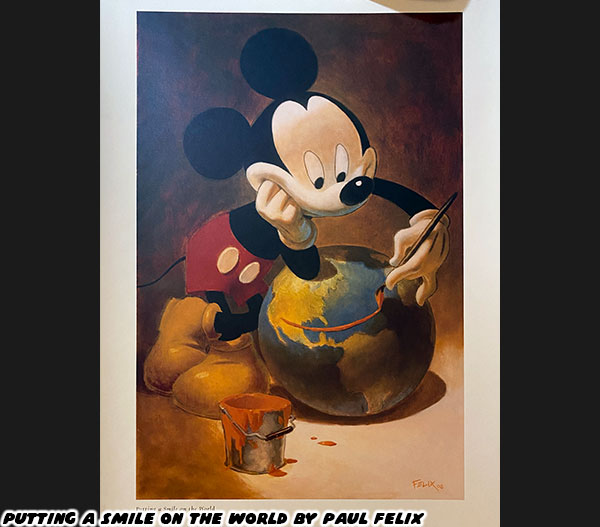
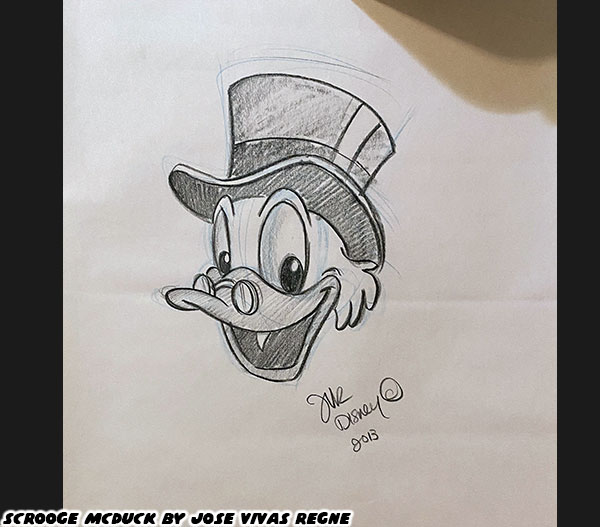
As a big fan of theme parks, and animation I have a lot of posters from Disney. Sadly I don’t have any of those massive ride posters from Disneyland, but perhaps someday I might. Some posters were easy gets. Such as being a member of D23, the Disney Fan Community.

Some sketches we got from Disney artists were thanks to the San Diego Comic Con where the company hosted a special event for D23 members.

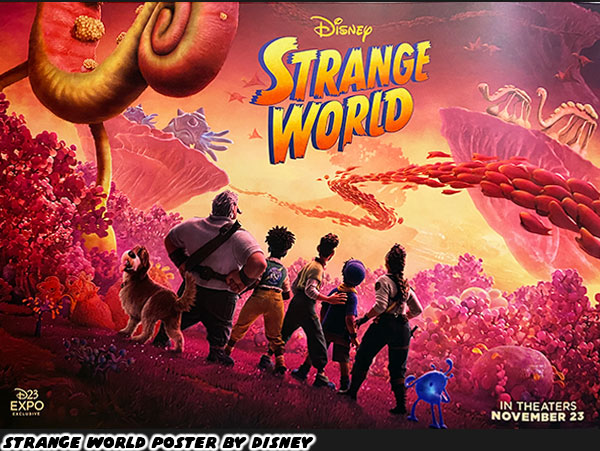
I still haven’t seen Strange World but the poster is gorgeous.

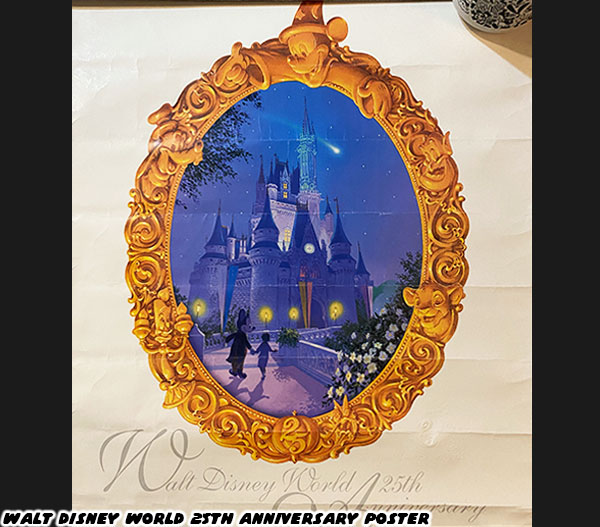
The missus is a huge fan of Walt Disney World, and specifically the EPCOT Center. I should get this poster restored, and framed for her.

I don’t remember where we got the Walt and El Groupo poster from. It’s a great documentary if you haven’t seen it.

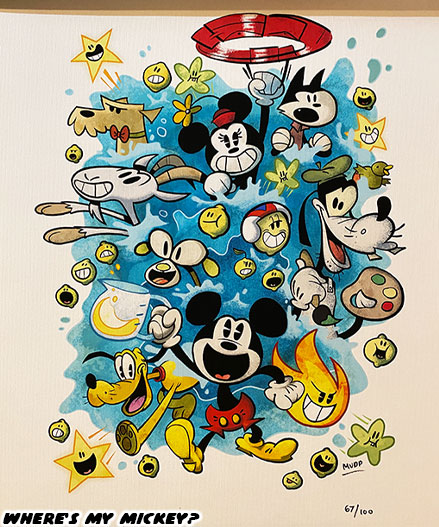
The where’s my Mickey print is on canvas, and was given to press members when they visited the gaming studio. I miss covering those events.

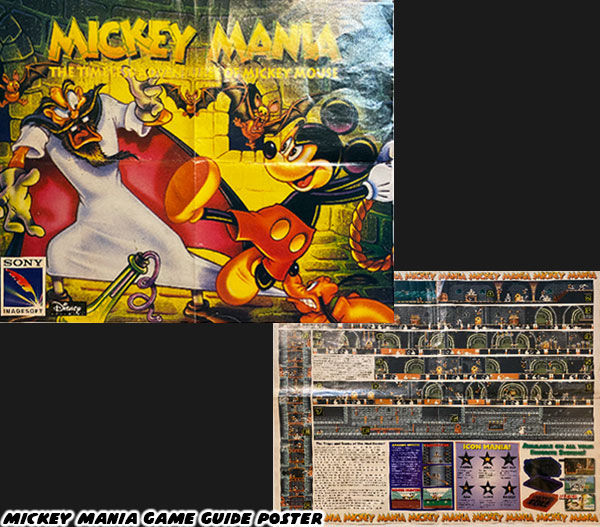
It wasn't the oldest Disney game poster in my collection. That honor would belong to Mickey Mania from 1994. It was funny that the Mad Doctor would turn up again in game form for Epic Mickey 2 in 2012.

Are there any Disney posters, or prints in your collection? I’d like to read about them in the comments section. As always if you would like to sponsor me please visit my Patreon page and consider donating each month, even as little as $1 would help make better blogs and even podcasts!
follow the Street Writer on Patreon!

Monday, June 3, 2024

Celebrating 10 Years of Arcadia / the Return of EGM! - Two Capcom-Unity classics from June 16, 2009

Hello friends, today is a special day. This month we are celebrating Arcadia magazine's 10th Anniversary! Today I will also be celebrating the legacy of my favorite Japanese gaming magazine, Gamest. While this doesn't mean much to the majority of the visitors here, Arcadia represents a very important connection to gaming history. To use a corny phrase, it is one of the few magazines that keeps its fingers on the pulse of videogaming. There are many magazines that can claim to be genuine but Arcadia has a focus on the arcade industry. After 10 years following a supposedly "dead" industry Arcadia has shown that the market has never been more diverse and exciting. Arcadia is the spiritual successor to Gamest magazine, considered to be the best arcade gaming magazine of the 90's. Many of the same writers, artists and editors that contributed to the original Gamest, started up Arcadia when publisher Shinseisha went belly-up in 1999.
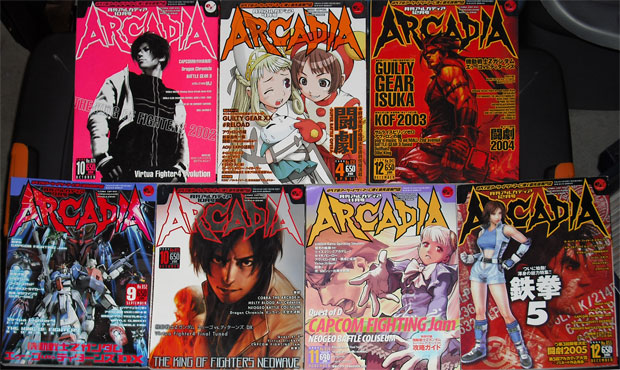
I cannot say that I have been following Arcadia all 10 years. I only found out about it in 2002, three years after getting my last issue of Gamest. I collected Arcadia on and off for a few years and then finally got around to getting a subscription back in 2004 - 2005. I haven't missed an issue since. So what makes this magazine so special? Why do I have such fond memories of Gamest when many great magazines, like EGM and Next Generation, have also come and gone?
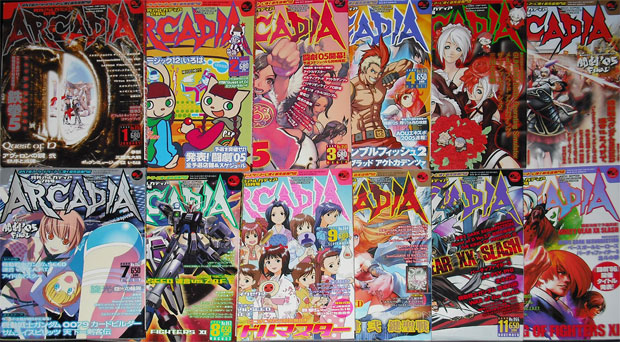
To be fair I do have my fair share of other videogame magazines. Like many of you I started on EGM back in the day. Sadly I ended up throwing away the first 150 issues or so because of water damage. I grew up on the insight and wit of people like Ed Semrad, Martin Alessi, Sushi-X and the Quarterman. Throwing away those classics was a heartbreaker, believe me but I was fortunate enough to have discovered Japanese gaming magazines in the early 90's. My friends and brothers learned that the real industry standard was the Weekly Famitsu. We would make treks to Japanese bookstores in Downtown LA. The same stores that we had discovered Dragon Ball Z also taught us to appreciate the nuances in Japanese gaming mags.

I was amazed that Famitsu could publish a magazine twice as thick as EGM every week. Writers and editors worked in shifts and created content at a manic pace. Perhaps that is why I write as often as I do, they created an example of how tireless game journalists had to remain. I rarely had money to buy an issue but poured over them every chance I could. I did the same for the dozens of other arcade, PC and console mags that came out in the 90's. A few of these magazines I still have and take good care of. They are all like time capsules. You can learn a lot about the gaming scene, hardware evolution, artistic direction and publishing strategy by going through these magazines.
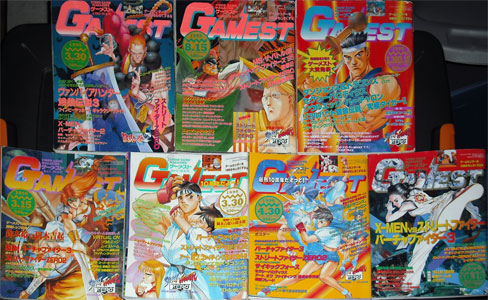
It wasn't until I discovered Gamest that my love for gaming mags really took off. I had gotten my first issue of Gamest in 93. I was of course a fan of fighting games and wanted to see the latest happenings from Japan. My main motivation was to score exclusive art that never seemed to be printed in any western mag. Gamest delivered that and much more. It was a primer on game journalism from a Japanese POV. The magazine was loaded with highly detailed previews and features, on occasion some fantastic posters as well. High scores and tournaments were covered, while fan art and letters got a few pages. All of that was very similar to American magazines. The differences were more intriguing.

The writers would review fan manga or doujin inspired by game characters. The idea of an industry that supported fan work was fascinating. Try publishing a comic dedicated to the X-Men without Marvel's permission and see what happens. Advertisers ranged from developers and publishers to arcades and game stores, including those that sold arcade boards and joysticks. Gamest also ran special columns for developers. Yoshiki Okamoto from Capcom had his own section to talk about the happenings at the studio and get readers hyped on upcoming games.
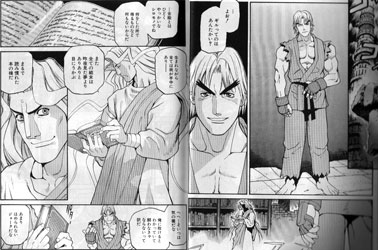
Manga serials, like Sakura Ganbare and Ryu Final, would get featured in the magazine, as well as the sister manga titled Gamest Comics. Manga artist Mine Yoshizaki even created a mascot character for Gamest named Minty, her adventures were told over four-panel gag comics. He also contributed art for the magazine for features that lacked official character pieces. Shinseisha was not content publishing printed material. They had a goods section that featured telephone cards (before trading cards became hot), dinnerware, posters and even clothing based on popular games. In the new year all of the studios would send cards to be published bearing wishes to the magazine and readers. Some of the rarest game art turns up in these official pieces. Can you imagine how different the arcade industry would have been in the USA if they had seen the same amount of support from the magazines?

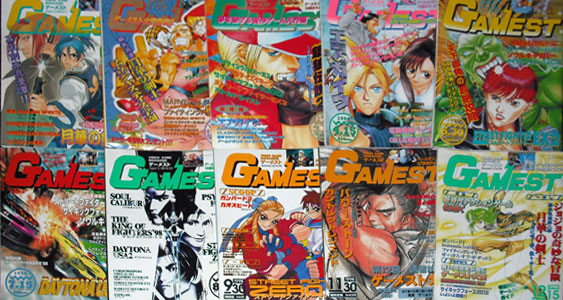
Gamest was very good at setting the standard. Unfortunately they were not perfect. A look at their covers through the 90's showed some of their short-sightedness. Almost all of the covers and features from that era were based on fighting games. While they were hot in the 90's they weren't the only viable genre in arcades. Shinseisha had stretched itself too thin and when the publishing industry felt a recession they closed shop. Despite the popularity of their merchandise, mooks (strategy books), magazine and manga's, the publisher could not stay afloat. When they shut down in 1999 it was the end of an era and I was more heartbroken then than when EGM closed its doors.
Some of the contributors went on to work at Enterbrain! and Studio Bent Stuff. The core of the Gamest staff founded Arcadia via Enterbrain moments after Gamest closed. Enterbrain was not going to publish a monthly with as much content as the old Gamest. The market couldn't support it. The new magazine was lean and mean. Publishers were responsible for paying for supplements and posters. There were no manga titles published in the middle of the magazine and the goods section was limited to promotional prizes by the publishers plus any new books by Enterbrain. Interviews and features were spread across the board. Fighting games did not dominate the covers. Rhythm-games, racers, sims, robot, SHUMP and card titles all had equal billing.

The magazine even went through a few facelifts in the past decade. Originally it was read right-to-left like traditional Japanese magazines, with the front cover on what we consider to be the back. In 96 they changed the format to western and went left to right with the cover where Americans would expect it to be. Unfortunately the cover font was switched to Japanese. In June 2009 the layout changed once more and the English title returned to the cover.

Arcadia will probably never recapture the glory days of Gamest but that is not the purpose. It has to survive during these times and show the world that the arcade scene is still alive and well. On occasions we get glimpses of those old days. Arcade legends like Capcom, Namco, Konami and Sega still find the time to send new years cards to the magazine. Covers featuring exclusive art, a detailed booklet, an amazing poster and now even DVD previews. Enterbrain recently printed a tee shirt that read Gamest Generation, in kanji it reads "Find Out For Yourself." The purpose of this blog is to let you know just that. Subscribers of Arcadia know that the legacy is closer to 20 years in history. Even though the overall page count is down from Gamest, the quality of the content has never been higher.

While scanning content for this blog I was also helping a young man in my computer lab with his homework. He was a GameStop employee that lived and breathed videogames. He mentioned that he had never played the original Street Fighter II and that SF IV was selling out in his store. He didn't understand why it was so popular, or why it was an important series. He noticed the Japanese magazines I was scanning in and wondered what Gamest was all about. I told him that the magazines were probably older than him. He got a laugh out of that.

SF II was 17 years old and those that grew up on it were now adults, they had nothing but fond memories of the series and were eager to rekindle those experiences. I explained that the games and magazines were very closely related in the 90's. EGM in the states and Gamest in Japan helped shape the canon of Street Fighter as much as Capcom had. Because of this relationship between the publishers and magazines fans could read about the characters and universe when they weren't playing the games. These stories were published a decade before Udon had gotten the rights for the Street Fighter comic.

He was amazed that I had taken so much care of the magazines and that I was sharing this slice of history with the online crowd. I told him that people in the US should appreciate the contributions of Gamest and Arcadia. Magazines and websites here should strive to create content that lives up to that standard. I know that I will always push to give my work that same level of dedication.

-----------

I'm sure you heard that EGM is returning to print hopefully later this year. This is awesome news for those that grew up on the magazine. I'm happy to hear that the magazine is back, especially that its going back to one of the founders. I'm hoping that they might be looking for new writers, perhaps a genuine fan of fighting games. Not a "fan" in the popular sense of the word, but somebody that likes to play fighters and take them apart as well. A writer that has a pretty good long-term memory of the genre and more importantly, will try to avoid the mistakes in covering their development.

EGM might be considered infallible when it comes to reporting on Street Fighter but they have allowed their own interpretations to color the development of the series. The things they have written, even as an April Fools joke, ended up influencing the actual game. This never sat squarely with me. I felt as if people that didn't really understand all of the nuances for Street Fighter, especially the Japanese origins and influences, were shaping the American perception of the game. That's right, I'm talking about Sushi-X and the rest of the crew. What EGM had done to the history of the franchise was endemic of a larger problem. The timeliness and efficiency of print journalism.

It was the February 1997 issue of EGM that got a multi-page preview of SF III. The observations they made were based on a both a work-in-progress and their assumptions about how the characters played and their origin myth. I wonder if the editors ever called the writers on the assumptions they wrote.

The very first photographs of SF III that EGM published were a few issues prior to their dissection. Back in the November 1996 issue. Interestingly enough it was the only time I had ever been published in EGM, as a letter of the month, questioning whether SF III would be good or not. Even back then I was passionate about the franchise. I had followed the SF III developments in American magazines and had noticed that the gap between what was being published in Japan and the US were still a few months apart. In November of 96 my other favorite US magazine, Next Generation also published a news blurb in their "Arcadia" section. The information seemed mistranslated and incomplete. Worse, it lacked a screenshot.

These gripes might seem inconsequential as most Americans got their first glimpse of SF III in November's EGM. However for those lucky types that visited Japanese bookstores had actually gotten a glimpse and solid information of SF III in September 1996's issue of Famitsu. I was one of those lucky types. I bought the magazine and poured over the solitary screenshot and info on the CPS-3 and Warzard day and night. I took it with me to school to share with the other die-hard SF fans. This single page spread allowed me to question whether Capcom was doing the right thing by staying with 2D before EGM had even published a screenshot.

So why am I mentioning all of this now? Why should what was published 13 years ago matter to someone looking to write for EGM today?

Perhaps because I grew up with a firm appreciation for both American and Japanese magazines. I saw how much hard work it took to make articles memorable month after month. I also learned how much influence these magazines held with both publishers and audiences. I didn't want to see EGM, or any other magazine, fall into the familiar habits of making friends with the publishers first and then writing light previews to ensure future access. By ignoring hard-hitting questions most magazines were doing a disservice to the audiences. They were also ignoring the things that made titles memorable in the first place.

I'm not one for making friends in the industry. I'm also not much for newsy writing and reviews. I am a fan of longer features and believe that gamers deserve to know every side of the story, even if that means having to call the developers on their inconsistencies as much as praising their greatness. Damned if I wouldn't want a chance to prove that in the new EGM.

I have no published material to show Steve Harris or any of the former editors. No way of showing my ability and insight other than a mountain of blogs on 1UP and a smaller list on Capcom-Unity. Would my style even fit within the walls of EGM, where higher-profile writers and editors already have a history with companies like Capcom? Or am I destined for other things?

What do you think?

As always if you would like to sponsor me please visit my Patreon page and consider donating each month, even as little as $1 would help make better blogs and even podcasts!
follow the Street Writer on Patreon!

Monday, February 19, 2024

Sony Pictures Animation celebrates 10 Years! - A 1UP classic from September 6, 2012

Hello friends, I hope you are having a good day so far. I just wanted to let you know about an important anniversary happening this year. Sony Pictures Animation is celebrating 10 years in the biz. Last night the missus and I stopped by the studio for the first film in a series that they will be showing over the next few weeks. It was hosted by the producer, writers and animation director.
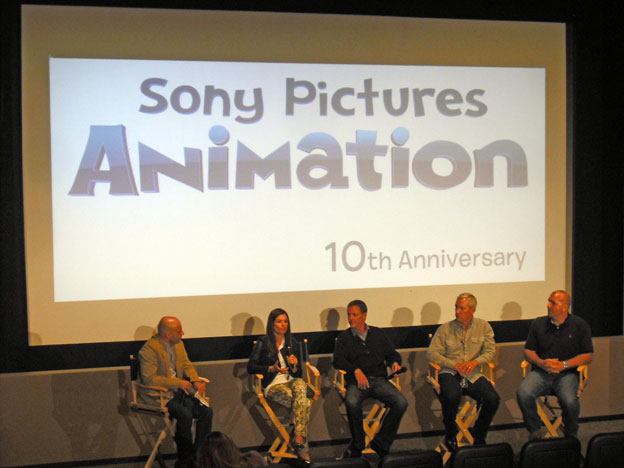
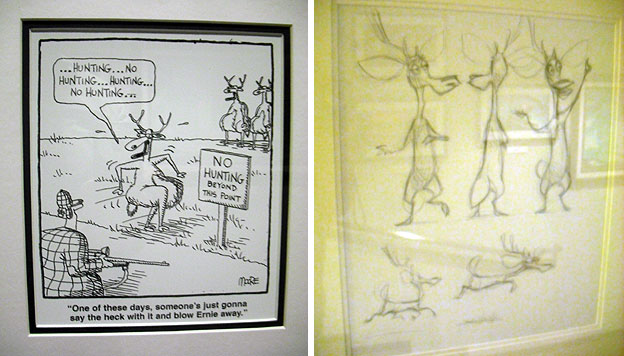
Sony began producing animated features with Open Season. The idea for the film was originally started by the comic strip In the Bleachers. The writers had a collection of strips and they pitched a story to Sony in where the forest animals turned the tables on the hunters. The studio greenlit the film and gave them about three years to turn it into a reality. That initial film was moderately successful and actually spawned two sequels.
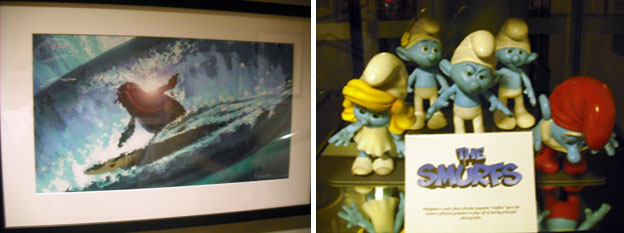
Sony then began looking for new directors and ideas for films. The surfing penguin film Surf's Up followed, as did their first CGI / live action hybrid the Smurfs.
The studio was doing well with licensed characters like the Smurfs as well as adaptations from books like Cloudy With a Chance of Meatballs. They were eager to try out new things and partnered with the stop motion animation studio Aardman (Wallace and Gromit) to produce The Pirates! Band of Misfits.
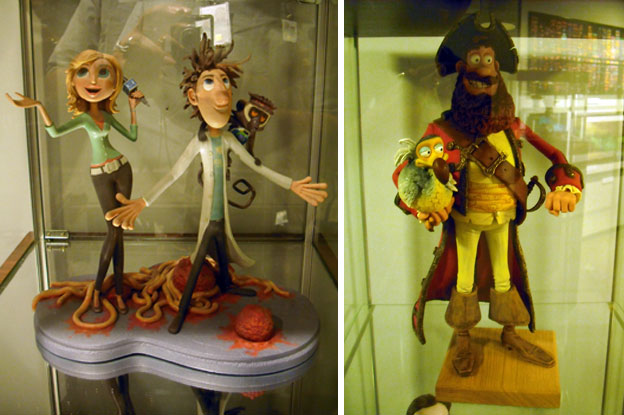
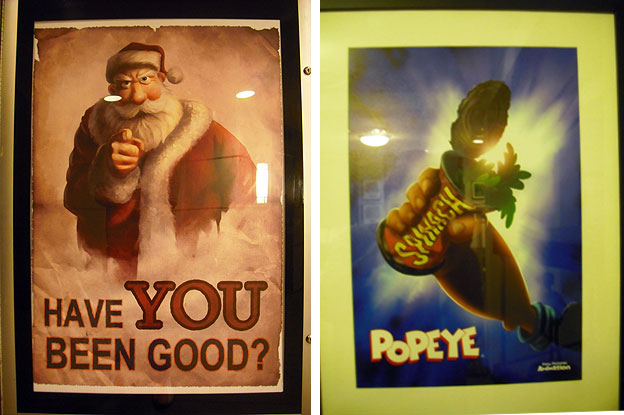
It's hard to believe the volume of work the studio has produced over a short timeline. Arthur Christmas and the future Popeye film, directed by Gennedy Tartakovsky being polar opposites (no pun intended) as far as storytelling and animation styles.
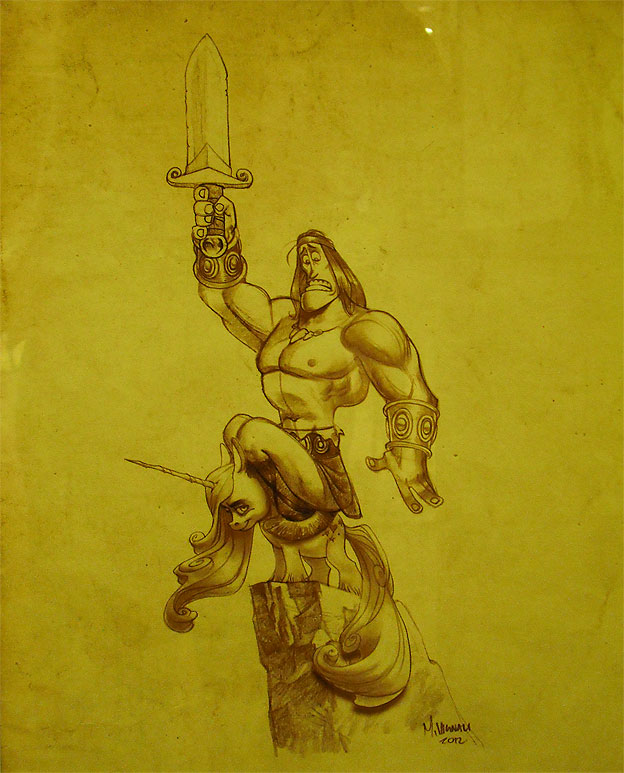
It's great to see how the studio uses isn't afraid to take on new ideas and foster the creativity of their animators. Too many other studios will only work on licensed features while others are locked into a spiral of "sequelitis." Sony Animation has a good track record of trying out original ideas as much as existing IP.
I can only imagine what great ideas are being cooked up. At the end of the film series Sony will be showcasing their next feature to the public for free.
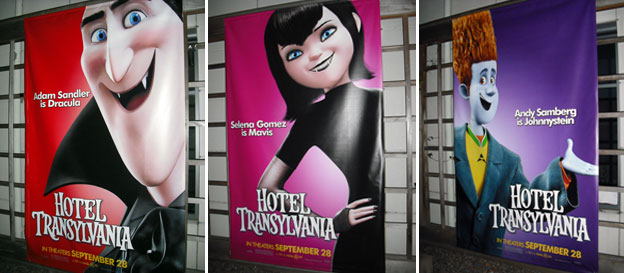
Hotel Transylvania will be screened for families and I hope to have mine there for the show. When the location and information for tickets are revealed I'll be sure to let my So Cal friends know. As always if you would like to sponsor me please visit my Patreon page and consider donating each month, even as little as $1 would help make better blogs and even podcasts!

follow the Street Writer on Patreon!

Saturday, June 30, 2018

30 years of Street Fighter: 30 years of Characters #1

I'm proud to say that I was there for the first Street Fighter and was a fan of Capcom since 1984 with the debut of a shooter called 1942. It's hard to believe that I've been following Street Fighter for 30 years. I've met many great people thanks to the series. I made an awesome friend during many heated Street Fighter II battles at the local arcade. I even became the best man at his wedding. I know I'm not alone when it comes to Street Fighter building long-term friendships. I have always believed in the greatness of the fighting game community. Street Fighter is one of the reasons I've been writing online for more than a decade. It will always have a special place in my heart. I've loved the various Capcom fighting games since they debuted, Final Fight, Darkstalkers, Rival Schools, Saturday Night Slam Masters, Power Stone, and on and on. I've followed the developers and their careers once they left Capcom. The Street Fighter team assembled the roster of the greatest fighting game icons we'll ever know. When the majority of the team left Capcom they forever changed the genre. They went to other studios, notably SNK, and they created their own studios like DIMPS and ARIKA. These people built a library of characters, control systems, and game play elements still used to this day. They inspired an entirely new generation of programmers, writers, artists, animators and designers. Street Fighter literally changed the world. With all the praise I give them I know the studio can always do better.


For my final day of the Street Fighter celebration we're going to honor the one that got away. Or thinking more positively, the one that might still find his spot in the lineup. The game series has done a good job at representation. There have been fighters from every corner of the globe, male and female, of every skin color and age featured in the Street Fighter universe. Some were good guys, some were bad guys, and some were victims of circumstance. Many were fantastic but a few were not well done. To be honest every now and then Capcom fell flat on their face. It broke my heart to look at the concept art for Street Fighter IV and see a strong, young, black character in the final stages of design.This character was supposed to be an arch rival to Ken. Only we got Rufus, the joke character instead. The young black man, nicknamed King Cobra took all the elements that made Ken and Ryu unique and incorporated them into his design. He wouldn't have been the only new rival in the game. Juri took a lot of cues from Chun-Li and for some reason that worked with audiences. I have a feeling that King Cobra would have gotten the same amount of love from audiences. It hurts to look at this character this character and wonder what if?


In the planning stages of every Street Fighter not every design was a hit, some were ugly, boring, borderline racist or just horrible. Some of these characters made it into the series but many more were left out of the game. This wasn't exclusive to Capcom. Every lineup had their own growing pains. Many figures were left on the cutting room floor for a reason. At worst the designers were culturally insensitive, at best they were being lazy. Every now and then you could find discarded characters that hit all the right notes. If you saw them in the sketchbook you might wonder why they were left out the game. It's a sad realization that these fighters would most likely never appear in the series. You should always have hope. Street Fighter has made it to 30 years because the most passionate people at Capcom wouldn't let it die. It will continue growing and evolving as long as those energetic voices keep hope alive. Maybe one day we'll see King Cobra in the game. He could be the face that carries the series for another 30 years. You never really know. As always if you enjoyed this blog. Street Fighter is a series worth exploring and explaining. I hope you've revisited some memories during this lengthy series. If you would like to sponsor me please visit my Patreon page and consider donating each month, even as little as $1 would help make better blogs and even podcasts!
follow the Street Writer on Patreon!

Friday, June 29, 2018

30 years of Street Fighter: 30 years of Characters #2


Street Fighter has been one of the all-time great fighting game franchises. Part of the reason for its popularity had to do with the World Warriors featured in Street Fighter II. With a hundred or so characters being added into the Street Fighter universe over the past 30 years I would argue that Chun-Li is the most popular one (with Cammy being a close second). Chun-Li is an absolute icon, not only in the fighting game community but for the video game industry as a whole. She's a role-model to women and an inspiration to men. She's a complex character with a fantastic design. A brilliant fighter with a style all her own. She didn't start out perfect in the development stages of Street Fighter II. The planners wanted a kung-fu master in the game, as Lee and Gen had represented different Chinese schools previously. Also they didn't want the new character to be a guy. The first draft of Chun-Li, then called Zhi-Li was very traditional, almost to the point of being a cartoon stereotype. Chinese characters and Chinese-inspired costumes were somewhat popular in Japan in the mid '80s. Thanks in part to the series Ranma 1/2 by Rumiko Takahashi and 3x3 Eyes by Kaoru Wada. Both of those runs debuted in 1987, the same year that the original Street Fighter was released.


It would take a few years for their influence to be felt at Capcom but once it was there the China Daughter would make her way into the Street Fighter universe. There was something missing with the original Chun-Li concept. She was a little too simple, a little too generic. The studio was playing it safe with the lineup. That was when designer Akira "Akiman" Yasuda decided to give her a radical makeover. She was turned from a prodigious girl into a grown woman. She became an undercover cop that had infiltrated the Street Fighter tournament. Her flowing costume was a disguise. She had wrestling boots on and heavy spiked bracelets to add some contrast to her blue silk uniform. She wore tights over her exposed thighs which allowed her to kick and remain modest at the same time. Akiman was a proponent of her legs being her main weapons. She was given the Hyakuretsukyaku aka Lightning Kick and the Kaitenteki Kakukyakushuu aka Spinning Bird Kick as her special attacks. Akiman would forever be known as the father of Chun-Li and the person that painted her best portraits.


Audiences fell in love with Chun-Li at first sight. She was young and energetic. Blindingly fast and able of doing things that none of the other World Warriors could. Despite being an adult she still had some hold overs to her youthful origin. She would jump and giggle with each victory. She would cry with every loss. Even her ending showed that she had a life outside of fighting, which was a stark difference to most of the male characters. After avenging the death of her father she celebrated her newfound independence and went out with her girlfriends. An alternate ending was added where instead of dating she went into police work. She set a standard that would be hard, if not impossible to beat. The best female designs in the Street Fighter universe have borrowed from Chun-Li. Cammy, Blare Dame, Pullum Purna and Juri all took cues from the first lady of Street Fighter. Whether it was costume elements, build or even back story, there was something that connected many of the designs together.


When the studio decided to create a younger version of Chun-Li for the Zero / Alpha series they changed her costume to be an homage to the jumpsuit that Bruce Lee wore in his final movie, the Game of Death. Her spiked bracelet became a weighted bracelet and her wrestling boots were turned into sneakers. It was a clever way of showing her in a more youthful light and celebrating the influences that Capcom designers used when creating the character. Chun-Li is without a doubt one of the biggest reasons why the Street Fighter series has made it to 30 and will keep on going. Do you have a favorite version of Chun-Li or game she appeared in? I'd like to read about it in the comments. If you would like to sponsor me please visit my Patreon page and consider donating each month, even as little as $1 would help make better blogs and even podcasts!
follow the Street Writer on Patreon!

Thursday, June 28, 2018

30 years of Street Fighter: 30 years of Characters #3

For the 30th Anniversary of Street Fighter we've talked about Ryu, the hero of the series. We've  talked about Sagat, his great rival and the template for a memorable martial arts boss. We've even talked about Vega / The Dictator as a way of redefining what a final boss villain could be. With every fighting game that's ever been and that will ever be, there is one boss that is considered the gold standard. His name is Gouki. You might know him as Akuma. He represents the peak of the mountain, the ultimate fighter if ever one existed. Designed with a frightening appearance he has elements pulled from Asian mythology, including demons, the afterlife, and even lions. His origins are part of a larger narrative. He is the estranged brother of Gouken, the master of Ken and Ryu. He murdered his master and his brother in a fit of rage. He is as complex as he is intimidating. The best renditions of the character coming from the talented hand of Bengus, one of Capcom's best artists.


The origins of Gouki are obscure, owing more to an April Fool's prank rather than clever planning. The long defunct EGM magazine invented a character named Sheng Long who was supposedly the master of Ken and Ryu. He could only be fought under certain conditions. Capcom decided that they should introduce a version of this mythical fighter in one of the final Street Fighter II upgrades for the arcade. His debut in Super Street Fighter II became the stuff of legend. He only showed up at the end of the game if certain conditions were met. He absolutely destroyed Vega before the match started. His moves were far more impressive than Ken or Ryu's. He could throw fireballs while leaping, he could even teleport across the screen. He showed that even the best Street Fighter bosses were far beneath him. His popularity really took off as he was formally added as a playable character in the Street Fighter Zero series. He had his own story and ending to help explain his purpose in the universe. Gouki wasn't the main boss for every character in the Street Fighter universe and that made sense. He wanted to fight the best ever, and in particular see if his brother's students were any good. He was reclusive and you had to work hard to find him and even harder to beat him. He embodied every quality that made for a memorable final boss.


No studio was able to recreate what Capcom had stumbled into. After 30 years we have yet to see a boss character in the series that holds a candle to Gouki. Part of the reason why is because most developers, including the current Capcom stable, have a limited approach to their villain designs. They often create one-dimensional bosses, pure evil with amazing powers and no redeeming factors. Gouki was a murderer, that would never change, but he fought with his own code. He didn't kill everybody he ran into. He was obsessed with a worthy challenge. This was best explained in a drawing by Bengus. Gouki, selling fruit, probably by the side of the road. Earning some money to buy provisions and supplies. He could take whatever he wanted but he was no thief. He only became a monster when a fight was at stake. Gouki looked supernatural, he looked demonic but the thing that made him better than every boss character was his humanity. Gouki could have been a real person with a killer's instinct and that is truly frightening. It may be 30 years before Capcom ever creates a villain as memorable. What do you think about this character? Please let me know in the comments section. If you would like to sponsor me please visit my Patreon page and consider donating each month, even as little as $1 would help make better blogs and even podcasts!
follow the Street Writer on Patreon!

Wednesday, June 27, 2018

30 years of Street Fighter: 30 years of Characters #4

It's been 30 years of Street Fighter and nobody is talking about Gen. We have to give this grandmaster of kung-fu the attention he deserves. Gen is one of the original opponents in the series, the best fighter in China. He has popped up just a few more times since his debut. His return to the game, in Street Fighter Zero / Alpha 2 (1996), was easily his best appearance. Gen became the first character to offer players two completely different fighting styles, that of the mantis or crane. Players could alternate in between rounds their style by holding down different buttons. This meant completely different move sets, super moves and strategies. Imagine how unpredictable this made him in tournaments. Gen was a call back to the classic fighting archetypes that inspired the original Street Fighter line up. Remember how Dhalsim (#30 on my list) was based on the Yoga Master in the Master of the Flying Guillotine (1976)? Gen is a nod to the various white-haired masters from martial arts cinema, including Executioners from Shaolin (1977), Born Invincible (1978), Abbot of Shaolin (1979), and Fist of the White Lotus (1980). The ancient kung-fu techniques had been featured in cinema but rarely used in actual games until Gen. 


The legend of the white haired master went back to the earliest days of the martial arts in China. Gen was derived from a number of movie heroes and villains but even those characters were inspired by historical figures. The most likely root was Bak Mei, one of the founders of the Shaolin school. He was allegedly a survivor of the Shaolin massacre during the Qing Dynasty. He was one of the Five Elders, the survivors of an assassination attempt against the monks. They eventually rebuilt the school and preserved the early martial arts. This group also began developing new schools of fighting based on predatory animals like tigers and eagles. Gen was derived from those classic heroes. He had superhuman strength and speed despite his age and made us believe that these fabled masters might still be hiding in China. He represented the last living member of an ancient lineage. Hiding in plain site, wandering in the back alleys of the oldest corners of Shanghai. Where a centuries-old market had been paved over by a modern, indifferent world. Only a few clues remained of what was once there. A few crumbling signs, posters and ads, left to fall in disrepair in the shadows like the rest of ancient China.


Gen was symbolic of the mythical martial artists. He was just like the characters written about in wuxia, or classic hero stories. These were the ones that inspired revolutions. The handful of masters that led poor people to victory over corrupt regimes using only their fighting skills. These larger-than-life characters killed tigers with their bare hands, could run over rivers and along treetops. The people that were romanticized in stage plays and films. The kung-fu characters inspired people all around the world. Especially the developers working at Capcom in the '80s. His abilities were fantastic but sadly they were out of place. Gen was the last of his kind. A holdover from the 19th century, a person that had a connection to the original masters. His time was rapidly running out and he wanted to be killed in a fight and not by the ravages of age and disease. His legacy did carry through thanks to some talented students he trained. There may never be another character as important to the history of Street Fighter as Gen. For that we salute you on this anniversary and hope that your legacy will live on.v> If you would like to sponsor me please visit my Patreon page and consider donating each month, even as little as $1 would help make better blogs and even podcasts!
follow the Street Writer on Patreon!