Showing posts with label origin. Show all posts

Monday, March 2, 2026

Bookmark This Page; Enter the Dragon, Fighting Layer & the roots of Street Fighter II

For those that are visiting my page for the first time my name is Noe aka BigMex. I love fighting games, as well as racing games, skateboarding, theme parks, and much more. You might know that this blog had been around for a long time. A good portion of what I wrote on the 1UP, and the Capcom-Unity  pages some 20+ years ago were shared here. My best work was hidden at the bottom of this page. To make things easy for new visitors I started collecting similar threads. If you were interested in a certain topic then I was asking you to Bookmark This Page.

The first collection was a deep dive on Fighting Layer, a little known title by ARIKA and Namco. Find out the connection to Street Fighter II in this series.

Enter the Dragon, the legend inspires a game, part 1…

Enter the Dragon, the legend inspires a game, part 2…

Fighting Layer, return of the dragon, part 1...

Fighting Layer, return of the dragon, part 2…

Fighting Layer, return of the dragon, part 3…

Fighting Layer, return of the dragon, part 4…

Fighting Layer, return of the dragon, part 5…

Fighting Layer, return of the dragon, part 6…

Fighting Layer, return of the dragon, part 7…

Fighting Layer, return of the dragon, part 8…

Fighting Layer, return of the dragon, final part… 

Did you ever play Fighting Layer? Even an emulated version? What did you think about it? Let me know about it in the comments section. As always if you enjoyed this blog, and would like to sponsor me please visit my Patreon page and consider donating each month, even as little as $1 would help make better blogs and even podcasts!

follow the Street Writer on Patreon!

Monday, August 15, 2022

Garou Mark of the Wolves, the manhua part 2

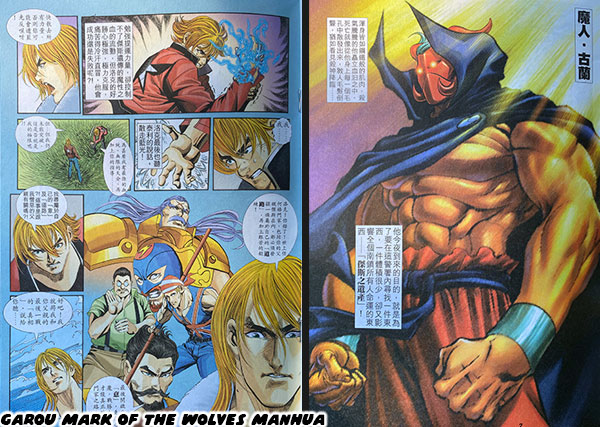
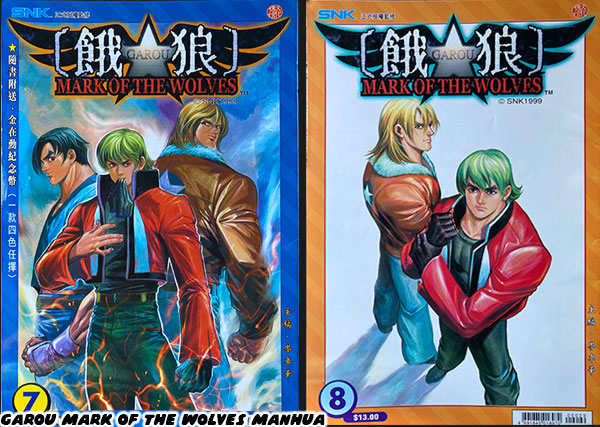
The first half of the Garou Mark of the Wolves manhua from 1999 was a retelling of the events of Fatal Fury. They gave audiences the history of stars Andy, and Terry Bogard. The villain Geese Howard, his relationship with half-brother Wolfgang Krauser, and estranged son Rock Howard. We also get to see several other major players from FF canon including Joe Higashi, Raiden, Mai Shiranui, Tung Fu Rue, Billy Kane, and Yamazaki.

The first few issues had Rock as a kid, and the later issues had him as a young adult. With the rise of new villains like Grant, and his uncle Kain R. Heinlein founding a new KOF tournament Rock is drawn into battle. He has grown as a fighter, and no longer wants to run from his legacy. He feels that he is ready to confront his past, and question his uncle.

Since a decade has passed since we last saw Rock, and Terry it stands to reason that the rest of the cast has also grown, and matured. In the first few issues Ryo Sakazaki was chasing down Geese Howard, and an actively fighting in Southtown. However his father Takuma had retired from teaching his patented Kyokugen “extreme limit style empty hand” form of karate. Ryo was the new master of the dojo, and helping keep the family business alive. He didn’t really venture out of the school.

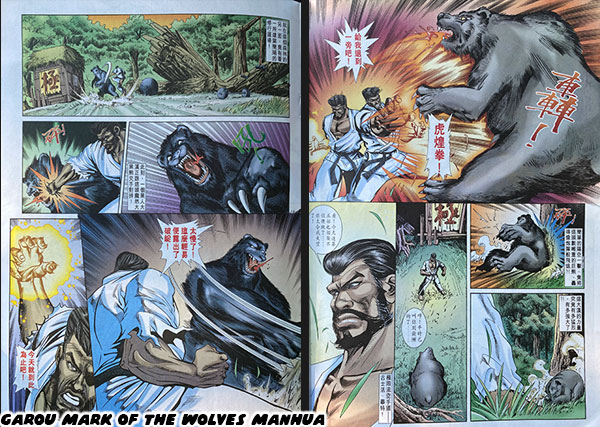
Marco Rodriguez aka Kushnood Butt raids the Sakazaki dojo with some thugs, trying to prove they were the best fighters. Ryo annihilates them, and Marco becomes a convert to the school. He spends the next decade studying under both Takuma, and Ryo. We see him now as a black belt. He’s practicing in the woods, and fighting a bear, a nod to the legendary exploits of Mas Oyama, and Willie Williams.

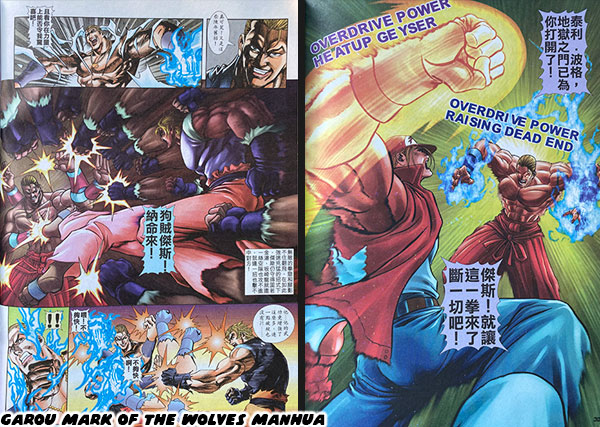
He crosses paths with an older Terry Bogard, and gets into a fight with him. The issues do not spend too much time with the rest of the cast, but at the very least they do get an introduction. This includes Kevin Rian, Hokutomaru, and B. Janet. Their purpose for entering the Maximum Mayhem tournament is explained. Grant is introduced as the big baddie of the tournament, and Terry gets into a fight with him.

The series ends after the introduction of the major players, and how they changed over the years. It doesn’t actually cover the events of the tournament. Which I think is actually the best way to tell the story of a fighting game. When you spell out each, and every battle you end up forcing the canon into a very specific direction, which may, or may not be the intent of the developers. Instead the writers of the manhua let the audience meet the cast. Show some of their backstory. Let a few non-tournament battles take place, and allow the game players to explore all the possibilities, and outcomes in the game.

With the announcement of Garou 2 I can only hope that there is a manga series, and possibly manhua series in the works as well. Either way I am eager to see how the game turns out. It will be about 24 years after the original came out in arcade. The generation that remembers it now has children, and even grandchildren that want to experience the game.

What about you? Are you eager to find out what happened with Terry, and Rock? Do you hope the game is sprite-based, or will you be happy if its 3D? Is there a character you look forward to playing as? Please let me know in the comments section. As always if you would like to sponsor me please visit my Patreon page and consider donating each month, even as little as $1 would help make better blogs and even podcasts!
follow the Street Writer on Patreon!

Friday, August 12, 2022

Garou Mark of the Wolves, the manhua part 1

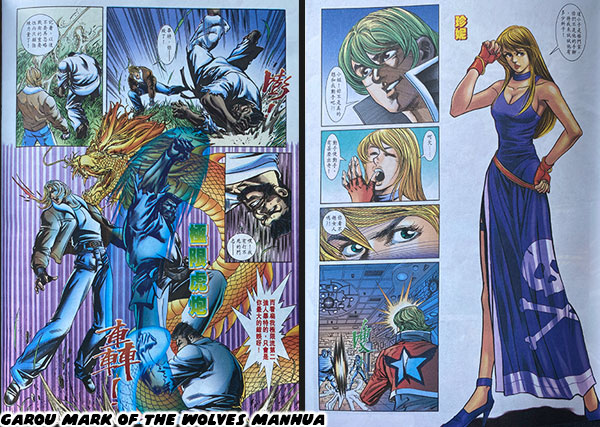
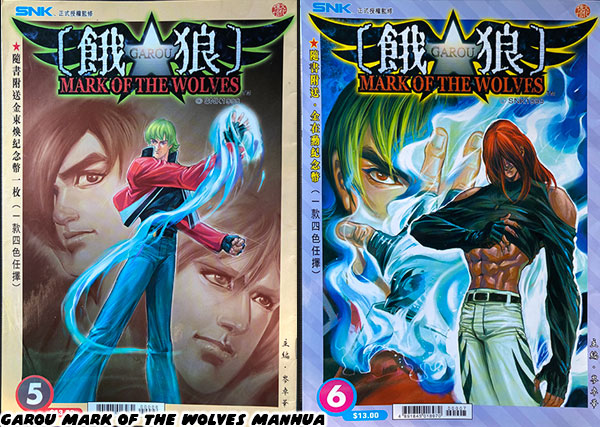
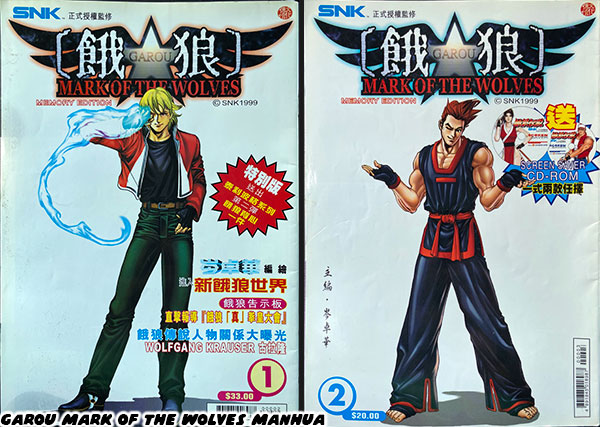
Recently I discovered that there was a manhua, a Chinese comic series based on Garou Mark of the Wolves (MOTW). There were 10 issues in total. The books came out in 1999, the same year that the game debuted. I got them from a collector in California, and thankfully didn’t have to pay a lot. The first thing that I noticed when they arrived were that they were much larger than standard comic books, or manhua. The standard comic book size was 6-5/8 inches wide by 10-1/4” tall, the Garou MOTW books were 7 1/2” wide by 10 1/2”. These issues were almost as big as magazines.
The issues were a great primer on the main players in the Fatal Fury (FF), and Art of Fighting (AoF) series. Specifically focusing on the villains Geese Howard, and the protagonist Terry Bogard. The first several issues actually got us caught up on the events that happened across the first few Fatal Fury games. I’m not certain if there ever were licensed AoF, or FF comics in China in the early ‘90s. There may have been, and like Street Fighter there may have been several unlicensed comics as well. In all my years doing research, surfing bidding sites, I’ve never seen a collection of classic SNK comics from China prior to 1997. I know there were many from the King of Fighters series, and the various games, including KOF 98, 2000, SNK vs Capcom, and KoF Maximum Impact. The fact that the Garou MOTW manhua retold the plot of the first few FF games, including the creation of the KOF tournament helped get audiences up to speed. The events of Garou MOTW are set a decade after what happened in the first FF game.
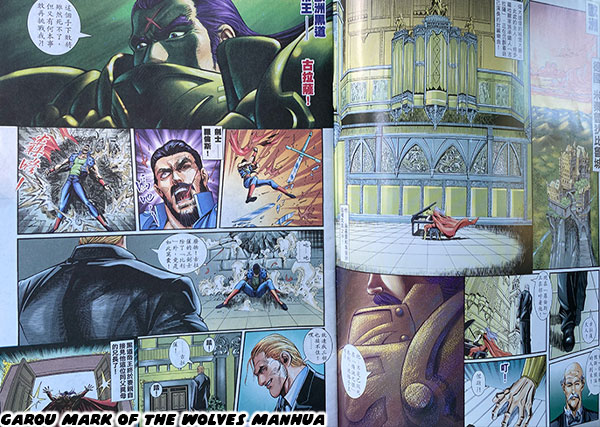
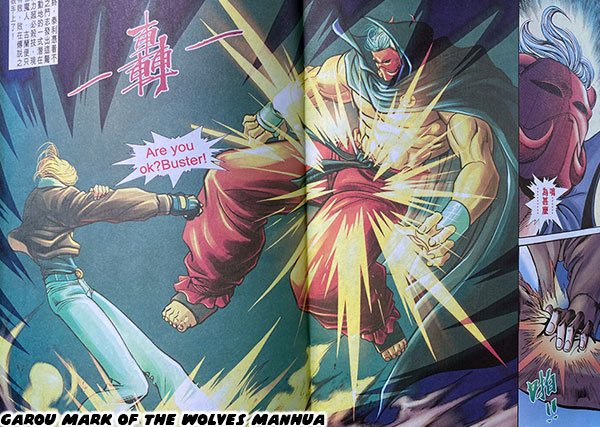
The series actually begins with a look at the battle between Geese, and his half-brother Wolfgang Krauser, head of the Stronheim family. Geese had long sought revenge on Wolfgang, and his father Rudolph, because they abandoned his mother Maria, and left her to die penniless in America. As a long-time fan of fighting games this was the type of action, and storytelling that I looked for. The panels were filled with lots of action, and we got a chance to see each character use their trademark special attacks.
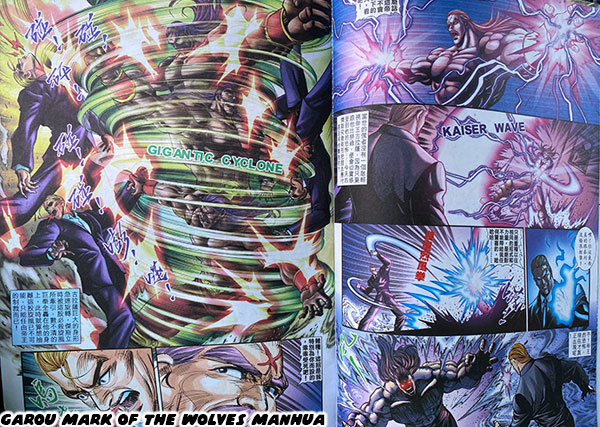
Seeing the fights in print was a way to determine which parts of the game were canon, and which were pure speculation. Not every fighting game gave us concrete answers, or tied up the plot points. More often than not they read as a sort of “what if?” series of events, that were loosely connected. For the longest time I fancied Wolfgang as being the stronger brother. He was older, and much stronger, but Geese had greater fighting experience. After a fierce battle Geese took out Wolfgang to take control of the family assets. With that taken care of he returned to Southtown to run it from the shadows, and sponsor the King of Fighters tournament.
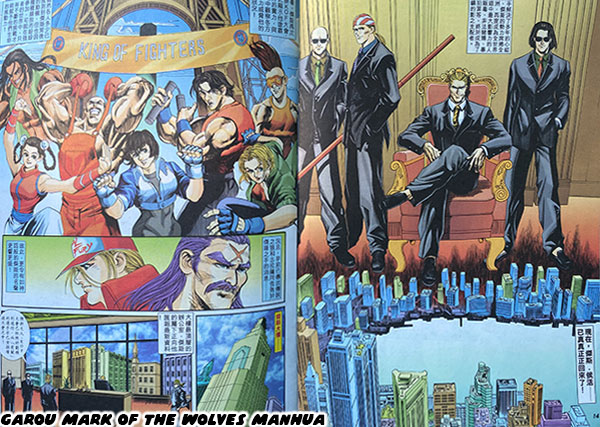
It actually takes a few issues of the Garou MOTW manhua before we even get past the original FF timeline. We actually get a chance to inhabit the complex web of characters, and their relationships. We get to see Toni Sakata from FF Wild Ambition making a cameo when he meets with Geese. We get to see Andy Bogard training with Mai Shiranui, and Jubei Yamada. We also get to see the fallout from the first time an adult Terry Bogard, and Geese Howard do battle. Geese shows him no mercy, and defeats him with relative ease. Terry is bruised, and beaten. Marie, Geese’s estranged wife nurses Terry back to health, and introduces him to a young Rock Howard. The two live in a modest home away from Southtown.
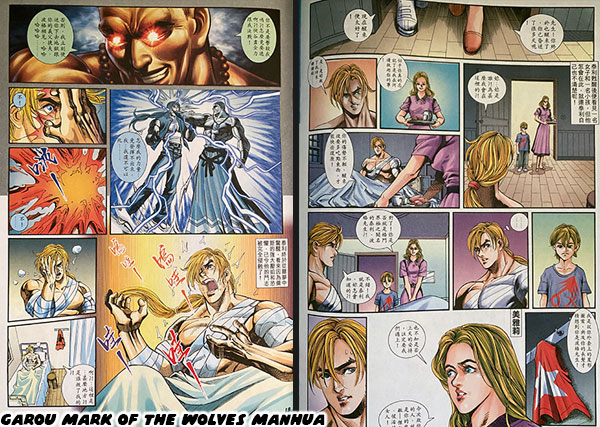
Terry worries about Rock, the legacy he hails from, and what his future might hold. Marie has a rare medical condition that she keeps from Rock. She asks Terry to watch over the young Howard, especially in the event that anything happens to her. Terry promises to take care of him while he continues training, with the hopes of getting a rematch with Geese.
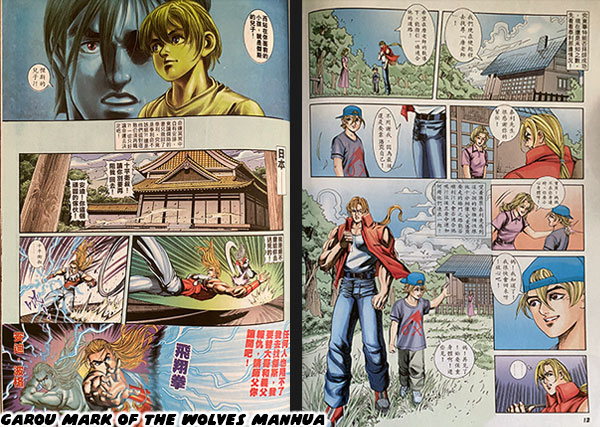
We get to see Terry pick up training with Tung Fu Rue, arguably the most powerful elderly kung-fu master in the entire KOF universe. Tung is attacked by an upstart master named Gato.
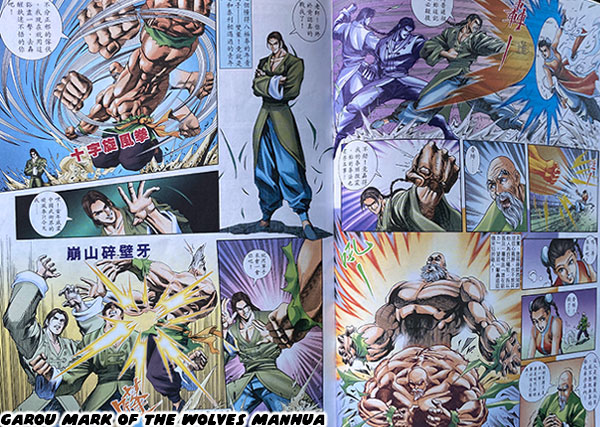
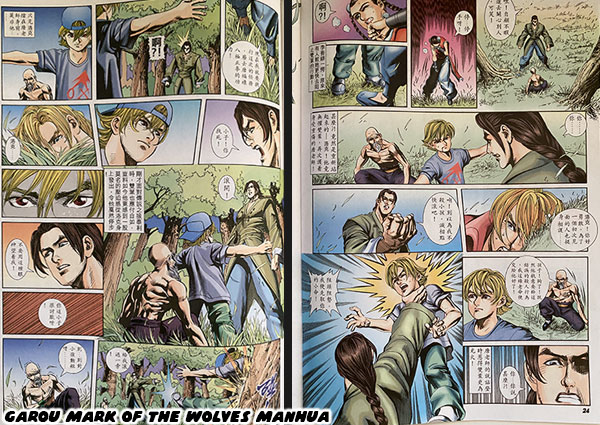
Terry tries to intervene, but he is still not at 100%. Both he, and Rue take some punishment from Gato. Rock steps in, and tries to get Gato to leave them alone. Gato retaliates by strangling the boy.
Terry is out of commission for several pages. The story uses that time to look at the history of Terry, and his younger brother Andy. It shows the reader the origins of their vendetta against Geese. We get to see the orphan brothers trying to protect their adopted father Jeff Bogard as he gets pummeled by Geese. We get to see them being trained how to fight in different schools, both before, and after the murder of their father.
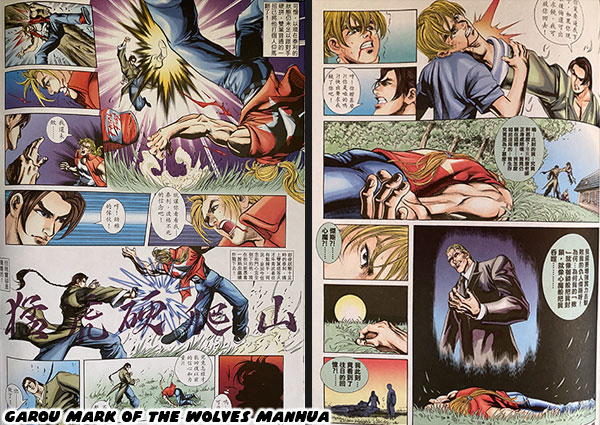
We see that Terry blames himself for not being stronger, for not being able to protect his brother. Eventually the two part ways in search of a master. Their relationship strained. Andy decides to study under the same masters that their father studied with, in the hopes that he could defeat Geese.
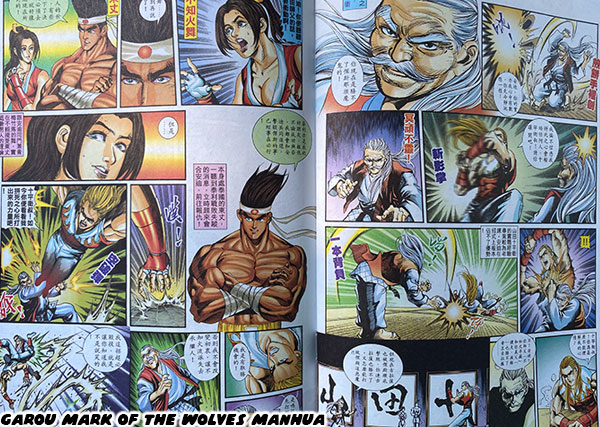
Terry on the other hand learns to fight in the street. Living up to his lone wolf reputation.
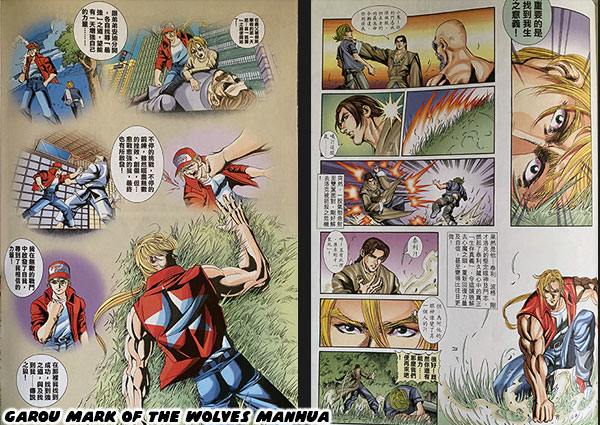
Terry eventually snaps out of it when he realizes that Rock is about to experience the same trauma that he, and his brother endured. He digs in deep, and turns the tables on Gato.
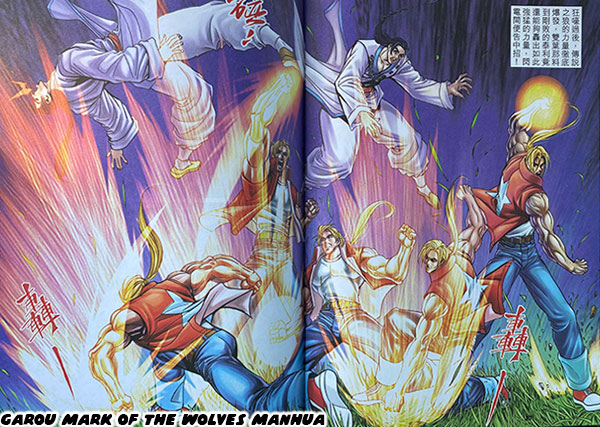
As all this happens Rock discovers that his mother is dying from her condition. He knows that his father is rich, and powerful, and he goes to him to beg for help. Geese wants nothing to do with him or his wife. Rock calls him a cold blooded devil, when he realizes that Geese probably could get Marie the medical attention she needs, but doesn’t care enough to do so. Rock vows never to beg him for anything again.
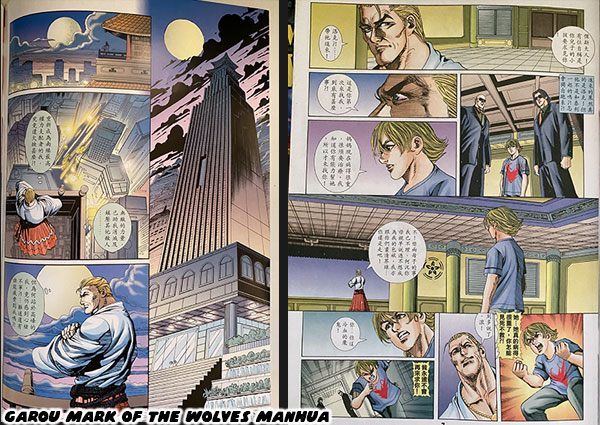
Andy, Terry, and their good friend Joe Higashi are now older, and more experienced. They decide to challenge Geese in the same high rise building that Rock had visited. They are ambushed by Geese’s hired goons, including the wrestler Raiden, yakuza hitman Ryuji Yamasaki, and stick master Billy Kane.
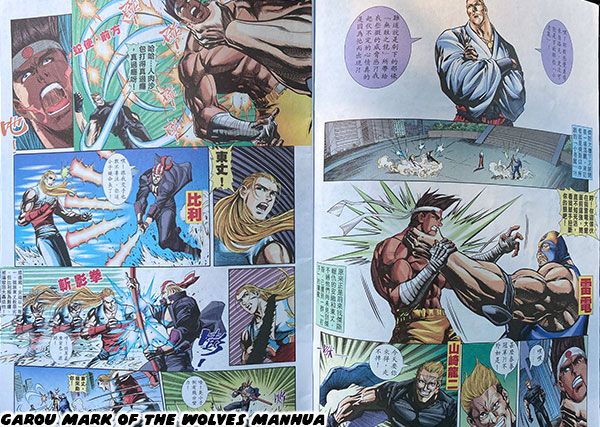
The next part of the story was new to me. The version of the events in the Garou manhua had Ryo Sakazaki as the first to reach, and do battle with Geese. Ryo was from the Art of Fighting game series. In the original game he was hunting down the man that kidnapped his sister Yuri. It turned out that the kidnapper was a masked man known as Mr. Karate. The end of the original AoF reveals that Mr. Karate was actually their father, Takuma Sakazaki. Takuma was forced to work for Geese as an enforcer under the threat that his children would be killed. This leads us to AoF 2, and the chance for Ryo to take out the kingpin.
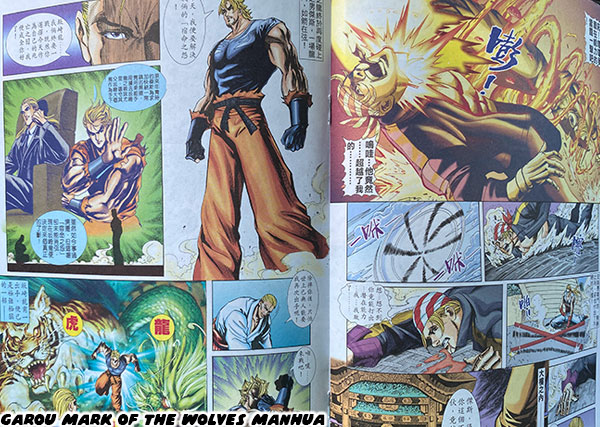
Ryo follows the clues right up to Geese, and gives him a decent fight. Unfortunately it isn’t enough, and the young Sakazaki is defeated. The battle rages on outside with Andy, and Joe barely holding their own against Geese’s best men.
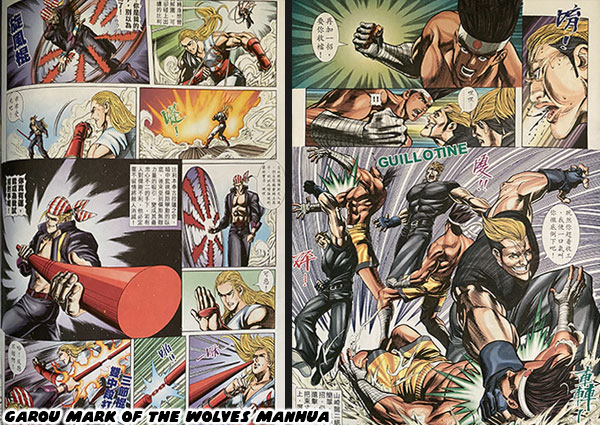
Terry eventually makes it to Geese as well, and they have the battle made famous in the first Fatal Fury. Terry knocks Geese off the roof of his building, seemingly to his death. Of course it turns out that it’s not that easy to kill him.
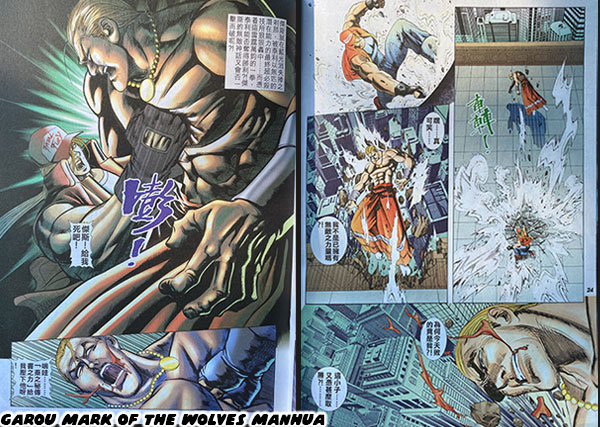
On the other side of town Marie was in the final stages of her disease. We see Rock, and Terry with her when she passes away. Terry promises to take care of Rock. Marie dies peacefully on her bed, and is buried not far from her house. However according to Kain R. Heinlein Rock's mother is still alive. So if the events of the manhua are canon, that means the lady that was buried may not have been Rock's actual biological mother. It would explain why Geese was so indifferent to her, especially since he had also been abandoned as a boy, and knew Rock's pain. At least that's my theory.
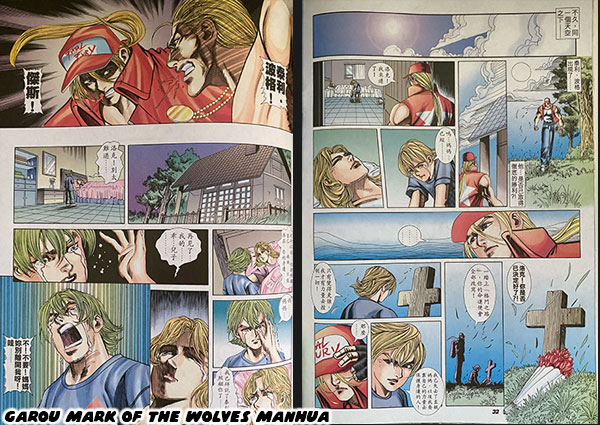
All of this carries us through most of the Garou manhua. However as you may know there are new faces, and changes to existing characters when the King of Fighters Maximum Mayhem tournament is created. The tournament organizer Kain R. Heinlein, the brother of Marie, and uncle of Rock is trying to recruit Terry, and Rock into his organization. He wants to rule Second Southtown following the power vacuum when Geese is defeated.
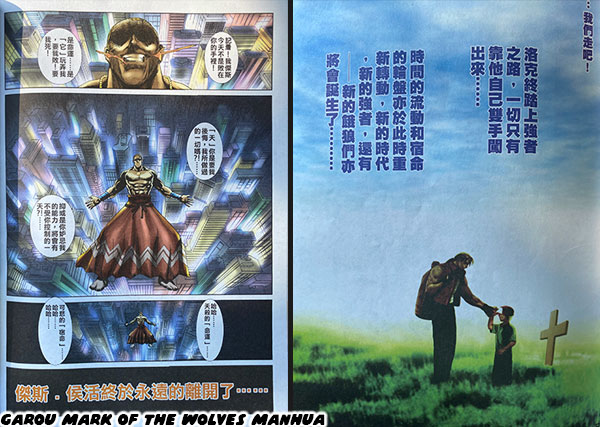
Those that have played Garou know that there were many new characters introduced in the game, and most get at least a panel or two of an introduction. We’ll look at the events in the remaining issues on the next blog. I hope to see you back for that. As always if you would like to sponsor me please visit my Patreon page and consider donating each month, even as little as $1 would help make better blogs and even podcasts!
follow the Street Writer on Patreon!

Friday, June 29, 2018

30 years of Street Fighter: 30 years of Characters #2


Street Fighter has been one of the all-time great fighting game franchises. Part of the reason for its popularity had to do with the World Warriors featured in Street Fighter II. With a hundred or so characters being added into the Street Fighter universe over the past 30 years I would argue that Chun-Li is the most popular one (with Cammy being a close second). Chun-Li is an absolute icon, not only in the fighting game community but for the video game industry as a whole. She's a role-model to women and an inspiration to men. She's a complex character with a fantastic design. A brilliant fighter with a style all her own. She didn't start out perfect in the development stages of Street Fighter II. The planners wanted a kung-fu master in the game, as Lee and Gen had represented different Chinese schools previously. Also they didn't want the new character to be a guy. The first draft of Chun-Li, then called Zhi-Li was very traditional, almost to the point of being a cartoon stereotype. Chinese characters and Chinese-inspired costumes were somewhat popular in Japan in the mid '80s. Thanks in part to the series Ranma 1/2 by Rumiko Takahashi and 3x3 Eyes by Kaoru Wada. Both of those runs debuted in 1987, the same year that the original Street Fighter was released.


It would take a few years for their influence to be felt at Capcom but once it was there the China Daughter would make her way into the Street Fighter universe. There was something missing with the original Chun-Li concept. She was a little too simple, a little too generic. The studio was playing it safe with the lineup. That was when designer Akira "Akiman" Yasuda decided to give her a radical makeover. She was turned from a prodigious girl into a grown woman. She became an undercover cop that had infiltrated the Street Fighter tournament. Her flowing costume was a disguise. She had wrestling boots on and heavy spiked bracelets to add some contrast to her blue silk uniform. She wore tights over her exposed thighs which allowed her to kick and remain modest at the same time. Akiman was a proponent of her legs being her main weapons. She was given the Hyakuretsukyaku aka Lightning Kick and the Kaitenteki Kakukyakushuu aka Spinning Bird Kick as her special attacks. Akiman would forever be known as the father of Chun-Li and the person that painted her best portraits.


Audiences fell in love with Chun-Li at first sight. She was young and energetic. Blindingly fast and able of doing things that none of the other World Warriors could. Despite being an adult she still had some hold overs to her youthful origin. She would jump and giggle with each victory. She would cry with every loss. Even her ending showed that she had a life outside of fighting, which was a stark difference to most of the male characters. After avenging the death of her father she celebrated her newfound independence and went out with her girlfriends. An alternate ending was added where instead of dating she went into police work. She set a standard that would be hard, if not impossible to beat. The best female designs in the Street Fighter universe have borrowed from Chun-Li. Cammy, Blare Dame, Pullum Purna and Juri all took cues from the first lady of Street Fighter. Whether it was costume elements, build or even back story, there was something that connected many of the designs together.


When the studio decided to create a younger version of Chun-Li for the Zero / Alpha series they changed her costume to be an homage to the jumpsuit that Bruce Lee wore in his final movie, the Game of Death. Her spiked bracelet became a weighted bracelet and her wrestling boots were turned into sneakers. It was a clever way of showing her in a more youthful light and celebrating the influences that Capcom designers used when creating the character. Chun-Li is without a doubt one of the biggest reasons why the Street Fighter series has made it to 30 and will keep on going. Do you have a favorite version of Chun-Li or game she appeared in? I'd like to read about it in the comments. If you would like to sponsor me please visit my Patreon page and consider donating each month, even as little as $1 would help make better blogs and even podcasts!
follow the Street Writer on Patreon!

Thursday, June 28, 2018

30 years of Street Fighter: 30 years of Characters #3

For the 30th Anniversary of Street Fighter we've talked about Ryu, the hero of the series. We've  talked about Sagat, his great rival and the template for a memorable martial arts boss. We've even talked about Vega / The Dictator as a way of redefining what a final boss villain could be. With every fighting game that's ever been and that will ever be, there is one boss that is considered the gold standard. His name is Gouki. You might know him as Akuma. He represents the peak of the mountain, the ultimate fighter if ever one existed. Designed with a frightening appearance he has elements pulled from Asian mythology, including demons, the afterlife, and even lions. His origins are part of a larger narrative. He is the estranged brother of Gouken, the master of Ken and Ryu. He murdered his master and his brother in a fit of rage. He is as complex as he is intimidating. The best renditions of the character coming from the talented hand of Bengus, one of Capcom's best artists.


The origins of Gouki are obscure, owing more to an April Fool's prank rather than clever planning. The long defunct EGM magazine invented a character named Sheng Long who was supposedly the master of Ken and Ryu. He could only be fought under certain conditions. Capcom decided that they should introduce a version of this mythical fighter in one of the final Street Fighter II upgrades for the arcade. His debut in Super Street Fighter II became the stuff of legend. He only showed up at the end of the game if certain conditions were met. He absolutely destroyed Vega before the match started. His moves were far more impressive than Ken or Ryu's. He could throw fireballs while leaping, he could even teleport across the screen. He showed that even the best Street Fighter bosses were far beneath him. His popularity really took off as he was formally added as a playable character in the Street Fighter Zero series. He had his own story and ending to help explain his purpose in the universe. Gouki wasn't the main boss for every character in the Street Fighter universe and that made sense. He wanted to fight the best ever, and in particular see if his brother's students were any good. He was reclusive and you had to work hard to find him and even harder to beat him. He embodied every quality that made for a memorable final boss.


No studio was able to recreate what Capcom had stumbled into. After 30 years we have yet to see a boss character in the series that holds a candle to Gouki. Part of the reason why is because most developers, including the current Capcom stable, have a limited approach to their villain designs. They often create one-dimensional bosses, pure evil with amazing powers and no redeeming factors. Gouki was a murderer, that would never change, but he fought with his own code. He didn't kill everybody he ran into. He was obsessed with a worthy challenge. This was best explained in a drawing by Bengus. Gouki, selling fruit, probably by the side of the road. Earning some money to buy provisions and supplies. He could take whatever he wanted but he was no thief. He only became a monster when a fight was at stake. Gouki looked supernatural, he looked demonic but the thing that made him better than every boss character was his humanity. Gouki could have been a real person with a killer's instinct and that is truly frightening. It may be 30 years before Capcom ever creates a villain as memorable. What do you think about this character? Please let me know in the comments section. If you would like to sponsor me please visit my Patreon page and consider donating each month, even as little as $1 would help make better blogs and even podcasts!
follow the Street Writer on Patreon!