Showing posts with label street fighter II. Show all posts

Monday, March 2, 2026

Bookmark This Page; Enter the Dragon, Fighting Layer & the roots of Street Fighter II

For those that are visiting my page for the first time my name is Noe aka BigMex. I love fighting games, as well as racing games, skateboarding, theme parks, and much more. You might know that this blog had been around for a long time. A good portion of what I wrote on the 1UP, and the Capcom-Unity  pages some 20+ years ago were shared here. My best work was hidden at the bottom of this page. To make things easy for new visitors I started collecting similar threads. If you were interested in a certain topic then I was asking you to Bookmark This Page.

The first collection was a deep dive on Fighting Layer, a little known title by ARIKA and Namco. Find out the connection to Street Fighter II in this series.

Enter the Dragon, the legend inspires a game, part 1…

Enter the Dragon, the legend inspires a game, part 2…

Fighting Layer, return of the dragon, part 1...

Fighting Layer, return of the dragon, part 2…

Fighting Layer, return of the dragon, part 3…

Fighting Layer, return of the dragon, part 4…

Fighting Layer, return of the dragon, part 5…

Fighting Layer, return of the dragon, part 6…

Fighting Layer, return of the dragon, part 7…

Fighting Layer, return of the dragon, part 8…

Fighting Layer, return of the dragon, final part… 

Did you ever play Fighting Layer? Even an emulated version? What did you think about it? Let me know about it in the comments section. As always if you enjoyed this blog, and would like to sponsor me please visit my Patreon page and consider donating each month, even as little as $1 would help make better blogs and even podcasts!

follow the Street Writer on Patreon!

Sunday, June 24, 2018

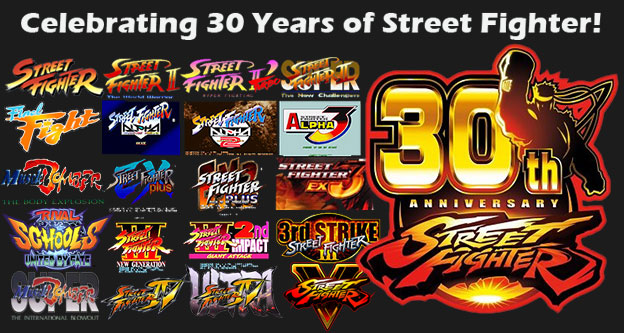
30 years of Street Fighter: 30 years of Characters #7


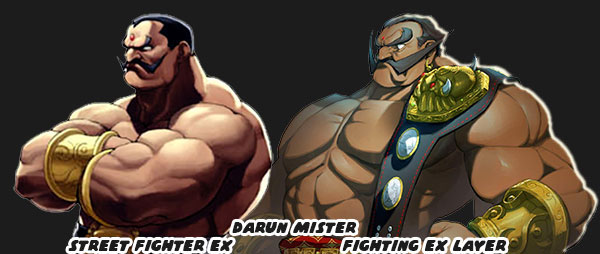
Darun Mister is one of the great all-time grapplers in the Street Fighter universe. He debuted more than 20 years ago in Street Fighter EX. I've already talked about Victor Ortega, the pro wrestling heavyweight champion in the Street Fighter universe. Victor dominated the competition and retired undefeated. He resurfaced years later to test out the next generation of pro wrestlers. I've also talked about the Wraith, one of the more obscure, and macabre pro wrestlers in the Street Fighter universe. Both Ortega and the Wraith were gigantic and fearsome grapplers. But neither, at least not to the best of my knowledge, have ever faced Darun Mister in or out of the ring. Darun is the Indra (Indian) wrestling champion. His championship belt is among the greatest ever designed for a game. I mean just look at the gold, silver and ruby-encrusted elephant on the belt! He dominated the competition in South Asia as much as Ortega had around the world. He also served as the personal bodyguard for Pullum Purna. The duo traveled the globe fighting other champions during the EX tournament. 


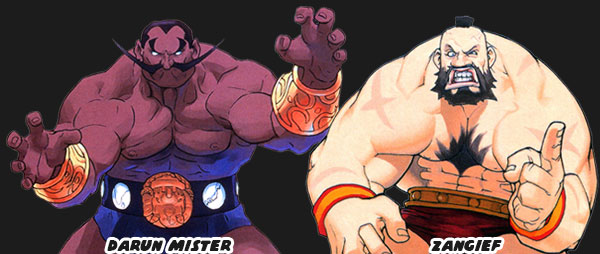
Darun was such an exceptional grappler that he actively sought out masters of other disciplines. When he was defeated by the demon Garuda he swore to return stronger for a rematch. Just a reminder that Garuda killed his opponents but Darun was simply too tough to die. If the story of Darun rings a bell it's because he is a second-take on the character Zangief. The Red Cyclone set a standard that was pretty tough to beat in the Street Fighter series. The team at ARIKA had a hand in developing the original Street Fighter II cast, so when they created the EX series they made parallels in their fighting lineup. Darun was beat-for-beat a counter to Zangief and was destined to be his rival in canon. Believe it or don't Zangief was inspired in part by an actual wrestler named Victor Zangief that the Capcom crew saw on TV. I mentioned previously that Victor Ortega was inspired by wrestlers like Superstar Billy Graham and Hulk Hogan. The Wraith was inspired by The Undertaker and even Darun was based in reality. The Great Gama was a turn-of-the-century wrestling legend from India that sought out and beat the European champions. He was celebrated as a hero in his home country and was a perfect template to rival the burly Russian.  


More than a hundred years has passed since the Great Gama was in his prime. The good news is that Darun Mister will always be in peak physical condition and looking for opponents to mangle. I enjoyed playing as the character in Street Fighter EX and look forward to his return in Fighting EX Layer. Today we celebrate this legend. Do you have a favorite Street Fighter wrestler? If so tell me in the comments section. As always if you enjoyed this blog and would like to sponsor me please visit my Patreon page and consider donating each month, even as little as $1 would help make better blogs and even podcasts!
 follow the Street Writer on Patreon!

Saturday, May 21, 2016

Painted faces, where have I seen that sumo before?

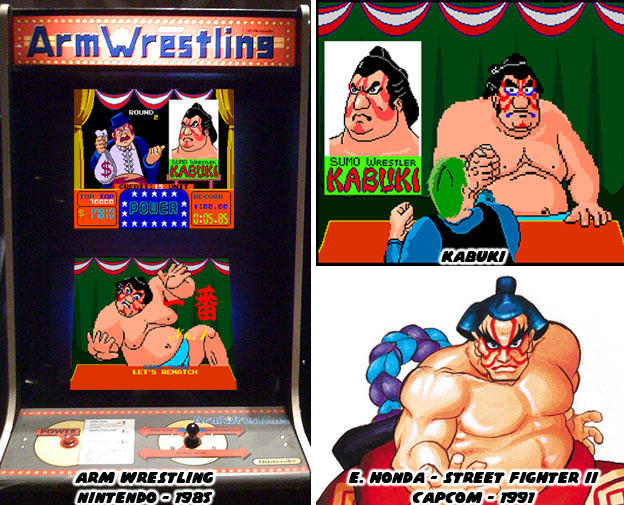
If you are a long-time arcade fan then chances are you are familiar with a rare Nintendo game called Arm Wrestling. It was a sort of spiritual successor to Punch-Out!!. The game came out in 1985 and it featured a cavalcade of silly arm wrestlers, including Frankenstein's monster, a burly Texan and pro boxer Bald Bull in a mask. One of the standout rivals was a sumo wrestler named Kabuki. What made this character unique was his face paint. Apparently this character had a flair for the dramatic. I'm not sure if the idea of mixing kabuki theater face paint with a sumo wrestler was solely Nintendo's idea or if the designers had mixed elements from various pop culture sources. I'm leaning towards the latter. The thing was that the seeds were planted for over-the-top characters to be featured in fighting games.


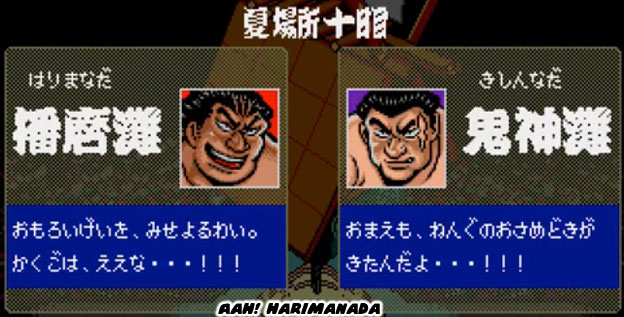
I credit Nintendo with developing a series of international archetypes in the original Punch-Out!! The various boxers from around the world had unique personality traits to go along with their memorable appearances. These caricatures would be emulated by Capcom and various studios when designing the first crop of fighting game all-stars. In 1991 E. Honda would take a page directly from Kabuki. Few remembered the Nintendo character came first and that was okay. Capcom was helping spread fight culture through their characters. The same year that Street Fighter II came out a manga called Aah! Harimanada debuted. The series was by Kei Sadayasu and would eventually be adapted into an anime series and fighting game as well. The series featured the brash Isao Harimanada, a sumo wrestler who was arrogant and insulting to opponents. He was a very dramatic character that would wear masks and headgear to the tournaments, including samurai helmets. The character would boast that that he would beat the 69-consecutive win streak of Sadaji Futabayama or retire trying. The series was kind of boring. It was a definite "Mary Sue" sports hero from Mr. Sadayasu. Isao could be rude and self absorbed and was somehow supposed to be appealing to young readers. As far as fictional sports figures go there was nothing that stood out for the hero. Audiences could guess that he would indeed reach 70 consecutive victories over the series. There was no real chance that he would lose any match. The only thing that changed were which techniques he used in order to beat his opponents. For that matter the rivals were far more interesting than the main character. One of the former champs that gave Isao a run for his money was named Kishin-Nada. The character had a nasty scar on the side of his head.


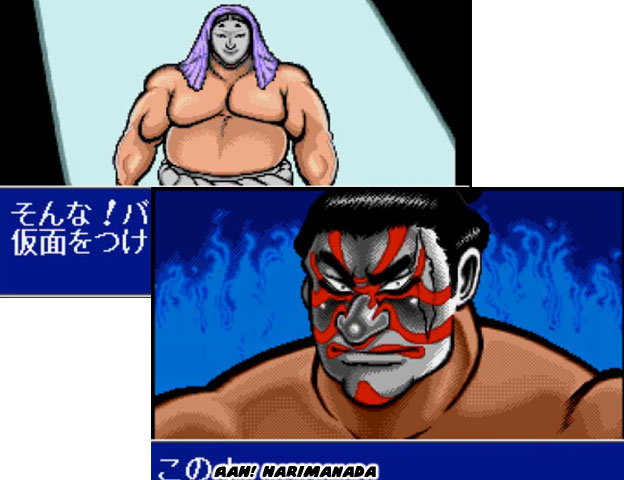
Kishin lost the match and felt humiliated by Isao, as did many of his opponents. They were all working hard to get a rematch but none took it more personal than Kishin. At the end of Isao's streak a mysterious figure appeared. This sumo was a former champ and he wore a creepy wakaonna, or girl mask from the Noh plays. It was as if Isao would have to wrestle someone with the same flare for the dramatic. When the wrestler removed the mask audiences gasped at his painted face. It was sacrilege that a sumo wrestler would actually wear kabuki face paint into the ring. This figure was trying to create a personae that was every bit as dramatic as Isao. Of course eagle-eyed readers saw that despite the face paint there was a noticeable scar on the side of this new character's face. This fighter called himself Kishin-Ryu, the dragon or ultimate version of Kishin-Nada. I'd like to think that this was Mr. Sadayasu's nod to E. Honda.


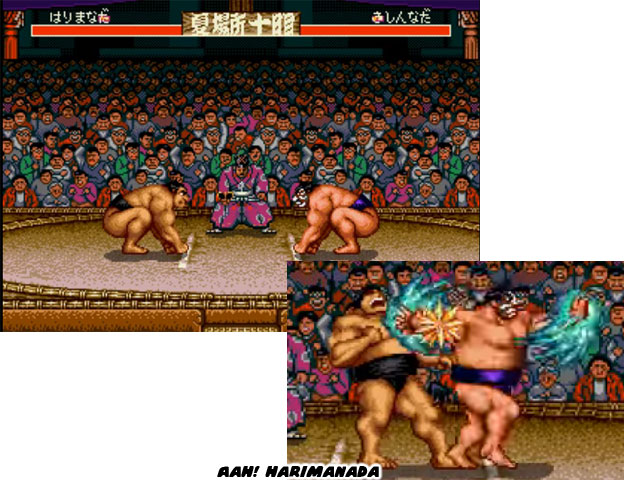
There was a Mega Drive (Sega Genesis) version of Aah! Harimanada that came out in 1993. The game by Megasoft was sorely lacking in the control department. Audiences could play through a campaign mode and every battle in the manga was presented in the same order within the game. After a few matches the game felt tedious. It would be a grind to try and beat 70 opponents in a row. What was cool however was how each sumo had their own strength and weaknesses. These things manifested as special attacks and super strikes. Imagine a version of Street Fighter but solely made up of sumo wrestlers. Super thrusts, headbutts, throws and slaps were some of the many techniques players could learn. A dozen characters each had their own super attacks that could be figured out and mastered in a two-player mode. I often wonder how Street Fighter would have been if characters had entirely new move sets applied to them in each sequel. What would have happened to E. Honda if he had new moves added to his library in Turbo, Hyper and Super versions of the game.


I hope you think about this rare series and the flamboyant sumo wrestler that appeared in other games the next time you play Street Fighter. Truth of course was much more interesting than fiction. Isao Harimanada was nowhere near as interesting as the real Futabayama. The record-setting sumo wrestler was blind in one eye but he never revealed this to anyone until after he retired. His opponents could have of course used this information against him. He was certainly much more humble about his abilities than Isao. Maybe a fighting game might base a character after a real legend. Stranger things have happened! As always if you enjoyed this blog and would like to sponsor me please visit my Patreon page and consider donating each month, even as little as $1 would help make better blogs and even podcasts!

 follow the Street Writer on Patreon!

Thursday, July 16, 2015

Representation Matters! Or, what happened to Birdie, part 7...


After Street Fighter II was released the extra people brought aboard to help with character designs went back to their respective projects. This meant that that the Turbo and Hyper upgrades were put in by the smaller original designers. The upgrades were based on arcade feedback as well as what illegally hacked boards had done to the speed and combo abilities of the game engine. Development on Street Fighter III was stopped so that the studio could release one final upgrade kit, Super would introduce 4 new characters and a new boss villain, Gouki, into the universe. The characters in this upgrade felt incomplete, Cammy, T. Hawk and Gouki were furthest along in development but Fei Long and Dee Jay looked and played like rushed characters. It stood to reason because there were not the same eyes on the project as there was in the editing process for the earlier World Warriors.


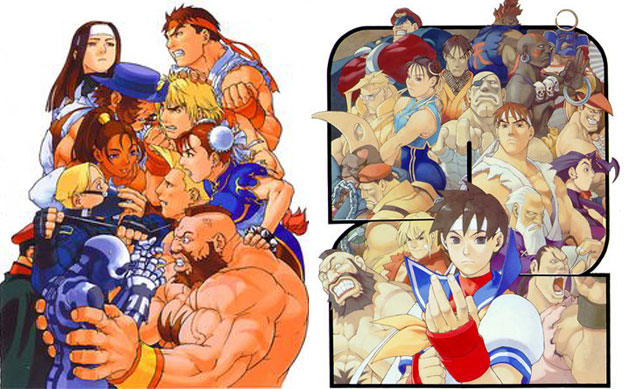
In fact not long after the release of Super Street Fighter II, producer Akira Nishitanti took about half the team that worked at Capcom and left to start up ARIKA studios. Even if Capcom wanted to bring everyone back together it would be almost impossible. Work on Street Fighter III was halted because of the shake up. The studio took inventory of who was left and was challenged to see how they could keep the Street Fighter series going. There was no reason to lose faith in those that remained. After all the sequel did very well after the original Street Fighter planner Takashi Nishiyami left to join rival studio SNK. The new designers Noritaka Funamizu, Haruo Murata and Hideaki Itsuno as well as the art team came up with a brilliant plan. Instead of making a sequel they would instead create a game that tied together the events of the first and second games. Not only that but it would also bring together heroes and villains from Final Fight to show that they were indeed part of the same continuity. By doing this they would not hurt the expectation of audiences. Those that wanted a "true" sequel would have to wait. Street Fighter Zero / Alpha was instead a celebration of the genre that Capcom had defined.

The plan worked better than expected. Audiences were falling over themselves at the radical new direction that the game had taken. The lead artist on the project, Bengus, created an entirely new aesthetic for the lineup. His design fell somewhere in between Japanese anime and Western comic book body types. His exaggerated proportions and strong but fluid lines would go on to influence artists on both sides of the Pacific. His fellow artists helped create memorable version of many iconic Capcom characters. They also took some creative chances with the handful of characters they introduced. The most important of which was the addition of new female characters.


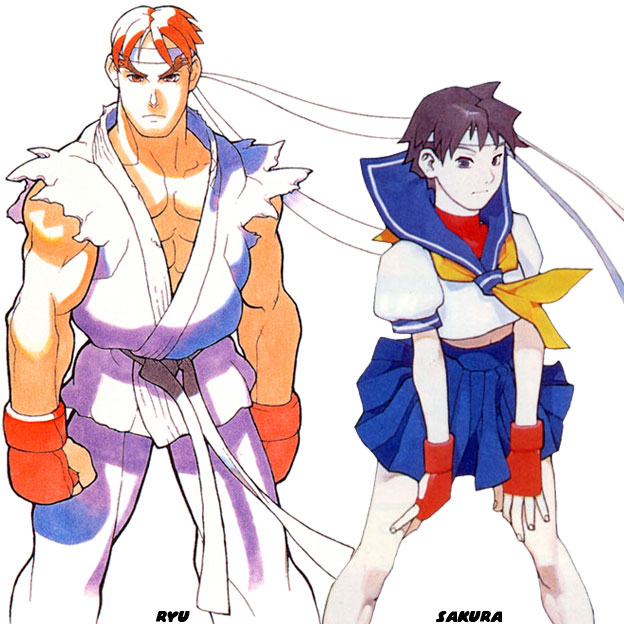
The genius in the planning was that each of the characters found some balance. A girl version of Ryu was introduced. She lacked the strength and range of Ryu but it made sense because her journey was just beginning whereas Ryu had been fighting for years. Sakura became the darling of game players around the world. She was a very positive role model. She had youth and enthusiasm on her side but we could tell that within a few years this character would grow into a woman as powerful as Chun-Li. Vega the Dictator was a villain of the story but not necessarily the only one.

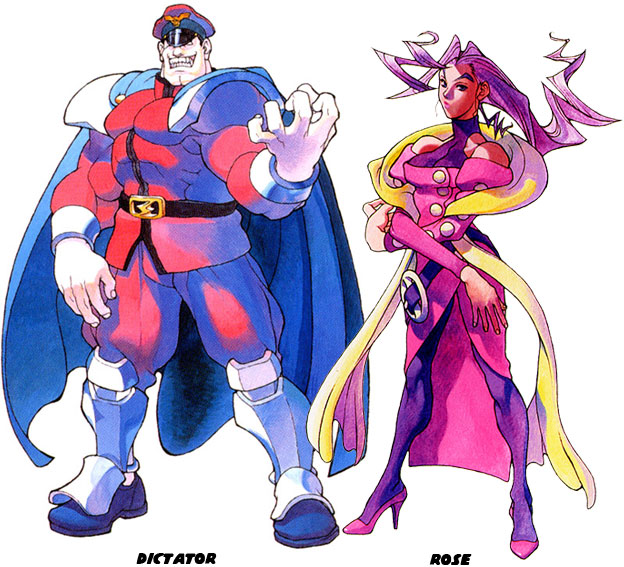
The Dictator was not a traditional martial arts master, he wore some sort of cartoonish military costume and not much was known about him. Little was revealed in the endings of Street Fighter II so audiences were left with many questions. The designers wanted to flesh out the character and get a little more into his origin. They had plenty of room to explore his mysterious powers and military conquests in the Zero series. Yet they did not want to give everything away. They still wanted to leave some things up to our imagination. The best way to do this was by giving him a counterpart with equally unique abilities. The team designed a female with a costume that slightly mirrored the Dictator's, just as Sakura had reflected Ryu's. Tripling the amount of playable female characters (a younger Chun-Li had returned as well) from Street Fighter II was a gamble and it payed off from a critical response as well as from an inclusive point of view.


Strong female characters of every age and background were rarely seen in fighting games. Most studios relied on sex appeal to sell their women to audiences but not Capcom. They wanted players to know that these characters could fight every bit as hard as the men. It did not matter if they came from China, Japan, England or Italy. Think for a moment how powerful that message was to the female fans of the series. It was a loud statement that happened in 1991 and again in 1995. For the next two decades girls and women would dress as Chun-Li, Cammy and now Sakura and Rose as well. The strong female role models from comic books were no longer alone. Video games were contributing great role models to pop culture and that list would only grow.

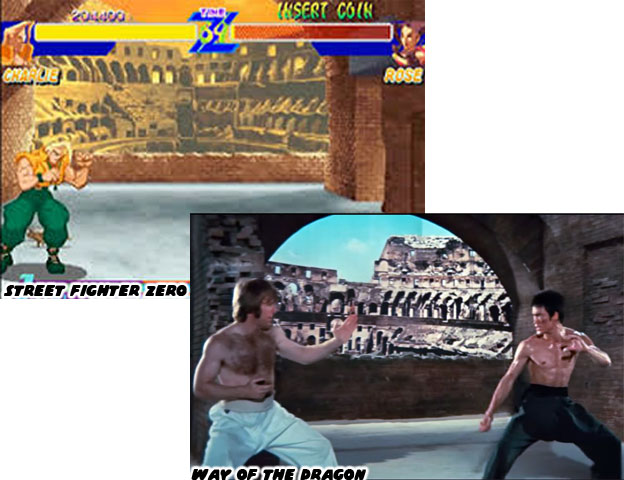
Just about every choice that the team did seemed like a right one for the game as well as for the genre. It was hard to believe that it had been four years, and many upgrades since Street Fighter II had appeared. Street Fighter Zero was very different from a graphics, gameplay and control standpoint, yet at the same time it looked and felt like an old friend. Part of the greatness behind the designs had something to do with how far Capcom had called out to all of their own influences as well as the legacy they had been working on. People that had grown up watching the same movies, reading the same comics as the developers felt like they were in on the jokes. Even a small thing like a level background became something special to players.


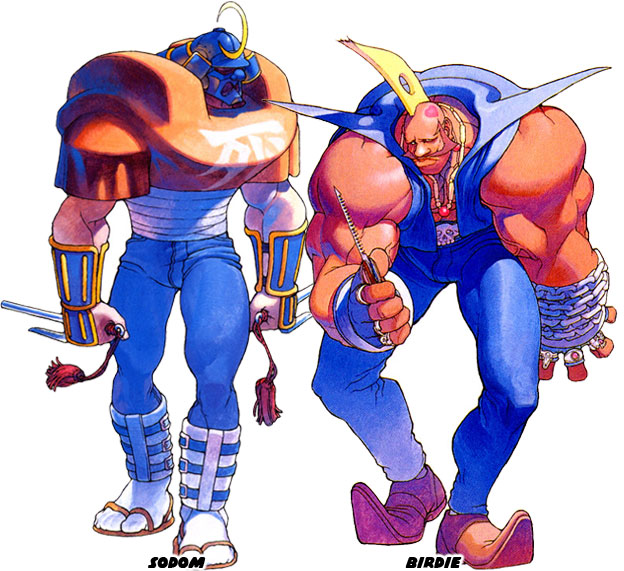
Capcom played up this bit of nostalgia by bringing back old faces and giving them a fresh new look. It had been eight years since players saw Birdie so he was given a big makeover. The studio did this so that he would become as timeless as the main cast. this initial makeover was something that this entire blog series was started on. Birdie went from a forgettable tough guy in the first game to a fully-formed bruiser. He had dimension and a personality that complimented his wild attacks. There was nobody like him before and would be nobody like him after. Birdie was joined by a pair of characters that hadn't been seen in six years as well. To be fair they were seen on console games but not in arcades for that length of time. You might think that it would be impossible to balance out somebody as colorful as Birdie but the team found a perfect matchup.

Sodom was a leader in the Mad Gear Gang. He was an underground wrestling legend that had an undefeated streak, thanks in part to his use of two samurai swords Musashi and Muramasa. Sodom was obsessed with Japanese culture and fashioned himself samurai armor which was made mostly from football gear. He was more over-the-top than any other Mad Gear gang member. He was given an assortment of moves that was every bit as unorthodox as those given to Birdie. To help tone down his range the team took away his swords and he was given a pair of jitte, an ancient Edo weapon. It still made dangerous but players had to get close to opponents in order to use them. Seeing the two classic bruisers return was like a dream come true for fans of the earlier games.


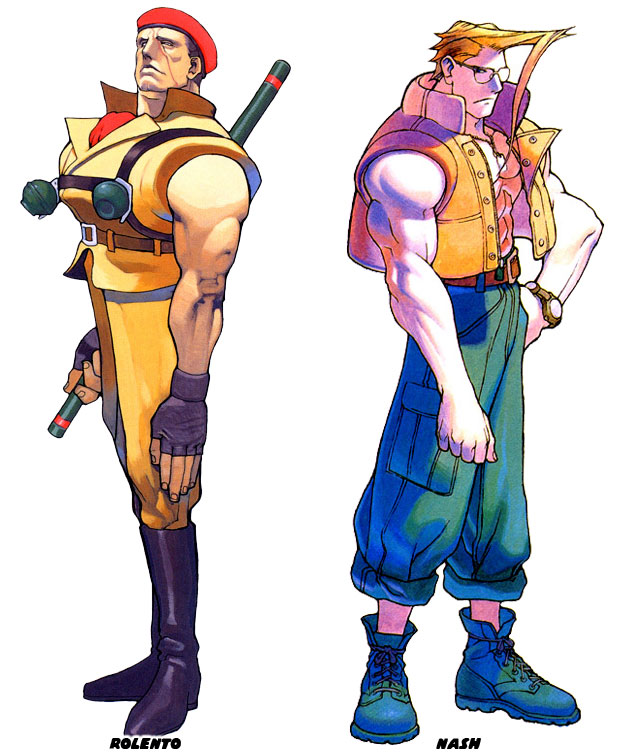
The Mad Gear gang was the precursor to Shadowlaw. They were not solely a gang that ran the streets of Metro City but actually a network of criminals and terrorists the world over. A group that large got their orders from a business tycoon named Belger. However he had his trusted gang leaders, that acted like generals, to help carry out his plans. Sodom was a lower-ranking leader but his right hand man was a mercenary named Rolento. The military specialist was a superb hand-to-hand fighter. His design was actually based on the Colonel a character from Hokuto No Ken. I'm telling you that Capcom wouldn't have made as many memorable characters if not for Tetsuo Hara! Anyhow Rolento was blindingly fast. He could take on Haggar, Guy and Cody in Final Fight all by himself. He fought with an assortment of throwing knives and even grenades. Players knew he was not somebody that would be trifled with.

Having a few villains from Final Fight was a great idea and Capcom balanced them out by including the heroic Guy. The military presence was also balanced out by a new hero. In addition to Rose and Sakura the team added a third figure designed to remind audiences of the original World Warriors. In this case it would be Charlie Nash, the best friend of Guile. The character fought similarly to Guile with a few unique touches. He was put in the game to help fill in the backstory of Guile. Nash had tracked down the Dictator through the fighting tournament but he was found out and shot by Shadowlaw soldiers before he could take the Dictator in. He thrown over a cliff next to a waterfall and presumed dead. Guile swore revenge and ended up in the fighting tournament during the events of Street Fighter II.


Filling out the continuity of the Capcom universe went over very well with audiences. It was great to see how all of these characters were interconnected but even greater to see the diversity of fighting styles. The game engine was perfectly suited to different types of gamers. Those that preferred fast-action combos had characters that could do that. Those that preferred power moves instead had those characters as well. There were even a few in the middle that had a unique mix of brawling and technique. It would be the elements of Street Fighter Zero that would be most repeated in Street Fighter IV and now V. Those games wanted to bring back as many characters as they could to please the requests of fans. However in doing so they missed the little things. How Ken, Chun-Li and Ryu looked younger in Zero. How they had matured in Street Fighter II and III. In IV they stayed mature but Sakura and Cammy had unexpectedly returned. Only it was a young Sakura from Zero and the older Cammy from Street Fighter II. These could be seen as minor issues but they could also be seen as how the teams working on the newer Street Fighter IV were not working as diligently on new character types as the previous teams had. It showed that they were not being as mindful of their legacy as previous teams were either.

The last time the majority of the people that had worked on Street Fighter II worked together was during the mid '90s. Most of the team reunited during he development of Street Fighter EX. Their purpose was to create an entirely new set of World Warriors and put them in a 3D engine. They wouldn't necessarily have to be 1-to-1 copies of the earlier cast either. To which I say thank goodness too because it might have sparked another Anabebe mess. The new female characters, Pullum Purna and Blair Dame were distilled from the ideas that made Chun-Li unique. Pullum, an Arabian fighter represented the youthful aspects of the original China Daughter and Blair represented the toughness of the adult Chun-Li. The wrestler Darun was a mirror for Zangief, Doctrine Dark was a Rolento-style military counter to Guile, Ryu and Ken had Kairi and Allen Snider to respectively deal with. The characters found their own niche to carve out without necessarily copying the formula exactly. The circus performer Skullomania was by far the most colorful of the lineup. He was a sort of Dhalsim / Blanka level of absurd. But again all of these character types worked within the universe.


The Street Fighter games post Zero and EX had the weakest amount of character creation and diversity. It stood to reason considering that many of the original members had gone to DIMPS, ARIKA and even SNK by this time. By not having triple the amount of people working on the cast then a lot of voices, a lot of insight was lost. The next blog will look at how Street Fighter III and IV began to deviate from the lessons set by the earlier games. I hope to see you back for that. As always if you enjoyed this blog and would like to sponsor me please visit my Patreon page and consider donating each month, even as little as $1 would help make better blogs and even podcasts!

Tuesday, July 14, 2015

Representation Matters! Or, what happened to Birdie, part 6...


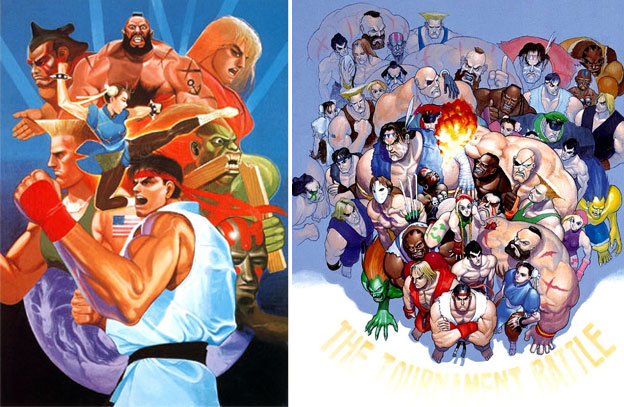
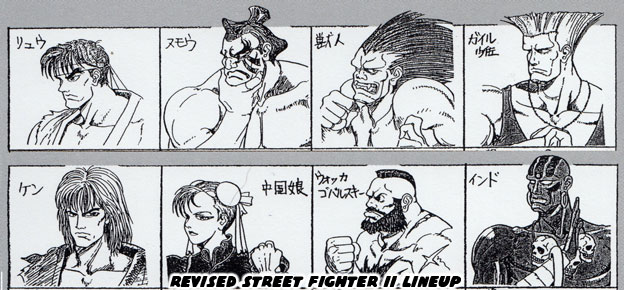
The Street Fighter II team was off to a rough start. Their character designs were falling flat and Capcom was trying their best to turn the project around in the quickly changing arcade market. They needed to get a new game out and one that set itself apart from Street Fighter and Final Fight. There was an influx of artists and designers working on the cast. They were looking for the elements that worked, the styles of fighting that needed representation and a way to balance the library of characters. Each artist brought a unique perspective with them along with their talents. Some of these artists were familiar with the various schools of fighting and even had some insight on pro wrestling and action films. Some of the artists were well read in science fiction and fantasy stories. Some of the artists enjoyed traveling and history. The collective was able to pick the designs apart and begin remaking them with a few unique touches. Sakurada Gashou and the Kenshiro-looking Ryu were out. If karate was going to be the star of the game then the fighter had to be become an icon, or exaggerated caricature depending on your point of view of what a karate master should look like. The updated Ryu had torn sleeves to show off his powerful arms, a red headband and red punching gloves to break up the all-white uniform.
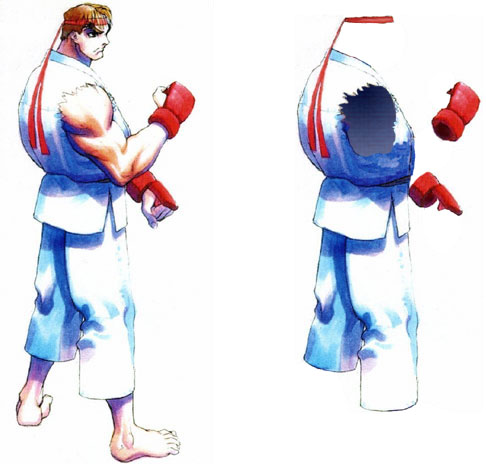
   

Capcom then brought back Ken. In was done in part to have a character that the Americans would gravitate to. The blonde hair and yellow punching gloves contrasted his all-red gi. To audiences this was just a pallet swap with different heads. Internally the art team made a distinction between the two characters. Ken had hemmed sleeves on his gi. He was careful about the way he presented himself. Ryu by comparison had torn sleeves and worn edges on his pants. He cared more about the fight than about trophies. They were both very simple designs and the unique touches were subtle, so subtle that many other studios missed the individual elements and couldn't create better karatekas in 25 years of trying.

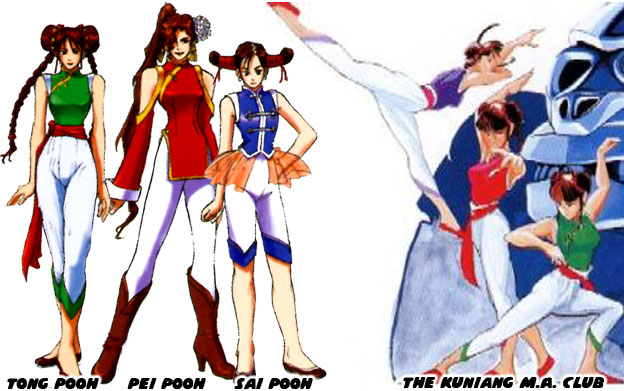
With the stars of the game figured out the studio then went after the Chinese figure, then called Zhi Li. They looked at her costume, her age and purpose. The were something lacking with the young female fighter. She looked too much like an anime or manga character. Artist Akiman said that it was a period of time where you couldn't get by without creating a Chinese Beauty. Zhi Li had a look that was borrowed from the Pooh sisters aka the Kuniang Martial Arts Club from the 1989 sci-fi action game Strider. The sisters had kicks that were almost as powerful as Strider Hiryu's cypher sword Zhi Li would never be believable as a serious fighter in a cast of adult men. The team decided to make her older, turn her into a woman. It worked for the Pooh Sisters and would probably work again.
 

As the plot of the game was being developed they realized that Chun-Li needed a reason to be in a fighting tournament. Simply being a female fighter may have worked in a movie but games required more effort. Games allowed the audience to see the same story but from different points of view, including those of villains. By making the Chinese girl older they knew that she would never be a damsel in distress. She was not a prize for the competitors, and this was a refreshing change of pace. In fact it was even better because her purpose for competing was to bring the organizer to justice. It was decided that she was actually an undercover cop. The team was elated with the possibilities. This could be something that they kept a secret from audiences until the ending of the game. They took apart the traditional Chinese wushu uniform that Chun-Li had and turned it into a costume. The character would wear makeup, put her hair up in buns and be very "girly" in the tournament. At the same time she would wear wrestling boots and weighted spiked bracelets so that she had a better chance of winning each fight.
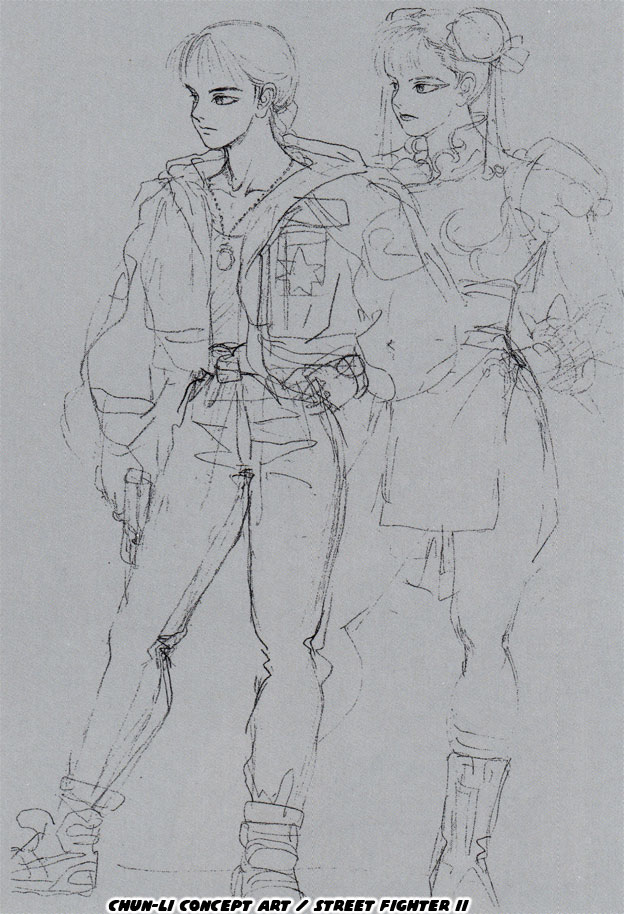

What the designer Akira "Akiman" Yasuda did to Chun-Li was a stroke of genius. It would become something that other designers would look to when they were stumped by a character redo. Unfortunately some artists misread the design. They did not catch how Chun-Li was matured to balance out the rest of the cast. They did not even bother to consider that there may have been a precedence set by actual Chinese martial arts practitioners that were women. Imagine that if Mas Oyama and Yoshiji Soeno inspired the development of Ryu then perhaps Wing Chun and the actresses in Hong Kong cinema might have helped shape Chun-Li as well. Instead the subsequent designers thought that it was important to give new characters some sort of "day job" in order to make them appealing. Since the fighters could not all be cops then people with all sorts of random backgrounds began turning in later versions of the series. Dee Jay was a musician, El Fuerte was a chef, Hakan loved oil, Rufus was fat, etc. The other artists, the ones that "got" what Akiman had done were able to turn around the more offensive characters.

Great Tiger was supposed to be an Indian mystic but his look was very bland. He was a dark-skinned character with a turban, he could have been pulled right out of any comic book. Not much else was known about this figure, what form of fighting he represented or what his abilities were. This was when the team looked to a few new points of reference. Where had they seen Indian fighters before and what made them special? Of course the Indian was well known in television and cartoon tropes. Who does not remember seeing a cartoon of an Indian lying on a bed of nails, or running swords through a basket with their apprentice inside? What about the classic Indian rope trick or the Madari better known as the snake charmers?
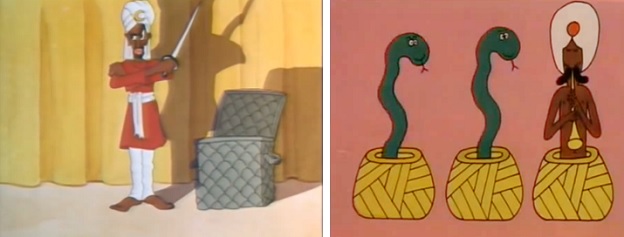
   

These were things that everyone had seen and was familiar with. Yet these things could have also been negative subconscious cues about a particular culture. India had introduced words like Guru and Yogi into Western language. Whether true or not these images of Indians colored pop culture the world over. In Hong Kong cinema there were two hit films by Jimmy Wang Yu. The One Armed Boxer and the Master of the Flying Guillotine. Actors in blackface portrayed the Indians as having unique powers. In the One Armed Boxer the Indian was impervious to weapons, he stabbed himself in the chest to prove it. He could also teleport around the room by standing on his hands. Magicians from India were part of folklore and many assumed that there was some truth to these legends. The second Indian character feature in the Wang Yu films was even more memorable. He had arms that stretched, creating a very unique challenge for the hero of the film. It was an impressive effect in the film, using prosthesis and a second person to create the illusion. This character, blackface and all, had a profound influence on the development of the Great Tiger.
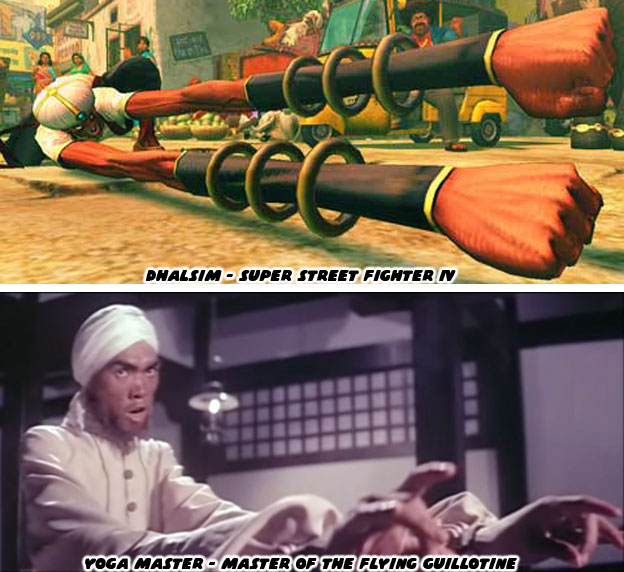
 

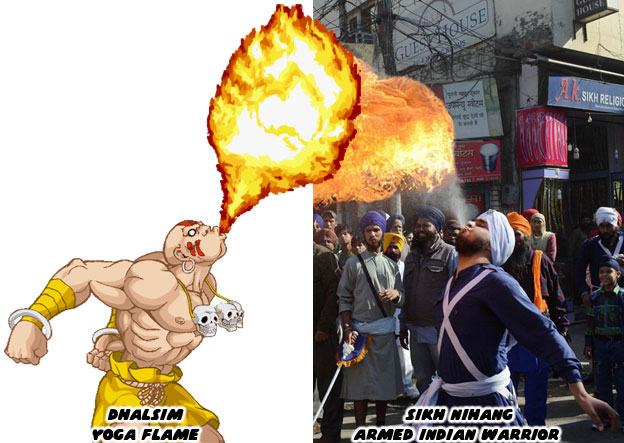
As Dhalsim began to emerge the designers wanted to know how else they could make him unique. Again they used the Indian mystic as a point of reference. In legend the magicians from India and Arabia were highly tolerant of fire. They could walk on hot coals and even breathe fire. These performers ended up in travelling caravans and helped create the myth that found its way to film and television centuries later. The best thing about Street Fighter was that there was a hint to truth to the icons. There was a caste of Sikh Warriors that were armed with weapons and trained in the art of war. During celebrations they would parade in uniform and sometimes put on a show for audiences, singing, dancing and breathing fire. It was an amazing visual. Imagine an animated version of a Sikh warrior in a battle against a karate master. There was real potential in trying to recreate these different arts for game playing audiences.

The team at Capcom began experimenting with the look and moves of the Great Tiger. They stripped away the turban and Sikh costume and made him appear very humble. In Sikh practice hair was a sacred, it was never exposed and was kept wrapped up. Dhalsim was supposed to appear more like a beggar. Literally someone that gave up his worldly possessions and even shaved himself bald to humble himself. A pair of ragged trunks and a rope belt became his new costume. Around his neck he wore three small skulls. It would be revealed that these were children from his village that had died. As a pacifist the only reason he entered the Street Fighter tournament to win the prize money to help his village. His backstory would be revealed at the end of the game. Like Chun-Li and Ryu the developers learned that it was important to know what each character was fighting for and why it made them interesting. At the same time that purpose was not pushed on audiences, like say a Mexican luchador showing up to battle with a frying pan because you know… cooking. The developers respected their characters and audience enough to let players discover what made them unique through the endings of the game.
 

The team then looked at Anabebe and realized that the character had to go. The artists knew however that Anabebe was too ugly and controversial a design. People in North (and Central and South) America would find the character highly offensive. At the same time a wild man was needed to break up the consistency of traditional forms of fighting. Just as they had done with Dhalsim the studio knew that they had to go to extreme lengths to make the character unique. They decided that the new character might be covered in long hair, making him appear more feral. Instead of giving him a skin tone they decided to paint him up in bright colors. The studio looked at the bright colors used by poisonous creatures, snakes and reptiles, to warn predators.

Again Akiman helped with the redesign. He remembered playing against planner Akira Nishitani and being frustrated. Nishitani was good at finding exploits in games and then using them against his opponents. The two would play Pro Wrestling on the Famicom (NES) when it came out in 1986. Nishitani would use a character called the Amazon, he was a green skinned wild man, that looked like a piranha. Anyhow he would use this character to bite the heads of opponents. It was impossible to break out of the hold. Akiman wanted players feel the frustration he did with Blanka's chomping attacks. So the beast man design was pulled from Pro Wrestling rather than black stereotypes.
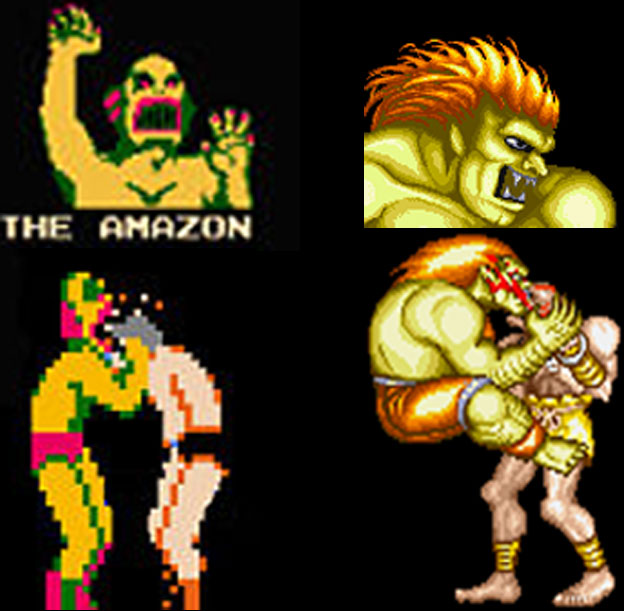
   

Blanka, shortened from Hamablanka, ended up being a bright neon green, almost lime with an equally bright orange hairdo. He was given sharp teeth and nails to make him appear like a beast. He ended up being not very far removed from the Amazon. On his ankles they left broken shackles, as if he were indeed an escaped wild man. It was the only carry-over from Anabebe's original design. What they abandoned thankfully was his original skin color and even ethnicity. In the end it worked out well for the character.

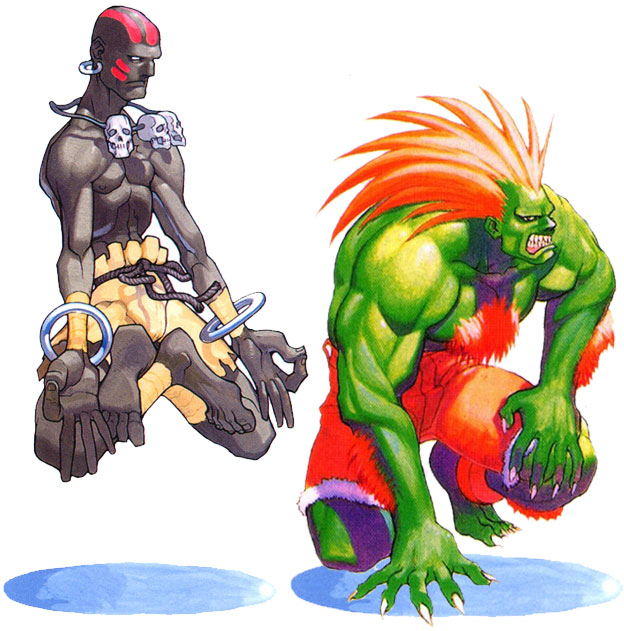
Both Dhalsim and Blanka started off as ugly if not outright racist caricatures of a culture. Both went on to represent the two most extreme character designs in the Street Fighter universe. They did by going beyond the stereotypical conventions and created figures that audiences had never seen before. Despite these extreme makeovers they were still acceptable in the lineup. In the game series and in canon they were sometimes partnered together. Despite looking very different the duo did a great job visually of balancing each other out. Because Capcom was able to pull away from their highly dubious origins the two became some of the most popular characters ever created. They were an example of how almost any design could be salvaged with enough insight and hard work.

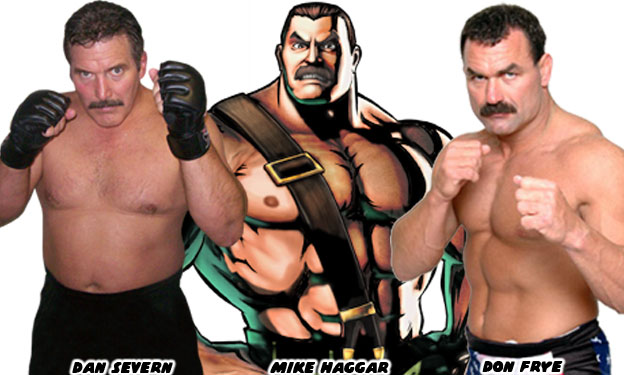
Some of the other characters that were in the planning stages were actually very close to their finished counterparts. The team cut down the wrestlers planned for Street Fighter II from two to one. The studio had found great success with the strong man / wrestler archetype in Final Fight. They had created a large brawler named Mike Haggar. His assortment of suplexes and piledrivers was impressive and never before seen in a brawler. The figure looked very much like MMA pioneers Dan Severn and Don Frye. The two represented the USA in international competitions and Severn had fought in Japan as early as 1982, making him a likely influence on the Capcom staff. By using Haggar as a template the planners could create new moves that were similar to but even more powerful.
 

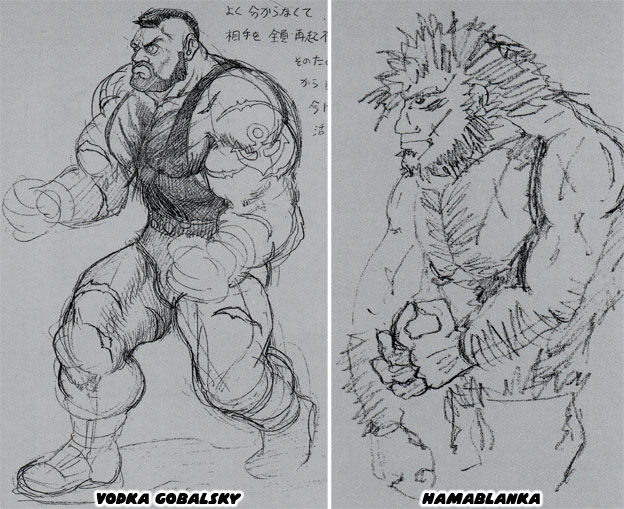
The USA was getting two representatives, Ken and Guile, so the studio decided to give a different nation the wrestler. Mexico was cut out of the countries that would be represented when Capcom dropped the masked wrestler. They looked at the burly grapplers from the Eastern block countries. People like Ivan Poddubny and Stanislaus Zbyszko were legendary wrestlers and world champions that gave Europe a chapter in wrestling history. The team at Capcom decided to make the next character Russian. What needed saving was not the design as much as the name. The burly sailor on the table would have been named Vodka Gobalsky.


The teamed toned down the sailor image and instead focused on making him a wrestler. Thankfully some of the creators knew that names could be just as offensive as skin color. They came to this realization much faster than those working elsewhere.

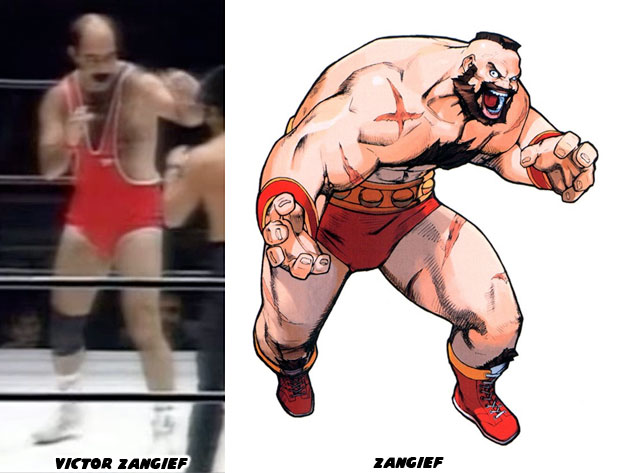
A few years earlier the people at Nintendo created a boxer named Vodka Drunkensky. The Punch Out!! series by Nintendo had some very stereotypical characters in the lineup, like the Japanese Piston Honda, the Italian Pizza Pasta and the Indian Great Tiger (how about that!). When audiences saw Vodka Drunkensky many thought they had gone too far. It was one thing to give a character an offensive name but to show him drinking in between rounds really took the cake! A few of the planners at Capcom remembered seeing a wrestler on Japanese TV named Victor Zangief. The last name seemed to work well for the character and would be much easier to pronounce than Poddubny and Zbyszko.
 

The final few spots in the roster were filled in by the team. Guile the soldier (whom Americans would naturally gravitate to) and E. Honda the sumo wrestler helped add a little more diversity to the cast. The different backgrounds and different fighting styles were a great compliment to the other forms. The revised lineup was much closer to the version that players would see in the arcade. The rest as they say was history...


So what happened to the designers after Street Fighter II. Why has it been so hard for Capcom to create a fighter that matched the legacy of the original World Warriors? We will explore these things in the next blog. As always if you enjoyed this blog and would like to sponsor me please visit my Patreon page and consider donating each month, even as little as $1 would help make better blogs and even podcasts!

Thursday, May 8, 2014

Enter the Dragon, the legend inspires a game, part 2...

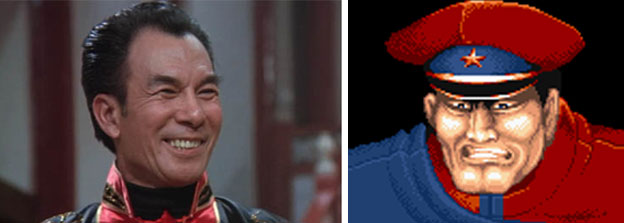
When Street Fighter II debuted the final villain Vega / M. Bison / Dictator (depending on your territory) had overtly Asiatic features. He looked overtly like a communist dictator. So much so in fact that he had to be toned down for the international market. His features were changed to give him a more Eurasian in appearance. The core of the character and his secret organization, Shadowlaw, were influenced very much on Han and the locations featured in Enter the Dragon. It was a little more obvious in Mortal Kombat that the locations and tournament were influenced by the Bruce Lee classic.


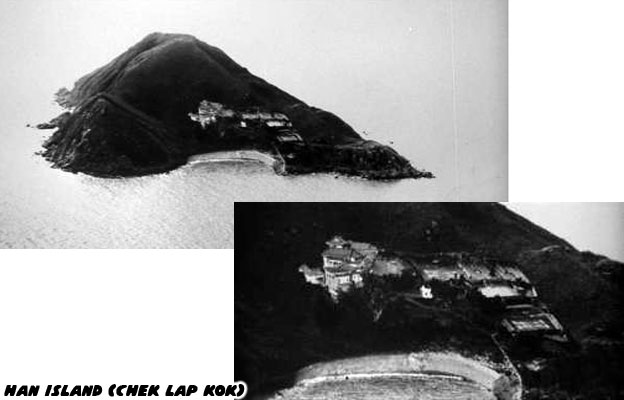
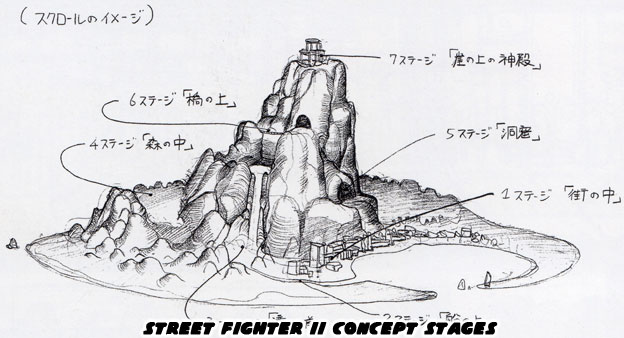
All of the early work surrounding the development of Street Fighter II were eerily similar to the actual locations featured in Enter the Dragon. For example, Street Fighter II ends in Thailand, however the original plan for the game was to have the tournament on an island controlled by a crime lord. The original design for Shadowlaw island was not far removed from Chek Lap Kok, the island used in the aerial photographs shown to Lee at the start of the movie. The fortress where Han was hiding out, King Yn Lei, was actually a different location that was superimposed on the island. Shadowlaw was not supposed to be a landlocked country bordered by Thailand and Cambodia but instead a small island nation. The design of the original Shadowlaw island would follow the developers through to the final stages of production on Street Fighter II and well beyond.


The developers on Street Fighter II (SFII) wanted to create a game that had a loose narrative. In the original Street Fighter Ken and Ryu travelled the globe seeking out the best fighters. Capcom did not originally want to repeat that idea but instead wanted a group of "World Warriors" to visit a single area that hosted the tournament. In this case it was supposed to be Shadowlaw island. The island was supposed to be massive enough to feature unique terrain, weather and locations for players to explore. Each opponent in the series would have their own dedicated stage on the island. The game started at the harbor where the industrial met the city. As players progressed in the game they went around the island and ended at the proverbial top of the mountain. Each stage was supposed to feature unique visuals and battles were supposed to get harder the further along players went.


Factories, cities, jungles, caves and planes were proposed on the island. All the locations were supposed to set the tone for players. It would be a unique learning curve for Capcom designers. Many had worked on other arcade and console hits however the company was banking on Street Fighter II being something special based on the feedback that they had gotten from arcade owners. Many owners wanted a follow-up to Street Fighter and Capcom showed off Street Fighter '89 at trade events. The change in mechanics to brawler, in which one to three people had to fight off waves of opponents, was a stark contrast to a dedicated 1-on-1 fighting game. Capcom listened to the vendors and renamed the game Final Fight. There was pressure to develop a new game and set the bar even higher than Final Fight. The studio put 20-30 designers in charge of character and stage designs alone. This was more than double the size of the teams put together for any other game. The extra eyes, insight and tastes helped shape Street Fighter II tremendously over the next year in development.

It wasn't obvious during the early days that Capcom was working on something historic. They were nonetheless writing the book on stage design. The artists actually went through the same learning curve that animators and filmmakers had during the early days of motion pictures. The designers had to create single screen stages that told a story. The way that each stage was framed was important. The lighting, color pallet, details and atmosphere put into the backgrounds would be almost as important as the fight at the forefront. The Capcom employees had to relearn level design, even after the work on the original Street Fighter and Final Fight. The engine for SFII would be able to put more colors on the screen than ever before. It would be able to support larger sprites, more frames of animation than any other game they had worked on. As a result the designers had to spend a little more time in the planning of each and every stage and character.


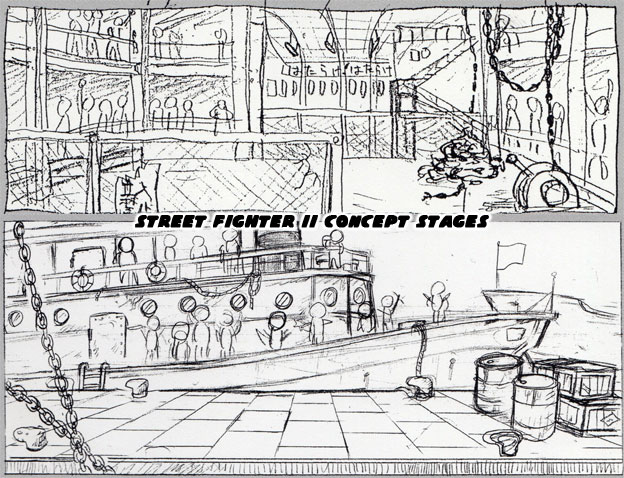
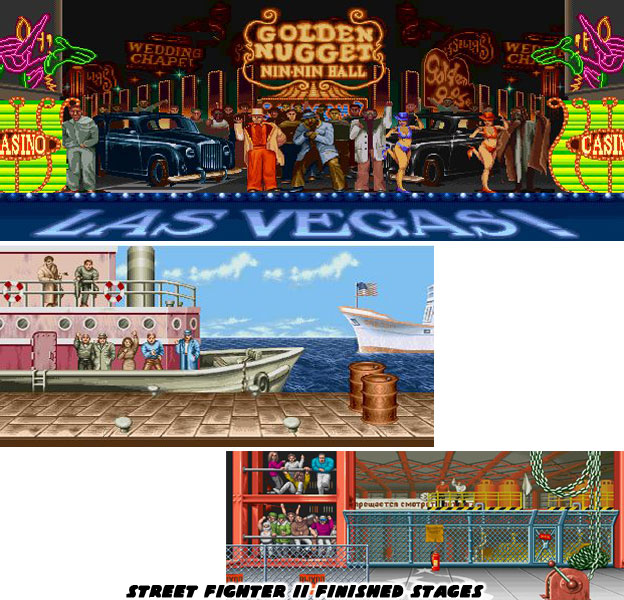
Since the first plans for SFII were to set the entire game on an island the designers wanted to bring each and every fighter through the port first. Bruce Lee had arrived to Han's Island on boat after all. A battle on a pier and a battle in a factory were some of the first stages laid out. The characters selected for the levels had to reflect the location. Zangief the Russian for example was originally a large and burly sailor named Vodka Gobalsky. He could have worked equally well in the port or factory. Instead the designers refined the character until he became the wrestler that most players were familiar with. In the game he was surrounded by steel frames and chain link fences. He was as tough and unyielding as the concrete floor on which he would drop opponents. By comparison the rich playboy Ken Masters would make the pier his home. His luxury yacht was docked off shore. This detail said a lot about the character and both the pier and his yacht would be revisited in sequels. The same happened to Zangief and the factory in which he battled in. The stages were beginning to develop a distinct personality.

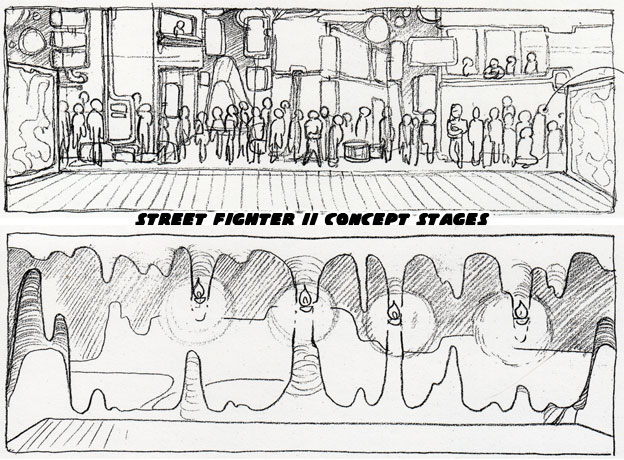
The designers then began mapping out the other areas on Shadowlaw island. The city was next stop for the fighters. There was a busy intersection that the characters would battle on. Residents and visitors to the island would make up an impromptu audience. This stage would give the artists a chance to create multiple layers of animated sprites and show off the processing power for the CPS-II hardware. The electronic billboards and neon signs in the background would be more eye candy than gamers had seen before.


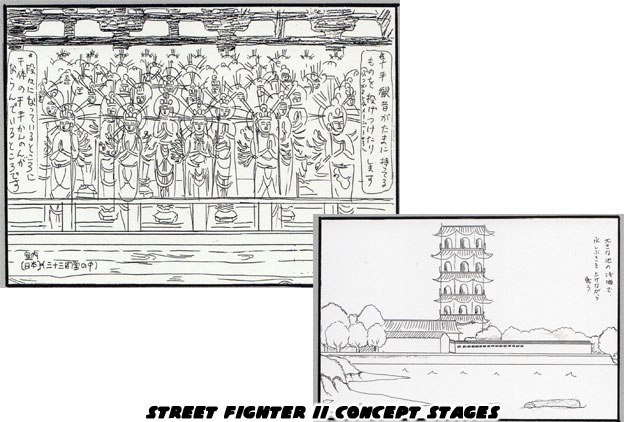
The other location, a secretive cave illuminated by lanterns would not make the cut. The cave was interesting in concept but it was lacking something unique. The designers did not want to spend too much time trying to figure out what was missing. They saw that the modern levels, the dock, city and factory had set precedence for the types of stages that the characters would be fighting in. They wanted to keep the game grounded in the modern world so they cut out the cave early on. It was not to say that the cave would not make for a good stage in a future game (and it would return) but that this game could not find a use for it. The designers at Capcom allowed themselves to make mistakes. They created more art and locations than they would ever need so that it would be easier to edit the levels down. These concept pieces could always be revisited in the future.


Shadowlaw Island was dropped for the final build. The developers decided to return to the globetrotting adventure from the original Street Fighter. The locations for each encounter were now scattered all around the world. Each of the locations still reflected their respective fighters. The sites also worked within the context of the universe. In particular they were all supposed to have modern cues. Details that might have put the levels out of the era would be refined or cut out until they made sense to the gamer. The levels featured in SFII were memorable and not far removed from the original concept art. The graphics for the levels may be considered quaint today but at one time they were cutting edge. They helped ground players in the world that Capcom had developed.
  

These stages were very much like backdrops in a movie. Even average martial arts fights were more memorable when they were set in a unique location. Street Fighter and most fighting games differed from motion pictures in that any playable character was the star. Bruce Lee may have shared screen time with John Saxon and Jim Kelly but the match-ups were always the same. Audiences would never see a fight between Kelly and Lee for example. Cinema like literature was limited in that regard. Fighting game players got a chance to pit heroes against heroes and villains agains villains. That tradition started very much with Street Fighter II. The best fighting games created a narrative around the cast and allowed players to explore all of the possibilities. The Bruce Lee films always featured unique locations and it was the island fortress featured in Enter the Dragon that set the standard that Capcom and Midway would try to match. It was much more interesting that the main villain had enough wealth and power to draw in fighters from around the world.

Up until that point game bosses were just like other martial artists and the ending could actually be anticlimactic. Additionally having one central opponent that had powers and abilities different than the traditional martial arts masters made fighting games in the East and West more unique. The multiple exotic locations that framed each battle helped gamers suspend their disbelief and get drawn into the world of Street Fighter. The best martial arts features were filmed on-location many decades before Street Fighter was created. Several of the Bruce Lee films were shot in unique areas to help bring viewers into his world. Street Fighter II would not have been as memorable without the extra artists working on level and character designs. The influences that these artists pulled from martial arts cinema as well as comics and animation could never be understated. Enter the Dragon did more than influence the development of Street Fighter II and Mortal Kombat. The themes featured in the movie would be carried over by the Street Fighter creators long after they had left Capcom. In fact several of the team members returned to the original concept of Street Fighter II and fleshed out one of the most thematic fighting games ever produced. The next blog will look at this game more closely. If you would like to sponsor me please visit my Patreon page and consider donating each month, even as little as $1 would help make better blogs and even podcasts!
follow the Street Writer on Patreon!