Showing posts with label han. Show all posts

Wednesday, August 4, 2021

The Chun-Li template, don't follow it too closely! A 1UP classic...

NOTE: This blog entry was originally published on 1UP on April 18, 2012.

In the previous blog I had highlighted how Chun Li was the template from which Capcom drew its great female character designs. I wanted to make a special mention of how the context of the character design was important as well. The studio could have and did try to introduce two new female characters in Street Fighter IV. The audience reaction was lukewarm to one and somewhat better for the other. Crimson Viper, the spy in a tight fitting pantsuit was actually a character design based on marketing data. Capcom learned that western audiences were drawn to women that looked like Angelina Jolie. They decided to make a Jolie-like character and put her in the game. Unfortunately most players skipped out on playing her during the first public showings of the game. This was a surprise to everyone working internally. The studio had made the mistake of trying to predict their audience based on trends from outside of the community. Jolie was a popular actress and she might have made for a fun character in a game like Tomb Raider, where running and gunning were the objective, however she had absolutely zero credibility as a martial artist. She was no Angela Mao or or Michelle Yeoh, those were actresses that had made a living by playing fighters on the big screen.

Capcom could not convince audiences that a fighting game character in tight-fitting street clothes with the same features of a size zero Hollywood actress belonged in the Street Fighter universe. The other character, Juri Han, went much further with audiences.

Capcom learned that SF fans were interested more in fighting designs than pop culture caricatures. You would think that they had learned that with the Bruce Lee clone called Fei Long… but I digress. Players were used to seeing multiple layers of detail that supported the character as a fighter. With Juri the details were more apparent. The costumes for the SF cast were story elements that explained who the character was in fighting style and personality to gamers. Juri was like Chun-Li, a variation of a traditional design. However it took Capcom senior designer Daigo Ikeno multiple revisions to find a character that worked.

Like Chun-Li before her the character started off in a more traditional costume. The new character was to be of Korean descent and Capcom wanted audiences to identify her easily as such. She was placed her in a Hanbok or traditional Korean clothing. The oversized dress was an interesting design choice however might have proved nonfunctional in a fight. Juri was to have a majority of kicking attacks to balance out her rival, Chun-Li. Her kicks would have been impossible to make out in the dress. Ikeno went back to the drawing board and kept on revising the character.

There were many revisions made Juri. Some of the design choices were bold while others were nonsensical. In this way Mr. Ikeno was able to demonstrate that during the development process every idea was considered, not solely the traditional choices but the outlandish ones as well. The countless revisions would not end up influencing the final design as much as Chun-Li did.

Visually Juri was almost point-for-point a repeat of the elements featured with Chun-Li. Savvy viewers might notice that some of the clothing options were reversed for the character. Chun-Li had bare arms and legs and Juri had covered arms and legs. Chun-Li wore a wide belt and Juri had a bare midriff.

Both characters had unique elements on their heads. Chun-Li had her hair in buns with long flowing ribbons while Juri sported two outlandish pigtails. Both characters featured a contrasting color on their uniforms, a filigree pattern that outlined their breasts.

Both characters also sported spiked bracelets. Juri's were a little harder to make out and seemed more decorative than functional in a fight.

Both characters relied on kicking moves that were supposedly inspired by their home countries. Chun-Li used a fictional form of kung-fu while Juri relied on fantastic Tae-Kwon Do attacks. Both characters also sported uniforms that were pseudo-authentic. Chun-Li's was a little more believable but it was still completely fabricated. These things were not noticeable until her uniform was compared to actual Chinese martial arts clothing. The cut of Juri's costume was extremely odd. Her top and sleeves were not based on any known martial art or fashion. Her leggings were a take-off of the traditional dobok or tae kwon do uniform. The dobok sported loose fitting pants so practitioners could perform a wide range of kicks. Juri's pants actually hung from her belt and were open on the hips and inner thigh, they were more like chaps that people wore while riding horses. Even her belt was unlike the traditional "dhee" worn on a dobok. Tae Kwon Do belts were styled similar to karate belts and were also colored to show what level of proficiency the fighter had. Instead of a short black belt Juri had an extremely long belt with purple striping which hung low across her waist.

Juri made a bigger impression on players of Street Fighter IV than almost any other character introduced in the series. A big reason for that was because she borrowed tremendously from the design of Chun-Li. Gamers that didn't pay attention to Juri's design influences but enjoyed the character nonetheless were possibly drawn to her at a subconscious level. Daigo Ikeno did a good job at introducing a new female into the SF universe that covered many of the elements that made the other characters memorable. Juri certainly stood apart from the more "traditional" designs explored in the SNK games. SNK had created an entire library of Korean characters starting with Kim Kaphwan, a TKD practitioner from Fatal Fury 2, released in 1992 a year after SF II had come out. The Fatal Fury and King of Fighters series had a unique cross sampling of Korean characters and styles. Capcom was barely exploring this part of Asia some 16 years after SNK.

SNK had at least two female Korean leads in the KOF series. The first was Mae Lee, a character dressed in modern street clothing sporting a strange belt and large scarf. Her design was rooted more in henshin, the Japanese superhero shows than on a classic fighting art. The other was Chae Lim. She was the first female wearing a traditional dobok featured in a videogame. She predated Juri by six years. The bold cut of Juri's uniform and use of contrasting colors black, white and purple made her stand out from the crowd however. Juri was designed to be a non-conformist or a non-traditionalist. It could explain why the character took extreme liberties with the uniform of TKD practitioners. Everything from the hair and colors associated with her were bold. She had shock value going in her favor, more so than even Crimson Viper and her electrified gloves. However was shock value enough to make her fit within the Street Fighter universe?

I would argue that Juri was lacking the elements to make her as timeless as Chun-Li. The character was instantly liked because she borrowed a large number of elements from Chun-Li. However this new character lacked inspiration and originality. Chun-Li went through several revisions before a character emerged that audiences could identify with. The influences from martial arts cinema and Chinese culture were tangible with Chun-Li. With Juri audiences could not readily see or identify any inspirations behind the character other than those of Chun-Li. Juri was a copy of a caricature. She suffered from the same inconsistencies of the other characters placed into SFIV, namely that the designers were not looking to the outside world for inspiration but looking at their own series to fill a slot on the roster.

Juri was a bit too formulaic. Capcom saw the reaction that western audiences had with the new characters and went back to the drawing board for Super SFIV. They went back to basics and tried applying a traditional fighting style on a national representative. Juri represented Korea and TKD and Hakan represented Turkey and their native wrestling. The the decision to reverse the clothing elements featured on Chun-Li helped make sure that Juri was better received than the oily red-colored man. Juri was a better design than C. Viper and certainly leagues ahead of Rufus, however even those two seemed pulled from characters featured in an older DIMPS fighting game.

Perhaps Mr. Ikeno played the design a little too safe. By following the template of Chun-Li so closely he created a character that lacked personality. All of the moves attached to the character were over-the-top, not to mention that she acted out sadistically in her animations. She was like an animé character placed into a fighting game. If the character was indeed a non-traditionalist then Capcom should have ignored trying to give her dobok leggings. The character in only her tights looked more like a cross-between Cammy and Chun-Li and possibly would have been more believable as the super fighter capable of taking on both icons at once. But that's just me speaking as an armchair designer.

I don't believe that Juri was as well designed as she could have been. Capcom wanted to push the envelope but they were not sure how. They had tried to make a dramatic change and failed with C. Viper. They returned to basics and succeeded somewhat with Juri. The differences between the two characters was obvious. One had more fighting elements while the other looked like she was wearing street clothes. Yet the nuances for a memorable female fighting lead were harder to pin down. Cammy was not a reversal of the costume elements of Chun-Li, she was her own person that complimented the designs of the earlier character. Cammy did not move or fight like Chun-Li but had her own special attacks. In Street Fighter EX Blair Dame was also nothing like Chun-Li yet she represented a strong female archetype with her own original style. Juri's pseudo-traditional costume and kick-based attacks were a little too similar to Chun-Li's to be considered completely original. That was my interpretation of the character, what do you think?

Thursday, May 8, 2014

Enter the Dragon, the legend inspires a game, part 2...

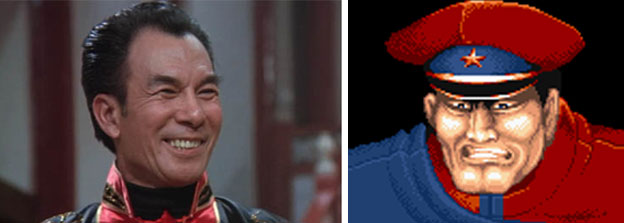
When Street Fighter II debuted the final villain Vega / M. Bison / Dictator (depending on your territory) had overtly Asiatic features. He looked overtly like a communist dictator. So much so in fact that he had to be toned down for the international market. His features were changed to give him a more Eurasian in appearance. The core of the character and his secret organization, Shadowlaw, were influenced very much on Han and the locations featured in Enter the Dragon. It was a little more obvious in Mortal Kombat that the locations and tournament were influenced by the Bruce Lee classic.


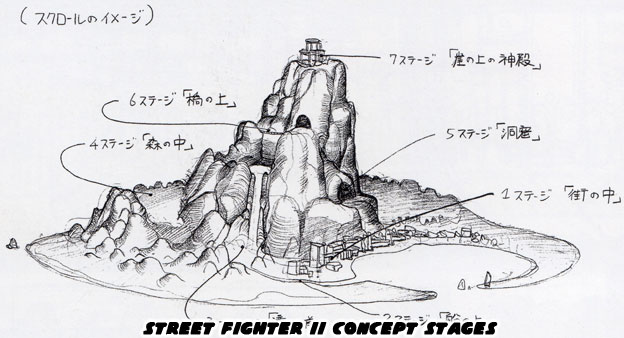
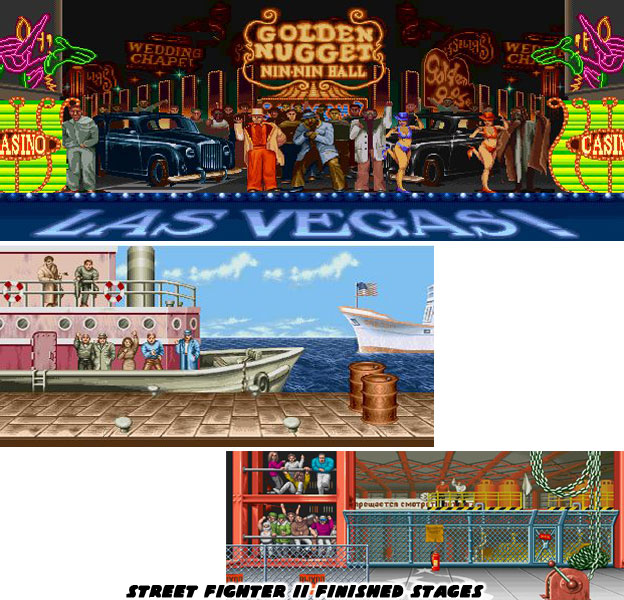
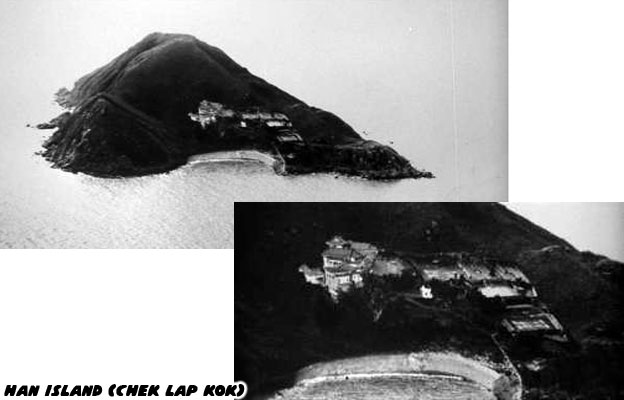
All of the early work surrounding the development of Street Fighter II were eerily similar to the actual locations featured in Enter the Dragon. For example, Street Fighter II ends in Thailand, however the original plan for the game was to have the tournament on an island controlled by a crime lord. The original design for Shadowlaw island was not far removed from Chek Lap Kok, the island used in the aerial photographs shown to Lee at the start of the movie. The fortress where Han was hiding out, King Yn Lei, was actually a different location that was superimposed on the island. Shadowlaw was not supposed to be a landlocked country bordered by Thailand and Cambodia but instead a small island nation. The design of the original Shadowlaw island would follow the developers through to the final stages of production on Street Fighter II and well beyond.


The developers on Street Fighter II (SFII) wanted to create a game that had a loose narrative. In the original Street Fighter Ken and Ryu travelled the globe seeking out the best fighters. Capcom did not originally want to repeat that idea but instead wanted a group of "World Warriors" to visit a single area that hosted the tournament. In this case it was supposed to be Shadowlaw island. The island was supposed to be massive enough to feature unique terrain, weather and locations for players to explore. Each opponent in the series would have their own dedicated stage on the island. The game started at the harbor where the industrial met the city. As players progressed in the game they went around the island and ended at the proverbial top of the mountain. Each stage was supposed to feature unique visuals and battles were supposed to get harder the further along players went.


Factories, cities, jungles, caves and planes were proposed on the island. All the locations were supposed to set the tone for players. It would be a unique learning curve for Capcom designers. Many had worked on other arcade and console hits however the company was banking on Street Fighter II being something special based on the feedback that they had gotten from arcade owners. Many owners wanted a follow-up to Street Fighter and Capcom showed off Street Fighter '89 at trade events. The change in mechanics to brawler, in which one to three people had to fight off waves of opponents, was a stark contrast to a dedicated 1-on-1 fighting game. Capcom listened to the vendors and renamed the game Final Fight. There was pressure to develop a new game and set the bar even higher than Final Fight. The studio put 20-30 designers in charge of character and stage designs alone. This was more than double the size of the teams put together for any other game. The extra eyes, insight and tastes helped shape Street Fighter II tremendously over the next year in development.

It wasn't obvious during the early days that Capcom was working on something historic. They were nonetheless writing the book on stage design. The artists actually went through the same learning curve that animators and filmmakers had during the early days of motion pictures. The designers had to create single screen stages that told a story. The way that each stage was framed was important. The lighting, color pallet, details and atmosphere put into the backgrounds would be almost as important as the fight at the forefront. The Capcom employees had to relearn level design, even after the work on the original Street Fighter and Final Fight. The engine for SFII would be able to put more colors on the screen than ever before. It would be able to support larger sprites, more frames of animation than any other game they had worked on. As a result the designers had to spend a little more time in the planning of each and every stage and character.


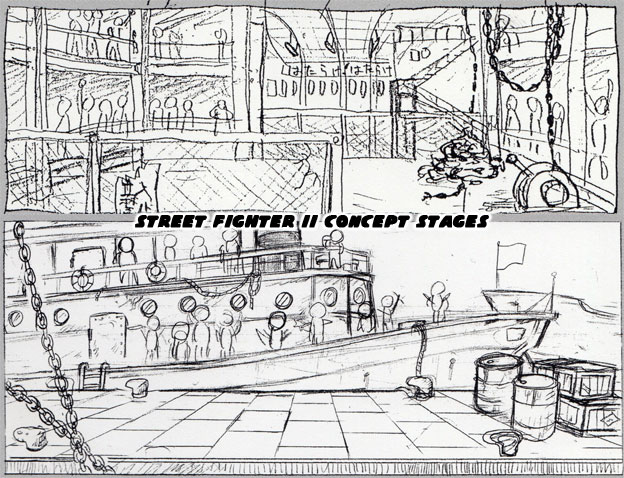
Since the first plans for SFII were to set the entire game on an island the designers wanted to bring each and every fighter through the port first. Bruce Lee had arrived to Han's Island on boat after all. A battle on a pier and a battle in a factory were some of the first stages laid out. The characters selected for the levels had to reflect the location. Zangief the Russian for example was originally a large and burly sailor named Vodka Gobalsky. He could have worked equally well in the port or factory. Instead the designers refined the character until he became the wrestler that most players were familiar with. In the game he was surrounded by steel frames and chain link fences. He was as tough and unyielding as the concrete floor on which he would drop opponents. By comparison the rich playboy Ken Masters would make the pier his home. His luxury yacht was docked off shore. This detail said a lot about the character and both the pier and his yacht would be revisited in sequels. The same happened to Zangief and the factory in which he battled in. The stages were beginning to develop a distinct personality.

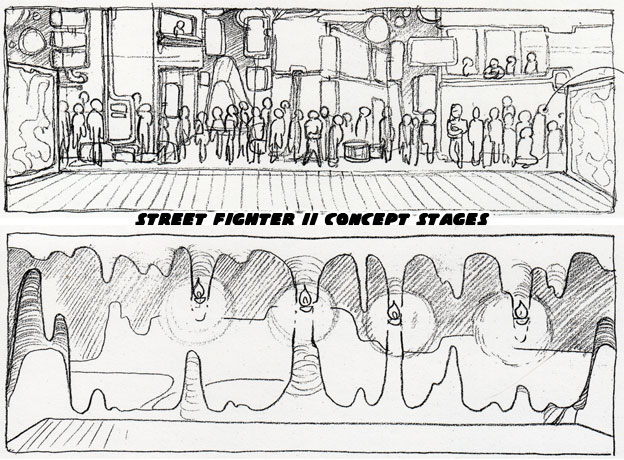
The designers then began mapping out the other areas on Shadowlaw island. The city was next stop for the fighters. There was a busy intersection that the characters would battle on. Residents and visitors to the island would make up an impromptu audience. This stage would give the artists a chance to create multiple layers of animated sprites and show off the processing power for the CPS-II hardware. The electronic billboards and neon signs in the background would be more eye candy than gamers had seen before.


The other location, a secretive cave illuminated by lanterns would not make the cut. The cave was interesting in concept but it was lacking something unique. The designers did not want to spend too much time trying to figure out what was missing. They saw that the modern levels, the dock, city and factory had set precedence for the types of stages that the characters would be fighting in. They wanted to keep the game grounded in the modern world so they cut out the cave early on. It was not to say that the cave would not make for a good stage in a future game (and it would return) but that this game could not find a use for it. The designers at Capcom allowed themselves to make mistakes. They created more art and locations than they would ever need so that it would be easier to edit the levels down. These concept pieces could always be revisited in the future.


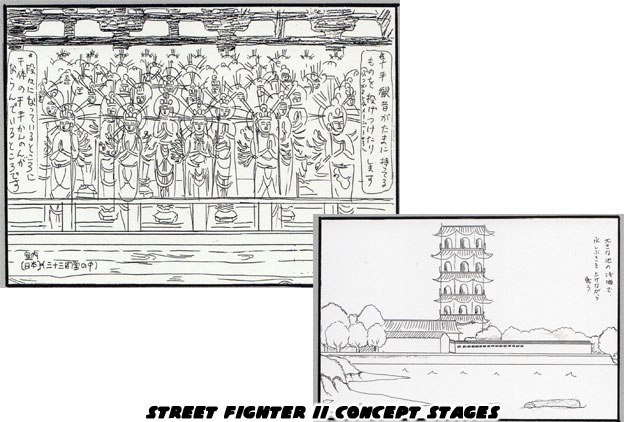
Shadowlaw Island was dropped for the final build. The developers decided to return to the globetrotting adventure from the original Street Fighter. The locations for each encounter were now scattered all around the world. Each of the locations still reflected their respective fighters. The sites also worked within the context of the universe. In particular they were all supposed to have modern cues. Details that might have put the levels out of the era would be refined or cut out until they made sense to the gamer. The levels featured in SFII were memorable and not far removed from the original concept art. The graphics for the levels may be considered quaint today but at one time they were cutting edge. They helped ground players in the world that Capcom had developed.
  

These stages were very much like backdrops in a movie. Even average martial arts fights were more memorable when they were set in a unique location. Street Fighter and most fighting games differed from motion pictures in that any playable character was the star. Bruce Lee may have shared screen time with John Saxon and Jim Kelly but the match-ups were always the same. Audiences would never see a fight between Kelly and Lee for example. Cinema like literature was limited in that regard. Fighting game players got a chance to pit heroes against heroes and villains agains villains. That tradition started very much with Street Fighter II. The best fighting games created a narrative around the cast and allowed players to explore all of the possibilities. The Bruce Lee films always featured unique locations and it was the island fortress featured in Enter the Dragon that set the standard that Capcom and Midway would try to match. It was much more interesting that the main villain had enough wealth and power to draw in fighters from around the world.

Up until that point game bosses were just like other martial artists and the ending could actually be anticlimactic. Additionally having one central opponent that had powers and abilities different than the traditional martial arts masters made fighting games in the East and West more unique. The multiple exotic locations that framed each battle helped gamers suspend their disbelief and get drawn into the world of Street Fighter. The best martial arts features were filmed on-location many decades before Street Fighter was created. Several of the Bruce Lee films were shot in unique areas to help bring viewers into his world. Street Fighter II would not have been as memorable without the extra artists working on level and character designs. The influences that these artists pulled from martial arts cinema as well as comics and animation could never be understated. Enter the Dragon did more than influence the development of Street Fighter II and Mortal Kombat. The themes featured in the movie would be carried over by the Street Fighter creators long after they had left Capcom. In fact several of the team members returned to the original concept of Street Fighter II and fleshed out one of the most thematic fighting games ever produced. The next blog will look at this game more closely. If you would like to sponsor me please visit my Patreon page and consider donating each month, even as little as $1 would help make better blogs and even podcasts!
follow the Street Writer on Patreon!

Wednesday, May 7, 2014

Enter the Dragon, the legend inspires a game, part 1...

All great games, like all great works of fiction, are inspired creations. The lives, memories and lessons of the creators help shape the final product. Whether a story is about a young wizard or a space cowboy there is something that inspired their creation. Fighting games for example are the result of thousands of years of history. Whether the developers made conscious or even subconscious choices in the way their game looked or played the influence from real heroes and mythological monsters, actual fighting arts and even made up martial arts helped root the biggest franchises. In my previous life on 1UP I had mentioned the influence that motion pictures had on fighting game history. The longest-lived titles were heavily influenced by cult films. I often credited the 1976 film, the Master of the Flying Guillotine for inspiring the creation of Street Fighter II and Mortal Kombat. The film introduced a tournament featuring characters of diverse martial arts backgrounds from around Asia. The template would be copied dozens of times in film, television and gaming. It was actually the sequel to the 1971 film The One Armed Boxer. That film also included martial artists of different regions fighting against each other. I even credited the 1972 film Lady Whirlwind for inspiring the creation of Chun-Li. I am here to admit that I have been ignoring a major influence on the world of Street Fighter and other fighting game franchises for a long time. For almost a decade I have failed to mention the precedence that the sensational Enter the Dragon had on the genre. I intend to spend today and the next few blogs correcting that oversight.


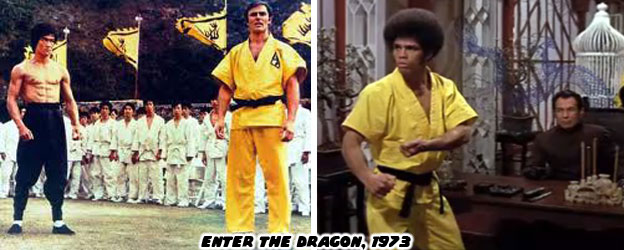
The Bruce Lee film was centered around good and evil fighters in a tournament. It predated The Master of the Flying Guillotine by three years. The characters were very diverse and reflected the international flavor that the martial arts had adopted in the 20th century. Unlike the previous films that I credited, Enter the Dragon like the Street Fighter series was set in modern times. The majority of martial arts pictures up until that point were done in China or Taiwan and were set in a classical period. Few martial arts films before Enter the Dragon featured non-Asians in leading roles. Bruce Lee inspired countless minorities and not solely Asian-Americans to pursue the martial arts. In the same way Jim Kelly became a role model for young black fighters. Lee insisted that his films break from tradition and be set in modern times. Earlier films revolved around mythological fighters and early Chinese heroes. Lee wanted to give the classic fables a contemporary retelling. He wanted to mix the gunplay and espionage from western films with the well choreographed fights from the east. He wanted to take the pictures out of the country and into the city. Lee desired to make them gritty and more realistic. Emperors gave way to drug lords and guns replaced ancient Shaolin weapons. Instead of dangling from wires Lee wanted the fights to be believable. As a result his films were incredibly original and very successful.

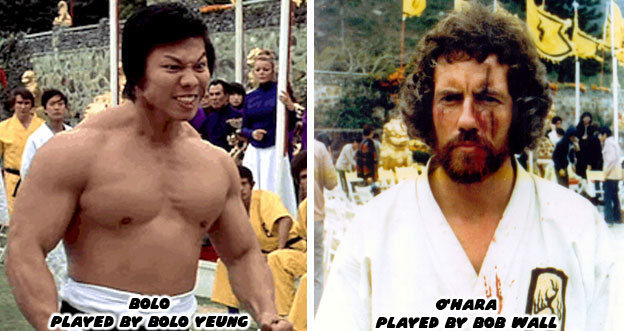
To help bridge the different styles of storytelling Lee had assembled a cast that reflected the west and east. Heroes and villains were equally diverse and played by both Asian and US actors. The main villain was a crime lord named Han, as played by veteran actor Kien Shih. Two of his fighters had very distinct looks to them. The muscular Bolo Yeung played Yang Sze, a bodyguard that enjoyed breaking his opponents. The wild haired Bob Wall played O'Hara. Aside from being a crazed-looking person he had a vendetta against Lee. He was scarred by Lee's sister Su Lin, as played by Angela Mao (a martial artist that helped inspire Chun-Li). Yang Sze and O'Hara were very distinct characters. They had unique features that made them stand out from the crowd. They could be considered the templates for the sub-bosses in fighting games.


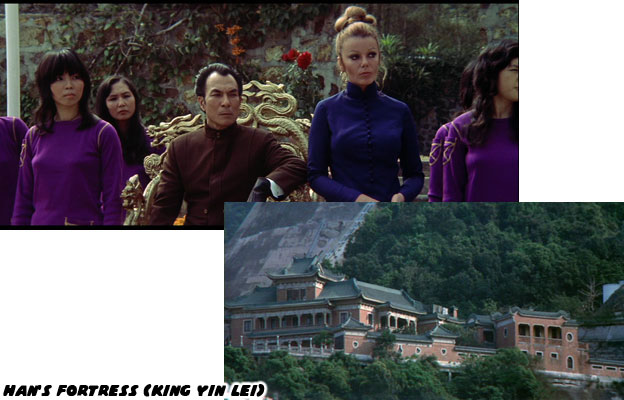
Lee had been recruited to spy on Han and try to find evidence of his illegal activities. In order to make the reliance on martial arts more believable Lee was told that guns were not allowed on the island and that was why his expertise was needed. Lee would be able to demonstrate to the world that his eastern philosophies and hybrid fighting style were the real deal. Multiple locations were filmed to create the fictional base of operations for Han. The sets would have to be large enough to accommodate dozens of extras and show off the wealth of Han. Audiences had to be convinced that the villain had enough wealth to support a small island nation. Han was in the lap of luxury and was presented in tailored suits and silk robes. He was protected by a small army of armed guards and surrounded himself with beautiful and dangerous women. His fortress and the backdrop for the tournament was a Chinese castle. He observed the tournament from a throne just above the courtyard. It framed his status and ego in equal measures. Han thought of himself as superior to the fighters he had assembled and would get a chance to show that at the end of the tournament.


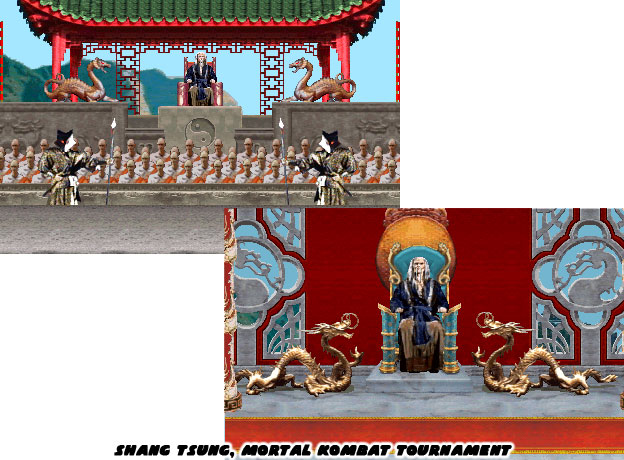
The use of a main villain overseeing a tournament from a throne would become a staple in fighting games. Mortal Kombat took several cues from pop culture including Enter the Dragon. Shang Tsung, the host of the original Mortal Kombat was not far removed from Han. His palace looked very much like King Yin Lei, the actual location used in the movie. The game series was split between the demonic "Outworld" and human world. Locations were not only exotic but also dangerous. Han's island fortress was so massive that the film could have several battles over the course of the film without having to use the same backdrop. The dragon ornaments became synonymous with Mortal Kombat, however the Bruce Lee film made use of the mythical creatures as well. Han's throne, his robes and palace were decorated with dragons. Shang Tsung officiated over his tournament, like Han, on a throne decorated with dragons.


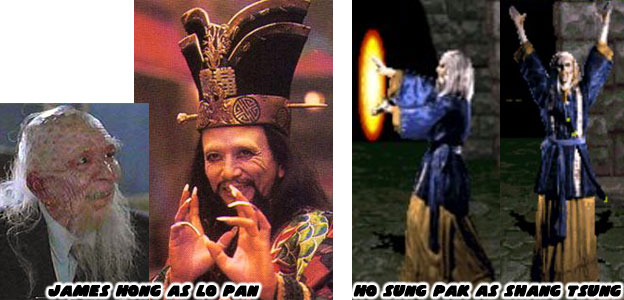
To be fair the characters in Moral Kombat and its universe were also influenced by the 1986 film Big Trouble in Little China. In the John Carpenter film the main villain was an ancient sorcerer named Lo Pan. He made up for his lack of marital prowess with magical power. Many assumed that the centuries-old character, as played by James Hong, would be easy to defeat by the much younger cast. It did not turn out to be the case as Lo Pan easily steamrolled over the heroes and villains. The twist with the villain being a capable fighter was done in both Enter the Dragon and Big Trouble in Little China. Shang Tsung would continue the tradition in the startup game. His speedy moves and powerful attacks caught many a player off guard. The game character was actually played by Ho Sung Pak. Pak. He also played Liu Kang, one of the heroes of the series. Shang Tsung had the ability to teleport and fire screaming skulls from his hands. It was a fearsome sight from a character that was supposed to hail from ancient China.


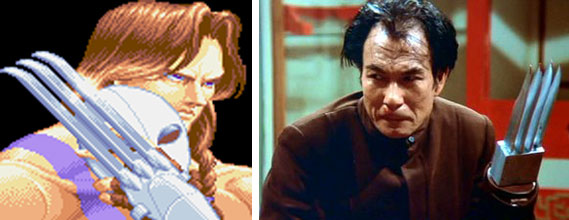
Han was a different type of villain. He did not have supernatural powers but was nonetheless dangerous. He was actually a drug lord that was a master martial artist. He had one prosthetic hand that he swapped with different hands and weapons throughout the movie. He could use the weighted metal hand to block powerful kicks, break bones and deliver lethal strikes to his opponents. When he wanted to maim an opponent he would use a hand that was an iron claw or even a hand made out of blades. The knife hand was something that undoubtedly influenced the creation of Vega / Balrog / Claw from Street Fighter II. The costume and tattoo for the Spanish matador was pulled from San Po, the villain from the classic film Project A featuring Jackie Chan. The combination of influences from two different films with distinct villains made for a tremendous game character.


It was however the final villain of Street Fighter II, Vega / M. Bison / Dictator, and his organization, Shadowlaw, that more closely mirrored Han and the elements featured in Enter the Dragon. The next blog will look at how the film shaped the legacy of memorable stages featured in Street Fighter II. If you would like to sponsor me please visit my Patreon page and consider donating each month, even as little as $1 would help make better blogs and even podcasts!
follow the Street Writer on Patreon!