
Showing posts with label kung-fu. Show all posts

Wednesday, July 6, 2022

Figuring out the changing Street Fighter style, part 1...

Over the last month I had talked a lot about the new, and returning faces in Street Fighter 6. I studied their outfits, the colors assigned to them, their nationality, and physical build. I did my best to try to figure out their roots, and fighting method, and share it with the visitors to my blog. In the end it reminded me that there was a style of character design that could be considered uniquely “Street Fighter.” By that same token there was a style of design that worked for Mortal Kombat, Tekken, King of Fighters, and Killer Instinct. The aesthetic of Capcom was distinct. This was thanks to the legacy of artists that had worked there. Akiman, Shoei, Bengus, Daigo Ikeno, Edayan, Kinu Nishimura were brilliant artists that had a hand in developing the style, and direction of the SF series.

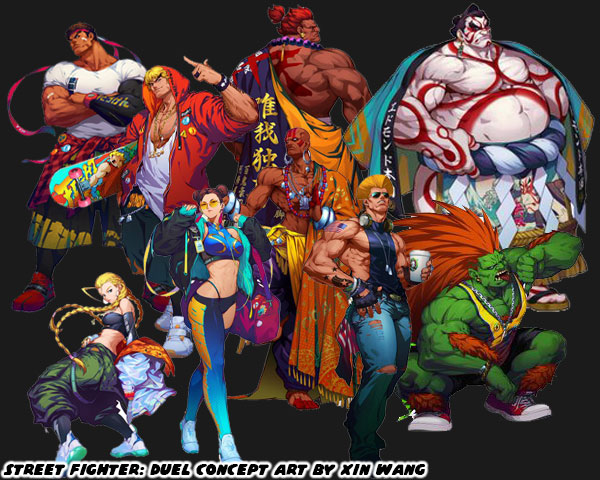
The newest designer Yusuke Hashimoto, was now putting his own unique stamp on the lineup. Yusuke had produced Bayonetta, so he was comfortable designing all manner of characters with different outfits, skin colors, builds, and body types. In short, he was the perfect person to shape the direction of this generation of fighters. With that said let’s try to figure out what made the “SF Style” distinct. The most obvious thing would be the costumes the characters wore. Could you really put a SF character in just any outfit, and would it work within the context of the game? I’m not saying that every character had to be wearing an authentic martial arts costume. That type of visual storytelling did not work great in SF. Instead there was a mix of pseudo-authentic costumes, and casual uniforms to break up the monotony. Consider for a moment what it would look like if everyone in the lineup wore casual clothing. Concept artist Xin Wang came up with fashionable makeovers for the SF cast in the Chinese mobile game Street Fighter: Duel. I would argue that Mr. Hashimoto’s designs were sort of a counter to that. He wanted to bring back the classics, but not go overboard with their costumes.

Long time fans would enjoy seeing their favorite characters in new outfits. However what did this do to new players? How did the game change by shifting just one element? Were new players able to make out the style of fighting that a character represented based on casual wear? Were they able to figure out what they could do based on the color of their skin, or their physical size? Now consider what costumes affected from a game play perspective. Was it easy to read the action on the screen if a character was covered up with long sleeves, or pants? What about vivid patterns, or clashing color choices on an outfit? Did these things make it easier to play the game, or were they distracting? I could argue similar points for excessive splashes of color, lightning, fire, smoke, etc. while the characters performed special attacks. There were many individual elements that made up the main costume choices for the SF cast. In the early days arcade cabinets, and game consoles lacked the memory, and processing power to render anything too detailed. The developers were limited to a simple outfit, and a primary color. This set the standard that was copied the world over. Now that consoles, and even mobile devices were more powerful then it became easier to create characters with highly detailed outfits, and millions of color choices. Was is then critical to take advantage of all this processing power? Or did putting too much into a costume’s detail take away from the overall presentation of the character?

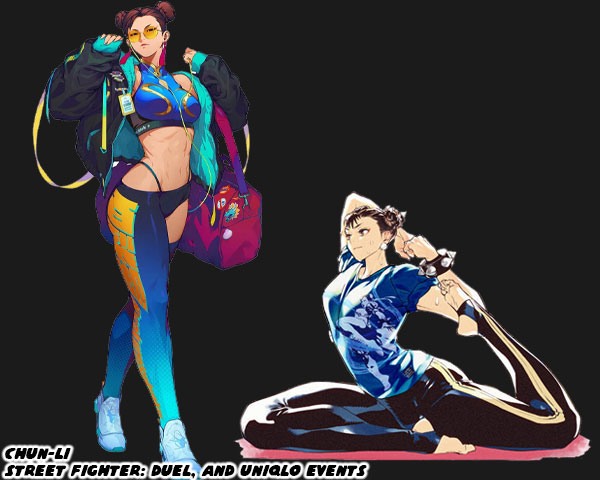
I welcomed the addition of Story, Arcade, and Battle costumes that were put into the library in SFV. I was not against a character getting an updated main costume in the series, as long as it didn’t stray too far from the original design. The importance of a primary costume still remained. This was why I had no objections to the new designs for Dhalsim or Blanka in SF6. There was even a chance for the studio to take a good idea, and make it even better. I thought this was the case for Juri’s update. I saw the studio taking a step backwards when they revealed the new look of Chun-Li. They took away the small details that added up to make her costume truly stand out not only in the lineup, but across the spectrum of fighting games. Chun-Li perfectly encapsulated the Street Fighter school of design. It didn’t matter if you were from the Middle East, South America, or Europe. It didn’t matter if you had played a million fighting games, or if this was your first. When you looked at Chun-Li for the first time you almost instantly thought “Chinese Fighter.” Why was this? 

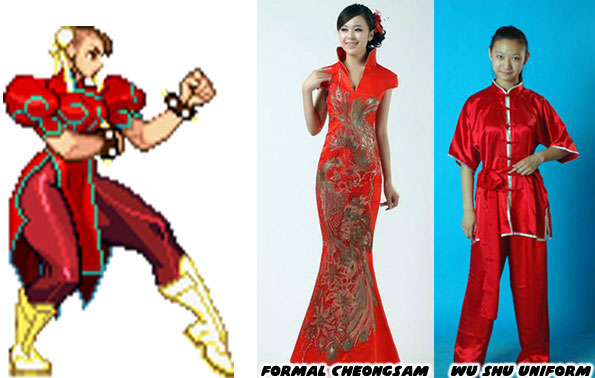
Audiences had seen Chun-Li’s prototype appear in pop culture generations before the game came out. Whether in story, film, photo, television, cartoon, or comics. The artists working at Capcom were pulling from various influences. People saw the repetition of heroic Chinese fighters, especially in Taiwanese, and Hong Kong cinema. They had seen physical Chinese representations in the form of certain hairstyles, makeup, and fashions. The cut of a dress, the use of ribbons, belts, sashes, and how they were assembled could be considered Chinese, or Mexican, or French, or American. Audiences had seen some combination of a wu shu uniform, or a traditional cheongsam at some point in the past. These were actual, traditional outfits from China. The genius of Capcom was how Akira “Akiman” Yasuda arranged certain elements when designing Chun-Li. The puffy shoulders, the pantyhose, wrestling boots, wide belt, and weighted bracelets had never been used in an actual martial arts costume, let alone any traditional Chinese dress. Audiences filled in the blanks with what they knew. They saw elements that they had seen before, and they assumed the rest was traditional Chinese. It was an absolutely brilliant trick, and set a standard that few studios could match. Yusuke Hashimoto showed that he was aware of what Akiman had done. Jaime in Street Fighter 6 followed the exact same design path of Chun-Li.

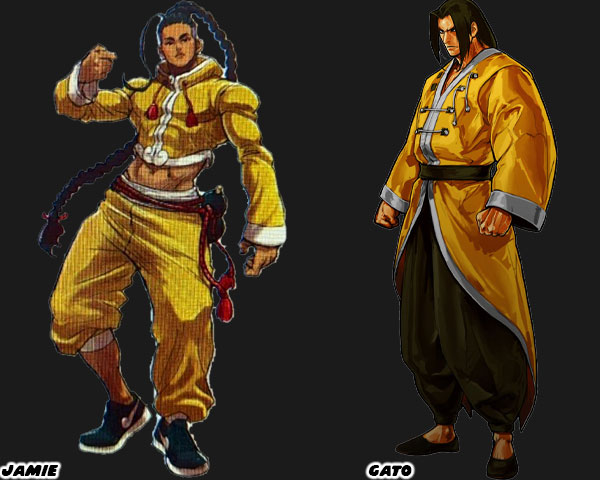
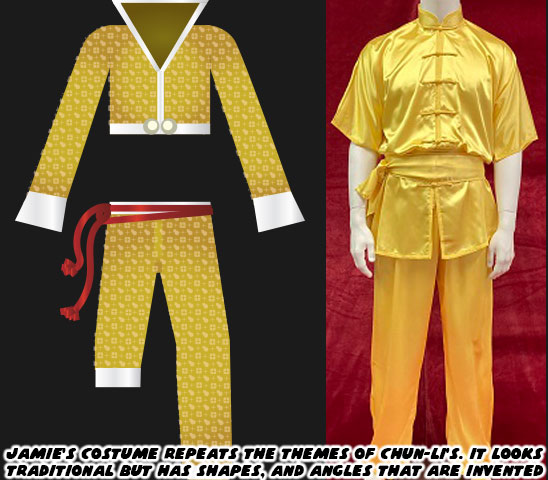
I want you to compare Jamie, and Gato who was a fighter from SNK’s Garou Mark of the Wolves. I had already highlighted Jamie’s various elements on my blog, but let me point them out again. Street Fighter 6 Director Takayuki Nakayama, Producers Kazuhiro Tsuchiya, and Shuhei Matsumoto, along with Yusuke Hashimoto spoke about the influence that Hip Hop had on SF6 in several interviews. Jamie was from Hong Kong, and at first glance it looked like he was wearing a traditional kung-fu outfit, but his costume had a decidedly urban flair to it. Just like Chun-Li it wasn’t apparent until you looked closer. The crop top, long sleeves, and wide collar were tailored to his frame, they were not baggy at all. This fit hadn’t really been worn in any traditional form of Chinese kempo, or kung-fu. The pants with one leg rolled up was a style from USA Hip Hop circles. The color of the fabric looked authentic, until you looked closer, and saw that it had a Louis Vuitton-inspired pattern on it.

Jamie also wore sneakers with a cloud pattern at the front of what looked like the Nike swoosh design. Even his haircut wasn’t quite traditional. The long braid was supposed to make audiences think of the queue worn by men during the Qing Dynasty. Yet that hair style required the men to shave the front part of their scalp. Jamie instead had a modern fade on the sides, and back of his head. Jamie had a red rope belt with a wine gourd strapped to his hip. Many classical heroes in Chinese mythology such as Lu Zhishen, Ji Gong, and Li Tieguai carried a wine gourd as well. Capcom swore that Jamie was drinking a special juice, and not booze from the gourd. Jamie’s design really captured the SF Style, but it did not reflect the quality of the designs placed on some of the returning characters.

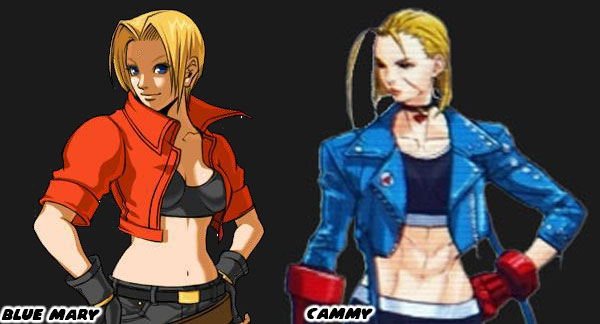
Cammy for example had an entirely new look that was much more casual than earlier looks. I felt that her short jacket, and leggings outfit betrayed the spirit of her original military-inspired uniform. My old friend DarthEnderX mentioned that she looked like a knock-off Blue Mary. That was a valid comparison. I had done a three part series on Blue Mary from the Fatal Fury series by SNK. Mary was essentially a female version of the protagonist Terry Bogard. She wasn’t a Sakura in terms to counterpart either, but more of a super cop like Chun-Li. Her look of jeans, and jacket was warranted as she was supposed to be very Western character. The casual costumes featured on the majority of SNK characters helped distinguish their lineup from Capcom’s. The Street Fighter-Style of character design relied on putting fighters in pseudo-traditional outfits. They had to be instantly recognizable to represent a certain country, school, or style. Like Ken, Ryu, Chun-Li, and Jamie. SNK had an entirely different approach. The genius of SNK’s design was that they hid the martial arts master in plain sight. They might be wearing a three-piece suit, a tuxedo, or a Hawaiian shirt, and flip flops. In every case they were unstoppable brawlers.

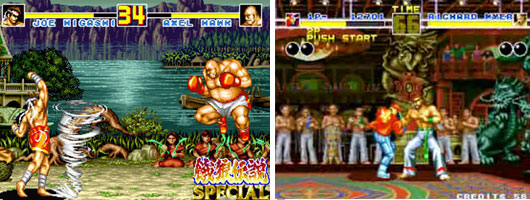
A good chunk of the Fatal Fury, Art of Fighting, and King of Fighters lineup were trained martial artists in street clothes. There were some with classical outfits sprinkled through the series, like Gato, Joe Higashi, and Kim Kaphwan. These traditional designs helped connect the audience to the well-dressed modern archetypes. If you are a budding designer, and are trying to figure out if your style works for SNK, Capcom, or other studios then practice creating fighters of common martial arts. See if you can put a karate fighter in a pseudo traditional gi. Or what that fighter would look like in a suit. How would audiences be able to tell that this person was a fighter? It’s a difficult exercise for sure. Capcom, and SNK had actually been broadcasting who their designs were targeted for in the past decade. We will explore these things in the next blog. I hope to see you back for that. If you have any thoughts on the blog please let me know in the comments section. As always if you would like to sponsor me please visit my Patreon page and consider donating each month, even as little as $1 would help make better blogs and even podcasts!
follow the Street Writer on Patreon!

Wednesday, August 4, 2021

The Chun-Li template, don't follow it too closely! A 1UP classic...

NOTE: This blog entry was originally published on 1UP on April 18, 2012.

In the previous blog I had highlighted how Chun Li was the template from which Capcom drew its great female character designs. I wanted to make a special mention of how the context of the character design was important as well. The studio could have and did try to introduce two new female characters in Street Fighter IV. The audience reaction was lukewarm to one and somewhat better for the other. Crimson Viper, the spy in a tight fitting pantsuit was actually a character design based on marketing data. Capcom learned that western audiences were drawn to women that looked like Angelina Jolie. They decided to make a Jolie-like character and put her in the game. Unfortunately most players skipped out on playing her during the first public showings of the game. This was a surprise to everyone working internally. The studio had made the mistake of trying to predict their audience based on trends from outside of the community. Jolie was a popular actress and she might have made for a fun character in a game like Tomb Raider, where running and gunning were the objective, however she had absolutely zero credibility as a martial artist. She was no Angela Mao or or Michelle Yeoh, those were actresses that had made a living by playing fighters on the big screen.

Capcom could not convince audiences that a fighting game character in tight-fitting street clothes with the same features of a size zero Hollywood actress belonged in the Street Fighter universe. The other character, Juri Han, went much further with audiences.

Capcom learned that SF fans were interested more in fighting designs than pop culture caricatures. You would think that they had learned that with the Bruce Lee clone called Fei Long… but I digress. Players were used to seeing multiple layers of detail that supported the character as a fighter. With Juri the details were more apparent. The costumes for the SF cast were story elements that explained who the character was in fighting style and personality to gamers. Juri was like Chun-Li, a variation of a traditional design. However it took Capcom senior designer Daigo Ikeno multiple revisions to find a character that worked.

Like Chun-Li before her the character started off in a more traditional costume. The new character was to be of Korean descent and Capcom wanted audiences to identify her easily as such. She was placed her in a Hanbok or traditional Korean clothing. The oversized dress was an interesting design choice however might have proved nonfunctional in a fight. Juri was to have a majority of kicking attacks to balance out her rival, Chun-Li. Her kicks would have been impossible to make out in the dress. Ikeno went back to the drawing board and kept on revising the character.

There were many revisions made Juri. Some of the design choices were bold while others were nonsensical. In this way Mr. Ikeno was able to demonstrate that during the development process every idea was considered, not solely the traditional choices but the outlandish ones as well. The countless revisions would not end up influencing the final design as much as Chun-Li did.

Visually Juri was almost point-for-point a repeat of the elements featured with Chun-Li. Savvy viewers might notice that some of the clothing options were reversed for the character. Chun-Li had bare arms and legs and Juri had covered arms and legs. Chun-Li wore a wide belt and Juri had a bare midriff.

Both characters had unique elements on their heads. Chun-Li had her hair in buns with long flowing ribbons while Juri sported two outlandish pigtails. Both characters featured a contrasting color on their uniforms, a filigree pattern that outlined their breasts.

Both characters also sported spiked bracelets. Juri's were a little harder to make out and seemed more decorative than functional in a fight.

Both characters relied on kicking moves that were supposedly inspired by their home countries. Chun-Li used a fictional form of kung-fu while Juri relied on fantastic Tae-Kwon Do attacks. Both characters also sported uniforms that were pseudo-authentic. Chun-Li's was a little more believable but it was still completely fabricated. These things were not noticeable until her uniform was compared to actual Chinese martial arts clothing. The cut of Juri's costume was extremely odd. Her top and sleeves were not based on any known martial art or fashion. Her leggings were a take-off of the traditional dobok or tae kwon do uniform. The dobok sported loose fitting pants so practitioners could perform a wide range of kicks. Juri's pants actually hung from her belt and were open on the hips and inner thigh, they were more like chaps that people wore while riding horses. Even her belt was unlike the traditional "dhee" worn on a dobok. Tae Kwon Do belts were styled similar to karate belts and were also colored to show what level of proficiency the fighter had. Instead of a short black belt Juri had an extremely long belt with purple striping which hung low across her waist.

Juri made a bigger impression on players of Street Fighter IV than almost any other character introduced in the series. A big reason for that was because she borrowed tremendously from the design of Chun-Li. Gamers that didn't pay attention to Juri's design influences but enjoyed the character nonetheless were possibly drawn to her at a subconscious level. Daigo Ikeno did a good job at introducing a new female into the SF universe that covered many of the elements that made the other characters memorable. Juri certainly stood apart from the more "traditional" designs explored in the SNK games. SNK had created an entire library of Korean characters starting with Kim Kaphwan, a TKD practitioner from Fatal Fury 2, released in 1992 a year after SF II had come out. The Fatal Fury and King of Fighters series had a unique cross sampling of Korean characters and styles. Capcom was barely exploring this part of Asia some 16 years after SNK.

SNK had at least two female Korean leads in the KOF series. The first was Mae Lee, a character dressed in modern street clothing sporting a strange belt and large scarf. Her design was rooted more in henshin, the Japanese superhero shows than on a classic fighting art. The other was Chae Lim. She was the first female wearing a traditional dobok featured in a videogame. She predated Juri by six years. The bold cut of Juri's uniform and use of contrasting colors black, white and purple made her stand out from the crowd however. Juri was designed to be a non-conformist or a non-traditionalist. It could explain why the character took extreme liberties with the uniform of TKD practitioners. Everything from the hair and colors associated with her were bold. She had shock value going in her favor, more so than even Crimson Viper and her electrified gloves. However was shock value enough to make her fit within the Street Fighter universe?

I would argue that Juri was lacking the elements to make her as timeless as Chun-Li. The character was instantly liked because she borrowed a large number of elements from Chun-Li. However this new character lacked inspiration and originality. Chun-Li went through several revisions before a character emerged that audiences could identify with. The influences from martial arts cinema and Chinese culture were tangible with Chun-Li. With Juri audiences could not readily see or identify any inspirations behind the character other than those of Chun-Li. Juri was a copy of a caricature. She suffered from the same inconsistencies of the other characters placed into SFIV, namely that the designers were not looking to the outside world for inspiration but looking at their own series to fill a slot on the roster.

Juri was a bit too formulaic. Capcom saw the reaction that western audiences had with the new characters and went back to the drawing board for Super SFIV. They went back to basics and tried applying a traditional fighting style on a national representative. Juri represented Korea and TKD and Hakan represented Turkey and their native wrestling. The the decision to reverse the clothing elements featured on Chun-Li helped make sure that Juri was better received than the oily red-colored man. Juri was a better design than C. Viper and certainly leagues ahead of Rufus, however even those two seemed pulled from characters featured in an older DIMPS fighting game.

Perhaps Mr. Ikeno played the design a little too safe. By following the template of Chun-Li so closely he created a character that lacked personality. All of the moves attached to the character were over-the-top, not to mention that she acted out sadistically in her animations. She was like an animé character placed into a fighting game. If the character was indeed a non-traditionalist then Capcom should have ignored trying to give her dobok leggings. The character in only her tights looked more like a cross-between Cammy and Chun-Li and possibly would have been more believable as the super fighter capable of taking on both icons at once. But that's just me speaking as an armchair designer.

I don't believe that Juri was as well designed as she could have been. Capcom wanted to push the envelope but they were not sure how. They had tried to make a dramatic change and failed with C. Viper. They returned to basics and succeeded somewhat with Juri. The differences between the two characters was obvious. One had more fighting elements while the other looked like she was wearing street clothes. Yet the nuances for a memorable female fighting lead were harder to pin down. Cammy was not a reversal of the costume elements of Chun-Li, she was her own person that complimented the designs of the earlier character. Cammy did not move or fight like Chun-Li but had her own special attacks. In Street Fighter EX Blair Dame was also nothing like Chun-Li yet she represented a strong female archetype with her own original style. Juri's pseudo-traditional costume and kick-based attacks were a little too similar to Chun-Li's to be considered completely original. That was my interpretation of the character, what do you think?

Monday, August 5, 2019

The new wave of Black fighting game protagonists

I am very excited following on the footsteps of EVO 2019. A lot of great tournament action went down and there were several great reveals by the game studios. I'm going to talk a little bit about a theme that went through two of the most recent announcements. Arc System Works has been cranking out some fantastic titles over the past few years, including Guilty Gear, BlazBlue, and Melty Blood. They teased that there would be a new character introduced into the world of Guilty Gear. He didn't have a name (as of August 5 as I write this) but he stood out from the crowd. He was a strong Black man with decidedly futuristic samurai armor. The crowd in Las Vegas, as well as online, went crazy by his reveal. It stood to reason because strong, positive Black characters and Japanese designers haven't always been on the same page.


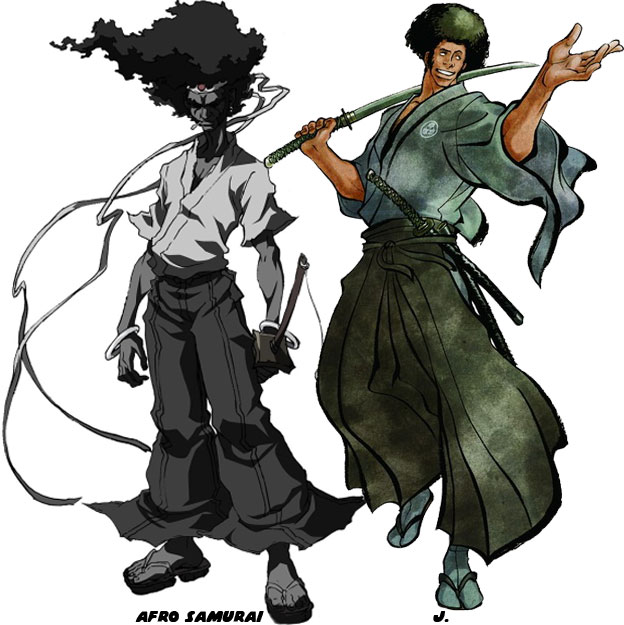
I was wondering if this new character might be based on Yasuke. The only black samurai in recorded history. I talked a little bit about this character while dissecting black stereotypes in fighting games. The animé character Afro Samurai, and Samurai Showdown character J were loosely inspired by this historical figure. Sadly, the black character in many fighting games often wore a large afro and a silly costume. The only alternate for the black characters seemed to be showing up as a boxer.

 
Representation went a long way in fighting game character designs and especially in the community. I have already argued that age and gender helped make the Street Fighter series unique. And I also argued that even body type, like fat characters, had a proper way to be introduced into the genre. Minority characters were something that I felt Capcom and the other studios could do better at presenting. I have a feeling that the growth of e-sports, especially the spectacle of of the EVO tournament has made Japan keenly aware as to how popular, and important, fighting games are to the western market. The impact of powerful minority characters is even more important to the minority community. Because of that it was wise of Arc System Works to include a new black character in Guilty Gear. But almost as important is Namco introducing a new character into the Tekken series.


The name Leroy Smith is a little too generic, almost too stereotypical for my tastes, but I think his inclusion serves many purposes. First let's talk about his look. The character is older and a master of the kung-fu arts. He is seen practicing with a classic wing-chun wooden dummy. He then takes on Marshall Law and Lei Wulong in his teaser trailer. Marshall is modeled after Bruce Lee and Lei after Jackie Chan. He defeats both soundly with his smooth minimal strikes.


After this he takes on Feng Wei, a master of Chinese Kempo and probably the most pure wuxia villain in the Tekken series. He defeats Wei as well. His strikes and form are very reminiscent of Wang Jinrei, an elderly master of Xin Yi Quan. The character was a friend of Jinpachi Mishima, the founder of the Mishima Zaibatsu. Wang passed away in the series. Sadly for many fans of Tekken this also meant that his style of fighting went with him. I have a feeling that Leroy was introduced in part to bring back this classic form.


The appearance of Leroy might be strongly attributed to the character of Ezekiel from the Walking Dead television series. The older black character sported large dreadlocks and commanded respect in the series. He was often referred to as King Ezekiel in the graphic novel and television show. Negan, the main villain from the Walking Dead was introduced in Tekken 7. It's not hard to think that the designers appreciated the character of Ezekiel and wanted to include their own version without having to pay AMC or the actor to use his likeness. What if I were to tell you that the character of Leroy and his importance in the series, and with the fighting game community went much deeper than that?


The kids from Generation X grew up with heroes like Bruce Lee, Ron Van Clief, and Jim Kelly. The non-white heroes spoke to minority kids in every city and town from coast-to-coast. Finally there were heroes we could identify with. They did not play sidekick, or act subservient to any other character. That generation was raised on a steady diet of Shaw Bros kung-fu movies. When they got older that passion for the marital arts never faded. In fact the love of kung-fu built a cult following. The rap group Wu-Tang Clan out of New York were obsessed with classic martial arts films and even named their debut album after the iconic film The 36th Chamber of Shaolin aka Master Killer.


The group did more than pay lip service to the genre. They paid to have a collection of classic films get restored, dubbed, subtitled and transferred to DVD for an entirely new generation. Not only that but the defacto spokesman for the Wu-Tang Clan, the RZA, wrote, produced and starred in his own martial arts film. In the era where Hollywood wouldn't greenlight any classic style martial arts movies the RZA put up his own money and reputation to get the movie off the ground. He also appeared as a villain in the Protector 2, aka Tom Yun Goong 2, against Tony Jaa.


The RZA, and many more Hip Hop performers, including Lupe Fiasco were vocal about their love of fighting films and games. They were living proof that an entire generation was shaped by Asian culture. It was something that Capcom, Namco, Sega and the other Japanese developers seemed oblivious to. If you travel backwards through time you begin to see that kids in the inner-city had been clamoring for the Leroy Smith archetype for ages. The 1985 film the Last Dragon featured Tiamak Guarrello as Bruce Leroy Green. He was a mixed-race kid that modeled his life after Bruce Lee. The film was filled with an almost cringe-worthy fetishization of Chinese and Japanese culture. The villain was as over-the-top as any fighting game boss. Julius John Carry played Sho'nuff the Shogun of Harlem. I'm kind of surprised that none of the Japanese studios picked up on this earlier, considering how much they poached from US cinema.


To be completely honest, the first US-produced film that glorified inner-city gang fighting culture was the Warriors. Yes, there were earlier gang films that turned white protagonists into the anti-heroes. See James Dean in the 1955 film Rebel Without a Cause. What made the 1979 film the Warriors stand out was the idea of mixed race gangs. Each gang had their own look and costumes. Recreated faithfully by Rockstar in the 2005 game by the same name. The title gang was out of Coney Island. It was founded and run by a black man named Cleon. His lieutenant was a white guy named Swan.


In the story the largest gang in New York was the Gramercy Riffs. Their warlord was known as Cyrus. He was trying to unite all of the gangs so that they could take over the city. He was assassinated by Luther, the leader of The Rogues, a gang from Hells Kitchen. This triggers an inter-gang war where all of the gangs mistakenly go after the Warriors. The Riffs are controlled by the former lieutenant named Masai, who becomes the new warlord of New York. With his dark sunglasses, and no-nonsense attitude, he is as imposing a villain as ever there was one.


So here is where things lead back to Leroy and Tekken 7. In the official story of the game Leroy was caught in a gang conflict in New York 50 years ago and disappeared. He is returning as a martial arts master in order to seek revenge. There are two bits of trivia that I feel you should know. The Tekken series is set in the near-future. It's not hard to argue that the game is set at least 10 years from now. Also, the Warriors battled in 1979, exactly 40 years ago.


If a young man like Masai had lost his leader he might have escaped to become a better fighter. Let's assume he was 18 when the events of the Warriors happened. He would now be pushing 70. Technically he would still be the elderly kung-fu master but, still have enough gas in the tank to be a formidable fighter. I have a feeling that the developers with Tekken liked the surface appearance of Ezekiel, however wanted someone grounded in the era and experience of New York during its peak gang life. What they ended up with may be the most unique fighter in the past few years. At least Arc System Works and Namco are validating the colored community with the inclusion of these new characters. At best they are forever changing the landscape of Japanese fighting game designs. What do you think?


If you would like to sponsor me please visit my Patreon page and consider donating each month, even as little as $1 would help make better blogs and even podcasts!
follow the Street Writer on Patreon!

Wednesday, June 27, 2018

30 years of Street Fighter: 30 years of Characters #4

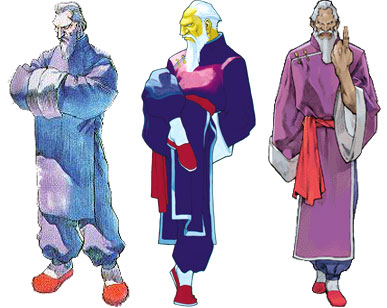
It's been 30 years of Street Fighter and nobody is talking about Gen. We have to give this grandmaster of kung-fu the attention he deserves. Gen is one of the original opponents in the series, the best fighter in China. He has popped up just a few more times since his debut. His return to the game, in Street Fighter Zero / Alpha 2 (1996), was easily his best appearance. Gen became the first character to offer players two completely different fighting styles, that of the mantis or crane. Players could alternate in between rounds their style by holding down different buttons. This meant completely different move sets, super moves and strategies. Imagine how unpredictable this made him in tournaments. Gen was a call back to the classic fighting archetypes that inspired the original Street Fighter line up. Remember how Dhalsim (#30 on my list) was based on the Yoga Master in the Master of the Flying Guillotine (1976)? Gen is a nod to the various white-haired masters from martial arts cinema, including Executioners from Shaolin (1977), Born Invincible (1978), Abbot of Shaolin (1979), and Fist of the White Lotus (1980). The ancient kung-fu techniques had been featured in cinema but rarely used in actual games until Gen. 


The legend of the white haired master went back to the earliest days of the martial arts in China. Gen was derived from a number of movie heroes and villains but even those characters were inspired by historical figures. The most likely root was Bak Mei, one of the founders of the Shaolin school. He was allegedly a survivor of the Shaolin massacre during the Qing Dynasty. He was one of the Five Elders, the survivors of an assassination attempt against the monks. They eventually rebuilt the school and preserved the early martial arts. This group also began developing new schools of fighting based on predatory animals like tigers and eagles. Gen was derived from those classic heroes. He had superhuman strength and speed despite his age and made us believe that these fabled masters might still be hiding in China. He represented the last living member of an ancient lineage. Hiding in plain site, wandering in the back alleys of the oldest corners of Shanghai. Where a centuries-old market had been paved over by a modern, indifferent world. Only a few clues remained of what was once there. A few crumbling signs, posters and ads, left to fall in disrepair in the shadows like the rest of ancient China.


Gen was symbolic of the mythical martial artists. He was just like the characters written about in wuxia, or classic hero stories. These were the ones that inspired revolutions. The handful of masters that led poor people to victory over corrupt regimes using only their fighting skills. These larger-than-life characters killed tigers with their bare hands, could run over rivers and along treetops. The people that were romanticized in stage plays and films. The kung-fu characters inspired people all around the world. Especially the developers working at Capcom in the '80s. His abilities were fantastic but sadly they were out of place. Gen was the last of his kind. A holdover from the 19th century, a person that had a connection to the original masters. His time was rapidly running out and he wanted to be killed in a fight and not by the ravages of age and disease. His legacy did carry through thanks to some talented students he trained. There may never be another character as important to the history of Street Fighter as Gen. For that we salute you on this anniversary and hope that your legacy will live on.v> If you would like to sponsor me please visit my Patreon page and consider donating each month, even as little as $1 would help make better blogs and even podcasts!
follow the Street Writer on Patreon!