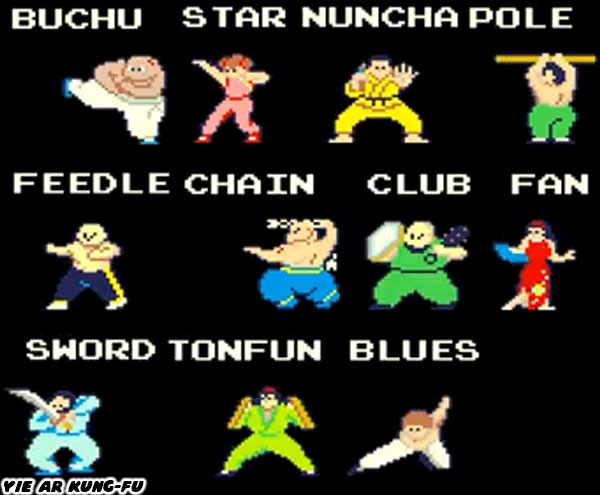
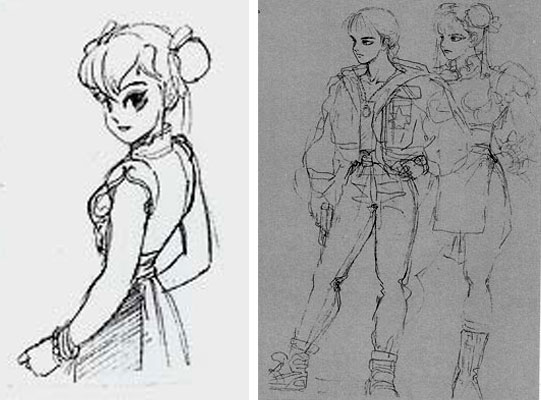
Chun-Li started out like most Street Fighter characters as a basic concept. The game already had karate archetypes through Ken and Ryu. The developers at Capcom wanted to spread out the styles including pro wrestling, boxing and sumo wrestling through different characters and nationalities. It was a given that the Chinese character would represent kung-fu, especially since it was the cradle of the Asian martial arts. In order to make the character stand out it was decided that she would be a woman. There were no female characters in the 1987 release of the original Street Fighter. To be fair Konami had featured two Chinese female martial artists named Star and Fan in their 1985 arcade game Yie Ar Kung-Fu. Chun-Li differed in that she was the first playable female fighting game character and the only female in the lineup for the 1991 release of Street Fighter II. At first the design for the "China Daughter" was very simplistic. She was a young girl dressed in a traditional uniform.
The designers wanted to make her more interesting not to mention strong enough to be believable against a cast of seasoned brawlers. They decided to make her an adult police officer. The older Chun-Li and urban uniform were better but the artists wanted to make sure that her appearance worked when placed against fighters wearing more traditional clothing. She was revised yet again and placed in an outfit that reflected her heritage. As such her costume took a lot of liberties with cuts from traditional Chinese clothing. This costume was designed not to inhibit her during a fight, yet also not to be too revealing. The costume tricked gamers into thinking that it was somewhat authentic. A closer look at the uniform would reveal how these things worked together to help build a memorable design.
A kepi or
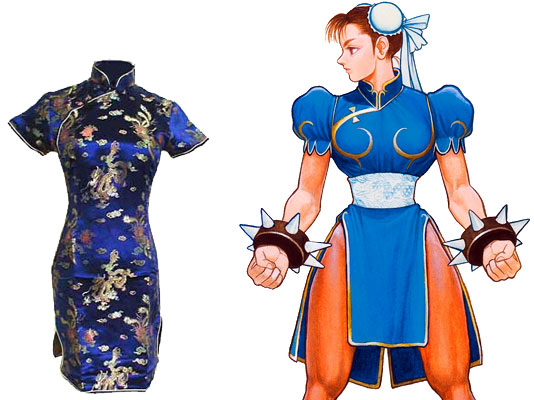
cheongsam was a traditional tailored Chinese dress. Depending on the length, material and embroidery featured on the cheongsam it could be used as work wear, casual wear or even formal wear. It was never designed for fighting. A traditional Chinese martial arts uniform was far more loose-fitting, allowing for flexibility and freedom of movement in the arms and legs. Unfortunately the female figure would be difficult to make out in a videogame if she wore loose clothing. The designers struck a balance between the modern and the classic for the cut of Chun-Li's dress. It was so subtle that not many noticed that the individual elements were completely made up.
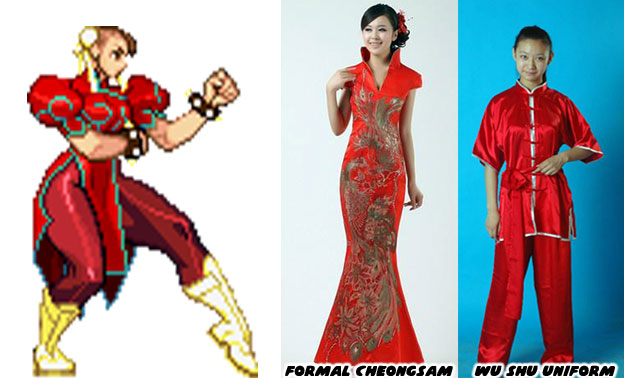
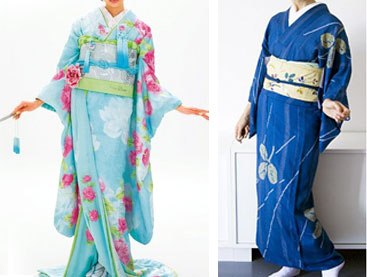
The hair buns and gold filigree on the costume were non-traditional but there to make her appear more feminine. The oversized spiked weights and wrestling boots signaled that she was a fighter. Chun-Li's costume appeared tailored to flatter her figure, like a traditional cheongsam it followed the curves of her body. However it also featured puffy sleeves which allowed her shoulders to have a wide range of movement. To give her legs the freedom to kick there were slits on the front sides of the dress that rested on top of her hips. To help make the leg show more modest the character was given dark tights. Her slender waist was framed with a decorated belt. The cheongsam was rarely if ever worn with a belt and wu shu uniforms used a bright sash in the place of a belt but never anything fancy. The ultra-wide belt was possibly inspired by the decorative belts worn with Japanese kimonos.
The character was given moves that were every bit as impressive as the fireball or dragon punch. Her "Spinning Bird Kick" and "Lightning Kick" became trademark attacks. Arcade visitors quickly learned that she was a top-tier fighter and not some sort of token female character. The look of the fighter was set but she needed to be infused with personality. Chun-Li could have been a dainty, "girly" fighter but instead she was presented powerful and confident, only occasionally letting a giggle slip out when she was proud of herself. She would remind players that "I am the strongest woman in the world" in between rounds. Previously in fighting games the female was the prize that the hero had to rescue. Such was the case for Sylvia in the 1984 hit Kung-Fu Master and Marian in the 1987 hit Double Dragon. Chun-Li was the polar opposite of those women. In fact she could have easily replaced the heroes in those games. Her strong personality and proud heritage were undoubtedly inspired by the actresses in Hong Kong cinema.
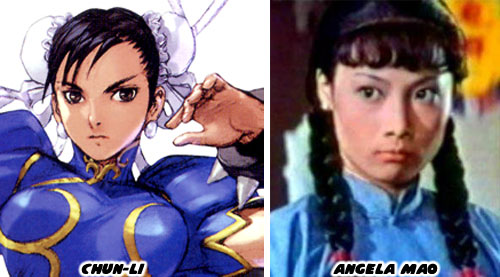
Females had always been an important part in the martial arts movies from China. Many women that appeared in the films took an active role in the stories. There had been female martial artists in Chinese cinema since the early part of the 20th century however the one that got the ball rolling for leading ladies was Angela Mao in the 1972 film "Lady Whirlwind." The actor was a dynamo that studied traditional Chinese wushu as well as the Korean art of
Hapkido. In the film Angela's character, Miss Tien, was a fiercely independent woman looking to seek revenge on the death of her sister. She fought practitioners of different styles including Japanese karate and judo masters. It was possibly the first action film featuring a female lead against non-Chinese styles. People in the US would see Angela for a brief moment in the Bruce Lee film Enter the Dragon, she played the part of Lee's sister. Characters like Miss Tien undoubtedly influenced the development and presentation of Chun-Li.
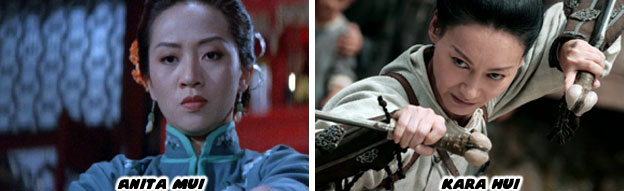
Fiercely determined, capable and independent women were a rarity in gaming but never in martial arts cinema. Many actresses had become icons in the movies, appearing in as many films as most of the biggest male stars. These stars appeared a decade or two before the original Street Fighter was released and helped influence the world of the young developers at Capcom. Some actresses played villains as well as they did heroes, like Kara Hui, the 13th Madam in the film Wu Xia. She was a ruthless killer that gave Tang Lung, as played by veteran actor Donnie Yen, a run for his money. Others were not only capable fighters but also had tremendous comedic timing. Anita Mui (RIP) was a great fighter but also was experienced at physical comedy and actually upstaged Jackie Chan in the film Drunken Master 2.

The myth of the female martial arts master were inspired by an actual historical fighter. In the mid 18th century
Yim Wing-Chun had to master various fighting styles to protect herself from the unwanted advances of suitors. Her biggest influence was Ng Mui. Ms. Mui was a Buddhist nun that lived in secrecy. She survived the Qing government burning of the Southern Shaolin temples and lived life on the run. She befriended Yim and trusted her with a new technique. Ng Mui was inspired to create a fighting style after watching a snake and crane battle. She saw ways of striking, trapping and intercepting attacks from a close range. If it worked in nature then it should help in practical fights as well. This boxing style was dubbed Wing Chun after her best student. It was perfectly suited for self defense, not only for women but for people of any age or athletic ability. The legend of Wing Chun was well underway by the time Huo YuanJia was born. The template of Chun-Li predated that of Gen.

Eventually the Wing Chun style found its way to Ip Man, sometimes spelled Yip Man. Yip was born at the end of the 19th century and fought against the Japanese occupiers during World War II, albeit only to keep his family and friends alive. He was a figure whose martial exploits inspired the Chinese nationals similarly to how Huo had done previously. Yip Man became a Chinese folk hero and survived an assassination attempt by the Japanese. He continued teaching Wing Chun and passed down many lessons to a young fighter named Bruce Lee. Bruce of course became more famous for his kicks than punches, but he was considered equally dangerous at any range. As for the origin of the name Chun-Li, let's just say that that the fighting spirit of Yim Wing
Chun and the kicking speed of Bruce
Lee had something to do with it.
Yet Chun-Li was a classic character cast in the modern world. Her costume was only disguise for her police background. The spiked weights and wrestling boots grounded her in the present. What was interesting was how Hong Kong cinema had developed similar characters. The Jackie Chan film Supercop began filming at about the same time as SF II was released. It also featured a strong female protagonist that was an undercover Chinese police officer. Actress
Michelle Yeoh played inspector Jessica Yang, in the film she was trying to help Jackie infiltrate a drug ring. She dressed in simple country clothing and sported pigtails. Like a modern Angela Mao her disguise beguiled her training. Michelle took part in some amazing fighting and stunt sequences to rival Jackie's. She even appeared as Wing Chun in a film a few years later. When Chun-Li first appeared she was an instant sensation. She was feminine but powerful. She might have been conceived originally to fill in a slot on the roster however there was nothing token about her inclusion in SF II. She appealed to players of all types. Part of the reason she worked with audiences was because she reminded them of the heroines from kung-fu cinema.
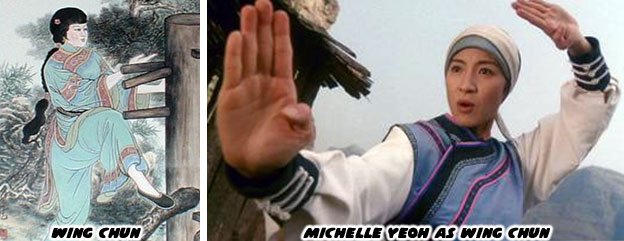
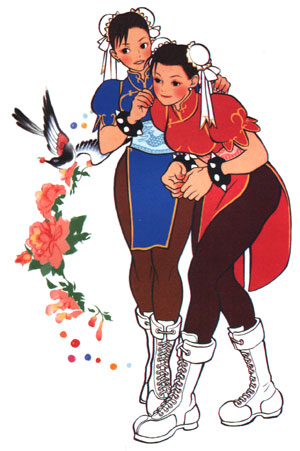
The name Wing Chun could be translated as "Forever Spring" and she would always be remembered as a spirited young fighter by her fans. Similarly Chun-Li was presented as a vibrant young lady in all of her official art. By comparison all of her male counterparts were older and looked more rugged. Chun-Li represented power and beauty, her moves and athleticism redefined femininity in videogaming. Just about every piece of art based on the character made sure to get the cut of her costume and the shape of her muscular legs right. Female players could finally fight for themselves and no longer wait to be rescued in a game. In her game endings she achieved justice for her murdered father while remaining independent. Despite fan fiction and some questionable licensed comic books she was never presented in game as falling hopelessly in love with her co-stars, especially not Ryu. She was the definition of what was admirable for fighting protagonists in gaming. Her costume was cute but modest, her personality was strong but friendly. Capcom demonstrated that a fighting female could be powerful and beautiful, as well as sexy without being slutty.
The martial artists spread by Bodhidharma had survived persecution and strife for well over a thousand years within China. The arts continued on with the help of brave Buddhist monks and nuns. The mysterious fighting arts continued to shape the world even past the industrial revolution and well into the atomic age. In pop culture the Shaolin monks became legend. Some of the oldest schools of fighting were still around and continued to crank out disciples that could perform impossible feats of strength and endurance. In the next blog we will go further back in time and see how ancient Chinese spiritual beliefs intermingled with the martial arts traditions of Bodhidharma. As always if you enjoyed this blog and would like to sponsor me
please visit my Patreon page and consider donating each month, even as little as $1 would help make better blogs and even podcasts!