Showing posts with label bruce lee. Show all posts

Monday, March 2, 2026

Bookmark This Page; Enter the Dragon, Fighting Layer & the roots of Street Fighter II

For those that are visiting my page for the first time my name is Noe aka BigMex. I love fighting games, as well as racing games, skateboarding, theme parks, and much more. You might know that this blog had been around for a long time. A good portion of what I wrote on the 1UP, and the Capcom-Unity  pages some 20+ years ago were shared here. My best work was hidden at the bottom of this page. To make things easy for new visitors I started collecting similar threads. If you were interested in a certain topic then I was asking you to Bookmark This Page.

The first collection was a deep dive on Fighting Layer, a little known title by ARIKA and Namco. Find out the connection to Street Fighter II in this series.

Enter the Dragon, the legend inspires a game, part 1…

Enter the Dragon, the legend inspires a game, part 2…

Fighting Layer, return of the dragon, part 1...

Fighting Layer, return of the dragon, part 2…

Fighting Layer, return of the dragon, part 3…

Fighting Layer, return of the dragon, part 4…

Fighting Layer, return of the dragon, part 5…

Fighting Layer, return of the dragon, part 6…

Fighting Layer, return of the dragon, part 7…

Fighting Layer, return of the dragon, part 8…

Fighting Layer, return of the dragon, final part… 

Did you ever play Fighting Layer? Even an emulated version? What did you think about it? Let me know about it in the comments section. As always if you enjoyed this blog, and would like to sponsor me please visit my Patreon page and consider donating each month, even as little as $1 would help make better blogs and even podcasts!

follow the Street Writer on Patreon!

Monday, February 3, 2020

The Street Writer Podcast, Episode 8

So I'm finally recording some of my older posts and turning them into podcasts. Here's the start of a new run where I talk about Brawling games, going back to the roots and how they evolved from year to year. I hope you enjoy!

As always if you enjoyed this podcast and would like to sponsor me please visit my Patreon page and consider donating each month, even as little as $1 would help make better entries!

 follow the Street Writer on Patreon!

Friday, June 29, 2018

30 years of Street Fighter: 30 years of Characters #2


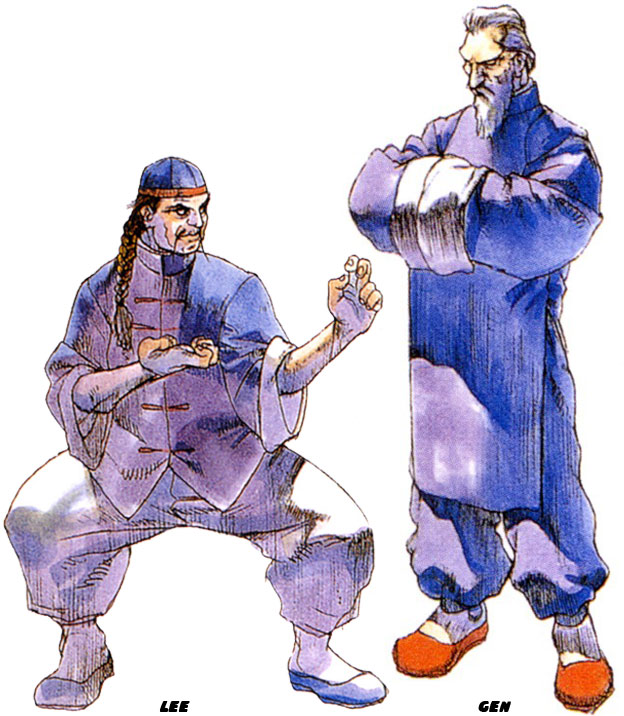
Street Fighter has been one of the all-time great fighting game franchises. Part of the reason for its popularity had to do with the World Warriors featured in Street Fighter II. With a hundred or so characters being added into the Street Fighter universe over the past 30 years I would argue that Chun-Li is the most popular one (with Cammy being a close second). Chun-Li is an absolute icon, not only in the fighting game community but for the video game industry as a whole. She's a role-model to women and an inspiration to men. She's a complex character with a fantastic design. A brilliant fighter with a style all her own. She didn't start out perfect in the development stages of Street Fighter II. The planners wanted a kung-fu master in the game, as Lee and Gen had represented different Chinese schools previously. Also they didn't want the new character to be a guy. The first draft of Chun-Li, then called Zhi-Li was very traditional, almost to the point of being a cartoon stereotype. Chinese characters and Chinese-inspired costumes were somewhat popular in Japan in the mid '80s. Thanks in part to the series Ranma 1/2 by Rumiko Takahashi and 3x3 Eyes by Kaoru Wada. Both of those runs debuted in 1987, the same year that the original Street Fighter was released.


It would take a few years for their influence to be felt at Capcom but once it was there the China Daughter would make her way into the Street Fighter universe. There was something missing with the original Chun-Li concept. She was a little too simple, a little too generic. The studio was playing it safe with the lineup. That was when designer Akira "Akiman" Yasuda decided to give her a radical makeover. She was turned from a prodigious girl into a grown woman. She became an undercover cop that had infiltrated the Street Fighter tournament. Her flowing costume was a disguise. She had wrestling boots on and heavy spiked bracelets to add some contrast to her blue silk uniform. She wore tights over her exposed thighs which allowed her to kick and remain modest at the same time. Akiman was a proponent of her legs being her main weapons. She was given the Hyakuretsukyaku aka Lightning Kick and the Kaitenteki Kakukyakushuu aka Spinning Bird Kick as her special attacks. Akiman would forever be known as the father of Chun-Li and the person that painted her best portraits.


Audiences fell in love with Chun-Li at first sight. She was young and energetic. Blindingly fast and able of doing things that none of the other World Warriors could. Despite being an adult she still had some hold overs to her youthful origin. She would jump and giggle with each victory. She would cry with every loss. Even her ending showed that she had a life outside of fighting, which was a stark difference to most of the male characters. After avenging the death of her father she celebrated her newfound independence and went out with her girlfriends. An alternate ending was added where instead of dating she went into police work. She set a standard that would be hard, if not impossible to beat. The best female designs in the Street Fighter universe have borrowed from Chun-Li. Cammy, Blare Dame, Pullum Purna and Juri all took cues from the first lady of Street Fighter. Whether it was costume elements, build or even back story, there was something that connected many of the designs together.


When the studio decided to create a younger version of Chun-Li for the Zero / Alpha series they changed her costume to be an homage to the jumpsuit that Bruce Lee wore in his final movie, the Game of Death. Her spiked bracelet became a weighted bracelet and her wrestling boots were turned into sneakers. It was a clever way of showing her in a more youthful light and celebrating the influences that Capcom designers used when creating the character. Chun-Li is without a doubt one of the biggest reasons why the Street Fighter series has made it to 30 and will keep on going. Do you have a favorite version of Chun-Li or game she appeared in? I'd like to read about it in the comments. If you would like to sponsor me please visit my Patreon page and consider donating each month, even as little as $1 would help make better blogs and even podcasts!
follow the Street Writer on Patreon!

Thursday, June 14, 2018

30 years of Street Fighter, 30 Days of Characters; #17


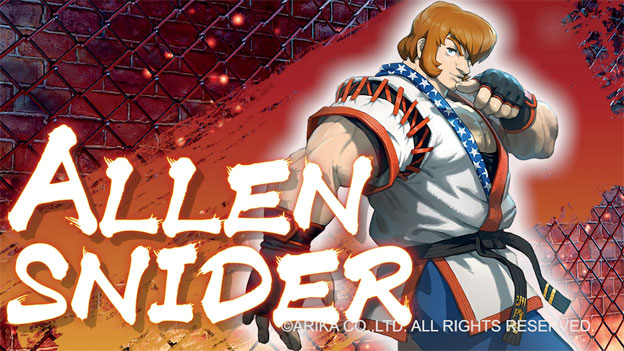
The Street Fighter universe is filled with dozens of amazing characters, most of which are very popular for a number of reasons. Think about your favorite character and then think about the international presence of the game. Your favorite character is probably a favorite character for a kid living in a tiny Latin American country. Or a university student programming his first game in Singapore. Or your favorite might be the same as a professional soccer player living in the UK. You are fave-ing a character that is followed by millions of real world people. How crazy is that? The series has made it to 30 years, with no sign of slowing, because of this international appeal. At the core of the game is a library of memorable heroes and villains. In the history of the game there has never been a fighter more destined to become a superstar than Allen Snider. At least in his mind there is nobody more deserving of being called a star. I hope once you get a chance to understand the character you'll also agree. Allen is one of the fighters that I am genuinely happy to see return in Fighting EX Layer. It's been too long since we last saw the legend in action. 


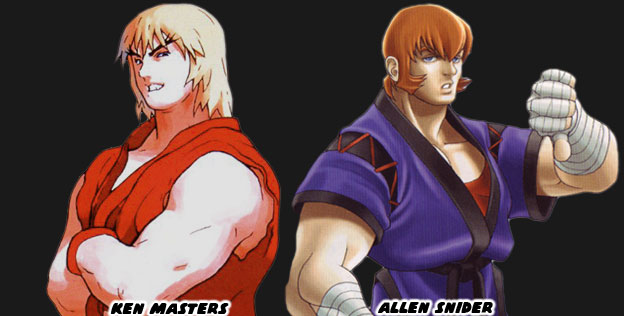
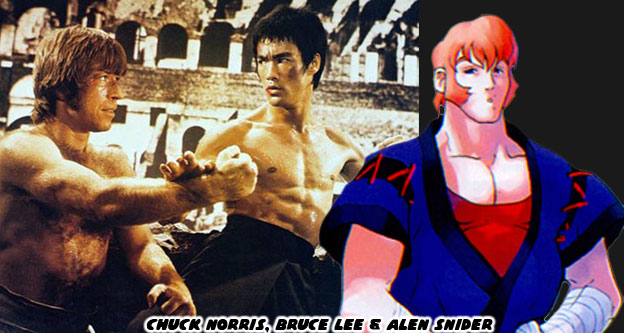
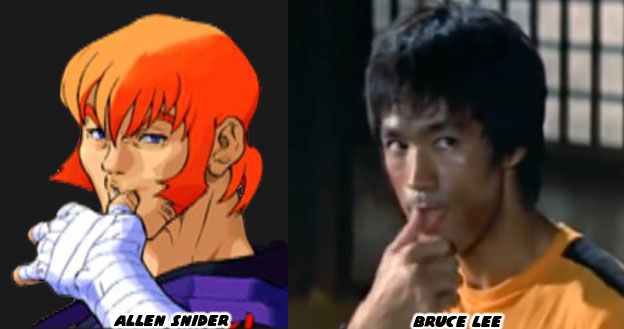
Allen Snider and Kairi debuted in Street Fighter EX back in 1996. They were an attempt by the developers at ARIKA, who happened to work on Street Fighter II, to recreate the Ken and Ryu archetypes. Ken and Ryu had subtle differences in the Street Fighter series. Their uniforms and moves were practically mirrored. ARIKA wanted their versions to be much more obvious. The costumes, moves and special attacks had a greater variety when comparing Snider to Kairi. In a nutshell Allen was the new American legend, the new Ken. He was a self-absorbed karate champion that fancied himself a star in the making. The team at ARIKA based his design cues from movie legends Bruce Lee and Chuck Norris. His mannerisms, face, hair and even game endings were pulled from martial arts cinema. His tacky red, white and blue costume was decidedly non-traditional and based on real world fighters like Bill Wallace and Joe Lewis. Snider was like a cartoon version of some genuine heavy-hitters.


Allen, just like the other characters that we are celebrating this month, has a lot of real world influence. But set those influences aside and you still have a character that is fun to play as. Snider's flair for the dramatic, his poses in between strikes and loud yells are all very over-the-top and ensure that he will never be mistaken for just another Ken. His moves in fact are not a mirror of Ken or Ryu but something that tries to counter them. His "Justice Fist" can punch right through a fireball, his "Vaulting Kick" is a rising answer to the hurricane kick. He makes you wonder how different the series would have been if Capcom put more effort in making its karate characters more unique. I am happy to bring Allen up for this series and look forward to seeing more of him in the future. What are your thoughts on the character? As always if you enjoyed this blog and would like to sponsor me please visit my Patreon page and consider donating each month, even as little as $1 would help make better blogs and even podcasts!
 follow the Street Writer on Patreon!

Tuesday, August 15, 2017

Speculation on ARIKA's unnamed Street Fighter EX successor, part 3...

Allen Snider was recently announced for the new ARIKA fighting game, let’s call it Fighting Layer EX or FLEX for short. Allen Snider, along with Kairi, were created as sort of rivals / parallels to Ken and Ryu in the Street Fighter EX series. In fact just about every character in the game was a sort of parallel to the Street Fighter II World Warriors. Blair Dame was a balance to Chun-Li, Darun Mister was the perfect rival for Zangief and Doctrine Dark was a military assassin to counter Guile. Skullomania was the oddball character, a sort of Dhalsim or Blanka in the lineup. Akira Nishitani was one of the designers on Final Fight and Street Fighter II. When he left Capcom to start his own company, ARIKA, he didn’t forget the many lessons he had learned from his teammates.


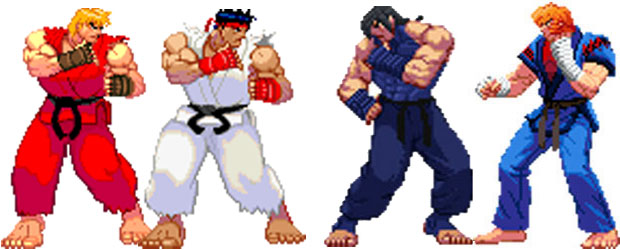
One of the things that ARIKA did was dissect the elements that made the Street Fighter II characters iconic. They looked at the color pallet, costumes, martial arts represented, origin stories and nationalities. They they tried to recreated these things. If a character set a standard, like Ken and Ryu did for karate-type fighters, then they wanted to figure out how to top those designs. It was very important that they show audiences that Kairi and Allen were not simply the same character with a different head. The colors, costumes, stance and fighting styles of Kairi and Allen were very unique. The difference between the two was much greater than the difference between Ken and Ryu. At the same time ARIKA wanted it to be understood that Kairi was the star of the game, the Ryu, and Allen was a sort of Ken in the universe, without necessarily being a friend of Kairi’s.


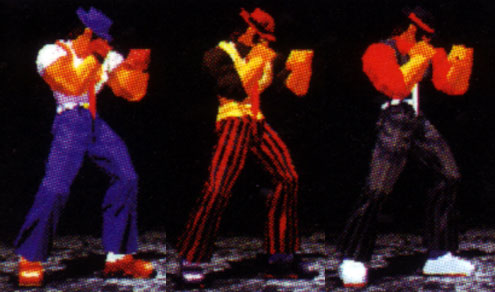
ARIKA didn’t settle for simple hue shifts or alternate colors for their characters. They actually created unique costumes as the alternates. Each costume told a story. Kairi’s showed the evolution of his character from fighter to boss-tier master. Allen went from one flamboyant gi to another more outlandish one. Supporting characters like Darun wore different wrestling championship belts depending on his costume selection. C. Jack went from one stylish outfit, including gambler-style hat, vest and tie, to an even more stylish one. This design rule followed every character in the series. But having a unique set of costumes, which were all character appropriate, were only part of the design elements behind the EX series.


Allen Snider was a second attempt at creating the Ken character. Takashi Nishiyama was the director and Hiroshi Matsumoto was the designer on the original Street Fighter. The reason they created Ken was to have someone for the USA players to identify with and thus play. Their design choice was far from unique. The white gi versus red gi character had been seen a few years earlier in Technos’ Karate Champ. There was little then that made Ken and Ryu unique. They shared the same moves and aside from Ryu having a different head and pair of traditional Chinese slippers, they were identical. When Nishitani took over the reigns in Street Fighter II (SFII) he and the team wanted to make Ken and Ryu a little more unique. Bengus, AKIMAN, SHOEI and Sensei, a literal who’s-who of fighting game designers introduced small details into the characters. If you look carefully at the official Street Fighter II art Ryu wore a gi that was ragged and frayed whereas Ken wore one whose cuffs were hemmed. That detail was very easy to overlook, especially since the sprites remained identical in the game. So when the opportunity arose to make a new American karate champ they went all out with the designs.


The artists looked at the heroes they had in comics, in animé, in martial arts cinema and then made an amalgamation out of these figures. Allen Snider in a nutshell had the hair and sideburns or Chuck Norris, but with the desire to be a breakout star like Bruce Lee. Snider was not simply a cut-and-paste of the two. He was especially not just a carbon copy of Bruce Lee. Many studios tried to put a Bruce Lee clone into their games, including ADK, Capcom, Namco and a few indy developers. But each attempt was just a caricature of the man. He seemed out of place when put in a lineup of figures that were more unique. That were more memorable.


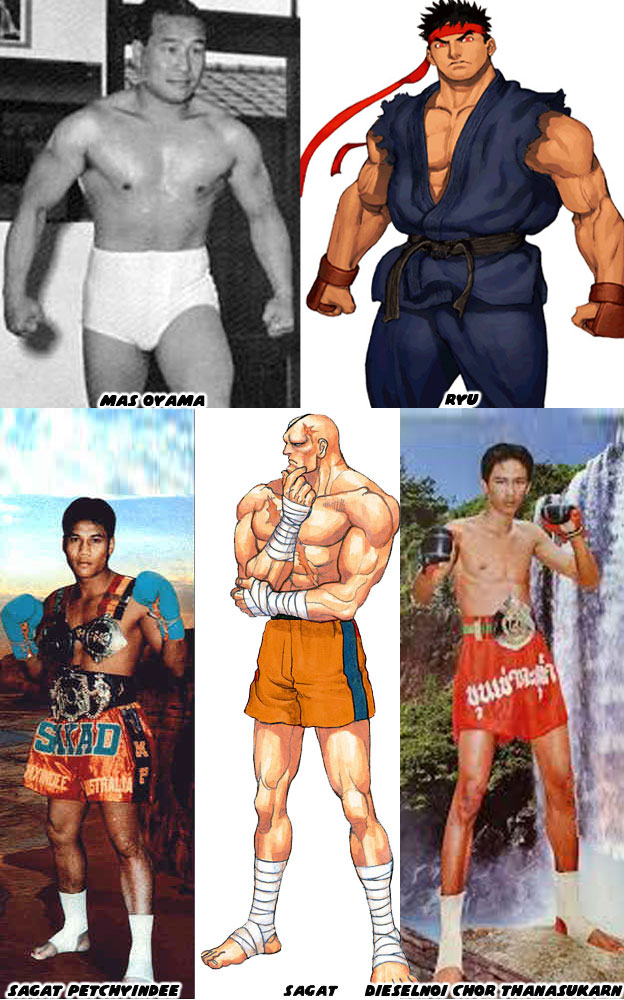
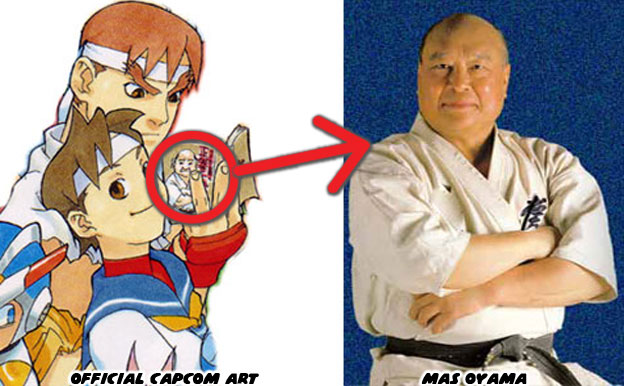
So what artists did was focus on the elements that made Lee and Norris unique. They tried to find some symmetry there. Allen was meant to bring back memories of the previous generation of karate stars. Not necessarily the underground legends but instead those that fought in televised contests. The developers had seen how well incorporating elements from real people had worked for Ryu. I’ve talked about it again and again but I always go back the gold standard in character designs. Ryu was inspired by the true-life adventures of Mas Oyama and Yoshiji Soeno. The thing was the character did not look anything like the real men. Yet watching him dominate the competition with his superior techniques would rekindle memories of Oyama, a man nicknamed the God Hand. Snider was the high kicking star from the USA. Someone that was ready for his movie debut. He was not supposed to have the gravitas of Kairi, his drama was more manufactured. He was a reflection of the modern martial arts star. Someone who was more comfortable on the big screen than in the back-alley fights.


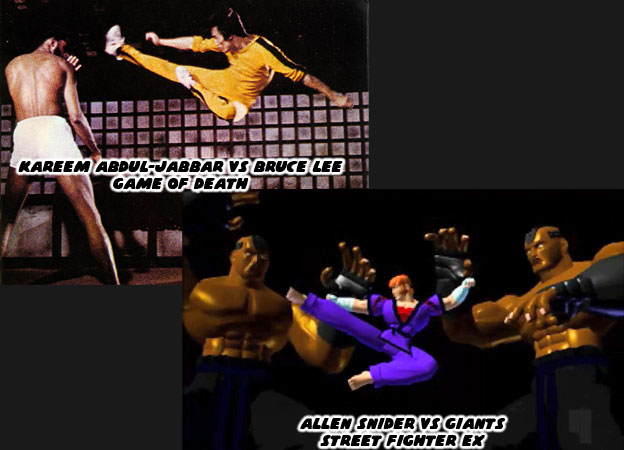
ARIKA did an excellent job at making the difference between Kairi and Allen more profound than that of Ken and Ryu. Kairi was covered in scars, had long hair and was missing an eye. Snider had the good looks and shaggy long hair of a ‘70s star. Kairi was a tortured soul that pained with every victory while Allen celebrated with gusto. They didn’t want to let tiny details tell the story, there were no hemmed cuffs separating the models. Reusing sprites was a thing of the past. There were fresh uniforms, bright colors and original 3D models to look at. They hammered away at this difference all throughout the series. The way each controlled had to be as unique as how they looked. Kairi was the more experienced fighter, he had a broader library of attacks and could be played more aggressively. Snider was new to the unsanctioned tournament scene. He was designed to be used more tactically. Even the game endings were very different. Kairi was the outcast, haunted by his past he was meant to fight his battles alone. Allen was the budding movie star and got his big break at the end of the first EX Tournament. ARIKA gave audiences another nod to his forefather. If Bruce Lee fought one giant on film then Allen had to fight two.


When Allen Snider was announced for the new ARIKA game I was excited. The changes made to the character perfectly reflected his origin. We’ll look at these things on the next blog. As always if you enjoyed this blog and would like to sponsor me please visit my Patreon page and consider donating each month, even as little as $1 would help make better blogs and even podcasts!

 follow the Street Writer on Patreon!

Wednesday, March 30, 2016

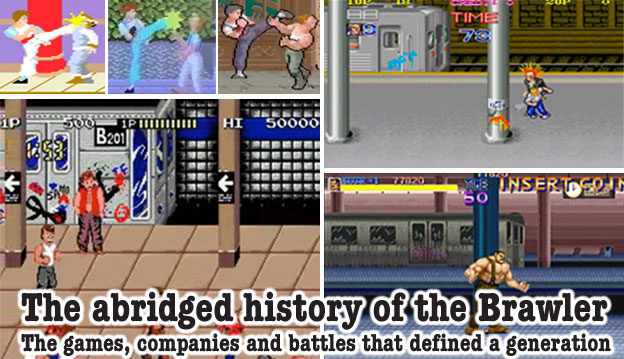
The Abridged History of the Brawler, a pre-rumble...


Over the next few weeks I'm going to be looking at one of my favorite all-time genres, the Brawler. This was originally a series that I ran on 1UP but I decided to revisit it and update a few entries. Now note that I call the genre the "Brawler." Other people and game sites call the genre "Beat-em Ups." But those people often call fighting games beat-em ups as well. I would contend that the fighting game and the brawler are actually two completely different genres. A fighting game is traditionally a one-vs-one game. Whether it's two martial arts masters, or a robot versus a demon or two dinosaurs going head-to-head, there is always one player versus another (sometimes a PC opponent instead). That is by my definition a fighting game. There are usually a few things that most fighting games have in common. There is a scoring system, a way to track health and often a time clock or ring out rule as well. Again the fight is usually one on one. There is the rare exception where the original Fatal Fury actually allowed two versus one battles and it would still be considered a fighting game. For the most part however a fighting game is one vs one.

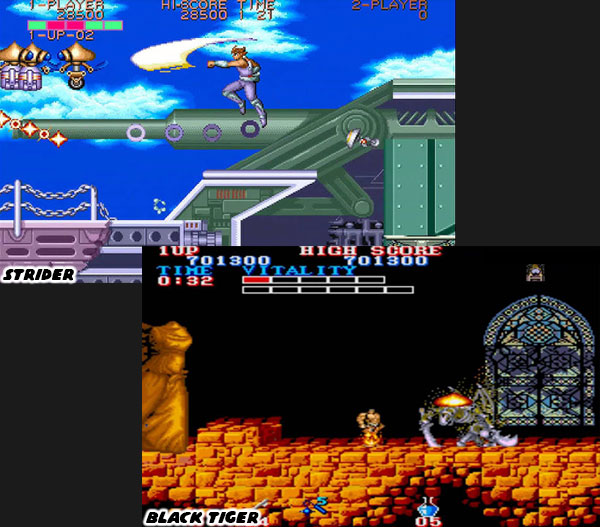
A Brawling game however is one or more versus many. The Brawling game usually revolves around unarmed combat. In some cases a character may pick up a bat, knife or gun along the way but a weapon usually does not last after a few uses. The difference between a Brawler and an action game, such as the Capcom arcade classics Black Tiger or Strider, is that a Brawling game allows two or more people to fight against waves of opponents. In at least one arcade game there was even a chance for six teammates fight against the bad guys or a single bad guy. This game would still be considered a Brawler. There are other genres that are cousins of the Brawler, the Run-and-Gun, also called the Action Shooter features characters that fought with guns and modern weapons instead of bare hands.

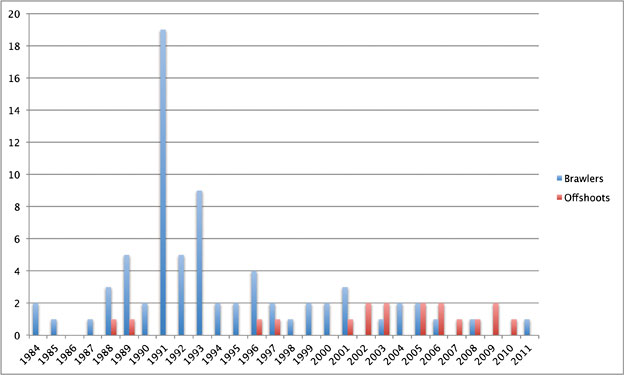
Also the Hack-and-Slash game is a brawler featuring classic swords and melee weapons instead of bare hands. In terms of popularity the Brawler had a quick climb to the top, in fact of all of the games I will be talking about the majority happened within a few years, from 1990-1993. Then they all slowly faded away. The brawler was eclipsed by the rise of fighting games. The genre never completely faded away but instead it slowly evolved. It would find waves of popularity in countries with developing PC markets like Korea and China. The core mechanics of the brawler would even become adapted into other genres. I will highlight many games and try to point out some things that made each game unique.


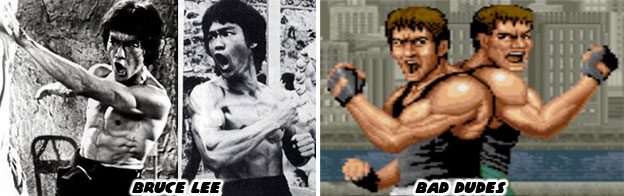
The Brawler, just like every other genre, came from somewhere. The early generation of arcade hits were inspired, if not outright stolen, from comics and movies. These games would then become adapted to the home consoles as a sort of faded copy of a familiar idea. Star Wars, Star Trek, various anime shows, manga and comic books all had a hand in shaping the history of game designs. The developers on the first batch of action titles often looked at action movies for inspiration. There was a lot of crossover to influences for the early action games, fighting games and brawlers. The action movie star was often a kung-fu expert. After all if you are going to have a story where one person can take out an army of opponents then they better know how to fight. There was no bigger star on the planet than Bruce Lee, at least this was the case back in the '70s. The young developers in Japan and the United States would have been greatly influenced by the man and his movies while growing up. When they started working on the first wave of action arcade games, almost a decade later, then there was usually one person they all looked to. It didn't matter how the artists colored or animated the early sprite heroes, there was something very familiar about the way they appeared...


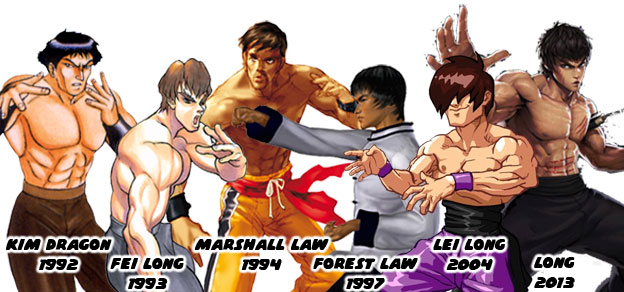
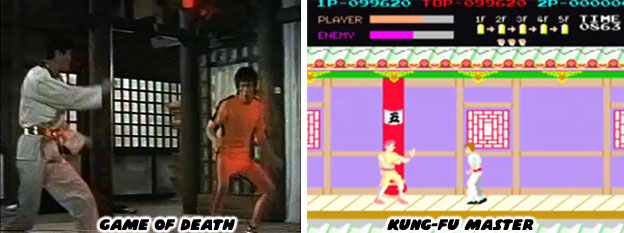
The presence of Lee actually worked in favor of these early games. We had an actor and martial artist that dressed in very clean and easy to read costumes in his films. The shirtless hero with dark pants would pop up on various character designs. When the early arcade and console systems had limited memory to work with then simple two-color costumes were perfect designs. Of course Lee's signature yellow jumpsuit with black stripe from the film the Game of Death would become iconic as well. The costumes that Lee wore, his haircut, stance and moves would influence character designs for the next few generations. From some of the earliest 2D fighting game characters to some of the first 3D fighting game characters, even the Flash-based fighting games and hybrid 2.5D fighters all had a Bruce Lee clone. Some of these were subtle nods to the actor but the majority stole his likeness.


Lee moved with a quickness that had never been seen before. He punched and kicked so fast that it was a blur on screen. These would be elements that would become adapted in the early brawlers. Resources were very limited on the arcade machines at the time, especially memory. Perhaps a character had two frames of animation between a punch and kick. This would have seemed impossible on a bulky character but a skinny fighter like Lee actually did strike that fast. Even the trademark yell of Lee, his facial quirks and mannerisms would be reproduced on many characters in fighting games and brawlers. The godfather of the brawler, the one that I believe started it all was Kung-Fu Master by Irem. It was released in 1984, a pivotal year for arcade games. The title was a subtle nod to Lee's final film, the Game of Death. Players had to climb a tower filled with various fighters, and it got progressively more difficult the higher you went. The main character "Thomas" was searching for his girlfriend "Sylvia." Of course the names were changed from the original title, Spartan X. What didn't need translating was the lighting-quick strikes and familiar yell of the hero.


The US didn't really have a connection to martial arts cinema in the '60s or '70s. The action movies that the USA enjoyed right through the '80s had a different type of violence, one which was rooted on guns and revenge. The anti-hero was a popular subject in many of the movies. As it turned out the settings were a character all to themselves. The fictional version of New York in the John Carpenter film Escape from New York lit the imagination of the Japanese studios. Cities in western-themed games had to be big, dirty and overcrowded. The walls had to be covered in graffiti and colorful gangs patrolled every corner. Japanese studios began creating impressions of these cities, based on cult films like Death Wish and Streets of Fire for the earliest and often most successful brawling franchises. Double Dragon and Final Fight were two of the biggest sellers and they introduced audiences to a modern "western" metropolis overrun with gangs.


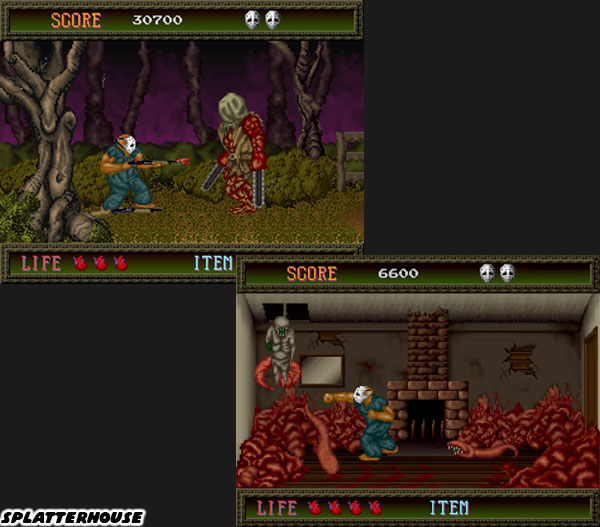
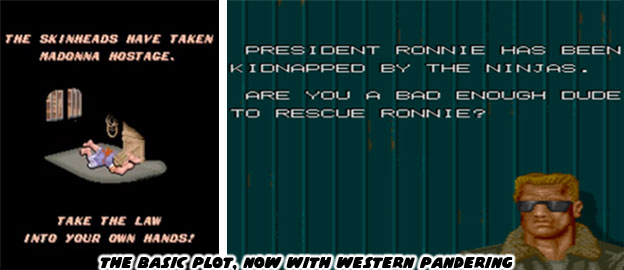
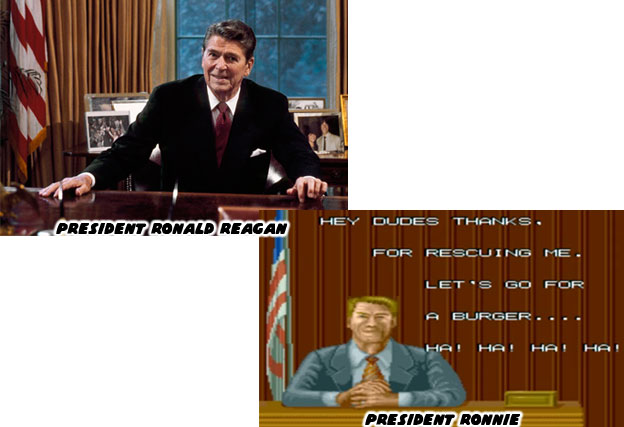
The setup for most of the games was simple. A person of interest was usually kidnapped, often a girlfriend, a finacee and at least in one case it was the President of the United States. Seeing as how the Japanese were shamelessly pandering to Western audiences they would drop names like pop singer Madonna and Ronnie, the nickname of President Ronald Reagan, into their games. If the brawler could be compared to a film genre then it would be the cult action film. Not quite a summer blockbuster yet not lowbrow enough to be a "grindhouse" picture (with the exception of Splatterhouse that is). The Brawler was nothing short of mindless action, it was like the perfect summer movie for eating popcorn, drinking soda and turning off your brain for an hour. After all, the payoff after saving President Ronnie was getting hamburgers. It was hardly Oscar-caliber material the Japanese were interpreting.


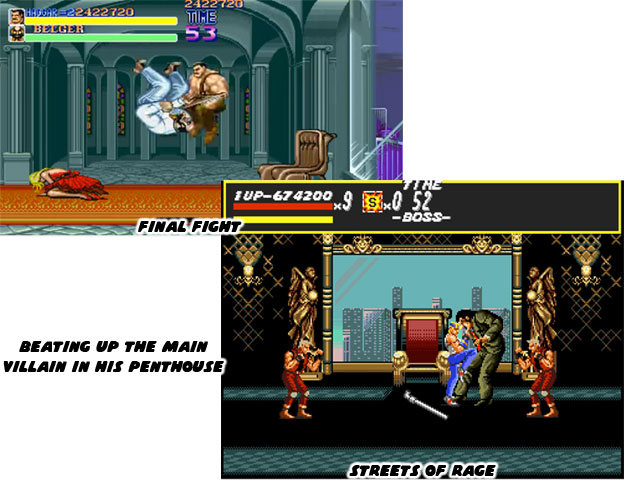
Of course for most of these movies audiences would wonder why the cops didn't stop the bad guys. There was usually two reasons for this. The cops were either too afraid of the gangs or they were being paid off not to do their job. The gangs often had leaders and these were not the typical thug. They were instead rich crime bosses living in the lap of luxury. Sometimes they were politicians or even heads of corporations. Players figuratively and literally fought their way to the top in many of the games. As dirty subways gave way to abandoned amusement parks and crowded alleyways the player would find themselves fighting in nicer and nicer neighborhoods. Eventually they would end up in the suite or penthouse of a millionaire. It turned out that the person that was pulling the strings was often the richest person in the city. They could have had it all but instead messed with the wrong people. The punishment for kidnapping or putting a city at war was often a long drop for the bad guy.


There were many other plots to explore, many more heroes to become and many more villains to throw through windows. The brawler was and continues to be a fun genre. I hope there are a few games mentioned in this series that rekindles some memories. Perhaps I'll highlight a few that you may not have played and give you a reason to track them down. Whatever the case I hope you stick around and as always share a comment. As always if you enjoyed this blog and would like to sponsor me please visit my Patreon page and consider donating each month, even as little as $1 would help make better blogs and even podcasts!

follow the Street Writer on Patreon!

Friday, December 11, 2015

What is going on with the Street Fighter V character designs? Part 2, where did F.A.N.G come from?

I'm not going to backpedal, F.A.N.G. is a character that has no redeeming factors. He is an ugly character, a mockery of Chinese martial arts systems. He doesn't really belong in the Street Fighter series but the powers that be have decided to give him a go anyway. It doesn't really matter what I say or what I think about the character. It doesn't matter how offensive or nonsensical I think his design is. The reality is that Western writers, artists, actors, directors and producers have been doing a greater disservice to Asian characters than any Japanese developer ever could. It is the ugly truth. Audiences from the west fail to acknowledge what we have done culturally to Asians over the past century.

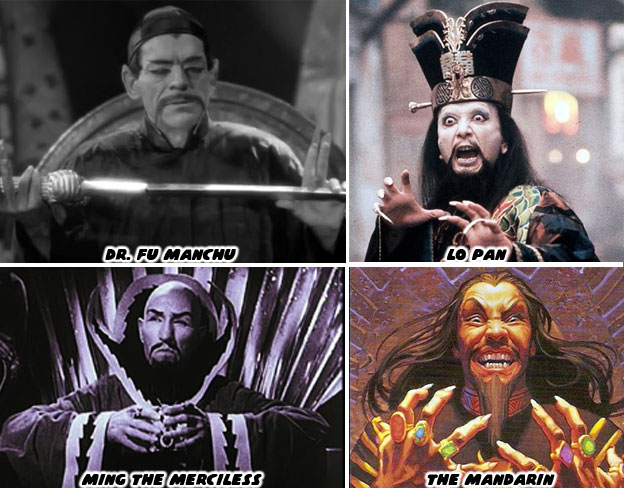
Think about how Asians, especially the Chinese, were parodied, if not outright vilified in Western pop culture. Sometimes it was subtle, the way the Chinese or Japanese pronounced English was often exaggerated in comics and films. Sometimes it was very overt, with characters presented with bright yellow skin and narrow eyes. This trend goes back to 1929 when the British writer Sax Rohmer created a villain named Dr. Fu Manchu. At the end of the 19th century and the start of the 20th the "Orient" was seen as a place of mysticism, where ancient magics were real and closely guarded. The British colonists and Western Culture by contrast were always the shining example of civility and modern science. Minorities were very often subservient if not outright villains in many pulp stories. Dr. Manchu was bent on global domination using a combination of science and magic. The terms used to describe the character were more demonic than human. It was something to consider that Fu Manchu was almost as old as Mickey Mouse, and almost as well recognized in that era. He had been used to perpetuate some ugly stereotypes or decades, not solely in book form but in film as well. This character would become a template for evil Asians that would be used again and again. Although he was an alien Ming the Merciless, ruler of the Planet Mongo (yep they went there!) was very much an Asian stereotype. The character first appeared in the 1934 Flash Gordon comic strips by Alex Raymond. Ming could be considered the tyrant that Fu Manchu would become if he had conquered the Earth.


A few decades later, in 1964 to be precise, Marvel comics introduced the world to the Mandarin. The villain featured in Tales of Suspense would become the greatest rival to Iron Man. The Mandarin had acquired magical rings, which were actually alien artifacts. They allowed him to do various things, from shooting bolts of electricity to controlling minds. His design and purpose was not very far removed from Fu Manchu. This was odd considering that Marvel was a very progressive company, they featured minorities in several comics and presented some main character with different religious beliefs as well. Unfortunately the design of the Mandarin relied on trope, he was so obsessed with domination that it diminished his presence. It was unique however that the hero that used the most advanced robotics would have to do battle with mystical elements. It helped make Iron Man stand out from his contemporaries in the end.

 The USA did a lot of changing following the civil rights era. Minorities began turning up as recurring characters in television shows and were presented in a favorable light in film. Eventually writers and comic artists grew tired of the stereotypes that had been placed on Asian characters. Director John Carpenter created an immortal wizard named Lo Pan in his 1986 cult-hit Big Trouble in Little China. The character was every absurd element from Fu Manchu, Ming and the Mandarin all rolled into one. The film placed the classic martial artists in the modern world. It was a send up some kung-fu tropes, the fantastic details remained with evil fighters who could shoot lightning from their fingertips and even fly. Many Asian actors were used as both the heroes and villains in the movie. This film was such a refreshing change of pace that it went on to influence the creation of Mortal Kombat. Yet the progressive view that John Carpenter had was the exception rather than the rule.


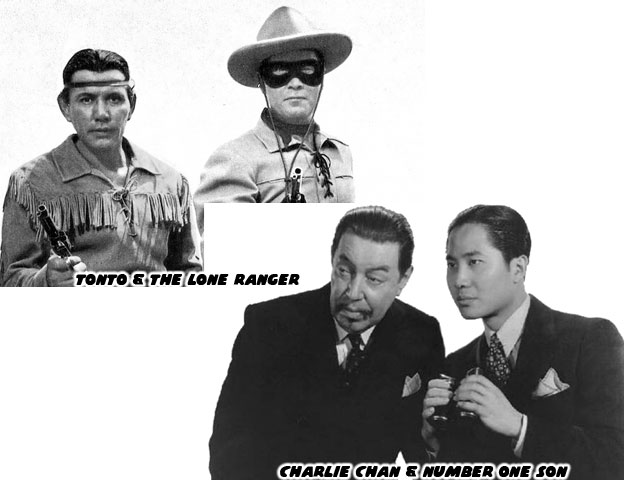
Producers and network executives had little to no faith that a minority actor could carry a role. This went back to the days of black and white film. The producers were afraid that the western audiences would never watch a film or TV show that didn't feature a white actor. Because of this many characters were recast, rewritten or completely ignored. In the ugliest instances a white actor wore blackface, or in the case of Fu Manchu or the detective Charlie Chan they wore "yellow face." Warner Oland was a Swedish actor who played Charlie Chan in several movies. The makeup department would tape down his eyelid to make him look "Asiatic." The features that revolved around the heroic minority would often cast actual Asian actors to play supporting roles. For example Keye Luke, a Chinese born American actor, played "number one son" Henry Oswald Lee Chan in the Charlie Chan films. By casting minorities the producers hoped to lend some sort of credibility to the lead actors as well as the stories they were telling. The downside was that the actual minority was never trusted to carry a leading role. It was a pattern that followed Hispanic and native characters as well. Canadian actor Jay Silverheels played Tonto, opposite Clayton Moore's Lone Ranger. He was a great character, a positive minority and one of the pioneering actors on network television. Yet neither he nor Keye Luke would ever be called to be the star of their own series. I wish I could say that things changed over the years but entering 2016 there was still very little minority representation on television. The shows featuring minority actors were almost all segregated into their own sitcoms. Things had not progressed very far in the century following the invention of film and television.

In fact things have not changed very much on the video game front either. The youngest of the major entertainment mediums has a lot of catching up to do. I could get upset all I want about F.A.N.G., Rufus, Birdie or any of the other Street Fighter characters and it wouldn't make a bit of difference. Why should I take Capcom to task when the western-produced games had very little representation, or diversity? How many games could you name that had a minority lead? How many could you name with a white character? How many franchises have been built around minority characters? How many around white characters? Stop and think about that for a moment. Go back through your mental index of game characters, of franchise characters and see how many you can name. Of those how many are male and how many are female? Of those how many are Asian, Hispanic, Black or Native?


I would argue that the fighting game has the most diversity of all the genres. Minority characters do have a leading role in many fighting games, and are usually presented in classical martial arts uniforms. Granted most leads are Japanese but those games are often produced in Japan. Just as most white leads in games are from western-produced titles. The diversity of characters and fighting styles is one of the things that keeps audiences coming back to the genre. Street Fighter has, or at the very least had, some of the most positive and influential minority casts ever created. These characters weren't perfect in their first incarnation but they did get better with revisions. If I have one complaint about the most recent additions to the Street Fighter lineup it would be how little they seem to be revised before they are added to the lineup. Many of the new characters in the game are forgettable, I would go so far as to say they are throw away designs. They are added to give the lineup a feeling of diversity but end up being nothing more than a gimmick character from a particular country. F.A.N.G. is no exception, he is just one more character that will have his 15 minutes and then fade away while Ryu, Chun-Li and the rest of the original World Warriors remain. So what is it that F.A.N.G. lacks when compared to the earlier designs?


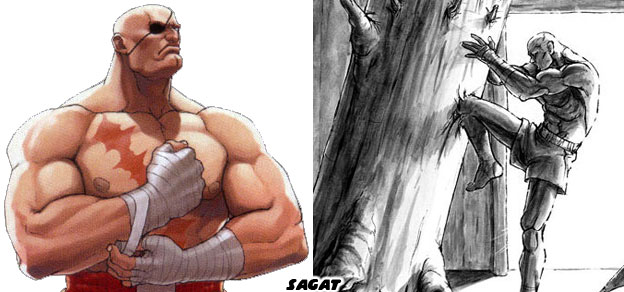
The new characters lack roots. In fact most of the new characters added in SF IV and SF V lack an understanding of the fighting arts that they represent, and in many instances, the actual martial artists that shaped history. The first Street Fighter was based very much on the life and times of Mas Oyama and Yoshiji Soeno. The rivals in the game were inspired in part by actual martial artists and martial arts movie characters. Even the gigantic Sagat was based on actual muay thai fighters, Sagat Petchyindee and Dieselnoi Chor Thanasukarn. The fighting arts Sagat and Ryu used were exaggerated versions of real forms. These amazing abilities looked great in comics and cartoons and turned out to be perfect for a video game. The second generation of Street Fighter characters expanded on the same principal. A burly sailor would become Zangief, his previous name of Vodka Gobalsky was deemed inappropriate. A new name was pulled from an actual wrestler that the Capcom designers would watch on television. The most racially insensitive characters, Dhalsim and Blanka, were greatly toned down and ended up including details from actual history as well as cinema. What F.A.N.G. is missing, and for the most part many of his contemporaries is that connection to the martial arts and actual fighters.


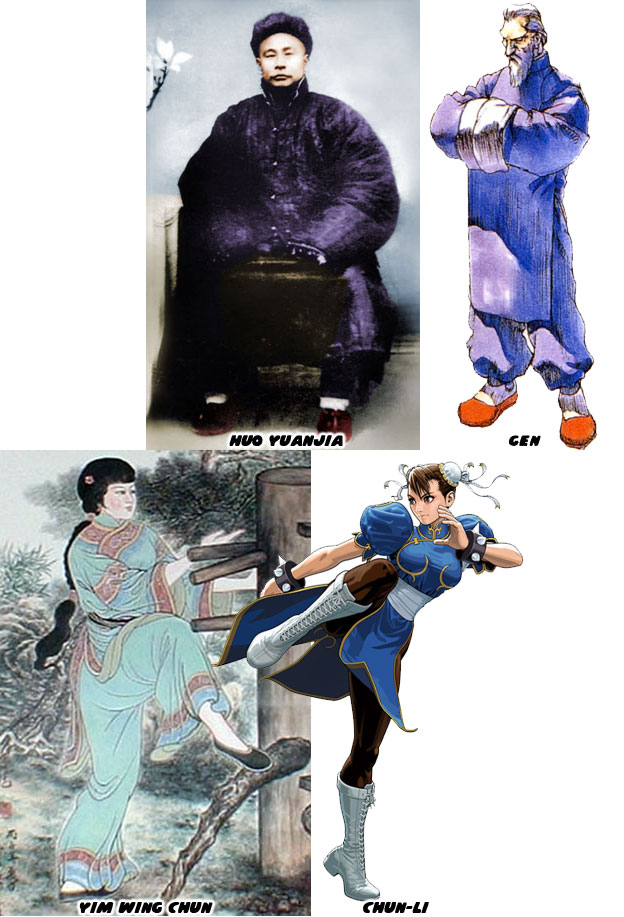
F.A.N.G. is the latest kung-fu master inserted into the canon of Street Fighter. He comes on the heels of some of the greatest Chinese characters in the genre. People like Gen and Chun-Li were pulled form legend. They were given moves and back stories that were worthy of cinema. Yet F.A.N.G. is in a completely different category. He doesn't have a pin that you can attach the design to. Just as you cannot point to the reference used for Rufus or Hakan, two of the saddest character designs ever featured in a Street Fighter game. F.A.N.G. gets to replace Sagat in the story. You would think he would be an intimidating character as one of the new Shadowlaw / Shadaloo Generals. Except that he isn't. You would think that his moves would be based on some ancient brutal Chinese system, but they aren't. F.A.N.G. exists for the same reason that Rufus exists. This is a character that the Producer finds value in. Like George Lucas saying that Jar Jar Binks was his favorite character, I'm sure Yoshinori Ono thinks F.A.N.G. fits right in as well despite what the audience reaction has been. But there is a catch to his design, a different way of looking at him just like any design. Some retouching, some refinement can save any character. Look at the roots of the franchise designs and see what you can learn.


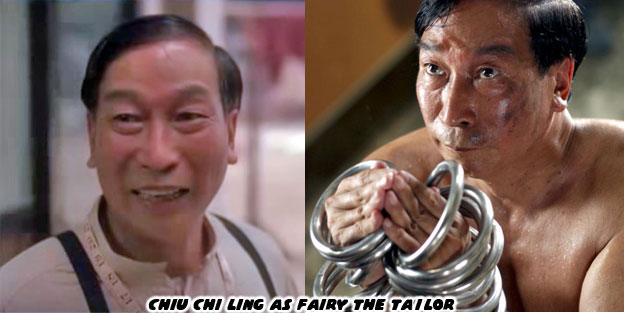
The way F.A.N.G. behaves before or after matches means little, and does not necessarily make or break the character. It is absolutely okay to have a flamboyant, or even effeminate character in a fighting game. While the look of F.A.N.G. may be closer to the harpist assassins from the film Kung-Fu Hustle, the character should have had the presence of Fairy, the tailor. In the film veteran actor Chiu Chi Ling played the character. Mr. Ling was an actual master of Hung Gar, one of the hardest striking forms of kung-fu. Yet Fairy was presented in a very soft and almost dainty manner, which made his role all the more interesting. The character he played was living a normal life in a small town. People did not know that the unassuming tailor was actually a powerful martial artist. This was masterful storytelling. The character was really brought to life in the action scenes. Fairy would become a one-man wrecking crew and any semblance to his effeminate personality disappeared as he destroyed mobsters with his bare hands. Yet Mr. Ling was not the first Chinese martial artist who played a dual role well.


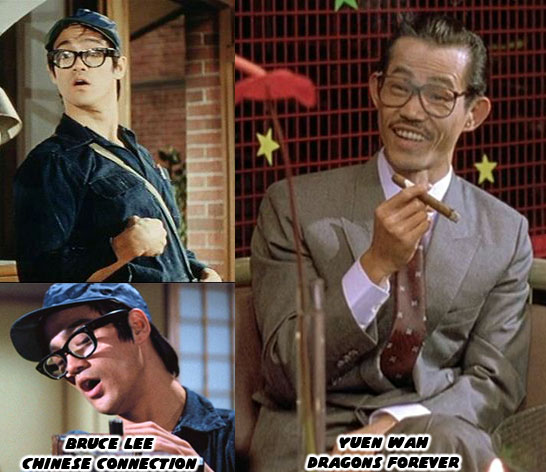
The unassuming Chinese character was portrayed well by Bruce Lee in the Chinese Connection aka Fists of Fury. To infiltrate the bad guy's hideout he played a mousey telephone repairman. It was his fighting ability and not his appearance that did all of the talking. Some of the most unassuming fighters have been villains. The character actors that play them do such a good job that you can't wait for the good guy to beat them up. This could be seen in the character Boss Wah, played by another martial arts veteran Yuen Wah, in the film Dragons Forever. Boss Wah looked and acted like an absolute weasel, choosing to strike Jackie Chan and his friends when their backs were turned. He was a cigar smoking crime lord, skinny and unassuming. He surrounded himself with some dangerous bodyguards, including former kickboxing world champ Benny "the Jet" Urquidez. At first glance you would think the character in the suit was a wimp. However despite his appearance and mannerisms he was an amazing fighter and capable of holding his own against the rest of the cast. Yuen had actually appeared in several Bruce Lee films and even served as Lee's double on some of the stunts. F.A.N.G. by comparison did not quite sell himself as a fighter. Or rather the designers at Capcom did not really sell the character as a fighter. He was lanky and overconfident in himself, saying that he would beat his opponent in two minutes and then striking an absurd victory pose if he did win. The character was flamboyant but not endearing like Fairy, he was a weasel without the vicious attacks of Boss Wah. F.A.N.G. threw poison balls from his sleeves and flew by flapping his arms. These weren't really moves or abilities that could be attached to any real system or any fighter living or dead. Capcom simply did not convince me that this character was right for the game and the series.


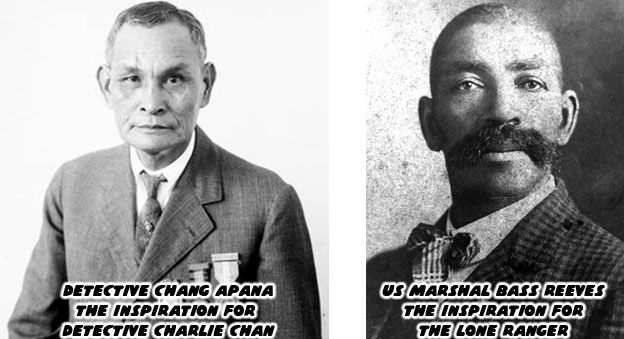
The entertainment industry has been whitewashing history for some time. The real world is much more diverse and interesting than any video game, movie or book could ever be. Think back about the ugly caricature that was Fu. Manchu, or how Charlie Chan stereotyped a population. How was F.A.N.G. any different from these representations? Think back about what a great hero the Lone Ranger was, according to history modeled after Texas Ranger Captain John R. Hughes. What a fantastic role model he turned out to be to several generations of mostly white children. Now imagine that if minority children had been exposed to something different, something that was closer to reality. What if they learned that the author Earl Derr Biggers based Charlie Chan on an Chinese-Hawaiian Detective named Chang Apana. He would have been a great minority and mixed-ethnicity role model. Or consider that the Lone Ranger may have been based on an escaped-slave-turned Deputy US Marshall Bass Reeves. Bass actually wore disguises and had Native American friends that helped him capture criminals in the old west. How amazing the films and television shows would have been to the minorities growing up here as well. They deserved to have heroes and villains modeled on reality rather than fantasy. This is what Capcom sometimes forgets. Mas Oyama may have been the basis for Ryu but let us not forget that he was Korean and not Japanese. He was such an amazing karate fighter that he influenced a nation that was and continues to be very biased against Koreans.

This is why I will always push back on Capcom when I think they are doing a disservice to the series. They have a chance to review and revise each and every character before introducing them. Trying to make changes after the fact is impossible. Capcom needs to think about how they are representing minority characters. Just because Street Fighter V is introducing a new Chinese, adding a Brazilian female (Laura) or Arab male (Rashid) into the lineup doesn't mean the studio is being more inclusive. If the woman is there primarily because she is sexy, or if the Arab is there just to fill a Middle-Eastern quota then why should we care? A lot of people in Mexico were happy that a masked wrestler was included in SF IV. They overlooked his silly moves and mannerisms because there was finally some representation in the game. It didn't matter if the representation was positive or negative as long as it existed. These fans, just like fans from around the world, are desperate to be represented in the series. They will accept stereotype, trope or sexism as long as they get a character in the game. Capcom needs to look internally and see what they can do to make better characters and a better game in the process. If they worked a little bit harder and tried to present positive representation they might create something profound. What do you think about F.A.N.G. and the other new characters? I would like to read about it. As always if you enjoyed this blog and would like to sponsor me please visit my Patreon page and consider donating each month, even as little as $1 would help make better blogs and even podcasts!

Wednesday, September 9, 2015

How fight culture became fighting game history, part 31

The old Soviet Union had long and proud tradition of fighters, war heroes and genuine, old fashioned, tough guys. After the collapse of the Union and the rise of the independent Soviet States the Ukrainian Fedor Emelianenko carved his own legacy. Fedor studied under the formidable school of SAMBO. It was a fighting system that began in the '20s by the army to improve soldier hand-to-hand combat. SAMBO was an acronym for SAMooborona Bez Oruzhiya, or "self-defense without weapons" It was not the only commonly used word to denote a system with a unique meaning. Judo meant "the gentle way" and Aikido meant "the Way of Harmonious Spirit." The word Karate evolved from "Tang Hand" (as in Tang Dynasty 618 - 907 A.D.) or "Chinese Hand." Chinese traders and immigrants had been settling in Okinawa and the surrounding islands for centuries, they brought with them their fighting styles. The Japanese Ryukyu Kingdom began incorporating their lessons in the 14th century after they began their conquests of the islands and its inhabitants. Karate became to mean "Empty Hand" as in fighting without weapons.

The military application of Sambo made practitioners very dangerous. Crippling holds, bone breaking strikes and peak conditioning were the things that soldiers relied on to keep them alive when facing down an opponent without the aid of a weapon. Even in sparring the judo-like throws and constantly shifting wrestling positions could severely injure a person that did not focus on training. The more dangerous combat elements, things like neck locks and certain strikes, were taken away to develop Sport Sambo. By 1940 the Russian states had developed more or less a foundation for professional MMA competition, they had even tried to get it to be considered as an Olympic event. All of this happened more than a decade before Oyama began on his world tour, and well before Labell fought Savage in the USA's first MMA competition.
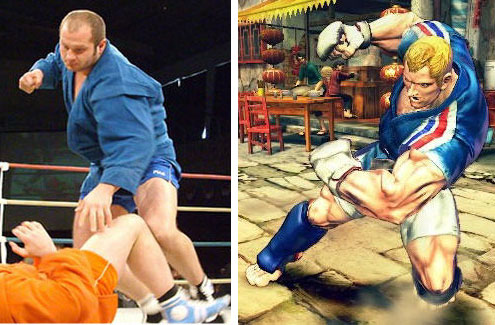

Fedor had established a natural acclimation for the system which mixed elements of grappling, striking and wrestling. He had a relentless dedication to training, working out in seclusion and surrounding himself only with trusted friends and family. Like Oyama before him, it was his focus and drive that allowed him to develop the iron will to reach the top. Fedor had already won several regional and national championships in Sambo before he began competing on the international stage of MMA competitions in Japan and the US. He, along with his brother Aleksander AKA the Grim Reaper seemed to come out of nowhere and dominate opponents through the new millennia, just like the Gracies had in the '90s. Of course there were no flukes in MMA. Kazushi Sakuraba made the most of his wrestling and catch abilities so too did Fedor exploit everything he had picked up in Sambo. He could adapt seamlessly between grapplers and strikers and try to finish off opponents with maximum efficiency. Long time fans of shoot-fighting, vale tudo and other global fighting competitions had known of the system for some time and were waiting for the Europeans to begin exporting their best fighters. Casual fans were intrigued by the techniques and began investigating its history.

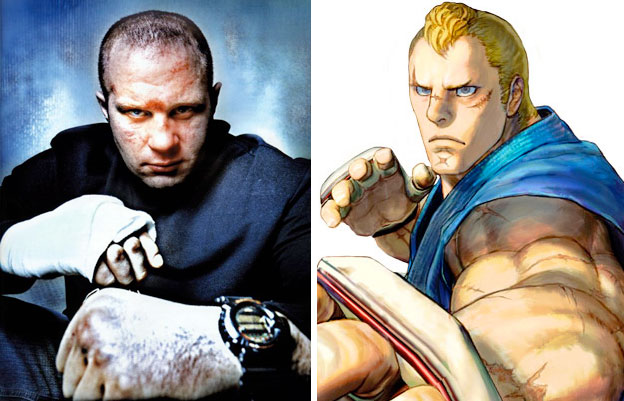
By 2008 the legend of Fedor had been established. When Capcom was developing Street Fighter IV they wanted to include a fighter that represented the next generation of combatants. Instead of bringing back Alex they introduced a new character named Abel. His costume was very much like a traditional Sambo uniform of shorts and a Gi-like top. Although the character was French most fans saw the influence from the Ukranian master. Despite his size Abel was fast and agile, able to duck under many attacks and close the distance against his opponents in the blink of an eye. He was also tough and had a great diversity of strikes and grappling moves. Essentially the first Sambo fighter in the Street Fighter series. Many players in the US were eager to try out the character in early play tests. This surprised Producer Yoshinori Ono who had created the spy vixen Crimson Viper with the US audience in mind. He had underestimated the global appeal that fighter like Fedor commanded.

Sambo had been used to train thousands of soldiers in Russia by the time Helio Gracie was teaching his new form of Ju-jitsu to the people of Brazil. Almost twenty years later, when Helio fought Kimura, the sport version of Sambo had been exposed to million of Russians on television and arena battles. Fedor had not appeared out of thin air. He had inherited a culture that had been scientifically identifying the most effective moves from multiple arts and refining them for practical use in battle and on the street. Making interesting game characters and incorporating the Sambo style had been the challenge to the Japanese. Ad Abel demonstrated they were ready for the challenge.

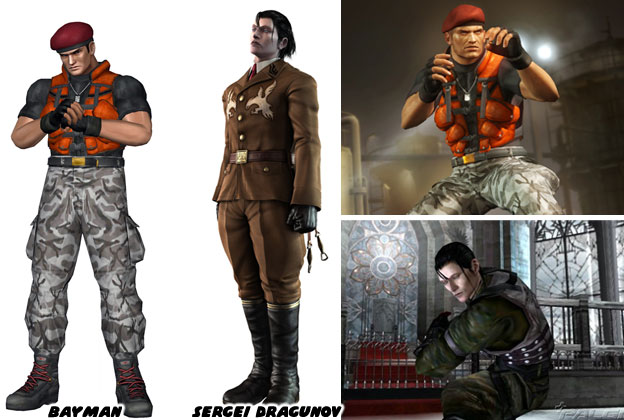
Namco had introduced Sergei Dragunov into their Tekken series and Tecmo had put Bayman into Dead or Alive. By presenting them in military uniforms they wanted audiences to know that these fighters used Combat Sambo and not Sport Sambo as their fighting method. Of course Abel was also written as a soldier in SF canon and one of his alternate costumes had him in camouflage, but I digress. Not since the character Guile in Street Fighter II had another military character demanded as much respect from game players. The Eastern Block MMA fighters had finally arrived on the arcade scene. They would remain relevant so long as Sambo practitioners continued to show and prove on the global stage.


With Fedor achieving an Ali-like status the style would never fall out of favor. For those interested the cable television show the Human Weapon had a great feature on Sambo, its history and applications as both a military and fighting art. Even with the documented success of Fedor why was it that when people thought about what a martial arts master they almost immediately conjured up images of an elderly Asian with a long beards?

The undefeated streak reported by some masters of the martial arts was always subject to criticism. Some claimed to have hundreds of victories over their lifetime. Their criteria for a "fight" was always questionable. Did the masters include sparring or training sessions as an actual fight? What about street fights? Or did only sanctioned battles with witnesses and a judge count? If sparring matches counted then the best would have been able to claim thousands of victories without a single loss. The self-professed champion Rei Zulu said he had a record of almost 200 victories without a defeat before he was beaten by Rickson Gracie. Of course Rickson also claimed that the had won over 400 fights without a loss. Helio Gracie said that the number was inflated based on his opponents and "fight" qualifications. If Helio had counted his battles in the same way then he would have won a million encounters.

The introduction of film and video allowed new legends to be created, verified and ranked almost overnight. Fighters that had merit could be documented. Opponents could also now study techniques of their rivals, making the fights more interesting. Analysts could dissect every fight with slow motion replays and explain why the fighter deserved a championship. Film and video also allowed a number of so-called fighting masters to be debunked. Inflated numbers aside, there were masters that allegedly had super techniques that no previous mortal could ever possess. In ancient times these characters relied on word of mouth to spread the myth of their fighting prowess. Undoubtedly many a martial artist set out trying to track down these masters hopeful that they could learn their secrets. Thanks to video the absurdity of these "masters" could finally be exposed.


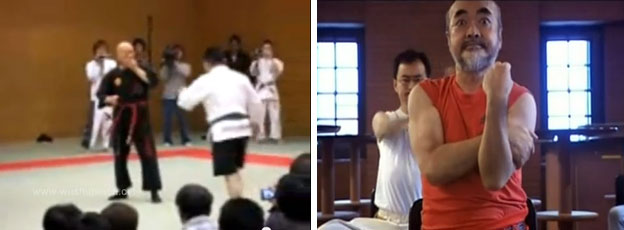
Take for example Yanagiryuken the Kiai Master. Allegedly he had compiled a record of 200 battles with 0 defeats. He was such a powerful fighter that he didn't even have to touch his opponents to throw them or knock them down. He proved this by recording his training sessions with his students. He seemed to have the same mythical powers exploited by videogame characters. Of course his students acted as accomplices and seemed to throw themselves around at the whim of their master. He challenged fighters of any style to compete against him, offering a $5,000 reward to the person that could beat his superior style. A young MMA practitioner accepted the challenge. After signing a contract and death release form he took the kiai master to task. He grabbed him by the sleeve and punched him in the face repeatedly until he dropped. Unfortunately nobody had gotten a chance to repeat the fight against Master Sasaki, the sage of Hida-shiki Kyouken-jutsu. According to his own legend he could disable or even kill a man with the sound of his voice.

Sadly these charlatans existed and duped a large number of people. In older times the false masters would be supported by word of mouth and other willing accomplices. Most people lacked the means to travel across the planet to seek them out so the legends stood at face value. Sadly in the day and age of instant access to media anywhere in the world there are still people tricking the public into believing that they have superhuman powers. Take for example the Qigong master projecting his chi and throwing several people with ease by touch alone. According to ancient philosophies chi is made up of positive and negative energy, like positive and negative energy currents, some practitioners of qigong can harness this energy and direct it to their hands and feet for stronger punches and kicks. It can also be used to increase physical toughness and heal wounds. Western science has tried to debunk or explain the force of chi for some time. Chi was the myth that spawned the creation of "fireball" attacks in fighting games. Unfortunately these modern masters had yet to perform their chi attacks on an actual randomly selected persons let alone real fighters in competition. Proof or not there was no denying the appeal of fabled martial arts master. Comics, movies and cartoons had carried the myth into modern times. Somewhere in the world there was an elderly man that held onto ancient secrets and was waiting for the right person to come along and train. This old fighter had moves and techniques that could beat any man regardless of age or strength.
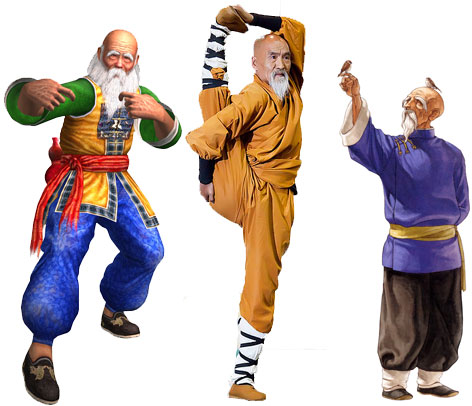

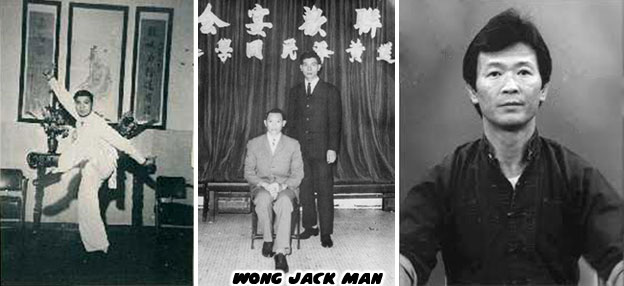
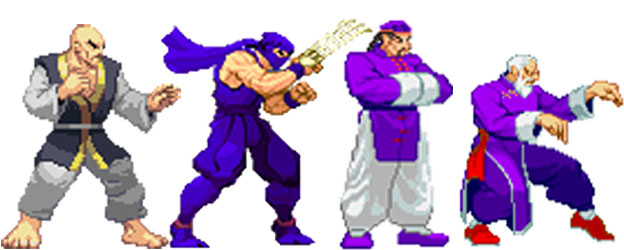
The elderly master was turned into a videogame trope at the dawn of the fighting genre. Shun-Di from Virtua Fighter and Tung Fu Rue from the Fatal Fury series were two such icons. In the games the two were able to compete against brawlers, wrestlers and martial artists that were three times larger and a third their age. The difference between a character Oro and his Street Fighter III rivals was even more profound. Where else could a 140-year-old be able to beat up on seven-foot giants? There was actually an intersection between myth and legend however. Some of the best fighters that had ever lived could be held to a stalemate. It had happened to Bruce Lee early in his career. The fight against Wong Jack Man was not as interesting as the movie Dragon made it out to be. If anything Lee attacked for almost a half hour and never managed to knock down his opponent or even hospitalize him. There were no padded gloves or soft mats to prevent injuries either! The fighting styles and methods that Lee had been taught had failed him. Although he "won" the encounter if forced him to re-evaluate the old traditions and begin rewriting the book on unarmed combat.

Something similar had happened to Oyama according to legend. After he had defeated the best fighters he had come across in his travels through the US, Japan and Thailand he went to see about a legendary fighter in China. He discovered an elderly man teaching Taiji Chuan and asked if he were the "Mr. Chen" from legend. The older man said he was but Oyama was ashamed to ask for a sparring match. The older man offered first much to Oyama's surprise. The two squared off and Oyama was amazed at the efficiency at which the older fighter was able to deflect all of his strikes using small circular motions and footwork. After a few minutes Oyama realized that he could not land more than a glancing blow to the older fighter and conceded defeat. It was the first time in over 200 battles that he had ever done so. He cried, according to legend, not because he lost but because he had much more room to grow as a fighter. The elderly man invited him to stay and learn what he could. After a few weeks of training Oyama was capable of competing against the best students at the school. Oyama said in later interviews that Taiji was good for health but not a practical fighting art, only 1 in 10,000 people could ever achieve the understanding and ability that Mr. Chen had. The lesson he learned was that no system was perfect and the fighter must constantly be willing to learn and grow. Although Oyama was credited as an icon for karate he had actually learned a lot from boxing, judo, jujitsu, wrestling and kung-fu in all his travels. The same thing helped make Bruce Lee a well rounded fighter in later years and had been incorporated into the Sambo that Fedor had learned.
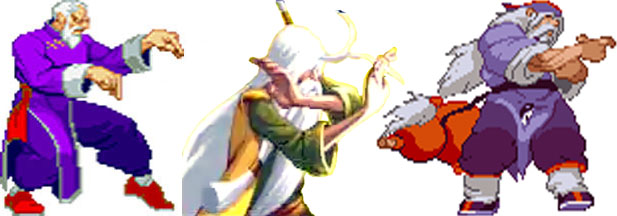

Perhaps the story of Oyama versus Mr. Chen was what spawned the myth of the elderly master that could humble even the most powerful fighter. People wanted to believe that there might still exist a master of the ancient arts and not one of the charlatans that had been putting on phony exhibitions like Sasaki and Yanagiryuken. Ever since that moment the all-powerful master had been a staple in movies, comics and now video games. People had been hoping that some day a real master might reveal himself at an MMA competition and take out a competitor half their age and twice their size. But that day would probably never come. Age robbed the speed, strength and reflexes of the best fighters. It had been proven with Fedor, Ali, Royce and Sakuraba. Even if there were a master out there chances are the bright lights and gaudy excesses of MMA "superstars" would be the antithesis of everything they had learned. They would surely shy away from the cameras or fame seekers.

Many fans were left believing in these mythical characters, too good to ever come down from the mountain, instead the best fighters had to go out and track them down. The stories of the mythical masters would be mixed in with the legends that actually walked the Earth. These stories would become more embellished as word of mouth spread the myth. Even with the advent of film, video and the internet the line between fact and fiction blurred. Whatever the case was the grappling arts had forever changed the way the world perceived fighters. The wrestlers that were once mocked for coming from a carnival lineage, for being "fake" or having no practical fighting ability had flipped the martial arts world on its head. The oldest techniques from the dawn of civilization were alive and well and helping shape 21st century fighters. Hopefully comics, cartoons, movies and video games would begin to expose the next generation to the classic traditions.  If you'd like to learn more about Catch and the history of the art please check out Say Uncle! Please leave a question of comment about the series so far and I will try to get back to you. As always if you enjoyed this blog and would like to sponsor me please visit my Patreon page and consider donating each month, even as little as $1 would help make better blogs and even podcasts!

Friday, August 14, 2015

How fight culture became fighting game history, part 20

Great fights made martial artists legends, but only if there were witnesses. Thanks to the advent of film and video the modern fighters had the luxury of being very well paid for their efforts. Cable television deals and prime time programming meant that audiences could enjoy a steady diet of violence and adrenaline from the comfort of their own homes. Unfortunately the ease of access meant that the spectacle once provided by underground matches became commonplace. Even if two fighters were great they were still judged by points, a system, a set of rules. The true contest of man-vs-man, no rules and no holds barred would never be aired. The fights that were settled in the back alleys and in secretive dojos were never recorded. Finding the real legends was becoming harder and harder in the era of film.


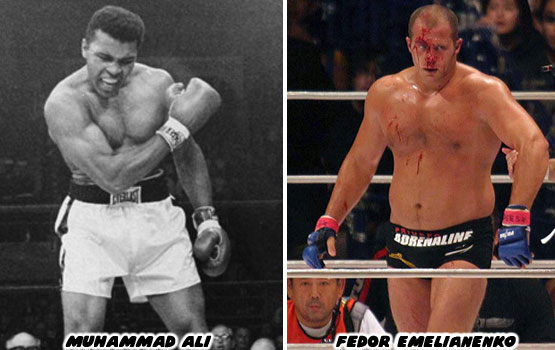
When the fighters were exposed under the bright lights they either rose to the occasion or withered away. The downside was that when they made a mistake, when they fell, the witnesses moved onto the next fighter. It did not matter if the person that had made the mistake was the better overall fighter. A defeat was a defeat. These fans did not always acknowledge that they had witnessed an era of greatness. The fighters that were once world champions, dominating ones at that, were like modern gladiators. Adored by the public when they won and discarded once defeated. Muhammad Ali and Fedor Emelianenko could be considered two of the best heavyweight fighters that ever lived. Their battles were not always easy, yet both managed to grasp victory from the jaws of defeat time and time again. Both men had also beaten some amazing fighters before they had even stepped into the spotlight. Some were remembered but most faded into history. Time eventually caught up with Ali and Fedor. Before they knew it the next champion had arrived, the kings were dethroned and left without a kingdom.

The key to immortality was elusive for a fighter especially one in the public eye. Only those that retired undefeated or died at a young age seemed to reach mythical status. The opponents that the legends defeated were like world champions that never sought fame or glory. The fights that they had were passed down by word of mouth because there were no cameras, and sometimes not even witnesses. Such was the case for young Bruce Lee. The young martial artist had been in plenty of fights during his lifetime, the majority on the street. The martial artist was eager to expose traditional Eastern fighting arts and philosophies to the West. This raised the ire of classical masters of the fighting arts. They forbade him from teaching non-Chinese the fighting styles. When Lee refused the elders sent a young master to beat him into submission. That was how the legend went. Unfortunately the circumstances surrounding the fight were nebulous because of the inconsistency of witnesses.


Wong Jack Man was the fighter that was sent to battle Lee. It was said that the older teachers were mad at Lee, not for teaching outsiders, but for bragging about how ineffective the fighting styles were. They wanted to have a contest with rules and regulations so that neither man got seriously hurt and settle the debate. They knew that in ancient China a fight to the death may have been permissible but in the modern world, especially in the US, there would be consequences for these actions. According to some witnesses Lee refused to fight under the limit of rules. Either everything was fair game or nothing was. Eventually they agreed to more lax rules and from the get-go the witnesses agreed that Lee was the more aggressive fighter. To some people Lee was fighting dirty, attacking the eyes and throat of Man throughout the fight. Lee was described as doing everything in his power to finish the fight as fast as he could. Man did everything he could to defend himself. The fight was not a quick battle as Lee later boasted but seemed to drag on. After 20 or 25 minutes Lee was declared the winner although neither man managed to knock the other down or cause serious injury. Different accounts of the contest were reprinted in local Chinese newspapers and each one went more favorably to Lee. Man told his account of the fight and challenged Lee to a public battle and settle the argument once again. Lee would decline.

The legend of Bruce Lee grew as he pursued better fighting and training techniques. The exposure he gained from the Black Hornet television series and later his film series made him an icon. Most people that would consider themselves fans of Lee might have never heard of Wong Jack Man. Wong later said that the fight had taken place because both men were young, prideful and headstrong. If anything if the truths from their encounter were revealed it would only serve to hurt their reputations more than help. Some facts managed to disappear through time much to the favor of one fighter. Fiction was malleable, easier to work with than historical accuracy. A decade and a half before Lee rose to prominence a different martial artist was the hero of millions. Mas Oyama, born Choi Bae Dal, was called the "God Hand" of karate. He could beat most fighters with a single punch. He was good but lacked control. He killed a man in a bar fight after the person pulled a knife on him. He realized that he had the ability to disarm the man but let his temper get the best of him and chose to strike instead.


Oyama became a hermit and lived in the mountains. Training his mind and body until he thought he had reached his peak. Then he set out trying to prove himself. He went dojo to dojo and challenged the masters of each school. He beat each one handily and his legend grew. Then he set out to prove that his style was the best. He traveled to the US, China and Thailand to try himself against other masters. Boxers, wrestlers and other fighters lined up for the challenge. Most fights were settled in private, away from the spotlight and the law. Imagine what would happen if a fighter today went to every martial arts school in the city and beat up all the teachers. Chances are that the police would be waiting for him in the next town. Fighters enjoyed their reputations and didn't always want to be proven wrong in their own school, let alone their own country.


The story of Oyama in turn went on to influence the development of Street Fighter. Ryu played the role of Oyama. The opponents in the original game mirrored the types of people that Oyama faced. Karate, boxing, kung-fu and muay thai were some forms represented. Oyama beat the masters of each style. Only when he had defeated the best Muay Thai fighter, a mysterious person nicknamed the Black Cobra, did he consider his journey complete. There were no photos of the 1954 encounter even though the battle was highly publicized affair that took place in Lumpinee Stadium in Bangkok.


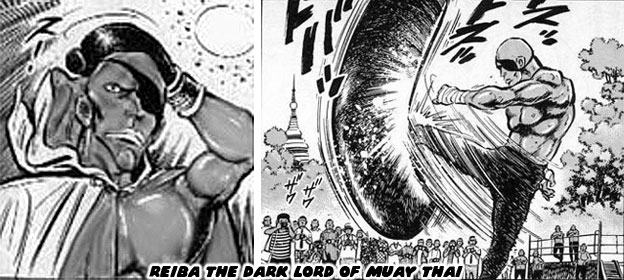
Oyama's understudy Yoshiji Soeno also traveled to Thailand, a decade later to prove which form of fighting was the best. It was reported that the one-eyed Thai fighter Reiba was as good if not better than Black Cobra. Soeno never got a chance to battle Reiba as a Triad or mafia hitman gunned him down before the battle. It did not matter however, he was such an interesting character that his myth managed to live on.

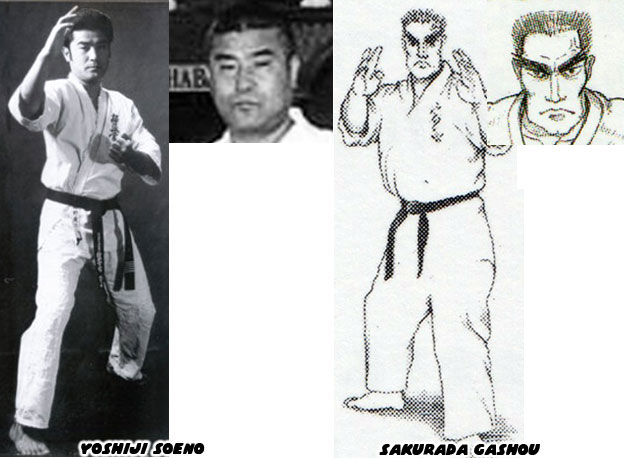
While the actions and reputation of Oyama were the basis for the Street Fighter mythos we should be clear that the look and mannerisms of Ryu were more closely aligned with Soeno. From Street Fighter II to today Ryu has had a very similar face. His eyebrows were large and bushy and his expression was very stern. The similarities between Soeno and Ryu were more than skin deep. There were two competing designs for the updated Ryu. One version had the character wearing leather and armor similar to Kenshiro from Hokuto No Ken / Fist of the North Star. The other version, named Sakurada Gashou had him in a much more traditional uniform. Note that in this version the character did not have his trademark headband.


Soeno went on to learn greatly from various different fighting forms. He studied Judo first but then excelled at Oyama's Kyokushin karate. He also picked up techniques from Goju-Ryu ("Hard Soft Style) which had older Okinawan roots, Shotokan Karate and Muay Thai. Soeno eventually broke his ties with Kyokushin to develop Shidokan Karate in 1980, which translated to"The group that lives and trains in the way of the samurai warrior." Shidokan practitioners were very good at striking, but they were also good at grappling and throwing opponents. They were well-rounded athletes and Soeno was very much like Ryu in that he could literally do it all. There were actually older schools called Shidokan, those with Okinawan roots as well as the more "mainstream" Shorin-Ryu form of Karate. Soeno founded over two dozen schools and still oversees his organization.

The legend of Oyama and Soeno became the backbone of the manga and animé series Karate Baka Ichidai. The characters featured within were adapted for Street Fighter as well. Sagat replaced Reiba in the game. Interestingly enough the character was shot in the Ryu Final manga by some poachers instead of triad members. Sagat survived the encounter so that audiences could look forward to seeing the seven-foot monster turn up again and again in the game series.


The competition of different fighting styles by Oyama and Soeno could be considered the roots of modern MMA tournaments. Around the same time a similar trend was happening in the Americas. The 20th century would see an explosion in the popularity of martial arts not seen since ancient times. It turned out that the same mass media that was shining a light on the last traditional martial arts masters was also creating a new generation of legends. Film, television and newspapers would help shape the careers of some of the most famous and infamous characters in the fight game. The next blog will explore these pioneers. As always if you enjoyed this blog and would like to sponsor me please visit my Patreon page and consider donating each month, even as little as $1 would help make better blogs and even podcasts!