Showing posts with label mma. Show all posts

Monday, July 1, 2024

More lucha libre comics for you! - A 1UP classic from August 10, 2011

You may know that I am a huge fan of lucha libre and especially enmascarados or masked wrestlers. I talked a little bit about a masked wrestler comic book not too long ago with Big Daddy Danger. There were two other books that I would like to mention.

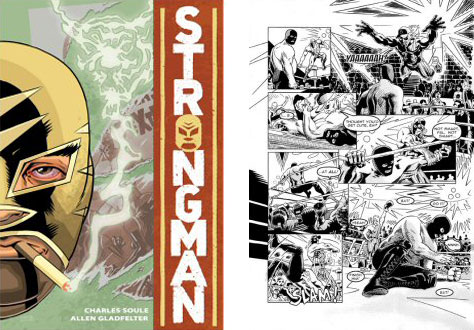
Strongman written by Charles Soule, drawn by Allen Gladfelter and published by Slave Labor Graphics is a pulpy novel featuring a past-his-prime enmascarado named El Tigre. The story is well done and the art, all black and white is okay. It has a violent edge to it with lots of blood spilled on both sides. It doesn't reach the level of style or storytelling of a Sin City graphic novel but is a fun ride nonetheless.

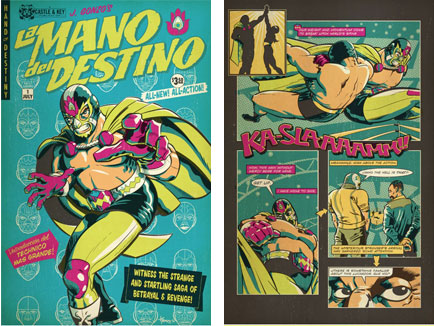
La Mano Del Destino by Castle and Key Publications is a newer color series featuring a masked wrestler named the Hand of Destiny. This character was double crossed during a match and lost his title and mask in the ring, the worst of all humiliations! He vowed revenge and must now face a series of opponents, each tougher than the last, before he can get his hands on the man that betrayed him. Sounds like the setup to a fun series, if not a videogame as well.

The art style is classic, printed on traditional newsprint with 4 color processes it looks like something out of the vault. The first issue was available in comic book stores but every additional issue will only be available from the publisher. Hopefully these indy publishers will help make it easier for original stories to get to market without having to deal with the monopoly that is Diamond Distribution. What was the last good or original comic that you have read?

As always if you would like to sponsor me please visit my Patreon page and consider donating each month, even as little as $1 would help make better blogs and even podcasts!
follow the Street Writer on Patreon!

Wednesday, June 26, 2024

Big Daddy Romantic Monthly Danger - A 1UP classic from July 28, 2011

Hello friends, sorry if you've gotten burned out on the Disney coverage over the past couple of weeks. I'm still on a comic book kick though and for that I'm not apologizing. I'd like to share with you a couple of books that had caught my eye over the past couple of weeks. Big Daddy Danger by Adam Pollina and Tyson McAdoo and Strongest Dad, a romantic monthly by Minoru Hiramatsu were some fun reads that you should be aware of.

The books were from a few years ago and covered some oddly similar territory. Big Daddy Danger was a short series published by DC featuring a masked wrestling character that doubled as a secret agent. Strongest Dad was a comedy about an undefeated MMA fighter trying to raise a family. The manga series was featured in Big Spirits from Japan. The story was collected in a three-part anthology.

Both titles had fun art, clever designs and plenty of nods to pop culture and the troubles of raising a family. For the Strongest Dad his troubles were compounded by the fact that he could not accept defeat or decline any challenge. Even if it meant having to test his mettle against an elephant at the nearby animal park.

Big Daddy Danger was just as absurd but equally fun. Big Daddy was both a championship wrestler and secret agent. His manager / trainer looked like Col. Sanders and got secret messages printed out of his cane. Big Daddy had a son and wife whom he often had to spend lots of time away from. In fact his son had no idea that his father was moonlighting as an agent.

The Strongest Dad lead a more normal life where the biggest challenges were more about raising two daughters and fulfilling his wife's expectations.

Both main characters had older brothers which wanted nothing more that to see the main characters defeated and humiliated. In Big Daddy Danger the brother tried to move in and become a surrogate father to the Danger son and even steal away the Danger wife.

In Strongest Dad the brother wanted to find the man or beast alive that could dethrone his kin. He even had his brother fight against a gorilla when he tried to humble him! Eventually he found a Russian bruiser, an ex solder that was built like a tank and was obsessed with drawing manga girls. When "Dad" wasn't dealing with animals he was busy beating up on a unscrupulous fight promoter that dressed like a dictator and drove a copy of the Batmobile!

The art provided by Polina and McAdoo in BDD was very cartoonish, there were great splash pages and hilarious expressions featured on the cast. The characters interacted with all sorts of goons and even demons. Possibly the funniest part was that Big Daddy would continuously peel off his mask and have a different one underneath for whatever challenge he was facing. It certainly would make for an interesting videogame mechanic in a title other than NiGHTS.

Not to be outdone, Mr. Hiramatsu was a king of facial expressions. The characters in his books have always had memorable takes. He featured some of his panels in a blog about the series.

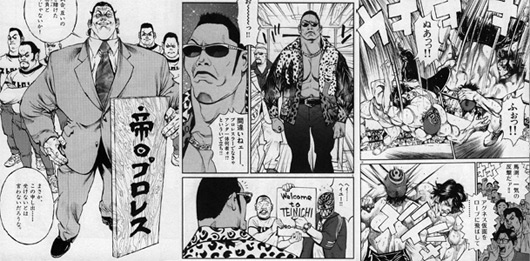
Both issues wrapped up rather quickly, BDD in 9 months and Strongest Dad within a year. If I wanted to see a series continue however it would have to be Strongest Dad. As much of a fan as I am of lucha libre, the Big Daddy series seemed flat. Big Daddy seemed to walk through opponents and there was no real sense of drama or tension in the issues, worse there was no resolution for his brother. Strongest Dad on the other hand made every little activity into a challenge, whether it was learning to play piano or escorting his daughters on a field trip. The Strongest Dad seemed a more three dimensional character that readers could root for. It was a fun series and almost matched the greatness of Mr. Hiramatsu's magnum opus. The Japanese wrestling, parable known as Agnes Kamen.


As always if you would like to sponsor me please visit my Patreon page and consider donating each month, even as little as $1 would help make better blogs and even podcasts!
follow the Street Writer on Patreon!

Monday, June 6, 2022

Luke in Street Fighter 6, what's different?

I think it’s fair to say that the team working on Street Fighter 6 has been paying attention to feedback from the community more than previous teams. Street Fighter 6 Director: Takayuki Nakayama, Producer: Kazuhiro Tsuchiya, and Designer: Yusuke Hashimoto have talked about the game, features, and community briefly. Despite everything revealed in the trailer, the team itself is still playing their cards close to their chest. The reason for this secrecy was foreshadowed following the release of Street Fighter V: Arcade Edition. Yoshinori Ono who, to be honest, I never cared much for his direction of the series, was said to have been rubbing the team the wrong way with his ideas, and development of SF6. He was let go in 2020 to join another company. One of the inescapable things that the studio had done, aside from the silly fat joke characters, and fourth-wall breaking gags, was the insistence of adding blonde haired, blue-eyed characters across Street Fighter IV, and V. 
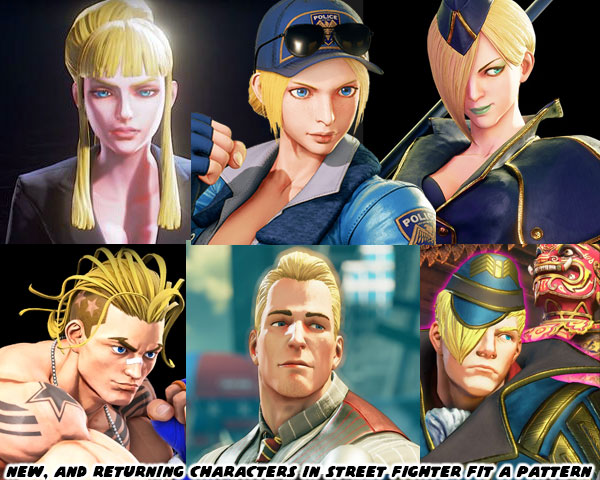
The global community saw every slot taken by mostly white characters as a missed opportunity. Could there have been a native, Black, brown, Asian, or female character in that spot instead? When Luke was unveiled as the new star of the franchise, Capcom got a lot of heat online. I mention some of the responses on my original take on Luke in Street Fighter V. There was nothing I could have said better  about the disappointment of seeing another blonde-haired, blue-eyed, white character get set to carry the franchise. It had been tried before with Alex in Street Fighter III, and Abel in Street Fighter IV. By the time Luke was announced it was 21 consecutive years of not letting any other minority sit in the driver’s seat. Just for the record Street Fighter V: Arcade Edition had 12 blonde, and light-skinned characters (13 if you count Rainbow Mika).
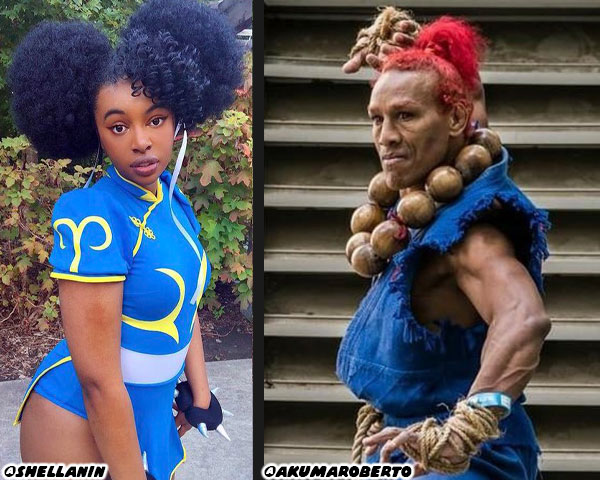
The amount of native, Black, brown, and minority Street Fighter fans the world over had never been bigger. They were gaining momentum in cartoons, and comics, in the pop culture convention circuit, in the cosplay community, as well as in gaming tournaments. People had followed the series since the original was released. I remember playing with oversized foam buttons in the arcade way back in 1987. Some of these Gen-X players raised their own children on the franchise, and a few had even become grandparents. That’s right! There were third-generation Street Fighter fans being introduced to the series, and many had never even seen an arcade cabinet to begin with! It’s not hard to imagine that the millions of fans around the world were feeling left out of the conversation. Following the pushback on Luke, the leaked lineup for Street Fighter 6 was like night, and day. The new game seems to have five returning blonde, and light skinned characters. More important; it adds zero new ones. There are eight women from around the world, and five of which are brand new characters.
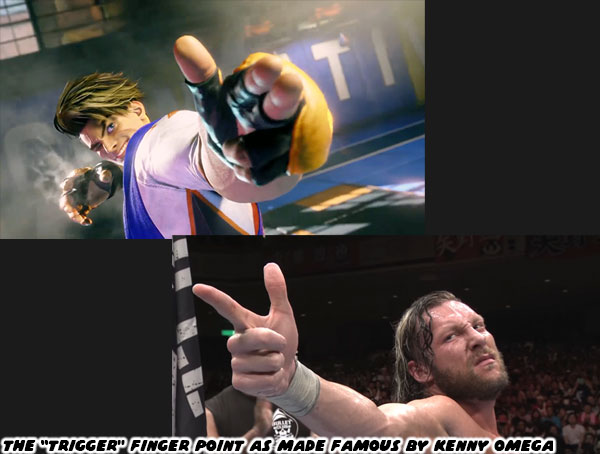
Luke is still central to the plot, but his appearance has been altered somewhat. We get an entirely new take on the young striker in the SF6 trailer. We see Luke punching a heavy bag in the Metro City Gym. He strikes a familiar pose before he smashes the bag with his hardest strike. Wrestling fans would note his pose appears like Kenny Omega's "V-Trigger." Omega is a huge gaming fan, and pro wrestler. He played Cody in the Street Fighter V: Arcade Edition trailer. They gym itself appears to be the very same one that Cody, and Guy were training in at the start of Final Fight more than 30 years ago.
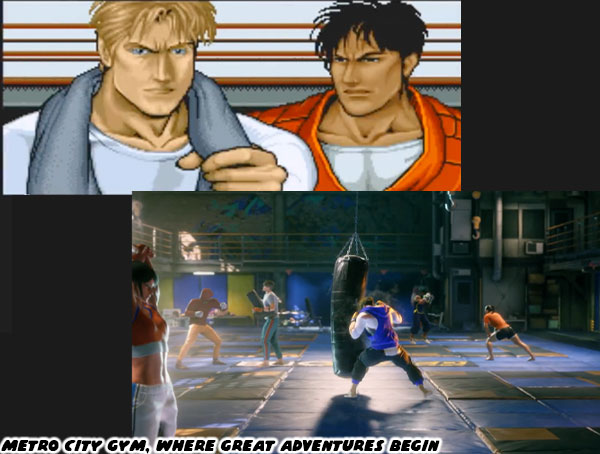
Final Fight was originally dubbed Street Fighter '89. Some of the team that created the original SF had left Capcom to join SNK. They would go on to develop the Fatal Fury, Art of Fighting, and King of Fighters franchises. The remaining members at Capcom decided to capitalize on the popularity of Double Dragon, and replace Ken, and Ryu with Cody, and Guy respectively. The new game would still feature lots of fighting, but a bigger narrative to go along with it. Arcade owners, and studio heads asked to change the title, and work on a proper SF sequel. Thankfully they did, but many long-time fans were left wondering what if the SF series had gone down the path of an open world brawler. Street Fighter 6 actually seems to be a return to that idea. At least parts of it do. The new leads are Luke, and Jamie, recreating the partnership of a white guy brawler, and lightning quick Asian martial artist. For the most part Luke seems much more approachable in his SF6 makeover. Let’s take a look at how he changed.
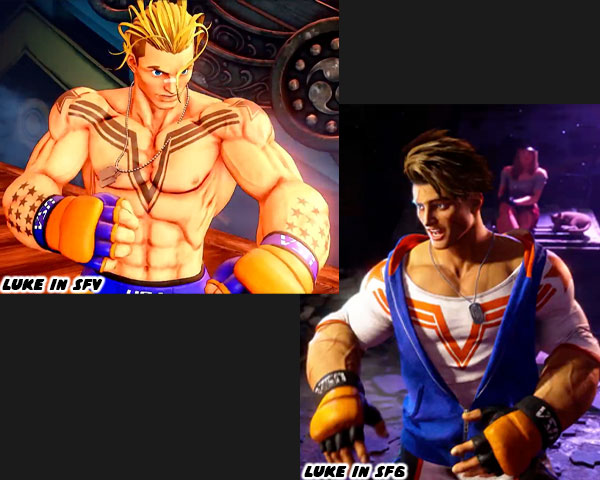
Luke’s frame, and build have changed considerably. I always believed that the 3D models featured in SF IV, and V looked too bulky. When every character was hyper-muscular, then none of them really stood out. It was one of the directions that Mr. Ono had supposedly insisted on. If you look at Luke you will notice that his shoulders are not as protruded as before. His hair is not as stringy, and the stars shaved into the sides of his head have been removed. The star tattoos on his forearms have been replaced with scars. The wing tattoo across his chest, and back, are gone, and now represented by a tee shirt instead. I had commented previously that solid black tattoos like these were being appropriated by white nationalists in the USA. It would have been possible for far-right groups to hold up this character as an example of true patriotism. I’m glad that Capcom had the sense to eliminate most of the markings.
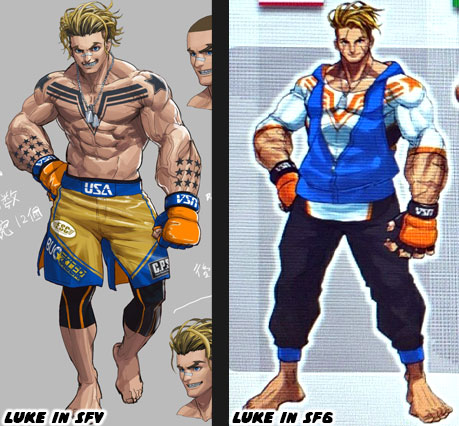
Luke had a bandage across his nose previously. This was removed, and replaced with a long scar running over the right side of his face, from the forehead, down to his cheek. You could say that he's not a pretty boy any more. His boxing trunks have given way to training pants. He still looks like an MMA practitioner, but no longer a poster boy for white nationalism. The one thing that didn’t change, and I think is his stand-out feature are his massive forearms, and fists. Exaggerated muscles, oversized hands, and feet had been used in Street Fighter Zero / Alpha in 1995 to convey the adolescent cast. Luke’s forearms are obscenely huge by comparison! He has the biggest forearms in the game, proportionally to his height. They are in fact bigger than his biceps.
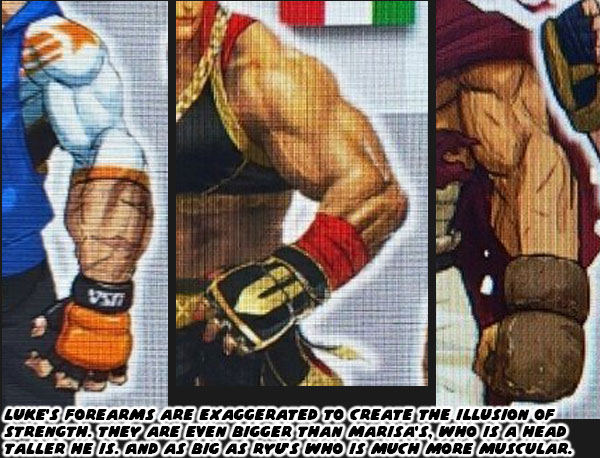
This is a cartoon quality that I think works well in the lineup. Characters are not as hyper-muscled as before. They still appear strong, but are nowhere near as bulky as they had been in the past decade. There are more pronounced differences in height, weight, and build. Their bodies were closer to the proportions used in Street Fighter III. In fact I did not see any comedic “fatties” or odd-colored characters in the leaked lineup. I’m willing to bet that the team working on Luke gave him intentionally big forearms, and fists as a nod to Popeye. This would help make him appear as one of the most powerful punchers in the game, even if he wasn’t the tallest.
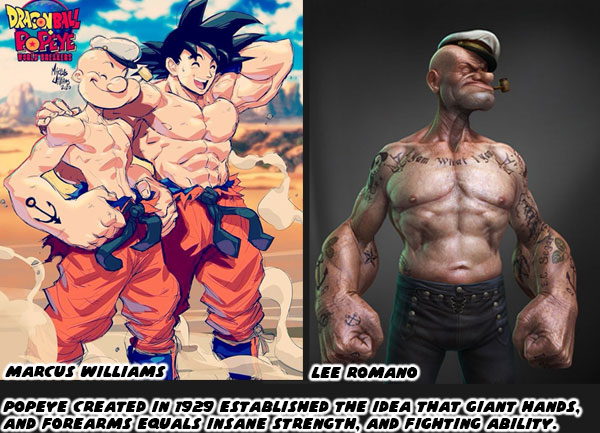
In case you don’t know Popeye was first seen in the Thimble Theater comic strip in 1929. He was the original cartoon brawler, and capable of superhuman feats almost a decade before the creation of Superman. Most comic, and cartoon fans would agree that Popeye was technically the first superhero. If indeed this influenced the changes to Luke then I appreciate the effort. Much more seems to be going into the development of the SF6 lineup, than the previous two games. Although the rest of the cast has not been finalized, let alone announced, I will be discussing them over the next few weeks. I hope to see you back for those entries. For now I’d like to know your take on Luke. What do you think about this character as the face of SF6? Would you like to see more representation in the game? Is this a bad idea? Let me know your takes in the comments section. If you would like to sponsor me please visit my Patreon page and consider donating each month, even as little as $1 would help make better blogs and even podcasts!
follow the Street Writer on Patreon!

Friday, August 21, 2015

How fight culture became fighting game history, part 23

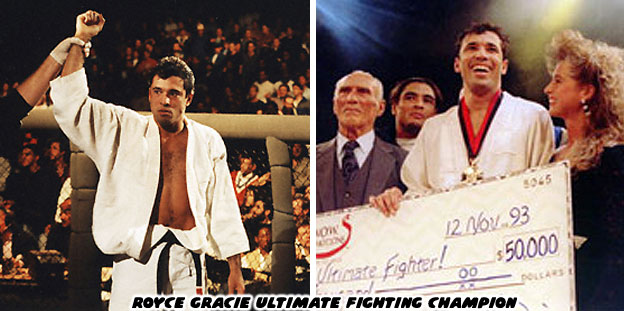
In the early '90s the various fight communities had debated about which style was the best. Each assumed that their own school or method was superior. Some business savvy people, including Rorion Gracie got together and formed a pay-per-view event called the Ultimate Fighting Championship. They meant the tournament-style format to be a one-time contest to determine which martial art was the best. The first tournament had few rules, no time limit, no weight classes and the winner of each match would advance to the next fight until there was only one man standing. Royce Gracie was selected to represent the family. Royce went on to quickly dispatch a boxer, shoot fighter and savage / karate expert before taking the title of Ultimate Fighter and a $50,000 payout.


The take from the PPV was so great that the creators began to think that there might be a market for this type of show. The audience rose exponentially for the subsequent UFC fights. Royce Gracie won three of the first four battles. He could not finish the 3rd UFC fight because he was too exhausted after battling Kimo Leopoldo. Otherwise he demonstrated the superiority of Brazilian Ju-Jitsu when compared to all the other fight forms and fighters. He went through his opponents in rapid succession with most fights lasting less than a minute. The BJJ system was insanely efficient and he got to demonstrate it again and again to the millions of people watching on television. It did not matter if he was fighting men bigger or stronger than he was, just like his father he made the most out of technique rather than brute force.

Even nonbelievers were converted as they watched Royce dispatch with fighters from different backgrounds year after year. The Gracie schools took off in popularity and expanded all over North America and the world. Before too long the UFC-style of fighting had become part of the mainstream consciousness. It was apparent when Ren and Stimpy creator John Kricfalusi used the staple "ground and pound" system in a battle between Yogi Bear and Ranger Smith in the animated short "Boo Boo Runs Wild."


Students of the BJJ school, and not solely Gracie family members began winning tournaments the world over. By the end of the '90s and the start of the new millennia the system had garnered a tremendous reputation. Fighters in the UFC, Pride, and other promotions were beginning to favor BJJ practitioners. The promotions themselves wanted to make sure that they kept themselves closely aligned with the Gracies so that the name could help guarantee viewers. Whenever a Gracie battled they wanted certain stipulations on the matches so that any advantages might be evened out for a competitor. The larger promotions did not want to risk losing the biggest names in the game so they conceded to most of their demands.

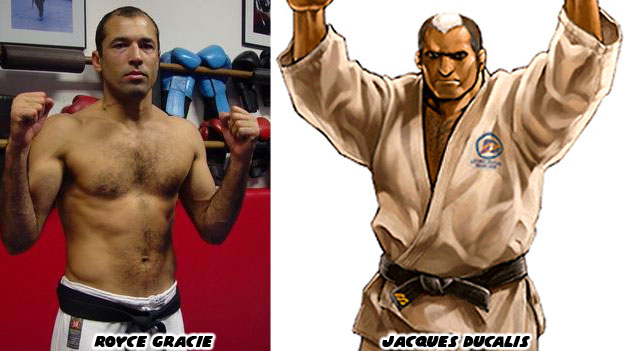
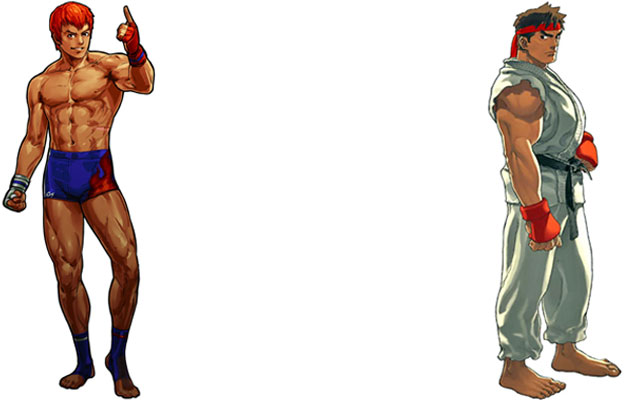
In true heroic tradition a caricature of Royce would be adapted for fighting games. This time the country bypassed the manga and animé series and went right to video games. SNK was fairly certain that by now the entire world was familiar with the legend of Royce and the contribution of Ju-jitsu to the fight universe. To prevent any similarities with persons living or dead the studio changed up some details for their character in the game Buriki-One. The Judo expert Jacques Ducalis was French and not Brazilian for one, but he also had a birthmark which discolored his hair, it was just enough to keep the Gracie family out of court but also appease gamers that followed real-world fighters.


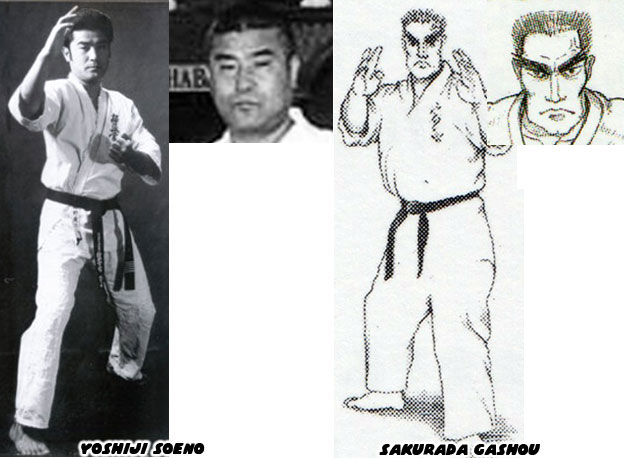
However Jacques was not the poster boy for Buriki-One. Nor was "Mr. Karate II" Ryo Sakazaki the star. Ryo had made his debut in the Art of Fighting and was considered a Yoshiji Soeno-type character. His father Takuma Sakazaki was the original Mr. Karate and modeled after Mas Oyama. In less than a decade since Street Fighter II and the Art of Fighting had been released both karate and even jujitsu had fallen out of favor. The world (or at the very least the Japanese) had embraced a new fighting hero. The star of Buriki-One was a flashy Japanese striker named Tendo Gai, the person he was based on had accomplished a tremendous amount in a short span of time. The next blog will look at "the Gracie Hunter" Kasushi Sakuraba. As always if you enjoyed this blog and would like to sponsor me please visit my Patreon page and consider donating each month, even as little as $1 would help make better blogs and even podcasts!

Friday, August 14, 2015

How fight culture became fighting game history, part 20

Great fights made martial artists legends, but only if there were witnesses. Thanks to the advent of film and video the modern fighters had the luxury of being very well paid for their efforts. Cable television deals and prime time programming meant that audiences could enjoy a steady diet of violence and adrenaline from the comfort of their own homes. Unfortunately the ease of access meant that the spectacle once provided by underground matches became commonplace. Even if two fighters were great they were still judged by points, a system, a set of rules. The true contest of man-vs-man, no rules and no holds barred would never be aired. The fights that were settled in the back alleys and in secretive dojos were never recorded. Finding the real legends was becoming harder and harder in the era of film.


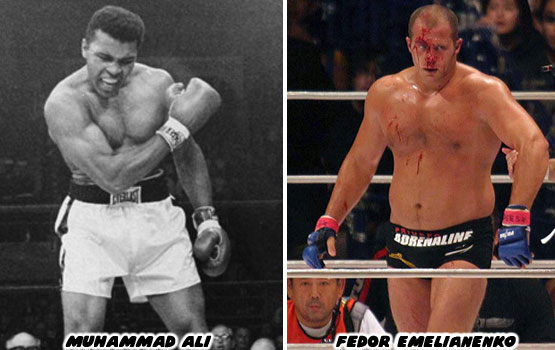
When the fighters were exposed under the bright lights they either rose to the occasion or withered away. The downside was that when they made a mistake, when they fell, the witnesses moved onto the next fighter. It did not matter if the person that had made the mistake was the better overall fighter. A defeat was a defeat. These fans did not always acknowledge that they had witnessed an era of greatness. The fighters that were once world champions, dominating ones at that, were like modern gladiators. Adored by the public when they won and discarded once defeated. Muhammad Ali and Fedor Emelianenko could be considered two of the best heavyweight fighters that ever lived. Their battles were not always easy, yet both managed to grasp victory from the jaws of defeat time and time again. Both men had also beaten some amazing fighters before they had even stepped into the spotlight. Some were remembered but most faded into history. Time eventually caught up with Ali and Fedor. Before they knew it the next champion had arrived, the kings were dethroned and left without a kingdom.

The key to immortality was elusive for a fighter especially one in the public eye. Only those that retired undefeated or died at a young age seemed to reach mythical status. The opponents that the legends defeated were like world champions that never sought fame or glory. The fights that they had were passed down by word of mouth because there were no cameras, and sometimes not even witnesses. Such was the case for young Bruce Lee. The young martial artist had been in plenty of fights during his lifetime, the majority on the street. The martial artist was eager to expose traditional Eastern fighting arts and philosophies to the West. This raised the ire of classical masters of the fighting arts. They forbade him from teaching non-Chinese the fighting styles. When Lee refused the elders sent a young master to beat him into submission. That was how the legend went. Unfortunately the circumstances surrounding the fight were nebulous because of the inconsistency of witnesses.


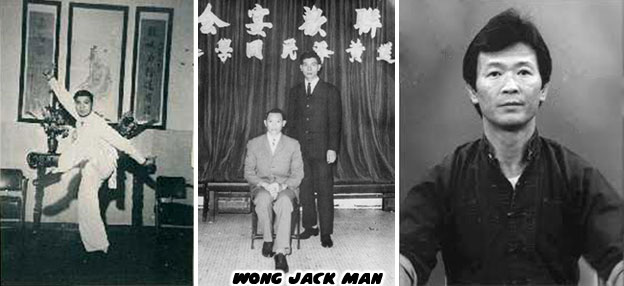
Wong Jack Man was the fighter that was sent to battle Lee. It was said that the older teachers were mad at Lee, not for teaching outsiders, but for bragging about how ineffective the fighting styles were. They wanted to have a contest with rules and regulations so that neither man got seriously hurt and settle the debate. They knew that in ancient China a fight to the death may have been permissible but in the modern world, especially in the US, there would be consequences for these actions. According to some witnesses Lee refused to fight under the limit of rules. Either everything was fair game or nothing was. Eventually they agreed to more lax rules and from the get-go the witnesses agreed that Lee was the more aggressive fighter. To some people Lee was fighting dirty, attacking the eyes and throat of Man throughout the fight. Lee was described as doing everything in his power to finish the fight as fast as he could. Man did everything he could to defend himself. The fight was not a quick battle as Lee later boasted but seemed to drag on. After 20 or 25 minutes Lee was declared the winner although neither man managed to knock the other down or cause serious injury. Different accounts of the contest were reprinted in local Chinese newspapers and each one went more favorably to Lee. Man told his account of the fight and challenged Lee to a public battle and settle the argument once again. Lee would decline.

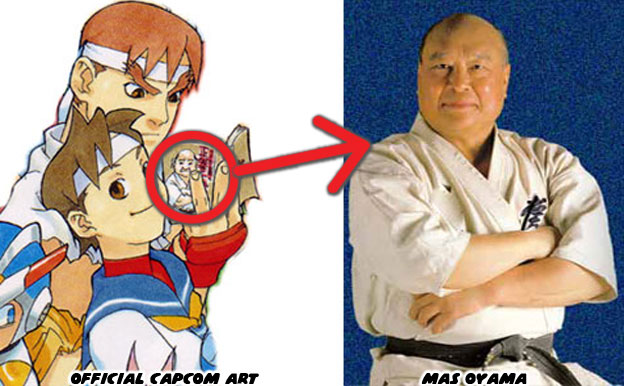
The legend of Bruce Lee grew as he pursued better fighting and training techniques. The exposure he gained from the Black Hornet television series and later his film series made him an icon. Most people that would consider themselves fans of Lee might have never heard of Wong Jack Man. Wong later said that the fight had taken place because both men were young, prideful and headstrong. If anything if the truths from their encounter were revealed it would only serve to hurt their reputations more than help. Some facts managed to disappear through time much to the favor of one fighter. Fiction was malleable, easier to work with than historical accuracy. A decade and a half before Lee rose to prominence a different martial artist was the hero of millions. Mas Oyama, born Choi Bae Dal, was called the "God Hand" of karate. He could beat most fighters with a single punch. He was good but lacked control. He killed a man in a bar fight after the person pulled a knife on him. He realized that he had the ability to disarm the man but let his temper get the best of him and chose to strike instead.


Oyama became a hermit and lived in the mountains. Training his mind and body until he thought he had reached his peak. Then he set out trying to prove himself. He went dojo to dojo and challenged the masters of each school. He beat each one handily and his legend grew. Then he set out to prove that his style was the best. He traveled to the US, China and Thailand to try himself against other masters. Boxers, wrestlers and other fighters lined up for the challenge. Most fights were settled in private, away from the spotlight and the law. Imagine what would happen if a fighter today went to every martial arts school in the city and beat up all the teachers. Chances are that the police would be waiting for him in the next town. Fighters enjoyed their reputations and didn't always want to be proven wrong in their own school, let alone their own country.


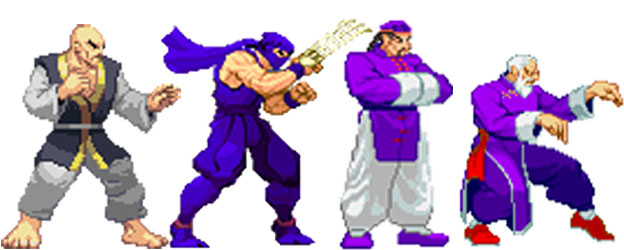
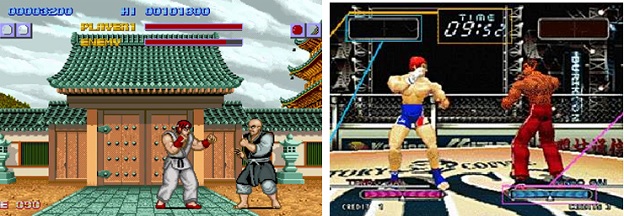
The story of Oyama in turn went on to influence the development of Street Fighter. Ryu played the role of Oyama. The opponents in the original game mirrored the types of people that Oyama faced. Karate, boxing, kung-fu and muay thai were some forms represented. Oyama beat the masters of each style. Only when he had defeated the best Muay Thai fighter, a mysterious person nicknamed the Black Cobra, did he consider his journey complete. There were no photos of the 1954 encounter even though the battle was highly publicized affair that took place in Lumpinee Stadium in Bangkok.


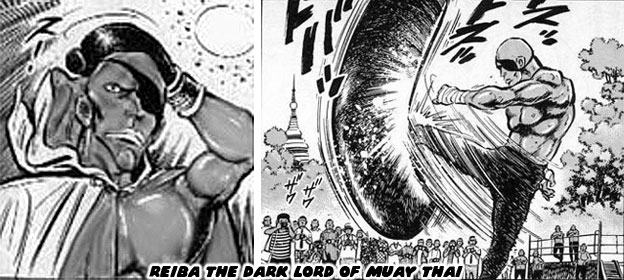
Oyama's understudy Yoshiji Soeno also traveled to Thailand, a decade later to prove which form of fighting was the best. It was reported that the one-eyed Thai fighter Reiba was as good if not better than Black Cobra. Soeno never got a chance to battle Reiba as a Triad or mafia hitman gunned him down before the battle. It did not matter however, he was such an interesting character that his myth managed to live on.

While the actions and reputation of Oyama were the basis for the Street Fighter mythos we should be clear that the look and mannerisms of Ryu were more closely aligned with Soeno. From Street Fighter II to today Ryu has had a very similar face. His eyebrows were large and bushy and his expression was very stern. The similarities between Soeno and Ryu were more than skin deep. There were two competing designs for the updated Ryu. One version had the character wearing leather and armor similar to Kenshiro from Hokuto No Ken / Fist of the North Star. The other version, named Sakurada Gashou had him in a much more traditional uniform. Note that in this version the character did not have his trademark headband.


Soeno went on to learn greatly from various different fighting forms. He studied Judo first but then excelled at Oyama's Kyokushin karate. He also picked up techniques from Goju-Ryu ("Hard Soft Style) which had older Okinawan roots, Shotokan Karate and Muay Thai. Soeno eventually broke his ties with Kyokushin to develop Shidokan Karate in 1980, which translated to"The group that lives and trains in the way of the samurai warrior." Shidokan practitioners were very good at striking, but they were also good at grappling and throwing opponents. They were well-rounded athletes and Soeno was very much like Ryu in that he could literally do it all. There were actually older schools called Shidokan, those with Okinawan roots as well as the more "mainstream" Shorin-Ryu form of Karate. Soeno founded over two dozen schools and still oversees his organization.

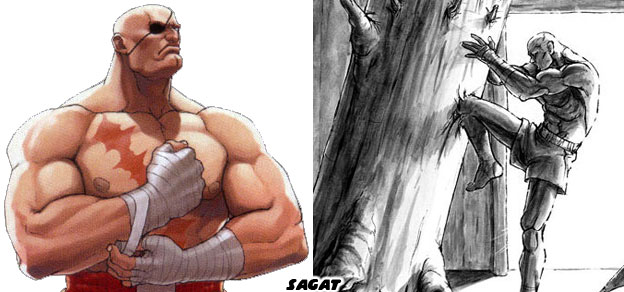
The legend of Oyama and Soeno became the backbone of the manga and animé series Karate Baka Ichidai. The characters featured within were adapted for Street Fighter as well. Sagat replaced Reiba in the game. Interestingly enough the character was shot in the Ryu Final manga by some poachers instead of triad members. Sagat survived the encounter so that audiences could look forward to seeing the seven-foot monster turn up again and again in the game series.


The competition of different fighting styles by Oyama and Soeno could be considered the roots of modern MMA tournaments. Around the same time a similar trend was happening in the Americas. The 20th century would see an explosion in the popularity of martial arts not seen since ancient times. It turned out that the same mass media that was shining a light on the last traditional martial arts masters was also creating a new generation of legends. Film, television and newspapers would help shape the careers of some of the most famous and infamous characters in the fight game. The next blog will explore these pioneers. As always if you enjoyed this blog and would like to sponsor me please visit my Patreon page and consider donating each month, even as little as $1 would help make better blogs and even podcasts!

Wednesday, August 12, 2015

How fight culture became fighting game history, part 19

Successful fighting games had a lot going for them, not the least of which were memorable characters. The best games used the myths surrounding historical fighters and turned those people into playable characters. The best fighting games played like a highlight reel, where only the best possible opponents were faced. Rivals had to be persons of merit. If it were a boxing game then the player would have to work up the ranks until they got a title shot against the world champ. In martial arts games all the rivals were masters of a particular art. The goal for most fighting games was not simply to become a world champion but to be the best fighter that had ever lived against the best styles ever invented. In the real world reaching the top of the mountain was impermanent, transitory. There was always somebody better waiting in the wings. Records did not matter compared to the quality of fighters defeated. Even an undefeated fighter would have been dethroned by age. Legends were immortal. The name seemed to live on forever. The element often missed in the games was the backstory, the opponents that had to be overcome in order for the playable characters to become legend. But how could the fighters go from beginner to master without boring the player?

Design cues for the main characters had to tell a story. The clothes the characters wore were not always clean uniforms from a school or dojo. Some were humble, shoeless, giving up their worldly possessions in pursuit of the battle. Their uniforms were worn out, messy with torn sleeves. Others wore street clothes, jeans and heavy boots. They fought dirty, with knives and chains. Players could tell that these characters were not new to the fight game. But what about the fighters that represented a new movement, one which did not represent one particular school or form? Was it possible to capture the spirit of a modern fighting master without betraying the legacy that the martial arts and pop culture had established?


The two biggest fighting game publishers, Capcom and SNK tried to answer that in the late '90s. Both studios had grown tremendously since they helped establish the fighting game revolution at the start of the decade. Street Fighter II, Fatal Fury and the Art of Fighting were released between 1991 and 1992. The groundbreaking fighting games introduced new play mechanics to audiences and a library of memorable characters. By the end of that same decade the traditional martial arts master featured in those games had become tired and predictable. The genre needed some new ideas. What the studios did was look at what had happened in the fight game and found a way to incorporate those changes into their own universes.

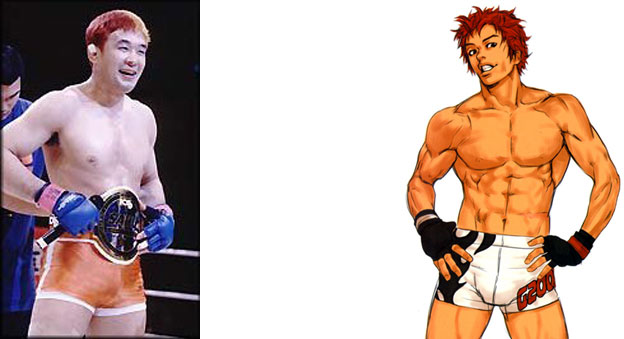
The era of the "Mixed Martial Artist" or MMA fighter had begun and fighting games needed to reflect that change. It took almost a decade for the developers to catch up to those changes. Ryu, the karate inspired star of the Street Fighter series was an homage to the traditional martial arts heroes that the developers at Capcom had grown up with. SNK tried to take a step back away from the archetype in the game Buriki-One. The title from 1999 introduced a new main character named Gai Tendo. He did not seem to have any particular style or affiliation but was adept at striking and grappling. Gai reflected the new breed of MMA fighter that had become so wildly popular in Japan. They were energetic, stylish and exciting to watch. Unfortunately the game did not reflect that sentiment. It was slow and cumbersome. It also did not receive wide exposure. The arcade scene had been dwindling in the US for some time. The game itself suffered from dismal 3D graphics and odd controls, which were the major features of the best fighting games. Despite those things Gai stuck around and managed to return as a playable character in King of Fighters XI.


The introduction of Buriki-One went hand-in-hand with the rise in popularity of MMA tournaments. The K-1 series in Japan started in 1993 was labeled for its karate, kickboxing and kung-fu roots. The tournament was descended from a different format. Seidokaikan, was a full-contact knock down karate format that incorporated rules from professional kickboxing, including uses of knees and throws, until it became the K-1 tournament that people knew. The PRIDE Fighting Championships started in 1997 but closed a few years later. Both K-1 and Pride had huge followings overseas and fighters actually flew in from around the world, including North and South America in order to compete. Audiences appreciated the diversity of fighters and treated them with tremendous respect. In the US the tournament scene did not take off as quickly and fighters were not well regarded. The Ultimate Fighting Championship or UFC series also began in 1993 but did not have the rules or weight class divisions that it currently had. Gai Tendo was reflective of the Japanese MMA tournaments. He was inserted into the King of Fighters universe to represent the modern fighting legends, including people like Kazushi Sakuraba. These modern fighters were more flashy than Mas Oyama or Yoshiji Soeno were when they inspired the legend of Ryu and the mythos of Street Fighter.


The MMA star seemed to rise out of nowhere and captured the hearts of millions of fans. The legend of Sakuraba had actually been centuries in the making, only many people didn't know it. This series will explore the influence of the grappling arts on fighting games and the community. I hope you return for the next entry! As always if you enjoyed this blog and would like to sponsor me please visit my Patreon page and consider donating each month, even as little as $1 would help make better blogs and even podcasts!