Showing posts with label ufc. Show all posts

Friday, August 21, 2015

How fight culture became fighting game history, part 23

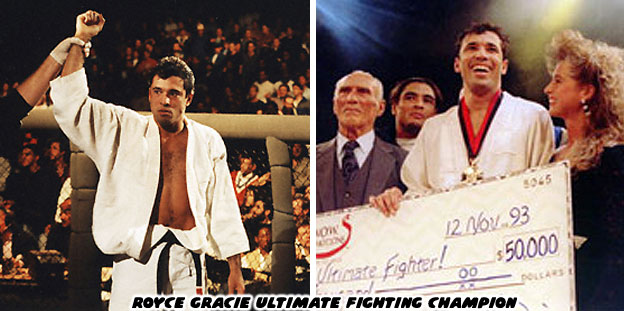
In the early '90s the various fight communities had debated about which style was the best. Each assumed that their own school or method was superior. Some business savvy people, including Rorion Gracie got together and formed a pay-per-view event called the Ultimate Fighting Championship. They meant the tournament-style format to be a one-time contest to determine which martial art was the best. The first tournament had few rules, no time limit, no weight classes and the winner of each match would advance to the next fight until there was only one man standing. Royce Gracie was selected to represent the family. Royce went on to quickly dispatch a boxer, shoot fighter and savage / karate expert before taking the title of Ultimate Fighter and a $50,000 payout.


The take from the PPV was so great that the creators began to think that there might be a market for this type of show. The audience rose exponentially for the subsequent UFC fights. Royce Gracie won three of the first four battles. He could not finish the 3rd UFC fight because he was too exhausted after battling Kimo Leopoldo. Otherwise he demonstrated the superiority of Brazilian Ju-Jitsu when compared to all the other fight forms and fighters. He went through his opponents in rapid succession with most fights lasting less than a minute. The BJJ system was insanely efficient and he got to demonstrate it again and again to the millions of people watching on television. It did not matter if he was fighting men bigger or stronger than he was, just like his father he made the most out of technique rather than brute force.

Even nonbelievers were converted as they watched Royce dispatch with fighters from different backgrounds year after year. The Gracie schools took off in popularity and expanded all over North America and the world. Before too long the UFC-style of fighting had become part of the mainstream consciousness. It was apparent when Ren and Stimpy creator John Kricfalusi used the staple "ground and pound" system in a battle between Yogi Bear and Ranger Smith in the animated short "Boo Boo Runs Wild."


Students of the BJJ school, and not solely Gracie family members began winning tournaments the world over. By the end of the '90s and the start of the new millennia the system had garnered a tremendous reputation. Fighters in the UFC, Pride, and other promotions were beginning to favor BJJ practitioners. The promotions themselves wanted to make sure that they kept themselves closely aligned with the Gracies so that the name could help guarantee viewers. Whenever a Gracie battled they wanted certain stipulations on the matches so that any advantages might be evened out for a competitor. The larger promotions did not want to risk losing the biggest names in the game so they conceded to most of their demands.

In true heroic tradition a caricature of Royce would be adapted for fighting games. This time the country bypassed the manga and animé series and went right to video games. SNK was fairly certain that by now the entire world was familiar with the legend of Royce and the contribution of Ju-jitsu to the fight universe. To prevent any similarities with persons living or dead the studio changed up some details for their character in the game Buriki-One. The Judo expert Jacques Ducalis was French and not Brazilian for one, but he also had a birthmark which discolored his hair, it was just enough to keep the Gracie family out of court but also appease gamers that followed real-world fighters.
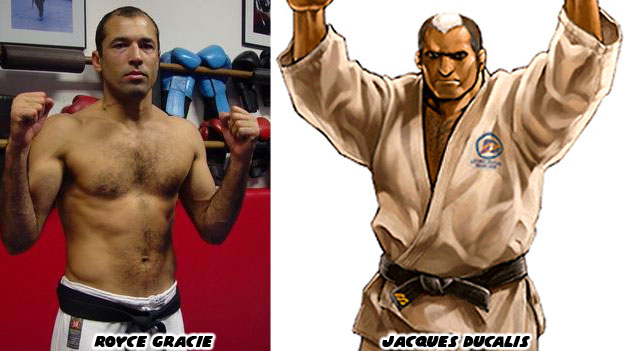

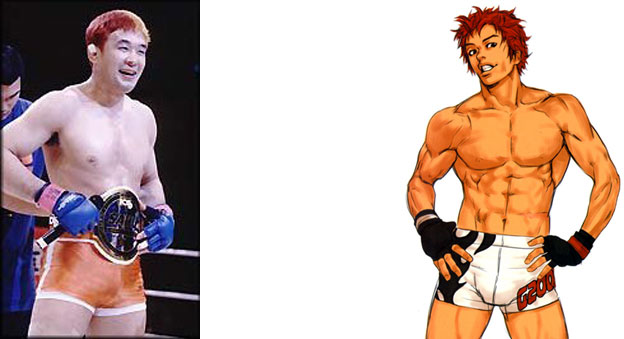
However Jacques was not the poster boy for Buriki-One. Nor was "Mr. Karate II" Ryo Sakazaki the star. Ryo had made his debut in the Art of Fighting and was considered a Yoshiji Soeno-type character. His father Takuma Sakazaki was the original Mr. Karate and modeled after Mas Oyama. In less than a decade since Street Fighter II and the Art of Fighting had been released both karate and even jujitsu had fallen out of favor. The world (or at the very least the Japanese) had embraced a new fighting hero. The star of Buriki-One was a flashy Japanese striker named Tendo Gai, the person he was based on had accomplished a tremendous amount in a short span of time. The next blog will look at "the Gracie Hunter" Kasushi Sakuraba. As always if you enjoyed this blog and would like to sponsor me please visit my Patreon page and consider donating each month, even as little as $1 would help make better blogs and even podcasts!
Wednesday, August 12, 2015

How fight culture became fighting game history, part 19

Successful fighting games had a lot going for them, not the least of which were memorable characters. The best games used the myths surrounding historical fighters and turned those people into playable characters. The best fighting games played like a highlight reel, where only the best possible opponents were faced. Rivals had to be persons of merit. If it were a boxing game then the player would have to work up the ranks until they got a title shot against the world champ. In martial arts games all the rivals were masters of a particular art. The goal for most fighting games was not simply to become a world champion but to be the best fighter that had ever lived against the best styles ever invented. In the real world reaching the top of the mountain was impermanent, transitory. There was always somebody better waiting in the wings. Records did not matter compared to the quality of fighters defeated. Even an undefeated fighter would have been dethroned by age. Legends were immortal. The name seemed to live on forever. The element often missed in the games was the backstory, the opponents that had to be overcome in order for the playable characters to become legend. But how could the fighters go from beginner to master without boring the player?

Design cues for the main characters had to tell a story. The clothes the characters wore were not always clean uniforms from a school or dojo. Some were humble, shoeless, giving up their worldly possessions in pursuit of the battle. Their uniforms were worn out, messy with torn sleeves. Others wore street clothes, jeans and heavy boots. They fought dirty, with knives and chains. Players could tell that these characters were not new to the fight game. But what about the fighters that represented a new movement, one which did not represent one particular school or form? Was it possible to capture the spirit of a modern fighting master without betraying the legacy that the martial arts and pop culture had established?


The two biggest fighting game publishers, Capcom and SNK tried to answer that in the late '90s. Both studios had grown tremendously since they helped establish the fighting game revolution at the start of the decade. Street Fighter II, Fatal Fury and the Art of Fighting were released between 1991 and 1992. The groundbreaking fighting games introduced new play mechanics to audiences and a library of memorable characters. By the end of that same decade the traditional martial arts master featured in those games had become tired and predictable. The genre needed some new ideas. What the studios did was look at what had happened in the fight game and found a way to incorporate those changes into their own universes.

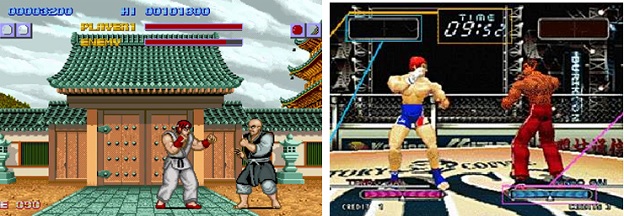
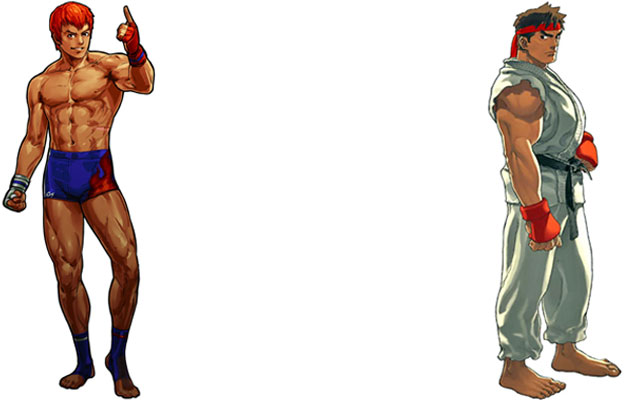
The era of the "Mixed Martial Artist" or MMA fighter had begun and fighting games needed to reflect that change. It took almost a decade for the developers to catch up to those changes. Ryu, the karate inspired star of the Street Fighter series was an homage to the traditional martial arts heroes that the developers at Capcom had grown up with. SNK tried to take a step back away from the archetype in the game Buriki-One. The title from 1999 introduced a new main character named Gai Tendo. He did not seem to have any particular style or affiliation but was adept at striking and grappling. Gai reflected the new breed of MMA fighter that had become so wildly popular in Japan. They were energetic, stylish and exciting to watch. Unfortunately the game did not reflect that sentiment. It was slow and cumbersome. It also did not receive wide exposure. The arcade scene had been dwindling in the US for some time. The game itself suffered from dismal 3D graphics and odd controls, which were the major features of the best fighting games. Despite those things Gai stuck around and managed to return as a playable character in King of Fighters XI.


The introduction of Buriki-One went hand-in-hand with the rise in popularity of MMA tournaments. The K-1 series in Japan started in 1993 was labeled for its karate, kickboxing and kung-fu roots. The tournament was descended from a different format. Seidokaikan, was a full-contact knock down karate format that incorporated rules from professional kickboxing, including uses of knees and throws, until it became the K-1 tournament that people knew. The PRIDE Fighting Championships started in 1997 but closed a few years later. Both K-1 and Pride had huge followings overseas and fighters actually flew in from around the world, including North and South America in order to compete. Audiences appreciated the diversity of fighters and treated them with tremendous respect. In the US the tournament scene did not take off as quickly and fighters were not well regarded. The Ultimate Fighting Championship or UFC series also began in 1993 but did not have the rules or weight class divisions that it currently had. Gai Tendo was reflective of the Japanese MMA tournaments. He was inserted into the King of Fighters universe to represent the modern fighting legends, including people like Kazushi Sakuraba. These modern fighters were more flashy than Mas Oyama or Yoshiji Soeno were when they inspired the legend of Ryu and the mythos of Street Fighter.


The MMA star seemed to rise out of nowhere and captured the hearts of millions of fans. The legend of Sakuraba had actually been centuries in the making, only many people didn't know it. This series will explore the influence of the grappling arts on fighting games and the community. I hope you return for the next entry! As always if you enjoyed this blog and would like to sponsor me please visit my Patreon page and consider donating each month, even as little as $1 would help make better blogs and even podcasts!