Showing posts with label gai tendo. Show all posts

Monday, July 4, 2016

The legend of Blue Mary, or girls in fighting games, part 3

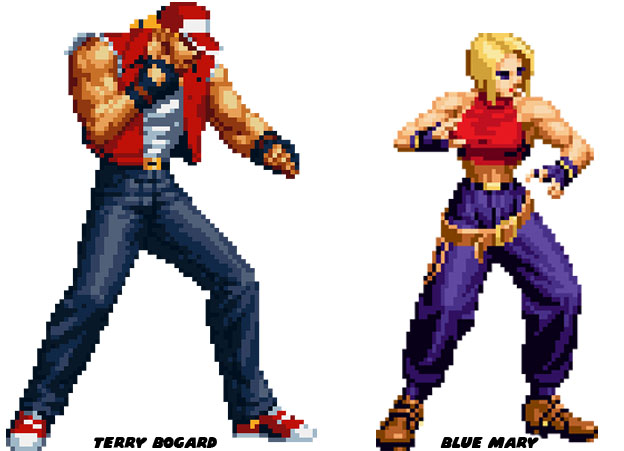
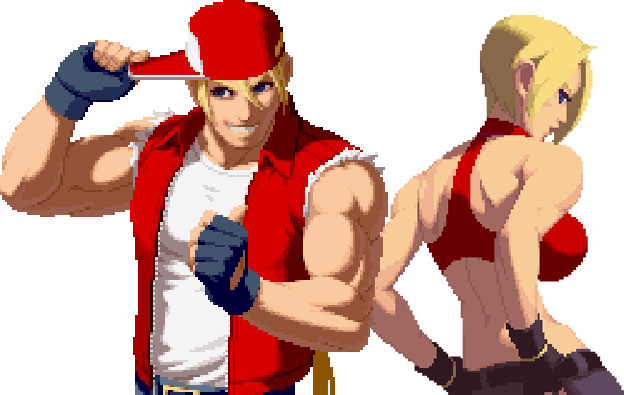
Fatal Fury had built a tremendous fan following in the '90s. The story, characters and fighting styles represented were very unique. SNK had done a great job of introducing characters from around the world and connected many of them to real martial arts. Even the characters that did not represent a particular style, like Terry Bogard, still fit into the universe. SNK was showing audiences that the modern masters of fighting did not have to dress up in robes or gi's in order to be legitimate threats. When the studio wanted to introduce a new female lead in the series they had a perfect template to pull from. Blue Mary had many design cues that were based on Terry. Put the two side-by-side and it's easy to see what I'm referring to. The red top, blue pants and gloves was only the beginning.


Notice how well defined Blue Mary's muscles were. Usually female characters in fighting games were slim. Some were voluptuous but none were presented muscular. Many of the early female characters in fighting games were Asian. Many Asian cultures (and many Western nations) did not consider women with big muscles to be attractive. The male stars in fighting games were always expected to have huge muscles. It made them look more believable as serious brawlers. The same rules applied to comic book heroes of course. Blue Mary changed all of that. As a female balance to Terry she maintained a certain level of athleticism and raw power. Her abs, shoulders and biceps were all well defined and much larger than the muscles on her female co-stars. This seemed acceptable on an "American" character. Her femininity remained, as did her large breasts, and to many players she remained attractive.
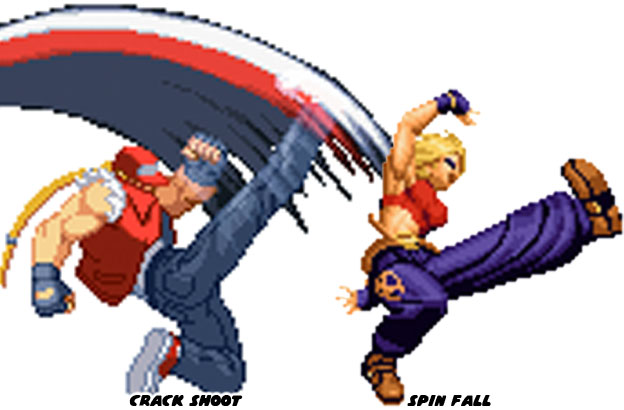

On a surface level Blue Mary had the same design cues as Terry. None of her moves, except for Spin Fall even remotely resembled the power moves of Terry. Blue Mary had far many different techniques going for her, not the least of which were having some of the first grapples, submission takedowns and strikes into grapples of any fighting game character. I consider Blair Dame from Street Fighter EX to be the first mixed martial arts character in a fighting game. She debuted in 1996, yet Blue Mary appeared one year earlier and had many similar techniques. So what gives? Blue Mary had moves that were more in line with combat Sambo, a Soviet-era form of fighting that gained exposure in freestyle and vale-tudo tournaments. These were the sorts of no-holds-barred contests that predated modern mixed martial arts tournaments. Sambo would be used by Russian soldiers to help subdue enemies in close quarters combat. There were many lightning quick strikes mixed with takedowns and painful joint lock techniques. The 3D fighting games would features these techniques on characters like Sergei Dragunov and Bayman from the respective Tekken and Dead or Alive series. It made sense that cops and soldiers would be masters of these techniques.
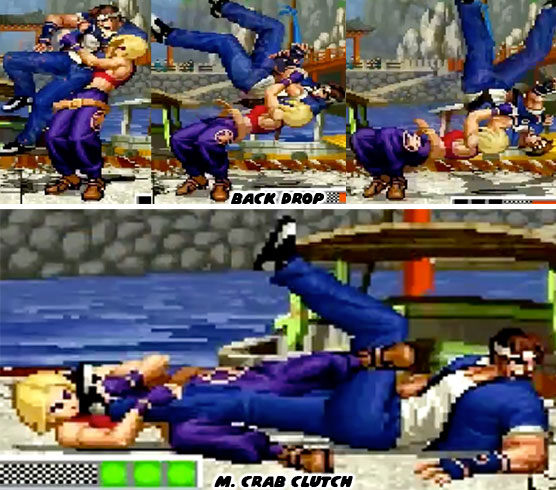

Blue Mary was a vicious grappler with amazing strength. She could hoist her opponents overhead and perform a Back Drop. It was an incredibly dangerous move made popular by the late . The move was banned in the WWE for being too risky. I could easily imagine Mary doing this to unsuspecting criminals. When she didn't go high with her attacks she knew how to shoot low for a takedown. The ankle lock called the M. Crab Clutch could snap a leg as easily as a chicken bone. These were only a few of her awesome moves. It made sense that Butch and her father had shared some of their Secret Service training with her. For opponents that were stand up fighters Mary had a way of breaking them down as well. She was equally fast and strong. She was able to cut into any defense and perform a rolling arm bar. This move would be known as the M. Spider. A variation of the leaping arm bar was given to Gai Tendo, the star of the Buriki One Tournament. His version was known as the Gai Spider. As great a character as Gai was just remember that Mary was doing some MMA moves many years earlier!
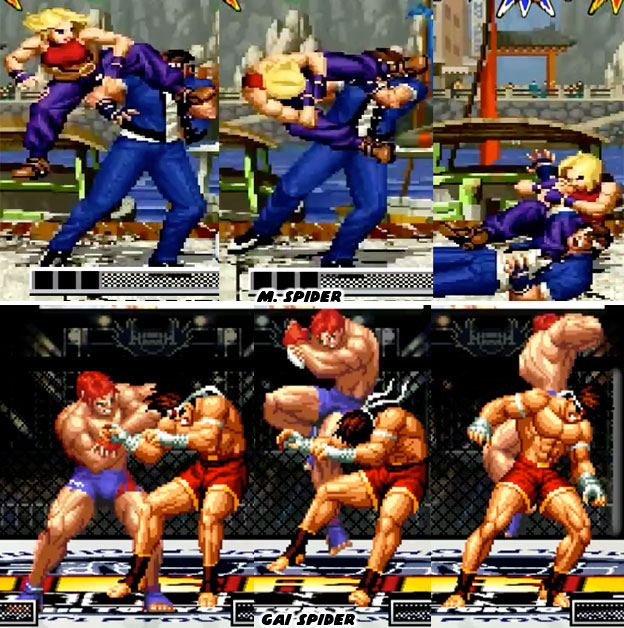
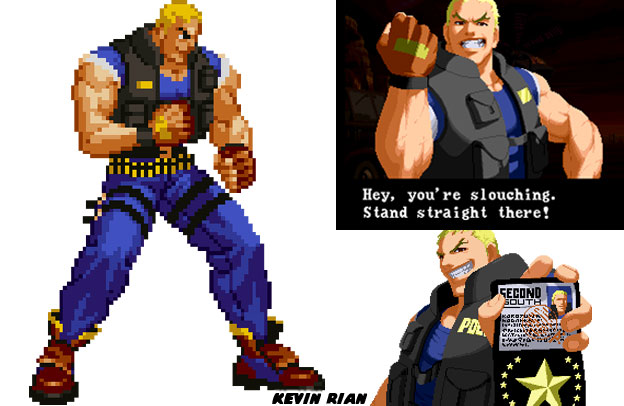
Blue Mary would grow in popularity over the years. Like some of her Fatal Fury co-stars she would eventually turn up in the King of Fighters series as well. Her moves and purpose filled a void that had been missing in the series. To be specific law enforcement officers weren't usually represented in fighting games, especially not in Japanese ones. There were heroes of all sorts but they were usually traditional martial arts masters. There were even military characters from time to time because audiences could accept them as dangerous fighters. Cops on the other hand didn't always have the reputation for being great martial artists. Chun-Li and Blue Mary certainly changed that perception while also serving as powerful female role-models. Blue Mary's distant relative appeared in Garou: Mark of the Wolves, a game from 1999. The game was set about a decade after the events of Fatal Fury 3. The new brawler was known as Kevin Rian, he was a cop, a representative of the Second South Town police force. His last name was mistranslated by the localization team as it was supposed to be Kevin Ryan. He was big with a few grappling moves and heavy hands. His design fit somewhere in between Ralf and Clark, the Ikari Warriors from the King of Fighters tournament crossed with Blue Mary. Kevin, like the other characters in Mark of the Wolves, reflected almost a decade of fantastic character designs. The studio had experimented with graphics, controls and aesthetics and was really hitting its peak by 2000.

From a physical standpoint Blue Mary had all of the same design elements that were originally applied to Terry Bogard. Many of these things were due to the Japanese trying to introduce a "cool" Western fighter into their franchise. It was mostly relying on stereotype, that white Americans had blonde hair, blue eyes, wore jeans and sneakers. The Japanese animé aesthetic paid off when combined with the trope. Mary was young, athletic, and confident. The same characteristics that made Terry appealing to the first generation of fans worked years later and would continue to work in future titles. Mary had staying power as did the better fighters from the Fatal Fury and Art of Fighting franchises. When variations of those characters turned up in Garou: Mark of the Wolves it worked extremely well.

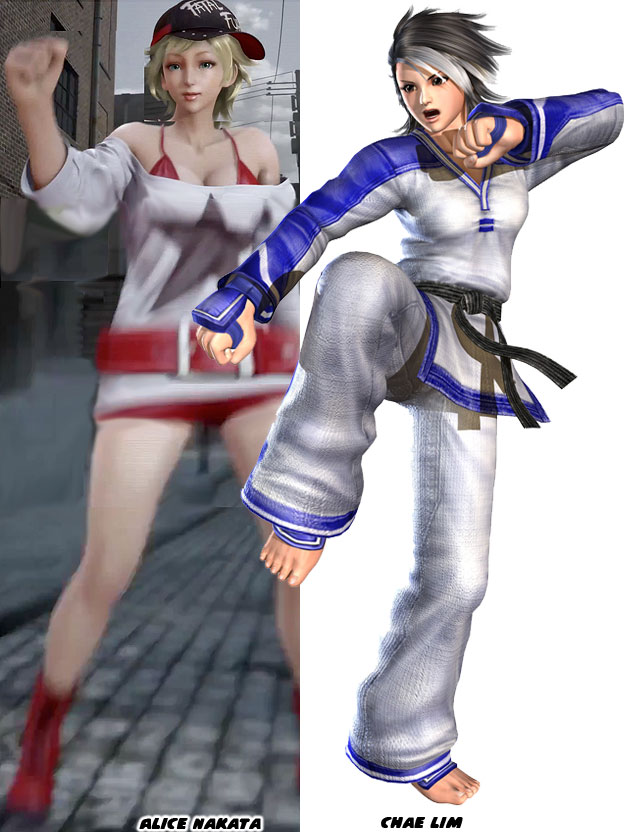
When variations of the look turned up in pachislot machines (a combination pachinko and slot machine popular in Japanese arcades) it still worked. Take a look at Alice Garnet Nakata, the idol character featured in the game. She was a sort of crude talking cheerleader that followed Terry around. Her look was planted in between the style of Terry and Mary. The familiar red, white and blue motif, the cap, the red heels instead of sneakers. Of course you can't miss the extra-wide belt. It's almost as if somebody at SNK had wondered out loud what would have happened if Terry and Mary had a daughter. What would she look like? Well the truth is a little bit backwards. In the planning stages of Fatal Fury 3 there was a new female character in the works called Alice Chrysler (the Japanese aren't the best at making up Western-sounding names). Alice was an understudy of TaeKwon-Do master Kim Kaphwan. She had an affinity for Terry Bogard and was designed to replace Mai Shiranui as the female lead. From a design standpoint she would have beaten Sakura as the younger girl version of the star by one whole year. SNK decided against the original Alice and went back to the drawing board. She got a little older, stronger and was working with different fighting forms and a new name, Mary Ryan. All great ideas however never really die. The studio revisited the understudy of Kim and a new character came out called Chae Lim. The scrappy "secret weapon" with short feathered hair would debut in the KOF Maximum Impact Tournament in 2004. Almost a decade later the studio revisited Alice for the pachislot machine. Her long ponytail gave way to short feathered hair in her makeover. In 2016 SNK would make her a formal character in the King of Fighters XIV.

Competition between SNK and Capcom meant that both studios were taking chances with character designs. In the early days the studios were influenced by action cinema and manga. The heroes of those first games were based on real martial artists and mythical fighters. In time the studios learned that fighting games did not have to be solely about burly men trading punches. They could be about cops, soldiers, gifted orphans, girls and women. If these people had a talent, a solid design and a reason to fight then audiences were willing to come along for the ride. Through the '90s SNK had made some of the biggest advances in diversity for the genre. When the studio decided that the King of Fighters should be about team play then it meant that the roster would have to be filled in with dozens of new faces. There was no way that they could all be men. The women they started with were already well known and all the new ones introduced, both good and evil, found a following. Blue Mary was near the top of the list. She was well regarded and many fans wanted to see if SNK planned any sort of resolution between her and Terry Bogard. It was the unspoken thing that fans had wondered about all fighting games. What sort of relationship did the main characters have and would the male and female stars of the games ever get together. Capcom fans from both sides of the Pacific wondered out loud if Ryu and Chun-Li were a couple. That was the case in the licensed Hong Kong comics and of course many fan pieces.


For SNK fans many wondered if Terry and Mary ever "hooked up." SNK and Capcom avoided the question for most of their characters. This was because when they designed them they didn't have romance in mind. Each and every fighter, male and female, was a stand-alone design. They did not need to have a relationship with any other character in order to be accepted. Kevin Rian and Mary Ryan may have been related but both looked and fought very differently from each other. Even if one character were introduced because of the success of a previous icon it didn't matter. Sakura and Sean for example were not Xerox copies of Ken and Ryu despite being labeled "Shotoclones." Each subsequent fighter from the biggest studios had to hold up to the designs in other titles. When Blue Mary and Sakura debuted they were a sort of balance to the male stars of the games. They had just enough design cues so that audiences knew where they came from, and also enough originality to them as to make them unique fighters. Yet that didn't stop fans from asking the question, especially between Terry and Mary. Terry after all was a lone wolf. His brother Andy had a relationship with the busty ninja Mai Shiranui but poor Terry was all alone. Then there was Mary, she lost her boyfriend and father and was living with a dog. If there was someone in South Town that needed a new relationship it would have been her. Only it didn't come to pass. At least not in the first decade of the Fatal Fury timeline. Terry was busy raising a surrogate son and Mary was busy with her career of keeping South Town from imploding. What SNK did do however was give fans a hint of closure.
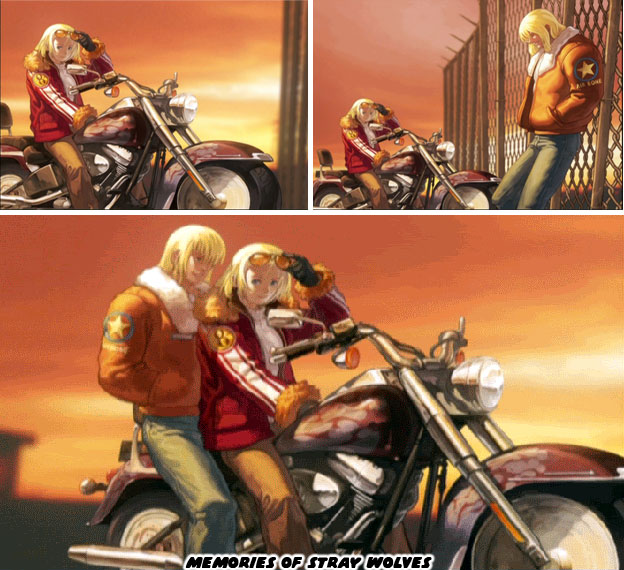
 

In the drama CD Memories of Stray Wolves Terry and Rock Howard were putting together a narrative. Where did it all begin for the main characters, why were they fighting, where did the time go? Rock was on the eve of his first King of Fighters tournament, he was a little nervous but he also wanted some answers. This story was set during the timeline of Mark of the Wolves, a decade after the demise of Geese Howard. Fatal Fury alumni Duck King, Richard Meyer and Blue Mary all made appearances. Mary was dealing with a few difficult cases and hadn't had a chance to visit with them as often as she'd like. Rock left to find his way and Terry seemed a little blue. Mary showed up on her motorcycle at the end of the story. The years had been kind to both as they still made an attractive couple. While it was never implied in the games there was a relationship between the two. Terry jumped on the back of her motorcycle to look for some fun. It was a creative risk that worked well for the canon and character development at SNK. It was something that was not introduced for the characters until years later and it made sense. It was an evolutionary shift for character designs which gave them more dimension and made the more personable. While I don't think that Ryu or Chun-Li should ever be seen the same way it would be nice to see Capcom age and mature the characters more in the Street Fighter series. There has been too much rehashing of the same characters year after year. We will see how else things have changed post King of Fighters XIV and Street Fighter V. I am looking forward to that. How about you? As always if you enjoyed this blog and would like to sponsor me please visit my Patreon page and consider donating each month, even as little as $1 would help make better blogs and even podcasts!
 follow the Street Writer on Patreon!

Monday, August 24, 2015

How fight culture became fighting game history, part 24

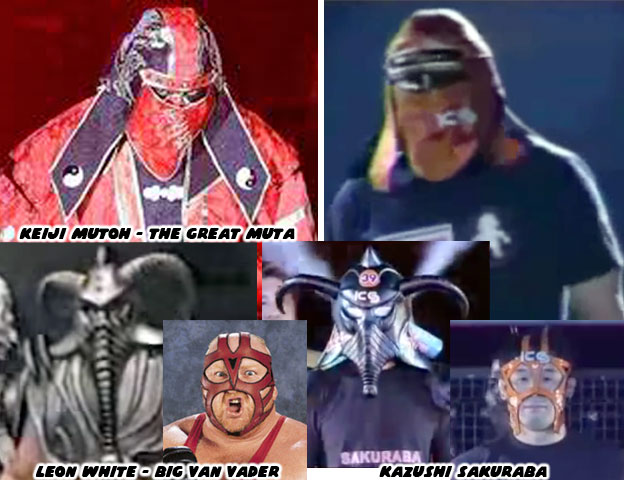
In Japan there was a new fighting promotion called Pride FC. It was similar to Vale Tudo or UFC in that it allowed just about any strike or grapple short of eye gouges or groin shots. A young Japanese wrestler named Kasushi Sakuraba was making a name for himself with his unorthodox style and amazing adaptability when battling people above his weight class. He was known for his over-the-top ring entrances. He would often put on a costume, dressing himself up like a video game character or a gimmick wrestler. He tried to honor some of the most legendary wrestlers with his costumes, such as the Great Muta and Big Van Vader. This was odd considering how reserved the Japanese were but it certainly helped him gain a following.


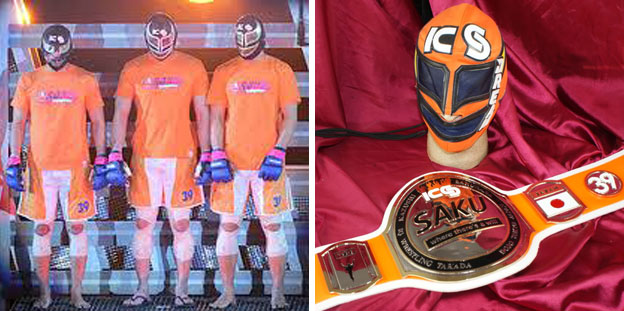
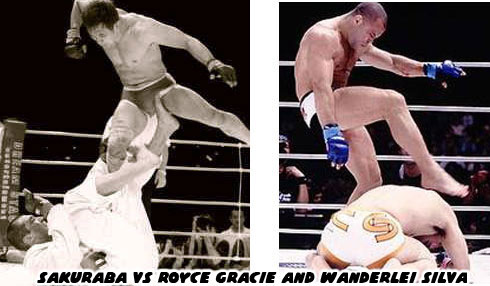
Despite the flash there was substance to the man. Sakuraba seemed to excel at defeating experts at the BJJ style. The people he defeated read like a who's-who of top Gracie students. The list included Paul Herrera, Conan Silveira, Vernon White, Carlos Newton, Vitor Belfort, Ebenezer Fontes Braga, Anthony Macias and Guy Mezger. Eventually his successes had caught the eye of the Gracie family. Determined not to let one person undo the half-century of work that Helio had put into the system they began sending actual family members to fight Sakuraba. Royler was the first and he was defeated using the same move applied to Helio decades earlier, the Kimura. In fact it was the first defeat for an actual family member since that encounter in 1954. The Gracie family was out for blood now. Unfortunately for them Renzo, Ryan and even Royce Gracie were all met with defeat. Before the dust had settled Sakuraba was awarded a belt by the Pride organizers in his trademark orange and was dubbed the "Gracie Hunter" by the press.


It was a proud few years for the nation. One of their own hometown boys had single-handedly defeated the system that had conquered the MMA universe. Sakuraba had stripped the mystique surrounding Gracie Ju-jitsu. Even when the Gracie family made stipulations before each match Sakuraba agreed to abide by them. He had exposed the flaws of the system and the practitioners. The mystique and air of superiority that the family once enjoyed had been shattered.

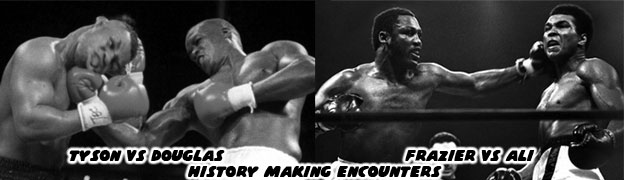
Yet it was not the first time a world champion had been humbled by the inevitable. Young "Iron" Mike Tyson had enjoyed an amazing run in his professional boxing career in the early '80s. Destroying most of his opponents in the first few seconds of the fight was impressive but made countless millions of cable subscribers furious. Yet the lack of discipline after the death of his trainer and mentor Constantine "Cus" D'Amato had started Tyson on a downward spiral. He began falling in with the wrong crowd, including promoter Don King, and before too long the mystique of Mike Tyson disappeared with his first defeat at the hands of James "Buster" Douglas. Tyson found himself on a downward spiral of self-destruction. His time spent in jail dulled his legacy and by the time he was given a chance to reclaim the title it was apparent to all that Tyson was no longer an immortal. For a fighter to remain at the top hard work, technique and natural ability were all important assets but the one wildcard was presence. If a fighter appeared to be impossible to defeat, or got into the head of an opponent then they would gain the advantage.

The Gracies and BJJ practitioners had the reputation going for them. The techniques had been proven on the streets, in the bars, in the dojos and on the professional stage. Gracie Ju-jitsu was a serious fighting art, capable of disabling or even killing a person. Yet once there was a crack in the armor, something that could be exploited, then other fighters would no longer believe in the superiority of the BJJ practitioner. They would no longer allow themselves to be intimidated even by actually dangerous fighters. What Sakuraba had done to the system was dull its reputation. He went into each fight prepared and fearless.


A similar thing had happened in 1971 when Joe Frazier knocked down Muhammad Ali. Considered the greatest heavyweight boxer that ever lived few ever stood toe-to-toe with Ali and even less managed to drop the man. Joe Frazier had actually been worked into a frenzy by Ali. The constant ridicule and trash talking had gotten into the mind of Frazier. They had once been friends but Ali raised the stakes when he tried to assert his presence over Frazier. What Frazier saw in the mocking by Ali, being called an "Uncle Tom" and a gorilla to the press was not promotion but betrayal. The heavyweights had said all that could be said about the man. Frazier was the only fighter ever to talk back to Ali in the ring, even when he was getting beat. George Foreman even admitted that he feared Joe Frazier. It was said that when Frazier stepped into the ring against Ali he was prepared to die. What he did was show the world that the great Ali was mortal after all.


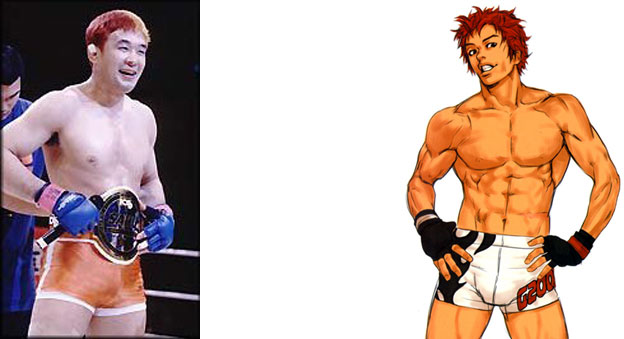
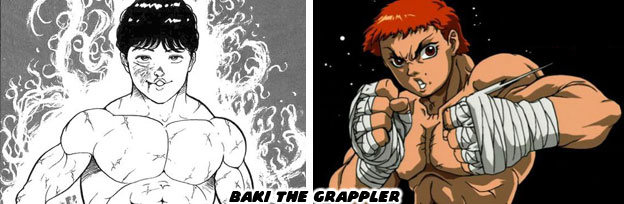
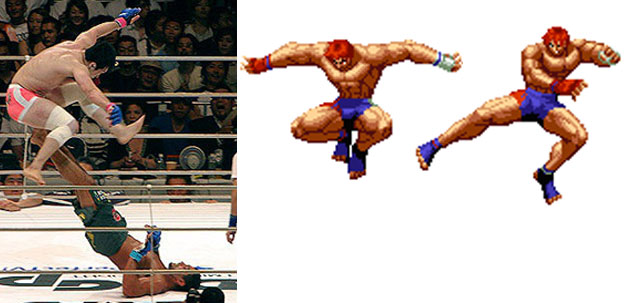
Sakuraba was rewarded for his efforts with more than a belt and the admiration of millions. He also influenced the character design of Tendo Gai for SNK's Buriki-One. The flashy young fighter could never be mistaken for a master of one of the traditional arts. The game did in fact feature karate, sumo, tae kwon do, muay thai and wrestling characters. Each of the fighters wore traditional uniforms save for Tendo who wore the shorts and gloves of a modern MMA superstar. Gai was also influenced by the character Baki from the manga and animé series Baki the Grappler. In the series Baki was a gifted teenager with impossible strength, speed and stamina. He was capable of destroying older, larger fighters. He used creative training techniques, beat up wild animals and did all sorts of amazing things in the graphically violent series. Tendo Gai was only 17-years-old in the game. He was a self taught master of "Total Fighting" which he developed after graduating from middle school. It would make him one of the younger fighting game masters ever developed.


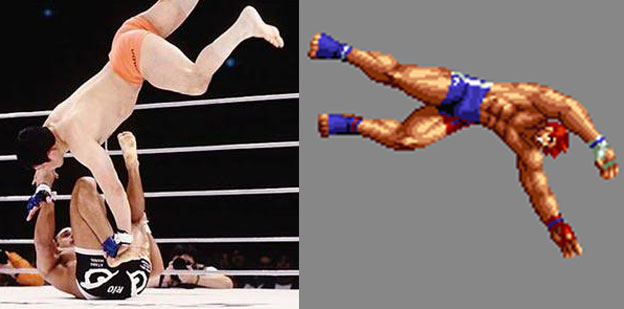
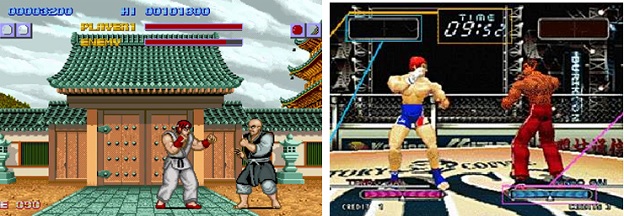
Buriki One featured blocky characters, an odd control scheme and lacked the smooth gameplay that audiences were used to. Few saw the title and many forgot it was even part of SNK canon until they brought back a few of the characters in the King of Fighters series. By then the studio had adapted a few of the actual fighting moves of Sakuraba into something that would work for a game. For example the Gracie fighters would sometimes lay prone on their backs and try to trick fighters into engaging them on the ground. It seemed like an easy target for most but the BJJ fighters excelled in ground grappling and often made opponents submit just moments after taking the battle to the floor. Sakuraba kept a cool head during his fights with them and refused to engage them on the ground. Instead of trying to mount his opponents Sakuraba would kick at their legs and try to do as much damage as he could to them while they laid prone. This would slow them down and weaken their resistance as the rounds went on. By being on their backs they could not generate much force when they kicked back. When Sakuraba saw an opening he would actually take a running leap at his opponents and try to kick them as he came down. After a few attempts at this he would sometimes trick opponents by running at them and hitting them with a baseball slide kick. These attacks would be included in Tendo Gai's move set for the KOF series.


In one Sakuraba's more flamboyant moves he would try to close the distance between the prone grapplers by performing a cartwheel and going after an exposed arm. This move was also given to Gai as the character dashed forward to close the gap between he and his opponent.

By controlling the pace of the encounters Sakuraba managed to throw the BJJ experts off of their game. What was interesting about the development of Tendo Gai was that he was given moves more grounded in reality than those usually reserved for KOF or even Street Fighter characters. He existed in a world where some characters could throw "fireballs" or topple giants with "dragon punches" but it didn't matter. His all-around moves, solid combo system and painful joint locks were just as destructive and much more plausible.


Sadly the era of Sakuraba would close almost as quickly as it came. Another Brazilian would dethrone the man but not with the BJJ techniques. Wanderlei Silva aka the Axe Murderer was an exceptional striker and excelled at muay thai techniques. His barrage of strikes and knees defeated Sakuraba in all three of their encounters. Sakuraba would lose more than he won through a period in the early '00s. Eventually he would end up splitting the difference between wins and losses for the rest of the decade. To many Sakuraba had stayed in the fight game for too long. The next generation would try to make a name for themselves by going after a man past his prime. Royce Gracie got a much anticipated rematch and won the decision. He later tested positive for steroids so the match was declared a no-contest. A Gracie family member would finally manage to defeat the man but under controversial circumstances. Ralek Gracie, the son of Rorion defeated Sakuraba in 2010. The ref stopped the fight and allowed Ralek to pull up his shorts after Sakuraba had applied a submission move. To add insult to injury Ralek was 24 at the time and Sakuraba was 41.

To many the legend of Sakuraba would never die. He had proven himself time and time again against some of the best in the world at their prime. As an old man he could still pull a rabbit out of the hat. His submission of the decade against an up-and-comer Zelg Galesic was the stuff that dreams were made of.


What the fight community wondered aloud was whether Sakuraba was a flash-in-the-pan, a fluke. He was a pro wrestler that knew how to throw bombs. But wrestlers never faired well in most MMA tournaments no matter how well they punched or kicked. What was the community overlooking if anything in the ability of Sakuraba? The next blog will try to unravel the mysteries of wrestling and see it as the fight science it actually is. As always if you enjoyed this blog and would like to sponsor me please visit my Patreon page and consider donating each month, even as little as $1 would help make better blogs and even podcasts!
Wednesday, August 12, 2015

How fight culture became fighting game history, part 19

Successful fighting games had a lot going for them, not the least of which were memorable characters. The best games used the myths surrounding historical fighters and turned those people into playable characters. The best fighting games played like a highlight reel, where only the best possible opponents were faced. Rivals had to be persons of merit. If it were a boxing game then the player would have to work up the ranks until they got a title shot against the world champ. In martial arts games all the rivals were masters of a particular art. The goal for most fighting games was not simply to become a world champion but to be the best fighter that had ever lived against the best styles ever invented. In the real world reaching the top of the mountain was impermanent, transitory. There was always somebody better waiting in the wings. Records did not matter compared to the quality of fighters defeated. Even an undefeated fighter would have been dethroned by age. Legends were immortal. The name seemed to live on forever. The element often missed in the games was the backstory, the opponents that had to be overcome in order for the playable characters to become legend. But how could the fighters go from beginner to master without boring the player?

Design cues for the main characters had to tell a story. The clothes the characters wore were not always clean uniforms from a school or dojo. Some were humble, shoeless, giving up their worldly possessions in pursuit of the battle. Their uniforms were worn out, messy with torn sleeves. Others wore street clothes, jeans and heavy boots. They fought dirty, with knives and chains. Players could tell that these characters were not new to the fight game. But what about the fighters that represented a new movement, one which did not represent one particular school or form? Was it possible to capture the spirit of a modern fighting master without betraying the legacy that the martial arts and pop culture had established?


The two biggest fighting game publishers, Capcom and SNK tried to answer that in the late '90s. Both studios had grown tremendously since they helped establish the fighting game revolution at the start of the decade. Street Fighter II, Fatal Fury and the Art of Fighting were released between 1991 and 1992. The groundbreaking fighting games introduced new play mechanics to audiences and a library of memorable characters. By the end of that same decade the traditional martial arts master featured in those games had become tired and predictable. The genre needed some new ideas. What the studios did was look at what had happened in the fight game and found a way to incorporate those changes into their own universes.

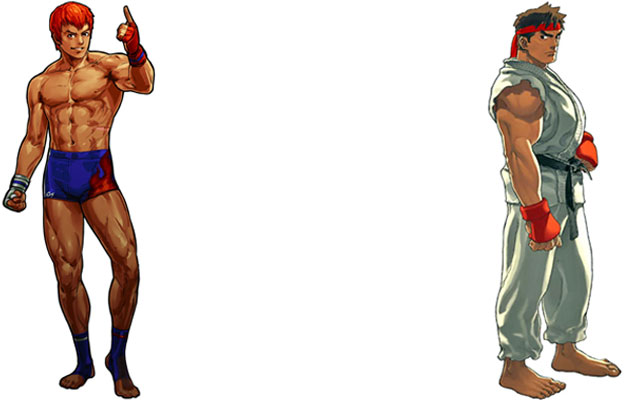
The era of the "Mixed Martial Artist" or MMA fighter had begun and fighting games needed to reflect that change. It took almost a decade for the developers to catch up to those changes. Ryu, the karate inspired star of the Street Fighter series was an homage to the traditional martial arts heroes that the developers at Capcom had grown up with. SNK tried to take a step back away from the archetype in the game Buriki-One. The title from 1999 introduced a new main character named Gai Tendo. He did not seem to have any particular style or affiliation but was adept at striking and grappling. Gai reflected the new breed of MMA fighter that had become so wildly popular in Japan. They were energetic, stylish and exciting to watch. Unfortunately the game did not reflect that sentiment. It was slow and cumbersome. It also did not receive wide exposure. The arcade scene had been dwindling in the US for some time. The game itself suffered from dismal 3D graphics and odd controls, which were the major features of the best fighting games. Despite those things Gai stuck around and managed to return as a playable character in King of Fighters XI.


The introduction of Buriki-One went hand-in-hand with the rise in popularity of MMA tournaments. The K-1 series in Japan started in 1993 was labeled for its karate, kickboxing and kung-fu roots. The tournament was descended from a different format. Seidokaikan, was a full-contact knock down karate format that incorporated rules from professional kickboxing, including uses of knees and throws, until it became the K-1 tournament that people knew. The PRIDE Fighting Championships started in 1997 but closed a few years later. Both K-1 and Pride had huge followings overseas and fighters actually flew in from around the world, including North and South America in order to compete. Audiences appreciated the diversity of fighters and treated them with tremendous respect. In the US the tournament scene did not take off as quickly and fighters were not well regarded. The Ultimate Fighting Championship or UFC series also began in 1993 but did not have the rules or weight class divisions that it currently had. Gai Tendo was reflective of the Japanese MMA tournaments. He was inserted into the King of Fighters universe to represent the modern fighting legends, including people like Kazushi Sakuraba. These modern fighters were more flashy than Mas Oyama or Yoshiji Soeno were when they inspired the legend of Ryu and the mythos of Street Fighter.


The MMA star seemed to rise out of nowhere and captured the hearts of millions of fans. The legend of Sakuraba had actually been centuries in the making, only many people didn't know it. This series will explore the influence of the grappling arts on fighting games and the community. I hope you return for the next entry! As always if you enjoyed this blog and would like to sponsor me please visit my Patreon page and consider donating each month, even as little as $1 would help make better blogs and even podcasts!