Showing posts with label kazushi sakuraba. Show all posts

Monday, August 31, 2015

How fight culture became fighting game history, part 27

As professional wrestling gained popularity in the early days of television the territories became tighter and tighter. Promoters wanted to keep their best talent from leaving by striking deals and setting rates with rival promotions. Some groups would do business and share talent. These cross promotional ventures would highlight the best fighters around to build interest in the companies. Others had freelance wrestlers that would travel through the territories but never stay for too long in one area. This helped some of the wrestlers build reputations and grow their popularity. In many of the bigger cities there were strict laws about boxing and wrestling. Insurance, safety, tax codes and other regulations kept many promotions from growing too big. The larger the draw the more the commissions wanted to drain from the till. The ways that some of these promotions were run kept the majority of the money at home in one way or another. Some upstarts needed capital to get off the ground, pay the bills and the talent. Instead of going to the bank they would sometimes cut deals with loan sharks and mobsters. Some promotions skirted the law despite wanting to stay legit.

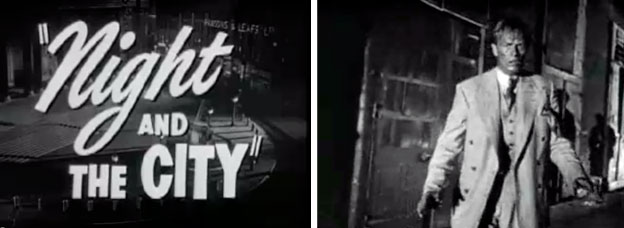
These arrangements with the mob were not only done in the US though. There had been reports of wrestling and Yakuza dealings in Japan as well. This was not limited to modern wrestling though, remember that Rikidozan was stabbed by Yakuza enforcers in a nightclub back in 1954. In Engalnd and Europe some of the criminal elements went hand in hand with boxing and wrestling as well. In 1938 Gerald Kersh had a book published titled Night and the City. It was set in the London underworld and revolved around a petty criminal named Harry Fabian that failed from his get rich schemes again and again. He saw an opening in the pro wrestling game and tried to develop his own talent and compete in the mob ruled underworld. Unfortunately for him all of his choices were the wrong ones and he ended up owing a great debt to the mob at the same time the law was catching up with him. It was a dark story that was turned into a 1950 film by Jules Dassin.


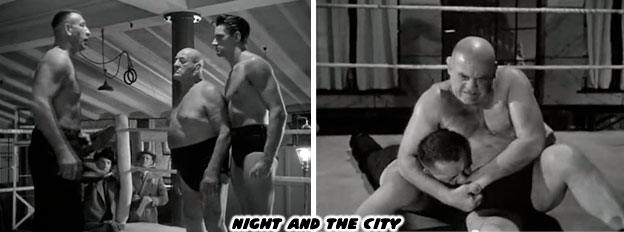
The movie took a lot of liberties with the story and focused more on the relationship between Fabian, as played by Richard Widmark and his young wrestler Nikolas of Athens as played by Ken Richmond. To help the young wrestler get up to par he came across an old Catch wrestler named Gregorius the Great as played by Stanislaus Zbyszko to help train him. Stanislaus was actually Polish, playing a Greek immigrant. The son of Gregorius, Kristo as played by Herbert Lom, ran the mob and controlled the wrestling action. Gregorius was ashamed at the pre-determined spectacle that Greco Roman wrestling had become. Any honor or dignity that the sport and athletes once enjoyed had been stripped away by the mobsters.

In the pivotal scene of the movie a rival wrestler named the Strangler, as played by veteran tough guy Mike Mazurki, goaded Gregorius into fighting him. Stanislaus was 71-years-old when the scene was shot. Despite his age it was a convincing battle between the two grapplers. The authenticity of moves highlighted by the former champion helped the credibility of the fight. After dispatching the Strangler the elder Gregorius turned to his son and uttered the best line in the movie "that's what I do to your clowns." The scene had tremendous weight because Stanislaus was speaking as a real-life Gregorius. A lower quality version of the fight scene with the tragic outcome could be found on YouTube.


Catch wrestling never died but it also never gained popularity with the advent of "pro wrestling." Still it managed to survive through most of the 20th century. Thanks to people like Frank Gotch and Stanislaus Zbyszko. There were other pioneers that helped keep it going through the early days. Dan Kolov, the Bulgarian wrestler who emigrated to the US as a railroad worker and fought a bear with his bare hands while out hunting. He killed the bear with his rifle but when people saw the marks Kolov had left on the neck of the bear they knew he would make a formidable wrestler. Kolov might have been one of the legendary figures that inspired the character Zangief in Street Fighter II. Other catch practitioners that popularized the form in the US included Martin "Farmer" Burns, Ed "Strangler" Lewis, "Tiger" John Pesek, Billy Riley and Billy Robinson.

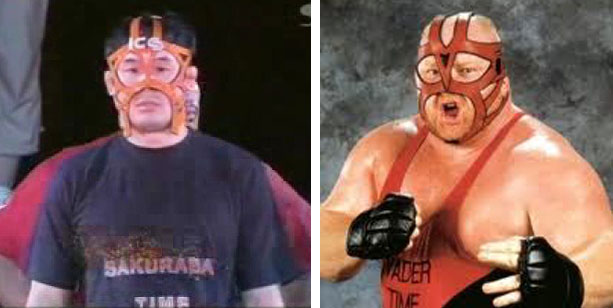
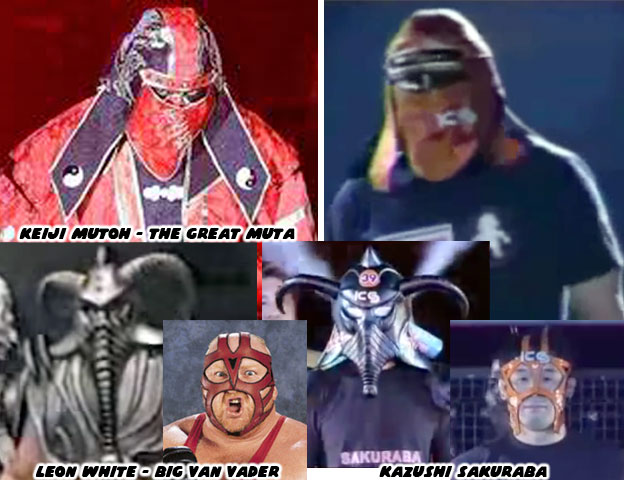
In the modern era there were fighters like Gene Lebell that helped promote Catch as well as other schools of fighting for wrestlers. Frank and Ken Shamrock, Josh Barnett and Randy Couture were MMA superstars that also trained under the Catch style. Kazushi Sakuraba had joined the ranks of fighters that predated the Gracie family. He had managed to make the transition from pro wrestler to MMA superstar without losing his roots. At the same time he was able to incorporate the showmanship he had picked up in pro wrestling and create a memorable character for himself. He often payed homage to the wrestlers that came before like the Great Muta and Big Van Vader.


The Catch wrestler and MMA fighter had started changing the course of character designs before Tendo Gai however. The next blog will look at the first MMA star that Capcom had created for the Street Fighter universe. As always if you enjoyed this blog and would like to sponsor me please visit my Patreon page and consider donating each month, even as little as $1 would help make better blogs and even podcasts!

Wednesday, August 26, 2015

How fight culture became fighting game history, part 25

Kasushi Sakuraba had done some time in pro wrestling circles before his stint with the Pride and other MMA tournaments. Most professional wrestlers made poor MMA fighters and vice versa. Sakuraba seemed to be able to transition between the two worlds seamlessly. In fact he would return to pro wrestling and help give some credibility to his opponents by adapting some of his famous moves into his arsenal. The cartwheel and the foot stomp returned except this time his opponents knew that he would be pulling the majority of his strikes.
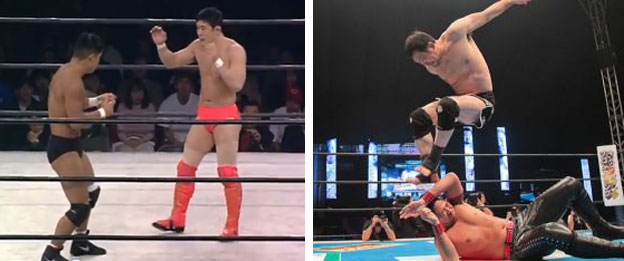


What many people did not realize was the pedigree that Sakuraba had inherited. Sakuraba was not simply a fighter with a personality. He was a rare athlete that understood the proper application and uses of the moves he had picked up in the ring. In pro wrestling circles the Japanese style was known to be very stiff or hard-hitting. The strikes were pulled to a lesser degree than those performed in the US which gave the fighting art some credibility to audiences. In fact some promotions prided themselves on highlighting realistic combat. The UWF promotion that Sakuraba worked with had rules that were closer to vale tudo than the pro wrestling that Westerners were used to. Fighters performed locks, holds and hard-hitting strikes that were designed to convince audiences that each fight was a "shoot" or a real battle.

There was a reason that the Japanese style of wrestling was hard-hitting. The man that helped shape the wrestling game in Japan was Karl Gotch. He trained many of the best fighters in the game, including Antonio Inoki. Remember he was the guy that fought Ali? Karl was considered the God of Wrestling to the Japanese, holding a place of prestige that may be even greater than Rikidozan. Gotch himself had been trained in a legacy that dated back to the birth of scientific or "catch-as-catch-can" wrestling from the late 19th century. Sakuraba embraced the roots of Japanese wrestling and began learning the moves from the other masters of the game. It would turn out to be the secret weapon that he used in getting past the BJJ system.
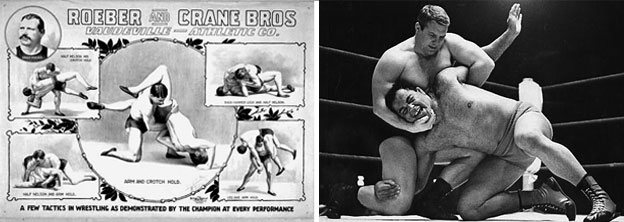


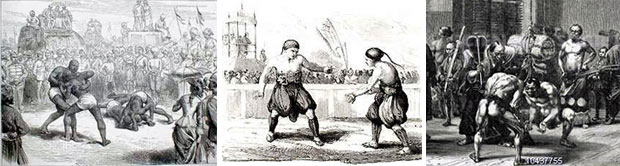
Grappling was the oldest known fighting art. It went well back in time when the earliest civilizations were getting established. Warriors and soldiers needed to learn how to fight unarmed in service of their emperors. Systems had to be established that relied on painful joint locks to subdue attackers and disarm opponents. Even laymen had to learn how to defend themselves in the event of a robbery attempt. The best fighters competed in early tournaments. In the Mediterranean the local nations would compete in regional wrestling tournaments before the rise of the modern Olympics. The ancestor to Roman-Greco wrestling had a second fighting art that developed alongside it. The pankration was a mix of wrestling and boxing, for all intents and purposes it was the first mixed martial art style or tournament. Fighters were allowed more leeway with their strikes but eye gouging and biting was still not permitted. Pankration, wrestling and boxing paintings adorned pottery, jewelry, statues and carved reliefs several thousand years old. Pankration was big in ancient times and the mythical heroes Hercules and Theseus were said to be masters of the art.
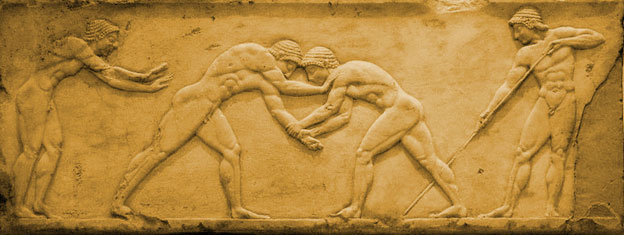


The names of the early champions were recorded by ancient historians. The legacy of those fighters survived more than 2,000 years. It showed that truly great fighters would indeed achieve immortality. A post apocalyptic animated comic named Pancratia by Ryan Benjamin was inspired by those heroes and their everything goes fighting style.

History books, as well as the graphic novel and movie series "300" reminded people that the Spartans were exceptionally dangerous because they trained in every form of combat from a young age. It was said that Alexander the Great surrounded himself with the best pankratia fighters from his army. According to historians other cultures were exposed to the fighting art during his campaigns and incorporated it into their own wrestling traditions.
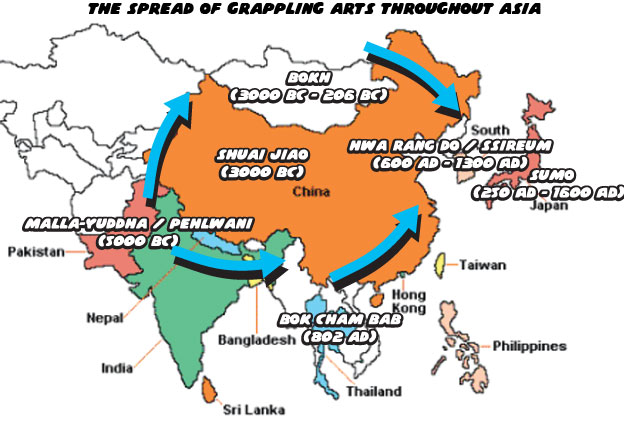
 

In 326 B.C. Alexander's campaign had taken his army through India where the western arts cross pollinated with another equally ancient form of wrestling. The early Buddhists took elements of the grappling arts north with them into China. It turns out that the striking arts were not the only things that migrated East. As many martial arts fans know the kung-fu forms influenced the development of the fighting arts in the southern part of the continent, Thailand and Cambodia as well as in the north like Mongolia. By the time traders settled in the islands to the far east they had taken their cross pollination of forms and planted the seeds for karate, judo and jujitsu.
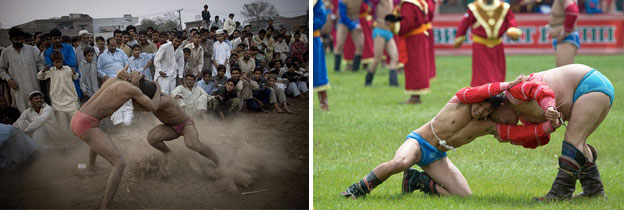


Japan developed Sumo wrestling. Sumo wrestling has a rich history, a detailed tapestry of ethnic identity. Religious, mythological and royal characters have all been associated with the sport. Sumo has been called the most physically demanding of all the martial arts. The best wrestlers or yokozunas are the stuff of legend, massive men whose speed and ability beguile their size. Why wouldn't E. Honda have worked in the Street Fighter series? His strikes and kicks were simply caricatured versions of actual sumo slaps and thrusts. This is something that you should remember of all the classic SF characters. At some point in their design we can trace back an actual art or purpose for their moves and looks. It was only in recent generations of the game that it became disconnected from the martial arts.


The further East we travel the more interesting the sport becomes. In Mongolia the form of wrestling Mongol Buh seems to have a little commonality with the techniques and strategies of stand-up, sumo style wrestling. Travel south a little and we discover that China has several variations of wrestling or Shuai Jiao. It is in the Chinese versions that we see a strong connection between wrestling and kung-fu.


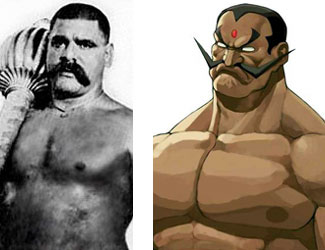
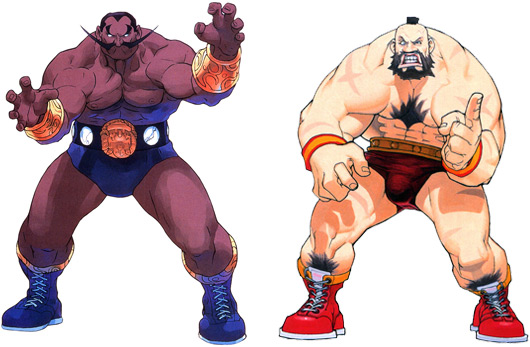
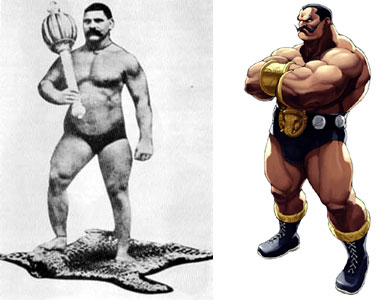
Indian wrestling or "Pehelwani" gave rise to, what I believe to be, the greatest grappler in the Street Fighter universe. Darun Mister from the Street Fighter EX series was inspired by the actual undefeated pehelwani champion Ghulam Muhammad aka the Great Gama. My brothers and I like this character more than the Red Cyclone himself. That is not to say that Zangief was a poorly designed character but his concept version was lacking. A tattooed sailor originally named "Vodka Gobalsky?" With designs like that you'd think that Capcom of Japan wouldn't be surprised by how the west reacted to new characters in SF IV.


After a lot of fine tuning Zangief made his proud debut in SF II. Darun would not have worked as well without Zangief having established the fantastic qualities that wrestlers in the SF universe had. Darun had a Brahma Bomb or front-flip powerbomb to counter the Spinning Piledriver. The Banishing Flat and Spinning Lariat were combined through Darun's Lariat. But what was it about Darun that made him so special, so interesting outside of doppleganger moves? It could have been the cues that ARIKA used when creating the character.

The entire cast of SF EX was created to balance out the original world warriors. Ken and Ryu were balanced by Allen Snider and Kairi respectively. The strong females were balanced out, Chun Li had Blair Dame or Pullum Puruna. The oddballs were balanced out through Dhalsim had Skullomania. Military strongman Guile had Doctrine Dark and of course Zangief had Darun. Darun had to be as exaggerated in proportions as the burly Russian, and have equally fantastic wrestling moves. His dark skin color and trunks even balanced out the fair skin and bright shorts of 'geif. But there was a certain je nai se quoi that made Darun special. It was more than the upturned mustache or elephant champion belt, although those were cool touches as well.


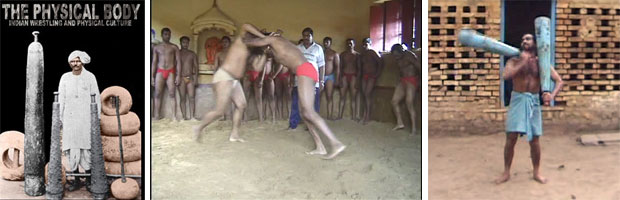
The appeal of Darun came from an understanding and appreciation of Gama and the Indian Wrestling culture. This is a topic that my friend AerialGroove from FightingStreet.com and I have been going over. AerialGroove clued me in to a documentary titled The Physical Body: Indian Wrestling and Physical Culture. I picked up the DVD and was fascinated with the unique regiments, weight lifting and strength training exercises that traditional Pehelwani demanded. This was a form of wrestling and physical culture invented centuries, if not millennia, before the modern strength training became understood in the western world. Pehelwani students would dig pits, lift stones, swing the gada and do calisthenics to develop muscles, flexibility and endurance. Some of these exercises were simple and functional, climbing ropes to strengthen grip and upper body for example, other exercises were more unique like reverse bridges to flips in order to strengthen back and neck muscles, some Yoga moves were even used during conditioning. Pehelwani students not only practiced wrestling moves but spent some of their time in prayer, observing the religious ties to the sport. Darun takes some artistic liberties with the culture, in the game he is represented as a Hindu when the actual Gama was Muslim.

The Pehelwani techniques must have worked because Gama was a physical specimen as much as he was a wrestling spectacle. When you think back to the early 1900's there weren't many physiques that could have compared with modern bodybuilders, Gama was one of the few exceptions. Some of his strength training formats are still practiced by people around the world. Unfortunately for every up there was a down. He would find criticism for his reliance on standing wrestling skills without developing proper mat skills. This and the diet he was on helped increase his bulk but eventually lead to his heart condition. Early physical culture understood the importance of eating large amounts of protein to build mass but unfortunately did not realize that his diet also contributed to his heart disease. You could learn a lot reading about the life and death of the Great Gama. His final days were actually kind of sad as the man who inspired a nation seemed to be forgotten by his fellow Indians.


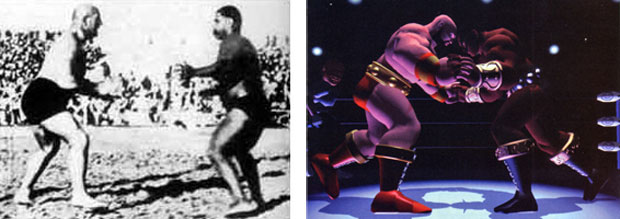
Gama went on to great success in his wrestling exploits in the early 1900's. In the thousands of matches he had reportedly been in he had never been defeated. He had drawn a few of his matches but none could have ever claimed a pin against him. His legend seemed to grow with every passing year. Even if some of his matches were met with controversy and less than flattering reviews none could argue that he was a fake. He travelled to England issuing challenges when he wasn't allowed to formally compete. Minorities were very strongly discriminated against for many sports. While there he defeated the Polish Stanislaus Zbyszko and eventually claimed the world heavyweight title.

Mr. Zbyszko was another titan of wrestling. He traveled the globe challenging the best in North America and Europe and winning more often than not. Only Frank Gotch had amassed a more impressive record in a tragically shorter time. Stanislaus' defeat at the hands of Gama took on some significance. Mr. Zbyszko probably had nothing to do with the creation of Zangief but Russians like Ivan Poddubny were very much feared at the time. Zbyszko was one of the few to defeat Poddubny.


When development of a 3D Street Fighter game came up ARIKA needed somebody that could not only be a worthy rival to Zangief but had genuine chance of beating him. They went back through the annals of wrestling lore and returned with the legend of the Great Gama. A man of exotic origin, dark of skin and well regarded for his unbreakable determination and undefeated legacy. ARIKA and Capcom then stylized his look turned him into a character whose scale and moves fit perfectly into canon.

This was when Capcom was going the extra mile in character design. No character could simply be added into the series just for visual appeal, they had to take on an additional context in order to both grab the audiences and compete against the returning legacy characters. Darun was just one of the characters featured in SF EX that was based on a legend. Darun and Zangief were presented as the genuine article. They were not gimmick wrestlers from modern times, or even showmen from the era of Gene Lebell. They were inspired by an earlier time, an era of authenticity. While modern gamers might not know exactly who or when they came from all can agree that they were exceptional designs, straightforward and to the point.
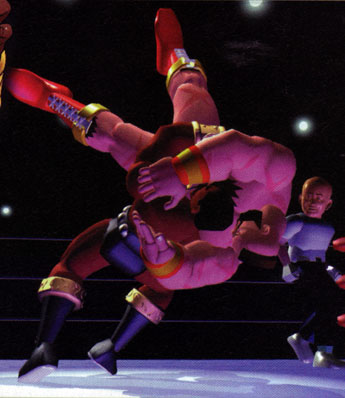

The Great Gama was the template for Darun. He was a wrestling God. He had the same mythical status that Oyama or Lee would enjoy in the modern era. Of course most of the people in the West had never heard of him. It was his contemporaries that helped popularize the evolution of wrestling from its ancient Greek tradition into something more scientific by the 19th century. These people were directly connected to the development of a system that Sakuraba and other practitioners of the modern fighting arts would exploit to great success. The next blog will look at these icons. As always if you enjoyed this blog and would like to sponsor me please visit my Patreon page and consider donating each month, even as little as $1 would help make better blogs and even podcasts!
Monday, August 24, 2015

How fight culture became fighting game history, part 24

In Japan there was a new fighting promotion called Pride FC. It was similar to Vale Tudo or UFC in that it allowed just about any strike or grapple short of eye gouges or groin shots. A young Japanese wrestler named Kasushi Sakuraba was making a name for himself with his unorthodox style and amazing adaptability when battling people above his weight class. He was known for his over-the-top ring entrances. He would often put on a costume, dressing himself up like a video game character or a gimmick wrestler. He tried to honor some of the most legendary wrestlers with his costumes, such as the Great Muta and Big Van Vader. This was odd considering how reserved the Japanese were but it certainly helped him gain a following.


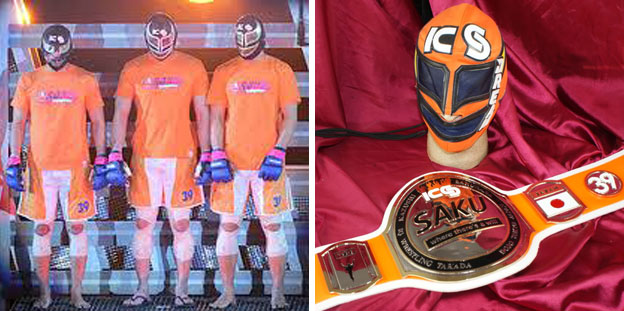
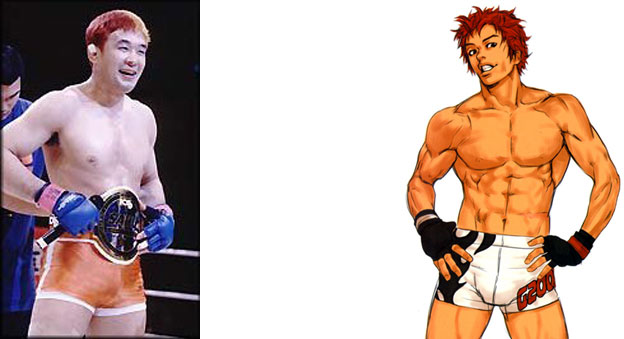
Despite the flash there was substance to the man. Sakuraba seemed to excel at defeating experts at the BJJ style. The people he defeated read like a who's-who of top Gracie students. The list included Paul Herrera, Conan Silveira, Vernon White, Carlos Newton, Vitor Belfort, Ebenezer Fontes Braga, Anthony Macias and Guy Mezger. Eventually his successes had caught the eye of the Gracie family. Determined not to let one person undo the half-century of work that Helio had put into the system they began sending actual family members to fight Sakuraba. Royler was the first and he was defeated using the same move applied to Helio decades earlier, the Kimura. In fact it was the first defeat for an actual family member since that encounter in 1954. The Gracie family was out for blood now. Unfortunately for them Renzo, Ryan and even Royce Gracie were all met with defeat. Before the dust had settled Sakuraba was awarded a belt by the Pride organizers in his trademark orange and was dubbed the "Gracie Hunter" by the press.


It was a proud few years for the nation. One of their own hometown boys had single-handedly defeated the system that had conquered the MMA universe. Sakuraba had stripped the mystique surrounding Gracie Ju-jitsu. Even when the Gracie family made stipulations before each match Sakuraba agreed to abide by them. He had exposed the flaws of the system and the practitioners. The mystique and air of superiority that the family once enjoyed had been shattered.

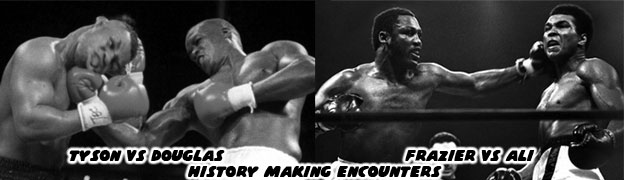
Yet it was not the first time a world champion had been humbled by the inevitable. Young "Iron" Mike Tyson had enjoyed an amazing run in his professional boxing career in the early '80s. Destroying most of his opponents in the first few seconds of the fight was impressive but made countless millions of cable subscribers furious. Yet the lack of discipline after the death of his trainer and mentor Constantine "Cus" D'Amato had started Tyson on a downward spiral. He began falling in with the wrong crowd, including promoter Don King, and before too long the mystique of Mike Tyson disappeared with his first defeat at the hands of James "Buster" Douglas. Tyson found himself on a downward spiral of self-destruction. His time spent in jail dulled his legacy and by the time he was given a chance to reclaim the title it was apparent to all that Tyson was no longer an immortal. For a fighter to remain at the top hard work, technique and natural ability were all important assets but the one wildcard was presence. If a fighter appeared to be impossible to defeat, or got into the head of an opponent then they would gain the advantage.

The Gracies and BJJ practitioners had the reputation going for them. The techniques had been proven on the streets, in the bars, in the dojos and on the professional stage. Gracie Ju-jitsu was a serious fighting art, capable of disabling or even killing a person. Yet once there was a crack in the armor, something that could be exploited, then other fighters would no longer believe in the superiority of the BJJ practitioner. They would no longer allow themselves to be intimidated even by actually dangerous fighters. What Sakuraba had done to the system was dull its reputation. He went into each fight prepared and fearless.


A similar thing had happened in 1971 when Joe Frazier knocked down Muhammad Ali. Considered the greatest heavyweight boxer that ever lived few ever stood toe-to-toe with Ali and even less managed to drop the man. Joe Frazier had actually been worked into a frenzy by Ali. The constant ridicule and trash talking had gotten into the mind of Frazier. They had once been friends but Ali raised the stakes when he tried to assert his presence over Frazier. What Frazier saw in the mocking by Ali, being called an "Uncle Tom" and a gorilla to the press was not promotion but betrayal. The heavyweights had said all that could be said about the man. Frazier was the only fighter ever to talk back to Ali in the ring, even when he was getting beat. George Foreman even admitted that he feared Joe Frazier. It was said that when Frazier stepped into the ring against Ali he was prepared to die. What he did was show the world that the great Ali was mortal after all.


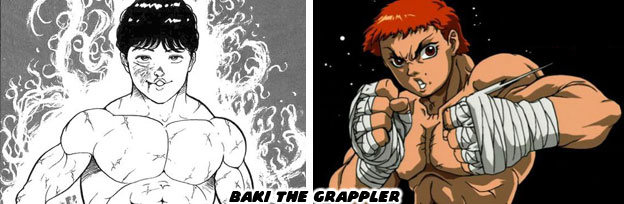
Sakuraba was rewarded for his efforts with more than a belt and the admiration of millions. He also influenced the character design of Tendo Gai for SNK's Buriki-One. The flashy young fighter could never be mistaken for a master of one of the traditional arts. The game did in fact feature karate, sumo, tae kwon do, muay thai and wrestling characters. Each of the fighters wore traditional uniforms save for Tendo who wore the shorts and gloves of a modern MMA superstar. Gai was also influenced by the character Baki from the manga and animé series Baki the Grappler. In the series Baki was a gifted teenager with impossible strength, speed and stamina. He was capable of destroying older, larger fighters. He used creative training techniques, beat up wild animals and did all sorts of amazing things in the graphically violent series. Tendo Gai was only 17-years-old in the game. He was a self taught master of "Total Fighting" which he developed after graduating from middle school. It would make him one of the younger fighting game masters ever developed.


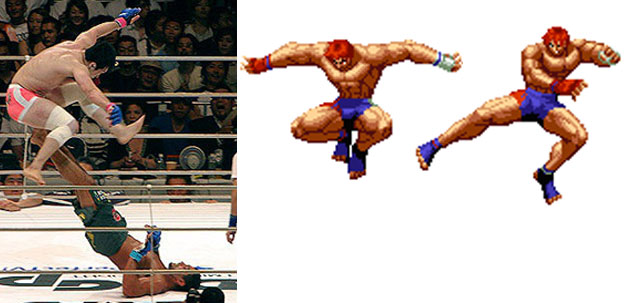
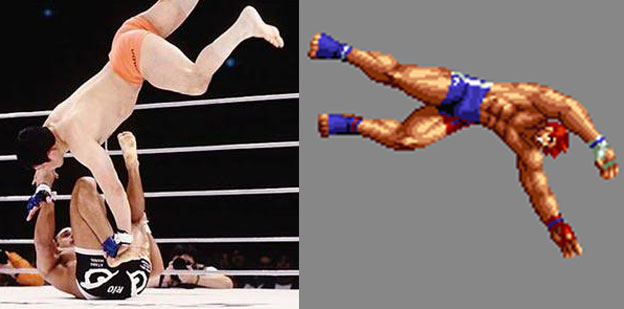
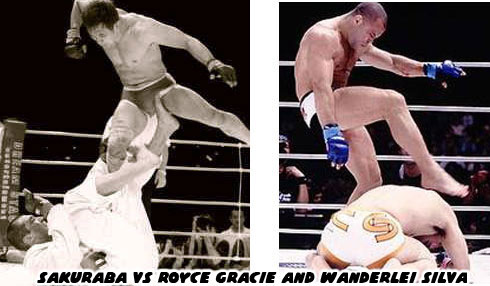
Buriki One featured blocky characters, an odd control scheme and lacked the smooth gameplay that audiences were used to. Few saw the title and many forgot it was even part of SNK canon until they brought back a few of the characters in the King of Fighters series. By then the studio had adapted a few of the actual fighting moves of Sakuraba into something that would work for a game. For example the Gracie fighters would sometimes lay prone on their backs and try to trick fighters into engaging them on the ground. It seemed like an easy target for most but the BJJ fighters excelled in ground grappling and often made opponents submit just moments after taking the battle to the floor. Sakuraba kept a cool head during his fights with them and refused to engage them on the ground. Instead of trying to mount his opponents Sakuraba would kick at their legs and try to do as much damage as he could to them while they laid prone. This would slow them down and weaken their resistance as the rounds went on. By being on their backs they could not generate much force when they kicked back. When Sakuraba saw an opening he would actually take a running leap at his opponents and try to kick them as he came down. After a few attempts at this he would sometimes trick opponents by running at them and hitting them with a baseball slide kick. These attacks would be included in Tendo Gai's move set for the KOF series.


In one Sakuraba's more flamboyant moves he would try to close the distance between the prone grapplers by performing a cartwheel and going after an exposed arm. This move was also given to Gai as the character dashed forward to close the gap between he and his opponent.

By controlling the pace of the encounters Sakuraba managed to throw the BJJ experts off of their game. What was interesting about the development of Tendo Gai was that he was given moves more grounded in reality than those usually reserved for KOF or even Street Fighter characters. He existed in a world where some characters could throw "fireballs" or topple giants with "dragon punches" but it didn't matter. His all-around moves, solid combo system and painful joint locks were just as destructive and much more plausible.


Sadly the era of Sakuraba would close almost as quickly as it came. Another Brazilian would dethrone the man but not with the BJJ techniques. Wanderlei Silva aka the Axe Murderer was an exceptional striker and excelled at muay thai techniques. His barrage of strikes and knees defeated Sakuraba in all three of their encounters. Sakuraba would lose more than he won through a period in the early '00s. Eventually he would end up splitting the difference between wins and losses for the rest of the decade. To many Sakuraba had stayed in the fight game for too long. The next generation would try to make a name for themselves by going after a man past his prime. Royce Gracie got a much anticipated rematch and won the decision. He later tested positive for steroids so the match was declared a no-contest. A Gracie family member would finally manage to defeat the man but under controversial circumstances. Ralek Gracie, the son of Rorion defeated Sakuraba in 2010. The ref stopped the fight and allowed Ralek to pull up his shorts after Sakuraba had applied a submission move. To add insult to injury Ralek was 24 at the time and Sakuraba was 41.

To many the legend of Sakuraba would never die. He had proven himself time and time again against some of the best in the world at their prime. As an old man he could still pull a rabbit out of the hat. His submission of the decade against an up-and-comer Zelg Galesic was the stuff that dreams were made of.


What the fight community wondered aloud was whether Sakuraba was a flash-in-the-pan, a fluke. He was a pro wrestler that knew how to throw bombs. But wrestlers never faired well in most MMA tournaments no matter how well they punched or kicked. What was the community overlooking if anything in the ability of Sakuraba? The next blog will try to unravel the mysteries of wrestling and see it as the fight science it actually is. As always if you enjoyed this blog and would like to sponsor me please visit my Patreon page and consider donating each month, even as little as $1 would help make better blogs and even podcasts!