Showing posts with label frank gotch. Show all posts

Friday, August 28, 2015

How fight culture became fighting game history, part 26

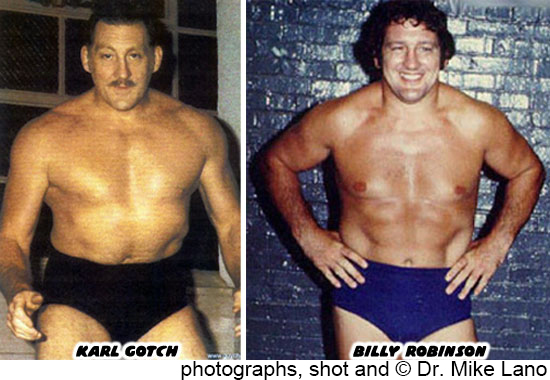
In the previous blog I had mentioned that pro wrestler Karl Gotch had influenced the development of the hard, shoot style of wrestling that the Japanese enjoyed. He would share his training, conditioning and grappling techniques with his fellow professionals. Helping them become better athletes and appreciate the roots of wrestling in the process. Karl was still alive when Sakuraba started his career. He would have offered insight on the advantages catch-as-catch-can or "Catch" school of wrestling to other martial arts. Moreover one of Karl's contemporaries Billy Robinson was also available to help shape the young wrestler as well. Both Karl and Billy had earned reputations as hard workers but also genuine shooters. They knew the business of wrestling but also knew how to seriously hurt someone or "stretch" them if they wanted. They had to carefully walk the line between entertainment and genuine combat for most of the 20th century. If they had been born a century earlier they would have been much better regarded as legitimate fighters.


Through the lessons of Billy and Karl the deficiencies of the BJJ system was exposed. In fact a major deficiency had been exposed in the early UFC battles featuring Royce Gracie. He seemed to have a weakness against people that were not dressed in traditional jujitsu uniforms, it was apparent when he fought Ken Shamrock and Kimo Leopoldo who only wore shorts. Helio had taught his sons to work while using a gi. The judo uniforms were what had helped Helio in his famous battles. The clothing could be grabbed to help generate leverage even for people that weren't as strong as their opponents. The clothing could be used to move opponents, get them off balance and even trap and choke people out. When Royce did not have something to hold onto it was more difficult to control his opponents and work a submission move. What Sakuraba needed was a system that could control his opponents arms and legs while standing or even from the ground but that did not rely on clothing to grab onto. He began studying Catch in early on in his wrestling career. By the time he had exploited it against the BJJ students and Gracie family he was well versed at what was capable using only traditional holds. In fact the uniform that had served Royce so well in his early competitions worked against him the first time he fought Sakuraba. The Japanese fighter would pull Royce upside down by his belt so that he couldn't escape from the floor. Then Sakuraba would throw a punch whenever he saw an opening on the upturned Gracie.
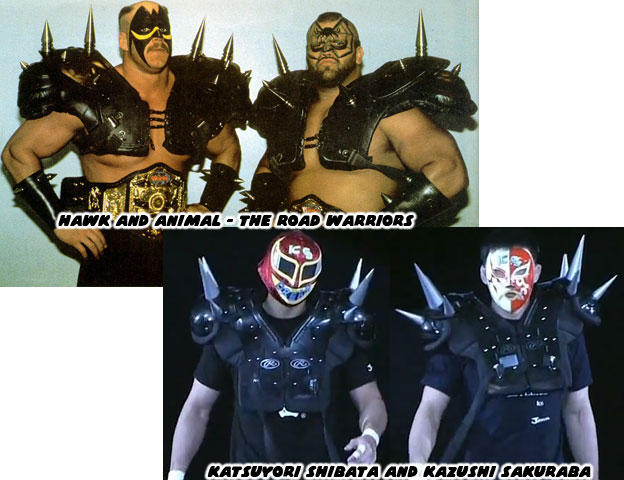

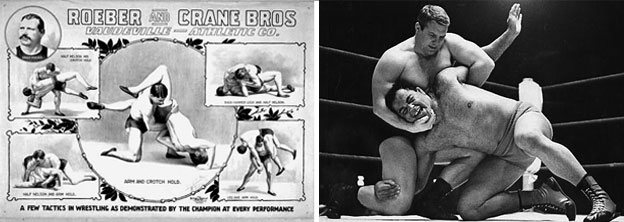
The more Sakuraba learned about the system the better he became at the grappling game. As a huge fan of pro wrestling he went out of his way to pay an homage to his idols each time he stepped into the ring. These outlandish displays hid the very dangerous techniques he was picking up. He studied the lessons of Billy Riley and Billy Robinson that had brought the fighting art over from England decades earlier. Riley's training ground was dubbed the Snake Pit, it had generated some tremendous talent. It would be knocked down and rebuilt over the century but never lost its allure. The current caretaker and trainer Roy Wood was the subject of a short documentary on catch-as-catch-can. It turned out that Catch had actually been a long time gaining a reputation in the West. Before the pro wrestling business became "sports entertainment" the best wrestlers were as well regarded as professional boxers. In fact to help himself get over in the business Karl Charles Istaz had taken the surname of the early US Catch hero Frank Gotch. Greco Roman wrestling was still practiced in gyms but a variation that had modern roots, an understanding of joint locks and submission holds was taking shape. This was in the 18th and 19th century well before the first "new" Olympic Games in 1896. In fact some of the modern wrestling forms predated the Kung-Fu taught by Ng Mui to Wing Chun, and heroes Huo Yuanjia and Wong Fei Hung. Frank Gotch, just so you know, was the first US wrestler to gain merit against the European champions.
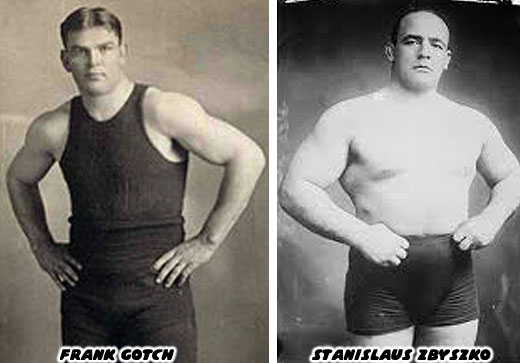

Frank was one of the luminaries of the sport. Others included the Great Gama from India and Stanislaus Zbyszko from Poland. Those men were legitimate champions of the sport and proponents of the Catch school. In England the working class enjoyed the wrestling arts for both the calisthenic properties as well as the gambling reasons. The best were masters of the Catch school, then called the Scientific Method of wrestling, to differentiate itself from the Greco-Roman school. In the US the working class and farmers also enjoyed wrestling. Young Abraham Lincoln was said to have been a good wrestler but he was not the only US President with wrestling roots. George Washington, Andrew Jackson, Ulysses S. Grant and Theodore Roosevelt were also wrestlers in their youth.

In the late 1800s traveling carnivals would put out open challenges to try and defeat their wrestler, usually also the circus strongman. The tradition had survived in remote parts of the world up until the modern times. In a previous blog I had mentioned the wrestler named He-Man was a circus wrestler up until his murder in 2010. Those foolish enough to try would and take He-Man and his kind would get bent over backwards. The reputation of the traveling performers often preceded them. The promoters learned the importance of creating a character and building a legacy. Legends would surface of men that had fought bears, alligators and mountain lions with their bare hands. Anyone foolish enough to grapple with them would surely be skinned alive. That cycle of hype and show would go on to shape the legends that founded the early US territories. It planted the seeds of pro wrestling as more of a staged battle than an actual fighting art. The Bleacher Reoprt had a great slideshow on the evolution of pro wrestling for those interested in seeing some archival footage.
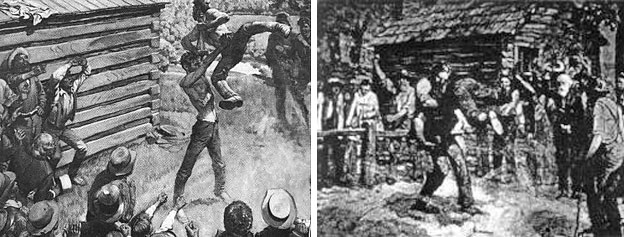

Some wrestlers still held onto the old traditions though. When they could they would participate in genuine shoots, sometimes for the money but sometimes to build a name. These fighters had earned a reputation as being hookers, legitimate wrestlers that could easily break bones. Unfortunately the times were catching up with the sport. Media was changing the face of sports and entertainment. A long career was not guaranteed for those that pursued submission wrestling. The money and longevity was in entertainment. Wrestlers were expected to develop a character, a personality and "sell" moves and holds to the audience without actually hurting their opponents. Film had changed the landscape of the early sports reporting but not nearly as much as television. Some of the early stars did have high school and college wrestling backgrounds. Others were from track and field or football programs. They were filled in by other pro and catch wrestlers as they developed a gimmick. The biggest names would turn out to be the ones with the best mic skills and not necessarily the best wrestling abilities. This rubbed many veterans the wrong way.
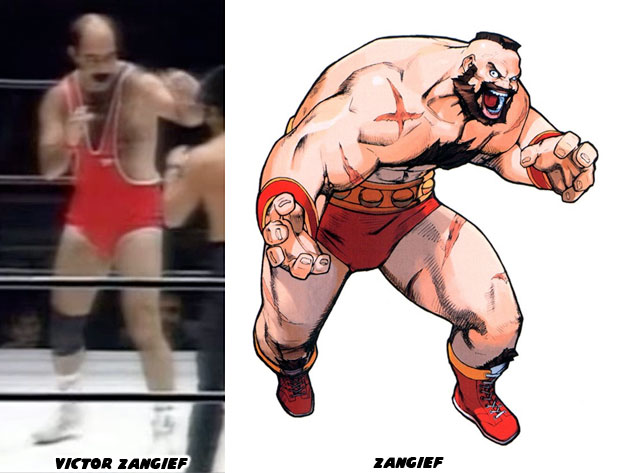
 

This trend was not exclusive to the US alone. In Japan, in the UK and around the world where matches were being televised the genuine shooters were slowly being replaced by handsome men and women that looked great on TV. Skills could always be taught to the talent and to be fair some of the people that picked up wrestling became very good workers. The influence of every type of wrestler could be seen in the first few generations of fighting game character. Street Fighter did not only look to Muay Thai for real legends, it also looked to boxing and wrestling as well. It did not matter if the game were a 2D or 3D title because the designers gravitated towards what worked best and what was easily identifiable to audiences. I mean a person in a gi with a black belt was obviously a karate master and a person in wrestling trunks was obviously a grappler. It was relatively easy for the developers to put in a fighter that reminded people of Bruce Lee or a wrestler like Hulk Hogan because they had international exposure.

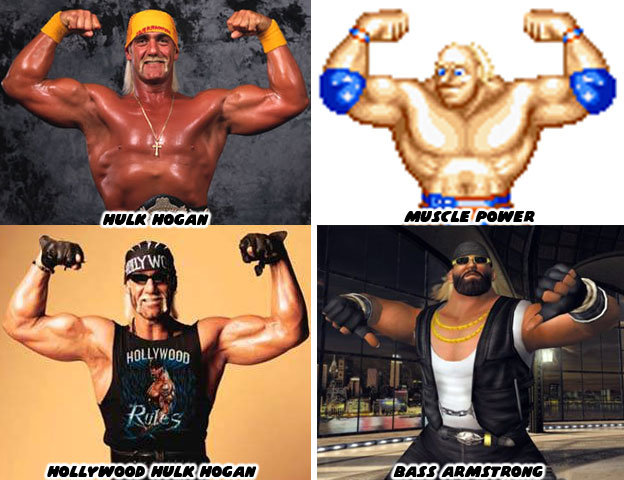
As technology evolved so too did the ability to present characters that kept pace with their real-life counterparts. For example, in the '80s Hulk Hogan was as American pride as a character could get but in the '90s the anti-hero was en vogue. Hogan ditched his clean-cut image and became a "bad guy" called Hollywood Hulk Hogan. There was a notable difference between Muscle Power and Bass Armstrong from the respective World Heroes and Dead or Alive series. It was uncanny how similar game characters would appear like their real world counterparts. Of course the developers at ADK and Tecmo knew to change just enough details so that they wouldn't get sued for trademark infringement.
 

Developers would even create alternate costumes to place on 3D models that made them look more like their inspiration. I mean Fei Long was very much a Bruce Lee clone but Capcom found that they could create costumes that mirrored those worn in several Lee films and sell them to audiences. Now if only the developers could create download packs to make the character fight differently, then you would have my attention. But I digress! I was talking about wrestling before I got sidetracked. Catch wrestling went underground but never disappeared. The narrative that kept the sport alive was similar to a popular book and groundbreaking film. The next blog will look at the seedy world that kept Catch alive. As always if you enjoyed this blog and would like to sponsor me please visit my Patreon page and consider donating each month, even as little as $1 would help make better blogs and even podcasts!
Wednesday, August 26, 2015

How fight culture became fighting game history, part 25

Kasushi Sakuraba had done some time in pro wrestling circles before his stint with the Pride and other MMA tournaments. Most professional wrestlers made poor MMA fighters and vice versa. Sakuraba seemed to be able to transition between the two worlds seamlessly. In fact he would return to pro wrestling and help give some credibility to his opponents by adapting some of his famous moves into his arsenal. The cartwheel and the foot stomp returned except this time his opponents knew that he would be pulling the majority of his strikes.


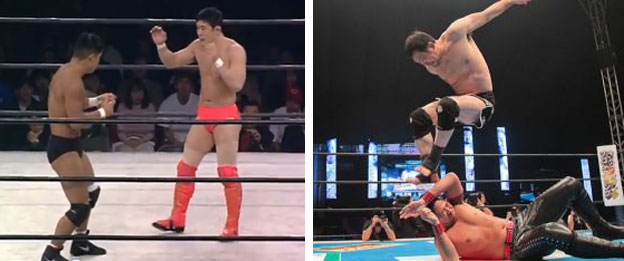
What many people did not realize was the pedigree that Sakuraba had inherited. Sakuraba was not simply a fighter with a personality. He was a rare athlete that understood the proper application and uses of the moves he had picked up in the ring. In pro wrestling circles the Japanese style was known to be very stiff or hard-hitting. The strikes were pulled to a lesser degree than those performed in the US which gave the fighting art some credibility to audiences. In fact some promotions prided themselves on highlighting realistic combat. The UWF promotion that Sakuraba worked with had rules that were closer to vale tudo than the pro wrestling that Westerners were used to. Fighters performed locks, holds and hard-hitting strikes that were designed to convince audiences that each fight was a "shoot" or a real battle.

There was a reason that the Japanese style of wrestling was hard-hitting. The man that helped shape the wrestling game in Japan was Karl Gotch. He trained many of the best fighters in the game, including Antonio Inoki. Remember he was the guy that fought Ali? Karl was considered the God of Wrestling to the Japanese, holding a place of prestige that may be even greater than Rikidozan. Gotch himself had been trained in a legacy that dated back to the birth of scientific or "catch-as-catch-can" wrestling from the late 19th century. Sakuraba embraced the roots of Japanese wrestling and began learning the moves from the other masters of the game. It would turn out to be the secret weapon that he used in getting past the BJJ system.


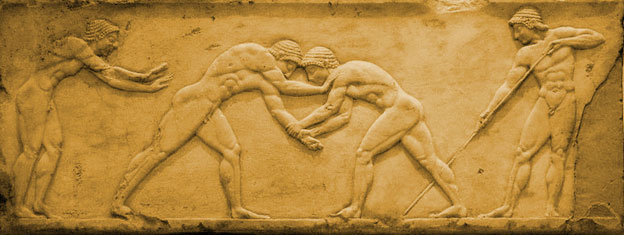
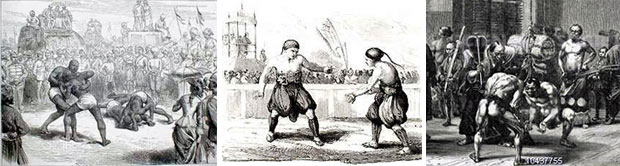
Grappling was the oldest known fighting art. It went well back in time when the earliest civilizations were getting established. Warriors and soldiers needed to learn how to fight unarmed in service of their emperors. Systems had to be established that relied on painful joint locks to subdue attackers and disarm opponents. Even laymen had to learn how to defend themselves in the event of a robbery attempt. The best fighters competed in early tournaments. In the Mediterranean the local nations would compete in regional wrestling tournaments before the rise of the modern Olympics. The ancestor to Roman-Greco wrestling had a second fighting art that developed alongside it. The pankration was a mix of wrestling and boxing, for all intents and purposes it was the first mixed martial art style or tournament. Fighters were allowed more leeway with their strikes but eye gouging and biting was still not permitted. Pankration, wrestling and boxing paintings adorned pottery, jewelry, statues and carved reliefs several thousand years old. Pankration was big in ancient times and the mythical heroes Hercules and Theseus were said to be masters of the art.


The names of the early champions were recorded by ancient historians. The legacy of those fighters survived more than 2,000 years. It showed that truly great fighters would indeed achieve immortality. A post apocalyptic animated comic named Pancratia by Ryan Benjamin was inspired by those heroes and their everything goes fighting style.

History books, as well as the graphic novel and movie series "300" reminded people that the Spartans were exceptionally dangerous because they trained in every form of combat from a young age. It was said that Alexander the Great surrounded himself with the best pankratia fighters from his army. According to historians other cultures were exposed to the fighting art during his campaigns and incorporated it into their own wrestling traditions.


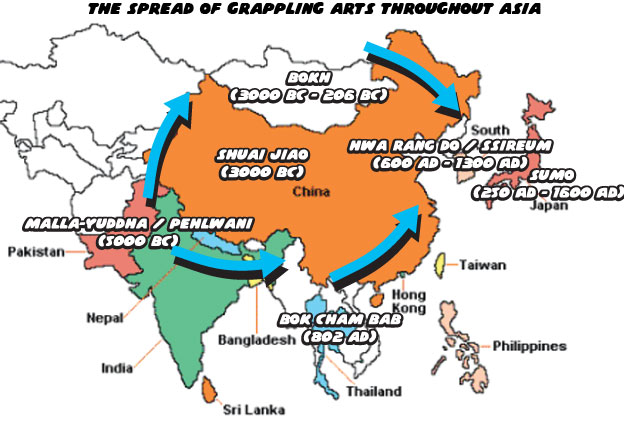
In 326 B.C. Alexander's campaign had taken his army through India where the western arts cross pollinated with another equally ancient form of wrestling. The early Buddhists took elements of the grappling arts north with them into China. It turns out that the striking arts were not the only things that migrated East. As many martial arts fans know the kung-fu forms influenced the development of the fighting arts in the southern part of the continent, Thailand and Cambodia as well as in the north like Mongolia. By the time traders settled in the islands to the far east they had taken their cross pollination of forms and planted the seeds for karate, judo and jujitsu.


Japan developed Sumo wrestling. Sumo wrestling has a rich history, a detailed tapestry of ethnic identity. Religious, mythological and royal characters have all been associated with the sport. Sumo has been called the most physically demanding of all the martial arts. The best wrestlers or yokozunas are the stuff of legend, massive men whose speed and ability beguile their size. Why wouldn't E. Honda have worked in the Street Fighter series? His strikes and kicks were simply caricatured versions of actual sumo slaps and thrusts. This is something that you should remember of all the classic SF characters. At some point in their design we can trace back an actual art or purpose for their moves and looks. It was only in recent generations of the game that it became disconnected from the martial arts.


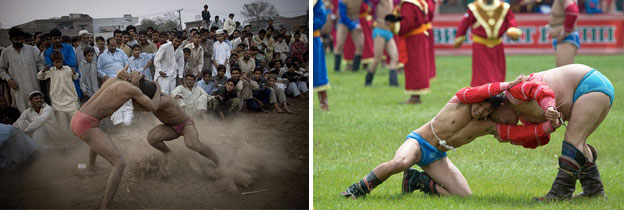
The further East we travel the more interesting the sport becomes. In Mongolia the form of wrestling Mongol Buh seems to have a little commonality with the techniques and strategies of stand-up, sumo style wrestling. Travel south a little and we discover that China has several variations of wrestling or Shuai Jiao. It is in the Chinese versions that we see a strong connection between wrestling and kung-fu.


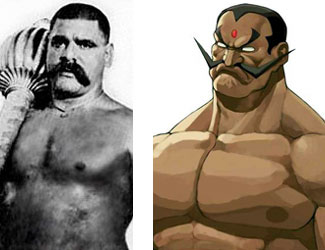
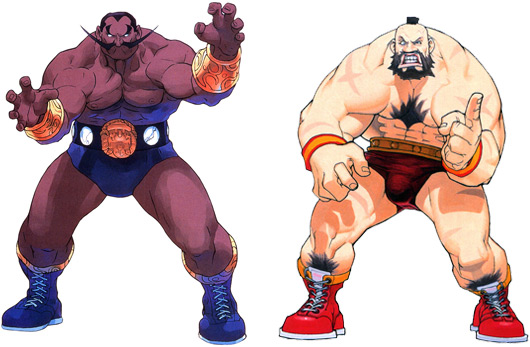
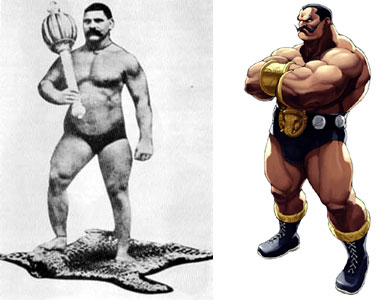
Indian wrestling or "Pehelwani" gave rise to, what I believe to be, the greatest grappler in the Street Fighter universe. Darun Mister from the Street Fighter EX series was inspired by the actual undefeated pehelwani champion Ghulam Muhammad aka the Great Gama. My brothers and I like this character more than the Red Cyclone himself. That is not to say that Zangief was a poorly designed character but his concept version was lacking. A tattooed sailor originally named "Vodka Gobalsky?" With designs like that you'd think that Capcom of Japan wouldn't be surprised by how the west reacted to new characters in SF IV.


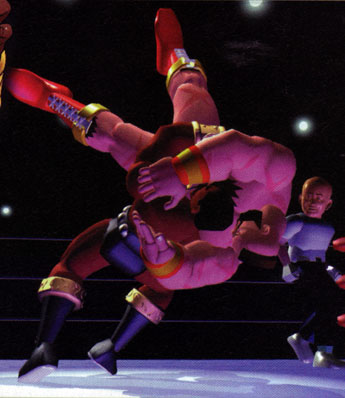
After a lot of fine tuning Zangief made his proud debut in SF II. Darun would not have worked as well without Zangief having established the fantastic qualities that wrestlers in the SF universe had. Darun had a Brahma Bomb or front-flip powerbomb to counter the Spinning Piledriver. The Banishing Flat and Spinning Lariat were combined through Darun's Lariat. But what was it about Darun that made him so special, so interesting outside of doppleganger moves? It could have been the cues that ARIKA used when creating the character.

The entire cast of SF EX was created to balance out the original world warriors. Ken and Ryu were balanced by Allen Snider and Kairi respectively. The strong females were balanced out, Chun Li had Blair Dame or Pullum Puruna. The oddballs were balanced out through Dhalsim had Skullomania. Military strongman Guile had Doctrine Dark and of course Zangief had Darun. Darun had to be as exaggerated in proportions as the burly Russian, and have equally fantastic wrestling moves. His dark skin color and trunks even balanced out the fair skin and bright shorts of 'geif. But there was a certain je nai se quoi that made Darun special. It was more than the upturned mustache or elephant champion belt, although those were cool touches as well.


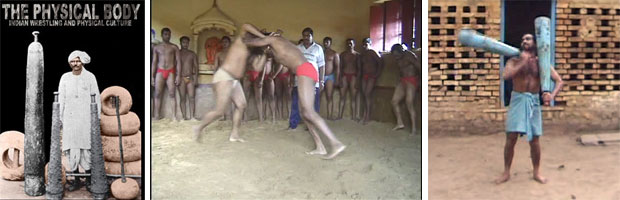
The appeal of Darun came from an understanding and appreciation of Gama and the Indian Wrestling culture. This is a topic that my friend AerialGroove from FightingStreet.com and I have been going over. AerialGroove clued me in to a documentary titled The Physical Body: Indian Wrestling and Physical Culture. I picked up the DVD and was fascinated with the unique regiments, weight lifting and strength training exercises that traditional Pehelwani demanded. This was a form of wrestling and physical culture invented centuries, if not millennia, before the modern strength training became understood in the western world. Pehelwani students would dig pits, lift stones, swing the gada and do calisthenics to develop muscles, flexibility and endurance. Some of these exercises were simple and functional, climbing ropes to strengthen grip and upper body for example, other exercises were more unique like reverse bridges to flips in order to strengthen back and neck muscles, some Yoga moves were even used during conditioning. Pehelwani students not only practiced wrestling moves but spent some of their time in prayer, observing the religious ties to the sport. Darun takes some artistic liberties with the culture, in the game he is represented as a Hindu when the actual Gama was Muslim.

The Pehelwani techniques must have worked because Gama was a physical specimen as much as he was a wrestling spectacle. When you think back to the early 1900's there weren't many physiques that could have compared with modern bodybuilders, Gama was one of the few exceptions. Some of his strength training formats are still practiced by people around the world. Unfortunately for every up there was a down. He would find criticism for his reliance on standing wrestling skills without developing proper mat skills. This and the diet he was on helped increase his bulk but eventually lead to his heart condition. Early physical culture understood the importance of eating large amounts of protein to build mass but unfortunately did not realize that his diet also contributed to his heart disease. You could learn a lot reading about the life and death of the Great Gama. His final days were actually kind of sad as the man who inspired a nation seemed to be forgotten by his fellow Indians.


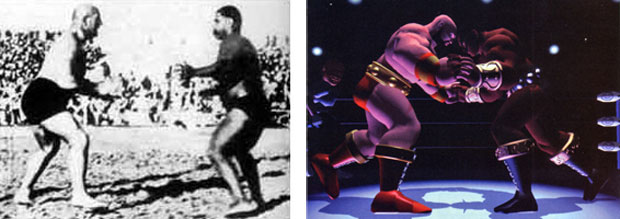
Gama went on to great success in his wrestling exploits in the early 1900's. In the thousands of matches he had reportedly been in he had never been defeated. He had drawn a few of his matches but none could have ever claimed a pin against him. His legend seemed to grow with every passing year. Even if some of his matches were met with controversy and less than flattering reviews none could argue that he was a fake. He travelled to England issuing challenges when he wasn't allowed to formally compete. Minorities were very strongly discriminated against for many sports. While there he defeated the Polish Stanislaus Zbyszko and eventually claimed the world heavyweight title.

Mr. Zbyszko was another titan of wrestling. He traveled the globe challenging the best in North America and Europe and winning more often than not. Only Frank Gotch had amassed a more impressive record in a tragically shorter time. Stanislaus' defeat at the hands of Gama took on some significance. Mr. Zbyszko probably had nothing to do with the creation of Zangief but Russians like Ivan Poddubny were very much feared at the time. Zbyszko was one of the few to defeat Poddubny.


When development of a 3D Street Fighter game came up ARIKA needed somebody that could not only be a worthy rival to Zangief but had genuine chance of beating him. They went back through the annals of wrestling lore and returned with the legend of the Great Gama. A man of exotic origin, dark of skin and well regarded for his unbreakable determination and undefeated legacy. ARIKA and Capcom then stylized his look turned him into a character whose scale and moves fit perfectly into canon.

This was when Capcom was going the extra mile in character design. No character could simply be added into the series just for visual appeal, they had to take on an additional context in order to both grab the audiences and compete against the returning legacy characters. Darun was just one of the characters featured in SF EX that was based on a legend. Darun and Zangief were presented as the genuine article. They were not gimmick wrestlers from modern times, or even showmen from the era of Gene Lebell. They were inspired by an earlier time, an era of authenticity. While modern gamers might not know exactly who or when they came from all can agree that they were exceptional designs, straightforward and to the point.


The Great Gama was the template for Darun. He was a wrestling God. He had the same mythical status that Oyama or Lee would enjoy in the modern era. Of course most of the people in the West had never heard of him. It was his contemporaries that helped popularize the evolution of wrestling from its ancient Greek tradition into something more scientific by the 19th century. These people were directly connected to the development of a system that Sakuraba and other practitioners of the modern fighting arts would exploit to great success. The next blog will look at these icons. As always if you enjoyed this blog and would like to sponsor me please visit my Patreon page and consider donating each month, even as little as $1 would help make better blogs and even podcasts!