Showing posts with label mike tyson. Show all posts

Thursday, October 5, 2017

Hiding the master in plain sight, the genius of SNK's character design... part 4

SNK was working hard to stay a step ahead of the competition. Their one-two punch of Fatal Fury and the Art of Fighting were unique entries to the genre. Each game provided a different experience and both expanded on the themes found in Street Fighter II. Not every character in both games worked or were even memorable. SNK had to learn and adapt to the trends quickly. The studio had to focus on multiple fighting games, each with their own aesthetic, while Capcom had to focus on patching and upgrading Street Fighter II. With the focus spread out over several games some of the fighters in the Fatal Fury (FF) and Art of Fighting (AoF) lacked the impact of Capcom's "World Warriors." In one particular field SNK started off slowly but then quickly caught up.


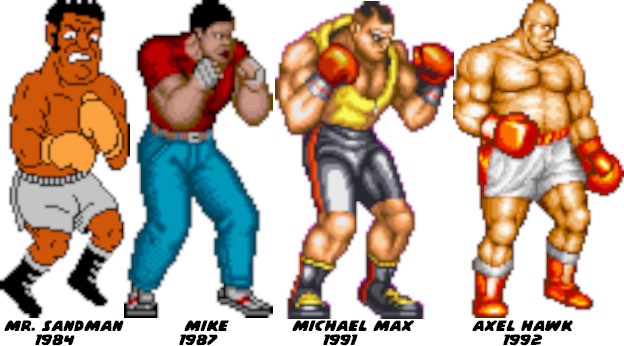
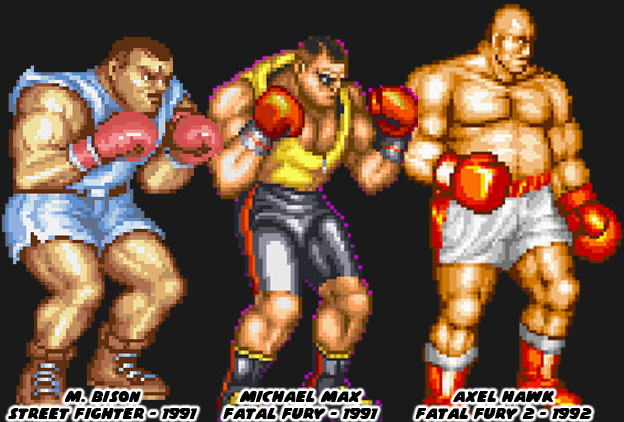
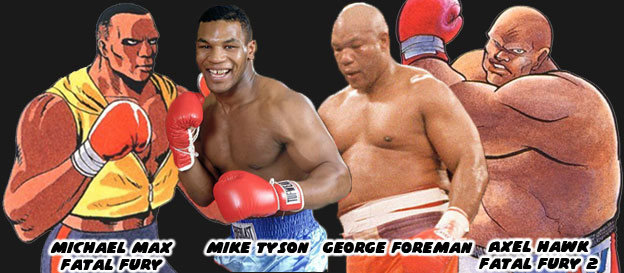
It was no coincidence that Street Fighter II's boxer M. Bison (Balrog in the USA) looked like pro boxer Mike Tyson. Capcom used the heavyweight champ as the template for their ring general earlier. Tyson had launched his professional career in 1985 and was featured in a version of Nintendo's Punch-Out!! He helped inspire the character Mike in the original Street Fighter as well. Tyson dominated the squared circle, at the age of 20 he became the youngest ever to win a heavyweight title. He earned a reputation for being destructive, and often knocked out opponents shortly after the opening bell. His supernatural fighting ability made him the perfect candidate for a fighting game. Of course Capcom didn't want to pay the boxer any royalties for using his likeness so they made a few changes, swapping out his name with another Shadowlaw general, and presented him in warmup gear. He was an easy fit into Street Fighter II and would even inspire a Fatal Fury boxer. Michael Max was literally cut from the same cloth as Bison, both having roughly the same size, shape, similar warmup gear and even haircut. Audiences felt this character was lacking, even if he had a unique tornado uppercut.


SNK's follow-up boxer had a more unique look. The bald and pudgy Axel Hawk was a friend and trainer for Michael Max. This fighter, featured in Fatal Fury 2, was taller and heavier than his protege. From a design standpoint it was strange to have a character that was older and fatter than the previous star. From a real-world influence however it made sense. George Foreman was a legendary heavyweight fighter that started his career in 1969 and stopped fighting at the end of the '70s. He became a preacher but returned to the ring in the late '80s. He got a title shot against Bernard Hopkins, a fighter 16 years younger than he was. Foreman recaptured the heavyweight championship at the age of 45, making him the oldest person ever to win the title. It was an underdog story that inspired long-time boxing fans. Chances were that SNK boss and boxing aficionado Eikichi Kawasaki suggested a version of Foreman for the sequel. Axel was a bit more rotund, especially in the official character art, than Foreman but they both had amazing power behind their strikes. Pop culture tended to color the SNK character designs more than any other studio. Aside from real-world fighters there were also decisions based on popular aesthetics. This was seen on another boxer in the SNK universe.


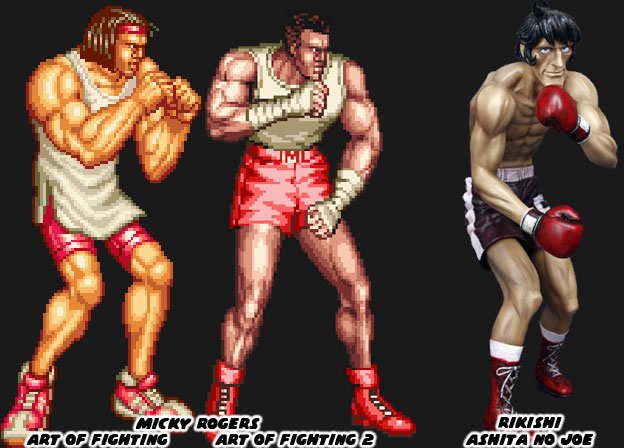
Micky Rogers was the boxing archetype introduced in the AoF series. The character sported braids in his first appearance and the look was changed slightly when he appeared again in a sequel. Visually the fighters in the AoF series were much different than the figures in FF. The artists working on the characters tried to make them more proportional to actual people. The reason for this was because of the larger sprites that AoF featured. If the character were drawn too muscular it would have looked awkward when they were scaled up. The fighters would have looked like cartoon characters in an otherwise realistic setting. Micky looked anemic compared to some of the other characters. He was lanky but well defined. It made sense given he was a boxer where speed was often more prized than power. The manga Ashita No Joe was a wildly popular boxing manga from Japan. The artist Tetsuya Chiba would draw his character with long, lean muscles. The action was easy to follow on the page because of his slender lines. This style of art that he popularized in 1968 would end up influencing countless other manga and anime shows about boxing. I believe that this design also found its way to SNK, given the Mr. Kawasaki was a boxing fan. Micky had almost the same build as characters like Joe or Rikishi, the champion fighters from the book.


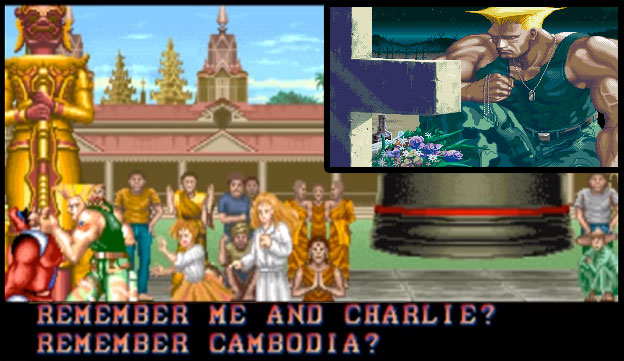
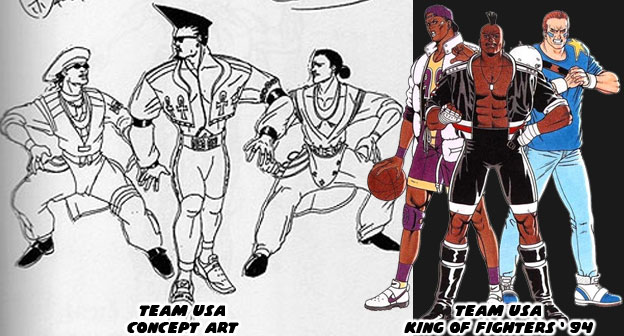
SNK, like most major arcade publishers realized that in order to succeed they had to become global players. This meant that they had to include fighters from other countries, especially the USA. Capcom and a few other studios included fighters from the USA in their games but gave them the slightest connection to real western culture. Joe and Mike in the original Street Fighter looked very plain, wearing street clothes, they were somewhat forgettable. The studio punched up their efforts with Guile in SF II. If anything they were pandering quite heavily to each nation, easily to the point of parody. Look at Zangief and Dhalsim’s original endings. Even the American was over-the-top. He was a military fighter wearing camouflage pants, with an absurd haircut, that was all muscles, and sported USA flag tattoos. As a Mexican-American I can confess that I must run into people that look like Guile at least twice a day! SNK did a slightly better job with their US characters and realistic street fashion in both the FF and AoF games. They decided to really crank it up with each sequel. They payed close attention to the trends happening in tv and in movies. When the studio began work on the King of Fighters, which would bridge all of their fighting games together they began pandering heavily to the USA. They did this by making the US team captain a boxer, and by looking at pop culture for his design cues.


Decades ago fashion trends travelled much slower than they did today. The artists at SNK wanted international audiences to visually identify the US team because of how they looked, rather than what school of fighting they were representing. In order to do this they had to create archetypes that were wearing the most “Western” costumes. The people at SNK were using fashion cues from pop culture as the basis. The only problem was that street culture evolved rapidly. The look of the US fighters were reminiscent of dancers from the films Beat Street and music videos from Salt-N-Pepa and Queen Latifah. The spandex and leather outfits of the late ‘80s were quite outdated for a game dropping in 1994. Thankfully the studio revised the outfits and based the fighters more on sports icons. A hint of the street fashion remained but for the most part it worked given the character. Heavy D, the captain of the team (and a name pulled from a popular rapper) was a breath of fresh air. He was a boxer that completely rewrote the book on character design. In the next entry we’ll look at how SNK’s designs evolved post 1994. As always if you enjoyed this blog and would like to sponsor me please visit my Patreon page and consider donating each month, even as little as $1 would help make better blogs and even podcasts!

 follow the Street Writer on Patreon!

Wednesday, October 21, 2015

How fight culture became fighting game history, final part

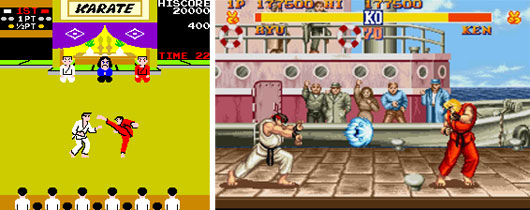
The seeds for the fighting game genre were planted in 1984. That year saw the introduction of three important arcade games which would profoundly change the industry. Irem released Kung-Fu Master, which predated Double Dragon and could actually be considered the forefather of the brawler. It had stage after stage of different villains approaching from the left and right and had a boss waiting at the end of each stage. Technos developed Karate Champ which was the original two-player fighting game featuring a red and white karateka. This was years before Ken and Ryu had appeared in the first Street Fighter. The only thing that the previously mentioned games lacked was diversity, in terms of different ethnicities. Although to be fair there was a dark-skinned giant, possibly of Indian or even Arabian descent in Kung-Fu Master. Minority characters were not playable characters however. The first prominent black character in a fighting game was Mr. Sandman.


The original WVBA (World Video Boxing Association) Champion from the Nintendo game Punch Out!! Boxing would be pinned on many black characters from the earliest point in Japanese games. Some of the characters developed during the late '80s and early '90s were done as an homage to Mike Tyson. He was going through opponents at a feverish pace when he turned professional. Near the end of his reign other black athletes began to replace him. Axel Hawk was written as the mentor of Michael Max (another Tyson clone) from the Fatal Fury series. Axel was a nod to George Forman who made a comeback at the age of 46 and recaptured the heavyweight championship of the world 21 years after he had originally won it.

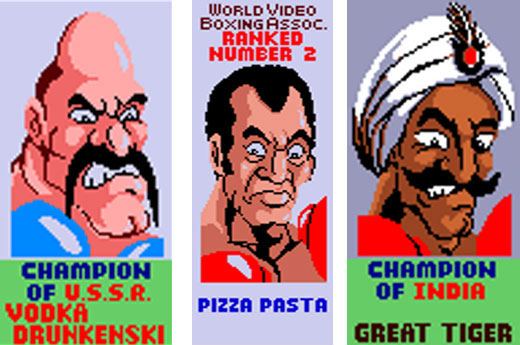
The game was also released in 1984 but had a reputation for its ethnically stereotypical characters including the Cuban Piston Hurricane and Italian Pizza Pasta. These were meant to be taken as a joke by the Japanese developers. Many game fans did not find too much offense in those characters however that changed with the introduction of the Vodka Drunkenski in Punch Out 2. The Russian was renamed when the game was translated to the home consoles. His bottle of vodka had been replaced by a soda bottle. Mr. Sandman was different though. He did not have any gimmick or racially biased name. There had been professional black fighters that also went by aliases like "Sugar," "Hitman" and "Dynamite," so the Sandman seemed to be a good fit. The character was deadpan serious, as one would expect a World Champion to be. He required perfect timing to beat and most arcade gamers never did. The character still managed to intimidate opponents 25 years later when a new Punch-Out!! was released for the Nintendo Wii.
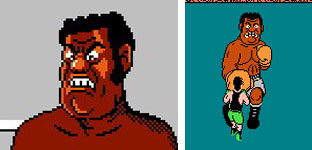

Shigeru Miyamaoto, creator of the Mario Bros, the Legend of Zelda, Metroid and a slew of other franchises had actually designed the cast and started a tradition in for developers. He demonstrated through Mr. Sandman that a character designed with respect rather than trope would reflect back to gamers. In the very first blog of this series I mentioned that the developers that respected their subject matter often did better with audiences. Even if a fighting game pitted skeletons against cyborgs or revolved around dinosaurs the players could pick up whether or not the developer was simply trying to cash in on a trend or if they had really invested their efforts into the game and the universe they created. Kung-Fu master and Karate Champ were ported to multiple consoles yet neither received a proper sequel. By comparison the Punch-Out!! series was a hit in the arcade, on the 8-bit NES with an added plot, on the 16-bit Super Nintendo with new villains and years later on the Wii. The extra time, energy, diversity and attention to detail that Miyamoto and his team had put into their game clearly came across to audiences every time.

The Japanese did not think that creating caricatures of ethnic stereotypes or names would have caused a big fuss. Through the '80s not many people took notice. However when the Politically Correct / Ethnic Sensitivity movements took off in popularity the Westerners expected those in the business world to follow the trends. In Japan that was not the case. Again there was cultural relativism to consider. Of the two nations only the US had a major civil rights movement.
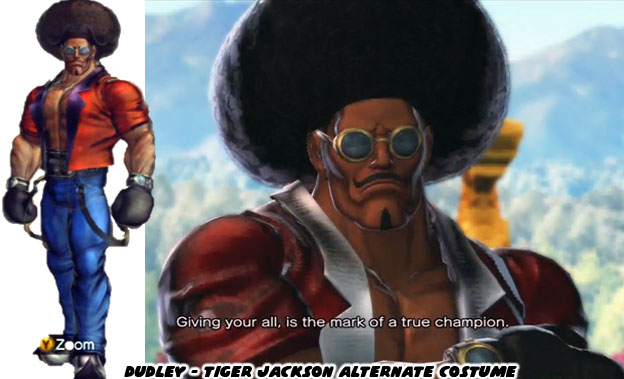

Capcom had created a great legacy of black boxers through the Street Fighter series, one of which played up the strengths and abilities of the sweet science rather than perpetuate stereotypical tropes. The bar that had been raised by the Street Fighter III team when they created Dudley was unfortunately lowered by the Street Fighter IV. More than a decade between games didn't make the Capcom artists any wiser. Dudley would receive an alternate costume of an afro and sunglasses modeled after the look of Tiger Jackson in Street Fighter X Tekken. He certainly didn't look very much like a world champ any more.

Developers in Japan and the US were stuck in a rut. Aside from professional boxers there wasn't much in terms of styles that they felt comfortable assigning black athletes. Basketball and breakdancing had become the new fad and by the mid-90s it was becoming tired to audiences. Thankfully Capcom and Namco wizened up and pointed to new fighting styles. Capoeira came into focus in 1997 thanks to Eddy Gordo and Elena. Even Sean was allowed to learn the assassin's fist that had been previously reserved for Ken and Ryu. Minority fighters suddenly no longer seemed locked into one role. A few years later Spiritonin expanded on that concept and began flipping conventions in their Capoeira Fighter series. Blacks, Whites, Latinos, men and women from different nations were all presented as exceptional capoeiristas. When those characters went on a wold tour they faced many new styles. These fighters from different nations also broke convention.
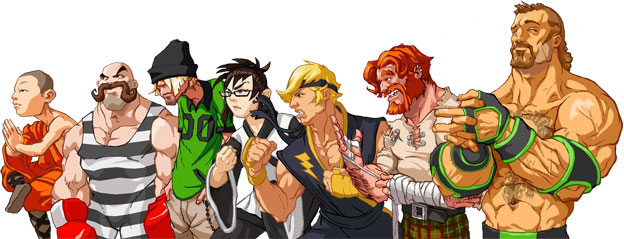

The boxing champion was a short British person with a Napoleon Complex. There was also a young Shaolin Monk, a German breakdancer, a female Tae KwonDo practitioner, a karateka based on the villain from the film the Karate Kid, a Scottish barroom fighter and a large Southern grappler. Rarely had any fighting game featured such diversity with regards to ethnicity, age and technique. Spiritonin had put the same level of detail on all the new fighters that they had with the capoeiristas. The moves each had, the special attacks, costumes, voices, names and even stages were built with forethought. The studio made sure to incorporate actual or appropriate details from each nation or culture to place on their cast. The name of the Shaolin Monk Kuan Yin Shen was based on a Buddhist deity. The young man spoke in wise passages during cut scenes, beguiling his age. Other characters had their own personalities on display while fighting or in their own cinemas.
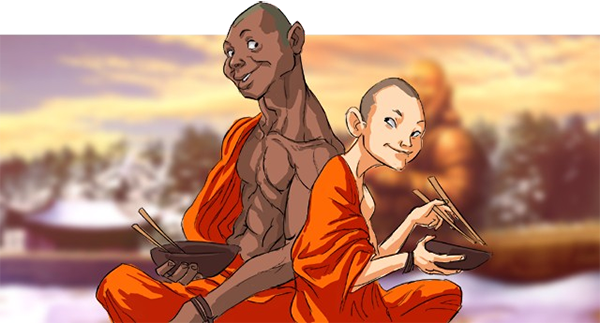

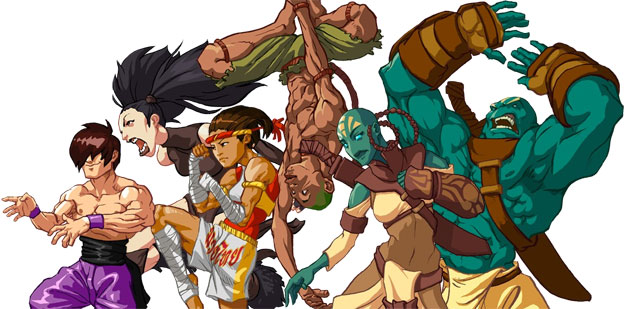
The capoeiristas were joined by some other traditional and non-traditional faces. A Bruce Lee clone which all fighting games needed to have, a wild jungle girl, a female Muay Thai master (the first one ever featured in a fighting game!), a monkey kung-fu master (that I designed) and a couple of alien beings from the Guardians of Altarris (a different Spiritonin game) made a cameo appearance as well.

Spiritonin knew that a colorful cast was important but not as important as good control, great animations and a balanced fighting engine. They delivered on all those things while at the same time deconstructing the ideas of minority characters in fighting games. Women and blacks could not only make good supporting characters but they could also be important leading ones as well. The game had no set main characters although Meste Loka and Mestre Rochedo had been in the series the longest followed by their students. In order to make sure the game went beyond all expectations Spiritonin also wrote a new chapter in the book on villains. Zumbi Azul was so well done that I would rank him among the best villains ever created for a fighter. Zumbi was already an impressive bad guy but his dark alter-ego raised the bar. In all honesty I would rank Zumbi Azul in the top-5 bosses of all-time. He would even be in my personal top-3, second only to Gouki and ahead of Silber.
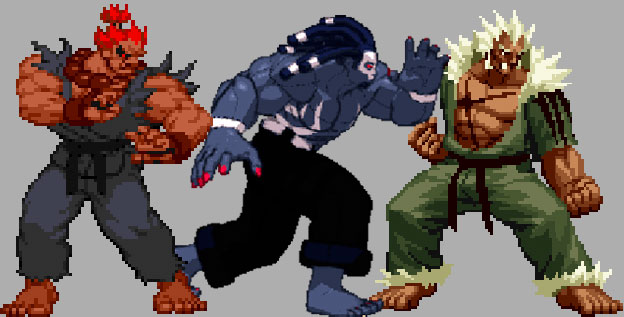

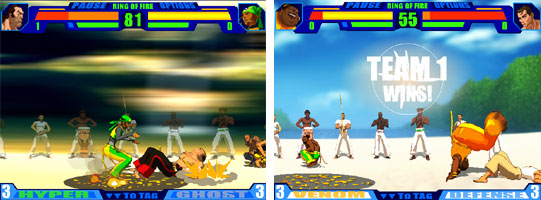
Spiritonin was able to insert powerful minorities and females into the genre as if they had always been there. They did not play the race card because they did not have to. They simply decided that it was finally time to bring fighting games into the 21st century. The biggest publishers in Japan and the US were taking too long to catch up with society. Spiritonin learned from Miyamoto and the other industry leaders. They treated their audience with respect. They placed men and women of color into a game without any pandering or gimmicks. The cast was balanced from a gameplay perspective but almost as important the members of both sexes had equal weight on the plot and outcome of the game. When Spiritonin wanted locations that meant something to Western players then they used actual landmarks. Even the fictional locations were still inspired by reality. The plantation mansions, the secluded beaches, the rain-forests and the colorful hotels featured in CF3 could be found sprinkled throughout South America. When Spiritonin wanted to create a convincing villain they used elements from ancient Afro-Caribbean and African-American spiritual customs that modern players could still identify. They did not put a costumed European in a corner and have him wave his hand to call down a meteor strike. In short the studio delivered something that audiences were not expecting.
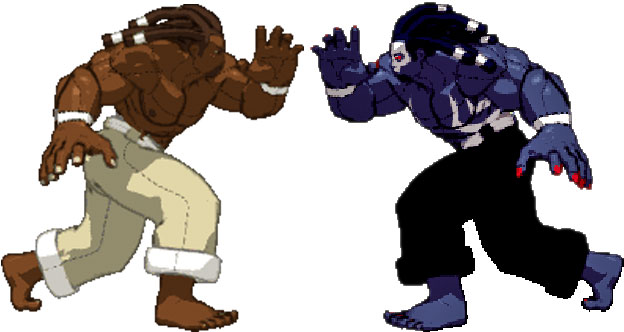

An important chapter in the history of the fighting genre was written but for the web browsers instead of the arcade or home consoles. Capoeira Fighter 3 was a great game but did not get wide exposure. Because of this many "hardcore" and even casual players missed out. The biggest loser would be the entire industry. The big publishers on both sides of the Pacific would not learn how a fighting game should treat members of every ethnic group and culture. Nor would they learn that they could present attractive females that were also strong and athletic instead of just big boobs in skimpy costumes. Without a popular and successful template to work from most developers would rely on trope to design the next fighter. A generation that grew up seeing minorities and women portrayed in one way would never expect to see them in any other light. It was important that the developers get these impressions right the first time or else they would perpetuate stereotypes. It was simply not enough to live up to player expectations, the studios had to exceed them and redefine what the expectations should be. A great game and a terrible game could equally color their perception of gamers. The industry should always remember that the color of their audience should always be respected more than the color of their money.
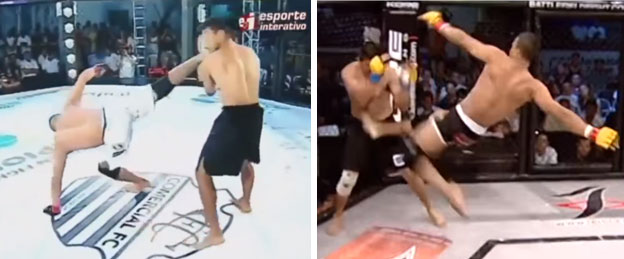

Capoeira found its way into the world of mixed martial arts in the latter half of the 20th century. Almost a century ago the Japanese Count Kouma had demonstrated that jujitsu could be used to defeat the best capoeira striker. Suddenly the Brazilians felt inclined to begin studying this new form from the East. Yet as Kazushi Sakuraba demonstrated time and time again not even the Gracie jujitsu system was perfect. Many mixed martial arts fighters, not solely the Brazilians, took another look at the Dance of War and began adapting the sweeping kicks and unpredictable strikes into their technique. Now modern fighters are well rounded in the various fighting forms and are able to put on demonstrations that are as exciting to watch as any fighting videogame. Marcus Aurelio for example has an incredible sense of balance and makes capoeira look easy to do in a professional match as he takes out opponents with dizzying speed. While he may never achieve the legend of Mas Oyama we can see that the lessons of knowing multiple forms does indeed make one a better fighter.

I hope that you enjoyed this survey on the various fighting arts and how they migrated around the world. From the roots of grappling and kung fu that Indian monks took with them to China. To the merchants that crossed the Sea of Japan and introduced a continent to the Empty Hand techniques. there were the indigenous tribes in Indonesia and the isles in the South Pacific that kept their form alive as Dutch, Spanish and French imperialists sought to destroy them. When the fluid striking of the African arts crossed the Atlantic it mirrored the journey of millions of slaves. It would become wrapped up in ancient animism beliefs of the Old World and the crown of thorns from the New World. Its legacy would become the mix of Japanese blood in the form of judo and ju-jitsu. It would bear the illegitimate offspring of English catch-as-catch-can and US wrestling. These children would grow up on a steady diet of fighting. Their children and great grandchildren would continue to fight and shape the arts.
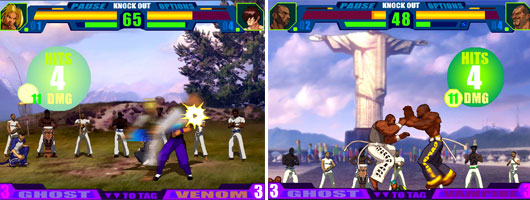
When fighting games became popular almost 30 years ago the developers celebrated the colorful world that gave birth to the genre. Little by little they turned their backs on the real men and women that shaped history and began inventing fighters and forms. By doing so the games suffered just a little bit and the popularity of the titles declined. I still think that the best days of the genre were still ahead of us. If the new generation of designers learned where fight culture came from and worked as hard trying to evolve as much as the current crop of real world fighters then I think they could capture the spirit once more. Thank you for following this series, thank you for the questions and comments throughout and I wish you all the best. As always if you enjoyed this blog and would like to sponsor me please visit my Patreon page and consider donating each month, even as little as $1 would help make better blogs and even podcasts!
Monday, August 24, 2015

How fight culture became fighting game history, part 24

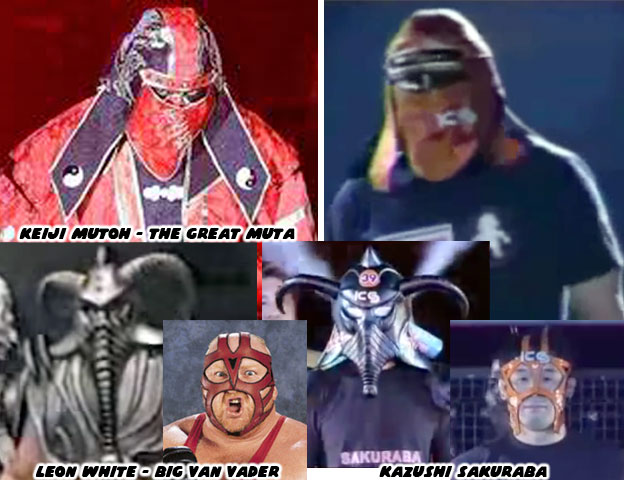
In Japan there was a new fighting promotion called Pride FC. It was similar to Vale Tudo or UFC in that it allowed just about any strike or grapple short of eye gouges or groin shots. A young Japanese wrestler named Kasushi Sakuraba was making a name for himself with his unorthodox style and amazing adaptability when battling people above his weight class. He was known for his over-the-top ring entrances. He would often put on a costume, dressing himself up like a video game character or a gimmick wrestler. He tried to honor some of the most legendary wrestlers with his costumes, such as the Great Muta and Big Van Vader. This was odd considering how reserved the Japanese were but it certainly helped him gain a following.


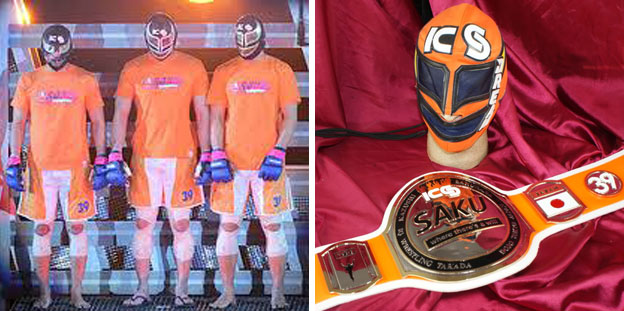
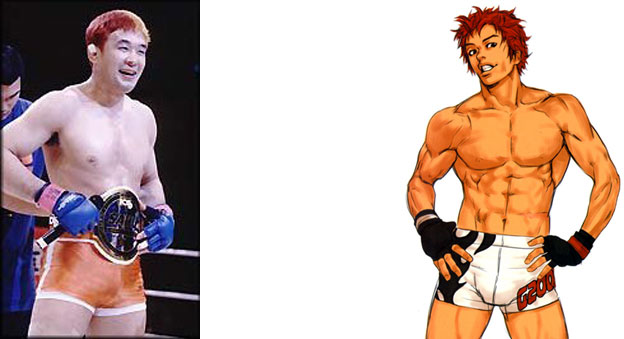
Despite the flash there was substance to the man. Sakuraba seemed to excel at defeating experts at the BJJ style. The people he defeated read like a who's-who of top Gracie students. The list included Paul Herrera, Conan Silveira, Vernon White, Carlos Newton, Vitor Belfort, Ebenezer Fontes Braga, Anthony Macias and Guy Mezger. Eventually his successes had caught the eye of the Gracie family. Determined not to let one person undo the half-century of work that Helio had put into the system they began sending actual family members to fight Sakuraba. Royler was the first and he was defeated using the same move applied to Helio decades earlier, the Kimura. In fact it was the first defeat for an actual family member since that encounter in 1954. The Gracie family was out for blood now. Unfortunately for them Renzo, Ryan and even Royce Gracie were all met with defeat. Before the dust had settled Sakuraba was awarded a belt by the Pride organizers in his trademark orange and was dubbed the "Gracie Hunter" by the press.


It was a proud few years for the nation. One of their own hometown boys had single-handedly defeated the system that had conquered the MMA universe. Sakuraba had stripped the mystique surrounding Gracie Ju-jitsu. Even when the Gracie family made stipulations before each match Sakuraba agreed to abide by them. He had exposed the flaws of the system and the practitioners. The mystique and air of superiority that the family once enjoyed had been shattered.

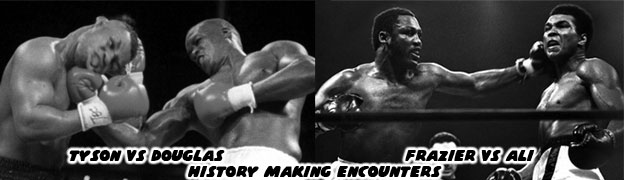
Yet it was not the first time a world champion had been humbled by the inevitable. Young "Iron" Mike Tyson had enjoyed an amazing run in his professional boxing career in the early '80s. Destroying most of his opponents in the first few seconds of the fight was impressive but made countless millions of cable subscribers furious. Yet the lack of discipline after the death of his trainer and mentor Constantine "Cus" D'Amato had started Tyson on a downward spiral. He began falling in with the wrong crowd, including promoter Don King, and before too long the mystique of Mike Tyson disappeared with his first defeat at the hands of James "Buster" Douglas. Tyson found himself on a downward spiral of self-destruction. His time spent in jail dulled his legacy and by the time he was given a chance to reclaim the title it was apparent to all that Tyson was no longer an immortal. For a fighter to remain at the top hard work, technique and natural ability were all important assets but the one wildcard was presence. If a fighter appeared to be impossible to defeat, or got into the head of an opponent then they would gain the advantage.

The Gracies and BJJ practitioners had the reputation going for them. The techniques had been proven on the streets, in the bars, in the dojos and on the professional stage. Gracie Ju-jitsu was a serious fighting art, capable of disabling or even killing a person. Yet once there was a crack in the armor, something that could be exploited, then other fighters would no longer believe in the superiority of the BJJ practitioner. They would no longer allow themselves to be intimidated even by actually dangerous fighters. What Sakuraba had done to the system was dull its reputation. He went into each fight prepared and fearless.


A similar thing had happened in 1971 when Joe Frazier knocked down Muhammad Ali. Considered the greatest heavyweight boxer that ever lived few ever stood toe-to-toe with Ali and even less managed to drop the man. Joe Frazier had actually been worked into a frenzy by Ali. The constant ridicule and trash talking had gotten into the mind of Frazier. They had once been friends but Ali raised the stakes when he tried to assert his presence over Frazier. What Frazier saw in the mocking by Ali, being called an "Uncle Tom" and a gorilla to the press was not promotion but betrayal. The heavyweights had said all that could be said about the man. Frazier was the only fighter ever to talk back to Ali in the ring, even when he was getting beat. George Foreman even admitted that he feared Joe Frazier. It was said that when Frazier stepped into the ring against Ali he was prepared to die. What he did was show the world that the great Ali was mortal after all.


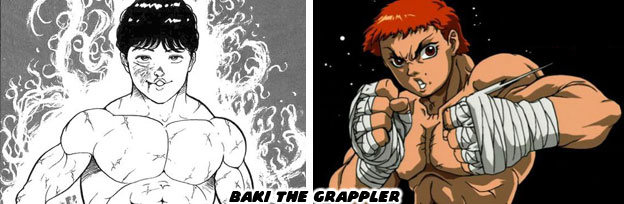
Sakuraba was rewarded for his efforts with more than a belt and the admiration of millions. He also influenced the character design of Tendo Gai for SNK's Buriki-One. The flashy young fighter could never be mistaken for a master of one of the traditional arts. The game did in fact feature karate, sumo, tae kwon do, muay thai and wrestling characters. Each of the fighters wore traditional uniforms save for Tendo who wore the shorts and gloves of a modern MMA superstar. Gai was also influenced by the character Baki from the manga and animé series Baki the Grappler. In the series Baki was a gifted teenager with impossible strength, speed and stamina. He was capable of destroying older, larger fighters. He used creative training techniques, beat up wild animals and did all sorts of amazing things in the graphically violent series. Tendo Gai was only 17-years-old in the game. He was a self taught master of "Total Fighting" which he developed after graduating from middle school. It would make him one of the younger fighting game masters ever developed.


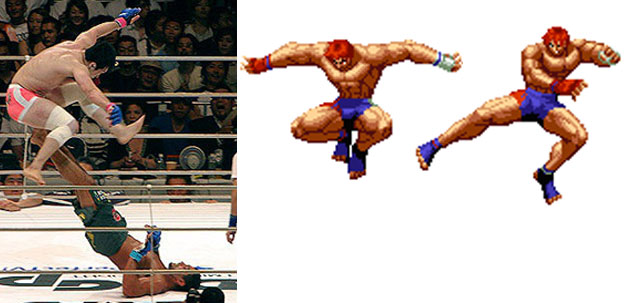
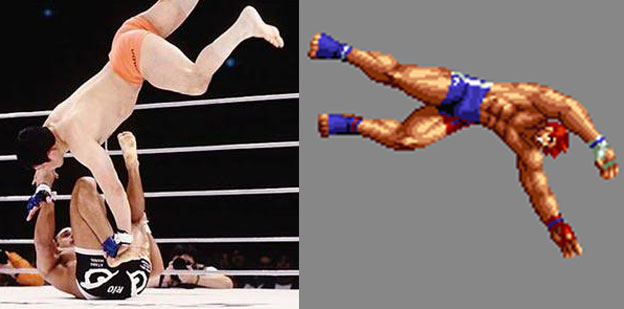
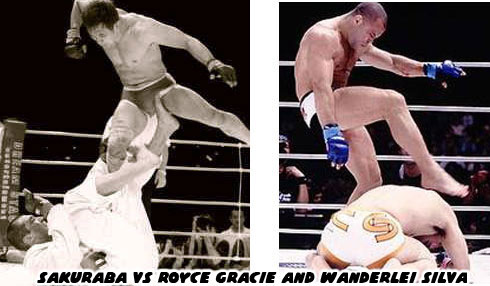
Buriki One featured blocky characters, an odd control scheme and lacked the smooth gameplay that audiences were used to. Few saw the title and many forgot it was even part of SNK canon until they brought back a few of the characters in the King of Fighters series. By then the studio had adapted a few of the actual fighting moves of Sakuraba into something that would work for a game. For example the Gracie fighters would sometimes lay prone on their backs and try to trick fighters into engaging them on the ground. It seemed like an easy target for most but the BJJ fighters excelled in ground grappling and often made opponents submit just moments after taking the battle to the floor. Sakuraba kept a cool head during his fights with them and refused to engage them on the ground. Instead of trying to mount his opponents Sakuraba would kick at their legs and try to do as much damage as he could to them while they laid prone. This would slow them down and weaken their resistance as the rounds went on. By being on their backs they could not generate much force when they kicked back. When Sakuraba saw an opening he would actually take a running leap at his opponents and try to kick them as he came down. After a few attempts at this he would sometimes trick opponents by running at them and hitting them with a baseball slide kick. These attacks would be included in Tendo Gai's move set for the KOF series.


In one Sakuraba's more flamboyant moves he would try to close the distance between the prone grapplers by performing a cartwheel and going after an exposed arm. This move was also given to Gai as the character dashed forward to close the gap between he and his opponent.

By controlling the pace of the encounters Sakuraba managed to throw the BJJ experts off of their game. What was interesting about the development of Tendo Gai was that he was given moves more grounded in reality than those usually reserved for KOF or even Street Fighter characters. He existed in a world where some characters could throw "fireballs" or topple giants with "dragon punches" but it didn't matter. His all-around moves, solid combo system and painful joint locks were just as destructive and much more plausible.


Sadly the era of Sakuraba would close almost as quickly as it came. Another Brazilian would dethrone the man but not with the BJJ techniques. Wanderlei Silva aka the Axe Murderer was an exceptional striker and excelled at muay thai techniques. His barrage of strikes and knees defeated Sakuraba in all three of their encounters. Sakuraba would lose more than he won through a period in the early '00s. Eventually he would end up splitting the difference between wins and losses for the rest of the decade. To many Sakuraba had stayed in the fight game for too long. The next generation would try to make a name for themselves by going after a man past his prime. Royce Gracie got a much anticipated rematch and won the decision. He later tested positive for steroids so the match was declared a no-contest. A Gracie family member would finally manage to defeat the man but under controversial circumstances. Ralek Gracie, the son of Rorion defeated Sakuraba in 2010. The ref stopped the fight and allowed Ralek to pull up his shorts after Sakuraba had applied a submission move. To add insult to injury Ralek was 24 at the time and Sakuraba was 41.

To many the legend of Sakuraba would never die. He had proven himself time and time again against some of the best in the world at their prime. As an old man he could still pull a rabbit out of the hat. His submission of the decade against an up-and-comer Zelg Galesic was the stuff that dreams were made of.


What the fight community wondered aloud was whether Sakuraba was a flash-in-the-pan, a fluke. He was a pro wrestler that knew how to throw bombs. But wrestlers never faired well in most MMA tournaments no matter how well they punched or kicked. What was the community overlooking if anything in the ability of Sakuraba? The next blog will try to unravel the mysteries of wrestling and see it as the fight science it actually is. As always if you enjoyed this blog and would like to sponsor me please visit my Patreon page and consider donating each month, even as little as $1 would help make better blogs and even podcasts!