Showing posts with label neo geo. Show all posts

Friday, May 9, 2025

Why I'm not talking about Fatal Fury: City of the Wolves

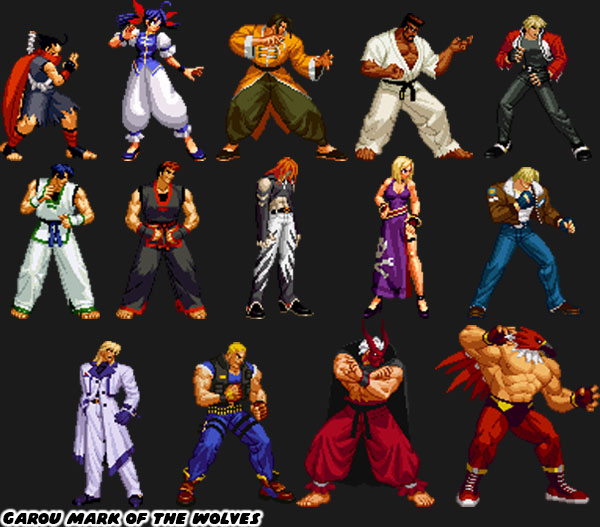
Hello friends. Thank you for dropping by. You probably know that I’m a huge fan of fighting games. I’ve been playing them for 45 years. The first fighter I remember playing was Warrior by Vectorbeam. I wrote about this when I was doing a look at the Virtua Fighter relaunch. With that said I’ve avoided posting on the Fatal Fury: City of the Wolves for some time now. People may think that I’m biased against SNK, or only write about Street Fighter, but that is far from the truth. In fact the very first blog that I posted here in 2014 was dedicated to Mr. Karate from the SNK universe. I’ve written a lot about the history of Fatal Fury, the creators, and the characters on this blog. I was such a fan of the Garou series specifically that I tracked down the manhua (Chinese comics) based on Garou: Mark of the Wolves. I loved all fighting games, it’s just I loved some titles more than others.

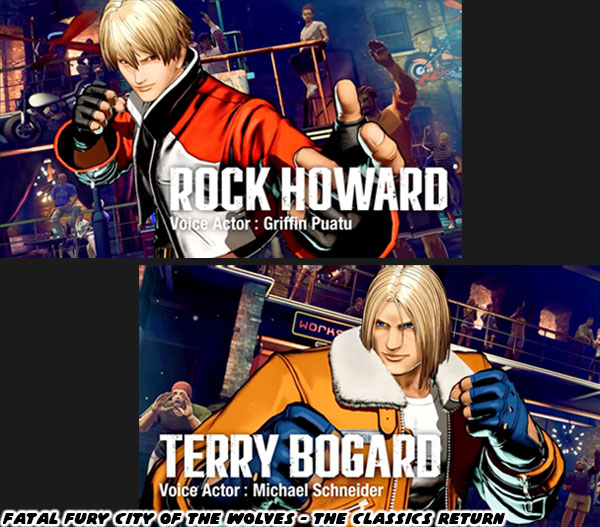
I was very passionate about the Garou / Fatal Fury: City of the Wolves project for some time. I started talking about the development of the game in 2022. It had been ages since I was excited for a classic game to return. By March of 2024 I shared everything that I could pull from the character reveal, and gameplay trailers. I did a look at how the characters featured in the game evolved from concept art. With the guest character reveals of Mai, and Terry in Street Fighter 6 I had to mention why Mai Shiranui was important in fighting game history. Yet once the final details of the game were announced this year, and released on April 25, 2025 I had yet to say anything.

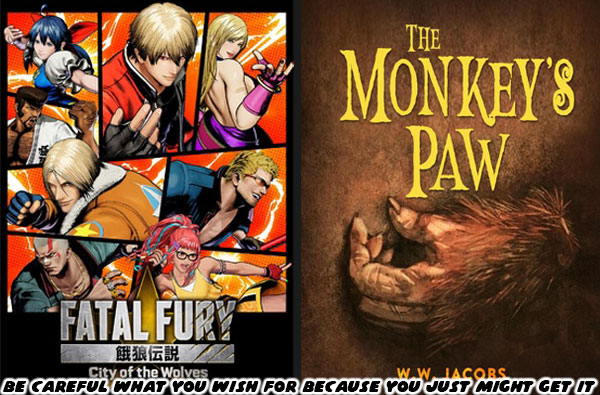
Why would I walk away from a sequel that I had been waiting on since November 26, 1999? That was when the original Garou: Mark of the Wolves came out. After a quarter-century wasn’t it going to be worth the wait? Sadly the answer would be no. The game was the embodiment of The Monkey's Paw. The short story taught us to be careful of what you wish for. Sometimes it’s better for things to stay dead, and buried. Even though SNK said that their new Saudi owners would not influence the direction of the games it was obvious that wasn’t entirely true. The game would be pandering to pop culture, rather than celebrating the fighting game legacy that built an industry. Will Borger with Digital Trends summed up everything that needed to be said about Fatal Fury: City of the Wolves. Mr. Borger's review touches all the basis for the game itself, but does us all a favor and explains why it doesn't reflect the fighting game community at all.

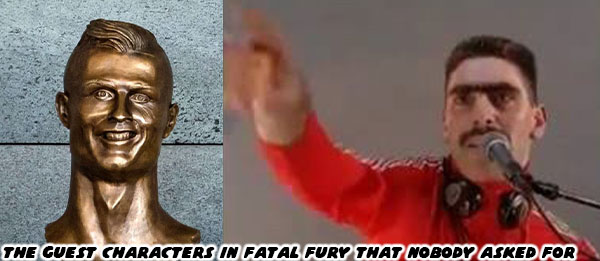
There was a quick answer as to why I walked away from the game after a release date was announced. The two guest characters revealed were shockingly disappointing. Rather than include a classic character from the SNK universe, or any crossover characters from Capcom, Sega, ARIKA, or Namco. The developers decided that a professional futbol / soccer player, and a DJ would be the welcome additions. These two people were so outside of the fighting game orbit that they would have never been voted on by the actual players. The athlete himself had been in the news for sex crimes. As for the Swedish-Bosnian DJ... he might be a global superstar but I had never even heard of him. Apologies to Super Greg for being overlooked as a better Hip Hop representative. It was obvious that the Saudis were directly influencing the development of the game. SNK would not bother to do as much of a cultural deep dive as Capcom did with Street Fighter 6.

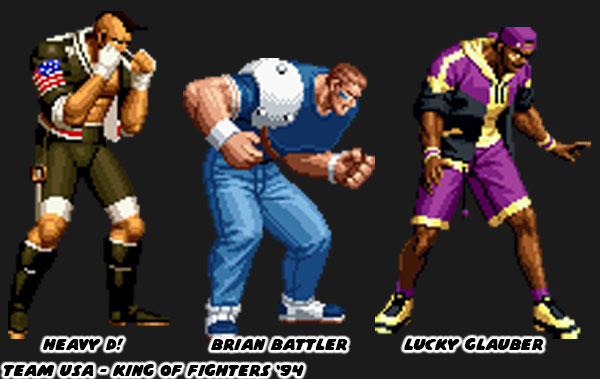
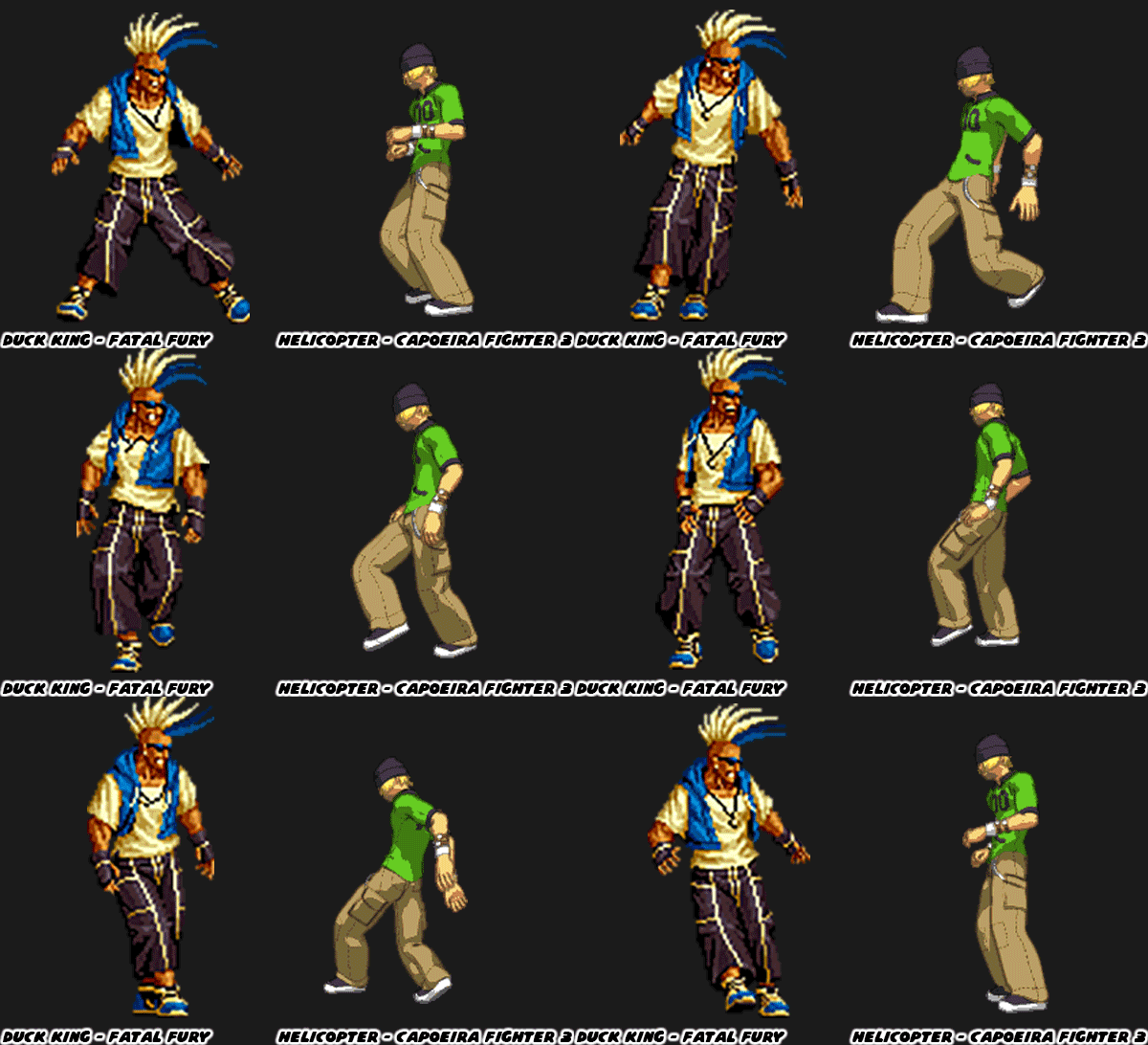
That is not to say that a soccer character couldn’t be used in a fighting game. Roberto Miura from the Capcom game Rival Schools: United by Fate showed us that it was possible way back in 1997. Not only that but athletes had already been used in an SNK fighting game. Team USA aka Team American Sports appeared in King of Fighters ’94. These was a professional boxer named Heavy D! A pro football player / race car driver named Brian Battler. Lastly there was the basketball pro named Lucky Glauber. So yes the game could have used pro sports athletes, as long as they were made somewhat fantastic, and not just a copy / paste of an existing athlete. As for the DJ… fighting breakdancers could be done well. See Helicopter in Capoeria Fighter 3.

In many ways the bigger insult to the Fatal Fury series was in adding a real DJ to the game (whom I would also not name). Hip Hop already had a representative in the series called Duck King. This character debuted in the original Fatal Fury on November 25, 1991 then appeared another 11 times over the decades. The mohawked star was a literal street fighter. He was a battling b-boy (breakdancer) using tumbles, and sweeps to great effect. He was followed by a crew of baby ducks, wore street clothes, had a flamboyant personality, and was beloved in the fighting game community. Even if it was revealed that mentored the DJ in the new game it would have been better to stay with the original South Town legend. It was clear that the people working on SNK today didn’t understand the tone, and feel of the original series.

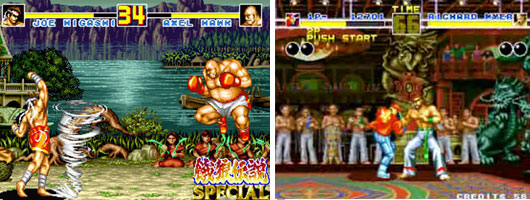
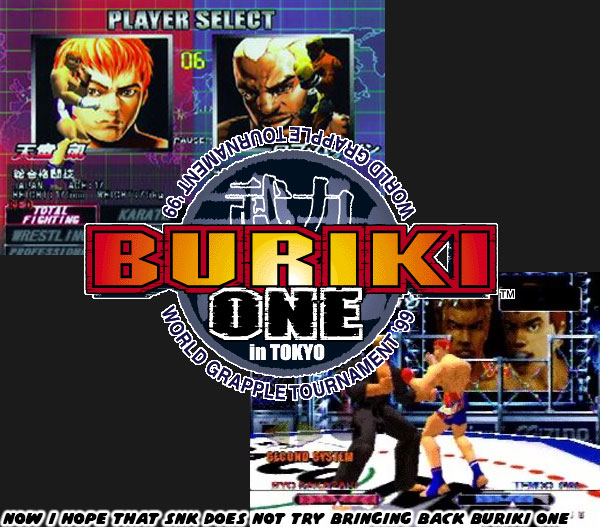
The early days of the arcade era were very experimental for most studios. In the ‘80s SNK was known for its bold game designs. They did combat game exceptionally well because SNK founder Eikichi Kawasaki was a boxer in his younger days. He wanted the fights in his games to be more visceral. This meant that masters of various forms were welcome to be represented in their releases. That was why SNK introduced Capoeira to arcade goers way back to 1989. The developers had a great appreciation for fighting in all styles. When MMA started to surpass all combat sports in the late ‘90s they developed a rare 3D title called Buriki One in 1999. It was the same year that they released Garou: Mark of the Wolves. Many of those team members had since retired, or moved to other studios. The current team at SNK was good at recreating themes, and elements of classic games with modern art, aesthetics, controls, and game play. The thing they seemed to lack was the imagination, and appreciation of the influences that created the iconic series. 

The new developers didn’t seem to know how to add a new character into the franchise that wasn’t pulled from old design notes. Worse yet they were listening to the whims of their Saudi owners, and just throwing in real people for no reason. This made me afraid that they would try to reboot Buriki One next. Or they might reconsider bringing back other games based on the cold reception of Fatal Fury: City of the Wolves. At least I hoped they would do better if they were thinking about it. What about you? Did you pick up the game? Was it your first time playing an SNK game, or were you a veteran player like me? I’d like to hear about it. Tell me about it in the comments section. As always if you enjoyed this blog, and would like to sponsor me please visit my Patreon page and consider donating each month, even as little as $1 would help make better blogs and even podcasts!
follow the Street Writer on Patreon!

Friday, December 13, 2024

Freeze frame, my poster collection, part 20…

It turns out that my fighting game posters are not limited to Capcom. I also want to celebrate their friendly rivals at SNK as well. One of my favorite games is the Samurai Spirits / Showdown series. If you are looking for posters from the SNK franchises then I would suggest tracking down issues of NEO GEO Freak from Japan. They often came with a poster. There are a few issues that I’d like to get still, but if, and when I do I’ll blog about it in the future.

I’ve written about the genius of SNK’s art team on the blog, especially the brush style used by the Samurai Spirits illustrators.

Samurai Showdown II was ranked one of my favorite games of all time. If you’ve never played it then please try to track down a copy in an anthology.

Garou Mark of the Wolves is one of the most underrated fighting games in the history of the genre. Thankfully it is getting a sequel decades later.

I love the SNK posters that I have, and I’d like to add a few more. I’ll never get as many as the Capcom posters I have, but it’s always work trying. Do you have any favorite SNK games or posters? I’d like to read about it in the comments section. As always if you would like to sponsor me please visit my Patreon page and consider donating each month, even as little as $1 would help make better blogs and even podcasts!
follow the Street Writer on Patreon!

Sunday, May 12, 2024

A good Double Dragon fighting game? The story of Rage of the Dragons.

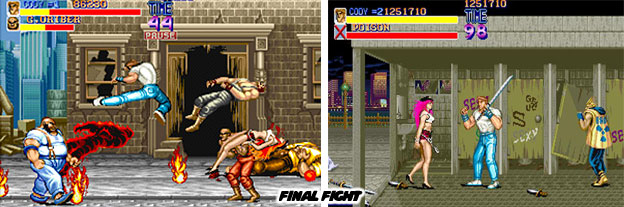
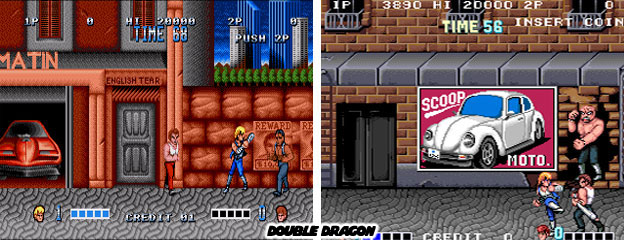
In the previous blog I talked about how EXA-Arcadia was rereleasing / remastering Daraku Tenchi: The Fallen Angels, and Rage of the Dragons W for the arcade. I mentioned “the godfather” of brawling games was Double Dragon in 1987. It had inspired the creation of Rage of the Dragons, a fighting game from 2002. A little more on that in just a moment. Technōs essentially launched the brawling game genre, and influenced the fighting game genre as well. Despite being important to game history they were incapable of creating a sequel that was as influential as the first game. Not long after Capcom released Final Fight, Konami released Vendetta, and Sega released Streets of Rage. Each was essentially a better version of Double Dragon. In fact post 1989 there were dozens of great titles which were superior to Double Dragon in every regard.

The sequels to Double Dragon failed because in my book they did not innovate the format. The studio played it safe, and made only marginal changes to the game. Worse yet they looked for ways to make arcade players pay more money through micro transactions. In the early ‘90s the arcade market had shifted. Fighting games were the hottest titles, and brawlers had taken a back seat. The biggest hits of the entire decade all came out within three years; Street Fighter II (1991), Fatal Fury (1991), Art of Fighting (1992), Mortal Kombat (1992), Virtua Fighter (1993), Tekken (1994), Primal Rage (1994), Vampire / Darkstalkers (1994), and Killer Instinct (1994). By the middle of the decade it was hard to break in with a new fighter. That was exactly when Technōs decided to throw their hat into the ring. Had Technōs released a Double Dragon fighting game four years earlier then it would be more relevant today.

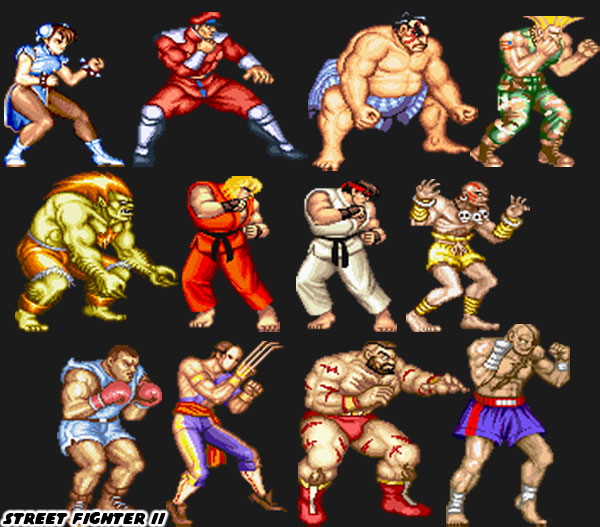
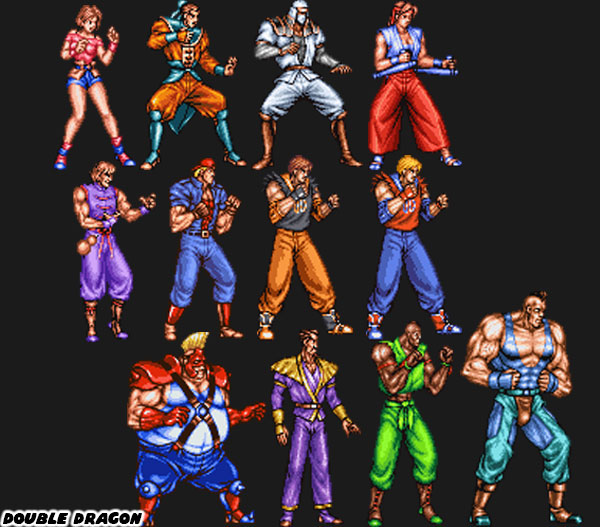
The mistakes of Technōs could be understood through their fighting game. Being slow to market was one of the biggest issues. Double Dragon (the fighting game) was similar to the hundreds of other titles out in 1995. There were two main characters Jimmy, and Billy Lee. They studied the fictional Sousetsuken “Twin Sever Fist” style of fighting. The Japanese, and western lead characters with their own trademark fighting style had also been seen with Ken / Ryu (Street Fighter), Kazuya / Paul (Tekken), Akira / Jacky (Virtua Fighter), Ryo / Robert (Art of Fighting). Granted Billy, and Jimmy were the ones that started the trend. Double Dragon also had the token big guy, girl, strange character, etc which had been pulled from the franchise. The sprites were large, and colorful. They were not unlike the sprites, and cast of Street Fighter II which was something that other studios had also poached.

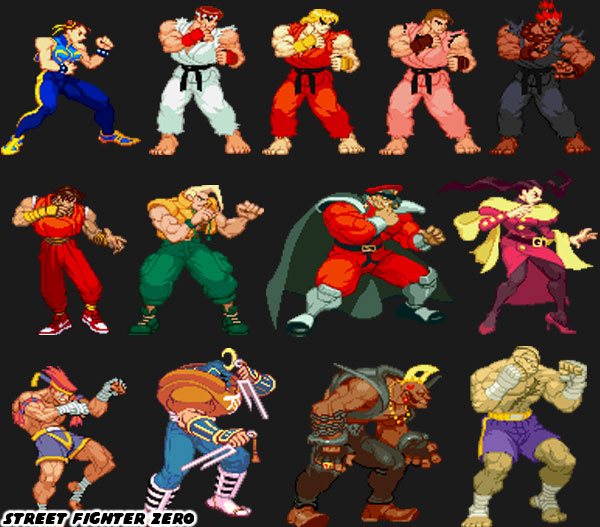
Technōs didn’t realize their visual presentation was becoming dated. It took them too long to bring a game to market. Having a recognizable brand, and going through the motions was not enough. Other studios were trying out bold new ideas in the early ‘90s. In order to stand out from the crowd it wasn’t enough to have bigger, or slightly more colorful sprites. Sega had polygon models, Namco had textured polygons. Rare had SGI workstations creating sprites that looked like computer graphics. Midway used live action footage, and Atari used stop motion figures. On top of everything the popular aesthetic, the art style was shifting. There was a blending of western comic book formats, and Japanese anime in a new sprite art form. Capcom designer BENGUS broke the mold in 1995 with Street Fighter Zero / Alpha.

The game was amazing given that a number of the staff that worked on Street Fighter II left Capcom to join SNK,a nd ARIKA. Noritaka Funamizu, and the remaining team at Capcom was able to create something amazing with a bare bones staff in a relatively short amount of time. The large cartoonish sprites designed by BENGUS were revolutionary. The entire industry had to respond. I would argue that SNK’s first counter were the sprites featured in Real Bout: Fatal Fury Special from 1997. The game featured sprites which were touched up, and made more colorful from those featured in the previous Real Bout game from 1995. That was a small step for their art department. The actual response to Street Fighter Zero was seen in Garou Mark of the Wolves. The fan favorite game from 1999 had a style, and presentation that was close to BENGUS, but still had the classic SNK fingerprints all over it. The sprites, and character designs that Technōs featured in Double Dragon in 1995 simply didn’t capture audiences in the ways that the Capcom sprites did. A few years later there would be another chance to get it right.

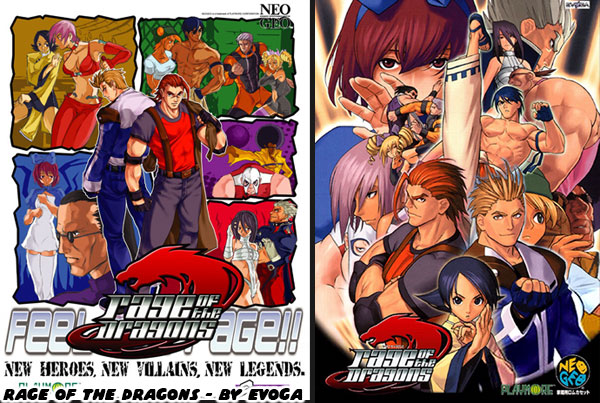
The developers at Noise Factory was not happy with the version of Daraku Tenchi: The Fallen Angels that was published by Psikyo in 1998. They did not have the time, or money to develop an upgrade kit either. Arcade business was slowing down globally at the end of the ‘90s. Any arcade title that was published had to be more polished right out the gate, rarely did any studio have a chance to release upgrades for arcade operators. While they couldn’t go back, and add more content to the Fallen Angels, they did think there was a chance to make a sequel to the 1995 fighting game inspired by the ill-fated live action movie. The history of Rage of the Dragons was unique. It was created by Noise Factory, and BrezzaSoft for the NEO GEO. BreezaSoft was founded by Eikichi Kawasaki, who also founded SNK. What made it truly unique was that it was designed by the Mexican studio Evoga.

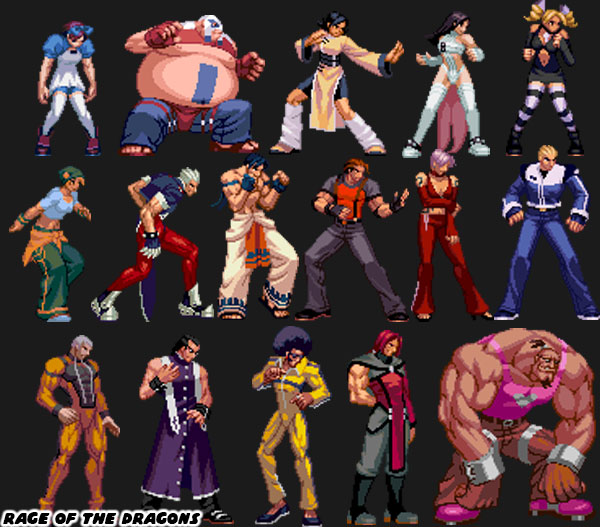
Unfortunately they couldn’t get the rights to the Double Dragon characters or name. Million was made up of former Technōs employees, they were sitting on the rights, and didn’t seem eager to strike a deal. To make negotiations more difficult SNK was going through a bankruptcy at around the same time. South Korean developers Eolith were hired to help finish a few projects. Steel Hearts team members helped SNK as well. They figured out that they could move forward with their own game if they slightly changed the names. Billy, and Jimmy’s last name went from Lee to Lewis. The girlfriend Marion became Mariah, Abobo became Abubo, etc. This didn’t stop Million from filing a legal challenge. Fans of the franchise could tell what this new fighting game was actually based on. To set it apart from the earlier game it was made a tag-team fighter. Visually the team at Evoga was able to find a perfect blend of the style of Street Fighter Zero, and Garou Mark of the Wolves. In just about every regard it was superior to the fighter from ’95. Sadly Rage of the Dragons just didn’t have the balance, and game play of the more popular titles. It was rarely seen in arcades, and didn’t build too much of a following.

I was happy that EXA-Arcadia was going to give the titles by Steel Hearts another go. I hoped that the developers would reunite to add some polish, and perhaps add a few more features to the games. Rollback anyone? Maybe, just maybe this would help them get to modern consoles sooner, rather than later. Of course I want to know if you played any of the Steel Hearts games. Or did you play any of the classic Double Dragon games? Did you have a favorite? I’d like to read about it in the comments section. As always if you would like to sponsor me please visit my Patreon page and consider donating each month, even as little as $1 would help make better blogs and even podcasts!
follow the Street Writer on Patreon!

Saturday, May 11, 2024

The Fallen Angels, and Rage of the Dragons. Two rare fighting games get a second chance in arcades!

The EVO tournament in Japan at the end of April 2024 had a few gems announced. I talked a little bit about Fatal Fury City of the Wolves not too long ago. There were a couple of other announcements by EXA-Arcadia that surprised me. In case you weren’t familiar with the company, they created arcade boards mostly on fighting games. They handled mostly small indy studio releases, and not big titles like those from Capcom, or SNK. Even though arcades weren’t as big as they were in the ‘80s, and ’90s there was still a market for them, and EXA-Arcadia was filling it. They said that they were working on getting The Fallen Angels Revenge (Directors Cut) exclusively for the arcades.

Daraku Tenchi: The Fallen Angels (1998) was one of the most important fighting games of all-time, not for what was delivered, but for how ambitious it was. Developers Steel Hearts spent three years, and untold amounts of money trying to make the highest quality sprite based game ever made. It was going to be even visually more impressive than Street Fighter III, and superior to the work that went into SNK’s Dot graphics for KOF XII. I wrote a two-part blog detailing the game. The Fallen Angels, part 1 and The Fallen Angels, part 2. Sadly the game published by Psikyo lacked polish, and balance. It was embraced not too long ago by the fighting game community when ROMS turned up for emulators. The idea that the directors wanted to finish their masterpiece after a 26 year pause was nothing short of inspiring. That wasn’t the only bomb dropped at EVO.

Rage of the Dragons W was slated to be a rerelease of a rare arcade fighter. I had never done a deep dive on the game for this blog, but I did point out several characters in various posts. I wrote a little bit about Pepe, and Pupa as part of the history of Capoeira in fighting games. I talked about Jae-Mo Kang when looking at fat fighting game characters. I talked about Abubo Rao when talking about the origins of giants in fighting games. Lastly Mr. Jones was mentioned as being a caricature of Back martial arts movie stars like Jim Kelly, and Ron Van Clief. In order to understand the importance of Rage of the Dragons in the history of fighting games then we have to put it in context. Rage of the Dragons was a fighting game homage to Double Dragon, the foundation of the brawling genre.

I cannot understate how important Double Dragon was to the history of brawlers, as well as fighting games. The template for Double Dragon was Nekketsu Kouha Kuniou-Kun aka Renegade by Technōs of Japan. That and Takashi Nishiyama of Irem / Capcom / SNK / DIMPS deserved all of the flowers. They put brawlers, and fighting games on the map. There would be no Final Fight, or Street Fighter II if Double Dragon had not been a massive hit. A fighting game with a storytelling narrative was revolutionary at the time. We wouldn’t have the modern gems like Tekken 8, Street Fighter 6, or Mortal Kombat 1 if not for the seeds that Technōs planted in 1986. Unfortunately for them they didn’t understand how game sequels needed to evolve. They retreaded the same ground with Double Dragon II, and III, which were stale when compared to Final Fight. When fighting games were taking off in the early ‘90s Technōs decided to stage a comeback.

Technōs created a fighting game for SNK’s popular NEO GEO arcade platform. Visually the game was impressive. The sprites were absolutely massive. The game engine was capable of scaling in, and out of the action similar to the Art of Fighting. This made the experience feel bigger, and better than the various Street Fighter II upgrades. Unfortunately for Technōs, it turned out that game play, balance, and control meant much more to audiences than graphics alone. People might be attracted to the game if it looked nicer than the other titles, but if it played like trash then people would never return to it. The release of this game coincided with the development of an animated series for the US, as well as a comic book, and even live action movie. This multi-pronged marketing strategy was great in theory.

By hitting every form of entertainment the company would remind the US that Double Dragon was the original arcade fighting hit. It predated Street Fighter, Fatal Fury, Mortal Kombat, Killer Instinct, and every other title out there. Except for Karate Champ, and Kung-Fu Master of course. Double Dragon should be at the top of the mountain of fighting entertainment. We should have Billy, and Jimmy Lee in our vocabulary as much as we have Ryu, Kazuya, Terry, Kyo, or Scorpion as popular characters whenever we discussed fighting games. The thing about the saturation of Double Dragon in the early ‘90s was that there was no consistency. The cartoon was decent, but it seemed to have nothing to do with the comics, which also didn’t really follow the story of the arcade games. It was as if there was no bible, no consensus that any of the studios had when creating their projects.

The absolute worst of the lot was the Double Dragon movie. It wasn’t the worst video game movie ever made, it was among one of the worst movies ever made period. It had a decent-sized budget for a small studio film. It had lots of money for sets, makeup, practical, and special effects. It was directed by James Yukich. Mr. Yukich made his mark directing music videos for some of the biggest acts in the ‘80s, including Michael Jackson, Cheap Trick, Gloria Estefan, and Phil Collins. It had a strong visual language, but that all fell apart when it came to the writing, and acting. It was written by Michael Davis, and Peter Gould. Mr. Gould would work on Breaking Bad many years later, showing that he had some actual chops. Mr. Davis on the other hand I would argue was the person that really stunk up the project.

Indy films, cartoons, and new comics would often get screened at the monthly Los Angeles comic book convention at the Shrine Auditorium, next to the USC campus. My brothers, friends, and I made the trip circa 1994 when we found out they would be previewing the Double Dragon movie. They would also have a Q&A with the director, writers, and some actors. We were unimpressed with the nonsensical, and silly film set in the post apocalyptic future of 2007. Many people questioned the crew, and we gathered that none of them were really that familiar with the game, or games in general. They thought that they should go off on their own ideas. They were fairly rude, and condescending to many of the questions they received. My big brother asked why the roving gangs didn’t have firearms, even if guns were banned they would still be able to make a a zip gun, or improvised firearm. Mr. Davis told my brother “I doubt that you’re smart enough to make a gun.” Just about everyone in attendance groaned. Needless to say few people stuck around to get a signed poster.

The film was a critical, and commercial flop. As for the Double Dragon franchise, it would be lost just outside the zeitgeist of gaming, and pop culture. It would get remakes from various studios over the years. In different platforms, in different styles, and aesthetics, they would try to recreate the magic of the original arcade hit. These games while well intentioned didn’t really work with audiences. Perhaps because the transition from 2D sprite-based game play to 3D mechanics were difficult to pull off. Or because sprite based brawlers were very niche. Brawling games were popular in the fighting game community, but nowhere near as big as dedicated fighting games were to all audiences. That plus the lack of an arcade scene, the ability to easily have multiplayer on the same screen made it a hard sell.

The 1995 fighting game by Technōs was the perfect example of being too little, too late to the market. I want to talk about this in the next blog. Until then I’d like to hear your thoughts on the Double Dragon series, cartoons, comics, or various sequels. Were you a fan? Have you played any of the games? Tell me about it in the comments section please. As always if you would like to sponsor me please visit my Patreon page and consider donating each month, even as little as $1 would help make better blogs and even podcasts!
follow the Street Writer on Patreon!

Monday, April 3, 2023

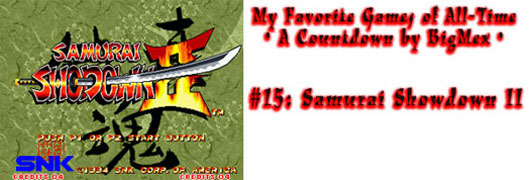
My favorite Games of All-Time #15: Samurai Showdown II - Originally published on 1UP - May 5, 2006

Two arcade games in a row! Can you believe it? People are sadly mistaken if they think Soul Caliber is a great sword fighting game. Samurai Showdown II (Samurai Spirits in Japan) completely destroys the Soul Caliber franchise.

Samurai Showdown II was and still is ahead of the curve. From my criteria in determining which games were great SS II was the total package. It had a great concept, bold, colorful graphics a solid story with a beginning, middle and end. SS II had incredible game mechanics it pushed the genre to new levels and featured the one thing that makes an average to good fighter into a great fighter, it had balance.

Balance is the one thing that has been missing in almost all of the 3D fighters and many of the recent 2D fighters from Capcom. Balance is what makes a player learn strategy, technique and timing in a fighting game. Without balance any person that picks up the game can mash the buttons and win 50% of the matches. Without balance there is a big discrepancy between top tier characters and the rest of the fighters. Balance has been missing for a long time in the fighting genre. This is why even with updated graphics games like Soul Caliber 3, Virtua Fighter 5 and Tekken 5 are only somewhat popular with core gamers and very popular with casual gamers.

For those that do not know the basic premise of the game. SS II is an homage to the legendary swordsmen from Japan and the world. This includes savage warriors from the jungles of Central and South America, Germanic knights, French duelists and secretive ninja clans.

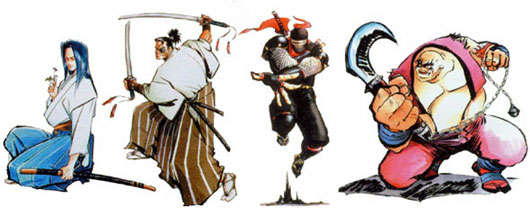
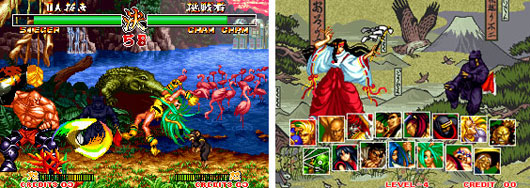
Each of the characters had their own set of special moves, strengths and weaknesses. Large lumbering characters like Wan Fu and Seiger were traditional heavy hitters that could take and deal lots of damage while smaller faster characters like Cham Cham and Nakoruru had to keep opponents at bay. Some of the characters were an odd blend of both. The massive ninja Earthquake had moves that beguiled his size. Players that learned strategy could often catch opponents off guard with Earthquake or the freakish Genan.

Samurai Showdown II introduced the concept of swordplay to modern arcade players. It was not solely a sword fighting engine as players could lose their weapon and still be able to fight. Players quickly learned that they could survive longer with a weapon than without one.

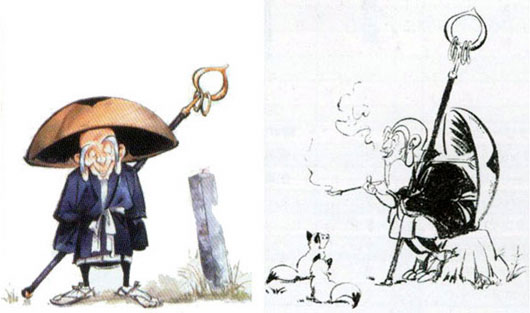
The characters in the game did not rely solely on swords. Some like (my favorite) Wan Fu used a broken column, Cham Cham used a boomerang, the demonic Mizuki used a magic wand and even the ref Kuroko used flags as weapons. Each of these characters was well designed and utilized within the game.

Samurai Showdown II was a step ahead previous fighters because it incorporated many new elements. For a while there was no rival in terms of design, graphics, scope and balance. It was not a coincidence that SS became more popular what the aging Street Fighter II upgrades. Many of the people that worked on the first few SS games were ex-employees of Capcom. They were the people directly responsible for the success of the original Street Fighter II. After being told to release upgrade after upgrade for SF II many employees simply walked away from Capcom to rival SNK... the rest as they say is history.

Samurai Showdown II came hot on the heels of the original release, rather than just adding some polish to the previous engine, they added a new layer of complexity to the control, sprites, moves and animation but to the art, story and design of the series as well. Characters could dodge attacks and taunt opponents, the first time these two components worked successfully in any rapid pace fighting game. Players had to employ different strategies when facing different computer AI opponents and not solely human opponents.

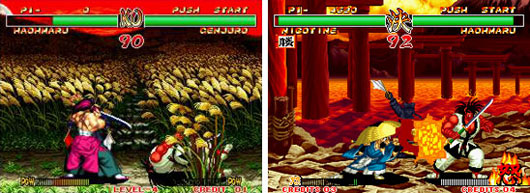
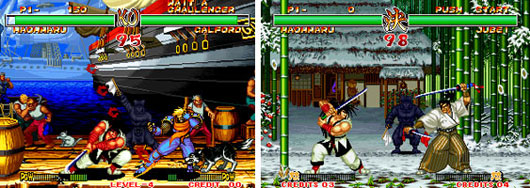
One of the unheralded genius in the art department was Eiji Shiroi (one of my Top-5 artists). Her paintbrush designs helped set the mood for the game. Leave the character designs aside for a moment and just appreciate the levels that the art team at SNK designed. Wheat and tall grass blew in the wind, a single path disappeared in the distance. A solitary temple perched on a hill. Each level was less a stage in a videogame than it was a living-breathing painting. I dare say a visual haiku. The levels had as much personality as any of the main characters or was it vice versa?

There is still much that needs to be said for the 2D fighter but it can summed it up in a few words.

A better sword fighting game has yet to be created.

I hope you have a good weekend. I'll see you at the E3.

I’d like to hear your personal top-10, top-20, top fighting games, top sports games, or top games in any genre. Let me know in the comments section please. As always if you would like to sponsor me please visit my Patreon page and consider donating each month, even as little as $1 would help make better blogs and even podcasts!
follow the Street Writer on Patreon!

Wednesday, February 28, 2018

The Giant Monster Series, part 11...


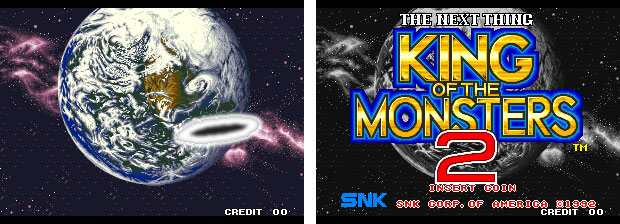
In 1992 SNK returned to the giant monster genre. The sequel to King of the Monsters was set three years after the events of the original game. As a fan of the first I couldn't wait to check it out.


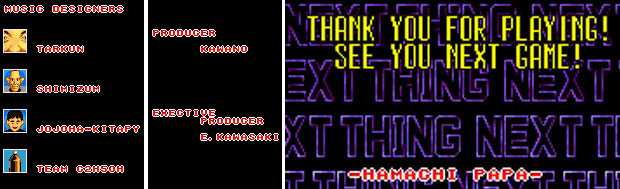
It seemed that a UFO landed on Earth and introduced a new challenge to the monsters. This creature was dubbed the Next Thing.


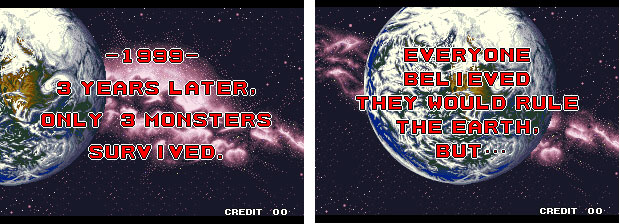
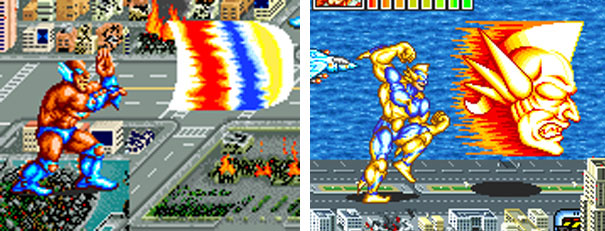
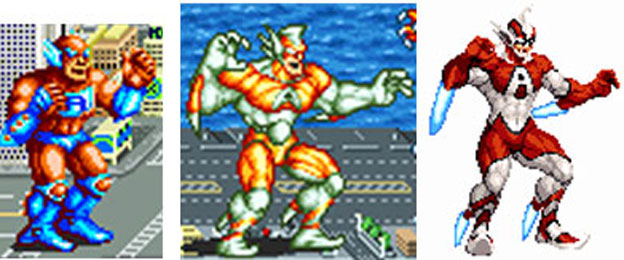
I was a bit surprised to find that only three of the monsters survived the original battle. Technically only two characters found their way back; Astro Guy and Geon. Both of them looked more evolved, more distinct than the last time players saw them. Cyber Woo replaced Woo as a playable character. He was a sort of Mecha Kong to King Kong. I was bummed because my favorite character, Rocky, didn't make the cut.


The control changed slightly from the original as well. Players could still punch, kick and jump. Some of the grappling moves were preserved as well.


The characters could also get their special attacks powered up two levels, also like in the original. The difference was that players didn't need to collect 20 Power orbs, instead they only needed to collect two. Each power upgrade gave a special attack more range and power. The downside was that players could lose the power upgrades in the sequel, players never could lose them in the original.


The biggest change to the sequel was in the gameplay. Instead of a wrestling game SNK created a brawler for the giant monsters. Imagine playing Double Dragon or Final Fight with giant creatures! I was a fan of brawlers and even chronicled many of the best last year. I had even mentioned how SNK came up big for the brawler but had left King of the Monsters 2 off of the list. I knew that I would be writing about giant monsters eventually so I left it out on purpose.

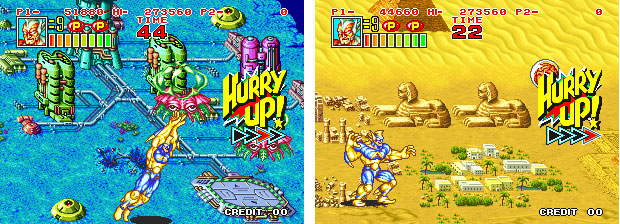
The original KOTM was set entirely in Japan. The sequel took place in cities all around the world. In keeping with the theme of the original, actual landmarks were incorporated into the levels. Instead of being hundreds of miles apart all of the landmarks appeared in one relatively small area. For example in the "American City" the White House, a football stadium and space shuttle were merely blocks from each other. The amount of detail crammed into the tiny cities was mind boggling, even more so than the amount of detail that went into the original game.
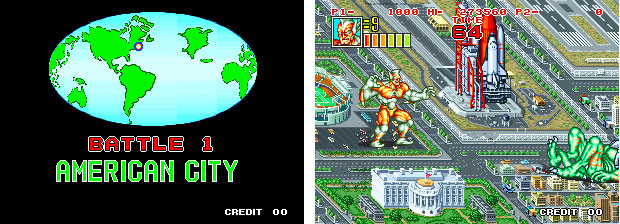

The locations were not all limited to actual cities. The monsters visited a sea base at the bottom of the ocean as well as the inside of an active volcano which turned out to be the crater left behind by the UFO in the opening of the game. The design in the levels were heavily influenced by science fiction. Enemy monsters were very cartoonish, to the point of being silly with giant lips and googly eyes. The military weapons were highly stylized and looked right out of an anime series, had Gerry Anderson's Thunderbirds influence not also been present.


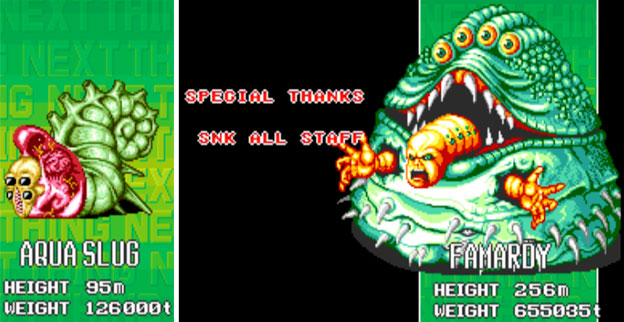
At the end of each level the players fought a boss monster. The monster was generally much larger than the main characters. The creatures in the original KOTM looked very much like pre-existing characters. The villains in the new game had unique designs. Each had their own sets of strikes, grapples and special attacks.
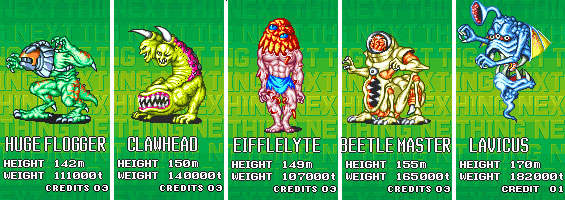

Players travelled through six locations while on the hunt for the master of all these new creatures. The final stage actually had players fight all of the bosses in succession before the final monster revealed himself. The enormous Famardy appeared, usually after the player had exhausted several continues. Famardy could flatten the players with ease. The creature was a four eyed reptilian-like mountain that was mostly mouth with a long tongue that had a face at the end of it. The visual was pretty gross. The battle against the creature was one of the most lopsided encounters ever created. There was simply no way for any single or two-players to defeat the creature on one credit.


In fact, the entire game fell into the same traps that turned players off of Rampage and Rampage World Tour. The game was designed to separate the player from their money as fast as possible. Players had no time to get settled into the world that SNK had created. There was no broadcaster announcing the destruction, there was no clever soundtrack supporting the action. If a player stood still for longer than a few seconds an alert would appear prompting gamers to "Hurry Up." The warning to continue pushing forward was very loud and annoying. The game would have players rush through the highly detailed cities the team had created. Players were prompted past the military vehicles shooting missiles at them and past the landmarks just to get to an unbalanced boss battle. If they ran out of time then their monster would get killed by a bolt of lightning and it would be game over.

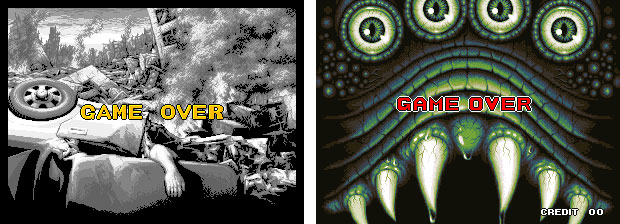
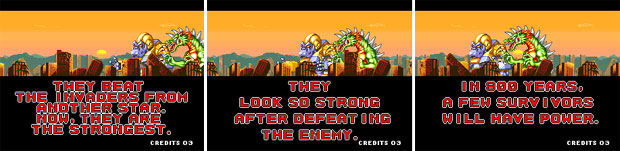
Each level and boss fight was designed to result in the player losing their life and credits as fast as possible. In the original game I could figure out a way to beat it on one quarter, it was tough but balanced. The new one had zero balance. Players lost their energy very quickly and every boss had a special attack that made them invulnerable for a moment. The fact that the final level consisted of players having to battle every boss all over again was proof of the cheapness of the design. The end of the game did not even offer a twist or a satisfactory resolution. The players were simply reminded of how powerful the monsters were and how in 800 years a few survivors would have power. Whether this meant that the monsters would be the last things left in 800 years or whether they were walking through the remains of the Earth 800 years from the end of the Famardy encounter was ambiguous.

As the end credits played I felt disappointed by the new direction of the series. All of the heart had been taken out of the game. The new designs were fun and the amount of detail placed on the characters and enemies should be applauded. As far as games went it was one of the most unbalanced brawlers ever made.


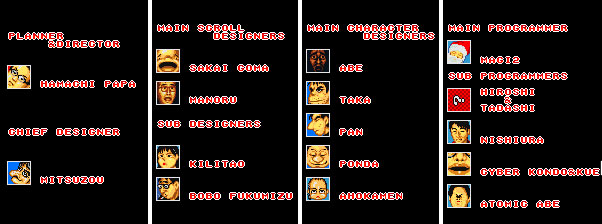
Hamachi Papa and company had let me down and worst yet, had failed the giant monster genre less than a year after sending it soaring.
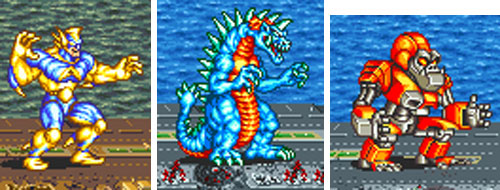

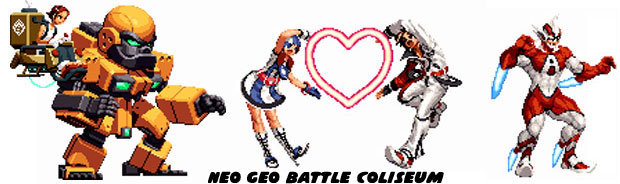
SNK never forgot the contribution of the KOTM staff. When they created Neo Geo Battle Coliseum the publisher wanted to include at least one cameo from every major game the company had published over the past two decades. The title from 2005 managed to include two characters from the KOTM series in the game.
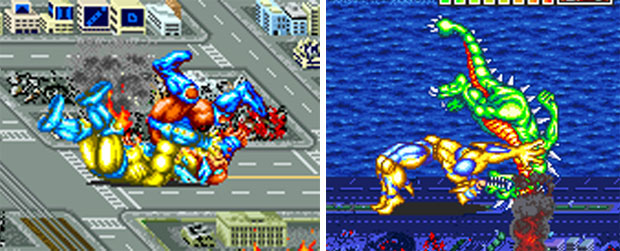

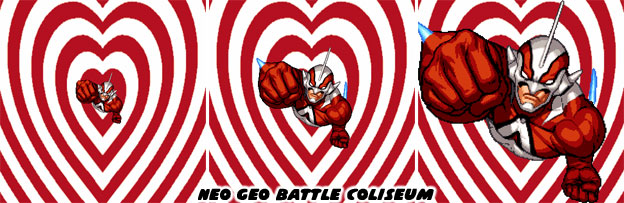
A small remote-control version of Cyber Woo was playable. The mechanical ape had an assortment of laser, machine gun and missile attacks at his disposal. He was the only character in the game that was built from a rotoscoped 3D model. The game also introduced two new characters Yuki and Ai. The duo could combine forces in a special attack known as the Double Assault. When they did they became a small version of Astro Guy for a limited amount of time.


Cyber Woo was good redesign but the makeover that Astro Guy got was amazing. The character burst into the game with a transformation just like Ultraman.


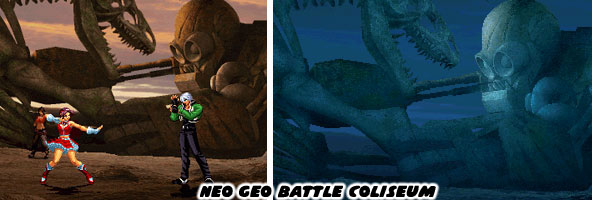
Astro Guy had attacks similar to those featured in KOTM 2, he was an arrogant character and enjoyed posing during his super attacks. it turned out that SNK was not finished giving a nod to their giant monster entry. A level in the game was included featuring the skeleton of Geon grappling with the rusted remains of the actual Cyber Woo. The enormous characters in the background were awe inspiring.


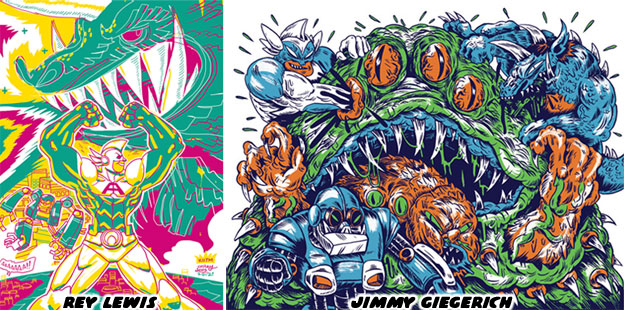
It had been 13 years since King of the Monsters 2 was released but SNK did not forget. Knowing that they cared enough about the game to give it a nod for Battle Coliseum made me appreciate the publisher even more. As it turned out fans the world over never forgot about the series either. Comic
book artist Corey "Rey" Lewis and illustrator Jimmy Giegerich each created a print in homage to the King of the Monsters 2 recently. The developer was not celebrating the 20th anniversary of the series, the fans were.


I did not enjoy King of the Monster 2 nearly as much as the original but I will concede that the game did have some fun moments. Both titles were important in the history of giant monster genre. They showed how well the creatures could work in other genres. Before SNK no developer would have attempted to make a wrestling game or a brawler using daikaiju. SNK demonstrated what elements from cinema could be adapted to help bring players into the universe. The orchestrated music and the panicked announcer were prime examples. In the end the genre held onto the classic traditions. Here were beings capable of tremendous destruction, on a scale of which no human could ever hope to survive. The final screen on both games reminded players of that cold truth.


Both King of the Monsters had actually been ported on multiple consoles yet many did not
remember them. The reason why so few people could recall the series in comparison to Rampage was quite simple. The games were released around the time that Street Fighter II had debuted in arcades. Many fun titles were overlooked during 1991-1992 because of the Capcom juggernaut. There was only one monster series that could bring the public back to the genre but would it be enough to draw in new players? We shall explore this game in the next blog.