Showing posts with label samurai shodown. Show all posts

Friday, December 13, 2024

Freeze frame, my poster collection, part 20…

It turns out that my fighting game posters are not limited to Capcom. I also want to celebrate their friendly rivals at SNK as well. One of my favorite games is the Samurai Spirits / Showdown series. If you are looking for posters from the SNK franchises then I would suggest tracking down issues of NEO GEO Freak from Japan. They often came with a poster. There are a few issues that I’d like to get still, but if, and when I do I’ll blog about it in the future.

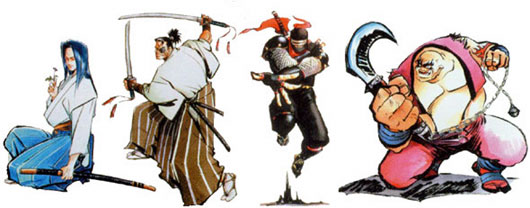
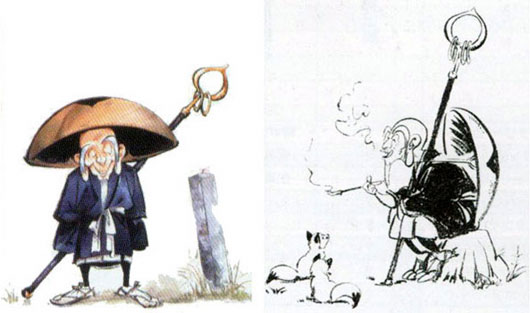
I’ve written about the genius of SNK’s art team on the blog, especially the brush style used by the Samurai Spirits illustrators.

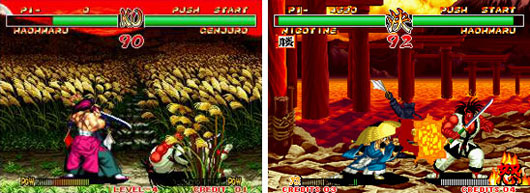
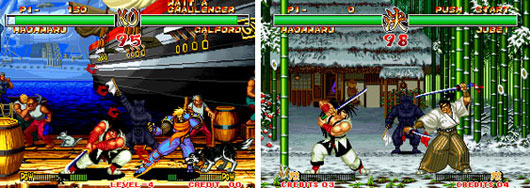
Samurai Showdown II was ranked one of my favorite games of all time. If you’ve never played it then please try to track down a copy in an anthology.

Garou Mark of the Wolves is one of the most underrated fighting games in the history of the genre. Thankfully it is getting a sequel decades later.

I love the SNK posters that I have, and I’d like to add a few more. I’ll never get as many as the Capcom posters I have, but it’s always work trying. Do you have any favorite SNK games or posters? I’d like to read about it in the comments section. As always if you would like to sponsor me please visit my Patreon page and consider donating each month, even as little as $1 would help make better blogs and even podcasts!
follow the Street Writer on Patreon!

Saturday, August 26, 2023

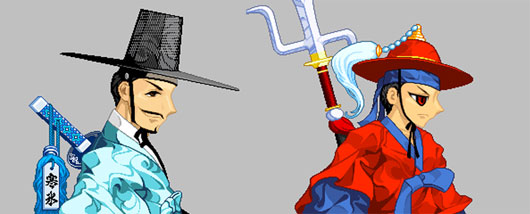
Chosun Musa, the 2D Korean Fighting game that almost was.

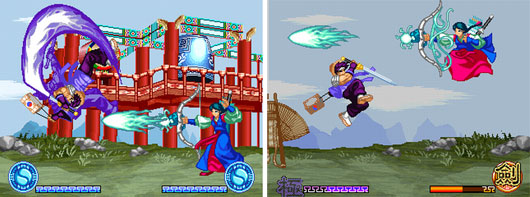
The down side to being a fighting game aficionado is having vague memories of games that could-have-been or were never published. I remembered there was a fan project for a game called Chosun Musa back in 2007. It was a 2D sprite-based fighting game set in the Joseon era. It was the last great dynasty in ancient Korea, you know the period that was the backdrop of many TV dramas. The game was originally slated for the PC but was cancelled. It was later rumored to be ported to the PSP as long as the developers were interested in the Sony handheld. The developer was Wildcat, they had created Mortal Kombat Zero; a game that I can’t seem to find any information on. I even checked to see if they had worked on Mortal Kombat Mythologies Sub-Zero, but that was Midway Games, and Avalanche Software.

The team working on Chosun Musa was just two people if I remember correctly. They used to have a blog where they shared their progress, but that disappeared ages ago. I checked the Internet Archive Wayback Machine but it doesn’t look like anything was cached. It was a damn shame too. I was interested in a Samurai Spirits-style fighting game featuring Korean archetypes. I’m glad that I saved a couple of screenshots so that other fans could see what might have been. I’ll dig through my other 1UP, and Capcom-Unity backups to see if there were any other gems that I could recover.

Were there any fighting games in development that you wanted to see published. I’ll always lament that we never got Capcom Fighting All Stars. Let me know about the ones you wished had come out in the comments section please. As always if you would like to sponsor me please visit my Patreon page and consider donating each month, even as little as $1 would help make better blogs and even podcasts!
follow the Street Writer on Patreon!

Monday, April 3, 2023

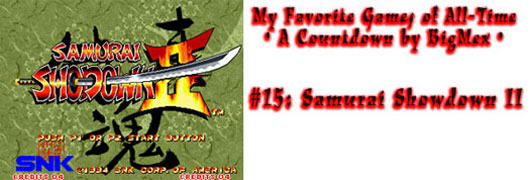
My favorite Games of All-Time #15: Samurai Showdown II - Originally published on 1UP - May 5, 2006

Two arcade games in a row! Can you believe it? People are sadly mistaken if they think Soul Caliber is a great sword fighting game. Samurai Showdown II (Samurai Spirits in Japan) completely destroys the Soul Caliber franchise.

Samurai Showdown II was and still is ahead of the curve. From my criteria in determining which games were great SS II was the total package. It had a great concept, bold, colorful graphics a solid story with a beginning, middle and end. SS II had incredible game mechanics it pushed the genre to new levels and featured the one thing that makes an average to good fighter into a great fighter, it had balance.

Balance is the one thing that has been missing in almost all of the 3D fighters and many of the recent 2D fighters from Capcom. Balance is what makes a player learn strategy, technique and timing in a fighting game. Without balance any person that picks up the game can mash the buttons and win 50% of the matches. Without balance there is a big discrepancy between top tier characters and the rest of the fighters. Balance has been missing for a long time in the fighting genre. This is why even with updated graphics games like Soul Caliber 3, Virtua Fighter 5 and Tekken 5 are only somewhat popular with core gamers and very popular with casual gamers.

For those that do not know the basic premise of the game. SS II is an homage to the legendary swordsmen from Japan and the world. This includes savage warriors from the jungles of Central and South America, Germanic knights, French duelists and secretive ninja clans.

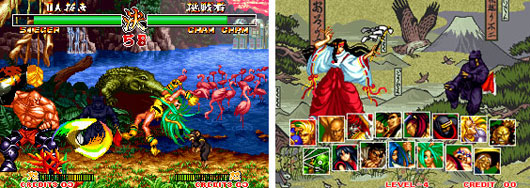
Each of the characters had their own set of special moves, strengths and weaknesses. Large lumbering characters like Wan Fu and Seiger were traditional heavy hitters that could take and deal lots of damage while smaller faster characters like Cham Cham and Nakoruru had to keep opponents at bay. Some of the characters were an odd blend of both. The massive ninja Earthquake had moves that beguiled his size. Players that learned strategy could often catch opponents off guard with Earthquake or the freakish Genan.

Samurai Showdown II introduced the concept of swordplay to modern arcade players. It was not solely a sword fighting engine as players could lose their weapon and still be able to fight. Players quickly learned that they could survive longer with a weapon than without one.

The characters in the game did not rely solely on swords. Some like (my favorite) Wan Fu used a broken column, Cham Cham used a boomerang, the demonic Mizuki used a magic wand and even the ref Kuroko used flags as weapons. Each of these characters was well designed and utilized within the game.

Samurai Showdown II was a step ahead previous fighters because it incorporated many new elements. For a while there was no rival in terms of design, graphics, scope and balance. It was not a coincidence that SS became more popular what the aging Street Fighter II upgrades. Many of the people that worked on the first few SS games were ex-employees of Capcom. They were the people directly responsible for the success of the original Street Fighter II. After being told to release upgrade after upgrade for SF II many employees simply walked away from Capcom to rival SNK... the rest as they say is history.

Samurai Showdown II came hot on the heels of the original release, rather than just adding some polish to the previous engine, they added a new layer of complexity to the control, sprites, moves and animation but to the art, story and design of the series as well. Characters could dodge attacks and taunt opponents, the first time these two components worked successfully in any rapid pace fighting game. Players had to employ different strategies when facing different computer AI opponents and not solely human opponents.

One of the unheralded genius in the art department was Eiji Shiroi (one of my Top-5 artists). Her paintbrush designs helped set the mood for the game. Leave the character designs aside for a moment and just appreciate the levels that the art team at SNK designed. Wheat and tall grass blew in the wind, a single path disappeared in the distance. A solitary temple perched on a hill. Each level was less a stage in a videogame than it was a living-breathing painting. I dare say a visual haiku. The levels had as much personality as any of the main characters or was it vice versa?

There is still much that needs to be said for the 2D fighter but it can summed it up in a few words.

A better sword fighting game has yet to be created.

I hope you have a good weekend. I'll see you at the E3.

I’d like to hear your personal top-10, top-20, top fighting games, top sports games, or top games in any genre. Let me know in the comments section please. As always if you would like to sponsor me please visit my Patreon page and consider donating each month, even as little as $1 would help make better blogs and even podcasts!
follow the Street Writer on Patreon!

Wednesday, November 27, 2019

A quick look at the native origins of Samurai Shodown...

At the end of 2019 fighting games had returned from the dead. The genre had established itself as an important part of the gaming landscape. In the late ‘90s the genre seemed like a footnote in history. The market had been saturated with fighters for almost the entire decade. There were some good titles but many bad. That combined with the decline of the arcade took its toll on the community. It was hard to predict that there would be a resurgence in the late ‘00s. A lot of classic titles have returned to prominence, including Street Fighter, Mortal Kombat, and Guilty Gear. One of the great titles, Samurai Shodown / Spirits, an SNK gem from 1993 was given a new life in 2019. There is so much to unpack in the series, I have talked about a few of the characters in this blog. I might do some more breakdowns in the future, however I just want to point out a detail from the series. Something that made it unique in the sea of games were the spiritual, cultural, and environmental themes explored through the characters.


Two of the major villains in the series, Amakusa and Yuga, were fantastic designs. Imagine if a game studio art team were challenged to create androgynous fighting game bosses. That of a male with traditional feminine features and that of a female demon with masculine features. The prerequisite was to give them elaborate Japanese robes, while making it obvious that they had one foot in the physical world, and one foot in the spirit world. Chances are nobody could have come up with anything better than what SNK produced. The Samurai Shodown series gave designers leeway to explore all sorts of fantastic themes when building their library. This extended to stage designs, background characters, and especially playable characters. Take the Kazama brothers as another example. The ninjas were reflective of the elements. Kazuki was coded as fire, and his brother Sogetsu was coded as water. This extended into their respective personalities.


Easily the most overlooked contribution to fighting game history came through some of the smallest characters. Did you know that there was a lot of Native Japanese representation in the series? You might be thinking it’s obvious given the title of the game. The samurai were a warrior class exclusive to Japan. There are a great number of sword fighters from Japan, archetypes of real and fictional samurai are featured throughout the series. When I talk about Native Japanese, I mean the Ainu, the indigenous ancestors of the land.


The Ainu share a spiritual narrative with traditional Japan. Kamui, or spirits, inhabit all things. This is a similar belief in Shinto tradition, where spirits are in nature, in rocks, essentially everywhere. They can also be bound to objects and people. In Ainu culture the bear was revered above all of the animals. They would be raised as a family member, unfortunately only to be sacrificed as they got older. Nakoruru, her little sister Rimururu, and their family was coded as Ainu in the Samurai Shodown series. Her stages were named the Kamui Kotan, the first of which was in Hokkaido, where there was a large concentration of Ainu at the turn of the century. The way Nakoruru and her clan was presented was done with tremendous forethought. This was important because the Ainu people have been fighting to have their culture be recognized by the nation of Japan for centuries. Western audiences might not have understood that there was a native class in Japan. To the Japanese however this was more apparent.


The costume choices, clothes, colors, weapons, stages and even Ainu spiritual leanings were featured in the series. Nakoruru wore a simple garment, with animal-skin boots. It was something that could not be confused for a kimono, or traditional Japanese robe. She fought with a modest short blade, not a polished katana. Her gigantic hawk, Mamahaha, could be summoned for special attacks. The forest creatures seemed to respond to her commands. As sequels came out little sister Rimururu was able to summon the spirits of nature themselves. I cannot think of another series that featured Ainu, or their spiritual underpinnings in any capacity. By comparison we have seen the Native American character done many times in different games from both the US and Japan. The native characters are often ugly caricatures based on stereotypes. We’ve seen totems, teepees, thunderbirds, and tomahawks done to death. The Japanese spiritual themes were handled much better in the Samurai Shodown series. 

I’d like you to think about how different cultures have been presented in fighting games, and if native cultures are shown in a positive or negative light. If you would like to learn more about the Ainu I ask that you check out The Golden Kamuy, a manga series which started publication in 2014 and got an anime adaptation as well. It does a brilliant job of intertwining the Ainu culture with a historical period, not far removed from the era that Samurai Shodown captures. If you would like to sponsor me please visit my Patreon page and consider donating each month, even as little as $1 would help make better blogs and even podcasts!
follow the Street Writer on Patreon!

Tuesday, August 14, 2018

G, or the evolution of power-hungry characters in fighting games

Another year, another EVO and another few character reveals for some popular fighting games. I’m going to talk a little bit about G, the new character unveiled for Street Fighter V. We’re going to talk about the design roots of the character. If you want the punchline here it is: G is the self proclaimed “President of the World.” His design is rooted in American Imperialism. It’s as simple and as complex as that. Think about it for a moment. The absurd stovepipe hat and filigreed coat and tails hasn’t been en vogue in more than 150 years. G is a juiced up Abraham Lincoln and demanding of more patriotism than Uncle Sam.


G’s motives may be noble but there is a dark undercurrent carrying his inclusion in the series. Any man that forces himself as a leader on the global stage is a narcissist, a despot or a tyrant. G has delusions of grandeur and sadly, the physical properties to make him appear superior to normal people. G is a reflection of several world leaders that we are dealing with right now, especially in the USA. I’ll get to this comparison in a bit. Did you notice that G is covered in golden marks? They look like golden tattoos. In the original design notes these golden patches were shaped after the continents. Without his jacket you would be able to see that each golden patch outlines the nations of the world. The cover his arms, torso and neck. Visually it is an interesting look. There is a lot of contrast with gold, especially over bare skin. Gold has actually been used in cosmetics going back thousands of years. Some makeup artists actually apply gold leaf to to the skin for aesthetic reasons. I don't know if these markings on G are makeup, tattoos or even a skin condition.


Before G was introduced there was a lot of speculation to his design. He has a very unique look, however it is not completely original. Above I mentioned that he already takes cues from Lincoln and Sam, but in the fighting game world there have been others like him. Steven Chavez posted a theory that Du Nguyen and Xavier had circulated on Twitter. Namely that G was actually Greg, a character from Bloody Roar, a game by Hudson Soft released in 1997. Bloody Roar was a unique fighting game. There were masters of various arts in it, this was nothing new to the genre, however these characters also had the ability to transform into animal-like avatars. Audiences have seen werewolves and even werebears in popular culture but Bloody Roar also gave us weretigers, wererabbits and even weregorillas. Plus this game was another title built on 3D technology. Hudson Soft was not know for their fighting game library but they proved that the shift in fighting games from 2D to 3D was more than a fad. The similarities between G and Greg were eerie. Top hat, bodybuilder physique, large beard were all spot on. Plus there was an ape teased in Ed's ending in Street Fighter V. It stood to reason why some in the fighting game community saw this as the alternate form of G.


I've said it before and I'll continue saying it. No character design exists in a vacuum. Influences from pop culture help color each design. It doesn't matter if you're an artist in Japan, the US or anywhere else in the world. Whether consciously or subconsciously the artists creating these new fighters are all putting in their own insight and tastes. This can sometimes include elements seen in other fighting games, action movies, comics or cartoons. Changes in music, movies and even politics helped shift the public perception of fighting game characters. In the earliest days of the genre fighting games featured martial artists. They were easy to create and were universally recognized as being fighters. As the genre took off so too did the types of characters that could be considered fighters. The industry tried different things out and audiences responded accordingly. Robots, aliens, dinosaurs, demons and superheroes were all used to replace the tried and true kung-fu archetypes. G is the latest version of a more contemporary design. His look is rooted in ultra wealthy and ultra powerful villains.


Fatal Fury (1991) introduced the world to Geese Howard, a martial arts master that was also a crime lord that ran the fictional South Town. He was a break in tradition from the boss characters that were simply martial artists. Geese could have been a bad guy in a modern action movie. One which featured drugs, cops and murder instead of fantasy swordplay. Howard wasn't the first villain in a fighting game to be the kingpin type. Belger, from Capcom's Final Fight in 1989 and Mr. X from Sega's Streets of Rage were also mobster-type villains. Geese was unique in that he was in a fighting game and a powerful opponent. SNK pushed the concept of powerful leader even further in Fatal Fury 2 (1992). Wolfgang Krauser von Stronheim, the half-brother of Geese Howard, was the new sponsor of the King of Fighters tournament. SNK wanted Krauser to have the look of a European aristocrat. He was wearing a cape and sporting golden armor in his character intro. He did not have the same moves or techniques of Howard but he was still a powerful opponent. It was not the first or last time the aristocratic design would be featured in their extended universe.


King Leo, the main villain in SNK's Savage Reign (1995), also sported royal colors and golden armor. With his ornate mask and elaborate headdress he pushed the idea of eccentric villain even further. A somewhat subdued doppleganger named King Lion also appeared in the same game. Within two years SNK had established that rich, powerful, and corrupt men were the new boss templates. Sagat from the original Street Fighter (1987) was still an icon but he represented the first generation of villain. Someone with a limited role outside of fighting. Vega / the Dictator from Street Fighter II (1991) would become more influential to the story and boss designs for the universe. Vega, like Geese Howard, was not a traditional martial artist. Because of that he could be placed in much more interesting locations and force the playable characters to appear out of their element.


Without a doubt the biggest shift in villain designs happened in 1994 with the introduction of Rugal Bernstein. The newest benefactor of the King of Fighter's tournament was a groundbreaking opponent. SNK learned from all the design notes that went into Geese and Wolfgang and created a hybrid of the two. He had the size and power of Krauser, with the balanced techniques of Howard. Plus he was a very sharp dressed man. He didn't wear armor or any other martial arts costume but instead wore black and red tailored suits. Nobody looked half as fresh as Rugal when he debuted. SNK wanted him to stand out and they succeeded. Despite being a new to the universe audiences instantly gravitated towards his design. Nobody else in the genre looked or fought like him. His wide arcing kicks and powerful punches could take down the strongest opponents. SNK demonstrated in the game that Rugal could easily take on a team of three fighters, even if that group included Terry and Andy Bogard and Joe Higashi, the stars of the original Fatal Fury. To help frame how much influence this new boss had had the studio created one of the most memorable stages ever.


Rugal flew the best team in his tournament to his personal aircraft carrier, named the Black Noah. As a background detail this is important. An aircraft carrier of its size costs around $6 billion, when fully loaded with aircraft, supplies and a private soldiers that number rises to almost $30 billion. Now consider that we don't even see the extent of Rugal's personal wealth. We have no idea how big his private army is or what he actually controls. We do know that he has enough money and influence to buy a navy and even decorate the bridge with paintings, lavish rugs, a grand piano and keep a pet panther there. This level of opulence makes for fantastic storytelling. It helps frame Rugal's impact on the world. He is much more important to the SNK universe than just about any other villain. The King of Fighters '94 was a major milestone for the genre. It connected the timelines and characters from the Fatal Fury and Art of Fighting series. Also it connected the characters from arcade gems Athena (1986), and Ikari Warriors (1986). Other fighting games would be influenced by the direction of these new fighting games and especially from the new villain archetype. The introduction of Heihachi Mishima in Tekken (1994), and Gill in Street Fighter III (1997) solidified the shift in this design. Karate fighters and kung-fu masters were no longer doing battle against other martial artists, they were now literally saving the world from tyrants.


Capcom was actually close to creating their own version of Rugal. An ultra powerful, aristocratic, multinational, authoritarian villain. They were not the only studio that was on the same path. Dream Factory (developers behind Tobal No. 1) also happened to be headed in the direction of a blonde-haired, red suit wearing villain. Whether coincidence, zeitgeist or something else entirely the Antonov made his debut as the "first champion" of King of Fighter's tournament. He appeared as a cigar chomping mogul in the King of Fighters XIV (2016). His design is nothing new. Years ago I mentioned that he was pretty much based on a comic book character called Asimov.
   

Antonov is a master of the Siberian Gold Fist. An almost unparalleled form of boxing. He is the most recent retelling of the power hungry despot but his roots are a bit on the nose in this current political climate. It is well known that Russia has been dealing with oligarchs for some time. A few very wealthy and very influential people are consolidating power, killing their political enemies, dissenters, members of the press, and destabilizing rival nations. I wouldn't go so far as to say that Antonov is the Putin of fighting games, any more than G is the Trump of villain designs. Both however are instead a reflection of the changing global perceptions. Antonov and G are examples of how power corrupts. A decade ago the world still saw the USA, specifically the US leadership favorably. An example of this in fighting games was with the character Andrew.


Andrew debuted in Samurai Shodown 6 (2005). The series by SNK was based around the time where firearms were changing the world. Guns were replacing swords, the era of the samurai was coming to an end and cowboys and indians ran the wild west. Andrew was a new American character, he was actually a young president that enjoyed fighting. His design was a mix of fantasy and aristocracy. The Japanese artists took tremendous liberties with his look. Soldiers in the early 19th century didn't look anything like this anime character. Had SNK done a little homework they would have realized that the continental army didn't have long red coats. Those were the colors of the British uniforms during the American Revolution. Blue however was already assigned to the other American character, the blonde ninja Galford. SNK went heavy with the pandering. The inclusion of the White House as a stage and an epic electric rock guitar version of the Star Spangled Banner-meets-Stars and Stripes Forever for his stage music were as gung-ho USA as you could possibly get. Despite being presented in a patriotic light there was something authoritarian about the character.


Andrew confessed to Galford in the story mode that he didn't fight for freedom as much as he fought for domination. He was trying to create a literal "New World Order" a sort of United Nations where unfortunately votes were not exactly equal. It would be Andrew that ultimately called the shots. This character was inspired in part by Andrew Jackson, soldier and seventh president of the USA. He stood up to a British officer as a young man and carried the scar from his fight. Plus he participated in many duels. As inspiring as this sounded he was also responsible for one of the worst atrocities of any administration on US soil. Jackson pushed for the Indian Removal Act of 1830 which lead to the forced relocation and murder of thousands of Native Americans. This became known as the Trail of Tears. A version of that was retold in Samurai Shodown 6 with Andrew conquering South America and making sure that Europe and Asia all followed his lead. The developers at SNK knew that the US could be as imperialistic as the British and made sure to push the character in that direction. It was a light jab that predated the design of characters like G.


As for the gold over skin. Maybe it's a jab by Capcom at a certain president spending too much time with spray tans. Or maybe it's just a way to show off the neat effects that the Unreal engine can pull off. Sort of like the glowing tattoos of Necalli. I don't think it really makes or breaks the character. The solid black costume is a bit boring, despite the filigree and cut of the jacket. His top hat is painfully absurd, but no more than a red-skinned Turk or green-skinned Brazilian beast man. So is G a good design or a bad one? Me, I don't care much for his look. I do expect to see more villains with this shade of political coloring in fighting games as well as in other genres. Politics have always been a part of the genre. Whether it was saving President Ronnie in Bad Dudes vs. Dragon Ninja (Data East - 1988) or having Zangief dance with Mikhail Gorbachev at the end of Street Fighter II. The next generation will end up putting orange-skinned politicians in their stories. Mark my words. What do you think of this character? Does he work for you? Why or why not? If you would like to sponsor me please visit my Patreon page and consider donating each month, even as little as $1 would help make better blogs and even podcasts!
follow the Street Writer on Patreon!