Showing posts with label unpublished. Show all posts

Monday, May 20, 2024

Dance 'till you drop, do the LoboCop - A 1UP classic from December 15, 2010

As I'm going through the old comics to share with the little gal I can't help but wonder where the fun went in comic books. Sometimes the storylines and characters take themselves too seriously.

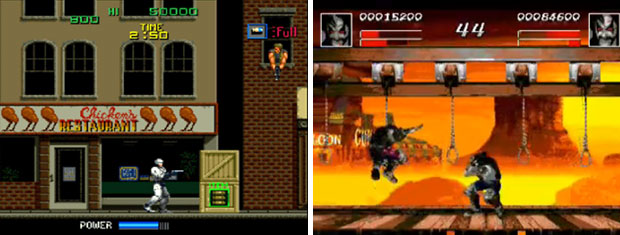
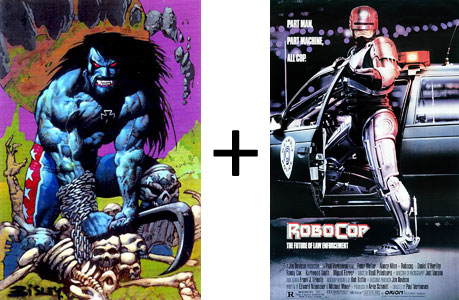
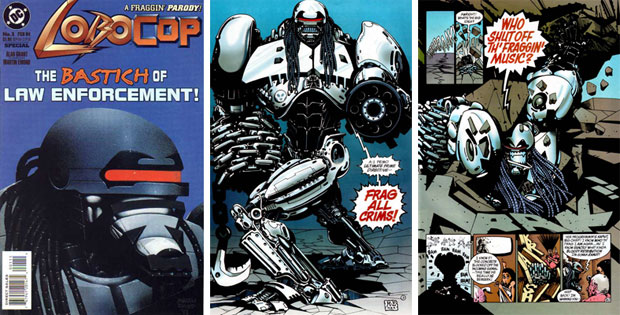
I stumbled across one of the best parodies of film-meets-comic book characters ever. Featuring two unlikely but very complimentary sources. The "Main Man" Lobo getting put into the titanium body of a Robocop. The result of which was a crazy send up of law enforcement gone too far.

With fun designs and lots of violence I'm wondering why DC didn't bother revisiting the character. LoboCop would make for a fun videogame. Perhaps the arcade mechanics of Robocop, plus the comedic timing of Sunset Riders. It would certainly much better than the Lobo videogame that never came out.

I guess there was the good and bad in the 90's now that I think about it. Comics were fun but every quick-buck videogame was a fighter. It's a darn shame too.

As always if you would like to sponsor me please visit my Patreon page and consider donating each month, even as little as $1 would help make better blogs and even podcasts!
follow the Street Writer on Patreon!

Friday, March 8, 2024

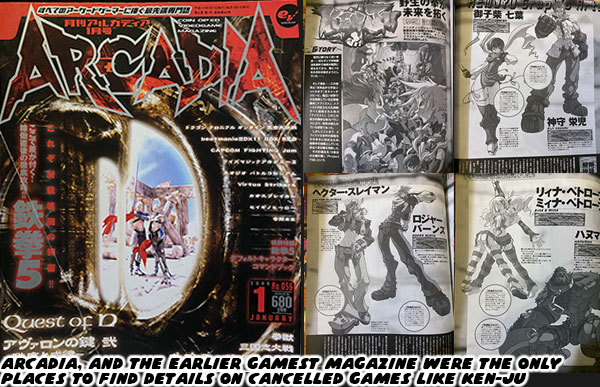
Remembering some rare fighting game news in Arcadia

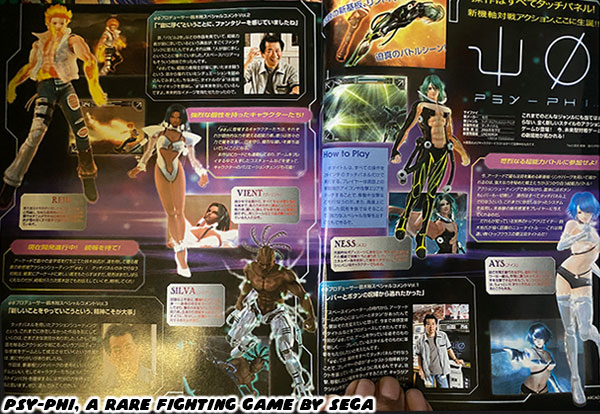
A couple of weeks ago I talked about bringing my Arcadia magazines out of the garage, and into the house. I’ve been flipping through them, and remembered that many of the games featured within never came to the USA. Not only that, but even Japanese audiences didn’t always get a chance to play some of these games, as they were only in location tests, or never saw a wider release. If you follow this blog you’ll remember that I talked about Psy-Phi that last two Fridays. It was a touch screen arcade game made by Sega.

In addition to being a touch screen game, it was also notable because the mechanic was an evolved version of Psychic Force. Psychic Force was a Taito fighter from 1995. Its sequel Psychic Force 2012 came out in 1998, and was published on multiple consoles including the Sega Dreamcast. Those games featured a cast of psychic powered characters that could float, and battled in the sky using their mental powers. I could imagine that arcade visitors didn’t like the touch mechanic, despite the buzz it generated at the AOU trade show. After 2005 nothing came from it.

It wasn’t the only rare fighting game immortalized in the pages of Arcadia. There was also Ken-Ju. The 3D fighting game had a lot of unique things going for it, including online matchmaking, and character customization when these things weren’t even available in the biggest titles of the time. I was able to do a deep dive on Ken-Ju on the blog. I was thankful that I held onto these issues, and share them here.

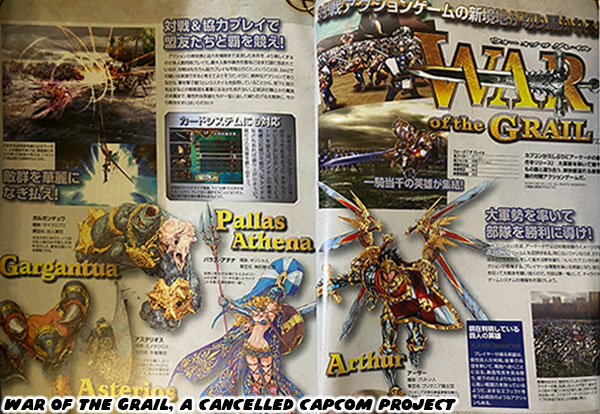
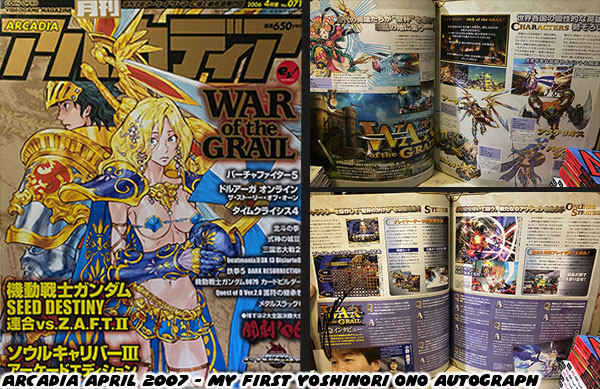
Possibly the most important cancelled fighting game that was covered was War of the Grail. It was a fantasy-strategy-fighting game from Capcom. Kinu Nishimura created some fantastic designs for the game, and it would get a limited location test in a few arcades. Sadly the project was scrapped, and very little on the game was released after this issue came out.

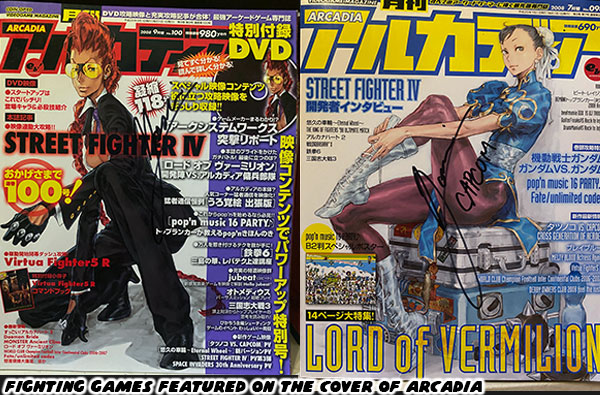
It would be the first game directed by Yoshinori Ono, who had moved up from sound production in the studio. When he was appearing in his first San Diego Comic Con in 2008 I brought my issue with me for him to autograph. He was blown away that there were people in the US had been following his career. It wouldn’t be the only time I surprised him with these rare issues. When he did another signing to celebrate the release of Super Street Fighter IV I brought out two more Arcadia issues to autograph. I remember him asking his translator where I was getting these issues, and telling him that I had a subscription to the magazine.

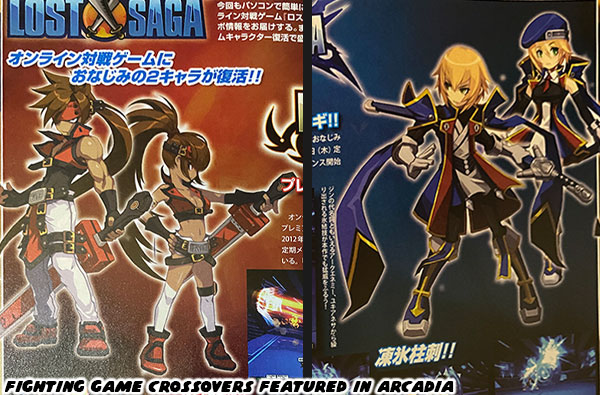
Some of the games featured in Arcadia were unique. Although I was getting the issues mostly for info on fighters, it was nice to see those characters pop up in other games. The Korean title Perfect K.O. for example featured Ken, and Chun-Li from Street Fighter. It was neat seeing how they would fare in 3D combat. It wasn’t the only unique cameo. This was the case for Guilty Gear, when it crossed over with Lost Saga, the free-to-play game developed by I.O. Entertainment in 2009. The game was brawling chaos, like many other games in that vein.

Were there any fighting games you wished you had played, or you wished had been published? I’d like to read about it in the comments section. As always if you would like to sponsor me please visit my Patreon page and consider donating each month, even as little as $1 would help make better blogs and even podcasts!
follow the Street Writer on Patreon!

Friday, January 5, 2024

Ultimate Domain, a fighting game that never was.

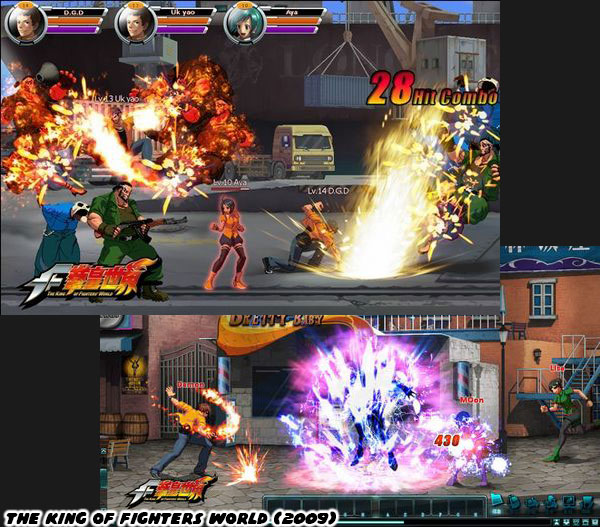
Hello friends, today I bring you an arcade fighting game that never was. I’m always sad when I find out about a game that could have been, especially when there are screenshots, video, or even beta tests for fans to pour over. This was the case for the King of Fighter’s World. Then there were the studios that put some working prototypes in arcades like Capcom Fighting All Stars, and generated some press in the magazines.

There are also games that were never shown to the public, but managed to get exposure by accident like the role-playing-meets-fighting game Dragon’s Heaven. The things that made me the saddest were the fighting games that were 99% done, had already been testing in the arcade, and for whatever reason the studio pulled the plug. Such was the case for Ken-Ju, an arcade game that was also going to get a port for the Dreamcast.

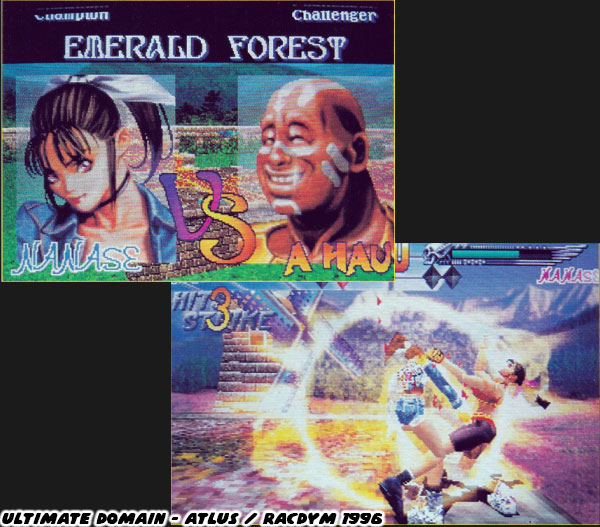
I spent the end of summer, and part of fall 2023 moving many of my fighting game magazines, manhua, and rare game books out of the garage, and into my apartment. As I was organizing them I noticed there was a fighting game that I do not recall being released. Ultimate Domain was a collaboration from Atlus, and Racdym. The 3D fighting game got a short preview in the October 15, 1996 issue of Gamest. The magazine mentioned that they hadn’t covered an Atlas fighter since the Goketsuji series, aka Power Instinct almost 10 months previously, and that it had been almost an additional year in development before this was one revealed. What made Ultimate Domain unique was that it was 3D. All of the previous fighters from the studio were sprite based. Polygonal games were beginning to take over the various genres in the mid ‘90s. The technology worked great in things like racing games, and space shooters, but seemed to be a mixed bag with the fighting genre. Accurate collision detection in 3D didn’t have the speed, or flow that sprite-based hit boxes provided to audiences. Anybody that played Street Fighter II, and Virtua Fighter could relay how unique 2D, and 3D felt.

The Gamest staff didn’t get much time with the title. They explained that there were four playable characters in the demo, one of which looked like an animal man. The designs, and character selection art looked to be by Range Murata, the artist behind the Power Instinct games. The preview said that the stages seemed to have ring outs, and some of them even had low ceilings. To separate it from the other early crop of 3D fighters like Soul Edge (1995), Tekken (1994), and Virtua Fighter (1993) this game was supposed to feature super attacks like the 2D fighters. The characters had something called SOL (as in sun) Power, which had a separate meter under the traditional health bar. The magazine hoped to do a more in-depth article in the following issue. I didn’t have the following issue of Gamest so I had to track it down from an online bidding site, and wait for it to be delivered. It finally arrived in Fall of 2023, and despite how eager I was to scan the pages there was no further information about the game.

I checked the table of contents for almost every other issue in ’96, and ’97, and I never saw any further mention of Ultimate Domain. I couldn’t find any other details on it in any game forums, or Japanese web pages. I hit a dead end with this game. That was when I heard about a Playstation game that was published at the end of 1996 called Heaven's Gate. With no relation to the cult of the same name whose members committed mass suicide a year later. It was a shame because I would have loved to have seen footage of this title in the arcade. The screenshots that I scanned in for this blog entry were the only ones that I know of while the game was in development. I wish there was more I could share with you. I’ll keep digging, and if anything else turns up then I’ll be sure to share it with you. Were there any fighting games that you wish you had played? Or any unfinished / unpublished titles that you wanted to play I’d like to hear about it. As always if you would like to sponsor me please visit my Patreon page and consider donating each month, even as little as $1 would help make better blogs and even podcasts!
follow the Street Writer on Patreon!

Saturday, August 26, 2023

Chosun Musa, the 2D Korean Fighting game that almost was.

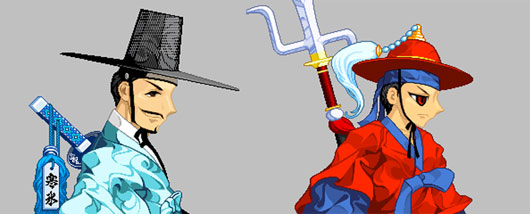
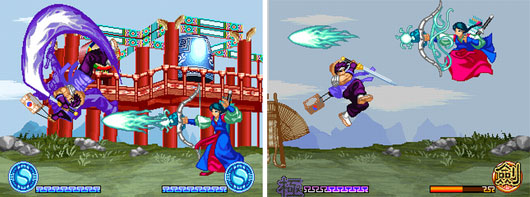
The down side to being a fighting game aficionado is having vague memories of games that could-have-been or were never published. I remembered there was a fan project for a game called Chosun Musa back in 2007. It was a 2D sprite-based fighting game set in the Joseon era. It was the last great dynasty in ancient Korea, you know the period that was the backdrop of many TV dramas. The game was originally slated for the PC but was cancelled. It was later rumored to be ported to the PSP as long as the developers were interested in the Sony handheld. The developer was Wildcat, they had created Mortal Kombat Zero; a game that I can’t seem to find any information on. I even checked to see if they had worked on Mortal Kombat Mythologies Sub-Zero, but that was Midway Games, and Avalanche Software.

The team working on Chosun Musa was just two people if I remember correctly. They used to have a blog where they shared their progress, but that disappeared ages ago. I checked the Internet Archive Wayback Machine but it doesn’t look like anything was cached. It was a damn shame too. I was interested in a Samurai Spirits-style fighting game featuring Korean archetypes. I’m glad that I saved a couple of screenshots so that other fans could see what might have been. I’ll dig through my other 1UP, and Capcom-Unity backups to see if there were any other gems that I could recover.

Were there any fighting games in development that you wanted to see published. I’ll always lament that we never got Capcom Fighting All Stars. Let me know about the ones you wished had come out in the comments section please. As always if you would like to sponsor me please visit my Patreon page and consider donating each month, even as little as $1 would help make better blogs and even podcasts!
follow the Street Writer on Patreon!

Wednesday, April 19, 2017

Dragon's Heaven, the great fantasy fighting games part 2...

The mid-'90s was the most revolutionary period for fighting games. Fantasy fighters made a grand entrance with Golden Axe The Duel, but the fantasy theme was only beginning. One of the most ambitious titles started development in 1995 and would be cancelled part way through production. Today we will be looking at an unfinished Neo Geo game that had the potential for greatness. NeoTurfMasta, an arcade enthusiast found some ultra-rare non functioning PCB’s. These were the circuit boards made by game publishers that could be swapped out in arcade cabinets. After some troubleshooting he got them working and took them to a few shows. It turned out that the boards were not just some random defunct arcade games, but instead titles that had never been released. It caused a buzz in the arcade and fighting game community.


The board NeoTurfMasta showed off was for a cancelled SNK fighting game. It had a working title of Dragons Heaven or DarkSeed. The game was created by Kengo Asai. Kengo had worked on The Last Blade (1997), the spiritual successor to the Samurai Spirit / Shodown series. Prior to that he worked on Voltage Fighter Gowcaiser (1995), featuring the character designs of Masami Obari. Kengo did an interview with ITMedia about the game after it turned up. In that interview he mentioned a few interesting things about the title. The working title was Darkseed but the studio couldn’t get the rights to it so they started calling it Dragon’s Heaven. Around that time a number of Japanese studios, animation and manga artists as well, were into dark fantasy.


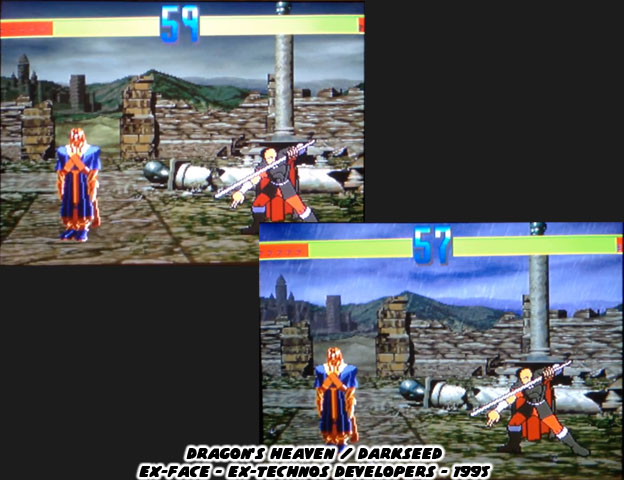
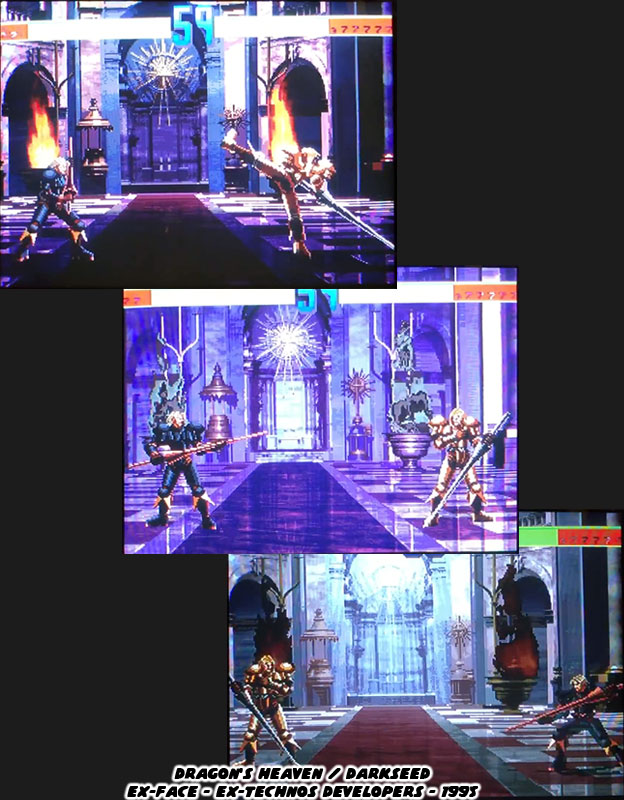
The team that was working on the game was made up of Ex-Face, Ex-Technos developers. They started work on the game while they were finishing development on Voltage Fighter Gowcaiser. The game had gone a good ways while in production for the two times that it was suspended due to budget issues. It was officially cancelled in 1996. The majority of the cast had been designed with almost all of the characters being playable if not having a series of moves and animations. Detailed stages had been created that took players around a unique fantasy world, one with heavy western influences.
   

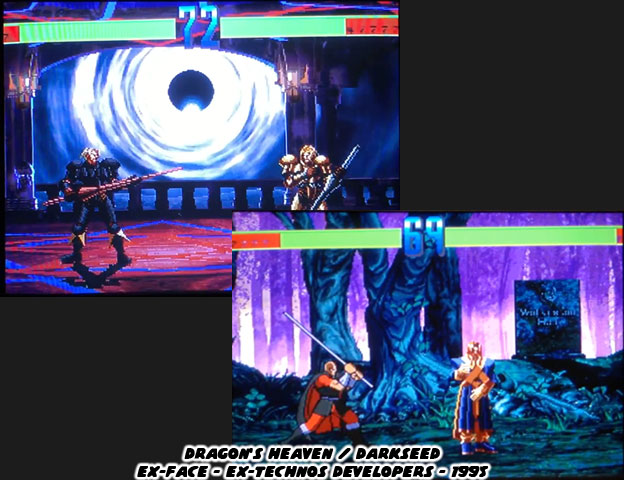
This game was weapons-based, again, like Samurai Spirits. The cast was not entirely made up of sword fighters. Instead of martial arts masters these characters ranged from rogue to cleric, from traditional knight to supernatural war machine. In essence they were classes, just like a fantasy role-playing game. The game was layered in some amazing details, the stages shifted between day and night. There were even weather elements such as rain programmed in the engine. It was an ambitious title that had features that no other fighting game before or since had.
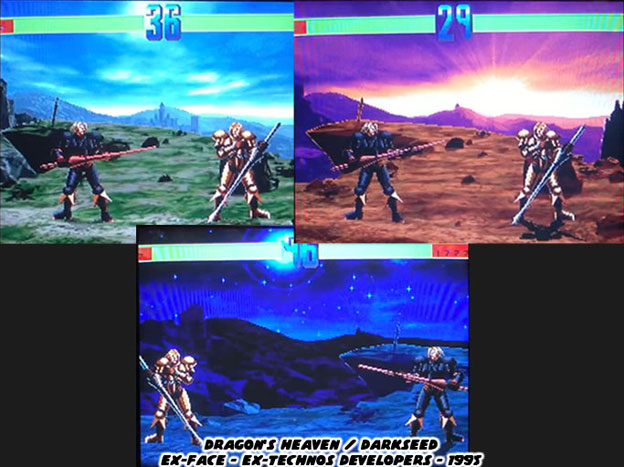
 

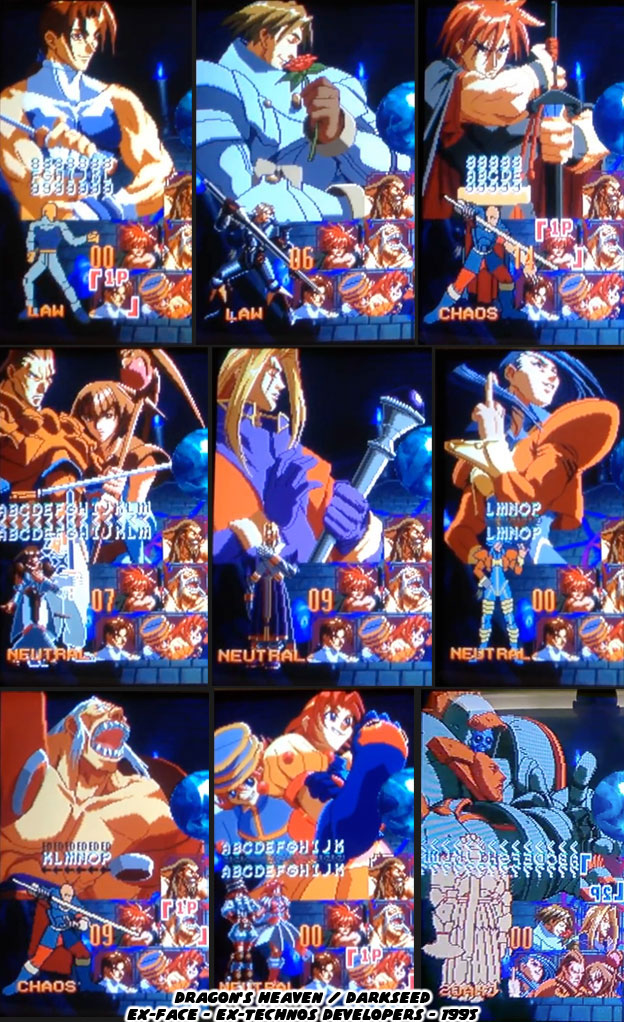
The entire morning, noon and night level design was more than an aesthetic choice. Mr. Asai actually had plans for creating different move sets and abilities for the characters depending on their alignment. They could be Chaotic, Lawful or Neutral. Chaotic and Lawful had the strongest attacks but not necessarily strongest defenses against their polar rivals. Neutral versions were good all-around but did not excel in any one field. The time of the day actually had an affect on how strong their attacks were. Lawful was strongest in the morning and chaos at night. The benefit of being a neutral was that your moves and attacks were consistent regardless of the stage.
   

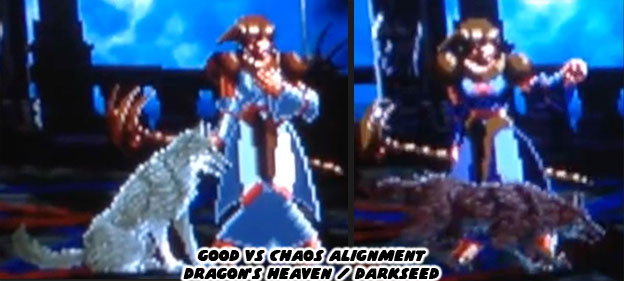
It wasn’t enough to simply call a character Lawful or Chaotic. The designers actually created unique sprites and animations for each class. For example take the character Tear and her companion Wolf. In the Good alignment the wolf is more passive, he is seated and waiting for a command. By contrast the Chaotic version is at the side of his master and growling. Even the stance of Tear changes from cautious to ready for battle. This is a stark contrast to most fighting games where the designers only worked on creating color pallet swaps for the cast.
   

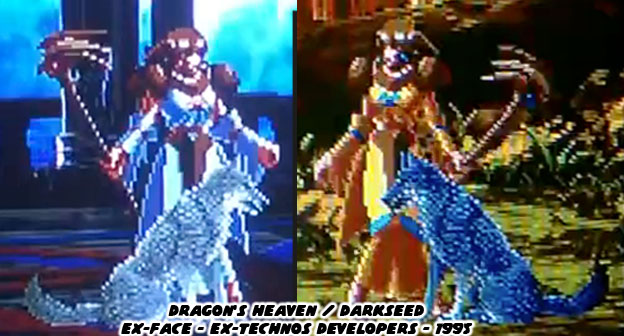
Imagine having to design different sets of attacks and special moves for the same character depending on their alignment. It would have been a nightmare from a planning and programming perspective, let alone from a balance standpoint. It was nonetheless something ambitious that many game developers don’t even consider for modern fighting game remakes. But just so you know the designers did create pallet swaps for each alignment as well. This was an intense amount of work for the team trying to get a game out and stay competitive in the market.
 

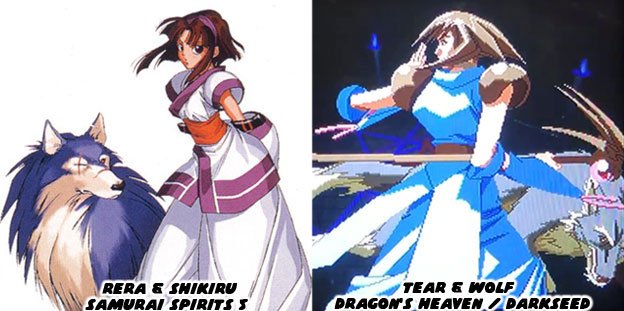
Tear and Wolf were the main characters in Dragon’s Heaven. The game appeared during a time when studios had experimented with having a wolf as a supporting character. Sega gave a wolf companion to their iconic ninja character Shinobi in the 1989 arcade sequel Shadow Dancer. A year later Studio Ghibli released the film Princess Mononoke, which again featured wolves in supporting roles. SNK had featured a large dog, Poppy, as the partner of the ninja Galford in Samurai Spirits / Shodown in 1993. Rera and her wolf Shikuru appeared in Samurai Spirits 5 in 2003. Rera was an evil (more like chaotic) version Nakoruru, born from her subconscious. This character had been hinted about in Samurai Shodown II back in 1994, a year before the publisher started work on Dragon’s Heaven.
   

All of the maiden and wolf characters in other Japanese games and films were merely coincidence. The inspiration behind Mr. Obari’s game came from much earlier USA source. He remembered a film where the male and female characters could never be together because during the day the man was a human and the woman was a hawk. At night the man became a wolf and the hawk became a woman. Kengo did not recall the name of the film when he was interviewed, but it was the 1985 movie Ladyhawke.
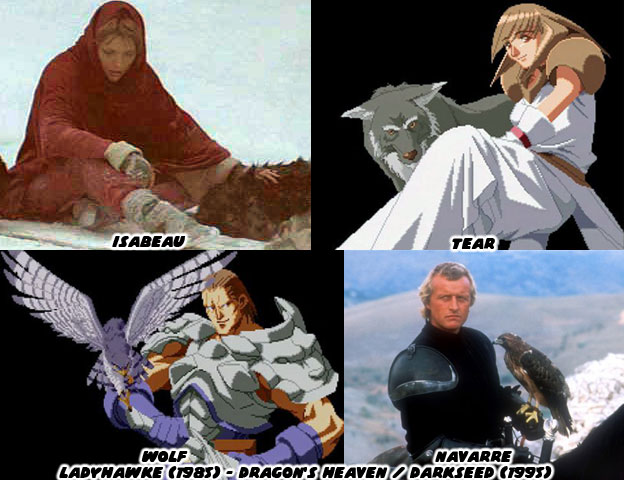
   

Captain Navarre played by Rutger Hauer and Isabeau played Michelle Pfeiffer were the star-crossed lovers. An evil bishop was jealous of the two and cursed them to change into animals so that they might never be with each other as humans. SPOILER: Captain Navarre swore revenge and when the opportunity presented itself to assassinate the bishop and lift the curse, thanks to a well timed solar eclipse, he went for it. In hindsight Mr. Obari thinks that he could have come up with something better for his first original fighting game. That is a tough case to make considering all of the fresh game play elements he had introduced in this title. Aside from Tear and Wolf there was a very interesting heavy hitter in the planning stages known as Headcounter.
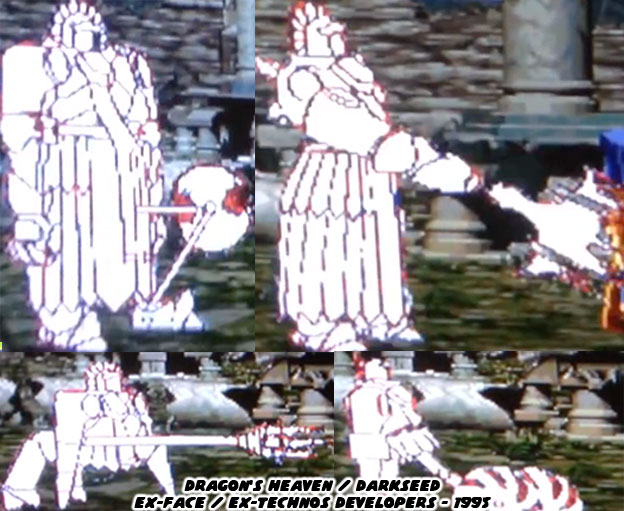
 

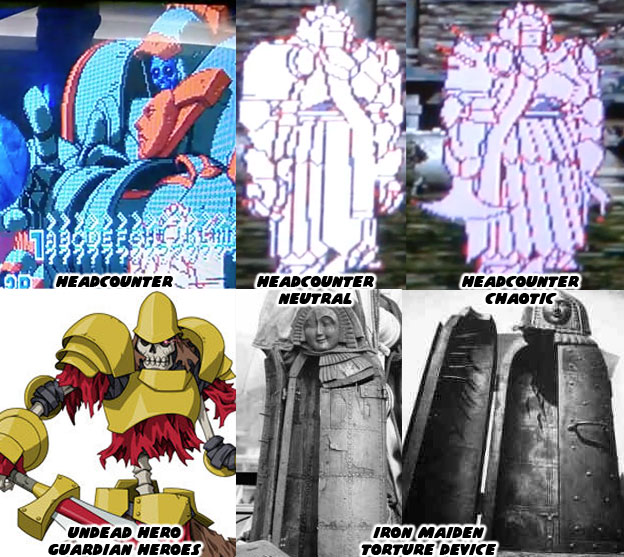
Headcounter had three classes to choose from just like the other characters. He was not some sort of armored knight but instead a skeleton trapped in an animated suit of armor. The look of Headcounter did predate the appearance of the Undead Hero from the 1996 Treasure game, Guardian Heroes, for the Sega Saturn console. What made this new fighter unique was how much his visual appearance changed in between the classes. In a neutral form his armor was smooth but in a chaotic form his armor turned spiky. This character was huge, about the size of an Iron Maiden. But this armor changed shape and transformed as if it were robotic. He “grew” spider legs and could turn his legs into saws and fists into maces at the end of chains. There was no doubt that the Pre-Columbian robot Huitzil / Phobos from the 1994 Capcom fighting game Darkstalkers / Vampire was the basis for Headcounter. Too bad he never to get a chance to shine.
   

Mr. Obari and his team got far along in the development process but not far enough so that some other developer could pick up and finish the title. Despite the number of stages, cut scenes and near-finished characters there was still plenty of work to do. They still had to finish the moves for the existing characters and create sprites and animations for the missing ones. They had to come up with a final boss, if not several final bosses and ending stories as well. This could have added another year in production plus several months polishing and balancing the mechanics. This was something that neither Technos nor SNK could afford. They needed game ready to go while fighting games were hot. 
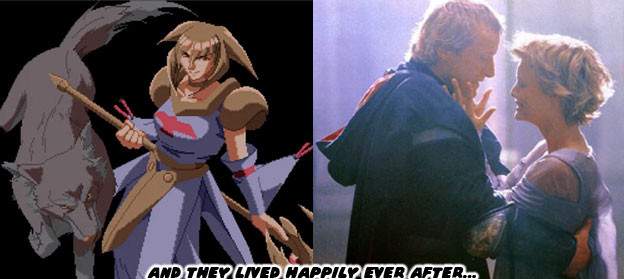
 

What would have become of the cast? Would they have returned for a sequel? Was this meant to be a one-shot fighting game? Would this series have crossed over with any other game? While we may never know the full scope of what Mr. Obari had planned we should appreciate the work that went into his game. We should be grateful that NeoTurfMasta was able to get a board running so that we could appreciate "what might have been" 20 years later. In this way I'd like to think that the plans and dreams of Mr. Obari and his team can now live happily ever after. As always if you enjoyed this blog and would like to sponsor me please visit my Patreon page and consider donating each month, even as little as $1 would help make better blogs and even podcasts!
 follow the Street Writer on Patreon!