Showing posts with label rugal. Show all posts

Tuesday, August 14, 2018

G, or the evolution of power-hungry characters in fighting games

Another year, another EVO and another few character reveals for some popular fighting games. I’m going to talk a little bit about G, the new character unveiled for Street Fighter V. We’re going to talk about the design roots of the character. If you want the punchline here it is: G is the self proclaimed “President of the World.” His design is rooted in American Imperialism. It’s as simple and as complex as that. Think about it for a moment. The absurd stovepipe hat and filigreed coat and tails hasn’t been en vogue in more than 150 years. G is a juiced up Abraham Lincoln and demanding of more patriotism than Uncle Sam.


G’s motives may be noble but there is a dark undercurrent carrying his inclusion in the series. Any man that forces himself as a leader on the global stage is a narcissist, a despot or a tyrant. G has delusions of grandeur and sadly, the physical properties to make him appear superior to normal people. G is a reflection of several world leaders that we are dealing with right now, especially in the USA. I’ll get to this comparison in a bit. Did you notice that G is covered in golden marks? They look like golden tattoos. In the original design notes these golden patches were shaped after the continents. Without his jacket you would be able to see that each golden patch outlines the nations of the world. The cover his arms, torso and neck. Visually it is an interesting look. There is a lot of contrast with gold, especially over bare skin. Gold has actually been used in cosmetics going back thousands of years. Some makeup artists actually apply gold leaf to to the skin for aesthetic reasons. I don't know if these markings on G are makeup, tattoos or even a skin condition.


Before G was introduced there was a lot of speculation to his design. He has a very unique look, however it is not completely original. Above I mentioned that he already takes cues from Lincoln and Sam, but in the fighting game world there have been others like him. Steven Chavez posted a theory that Du Nguyen and Xavier had circulated on Twitter. Namely that G was actually Greg, a character from Bloody Roar, a game by Hudson Soft released in 1997. Bloody Roar was a unique fighting game. There were masters of various arts in it, this was nothing new to the genre, however these characters also had the ability to transform into animal-like avatars. Audiences have seen werewolves and even werebears in popular culture but Bloody Roar also gave us weretigers, wererabbits and even weregorillas. Plus this game was another title built on 3D technology. Hudson Soft was not know for their fighting game library but they proved that the shift in fighting games from 2D to 3D was more than a fad. The similarities between G and Greg were eerie. Top hat, bodybuilder physique, large beard were all spot on. Plus there was an ape teased in Ed's ending in Street Fighter V. It stood to reason why some in the fighting game community saw this as the alternate form of G.


I've said it before and I'll continue saying it. No character design exists in a vacuum. Influences from pop culture help color each design. It doesn't matter if you're an artist in Japan, the US or anywhere else in the world. Whether consciously or subconsciously the artists creating these new fighters are all putting in their own insight and tastes. This can sometimes include elements seen in other fighting games, action movies, comics or cartoons. Changes in music, movies and even politics helped shift the public perception of fighting game characters. In the earliest days of the genre fighting games featured martial artists. They were easy to create and were universally recognized as being fighters. As the genre took off so too did the types of characters that could be considered fighters. The industry tried different things out and audiences responded accordingly. Robots, aliens, dinosaurs, demons and superheroes were all used to replace the tried and true kung-fu archetypes. G is the latest version of a more contemporary design. His look is rooted in ultra wealthy and ultra powerful villains.


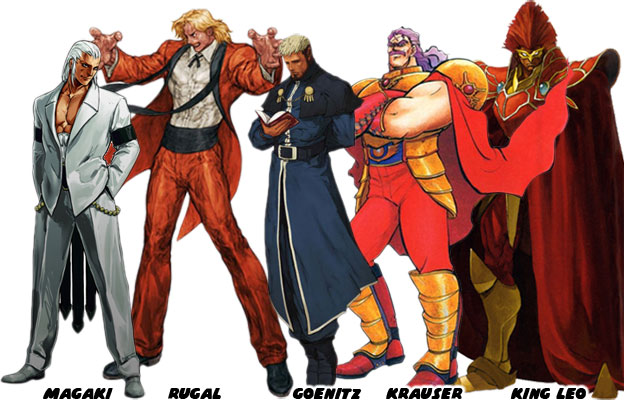
Fatal Fury (1991) introduced the world to Geese Howard, a martial arts master that was also a crime lord that ran the fictional South Town. He was a break in tradition from the boss characters that were simply martial artists. Geese could have been a bad guy in a modern action movie. One which featured drugs, cops and murder instead of fantasy swordplay. Howard wasn't the first villain in a fighting game to be the kingpin type. Belger, from Capcom's Final Fight in 1989 and Mr. X from Sega's Streets of Rage were also mobster-type villains. Geese was unique in that he was in a fighting game and a powerful opponent. SNK pushed the concept of powerful leader even further in Fatal Fury 2 (1992). Wolfgang Krauser von Stronheim, the half-brother of Geese Howard, was the new sponsor of the King of Fighters tournament. SNK wanted Krauser to have the look of a European aristocrat. He was wearing a cape and sporting golden armor in his character intro. He did not have the same moves or techniques of Howard but he was still a powerful opponent. It was not the first or last time the aristocratic design would be featured in their extended universe.


King Leo, the main villain in SNK's Savage Reign (1995), also sported royal colors and golden armor. With his ornate mask and elaborate headdress he pushed the idea of eccentric villain even further. A somewhat subdued doppleganger named King Lion also appeared in the same game. Within two years SNK had established that rich, powerful, and corrupt men were the new boss templates. Sagat from the original Street Fighter (1987) was still an icon but he represented the first generation of villain. Someone with a limited role outside of fighting. Vega / the Dictator from Street Fighter II (1991) would become more influential to the story and boss designs for the universe. Vega, like Geese Howard, was not a traditional martial artist. Because of that he could be placed in much more interesting locations and force the playable characters to appear out of their element.


Without a doubt the biggest shift in villain designs happened in 1994 with the introduction of Rugal Bernstein. The newest benefactor of the King of Fighter's tournament was a groundbreaking opponent. SNK learned from all the design notes that went into Geese and Wolfgang and created a hybrid of the two. He had the size and power of Krauser, with the balanced techniques of Howard. Plus he was a very sharp dressed man. He didn't wear armor or any other martial arts costume but instead wore black and red tailored suits. Nobody looked half as fresh as Rugal when he debuted. SNK wanted him to stand out and they succeeded. Despite being a new to the universe audiences instantly gravitated towards his design. Nobody else in the genre looked or fought like him. His wide arcing kicks and powerful punches could take down the strongest opponents. SNK demonstrated in the game that Rugal could easily take on a team of three fighters, even if that group included Terry and Andy Bogard and Joe Higashi, the stars of the original Fatal Fury. To help frame how much influence this new boss had had the studio created one of the most memorable stages ever.


Rugal flew the best team in his tournament to his personal aircraft carrier, named the Black Noah. As a background detail this is important. An aircraft carrier of its size costs around $6 billion, when fully loaded with aircraft, supplies and a private soldiers that number rises to almost $30 billion. Now consider that we don't even see the extent of Rugal's personal wealth. We have no idea how big his private army is or what he actually controls. We do know that he has enough money and influence to buy a navy and even decorate the bridge with paintings, lavish rugs, a grand piano and keep a pet panther there. This level of opulence makes for fantastic storytelling. It helps frame Rugal's impact on the world. He is much more important to the SNK universe than just about any other villain. The King of Fighters '94 was a major milestone for the genre. It connected the timelines and characters from the Fatal Fury and Art of Fighting series. Also it connected the characters from arcade gems Athena (1986), and Ikari Warriors (1986). Other fighting games would be influenced by the direction of these new fighting games and especially from the new villain archetype. The introduction of Heihachi Mishima in Tekken (1994), and Gill in Street Fighter III (1997) solidified the shift in this design. Karate fighters and kung-fu masters were no longer doing battle against other martial artists, they were now literally saving the world from tyrants.


Capcom was actually close to creating their own version of Rugal. An ultra powerful, aristocratic, multinational, authoritarian villain. They were not the only studio that was on the same path. Dream Factory (developers behind Tobal No. 1) also happened to be headed in the direction of a blonde-haired, red suit wearing villain. Whether coincidence, zeitgeist or something else entirely the Antonov made his debut as the "first champion" of King of Fighter's tournament. He appeared as a cigar chomping mogul in the King of Fighters XIV (2016). His design is nothing new. Years ago I mentioned that he was pretty much based on a comic book character called Asimov.
   

Antonov is a master of the Siberian Gold Fist. An almost unparalleled form of boxing. He is the most recent retelling of the power hungry despot but his roots are a bit on the nose in this current political climate. It is well known that Russia has been dealing with oligarchs for some time. A few very wealthy and very influential people are consolidating power, killing their political enemies, dissenters, members of the press, and destabilizing rival nations. I wouldn't go so far as to say that Antonov is the Putin of fighting games, any more than G is the Trump of villain designs. Both however are instead a reflection of the changing global perceptions. Antonov and G are examples of how power corrupts. A decade ago the world still saw the USA, specifically the US leadership favorably. An example of this in fighting games was with the character Andrew.


Andrew debuted in Samurai Shodown 6 (2005). The series by SNK was based around the time where firearms were changing the world. Guns were replacing swords, the era of the samurai was coming to an end and cowboys and indians ran the wild west. Andrew was a new American character, he was actually a young president that enjoyed fighting. His design was a mix of fantasy and aristocracy. The Japanese artists took tremendous liberties with his look. Soldiers in the early 19th century didn't look anything like this anime character. Had SNK done a little homework they would have realized that the continental army didn't have long red coats. Those were the colors of the British uniforms during the American Revolution. Blue however was already assigned to the other American character, the blonde ninja Galford. SNK went heavy with the pandering. The inclusion of the White House as a stage and an epic electric rock guitar version of the Star Spangled Banner-meets-Stars and Stripes Forever for his stage music were as gung-ho USA as you could possibly get. Despite being presented in a patriotic light there was something authoritarian about the character.


Andrew confessed to Galford in the story mode that he didn't fight for freedom as much as he fought for domination. He was trying to create a literal "New World Order" a sort of United Nations where unfortunately votes were not exactly equal. It would be Andrew that ultimately called the shots. This character was inspired in part by Andrew Jackson, soldier and seventh president of the USA. He stood up to a British officer as a young man and carried the scar from his fight. Plus he participated in many duels. As inspiring as this sounded he was also responsible for one of the worst atrocities of any administration on US soil. Jackson pushed for the Indian Removal Act of 1830 which lead to the forced relocation and murder of thousands of Native Americans. This became known as the Trail of Tears. A version of that was retold in Samurai Shodown 6 with Andrew conquering South America and making sure that Europe and Asia all followed his lead. The developers at SNK knew that the US could be as imperialistic as the British and made sure to push the character in that direction. It was a light jab that predated the design of characters like G.


As for the gold over skin. Maybe it's a jab by Capcom at a certain president spending too much time with spray tans. Or maybe it's just a way to show off the neat effects that the Unreal engine can pull off. Sort of like the glowing tattoos of Necalli. I don't think it really makes or breaks the character. The solid black costume is a bit boring, despite the filigree and cut of the jacket. His top hat is painfully absurd, but no more than a red-skinned Turk or green-skinned Brazilian beast man. So is G a good design or a bad one? Me, I don't care much for his look. I do expect to see more villains with this shade of political coloring in fighting games as well as in other genres. Politics have always been a part of the genre. Whether it was saving President Ronnie in Bad Dudes vs. Dragon Ninja (Data East - 1988) or having Zangief dance with Mikhail Gorbachev at the end of Street Fighter II. The next generation will end up putting orange-skinned politicians in their stories. Mark my words. What do you think of this character? Does he work for you? Why or why not? If you would like to sponsor me please visit my Patreon page and consider donating each month, even as little as $1 would help make better blogs and even podcasts!
follow the Street Writer on Patreon!

Wednesday, October 14, 2015

How fight culture became fighting game history, part 46

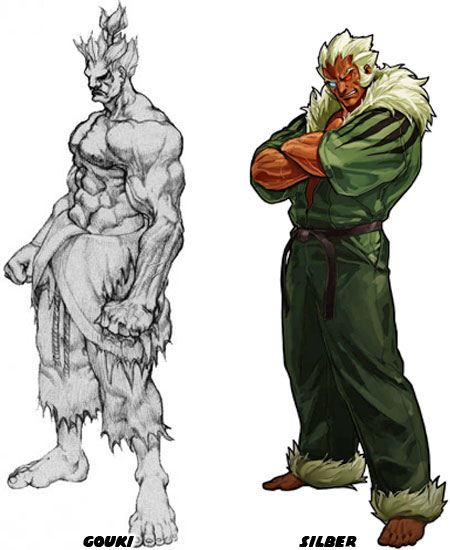
When the designers at Capcom created Gouki they demonstrated all of the elements that were required in making a memorable fighting game villain. The senior people at Spiritonin, Scott Stoddard and Adam Ford were clearly aware of what made Gouki such a unique character. Yet the studio did not want to simply copy the template verbatim, as SNK did when they introduced Silber in Buriki One. Instead they wanted Zumbi to be seen as a unique character that brought the same level of design to the Americas. In order to do this they had to pull actual elements from cultures and traditions that would explain the forces that allowed Zumbi to grow exponentially in power. Since Capoeira was grounded heavily in Brazilian and African history it was important not to separate the religious and spiritual beliefs that were brought over as well. By preserving the elements of the old customs it was easier for audiences to follow the shift in Zumbi's personality and power.


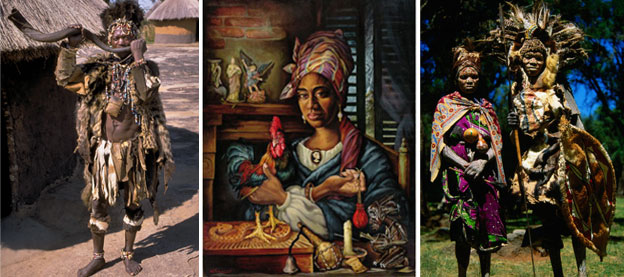
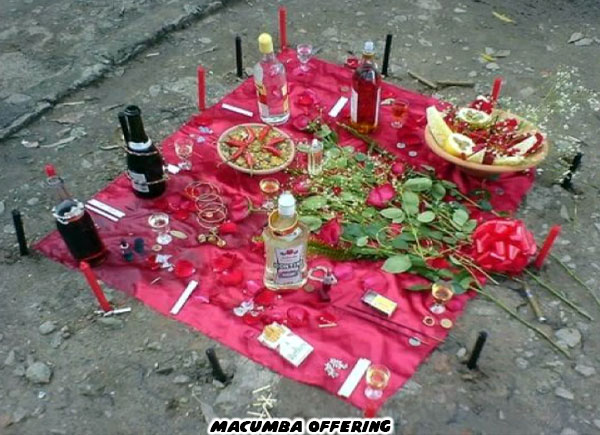
There were many unique forms of spiritual beliefs scattered throughout the African continent. The slaves brought from West Africa included the people from Nigeria and the Congo. They observed the Bantu custom and traditions. They had strong beliefs in the ability to barter with the spirits. They could have a practitioner, a shaman or holy man summon the spirits make offerings and sacrifices to them in return for any number of favors. Some wished for protection from their enemies. Others desired health and fortune. Still others wished the spirits to cause harm to their enemies. These belief systems were combined with native traditions in the Caribbean and Spanish Catholic-hybrid religions like Santeria that were practiced in the New World. The indigenous Brazilians incorporated elements of the Bantu into their own beliefs. The Bantu or Macumba customs were best observed in the Haitian Vodou beliefs.


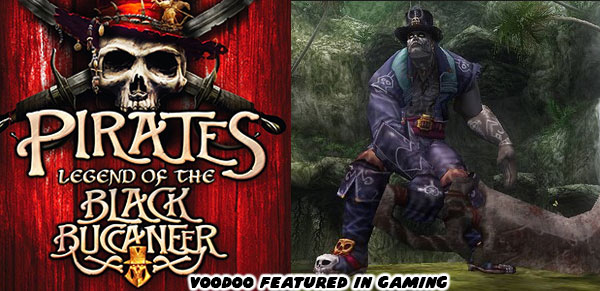
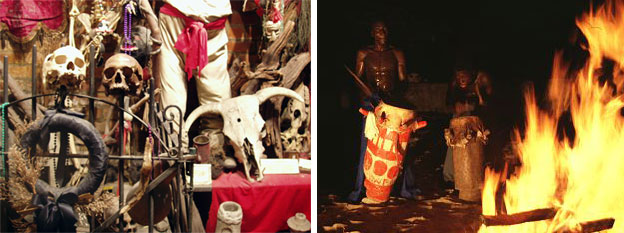
People in North America were familiar with the spiritual beliefs, hexes and spells from Voodoo due to the popularization of the religion on film and television. Voodoo dolls, zombies, shrines and altars with sacrifices had been featured in popular media over the past century. Those things were often attributed to ancient practices from exotic locations. The ability of a witchdoctor, or Voodoo Priest or Priestess to cast spells over people had been romanticized as well. The movement began in the US circa the 18th century when West African Slaves were transported to parts of the Caribbean and the early plantations in Louisiana and other French-controlled portions of North America. The African practices and indigenous Haitian beliefs were outlawed. Slaves and other conquered people were converted, some forcefully, to Christianity. The violent conversion of religious ideas resulted in a people that practiced a hybrid spiritual system. The religious iconography of African, Christian and island cultures blended together. Votive candles, sacrifices, offerings of tobacco, alcohol, crosses and skulls mixed to create a religion that was macabre and fascinating at the same time.


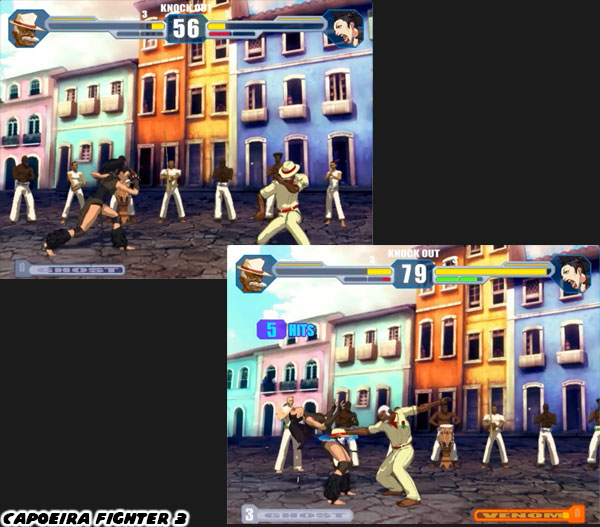
Voodoo practitioners were known as servants of the spirits. They carefully walked the line between the physical and spiritual worlds, catering to the wishes if not outright demands from the voices in either dimension. These practitioners were either well regarded or well feared by the population. The Macumba traditions differed slightly from the Voodoo customs. The indigenous tribes from North, Central and South America were also based heavily in different animistic, and spiritual beliefs. They had their own languages, symbols and ways of worship. When French and Spanish traders forced Catholic and Christian beliefs onto the tribes it also twisted their customs and influenced the creation of Santeria. The hybridization of spirituality in the Americas would take on many unique properties. The spirits of Macumba, sometimes called Orisha or Spirit Gods could manifest themselves in animals. Some of the more powerful spirits could make themselves appear as people. One symbolic figure in the Macumba tradition was that of a black man wearing a white Fedora. The Lord of the Crossroads, sometimes intertwined with the spirit of mischief, had a powerful influence on fate and could use his powers to cause trouble or convey a lesson to his believers. This character was known as Exu and was one of the named Orisha.


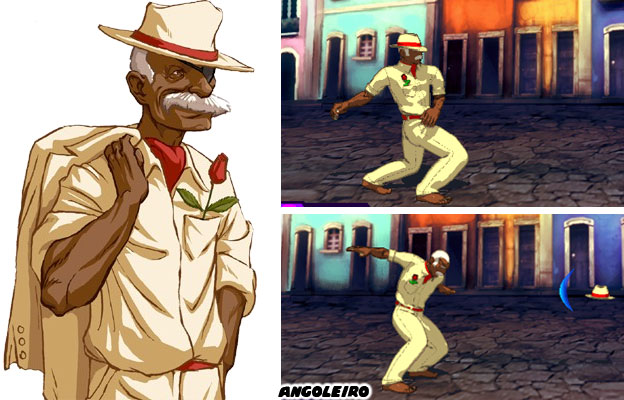
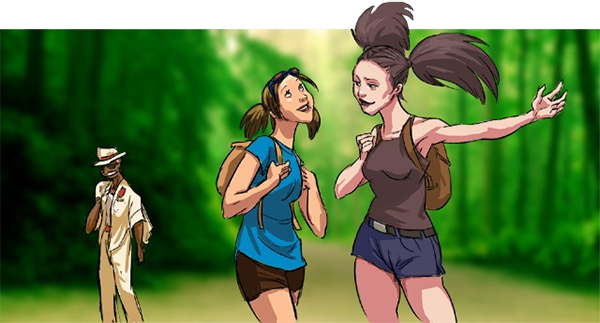
In Capoeira Fighter 3 there was a gallant fighter named Angoleiro. Although he was not a mystical person he certainly reflected the classic traditions of the African cultures. The elderly man was dressed in white yet walked barefoot, he also wore a white Fedora which he used in battle. They eye patch and sly grin added a bit of mystery to the man. Perhaps he was Exu in his human form after all. Angoleiro was sent to Brazil by a vision from his deceased wife Rosa. It seemed that there was a great conflict and a girl needed his help. He was not sure what the girl looked like as she was blurry in his dream. He found a native girl named Pantera dressed in animal skins. There was a land developer clear cutting the rainforest in order to build a hotel. It turned out that she was on the one that needed his assistance. Apparently the animal spirits had worked through his dreams in order to get him to a place where he could help. Although he was the oldest fighter in the game he still was still a master of capoeira. With his techniques and guile players could complete his mission.


Angoleiro was reflective of the positive forces of the Orisha. When he came upon Pantera and even the character Coelha upon the crossroads he offered each a chance to change their destiny. Angoleiro was using his visions to elicit change in other people's lives. These were the natural courses that Macumba practitioners preferred. Using a vision for selfish reasons would often cause strife or worse end up cursing the practitioner. The spirits of the Orisha did not like to be toyed with. Angoleiro had made it to a ripe old age and was still a fighter to be reckoned with because he followed the right path. In Brazilian legend there was a slave that was a master of Capoeira but was also protected by the Exu. His name was Besouro Maganga, he was nicknamed after the junebug. Officials tried hunting him down but he was too quick for them, he could run along treetops and seemed impervious to bullets. It was said that no weapon forged by man could kill him. A jealous rival found out about the myth and crafted a knife made of palm leaves in order to assassinate him. Figures like Besouro and the contemporary Angolero reflected the positive aspects of the spirituality that followed Capoeira over from Africa.

There was somebody in Capoeria Fighter canon however that did not follow the right path and never had. Mestre Zumbi had spelled trouble for the other Mestres and was a menace to the young practitioners of Capoeira since the very first game. He was confrontational, proud and jealous. It was a dangerous combination for the strong bruiser. Zumbi was lacking something, aside from his look, to set him apart from the other characters in the game. He was a powerful bully but what the game needed was a boss character. He discovered, or rather the team at Spiritonin discovered, that Macumba could be the power that elevated Zumbi from bad guy to major villain.


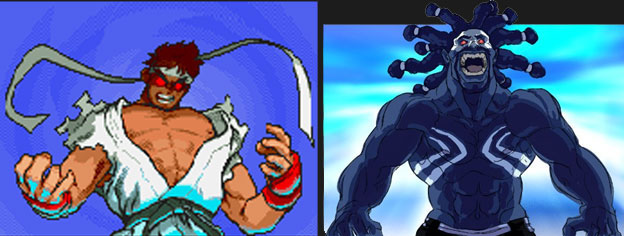
This would be the first fighting game that actually showed the evolution of a character from "regular" fighter into a boss-tier one. Moreover, this was the first fighting game that allowed players to start as one type of character and end the game with a completely new persona. The evolution of Zumbi was unique compared to all of the other fighting games, especially Street Fighter. The changes of Zumbi in CF3 contrasted Ryu in Street Fighter Zero. Ryu had always been a hero in the series. In Street Fighter Zero Ryu had to battle his own dark urges. The Evil Ryu personae was what he would have become if he had gone down the same path that created Gouki. After the events of Street Fighter II, III, IV and V it was apparent that Ryu was and always would remain the hero of the series. Much to the chagrin of some players, there would be no second coming of Gouki. Zumbi on the other hand had always been the bad guy and would always be the bad guy. Given his personality it made sense that he did not fight the dark elements but instead sought them out. It was like watching the great betrayal of Gouki to his master and even himself. Zumbi wanted to put fear into the heart of Loka and the other fighters. He embraced the forces of Macumba and became a vessel for their dark powers. In doing so a new character was born; Zumbi Azul, or Blue Zumbi. This dark master of Capoeira would now reign as the supreme force in their universe.


Previous to Capoeira Fighter 3 the studios in Japan and the US had been trying out many different types of characters from which to build a main villain from. Martial artists were the original boss characters however as time went on the final villains began to move away from the traditional arts. Most of the characters appeared to have been pulled from other genres like science fiction or even fantasy. SNK made a name for themselves by featuring well dressed but overpowered characters as bosses. They were supposed to look regal and in some instances even combined sharp clothing with vintage armor. The studios broke the balance in the game by assigning absurdly powerful attacks to these bosses, far more than the Dictator even. Some could kill regular characters with a few hits and often without having to even physically touch the opponent. This seemed cheap and reduced the impression that boss characters were supposed to give players.


Capcom had demonstrated through Gouki that with a healthy dose of cultural cues the most memorable villains could be grounded in reality. For a fighting game it only made sense that the ultimate villain also had to be a fighter and not simply an overpowered man in a suit. Gouki had established a tradition that would be hard to top. His design incorporated animal as well as demonic cues but not to the point as to be absurd to players. Silber from Buriki One had been the closest to follow the formula, especially in form and function. He was a fearsome predator that hunted down martial arts masters all over the world. Like Gouki he appeared suddenly during the last fight to surprise players and vanished just as mysteriously. Silber was missing something however, an awe-inspiring super attack that made him more than just a superior karateka. This small detail was not missed by Spiritonin. Zumbi Azul had become the Gouki equivalent in the series. He controlled similar to the regular Zumbi but all of his attacks were much more powerful. It mirrored how Gouki controlled similarly to Ken and Ryu but with stronger attacks.


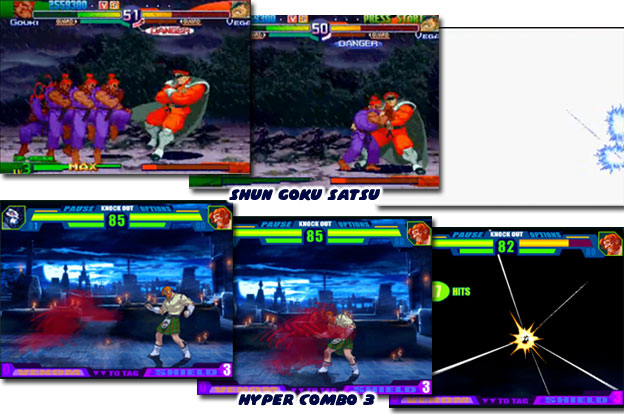
Gouki was famous for his Shun Goku Satsu. The character would hop on one foot and "teleport" over to an opponent. He would grab them and then proceed to pummel them with a flash of unstoppable strikes. The Instant Hell Murder was near impossible to escape at close range and could even reach most opponents at mid-range before they could counter. Zumbi Azul was given a similar attack for his Hyper Combo 3. The character would turn a ghostly, transparent red and then slide over to his opponent. Once caught Zumbi Azul would pummel his opponent with a flash of rapid strikes. A well timed final attack would all but guarantee victory for both bosses. The thing that made the special attacks slightly more interesting in CF 3 were that they could be combined with a "Power" modifier like Shield, Poison or Speed. If Zumbi Azul had Vampire, which was how the PC usually controlled the character, then not only would a player lose a tremendous amount of health from the Hyper Combo 3 but Zumbi Azul would gain all of that energy in return. It made the special attack all the more fearsome and the character more difficult for players to deal with.


Spiritonin had introduced a villain that had as much presence as Gouki. This was not only rare for a Western publisher but was rare for the entire industry. The studio placed Zumbi Azul as a boss for several but not all of the characters in the game. It only made sense considering the long standing rivalry that Zumbi had against certain cast members. Players could unlock the character if they earned enough credits. Players earned credits for each character they beat the game and various modes as well. They were encouraged to beat both paths of the game with each character so that they might earn enough credits to unlock all of the hidden characters including Zumbi Azul. The differences between Zumbi and Zumbi Azul were subtle but each required precise timing to master. Spiritonin took all of the lessons that Capcom had laid down regarding boss designs and created a new chapter to the legacy of fighting games. The next blog will look specifically at how a minority character evolved to become one of the great all-time villains. As always if you enjoyed this blog and would like to sponsor me please visit my Patreon page and consider donating each month, even as little as $1 would help make better blogs and even podcasts!