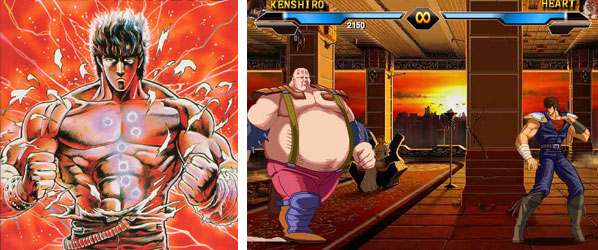
In the previous blog I mentioned that the characters in the King of Fighters, and King of Combat series tended to go over well with the broader Asian market, especially the Chinese. If you wondered why Asian-style leads were younger, or less muscular than the archetypes that Americans tended to favor I want you to think about pop culture. Think about every anime, and manga you had ever seen. There were some very muscular stars throughout history. Hokuto No Ken / Fist of the North Star, Dragon Ball Z, and Baki featured swollen leads. However those titles were the exception, and not the rule. The vast majority of manga, and anime featured characters with skinny-to-average builds. More often than not the stars were high school, or middle school kids. It wouldn’t make any sense for them to be huge, or vascular.
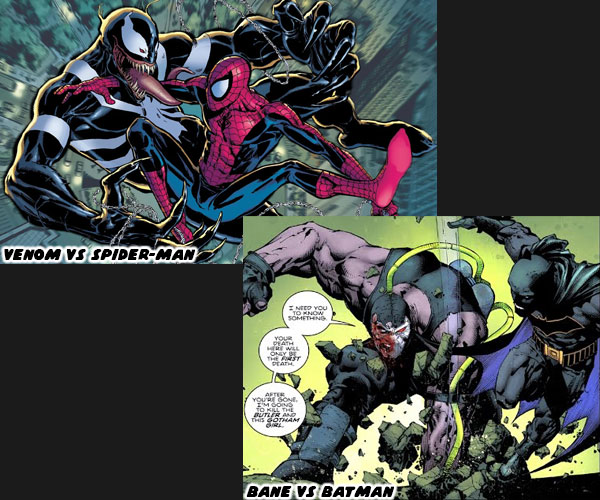
By comparison comic book, and animation heroes in the US were fully grown adults. They almost all had bodybuilder physiques. The villains were sometimes even more physically imposing than the heroes. Think of the difference between Batman, and Bane, Spider-Man, and Venom, the Hulk, and the Abomination. There was a distinct size advantage to the rivals. Even relatively young characters like Robin, or Kid Flash were often drawn more muscular than the average child. It stood to reason that Japanese studios would try to create equally buff characters when trying to appeal to the west.
I think that the market had a bigger influence on the design changes happening at SNK, and Capcom than they had discussed publicly. Money talked, and if a studio wasn't hitting their goals then they had to find a new direction. In the previous blog I mentioned that DIMPS had co-developed Street Fighter IV. It was something that not everybody in the fighting game community was aware of. I believe that they had a hand in influencing the look of C. Viper, and Rufus. Even studios outside of Japan got a chance to shape the direction of the series.
The Malaysian company Streamline Studios helped in pre-planning and development of Street Fighter V It wasn't the only time that an outside studio had shaped the direction of a flagship title. Most publishers outsourced some work to smaller developers. They might have built assets from the game, painted backgrounds, or created the title, and ending credits. The bigger the budget the more work a studio had to build from, and possibly outsource. If a game didn't perform then the publisher had a reason to cut down the team size, or try something different.
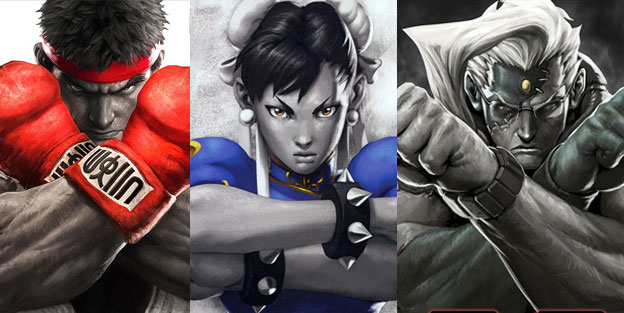
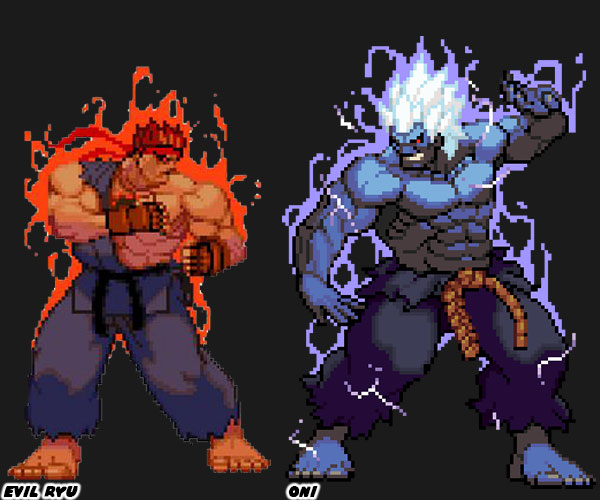
Street Fighter IV sold over 9 million units, across all versions, and platforms. It was credited with relaunching the fighting game craze. Street Fighter V sold over 6 million units, across all versions, and platforms. Both were hits, but they did not outsell Mortal Kombat X, which was just shy of 11 million units, and Mortal Kombat 11 which sold 12 million. The lack of numbers compared to MK, plus the drop off in sales from SF IV to V probably had a hand in seeing Yoshinori Ono leave Capcom. It wasn't the only reason that a change was warranted. Mr. Ono had lead the company to some interesting places during his tenure. He brought back a number of classic characters, but also introduced a number of odd ones as well. Rufus, Hakan, and F.A.N.G. stretched the idea of what worked in the series. They looked, and played like he was trolling audiences. He brought Gouken back from the dead. His murder was integral to Ryu, and Ken's story. All of a sudden he was alive without explanation. Then he introduced Kage, and Oni which were evolved versions of Evil Ryu, and Gouki respectively. These characters were already well designed, they didn't need an upgrade. To many in the community he was pushing the series very far from its roots.
A new team made up of internal members had to step in. Director Takayuki Nakayama was joined by Producer Kazuhiro Tsuchiya, who had been with Capcom since 1992, Produced Asura’s Wrath, and was the lead Producer on the Mega Man series since 2018. Producer Shuhei Matsumoto had worked on Street Fighter: 30th Anniversary Collection, Marvel vs. Capcom: Infinite, Ultra Street Fighter II: The Final Challengers. Designer: Yusuke Hashimoto had Produced Bayonetta, and Directed Bayonetta 2. It was up to them to steer the ship in a new direction, without losing the Street Fighter Style. They had mentioned in interviews how they wanted the game to feel like a worthy successor to SFII. That meant they wouldn't have as many fantastic elements, and over-the-top characters as audiences had seen previously. The game would be focused on fantastic, but plausible fighters. Closer to the World Warriors, rather than Rufus, and other joke designs. So let’s have a thought exercise. If you were Japanese employee, working at Capcom, and tasked with creating a character that would appeal to American audiences, who would you come up with? It might be a pro wrestler, as wrestling was still popular, or it could be a more contemporary mixed martial arts (MMA) star.
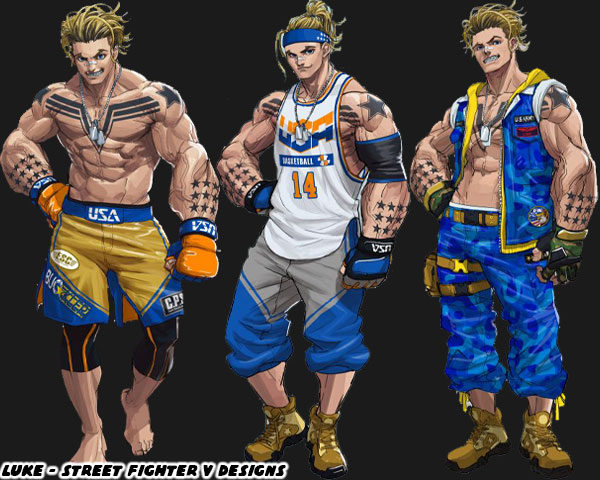
Luke appeared like an up-and-coming MMA star. The new designers followed the rules that Capcom had established in 1987. He was a muscular, blond haired white guy. He could certainly never be mistaken for the skinny Kyo, or Shun’ei. The difference for Capcom this time was that the character was much younger than the other leads in the series. He was younger than Ken, Alex, and Abel when they made their debuts in SF, SFIII, and SFIV respectively. He was roughly the same age of Ryu in Street Fighter Zero / Alpha. Using the SF style of character design they tried to give him a pseudo-traditional martial arts outfit. MMA fighters often wore shorts, sometimes a rash guard. Luke was given both. He also had striking gloves instead of larger boxing gloves. His color scheme was distinct, he wore gold, and blue, the colors of the Capcom logo. The pride in his nation was displayed on his main, and alternate costumes. The USA logo, the dog tags, the US Army fatigues, and Team USA basketball jersey to name a few.
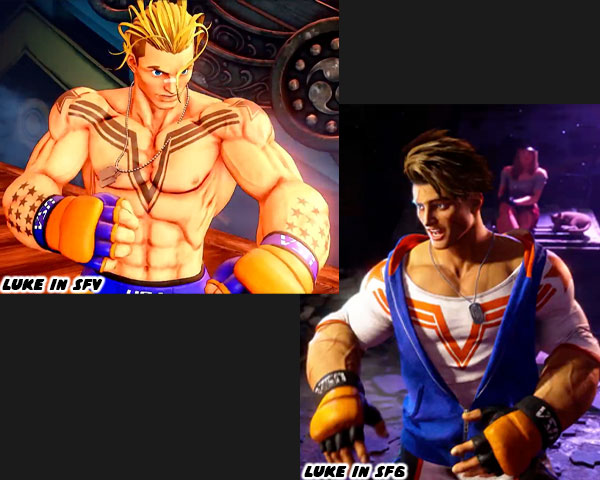
Despite his age he was a special forces op. He was a skilled fighter with a patriotic duty, somewhere in between Cammy, and Guile. The thing about his main costume was that it didn’t allow much material to establish his color, and identity. By comparison think about how much the colors, and costumes on Ryu, Ken, Chun-Li helped frame them. The designers at Capcom made up for it by covering his arms, and chest is solid black tattoos. It wasn’t the only thing the studio did to give him a distinct look. They gave him cartoonishly large forearms, this completely changed his profile. It made it so that despite his height, it looked as if he could hold his own with larger characters. They were design choices that wouldn’t have necessarily been used in a newer KOF game. The differences between Luke, and Shun’ei reflected both the aesthetic of Capcom, and SNK, as well as the target audience that they were going after. Capcom wanted to push the series forward in SF6, age the cast slightly, and give them new costumes. Luke’s uniform was changed to cover him up. Not only that but he lost the logo colors, going now to black, blue, white, and orange. His forearm tattoos were replaced with scars, and the chest tattoo was put on his rash guard. I think it was a good choice to leave the tattoos behind because patriotic symbols had been co-opted by the far right in recent years.
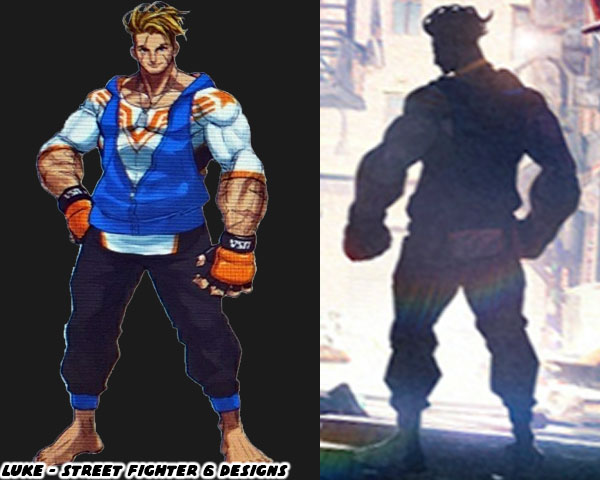
Despite these changes you could still identify him even with just his outline because of his cartoonish proportions, and wavy haircut. I’m not sold on the colors selected for the fighter. I think that blue, and gold worked better for him. That’s my opinion anyhow. I think he would still be popular among new players. With character costumes becoming more casual, and more conservative in SF6 do you think that Capcom was moving closer to the SNK style? That's how it seemed with designs like
Cammy, and
DeeJay. Was this a good idea to attract new players? Do you think this was a business decision? I’d like to hear your take in the comments section. Let me know what you think defines the Capcom, SNK, or any other publisher style. As always if you would like to sponsor me
please visit my Patreon page and consider donating each month, even as little as $1 would help make better blogs and even podcasts!