Showing posts with label movie. Show all posts

Sunday, May 12, 2024

A good Double Dragon fighting game? The story of Rage of the Dragons.

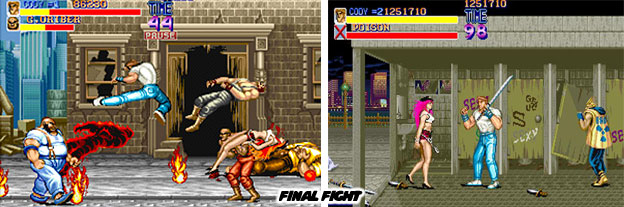
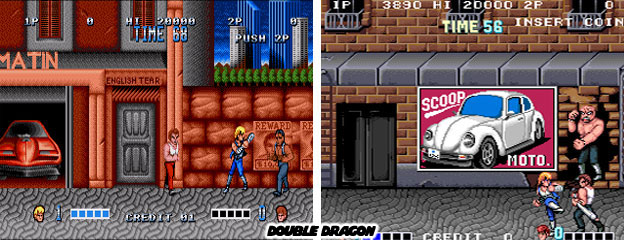
In the previous blog I talked about how EXA-Arcadia was rereleasing / remastering Daraku Tenchi: The Fallen Angels, and Rage of the Dragons W for the arcade. I mentioned “the godfather” of brawling games was Double Dragon in 1987. It had inspired the creation of Rage of the Dragons, a fighting game from 2002. A little more on that in just a moment. Technōs essentially launched the brawling game genre, and influenced the fighting game genre as well. Despite being important to game history they were incapable of creating a sequel that was as influential as the first game. Not long after Capcom released Final Fight, Konami released Vendetta, and Sega released Streets of Rage. Each was essentially a better version of Double Dragon. In fact post 1989 there were dozens of great titles which were superior to Double Dragon in every regard.

The sequels to Double Dragon failed because in my book they did not innovate the format. The studio played it safe, and made only marginal changes to the game. Worse yet they looked for ways to make arcade players pay more money through micro transactions. In the early ‘90s the arcade market had shifted. Fighting games were the hottest titles, and brawlers had taken a back seat. The biggest hits of the entire decade all came out within three years; Street Fighter II (1991), Fatal Fury (1991), Art of Fighting (1992), Mortal Kombat (1992), Virtua Fighter (1993), Tekken (1994), Primal Rage (1994), Vampire / Darkstalkers (1994), and Killer Instinct (1994). By the middle of the decade it was hard to break in with a new fighter. That was exactly when Technōs decided to throw their hat into the ring. Had Technōs released a Double Dragon fighting game four years earlier then it would be more relevant today.

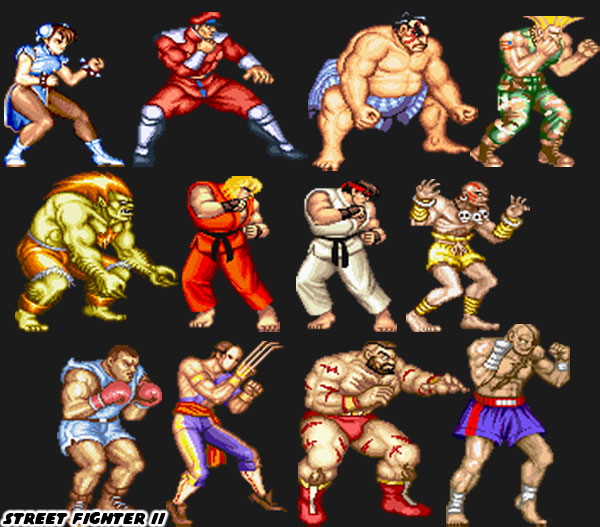
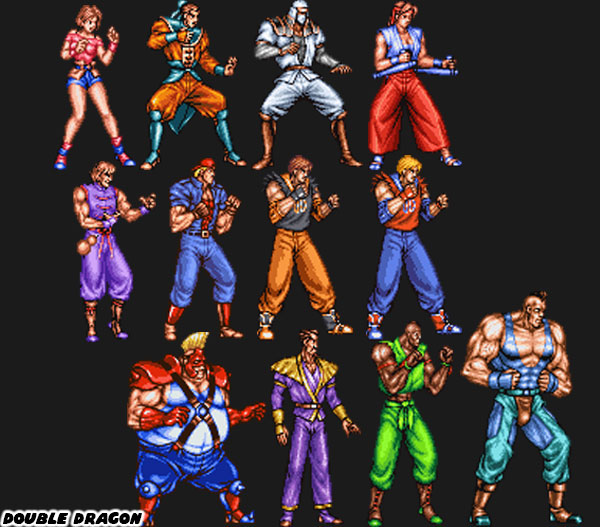
The mistakes of Technōs could be understood through their fighting game. Being slow to market was one of the biggest issues. Double Dragon (the fighting game) was similar to the hundreds of other titles out in 1995. There were two main characters Jimmy, and Billy Lee. They studied the fictional Sousetsuken “Twin Sever Fist” style of fighting. The Japanese, and western lead characters with their own trademark fighting style had also been seen with Ken / Ryu (Street Fighter), Kazuya / Paul (Tekken), Akira / Jacky (Virtua Fighter), Ryo / Robert (Art of Fighting). Granted Billy, and Jimmy were the ones that started the trend. Double Dragon also had the token big guy, girl, strange character, etc which had been pulled from the franchise. The sprites were large, and colorful. They were not unlike the sprites, and cast of Street Fighter II which was something that other studios had also poached.

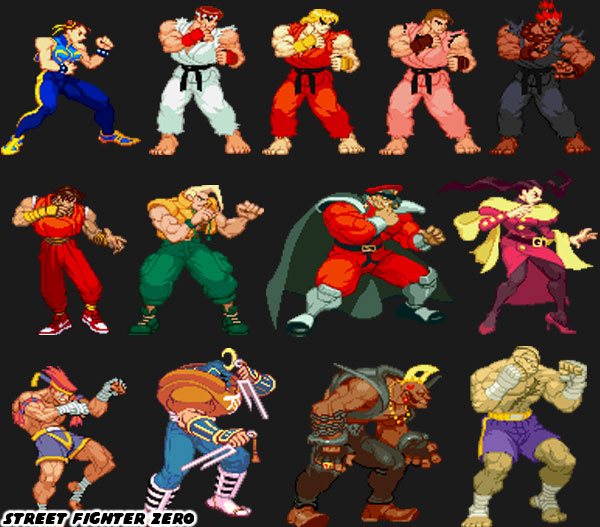
Technōs didn’t realize their visual presentation was becoming dated. It took them too long to bring a game to market. Having a recognizable brand, and going through the motions was not enough. Other studios were trying out bold new ideas in the early ‘90s. In order to stand out from the crowd it wasn’t enough to have bigger, or slightly more colorful sprites. Sega had polygon models, Namco had textured polygons. Rare had SGI workstations creating sprites that looked like computer graphics. Midway used live action footage, and Atari used stop motion figures. On top of everything the popular aesthetic, the art style was shifting. There was a blending of western comic book formats, and Japanese anime in a new sprite art form. Capcom designer BENGUS broke the mold in 1995 with Street Fighter Zero / Alpha.

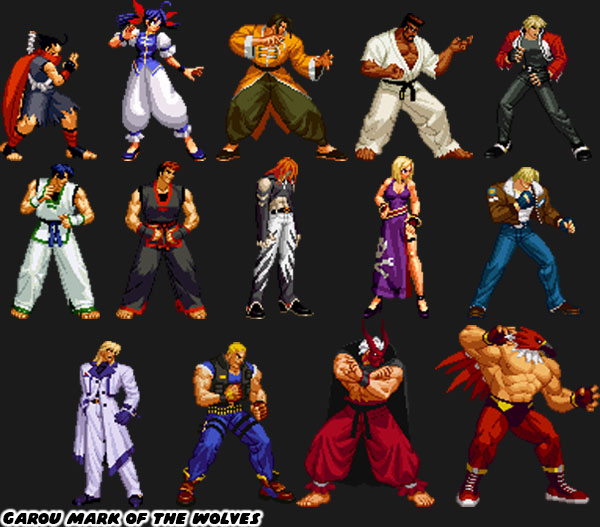
The game was amazing given that a number of the staff that worked on Street Fighter II left Capcom to join SNK,a nd ARIKA. Noritaka Funamizu, and the remaining team at Capcom was able to create something amazing with a bare bones staff in a relatively short amount of time. The large cartoonish sprites designed by BENGUS were revolutionary. The entire industry had to respond. I would argue that SNK’s first counter were the sprites featured in Real Bout: Fatal Fury Special from 1997. The game featured sprites which were touched up, and made more colorful from those featured in the previous Real Bout game from 1995. That was a small step for their art department. The actual response to Street Fighter Zero was seen in Garou Mark of the Wolves. The fan favorite game from 1999 had a style, and presentation that was close to BENGUS, but still had the classic SNK fingerprints all over it. The sprites, and character designs that Technōs featured in Double Dragon in 1995 simply didn’t capture audiences in the ways that the Capcom sprites did. A few years later there would be another chance to get it right.

The developers at Noise Factory was not happy with the version of Daraku Tenchi: The Fallen Angels that was published by Psikyo in 1998. They did not have the time, or money to develop an upgrade kit either. Arcade business was slowing down globally at the end of the ‘90s. Any arcade title that was published had to be more polished right out the gate, rarely did any studio have a chance to release upgrades for arcade operators. While they couldn’t go back, and add more content to the Fallen Angels, they did think there was a chance to make a sequel to the 1995 fighting game inspired by the ill-fated live action movie. The history of Rage of the Dragons was unique. It was created by Noise Factory, and BrezzaSoft for the NEO GEO. BreezaSoft was founded by Eikichi Kawasaki, who also founded SNK. What made it truly unique was that it was designed by the Mexican studio Evoga.

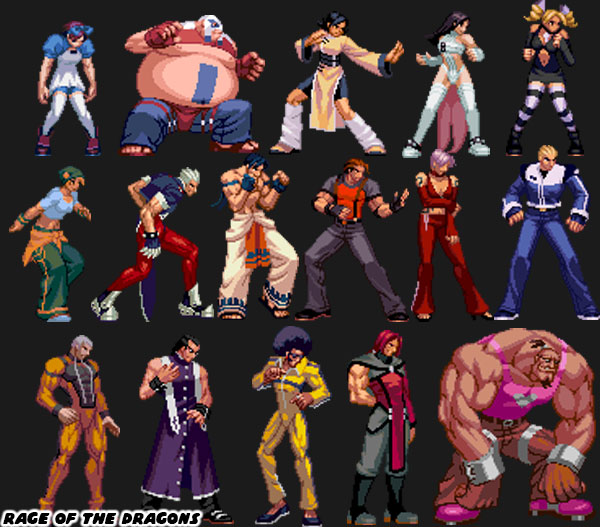
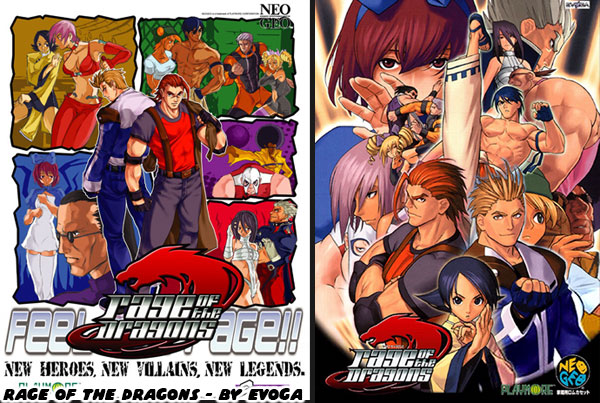
Unfortunately they couldn’t get the rights to the Double Dragon characters or name. Million was made up of former Technōs employees, they were sitting on the rights, and didn’t seem eager to strike a deal. To make negotiations more difficult SNK was going through a bankruptcy at around the same time. South Korean developers Eolith were hired to help finish a few projects. Steel Hearts team members helped SNK as well. They figured out that they could move forward with their own game if they slightly changed the names. Billy, and Jimmy’s last name went from Lee to Lewis. The girlfriend Marion became Mariah, Abobo became Abubo, etc. This didn’t stop Million from filing a legal challenge. Fans of the franchise could tell what this new fighting game was actually based on. To set it apart from the earlier game it was made a tag-team fighter. Visually the team at Evoga was able to find a perfect blend of the style of Street Fighter Zero, and Garou Mark of the Wolves. In just about every regard it was superior to the fighter from ’95. Sadly Rage of the Dragons just didn’t have the balance, and game play of the more popular titles. It was rarely seen in arcades, and didn’t build too much of a following.

I was happy that EXA-Arcadia was going to give the titles by Steel Hearts another go. I hoped that the developers would reunite to add some polish, and perhaps add a few more features to the games. Rollback anyone? Maybe, just maybe this would help them get to modern consoles sooner, rather than later. Of course I want to know if you played any of the Steel Hearts games. Or did you play any of the classic Double Dragon games? Did you have a favorite? I’d like to read about it in the comments section. As always if you would like to sponsor me please visit my Patreon page and consider donating each month, even as little as $1 would help make better blogs and even podcasts!
follow the Street Writer on Patreon!

Saturday, May 11, 2024

The Fallen Angels, and Rage of the Dragons. Two rare fighting games get a second chance in arcades!

The EVO tournament in Japan at the end of April 2024 had a few gems announced. I talked a little bit about Fatal Fury City of the Wolves not too long ago. There were a couple of other announcements by EXA-Arcadia that surprised me. In case you weren’t familiar with the company, they created arcade boards mostly on fighting games. They handled mostly small indy studio releases, and not big titles like those from Capcom, or SNK. Even though arcades weren’t as big as they were in the ‘80s, and ’90s there was still a market for them, and EXA-Arcadia was filling it. They said that they were working on getting The Fallen Angels Revenge (Directors Cut) exclusively for the arcades.

Daraku Tenchi: The Fallen Angels (1998) was one of the most important fighting games of all-time, not for what was delivered, but for how ambitious it was. Developers Steel Hearts spent three years, and untold amounts of money trying to make the highest quality sprite based game ever made. It was going to be even visually more impressive than Street Fighter III, and superior to the work that went into SNK’s Dot graphics for KOF XII. I wrote a two-part blog detailing the game. The Fallen Angels, part 1 and The Fallen Angels, part 2. Sadly the game published by Psikyo lacked polish, and balance. It was embraced not too long ago by the fighting game community when ROMS turned up for emulators. The idea that the directors wanted to finish their masterpiece after a 26 year pause was nothing short of inspiring. That wasn’t the only bomb dropped at EVO.

Rage of the Dragons W was slated to be a rerelease of a rare arcade fighter. I had never done a deep dive on the game for this blog, but I did point out several characters in various posts. I wrote a little bit about Pepe, and Pupa as part of the history of Capoeira in fighting games. I talked about Jae-Mo Kang when looking at fat fighting game characters. I talked about Abubo Rao when talking about the origins of giants in fighting games. Lastly Mr. Jones was mentioned as being a caricature of Back martial arts movie stars like Jim Kelly, and Ron Van Clief. In order to understand the importance of Rage of the Dragons in the history of fighting games then we have to put it in context. Rage of the Dragons was a fighting game homage to Double Dragon, the foundation of the brawling genre.

I cannot understate how important Double Dragon was to the history of brawlers, as well as fighting games. The template for Double Dragon was Nekketsu Kouha Kuniou-Kun aka Renegade by Technōs of Japan. That and Takashi Nishiyama of Irem / Capcom / SNK / DIMPS deserved all of the flowers. They put brawlers, and fighting games on the map. There would be no Final Fight, or Street Fighter II if Double Dragon had not been a massive hit. A fighting game with a storytelling narrative was revolutionary at the time. We wouldn’t have the modern gems like Tekken 8, Street Fighter 6, or Mortal Kombat 1 if not for the seeds that Technōs planted in 1986. Unfortunately for them they didn’t understand how game sequels needed to evolve. They retreaded the same ground with Double Dragon II, and III, which were stale when compared to Final Fight. When fighting games were taking off in the early ‘90s Technōs decided to stage a comeback.

Technōs created a fighting game for SNK’s popular NEO GEO arcade platform. Visually the game was impressive. The sprites were absolutely massive. The game engine was capable of scaling in, and out of the action similar to the Art of Fighting. This made the experience feel bigger, and better than the various Street Fighter II upgrades. Unfortunately for Technōs, it turned out that game play, balance, and control meant much more to audiences than graphics alone. People might be attracted to the game if it looked nicer than the other titles, but if it played like trash then people would never return to it. The release of this game coincided with the development of an animated series for the US, as well as a comic book, and even live action movie. This multi-pronged marketing strategy was great in theory.

By hitting every form of entertainment the company would remind the US that Double Dragon was the original arcade fighting hit. It predated Street Fighter, Fatal Fury, Mortal Kombat, Killer Instinct, and every other title out there. Except for Karate Champ, and Kung-Fu Master of course. Double Dragon should be at the top of the mountain of fighting entertainment. We should have Billy, and Jimmy Lee in our vocabulary as much as we have Ryu, Kazuya, Terry, Kyo, or Scorpion as popular characters whenever we discussed fighting games. The thing about the saturation of Double Dragon in the early ‘90s was that there was no consistency. The cartoon was decent, but it seemed to have nothing to do with the comics, which also didn’t really follow the story of the arcade games. It was as if there was no bible, no consensus that any of the studios had when creating their projects.

The absolute worst of the lot was the Double Dragon movie. It wasn’t the worst video game movie ever made, it was among one of the worst movies ever made period. It had a decent-sized budget for a small studio film. It had lots of money for sets, makeup, practical, and special effects. It was directed by James Yukich. Mr. Yukich made his mark directing music videos for some of the biggest acts in the ‘80s, including Michael Jackson, Cheap Trick, Gloria Estefan, and Phil Collins. It had a strong visual language, but that all fell apart when it came to the writing, and acting. It was written by Michael Davis, and Peter Gould. Mr. Gould would work on Breaking Bad many years later, showing that he had some actual chops. Mr. Davis on the other hand I would argue was the person that really stunk up the project.

Indy films, cartoons, and new comics would often get screened at the monthly Los Angeles comic book convention at the Shrine Auditorium, next to the USC campus. My brothers, friends, and I made the trip circa 1994 when we found out they would be previewing the Double Dragon movie. They would also have a Q&A with the director, writers, and some actors. We were unimpressed with the nonsensical, and silly film set in the post apocalyptic future of 2007. Many people questioned the crew, and we gathered that none of them were really that familiar with the game, or games in general. They thought that they should go off on their own ideas. They were fairly rude, and condescending to many of the questions they received. My big brother asked why the roving gangs didn’t have firearms, even if guns were banned they would still be able to make a a zip gun, or improvised firearm. Mr. Davis told my brother “I doubt that you’re smart enough to make a gun.” Just about everyone in attendance groaned. Needless to say few people stuck around to get a signed poster.

The film was a critical, and commercial flop. As for the Double Dragon franchise, it would be lost just outside the zeitgeist of gaming, and pop culture. It would get remakes from various studios over the years. In different platforms, in different styles, and aesthetics, they would try to recreate the magic of the original arcade hit. These games while well intentioned didn’t really work with audiences. Perhaps because the transition from 2D sprite-based game play to 3D mechanics were difficult to pull off. Or because sprite based brawlers were very niche. Brawling games were popular in the fighting game community, but nowhere near as big as dedicated fighting games were to all audiences. That plus the lack of an arcade scene, the ability to easily have multiplayer on the same screen made it a hard sell.

The 1995 fighting game by Technōs was the perfect example of being too little, too late to the market. I want to talk about this in the next blog. Until then I’d like to hear your thoughts on the Double Dragon series, cartoons, comics, or various sequels. Were you a fan? Have you played any of the games? Tell me about it in the comments section please. As always if you would like to sponsor me please visit my Patreon page and consider donating each month, even as little as $1 would help make better blogs and even podcasts!
follow the Street Writer on Patreon!

Monday, June 26, 2023

Spy Hunter, the original driving action shooter - Originally published on 1UP - March 26, 2009

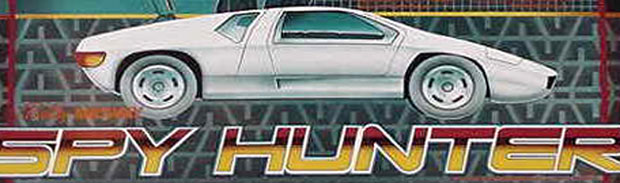
If you were a serious gamer of the 80's then you know that Spy Hunter by Bally / Midway was possibly the best action driver the company has ever made. Released in 1983 the game has gone on to see countless releases on consoles, PC's and handheld systems. The arcade original is still possibly the best way the game should be played.

Spy Hunter broke the mold of the racing experience. It was a top-down driver, in the vein of the Sega's original Monaco GP but the similarities ended there. This game included weapons and a narrative. You were a spy making his way through hostile territory. Your car could gain special weapons to use against enemies, from smoke screens and oil slicks to machine guns and missiles. Each of these weapons would come in handy against certain enemies. Some opponents were heavily armored cars immune to bullets, they required drivers to shove them off the road, one of the harder enemies was a helicopter that could only be hit with missiles. The steering wheel found in most arcade racers had been replaced with something that looked more like a fighter plane control, with trigger and thumb buttons all used to fire the different weapons. The game also featured multi-path roads, some of which lead to rivers where the car would be switched out for a high-speed boat.
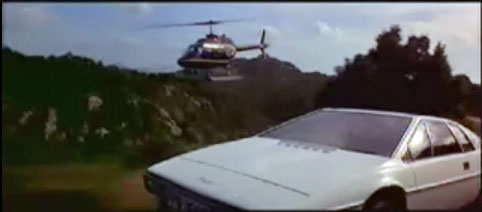
The entire experience was very reminiscent (read: lifted) from the famous Lotus Esprit chase in the 1977 James Bond film The Spy Who Loved Me. The sleek exotic car with hidden weapons and even the ability to turn into a submersible. I'm glad that the arcade experience focused on the car chase rather than the cheesy Roger Moore character. The game was very challenging. Very few people could get far enough into the game to try out all the weapons, let alone ever see the boat. All that experienced the game enjoyed the memorable theme, taken from the Peter Gunn television series. If you ask any arcade gamer about Spy Hunter then at the very least they should be able to hum the classic tune. A clever sense of nostalgia prompted Pontiac to create a commercial based on Spy Hunter.

Midway made sure the game was ported on multiple consoles and even followed up with a pinball release in 84. In 2001 they decided to relaunch the franchise and made an updated version of Spy Hunter for the Xbox and PS2. They added a more epic narrative and fleshed out the world of the G-6155 Interceptor. Creating a rival faction and a doomsday plot right out of a big budget motion picture to pull gamers through the experience. The release by developers Paradigm Entertainment was well-done. The classic elements featured in the original returned along with some updated elements. Rather than switch vehicles the new-and-improved Interceptor could transform on the fly and become a boat for river sections and turn into a motorcycle if it took too much damage. The pace was rapid and the game had a fun arcade quality to it.
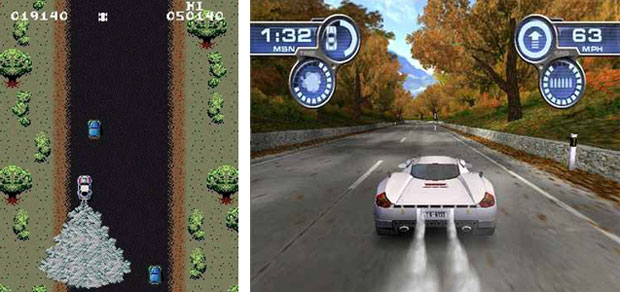
The sequels to the new Spy Hunter didn't sit well with critics. Angel Studios took over for Paradigm and made a decent game with 2003's Spy Hunter 2. The Interceptor could now transform into other vehicles and even featured "boss" battles against massive vehicles. However by the time Spy Hunter: Nowhere to Run came out the franchise went bust. The driver of the Interceptor, Alex Decker, was doing missions outside of the car in a loose GTA feel. The driving portions weren't as well made as the previous games. Players felt that the experience was lacking because Midway had broken up the game into two lacking experiences rather than one solid game. Most could tell that Midway wanted to turn the Spy Hunter game into a film franchise and were pushing the material into places that didn't suit it. The game worked when it was a car chase pulled from a spy film highlight. Not when it was trying to become the spy film itself.
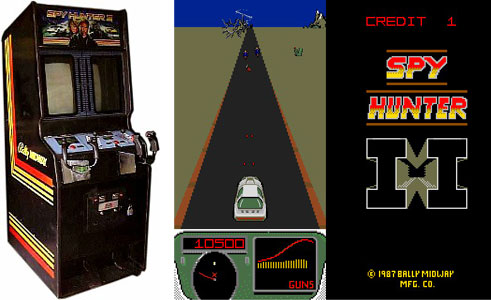
This wouldn't be the first time that Midway had failed the IP. The arcade sequel, Spy Hunter II in 1987, was a disjointed experience. In an attempt to bring in more arcade players on a single machine Bally / Midway fit two steering wheels onto a cabinet and split the screen in half. While this cabinet worked well in Max RPM, it doomed Spy Hunter II. The view was behind the car rather than above and the roads featured a number of blind turns and difficult opponents. For a drag racing game the narrow view was perfect, but not in an action game. The magic of the original Spy Hunter was replaced with something akin to Mad Max. In theory a partner spy in a yellow interceptor could help you on the other side. Rarely did I ever see one, let alone two people, playing this game in the arcade. Just as they failed the franchise in Nowhere to Run Midway was overly ambitious in Spy Hunter II.

Spy Hunter will always be remembered as a top down driving experience that had no peer. But was it the best overhead action driver ever made? Could that genre be done better in an isometric view as RC Pro Am showed? That was a topic for debate. Next week we'll look at two console games that tried to beat the legends. 
Did you ever play this arcade legend? Or did you play the home console versions? Let me know in the comments section please. As always if you would like to sponsor me please visit my Patreon page and consider donating each month, even as little as $1 would help make better blogs and even podcasts!
follow the Street Writer on Patreon!

Monday, June 20, 2016

The Street Writer Blogcast, Episode 5

Every time I release a new Podcast I will release the text version for my hearing-impaired friends. I don't want them to miss anything that I cover. Also you are welcome to leave comments and questions for this podcast as well as future podcasts on this blog.
 

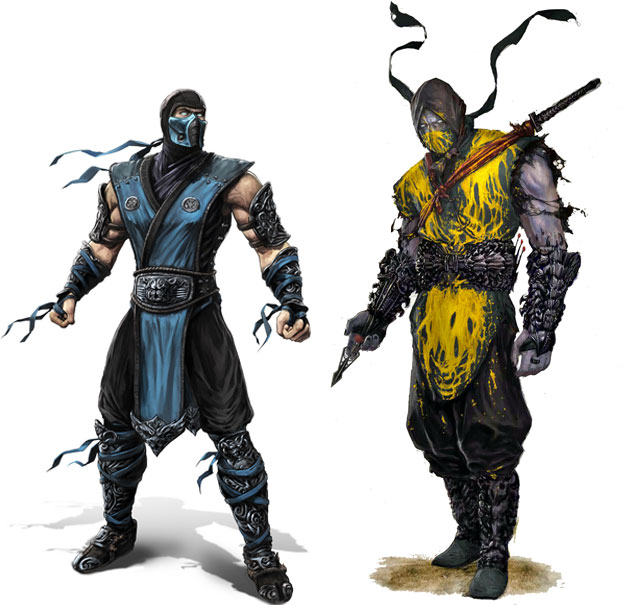
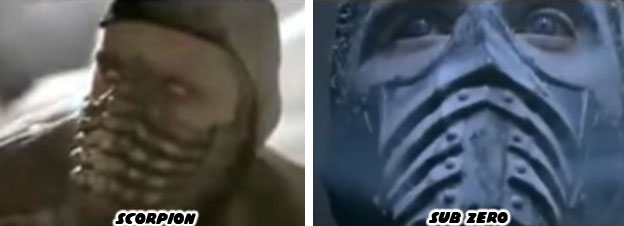
Welcome back to the Street Writer Podcast, I'm your host Noe and we are talking about the greatest rivals in fighting game history. Today we look at one of the most fearsome and tragic figures in the genre. Hanzo Hayashi was an assassin that operated for the Shirai Ryu clan. He he had a wife but more important he had a fearsome reputation. He was known only as Scorpion to those that wanted to hire his services. There was another clan known as the Lin Kuei where Hanzo had a rival named Sub-Zero. The two knew of each other but never formally crossed paths. In ancient times a a sorcerer named Quan Chi hired both Scorpion and Sub-Zero to find a map hidden in the Himalayas. The reason he hired the two was to ensure that at least one of them could complete the mission. Quan Chi was trying to grow his magical powers and achieve immortality, the map was a key piece of the puzzle. Neither Scorpion nor Sub-Zero knew that their clan had been hired. Both followed their own leads and made their way through the Himalayas. Eventually the two crossed paths. You can imagine the amazing battle the two had. Both were excellent martial artists but Sub-Zero had the advantage. His tribe was descended from Cryomancers, these were sorcerers from another dimension known as the Outworld. In the Outworld sorcery rather than science reigned supreme. It was a barbaric place, filled with horrible monsters where only the most powerful warriors and magic users could thrive. There were connections between various dimensions and the Outworld, one of which lead to Earth. Several of the priests and monks from the Outworld had a hand in creating secretive martial arts schools in our world. Sub-Zero could freeze the air, ground and even opponents. He could also throw projectiles like frozen blades. Scorpion was limited by his traditional weaponry. Sub-Zero won the fight and decapitated his opponent. He later returned with the Lin Kuei clan and wiped out the Shirai Ryu, including Scorpion's wife. As the soul of Scorpion descended into the Netherrealm, the Outworld equivalent of Hell. He was offered a chance to return to Earth as a demon, but with little to no recollection of his previous life. He took this opportunity for revenge and became the fighting undead.


Sub-Zero had actually crossed paths with Scorpion while in the Netherrealm. He was sent by Raiden, the Thunder God, to retrieve an amulet from Quan Chi. Sub-Zero fought Scorpion in the hellish world and won a second time. He managed to escape the Netherrealm while Scorpion was down. Scorpion would not get his revenge until the end of the first Mortal Kombat tournament. The two did not fight in the actual tournament but after it had concluded. Scorpion with his newly formed demonic powers was more than a match for Sub-Zero. Scorpion could now summon roped daggers from his palm and throw them at his opponents. The trademark yell of "Got over here!" was born. He also gained the ability to teleport behind his opponent and beat them with a flurry of strikes. Behind his mask he was a skull set ablaze, on top of all his new powers he could also breathe fire. With these new attacks he killed Sub-Zero. As soon as his mission was complete he burst into flames and returned to the Netherrealm. He would be bound to wander that place for all time. It was a hollow victory because while he had avenged his wife and clan he would never be able to join them in the afterlife. This was some amazing storytelling and more important, it was the first memorable rivalry created by a Western-produced fighting game.

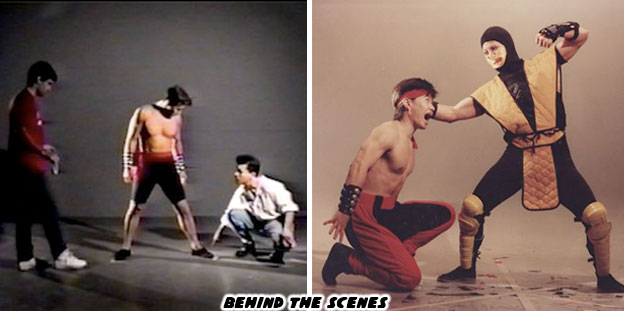
For the first few years of the '90s every arcade, corner liquor store and laundromat seemed to have a fighting game. The genre had blown wide open thanks to the success of Street Fighter II, Fatal Fury and the early pioneers. Audiences knew that the Japanese absolutely ruled the fighting game genre. No other developer could touch the nation when it came to graphics, control and gameplay. That perception changed very quickly in 1992 when US studio Midway released Mortal Kombat. This game looked and played unlike any other. First of all the graphics revolved around enormous sprites that were much larger and more detailed than the sprites used in other fighting games. The reason for this was because Midway was trying out some new technology for speeding up the game creation process. They would videotape and photograph actors in costumes. The artists would then create sprites out of these frames of data. This process was much faster than having to redraw sprites by hand. The studio could also focus resources more on control and gameplay because the graphics were taken care of. Midway did not really have much experience with fighting games but they did not simply want to poach the Capcom mechanics and risk a lawsuit. They used four main buttons for the attacks and a block button for defense. Data East would come along later and release Fighter's History which used Capcom's more familiar six-button layout. Capcom would take Data East to court but lose the case, opening the doors for other studios to copy the same control scheme as Street Fighter. But I digress... Midway managed to publish a fighting game that was fairly well balanced, offered some unique gameplay mechanics and introduced a bunch of new and hidden features. They did this in record time, just as the genre was taking off. Part of the success was thanks to their graphics process cutting down on development time. Updates to fix bugs could even get out to arcades faster than any other publisher. This was important because when the game came out it lacked the polish and ease of use of Street Fighter II but a few upgrades later it was suddenly very easy to get into.


Midway was sitting on a gold mine and at the heart of it were some violent characters. Players went crazy trying to figure out all of the Fatalities. Word spread quickly through the arcades when a new one was discovered. With each new secret uncovered there was a rush to the arcade to pump more quarters into the machines. No other studio had considered how important the replay value was when they released a fighting game. Adding hidden characters, secret moves, fatalities and levels kept people returning again and again. This raised the status of Midway and made the Japanese publishers take notice. The American studio was working around the clock to fill orders while the other publishers were cooling down sales. Suddenly every corner market, 7-11, Circle K and laundromat was coveting the fighting arcade machine as well. They did whatever it took to get one of the hot titles. It didn't matter whether they bought them from the publisher or got a bootleg from the black market. It was guaranteed money from a rapidly growing fan base. When it came to favorite titles fans were already picking sides. Every character in the Mortal Kombat franchise, even the hidden characters, had a following. Arguably the two biggest stars were Scorpion and Sub-Zero. They were perfect rivals. Midway could not have hoped for a better outcome to their design. The two had their own unique powers and abilities, each required their own technique to master. In any other fighting game people would have just thought of them as a pallet swap with some gimmick moves, but these two were different. They were living, breathing, fighters and not cartoons. The beef they had was tangible. If and when a movie came out then audiences knew exactly what they would look like and who they would root for. Speaking of which my younger brother and I won tickets to see the premier of the Mortal Kombat film in Los Angeles many years ago. We got a copy of the soundtrack and an autograph from Cary Tagawa, the actor that played Shang Tsung, he and his son snuck in to secretly watch the film.

 Many fighting game fans in the USA, just like many fans in Japan, had grown up on martial arts movies. The kung-fu films from the Shaw Bros. and the indy films from Taiwan had circled the globe. They had cheesy effects, lousy scripts, were poorly dubbed and put on television in just about every market. Despite the quality of the films they were universally loved. The people creating the fighting games were just as familiar with these martial arts films as any fan. Street Fighter and the other games may have been inspired in part by the movies but Mortal Kombat was the first game that captured the spirit of those live action films. For the first time in the genre fans were not rooting for cartoon characters but real people. They were rooting for modern versions of those classic heroes and villains. Scorpion and Sub-Zero were created in a supporting role. Fighters like Liu Kang, Sonya Blade and Johhny Cage were the stars and Goro and Shang Tsung were the bad guys. Yet fans were very interested in the secretive ninjas, there was just something special about them. The anti-hero versus the cool villain, it wasn't as simple as good versus evil, both were killers. Both were two sides of the same coin. When audiences learned that the two hated each other they ate up the drama. What other fighting game character, or movie character for that reason, hated someone enough to return from Hell for a rematch?


Many of the elements, settings and characters in Mortal Kombat wouldn't have existed without kung-fu cinema. US audiences bought into the whole plot of the game. The game however could not have excited without the excessive violence from Western cinema as well. The game could never be violent or shocking enough for fans. It had to be brutal, it had to be bloody and there had to be a certain dark comedy element to it as well. Gen-Xers that made up a good portion of the arcade and console boom were starting to mature and they wanted to see more adult themes in their games. Scorpion and Sub-Zero were the R-Rated heroes in a previously PG crowd. They were not unlike Deadpool to the sanitized heroes in other Marvel movies. Speaking of comics a good portion of the design from Scorpion was also inspired by the Ghost Rider. The "Spirit of Vengeance" also had a flaming skull for a head and he threw a chain to snare opponents.

The purpose of Scorpion would evolve over the sequels. When he learned that Sub-Zero had returned for the second Mortal Kombat tournament he was furious. Death was not strong enough to keep his arch-rival at bay. Scorpion returned from the Netherrealm to enter the tournament as well. He eventually discovered that this was a different Sub-Zero, a younger brother who had the same cryomancer powers. Scorpion realized that he had no quarrel with the second Sub-Zero and let him be. The two would form a shaky alliance over different games and the truth would eventually be revealed. It was Quan Chi that orchestrated the murder of the Shirai Ryu clan and Scorpions wife. Quan Chi was teleported to the Netherrealm where Scorpion would spend eternity hunting down the powerful sorcerer. It was a fitting ending for one of the most violent fighting game characters invented. Audiences would never forget this warrior and the betrayal that created him. Not every rivalry in fighting games involved revenge. Some rivalries were created out of necessity. The last one I will feature for this series was simply destined to happen. Yet destiny has a long and winding road. I hope to see you back for that entry. As always if you would like to sponsor me please visit my Patreon page and consider donating each month, even as little as $1 would help make bigger and better recordings and videos.

 follow the Street Writer on Patreon!

Sunday, June 12, 2016

Revenge of the wooden men! (Originally posted on my Capcom-Unity blog)

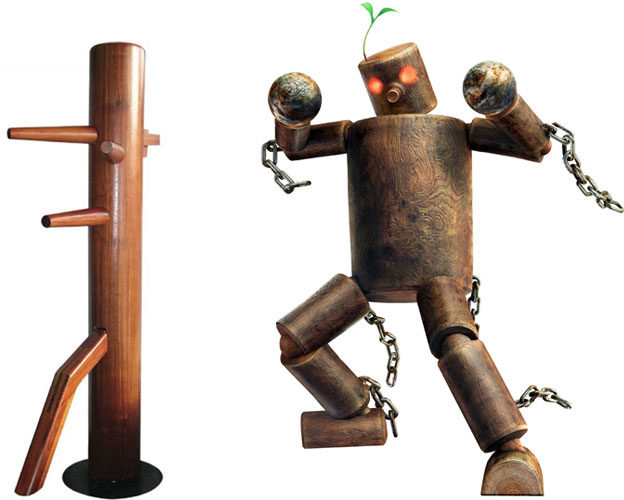
You ever wonder where there weird fighting game characters come from? I don't mean the occasional pro wrestler or pop idol either, I mean the really weird, way out of left-field characters. Somebody like Mokujin from the Tekken series for example. The character first appeared in Tekken 3 back in 1997. Many thought that it was a wooden man post, a training tool used by kung-fu practitioners, that had sprung to life. It couldn't really talk and seemed to be a sort of comedic character that mimicked the moves of the entire Tekken cast.
 

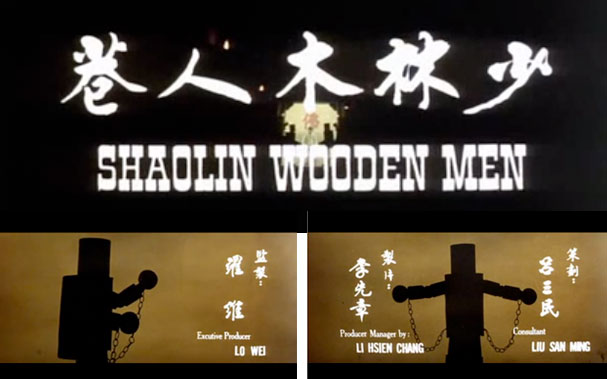
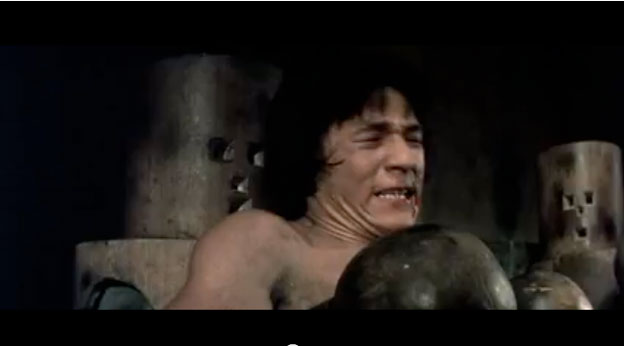
The figure was actually based on the training dummies from the Shaolin Wooden Men. A movie from 1976 starring Jackie Chan. The wooden men were fictional sparring partners controlled by a series levers and pulleys in the Shaolin temple. In order for a person to be deemed a master they had to survive a gauntlet made up of these wooden men. When I was a little kid my brothers and I saw the film on kung-fu theater. It was a local show that would marathon different kung-fu movies. There was no doubt that my exposure to those movies was part of why I became attracted to fighting games in the first place. Anyhow I remembered that film for the special effects and rows of various wooden men.
 

Something that I always appreciated about the films was that no matter how cheesy they were it was easy to get carried away by the story. The special effects were all practical. They built sets for the films, used costumes and props to make things seem period-correct. When you're a kid you just accept the fact that somewhere in China there's a temple with wooden men like Mokujin training the kung-fu masters. You also accept that the best fighters could do all the impossible things you would see on tv.
 

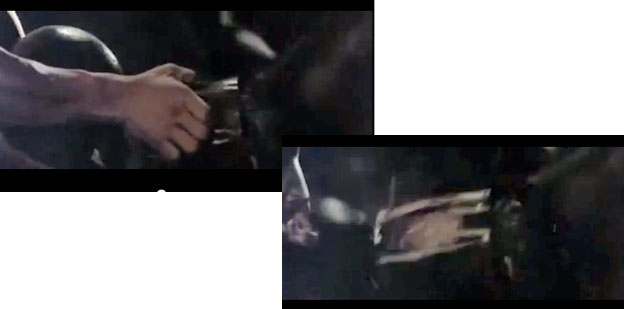
There was something about the film that freaked me out though. In one scene Jackie grabbed the forearm of a wooden man and broke it open. There was nothing inside. I was sure that there would have been a Shaolin master in each costume doing the fighting. As I little kid I actually believed that the movie producers had actually rigged a few wooden men and were controlling them with chains and levers. Even better I believed that this technology was something that the Chinese had been sitting on for centuries. Sure it's an absurd thought but anything is possible if you are a kid. When I saw Mokujin many years later I wondered how many of the same films the Tekken developers had grown up with.
 

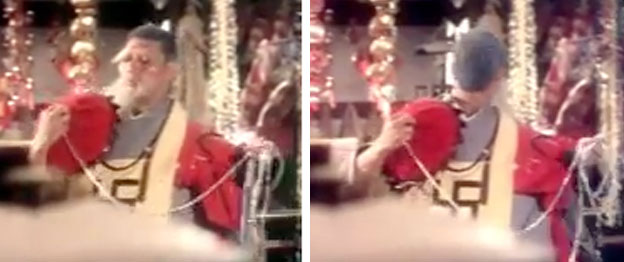
Of every martial arts fable I believed in growing up the only thing that was scarier than a wooden man run amok was a blind master of the Flying Guillotine. Again, that movie was probably the reason why I ended up loving Street Fighter and Mortal Kombat. It was what prepared me for the ultimate battle between the various fighting arts. Anyhow in that movie a blind assassin was pretending to be a Shaolin monk while he was tracking down the one-armed boxer. He had amazing hearing for a blind man and could throw his flying guillotine with pinpoint accuracy. Near the end of the film he is trapped in a coffin shop. The hero throws rocks at the walls to confuse the assassin. The blind monk stands perfectly still and rotates his head 360 degrees while trying to figure out where his opponent is. Of every kung-fu film I had ever seen that was the scene that freaked me out the most. Producer / director / star Jimmy Wang Yu used the effect sparingly and right at the end of the movie for the biggest shock value. Even today I get creeped out by the thought of a free spinning head.
 

Were there any fantastic characters or impossible fighting techniques that you had seen as a kid that you genuinely thought were true? I'd like to hear about it. As always if you enjoyed this blog and would like to sponsor me please visit my Patreon page and consider donating each month, even as little as $1 would help make better blogs and even podcasts!

follow the Street Writer on Patreon!