Showing posts with label universal. Show all posts

Friday, October 17, 2025

Oswald the Lucky Rabbit turns 98!

Hello friends, in the previous post I mentioned that the blog hit more than a million views. That milestone actually happened on the same day as my favorite Disney character celebrated a birthday. That’s right, Oswald the Lucky Rabbit was now 98-years-old! I had to create an illustration to mark the occasion. Now I have to think about what I’m going to do for the 100th birthday. Maybe have all sorts of classic characters splitting cake with him?

In case you didn’t know I am a huge fan of Oswald. Like a super-huge fan. I’ve been collecting Oswald merch for decades. One of the nicest gifts I received recently was from my sister-in-law. She created an Oswald cross stitch for me. It was a brilliant piece with well over 16,000 stitches in it! Can you imagine the patience it took to make something like this?

She created this piece because she knew I was a huge fan. In case you didn't know how obsessed I was about the character I was interviewed for the I Want that Too podcast on Jim Hill Media. Which you can see below.


In case you are not familiar with the character I did a deep dive on him many years ago. The links are below, including snapshots that I talked about in the interview with Jim Hill, and Lauren Hersey. 

The evolution of Oswald the Lucky Rabbit, part 2…

Warren Spector can't stop looking at my Oswald figure during his Epic Mickey presentation.

The evolution of Oswald the Lucky Rabbit, part 3… 
The evolution of Oswald the Lucky Rabbit, part 6…

Meeting Disney animator / art director / toy designer Tara Billinger at Oswald's debut in Disney's California Adventure.

The evolution of Oswald the Lucky Rabbit, final part… 
 
Do you have any favorite classic cartoon characters? What about comic book characters? I’d like to hear about it. Tell me about it in the comments section. As always if you enjoyed this blog, and would like to sponsor me please visit my Patreon page and consider donating each month, even as little as $1 would help make better blogs and even podcasts!
follow the Street Writer on Patreon!

Monday, December 9, 2024

Freeze frame, my poster collection, part 18…

Today we look at some of the Oswald replica posters in my collection. One day I hope to get my hands on an original. But for the time being I’ll settle for these.

Are there any classic cartoon characters that you’d like to get a poster of? I’d like to read about it in the comments section. As always if you would like to sponsor me please visit my Patreon page and consider donating each month, even as little as $1 would help make better blogs and even podcasts!
follow the Street Writer on Patreon!

Monday, June 26, 2023

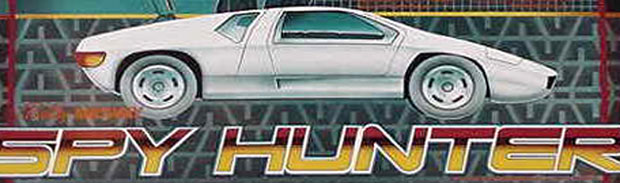
Spy Hunter, the original driving action shooter - Originally published on 1UP - March 26, 2009

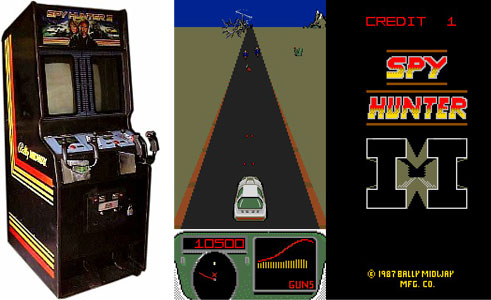
If you were a serious gamer of the 80's then you know that Spy Hunter by Bally / Midway was possibly the best action driver the company has ever made. Released in 1983 the game has gone on to see countless releases on consoles, PC's and handheld systems. The arcade original is still possibly the best way the game should be played.

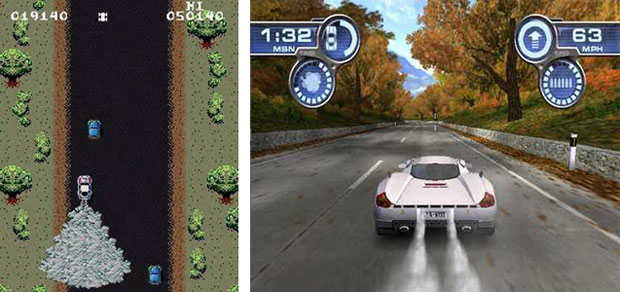
Spy Hunter broke the mold of the racing experience. It was a top-down driver, in the vein of the Sega's original Monaco GP but the similarities ended there. This game included weapons and a narrative. You were a spy making his way through hostile territory. Your car could gain special weapons to use against enemies, from smoke screens and oil slicks to machine guns and missiles. Each of these weapons would come in handy against certain enemies. Some opponents were heavily armored cars immune to bullets, they required drivers to shove them off the road, one of the harder enemies was a helicopter that could only be hit with missiles. The steering wheel found in most arcade racers had been replaced with something that looked more like a fighter plane control, with trigger and thumb buttons all used to fire the different weapons. The game also featured multi-path roads, some of which lead to rivers where the car would be switched out for a high-speed boat.

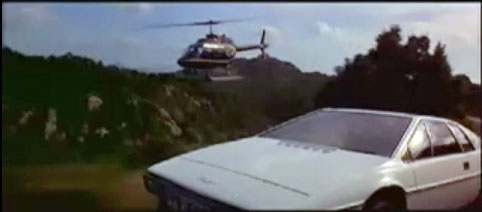
The entire experience was very reminiscent (read: lifted) from the famous Lotus Esprit chase in the 1977 James Bond film The Spy Who Loved Me. The sleek exotic car with hidden weapons and even the ability to turn into a submersible. I'm glad that the arcade experience focused on the car chase rather than the cheesy Roger Moore character. The game was very challenging. Very few people could get far enough into the game to try out all the weapons, let alone ever see the boat. All that experienced the game enjoyed the memorable theme, taken from the Peter Gunn television series. If you ask any arcade gamer about Spy Hunter then at the very least they should be able to hum the classic tune. A clever sense of nostalgia prompted Pontiac to create a commercial based on Spy Hunter.

Midway made sure the game was ported on multiple consoles and even followed up with a pinball release in 84. In 2001 they decided to relaunch the franchise and made an updated version of Spy Hunter for the Xbox and PS2. They added a more epic narrative and fleshed out the world of the G-6155 Interceptor. Creating a rival faction and a doomsday plot right out of a big budget motion picture to pull gamers through the experience. The release by developers Paradigm Entertainment was well-done. The classic elements featured in the original returned along with some updated elements. Rather than switch vehicles the new-and-improved Interceptor could transform on the fly and become a boat for river sections and turn into a motorcycle if it took too much damage. The pace was rapid and the game had a fun arcade quality to it.

The sequels to the new Spy Hunter didn't sit well with critics. Angel Studios took over for Paradigm and made a decent game with 2003's Spy Hunter 2. The Interceptor could now transform into other vehicles and even featured "boss" battles against massive vehicles. However by the time Spy Hunter: Nowhere to Run came out the franchise went bust. The driver of the Interceptor, Alex Decker, was doing missions outside of the car in a loose GTA feel. The driving portions weren't as well made as the previous games. Players felt that the experience was lacking because Midway had broken up the game into two lacking experiences rather than one solid game. Most could tell that Midway wanted to turn the Spy Hunter game into a film franchise and were pushing the material into places that didn't suit it. The game worked when it was a car chase pulled from a spy film highlight. Not when it was trying to become the spy film itself.

This wouldn't be the first time that Midway had failed the IP. The arcade sequel, Spy Hunter II in 1987, was a disjointed experience. In an attempt to bring in more arcade players on a single machine Bally / Midway fit two steering wheels onto a cabinet and split the screen in half. While this cabinet worked well in Max RPM, it doomed Spy Hunter II. The view was behind the car rather than above and the roads featured a number of blind turns and difficult opponents. For a drag racing game the narrow view was perfect, but not in an action game. The magic of the original Spy Hunter was replaced with something akin to Mad Max. In theory a partner spy in a yellow interceptor could help you on the other side. Rarely did I ever see one, let alone two people, playing this game in the arcade. Just as they failed the franchise in Nowhere to Run Midway was overly ambitious in Spy Hunter II.

Spy Hunter will always be remembered as a top down driving experience that had no peer. But was it the best overhead action driver ever made? Could that genre be done better in an isometric view as RC Pro Am showed? That was a topic for debate. Next week we'll look at two console games that tried to beat the legends. 

Did you ever play this arcade legend? Or did you play the home console versions? Let me know in the comments section please. As always if you would like to sponsor me please visit my Patreon page and consider donating each month, even as little as $1 would help make better blogs and even podcasts!
follow the Street Writer on Patreon!

Wednesday, December 24, 2014

The evolution of Oswald the Lucky Rabbit, part 6...


In the previous blog I mentioned that Oswald had become a popular name in Japan. Between 2004 and 2005 the character had generated a lot of buzz overseas and even some in the USA. He appeared at the Universal Park in Osaka as well as on various arcade prizes from Taito. The character underwent some subtle changes shortly after Disney had required the character. The early licencors, between 2006 and 2007 used designs that were very fluid and reminiscent of the Taito art. The character had a more oval or egg-shaped head, skinnier arms and legs and long rounded feet. By 2008 the character had been standardized for official art and merchandise.

In early 2006 Oswald's rights were transferred back to Disney. This trade was not really big news in the USA with the exception that sports commentator Al Michaels was the original reason that Disney and NBC / Universal had struck a deal. Oswald was thrown in as a sign of good faith between the President of Universal and the CEO of Disney. Animation fans and theme park devotees were the only ones that really took notice of the news. Getting the rights back meant that Disney had to work double time in reintroducing the character.


Two of the artists instrumental in getting Oswald some exposure were Kevin Kidney and Jody Daily. The duo had created some of the best merchandise in the history of the company. Everything from dinnerware to shirts, mugs, statues and toys came out of their studio. They were experienced artists, imagineers and more important, they were fans of Walt Disney. The two were mindful of Walt's legacy and did a great job of honoring it on every project they worked on. They were students of every era of the company and especially of the theme parks. Aside from the vinyl Cutie figure that I had blogged about previously the studio wanted to release a high-end plush figure.

In 2006 Kevin and Jody created a wire armature of the rabbit, stuffed it with fiber and covered it in faux suede. The feet were filled with buckwheat or something similar so that he could stand on his own. This Oswald was modeled after the original art from Ub Iwerks, (dating back to 1926!) with details going all the way down to cord whiskers on the face and feet. Ub was the Disney animator that had a hand in creating both Oswald and Mickey Mouse. The Kevin and Jody figure was taken to shows to get the public interested in Oswald again.


In 2007 a figure that looked very similar to the concept sculpt was released at Walt Disney World. The plush was large and pricey, at about $60, but included the history of the character on the packaging. It reminded audiences "Before there was Mickey… there was Oswald." Today the figure can fetch several hundred dollars on eBay and specially shops. Only two pieces were made and Kevin and Jody sold both of them off at a Pop Gallery Retrospective in September 2016.


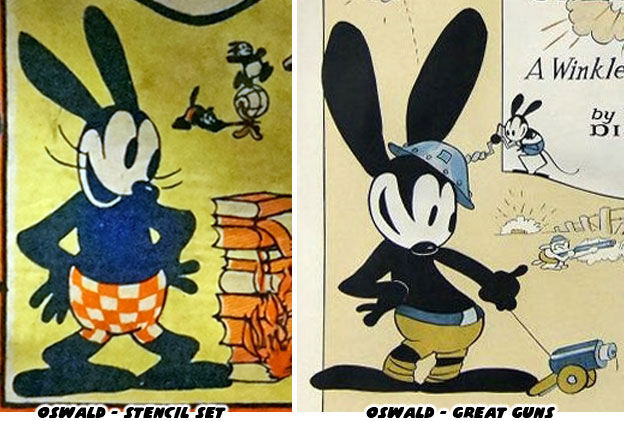
Something similar happened to the first "Big Fig" commissioned for the character as well. Kevin and Jody once again went back in time to get the inspiration for a collectible statue. They returned with a very vintage design. One of the earliest pieces of Oswald merchandise used the character designs from Ub Iwerks. In the Stencil Set from circa 1928 there were a number of stencils of Oswald in different poses. One of those was titled "The Sheik" and it featured Oswald wearing a top hat, holding a cane and twirling his whiskers. Oswald had actually appeared with a top hat in a few movie posters.


Note that the early shape of Oswald had yet to be finalized. He had more of an egg shaped head in the earliest designs. Many collectors showed interest in the figure but apparently not enough for the studio to follow through with a release. Six years later an Oswald statue was released but in the smaller "Mid Fig" format. The new sculpt was closer to the style sheets but lacked the insight and details that Kevin and Jody had dug up.


The original Oswald Big Fig was sculpted by Bo Tsai, who had sculpted hundreds, if not thousands, of the greatest Disney collectibles. It was painted in warm gray tones by Jody. In Kevin and Jody's words "We even managed to produce a bottomstamp for the base using the 1920s name-type in the original Oswald shorts. Months after our little Oswald collection was given the axe, the artists of Disney Consumer Products released an Oswald "style guide" for use in new products for the Disney Store. The "new" Oswald was more streamlined and his original silent-movie-era crudeness was polished away to better fit modern-day expectations." There were two of the original resin big figs made. The first one disappeared into history and the other one, including the base, was auctioned off during the Pop Retrospective in 2016.


Disney consumer products created a very simple style guide and almost all of the merchandise produced over the next decade, in both Japan and the USA, worked directly from the model sheet. Buttons, clothing, pins and various items all relied heavily on the guide. This lack of originality stripped the character of his personality. All of the details that Kevin and Jody had captured were stripped away in the first round of merchandise featuring the character.


Bob Iger, CEO of Disney, knew that animation was not necessarily the best medium to get Oswald in the minds and hearts of new Disney fans. Oswald would have to be featured in a big budget videogame. The seeds for Epic Mickey were planted by a group of interns but it would take many years to see a finished product. In the meantime Oswald needed to be re-branded. The character had to become synonymous with Disney but Oswald merchandise could not simply be dropped in the parks or Disney stores overnight. Little by little the company had to ease Oswald onto consumers.


Tee shirt collaborations seemed to be the best way at getting the rabbit out in the world. This was something that Universal understood. Their children's tee shirt line had two known designs, one of which gave a brief history on the character. There were other shirts in the works, specifically for adults, but they were not released pending on the success of the kids line. Despite having the slogan "Come in and meet him" there was never an Oswald walk-around character in the Universal park. I have no doubt that there was one in the plans.


In the short time while the rights were being transferred back to Disney a South Korean clothing manufacturer named Rocket Salad released a sweatshirt line featuring Oswald. It was assumed that Disney would redesign the character rather than use the most recent Universal version. Disney did not have an official model sheet available at the time Rocket Salad was releasing their items. What the company did was reprint the cover a children's book from the 1930's. While this was a Lantz design it looked old enough that audiences wouldn't necessarily credit it to Universal.


The first clothing partner that actually ran with a new redesign of Oswald was Comme De Garcons. The company was very trendy and also very pricey. Their tee shirts could go for well over $150 and were mostly sold in Japan. Their group of designers worked with Disney to reinvent Oswald while maintaining a classic look. The first thing the studio did was drop the Universal colors and make Oswald black and white. To prevent any confusion between the character and Mickey Mouse it was decided that Oswald needed to have blue shorts or white shorts from that point forward. The fashion brand actually printed metallic gold shorts for one design. The head of Oswald was more egg-shaped than oval. There were three distinct poses that the company used for shirts and even a wallet. This version of Oswald had rounded fingers and feet like the Universal one but his proportions were slightly different. Oswald's belly was larger and almost the same size as his head.


About a year later a second fashion label debuted its Oswald collection. Stussy, a popular street brand, was the first to use the contemporary designs of Oswald. While Stussy items were available in the US, these specific shirts were available in Japan only. The designers at Disney had narrowed down the features, poses and even attitude of the character. The fingers and feet were squared off and the head was more round than oval. The character looked more rigid than the Universal or Comme De Garcons figures. Stussy printed the various poses from the model sheet on the front of their shirt. It was interesting to note that one shirt they printed featured Oswald wearing red shorts. Oswald had been standardized at this point. Almost every appearance of the rabbit after 2008, whether on clothing or other merchandise, featured a pose pulled directly from those created by Disney.


Stussy highlighted something important about collaborations. In order to get audiences to spend $100 on a shirt there had to be some sense of quality and exclusivity. The shirts were created in a limited number and to further sweeten the deal they came with an exclusive Bearbrick (sometimes written as Be@rbrick). These small vinyl figures were produced by Medicom. Exclusive figures, such as the Oswald phone strap version, were highly prized by collectors. Many bought shirts just for the figure.


Medicom had actually released a line of collector figures featuring Woody Woodpecker and friends during the 2004-2005 Universal era. These "Kubrick" figures kept the shape and design of the cartoon mascots, as opposed the the bear-shaped Bearbrick line. About a year after the Stussy collaboration Medicom released a two-pack of Kubric figures celebrating the return of Oswald to Disney. This time it was a black and white Mickey Mouse and Oswald bundled together for collectors. The Oswald figure was based on the earlier Universal model.


The first US shirt collaboration was with Lucky Brand Jeans. The stores sold tee shirts featuring Oswald around 2008. This was essentially the first place for people in the know to get a modern Oswald item and show their support. While a few of the shirts featured one of the standard poses from Disney's model sheet the majority of the shirts were original works of art. They captured much more personality than any other shirt line before or after. Oswald showed a broad range of emotions in the various styles, from happy to sassy. It was the first time in ages that a group of artists were able to recreate the elements that made Oswald an icon in the first place. Granted, he didn't flash a gun in any design, but the art would have made Ub Iwerks proud.


Oswald remained relatively unchanged by the Disney company since 2008. That was until the re-opening of Disney California Adventure in 2012. The park featured a new Buena Vista Street, Cars Land and other attractions. At the gate there was a new store, Oswald's Service Station. The proportions of Oswald were adjusted slightly on the logo created for the station. He was a fraction shorter and his body and head were almost a perfect 1:1 ratio. His eyes even went from perfect ovals to pie-eye pupils. A few products were sold with this specific version of Oswald.

The majority of pins featuring the character were rooted more on the designs from 2008. There were a couple of pins that had rabbits that looked more like the Comme De Garcons version but more or less the reboot of Oswald was complete. I would like to point out how similar the pie-eyed figure was to Universal's redesign. Both companies came to the same conclusion in the end, although sometimes I wonder if the designers at Disney did not borrow some elements from Universal. Certain design elements, the weight of a line, the curve of a figure, the scale and proportions could make a cartoon mascot look timeless even though they were created in the 21st century.


Japan never lost its love of all things Disney, especially not of Oswald. Since regaining the rights to the character every few seasons the Tokyo Disney Resort unveils a new lineup of Oswald merchandise. They never reuse the same designs but start from scratch each time. Some of the earliest Oswald merchandise were leather bags embossed with the character and some home good items. A dedicated campaign would reveal itself around 2010-2011.


The earliest dedicated campaign mixed Oswald with Western style denim. There were bags, aprons, pencil cases and laundry bags made of the material featuring a leather Oswald tag. This collaboration was inspired by a crossover that Disney had with Edwin, a jean company out of Japan that had made a few Oswald figures out of their material, complete with tags. A few of these pieces still turn up from time-to-time on the Japanese auction sites. The turnaround for this merchandise was quick in Japan. Denim would give way to something completely different, such as bright colors and polka dots, a year later it might be naval inspired stripes. By comparison the merchandise featured at the Oswald Gas Station in Disney California Adventure had changed little over six years. In 2016 Japan had gone full circle and had released entirely new Oswald merchandise, this time revisiting the denim campaign.


In Japan there are often Disney collaborations where items featuring specific characters are sold exclusively in specific stores. Oswald was the central character at the fictional Spur City, a department store art collaboration from September 2014. Disney even had a large fiberglass statue of Oswald made just for the season. Chances are this figure might not be seen again in any other store or even at the park.


In the Japanese theme parks limited run tee shirts were nothing new. Some of the latter Oswald exclusives were letterman style sweatshirts. Oswald was featured prominently over one of the letters from his name. The poses used were pulled right from the model sheet. These were some of the most unoriginal designs from Japan but at least they only lasted one season. In the US Disney parks the Oswald merchandise has gone relatively unchanged since 2012. If there were some merchandise created for outside the park then it might be for a large retail store like Target. There would be no fanfare, no custom store props, no Oswald statues celebrating the collaboration. Instead there would simply be some new shirts released alongside the items from every other licenser. I understand that in 2015, for the 60th Anniversary of Disneyland, Oswald may finally be getting new merchandise at his store in DCA. It would be a welcome change.


The character had found its rhythm in the US and Japan. The rest of the world was now catching up. In China Oswald was introduced in a 2011 campaign from the fashion label Pizza Cut Five. The poses had been seen previously on Stussy and Lucky Brand shirts. It was a small effort to get the character some exposure and certainly appreciated by the trendsetters. Oswald's final design evolution would happen around this time in the US. The next blog will look at how Oswald transitioned from 2D to 3D. If you would like to sponsor me please visit my Patreon page and consider donating each month, even as little as $1 would help make better blogs and even podcasts!
follow the Street Writer on Patreon!

Wednesday, December 17, 2014

The evolution of Oswald the Lucky Rabbit, part 3...


It is rare for a character to maintain their original design. Whether we are talking about a comic book or a cartoon there are very few characters that have stayed visually consistent. It is possible that Otto Messmer's Felix the Cat is the one that has undergone the fewest changes since his debut in 1919. Almost every cartoon character in the Disney library has had a visual makeover through the years. Some were subtle, a change in wardrobe or voice, others were a bit more radical. The same could be said for those characters from MGM, Universal and Warner Bros. Of all the cartoon characters that ever was none changed as much as Oswald.


Within the span of a few years the character went from silent movie star to talking anthropomorphic rabbit. His look was radically different from year to year. The confusion this created may have cost him fans along the way. Even the studios producing the films sometimes couldn't find consistency on the posters they created.


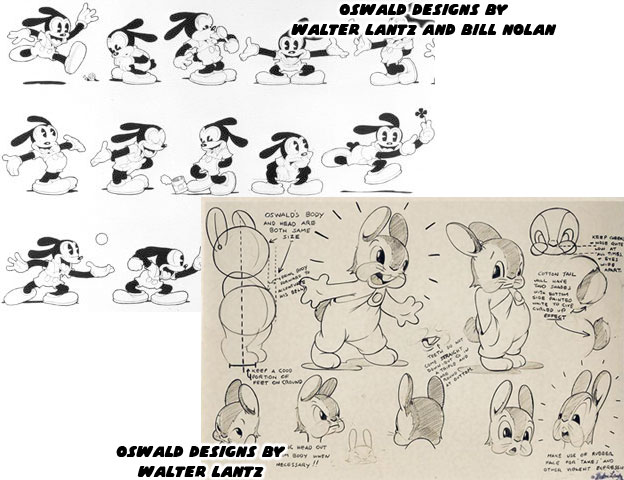
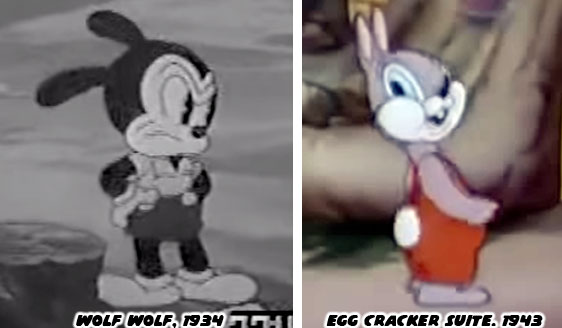
The seeds for a radical makeover were planted around 1935. Up until then the changes in Oswald had been subtle. Over the span of five years he was given shoes, a shirt and even a voice. His head changed shape and his pie-eyes became widened with eyebrows added for emphasis. This look was consistent in the films and comic strips featuring the character. The first strips were published by DC, making the Lucky Rabbit one of their first star characters. This was a decade before Superman or Batman had been created! Yet something happened in 1936, Lantz was trying his hand at producing the comic strips and submitted a few samples that were never published. The look of Oswald had changed drastically. He suddenly looked more like a traditional rabbit. His shorts were gone and replaced by overalls. It was a mix of something new and a nod to the early wardrobe created by Ub Iwerks. The rare scans are courtesy of James Halperin . Contrary to what some people think Walter Lantz and Walt Disney held no ill will for each other. They were in fact good friends. Disney trusted that Lantz and Carl Lammle would treat the Oswald with respect so long as Universal held onto the rights. It was Charles Mintz and his dealings that Disney did not care for.


Walter Lantz wouldn't actually get the rights to Oswald until 1940 but he was still in charge of the character before then. Universal trusted his direction and his team. Mintz was seen at failing to recreate the success of Disney after stealing his character and staff. Universal fired Mintz once they realized that Oswald and / or Mickey Mouse could have been theirs if only the partnership were handled differently. Lantz in turn would run with Oswald for decades, yet couldn't quite manage to recreate the level of success that Mickey Mouse enjoyed no matter how hard he tried.


Rather than follow the mouse Lantz eventually decided to give the rabbit a makeover. The previous redesigns were co-created by Bill Nolan but the comic strip and animated makeover were owed mainly to Lantz. Oswald was a rarely seen in animation past the mid-1930s. He didn't really appear in any prominent short until the color musical Egg Cracker Suite in 1943. It was a rift on the Disney Silly Symphonies and was the last time Oswald would get a starring role. Oswald never really quite recaptured his star power. Not in animation nor in comic books. It didn't stop Lantz from directing. In fact it probably spurred him to create his own library of characters. Some of which would eventually prove to be more popular than Oswald.


Andy Panda debuted in 1939. The young panda bear was naive but quite lovable. A year later Woody Woodpecker debuted and the true star of the Lantz films was born. Others would join him as well, Wally Walrus (1944), Buzz Buzzard (1948) and Chilly Willy (1953) just to name a few. These characters helped carry the Lantz studios on throughout the years. Oswald lingered in the background for a long time. His stint in comics lasted until the late '50s but was left to reprints in foreign markets for the rest of the 20th century. It wasn't until the new millennium that Oswald would be reintroduced to audiences. Find out how this happened in the next blog. If you would like to sponsor me please visit my Patreon page and consider donating each month, even as little as $1 would help make better blogs and even podcasts!
follow the Street Writer on Patreon!

Monday, December 15, 2014

The evolution of Oswald the Lucky Rabbit, part 2...


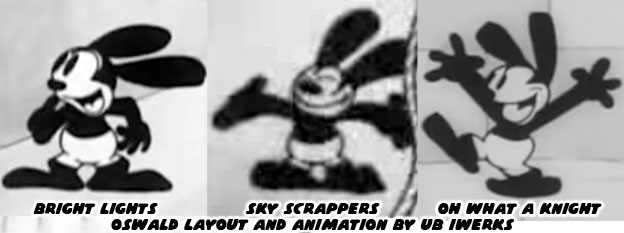
Many Disney fans are familiar with Oswald the Lucky Rabbit these days but not long ago he was an obscure trivia answer. The most recognizable version of Oswald the Rabbit was actually created by Ub Iwerks. His proportions, scale and size were standardized within a year.


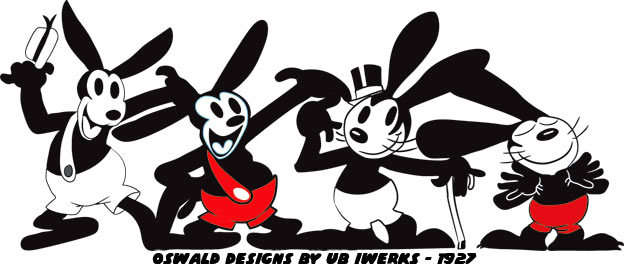
What the current-generation of Disney fans might not realize was how much Oswald changed in the span of a few years. In the original poster art and designs for Oswald Ub had planned a taller, lankier character. His head was more egg-shaped and often featured whiskers on his face and claws on his feet.


Oswald was visualized as having suspenders in some early pieces. These elements were paired down and Oswald became shorter and rounder in the process. The whiskers eventually went away. By the end of 1927 and the start of 1928 the look that most fans are familiar with finally took shape. Yet it was also about then that Disney had lost the rights to the character. Lantz took over and spared no time in remaking the character.


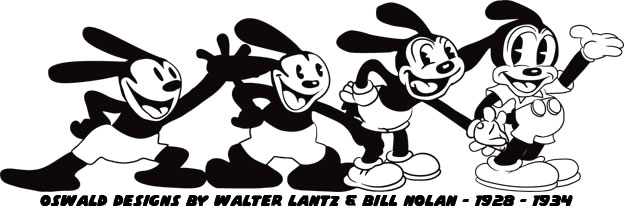
The post-Disney Oswald cartoons were notable for the lack of consistency. The quality of the animation suffered greatly. Animator Bill Nolan had worked for Disney and was one of the artists that left. He was a very prolific artist as well and was capable of producing almost as many frames of art as Ub Iwerks. Yet the one thing he lacked was the visual consistency of Ub. The lines for Oswald were sloppy, his movement lacked fluidity. Nolan was nowhere near the draftsman that Ub was. Nolan worked with Walter Lantz and helped redesign Oswald over the years. The shape of the head and eyes changed again. The costume did as well. The runaway success of Mickey Mouse meant that all of the following characters had to poach many of Mickey's design elements. Oswald soon found himself wearing shoes and sporting a shirt and even buttons on his shorts.


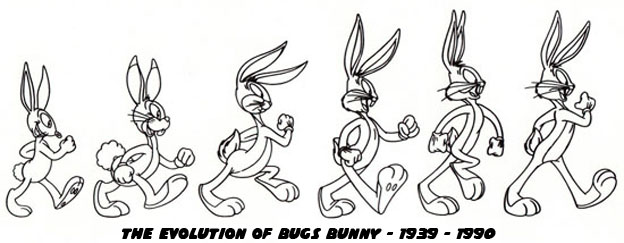
Despite the visual makeover fans were not flocking to Oswald as they once were. The cartoons lacked the creative spark that Disney had. They also lacked the quality and consistency that Ub offered. Oswald spoke in the Universal films but his voice changed from picture to picture because different animators took turns recording the character. Even Pinto Colving (the eventual voice for Goofy) did some voice work for the character. Oswald was losing ground to Mickey Mouse and his friends. Lantz would continue changing the character to try and fit the times. All of the lessons that Ub discovered while creating a cartoon rabbit would have to be relearned by Waner Bros. a decade later when they created a character called Bugs Bunny.


Realistic animal shapes did not lend themselves easily to animation. The artists had to take a lot of liberties in order to make the characters work in the medium of film. Luckily for Warner Bros. some of the animators working on Bugs had first cut their teeth animating Oswald. These artists learned very quickly not get too used to one school of design. Lantz was not finished changing the look of Oswald. In the next blog we will look at how far the character had changed from his first appearance. If you would like to sponsor me please visit my Patreon page and consider donating each month, even as little as $1 would help make better blogs and even podcasts!
follow the Street Writer on Patreon!