A blog about my interests, mainly the history of fighting games. I also talk about animation, comic books, car culture, and art. Co-host of the Pink Monorail Podcast. Contributor to MiceChat, and Jim Hill Media. Former blogger on the old 1UP community site, and Capcom-Unity as well.
Showing posts with label arika. Show all posts
Wednesday, May 20, 2026
Bookmark This Page; 30 years of Street Fighter, 30 Days of Characters
Street Fighter is my favorite fighting game series by a mile. If you want to learn about my favorite characters from the SF universe over the past 30+ years then Bookmark This Page.
Wednesday, April 29, 2026
Bookmark This Page; how ARIKA turned an April Fools joke into a great fighting game
Many of the people that created Street Fighter II left Capcom, and founded ARIKA. If you want to find out about how they teased a successor to Street Fighter EX then Bookmark This Page.

Monday, March 2, 2026
Bookmark This Page; Enter the Dragon, Fighting Layer & the roots of Street Fighter II
For those that are visiting my page for the first time my name is Noe aka BigMex. I love fighting games, as well as racing games, skateboarding, theme parks, and much more. You might know that this blog had been around for a long time. A good portion of what I wrote on the 1UP, and the Capcom-Unity pages some 20+ years ago were shared here. My best work was hidden at the bottom of this page. To make things easy for new visitors I started collecting similar threads. If you were interested in a certain topic then I was asking you to Bookmark This Page.

Did you ever play Fighting Layer? Even an emulated version? What did you think about it? Let me know about it in the comments section. As always if you enjoyed this blog, and would like to sponsor me please visit my Patreon page and consider donating each month, even as little as $1 would help make better blogs and even podcasts!
Monday, July 6, 2020
Creating a fighting game Frankenstein's monster...
When I talk about fighting game character designs I usually start with martial artists, and particular styles. Sometimes we look at the pop culture influences behind these designs. Today we’re going to look at the horror, and science fiction roots of a certain character type. The artificial human, the man created by science. We’re familiar with the story, which is as old as Mary Shelley’s original work Frankenstein; or, The Modern Prometheus. The book from 1818 has been adapted thousands of times, from stage plays, to cartoons, and live action movies. In the story Dr. Victor Frankenstein pieces together a man made from different cadavers, and then brings it to life. He abandons his creation, and the monster is shunned by society because of his grotesqueness. The monster makes it his mission to track down his creator and destroy him. It’s a cautionary tale with many different lessons, one of the most important is what happens to science without ethics.
The creature turning against the creator is the backbone of science fiction. The Terminator movie series is not far removed from the story of Frankenstein. In the movies Cyberdyne Systems loses control of its artificial intelligence SKYNET network. Without the military issuing commands the T-800 robots almost wipe out humanity. The robots covered in organic flesh are very lifelike, and each revision becomes harder and harder for humans to detect. Now the question is whether or not the fighting game genre has ever given audiences a Frankenstein's monster. The short answer is yes, of course it has. Many times in fact. The Terminator appeared in Mortal Kombat 11, the NetherRealm title from 2019. A more literal Frankenstein's monster appeared with Victor Von Gerdenheim in 1994's Vampire / Darkstalkers by Capcom. Yet there were more examples of the humanoid mechanical fighter that were poached by studios.
In the film Terminator 2: Judgement Day (1991) the next variation of the cyborg, the T-1000 is made of a liquid metal that allows it to mimic any person, or object. The special effects by Industrial Light and Magic were revolutionary. It was the first time that life-like CGI and practical effects blended seamlessly in a big budget Hollywood movie. The visuals of the T-1000 inspired a generation of artists, animators, and producers. The idea of putting a Terminator-like character in a fighting game were not far behind.
Battle K-Road by Psikyo was a 1994 fighting game that poached heavily from actual fighters, and pop culture. It was notable for using a cyborg that was a dead ringer for Arnold Schwarzenegger from the original 1984 Terminator film. Aside from that, the T-1000 was far more interesting to fighting game developers. The idea that one character could mimic the moves of every fighter was an interesting premise. Of course a fighter that could do this would be overpowered, and not someone that studios would want to make playable. That is possibly why the first character that was poured from the T-1000 mold was Geegus. The silver-skinned boss character from the game World Heroes debuted in 1992. The developers at ADK were coming out with a number of the early brawling, and fighting game hits for the Neo Geo platform.
World Heroes was one of the first, if not the first, time-traveling fighting games. It took a number of characters from history, not all necessarily fighters, and put them in a tournament to determine who was the greatest hero. Geegus was an alien using the tournament as a front to observe, and absorb the moves of every participant. This became a popular trend as other boss characters appeared that were more of less the same. Dural from Virtua Fighter (1993) by SEGA, was the next similar boss design. She had the moves of every fighter in the tournament. This cyborg was based on a human kunoichi, or female ninja fighter. She was the first 3D female boss in a game. The first female boss that predated her (that I know of) was Mizuki Rashojin, who appeared in Samurai Showdown II just a month earlier. Dural could not melt and change shape like Geegus, but the silver skin was nonetheless an impressive technological feat for the time.
The fighting game genre was exploding in the early ’90s. The technology used in arcades was transitioning from sprite to polygon. Rare was on the cutting edge of graphics at the time. They released Killer Instinct in 1994. The game used Silicon Graphics workstations (then the most powerful engines for 3D effects) to create their models, and stages. The game featured a number of fighting archetypes, but one of the most memorable was the alien Glacius. This character did not have the ability to mimic the moves of his opponents, but he was like the T-1000 in that he could change shape. In the Terminator film the T-1000 could turn his appendages into spikes, go completely flat, and slide past opponents. Rare demonstrated that the shape-shifting moves from the film could work in a fighting game.
The challenge was on for the developers. Could they create a playable character that could mimic his opponents without being overpowered? Capcom was up to the task, but their first attempt at creating a move-stealing fighter wasn’t seen by the majority of their fans. The Cyborg appeared in the 1995 game, Street Fighter II: The Interactive Movie. The evil Shadowlaw cyborgs were featured in the SF II animated movie, as they observed, and reported back to Vega (Dictator). In the game the character would learn the special attacks of the fighters at various points in the movie. The robot potentially had the ability to use the super fireball of Ryu, the super dragon punch of Ken, and even the sweeping kicks of Chun-Li. The seven-foot cyborg was essentially the first original Frankenstein's monster in the genre. Although it was a villain, an alternate ending in the game saw the Cyborg turn against Shadowlaw and destroy Vega. Sadly the character wouldn’t appear in another Street Fighter game, but its DNA would be revisited.
A good number of the team members responsible for Street Fighter II wanted to take a crack at the cybernetic mimic. They formed a new studio called ARIKA. They came up with two new characters; Cycloid β (Beta), and Cycloid γ (Gamma). The robots appeared in Street Fighter EX, the original 3D SF game at the end of 1996. What ARIKA did to keep their Cycloids from being overpowered was to give each of them moves from half the cast. In this way they had an even mix of close, mid range, and distance attacks. They also had unique combos that no other character could perform. Their move selection was very much pieced together like Frankenstein. Although they could not shape shift, they were still memorable attempts at making synthetic fighters.
Not to be outdone Capcom wanted to take another crack at the shape shifting, and move stealing monster. Their next attempt would be the last time they developed a sprite-based character. Twelve debuted in Street Fighter III: 3rd Strike. The game from 1999 was the last numbered Street Fighter to use traditional hand-drawn sprites. This character was very flexible, and rubbery, even when compared to Necro from the same game. Twelve was not completely fluid, like Geegus or Glacius, he couldn’t exactly flow like water. The animators at Capcom gave him the illusion of weight, and mass, like a rubber tire, rather than a ball of mercury. It could still change shape. The synthetic life form could turns its appendages into blades, or whips. It could glide, and even spring around the stage. In order to prevent Twelve from being overpowered it could only mimic the moves of the character it was currently fighting. It was easily one of the best animated characters from any fighting game, and possibly the closest thing to being a playable T-1000. As far as Frankenstein creatures went, it was a trained weapon, not exactly going against its creators.
Namco had been focused on their own characters, and designs with the Tekken series. They weren’t interested in silver-skinned, bald men as bosses. They already had cyborgs like Jack and P-Jack that were above and beyond the T-800. Their magically animated wooden fighter Mokujin could also emulate its opponent. In 2001 the studio finally decided to create a dedicated robot capable of stealing the moves of its opponent. Combot appeared first in Tekken 4. It was not covered in liquid metal like the T-1000. It looked more like a traditional robot than any other fighter listed thus far. The studio had been paying attention to what Capcom, and ARIKA had done. The character could only mimic the moves of its current opponent. It was a great choice if you wanted to learn the nuances of each character in arcade mode.
The start of the new millennium was pretty quiet for the fighting game community. All of that changed in 2008 with the release of Street Fighter IV. Capcom was eager to get audiences back into the genre and they did so by reintroducing the original World Warriors. The studio also created a new boss that was a call back to Geegus. Seth was the silver-skinned humanoid perfected. The character was the President of S.I.N. the weapons development unit of Shadowlaw. His team used his body to build the perfect weapon. He could emulate, and reflect both special, and super attacks from the fighters he crossed. The character was visually unique, with a rotating power source where his abdomen should be. In the game story it was explained that the Shadowlaw scientists had been able to recreate the moves of the masters using the Tanden Engine. Daigo Ikeno, lead designer on Street Fighter IV pulled a lot of visual elements from Shinto, and Tao spiritual beliefs, and turned them into pseudo-scientific technology.
Capcom didn’t do much in the way of changing the Seth or developing a new boss character over the next decade. The standard had been set early on. Seth was arguably the best original Frankenstein's monster in the genre. Even better because this was as if Victor Frankenstein had built the monsterous body to drop his brain into. In 2019 Capcom decided to revisit Seth for Season Four of Street Fighter V: Champion Edition. This time the re-skinned Seth was also assigned a new gender. I’m not sure how much forethought was given to this idea, but I’d like to think it was a progressive statement from Capcom. The change of Seth from a male to female body was written into the story, as the cyborg had its consciousness transferred to a new body. This new form rounded out the abilities of the character, and if anything, made it even more interesting.
The Tanden Engine, was powered by Yin and Yang energy. The opposing forces were required to achieve balance. Being gender-neutral made Seth able to explore both sides of this power source. The duality could be seen in the concept art, as well as in the final design of both versions of Seth. Her standing lotus pose was a call back to the original seated position of the character. But the details in the updated Seth went much deeper than that. Seth’s new haircut covered half her face, literally making it half light, and half dark. A mirrored yin and yang symbol from her stomach. The circular hair bun completed the look.
The use of knots, braids, and ropes for the various character costumes were pulled right from Shinto beliefs. These details were covered previously on the blog. I mentioned how the knots worn on the belts of Gouken, and Gouki had symbolic meanings. The same could be attributed to the hair of Seth. Capcom had created both the genre's original Frankenstein's Monster, and the Bride of Frankenstein with this fighter. Seth in either male or female form was far more powerful, and dangerous than any human. Its creators at S.I.N. had propelled science beyond human understanding. By doing so they created a villain that was immortal, essentially god-like.
The connections to Seth and godhood were not a coincidence. In earlier concept art the designers at Capcom were considering adding a flowing scarf, and top knot. This look was a direct call out to Raijin, the Shinto god of thunder. Audiences were supposed to tell instantly that this was a powerful villain. In many classical paintings, and even statues, Raijin was presented with a flowing scarf. Sometimes holding a vajra, a type of dagger used for striking down evil. The poses, and figures from Buddhism, complimented the Shinto beliefs in Japan. The poses and iconography are sometimes blended together, and easily recognized in Asian countries. While fans in the West may not get all of the mythology behind Seth’s details, they are nonetheless interesting to study and learn from.
We have the technology to create an actual T-1000 character in a fighting game, one that could change shape, and use all of the special attacks of the cast. Time has shown us that such a character would be far too powerful to be anything but a boss design. So for the help of balancing the roster the studios have learned to tone down their moves and abilities. At least Capcom, Namco, ARIKA, and DIMPS learned what Dr. Frankenstein never could. Don't build a monster that you cannot control! What do you think of move-stealing cyborgs in fighting games? Are you for them? Against them? Let me know in the comments section. If you would like to sponsor me please visit my Patreon page and consider donating each month, even as little as $1 would help make better blogs and even podcasts!
The creature turning against the creator is the backbone of science fiction. The Terminator movie series is not far removed from the story of Frankenstein. In the movies Cyberdyne Systems loses control of its artificial intelligence SKYNET network. Without the military issuing commands the T-800 robots almost wipe out humanity. The robots covered in organic flesh are very lifelike, and each revision becomes harder and harder for humans to detect. Now the question is whether or not the fighting game genre has ever given audiences a Frankenstein's monster. The short answer is yes, of course it has. Many times in fact. The Terminator appeared in Mortal Kombat 11, the NetherRealm title from 2019. A more literal Frankenstein's monster appeared with Victor Von Gerdenheim in 1994's Vampire / Darkstalkers by Capcom. Yet there were more examples of the humanoid mechanical fighter that were poached by studios.
In the film Terminator 2: Judgement Day (1991) the next variation of the cyborg, the T-1000 is made of a liquid metal that allows it to mimic any person, or object. The special effects by Industrial Light and Magic were revolutionary. It was the first time that life-like CGI and practical effects blended seamlessly in a big budget Hollywood movie. The visuals of the T-1000 inspired a generation of artists, animators, and producers. The idea of putting a Terminator-like character in a fighting game were not far behind.
Battle K-Road by Psikyo was a 1994 fighting game that poached heavily from actual fighters, and pop culture. It was notable for using a cyborg that was a dead ringer for Arnold Schwarzenegger from the original 1984 Terminator film. Aside from that, the T-1000 was far more interesting to fighting game developers. The idea that one character could mimic the moves of every fighter was an interesting premise. Of course a fighter that could do this would be overpowered, and not someone that studios would want to make playable. That is possibly why the first character that was poured from the T-1000 mold was Geegus. The silver-skinned boss character from the game World Heroes debuted in 1992. The developers at ADK were coming out with a number of the early brawling, and fighting game hits for the Neo Geo platform.
World Heroes was one of the first, if not the first, time-traveling fighting games. It took a number of characters from history, not all necessarily fighters, and put them in a tournament to determine who was the greatest hero. Geegus was an alien using the tournament as a front to observe, and absorb the moves of every participant. This became a popular trend as other boss characters appeared that were more of less the same. Dural from Virtua Fighter (1993) by SEGA, was the next similar boss design. She had the moves of every fighter in the tournament. This cyborg was based on a human kunoichi, or female ninja fighter. She was the first 3D female boss in a game. The first female boss that predated her (that I know of) was Mizuki Rashojin, who appeared in Samurai Showdown II just a month earlier. Dural could not melt and change shape like Geegus, but the silver skin was nonetheless an impressive technological feat for the time.
The fighting game genre was exploding in the early ’90s. The technology used in arcades was transitioning from sprite to polygon. Rare was on the cutting edge of graphics at the time. They released Killer Instinct in 1994. The game used Silicon Graphics workstations (then the most powerful engines for 3D effects) to create their models, and stages. The game featured a number of fighting archetypes, but one of the most memorable was the alien Glacius. This character did not have the ability to mimic the moves of his opponents, but he was like the T-1000 in that he could change shape. In the Terminator film the T-1000 could turn his appendages into spikes, go completely flat, and slide past opponents. Rare demonstrated that the shape-shifting moves from the film could work in a fighting game.
The challenge was on for the developers. Could they create a playable character that could mimic his opponents without being overpowered? Capcom was up to the task, but their first attempt at creating a move-stealing fighter wasn’t seen by the majority of their fans. The Cyborg appeared in the 1995 game, Street Fighter II: The Interactive Movie. The evil Shadowlaw cyborgs were featured in the SF II animated movie, as they observed, and reported back to Vega (Dictator). In the game the character would learn the special attacks of the fighters at various points in the movie. The robot potentially had the ability to use the super fireball of Ryu, the super dragon punch of Ken, and even the sweeping kicks of Chun-Li. The seven-foot cyborg was essentially the first original Frankenstein's monster in the genre. Although it was a villain, an alternate ending in the game saw the Cyborg turn against Shadowlaw and destroy Vega. Sadly the character wouldn’t appear in another Street Fighter game, but its DNA would be revisited.
A good number of the team members responsible for Street Fighter II wanted to take a crack at the cybernetic mimic. They formed a new studio called ARIKA. They came up with two new characters; Cycloid β (Beta), and Cycloid γ (Gamma). The robots appeared in Street Fighter EX, the original 3D SF game at the end of 1996. What ARIKA did to keep their Cycloids from being overpowered was to give each of them moves from half the cast. In this way they had an even mix of close, mid range, and distance attacks. They also had unique combos that no other character could perform. Their move selection was very much pieced together like Frankenstein. Although they could not shape shift, they were still memorable attempts at making synthetic fighters.
Not to be outdone Capcom wanted to take another crack at the shape shifting, and move stealing monster. Their next attempt would be the last time they developed a sprite-based character. Twelve debuted in Street Fighter III: 3rd Strike. The game from 1999 was the last numbered Street Fighter to use traditional hand-drawn sprites. This character was very flexible, and rubbery, even when compared to Necro from the same game. Twelve was not completely fluid, like Geegus or Glacius, he couldn’t exactly flow like water. The animators at Capcom gave him the illusion of weight, and mass, like a rubber tire, rather than a ball of mercury. It could still change shape. The synthetic life form could turns its appendages into blades, or whips. It could glide, and even spring around the stage. In order to prevent Twelve from being overpowered it could only mimic the moves of the character it was currently fighting. It was easily one of the best animated characters from any fighting game, and possibly the closest thing to being a playable T-1000. As far as Frankenstein creatures went, it was a trained weapon, not exactly going against its creators.
Namco had been focused on their own characters, and designs with the Tekken series. They weren’t interested in silver-skinned, bald men as bosses. They already had cyborgs like Jack and P-Jack that were above and beyond the T-800. Their magically animated wooden fighter Mokujin could also emulate its opponent. In 2001 the studio finally decided to create a dedicated robot capable of stealing the moves of its opponent. Combot appeared first in Tekken 4. It was not covered in liquid metal like the T-1000. It looked more like a traditional robot than any other fighter listed thus far. The studio had been paying attention to what Capcom, and ARIKA had done. The character could only mimic the moves of its current opponent. It was a great choice if you wanted to learn the nuances of each character in arcade mode.
The start of the new millennium was pretty quiet for the fighting game community. All of that changed in 2008 with the release of Street Fighter IV. Capcom was eager to get audiences back into the genre and they did so by reintroducing the original World Warriors. The studio also created a new boss that was a call back to Geegus. Seth was the silver-skinned humanoid perfected. The character was the President of S.I.N. the weapons development unit of Shadowlaw. His team used his body to build the perfect weapon. He could emulate, and reflect both special, and super attacks from the fighters he crossed. The character was visually unique, with a rotating power source where his abdomen should be. In the game story it was explained that the Shadowlaw scientists had been able to recreate the moves of the masters using the Tanden Engine. Daigo Ikeno, lead designer on Street Fighter IV pulled a lot of visual elements from Shinto, and Tao spiritual beliefs, and turned them into pseudo-scientific technology.
Capcom didn’t do much in the way of changing the Seth or developing a new boss character over the next decade. The standard had been set early on. Seth was arguably the best original Frankenstein's monster in the genre. Even better because this was as if Victor Frankenstein had built the monsterous body to drop his brain into. In 2019 Capcom decided to revisit Seth for Season Four of Street Fighter V: Champion Edition. This time the re-skinned Seth was also assigned a new gender. I’m not sure how much forethought was given to this idea, but I’d like to think it was a progressive statement from Capcom. The change of Seth from a male to female body was written into the story, as the cyborg had its consciousness transferred to a new body. This new form rounded out the abilities of the character, and if anything, made it even more interesting.
The Tanden Engine, was powered by Yin and Yang energy. The opposing forces were required to achieve balance. Being gender-neutral made Seth able to explore both sides of this power source. The duality could be seen in the concept art, as well as in the final design of both versions of Seth. Her standing lotus pose was a call back to the original seated position of the character. But the details in the updated Seth went much deeper than that. Seth’s new haircut covered half her face, literally making it half light, and half dark. A mirrored yin and yang symbol from her stomach. The circular hair bun completed the look.
The use of knots, braids, and ropes for the various character costumes were pulled right from Shinto beliefs. These details were covered previously on the blog. I mentioned how the knots worn on the belts of Gouken, and Gouki had symbolic meanings. The same could be attributed to the hair of Seth. Capcom had created both the genre's original Frankenstein's Monster, and the Bride of Frankenstein with this fighter. Seth in either male or female form was far more powerful, and dangerous than any human. Its creators at S.I.N. had propelled science beyond human understanding. By doing so they created a villain that was immortal, essentially god-like.
The connections to Seth and godhood were not a coincidence. In earlier concept art the designers at Capcom were considering adding a flowing scarf, and top knot. This look was a direct call out to Raijin, the Shinto god of thunder. Audiences were supposed to tell instantly that this was a powerful villain. In many classical paintings, and even statues, Raijin was presented with a flowing scarf. Sometimes holding a vajra, a type of dagger used for striking down evil. The poses, and figures from Buddhism, complimented the Shinto beliefs in Japan. The poses and iconography are sometimes blended together, and easily recognized in Asian countries. While fans in the West may not get all of the mythology behind Seth’s details, they are nonetheless interesting to study and learn from.
We have the technology to create an actual T-1000 character in a fighting game, one that could change shape, and use all of the special attacks of the cast. Time has shown us that such a character would be far too powerful to be anything but a boss design. So for the help of balancing the roster the studios have learned to tone down their moves and abilities. At least Capcom, Namco, ARIKA, and DIMPS learned what Dr. Frankenstein never could. Don't build a monster that you cannot control! What do you think of move-stealing cyborgs in fighting games? Are you for them? Against them? Let me know in the comments section. If you would like to sponsor me please visit my Patreon page and consider donating each month, even as little as $1 would help make better blogs and even podcasts!
Labels:
arika,
capcom,
combot,
cyborg,
cycloid,
dimps,
dural,
Frankenstein,
geegus,
glacius,
killer instinct,
raijin,
seth,
street fighter ex,
t-1000,
t-800,
tekken,
terminator,
twelve,
vampire
Sunday, June 24, 2018
30 years of Street Fighter: 30 years of Characters #7
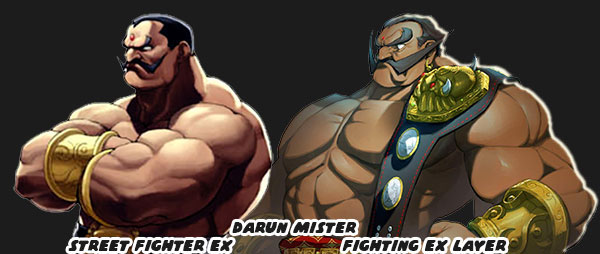
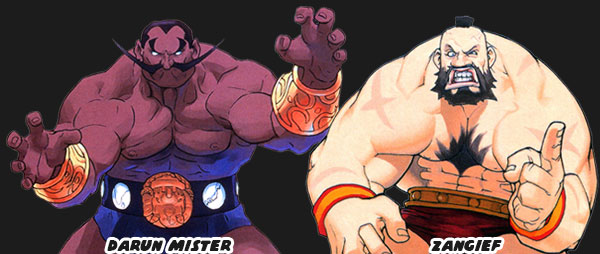
Darun Mister is one of the great all-time grapplers in the Street Fighter universe. He debuted more than 20 years ago in Street Fighter EX. I've already talked about Victor Ortega, the pro wrestling heavyweight champion in the Street Fighter universe. Victor dominated the competition and retired undefeated. He resurfaced years later to test out the next generation of pro wrestlers. I've also talked about the Wraith, one of the more obscure, and macabre pro wrestlers in the Street Fighter universe. Both Ortega and the Wraith were gigantic and fearsome grapplers. But neither, at least not to the best of my knowledge, have ever faced Darun Mister in or out of the ring. Darun is the Indra (Indian) wrestling champion. His championship belt is among the greatest ever designed for a game. I mean just look at the gold, silver and ruby-encrusted elephant on the belt! He dominated the competition in South Asia as much as Ortega had around the world. He also served as the personal bodyguard for Pullum Purna. The duo traveled the globe fighting other champions during the EX tournament.
Darun was such an exceptional grappler that he actively sought out masters of other disciplines. When he was defeated by the demon Garuda he swore to return stronger for a rematch. Just a reminder that Garuda killed his opponents but Darun was simply too tough to die. If the story of Darun rings a bell it's because he is a second-take on the character Zangief. The Red Cyclone set a standard that was pretty tough to beat in the Street Fighter series. The team at ARIKA had a hand in developing the original Street Fighter II cast, so when they created the EX series they made parallels in their fighting lineup. Darun was beat-for-beat a counter to Zangief and was destined to be his rival in canon. Believe it or don't Zangief was inspired in part by an actual wrestler named Victor Zangief that the Capcom crew saw on TV. I mentioned previously that Victor Ortega was inspired by wrestlers like Superstar Billy Graham and Hulk Hogan. The Wraith was inspired by The Undertaker and even Darun was based in reality. The Great Gama was a turn-of-the-century wrestling legend from India that sought out and beat the European champions. He was celebrated as a hero in his home country and was a perfect template to rival the burly Russian.
More than a hundred years has passed since the Great Gama was in his prime. The good news is that Darun Mister will always be in peak physical condition and looking for opponents to mangle. I enjoyed playing as the character in Street Fighter EX and look forward to his return in Fighting EX Layer. Today we celebrate this legend. Do you have a favorite Street Fighter wrestler? If so tell me in the comments section. As always if you enjoyed this blog and would like to sponsor me please visit my Patreon page and consider donating each month, even as little as $1 would help make better blogs and even podcasts!
Thursday, June 21, 2018
30 years of Street Fighter: 30 years of Characters #10
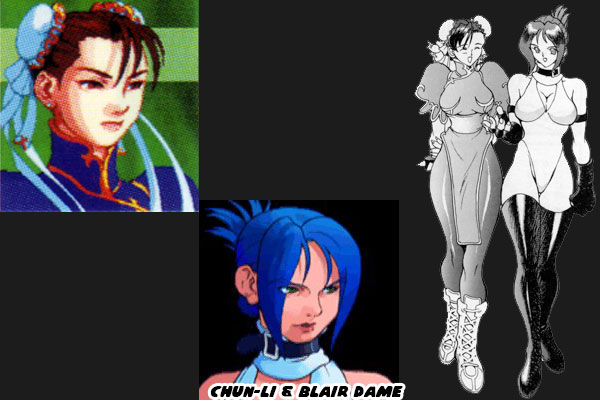
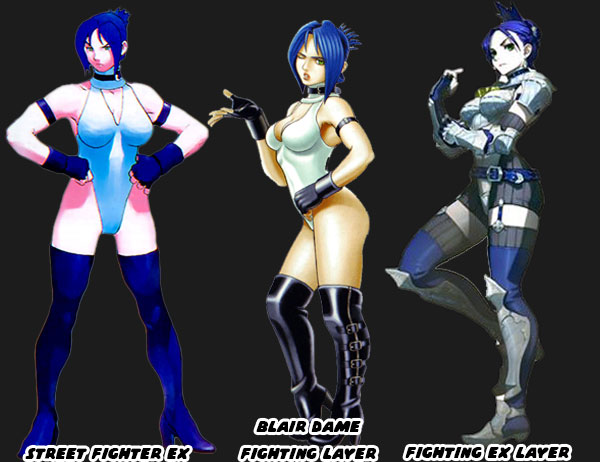
Blair Dame is a very unique character in the Street Fighter universe. There have been many amazing women leading the charge but Blair is a real standout. She was introduced in Street Fighter EX in 1996. ARIKA developed their cast to be a balance for the Street Fighter II: World Warriors. Blair was the counter to Chun-Li. This meant that she had to be strong, powerful and confident. Her heritage was one of prestige and wealth but these things bored her. Her passion was in fighting. She wasn't a student of one style or form. She had fast hands in the game and equally fast feet. She could go toe-to-toe with a striker but was also a capable grappler. She could take down opponents and get them in a bone-breaking move very quickly. Her well-rounded ability made her the first mixed martial arts star in the Street Fighter universe. Alex from Street Fighter III wouldn't appear until a year later. The haughty billionaire Karin Kanzuki, from Street Fighter Alpha 3, appeared two years after Blair.
Blair is fun to play as in the series because she can string together punches and kicks so easily. Players can mix and match different moves to hit high or low depending on whatever is most effective. To confuse opponents she can even move from a strike to a tackle faster than just about any fighter. Blair also has the distinction of appearing in ARIKA's other fighting game, the Namco produced Fighting Layer. She, along with Allen Snider, helped expand the universe of Street Fighter into new uncharted territory. Granted most Street Fighter fans will never acknowledge the Fighting Layer characters as falling within canon. It doesn't mean they were not great characters to begin with. A good reason why Street Fighter II was a hit was due to Akira Nishitani and his team that founded ARIKA. Now that they are back in the business with Fighting EX Layer then it makes Blair one of the rare characters that has appeared in three different 3D fighting games.
Blair has been around 22 of Street Fighter's 30 years. There are many reasons as to why she is so long-lived in the franchise. She is an amazing character. Like most of her EX co-stars she has only become more interesting as time has gone on. How her relationship with former bodyguard Cracker Jack has changed will eventually be explored in Fighting EX Layer. What I do know is that her status in the Street Fighter universe is secure. Few women in fighting games have been as well rounded. We certainly could use more role models like her. What do you think about Blair or the other female fighters in the universe? I'd like to read about it in the comments section. As always if you enjoyed this blog and would like to sponsor me please visit my Patreon page and consider donating each month, even as little as $1 would help make better blogs and even podcasts!
Monday, June 18, 2018
30 years of Street Fighter: 30 years of Characters #13
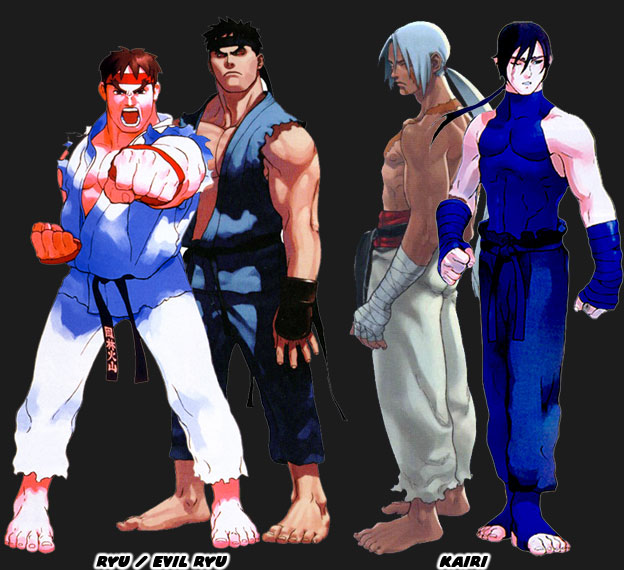
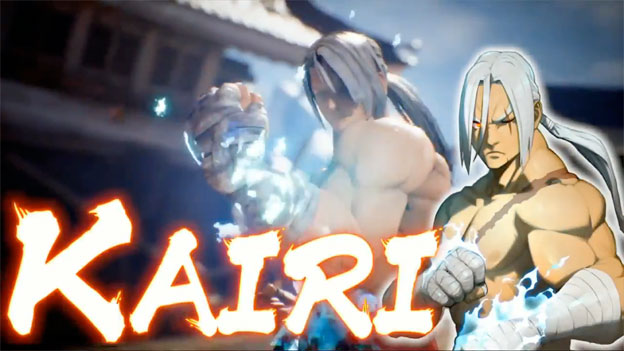
After 30 years of Street Fighter there were few characters as fascinating as Kairi. This boss-level figure struggled with personal (and literal) demons during the events of Street Fighter EX tournament. Very few in the universe had as complex a back story. His half-sister Hokuto / Shirase was certainly one of those rare exceptions. Kairi was a mysterious figure central to the plot of the EX series. He was an exceptional fighter but was suffering from amnesia. His look was unique, he wore a dark blue uniform, more ninja-like than karate. He was covered in scars and even had a large one over his eye. His super moves caused him great pain. He was tortured by the energy flowing within him. This caused him to evolve within the series. He went from an average character to someone with boss-level power between the first and second EX titles. If this sort of evolution sounds familiar there was a reason why.
Kairi was created by the staff at ARIKA, many of whom worked on Street Fighter II. Kairi was a star character and designed to be an evolved version of Ryu. A sort of second-take on the character. By the same token Allen Snider was designed to be a new version of Ken. Both fighters had similar inspirations, and similar origins. Capcom explored giving Ryu more power and more moves by turning him evil in the middle of the Street Fighter Zero / Alpha series. This was to demonstrate that Ryu could become a villain like Gouki / Akuma. It also set up the possibility that he could assume his role in continuity. Ryu was able to overcome his dark personae by the end of the Zero series. The same thing did not happen with Kairi. He gave in to his dark power and it made him much stronger. His hair even changed from black to white to signify this transformation.
What made Kairi unique was that he didn't become a villain. Instead he became a boss-level character that wasn't necessarily good or evil. He was a melancholy fighter that sought a challenge, and possibly death in battle. In EX canon he defeated Gouki as well as the demon Garuda. Kairi became a warrior without peer, destined to walk the path alone. I certainly look forward to how the character has evolved in the next EX game as well as how his relationship with his sisters has changed. Do you enjoy characters with unique stories as much as I do? I'd like to hear about your most memorable characters in the comments section. As always if you enjoyed this blog and would like to sponsor me please visit my Patreon page and consider donating each month, even as little as $1 would help make better blogs and even podcasts!
Sunday, June 10, 2018
30 years of Street Fighter, 30 Days of Characters; #21
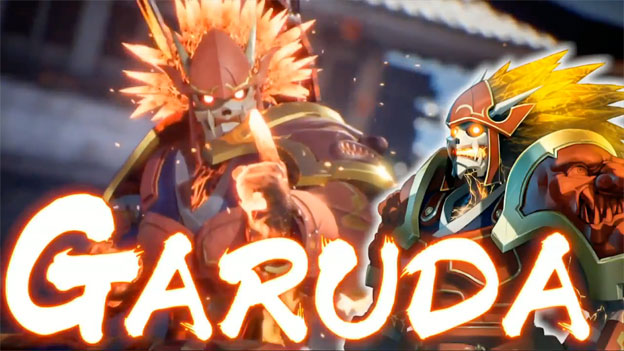
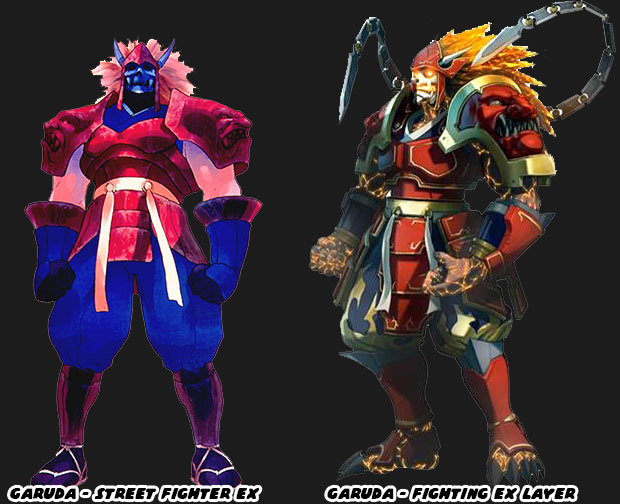
Can you believe I've celebrated many unique characters in the 30 year history of the Street Fighter universe and not once brought up a boss character? Well today that changes! We're looking at the most evil villain in franchise history. I am talking about a literal demon named Garuda. Now I know many of you are asking what about Gouki / Akuma? He did kill his brother and that is absolutely evil. Well Garuda is a killer as well, in fact he killed so many while alive that not even death could stop him. This character debuted in Street Fighter EX back in 1996 but his origin is centuries older.
Garuda was a warrior during the Sengoku era in Japan (1467-1603). This was a very turbulent time with nonstop political strife and war all across Japan. This was the era that was the backdrop for countless movies, television shows and even a few dozen games. Garuda was a bloodthirsty samurai, killing many men in his wake. When he was struck down in combat he was furious, not because he was dying but because he could no longer continue killing. A demon was attracted to his rage and possessed the man, turning him into an undead killing machine. He was sort of the Jason Voorhees of feudal Japan. Garuda was eventually sealed away in a sacrificial ceremony where he remained for over 300 years. This seal was broken during the events of Street Fighter EX. What was unleashed was one of the most unique fighting game bosses in the history of the franchise.
Garuda did not have a samurai sword to attack with but rather living metal spikes that would grow out of his skin and armor. He could spin like a whirlwind while slashing at opponents. He could impale opponents on his shoulders and then run them into the ground. He was insanely strong, able to slam any opponent easily. He could also teleport all over the stage avoiding a barrage from his enemies. Garuda demonstrated how the Street Fighters would hold up against a supernatural villain. There was nobody else like him before or after in franchise history. For these reasons and more we clebrate the living demon on the 30th Anniversary of Street Fighter. As always if you enjoyed this blog and would like to sponsor me please visit my Patreon page and consider donating each month, even as little as $1 would help make better blogs and even podcasts!
Thursday, June 7, 2018
30 years of Street Fighter, 30 Days of Characters; #24
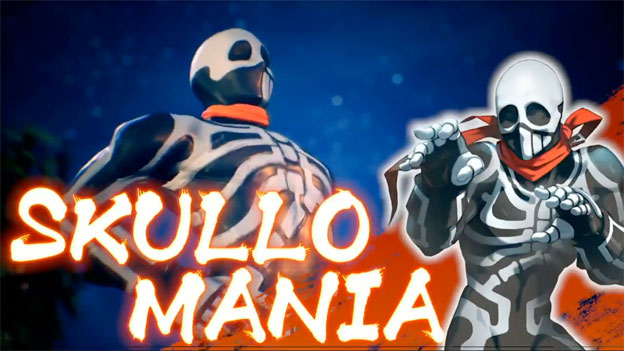
We cannot celebrate 30 years of Street Fighter without also celebrating 20 years of one of the most oddball characters introduced in the universe. When designing Street Fighter EX the team at ARIKA wanted to create a balance between the classic World Warriors, those featured in Street Fighter II and a new lot of fighters. Blanka and Dhalsim were on the extreme end of designs and ARIKA wanted at least one odd character as well. They decided to create a sort of superhero into their franchise.
Skullomania is actually an homage to the classic Japanese super sentai shows. Live action heroes like Kamen Rider and the Power Rangers were wildly popular in Japan. These heroes and their over-the-top villains were the types of characters that the designers at ARIKA grew up with. They figured out a way to incorporate one of these archetypes into the lineup without completely breaking Street Fighter's lore. Skullomania was a salaryman that made some extra money as an acrobat at an amusement park. He stopped some robbers as they stole from the ticket booth and the visitors cheered. He became enamored with the attention and became a real life hero. This premise was very believable. It was the intensity of being a hero that Skullomania took over the top.
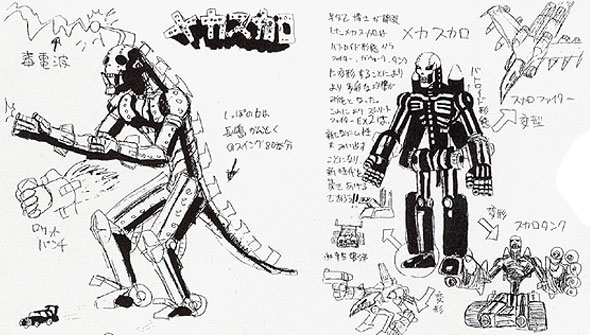
Skullomania does not have a transforming car or a giant robot at his disposal, these are only seen as pages in a sketchbook. He has no super-powers, although he imagines that he can fly and change his size. He also does not have any actual martial arts training. Instead he throws his whole body into his attacks. He dives headfirst at opponents and sweeps their feet with his breakdance-like acrobatics. His appearance is odd but memorable, his moves are absurd but also mostly realistic. He manages to be as unique a character as Dhalsim or Blanka but without coming across as fake. Skullomania is a very creative fighter, there is nobody else like him. Today we celebrate the uniqueness that Street Fighter brought to the genre. What do you think about this oddball? Please let me know in the comments section. As always if you enjoyed this blog and would like to sponsor me please visit my Patreon page and consider donating each month, even as little as $1 would help make better blogs and even podcasts!
Wednesday, June 6, 2018
30 years of Street Fighter, 30 Days of Characters; #25
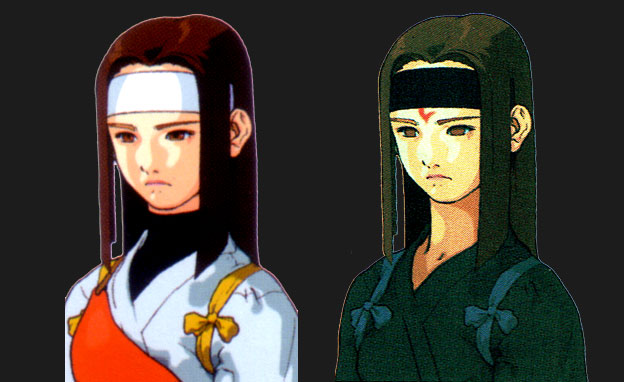
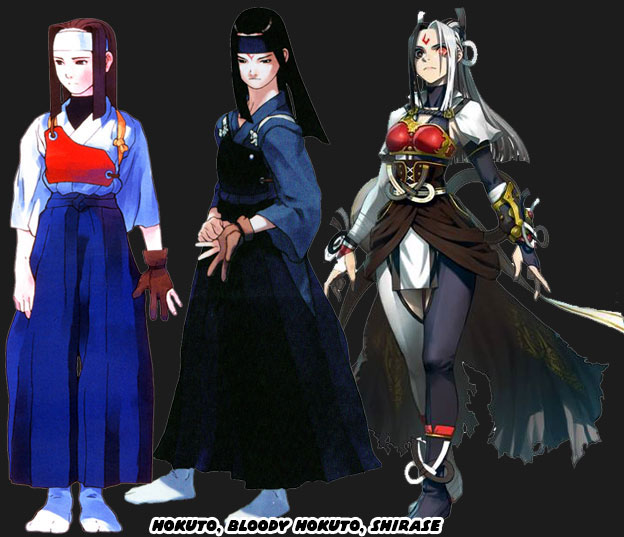
Hokuto is one of the most interesting characters in the entire Street Fighter universe. In the span of 30 years she is possibly the most complex fighter ever designed. In canon she has actually played both the good and evil roles. Her true nature is only now being told. When she debuted in 1997 she appeared like a kyudoka, somebody that practiced traditional archery. She didn't have a bow and arrows but instead used her spirit force to shoot energy projectiles at opponents. It was a unique mix of classic aesthetic and modern fighting game character. Hokuto came from a cursed lineage, her older brother was Kairi, a fighter suffering from amnesia. Kairi posed a threat to himself and other people so Hokuto was tasked to bring him in or kill him trying. The latter of the two options came in the form of Bloody Hokuto. Her evil personae was much more dangerous and filled with the same murderous intent of Kairi. Hokuto and Bloody Hokuto shared a few similar moves however Bloody Hokuto had a few more lethal strikes including a dim mak or death strike.
Hokuto was presented as a sympathetic character. She was a young, noble woman that had the bad fortune of having to track down her brother. Audiences knew that the evil energy coursing through her veins was making her do things she did not want to do. Just as Ryu, the star of the Street Fighter series, was battling the dark Hadou energy as well. The designers at ARIKA were actually keeping an important part of her story a secret for 20 years. Hokuto was indeed related to Kairi however they were step-siblings. Hokuto was an illegitimate child. She was trained as an assassin and had been planted into the clan with her memories erased. When the seal was broken she didn't become "Bloody Hokuto" but instead regressed into her true self. She was an assassin named Shirase.
Tuesday, June 5, 2018
30 Years of Street Fighter, 30 Days of Characters; #26
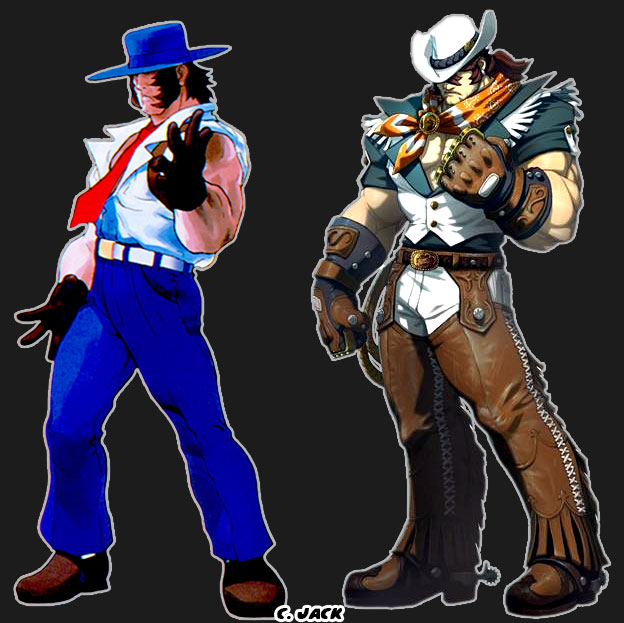
If there were a contest as to who was the coolest Street Fighter universe character ever the front runner might be Cracker Jack, aka C. Jack or simply Jack. The character made his debut in 1996 in Street Fighter EX. Jack was designed to be mysterious and interesting at the same time. The shirt and tie, and even hat were supposed to be reminiscent of Shadowlaw field agents. It was actually an old trope from comics and cartoons. Tough guys like mobsters and sometimes detectives wore the dark suit and tie. Except that Jack was not a bad guy. He was a bodyguard / double agent working for an organization fighting crime. Jack was like a super cop that played by his own rules.
Jack fought with mostly punches in the series. He had an occasional grapple and body slam he could execute but he was a pure striker. He didn't have any fireball or other supernatural attacks to give him a ranged advantage but he did have something that none of the other characters had; a baseball bat. Jack could strike quickly and cut the distance between himself and his opponent. He really controlled the screen with the swing of his bat. He could strike away fireballs from a distance and smash the ribs of an opponent that wandered too close. This no-nonsense brawling that he had made him stand out from the traditional Street Fighter characters which were mostly based on martial arts.
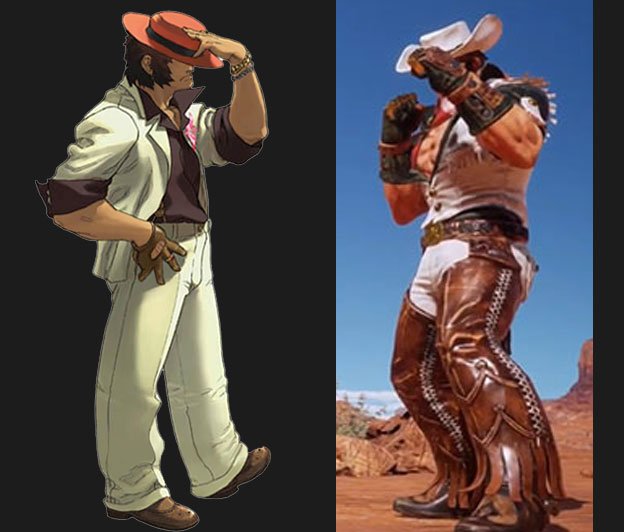
The team at ARIKA that designed the character kept him mysterious on purpose. They were vague on his affiliation, vague on his allies and even vague on his origin. They even made sure to make it difficult to see the face of the character. With his shaggy hair, sideburns and hat you could never get a clear look at his face. In canon the fighter went missing for years. He was found hiding out in the American Southwest. Whether is was to protect his former employer, on stakeout for a top secret mission or just to avoid his past was unknown. His transition from city brawler to fighting cowboy was one of the great redesigns in fighting game history. What do you think about non-traditional fighters in the Street Fighter universe? Would you like to see more of them? Please let me know in the comments. As always if you enjoyed this blog and would like to sponsor me please visit my Patreon page and consider donating each month, even as little as $1 would help make better blogs and even podcasts!
Subscribe to:
Posts (Atom)