A blog about my interests, mainly the history of fighting games. I also talk about animation, comic books, car culture, and art. Co-host of the Pink Monorail Podcast. Contributor to MiceChat, and Jim Hill Media. Former blogger on the old 1UP community site, and Capcom-Unity as well.
Showing posts with label garuda. Show all posts
Wednesday, May 15, 2019
The new Evil Ryu, a look at Kage
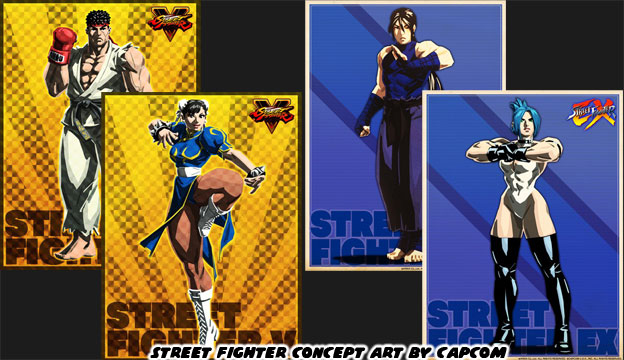
Hello friends, I hope that the year has been going well for you. I just wanted to be completely transparent with the slow update schedule. Since fall of last year I've been changing my habits. For health reasons I'm putting myself on a better path. I've also been focusing on my art and less on my writing. I'm still 100% passionate about fighting games, but I've got to make sure I'm healthy for the long run. Thanks for being patient in the meantime. Today I want to talk about Kage, a new character revealed for Street Fighter V at the end of 2018. On the surface level this character is reminiscent of Evil Ryu, because in essence he is Evil Ryu. If you didn't know Evil Ryu had his breakout appearance in the Street Fighter Zero / Alpha series in the mid '90s. For budding game designers that read my blog I mentioned that the transformation of a hero to a villain was a very powerful storytelling tool.

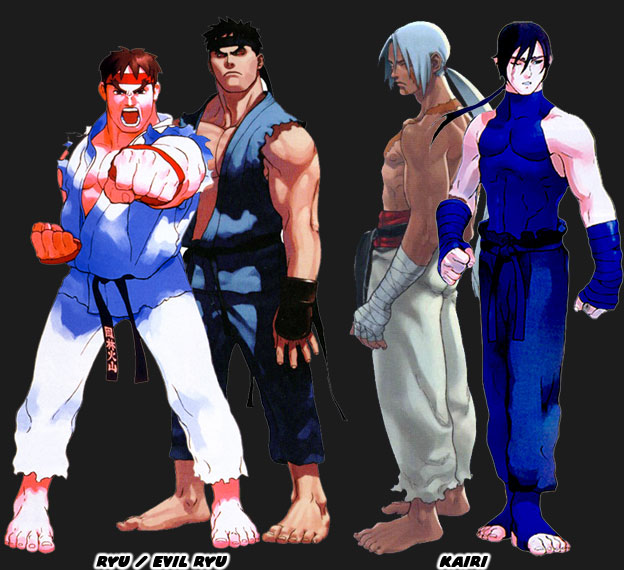
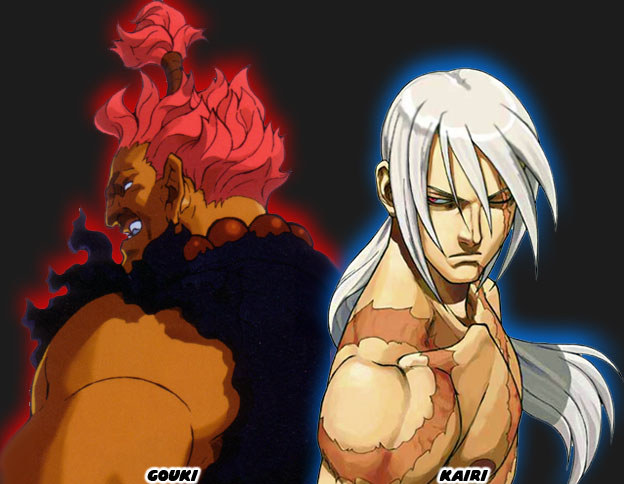
Evil Ryu is a version of the hero of the Street Fighter series that wants to prove he is the greatest warrior. Even if this means killing his opponents in a fight. He is often presented with a tan, and even red eyes in some official art to signify that he is possessed by evil forces. Kage in Street Fighter V is presented in a different light. Instead of simply being Ryu fighting with the evil forces inside of him, this character is the physical embodiment of the Satsui No Hadou. He has neon horns sticking out of his head and elongated teeth. The red headband is broken and rests on his shoulders to signify that his mind is not his own. His head and face are distorted so that it looks more like an ogre and less like a person. The animal traits applied to a human were originally featured on Gouki / Akuma. To make him appear less than human the designers flattened his nose and gave him a crown of blazing red hair. He was meant to conjure images of a lion.

The earlier Street Fighter designs, especially those from the late '80s and early '90s Street Fighter II and Street Fighter EX era were well done. The characters had an easy to identify theme, perhaps they were a soldier, wrestler, or kung fu master. You could tell right away based on their look what archetype they were. Some clues were obvious and some were more subtle. When you added all of the details together they turned a typical fighting game character into an icon. I believe that the the designs in Street Fighter IV and V are lacking. They lack subtlety. They lack an understanding of what made the original World Warriors so memorable. Instead of letting audiences discover that Gouki has lion-like features, the studio now presents him with a literal lion mane. Fans call this version Akuma-matata, a play on the African word hakuna matata.

Capcom is hitting audiences over the head with their latest designs. It's the fastest way to tell a story, but it doesn't make it the right way to tell a story. The look of the Street Fighters are loud and boorish, they are the characters that a teenage fan could have pitched. The look of Gouki and Kage are prefect examples of what is wrong with Capcom's current design culture. The majority of new characters, such as Rufus, Hakan, Abel, F.A.N.G., and Rashid introduced in Street Fighter IV and V are forgettable because they subscribe to the same design philosophy. There is nothing wrong with having characters in the franchise that have some animal-like traits. Blanka is an example of that, but he is on the extreme end of what works in the franchise. Characters like Blanka are few and far between. Not to mention that there was already an Evil Ryu. When you start to fill the roster with similar outlandish characters it dilutes those that are really unique. Having literal demons in the series is changing the narrative. This series was founded on martial arts archetypes. As Capcom expands the design circle to include demons and comic book villains then it is going down a path that is hard to return from.

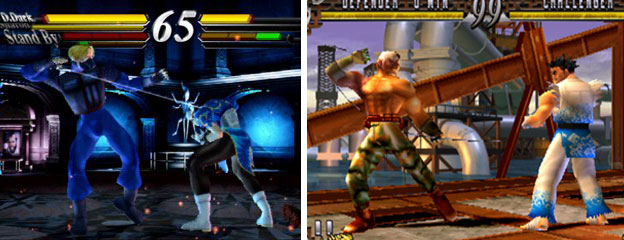
Turning the main character into a monster, and keeping him that way has been explored in other fighting games. Devil Kazuya is possibly the best example of this. Tekken has a number of main characters that have demonic alter-egos. Jin Kazama has a Devil Jin persona, his great grandfather Jinpachi Mishima becomes a demon, and Jin's grandmother Kazumi Mishima also becomes a demon. The series is well known because of the number of fantastic archetypes. The series has monsters, cyborgs, robots and even panda bears. That lineup, that presentation is not in the same vein as Street Fighter. I'm worried that the people designing the next generation of Street Fighter can't make the distinction.

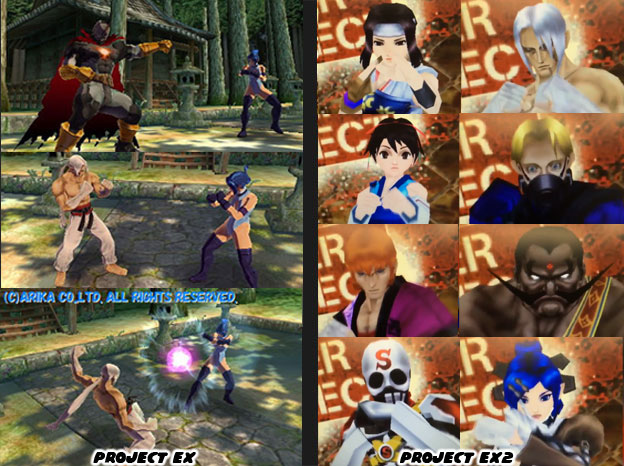
The arc that would have had Ryu fighting his inner demon and facing off against the man that killed his master was considered for Street Fighter III. A lot happened to Capcom in the early and mid-90s during the gold rush of the fighting game genre. As members of the Street Fighter team left Capcom to other companies they took some of those ideas meant for Ryu and Gouki. Having a main character that becomes overpowered and destroys a demon was explored in Street Fighter EX, and later on in the Fighting EX Layer series. Kairi was the surrogate for Ryu and Garuda was the stand-in for Gouki. In ARIKA's franchise it was established that there were supernatural elements in the universe, however the majority of the cast was still rooted in martial arts archetypes. So having some mysticism was welcome in their take of the franchise. The fighting game market imploded at the end of the '90s, and wouldn't recover for about a decade. In that time Capcom had new faces making bold decisions with established characters. In the history of fighting games I consider Gouki the greatest villain ever designed. In the history of the Street Fighter franchise however I only said he was the third most important.

Capcom established that Gouki had a "stronger" form called Shin Gouki, or true Gouki. This was the unleashed, no-holds-barred boss in Street Fighter Zero. More than 12 years later the character was revisited for Super Street Fighter IV: Arcade Edition. The new developers decided that they wanted to make him even more overpowered. Oni debuted, and Gouki went from having subtle lion cues to being an outright DragonBall Z villain. The blue skin, demonic features, and abilities made little to no sense for the character. This was the same type of thinking that went into the look of Kage. Evil Ryu was already a great design, especially with a smoldering crater in his chest from when Gouki tried to kill him. The look of Kage didn't really have enough elements to make him stand apart from Evil Ryu. Some people in the community even likened his glowing horns to cat ear headphones. This was hardly as intimidating as he was supposed to be. To be fair however, Capcom had been pursuing a redesign of Evil Ryu since Street Fighter IV.

Evil Ryu and Violent Ken were on the drawing board for Street Fighter IV, and each more or less looked like their traditional designs. There was nothing unrealistic or supernatural about their appearance. No wings, fangs, or horns smacking audiences in the face. Instead they each had attacks that were more aggressive or powerful than normal. They had just enough going for them to make them unique. The majority of their appearances were in the sprite-based games of the '90s. This look did not really deviate much until the introduction of Kage. In at least one draft of Kage he was so far removed from Ryu that he didn't even look like a Street Fighter character. If anything he looked like a monster that would have been featured in the manga and anime series Mob Psycho 100. In case you are not familiar with the series, the main character is named Shigeo Kageyama. He is a very plain-looking kid. He is so plain in fact that he is called Mob, a reference to the nobody background characters in most shows. Ryu could be considered similar to Mob, in that he looks like a plain "vanilla" karate fighter. Of course that perception changes when they use their awesome powers. Mob however also has a dark side that manifests from time to time.

If Mob loses control of his emotions he becomes a being made up of raging psychic energy. He no longer looks human in this form. He can be cruel and unstoppable in this form. In the story this makes sense, as series creator ONE has established that all sorts of psychic and metaphysical things are possible in his universe. Capcom doesn't have that luxury. The Street Fighter gang is not made up of ghost hunters. They are not exorcists but instead warriors. Dropping in a demon made of cracking energy would have been way out of left field. So much so that audiences would have pushed back on the design. As it is, they are lukewarm to the idea of Kage. What do you think of the character? Am I reading too much into it? I'd like to hear about it in the comments section. If you would like to sponsor me please visit my Patreon page and consider donating each month, even as little as $1 would help make better blogs and even podcasts!
Labels:
capcom,
demon,
evil possessed,
evil ryu,
garuda,
kage,
kairi,
mob,
mob psycho 100,
monster,
ONE,
ryu,
supernatural
Monday, June 18, 2018
30 years of Street Fighter: 30 years of Characters #13
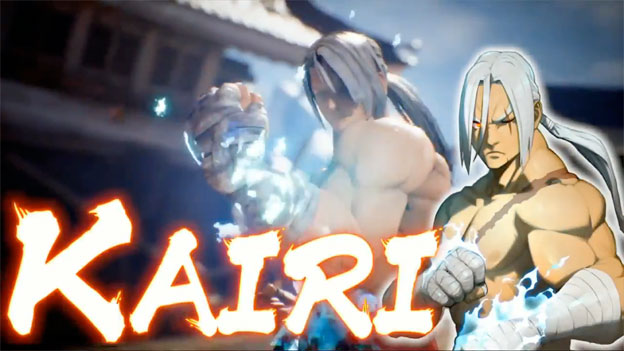
After 30 years of Street Fighter there were few characters as fascinating as Kairi. This boss-level figure struggled with personal (and literal) demons during the events of Street Fighter EX tournament. Very few in the universe had as complex a back story. His half-sister Hokuto / Shirase was certainly one of those rare exceptions. Kairi was a mysterious figure central to the plot of the EX series. He was an exceptional fighter but was suffering from amnesia. His look was unique, he wore a dark blue uniform, more ninja-like than karate. He was covered in scars and even had a large one over his eye. His super moves caused him great pain. He was tortured by the energy flowing within him. This caused him to evolve within the series. He went from an average character to someone with boss-level power between the first and second EX titles. If this sort of evolution sounds familiar there was a reason why.
Kairi was created by the staff at ARIKA, many of whom worked on Street Fighter II. Kairi was a star character and designed to be an evolved version of Ryu. A sort of second-take on the character. By the same token Allen Snider was designed to be a new version of Ken. Both fighters had similar inspirations, and similar origins. Capcom explored giving Ryu more power and more moves by turning him evil in the middle of the Street Fighter Zero / Alpha series. This was to demonstrate that Ryu could become a villain like Gouki / Akuma. It also set up the possibility that he could assume his role in continuity. Ryu was able to overcome his dark personae by the end of the Zero series. The same thing did not happen with Kairi. He gave in to his dark power and it made him much stronger. His hair even changed from black to white to signify this transformation.
What made Kairi unique was that he didn't become a villain. Instead he became a boss-level character that wasn't necessarily good or evil. He was a melancholy fighter that sought a challenge, and possibly death in battle. In EX canon he defeated Gouki as well as the demon Garuda. Kairi became a warrior without peer, destined to walk the path alone. I certainly look forward to how the character has evolved in the next EX game as well as how his relationship with his sisters has changed. Do you enjoy characters with unique stories as much as I do? I'd like to hear about your most memorable characters in the comments section. As always if you enjoyed this blog and would like to sponsor me please visit my Patreon page and consider donating each month, even as little as $1 would help make better blogs and even podcasts!
Sunday, June 10, 2018
30 years of Street Fighter, 30 Days of Characters; #21
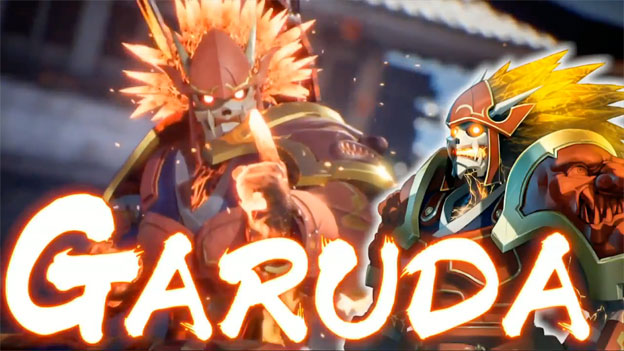
Can you believe I've celebrated many unique characters in the 30 year history of the Street Fighter universe and not once brought up a boss character? Well today that changes! We're looking at the most evil villain in franchise history. I am talking about a literal demon named Garuda. Now I know many of you are asking what about Gouki / Akuma? He did kill his brother and that is absolutely evil. Well Garuda is a killer as well, in fact he killed so many while alive that not even death could stop him. This character debuted in Street Fighter EX back in 1996 but his origin is centuries older.
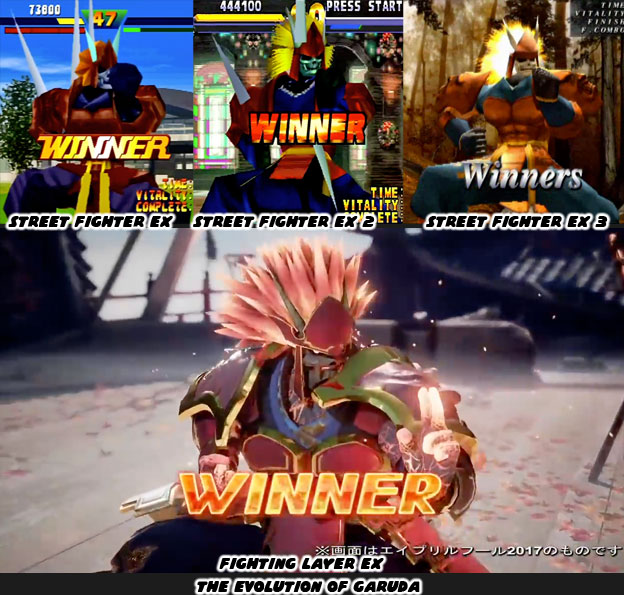
Garuda was a warrior during the Sengoku era in Japan (1467-1603). This was a very turbulent time with nonstop political strife and war all across Japan. This was the era that was the backdrop for countless movies, television shows and even a few dozen games. Garuda was a bloodthirsty samurai, killing many men in his wake. When he was struck down in combat he was furious, not because he was dying but because he could no longer continue killing. A demon was attracted to his rage and possessed the man, turning him into an undead killing machine. He was sort of the Jason Voorhees of feudal Japan. Garuda was eventually sealed away in a sacrificial ceremony where he remained for over 300 years. This seal was broken during the events of Street Fighter EX. What was unleashed was one of the most unique fighting game bosses in the history of the franchise.
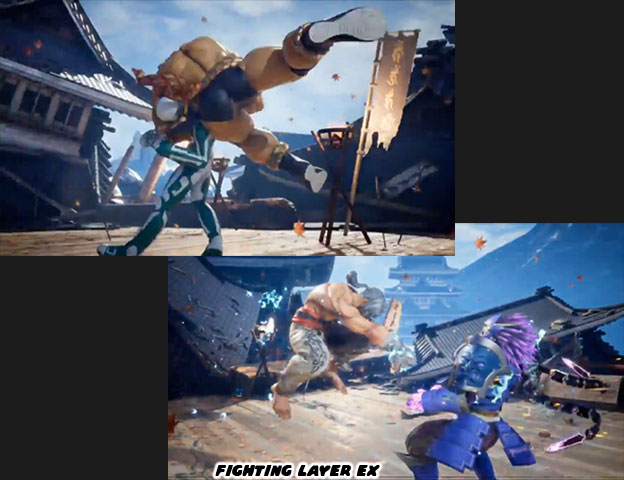
Garuda did not have a samurai sword to attack with but rather living metal spikes that would grow out of his skin and armor. He could spin like a whirlwind while slashing at opponents. He could impale opponents on his shoulders and then run them into the ground. He was insanely strong, able to slam any opponent easily. He could also teleport all over the stage avoiding a barrage from his enemies. Garuda demonstrated how the Street Fighters would hold up against a supernatural villain. There was nobody else like him before or after in franchise history. For these reasons and more we clebrate the living demon on the 30th Anniversary of Street Fighter. As always if you enjoyed this blog and would like to sponsor me please visit my Patreon page and consider donating each month, even as little as $1 would help make better blogs and even podcasts!
Sunday, August 13, 2017
Speculation on ARIKA's unnamed Street Fighter EX successor, part 2...
The Street Fighter EX series had always had a more spiritual tone compared to the other Street Fighter titles. In fact the same thing could be said about ARIKA's other game Fighting Layer. Many of the characters, good and bad, were inspired by regional mythology. The religious or spiritual practices of different Japanese cultures had an influence on the design behind Kairi, Garuda, Vold Ignitio and several other characters in both games. Kairi was a melancholy character who was tortured by his powers. Unlike Ken and Ryu who were able to harness their chi in energy wave attacks, or fireballs, every time Kairi used his energy attacks it took a toll on his spirit. His style of fighting may have been similar to Ken and Ryu’s but the origins were even older. His body was covered in scars and he was missing an eye. There was something terrible in his past that seemed to haunt him. He was suffering from amnesia and had no idea who he was or where he came from. During the events of the Street Fighter EX series was on a path looking to fight the greatest warriors or die in the process. Kairi's sister Hokuto, was tasked with bringing him back to the Mizugami clan, or killing him if she couldn't.
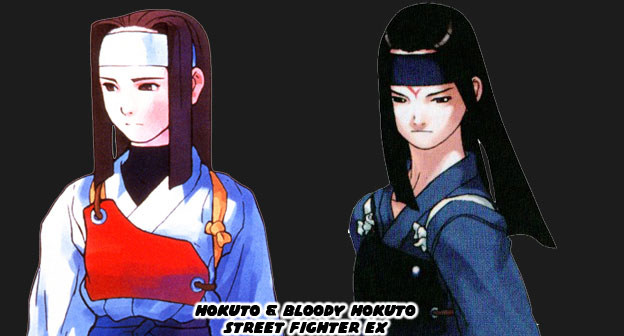
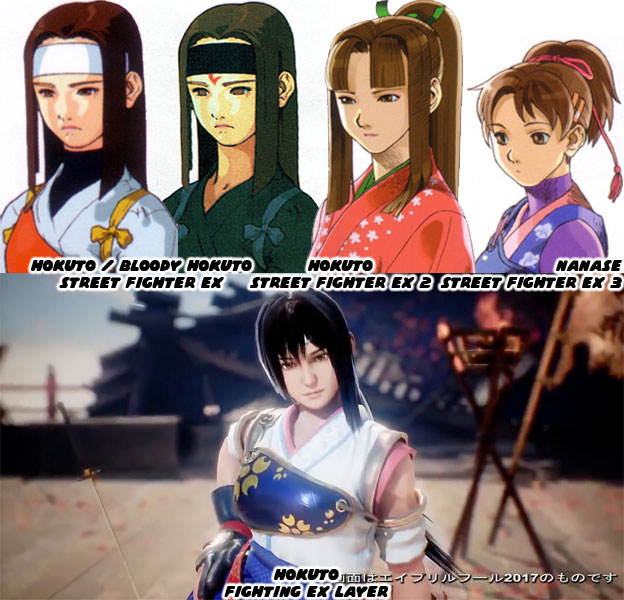
Hokuto looked like a kyudoka, a practitioner of traditional archery. She dressed very conservatively, wearing a costume that would have fit right into feudal Japan. It made sense given that she was responsible for the fate of her brother. Despite her uniform and archery glove she did not actually carry a bow and arrows. Instead she shot bolts of spiritual energy from her hands. Hokuto was also well versed in tessenjutsu, the fighting art of the war fan. People often mistook Hokuto as an akido practitioner considering how many of her moves were counters to traditional attacks. Hokuto had the ability to perform energy wave attacks but they did not harm her as they did her brother. Whether it was because of her training or something else was not explained at first. She was actually harboring a few secrets of her own, these were revealed over the course of the series.
Hokuto came from the same cursed blood as Kairi. She actually had a seal placed on her that prevented her from succumbing to the same killer instincts of her brother. There was a variation of the character that could be unlocked in Street Fighter EX Plus Alpha. This evil version was known as Bloody Hokuto. Her uniform was a stark black in this form. She even had a slightly darker skin tone. Darker colored characters usually denoted a hint of evil. This was a tradition observed in many different cultures and story telling techniques. It was one of the reasons why Gouki had skin that appeared dark red like clay. But I digress. A mark of evil was visible on her forehead. Her attacks were more aggressive and she even had the ability to perform the Renbu, or “death touch” attack. Bloody Hokuto even had her own unique stage and ending in the game.
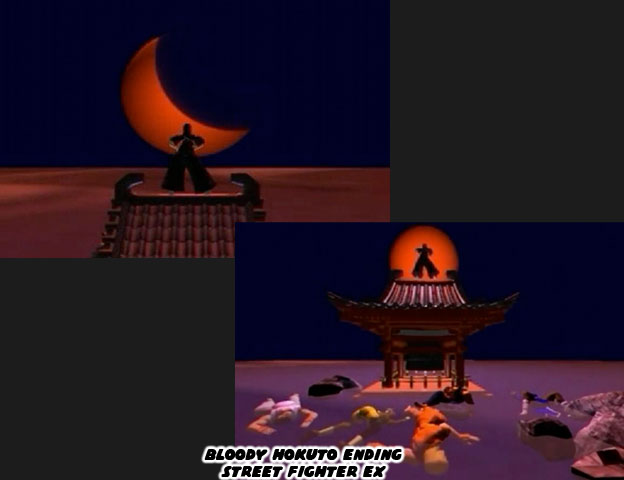
If Bloody Hokuto defeated all of the opponents in the EX tournament she was seen standing on top of a temple. The blood moon was in the background. All of the other rivals were dead on the floor. The whole nocturnal scene, twisted background and use of moon and darkness was the same symbolism featured with Kyo and Iori from the King of Fighters series. There was a reason for this. The mythology behind the orochi, an ancient demon that was bound to the moon was also loosely tied into the EX mythos. The Hayate clan had locked away the demon and was responsible for keeping it locked away. A character named Hayate appeared only once in the series, in Street Fighter EX2. He dressed like a samurai and was a sort of fighting priest. His special attacks allowed him to materialize swords out of thin air before dissipating as energy from his hands. It was a refined version of the same attacks Garuda used. Except that Garuda made spikes appear from his flesh, all over his body and even head. It turned out that the demon Garuda had escaped and was following Kairi. Whether Hayate was scheduled to be in the new game was unknown as of this writing.
Garuda was a mighty warrior that became possessed. He actually fed off the spirits of people that were defeated in battle. Since Kairi was destroying people left and right all Garuda had to do was follow behind and steal their essence, growing stronger along the way. I had talked about spirits possessing human bodies previously on this blog. In the Street Fighter EX series Kairi was on the path of being consumed by the energy within. A possessed person was known as a yorimashi. Gouki / Akuma for example could be considered a yorimashi. He was consumed by the evil energy or Dark Hadou. He kept this energy under his control as symbolized by the prayer beads he wore around his neck. Garuda was another such yorimashi, the person that he possessed probably died a long time ago. There was probably a reckoning between Kairi and Garuda planned for the climax of this game. How Hokuto would figure into the story was an important piece of the story.
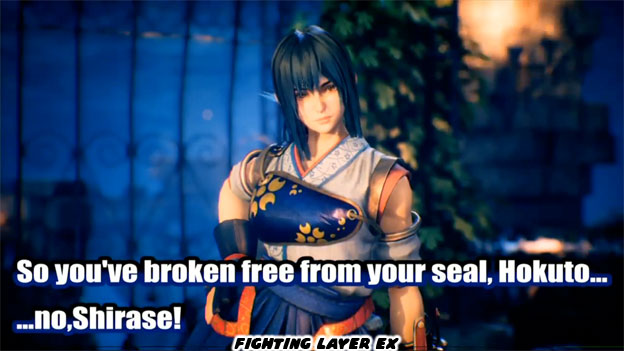
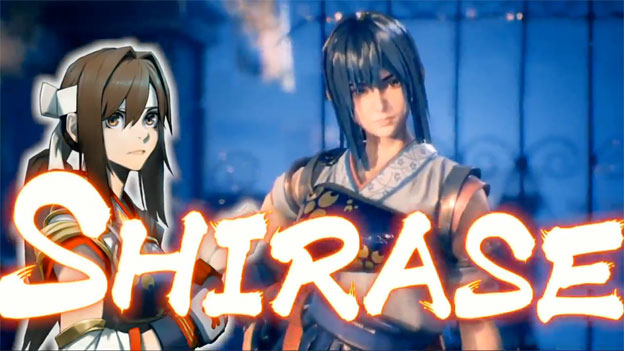
After 21 years since the debut of the EX series ARIKA had a confession to make. Hokuto was not the character’s real name. In fact she was an assassin that had been programmed to kill Kairi. Her real name was Shirase. About the only thing in her history that was true was that they were related. However Hokuto was only the half-sister of Kairi. Whether she was under the employment of the Mizugami, Hayate or other family had yet to be revealed. Then there was the question of the youngest member of the family, the little sister known as Nanase. Well she was in fact Kairi’s actual sister and Shirase’s half-sister. When her programming was revealed Shirase did something drastic, she wiped Nanase’s memory of her. How much remains of the family, and relationships between the three will hopefully be revealed in the game. There was no word on whether Nanase would return to the series. It would be interesting to see how the story progresses because of these developments.
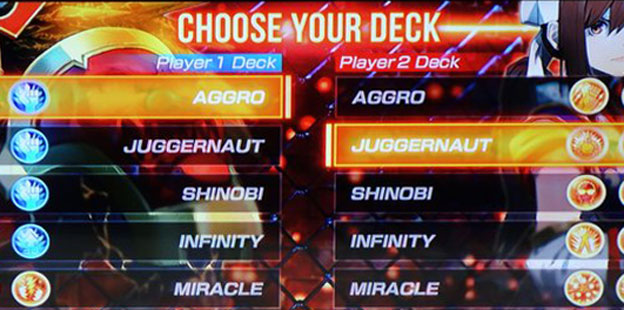
ARIKA was no stranger to supernatural character designs. When the studio created Fighting Layer they had heroes and villains with supernatural powers or supernatural origins. It was unknown (as of this writing) whether Shirase would have the full library of moves of Hokuto and Bloody Hokuto, or if there was a version of Bloody Shirase yet to be revealed. The characters in this game also had something called Gouji that they could tap into. The name of this game mechanic was based on a fruit called gouji, aka wolf berries in the west. These berries were said to be highly medicinal in value, they inspired the Senzu Beans in the Dragon Ball series. In the ARIKA game players wouldn’t take berries in the middle of a match but instead choose from a stack of five different gouji, little symbols that appeared next to the energy bar. They granted attributes that they could activate in battle. It could make attacks stronger, help buff defenses or maintain a high special meter. When this mechanic was unveiled at the EVO tournament many likened it to the Infinity Gems that players could use in Marvel vs Capcom: Infinite. It created an entirely new way to play and no two matches could even be similar with the number of different combinations players could use.
Gouji was the reason that Darun Mister survived his encounter with Garuda. He must have been superhumanly tough to have lived through the ordeal. Then after he recovered he wanted a rematch. The studio had roughly another seven months of development and there was plenty of time to balance the Gouji mechanic as well as expand the library of characters. One of the recently announced returning characters was another fan-favorite. He inspired me to talk a little bit more about what made the EX characters so memorable. We’ll take a look at this character in the next blog. As always if you enjoyed this blog and would like to sponsor me please visit my Patreon page and consider donating each month, even as little as $1 would help make better blogs and even podcasts!
Hokuto looked like a kyudoka, a practitioner of traditional archery. She dressed very conservatively, wearing a costume that would have fit right into feudal Japan. It made sense given that she was responsible for the fate of her brother. Despite her uniform and archery glove she did not actually carry a bow and arrows. Instead she shot bolts of spiritual energy from her hands. Hokuto was also well versed in tessenjutsu, the fighting art of the war fan. People often mistook Hokuto as an akido practitioner considering how many of her moves were counters to traditional attacks. Hokuto had the ability to perform energy wave attacks but they did not harm her as they did her brother. Whether it was because of her training or something else was not explained at first. She was actually harboring a few secrets of her own, these were revealed over the course of the series.
Hokuto came from the same cursed blood as Kairi. She actually had a seal placed on her that prevented her from succumbing to the same killer instincts of her brother. There was a variation of the character that could be unlocked in Street Fighter EX Plus Alpha. This evil version was known as Bloody Hokuto. Her uniform was a stark black in this form. She even had a slightly darker skin tone. Darker colored characters usually denoted a hint of evil. This was a tradition observed in many different cultures and story telling techniques. It was one of the reasons why Gouki had skin that appeared dark red like clay. But I digress. A mark of evil was visible on her forehead. Her attacks were more aggressive and she even had the ability to perform the Renbu, or “death touch” attack. Bloody Hokuto even had her own unique stage and ending in the game.
If Bloody Hokuto defeated all of the opponents in the EX tournament she was seen standing on top of a temple. The blood moon was in the background. All of the other rivals were dead on the floor. The whole nocturnal scene, twisted background and use of moon and darkness was the same symbolism featured with Kyo and Iori from the King of Fighters series. There was a reason for this. The mythology behind the orochi, an ancient demon that was bound to the moon was also loosely tied into the EX mythos. The Hayate clan had locked away the demon and was responsible for keeping it locked away. A character named Hayate appeared only once in the series, in Street Fighter EX2. He dressed like a samurai and was a sort of fighting priest. His special attacks allowed him to materialize swords out of thin air before dissipating as energy from his hands. It was a refined version of the same attacks Garuda used. Except that Garuda made spikes appear from his flesh, all over his body and even head. It turned out that the demon Garuda had escaped and was following Kairi. Whether Hayate was scheduled to be in the new game was unknown as of this writing.
Garuda was a mighty warrior that became possessed. He actually fed off the spirits of people that were defeated in battle. Since Kairi was destroying people left and right all Garuda had to do was follow behind and steal their essence, growing stronger along the way. I had talked about spirits possessing human bodies previously on this blog. In the Street Fighter EX series Kairi was on the path of being consumed by the energy within. A possessed person was known as a yorimashi. Gouki / Akuma for example could be considered a yorimashi. He was consumed by the evil energy or Dark Hadou. He kept this energy under his control as symbolized by the prayer beads he wore around his neck. Garuda was another such yorimashi, the person that he possessed probably died a long time ago. There was probably a reckoning between Kairi and Garuda planned for the climax of this game. How Hokuto would figure into the story was an important piece of the story.
After 21 years since the debut of the EX series ARIKA had a confession to make. Hokuto was not the character’s real name. In fact she was an assassin that had been programmed to kill Kairi. Her real name was Shirase. About the only thing in her history that was true was that they were related. However Hokuto was only the half-sister of Kairi. Whether she was under the employment of the Mizugami, Hayate or other family had yet to be revealed. Then there was the question of the youngest member of the family, the little sister known as Nanase. Well she was in fact Kairi’s actual sister and Shirase’s half-sister. When her programming was revealed Shirase did something drastic, she wiped Nanase’s memory of her. How much remains of the family, and relationships between the three will hopefully be revealed in the game. There was no word on whether Nanase would return to the series. It would be interesting to see how the story progresses because of these developments.
ARIKA was no stranger to supernatural character designs. When the studio created Fighting Layer they had heroes and villains with supernatural powers or supernatural origins. It was unknown (as of this writing) whether Shirase would have the full library of moves of Hokuto and Bloody Hokuto, or if there was a version of Bloody Shirase yet to be revealed. The characters in this game also had something called Gouji that they could tap into. The name of this game mechanic was based on a fruit called gouji, aka wolf berries in the west. These berries were said to be highly medicinal in value, they inspired the Senzu Beans in the Dragon Ball series. In the ARIKA game players wouldn’t take berries in the middle of a match but instead choose from a stack of five different gouji, little symbols that appeared next to the energy bar. They granted attributes that they could activate in battle. It could make attacks stronger, help buff defenses or maintain a high special meter. When this mechanic was unveiled at the EVO tournament many likened it to the Infinity Gems that players could use in Marvel vs Capcom: Infinite. It created an entirely new way to play and no two matches could even be similar with the number of different combinations players could use.
Gouji was the reason that Darun Mister survived his encounter with Garuda. He must have been superhumanly tough to have lived through the ordeal. Then after he recovered he wanted a rematch. The studio had roughly another seven months of development and there was plenty of time to balance the Gouji mechanic as well as expand the library of characters. One of the recently announced returning characters was another fan-favorite. He inspired me to talk a little bit more about what made the EX characters so memorable. We’ll take a look at this character in the next blog. As always if you enjoyed this blog and would like to sponsor me please visit my Patreon page and consider donating each month, even as little as $1 would help make better blogs and even podcasts!
Labels:
arika,
bigmex,
bloody hokuto,
capcom,
demon,
fighting game,
fighting layer,
game design,
garuda,
gouji,
hokuto,
kairi,
samurai,
shinto,
shirase,
spirits,
street fighter ex
Thursday, August 10, 2017
Speculation on ARIKA's unnamed Street Fighter EX successor, part 1...
Like I said in the previous series, it's a great time to be a fan of fighting games. There are many good titles out right now and many more scheduled for the future. One of which I have a very close watch on is the Untitled fighting game by ARIKA. I've called it Fighting EX Layer in the past and other people are calling it Fighting Layer EX (FLEX for short). It features the new characters from the Street Fighter EX series, and not the ones created by Capcom. ARIKA had been teasing the next Street Fighter EX game for years. They would do this on April Fool's day almost like clockwork. They would get the hopes up of fighting game fans with a screenshot, trailer or even actual gameplay footage. Then a few days later they would pretend like nothing happened. Offering no release dates or other information on the game. This year was no exception. They released a short trailer on April Fool's day and even did a live demo of the game-in-progress. Previous demos were on Nintendo 3DS hardware, this time the demo was on a development kit for the Playstation 4.
ARIKA's last original arcade fighter was Fighting Layer in 1998 and their last console fighting game was Street Fighter EX 3 in 2000. They did have a hand in developing other fighting games for consoles and handhelds but none featuring their own IP. Something was different about the most recent April Fool's. The demo was so well done that many speculated that the studio was actually working on a new fighting game. This was proven to be true a few months later when they released a longer trailer during the EVO tournament. This trailer included more returning Street Fighter EX characters and even a hint to the story mode. At the end we learned many things.
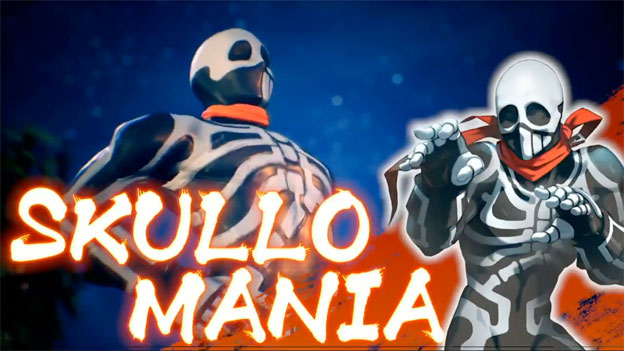
The game was a Playstation 4 exclusive. There will be a beta / online test by the end of 2017. The studio hoped to have a full release by April Fools Day 2018. The game did not have an official title yet but I certainly hope they considered FLEX. The extended trailer gave audiences the first glimpse of a couple of classic characters. The first one revealed was a personal favorite and one that had a cult-like following in the fighting game community. Skullomania was definitely a character out of left field. The salary-man-turned-circus acrobat-turned-superhero had a unique design. He looked and moved unlike any other character before or since. His assortment of diving and tumbling moves was fresh. The character was so far beyond the definition of a martial arts master that he was very much like what Blanka or Dhalsim were to the Street Fighter II lineup.
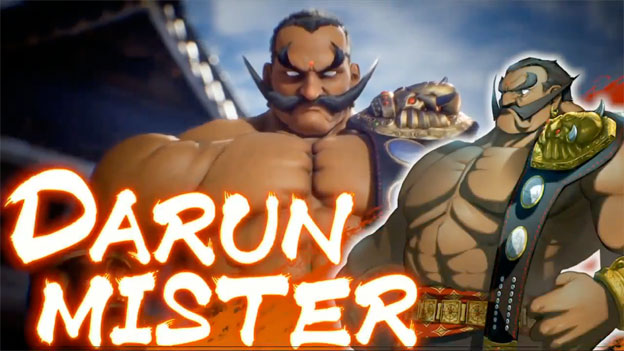
The other big reveal was Darun Mister. The wrestler in the series was on par with Zangief and I believe he had a better overall design than the Russian. In the EX series Darun was the bodyguard of the globe-trotting Pullum Purna. The Indian Darun and Saudi Pullum were a colorful addition to the lineup. In this latest update Darun had left his job as a bodyguard after the god of Indian wrestling spoke to him in a dream. He flew to Japan to fight the strongest opponent he could. Garuda the demon beat him severely and left him for dead. Darun recovered and now wants revenge. The redesigned Darun, along with the updated designs for the rest of the cast look amazing.
More characters were expected to be revealed throughout the summer. The developments in the story were tremendous. There was much more drama this time around and for a few characters there was a lot more at stake. We'll explore these in the next blog. As always if you enjoyed this blog and would like to sponsor me please visit my Patreon page and consider donating each month, even as little as $1 would help make better blogs and even podcasts!
ARIKA's last original arcade fighter was Fighting Layer in 1998 and their last console fighting game was Street Fighter EX 3 in 2000. They did have a hand in developing other fighting games for consoles and handhelds but none featuring their own IP. Something was different about the most recent April Fool's. The demo was so well done that many speculated that the studio was actually working on a new fighting game. This was proven to be true a few months later when they released a longer trailer during the EVO tournament. This trailer included more returning Street Fighter EX characters and even a hint to the story mode. At the end we learned many things.
The game was a Playstation 4 exclusive. There will be a beta / online test by the end of 2017. The studio hoped to have a full release by April Fools Day 2018. The game did not have an official title yet but I certainly hope they considered FLEX. The extended trailer gave audiences the first glimpse of a couple of classic characters. The first one revealed was a personal favorite and one that had a cult-like following in the fighting game community. Skullomania was definitely a character out of left field. The salary-man-turned-circus acrobat-turned-superhero had a unique design. He looked and moved unlike any other character before or since. His assortment of diving and tumbling moves was fresh. The character was so far beyond the definition of a martial arts master that he was very much like what Blanka or Dhalsim were to the Street Fighter II lineup.
The other big reveal was Darun Mister. The wrestler in the series was on par with Zangief and I believe he had a better overall design than the Russian. In the EX series Darun was the bodyguard of the globe-trotting Pullum Purna. The Indian Darun and Saudi Pullum were a colorful addition to the lineup. In this latest update Darun had left his job as a bodyguard after the god of Indian wrestling spoke to him in a dream. He flew to Japan to fight the strongest opponent he could. Garuda the demon beat him severely and left him for dead. Darun recovered and now wants revenge. The redesigned Darun, along with the updated designs for the rest of the cast look amazing.
More characters were expected to be revealed throughout the summer. The developments in the story were tremendous. There was much more drama this time around and for a few characters there was a lot more at stake. We'll explore these in the next blog. As always if you enjoyed this blog and would like to sponsor me please visit my Patreon page and consider donating each month, even as little as $1 would help make better blogs and even podcasts!
Friday, May 5, 2017
Teasing the next Street Fighter EX and Fighting Layer, part 2
The previous blog celebrated the teaser that ARIKA gave us of Fighting EX Layer. If it was an April Fools joke then it was a very well produced one, it raised the hopes of thousands of players around the world. Even if the studio had no plans on releasing the game we could still learn a lot about storytelling through the character designs. I was discussing the Mizukami family; Kairi, Hokuto and Nanase in the previous blog. I had also mentioned that the Street Fighter EX and Fighting Layer were built on a universe filled with mystical characters and spiritual arts. In the genre it was not the only game to feature these types of figures.
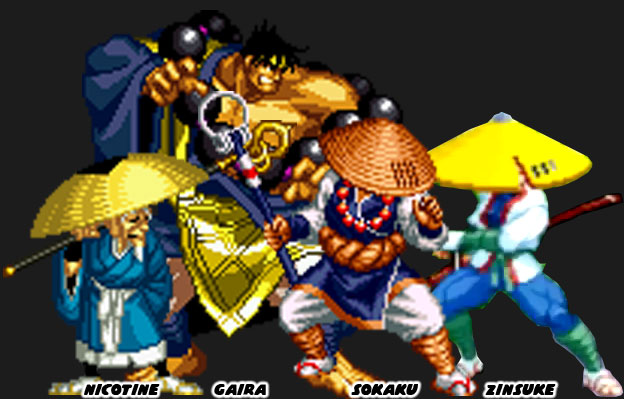
Buddhist and Shinto monks had been featured in pop culture for decades. These mysterious robed men were popular in action cinema and animé. Their identity was hid under a large bamboo straw hat, called a takuhatsugasa, and they were often experienced in the martial arts. Usually it was some form of Shaolin Kung-Fu. When the Chinese settled in parts of Japan they brought with them their religions too. Before karate was synonymous with the “empty hand” techniques it was actually associated with “Chinese fist.” That is to say the oldest schools of karate in Japan were founded on Zen Buddhist principles. The lion's share of fighting monks appeared in the SNK universe. Nicotine Caffeine debuted in the 1994 smash hit Samurai Shodown II. It was a game set a few centuries ago in feudal Japan. He would have been a period appropriate character. His massive grandson Gaira Caffeine appeared the following year in Samurai Shodown 3. Both Nicotine and Gaira wore variations of traditional monk clothing. Nicotine could summon powerful spirits to fight on his behalf whereas Gaira used bowling ball-sized prayers beads to flatten opponents. Zinsuke was a samurai-like-monk that appeared in the game Asura Buster: Eternal Warriors by Fuuki Co. Ltd. Monks were not permitted to carry weapons, and especially not swords as part of their code. Asura Buster was set in a fantasy world so that different designs elements worked for the character. In 1995 SNK also debuted another fighting monk, Sokaku Mochizuki. This character had all the trappings of a classical monk and would have fit into the Samurai Shodown universe. Yet he appeared in Fatal Fury 3, which was based in the modern era. It turned out that the uniform actually hadn't changed much in centuries.
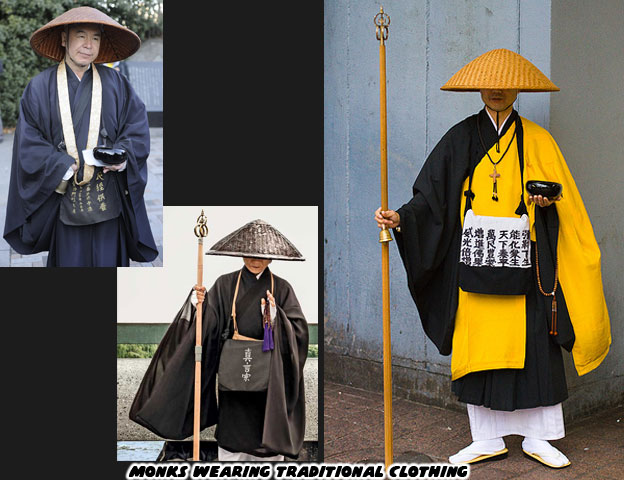
To this day Buddhist monks still traveled through Asia and served in temples both ancient and modern. If they were on a pilgrimage they would wear a motsuke or robe. Their takuhatsugasa was wide for a reason, it protected the monk from the elements, but it also shielded their face to protect their identity. In many regions practicing and outside religion was against the law. Secrecy was for the safety of the practitioner or followers. The large hat also shielded the monk from distractions and noise so that they could mediate. Monks sometimes traveled with a khakkhara. This was a ringed "sounding staff" that had originated in India. The number of rings, 4, 6 or 12 was more than an ornament. They symbolized the Four Truths, the Six Perfections or the 12 chains of cause and effect. Only the Buddha would wield a 12-ring staff. When the monk walked with the staff it would ring. The sound would warn small animals to stay out of the path or alert people that there was a monk nearby. Although not widely practiced anymore by Buddhist monks there was an actual form of fighting associated with the khakkhara. It differed slightly from the forms used with a staff or spade, which monks were also allowed to fight with. Having Nicotine use it as a weapon in game was actually authentic.
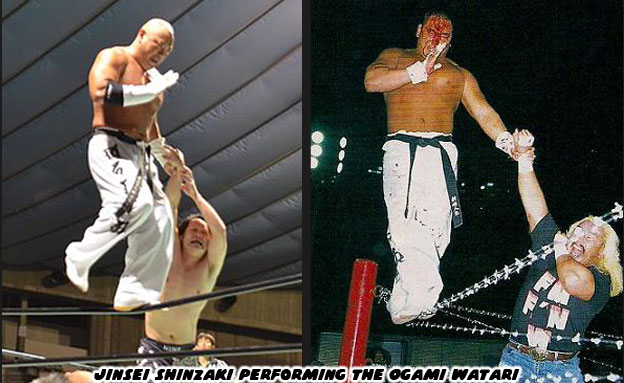
The legend of the fighting monk grew in pop culture until it was even associated with pro wrestling. Jinsei Shinzaki, aka Hakushi in the WWF/E, was an exceptional Japanese performer. Having studied under the “lucharesu” school which combined the high flying acrobatics of Mexico’s lucha libra with the hard striking of Japan’s puroresu (pro wrestling). He was a well-rounded fighter. If his opponent came at him with strikes and grapples then he had a counter attack ready. If his opponent was a fast worker and wanted to perform death defying moves then he too could launch himself off the top rope. Mr. Shinzaki could always be counted on to perform well in a match. He was very serious in and out of the ring and never broke character. He was portrayed as a fighting monk and would power bomb and slam his opponents and then follow up with a prayer. One of his trademark moves, the ogami watari, was an arm twist rope walk that ended in a flying chop. As he walked along the top rope he would pray aloud. He did this move in just about every type of ring set up, including hardcore “death” matches where the ropes would be replaced with razor wire. He was doing this move in Japan at about the same time the Undertaker was using it in the USA. The two actually had a rivalry which worked because they were both using a similar persona. In many Asian countries people only wore white at religious ceremonies if there was a funeral. Jinsei was like a monk praying for those about to die, usually his opponents. By the same token the Undertaker was a sort of ghostly monster in the USA. You could expect him to bury his opponents as well. In real life Mr. Shinzaki was as generous as you could expect a monk to be. After the 2011 Tohoku earthquake and tsunami he actually spend weeks delivering food and water to those displaced by the disaster, most of it coming from his savings.
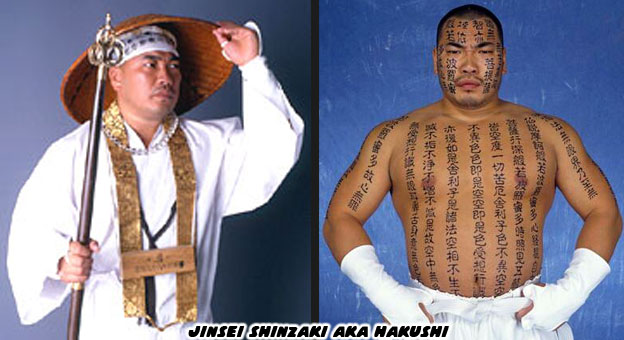
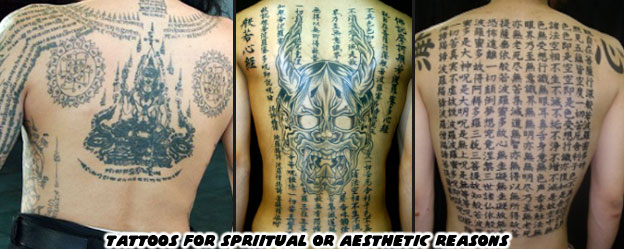
Sometimes Jinsei would go all-out for his character. He would wear the full monk costume and walk with a khakkhara to the ring. Sometimes his face and body were covered in shakyo or calligraphic characters. The messages written on his body were sutras or scripture. These showed humility and piety for his belief. In Buddhism practitioners would write down shakyo as a form of reverence. Families could commission monks and nuns to write down scripture to honor their family or loved ones. Although not practiced widely there have been many examples of tattooed shakyo written on people over the centuries. In Japan the practice of carved tattoos, called horimono, extended back to the Jomon era. These tattoos were thought to have spiritual connotations and had appeared more than 10,000 years ago. Some people did indeed tattoo their faces as well as bodies with elaborate designs. About 2000 years ago Chinese travelers to Japan had recorded these tattoos on the native Japanese and saw that they were associated with status. Only later on did tattoos start to have a negative association in society. This was because criminals were tattooed for various offenses. Regular people wouldn’t hire these people however the criminal underworld, better known as the yakuza would. To this day you can still find examples of irezumi, Japanese tattoos, that incorporate shakyo for decoration, or devotion. A mantra and symbol of Buddha or even Hindu Dharmas could be found tattooed on people all over the world.
There is a reason why I bring up all of this history. As the EX series progressed the spiritual themes became more relevant to the development of the game. Only the Samurai Showdown series had invested more mysticism into their canon. Garuda had some very distinct Buddhist symbolism associated with him. His sitting lotus position, that he teleported around the stage with, and even the actual lotus flower, a symbol of purity were seen in his animations and endings. I had described the origins of Kairi and his spiritual powers as well on previous blogs. Kairi and Hokuto had a unique bond. They were both monk-like in their training. Yet their relationship was more profound than anyone in Street Fighter. Ken and Ryu might consider themselves brothers but the Mizukami characters were actual (cursed) blood relatives. Imagine how different the Street Fighter series would have been if Ryu and Chun-Li were brother and sister. Imagine the heartbreak of Chun-Li if her brother had become a murderer. If she remained loyal to her job as an officer then she would have to arrest him, or worse, kill him in the line of duty. This was the type of character development that made the EX series so unique. This was something that the former Street Fighter II developers were thinking out lout. The lead characters were related, and they were both the heroes and villains of the universe. The drama that pulled audiences in was built because of this bond. The curse was something that would destroy the family or unite it. I think the latter was entirely possible. Kairi was headed for self-destruction at the end of the first EX game. Unless Hokuto could intervene there wouldn’t be much left of him to save.
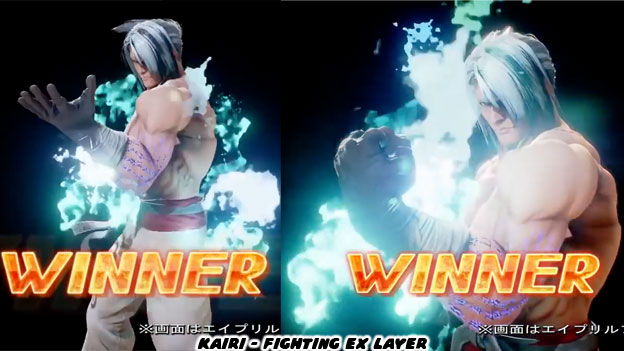
Between Street Fighter EX 3 and Fighting EX Layer something did change. Kairi had defeated Gouki, and had elevated his powers in the process. Kairi no longer performed like a tortured soul. It was obvious in his new animations and the moves that ARIKA demonstrated on April 1. I believe the secret to his evolution lay in the marks on his arms. He now had shakyo tattoos on his wrists when previously he had none. These markings must have placed the evil energy driving him mad under his command. The spiritual forces were confined to his hands and not in his mind. He was fully in control of his abilities yet unlike Garuda these strikes were not centered around maiming an opponent. In a previous blog I mentioned how spirits could be bound to objects and people. Kairi was a "yorimashi" or a possessed person. The shakyo tattoos bent the spirits to his will. In shinto tradition it could have been a rope belt or blessed paper streamers to do that as well. Gouki by contrast used prayer beads to keep control of the evil spirits within him.
Kairi had achieved a strength of boss character and established an entirely new template. He was not bent on global domination, that was Gill and the Dictator’s hang up. He had become a master, a sort of anti-Gouki. He had little interest in tracking down the most powerful Street Fighters. If they wanted a challenge then they would have to seek him out. How this would effect the relationship between himself and his sisters would have to be explored in the actual games. The Fighting EX Layer reveal also introduced something else to the fighting game conversation. We will look at this in the next entry. As always if you enjoyed this blog and would like to sponsor me please visit my Patreon page and consider donating each month, even as little as $1 would help make better blogs and even podcasts!
Buddhist and Shinto monks had been featured in pop culture for decades. These mysterious robed men were popular in action cinema and animé. Their identity was hid under a large bamboo straw hat, called a takuhatsugasa, and they were often experienced in the martial arts. Usually it was some form of Shaolin Kung-Fu. When the Chinese settled in parts of Japan they brought with them their religions too. Before karate was synonymous with the “empty hand” techniques it was actually associated with “Chinese fist.” That is to say the oldest schools of karate in Japan were founded on Zen Buddhist principles. The lion's share of fighting monks appeared in the SNK universe. Nicotine Caffeine debuted in the 1994 smash hit Samurai Shodown II. It was a game set a few centuries ago in feudal Japan. He would have been a period appropriate character. His massive grandson Gaira Caffeine appeared the following year in Samurai Shodown 3. Both Nicotine and Gaira wore variations of traditional monk clothing. Nicotine could summon powerful spirits to fight on his behalf whereas Gaira used bowling ball-sized prayers beads to flatten opponents. Zinsuke was a samurai-like-monk that appeared in the game Asura Buster: Eternal Warriors by Fuuki Co. Ltd. Monks were not permitted to carry weapons, and especially not swords as part of their code. Asura Buster was set in a fantasy world so that different designs elements worked for the character. In 1995 SNK also debuted another fighting monk, Sokaku Mochizuki. This character had all the trappings of a classical monk and would have fit into the Samurai Shodown universe. Yet he appeared in Fatal Fury 3, which was based in the modern era. It turned out that the uniform actually hadn't changed much in centuries.
To this day Buddhist monks still traveled through Asia and served in temples both ancient and modern. If they were on a pilgrimage they would wear a motsuke or robe. Their takuhatsugasa was wide for a reason, it protected the monk from the elements, but it also shielded their face to protect their identity. In many regions practicing and outside religion was against the law. Secrecy was for the safety of the practitioner or followers. The large hat also shielded the monk from distractions and noise so that they could mediate. Monks sometimes traveled with a khakkhara. This was a ringed "sounding staff" that had originated in India. The number of rings, 4, 6 or 12 was more than an ornament. They symbolized the Four Truths, the Six Perfections or the 12 chains of cause and effect. Only the Buddha would wield a 12-ring staff. When the monk walked with the staff it would ring. The sound would warn small animals to stay out of the path or alert people that there was a monk nearby. Although not widely practiced anymore by Buddhist monks there was an actual form of fighting associated with the khakkhara. It differed slightly from the forms used with a staff or spade, which monks were also allowed to fight with. Having Nicotine use it as a weapon in game was actually authentic.
The legend of the fighting monk grew in pop culture until it was even associated with pro wrestling. Jinsei Shinzaki, aka Hakushi in the WWF/E, was an exceptional Japanese performer. Having studied under the “lucharesu” school which combined the high flying acrobatics of Mexico’s lucha libra with the hard striking of Japan’s puroresu (pro wrestling). He was a well-rounded fighter. If his opponent came at him with strikes and grapples then he had a counter attack ready. If his opponent was a fast worker and wanted to perform death defying moves then he too could launch himself off the top rope. Mr. Shinzaki could always be counted on to perform well in a match. He was very serious in and out of the ring and never broke character. He was portrayed as a fighting monk and would power bomb and slam his opponents and then follow up with a prayer. One of his trademark moves, the ogami watari, was an arm twist rope walk that ended in a flying chop. As he walked along the top rope he would pray aloud. He did this move in just about every type of ring set up, including hardcore “death” matches where the ropes would be replaced with razor wire. He was doing this move in Japan at about the same time the Undertaker was using it in the USA. The two actually had a rivalry which worked because they were both using a similar persona. In many Asian countries people only wore white at religious ceremonies if there was a funeral. Jinsei was like a monk praying for those about to die, usually his opponents. By the same token the Undertaker was a sort of ghostly monster in the USA. You could expect him to bury his opponents as well. In real life Mr. Shinzaki was as generous as you could expect a monk to be. After the 2011 Tohoku earthquake and tsunami he actually spend weeks delivering food and water to those displaced by the disaster, most of it coming from his savings.
Sometimes Jinsei would go all-out for his character. He would wear the full monk costume and walk with a khakkhara to the ring. Sometimes his face and body were covered in shakyo or calligraphic characters. The messages written on his body were sutras or scripture. These showed humility and piety for his belief. In Buddhism practitioners would write down shakyo as a form of reverence. Families could commission monks and nuns to write down scripture to honor their family or loved ones. Although not practiced widely there have been many examples of tattooed shakyo written on people over the centuries. In Japan the practice of carved tattoos, called horimono, extended back to the Jomon era. These tattoos were thought to have spiritual connotations and had appeared more than 10,000 years ago. Some people did indeed tattoo their faces as well as bodies with elaborate designs. About 2000 years ago Chinese travelers to Japan had recorded these tattoos on the native Japanese and saw that they were associated with status. Only later on did tattoos start to have a negative association in society. This was because criminals were tattooed for various offenses. Regular people wouldn’t hire these people however the criminal underworld, better known as the yakuza would. To this day you can still find examples of irezumi, Japanese tattoos, that incorporate shakyo for decoration, or devotion. A mantra and symbol of Buddha or even Hindu Dharmas could be found tattooed on people all over the world.
There is a reason why I bring up all of this history. As the EX series progressed the spiritual themes became more relevant to the development of the game. Only the Samurai Showdown series had invested more mysticism into their canon. Garuda had some very distinct Buddhist symbolism associated with him. His sitting lotus position, that he teleported around the stage with, and even the actual lotus flower, a symbol of purity were seen in his animations and endings. I had described the origins of Kairi and his spiritual powers as well on previous blogs. Kairi and Hokuto had a unique bond. They were both monk-like in their training. Yet their relationship was more profound than anyone in Street Fighter. Ken and Ryu might consider themselves brothers but the Mizukami characters were actual (cursed) blood relatives. Imagine how different the Street Fighter series would have been if Ryu and Chun-Li were brother and sister. Imagine the heartbreak of Chun-Li if her brother had become a murderer. If she remained loyal to her job as an officer then she would have to arrest him, or worse, kill him in the line of duty. This was the type of character development that made the EX series so unique. This was something that the former Street Fighter II developers were thinking out lout. The lead characters were related, and they were both the heroes and villains of the universe. The drama that pulled audiences in was built because of this bond. The curse was something that would destroy the family or unite it. I think the latter was entirely possible. Kairi was headed for self-destruction at the end of the first EX game. Unless Hokuto could intervene there wouldn’t be much left of him to save.
Between Street Fighter EX 3 and Fighting EX Layer something did change. Kairi had defeated Gouki, and had elevated his powers in the process. Kairi no longer performed like a tortured soul. It was obvious in his new animations and the moves that ARIKA demonstrated on April 1. I believe the secret to his evolution lay in the marks on his arms. He now had shakyo tattoos on his wrists when previously he had none. These markings must have placed the evil energy driving him mad under his command. The spiritual forces were confined to his hands and not in his mind. He was fully in control of his abilities yet unlike Garuda these strikes were not centered around maiming an opponent. In a previous blog I mentioned how spirits could be bound to objects and people. Kairi was a "yorimashi" or a possessed person. The shakyo tattoos bent the spirits to his will. In shinto tradition it could have been a rope belt or blessed paper streamers to do that as well. Gouki by contrast used prayer beads to keep control of the evil spirits within him.
Kairi had achieved a strength of boss character and established an entirely new template. He was not bent on global domination, that was Gill and the Dictator’s hang up. He had become a master, a sort of anti-Gouki. He had little interest in tracking down the most powerful Street Fighters. If they wanted a challenge then they would have to seek him out. How this would effect the relationship between himself and his sisters would have to be explored in the actual games. The Fighting EX Layer reveal also introduced something else to the fighting game conversation. We will look at this in the next entry. As always if you enjoyed this blog and would like to sponsor me please visit my Patreon page and consider donating each month, even as little as $1 would help make better blogs and even podcasts!
Wednesday, May 3, 2017
Teasing the next Street Fighter EX and Fighting Layer, part 1
On April 1, 2017 ARIKA studios did a live demonstration of a game called Fighting EX Layer. It was a successor to their popular Street Fighter EX and Fighting Layer games. When it came to April Fools jokes ARIKA has consistently gone above and beyond. Previously the studio teased a Street Fighter EX remake on the Game Boy 3DS. They had also shown off the character select screen for a Street Fighter EX 2 remake they were allegedly working on. None of the games they teased has actually been released. The fact that they would make a working game engine just to pull off the prank was commendable. Yet there was something different about teasing this new build. It came at a time where even Capcom was acknowledging the Street Fighter EX legacy characters.
Prior to this April Fools it was understood that ARIKA and Capcom were not on the friendliest terms. ARIKA was founded by a former Capcom staffer, Akira Nishitani. He was one of the lead designers on Street Fighter II and he took a good portion of his team when he left the studio. He developed and proposed the first 3D Street Fighter game, it was labeled EX so that audiences wouldn't confuse it for one of the numbered Capcom titles. It also revolved around the EX tournament rather than the Street Fighter tournament. The original World Warriors (except for Blanka) appeared in EX, as did Sakura who had made her debut in Street Fighter Zero 2 at around the same time. They were paired off against an entirely new cast of characters. It was the last time the majority of the Street Fighter II team would work together. Some legal and licensing issues popped up around 1998 during the release of Fighting Layer. ARIKA wanted to expand their catalog so they developed a new arcade game that would be published by Namco. This new game featured two EX characters, Blair Dame and Allen Snider. By doing this the company wanted to build their library of characters. The assumption was that they could cross over in the future. ARIKA owned the rights to the new characters created for Street Fighter EX. We assume that they also owned the new characters created for Fighting Layer. They were technically allowed to use them in other games. This was a problem for Capcom because Namco was a perennial rival. If ARIKA wanted they could have featured a character or two in the Tekken series. This would have been great for fighting game fans but would have been a thorn in the side of Capcom. I don't know if there was a non-compete agreement between Capcom and ARIKA but many noticed that there was tension between the two companies after Fighting Layer. The speculation was that ARIKA had to take Capcom to court to ensure the EX series would be published per their previous agreements.
For almost 20 years neither studio mentioned the other, except when interviewed for the occasional Street Fighter retrospective. When they did that they were always cordial. In recent years ARIKA had began teasing their fans with rumors of a new EX game. They made sure to highlight their own characters and not the Capcom stars. About a year ago during the development of Street Fighter V (SFV) Capcom began releasing official character art. The studio not only released illustrations of the SFV cast, but they also began releasing illustrations of the supporting characters. Then they started releasing art for the Street Fighter IV cast, Street Fighter III and the original SF lineup. The Street Fighter Zero / Alpha characters and Final Fight cast soon followed. These were under the umbrella of the "Street Fighter Universe." The company wanted to canonize their official cast. Then Capcom did something unexpected, they released brand new art for "Other Title" characters. These were the EX and Capcom Fighting All-Star characters. It was as if Hell had frozen over. Capcom had acknowledged that there had been an EX cast and ARIKA was teasing a new EX game. Fans online were hoping that the two companies were working on a reconciliation. Perhaps with new producers, and the fact that fighting games are popular once again, both companies were considering a compromise. Stranger things had happened. I mean who could have ever predicted that the Tekken and Street Fighter characters would cross over in a versus title. Or that Gouki / Akuma would not only be a surprise character in Tekken 7, but that he would be important to the plot of the game.
I couldn't say if either Capcom or ARIKA had the resources to pull off a new EX game even if they wanted to. Don't forget that DIMPS did most of the development on Street Fighter IV and V. It would take the combined efforts of both Capcom and ARIKA to create a proper EX reboot. Before any development began the legalities of which characters to feature would be a chore. Audiences wanted Street Fighters and EX masters, but would they welcome any Fighting Layer characters as well? I for one would like to see Exodus hit a chair shot on an opponent at least one more time. Also, the canon of the EX series meant that at least one of the most popular villains would not appear. Kairi was the star of the EX universe. He was a much more tortured soul than Ryu ever was. Kairi had cursed blood and it caused him to lose control of himself. He would not only severely injure opponents in fights but he would often injure himself. He suffered from amnesia and at the end of the first EX tournament he killed Gouki and evolved into an even more powerful version of himself. Plenty of Street Fighter fans could never imagine that anybody but Ryu would be capable of defeating Gouki. Not only that but it made more sense for either Ryu or Ken to avenge the death of their master than a stranger introduced in EX. Yet that was the canon that ARIKA established and that’s why it exists in a different timeline / different continuity than the numbered SF series.
ARIKA was much more heavily influenced by the mystical elements of the fighting arts. By comparison the SF series was rooted more in science. The Dictator and his Shadowlaw / Shadaloo organization were unlocking the secrets of the martial arts masters through medical experiments. They used drugs, hypnosis and even cloning to crack the secrets of the ancient masters. There was a rational, scientific explanation for all of the amazing things that the fighters were capable of in that world. The EX universe was much more open to metaphysical origins. There were spirits, monsters and demons inhabiting the EX / Fighting Layer world. Garuda, designed to be the ultimate evil was demon animating some ancient samurai armor. It was assumed that he possessed the body of a human and turned him immortal. He could summon blades from his flesh and impale opponents with them. The powers that Kairi exploited were from a dark dimension and not meant for humans to control. It was possible that these energies came from the same place that Garuda had emerged from. Each time Kairi performed his special moves it took a toll on his body and spirit. By contrast Ryu could control his abilities and did not suffer any ill effects as they were from the natural world. Both characters however did have a light and a dark side. If Ryu used the forbidden techniques taught to him by his master then he opened himself to the Dark Hadou, a corrupting force. If Ryu gave in to the dark energy then he would become “Evil” and end up like Gouki. Kairi ended up having an almost opposite approach to this design. His “good” self, when he had black hair, was tormented by self-harm and nightmares. When he defeated Gouki he evolved into a more powerful version, his hair had turned white in the process, but he did not become “Evil Kairi.” He had gained a sort of peace with his strength. He accepted that he was now the most powerful fighter in the universe, neither a force for good or evil but destined to wander alone.
Garuda on the other hand was the constant force for evil. The Dictator Vega / M. Bison existed in the EX universe as well and had evolved somewhat since his introduction in Street Fighter II as well. He was as powerful as he had always been and was expanding his military might all over the globe. The Illuminati, introduced through Gill in Street Fighter III did not exist in this continuity. Instead it was all Shadowlaw and all Dictator running things. His R&D wings had created evolved cyborgs, known as the Cycloids. They could learn the fighting techniques of their opponents and use them in battle. The Dictator was looking to create a synthetic army that could fight as well as the best Street Fighters. His run-ins with the most powerful EX characters, whether it was Kairi or Garuda almost certainly spelled his death as well. When ARIKA teased Fighting EX Layer it was amazing to see how far the graphics had evolved and how visceral the new characters appeared.
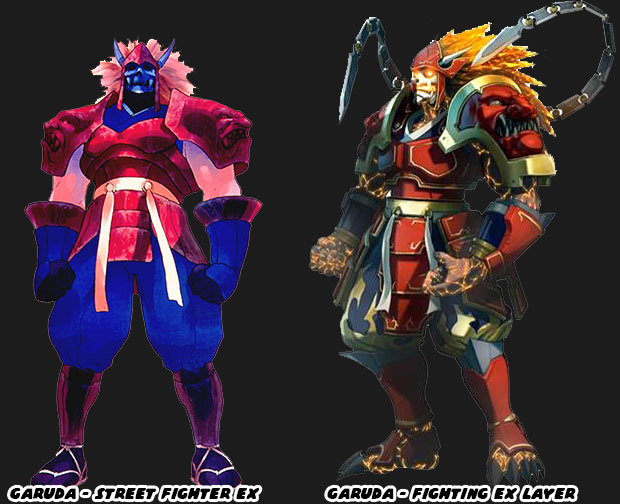
Garuda had more details in his armor than his original concept art had ever shown. There were cracks in it, but there was also a unique gold trim. Centuries ago perhaps the armor originally belonged to some warlord or even noble. When he performed special attacks we could see that the spikes that came out of his skin were glowing red hot. Not only that but his skin seemed to glow and crackle with fissures of energy. He had a surplus of mystical energy to expel and it showed in every strike and ghost summon he performed. Garuda remained a fearsome character, and now that we could see him in high definition we could tell how he would appear in real life. I had talked about Garuda's design and the influence of both Buddhism and Shinto spirituality in previous blogs. The same level of detail applied to the other characters that ARIKA showed off in their April demo.
Hokuto, one of Kairi's younger sisters, appeared in the demo. She wore a hakama, a traditional uniform. She also wore an armored breastplate and archery gloves. Although she did not carry a bow and arrow she could shoot her spiritual energy in the form of an energy bolt. Her style of fighting was based on Kyudo, the a traditional archery techniques reserved for the samurai class but she also knew aikido moves as well. When she fired her energy bolts, the Kiren'Eki, she would go through the motions of shooting an arrow and could even hold her arms back to make the energy strike even stronger. In the series Hokuto was being raised to be the leader of the Mizukami clan. Yet it was revealed to her that she had an older brother. She was tasked with returning him home. She was unaware that the family had cursed blood or that Kairi was the result of an illicit affair. Hotukto had a curse placed on her as well, so that if she ever crossed paths with Kairi she would be forced to kill him. Hokuto would enter a trance and a seal would appear on her forehead. She became Bloody Hokuto at this point and her moves were much more dangerous. Hokuto never crossed paths with her brother in the EX series. In the games she would be joined by Nanase, the youngest sister of the family. She was a warrior in training. Although she didn't enjoy the strict training regiment she did so because she did not want to disappoint her sister. Nanase's costume was that of an Onna bugeisha, a warrior from the noble class. She fought with an expanding staff. It was never revealed if she had some sort of curse as well. Was she planned for Fighting EX Layer? Would she be reunited with her brother? Would she have to choose a side if Hokuto or Kairi ever crossed paths? Or would she abandon her family altogether? We don't know the answers to these questions yet. The ways in which ARIKA designed them was very unique for the genre. They contributed greatly to the mythology of fighting games. We will be exploring how in the next blog. As always if you enjoyed this blog and would like to sponsor me please visit my Patreon page and consider donating each month, even as little as $1 would help make better blogs and even podcasts!

Prior to this April Fools it was understood that ARIKA and Capcom were not on the friendliest terms. ARIKA was founded by a former Capcom staffer, Akira Nishitani. He was one of the lead designers on Street Fighter II and he took a good portion of his team when he left the studio. He developed and proposed the first 3D Street Fighter game, it was labeled EX so that audiences wouldn't confuse it for one of the numbered Capcom titles. It also revolved around the EX tournament rather than the Street Fighter tournament. The original World Warriors (except for Blanka) appeared in EX, as did Sakura who had made her debut in Street Fighter Zero 2 at around the same time. They were paired off against an entirely new cast of characters. It was the last time the majority of the Street Fighter II team would work together. Some legal and licensing issues popped up around 1998 during the release of Fighting Layer. ARIKA wanted to expand their catalog so they developed a new arcade game that would be published by Namco. This new game featured two EX characters, Blair Dame and Allen Snider. By doing this the company wanted to build their library of characters. The assumption was that they could cross over in the future. ARIKA owned the rights to the new characters created for Street Fighter EX. We assume that they also owned the new characters created for Fighting Layer. They were technically allowed to use them in other games. This was a problem for Capcom because Namco was a perennial rival. If ARIKA wanted they could have featured a character or two in the Tekken series. This would have been great for fighting game fans but would have been a thorn in the side of Capcom. I don't know if there was a non-compete agreement between Capcom and ARIKA but many noticed that there was tension between the two companies after Fighting Layer. The speculation was that ARIKA had to take Capcom to court to ensure the EX series would be published per their previous agreements.
For almost 20 years neither studio mentioned the other, except when interviewed for the occasional Street Fighter retrospective. When they did that they were always cordial. In recent years ARIKA had began teasing their fans with rumors of a new EX game. They made sure to highlight their own characters and not the Capcom stars. About a year ago during the development of Street Fighter V (SFV) Capcom began releasing official character art. The studio not only released illustrations of the SFV cast, but they also began releasing illustrations of the supporting characters. Then they started releasing art for the Street Fighter IV cast, Street Fighter III and the original SF lineup. The Street Fighter Zero / Alpha characters and Final Fight cast soon followed. These were under the umbrella of the "Street Fighter Universe." The company wanted to canonize their official cast. Then Capcom did something unexpected, they released brand new art for "Other Title" characters. These were the EX and Capcom Fighting All-Star characters. It was as if Hell had frozen over. Capcom had acknowledged that there had been an EX cast and ARIKA was teasing a new EX game. Fans online were hoping that the two companies were working on a reconciliation. Perhaps with new producers, and the fact that fighting games are popular once again, both companies were considering a compromise. Stranger things had happened. I mean who could have ever predicted that the Tekken and Street Fighter characters would cross over in a versus title. Or that Gouki / Akuma would not only be a surprise character in Tekken 7, but that he would be important to the plot of the game.
I couldn't say if either Capcom or ARIKA had the resources to pull off a new EX game even if they wanted to. Don't forget that DIMPS did most of the development on Street Fighter IV and V. It would take the combined efforts of both Capcom and ARIKA to create a proper EX reboot. Before any development began the legalities of which characters to feature would be a chore. Audiences wanted Street Fighters and EX masters, but would they welcome any Fighting Layer characters as well? I for one would like to see Exodus hit a chair shot on an opponent at least one more time. Also, the canon of the EX series meant that at least one of the most popular villains would not appear. Kairi was the star of the EX universe. He was a much more tortured soul than Ryu ever was. Kairi had cursed blood and it caused him to lose control of himself. He would not only severely injure opponents in fights but he would often injure himself. He suffered from amnesia and at the end of the first EX tournament he killed Gouki and evolved into an even more powerful version of himself. Plenty of Street Fighter fans could never imagine that anybody but Ryu would be capable of defeating Gouki. Not only that but it made more sense for either Ryu or Ken to avenge the death of their master than a stranger introduced in EX. Yet that was the canon that ARIKA established and that’s why it exists in a different timeline / different continuity than the numbered SF series.
ARIKA was much more heavily influenced by the mystical elements of the fighting arts. By comparison the SF series was rooted more in science. The Dictator and his Shadowlaw / Shadaloo organization were unlocking the secrets of the martial arts masters through medical experiments. They used drugs, hypnosis and even cloning to crack the secrets of the ancient masters. There was a rational, scientific explanation for all of the amazing things that the fighters were capable of in that world. The EX universe was much more open to metaphysical origins. There were spirits, monsters and demons inhabiting the EX / Fighting Layer world. Garuda, designed to be the ultimate evil was demon animating some ancient samurai armor. It was assumed that he possessed the body of a human and turned him immortal. He could summon blades from his flesh and impale opponents with them. The powers that Kairi exploited were from a dark dimension and not meant for humans to control. It was possible that these energies came from the same place that Garuda had emerged from. Each time Kairi performed his special moves it took a toll on his body and spirit. By contrast Ryu could control his abilities and did not suffer any ill effects as they were from the natural world. Both characters however did have a light and a dark side. If Ryu used the forbidden techniques taught to him by his master then he opened himself to the Dark Hadou, a corrupting force. If Ryu gave in to the dark energy then he would become “Evil” and end up like Gouki. Kairi ended up having an almost opposite approach to this design. His “good” self, when he had black hair, was tormented by self-harm and nightmares. When he defeated Gouki he evolved into a more powerful version, his hair had turned white in the process, but he did not become “Evil Kairi.” He had gained a sort of peace with his strength. He accepted that he was now the most powerful fighter in the universe, neither a force for good or evil but destined to wander alone.
Garuda on the other hand was the constant force for evil. The Dictator Vega / M. Bison existed in the EX universe as well and had evolved somewhat since his introduction in Street Fighter II as well. He was as powerful as he had always been and was expanding his military might all over the globe. The Illuminati, introduced through Gill in Street Fighter III did not exist in this continuity. Instead it was all Shadowlaw and all Dictator running things. His R&D wings had created evolved cyborgs, known as the Cycloids. They could learn the fighting techniques of their opponents and use them in battle. The Dictator was looking to create a synthetic army that could fight as well as the best Street Fighters. His run-ins with the most powerful EX characters, whether it was Kairi or Garuda almost certainly spelled his death as well. When ARIKA teased Fighting EX Layer it was amazing to see how far the graphics had evolved and how visceral the new characters appeared.
Garuda had more details in his armor than his original concept art had ever shown. There were cracks in it, but there was also a unique gold trim. Centuries ago perhaps the armor originally belonged to some warlord or even noble. When he performed special attacks we could see that the spikes that came out of his skin were glowing red hot. Not only that but his skin seemed to glow and crackle with fissures of energy. He had a surplus of mystical energy to expel and it showed in every strike and ghost summon he performed. Garuda remained a fearsome character, and now that we could see him in high definition we could tell how he would appear in real life. I had talked about Garuda's design and the influence of both Buddhism and Shinto spirituality in previous blogs. The same level of detail applied to the other characters that ARIKA showed off in their April demo.
Hokuto, one of Kairi's younger sisters, appeared in the demo. She wore a hakama, a traditional uniform. She also wore an armored breastplate and archery gloves. Although she did not carry a bow and arrow she could shoot her spiritual energy in the form of an energy bolt. Her style of fighting was based on Kyudo, the a traditional archery techniques reserved for the samurai class but she also knew aikido moves as well. When she fired her energy bolts, the Kiren'Eki, she would go through the motions of shooting an arrow and could even hold her arms back to make the energy strike even stronger. In the series Hokuto was being raised to be the leader of the Mizukami clan. Yet it was revealed to her that she had an older brother. She was tasked with returning him home. She was unaware that the family had cursed blood or that Kairi was the result of an illicit affair. Hotukto had a curse placed on her as well, so that if she ever crossed paths with Kairi she would be forced to kill him. Hokuto would enter a trance and a seal would appear on her forehead. She became Bloody Hokuto at this point and her moves were much more dangerous. Hokuto never crossed paths with her brother in the EX series. In the games she would be joined by Nanase, the youngest sister of the family. She was a warrior in training. Although she didn't enjoy the strict training regiment she did so because she did not want to disappoint her sister. Nanase's costume was that of an Onna bugeisha, a warrior from the noble class. She fought with an expanding staff. It was never revealed if she had some sort of curse as well. Was she planned for Fighting EX Layer? Would she be reunited with her brother? Would she have to choose a side if Hokuto or Kairi ever crossed paths? Or would she abandon her family altogether? We don't know the answers to these questions yet. The ways in which ARIKA designed them was very unique for the genre. They contributed greatly to the mythology of fighting games. We will be exploring how in the next blog. As always if you enjoyed this blog and would like to sponsor me please visit my Patreon page and consider donating each month, even as little as $1 would help make better blogs and even podcasts!
Labels:
arika,
bloody hokuto,
capcom,
concept art,
evil ryu,
fighting layer,
garuda,
gouki,
hokuto,
kairi,
nanase,
ryu,
street fighter ex
Friday, July 24, 2015
How fight culture became fighting game history, part 11
There were other cultural elements that influenced the martial arts in addition to Buddhism. In Japan the native religion, or what Westerners would call a religion was Shinto. It was grounded in the physical world, a world that says there were spirits that took the forms of all things. The four elements and nature itself were made up of spirits made manifest. Humans lived, worked, grew and died within a world filled with spirits. When they passed on they too joined the spirit world. They became part of the elements or part of nature and could still shape and influence the world we lived in. Buddhism, Taoism and Shinto shaped the world that the martial arts were born into. These martial arts thus carried on many of the same philosophies and traditions. The designers working at Capcom, SNK and Data East, three of the oldest Japanese game studios working in the fighting genre, had grown up in a culture that held onto ancient traditions and spiritual beliefs. They also grew up in a culture that celebrated legendary fighters in real life as well as in fiction.
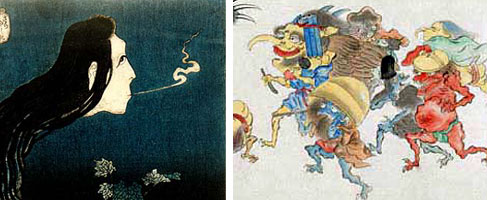
Spirituality was an important part of the martial arts from Japan. Karate was not a series of attacks and defenses, it was a path to a higher state of consciousness. Shinto did not believe in absolute good, evil or even perfection. People were inherently good and bad things were caused by evil spirits. The only way to combat the evil were through purification, prayer and offerings to the kami or spirits. The philosophies of Shinto have been featured as characters, levels and plot of Street Fighter EX and Samurai Spirits. This blog already made mention of how the kami and shimenawa ropes had been featured in the Street Fighter series. Gouki and Gouken were not the only characters that used a heavy dose of spiritual design cues. Kairi and his sisters and even antagonist Garuda brought a large dose of the spiritual aspects lacking from other SF games. The characters debuted in Street Fighter EX, the first 3D SF game. These new heroes and villains tapped into the powers of the ancient world. They predated the legends of fighters like Mas Oyama and Tatsuo Shimabuku. They helped add a new dimension to the world of SF, one that had only been hinted at in prior games. Kairi and Garuda were memorable characters because they were based on the fantastic origins of the karate fable.
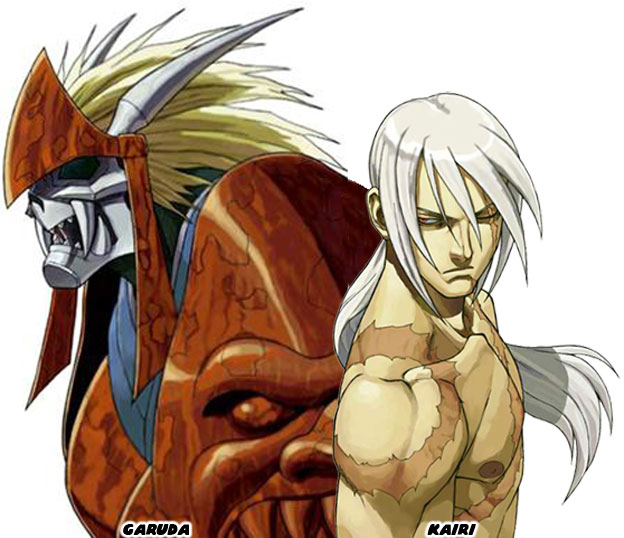
Energy or chi was what gave all people life and allowed them to perform amazing feats of strength. As this concept was adapted into Japanese culture it would be called ki. It was something that appeared magical and the best fighters were blessed or cursed by the gods with excess power. Such was the case for Kairi, a possessed person that had more power flowing through him than even Gouki. Like the main villain in the SF mythology Kairi was becoming consumed by a power he could not control. Garuda was the concept of a possessed fighter taken to the extreme. Garuda was a faceless character, choosing instead to fight under the armor of an ancient warrior. Spikes would protrude from his body and then vanish, as if in some sort of macabre magic trick. It was assumed that whomever was possessed by the dark energy, whomever wore the armor of Garuda, had died long ago.
In the Street Fighter series the way the characters appeared, were dressed, moved and even abilities were pulled from many classic elements. In previous blogs I had mentioned the influence of the Nio and even Fudo Myo-o, the spiritual guardians of Buddhism, had on the development of the Street Fighter and King of Fighter icons. The modern versions of these gods and demons had to be believable to audiences. Certainly Kairi and Garuda could have been incredibly blessed martial artists that were simply eccentric. Gouki was certainly a believable character. He was a fighting master that murdered his master and brother in a fit of rage. Mr. Karate was a believable character as well, he was a master working for the mafia and he hid his identity behind a mask.The various fighting games allowed for the realistic and supernatural to coexist. Masters of the fighting arts could throw fireballs made of chi energy. Some even had the ability to perform a dim mak or "death punch." Kairi very much followed in the footsteps of Gouki and Mr. Karate. Like those figures he was based on ancient traditions and spiritual beliefs. Garuda was a different type of creature altogether. He was created to make physical manifestations out of spiritual elements.
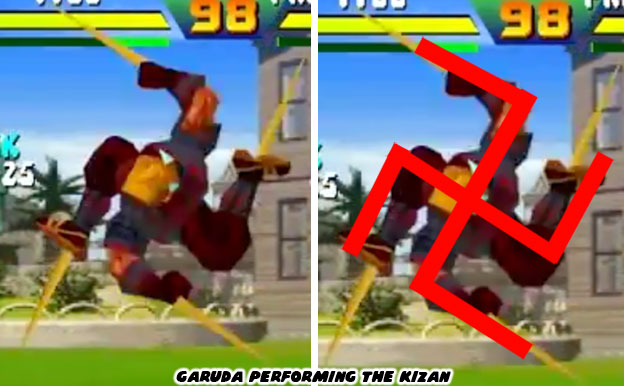
One of Garuda's attacks, the Kizan, had spikes appear out of the hands and feet of the character. He would spin through the air and shred his opponent to ribbons while holding a very awkward pose. Sharp-eyed players noticed that the pose looked very much like a Swastika. This was not an accident. Each of the special attacks of the character had him in a symbolic pose. Sometimes he would move in a way that that made him appear like a statue that could be found at an entrance to a Buddhist temple. Sometimes he would spin outstretched in the shape of a lotus, a Buddhist symbol for purity and spontaneous birth.
Of course to clarify the swastika symbol was ancient and had appeared in cultures all over the world. Only in the 20th century when Adolf Hitler adopted it for his Nazi party did it become regarded as a symbol of evil. The Nazi version actually had the marks going counter to the traditional symbol. In Buddhism the symbol was associated with success and fortune. It was a symbol for good that could often be found on statues of Buddha in India, China and Japan. In many countries maps of the cities often had the swastika placed wherever there was a Buddhist temple. Similarly the map may have a cross to denote where a Christian church was. Even through the 20th century there were still social activist groups, like the Chinese Red Swastika Society, that preserved the good origin of the symbol.
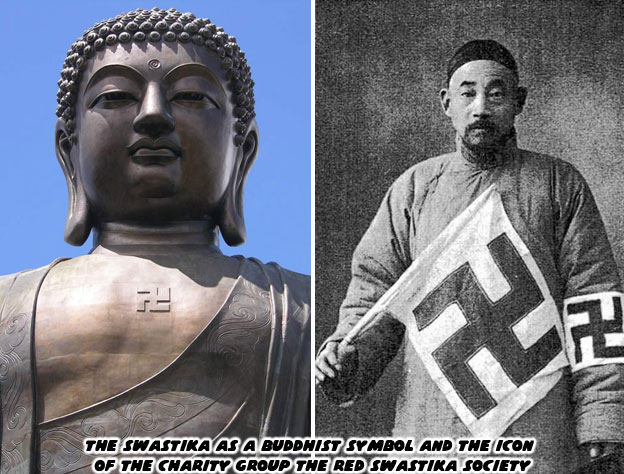
The Kizan did not mean that Garuda was a good character but it was used to demonstrate that he was a divine creature. He was a supernatural force that turned into a physical manifestation. He looked like an ancient warrior, faceless, so that he preserved the symbolism of ancient fighting roots. He was a sort of demonic creature that would have been fought by Sun Wukong, the Monkey King, rather than Bodhidharma. Fans of the Street Fighter series either loved or loathed the character. The same could be said for many of the other new characters introduced through the EX series. There was possibly no other version of the game that was as polarizing to audiences. Supernatural creatures were not new to the genre. Where they worked best was when they were presented in a quasi-believable fashion. Part of the success of many fighting games was how the supernatural was intermixed with the plausible. Great karate fighters were made even better with the advent of the fa jin or "fireball" type attacks. Some even had a dim mak or "death touch" strikes at their disposal. In the story of Street Fighter and other games there were scientists that extracted these metaphysical abilities and turned them into weapons. The spiritual gave way to science and power hungry dictators could harness these techniques to destroy their opponents. Garuda was not the only villain in Street Fighter mythos that had traits that were connected to Buddhism. Seth was the new boss introduced in the Street Fighter IV series. He could absorb the attacks of his rivals and use their techniques against them.
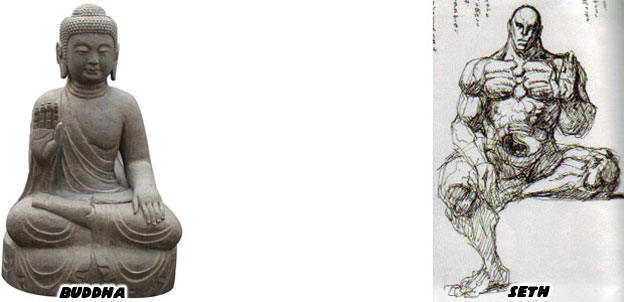
At the core of the character was a yin / yang sphere that generated his power. It was known as the Tanden Engine and allowed him to expel and absorb tremendous amounts of energy. Seth was a grotesque character. His skin tones were flushed out, a dull gray, signifying that perhaps he was either dead or more machine than man. The villain was after all nothing more than a husk for the Tanden Engine. Just as Gouki had been consumed by the Dark Hadou so too was Seth consumed in his quest for more power. The character art and design for Seth were intentionally gruesome. He was supposed to be intense and menacing even while wearing a tailored suit. He was the opposite of the serene image that people thought of when they imagined Buddha. The mechanical core in his belly was a twisted mockery the beliefs cultivated by Eastern Medicine. It robbed the martial artists of what they had worked for and twisted it for his nefarious purposes. Seth was perhaps visually the most extreme Street Fighter villain introduced, with the possible exception of Gill, the demigod. Gouki or Garuda could have existed in the real world. They could have been dangerous martial artists whose legend became inflated to the point where it was hard to distinguish fact from fiction. Yet for other characters in the genre, they were supposed to have supernatural origins as well. They were supposed to be accepted at face value. Take the female martial artist Ameth from Xuan Dou Zhi Wang / King of Combat. She was based on a mythical character from Asian story traditions.
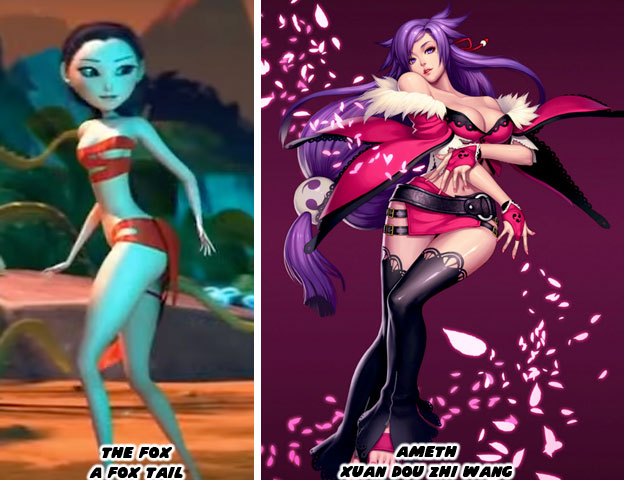
According to the game Ameth was a 998-year-old shape changer. She was a trickster of sorts personified by the Fox. In Native American legends the Coyote was a contemporary character, also known as a trickster and a shape-shifter. Although in some stories the Fox was a temptress that would kill men that she seduced. The divine or demonic Fox creature appeared in many Asian mythologies. In Chinese stories Huli Jing was a divine fox mischievous but also ill-tempered. In Japanese tradition Kitsune was also a divine fox but with nine tails. The fox mask of Kitsune had been used on female ninja characters in manga, animé and video games for decades. In Korea there was Kumiho, possibly the creepiest of all the fox legends. She was an evil spirit that seduced and killed men. A lighthearted version of the legend could be seen in A Fox Tail. The animated short with character designs by Chao Ma demonstrated how some of the best fighters used their heads instead of their hands. Then again, many of the greatest strikers used everything but their hands while developing the ancestor to kung-fu. Hinduism and Buddhism helped carry the martial arts through Asia, but the forms of striking that Bodhidharma had brought to China were not the only styles that influenced the development of kung-fu or karate. There were styles that had reached the southern shores of Japan that were very interesting. The next blog will look at how South East Asia created parallel fighting arts that would rival the legacy of karate. As always if you enjoyed this blog and would like to sponsor me please visit my Patreon page and consider donating each month, even as little as $1 would help make better blogs and even podcasts!

Spirituality was an important part of the martial arts from Japan. Karate was not a series of attacks and defenses, it was a path to a higher state of consciousness. Shinto did not believe in absolute good, evil or even perfection. People were inherently good and bad things were caused by evil spirits. The only way to combat the evil were through purification, prayer and offerings to the kami or spirits. The philosophies of Shinto have been featured as characters, levels and plot of Street Fighter EX and Samurai Spirits. This blog already made mention of how the kami and shimenawa ropes had been featured in the Street Fighter series. Gouki and Gouken were not the only characters that used a heavy dose of spiritual design cues. Kairi and his sisters and even antagonist Garuda brought a large dose of the spiritual aspects lacking from other SF games. The characters debuted in Street Fighter EX, the first 3D SF game. These new heroes and villains tapped into the powers of the ancient world. They predated the legends of fighters like Mas Oyama and Tatsuo Shimabuku. They helped add a new dimension to the world of SF, one that had only been hinted at in prior games. Kairi and Garuda were memorable characters because they were based on the fantastic origins of the karate fable.

Energy or chi was what gave all people life and allowed them to perform amazing feats of strength. As this concept was adapted into Japanese culture it would be called ki. It was something that appeared magical and the best fighters were blessed or cursed by the gods with excess power. Such was the case for Kairi, a possessed person that had more power flowing through him than even Gouki. Like the main villain in the SF mythology Kairi was becoming consumed by a power he could not control. Garuda was the concept of a possessed fighter taken to the extreme. Garuda was a faceless character, choosing instead to fight under the armor of an ancient warrior. Spikes would protrude from his body and then vanish, as if in some sort of macabre magic trick. It was assumed that whomever was possessed by the dark energy, whomever wore the armor of Garuda, had died long ago.
In the Street Fighter series the way the characters appeared, were dressed, moved and even abilities were pulled from many classic elements. In previous blogs I had mentioned the influence of the Nio and even Fudo Myo-o, the spiritual guardians of Buddhism, had on the development of the Street Fighter and King of Fighter icons. The modern versions of these gods and demons had to be believable to audiences. Certainly Kairi and Garuda could have been incredibly blessed martial artists that were simply eccentric. Gouki was certainly a believable character. He was a fighting master that murdered his master and brother in a fit of rage. Mr. Karate was a believable character as well, he was a master working for the mafia and he hid his identity behind a mask.The various fighting games allowed for the realistic and supernatural to coexist. Masters of the fighting arts could throw fireballs made of chi energy. Some even had the ability to perform a dim mak or "death punch." Kairi very much followed in the footsteps of Gouki and Mr. Karate. Like those figures he was based on ancient traditions and spiritual beliefs. Garuda was a different type of creature altogether. He was created to make physical manifestations out of spiritual elements.

One of Garuda's attacks, the Kizan, had spikes appear out of the hands and feet of the character. He would spin through the air and shred his opponent to ribbons while holding a very awkward pose. Sharp-eyed players noticed that the pose looked very much like a Swastika. This was not an accident. Each of the special attacks of the character had him in a symbolic pose. Sometimes he would move in a way that that made him appear like a statue that could be found at an entrance to a Buddhist temple. Sometimes he would spin outstretched in the shape of a lotus, a Buddhist symbol for purity and spontaneous birth.
Of course to clarify the swastika symbol was ancient and had appeared in cultures all over the world. Only in the 20th century when Adolf Hitler adopted it for his Nazi party did it become regarded as a symbol of evil. The Nazi version actually had the marks going counter to the traditional symbol. In Buddhism the symbol was associated with success and fortune. It was a symbol for good that could often be found on statues of Buddha in India, China and Japan. In many countries maps of the cities often had the swastika placed wherever there was a Buddhist temple. Similarly the map may have a cross to denote where a Christian church was. Even through the 20th century there were still social activist groups, like the Chinese Red Swastika Society, that preserved the good origin of the symbol.

The Kizan did not mean that Garuda was a good character but it was used to demonstrate that he was a divine creature. He was a supernatural force that turned into a physical manifestation. He looked like an ancient warrior, faceless, so that he preserved the symbolism of ancient fighting roots. He was a sort of demonic creature that would have been fought by Sun Wukong, the Monkey King, rather than Bodhidharma. Fans of the Street Fighter series either loved or loathed the character. The same could be said for many of the other new characters introduced through the EX series. There was possibly no other version of the game that was as polarizing to audiences. Supernatural creatures were not new to the genre. Where they worked best was when they were presented in a quasi-believable fashion. Part of the success of many fighting games was how the supernatural was intermixed with the plausible. Great karate fighters were made even better with the advent of the fa jin or "fireball" type attacks. Some even had a dim mak or "death touch" strikes at their disposal. In the story of Street Fighter and other games there were scientists that extracted these metaphysical abilities and turned them into weapons. The spiritual gave way to science and power hungry dictators could harness these techniques to destroy their opponents. Garuda was not the only villain in Street Fighter mythos that had traits that were connected to Buddhism. Seth was the new boss introduced in the Street Fighter IV series. He could absorb the attacks of his rivals and use their techniques against them.

At the core of the character was a yin / yang sphere that generated his power. It was known as the Tanden Engine and allowed him to expel and absorb tremendous amounts of energy. Seth was a grotesque character. His skin tones were flushed out, a dull gray, signifying that perhaps he was either dead or more machine than man. The villain was after all nothing more than a husk for the Tanden Engine. Just as Gouki had been consumed by the Dark Hadou so too was Seth consumed in his quest for more power. The character art and design for Seth were intentionally gruesome. He was supposed to be intense and menacing even while wearing a tailored suit. He was the opposite of the serene image that people thought of when they imagined Buddha. The mechanical core in his belly was a twisted mockery the beliefs cultivated by Eastern Medicine. It robbed the martial artists of what they had worked for and twisted it for his nefarious purposes. Seth was perhaps visually the most extreme Street Fighter villain introduced, with the possible exception of Gill, the demigod. Gouki or Garuda could have existed in the real world. They could have been dangerous martial artists whose legend became inflated to the point where it was hard to distinguish fact from fiction. Yet for other characters in the genre, they were supposed to have supernatural origins as well. They were supposed to be accepted at face value. Take the female martial artist Ameth from Xuan Dou Zhi Wang / King of Combat. She was based on a mythical character from Asian story traditions.

According to the game Ameth was a 998-year-old shape changer. She was a trickster of sorts personified by the Fox. In Native American legends the Coyote was a contemporary character, also known as a trickster and a shape-shifter. Although in some stories the Fox was a temptress that would kill men that she seduced. The divine or demonic Fox creature appeared in many Asian mythologies. In Chinese stories Huli Jing was a divine fox mischievous but also ill-tempered. In Japanese tradition Kitsune was also a divine fox but with nine tails. The fox mask of Kitsune had been used on female ninja characters in manga, animé and video games for decades. In Korea there was Kumiho, possibly the creepiest of all the fox legends. She was an evil spirit that seduced and killed men. A lighthearted version of the legend could be seen in A Fox Tail. The animated short with character designs by Chao Ma demonstrated how some of the best fighters used their heads instead of their hands. Then again, many of the greatest strikers used everything but their hands while developing the ancestor to kung-fu. Hinduism and Buddhism helped carry the martial arts through Asia, but the forms of striking that Bodhidharma had brought to China were not the only styles that influenced the development of kung-fu or karate. There were styles that had reached the southern shores of Japan that were very interesting. The next blog will look at how South East Asia created parallel fighting arts that would rival the legacy of karate. As always if you enjoyed this blog and would like to sponsor me please visit my Patreon page and consider donating each month, even as little as $1 would help make better blogs and even podcasts!
Labels:
chi,
fox tail,
garuda,
kairi,
karate origins,
seth,
spirituality,
street fighter,
supernatural
Subscribe to:
Posts (Atom)