Showing posts with label samurai. Show all posts

Sunday, August 13, 2017

Speculation on ARIKA's unnamed Street Fighter EX successor, part 2...

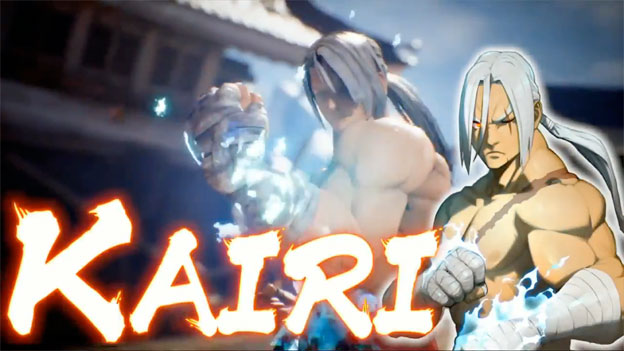
The Street Fighter EX series had always had a more spiritual tone compared to the other Street Fighter titles. In fact the same thing could be said about ARIKA's other game Fighting Layer. Many of the characters, good and bad, were inspired by regional mythology. The religious or spiritual practices of different Japanese cultures had an influence on the design behind Kairi, Garuda, Vold Ignitio and several other characters in both games. Kairi was a melancholy character who was tortured by his powers. Unlike Ken and Ryu who were able to harness their chi in energy wave attacks, or fireballs, every time Kairi used his energy attacks it took a toll on his spirit. His style of fighting may have been similar to Ken and Ryu’s but the origins were even older. His body was covered in scars and he was missing an eye. There was something terrible in his past that seemed to haunt him. He was suffering from amnesia and had no idea who he was or where he came from. During the events of the Street Fighter EX series was on a path looking to fight the greatest warriors or die in the process. Kairi's sister Hokuto, was tasked with bringing him back to the Mizugami clan, or killing him if she couldn't.


Hokuto looked like a kyudoka, a practitioner of traditional archery. She dressed very conservatively, wearing a costume that would have fit right into feudal Japan. It made sense given that she was responsible for the fate of her brother. Despite her uniform and archery glove she did not actually carry a bow and arrows. Instead she shot bolts of spiritual energy from her hands. Hokuto was also well versed in tessenjutsu, the fighting art of the war fan. People often mistook Hokuto as an akido practitioner considering how many of her moves were counters to traditional attacks. Hokuto had the ability to perform energy wave attacks but they did not harm her as they did her brother. Whether it was because of her training or something else was not explained at first. She was actually harboring a few secrets of her own, these were revealed over the course of the series.
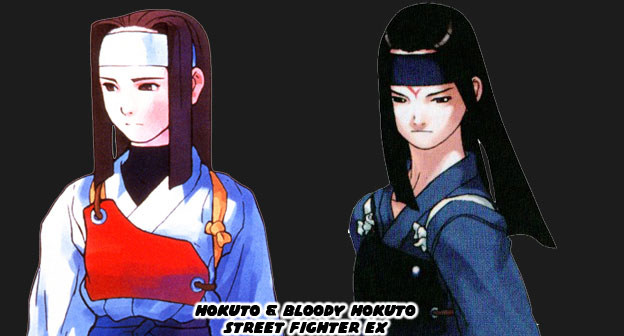
 

Hokuto came from the same cursed blood as Kairi. She actually had a seal placed on her that prevented her from succumbing to the same killer instincts of her brother. There was a variation of the character that could be unlocked in Street Fighter EX Plus Alpha. This evil version was known as Bloody Hokuto. Her uniform was a stark black in this form. She even had a slightly darker skin tone. Darker colored characters usually denoted a hint of evil. This was a tradition observed in many different cultures and story telling techniques. It was one of the reasons why Gouki had skin that appeared dark red like clay. But I digress. A mark of evil was visible on her forehead. Her attacks were more aggressive and she even had the ability to perform the Renbu, or “death touch” attack. Bloody Hokuto even had her own unique stage and ending in the game.
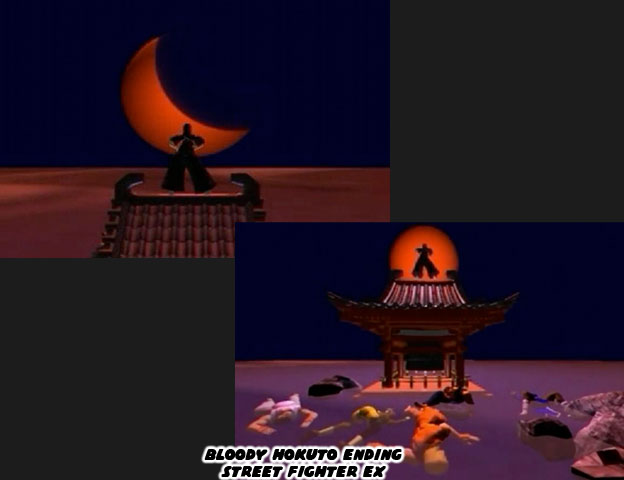
 

If Bloody Hokuto defeated all of the opponents in the EX tournament she was seen standing on top of a temple. The blood moon was in the background. All of the other rivals were dead on the floor. The whole nocturnal scene, twisted background and use of moon and darkness was the same symbolism featured with Kyo and Iori from the King of Fighters series. There was a reason for this. The mythology behind the orochi, an ancient demon that was bound to the moon was also loosely tied into the EX mythos. The Hayate clan had locked away the demon and was responsible for keeping it locked away. A character named Hayate appeared only once in the series, in Street Fighter EX2. He dressed like a samurai and was a sort of fighting priest. His special attacks allowed him to materialize swords out of thin air before dissipating as energy from his hands. It was a refined version of the same attacks Garuda used. Except that Garuda made spikes appear from his flesh, all over his body and even head. It turned out that the demon Garuda had escaped and was following Kairi. Whether Hayate was scheduled to be in the new game was unknown as of this writing.
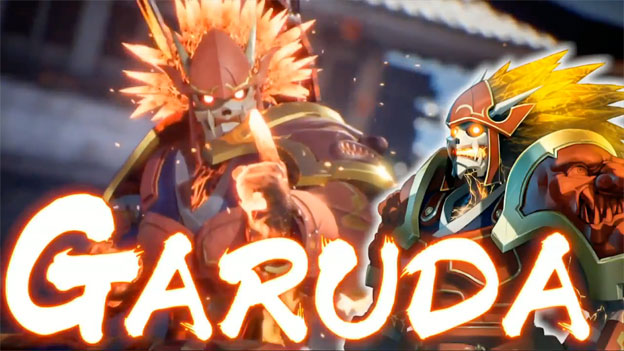
 

Garuda was a mighty warrior that became possessed. He actually fed off the spirits of people that were defeated in battle. Since Kairi was destroying people left and right all Garuda had to do was follow behind and steal their essence, growing stronger along the way. I had talked about spirits possessing human bodies previously on this blog. In the Street Fighter EX series Kairi was on the path of being consumed by the energy within. A possessed person was known as a yorimashi. Gouki / Akuma for example could be considered a yorimashi. He was consumed by the evil energy or Dark Hadou. He kept this energy under his control as symbolized by the prayer beads he wore around his neck. Garuda was another such yorimashi, the person that he possessed probably died a long time ago. There was probably a reckoning between Kairi and Garuda planned for the climax of this game. How Hokuto would figure into the story was an important piece of the story.
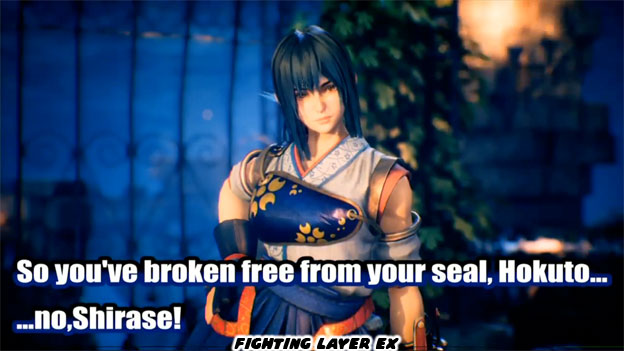
 

After 21 years since the debut of the EX series ARIKA had a confession to make. Hokuto was not the character’s real name. In fact she was an assassin that had been programmed to kill Kairi. Her real name was Shirase. About the only thing in her history that was true was that they were related. However Hokuto was only the half-sister of Kairi. Whether she was under the employment of the Mizugami, Hayate or other family had yet to be revealed. Then there was the question of the youngest member of the family, the little sister known as Nanase. Well she was in fact Kairi’s actual sister and Shirase’s half-sister. When her programming was revealed Shirase did something drastic, she wiped Nanase’s memory of her. How much remains of the family, and relationships between the three will hopefully be revealed in the game. There was no word on whether Nanase would return to the series. It would be interesting to see how the story progresses because of these developments.
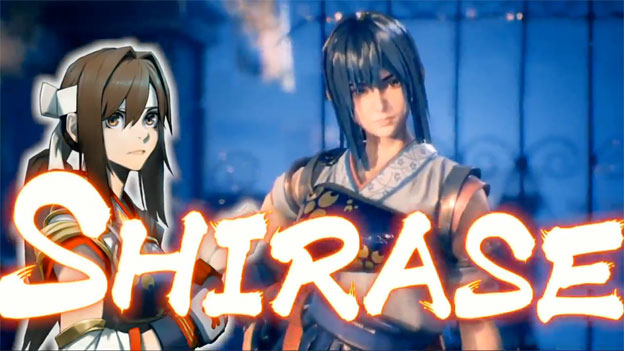
 

ARIKA was no stranger to supernatural character designs. When the studio created Fighting Layer they had heroes and villains with supernatural powers or supernatural origins. It was unknown (as of this writing) whether Shirase would have the full library of moves of Hokuto and Bloody Hokuto, or if there was a version of Bloody Shirase yet to be revealed. The characters in this game also had something called Gouji that they could tap into. The name of this game mechanic was based on a fruit called gouji, aka wolf berries in the west. These berries were said to be highly medicinal in value, they inspired the Senzu Beans in the Dragon Ball series. In the ARIKA game players wouldn’t take berries in the middle of a match but instead choose from a stack of five different gouji, little symbols that appeared next to the energy bar. They granted attributes that they could activate in battle. It could make attacks stronger, help buff defenses or maintain a high special meter. When this mechanic was unveiled at the EVO tournament many likened it to the Infinity Gems that players could use in Marvel vs Capcom: Infinite. It created an entirely new way to play and no two matches could even be similar with the number of different combinations players could use.
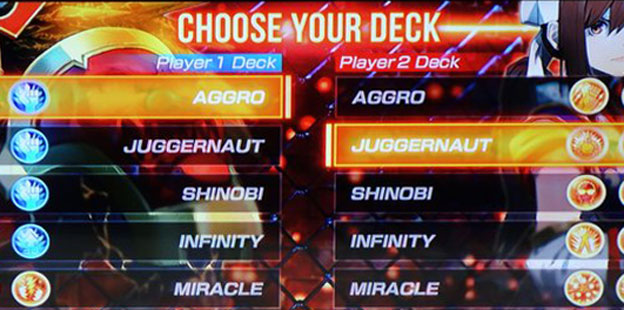
 

Gouji was the reason that Darun Mister survived his encounter with Garuda. He must have been superhumanly tough to have lived through the ordeal. Then after he recovered he wanted a rematch. The studio had roughly another seven months of development and there was plenty of time to balance the Gouji mechanic as well as expand the library of characters. One of the recently announced returning characters was another fan-favorite. He inspired me to talk a little bit more about what made the EX characters so memorable. We’ll take a look at this character in the next blog. As always if you enjoyed this blog and would like to sponsor me please visit my Patreon page and consider donating each month, even as little as $1 would help make better blogs and even podcasts!
 follow the Street Writer on Patreon!

Friday, July 10, 2015

How fight culture became fighting game history, part 5

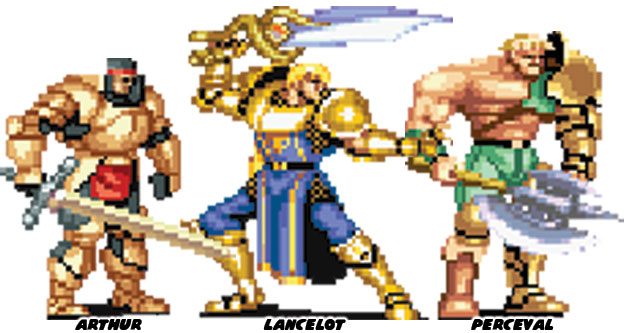
The greatest warriors in history were still talked about centuries if not a millennium after their death. These fighters were admirable, they fought for all the right reasons. Whether it was to protect the innocent or to defend a nation, there were always fighters willing to lay their life on the line. Some myths were created around historical figures, their exploits could be used to help bring a nation together. In Western tradition characters as old as Beowulf and King Arthur served many purposes. Chief among them was to unify Christian themes and Pagan beliefs. Different tribes were unified under the banner of a fearless warrior-king. If the stories were to be believed then it was up to humanity to set aside their differences and unite towards a greater good. Whether that greater good was to have a stronger nation or a firmer belief in Christ could be debated by scholars. What was undeniable was as the legend of these figures spread so too did their importance to the culture that they reflected. The legends of these brave warriors would be told again and again. Whether by book, movie or even cartoon show. The Knights of the Round Table were still well known the world over. Capcom had even made a brawling game based on the legendary characters in 1991. Similar historical adaptations had happened in Asia as well. Historical figures became the basis for heroes written about in the Romance of the Three Kingdoms. The story took place almost 2000 years ago but was not popularized until the 14th century. The main characters in the series, Lie Bei, Guan Yu and Zhue Liang were as important to Chinese culture as King Arthur, Lancelot and Perceval were to the English and French. The thing that all of these men had in common were wisdom, extreme martial prowess and a strong sense of unification.


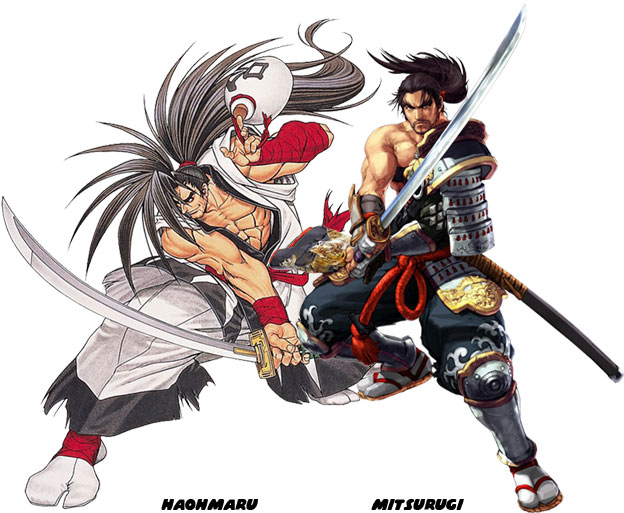
In Asia, specifically in Japan, there were stories of swordsmen and wanderers whose martial skill was legendary. They traveled the countryside, helping where they could, fighting bandits or squashing rebellions singlehandedly. These men went undefeated in battle and when they dueled they dueled to the death. Miyamoto Musashi was a late 16th century hero. He traveled all over Japan and chronicled his adventures. He became a hero of sorts. His published A Book of Five Rings is studied to this day for its insight into battle strategies. Musashi was a Buddhist, sometimes presented as a reckless long-haired character, that reflected on the meaning of his life and combat while he was alive. A contemporary that was born just after Musashi was Yagyū Jūbei Mitsuyoshi. The samurai had become romanticized in manga and animé centuries after his death. He was a dangerous swordsman that spoke frankly even if it meant upsetting his superiors. He was often represented as a dead-serious samurai wearing an eye-patch. Whether the man actually wore an eye patch was argued by historians. The legend of sword fighters like Musashi and Jubei were adapted into the canon of Samurai Spirits / Samurai Showdown, a sword fighting game series by SNK. Haohmaru represented Musashi and Jubei represented, well, Jubei. The legend of Musashi even inspired the character of Heishiro Mitsurugi from the 3D fighting game Soul Calibur.


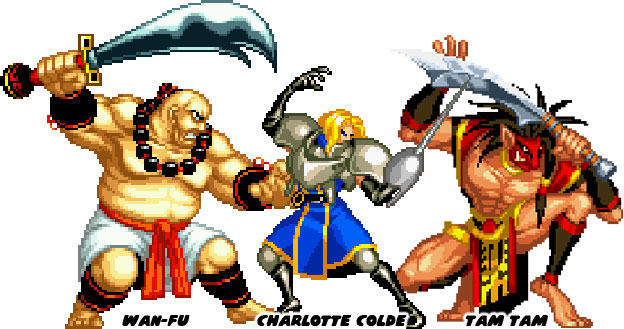
The feudal era extended for centuries. Whether it was China, Japan or even in a western nation, the period between the 15th and 19th centuries became romanticized. Knights, swordsmen, bandits and pirates all inspired tales of bravery and hereoism in pop culture. For the martial artists it seemed that as one legend had passed a new one was born. In some instances two or more legends existed at the same time, although they may have never crossed paths. That was where a well written story or a cleverly framed video game might come in handy. If something were to bring all of the feudal-era sword masters together, like a demon bent on global domination, then perhaps fans might get to see what would happen. Or what about if the best sword fighter in China crossed paths with the best fencer from France? Or what would happen if a Native American Shaman fought a Cowboy Ninja? These scenarios and more were explored in the Samurai Spirits series. The liberties that SNK took with regards to timelines and technology were overlooked because the games were highly addicting. Although some of the specific cultures might have been separated by a century or two the exact era was sort of blended together in one "it could have happened" moment in the past.


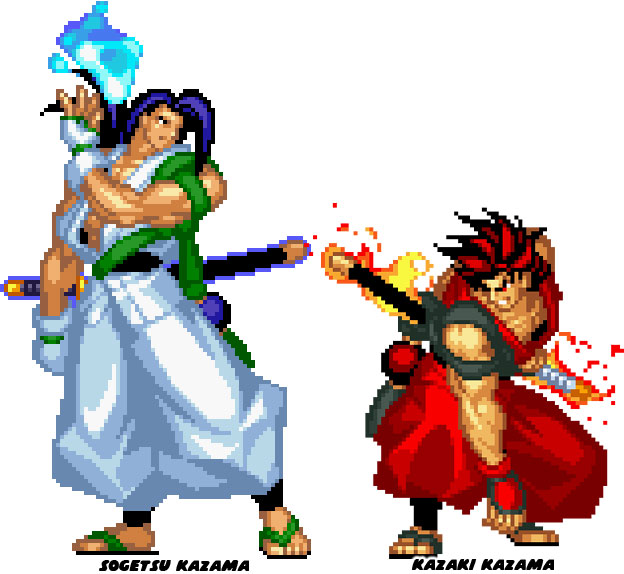
What could be seen as one of the most important features of the series was the use of supernatural characters. Ancient Japanese demons, ghosts and monsters were disguised as human opponents in the series. Many were able to use their dark forces against the sword masters. It was a unique balance of plausible and impossible character design that worked in the favor of the series. Other fighting games tended to keep the characters either very realistic or very absurd but never in the middle. Many of the designers of the Samurai Spirits series had left Capcom and had taken many of the design elements from the creation of the Street Fighter series with them. As such they were able to create a cast that was as memorable as the best fighters from Capcom. Where SNK's team differed were in what elements they incorporated into the design and special attacks of the main characters. For Street Fighter the characters were rooted in a particular fighting style and nationality. Some characters, like Ryu, Ken and Chun-Li were inspired by real-world heroes. For Samurai Spirits the characters were also rooted in a particular sword fighting style and nationality as well. Some were even based on legendary sword fighters yet the Samurai Spirt characters had an additional design element applied to them. Some were themed after the seasons; spring, summer, fall and winter and some were themed after the elements. Take the Kazama brothers for example The ninja Kazuki was fire and Sogetsu was water, the two were at odds with each other despite their blood bond. It made for a very interesting dynamic in the canon of the series.


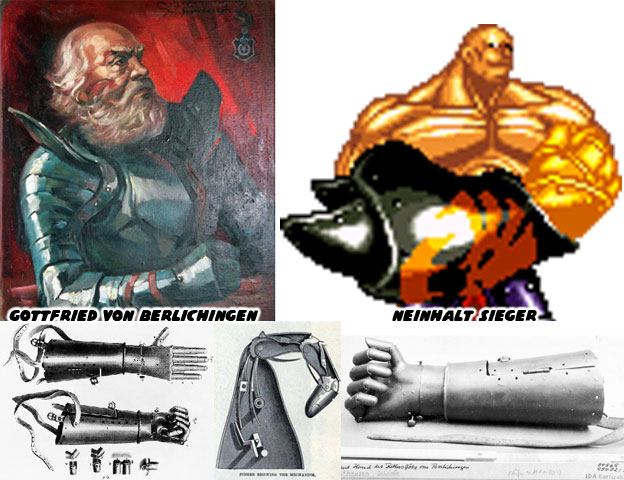
For every mythological character there was however some basis of reality. This was what made each fighter unique in the SNK series. The Prussian character Neinhalt Seiger did not fight with a sword but instead with a modified gauntlet. He could block sword strikes with his metal arm and counter attack with a powerful punch. Audiences may not have realized it but there was a legendary warrior that also fought with a metal arm. Gottfried von Berlichingen better known as the "Iron Hand" predated Musashi and Jubei by almost a century. The German Knight was more of a rogue that reveled in his many battles. He fashioned himself a mechanical arm after he lost his real one in battle. It was extremely advanced for its time, with individual locking fingers capable of gripping a sword or even writing pen. He stated that he wished he had lost his arm sooner because his mechanical arm was much more useful to him. His exploits were well known through the late 15th and 16th centuries. In the 17th century Mozart was inspired to write an homage to Gottfried titled Leck mich im Arsch, literally translated to "Lick my ass" because that was the insult that he would yell at his rivals. Thankfully Seiger was a much more well-mannered character and SNK was not forced to censor any of his dialogue.


Mythology and the fighting arts seemed to go hand-in-hand. The stories of the brave knights of England and honorable samurai from Japan inspired countless generations. In many instances the ancient gods were the original heroes of storytelling. They split the Earth apart with their martial prowess and saved humanity again and again from the demonic hordes. The influence of these religious characters could not be escaped. Even in the era of the mixed martial arts superstar there was still plenty of room for supernatural heroes and villains as well. The next blog will look at how Indian, Chinese and Japanese mythology shaped fighting game characters. As always if you enjoyed this blog and would like to sponsor me please visit my Patreon page and consider donating each month, even as little as $1 would help make better blogs and even podcasts!