A blog about my interests, mainly the history of fighting games. I also talk about animation, comic books, car culture, and art. Co-host of the Pink Monorail Podcast. Contributor to MiceChat, and Jim Hill Media. Former blogger on the old 1UP community site, and Capcom-Unity as well.
Showing posts with label blanka. Show all posts
Wednesday, May 20, 2026
Bookmark This Page; 30 years of Street Fighter, 30 Days of Characters
Street Fighter is my favorite fighting game series by a mile. If you want to learn about my favorite characters from the SF universe over the past 30+ years then Bookmark This Page.
Wednesday, August 30, 2023
Street Fighter 6: A master class in game design, part 14


Thursday, June 23, 2022
Dhalsim, and Blanka, the return of the strange characters in Street Fighter 6
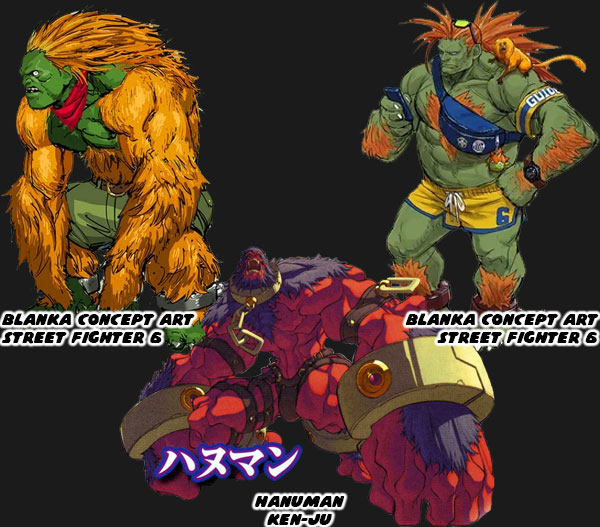
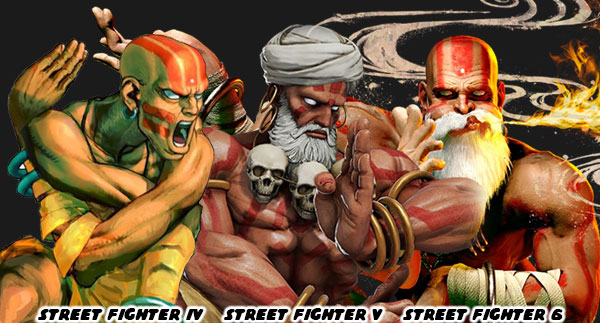
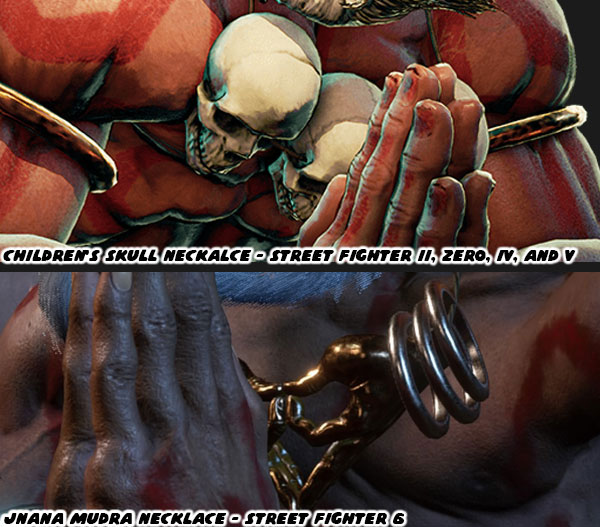
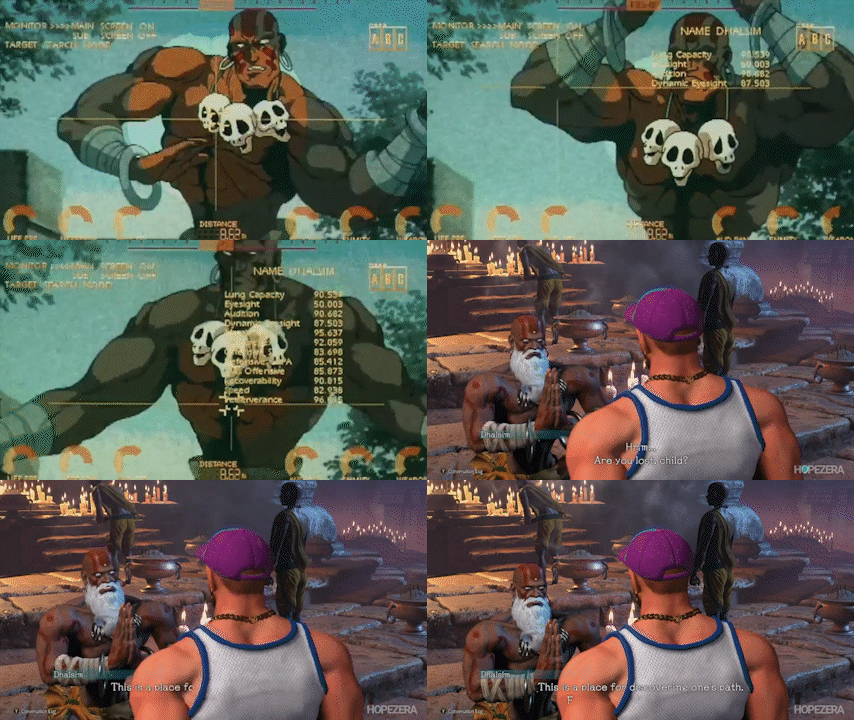
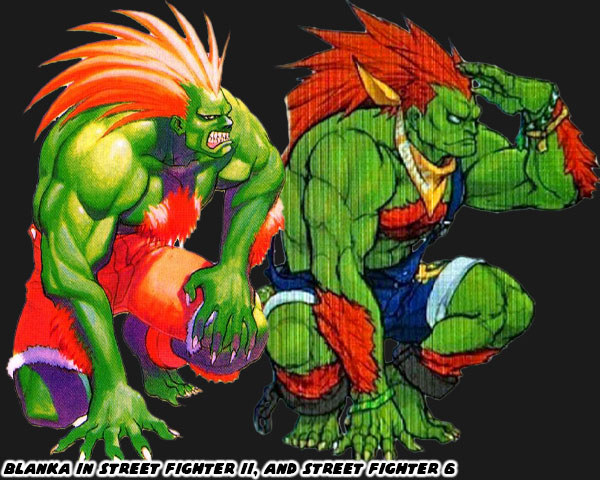
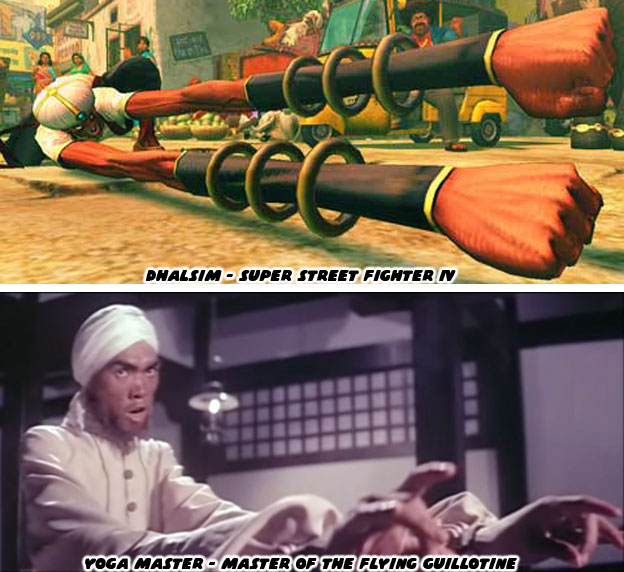
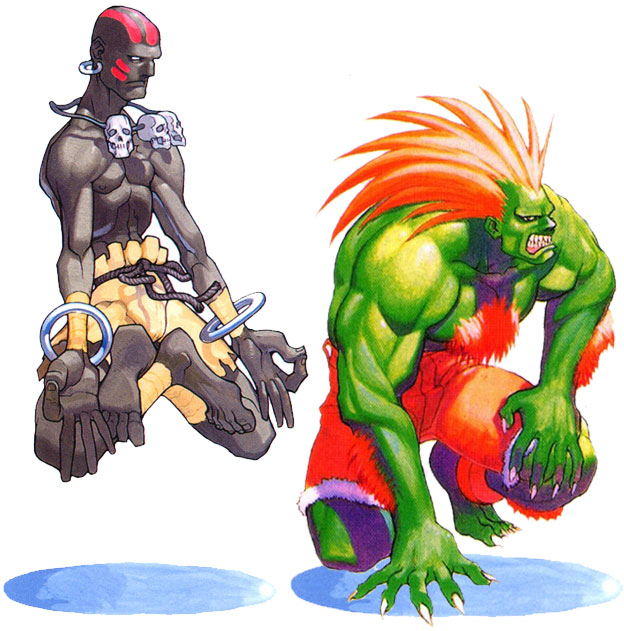
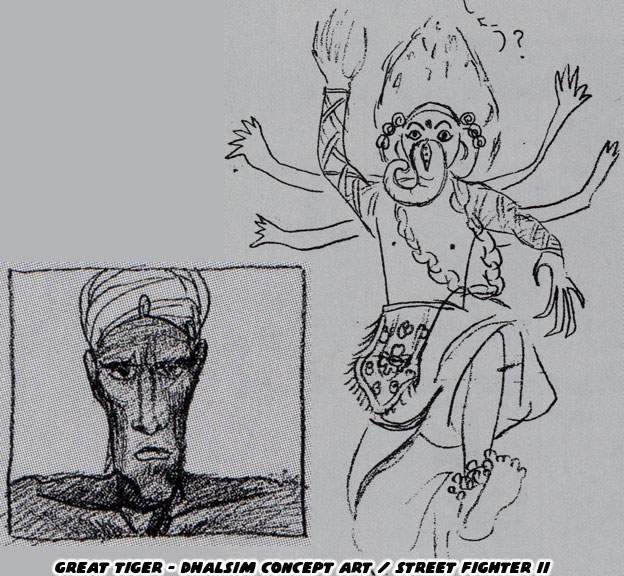
Yesterday we talked about JP the new character in Street Fighter 6. I mentioned that his design was odd on purpose. Normally fighting game characters look like they represent a certain martial art. Whether it's Ryu wearing a karate gi, or Zangief wearing wrestling trunks, it's very easy to see what form they reflect. JP was wearing an orange suit, and white cape. These were not things that defined any named style. The Street Fighter franchise has always relied on some non-mainstream styles, and characters. Even in the original Street Fighter the first two characters that Ken, and Ryu fought were a monk, and a ninja. This concept became more extreme in SFII, especially through the characters of Dhalsim, and Blanka. Dhalsim was based on a stretchy yoga master from the film The Master of the Flying Guillotine. Blanka was a wild man inspired by the green-skinned "Amazon" from Nintendo Pro Wrestling. The two outliers helped create a memorable game. Often times I think that studios forget that fighting games work best when they feature at least one cast member that is an oddball. Dhalsim, and Blanka's look has changed a little through the years, and when it did I think it was for the better. Dhalsim went from wearing rags, a necklace laced with the skulls of children, and a rope belt to portray his humility, and penance. Now he is wearing a necklace showing the Gyan Mudra, or meditating hand positions. He also has the robes of a holy man, or mystic. Dhalsim even went from a freshly shaven bald man, to a bearded man, sporting a turban. Clearly time had passed for the character, and Capcom was interested in capturing details from Indian culture rather than make stuff up.


Monday, September 7, 2015
How fight culture became fighting game history, part 30
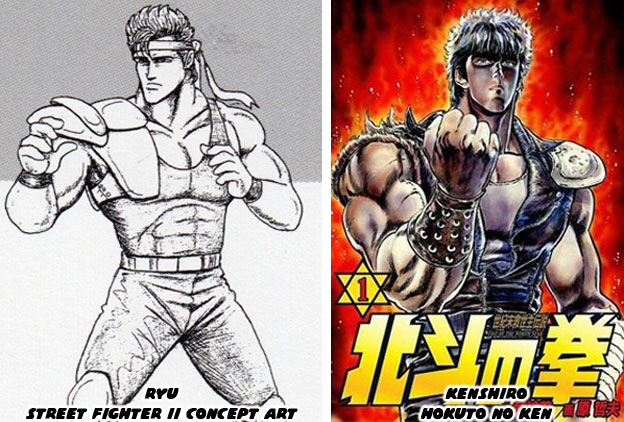
There were many manga writers and artists that had published comics on real and fictional wrestlers. These comics had a hand in inspiring many game characters also. One of the more famous artists, Tetsuo Hara, who was co-creator on Hokuto No Ken / Fist of the North Star was a huge fan of wrestling. He had used wrestlers like Abdullah the Butcher and Big Van Vader as the basis for some of his characters. His work had heavily influenced the development of Street Fighter II. In some early designs Ryu looked very much like Kenshiro from Hokuto No Ken before his design was taken to a more karate form.
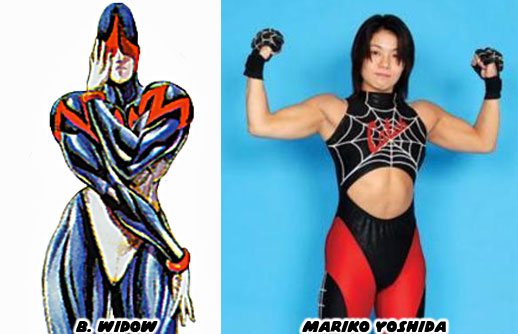
Hara stayed in contact with the developers at Capcom and when they asked the artist if he could help design the wrestlers for the Muscle Bomber / Saturday Night Slam Masters series he was happy to oblige. His intimate knowledge with wrestlers from the world over allowed him to put a unique spin on many figures. For example, the only female playable female character in the Muscle Bomber series was Black Widow. Her look and gimmick was modeled after Mariko Yoshida.
Hara was also the designer for adapting Big Van Vader into the Muscle Bomber series as Sheep the Royal aka Alexander the Grater. There were many masked wrestlers featured in his title, many from around the world. Hara helped demonstrate that great characters in fighting games came in all shapes and sizes. They did not all have to look like karate or kung-fu masters in order to be memorable. Best of all by extension the characters he created became part of the Street Fighter universe.
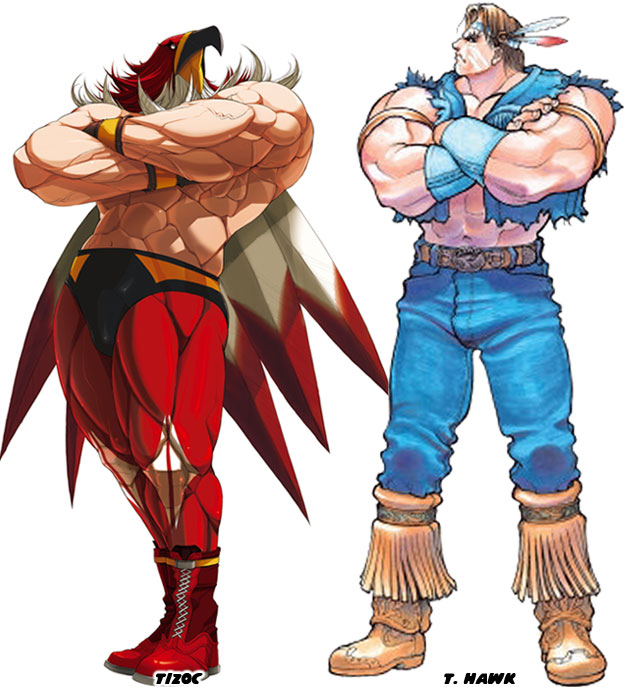
Game designers had an incredible diversity of designs for over 25 years. In early arcade and console games there could always be a masked wrestler to help break up the traditional karate and kung-fu characters that were all the rage. Many times the designers would push the idea of what a luchador could be and what fantastic moves they could contribute to the fighting game genre. Like the other characters in the title the moves that the wrestlers were given were great exaggerations of the actual fighting arts. A suplex was a dangerous throw but imagine how much greater it would look if the performer would leap and spin in the air with their opponent as they performed it. The same thought process was applied to pile drivers, power bombs and all sorts of real wrestling moves. They were made fantastic for the sake of the game. The luchadors and enmascarados that appeared in fighting games were sometimes mild adaptations, as with El Blaze or they were completely over-the-top as with King in Tekken or Tizoc in Garou Mark of the Wolves.

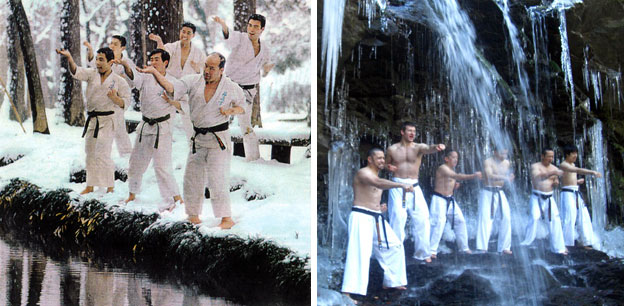
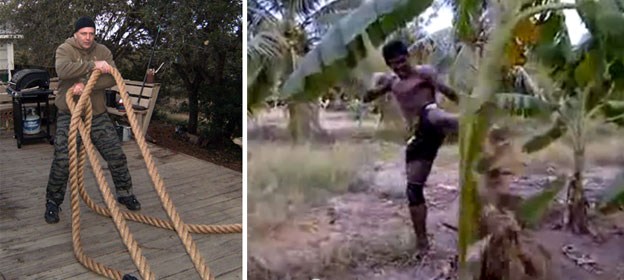
In his pursuit of perfection Oyama lived like a hermit in the mountains for years. He lived in relative isolation, free from distractions and tried to unite the body and mind through his rigorous training. His physical conditioning was brutal. Running, punching, kicking were the only things on his mind, that was when he was not trying to clear his mind through meditation. It wasn't as if he were punching a bag filled with sand either. He would punch and kick hard wood, or trees wrapped in rope and canvas. His skin became rough, his hands and feet calloused. The micro-fractures his limbs suffered by hitting hard surfaces had calcified, making his bones thicker and stronger. He could actually break rocks, stones and bottle necks with the edge of his hands. He trained day and night, in good weather as well as miserable weather. He worked out barefoot, even during the winter. He would run and train under icy waterfalls to harden his mind as well as his test his willpower. When he returned to challenge the community of martial artists he was able to drop most opponents with a single punch. The training regiment would be repeated by other karate practitioners. Many of his Kyokushin students joined Oyama on his journey as his legacy grew. Even after his death his die-hard students kept up with the practice. People would fly in from around the world with the hopes of becoming hardened like steel under the harsh conditions.
Older martial arts systems had their own training techniques which could be considered as brutal as anything that Oyama had suffered through. The Shaolin school, the ancestor of the kung-fu schools, had very strict guidelines. Practitioners ate a diet of vegetables and trained and mediated from morning until night. They too would harden their bones by punching hard wooden dummies, running up and down hills and even focus on strengthening tendons. The feats of superhuman strength and endurance shown by the masters of the fighting arts grew into legend. They truly seemed superhuman, even when compared to other fighters. Those that were strikers had gotten all of the glory. However there were men that had fought just as many opponents if not more than the fabled masters. There were men that had compiled 100, 200 or more undefeated battles in their lifetime. Because they settled the contests through the grappling arts rather than the striking arts they weren't as well remembered. It did not make them any less formidable though.
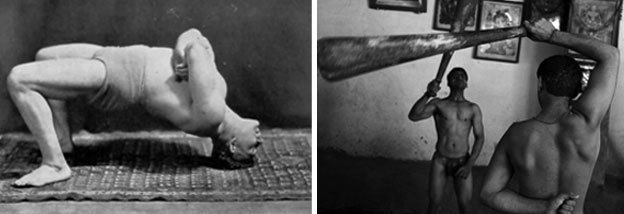
Wrestlers of the various forms applied themselves just as hard at their craft as the Japanese or Chinese fighters did. The conditioned themselves by running, sometimes with a teammate over their shoulder. They developed exercises to help them build strength in their joints, neck, back, shoulders and core. By swinging heavy weights and clubs they developed insane grip strength. They would perform rigorous calisthenics, sometimes thousands of repetitions per day to build stamina. Some of the grappling legends did not have the punches or kicks that made other fighters immortal there were still extremely dangerous. The best wrestlers could dislocate and break bones with ease. They knew how to cut, gouge, stretch and maim opponents without a weapon. Yet they also learned to temper their ability so as not to permanently disable an opponent. The same code of conduct almost chivalrous observed by other martial artists was also practiced by most world class grapplers.

Players realized that the grapplers featured in fighting games were pulled from real world and pop culture influences. Some characters wore masks, others bizarre costumes, most wore traditional uniforms and let their abilities speak for themselves. The grappler was an appealing character because they were grounded in realism. They demonstrated that even mere mortals stood a chance against the martial arts heroes. In fighting games the grapplers did not have projectile moves. The lack of a "fireball" attack did not necessarily hold them back. The most extreme caricatures of a grappler made them iconic to gamers. Zangief, Darun Mister, Alex, Abel and Tendo Gai were just some of the wrestlers featured over the years in some fighting games.
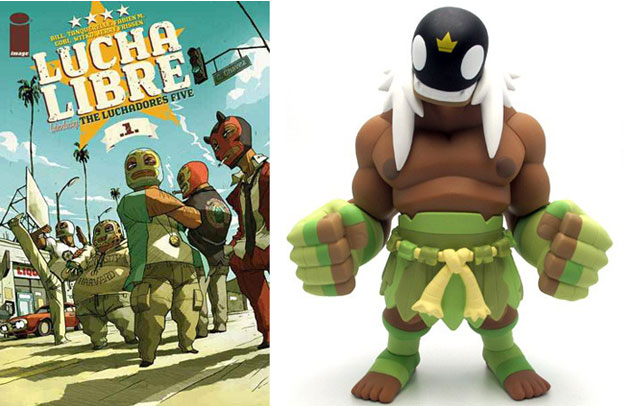
Fans of wrestling history never forgot the influence of Catch on modern wrestlers and MMA fighters. Even comic book artists had been eager to put their spin on the wrestling legacy. The French writers and artists that worked on a series called Lucha Libre highlighted the various genres featured in wrestling matches and even movies. Masked wrestlers, monsters, mad scientists, damsels in distress, cool cars and even tikis had all been featured in one way of another. The most powerful fighter in the series was called King Catch. The masked warrior lived on a tropical island and would be a run in character featured with the Tikitis. The character was designed by Fabien M. Although he never crossed over into the Luchadores Five comics the people at Muttpop hired Monster5 to create a vinyl figure that would fit with the other heroes.

The Catch icons in MMA had shown the limitations of relying on one school of grappling for all the answers. They demonstrated that for every attack there was a defense, and for every hold there was a counter-hold. Fights were fluid and had to be approached as a series constantly changing situations. The people that froze up or relied too heavily on what they had been taught without adapting found themselves on the losing end of a battle. Lee, Oyama and the other fighting masters had come to this realization early on in their careers. The best fighters of the modern era learned that no one school held all the secrets to being a great fighter. The lessons in conditioning and strength training from various disciplines could help make a person physically capable of competing but the mental toughness required was something entirely different. The reason that Oyama and his students studied under harsh conditions was to help train their minds to deal with pain, fatigue or other forces that were beyond their control. The various schools of Karate, Kung-Fu, Judo, Wrestling and Ju-jitsu had taught the world that the striking arts were to be tempered with self-discipline. Knowing how to fight was never an excuse to fight.
Modern gladiators began to pick and choose the best elements from the traditional arts and began re-writing the book on training. They took the hard training from the Asian fighting arts. Building strong bones through repeated striking. Then the new generation of fighters then began developing core and grip strength workouts using classic tools like ropes and kettlebells but with cross training applications as well. The most important thing was the sharing of knowledge between martial arts schools. Students no longer had to limit their training to one system or another. If a fighter learned muay thai strikes from one teacher they were free to go to a different teacher and learn the nuances of boxing as well. Previously there was a stigma associated to "betraying" one school to learn from another. Now many instructors encourage diversity and experimentation. No one school was perfect for every build, body type, expertise or age. Exploration into the various systems meant that competing schools had to become more diversified. This would allow a person to cater to their strengths and build on their weaknesses. The end result were fighters that were well-rounded and would have made the early MMA pioneers proud.

Despite the difficult cross training that the best fighters endured there always seemed to be the one fighter that was better than them. Maybe it was a classmate, a former friend or a bitter rival but there always seemed to be a superior fighter waiting in the wings. Perhaps the opponent got lucky or maybe they had indeed developed a better fighting system. Whatever the case was the loss often changed the path for a legend in the making. The next blog will look at the evolution of MMA in Eurasia as well as the myth of the elderly masters. As always if you enjoyed this blog and would like to sponsor me please visit my Patreon page and consider donating each month, even as little as $1 would help make better blogs and even podcasts!
Hara stayed in contact with the developers at Capcom and when they asked the artist if he could help design the wrestlers for the Muscle Bomber / Saturday Night Slam Masters series he was happy to oblige. His intimate knowledge with wrestlers from the world over allowed him to put a unique spin on many figures. For example, the only female playable female character in the Muscle Bomber series was Black Widow. Her look and gimmick was modeled after Mariko Yoshida.

Hara was also the designer for adapting Big Van Vader into the Muscle Bomber series as Sheep the Royal aka Alexander the Grater. There were many masked wrestlers featured in his title, many from around the world. Hara helped demonstrate that great characters in fighting games came in all shapes and sizes. They did not all have to look like karate or kung-fu masters in order to be memorable. Best of all by extension the characters he created became part of the Street Fighter universe.
Game designers had an incredible diversity of designs for over 25 years. In early arcade and console games there could always be a masked wrestler to help break up the traditional karate and kung-fu characters that were all the rage. Many times the designers would push the idea of what a luchador could be and what fantastic moves they could contribute to the fighting game genre. Like the other characters in the title the moves that the wrestlers were given were great exaggerations of the actual fighting arts. A suplex was a dangerous throw but imagine how much greater it would look if the performer would leap and spin in the air with their opponent as they performed it. The same thought process was applied to pile drivers, power bombs and all sorts of real wrestling moves. They were made fantastic for the sake of the game. The luchadors and enmascarados that appeared in fighting games were sometimes mild adaptations, as with El Blaze or they were completely over-the-top as with King in Tekken or Tizoc in Garou Mark of the Wolves.

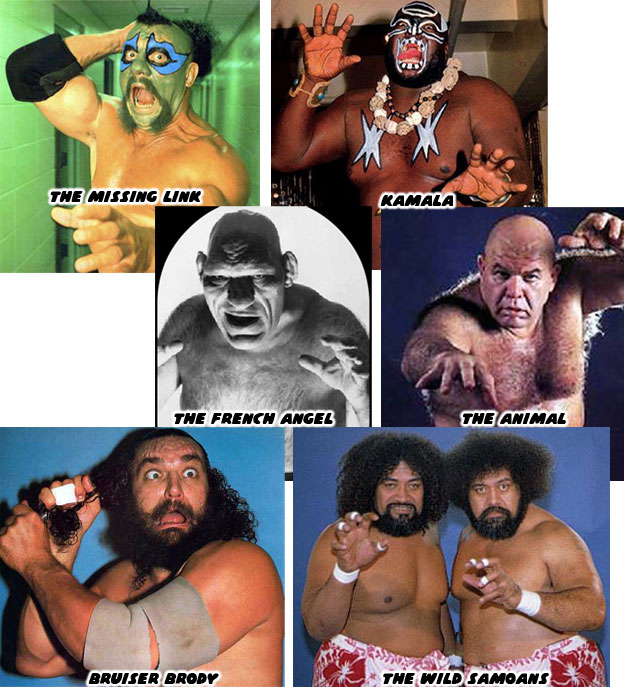
Pro Wrestling did not need masked wrestlers in order to create mysterious personas. Some of the most most popular characters often came "From Parts Unknown." It could be seen as lazy writing from bookers or inspired creativity by the performers themselves. By leaving the country of origin unknown the audience was allowed to imagine what far off island, or lost civilization these fighters came from. In many instances having a strange physical appearance was enough to keep the illusion alive. Some wrestlers were tall, gangly, obese, muscular or outright grotesque. George "The Animal" Steele was a heavy set and hairy man that would paint his tongue green. This plus his erratic mannerisms was enough to scare audiences into thinking that he was some sort of Neanderthal in wrestling trunks. Maurice Tillet aka the French Angel was an even earlier version of the monster man. Maurice suffered from Acromegaly which caused his hands and head to expand through most of his life. His features were proportioned for somebody much larger, making him look gruesome even against other less-than-handsome wrestlers. Some wrestlers used a little face paint or body paint in order to enhance their appearance. Dewey Roberts was a mid-card wrestler until he discovered his gimmick, a crazy haircut and some face paint, then he was elevated to stardom. He was known as the Missing Link and would brutalize his opponents by using headbutts over and over. The large Southerner James Harris was nicknamed the Ugandan Headhunter Kamala. Sometimes teamed with the Missing Link and formed Devistation Inc.
The origins of these gimmicks went back to the earliest days of wrestling in North America. Back when many performers worked the Sideshow in the circus. Sometimes the wrestlers were legitimate fighters and sometimes these fighters needed a gimmick to get them over with audiences. Sadly some of these gimmicks could actually be linked to racial biases and ignorance on foreign cultures. Previously on the blog I had mentioned how ignorance about the Indian fighting forms led to Chinese filmmakers exploiting Yoga as a fighting art. This in turn influenced the creation of characters like Dhalsim and the Great Tiger. Through the history of wrestling the islanders from the South Pacific were often presented as savages and wild men. In the early days of televised wrestling audiences in smaller markets genuinely believed that these men, and sometimes women, with large heads of hair were indeed Headhunters.
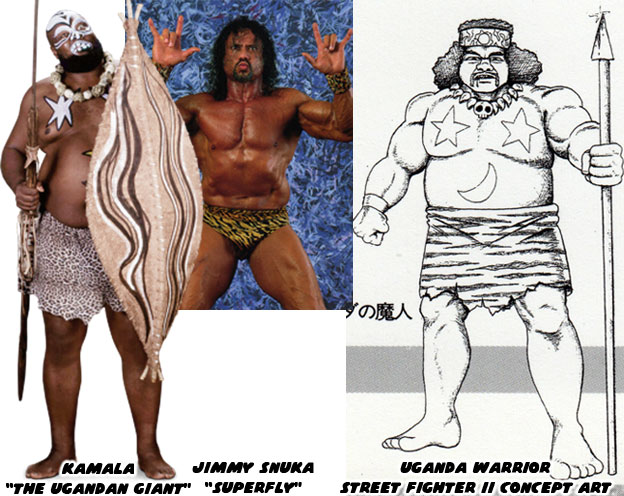
A savvy promoter might help develop a gimmick and convince audiences that their new talent was indeed from some sort of far off land. The wrestlers sometimes did not have to speak to the camera, and the gimmick worked better when they didn't, so that they could be presented as uncultured savages. The designers working on Street Fighter II had used wrestlers as a point of reference for several characters. One of those that ended up on the cutting room floor was an amalgamation of several "wild" wrestlers. The Uganda Warrior had a physical build similar to Afa and Sika, the Wild Samoans, as well as Jimmy "Superfly" Snooka but with the body paint of Kamala.
The savage wrestlers had a big presence in the ring. When promotions went from local television to the mainstream bookers knew to hire wrestlers that looked great on television. Those that had bodybuilder physiques and handsome faces were easier to book than the chubby ones that had actual fighting ability. Masked wrestlers were always great mystery opponents that would boost the ratings. Something that also worked great on television were the gimmick wrestlers that worked the wild man angle. These characterizations translated very well to fighting games. These savage figures were less like traditional wrestlers and more like animals when they fought. They sometimes scratched and bit opponents when the ref wasn't watching, they often celebrated when they were able to draw blood. The line between man and monster would be blurred depending on the performer, or in the case of gaming, depending on the designer.
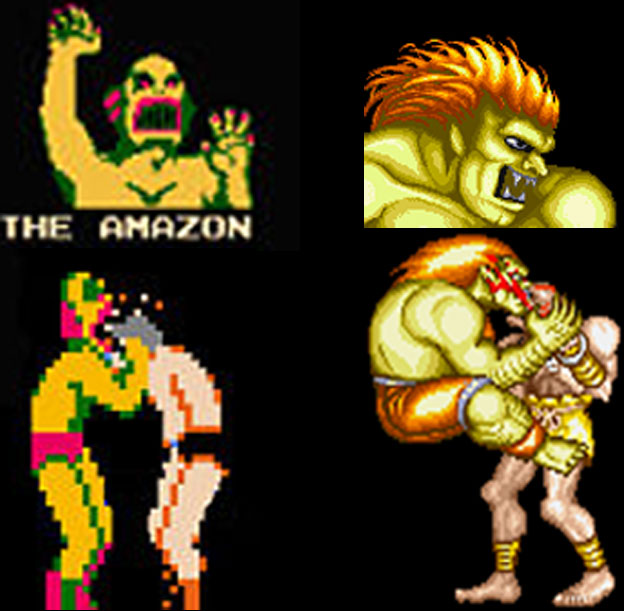
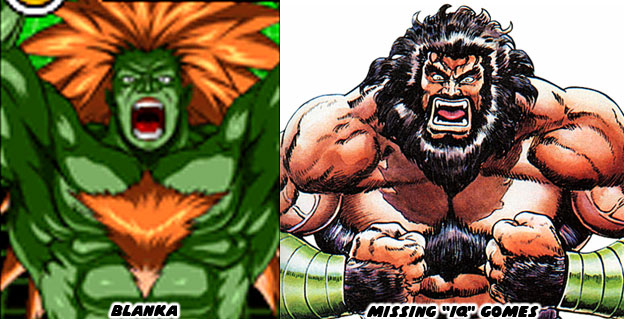
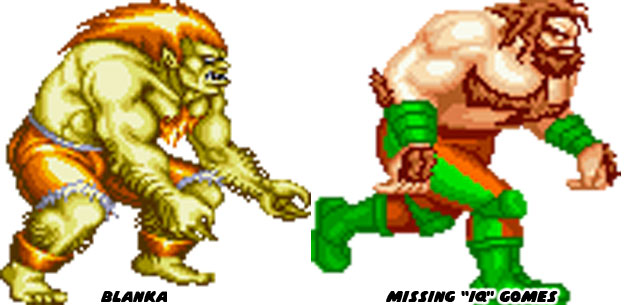
Take the character Blanka from the Street Fighter series and Missing IQ Gomes from the Muscle Bomber series. Both were featured in a Capcom title and both fell within the canon of Street Fighter. The figures were both extremely muscular, very hairy and had features that were almost ape-like.The major difference between the two was skin deep. Blanka was colored green with bright orange hair whereas Gomes had a more natural skin color. The senior designers working on Street Fighter II wanted to see how far they could push the wild man concept and still keep the attention of gamers. Blanka was rooted mainly on an earlier character called The Amazon that was featured in Nintendo's Pro Wrestling game. Artist Akira "Akiman" Yasuda wanted to make players feel powerless as Blanka would bite the face of his opponents as the Amazon did to him on the old Nintendo console.
Capcom could go way out with the look and Blanka would still work within the context of the series. Blanka had long extended ears, sharp teeth, claws (which were simply long nails) and shackles as if he were an escaped animal. He was a good counter-point to the character Dhalsim. Both featured very odd fighting styles and represented mysterious origins. They added a sense of wonder and fantasy to an otherwise traditional cast of boxers, kung-fu and karate experts.

By comparison Gomes had many of the same features yet could have existed in an actual promotion. Like George Steele he was a very strong hairy man that acted irrationally in the ring. The wild outbursts performed by Gomes was something that a wrestler like Frank "Bruiser Brody" Goodish excelled at in real life. Tetsuo Hara tried to keep the majority grounded in reality. He had such tremendous respect for the art of pro wrestling that he didn't want to push the envelope as far as the Street Fighter II team had done. The gimmicks Hara exploited were strong for most of the wrestlers and even the more "exotic" characters could have existed in some promotion. The roots of Blanka's design were not as harmless as those used by Hara.
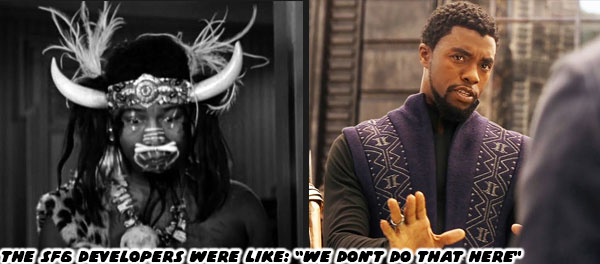
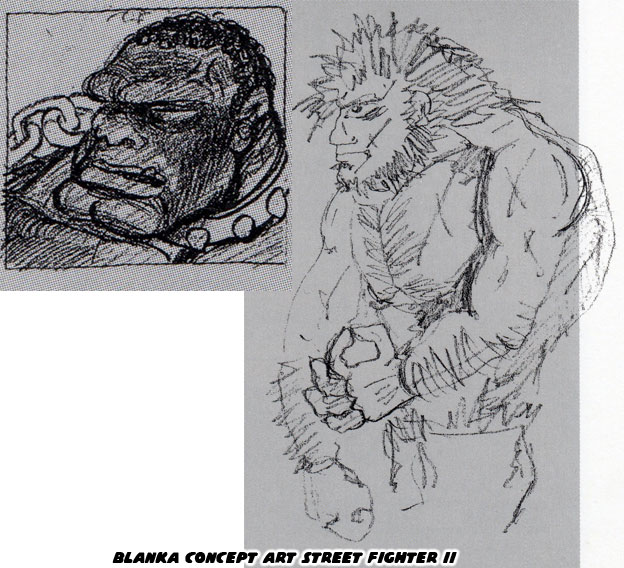
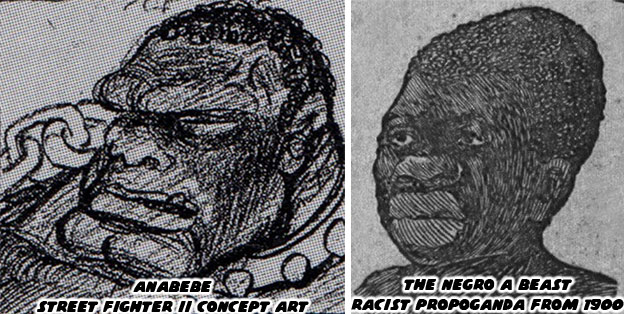
In the earliest concept art Blanka was a savage black man that was in chains. Tight curly hair, big lips and distorted proportions made him appear more ape than man. Somebody at Capcom had enough sense to change the design. The character known as Anabebe could have been a potential disaster, especially in the black community. Arcade games depend on making their audiences happy and keeping them happy. Street Fighter II would have offended many players overseas if figures like "Great Tiger" and Anabebe had not been rethought.
There was still an unmistakable draw to the wild man as a fighter. Many great characters in literary and movie history were based on the idea of a man becoming more like a monster. Think about the classic characters Dr. Jeckyl and Mr. Hyde, Frankenstein's monster, the Mummy, Dracula, and the Wolf Man. They were the inspirations for some of the longest-running movie characters. Universal Studios would revisit those characters time and time again. Modern retellings of these characters could be seen through comic book icons like The Incredible Hulk, Bane and Gorilla Grodd. The influence of these monsters with human traits was universally appealing. A version of the monster-as-a-man was in every culture and storytelling tradition. Capcom had even experimented with the genre by putting the iconic movie monsters in a fighting game known as Vampire / Darkstalkers. Yet for the Street Fighter franchise they wondered how far they could push the wild man, or savage man concept without losing the audience. Blanka had done very well for the series but the developers were looking to recast the game in Street Fighter III. The stretchy-limbed lab experiment named Necro was a variation of Dhalsim. The Chinese twins Yun and Yang were younger takes on Ken and Ryu.
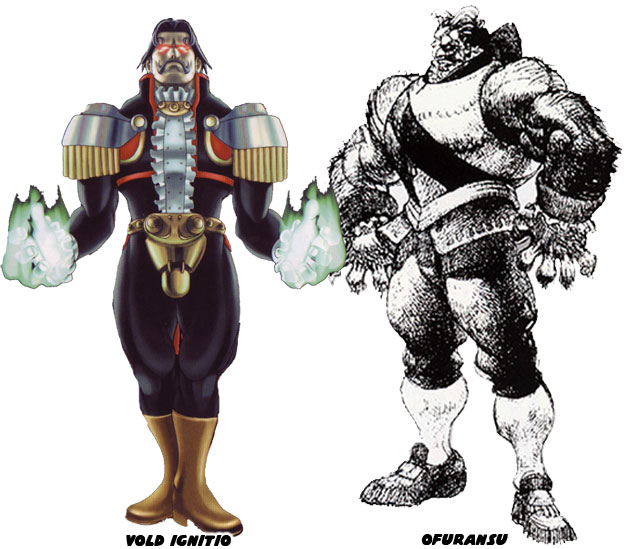
The Blanka-type character for the game never made it past the planning stages. Ofuransu was described as being "a noble field beast." He was an aristocrat that had the features of a wolf man. This combination of royalty and hulking brute was very unique. It was not the only time that Street Fighter designers had kicked around the idea. Half of the team that worked on Street Fighter II left Capcom to form ARIKA. They created a game called Fighting Layer. It incorporated many ideas from Street Fighter II, including ideas left on the cutting room floor. The main villain of the game was an aristocrat named Vold Ignitio. He was more vampire than werewolf in the game, his regal costume beguiled his savage attacks. He would slash at opponents with his long fingernails and even pounce on opponents and bite at their necks.
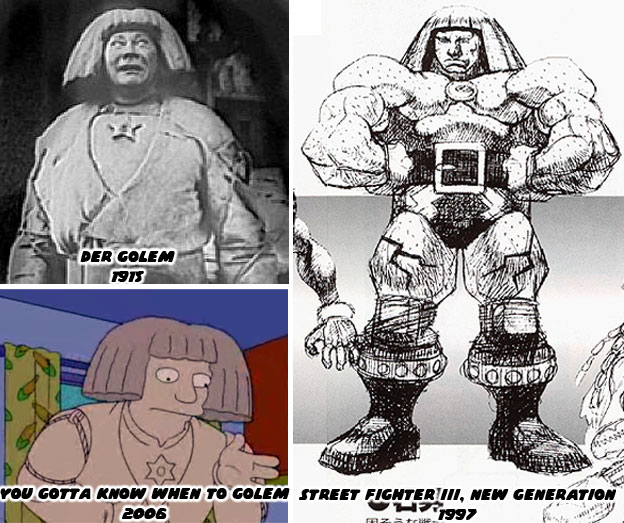
Wild men, monsters, savages and demons were on the extreme edge of designs that worked for the fighting game genre. The team working on Street Fighter III had even kicked around the idea of having a man made of stone, instead of the MMA fighter Alex, or the giant Hugo be the "strong" character in the title. The Golem was actually based on a character featured in what was considered the earliest horror film ever made, an experimental German film from 1915 titled Der Golem. The Golem was a man made of clay from Jewish myth. A person seeking revenge against a great adversary could bring the monster to life by using magic. He would write the name of the person he wanted to kill on a piece of paper and feed it to the Golem. The Golem would then go out and hunt his victim, never tiring, impervious to harm and never stopping until his mission was accomplished. This character was considered the basis for Frankenstein's monster. The character was obscure compared to the more famous movie monsters. That didn't stop the designers at Capcom from putting him on the table or even from the writers on the Simpsons from using him in a Halloween special.
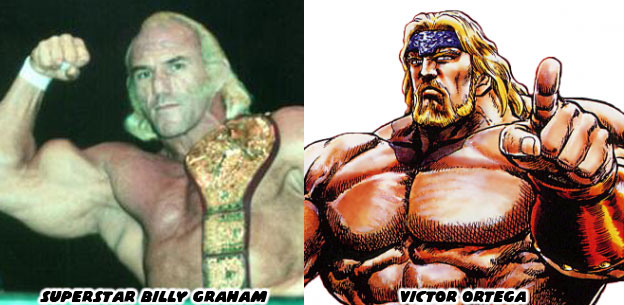
The designers at Capcom came to their senses and scaled back their character choices. They found a good balance between new fighting forms and returning characters as the Street Fighter III series took off. Wrestlers would remain popular choices while casting other fighting games. Artists like Tetsuo Hara would find success in adapting real wrestlers into the Muscle Bomber games. The champion of the universe was a semi-retired fighter by the name of Victor Ortega. The character was modeled after "Superstar" Billy Graham, one of the most colorful wrestlers from the '70s and '80s. Graham was a great in-ring worker and had an amazing bodybuilder physique. His look and gimmick would be copied for generations by Jessie "the Body" Ventura, Hulk Hogan and Scott Steiner. Ortega was one of the most muscular characters ever featured in a Capcom fighting game, easily beating the massive frames of Zangief and Darun Mister.
Despite its long and colorful history pro wrestlers, masked or not, were thought of as the bottom tier of the fight circuit. Television and motion pictures had convinced audiences that the best fighters stood on their feet and traded punches and kicks with each other until one person fell. Wrestlers did not really throw punches and kicks therefor they were not "real" fighters. The reality of combat was completely different. Most street fights and even professional fights ended up on the ground. It would be anticlimactic in most fighting games to have the final boss simply tackle the player and break their arm, even if that was what would work best in the real world. It was rare when a fight stayed upright but allegedly not for the best fighters. People like Bruce Lee and Mas Oyama were said to have ended fights quickly, before they could be taken down. When Oyama would have an open challenge sparring match he would often dispatch opponents with a single punch, usually to the torso instead of the head. Even with that said both men knew the importance of being well rounded fighters. They studied the grappling arts and knew how to stay on their feet even when people were desperate to take them down. Judo, jujitsu and wrestling were forms that they had learned a tremendous amount from. This made them much more formidable than any one style could have ever taught them. Achieving that level of expertise was not easy for the fighters.

The origins of these gimmicks went back to the earliest days of wrestling in North America. Back when many performers worked the Sideshow in the circus. Sometimes the wrestlers were legitimate fighters and sometimes these fighters needed a gimmick to get them over with audiences. Sadly some of these gimmicks could actually be linked to racial biases and ignorance on foreign cultures. Previously on the blog I had mentioned how ignorance about the Indian fighting forms led to Chinese filmmakers exploiting Yoga as a fighting art. This in turn influenced the creation of characters like Dhalsim and the Great Tiger. Through the history of wrestling the islanders from the South Pacific were often presented as savages and wild men. In the early days of televised wrestling audiences in smaller markets genuinely believed that these men, and sometimes women, with large heads of hair were indeed Headhunters.
A savvy promoter might help develop a gimmick and convince audiences that their new talent was indeed from some sort of far off land. The wrestlers sometimes did not have to speak to the camera, and the gimmick worked better when they didn't, so that they could be presented as uncultured savages. The designers working on Street Fighter II had used wrestlers as a point of reference for several characters. One of those that ended up on the cutting room floor was an amalgamation of several "wild" wrestlers. The Uganda Warrior had a physical build similar to Afa and Sika, the Wild Samoans, as well as Jimmy "Superfly" Snooka but with the body paint of Kamala.

The savage wrestlers had a big presence in the ring. When promotions went from local television to the mainstream bookers knew to hire wrestlers that looked great on television. Those that had bodybuilder physiques and handsome faces were easier to book than the chubby ones that had actual fighting ability. Masked wrestlers were always great mystery opponents that would boost the ratings. Something that also worked great on television were the gimmick wrestlers that worked the wild man angle. These characterizations translated very well to fighting games. These savage figures were less like traditional wrestlers and more like animals when they fought. They sometimes scratched and bit opponents when the ref wasn't watching, they often celebrated when they were able to draw blood. The line between man and monster would be blurred depending on the performer, or in the case of gaming, depending on the designer.

Take the character Blanka from the Street Fighter series and Missing IQ Gomes from the Muscle Bomber series. Both were featured in a Capcom title and both fell within the canon of Street Fighter. The figures were both extremely muscular, very hairy and had features that were almost ape-like.The major difference between the two was skin deep. Blanka was colored green with bright orange hair whereas Gomes had a more natural skin color. The senior designers working on Street Fighter II wanted to see how far they could push the wild man concept and still keep the attention of gamers. Blanka was rooted mainly on an earlier character called The Amazon that was featured in Nintendo's Pro Wrestling game. Artist Akira "Akiman" Yasuda wanted to make players feel powerless as Blanka would bite the face of his opponents as the Amazon did to him on the old Nintendo console.
Capcom could go way out with the look and Blanka would still work within the context of the series. Blanka had long extended ears, sharp teeth, claws (which were simply long nails) and shackles as if he were an escaped animal. He was a good counter-point to the character Dhalsim. Both featured very odd fighting styles and represented mysterious origins. They added a sense of wonder and fantasy to an otherwise traditional cast of boxers, kung-fu and karate experts.

By comparison Gomes had many of the same features yet could have existed in an actual promotion. Like George Steele he was a very strong hairy man that acted irrationally in the ring. The wild outbursts performed by Gomes was something that a wrestler like Frank "Bruiser Brody" Goodish excelled at in real life. Tetsuo Hara tried to keep the majority grounded in reality. He had such tremendous respect for the art of pro wrestling that he didn't want to push the envelope as far as the Street Fighter II team had done. The gimmicks Hara exploited were strong for most of the wrestlers and even the more "exotic" characters could have existed in some promotion. The roots of Blanka's design were not as harmless as those used by Hara.

In the earliest concept art Blanka was a savage black man that was in chains. Tight curly hair, big lips and distorted proportions made him appear more ape than man. Somebody at Capcom had enough sense to change the design. The character known as Anabebe could have been a potential disaster, especially in the black community. Arcade games depend on making their audiences happy and keeping them happy. Street Fighter II would have offended many players overseas if figures like "Great Tiger" and Anabebe had not been rethought.

There was still an unmistakable draw to the wild man as a fighter. Many great characters in literary and movie history were based on the idea of a man becoming more like a monster. Think about the classic characters Dr. Jeckyl and Mr. Hyde, Frankenstein's monster, the Mummy, Dracula, and the Wolf Man. They were the inspirations for some of the longest-running movie characters. Universal Studios would revisit those characters time and time again. Modern retellings of these characters could be seen through comic book icons like The Incredible Hulk, Bane and Gorilla Grodd. The influence of these monsters with human traits was universally appealing. A version of the monster-as-a-man was in every culture and storytelling tradition. Capcom had even experimented with the genre by putting the iconic movie monsters in a fighting game known as Vampire / Darkstalkers. Yet for the Street Fighter franchise they wondered how far they could push the wild man, or savage man concept without losing the audience. Blanka had done very well for the series but the developers were looking to recast the game in Street Fighter III. The stretchy-limbed lab experiment named Necro was a variation of Dhalsim. The Chinese twins Yun and Yang were younger takes on Ken and Ryu.
The Blanka-type character for the game never made it past the planning stages. Ofuransu was described as being "a noble field beast." He was an aristocrat that had the features of a wolf man. This combination of royalty and hulking brute was very unique. It was not the only time that Street Fighter designers had kicked around the idea. Half of the team that worked on Street Fighter II left Capcom to form ARIKA. They created a game called Fighting Layer. It incorporated many ideas from Street Fighter II, including ideas left on the cutting room floor. The main villain of the game was an aristocrat named Vold Ignitio. He was more vampire than werewolf in the game, his regal costume beguiled his savage attacks. He would slash at opponents with his long fingernails and even pounce on opponents and bite at their necks.

Wild men, monsters, savages and demons were on the extreme edge of designs that worked for the fighting game genre. The team working on Street Fighter III had even kicked around the idea of having a man made of stone, instead of the MMA fighter Alex, or the giant Hugo be the "strong" character in the title. The Golem was actually based on a character featured in what was considered the earliest horror film ever made, an experimental German film from 1915 titled Der Golem. The Golem was a man made of clay from Jewish myth. A person seeking revenge against a great adversary could bring the monster to life by using magic. He would write the name of the person he wanted to kill on a piece of paper and feed it to the Golem. The Golem would then go out and hunt his victim, never tiring, impervious to harm and never stopping until his mission was accomplished. This character was considered the basis for Frankenstein's monster. The character was obscure compared to the more famous movie monsters. That didn't stop the designers at Capcom from putting him on the table or even from the writers on the Simpsons from using him in a Halloween special.

The designers at Capcom came to their senses and scaled back their character choices. They found a good balance between new fighting forms and returning characters as the Street Fighter III series took off. Wrestlers would remain popular choices while casting other fighting games. Artists like Tetsuo Hara would find success in adapting real wrestlers into the Muscle Bomber games. The champion of the universe was a semi-retired fighter by the name of Victor Ortega. The character was modeled after "Superstar" Billy Graham, one of the most colorful wrestlers from the '70s and '80s. Graham was a great in-ring worker and had an amazing bodybuilder physique. His look and gimmick would be copied for generations by Jessie "the Body" Ventura, Hulk Hogan and Scott Steiner. Ortega was one of the most muscular characters ever featured in a Capcom fighting game, easily beating the massive frames of Zangief and Darun Mister.

Despite its long and colorful history pro wrestlers, masked or not, were thought of as the bottom tier of the fight circuit. Television and motion pictures had convinced audiences that the best fighters stood on their feet and traded punches and kicks with each other until one person fell. Wrestlers did not really throw punches and kicks therefor they were not "real" fighters. The reality of combat was completely different. Most street fights and even professional fights ended up on the ground. It would be anticlimactic in most fighting games to have the final boss simply tackle the player and break their arm, even if that was what would work best in the real world. It was rare when a fight stayed upright but allegedly not for the best fighters. People like Bruce Lee and Mas Oyama were said to have ended fights quickly, before they could be taken down. When Oyama would have an open challenge sparring match he would often dispatch opponents with a single punch, usually to the torso instead of the head. Even with that said both men knew the importance of being well rounded fighters. They studied the grappling arts and knew how to stay on their feet even when people were desperate to take them down. Judo, jujitsu and wrestling were forms that they had learned a tremendous amount from. This made them much more formidable than any one style could have ever taught them. Achieving that level of expertise was not easy for the fighters.

In his pursuit of perfection Oyama lived like a hermit in the mountains for years. He lived in relative isolation, free from distractions and tried to unite the body and mind through his rigorous training. His physical conditioning was brutal. Running, punching, kicking were the only things on his mind, that was when he was not trying to clear his mind through meditation. It wasn't as if he were punching a bag filled with sand either. He would punch and kick hard wood, or trees wrapped in rope and canvas. His skin became rough, his hands and feet calloused. The micro-fractures his limbs suffered by hitting hard surfaces had calcified, making his bones thicker and stronger. He could actually break rocks, stones and bottle necks with the edge of his hands. He trained day and night, in good weather as well as miserable weather. He worked out barefoot, even during the winter. He would run and train under icy waterfalls to harden his mind as well as his test his willpower. When he returned to challenge the community of martial artists he was able to drop most opponents with a single punch. The training regiment would be repeated by other karate practitioners. Many of his Kyokushin students joined Oyama on his journey as his legacy grew. Even after his death his die-hard students kept up with the practice. People would fly in from around the world with the hopes of becoming hardened like steel under the harsh conditions.
Older martial arts systems had their own training techniques which could be considered as brutal as anything that Oyama had suffered through. The Shaolin school, the ancestor of the kung-fu schools, had very strict guidelines. Practitioners ate a diet of vegetables and trained and mediated from morning until night. They too would harden their bones by punching hard wooden dummies, running up and down hills and even focus on strengthening tendons. The feats of superhuman strength and endurance shown by the masters of the fighting arts grew into legend. They truly seemed superhuman, even when compared to other fighters. Those that were strikers had gotten all of the glory. However there were men that had fought just as many opponents if not more than the fabled masters. There were men that had compiled 100, 200 or more undefeated battles in their lifetime. Because they settled the contests through the grappling arts rather than the striking arts they weren't as well remembered. It did not make them any less formidable though.
Wrestlers of the various forms applied themselves just as hard at their craft as the Japanese or Chinese fighters did. The conditioned themselves by running, sometimes with a teammate over their shoulder. They developed exercises to help them build strength in their joints, neck, back, shoulders and core. By swinging heavy weights and clubs they developed insane grip strength. They would perform rigorous calisthenics, sometimes thousands of repetitions per day to build stamina. Some of the grappling legends did not have the punches or kicks that made other fighters immortal there were still extremely dangerous. The best wrestlers could dislocate and break bones with ease. They knew how to cut, gouge, stretch and maim opponents without a weapon. Yet they also learned to temper their ability so as not to permanently disable an opponent. The same code of conduct almost chivalrous observed by other martial artists was also practiced by most world class grapplers.

Players realized that the grapplers featured in fighting games were pulled from real world and pop culture influences. Some characters wore masks, others bizarre costumes, most wore traditional uniforms and let their abilities speak for themselves. The grappler was an appealing character because they were grounded in realism. They demonstrated that even mere mortals stood a chance against the martial arts heroes. In fighting games the grapplers did not have projectile moves. The lack of a "fireball" attack did not necessarily hold them back. The most extreme caricatures of a grappler made them iconic to gamers. Zangief, Darun Mister, Alex, Abel and Tendo Gai were just some of the wrestlers featured over the years in some fighting games.
Fans of wrestling history never forgot the influence of Catch on modern wrestlers and MMA fighters. Even comic book artists had been eager to put their spin on the wrestling legacy. The French writers and artists that worked on a series called Lucha Libre highlighted the various genres featured in wrestling matches and even movies. Masked wrestlers, monsters, mad scientists, damsels in distress, cool cars and even tikis had all been featured in one way of another. The most powerful fighter in the series was called King Catch. The masked warrior lived on a tropical island and would be a run in character featured with the Tikitis. The character was designed by Fabien M. Although he never crossed over into the Luchadores Five comics the people at Muttpop hired Monster5 to create a vinyl figure that would fit with the other heroes.

The Catch icons in MMA had shown the limitations of relying on one school of grappling for all the answers. They demonstrated that for every attack there was a defense, and for every hold there was a counter-hold. Fights were fluid and had to be approached as a series constantly changing situations. The people that froze up or relied too heavily on what they had been taught without adapting found themselves on the losing end of a battle. Lee, Oyama and the other fighting masters had come to this realization early on in their careers. The best fighters of the modern era learned that no one school held all the secrets to being a great fighter. The lessons in conditioning and strength training from various disciplines could help make a person physically capable of competing but the mental toughness required was something entirely different. The reason that Oyama and his students studied under harsh conditions was to help train their minds to deal with pain, fatigue or other forces that were beyond their control. The various schools of Karate, Kung-Fu, Judo, Wrestling and Ju-jitsu had taught the world that the striking arts were to be tempered with self-discipline. Knowing how to fight was never an excuse to fight.
Modern gladiators began to pick and choose the best elements from the traditional arts and began re-writing the book on training. They took the hard training from the Asian fighting arts. Building strong bones through repeated striking. Then the new generation of fighters then began developing core and grip strength workouts using classic tools like ropes and kettlebells but with cross training applications as well. The most important thing was the sharing of knowledge between martial arts schools. Students no longer had to limit their training to one system or another. If a fighter learned muay thai strikes from one teacher they were free to go to a different teacher and learn the nuances of boxing as well. Previously there was a stigma associated to "betraying" one school to learn from another. Now many instructors encourage diversity and experimentation. No one school was perfect for every build, body type, expertise or age. Exploration into the various systems meant that competing schools had to become more diversified. This would allow a person to cater to their strengths and build on their weaknesses. The end result were fighters that were well-rounded and would have made the early MMA pioneers proud.

Despite the difficult cross training that the best fighters endured there always seemed to be the one fighter that was better than them. Maybe it was a classmate, a former friend or a bitter rival but there always seemed to be a superior fighter waiting in the wings. Perhaps the opponent got lucky or maybe they had indeed developed a better fighting system. Whatever the case was the loss often changed the path for a legend in the making. The next blog will look at the evolution of MMA in Eurasia as well as the myth of the elderly masters. As always if you enjoyed this blog and would like to sponsor me please visit my Patreon page and consider donating each month, even as little as $1 would help make better blogs and even podcasts!
Labels:
anabubu,
b. widow,
blanka,
bruiser brody,
buronson,
fist of the north star,
golem,
kamala,
mariko yoshida,
missing iq gomes,
missing link,
t. hawk,
tetsuo hara,
the missing lin,
tizoc,
uganda warrior,
vold
Tuesday, July 14, 2015
Representation Matters! Or, what happened to Birdie, part 6...
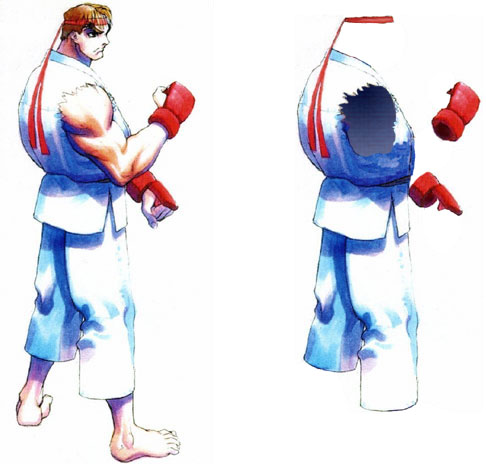
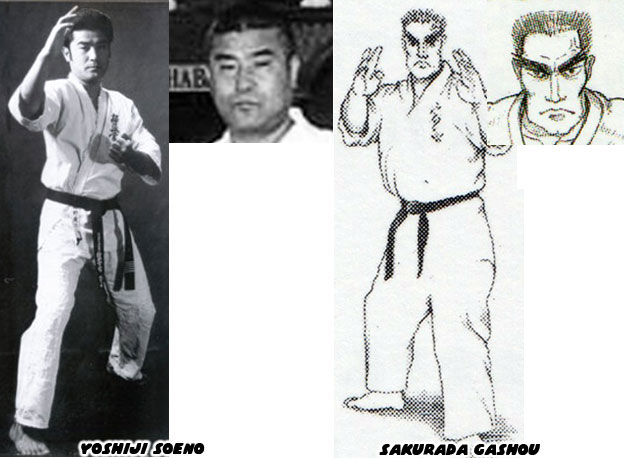
The Street Fighter II team was off to a rough start. Their character designs were falling flat and Capcom was trying their best to turn the project around in the quickly changing arcade market. They needed to get a new game out and one that set itself apart from Street Fighter and Final Fight. There was an influx of artists and designers working on the cast. They were looking for the elements that worked, the styles of fighting that needed representation and a way to balance the library of characters. Each artist brought a unique perspective with them along with their talents. Some of these artists were familiar with the various schools of fighting and even had some insight on pro wrestling and action films. Some of the artists were well read in science fiction and fantasy stories. Some of the artists enjoyed traveling and history. The collective was able to pick the designs apart and begin remaking them with a few unique touches. Sakurada Gashou and the Kenshiro-looking Ryu were out. If karate was going to be the star of the game then the fighter had to be become an icon, or exaggerated caricature depending on your point of view of what a karate master should look like. The updated Ryu had torn sleeves to show off his powerful arms, a red headband and red punching gloves to break up the all-white uniform.
Capcom then brought back Ken. In was done in part to have a character that the Americans would gravitate to. The blonde hair and yellow punching gloves contrasted his all-red gi. To audiences this was just a pallet swap with different heads. Internally the art team made a distinction between the two characters. Ken had hemmed sleeves on his gi. He was careful about the way he presented himself. Ryu by comparison had torn sleeves and worn edges on his pants. He cared more about the fight than about trophies. They were both very simple designs and the unique touches were subtle, so subtle that many other studios missed the individual elements and couldn't create better karatekas in 25 years of trying.
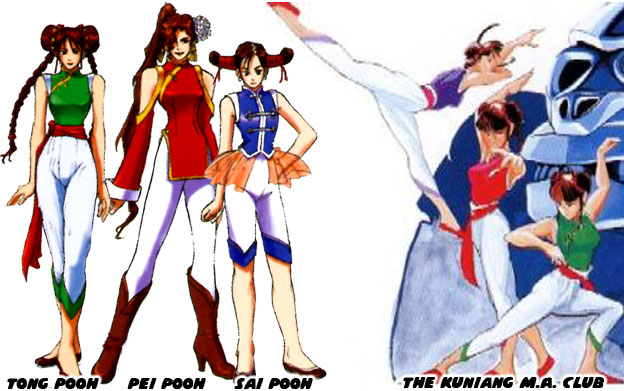
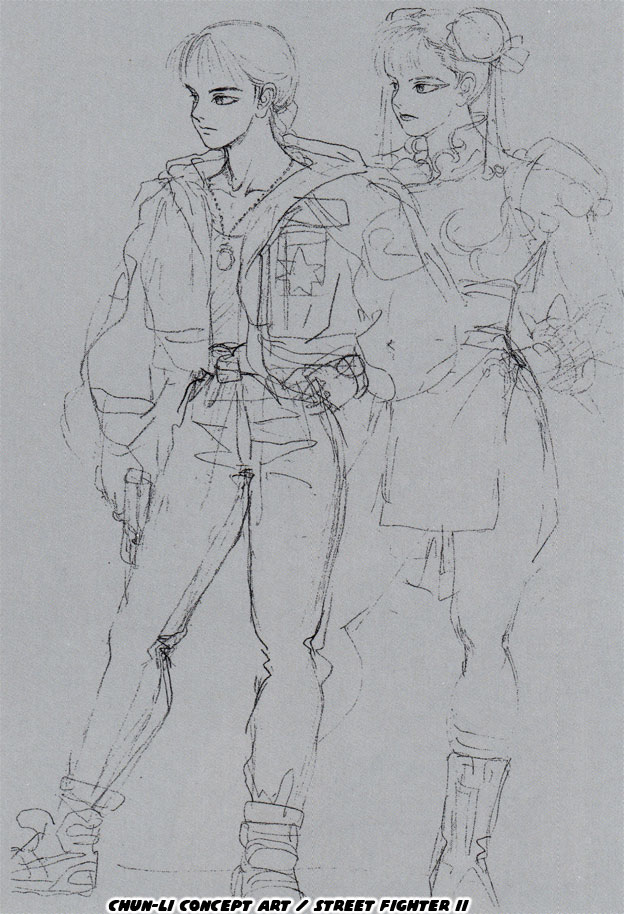
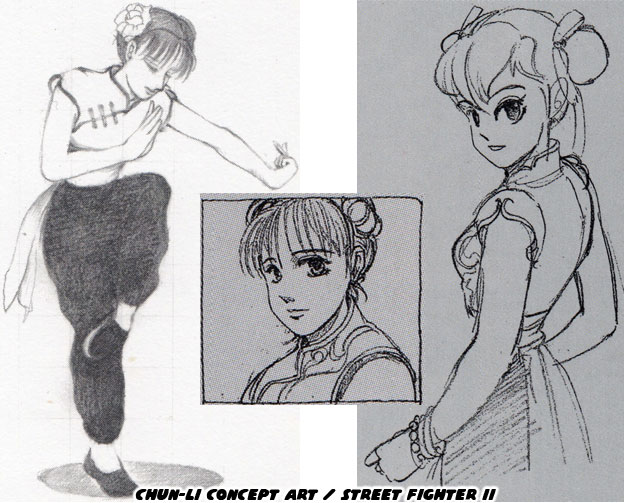
With the stars of the game figured out the studio then went after the Chinese figure, then called Zhi Li. They looked at her costume, her age and purpose. The were something lacking with the young female fighter. She looked too much like an anime or manga character. Artist Akiman said that it was a period of time where you couldn't get by without creating a Chinese Beauty. Zhi Li had a look that was borrowed from the Pooh sisters aka the Kuniang Martial Arts Club from the 1989 sci-fi action game Strider. The sisters had kicks that were almost as powerful as Strider Hiryu's cypher sword Zhi Li would never be believable as a serious fighter in a cast of adult men. The team decided to make her older, turn her into a woman. It worked for the Pooh Sisters and would probably work again.

As the plot of the game was being developed they realized that Chun-Li needed a reason to be in a fighting tournament. Simply being a female fighter may have worked in a movie but games required more effort. Games allowed the audience to see the same story but from different points of view, including those of villains. By making the Chinese girl older they knew that she would never be a damsel in distress. She was not a prize for the competitors, and this was a refreshing change of pace. In fact it was even better because her purpose for competing was to bring the organizer to justice. It was decided that she was actually an undercover cop. The team was elated with the possibilities. This could be something that they kept a secret from audiences until the ending of the game. They took apart the traditional Chinese wushu uniform that Chun-Li had and turned it into a costume. The character would wear makeup, put her hair up in buns and be very "girly" in the tournament. At the same time she would wear wrestling boots and weighted spiked bracelets so that she had a better chance of winning each fight.
What the designer Akira "Akiman" Yasuda did to Chun-Li was a stroke of genius. It would become something that other designers would look to when they were stumped by a character redo. Unfortunately some artists misread the design. They did not catch how Chun-Li was matured to balance out the rest of the cast. They did not even bother to consider that there may have been a precedence set by actual Chinese martial arts practitioners that were women. Imagine that if Mas Oyama and Yoshiji Soeno inspired the development of Ryu then perhaps Wing Chun and the actresses in Hong Kong cinema might have helped shape Chun-Li as well. Instead the subsequent designers thought that it was important to give new characters some sort of "day job" in order to make them appealing. Since the fighters could not all be cops then people with all sorts of random backgrounds began turning in later versions of the series. Dee Jay was a musician, El Fuerte was a chef, Hakan loved oil, Rufus was fat, etc. The other artists, the ones that "got" what Akiman had done were able to turn around the more offensive characters.
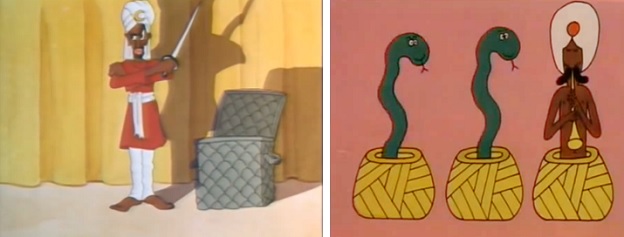
Great Tiger was supposed to be an Indian mystic but his look was very bland. He was a dark-skinned character with a turban, he could have been pulled right out of any comic book. Not much else was known about this figure, what form of fighting he represented or what his abilities were. This was when the team looked to a few new points of reference. Where had they seen Indian fighters before and what made them special? Of course the Indian was well known in television and cartoon tropes. Who does not remember seeing a cartoon of an Indian lying on a bed of nails, or running swords through a basket with their apprentice inside? What about the classic Indian rope trick or the Madari better known as the snake charmers?
These were things that everyone had seen and was familiar with. Yet these things could have also been negative subconscious cues about a particular culture. India had introduced words like Guru and Yogi into Western language. Whether true or not these images of Indians colored pop culture the world over. In Hong Kong cinema there were two hit films by Jimmy Wang Yu. The One Armed Boxer and the Master of the Flying Guillotine. Actors in blackface portrayed the Indians as having unique powers. In the One Armed Boxer the Indian was impervious to weapons, he stabbed himself in the chest to prove it. He could also teleport around the room by standing on his hands. Magicians from India were part of folklore and many assumed that there was some truth to these legends. The second Indian character feature in the Wang Yu films was even more memorable. He had arms that stretched, creating a very unique challenge for the hero of the film. It was an impressive effect in the film, using prosthesis and a second person to create the illusion. This character, blackface and all, had a profound influence on the development of the Great Tiger.
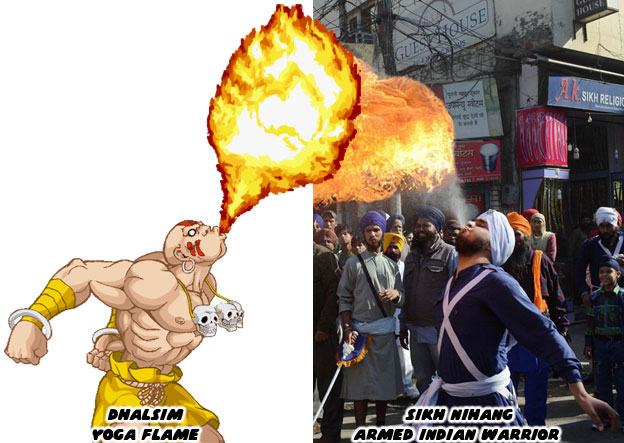
As Dhalsim began to emerge the designers wanted to know how else they could make him unique. Again they used the Indian mystic as a point of reference. In legend the magicians from India and Arabia were highly tolerant of fire. They could walk on hot coals and even breathe fire. These performers ended up in travelling caravans and helped create the myth that found its way to film and television centuries later. The best thing about Street Fighter was that there was a hint to truth to the icons. There was a caste of Sikh Warriors that were armed with weapons and trained in the art of war. During celebrations they would parade in uniform and sometimes put on a show for audiences, singing, dancing and breathing fire. It was an amazing visual. Imagine an animated version of a Sikh warrior in a battle against a karate master. There was real potential in trying to recreate these different arts for game playing audiences.
The team at Capcom began experimenting with the look and moves of the Great Tiger. They stripped away the turban and Sikh costume and made him appear very humble. In Sikh practice hair was a sacred, it was never exposed and was kept wrapped up. Dhalsim was supposed to appear more like a beggar. Literally someone that gave up his worldly possessions and even shaved himself bald to humble himself. A pair of ragged trunks and a rope belt became his new costume. Around his neck he wore three small skulls. It would be revealed that these were children from his village that had died. As a pacifist the only reason he entered the Street Fighter tournament to win the prize money to help his village. His backstory would be revealed at the end of the game. Like Chun-Li and Ryu the developers learned that it was important to know what each character was fighting for and why it made them interesting. At the same time that purpose was not pushed on audiences, like say a Mexican luchador showing up to battle with a frying pan because you know… cooking. The developers respected their characters and audience enough to let players discover what made them unique through the endings of the game.
The team then looked at Anabebe and realized that the character had to go. The artists knew however that Anabebe was too ugly and controversial a design. People in North (and Central and South) America would find the character highly offensive. At the same time a wild man was needed to break up the consistency of traditional forms of fighting. Just as they had done with Dhalsim the studio knew that they had to go to extreme lengths to make the character unique. They decided that the new character might be covered in long hair, making him appear more feral. Instead of giving him a skin tone they decided to paint him up in bright colors. The studio looked at the bright colors used by poisonous creatures, snakes and reptiles, to warn predators.
Again Akiman helped with the redesign. He remembered playing against planner Akira Nishitani and being frustrated. Nishitani was good at finding exploits in games and then using them against his opponents. The two would play Pro Wrestling on the Famicom (NES) when it came out in 1986. Nishitani would use a character called the Amazon, he was a green skinned wild man, that looked like a piranha. Anyhow he would use this character to bite the heads of opponents. It was impossible to break out of the hold. Akiman wanted players feel the frustration he did with Blanka's chomping attacks. So the beast man design was pulled from Pro Wrestling rather than black stereotypes.
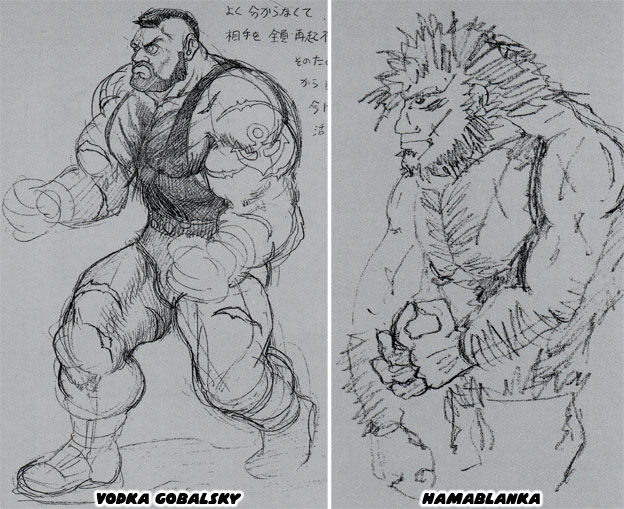
Blanka, shortened from Hamablanka, ended up being a bright neon green, almost lime with an equally bright orange hairdo. He was given sharp teeth and nails to make him appear like a beast. He ended up being not very far removed from the Amazon. On his ankles they left broken shackles, as if he were indeed an escaped wild man. It was the only carry-over from Anabebe's original design. What they abandoned thankfully was his original skin color and even ethnicity. In the end it worked out well for the character.
Both Dhalsim and Blanka started off as ugly if not outright racist caricatures of a culture. Both went on to represent the two most extreme character designs in the Street Fighter universe. They did by going beyond the stereotypical conventions and created figures that audiences had never seen before. Despite these extreme makeovers they were still acceptable in the lineup. In the game series and in canon they were sometimes partnered together. Despite looking very different the duo did a great job visually of balancing each other out. Because Capcom was able to pull away from their highly dubious origins the two became some of the most popular characters ever created. They were an example of how almost any design could be salvaged with enough insight and hard work.
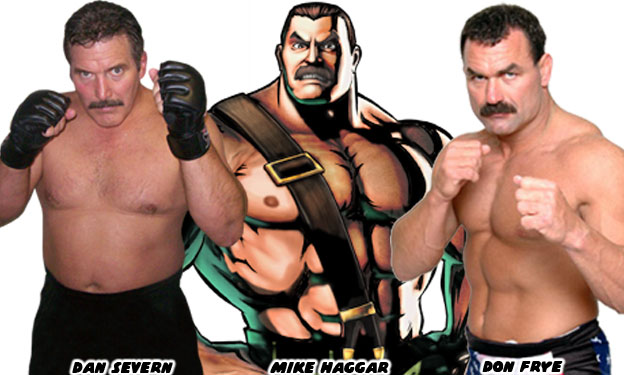
Some of the other characters that were in the planning stages were actually very close to their finished counterparts. The team cut down the wrestlers planned for Street Fighter II from two to one. The studio had found great success with the strong man / wrestler archetype in Final Fight. They had created a large brawler named Mike Haggar. His assortment of suplexes and piledrivers was impressive and never before seen in a brawler. The figure looked very much like MMA pioneers Dan Severn and Don Frye. The two represented the USA in international competitions and Severn had fought in Japan as early as 1982, making him a likely influence on the Capcom staff. By using Haggar as a template the planners could create new moves that were similar to but even more powerful.
The USA was getting two representatives, Ken and Guile, so the studio decided to give a different nation the wrestler. Mexico was cut out of the countries that would be represented when Capcom dropped the masked wrestler. They looked at the burly grapplers from the Eastern block countries. People like Ivan Poddubny and Stanislaus Zbyszko were legendary wrestlers and world champions that gave Europe a chapter in wrestling history. The team at Capcom decided to make the next character Russian. What needed saving was not the design as much as the name. The burly sailor on the table would have been named Vodka Gobalsky.
The teamed toned down the sailor image and instead focused on making him a wrestler. Thankfully some of the creators knew that names could be just as offensive as skin color. They came to this realization much faster than those working elsewhere.
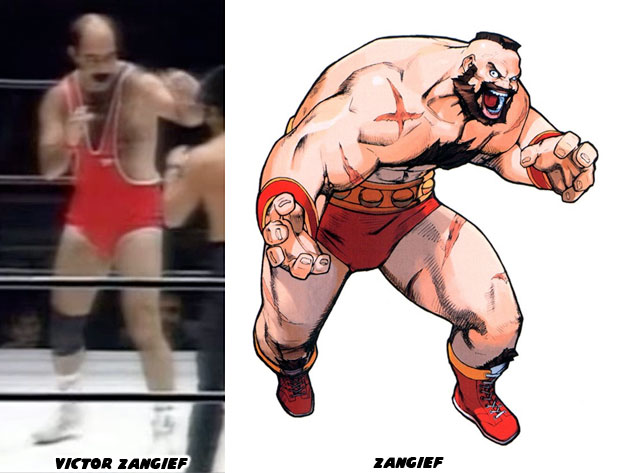
A few years earlier the people at Nintendo created a boxer named Vodka Drunkensky. The Punch Out!! series by Nintendo had some very stereotypical characters in the lineup, like the Japanese Piston Honda, the Italian Pizza Pasta and the Indian Great Tiger (how about that!). When audiences saw Vodka Drunkensky many thought they had gone too far. It was one thing to give a character an offensive name but to show him drinking in between rounds really took the cake! A few of the planners at Capcom remembered seeing a wrestler on Japanese TV named Victor Zangief. The last name seemed to work well for the character and would be much easier to pronounce than Poddubny and Zbyszko.
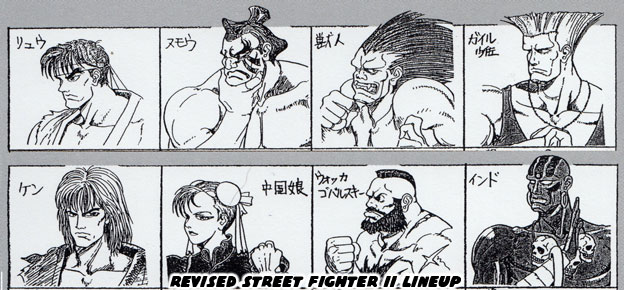
The final few spots in the roster were filled in by the team. Guile the soldier (whom Americans would naturally gravitate to) and E. Honda the sumo wrestler helped add a little more diversity to the cast. The different backgrounds and different fighting styles were a great compliment to the other forms. The revised lineup was much closer to the version that players would see in the arcade. The rest as they say was history...
So what happened to the designers after Street Fighter II. Why has it been so hard for Capcom to create a fighter that matched the legacy of the original World Warriors? We will explore these things in the next blog. As always if you enjoyed this blog and would like to sponsor me please visit my Patreon page and consider donating each month, even as little as $1 would help make better blogs and even podcasts!
Capcom then brought back Ken. In was done in part to have a character that the Americans would gravitate to. The blonde hair and yellow punching gloves contrasted his all-red gi. To audiences this was just a pallet swap with different heads. Internally the art team made a distinction between the two characters. Ken had hemmed sleeves on his gi. He was careful about the way he presented himself. Ryu by comparison had torn sleeves and worn edges on his pants. He cared more about the fight than about trophies. They were both very simple designs and the unique touches were subtle, so subtle that many other studios missed the individual elements and couldn't create better karatekas in 25 years of trying.
With the stars of the game figured out the studio then went after the Chinese figure, then called Zhi Li. They looked at her costume, her age and purpose. The were something lacking with the young female fighter. She looked too much like an anime or manga character. Artist Akiman said that it was a period of time where you couldn't get by without creating a Chinese Beauty. Zhi Li had a look that was borrowed from the Pooh sisters aka the Kuniang Martial Arts Club from the 1989 sci-fi action game Strider. The sisters had kicks that were almost as powerful as Strider Hiryu's cypher sword Zhi Li would never be believable as a serious fighter in a cast of adult men. The team decided to make her older, turn her into a woman. It worked for the Pooh Sisters and would probably work again.

As the plot of the game was being developed they realized that Chun-Li needed a reason to be in a fighting tournament. Simply being a female fighter may have worked in a movie but games required more effort. Games allowed the audience to see the same story but from different points of view, including those of villains. By making the Chinese girl older they knew that she would never be a damsel in distress. She was not a prize for the competitors, and this was a refreshing change of pace. In fact it was even better because her purpose for competing was to bring the organizer to justice. It was decided that she was actually an undercover cop. The team was elated with the possibilities. This could be something that they kept a secret from audiences until the ending of the game. They took apart the traditional Chinese wushu uniform that Chun-Li had and turned it into a costume. The character would wear makeup, put her hair up in buns and be very "girly" in the tournament. At the same time she would wear wrestling boots and weighted spiked bracelets so that she had a better chance of winning each fight.

What the designer Akira "Akiman" Yasuda did to Chun-Li was a stroke of genius. It would become something that other designers would look to when they were stumped by a character redo. Unfortunately some artists misread the design. They did not catch how Chun-Li was matured to balance out the rest of the cast. They did not even bother to consider that there may have been a precedence set by actual Chinese martial arts practitioners that were women. Imagine that if Mas Oyama and Yoshiji Soeno inspired the development of Ryu then perhaps Wing Chun and the actresses in Hong Kong cinema might have helped shape Chun-Li as well. Instead the subsequent designers thought that it was important to give new characters some sort of "day job" in order to make them appealing. Since the fighters could not all be cops then people with all sorts of random backgrounds began turning in later versions of the series. Dee Jay was a musician, El Fuerte was a chef, Hakan loved oil, Rufus was fat, etc. The other artists, the ones that "got" what Akiman had done were able to turn around the more offensive characters.
Great Tiger was supposed to be an Indian mystic but his look was very bland. He was a dark-skinned character with a turban, he could have been pulled right out of any comic book. Not much else was known about this figure, what form of fighting he represented or what his abilities were. This was when the team looked to a few new points of reference. Where had they seen Indian fighters before and what made them special? Of course the Indian was well known in television and cartoon tropes. Who does not remember seeing a cartoon of an Indian lying on a bed of nails, or running swords through a basket with their apprentice inside? What about the classic Indian rope trick or the Madari better known as the snake charmers?
These were things that everyone had seen and was familiar with. Yet these things could have also been negative subconscious cues about a particular culture. India had introduced words like Guru and Yogi into Western language. Whether true or not these images of Indians colored pop culture the world over. In Hong Kong cinema there were two hit films by Jimmy Wang Yu. The One Armed Boxer and the Master of the Flying Guillotine. Actors in blackface portrayed the Indians as having unique powers. In the One Armed Boxer the Indian was impervious to weapons, he stabbed himself in the chest to prove it. He could also teleport around the room by standing on his hands. Magicians from India were part of folklore and many assumed that there was some truth to these legends. The second Indian character feature in the Wang Yu films was even more memorable. He had arms that stretched, creating a very unique challenge for the hero of the film. It was an impressive effect in the film, using prosthesis and a second person to create the illusion. This character, blackface and all, had a profound influence on the development of the Great Tiger.
As Dhalsim began to emerge the designers wanted to know how else they could make him unique. Again they used the Indian mystic as a point of reference. In legend the magicians from India and Arabia were highly tolerant of fire. They could walk on hot coals and even breathe fire. These performers ended up in travelling caravans and helped create the myth that found its way to film and television centuries later. The best thing about Street Fighter was that there was a hint to truth to the icons. There was a caste of Sikh Warriors that were armed with weapons and trained in the art of war. During celebrations they would parade in uniform and sometimes put on a show for audiences, singing, dancing and breathing fire. It was an amazing visual. Imagine an animated version of a Sikh warrior in a battle against a karate master. There was real potential in trying to recreate these different arts for game playing audiences.
The team at Capcom began experimenting with the look and moves of the Great Tiger. They stripped away the turban and Sikh costume and made him appear very humble. In Sikh practice hair was a sacred, it was never exposed and was kept wrapped up. Dhalsim was supposed to appear more like a beggar. Literally someone that gave up his worldly possessions and even shaved himself bald to humble himself. A pair of ragged trunks and a rope belt became his new costume. Around his neck he wore three small skulls. It would be revealed that these were children from his village that had died. As a pacifist the only reason he entered the Street Fighter tournament to win the prize money to help his village. His backstory would be revealed at the end of the game. Like Chun-Li and Ryu the developers learned that it was important to know what each character was fighting for and why it made them interesting. At the same time that purpose was not pushed on audiences, like say a Mexican luchador showing up to battle with a frying pan because you know… cooking. The developers respected their characters and audience enough to let players discover what made them unique through the endings of the game.
The team then looked at Anabebe and realized that the character had to go. The artists knew however that Anabebe was too ugly and controversial a design. People in North (and Central and South) America would find the character highly offensive. At the same time a wild man was needed to break up the consistency of traditional forms of fighting. Just as they had done with Dhalsim the studio knew that they had to go to extreme lengths to make the character unique. They decided that the new character might be covered in long hair, making him appear more feral. Instead of giving him a skin tone they decided to paint him up in bright colors. The studio looked at the bright colors used by poisonous creatures, snakes and reptiles, to warn predators.
Again Akiman helped with the redesign. He remembered playing against planner Akira Nishitani and being frustrated. Nishitani was good at finding exploits in games and then using them against his opponents. The two would play Pro Wrestling on the Famicom (NES) when it came out in 1986. Nishitani would use a character called the Amazon, he was a green skinned wild man, that looked like a piranha. Anyhow he would use this character to bite the heads of opponents. It was impossible to break out of the hold. Akiman wanted players feel the frustration he did with Blanka's chomping attacks. So the beast man design was pulled from Pro Wrestling rather than black stereotypes.
Blanka, shortened from Hamablanka, ended up being a bright neon green, almost lime with an equally bright orange hairdo. He was given sharp teeth and nails to make him appear like a beast. He ended up being not very far removed from the Amazon. On his ankles they left broken shackles, as if he were indeed an escaped wild man. It was the only carry-over from Anabebe's original design. What they abandoned thankfully was his original skin color and even ethnicity. In the end it worked out well for the character.
Both Dhalsim and Blanka started off as ugly if not outright racist caricatures of a culture. Both went on to represent the two most extreme character designs in the Street Fighter universe. They did by going beyond the stereotypical conventions and created figures that audiences had never seen before. Despite these extreme makeovers they were still acceptable in the lineup. In the game series and in canon they were sometimes partnered together. Despite looking very different the duo did a great job visually of balancing each other out. Because Capcom was able to pull away from their highly dubious origins the two became some of the most popular characters ever created. They were an example of how almost any design could be salvaged with enough insight and hard work.

Some of the other characters that were in the planning stages were actually very close to their finished counterparts. The team cut down the wrestlers planned for Street Fighter II from two to one. The studio had found great success with the strong man / wrestler archetype in Final Fight. They had created a large brawler named Mike Haggar. His assortment of suplexes and piledrivers was impressive and never before seen in a brawler. The figure looked very much like MMA pioneers Dan Severn and Don Frye. The two represented the USA in international competitions and Severn had fought in Japan as early as 1982, making him a likely influence on the Capcom staff. By using Haggar as a template the planners could create new moves that were similar to but even more powerful.
The USA was getting two representatives, Ken and Guile, so the studio decided to give a different nation the wrestler. Mexico was cut out of the countries that would be represented when Capcom dropped the masked wrestler. They looked at the burly grapplers from the Eastern block countries. People like Ivan Poddubny and Stanislaus Zbyszko were legendary wrestlers and world champions that gave Europe a chapter in wrestling history. The team at Capcom decided to make the next character Russian. What needed saving was not the design as much as the name. The burly sailor on the table would have been named Vodka Gobalsky.
The teamed toned down the sailor image and instead focused on making him a wrestler. Thankfully some of the creators knew that names could be just as offensive as skin color. They came to this realization much faster than those working elsewhere.
A few years earlier the people at Nintendo created a boxer named Vodka Drunkensky. The Punch Out!! series by Nintendo had some very stereotypical characters in the lineup, like the Japanese Piston Honda, the Italian Pizza Pasta and the Indian Great Tiger (how about that!). When audiences saw Vodka Drunkensky many thought they had gone too far. It was one thing to give a character an offensive name but to show him drinking in between rounds really took the cake! A few of the planners at Capcom remembered seeing a wrestler on Japanese TV named Victor Zangief. The last name seemed to work well for the character and would be much easier to pronounce than Poddubny and Zbyszko.
The final few spots in the roster were filled in by the team. Guile the soldier (whom Americans would naturally gravitate to) and E. Honda the sumo wrestler helped add a little more diversity to the cast. The different backgrounds and different fighting styles were a great compliment to the other forms. The revised lineup was much closer to the version that players would see in the arcade. The rest as they say was history...
So what happened to the designers after Street Fighter II. Why has it been so hard for Capcom to create a fighter that matched the legacy of the original World Warriors? We will explore these things in the next blog. As always if you enjoyed this blog and would like to sponsor me please visit my Patreon page and consider donating each month, even as little as $1 would help make better blogs and even podcasts!
Thursday, July 9, 2015
Representation Matters! Or, what happened to Birdie, part 5...
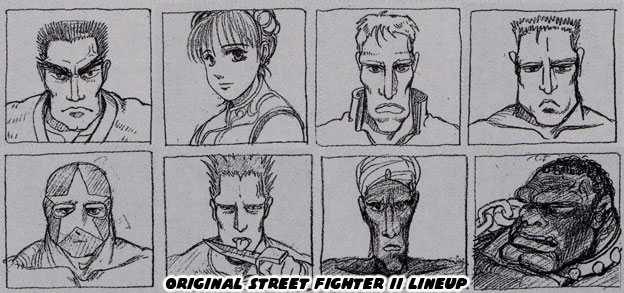
When players think about the greatest cast in fighting game history they often point to the original World Warriors. The figures in Street Fighter II hit all of the right notes and were universally accepted. They set a standard back in 1991 yet to be topped (even by Capcom). There is something that most people do not know and even die-hard fans of Street Fighter sometimes forget. The original lineup was much different. It was dominated by white characters and was culturally insensitive. Let us look at what Capcom had to change in order to give audiences a memorable experience.
Audiences might be able to pick out a few characters from the lineup that made it to the final version. There was a karate guy, possibly Ryu. Next to him was a Chinese girl, possibly Chun-Li and near the bottom was a dark skinned person in a turban. This Indian character must have become Dhalsim. Who were the other characters? Where was Ken and E. Honda? Where was Zangief and Blanka? Well there were actually two wrestlers in the original lineup. A masked wrestler and a more traditional pro wrestler. There was a boxer, an assassin and a beast man rounding out the group. We could guess that these characters were placeholders. A rough outline for something that had would be changed. The studio had their work cut out for them. The planner on the original Street Fighter had left for SNK. The game found moderate success and arcade owners were asking for a sequel. The team at Capcom tried to create one called Street Fighter '89. It went in a radical new direction, one that was prompted by the runaway success of Taito's Double Dragon. The next Street Fighter would be a brawling game, a beat-em-up using up to three players instead of two. Guy was supposed to replace Ryu, Cody was supposed to replace Ken and a wrestler was thrown in for good measure. Arcade owners did not want Capcom to change the one-on-one concept so the game was relabeled Final Fight. Work on Street Fighter II started all over again.
Ryu was not a lock for the main character. Well, Capcom obviously wanted to make a Japanese character the star and make sure that karate was represented. The designers thought that if the first game was about a Mas Oyama-like karate fighter becoming the world's best then the sequel should be about a different fighter that accomplished something very similar. In this case it would be inspired by an understudy of Oyama named Yoshiji Soeno. His in-game counterpart was named Sakurada Gashou. Soeno had beaten the masters of several forms of fighting and had even gone to Thailand to fight their best as well. The Black Cobra was a person that he was supposed to face that inspired the legend of Sagat.
Something was missing with Sakurada. He looked as stern as Soeno, one of the toughest masters of karate but at the same time Sakurada lacked any real personality. The design was a bit bland actually. There was nothing memorable about the character as he was. His black belt and uniform were very much off the shelf. He could have been interchangeable with any generic karateka. The designers working on characters for Street Fighter II was expanded by Capcom. New concepts for the main fighter were explored. The first attempt at bringing back Ryu was highly dubious. He no longer looked like the karate fighter from the first game, instead he looked like he popped out of the pages of a post apocalyptic comic book. When I tell people that Tetsuo Hara had a profound influence on the designers at Capcom I meant it. Ryu was a dead-ringer for Kenshiro, same leather jacket, same shoulder pad and all. The headband was the only thing that made him different.
Poaching a popular character wouldn't work with audiences. As the artists were scrambling to redesign the star of the game the attention was focused on the rest of the cast. The studio knew that they wanted a female character in the game. Given that kung-fu was the root of the Asian fighting arts then it had to be represented in the sequel. The original Street Fighter had traditional kung-fu archetypes Lee and Gen representing the art. The next time it would be a Chinese girl nicknamed the China Daughter. Could Chun-Li have been meant to be a daughter or granddaughter to Lee or Gen? We may never know. What we do know was that the original designs for the female character were bland as well. The original Chun-Li was a very generic design. Her face was very youthful, her eyes large and animated, the look could have been used in any manga or anime series at the time. Her uniform was very traditional and like Ryu's it was something that could have been pulled off of the shelf.
Chun-Li and Ryu needed some major work. They were not the only ones that needed to seriously be rethought. The most offensive figure in the original lineup was the wild man, Anabebe. This figure was very grotesque, very crude and based on a very dark era in world history. Anabebe had all the characteristics of a black brute. Big lips, dark skin, tight curly hair, he was for all intents and purposes a caricature of black slaves. As if there were any doubts the character was even presented with a collar and a chain. The stereotype of the black man being a savage, an unintelligent, unfeeling brute that only responded to violence was as old as slavery itself. Anabebe was designed as the largest character in the game, standing about 7' 5". He would have been larger than Sagat or Zangief. I sometimes wonder what would have happened if Capcom had followed through with this character. Would his owners have to lock him down in between matches? Would they have been animated using whips against the wild man? Looking at the character I shudder to think that the developers working at Capcom, some of whom I consider to be personal heroes, thought this was a concept worth pursuing.
Centuries of racist campaigning against black people was sadly very effective. For generations slave owners often used religious texts as well as fraudulent scientific and sociological studies to prove that slaves were inferior creatures. They would dehumanize them, speak about them in animalistic terms as if they were mules. They would say terrible things such as blacks were highly tolerant to pain, didn't need to eat or sleep much like other beasts of burden. They could be controlled with violence, terrorism and whippings because that was the only language they understood. As slaves and abolitionists began to fight for equality and freedom then different interpretations of the black emerged. They suddenly became lazy and shiftless when just a few years prior they were workhorses. They became impossible to teach, to raise and become incorporated into society. There were many ugly caricatures of blacks made through most of the 19th and 20th centuries. These parodies reached every corner of the world, including Japan. Please watch the documentary Ethnic Notions to get a history lesson on the origins of Anabebe's design.
I have to remind myself that Japan has a history of being culturally isolated. The nation remained closed off until 1853 when the US Commodore Matthew Perry took four warships to Japan to "insist" that they begin opening trade routes with the rest of the world. Many citizens and not solely the Japanese can be insensitive to foreign cultures, customs and traditions. Check the history books to find out about the animosity between China, Japan and Korea. There were and continue to be issues with the ways each nation perceives their neighbors. We do not have to go far to see these things, Just look at North America and see how people in the USA, Canada and Mexico all perceived each other as well. What the artists at Capcom had done was take the images that they knew of the savage, one from newspapers and propaganda films and put those ideas on paper. They did not question what they knew, what they heard, they just drew it out.
What was most dangerous was that the Japanese designers were not looking to offend their audience. Notions about black people had become a part of the collective subconscious. People in Asian countries, as well as in the Americas had seen and heard so many negative stereotypes about blacks while growing up that they did not even think twice about them. They simply assumed that there must have been some truth to them. The most heartbreaking proof of how stereotypes had become a problem could be seen in the infamous Doll Test, conducted again and again in this country and around the world. Kids had been conditioned to think that light skinned people were inherently good and dark skinned people were inherently bad. They did not necessarily have to be taught these things by hateful parents. Television, movies, cartoons and even school friends repeated these ideas over and over.
I want you to think about why it is important that the designers at Capcom understand why these caricatures were not acceptable. They have a game that is played all around the world. Not by a few dozen or a few hundred people but instead by millions and millions. With each release they change the course of pop culture. They add a new chapter about what it means to be a Japanese, Chinese, Turkish, Indian, Brazilian, African, British, Russian, US or Mexican. The producer working on Street Fighter has the power to help society adapt and evolve their cultural perceptions. Even if the change is only slightly positive then it is better than repeating old stereotypes. If the team squanders that chance and instead tries to get a laugh because a person is fat or black or anything that makes them not white or Japanese then that progress is lost. These things do not even have to be major changes for the character. The way they behave, the way they act and respond can have an influence on the way players perceive that character. Make minor changes and audiences will either begin to accept or reject that stereotype. Birdie for example was not only made fat but he acted grossly and brutish in many new animations for Street Fighter V. The message he sent to players was that the character had no self respect. Subconsciously it could be accepted that all fat people or all punks had no self respect as well. Street Fighter was simply confirming something that everyone suspected. By the same token Rufus was fat and dumb, very full of himself and a jab at how people from the US make themselves out to be citizens of the greatest nation on Earth. Of course not everyone in the US thought or acted like Rufus. It was a very crude stereotype that did nothing to make the game better.
Making a caricature out of a nationality can be a dangerous act. It can be used by political cartoonists to make ugly parodies of foreigners. Think about how Muslims are depicted in editorial cartoons. Cartooning the prophet Muhammad has now led to the death of dozens of cartoonists and newspaper employees in Europe. Because of that now all Muslims are synonymous with terrorism in the eyes of many. If you stop and think about it the most popular fighting game characters are nothing more than caricatures of people and fighting arts. Japanese people do not really walk around in a karate gi, Chinese people do not walk around in a wushu uniform and Turks do not walk around with barrels of oil. These are not slight caricatures either but extremely exaggerated and dis-proportioned figures. In video games strong men have huge muscles, fat people are incredibly obese and women have large breasts. How sensitive the developers are to a particular style of fighting or culture (even something like punk culture!) can make or break a design. Just a little bit of insight can turn a mediocre character into somebody great. This was something that Capcom used to be able to turn around and something that I do not think the current team is capable of. Sakurada, Anabebe and the China Daughter were very plain caricatures. There was nothing redeeming about these early designs and that's why the team had to go back to the drawing board. But they were not the only characters that needed saving.
The designers at Capcom wanted to add an Indian mystic to the lineup. Their original plan was for a character in a turban called the Great Tiger. This character may have even been presented in a Ganesha mask with multiple arms. This character was as insensitive to Indians as Anabebe was to blacks. Street Fighter II was off to a terrible start. It looked like nothing was going to save Capcom from themselves. The studio reached out to other teams and the people working on character designs was tripled. At one point there was 20 or 25 people working on the cast alone. It was a number that was never matched by any other studio. What these people did was amazing. The insight that they landed to the project made the World Warriors something special. It was also a reason why I don't think that the current character designers at Capcom can match the greatness of the Street Fighter II team. Without all the extra eyes, extra input and extra insight from a large design team then the current crop of figures and remakes are not as great as they potentially could be. Coming up with a great character was not impossible but the designers would have to work twice as hard and revise twice as much just to match the legacy created by their forefathers. We will take a look at how the Street Fighter II team was able to turn things around in the next blog. As always if you enjoyed this blog and would like to sponsor me please visit my Patreon page and consider donating each month, even as little as $1 would help make better blogs and even podcasts!

Audiences might be able to pick out a few characters from the lineup that made it to the final version. There was a karate guy, possibly Ryu. Next to him was a Chinese girl, possibly Chun-Li and near the bottom was a dark skinned person in a turban. This Indian character must have become Dhalsim. Who were the other characters? Where was Ken and E. Honda? Where was Zangief and Blanka? Well there were actually two wrestlers in the original lineup. A masked wrestler and a more traditional pro wrestler. There was a boxer, an assassin and a beast man rounding out the group. We could guess that these characters were placeholders. A rough outline for something that had would be changed. The studio had their work cut out for them. The planner on the original Street Fighter had left for SNK. The game found moderate success and arcade owners were asking for a sequel. The team at Capcom tried to create one called Street Fighter '89. It went in a radical new direction, one that was prompted by the runaway success of Taito's Double Dragon. The next Street Fighter would be a brawling game, a beat-em-up using up to three players instead of two. Guy was supposed to replace Ryu, Cody was supposed to replace Ken and a wrestler was thrown in for good measure. Arcade owners did not want Capcom to change the one-on-one concept so the game was relabeled Final Fight. Work on Street Fighter II started all over again.

Ryu was not a lock for the main character. Well, Capcom obviously wanted to make a Japanese character the star and make sure that karate was represented. The designers thought that if the first game was about a Mas Oyama-like karate fighter becoming the world's best then the sequel should be about a different fighter that accomplished something very similar. In this case it would be inspired by an understudy of Oyama named Yoshiji Soeno. His in-game counterpart was named Sakurada Gashou. Soeno had beaten the masters of several forms of fighting and had even gone to Thailand to fight their best as well. The Black Cobra was a person that he was supposed to face that inspired the legend of Sagat.
Something was missing with Sakurada. He looked as stern as Soeno, one of the toughest masters of karate but at the same time Sakurada lacked any real personality. The design was a bit bland actually. There was nothing memorable about the character as he was. His black belt and uniform were very much off the shelf. He could have been interchangeable with any generic karateka. The designers working on characters for Street Fighter II was expanded by Capcom. New concepts for the main fighter were explored. The first attempt at bringing back Ryu was highly dubious. He no longer looked like the karate fighter from the first game, instead he looked like he popped out of the pages of a post apocalyptic comic book. When I tell people that Tetsuo Hara had a profound influence on the designers at Capcom I meant it. Ryu was a dead-ringer for Kenshiro, same leather jacket, same shoulder pad and all. The headband was the only thing that made him different.

Poaching a popular character wouldn't work with audiences. As the artists were scrambling to redesign the star of the game the attention was focused on the rest of the cast. The studio knew that they wanted a female character in the game. Given that kung-fu was the root of the Asian fighting arts then it had to be represented in the sequel. The original Street Fighter had traditional kung-fu archetypes Lee and Gen representing the art. The next time it would be a Chinese girl nicknamed the China Daughter. Could Chun-Li have been meant to be a daughter or granddaughter to Lee or Gen? We may never know. What we do know was that the original designs for the female character were bland as well. The original Chun-Li was a very generic design. Her face was very youthful, her eyes large and animated, the look could have been used in any manga or anime series at the time. Her uniform was very traditional and like Ryu's it was something that could have been pulled off of the shelf.

Chun-Li and Ryu needed some major work. They were not the only ones that needed to seriously be rethought. The most offensive figure in the original lineup was the wild man, Anabebe. This figure was very grotesque, very crude and based on a very dark era in world history. Anabebe had all the characteristics of a black brute. Big lips, dark skin, tight curly hair, he was for all intents and purposes a caricature of black slaves. As if there were any doubts the character was even presented with a collar and a chain. The stereotype of the black man being a savage, an unintelligent, unfeeling brute that only responded to violence was as old as slavery itself. Anabebe was designed as the largest character in the game, standing about 7' 5". He would have been larger than Sagat or Zangief. I sometimes wonder what would have happened if Capcom had followed through with this character. Would his owners have to lock him down in between matches? Would they have been animated using whips against the wild man? Looking at the character I shudder to think that the developers working at Capcom, some of whom I consider to be personal heroes, thought this was a concept worth pursuing.
Centuries of racist campaigning against black people was sadly very effective. For generations slave owners often used religious texts as well as fraudulent scientific and sociological studies to prove that slaves were inferior creatures. They would dehumanize them, speak about them in animalistic terms as if they were mules. They would say terrible things such as blacks were highly tolerant to pain, didn't need to eat or sleep much like other beasts of burden. They could be controlled with violence, terrorism and whippings because that was the only language they understood. As slaves and abolitionists began to fight for equality and freedom then different interpretations of the black emerged. They suddenly became lazy and shiftless when just a few years prior they were workhorses. They became impossible to teach, to raise and become incorporated into society. There were many ugly caricatures of blacks made through most of the 19th and 20th centuries. These parodies reached every corner of the world, including Japan. Please watch the documentary Ethnic Notions to get a history lesson on the origins of Anabebe's design.

I have to remind myself that Japan has a history of being culturally isolated. The nation remained closed off until 1853 when the US Commodore Matthew Perry took four warships to Japan to "insist" that they begin opening trade routes with the rest of the world. Many citizens and not solely the Japanese can be insensitive to foreign cultures, customs and traditions. Check the history books to find out about the animosity between China, Japan and Korea. There were and continue to be issues with the ways each nation perceives their neighbors. We do not have to go far to see these things, Just look at North America and see how people in the USA, Canada and Mexico all perceived each other as well. What the artists at Capcom had done was take the images that they knew of the savage, one from newspapers and propaganda films and put those ideas on paper. They did not question what they knew, what they heard, they just drew it out.
What was most dangerous was that the Japanese designers were not looking to offend their audience. Notions about black people had become a part of the collective subconscious. People in Asian countries, as well as in the Americas had seen and heard so many negative stereotypes about blacks while growing up that they did not even think twice about them. They simply assumed that there must have been some truth to them. The most heartbreaking proof of how stereotypes had become a problem could be seen in the infamous Doll Test, conducted again and again in this country and around the world. Kids had been conditioned to think that light skinned people were inherently good and dark skinned people were inherently bad. They did not necessarily have to be taught these things by hateful parents. Television, movies, cartoons and even school friends repeated these ideas over and over.

I want you to think about why it is important that the designers at Capcom understand why these caricatures were not acceptable. They have a game that is played all around the world. Not by a few dozen or a few hundred people but instead by millions and millions. With each release they change the course of pop culture. They add a new chapter about what it means to be a Japanese, Chinese, Turkish, Indian, Brazilian, African, British, Russian, US or Mexican. The producer working on Street Fighter has the power to help society adapt and evolve their cultural perceptions. Even if the change is only slightly positive then it is better than repeating old stereotypes. If the team squanders that chance and instead tries to get a laugh because a person is fat or black or anything that makes them not white or Japanese then that progress is lost. These things do not even have to be major changes for the character. The way they behave, the way they act and respond can have an influence on the way players perceive that character. Make minor changes and audiences will either begin to accept or reject that stereotype. Birdie for example was not only made fat but he acted grossly and brutish in many new animations for Street Fighter V. The message he sent to players was that the character had no self respect. Subconsciously it could be accepted that all fat people or all punks had no self respect as well. Street Fighter was simply confirming something that everyone suspected. By the same token Rufus was fat and dumb, very full of himself and a jab at how people from the US make themselves out to be citizens of the greatest nation on Earth. Of course not everyone in the US thought or acted like Rufus. It was a very crude stereotype that did nothing to make the game better.
Making a caricature out of a nationality can be a dangerous act. It can be used by political cartoonists to make ugly parodies of foreigners. Think about how Muslims are depicted in editorial cartoons. Cartooning the prophet Muhammad has now led to the death of dozens of cartoonists and newspaper employees in Europe. Because of that now all Muslims are synonymous with terrorism in the eyes of many. If you stop and think about it the most popular fighting game characters are nothing more than caricatures of people and fighting arts. Japanese people do not really walk around in a karate gi, Chinese people do not walk around in a wushu uniform and Turks do not walk around with barrels of oil. These are not slight caricatures either but extremely exaggerated and dis-proportioned figures. In video games strong men have huge muscles, fat people are incredibly obese and women have large breasts. How sensitive the developers are to a particular style of fighting or culture (even something like punk culture!) can make or break a design. Just a little bit of insight can turn a mediocre character into somebody great. This was something that Capcom used to be able to turn around and something that I do not think the current team is capable of. Sakurada, Anabebe and the China Daughter were very plain caricatures. There was nothing redeeming about these early designs and that's why the team had to go back to the drawing board. But they were not the only characters that needed saving.

The designers at Capcom wanted to add an Indian mystic to the lineup. Their original plan was for a character in a turban called the Great Tiger. This character may have even been presented in a Ganesha mask with multiple arms. This character was as insensitive to Indians as Anabebe was to blacks. Street Fighter II was off to a terrible start. It looked like nothing was going to save Capcom from themselves. The studio reached out to other teams and the people working on character designs was tripled. At one point there was 20 or 25 people working on the cast alone. It was a number that was never matched by any other studio. What these people did was amazing. The insight that they landed to the project made the World Warriors something special. It was also a reason why I don't think that the current character designers at Capcom can match the greatness of the Street Fighter II team. Without all the extra eyes, extra input and extra insight from a large design team then the current crop of figures and remakes are not as great as they potentially could be. Coming up with a great character was not impossible but the designers would have to work twice as hard and revise twice as much just to match the legacy created by their forefathers. We will take a look at how the Street Fighter II team was able to turn things around in the next blog. As always if you enjoyed this blog and would like to sponsor me please visit my Patreon page and consider donating each month, even as little as $1 would help make better blogs and even podcasts!
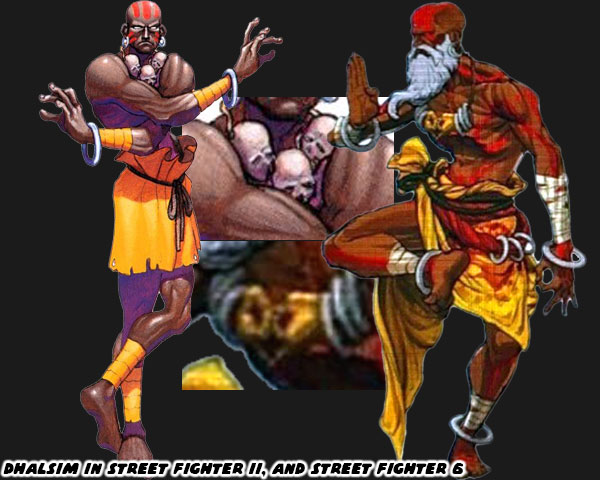
Subscribe to:
Posts (Atom)